Next Article in Journal
Atypical Vascularity Within a Schwannoma. A Case Study
Previous Article in Journal
Retrospective Analysis of Plantar Fascia by Ultrasound Imaging in Patients with Plantar Fasciitis
 
 
Journal of the American Podiatric Medical Association is published by MDPI from Volume 116 Issue 1 (2026). Previous articles were published by another publisher in Open Access under a CC-BY (or CC-BY-NC-ND) licence, and they are hosted by MDPI on mdpi.com as a courtesy and upon agreement with American Podiatric Medical Association.
Article

Use of GBT013, a Collagen-Based Dressing, for the Healing of Diabetic Foot Ulcers. A Case Series

by
Isabelle J. Dumont
1,
Marc Lepeut
2,
Coralie Segalen
3,
Yannis Guillemin
3 and
Jean Noel Gouze
3,*
1
Foot Center of Ransart, Brussels, Belgium
2
Centre Hospitalier de Roubaix, Roubaix, France
3
Genbiotech, Antibes, France
*
Author to whom correspondence should be addressed.
J. Am. Podiatr. Med. Assoc. 2018, 108(5), 419-429; https://doi.org/10.7547/16-102
Published: 1 September 2018

Abstract

The number of people with diabetes is expected to reach 592 million in the year 2035. Diabetic foot lesions are responsible for more hospitalizations than any other complication of diabetes. The aims of this study were to examine for the first time a new biocompatible and biodegradable tridimensional collagen-based matrix, GBT013, in humans for diabetic foot ulcer wound healing and to evaluate its ease of use to better define a protocol for a future clinical trial. Seven adult patients with a diabetic foot ulcer of grade 1A to 3D (University of Texas Diabetic Wound Classification) were treated using GBT013, a new collagen-based advance dressing and were monitored in two specialized foot care units for a maximum of 9 weeks. Five of seven wounds achieved complete healing in 4 to 7 weeks. Nonhealed ulcers showed a significant reduction of the wound surface (>44%). GBT013 was well tolerated and displayed positive wound healing outcomes as a new treatment strategy of chronic foot ulcers in diabetic patients.

The number of people with diabetes is expected to reach over 590 million in the year 2035.[1] Foot complications in diabetic patients cause a substantial economic cost for any health-care system and thus constitute a major public health concern. Indeed, total costs for diabetic foot ulcer (DFU) average $13,000 per episode and could rise to $28,000 for patients with major amputation.[2,3]
To avoid severe complications, the timeline in DFU wound closure is the key. Current guidelines recommend patient education, blood sugar control, wound debridement, offloading, and the use of advanced dressings.[4] However, results are still unsatisfying when following those guidelines. Indeed, less than 30% of DFUs show complete healing after 20 weeks.[5] Several bioproducts such as cellular matrices,[6,7,8] acellular matrices,[9,10] matrix metalloproteinase modulating dressings,[11,12] and growth factors[13,14] have been shown to decrease the wound healing time by as much as 50%.
We have developed a new biocompatible, biodegradable, tridimensional, collagen-based matrix, GBT013, that allows cell colonization and proliferation. Collagen serves as a decoy for matrix metalloproteinases (MMP) found in excess in chronic wounds.[15,16] In vitro studies showed that the neutrophil level in the scarred tissue and interleukin-6 and interleukin-8 mRNA expression were decreased, suggesting the absence of an inflammatory response. Moreover, the decrease of MMP-2 and MMP-9 activities indicated an increase of cell proliferation inside the matrix and tissue remodeling enhancement. Furthermore, during its preclinical study, we showed that GBT013 acted on each step of the wound healing process in db/db mouse wounds.[17] GBT013 use is a promising strategy for DFU wound healing.
This article reports the first GBT013 use for DFU treatment in humans. The aims of this study were 1) to gather data on GBT013 use as a potential treatment for DFU wound healing and 2) to evaluate its practical use (ie, number of applications needed and ease-of-handling by the physician). Seven DFU-affected adult patients were monitored in two specialized centers. Wounds were treated over 9 weeks and observed over 13 weeks. The number of dressing applications was left to practitioner discretion.

Materials and Methods

Materials

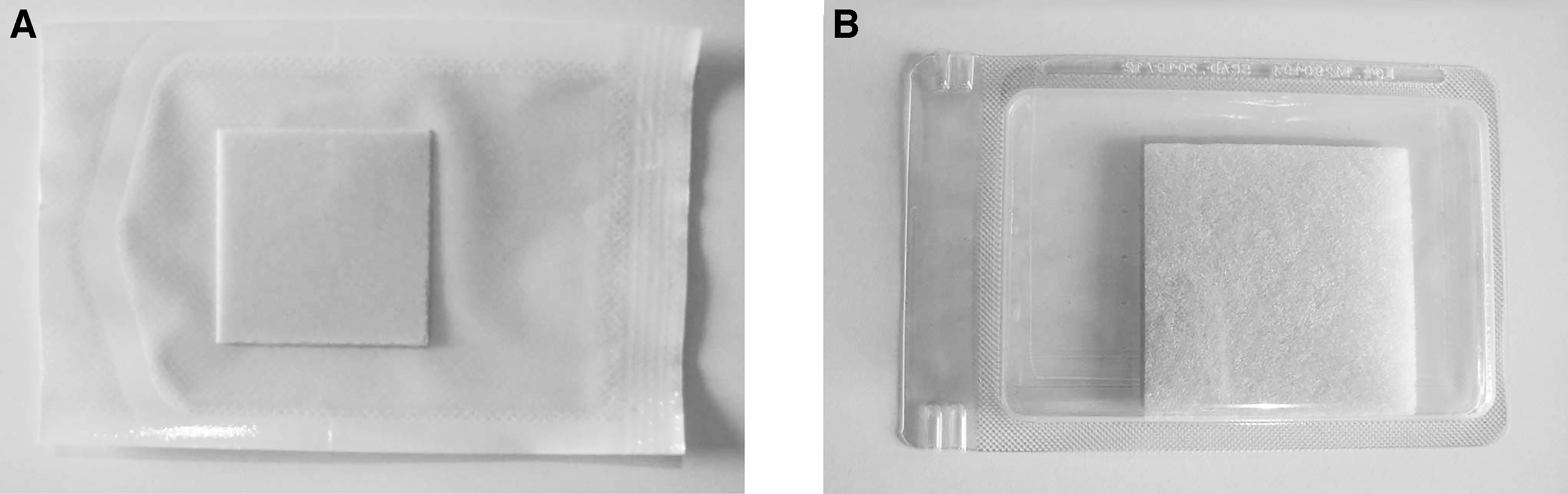
GBT013 (Genbiotech, Antibes, France) is a CE-mark (No. 0143219-08) class III medical device indicated for the treatment of chronic and traumatic wounds, deep second- and third-degree burns, and repair surgery. GBT013 is a tridimensional matrix (72% equine type I collagen, 20% squid chitosan, and 8% bovine/porcine chondroitin sulfate) sterilized by gamma radiation (25 kGy) (Fig. 1A).
Figure 1. GBT013 dressing. For this case series, GBT013 was packaged in the sterile double sheet (A). After practitioners’ backup, GBT013 packaging was revised and is now a blister that form a tank for easier rehydration of the matrix (B).
Japma 108 00419 g001

Methods

The case studies were conducted between May 2013 and January 2014 in two multidisciplinary diabetic foot care units in Ransart, Belgium, and in Roubaix Hospital, France. Patients were selected at the discretion of the practitioner according to the inclusion/exclusion criteria listed in Table 1. They were informed about the product and accepted the treatment in confidence with their practitioner. Briefly, patients had to be diagnosed with neuropathic type 1 or 2 diabetes mellitus and affected for more than 3 weeks by a foot ulcer measuring at least 1 cm2 (grade 1A to 3B according to the University of Texas Diabetic Wound Classification).[18] Patients with grade 3C and 3D DFUs were excluded, as the prevalence of amputation in these patients is higher.[18,19,20,21]
Table 1. Patients Characteristics at Baseline
Japma 108 00419 i001
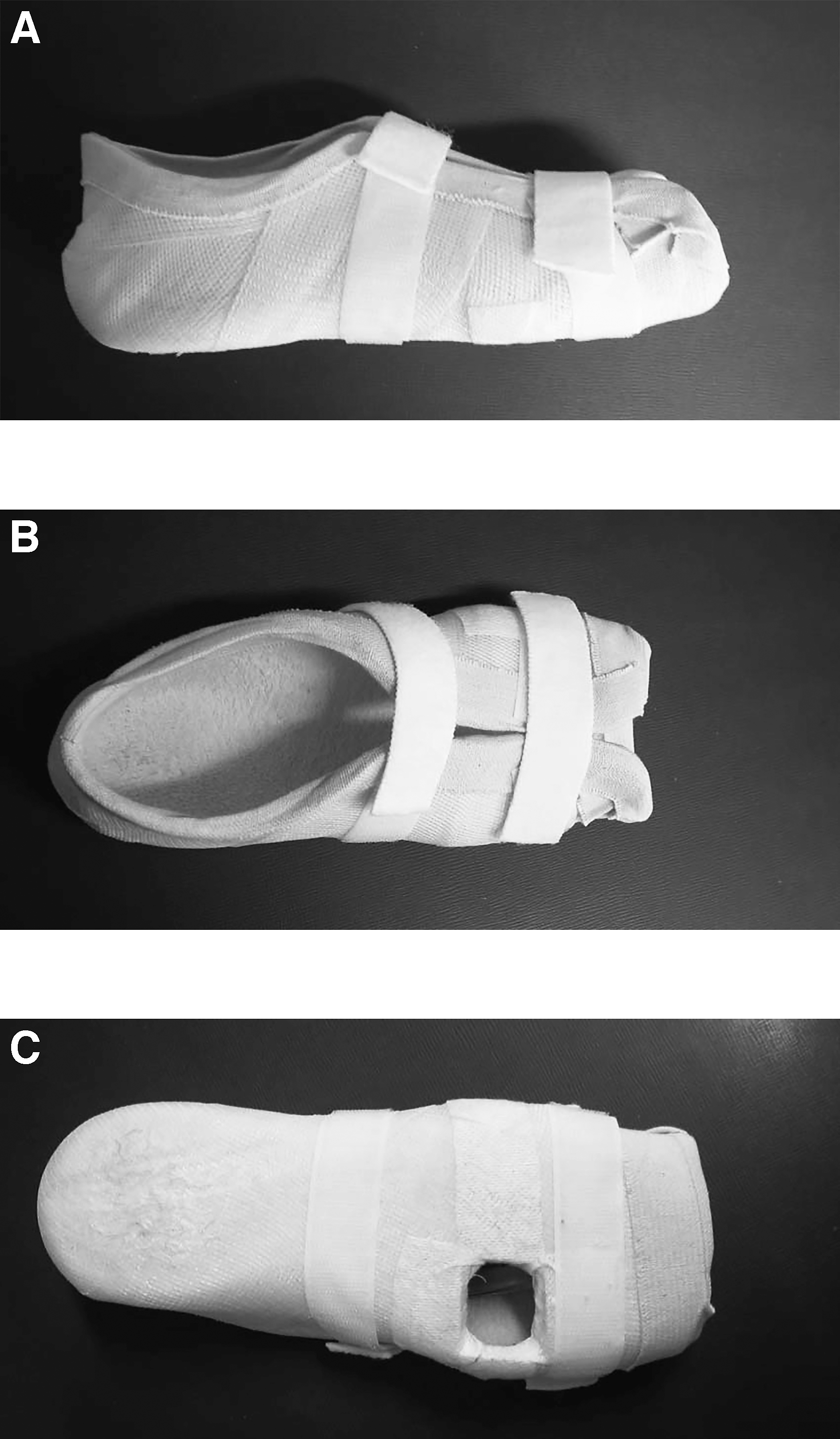
Before treatment, each patient underwent a thorough review of their medical history (ie, years since diagnosis, diabetes complications, vascular status, hemoglobin A1c [HbA1c] level), lower-extremity examination, and wound assessment (ie, ulcer age, stage, localization, and size). On day 1, the ulcer was sharply debrided and cleaned. The GBT013 dressing was cut off to fit the wound size, rehydrated with sterile saline solution, and applied directly to the wound bed. Secondary dressing selection and renewal was left to the practitioner’s discretion and was applied over GBT013 (Table 2). The treated foot was offloaded for the whole follow-up duration using a Ransart boot[19] (Fig. 2), a total contact cast, or a prescription of a reduction in home walking.
Table 2. Diabetic Foot Ulcer Treatments and Results
Japma 108 00419 i002
Figure 2. The Ransart boot. The Ransart boot is a removable device for offloading in patients with foot ulcer. Photographs show the side (A), top (B), and bottom (C) views of the device.
Japma 108 00419 g002
The GBT013 application rate was also left to the practitioner’s discretion: once per week to once every 2 weeks with up to five superimposed applications (Table 2). During the study, patients were assessed weekly or every 2 weeks at the foot care centers until complete healing or for a maximum of 13 weeks. If needed, local care was administered by a home nurse, following instructions of the care unit center. Wound areas were measured with acetate tracings to obtain the wound closure at each follow-up visit at the care center. Image analyses were performed on ImageJ software (National Institutes of Health, Bethesda, MD), INFINYS software (IAMANYS, Fabrègues, France), or by quantifying the wound square number on the acetate tracing. Infection, duration, and percentage of wound closure were then reported.

Results

Use of GBT013

After rehydration with saline solution, GBT013 attached properly to the wound bed and was easily cut to fit the size of the wound. However, it was not adapted for fistulae or tunneled wounds. A secondary dressing was used to keep the wound moist and to prevent GBT013 from drying and becoming brittle.

Global Outcomes

Seven patients (six male patients and one female patient) were followed for chronic DFU (patients A, B, C, and D in Ransart; and patients E, F, and G in the Roubaix hospital). The baseline characteristics for each patient are listed in Table 3. The patient age was 66.4 ± 7.1 years, with type 2 diabetes mellitus diagnosis dating back to 21.4 ± 8.2 years. Two patients (A and B) were selected because healing of their DFU failed to progress for weeks (18 and 8 weeks, respectively). DFU treatments and secondary dressing used are listed in Table 2.
Table 3. Patient Characteristics at Baseline
Japma 108 00419 i003
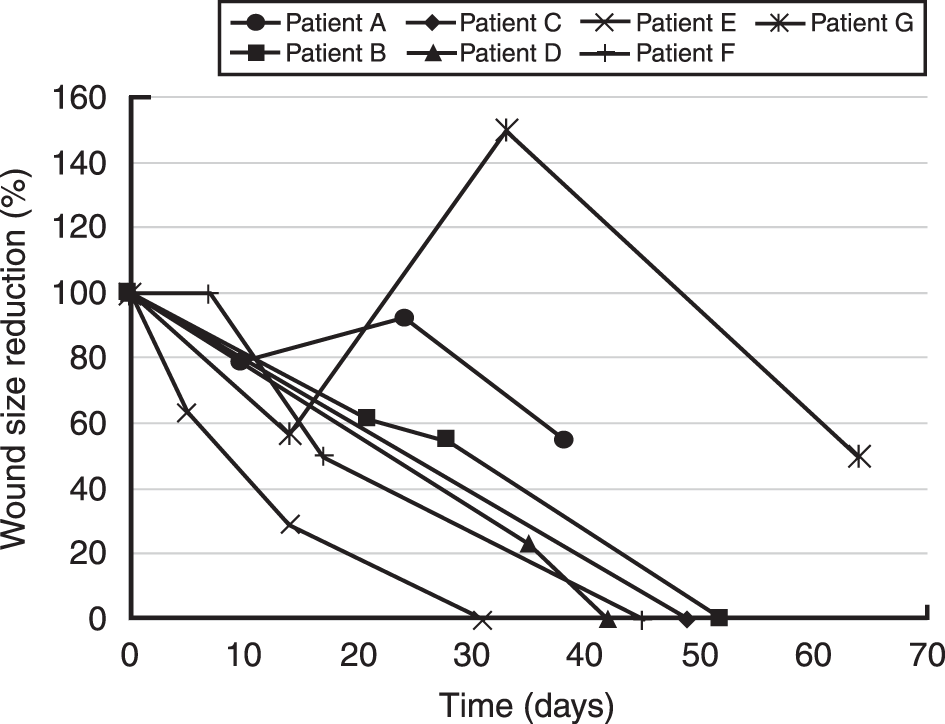
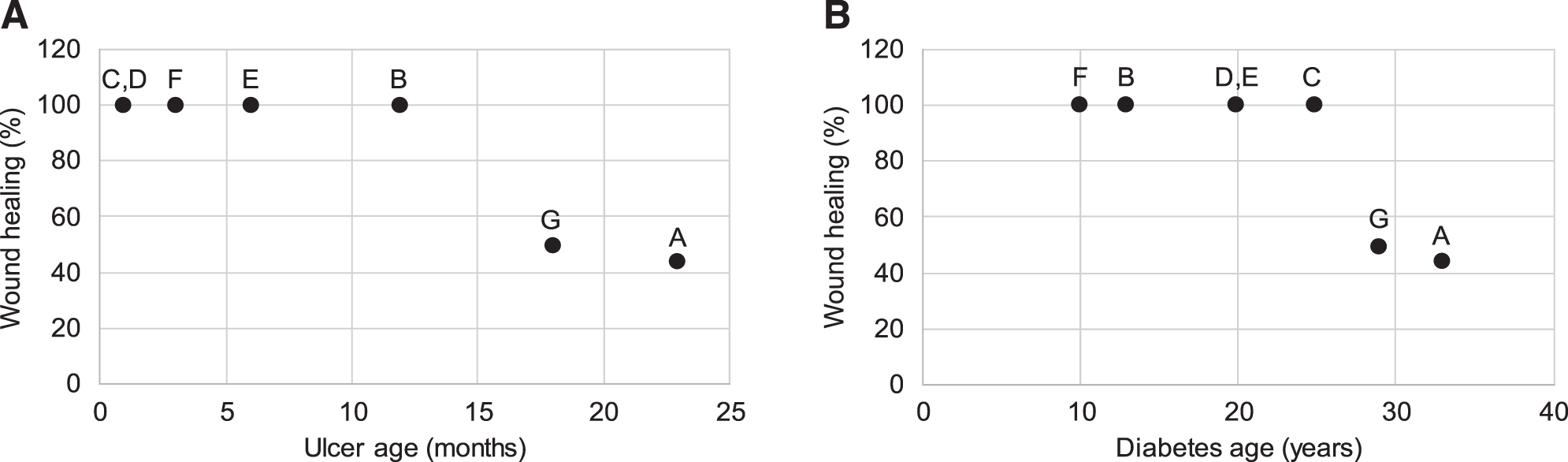
The wound size reductions over time are presented for each patient in Figure 3. All DFUs showed a significant wound size reduction. Five of the seven treated wounds showed complete surface healing (indicated by 100% wound closure in Table 2). Wound closure was totally achieved between 4 and 7 weeks with 3 ± 1.4 GBT013 applications. Nevertheless, two wounds (patients A and G) were only partially healed at the end of the study (Fig. 3). Interestingly, these two patients had the older ulcers (23 and 18 months, respectively) (Fig. 4A) and the longer history of type 2 diabetes of this case series (Fig. 4B).
Figure 3. Wound size reduction with GBT013 over time. The evolution of the wound during follow-up was assessed. Results for each patient are presented as a percentage of the wound size at day 0.
Japma 108 00419 g003
Figure 4. Influence of ulcer age and diabetes duration on wound healing following GBT013 treatment. Wound healing percentage at the end of GBT013 treatment is expressed as a function of ulcer age (A) and diabetes duration (B). Each patient is identified with the corresponding letter above each black dot.
Japma 108 00419 g004
During the follow-up of these seven patients, neither of the two centers has reported any anticipated or unanticipated problems linked to the use of GBT013. However, patients A, B, and E were treated for infections, which is a common DFU adverse event, before, during, or after GBT013 treatment.

Clinical Cases

Case A

Patient A was a 58-year-old man with type 2 diabetes (HbA1c level >9%) diagnosed 33 years before the beginning of treatment. Others diabetic complications included retinopathy (near blindness) and nephropathy. DFU characteristics included sequelae of a transmetatarsal amputation (TMA) with graft failure for 23 months (grade 1A, 24 cm2). Vascular status included peripheral artery disease and coronary artery disease (percutaneous transluminal coronary angioplasty 2 years before this follow-up). GBT013 treatment characteristics included four GBT013 applications (days 0, 10, 24, and 38). Secondary dressings used were Kendall Foam (Covidien, Dublin, Ireland) and Jelonet (Smith & Nephew, London, England), which were renewed daily until day 24. From day 24 to day 38, the wound was covered only with moistened gauze. At day 38, Jelonet and gauze were used. A Ransart boot (Fig. 2) was used as an offloading device. Although the wound was not completely healed at the last observation on day 38 (5 weeks), granulation tissue was present and the wound had decreased in size significantly (44%) (Table 2). During the first secondary dressing renewal, GBT013 was inadvertently removed by the nurse for an unknown reason. However, at the second follow-up visit, a decrease in wound size was observed. Surprisingly, at the third follow-up visit, an increase in wound size was noted. During the last visit, the wound was considered sluggish, and a vascular assessment was recommended. The presence of a group G Streptococcus was detected and amoxicillin treatment was prescribed for 15 days. Afterward, the patient did not pursue follow-up.

Case B

Patient B was a 56-year-old man with type 2 diabetes (HbA1c value, 6%–7%) diagnosed 13 years before the beginning of treatment. He also had retinopathy, a DFU with TMA sequelae with graft failure for more than 12 months (grade 1A, 2 cm2, and peripheral artery disease. GBT013 treatment characteristics included five applications of GBT013, once per week for the first 5 weeks. Secondary dressings used first were Kendall Foam and Opsite (Smith & Nephew); however, as maceration occurred, these dressings were rapidly replaced by Lomatuell and Stellaline (Lohmann & Rauscher, Rengsdorf, Germany). A total contact cast was used as an offloading device. After 7 weeks, the wound was healed completely (Table 2). A biopsy of the wound revealed a group B β-hemolytic Staphylococcus infection, which was treated with amoxicillin–clavulanic acid for 21 days that ended 1 week before treatment initiation. Two years after wound closure with GBT013 treatment, the wound did not reulcerate.

Case C

Case C was a 73-year-old man with type 2 diabetes (HbA1c value, 7%–8%) diagnosed 25 years before the beginning of treatment. Other diabetic complications included retinopathy, nephropathy, and neuropathy. He had a DFU under the first left metatarsal head for 1 month (grade 1C [ankle brachial pressure index of ± 0.6], 2 cm2) and peripheral artery disease. The patient received one GBT013 application only. Secondary dressing used consisted of Biatain (Coloplast, Fredensborg, Denmark) and gauze. A Ransart boot (Fig. 2) was used as an offloading device. The ulcer was healed completely at week 7 (Table 2). This patient was reviewed twice afterward without any recurrence of the wound treated with GBT013.

Case D

Case D was a 70-year-old man with type 2 diabetes (HbA1c value, 7%–8%) diagnosed 20 years before the beginning of treatment. There were no other diabetic complications. A DFU was present on the first left toe for 3 weeks (grade 1A, 2 cm2), and he had peripheral artery disease. The patient received four applications of GBT013 once per week for the first 3 weeks and a fourth application at week 5. Secondary dressings used were Lomatuell and Stellaline. A Ransart boot (Fig. 2) was used as an offloading device. After 6 weeks, the wound was healed, although the skin remained fragile and crusty. This patient was reviewed several times thereafter for a wound on the other foot. During these follow-up visits, no recurrence was observed on the wound treated with GBT013.

Case E

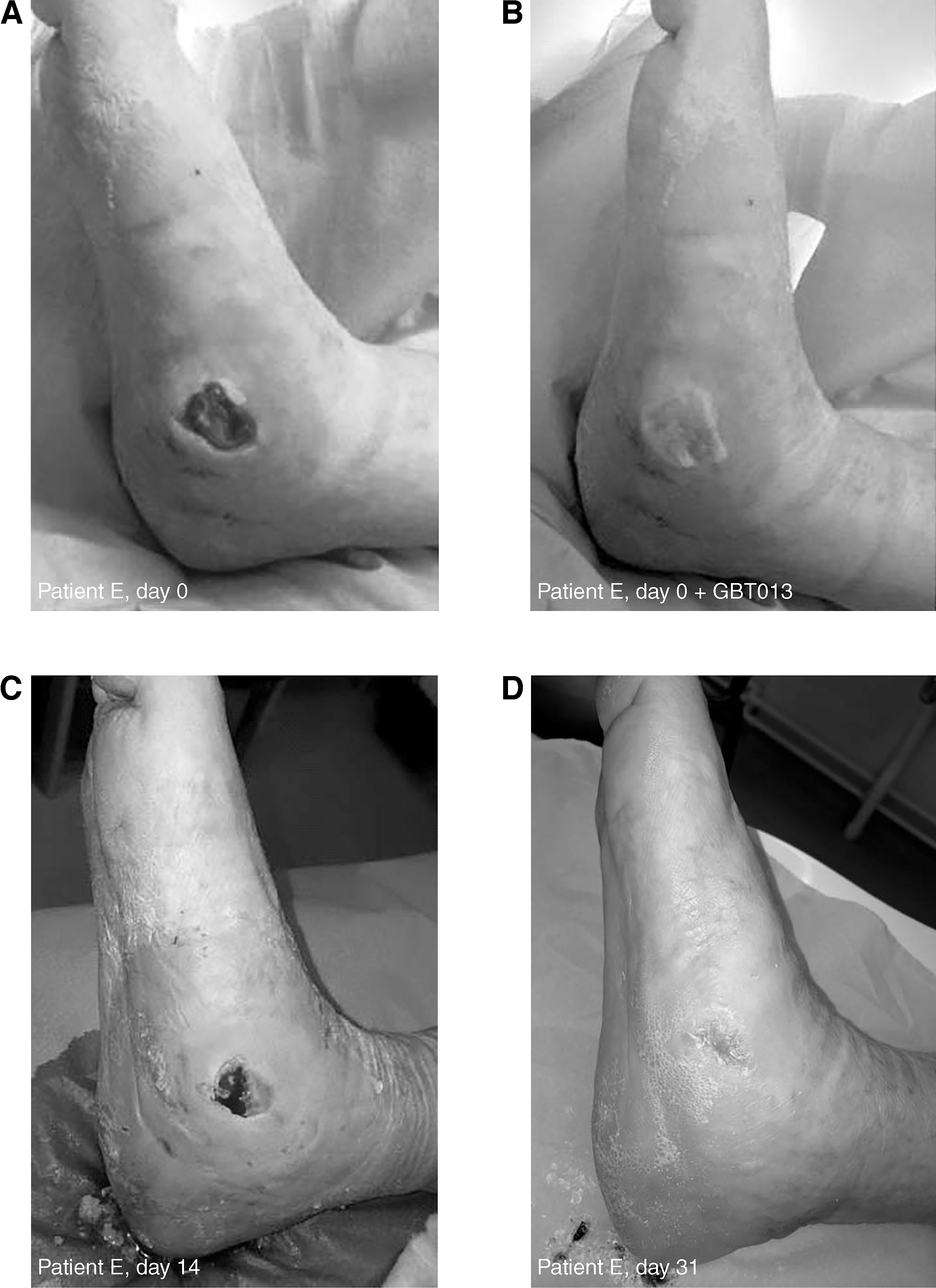
Case E was a 73-year-old woman with type 2 diabetes (HbA1c value, 6.7%) diagnosed 20 years before the beginning of treatment. Other diabetic complications included retinopathy and nephropathy. She had a DFU under the scaphoid lasting for 6 months (grade 3D, 3.4 cm2) (Fig. 5). Regarding vascular status, peripheral artery disease requiring revascularization was present before treatment. The patient received three applications of GBT013, once per week for the first 3 weeks. ALLEVYN Gentle Border (Smith & Nephew) was used as a secondary dressing. The patient was prescribed a reduction in home walking instead of wearing a discharge shoe. The wound was healed completely at day 31 (4 weeks) (Table 2). Revascularization and antibiotics before GBT013 treatment allowed the reclassification of this patient with a grade lower than 3B. A bone biopsy had revealed a quinolone-resistant Staphylococcus infection. This patient was treated with rifampicin and sulfamethoxazole–trimethoprim from day 4 to day 73. At each follow-up visit, GBT013 was not apparent and was incorporated and/or biodegraded into the wound. This wound had reulcerated after 15 months.
Figure 5. Patient E with a 6-month-old foot ulceration under the scaphoid (University of Texas Diabetic Wound Classification grade 3D, 3.4 cm2) was treated with one application of GBT013 dressing per week for 3 weeks. The GBT013 dressing was covered with ALLEVYN Gentle Border changed once per week. Photographs were obtained at day 0 before (A) and after the first GBT013 application (B), and at day 14 (2 weeks) after debridement and before the last GBT013 application (C). After 31 days (4 weeks), the wound was considered to be healed, with the formation of a crust (D). This patient was treated with an antibiotic from day 4 to day 73.
Japma 108 00419 g005

Case F

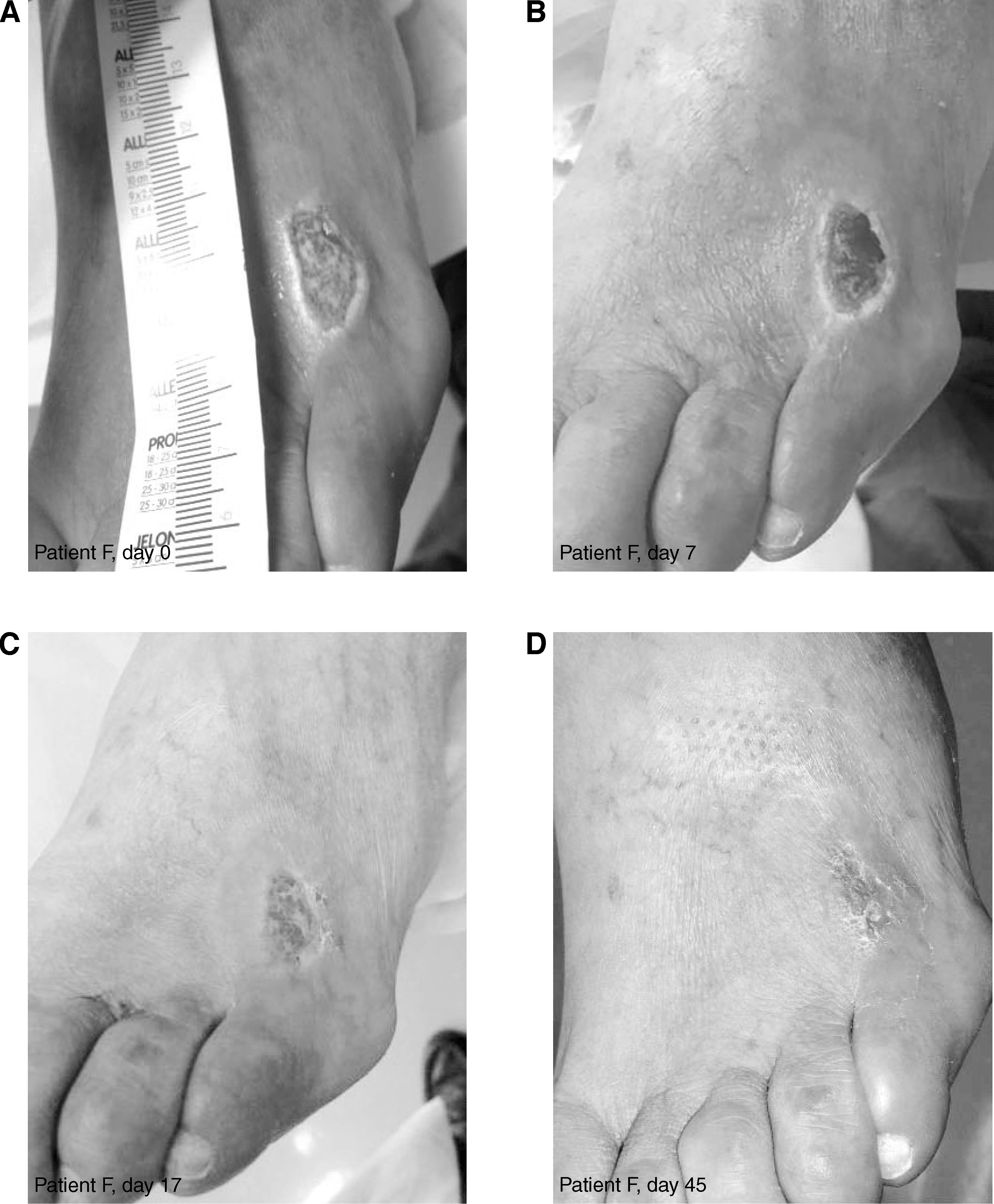
Case F was a 64-year-old man with type 2 diabetes (HbA1c value, 9.2%) diagnosed 10 years before the beginning of treatment. The patient had no other diabetic complications. He had a DFU on the top of the left foot lasting for 3 months (grade 1A, 2.6 cm2) (Fig. 6). The patient received three applications of GBT013, once per week for the first 3 weeks. ALLEVYN Gentle Border was used as a secondary dressing. No offloading device was used, as the wound was on the top of the foot. The wound was completely healed at day 45 (6 weeks) (Table 2). At each follow-up visit, GBT013 was not apparent and was incorporated and/or biodegraded into the wound.
Figure 6. Patient F with a 3-month-old upper foot ulceration (University of Texas Diabetic Wound Classification grade 1A, 2.6 cm2) of unknown cause, treated with one application of GBT013 dressing per week for 3 weeks. GBT013 dressing was covered with ALLEVYN Gentle Border changed once per week. Photographs were obtained at day 0 just before the first GBT013 application (A), after 7 days (1 week) (B), and after 17 days (2 weeks) (C). At the last visit at day 45 (6 weeks), the wound was healed (D).
Japma 108 00419 g006

Case G

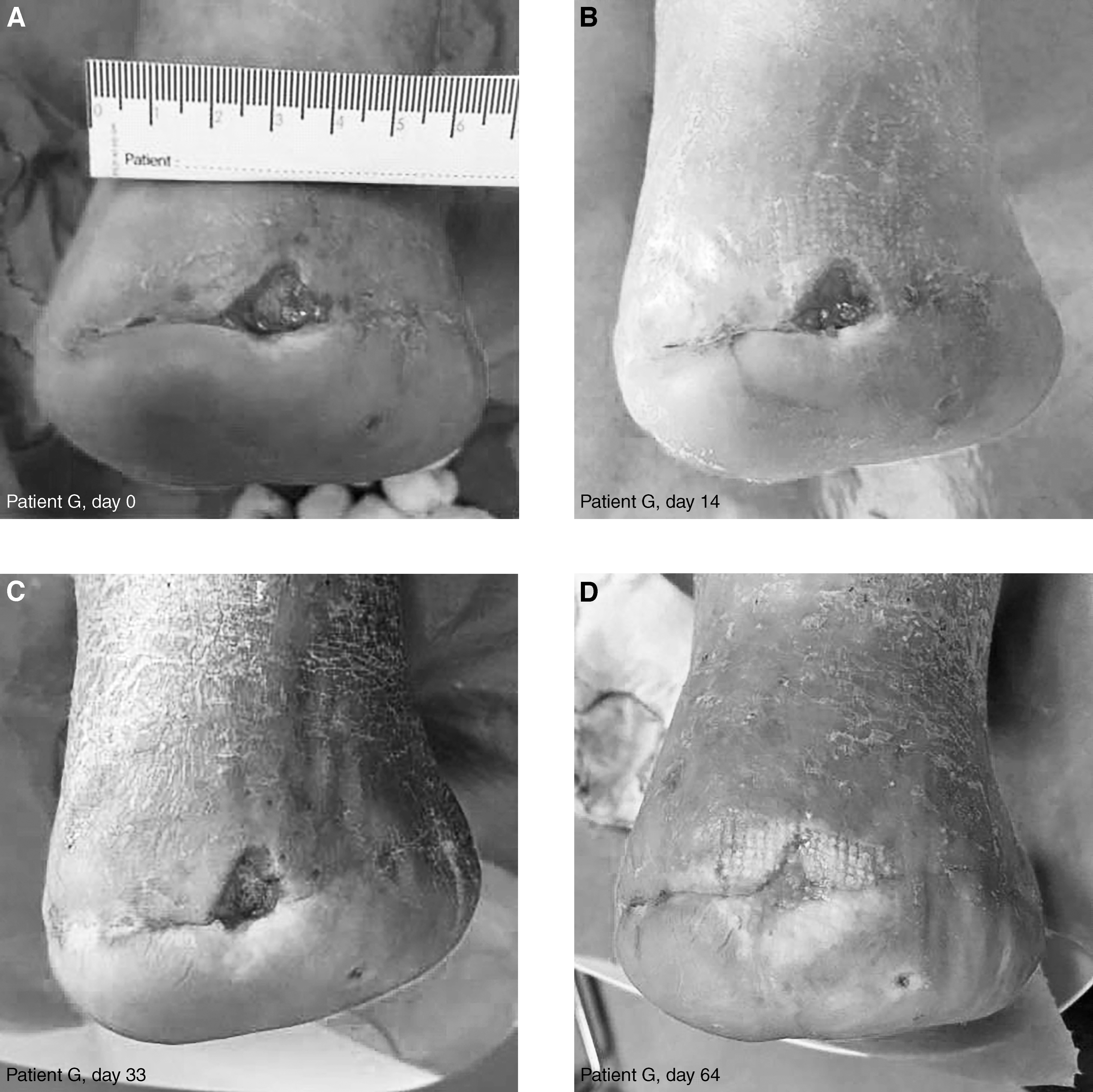
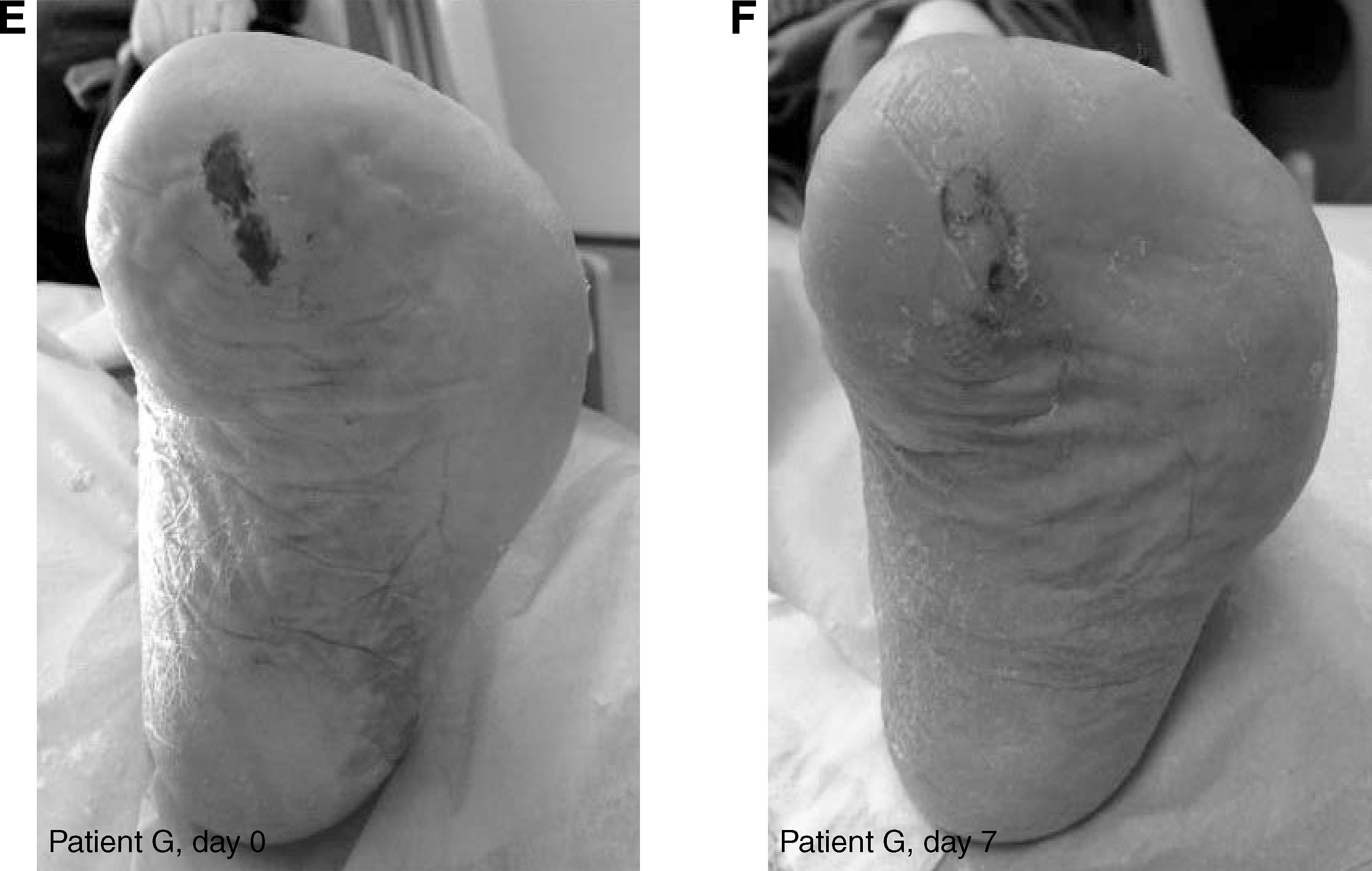
Case G was a 71-year-old man with type 2 diabetes (HbA1c value, 9.4%) diagnosed 29 years before the beginning of the treatment. Others diabetic complications included retinopathy and nephropathy. He had a DFU lasting for 18 months on the junction of the flap and the dorsal skin of a TMA sequela (grade 2C, 1.4 cm2) (Fig. 7). Regarding vascular status, the patient had coronary artery disease and peripheral artery disease. Although ischemia was critical, the foot had no possibilities for revascularization. The patient received three GBT013 applications at weeks 0, 2, and 5. ALLEVYN Gentle Border was used as a secondary dressing. A Ransart boot (Fig. 2) was used as an offloading device. Although the wound size was smaller at the second follow-up visit, a significant increase was observed before the third GBT013 application at week 5. However, at day 64 (9 weeks), the wound finally reached a reduction of size of 50% compared with its initial size (Fig. 7D). As it was painful for this patient, the debridement was not very sharply done. The GBT013 remained clearly apparent between each application. At 1.5 years after the last observation on day 64, the ulcer was still not closed. Moreover, during follow-up, this patient had a new ulcer (grade 1C, 1.4 cm2) on the sole of the same foot caused by a blister on day 33 (Fig. 7E). The wound was treated with only one application of GBT013 and was healed the next week (Fig. 7F). After GBT013 treatment, this last wound did not reulcerate.
Figure 7. Patient G, with an 18-month-old foot ulceration (University of Texas Diabetic Wound Classification grade 2C, 1.4 cm2) on a transmetatarsal amputation flap junction, was treated with four applications of GBT013 dressing once every 2 weeks. GBT013 dressing was covered with ALLEVYN Gentle Border changed once every 2 weeks. Photographs were obtained at day 0 (A), day 14 (2 weeks) (B), day 33 (4 weeks) (C), and day 64 (9 weeks) (D). The same patient had a blister on the foot sole on day 33 (University of Texas Diabetic Wound Classification grade 1C). After debridement (E), the same treatment was applied to the 1.4-cm2 wound. On the next visit (after 1 week), this second wound was healed (F).
Japma 108 00419 g007aJapma 108 00419 g007b

Discussion

Diabetic foot ulcer wound healing studies are highly complex due to a large heterogeneity in wound severity and associated diabetic complications (eg, neuropathy, arteriopathy). The treatment efficacy of DFU is thus always hard to demonstrate and may necessitate a very large cohort of patients. The clinical cases presented here describe the feasibility and clinical outcomes of only the first seven DFU patients treated with a new collagen-based matrix, GBT013.
Clinicians all agreed on the ease of use of this new porous matrix, which does not require the use of an operating room or staples. However, as recommended by both physicians, the initial packaging using a double sheet has now been modified by a single blister that can also be used as a tank for the GBT013 rehydration step (Fig. 1B).
The major breakthrough of GBT013 is a decrease in the number of dressing applications. Indeed, current DFU drugs or medical devices are applied every 1 to 3 days for 12 weeks. In contrast, only one to five GBT013 applications every 1 or 2 weeks were found to promote complete healing. This decrease in the number of dressing applications will represent a huge and practical gain of time for professional care. Furthermore, unlike other dressings, GBT013 is left in place and layered if further applications are needed. In consequence, this dramatically minimizes interference with the wound, thus accelerating the healing process. Interestingly, in the seven cases presented here, the secondary dressing was not always the same. Although it could have seriously complicated the interpretation of the clinical outcomes, no influence was observed, further simplifying the practical application of GBT013.
Despite having DFU treatment failure (patients A and G) or a stagnation in healing time (patients B, C, D, E, and F), five of the seven patients treated with GBT013 showed complete healing by 4 to 7 weeks. Regarding the two patients with incomplete healing (patients A and G reached 44% and 50% of wound closure, respectively), the DFU appeared following a posttransmetatarsal amputation, which remains a major healing challenge.[22] GBT013 was then the treatment of last resort, as those two ulcers were in treatment failure, including graft failure. The advanced age of those two ulcers (23 and 18 months, respectively), the duration of type 2 diabetes (33 and 29 years, respectively), and the presence of a Streptococcus infection in patient A did not ease the wound healing process.[20,21] Levels of HbA1c were also elevated (≥9%) and patients displayed several others diabetic complications (ie, retinopathy and nephropathy) at the time of follow-up.
Despite a very small number of patients, these first clinical cases strengthened preclinical evidence of the efficacy of GBT013.[17] This is nevertheless still extremely encouraging when compared with standard care such as sharp debridement, cleaning, and bandage with moistened gauze, which lead to complete healing of only 24.2% of DFUs after 12 weeks.[5]

Conclusions

Enhancing healing time allows the skin barrier a faster restoration, decreasing the risk of infection. This is critical, as infections occur in 60% of DFUs and are the first cause of death for DFU patients.[23,24] GBT013 not only will affect the welfare of patients but will also simplify the practitioner’s recommendations and habits, decreasing the global care costs. Although a small number of patients were studied, these results pave the way for a future randomized, controlled clinical trial design for DFU patients.

Acknowledgments

Stephanie Dupoiron for correcting the manuscript.

Financial Disclosure

None reported.

Conflict of Interest

None reported.

References

  1. Guariguata L, Whiting DR, Hambleton I, et al: Global estimates of diabetes prevalence for 2013 and projections for 2035. Diabetes Res Clin Pract 103: 137, 2014.
  2. Stockl K, Vanderplas A, Tafesse E, et al: Costs of lower-extremity ulcers among patients with diabetes. Diabetes Care 27: 2129, 2004.
  3. Driver VR, Fabbi M, Lavery LA, et al: The costs of diabetic foot: the economic case for the limb salvage team. JAPMA 100: 335, 2010.
  4. Yazdanpanah L, Nasiri M, Adarvishi S: Literature review on the management of diabetic foot ulcer. World J Diabetes 6: 37, 2015.
  5. Margolis DJ, Kantor J, Berlin JA. Healing of diabetic neuropathic foot ulcers receiving standard treatment. A meta-analysis. Diabetes Care 22: 692, 1999.
  6. Edmonds M: Apligraf in the treatment of neuropathic diabetic foot ulcers. Int J Low Extrem Wounds 8: 11, 2009.
  7. Marston WA, Hanft J, Norwood P, et al: The efficacy and safety of Dermagraft in improving the healing of chronic diabetic foot ulcers: results of a prospective randomized trial. Diabetes Care 26: 1701, 2003.
  8. Wu SC, Marston W, Armstrong DG: Wound care: the role of advanced wound-healing technologies. JAPMA 100: 385, 2010.
  9. Driver VR, Lavery LA, Reyzelman AM, et al: A clinical trial of Integra Template for diabetic foot ulcer treatment. Wound Repair Regen 23: 891, 2015.
  10. Yao M, Attalla K, Ren Y, et al: Ease of use, safety, and efficacy of integra bilayer wound matrix in the treatment of diabetic foot ulcers in an outpatient clinical setting: a prospective pilot study. JAPMA 103: 274, 2013.
  11. Richard JL, Martini J, Bonello Faraill MM, et al: Management of diabetic foot ulcers with a TLC-NOSF wound dressing. J Wound Care 21: 142, 2012.
  12. Veves A, Sheehan P, Pham HT: A randomized, controlled trial of Promogran (a collagen/oxidized regenerated cellulose dressing) vs standard treatment in the management of diabetic foot ulcers. Arch Surg 137: 822, 2002.
  13. Waycaster CR, Gilligan AM, Motley TA: Cost-effectiveness of becaplermin gel on diabetic foot ulcer healing: changes in wound surface area. JAPMA 106: 273, 2016.
  14. Wieman TJ, Smiell JM, Su Y: Efficacy and safety of a topical gel formulation of recombinant human platelet-derived growth factor-BB (becaplermin) in patients with chronic neuropathic diabetic ulcers. A phase III randomized placebo-controlled double-blind study. Diabetes Care 21: 822, 1998.
  15. Li Z, Guo S, Yao F, et al: Increased ratio of serum matrix metalloproteinase-9 against TIMP-1 predicts poor wound healing in diabetic foot ulcers. J Diabetes Complications 27: 380, 2013.
  16. Yang C, Zhu P, Yan L, et al: Dynamic changes in matrix metalloproteinase 9 and tissue inhibitor of metalloproteinase 1 levels during wound healing in diabetic rats. JAPMA 99: 489, 2009.
  17. Guillemin Y, Le Broc D, Segalen C, et al: Efficacy of a collagen-based dressing in an animal model of delayed wound healing. J Wound Care 25: 406, 2016.
  18. Armstrong DG, Lavery LA, Harkless LB: Validation of a diabetic wound classification system. The contribution of depth, infection, and ischemia to risk of amputation. Diabetes Care 21: 855, 1998.
  19. Dumont IJ, Lepeut MS, Tsirtsikolou DM, et al: A proof-of-concept study of the effectiveness of a removable device for offloading in patients with neuropathic ulceration of the foot: the Ransart boot. Diabet Med 26: 778, 2009.
  20. Margolis DJ, Allen-Taylor L, Hoffstad O, et al: Diabetic neuropathic foot ulcers: the association of wound size, wound duration, and wound grade on healing. Diabetes Care 25: 1835, 2002.
  21. Oyibo SO, Jude EB, Tarawneh I, et al: The effects of ulcer size and site, patient’s age, sex and type and duration of diabetes on the outcome of diabetic foot ulcers. Diabet Med 18: 133, 2001.
  22. Landry GJ, Silverman DA, Liem TK, et al: Predictors of healing and functional outcome following transmetatarsal amputations. Arch Surg 146: 1005, 2011.
  23. Lavery LA, Armstrong DG, Wunderlich RP, et al: Risk factors for foot infections in individuals with diabetes. Diabetes Care 29: 1288, 2006.
  24. Martins-Mendes D, Monteiro-Soares M, Boyko EJ, et al: The independent contribution of diabetic foot ulcer on lower extremity amputation and mortality risk. J Diabetes Complications 28: 632, 2014.