We understand a mold to be the “reproduction of an anatomical structure or not by techniques of molding or impression with materials that allow a faithful adaptation of the structure that we want to reproduce.”[
1,
2]
Obtainment of the foot mold is an important advance for podiatric medicine because since its application, plantar orthoses have been composed over a mold in three dimensions. The method of mold obtainment is one of the indispensable procedures for individualization of orthopedic treatments, and, consequently, the therapeutic result depends greatly on the use of an adequate system of foot casting.[
1,
3-
9]
A custom-made insole has to act in all of the phases of gait, keeping and stabilizing in its case the physiologic or compensatory mobility of all of the foot joints and knowing that it influences the remaining articulations in ascending chains. Because most of the mistakes in the plantar supports are made during the process of foot casting, the negative mold must reproduce exactly the surface of the foot, within the normal parameters. Every time that the disorder requires it, a technique that allows obtainment of a plantar support that acts not only in dynamic but also in static, keeping all of the foot structures in an equilibrium position, neutrality, and, hence, of mechanical advantage has to be chosen.[
2,
4,
10]
Choosing a method of mold obtainment depends on the objective or function that the orthosis will fulfill and on the degree of malformation or mobility that the patient's foot presents. Mold impressions with plaster[
3-
5,
7-
9,
11] and phenolic foam[
3,
5,
6,
9] constitute the most commonly used techniques in podiatric medicine to obtain negative molds.[
1,
2]
In the revised bibliography, there are some studies that compare different techniques of foot casting. Valmassy et al[
11] discussed the advantages and disadvantages of all three impression methods. He suggests that the forefoot-to-hindfoot alignment obtained by the sitting semiweightbearing method will be different than alignments obtained with the supine nonweightbearing and prone nonweightbearing impression methods. They hypothesized that this difference is caused by the inability to fully lock the midtarsal joint when the foot is in a semiweightbearing position.[
3,
11]
McPoil et al[
3] investigated the forefoot-to-rearfoot angles, comparing three techniques used to obtain a neutral plaster impression. Reliable forefoot-to-rearfoot angles were found irrespective of casting technique, with intraclass correlation coefficients (ICCs) ranging from 0.81 to 0.99 for the three casting techniques.[
3,
4] Chuter et al[
8] investigated the variability of the forefoot-to-rearfoot alignment using a neutral suspension casting technique. The results demonstrated that level of experience did not affect the accuracy of casting outcomes.[
4,
8]
Guldemond et al[
9] noted that foam box and plaster casting did not lead to different gait lines. Foam box casting is preferable for the construction of accommodative and functional orthoses because it is easier to use, quicker, cleaner, and less expensive and because it leads to better walking convenience.[
4,
9] Trotter et al[
5] investigated intrarater and interrater reliability, comparing forefoot-to-rearfoot alignment between plaster casting and a foam box impression technique. The authors concluded that although plaster of Paris casting is widely perceived by the foot care community as the gold standard, other casting techniques may prove to be equally reliable.[
4,
5]
Ki et al[
6] concluded that the peak pressure and the pressure-time integral in the middle forefoot regions were lower in the computer-aided design and computer-aided manufacturing (CAD-CAM) approach than in the foam impression approach. The CAD-CAM system provided a pressure distribution pattern, except for the middle forefoot region, similar to the one provided by the foam impression method. Carroll et al[
4] indicated that digital scanning is a reliable technique, with reduced measurement variability irrespective of clinical experience compared with neutral suspension casting. The results also demonstrated increased measurement error in the forefoot-to-rearfoot alignment both within and between raters when casting with the neutral suspension technique. Lee et al[
7] suggested that as long as the forefoot and hindfoot are aligned, variations in the orientation of the subtalar joint do not significantly change the plantar foot shape of the positive model. However, the possibility of comparing and relating forefoot and hindfoot widths in the foot cast with plaster in weightbearing and nonweightbearing with phenolic foam in weightbearing is not appreciated in any case.
The established goals of the present study were 1) to determine which of the methods of mold obtainment reproduces more faithfully the expansion of the foot in weightbearing, 2) to compare forefoot and hindfoot widths among the different methods of mold obtainment and barefoot weightbearing, and 3) to observe whether there are quantitative similarities among the three kinds of mold obtainment. This is clinically useful because to compose a custom-made insole that perfectly adjusts to the foot we need to use a good molding technique.
Materials and Methods
Design
The model of investigation used has been established by the Argimon classification for a descriptive, transversal, and observational study.[
12] During the observation there are no modifications in any natural parameters of the participants, and any maneuver of correction is made during foot casting. In relation to weightbearing molding, the participant is standing with the foot in the relaxed calcaneal stance position.
Participants
The sample consisted of 54 students (17 men and 37 women) from the Podiatry School at the University of Seville (Seville, Spain). Participants were aged 19 to 30 years and had normal feet. One mold using each of the different techniques was taken from the left foot of the patient. The study participants attended the Clinical Area of Podiatry at the University of Seville from November 1, 2013, to January 31, 2014, where they were informed about the study and were given a document of consent that informed them about the aims and possible risks of the investigation. All of those who offered to take part in the study gave their written informed consent before being recruited. The ethical and legal principles required in any biomedical research essentially considered in the Oviedo Agreement and the Declaration of Helsinki were compliant at all times; in addition, there was a guarantee of data confidentiality complying with Spanish Law 4/2002, of 14 November, basic regulator of patient autonomy.[
13,
14]
Materials
Supporting the Investigation
Data analysis was performed with IBM SPSS Statistics for Windows, Version 18.0 (IBM Corp, Armonk, New York). For foot scanning, the Scanner Digital Plantar CbsScanFoot model EDP-G2-A (Computational Bio-Systems SL, Barcelona, Spain) was used. This electronic scanner allows the taking of the plantar print, capturing its geometry; it is also used in the study of the static of the supports and the plantar pressures, it captures the cutaneous map and allows the printing of the footprint in real size. Finally, we used AutoCAD software (Autodesk Inc, San Rafael, California) to measure the length of the widest part of the forefoot and hindfoot in all of the scanned images.
Measuring Variables
Phenolic foam, plaster cast (15.00 cm), cushion for the foot plaster cast in weightbearing, and other complementary materials, such as scissors, bucket of water, plastic film, stretcher, and pen, were used to obtain the foot molds and were not variables in the present study. The program AutoCAD 2004 (Autodesk Inc) was used for measuring variables.
Variables
The study variables were the length of the widest part of the forefoot and hindfoot, both in weightbearing, of the participant and the length of the widest part of forefoot and hindfoot in the molds obtained by the three techniques previously mentioned. These variables were measured eight times per foot from each individual.
Procedure
First, the left foot in weightbearing is scanned; then, one mold each is made using the three techniques from the same foot. The three casting techniques were performed in the same order.
Scanning in Barefoot Weightbearing
The left foot was placed in the middle of the scanner and the right foot at the same height but outside the scanner. The left foot was scanned in barefoot weightbearing with the participant standing with the foot in the relaxed calcaneal stance position.
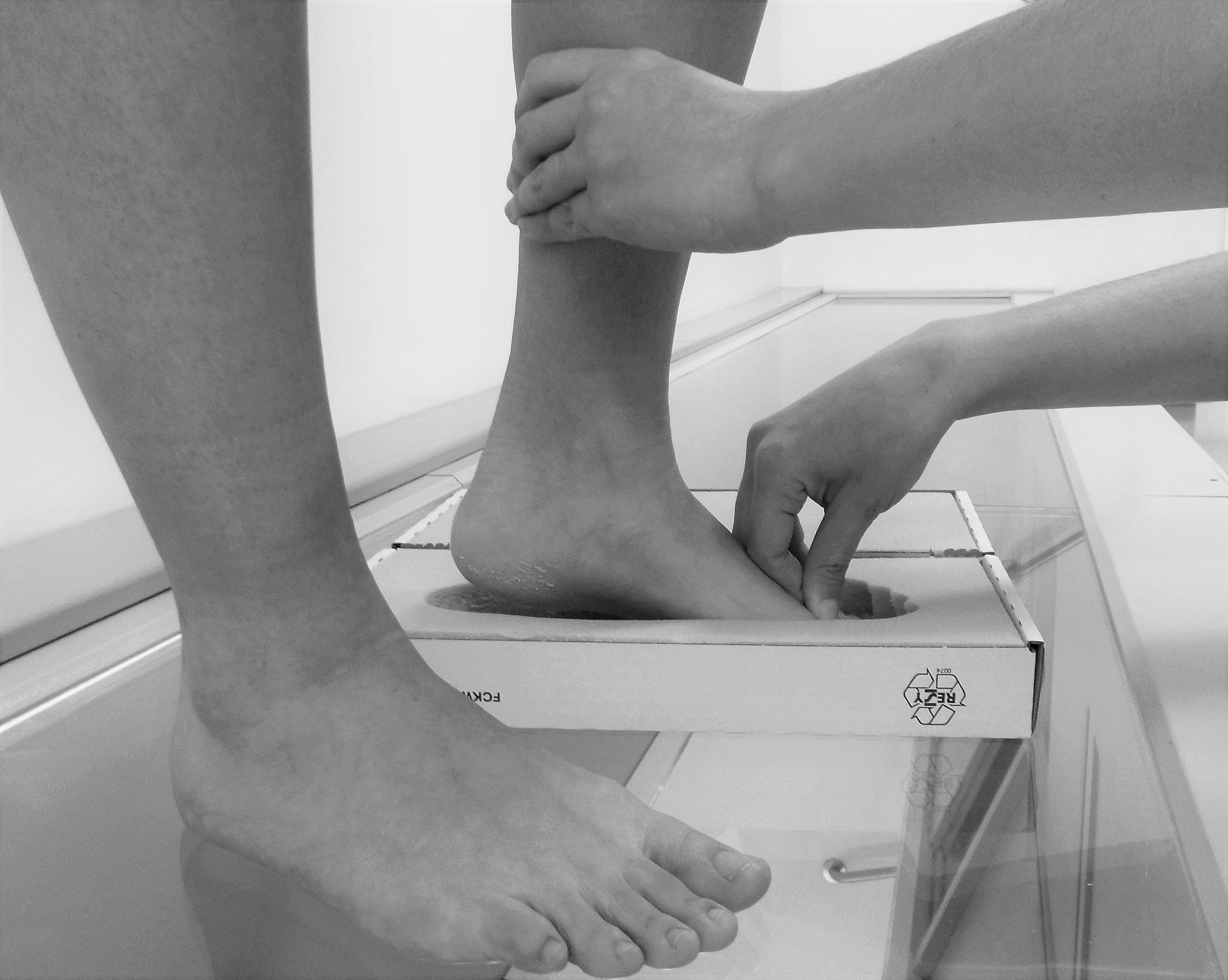
Foot Cast in Phenolic Foam
With the participant standing, the phenolic foam was placed under the left foot; then, the participant stepped on the foam without lifting the right foot off the floor. There was no correction maneuver, and after the participant had stepped on the foam, the toes and the metatarsals were pulled down over the foam by the person making the mold. We performed this technique because we wanted to obtain a stable foot mold. Finally, the participant was told to raise the heel and take the foot out of the phenolic foam, simulating a step (
Fig. 1).
Figure 1.
Foot is cast in phenolic foam by placing the foam under the foot and having the participant simulate taking a step.
Figure 1.
Foot is cast in phenolic foam by placing the foam under the foot and having the participant simulate taking a step.
After making the mold, the plaster powder was mixed with water until dissolved and poured over the phenolic foam. After that, the positive mold was sculpted, smoothing the corners all over the foot's edge.
Foot Cast in Plaster with Weightbearing
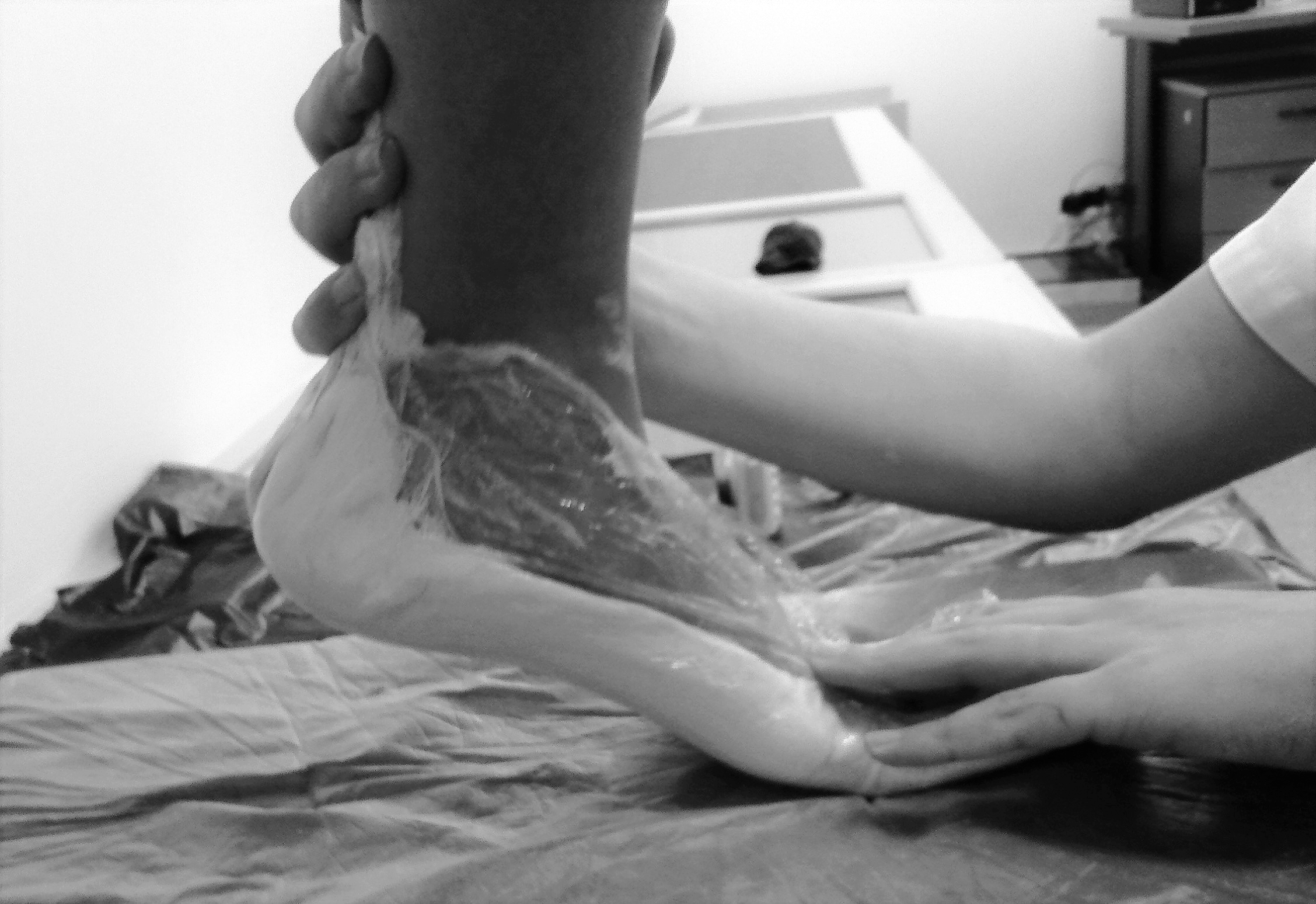
The length of the plaster cast was measured from the toes to the Achilles tendon. Some layers of cast with that length were cut, moistened, and homogenized with water. Finally, the cast was put over the cushion wrapped in plastic film.
In the standing position with the cushion set under the left foot, the participant stepped on the cushion without lifting the right foot from the floor. The cast was adapted to the foot with our hands and the help of the cushion. Any correction maneuvers were made, and we descended only to the first metatarsal so that the forefoot did not stay lifted. Finally, the participant was told to lift the heel and then the forefoot, simulating a step (
Fig. 2).
Figure 2.
Foot is cast in plaster with weightbearing. Any correction maneuvers are made, only descend to the first metatarsal, and the participant simulates taking a step.
Figure 2.
Foot is cast in plaster with weightbearing. Any correction maneuvers are made, only descend to the first metatarsal, and the participant simulates taking a step.
Foot Cast in Plaster in Nonweightbearing
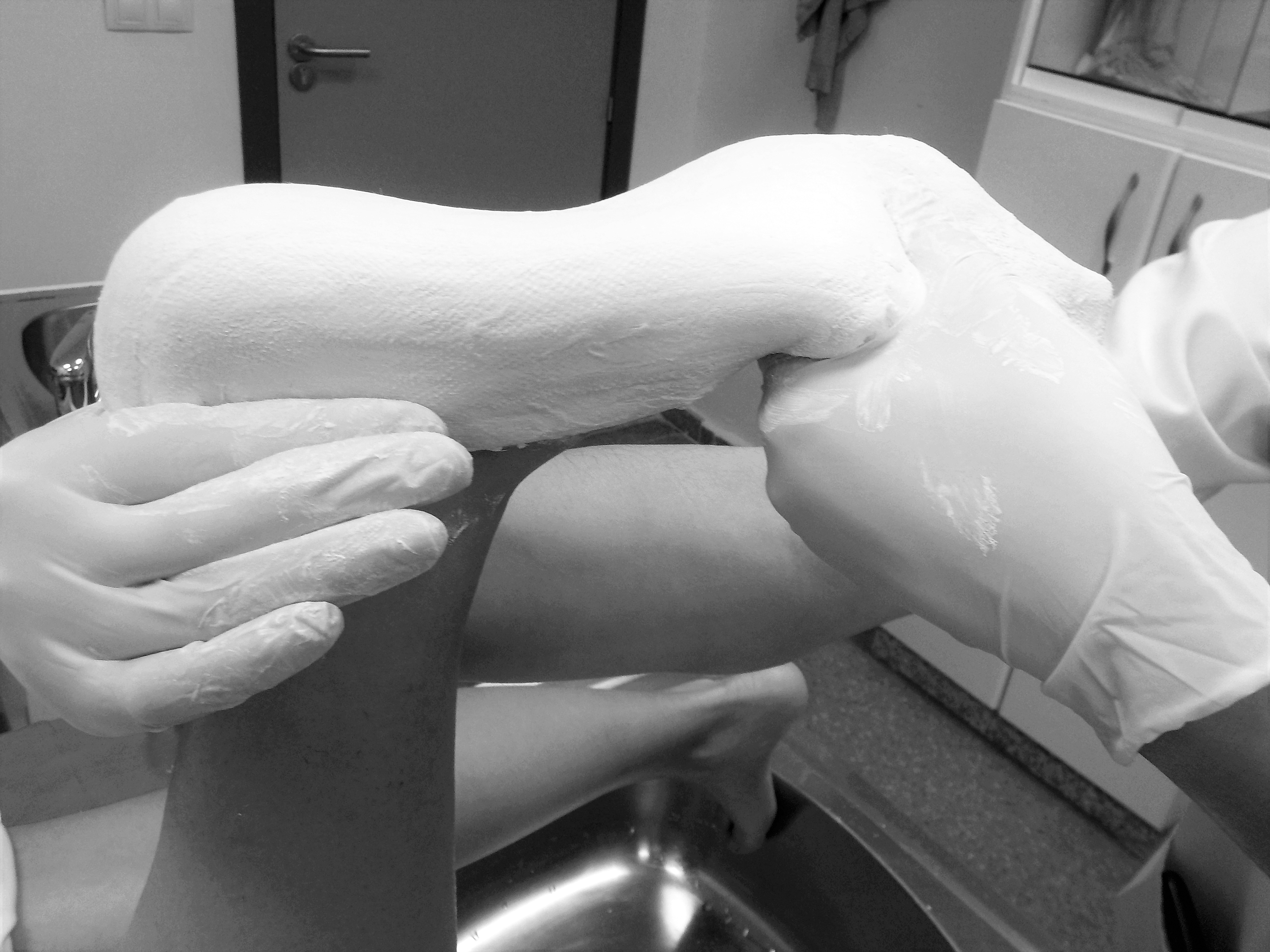
Similar to the foot cast in plaster with weightbearing, the length of the plaster cast was measured and some layers were overlapped, cut, moistened with water, and homogenized.
The participant was placed in the prone position, respecting the normal parameters of the lower limbs, with the knee flexed and the ankle at 90°. The cast was put over the sole of the left foot and was adapted and smoothed, avoiding the appearance of wrinkles and air. We put our contralateral hand in the navicular of the homolateral forefoot. After that, the mold was pulled out by lifting the straps of the heel, pinching the skin of the back, and then lifting the straps of the forefoot. The extraction was made from the heel to the toe zone (
Fig. 3).
Figure 3.
Foot is cast in plaster in nonweightbearing. The clinician places the contralateral hand in the navicular of the homolateral forefoot. The extraction is made from the heel to the toe zone.
Figure 3.
Foot is cast in plaster in nonweightbearing. The clinician places the contralateral hand in the navicular of the homolateral forefoot. The extraction is made from the heel to the toe zone.
Mold Scanning
After the foot cast was made, we placed each of the three molds in the middle of the scanner, parallel to the scanner edge.
Measuring with AutoCAD
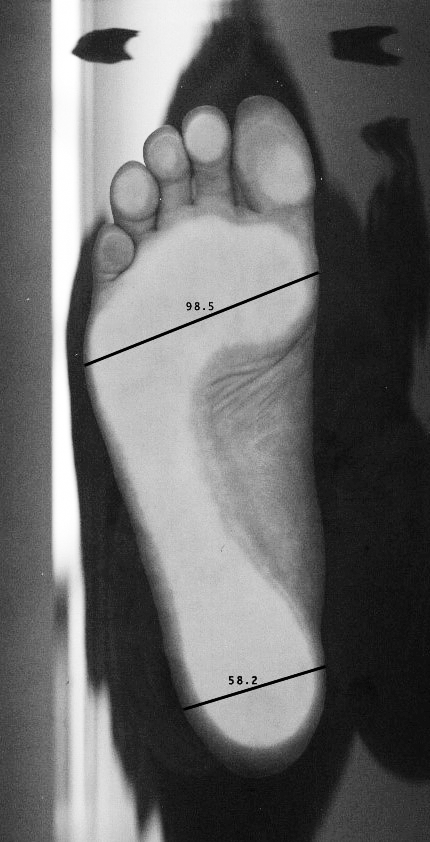
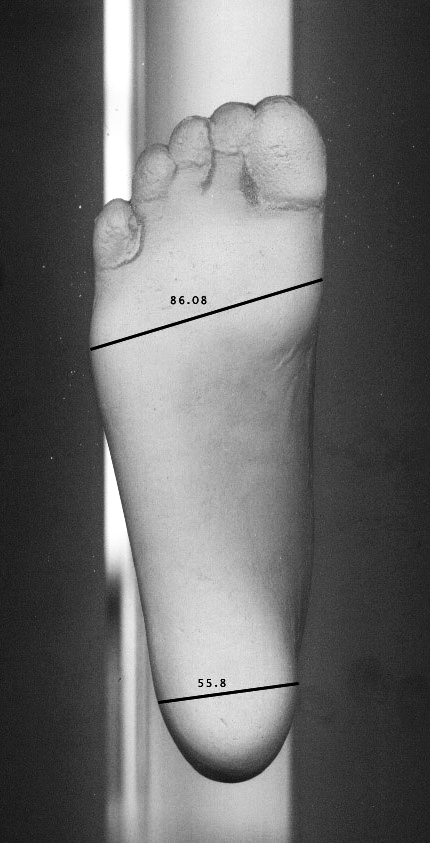
We measured the length of the widest part of the forefoot and hindfoot on all of the scanned images (
Figs. 4 and
5).
Figure 4.
Measurement of the length (in millimeters) of the widest part of the forefoot and hindfoot of all of the scanned images in barefoot weightbearing.
Figure 4.
Measurement of the length (in millimeters) of the widest part of the forefoot and hindfoot of all of the scanned images in barefoot weightbearing.
Figure 5.
Measurement of the length (in millimeters) of the widest part of the forefoot and hindfoot of all of the scanned images with phenolic foam. All of the measurements were taken on a positive mold of the foot.
Figure 5.
Measurement of the length (in millimeters) of the widest part of the forefoot and hindfoot of all of the scanned images with phenolic foam. All of the measurements were taken on a positive mold of the foot.
Statistical Analysis
A descriptive analysis of the variables included in the study was performed. By presenting a normal distribution sample, we performed parametric tests, reporting medians and standard deviations. To determine whether statistical significance was attained we used the Student t test, and to evaluate the correlation between variables we used the Pearson test. Data analysis was performed with a statistical software program (IBM SPSS Statistics for Windows, Version 18.0).
Results
We considered statistically significant all the values of P < .05. We analyzed the distribution of variables for each study situation with the Kolmogorov-Smirnov test, with a level of statistical significance of 0.20 > 0.05; a normal distribution predominated, except for the forefoot in phenolic foam. This variable presented a P value of 0.047, but we included it because the Q-Q plot showed a normal distribution.
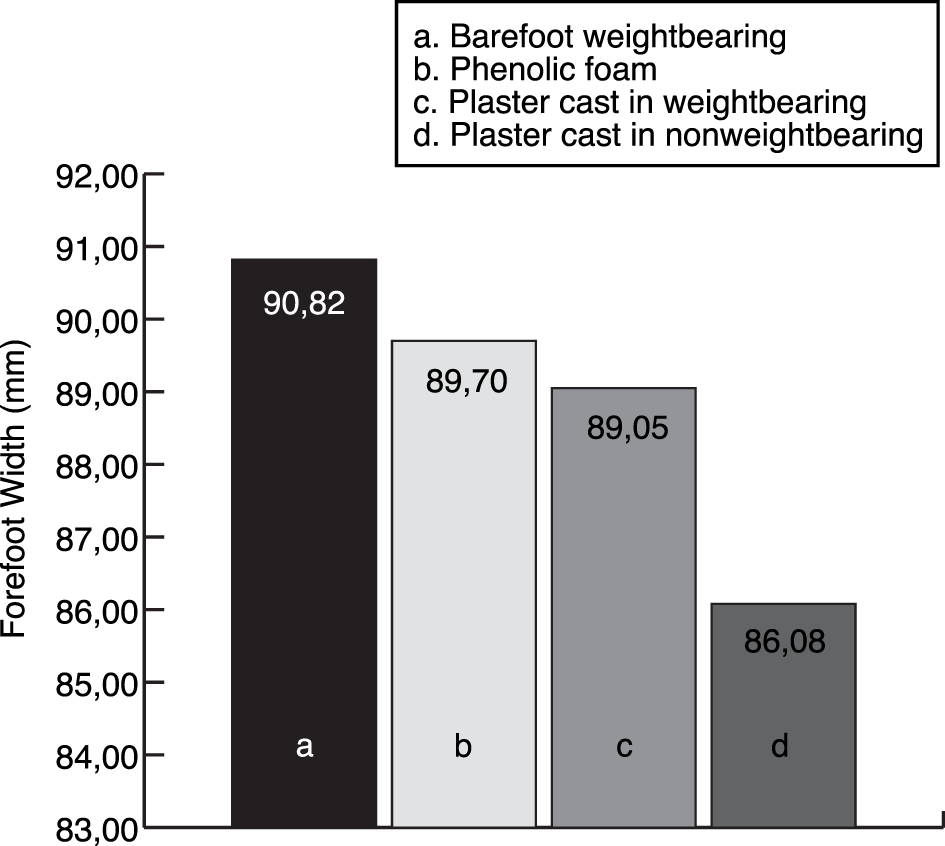
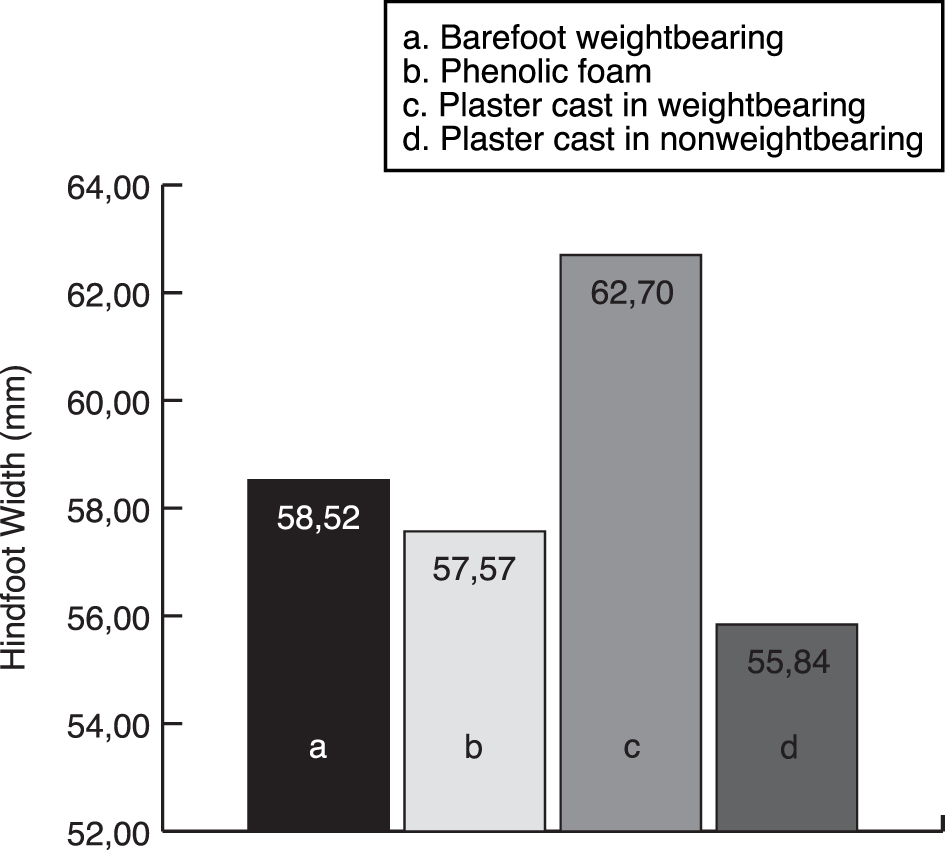
Analysis of the results is divided into the forefoot and the hindfoot. In the forefoot, we observed that the value obtained in barefoot weightbearing was greater than the width of the phenolic foam, the plaster cast in weightbearing, and the plaster cast in nonweightbearing. In the hindfoot, the value obtained in the plaster cast in weightbearing was greater than the width in barefoot weightbearing. Conversely, the values of the phenolic foam and the plaster cast in nonweightbearing were less than that in barefoot weightbearing.
We performed the Student
t test for related samples (
Table 1). All of the decisions regarding statistical significance were made using a
P < .05.
Table 1.
Correlation between the forefoot and hindfoot variables using Student t Test for Pearson Coefficient of Correlation
Table 1.
Correlation between the forefoot and hindfoot variables using Student t Test for Pearson Coefficient of Correlation
We obtained statistically significant differences (Student
t test), so we used the Pearson correlation coefficient (
Table 1) to determine whether there was a correlation between the forefoot and hindfoot variables. In this way, we could determine the relation between them and then we could develop a linear regression after increasing the sample size.
In the hindfoot, the results showed that, as in the forefoot, phenolic foam was more approximated to the coefficient of correlation with a P value of 0.967. However, the plaster cast in nonweightbearing was in second place, followed by the plaster cast in weightbearing.
Based on the obtained data (
Figs. 6 and
7), the results show that in the forefoot, the technique that is more similar to the forefoot in barefoot weightbearing was that taken with phenolic foam and the one that is less similar is the plaster cast in nonweightbearing.
Figure 6.
Comparison of forefoot widths between barefoot weightbearing and the three casting techniques.
Figure 6.
Comparison of forefoot widths between barefoot weightbearing and the three casting techniques.
Figure 7.
Comparison of hindfoot widths between barefoot weightbearing and the three casting techniques.
Figure 7.
Comparison of hindfoot widths between barefoot weightbearing and the three casting techniques.
Regarding the hindfoot, the technique with phenolic foam was more similar to the average of the value obtained in the hindfoot in barefoot weightbearing. The value obtained with the plaster cast in weightbearing was greater than that in the hindfoot in barefoot weightbearing.
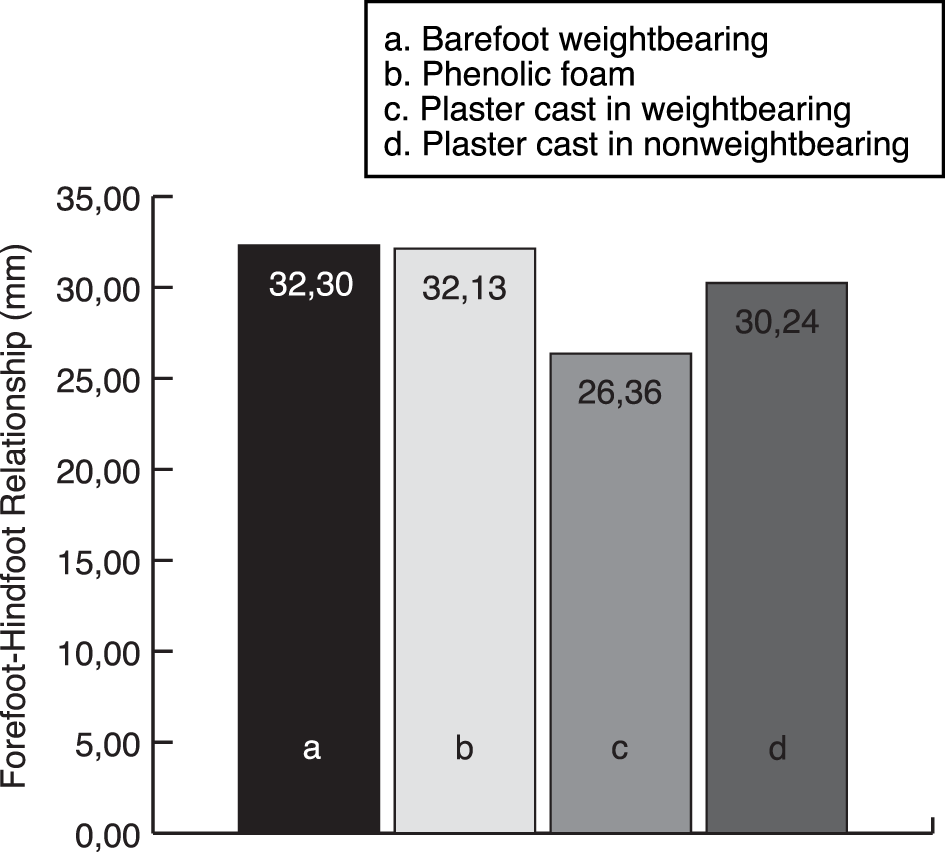
Afterward, we checked and compared the relation that is established between the forefoot and hindfoot (
Fig. 8), calculating the difference between the values from the forefoot to the hindfoot, obtained in the previous calculated averages, determining that the technique of mold obtainment represents with more similarities the forefoot-hindfoot relationship in barefoot weightbearing. The results show that the technique that is more similar to barefoot weightbearing is phenolic foam, and the one that is most different is the plaster cast in weightbearing. The fact that this proportion is kept indicates us that the mold does not modify the foot proportion.
Figure 8.
Forefoot-hindfoot relationship: barefoot weightbearing and the three casting techniques.
Figure 8.
Forefoot-hindfoot relationship: barefoot weightbearing and the three casting techniques.
To determine whether there is similarity between the measurements of the real foot (barefoot weightbearing) and the molds obtained, we calculated the difference between the width of the forefoot and hindfoot in barefoot weightbearing compared with the different methods of measuring molds.
When examining the relation established between the hindfoot in barefoot weightbearing and the hindfoot in the different techniques of foot cast, the phenolic foam technique showed the best relation. The foot cast with plaster in weightbearing was the only one that showed a negative result, indicating that it exceeds the values of the hindfoot width.
Discussion
We conclude that the method of obtaining molds that is more similar to expansion of the foot in weightbearing is phenolic foam. Following the obtained results, the width of the forefoot in the three foot casts is lesser than that in barefoot weightbearing. We consider that this is because of the absence of weightbearing.
In the same way, Laughton et al[
15] measured the width of the forefoot and hindfoot in a plaster cast in weightbearing and in phenolic foam in semiweightbearing and concluded that the width of the foot in the plaster cast in weightbearing is smaller because the plaster of the cast generates compression when it is dried in the skin and because of the absence of weight.
As for the foot cast in phenolic foam and plaster cast in weightbearing, this measure should be greater than or at least equal to barefoot weightbearing. We consider that these results are because we cleaned and sculpted the positive mold only in the phenolic foam. Therefore, in weightbearing, the plaster cast has an effect of contention of expansion of the forefoot, and it does not allow distention of the intermetatarsal ligament.
Regarding the hindfoot width, as expected, the width of the foot cast in plaster was greater than that of the hindfoot barefoot. This is because stepping on a shock-absorbing element such as the foam cushion causes more expansion of the plantar fat of the heel, so 3 mm of thickness is added to the plaster cast in both sides.
The plaster cast in nonweightbearing and the phenolic foam were less wide than the barefoot. Similar to the forefoot, in the phenolic foam, the cleaning of the mold could eliminate the millimeters that were omitted in the measurement, and in the plaster cast in nonweightbearing, the effect of the body weight is missing, so there is no expansion of the plantar fat.
Laughton et al[
15] indicated that the hindfoot in phenolic foam is wider than in the plaster cast in nonweightbearing because of the expansion of the soft tissues of the foot and its lateromedial movements.
It is important to note that none of the similar studies compare the foot with the different methods of foot casting; they only compare the techniques between themselves.[
3,
5,
8,
15,
16] Besides, the variables that were measured differ from those in the present study, except those of Laughton et al,[
15] who compared forefoot and hindfoot widths in a plaster cast in nonweightbearing and in phenolic foam in semiweightbearing. The variables measured by them were forefoot-hindfoot angle (the angle formed between the bisection of the calcaneus and the flat of the metatarsal heads),[
3,
5,
8,
15,
16] arch height,[
15] foot length, and forefoot and hindfoot width by the use of plantar supports.[
16] Some of these studies used other techniques of mold obtainment, such as three-dimensional laser scanning[
3,
15,
16] and phenolic foam in semiweightbearing.[
1,
3,
5] None of these studies did the foot cast in plaster in weightbearing.
Regarding the sample size, 54 feet were studied compared with an average of 14 feet in studies similar to this one,[
5,
15] with an equality of 17 men and 37 women, and in the study by McPoil et al,[
3] only women participated. In the present study, the ligamental laxity that favors expansion of the forefoot was not taken into account because, according to Gago,[
17] who conducted a prevalence study in the general population, 14% of the population aged 16 to 70 years (20% female and 7% male) presented with ligamental laxity.[
17,
18]
A limitation of the present study is the fact that we compared only three techniques of mold obtainment. The scanner used works in two dimensions, so it was more difficult to measure the hindfoot width in the plaster cast in weightbearing because this one is more rounded than the ones we get by the other techniques. However, we believe that this does not affect the results of this study.
Conclusions
In this study, the method that reproduced expansion of the foot in weightbearing with more reliability was determined to be phenolic foam. The results show that the width of the forefoot is greater in barefoot weightbearing than in the other three studied foot casts. The width of the hindfoot is greater with the plaster cast in weightbearing compared with barefoot weightbearing and the other two foot casts. Last, the forefoot-hindfoot relationship shows that there are significant differences between the techniques, with phenolic foam being more similar to barefoot weightbearing and the plaster cast in weightbearing the less similar.