Next Article in Journal
Comparative Study Between the Different Techniques of Molding and the Morphology of the Foot in Weightbearing
Previous Article in Journal
Toenail Changes in Patients with Diabetes Mellitus with and Without Onychomycosis
 
 
Journal of the American Podiatric Medical Association is published by MDPI from Volume 116 Issue 1 (2026). Previous articles were published by another publisher in Open Access under a CC-BY (or CC-BY-NC-ND) licence, and they are hosted by MDPI on mdpi.com as a courtesy and upon agreement with American Podiatric Medical Association.
Article

Combined Osseous Medial Cuneonavicular Coalition and Nonosseous Naviculocuboid Coalition Presenting as First Metatarsophalangeal Joint Pain. A Case Report

by
Nina S. Babu
1,* and
Melinda A. Bowlby
1
Department of Podiatry, Kaiser Foundation Hospital, 3925 Old Redwood Hwy, Stein Campus, Mob4, Santa Rosa, CA 95403, USA
2
Department of Podiatry, Swedish Medical Center, Seattle, WA, USA
*
Author to whom correspondence should be addressed.
J. Am. Podiatr. Med. Assoc. 2018, 108(5), 434-436; https://doi.org/10.7547/17-017
Published: 1 September 2018

Abstract

Tarsal coalitions of the lesser tarsus are relatively rare congenital anomalies. A case report of a 54-year-old man with an osseous medial cuneonavicular coalition and a nonosseous naviculocuboid coalition that presented as first metatarsophalangeal joint pain is described.

A tarsal coalition is a congenital anomalous union between two bones of the foot and can be either osseous or nonosseous.[1] An osseous coalition is termed synostosis, and nonosseous unions can be classified as either cartilaginous or fibrinous, termed synchondrosis and syndesmosis, respectively.[2] The incidence of a tarsal coalition is estimated to be 2% to 13%, and the most common tarsal coalitions reported are the calcaneonavicular and talocalcaneal coalitions.[1,3] Calcaneonavicular coalitions compose approximately 53% and middle facet talocalcaneal coalitions compose approximately 37% of all tarsal coalitions.[4] Among patients who have tarsal coalitions, the incidence of having bilateral tarsal coalitions ranges from 22% to 80%.[1] It is unknown what exactly causes tarsal coalitions, but it is believed to be a failure of embryonic mesenchyme during development.[1,2]
Much less common are coalitions involving the lesser tarsus.[5] One of the first reports of coalitions in the lesser tarsus was in 1977 when Gregersen[6] described a 42-year-old man with bilateral naviculocuneiform coalitions. Most of the current literature includes isolated case studies of one or two patients. However, Kumai et al[7] published one of the largest studies of 60 Japanese patients with an isolated navicular–first cuneiform coalition. Byun et al[8] noted a high rate of coalitions in the Korean population, reporting 28 patients with a navicular–first cuneiform coalition. Only a handful of other case reports exist documenting tarsal coalitions involving the lesser tarsal bones.[3,5-16] We present this rare case of a 54-year-old man with an osseous medial cuneonavicular coalition and a nonosseous naviculocuboid coalition that presented as first metatarsophalangeal joint pain.

Case Report

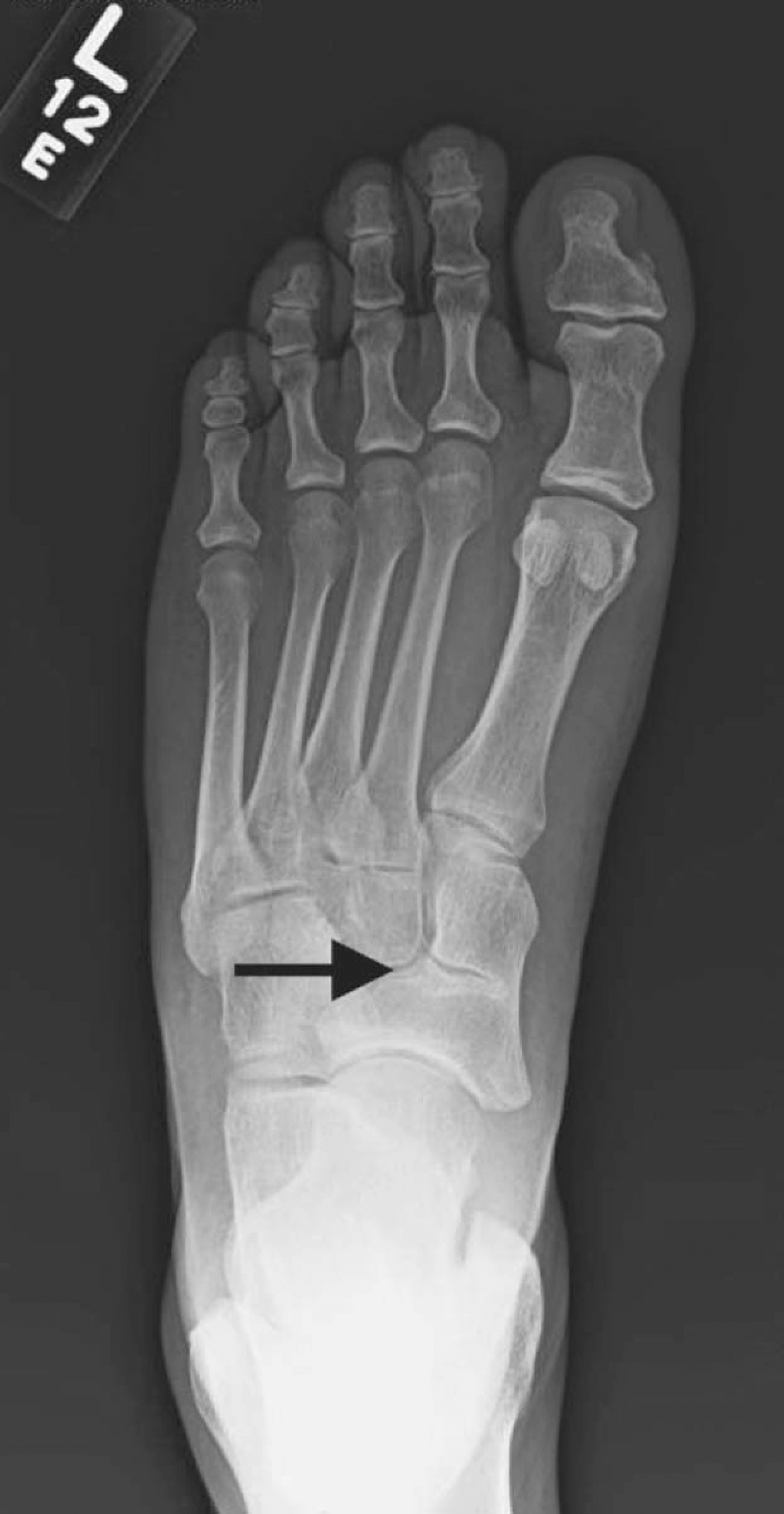
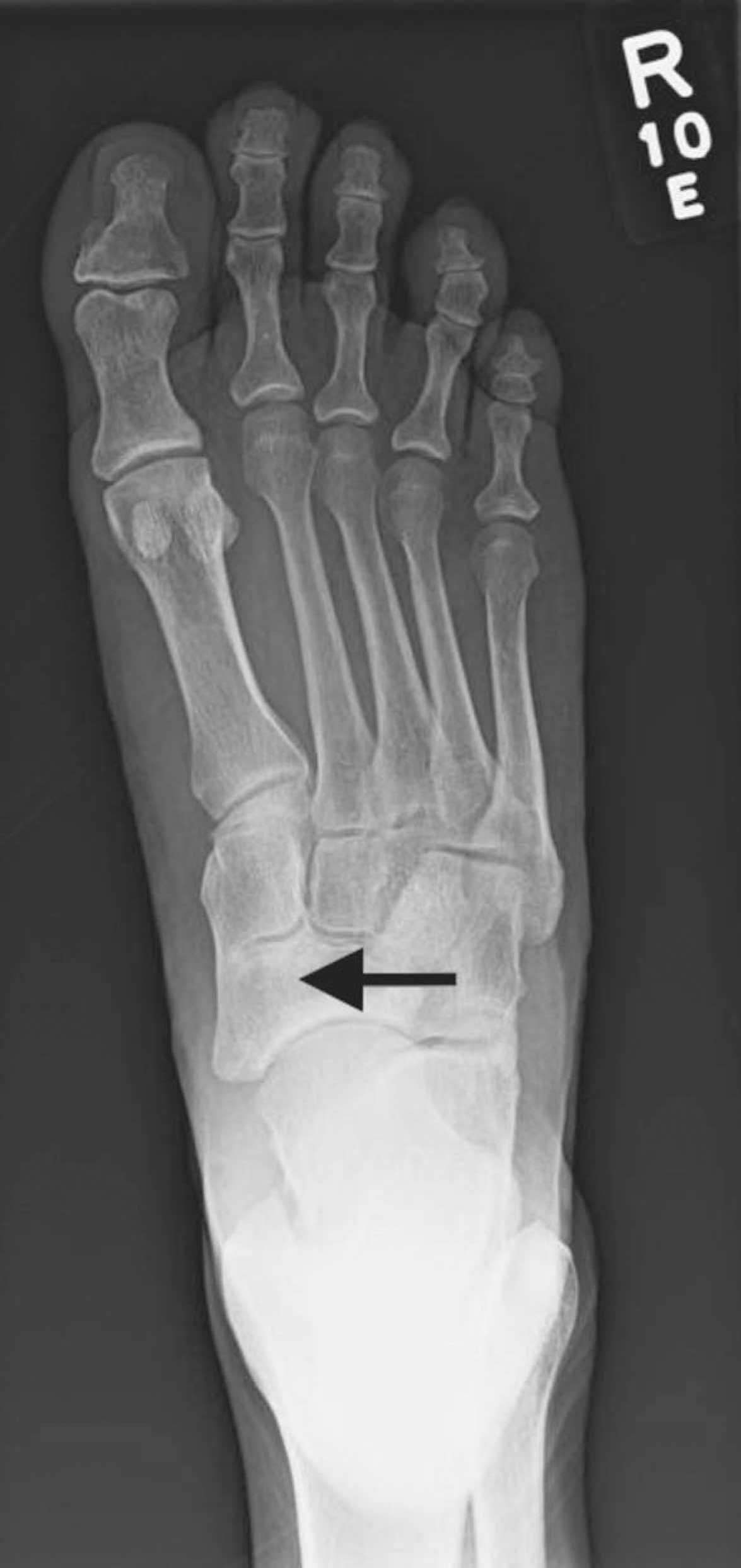
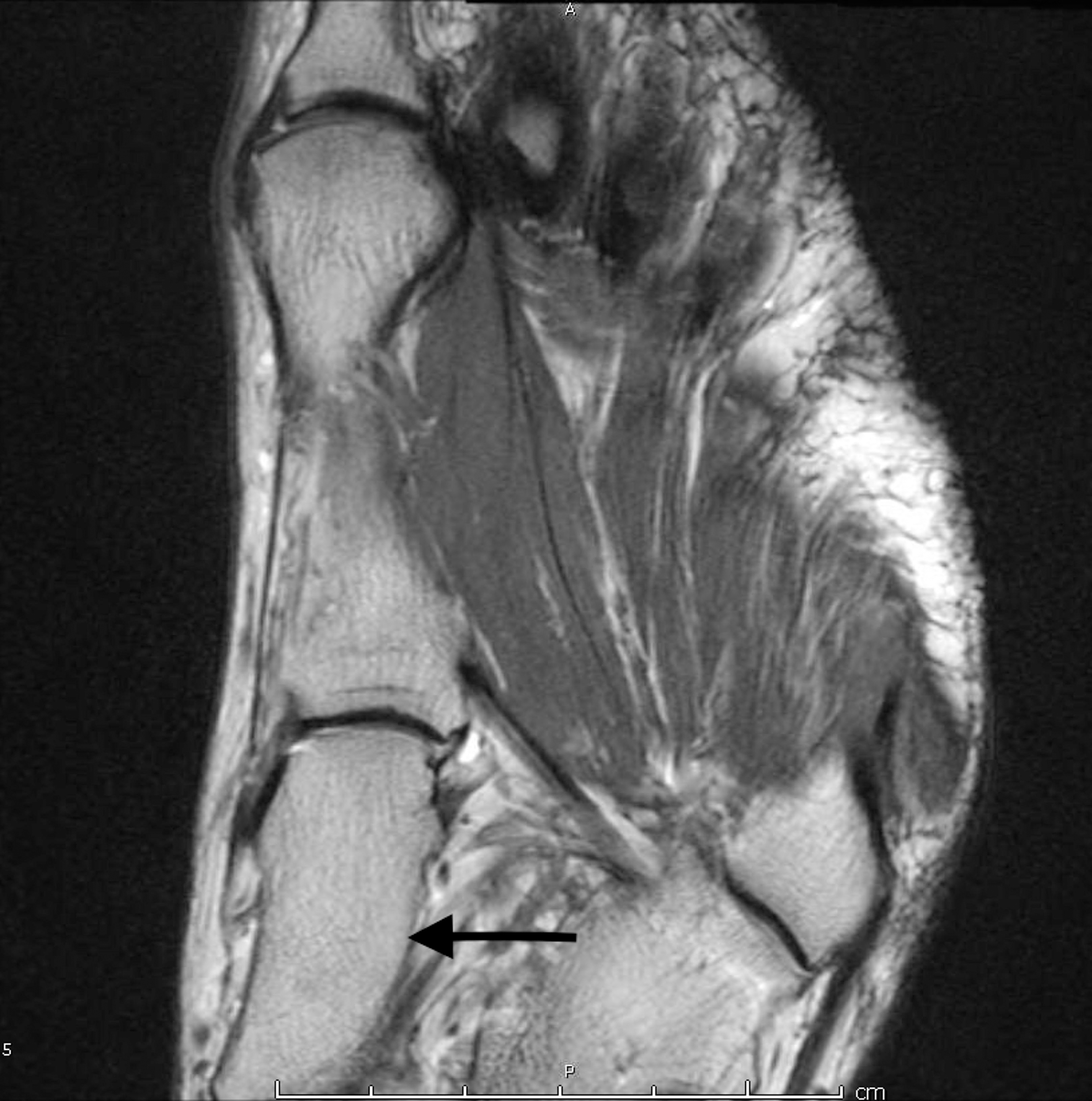
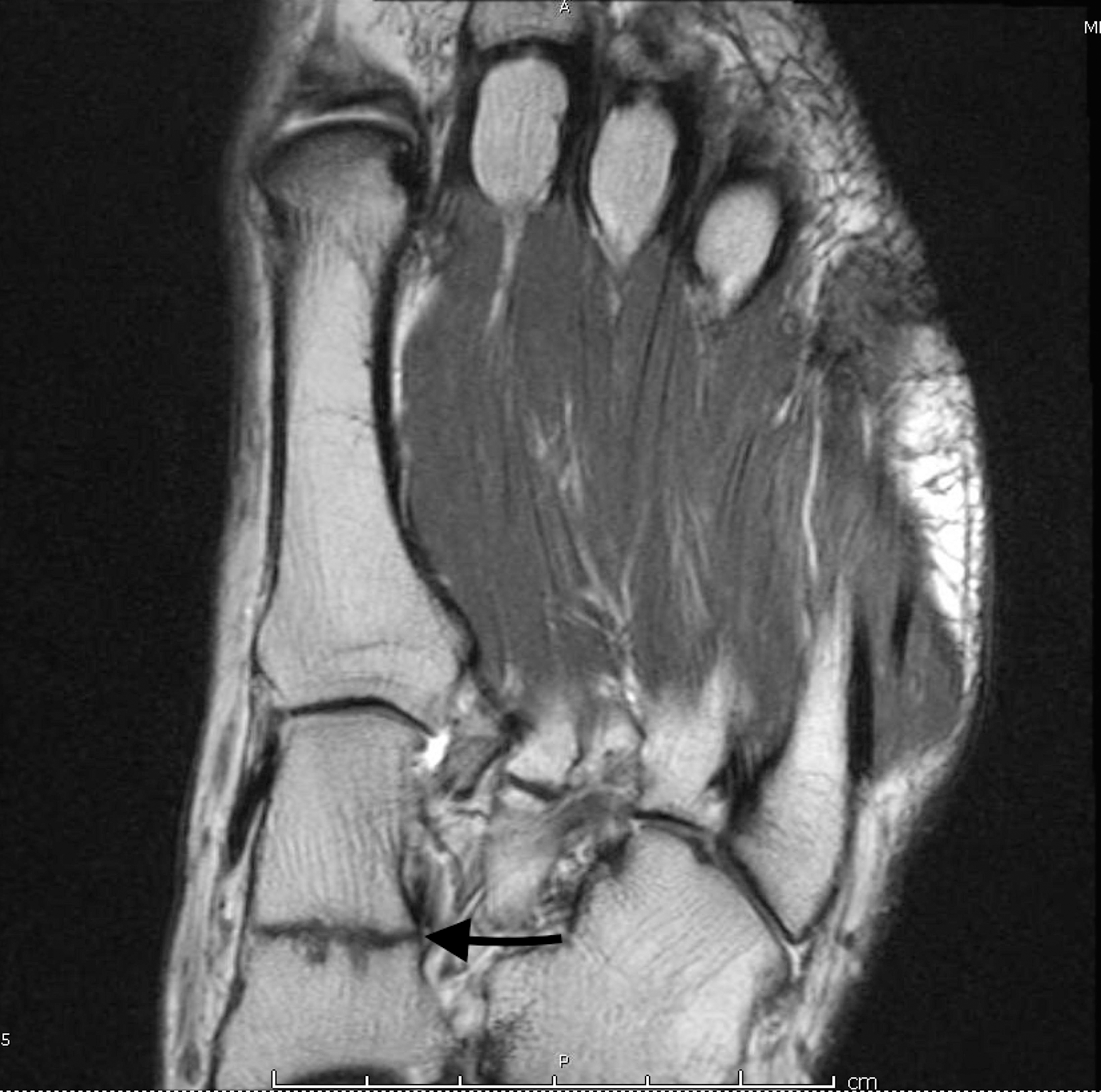
A 54-year-old Hispanic man with a medical history of hypertension, hyperlipidemia, and gastroesophageal reflux disease presented to the emergency department with left first metatarsophalangeal joint pain, especially when weightbearing. The patient denied any history of trauma or a precipitating event. On examination, there was no erythema or edema present. There was a mild decrease in range of motion of the left first metatarsophalangeal joint. Pain was elicited with range of motion of the left first metatarsophalangeal joint, but no crepitus was palpable. Standard radiographs were ordered, and a medial cuneonavicular coalition was seen (Fig. 1). Standard radiographs of the right foot were then ordered for comparison, and a medial cuneonavicular coalition was also seen (Fig. 2). A magnetic resonance image of the left foot was ordered, and a partial osseous coalition of the inferomedial aspect of the navicular and medial cuneiform was confirmed, in addition to a nonosseous naviculocuboid coalition (Fig. 3). The remaining articular surface of the medial cuneonavicular joint revealed chronic degeneration with subchondral cyst formation (Fig 4). The patient declined surgical treatment at the time. The patient was treated conservatively with prefabricated orthotic devices and shoe modifications.
Figure 1. Anteroposterior radiograph of the left foot demonstrates a partial osseous medial cuneonavicular coalition (arrow).
Japma 108 00434 g001
Figure 2. Anteroposterior radiograph of the right foot demonstrates a partial osseous medial cuneonavicular coalition (arrow).
Japma 108 00434 g002
Figure 3. Axial magnetic resonance image of the left foot confirms a partial osseous coalition of the inferomedial aspect of the navicular and medial cuneiform in addition to a nonosseous naviculocuboid coalition (arrow).
Japma 108 00434 g003
Figure 4. Axial magnetic resonance image reveals chronic degeneration of the remaining articular surface of the medial cuneonavicular joint with subchondral cyst formation.
Japma 108 00434 g004

Discussion

A patient with a lesser tarsus coalition may be asymptomatic, and the identification may be an incidental finding. The presence of tarsal coalitions are thought to increase stress on adjacent joints.[3] This is what may have initiated the pain the patient experienced at his left metatarsophalangeal joint, prompting him to present to the emergency department in the present case report. Because many tarsal coalitions are incidental findings, the incidence may actually be higher than reported.[3] Tarsal coalitions of the midtarsal joint, however, may be diagnosed later in life, similar to the patient in this case study, because there is a little range of motion in the lesser tarsus.[3] Magnetic resonance imaging was chosen in the present case study because it can detect nonosseous fibrinous coalitions and evaluate for marrow edema and affected soft tissue.
Herein, the patient was initially treated conservatively, as has been shown to be effective by Kumai et al.[7] Should the patient become more symptomatic, arthrodesis of the navicular cuneiform joint would best serve the patient owing to the degenerative changes and cyst formation, whereas the nonosseous naviculocuboid coalition could likely be resected.
Lesser tarsal coalitions, such as the case presented herein of a 54-year-old man with an osseous medial cuneonavicular coalition and a nonosseous naviculocuboid coalition, are rare, and diagnosis relies on a high index of suspicion. There are few published case studies of lesser tarsal coalitions, and treatment has varied from author to author. More lesser tarsal coalitions may exist than are reported, and additional studies with long-term follow-up would be beneficial. The case presented here illustrates that lesser tarsal coalitions can present as forefoot abnormalities and, therefore, should be considered in the differential diagnosis when a patient presents with reduced motion of the midfoot.

Financial Disclosure

None reported.

Conflicts of Interest

None reported.

References

  1. Kernbach KJ: Tarsal coalitions: etiology, diagnosis, imaging, and stigmata. Clin Podiatr Med Surg27: 105, 2010.
  2. Zaw H, Calder JD: Tarsal coalitions. Foot Ankle Clin15: 349, 2010.
  3. Ross JR, Dobbs MB: Isolated navicular-medial cuneiform tarsal coalition revisited: a case report. J Pediatr Orthop [serial on the Internet]31: e85, 2011.
  4. Thorpe SW, Wukich DK: Tarsal coalitions in the adult population: does treatment differ from the adolescent?Foot Ankle Clin17: 195, 2012.
  5. Sarage AL, Gambardella GV, Fullem B, et al: Cuboid-navicular tarsal coalition: report of a small case series with description of a surgical approach for resection. J Foot Ankle Surg51: 783, 2012.
  6. Gregersen HN: Naviculocuneiform coalition. J Bone Joint Surg Am59: 128, 1977.
  7. Kumai T, Tanaka Y, Takakura Y, et al: Isolated first naviculocuneiform joint coalition. Foot Ankle Int17:635, 1996.5
  8. Byun SE, Lee HS, Anh JY, et al: Treatment of naviculo-first cuneiform coalition of the foot. Foot Ankle Int35: 489, 2014.
  9. Wiles S, Palladino SJ, Stavosky JW: Naviculocuneiform coalition. JAPMA78: 355, 1988.
  10. Miki T, Yamamuro T, Iida H, et al: Naviculo-cuneiform coalition: a report of two cases. Clin Orthop Relat Res196: 256, 1985.
  11. Piqueres X, de Zabala S, Torrens C, et al: Cubonavicular coalition: a case report and literature review. Clin Orthop Relat Res396: 112, 2002.
  12. Saxena A, Fournier M: Naviculocuneiform coalition: case reports of two sibling soccer players. J Foot Ankle Surg55: 1013, 2016.
  13. Awan O, Graham JA: The rare cuboid-navicular coalition presenting as chronic foot pain. Case Rep Radiol January 2015. Available at: http://www.hindawi.com/journals/crira/2015/625285. Accessed July 27, 2016.
  14. George DA, Ray PS, Livingstone J: A rare presentation of foot pain: bilateral navicular-medial cuneiform coalition. JAPMA105: 181, 2015.
  15. Imai K, Ikoma K, Kido M, et al: Nonosseous tarsal coalition of the lateral cuneocuboid joint: a case report. J Foot Ankle Surg55: 1072, 2015.
  16. Malone J, Raney E: Bilateral navicular-medial cuneiform synostosis manifesting as medial foot pain: a case report and review of the literature. J Pediatr Orthop25: 138, 2016.