In Ireland, health and safety legislation is applicable to all businesses regardless of size, including small businesses and the self-employed, such as podiatric physicians in private practice. Although the Irish regulatory body for occupational health and safety, the Health and Safety Authority (HSA), completes numerous workplace inspections (10,719 in 2014) annually [
1], inspection statistics are published using a broad sector-based classification system, eg, construction, agriculture, health care, etc; therefore, the number of podiatric medical practices inspected by the HSA is unknown. As a result, relatively little is known about compliance with health and safety legislation by Irish podiatric physicians. This study sought to address this gap by examining legislative compliance and health and safety practice among podiatric physicians.
There are three representative bodies for podiatric physicians in Ireland: the Society of Chiropodists and Podiatrists of Ireland, The Institute of Chiropodists and Podiatrists, and the Irish Chiropodists/Podiatrists Organisation Ltd. Membership in these bodies is voluntary and is not required to practice. Podiatric physicians can be registered to more than one of these bodies. However, none of these professional organizations are involved in the regulation of podiatric medical practice in Ireland. Indeed, there is currently no regulatory body set up for the registration and regulation of podiatric physicians to ensure that professional standards are being met. This lack of regulation has meant that there is little information available on compliance with practice requirements, infection control, and Irish health and safety legislation among podiatric physicians.
Before September 2008, there was no undergraduate podiatric medicine degree available in Ireland [
2]; therefore, students wanting to study podiatric medicine had to study in the United Kingdom. Given that podiatric physicians in Ireland are not self-regulated and many have possibly been trained outside of Ireland, the degree to which they are aware of and compliant with Irish health and safety legislation is unknown. This formed the basis for the present study, which was designed to investigate the level of awareness of Irish health and safety legislation among podiatric physicians in Ireland. The study also aimed to investigate the level of compliance with health and safety legislation in podiatric medical practice and to identify levels of perceived risk associated with podiatric medical activities. In addition, levels of work-related illness and injury in podiatric physicians were also examined.
Health and Safety Hazards in Podiatric Medicine
Previous research has identified numerous risks to safety and health present in podiatric medical practice, including the development of musculoskeletal disorders (MSDs), exposure to microbial dust, latex allergies, chemical hazards, and the potential for exposure to blood-borne viruses [
3]. Indeed, a variety of studies have examined ergonomic risk factors and MSDs associated with podiatric medical work [
4-
6]. Podiatric medical work has several inherent postural risk factors that may give rise to MSDs [
5], in particular compromised postures (eg, stooping when undertaking foot treatments), static body postures (eg, holding the same position for extended periods during the removal of calluses), and high-risk postures (eg, repetitive work with the application of force, such as during nail filing). In one study, it was reported that 45% of podiatric physicians experienced low-back problems, 31% experienced shoulder problems, and 26% experienced wrist problems [
7]. These musculoskeletal symptoms are evident in early-career podiatric physicians, with 22% of podiatric medical students in a UK university reporting low-back problems, 13% reporting shoulder problems, and 16% reporting neck problems [
6]. Findings have also shown a potential relationship between podiatric medical work and problems with the hand, wrist, fingers, and thumbs [
8].
In addition to ergonomic hazards, exposure to human nail dust during podiatric medical activities is regarded as an occupational health hazard [
9] owing to its allergenic properties [
10] and the presence of endotoxin and fungi. Podiatric medical treatments such as reducing nails, calluses, or corns are associated with the generation of organic dusts that could pose a hazard to those exposed. Exposure to endotoxin (a component of the outer cell wall of gram-negative bacteria) has been shown to be an important factor in the etiology of lung diseases such as chronic obstructive pulmonary disease and nonallergic asthma [
11,
12].
Infection control is also of paramount concern to podiatric physicians. There is a potential risk inherent in medical and public health sectors in that uncontrolled exposure to bio-aerosols increases the risk of contracting occupational infectious diseases [
12,
13]. Handwashing and the use of gloves are the most effective ways to reduce the spread of infection and also protect the podiatric physician from contracting an infection. However, repeated handwashing, using hand hygiene products, and wearing latex gloves are all known risk factors for the development of dermatitis [
14-
16].
It is clear from these studies that there are significant health and safety hazards present in podiatric medical work. However, what is unclear from the existing literature is the level of awareness among podiatric physicians of these occupational hazards and the pertinent legislation and regulations that must be adhered to in order to provide a safe and healthy working environment. Therefore, the aims of this study were to characterize health and safety issues in podiatric medicine in Ireland and to evaluate compliance with local health and safety legislation.
Results
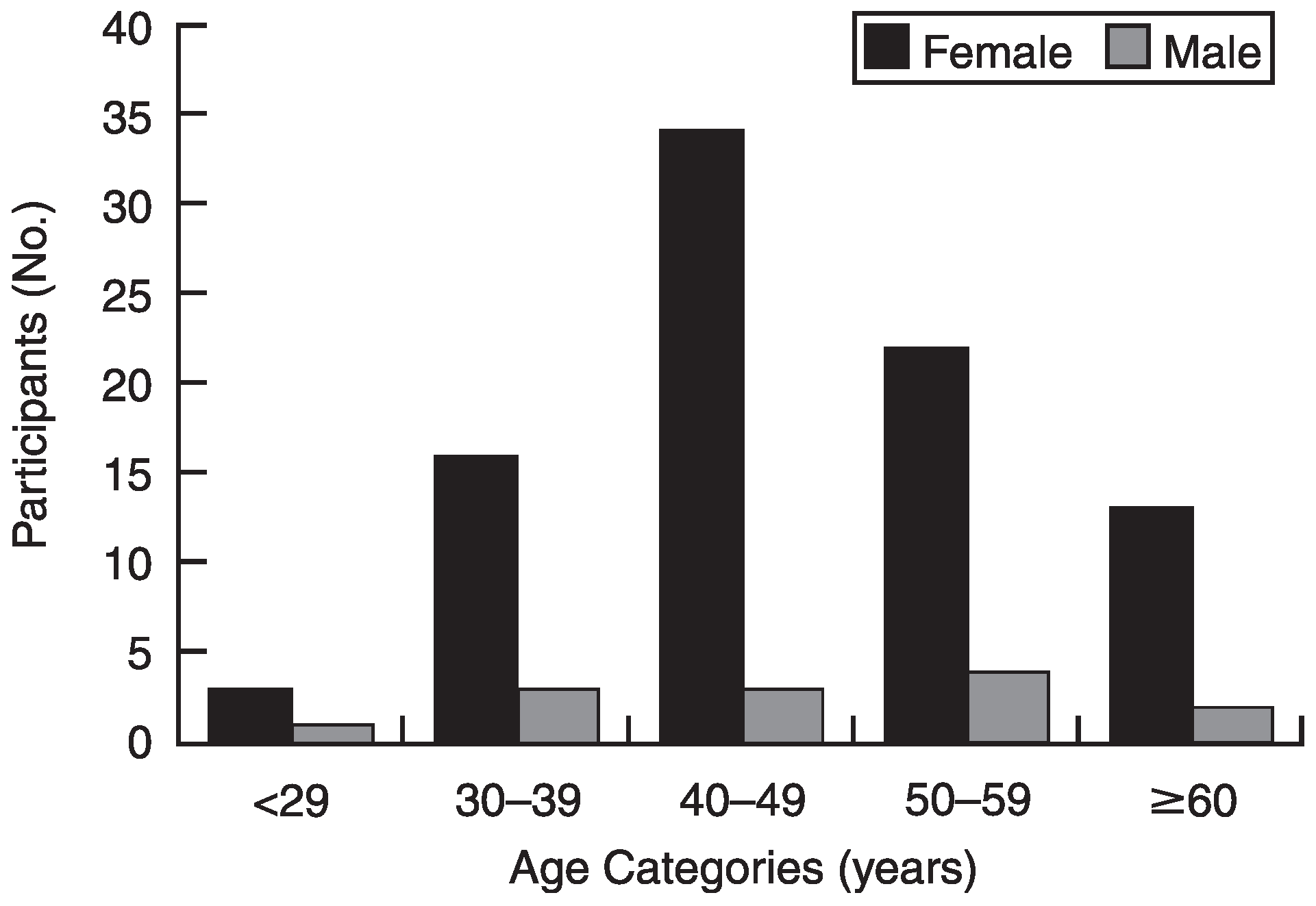
Most of the survey respondents were female (n = 88, 87%), educated to undergraduate level (n = 87, 86%), and aged 30 to 59 years (n = 82, 81%). See
Figure 1 for details on the age and sex distribution of the sample.
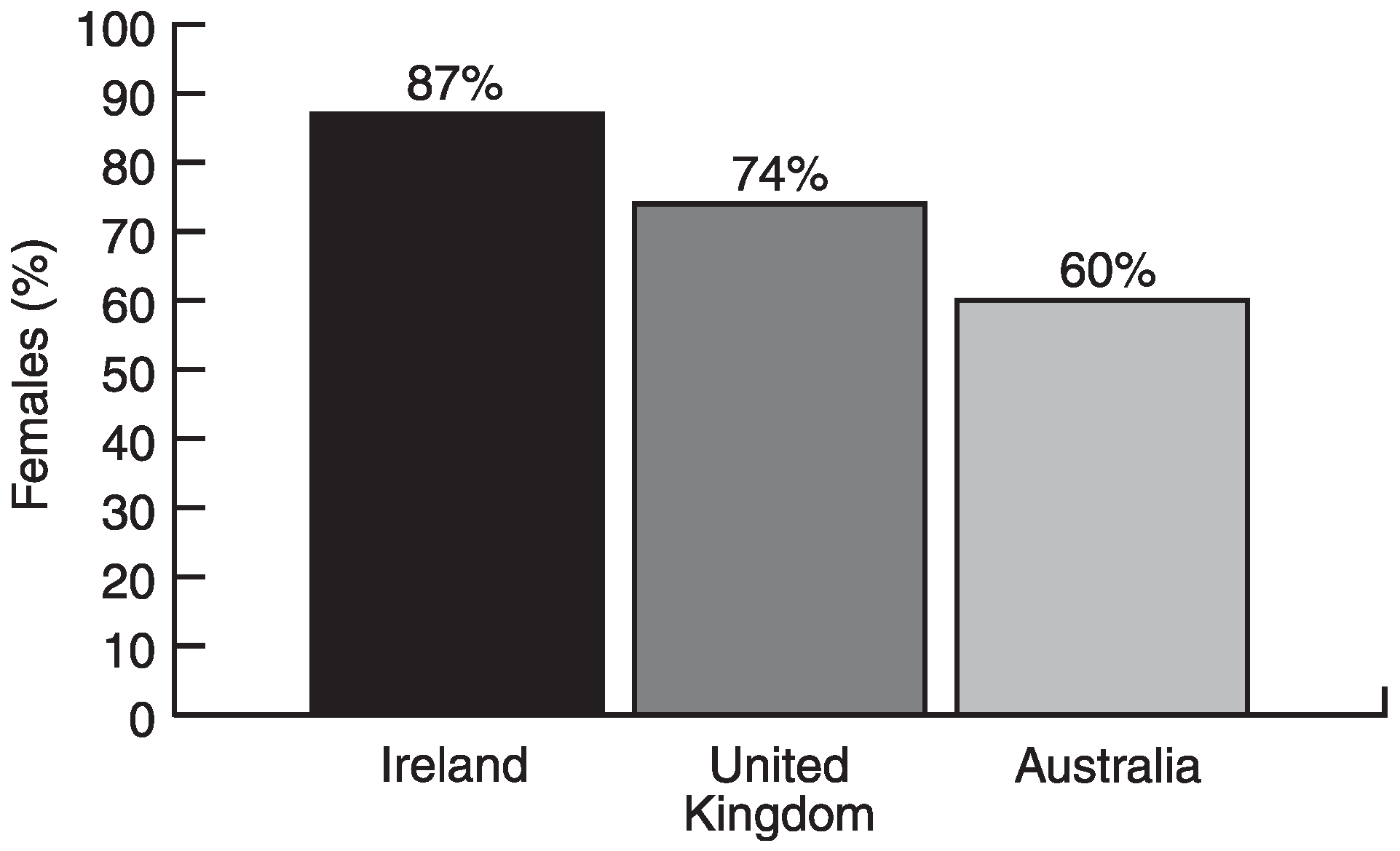
Figure 2 compares the sex distribution of Irish podiatric physicians in this study with that of their counterparts in Australia and the United Kingdom. In addition, most respondents had worked less than 20 years in podiatric medicine (n = 60, 59%), and 41 (41%) had worked as podiatric physicians for more than 20 years. Most respondents reported that they worked less than 30 hours per week (n = 55, 54%).
Figure 1.
Sex and age distribution of the study sample (N = 101).
Figure 1.
Sex and age distribution of the study sample (N = 101).
Figure 2.
Sex distribution of podiatric physicians working in Ireland, the United Kingdom, and Australia.
Figure 2.
Sex distribution of podiatric physicians working in Ireland, the United Kingdom, and Australia.
Health and Safety Knowledge and Practice
Overall, 66% of podiatric physicians (n = 67) agreed that they knew where to find health and safety information. The Internet was the primary source of health and safety information (43%), followed by the HSA (20%). A few respondents had health and safety consultants (3%), and the remaining 34% used a range of resources, including bodies such as the Society of Chiropodists and Podiatrists of Ireland, the Health Service Executive, the Irish Chiropodists/Podiatrists Organisation Ltd, the Health and Care Professions Council (UK), and journals, magazines, and seminars.
The participants were asked to rate how well informed they were regarding health and safety legislation. Less than half of Irish podiatric physicians (45%, n = 46) agreed that they were well informed regarding health and safety legislation, and 2% (n = 2) believed that knowledge of health and safety legislation is not relevant to them. Only 50% (n = 50) of the participants reported that they were familiar with the national regulatory body (HSA), and 25% (n = 25) were not familiar and 26% (n = 26) were unsure. Only 53% of podiatric physicians (n = 54) reported that they had received some health and safety training, and 47% (n = 47) had not.
Legislative Compliance
Descriptive statistics revealed that 79% of podiatric physicians (n = 80) in this study did not have a safety statement (ie, a legally required document that outlines safety management in a business). In addition, 64% of participants (n = 65) did not have safety procedures and policies, and 81% (n = 82) had not performed any risk assessments. Safety documentation and risk assessments were never updated by 36% of podiatric physicians; however, 34% did review their documentation annually, and 30% undertook reviews after changes in work practices or after the purchase of new equipment. For those who had safety documentation in their workplace, 48% (n = 39) had prepared the documentation themselves, 20% (n = 8) had used a health and safety consultant, and 31% (n = 12) had their documentation compiled by other professional bodies, including the Society of Chiropodists and Podiatrists of Ireland, The Institute of Chiropodists and Podiatrists, and the Health and Care Professions Council (UK). Most respondents had not been inspected by the HSA (98%, n = 99).
Workplace Hazard Identification
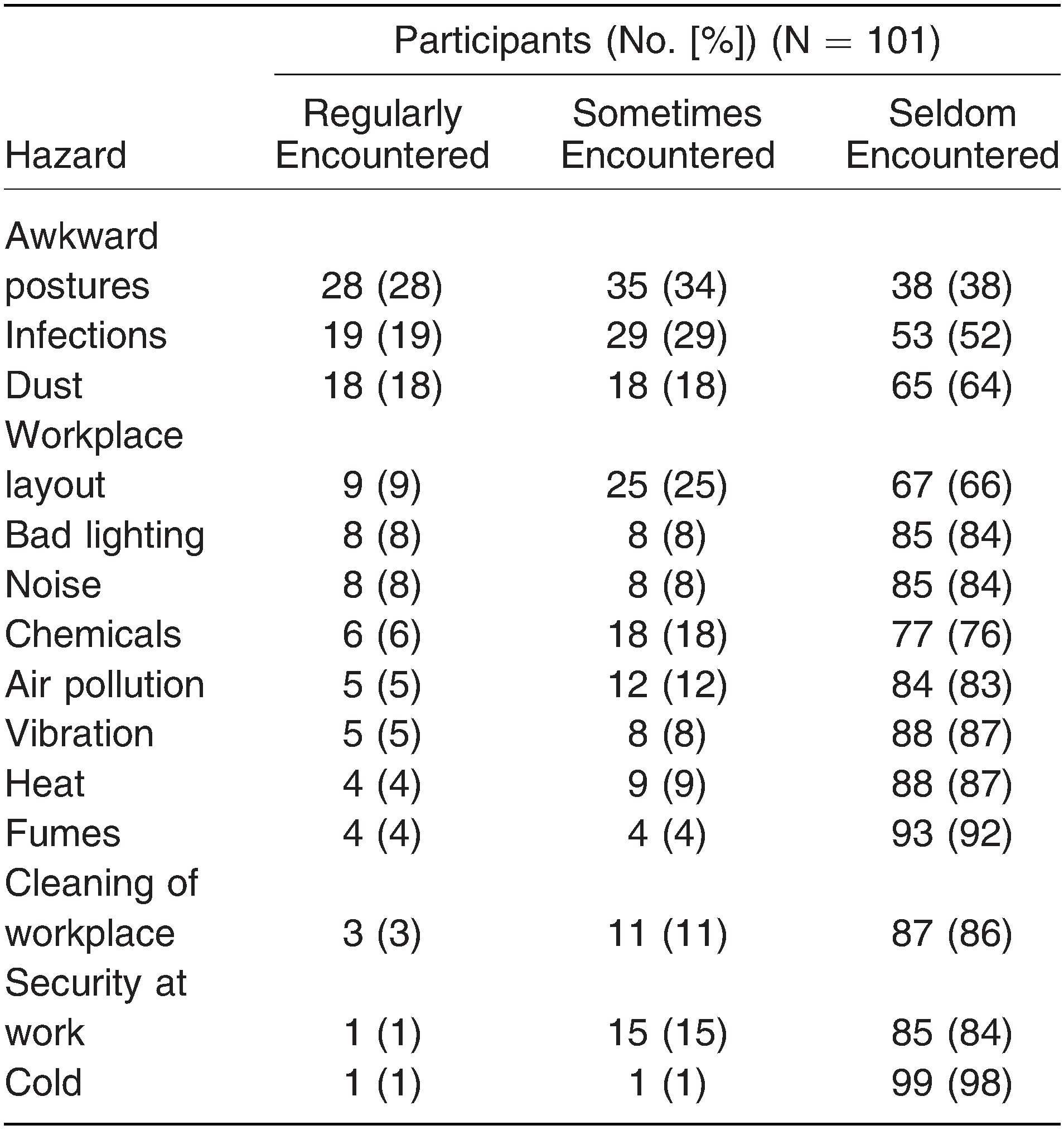
Table 1 presents a summary of frequently encountered workplace hazards that interfered with the podiatric physicians’ ability to work effectively. The table shows that the most important hazards from a work ability perspective are maintaining awkward postures, infections, and dust.
Table 2 presents podiatric medical tasks and the perceived risk rating attributed to the task by the podiatric physicians surveyed. Using a scalpel was considered by most to be the highest-risk activity, followed by managing infections and using chemicals.
Table 1.
Most Frequently Encountered Hazards that Interfere with Ability to Work.
Table 1.
Most Frequently Encountered Hazards that Interfere with Ability to Work.
Table 2.
Risk Perception of Common Podiatric Medical Activities.
Table 2.
Risk Perception of Common Podiatric Medical Activities.
Health
Overall, the study participants reported generally good health status, with 67% (n = 68) reporting that their health was very good, 23% (n = 23) good, and 9% (n = 9) fair. No participants rated their health as poor. However, 17% reported having experienced a work-related injury.
Table 3 provides data on the self-rated mental and physical capacity of the participants as it pertains to their work. Injuries of the back (physician diagnosed) were most common (70%; n = 12), followed by arm/hand injuries. Another 11% of respondents reported that they had work-related skin conditions, such as dermatitis, allergic rash, and skin infections, and MSDs of the upper extremities (diagnosed by a physician) were more frequently reported than were skin problems. Neck disorders were most common (n = 24, 24%), followed by problems in the lower back (n = 20, 20%) and upper back (n = 19, 19%), shoulder problems (n = 17, 17%), MSDs associated with the hands (n = 13, 13%), and sciatica (n = 12, 12%). When asked whether their illness or injury was a hindrance to their job performance, 48% of participants (n = 48) reported that they were able to do their job but that it caused some symptoms, 39% (n = 40) had no hindrance, and 10% (n = 10) had to slow down their work pace or change their work schedule.
Table 3.
Health and Ability to Work Ratings.
Table 3.
Health and Ability to Work Ratings.
Control Measures
An independent t test was used to examine whether years of experience affected the frequency of use of control measures by the podiatric physicians. A significant effect was found (t = −2.168, df = 99; P < .05), where podiatric physicians with less than 20 years’ experience reported a lower mean score (27.78) than those with more than 20 years’ experience (30.38). Lower scores on the protective measures scale indicate more frequent use of control measures.
A series of χ2 analyses were conducted to determine whether years of experience had a relationship with legislative compliance, safety knowledge, and training in the sample. However, no statistically significant relationships were observed.
Discussion
The main objectives of this study were to characterize health and safety practice issues in the field of podiatric medicine in Ireland and to examine legislative awareness and compliance. This was deemed an important research issue as there has been a lack of research conducted examining health and safety practice by podiatric physicians. Although previous studies have identified in particular the risks associated with inhalable contaminants and poor ergonomics in podiatric medical work, it was unknown whether practitioners are generally aware of the health and safety risks inherent in their work and their statutory duties.
In this study, it was found that 53% of podiatric physicians in Ireland were unfamiliar with relevant health and safety legislation. Although previous research indicates that small businesses generally lack awareness of health and safety legislation [
19], this is of particular concern for podiatric medical practice, where a good working knowledge of health and safety legislation is vital for protecting the health of both the practitioners and their patients. In addition, most podiatric physicians in this study used the Internet for information on health and safety. This is worrying because information found on the Internet cannot be guaranteed to come from a reputable source. Only 20% of respondents identified the HSA as a source of health and safety information, despite 50% being familiar with the regulator. This finding is in line with the suggestion that regulatory bodies are nonentities for owner-managers because they find it difficult to name them and rarely use them as an information source [
20]. The lack of familiarity with the regulatory body in this study may be explained by a variety of factors, including the low inspection rate of podiatric medical practices (2%) by the HSA, podiatric physicians who were educated in the United Kingdom, and almost half of the sample reporting no health and safety training. In addition, it has also been suggested that small businesses may be reluctant to approach regulatory bodies to gain the necessary knowledge and advice on health and safety legislation due to a strong fear of being prosecuted [
20].
Another important finding from this study was the low level of compliance by podiatric physicians in relation to legally required safety documentation. Most podiatric physicians in this study did not have safety statements (80%) or written risk assessments (81%). Note that in Ireland, businesses that employ three persons or fewer (as would be the case for most podiatric medical practices) can achieve legislative compliance by adhering to relevant sectoral codes of (health and safety) practice, without the need for a written safety statement; however, to date, no such code of practice for health and safety in podiatric medicine has been generated by the regulatory body. Therefore, the legal requirement to have written risk assessments for work activities is still applicable for podiatric physicians. Since this study was conducted, the HSA has made an online risk assessment tool available [
21] to make conducting risk assessments easier and more intuitive for small business owners; however, such tools will be successful only if awareness of the legislation and the specific sectoral requirements becomes general knowledge among Irish podiatric physicians.
It has previously been noted that small business owner-managers tend to be unaware of their poor compliance and knowledge, with many, in fact, overestimating their knowledge of and compliance with legislation [
22]. To improve health and safety compliance and knowledge in small businesses such as podiatric medical practices, it has been suggested that regulatory bodies use professional associations to disseminate information [
22]. This mechanism of using professional associations may be a more realistic option for increasing compliance because regulatory workplace inspection programs tend to focus on larger industries, such as construction and manufacturing, and lack the resources to regularly visit small businesses. Since this survey was conducted, preparations are under way in Ireland to implement professional regulation of podiatric physicians and other health-care professionals. The Health and Social Care Professionals Council will regulate the Irish podiatric medicine sector, in a similar fashion to the Health Care Professions Council in the United Kingdom. However, the exact implementation date is as yet unconfirmed. Finally, incorporating health and safety education into the undergraduate podiatric medicine degree program is vital to ensure that newly trained podiatric physicians beginning their careers will have sufficient knowledge of the Irish occupational health and safety legal requirements.
Perhaps the lack of awareness of health and safety legislation is also a possible reason why only 27% of podiatric physicians (n = 27) in this study associated a high level of risk with using a scalpel. The low perception of risk with an occupational hazard capable of causing injury is a cause for concern. Use of scalpels for tasks such as the debridement of calluses or ulcers may present the risk of contracting blood-borne viruses such as hepatitis B or C or human immunodeficiency virus from infected patients [
3]. Given the perception that using a scalpel is low risk among podiatric physicians, there may be a greater risk of injury because the necessary precautions may not be used. Ireland has recently introduced the European Union Prevention of Sharps Injuries in the Health Care Sector Regulations (2014); however, it is unknown whether podiatric physicians are familiar or compliant with these new legislative requirements.
A variety of chemicals are used in podiatric medicine, eg, to decontaminate instruments, disinfect the skin, and treat fungal and other infections [
3]. Given the variety of uses for chemicals in the podiatric medical setting, they are a frequent necessity during the treatment of patients. Notably, many podiatric physicians (42%) in this study perceived the use of chemicals in their practice as low risk. This is concerning because podiatric physicians regularly work with a variety of hazardous chemicals, such as phenol [
23]. Previous research indicates that owner-managers in small businesses have poor knowledge of the potential health effects of the chemicals in use and tend to be unaware of legislative requirements [
22]. However, this should not be the case for podiatric medicine because many podiatric physicians who received their degrees from the United Kingdom would have been taught the requirements of the Control of Substances Hazardous to Health Regulations, which are broadly similar to the Irish legislation regarding chemical risk assessment. Considering the low number of podiatric physicians in this study who completed risk assessments, it is unlikely that many podiatric physicians are compliant with the Irish chemical agents legislation. Therefore, many podiatric physicians may need refresher training on occupational health and safety management. The provision of such training could be incorporated into a continuous professional development module for podiatric physicians.
Previous studies have identified the use of a nail drill as a high-risk activity because of the potential for exposure to toenail dust [
9,
24]. Toenail dust collected after the use of a nail drill is highly respirable and endotoxin rich [
24]. This suggests that podiatric physicians who regularly use a nail drill could be at risk for inhaling the dust, which can cause serious respiratory problems, such as asthma. Given the nature of nail drilling and the importance of infection control in podiatric medicine, it would be expected that podiatric physicians would perceive using a nail drill as high risk. However, only 17% identified using a nail drill as a high-risk activity. This could possibly be due to the format of the question asked; it may have been interpreted as relating to the machinery-related risks associated with nail drills as opposed to the production of dust during the drilling operation. This is supported by the fact that 55% of podiatric physicians reported that dust was an issue at some stage during their working time. This statistic is worrying from a health perspective given the known health effects of nail dust [
24].
The podiatric physicians in this study were largely in good health; however, some respondents reported experiencing MSDs, skin problems, and accidents related to their work. Physician-diagnosed MSDs reported included disorders of the neck, lower back, upper back, shoulders, and hands. Podiatric medical work is physically demanding because many postures assumed by podiatric physicians are often fixed, with a high proportion of tasks requiring very accurate hand movements and hand-eye coordination, eg, removing a corn with a scalpel. Because the risk factors associated with podiatric medical work are inherent in the treatment methods, it leaves podiatric physicians at significant risk for work-related MSDs. Notably, 81% of podiatric physicians in this study reported that awkward postures interfered with their ability to work effectively. The present findings support previous studies of ergonomic problems in this sector (eg, see the study by Leah and Birtles [
5]). However, the reported health conditions in this study are lower than those reported by Losa Iglesias, et al [
4].
The present study had some limitations that must be acknowledged. First, most of the survey respondents were female (87%). Although this figure exceeds the reported female distribution of podiatric physicians in the United Kingdom [
25] and Australia [
26], it is thought to reflect the current ratio of female to male podiatric physicians practicing in Ireland. Second, the response rate to the questionnaire was lower than desired, despite conducting reminder phone calls to all nonresponders. However, the response rate is in line with at least one previous study of British podiatric physicians, in which a 46% response rate was achieved [
27]. Finally, most of the questionnaire items and measures were either generated by the research team based on the study objectives or amended from a bespoke questionnaire on quality of working life [
18]. Therefore, there may be concerns in relation to the reliability and validity of the measures used.
Conclusions
From this exploratory study of occupational health and safety issues among Irish podiatric physicians, it seems that there is a low level of awareness and knowledge of health and safety legislation and, thus, a low level of legislative compliance. In particular, knowledge of health and safety practices regarding completion of risk assessments, the incorporation of suitable ergonomic practices, and legislation pertaining to personal protective equipment and infectious agents in the workplace requires improvement. As a starting point, to increase awareness, the results of this study will be disseminated to the practitioner professional bodies, the occupational health and safety regulator, and podiatric physicians working in academia. Information sheets or a guidance document on health and safety management in podiatric medicine should be generated by the appropriate regulatory body or professional organization to increase awareness among podiatric physicians of their obligations under current health and safety legislation. The HSA and the Health and Social Care Professionals Council must work together to ensure that negative practices, such as those highlighted in this article, are addressed. Such actions may, in turn, reduce risks of injury and ill health and aid in achieving professional standards.