Adenoid cystic carcinoma (ACC) is an unusual adnexal skin tumor that may present in any glandular tissue. These lesions are usually located on the salivary glands, scalp, and neck; they rarely occur in the breast, lung, uterine cervix, or prostate. These lesions have unknown etiology; however, recent theories propose that they are derived from apocrine and modified apocrine glands.[
1] Cutaneous adenoid cystic carcinoma is a rare variant of ACC with unique histopathologic characteristics. Clinically, cutaneous ACC presents as a solitary, ulcerated, slow growing, and normal skin-colored lesion that measures between 0.5 and 10 cm. Histologically, cutaneous ACC tumor cells demonstrate neoplastic changes on the skin and subcutaneous tissue with a collection of basophilic cells in cribriform pattern. Perineural invasion is seen in 76% of cases and not only has prognostic features, but may also increase the risk of local recurrence twofold over lesions without neural changes.[
2]
Treatment of cutaneous ACC lesions depends on their metastatic properties. A wide local excision with at least 2-cm clear margins is the treatment of choice for the majority of cases; a wider excision in conjunction with radiotherapy and chemotherapy are adjuvant treatments for tumors with nodal metastasis.[
1] Based on the nature of cutaneous ACC and the success rate of Mohs surgery in other cutaneous malignancies that exhibit perineural invasion, Mohs surgery is reported to be superior to wide local excision in achieving a more complete excision of this tumor and reducing the rate of local recurrence of the many primary skin tumors.
Case Report
We present a case of a 71-year-old female who was admitted to our medical center with an altered mental status and an extensive past medical history for type 2 diabetes mellitus, hypertensive cardiovascular disease, dyslipidemia, stroke, dementia, and chronic renal insufficiency. Upon physical examination it was noted and documented by the primary care physician that the patient presented with a painful callus-like lesion on the plantar-medial aspect of the right heel that had been present for approximately 5 to 6 months. The patient denied any recent trauma to the area or active bleeding.
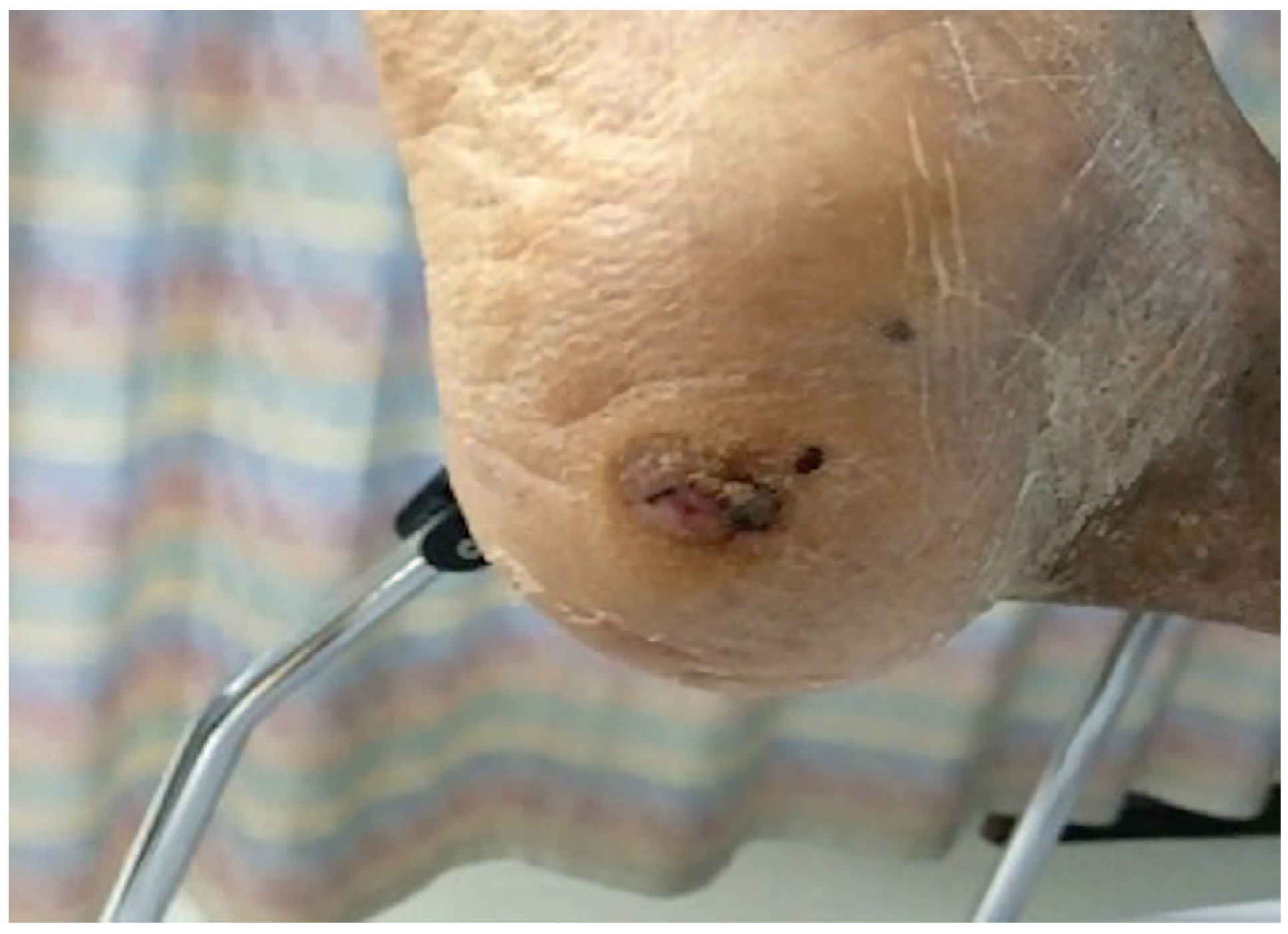
Upon further examination of the lesion, it was revealed to be an asymmetrical raised nodule measuring 1.5 × 1.5 cm with irregular thickened borders and a satellite lesion at the 3 o'clock position measuring less than 1 cm (
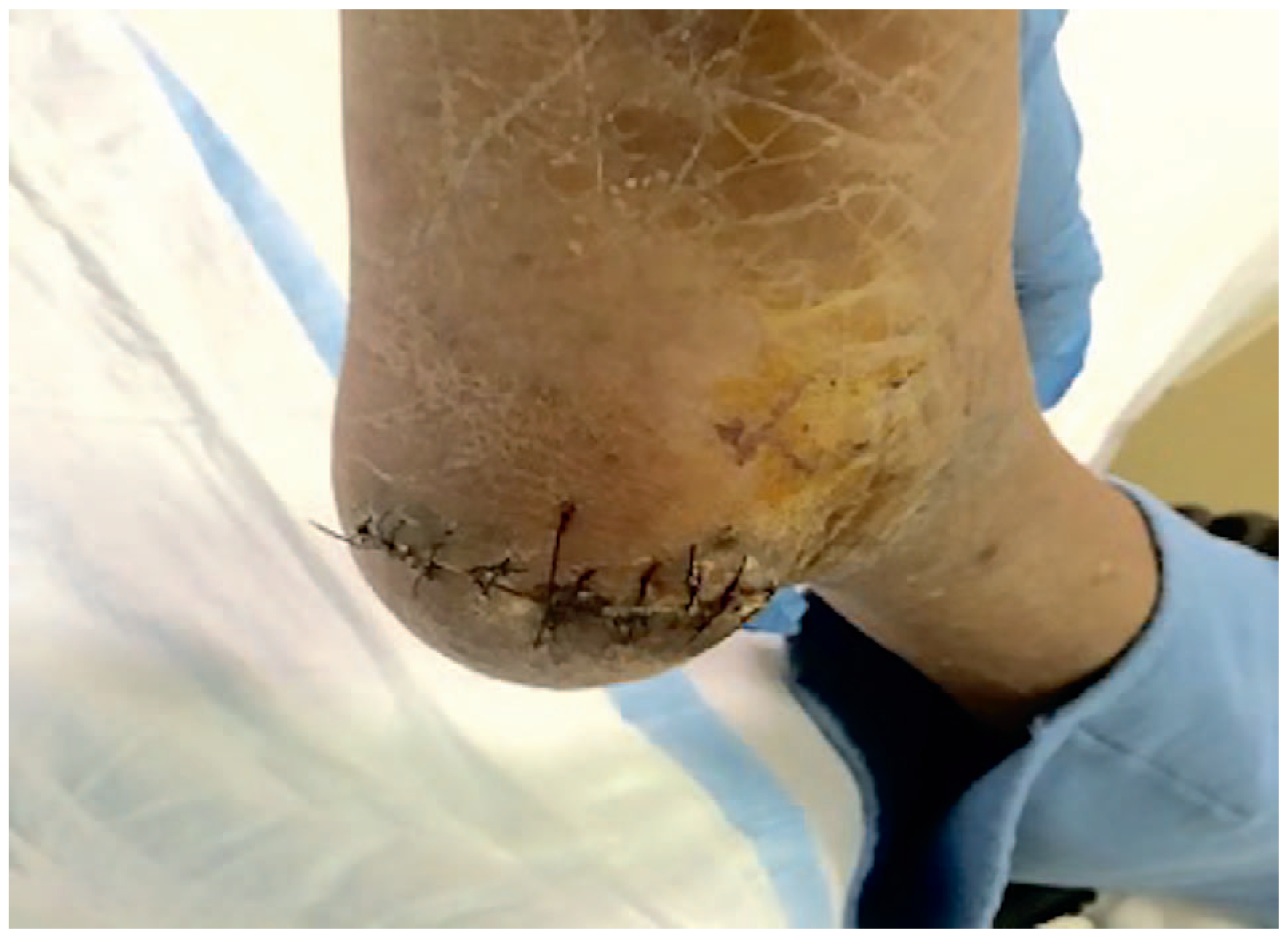
Fig. 1). Because of the unusual appearance of the mass, consent was obtained from one of the patient's family members to perform a full-thickness excisional biopsy (
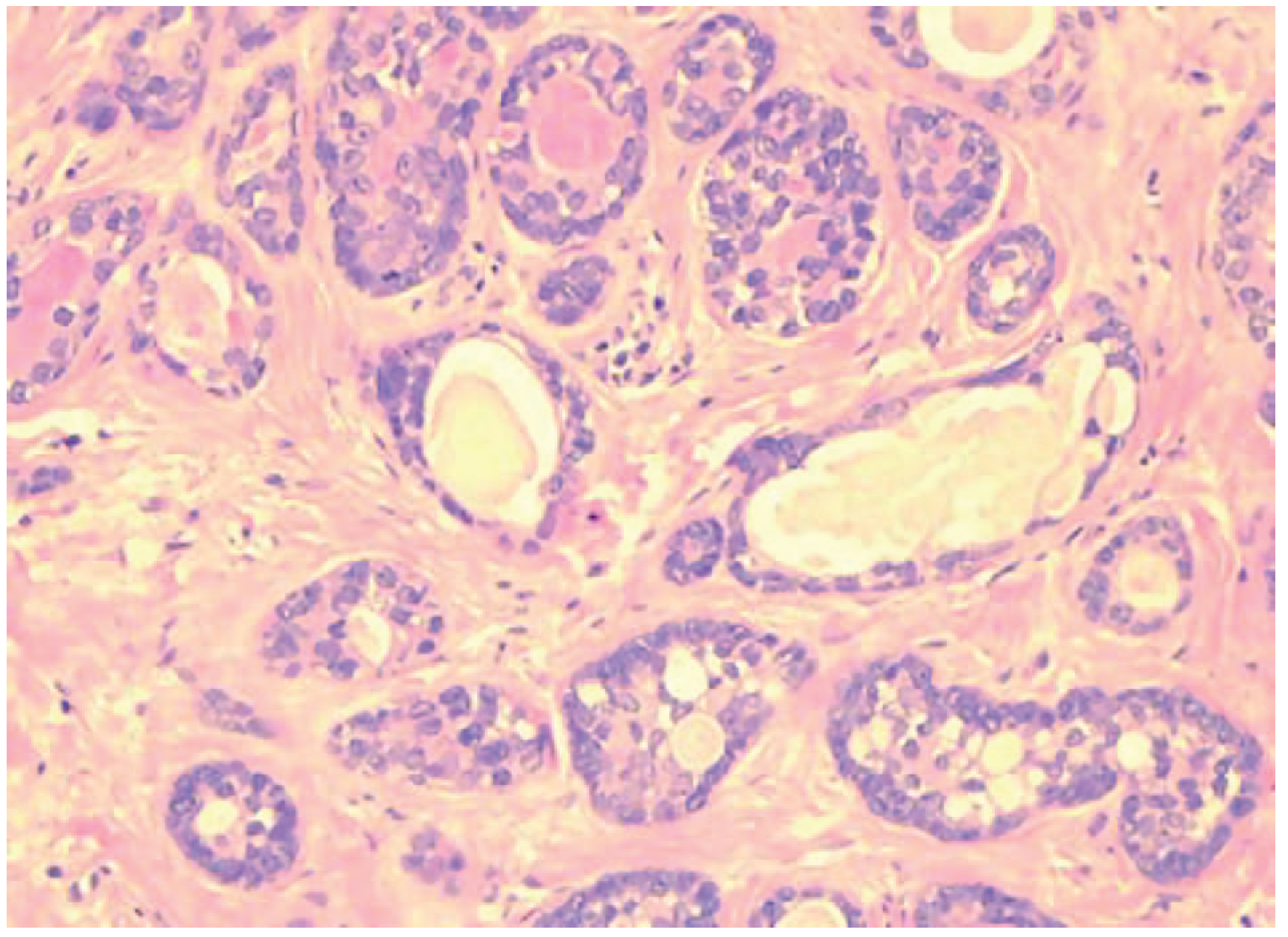
Fig. 2). Histopathologic examination of the tumor-like lesion revealed a characteristic pattern in which the basaloid cells were arranged in a tubular and a cribriform pattern (
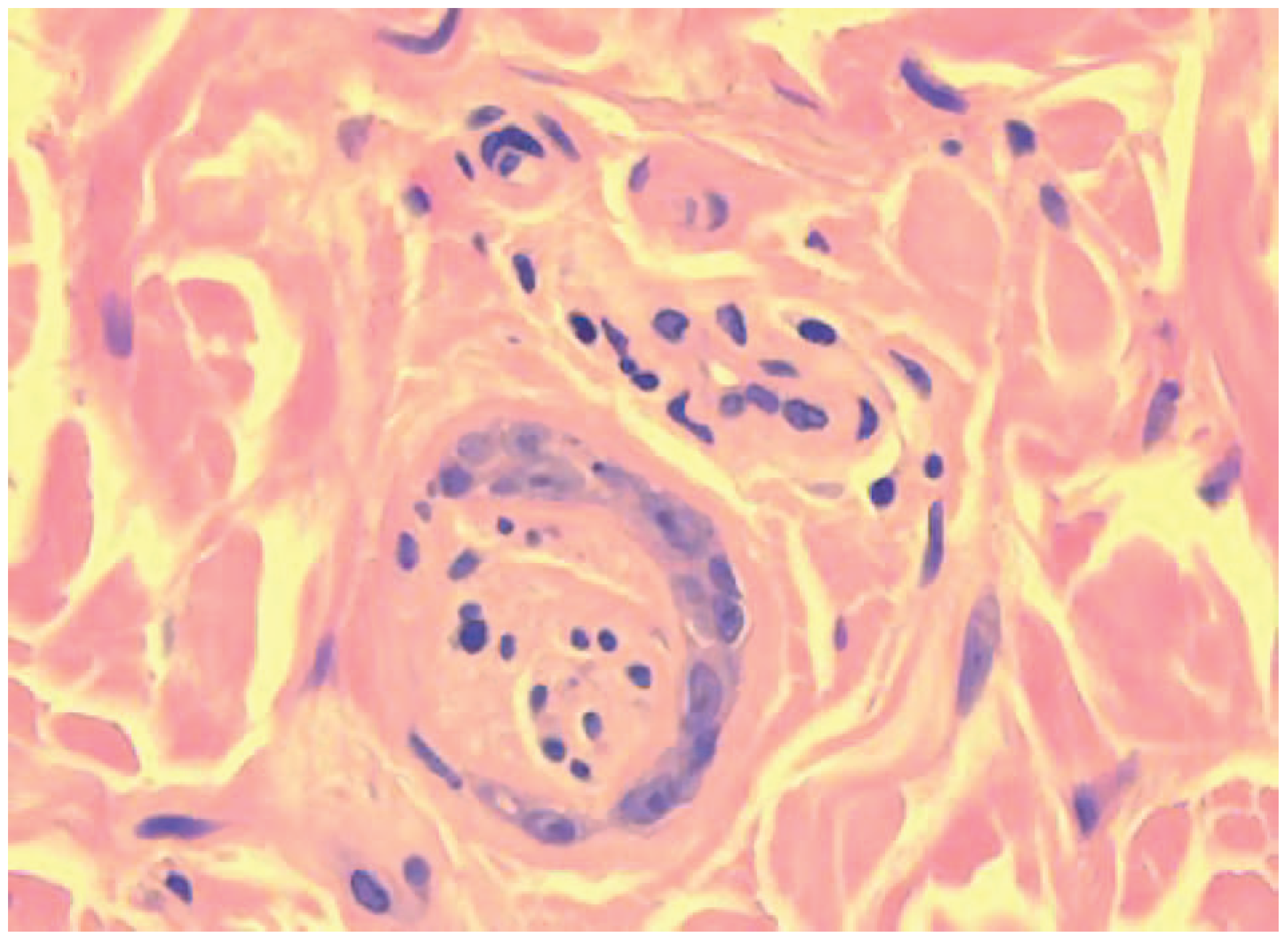
Fig. 3). Perineural invasion of the tumor cells was an additional characteristic (
Fig. 4). The biopsy results revealed cutaneous adenoid cystic carcinoma with perineural invasion measuring 1.1 cm in diameter and 0.4 cm in thickness.
Figure 1.
Right heel preoperatively presents with an asymmetrical raised nodule measuring 1.5 × 1.5 cm with irregular thickened borders and a satellite lesion at the 3 o'clock position.
Figure 1.
Right heel preoperatively presents with an asymmetrical raised nodule measuring 1.5 × 1.5 cm with irregular thickened borders and a satellite lesion at the 3 o'clock position.
Figure 2.
Right heel status-post full-thickness excisional biopsy presents with intact sutures and no evidence of surgical wound dehiscence.
Figure 2.
Right heel status-post full-thickness excisional biopsy presents with intact sutures and no evidence of surgical wound dehiscence.
Figure 3.
Variants of cutaneous adenoid cystic carcinoma including cribriform and tubular pattern (H&E, x40).
Figure 3.
Variants of cutaneous adenoid cystic carcinoma including cribriform and tubular pattern (H&E, x40).
Figure 4.
Perineural invasion with sweat gland (H&E, x63).
Figure 4.
Perineural invasion with sweat gland (H&E, x63).
Upon confirmation of the diagnosis, the patient was later referred to a cancer center for specialized treatment but subsequently refused any further intervention after being made aware of all the medical implications.
Discussion
As previously mentioned, ACC is a rare malignant tumor, for which we report an isolated case of cutaneous ACC in the foot of a 71-year-old female. Adenoid cystic carcinoma of the salivary glands is a highly invasive and aggressive cancer with a high recurrence rate and distant metastasis; however, an indolent course is the major feature of cutaneous ACC with a high tendency of local recurrence and very low potential for distant metastasis. Less than ten cases of lung metastasis and lymph node involvement with cutaneous ACC have been reported, and only one case of cutaneous ACC with brain metastasis has been reported.[
3] Although the morphologic and biochemical features of the indolent cutaneous ACC are identical to those of the biologically aggressive salivary gland tumors, they have different pathologic behaviors. It appears that ACC is a pathologically distinct and uniform entity, whether it occurs in the skin or in salivary glands, with perineural invasion linked as an important mode of tumor spread and associated with increased propensity for recurrence.[
4]
The precise histogenesis of cutaneous ACC is not known with certainty yet, but an origin from apocrine sweat glands is favored. The diagnosis of cutaneous ACC can be validated by the absence or lack of ACC history from a noncutaneous source because ACC presents with a high rate of metastasis whereas cutaneous ACC has a low potential for distant metastasis but can be locally aggressive.[
5] Histologically, cutaneous ACC is indistinguishable from ACC of the salivary gland, consisting of basaloid cells arranged in solid, cribriform, or tubular patterns embedded in a loose fibro-mucinous stroma, in the mid to deep reticular dermis and no connection with the epidermis. Immunohistochemical stain is positive for epithelial membrane antigen, cytokeratin, S-100, and actin. Perineural invasion is the characteristic feature of salivary gland ACC, which may be absent in some cases of cutaneous ACC. The main differential diagnoses that histologically mimic cutaneous ACC are the adenoid-cystic variant of basal cell carcinoma, mucinous carcinoma, dermal cylindroma, and the primary cutaneous cribriform apocrine carcinoma.[
6]
Tumor site, clinical stage, perineural invasion, and histologic type are the important factors influencing the prognosis of ACC of the salivary glands. From one study involving 91 cases of ACC of salivary glands with a 10-year follow-up, Huang et al[
7] concluded that palate and parotid tumors in an early clinical stage with glandular/tubular histologic type without nerve involvement had the best prognosis compared to that of ACC of the submandibular gland, maxillary antrum, and tongue in advanced clinical stage (stage III and IV), and solid histological type with nerve involvement, which had a poor prognosis.
The recommended primary treatment of cutaneous ACC, regardless of body site is a wide surgical excision with at least 2-cm tumor-free margins to reduce the risk of local recurrence. No study has demonstrated that radiation decreases the risk of local recurrence. Recurrence is documented in 44% of cases treated by wide local excision. The high local recurrence rate of 44% following traditional wide excision suggests incomplete removal of the tumor at the initial excision, despite negative margins established by routine histology. Discontinuous perineural extension is seen in cutaneous ACC, which may contribute to false-negative margins, leading to a high recurrence rate.[
7]
Based on the nature of cutaneous ACC and the success rate of Mohs surgery in other cutaneous malignancies that exhibit perineural invasion, Mohs surgery has been suggested to be superior to wide local excision to achieve a more complete excision of this tumor and to reduce the rate of local recurrence. However, few cases of cutaneous ACC treated with Mohs surgery have been described in the literature.[
5]
Conclusions
Diagnosis of cutaneous ACC involves obtaining a thorough patient medical history combined with early and adequate biopsy techniques in order to formulate a proper histopathological diagnosis. It is imperative to conduct a full body examination because cutaneous ACC can only be differentiated from extracutaneous ACC based on clinical grounds and the lack of history of ACC from an extracutaneous source.[
5] Early identification may lead to better long-term prognosis because cutaneous ACC can be locally aggressive with a potentially high recurrence rate. Because studies have reported recurrences ranging from 10 to 30 years after tumor removal, long-term follow-up is essential to the patient's outcome. Treatment generally involves wide local surgical excision with at least 2 cm extending beyond the margins of the tumor.
Acknowledgment: We are grateful for to Leon Isaac, MD, for slide replications and histopathologic diagnosis.
Financial Disclosure: None reported.
Conflict of Interest: None reported.