Serratia marcescens, is a ubiquitous, facultatively anaerobic, gram-negative bacillus in the Enterobacteriaceae family found to inhabit water, soil, animals, insects, and plants [
1]. Due to its ability to produce red pigmentation and to reside on starchy foods,
S marcescens is believed to be responsible for the ominous perception of bloody food throughout history [
1-
5]. One of the earliest suspected examples of this is the occurrence of the “bleeding bread,” which foretold the siege of Tyre by Alexander the Great in 332 BC [
1-
3].
Serratia marcescens was first described in 1819 by Italian pharmacist Bartolomeo Bizio while investigating the phenomenon of “bloody polenta.” [
1,
3,
5]
Serratia marcescens was initially thought to be nonpathogenic until the 1970s but is now known to be responsible for a variety of human infections, including bacteremia, meningitis, urinary tract infections, pneumonia and other respiratory diseases; endophthalmitis; endocarditis; osteomyelitis; septic arthritis; necrotizing fasciitis, and an array of wound infections [
1,
6-
15]. Most cases present in immunosuppressed populations, such as diabetic patients, the very young, the elderly, intravenous drug users, or those receiving systemic corticosteroid therapy [
1,
6,
8-
10,
12,
15]. Historically,
S marcescens has been found to be responsible for a high incidence of nosocomial infections and even hospital outbreaks [
1,
10,
16,
17].
The lower-extremity infections caused by
S marcescens in the literature are few in number and have presented as granulomatous ulceration, abscess, bullous cellulitis, and necrotizing fasciitis [
1,
9,
11-
15,
18]. Within this small number of cases, there are some commonalities worth noting that may suggest patterns or trends in the infectious process. In addition, all of the patients had immunocompromising risk factors.
Cope et al [
9] reported a case of necrotizing fasciitis in a 97-year-old woman in which they argued that extreme age should be considered a functionally immunosuppressed state. The patient initially presented with a painful, red, hot, swollen calf and was thought to have a deep vein thrombosis [
9]. However, within 20 hours the appearance became sloughy and blackened [
9]. The patient died at 22 hours, with a postmortem microbiologic and histologic examination revealing necrotizing fasciitis due to a single pathogen,
S marcescens [
9].
Curtis et al [
12] presented an additional case of fatal necrotizing fasciitis in a 51-year-old man with type 2 diabetes mellitus and end-stage renal disease. On presentation, progressing hemorrhagic bullae with concomitant purpura were noted in the lower extremity. Intraoperative deep cultures grew only
S marcescens. The patient died despite aggressive management with surgical debridement, antibiotic drugs, and pressure support.
Bullous lesions seem to be a common finding with
S marcescens infections, as in the case of bullous cellulitis of the leg in a 69-year-old woman with type 2 diabetes mellitus with peripheral vascular disease (PVD) [
11]. This patient developed two large tense purple bullae with surrounding erythema on the dorsal foot and ankle 1 month after the removal of an infected great toe nail.
Serratia marcescens was the sole bacteria isolated from the aspirate. Despite initial clinical improvement, the case resulted in a below-the-knee amputation within 1 month due to progressing gangrene of the lower extremity.
Langrock et al [
14] presented a case of cellulitis and ankle abscesses caused by
S marcescens developing in a 73-year-old patient with chronic venous insufficiency ulcers. No bullae formation or necrosis was noted. The patient was receiving low-dose corticosteroid therapy for many years due to chronic obstructive pulmonary disease.
In the case of an 18-year-old Romanian student with no known comorbidities, initial leg ulceration most likely began as pyoderma gangranosum and then became infected with
S marcescens [
15]. Small pustules of the leg that ruptured to form deep painful ulcers revealed histologic findings consistent with pyoderma gangranosum. After starting the patient on 35 mg of prednisone daily, the wounds rapidly progressed, forming well-defined erythematous deep ulcers with violaceous necrotic borders. Subsequent cultures revealed growth of
S marcescens. Corticosteroid therapy was discontinued and ciprofloxacin use was started, and the patient went on to heal at 3 months.
Herein we present a series of three cases of lower-extremity infections in which S marcescens was the sole or a contributing pathogen. These patients presented to two different area hospitals. All of the patients displayed some combination of a similar set of clinical characteristics, including bullae formation, liquefactive necrosis, and black necrotic eschar. All three patients were diabetic and had PVD.
Case Reports
Case 1
A 55-year-old woman with a history of uncontrolled insulin-dependent diabetes mellitus (IDDM), hypertension, and coronary artery disease presented to the emergency department with pain and associated “blisters” to the left foot and ankle that started 9 days previously. The podiatric medical service was consulted. She admitted to experiencing constitutional signs of sepsis, including fever, chills, nausea, and shortness of breath. Initial vital signs were abnormal, with an elevated heart rate (110/min) and respiration rate (28/min). There were no known recent hospital admissions.
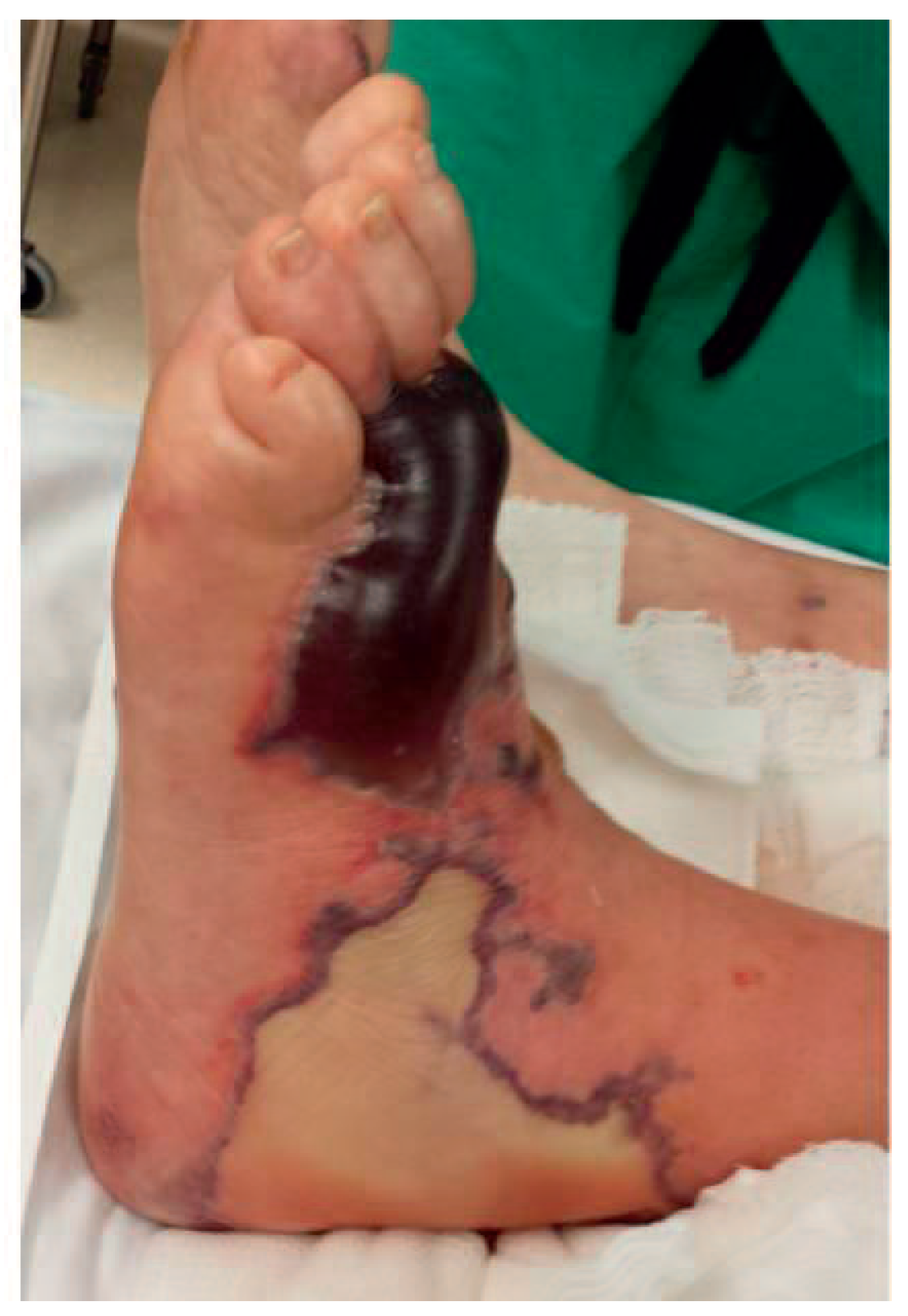
On physical examination, ascending erythema was noted to the left lower extremity, with intact hemorrhagic bullae present to the dorsum of the foot and the medial aspect of the ankle and posterior leg. A deroofed bulla noted to the lateral ankle had a pale partial thickness wound bed and demarcated borders (
Fig. 1). Full-thickness fibrogranular ulcers were present to the anterior distal aspect of the left leg. No bone or tendon exposure was present at the time. The pedal pulses were faintly palpable, with delayed capillary fill times to all digits.
Figure 1.
Case 1. Initial presentation exhibiting large hemorrhagic bullae on the forefoot, a deroofed bulla extending from the lateral midfoot to the posterior ankle, and the presence of periwound cellulitis.
Figure 1.
Case 1. Initial presentation exhibiting large hemorrhagic bullae on the forefoot, a deroofed bulla extending from the lateral midfoot to the posterior ankle, and the presence of periwound cellulitis.
The patient was admitted to the hospital with lower-extremity cellulitis, uncontrolled diabetes, hypertension, and sepsis. This patient with a severe diabetic foot infection was immediately started on broad-spectrum intravenous antibiotics consisting of piperacillin/tazobactam 3.375 mg every 6 hours and clindamycin 900 mg every 8 hours. Initial laboratory results indicated an elevated white blood cell count (19,700 μL), blood glucose level (247 mg/dL), and erythrocyte sedimentation rate (ESR) (120 mL/h). Infectious disease and vascular surgery specialists were consulted.
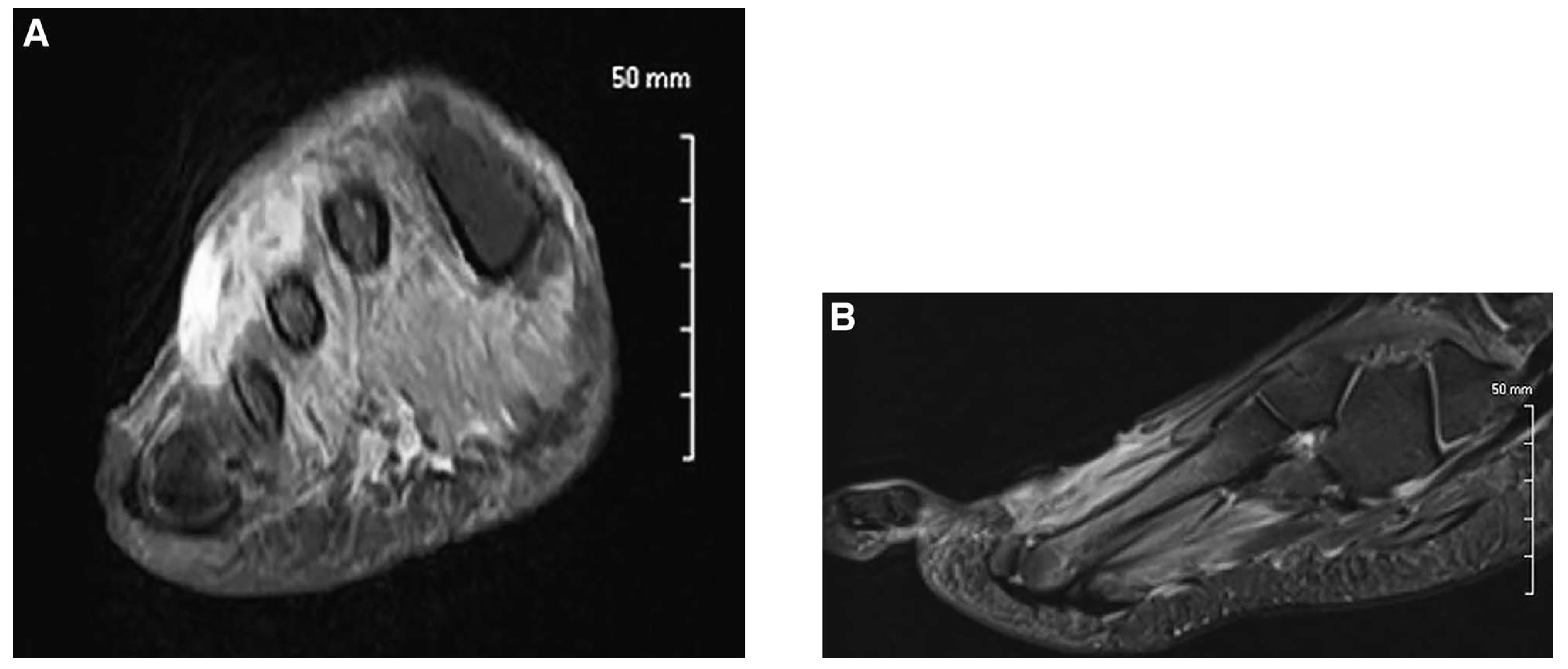
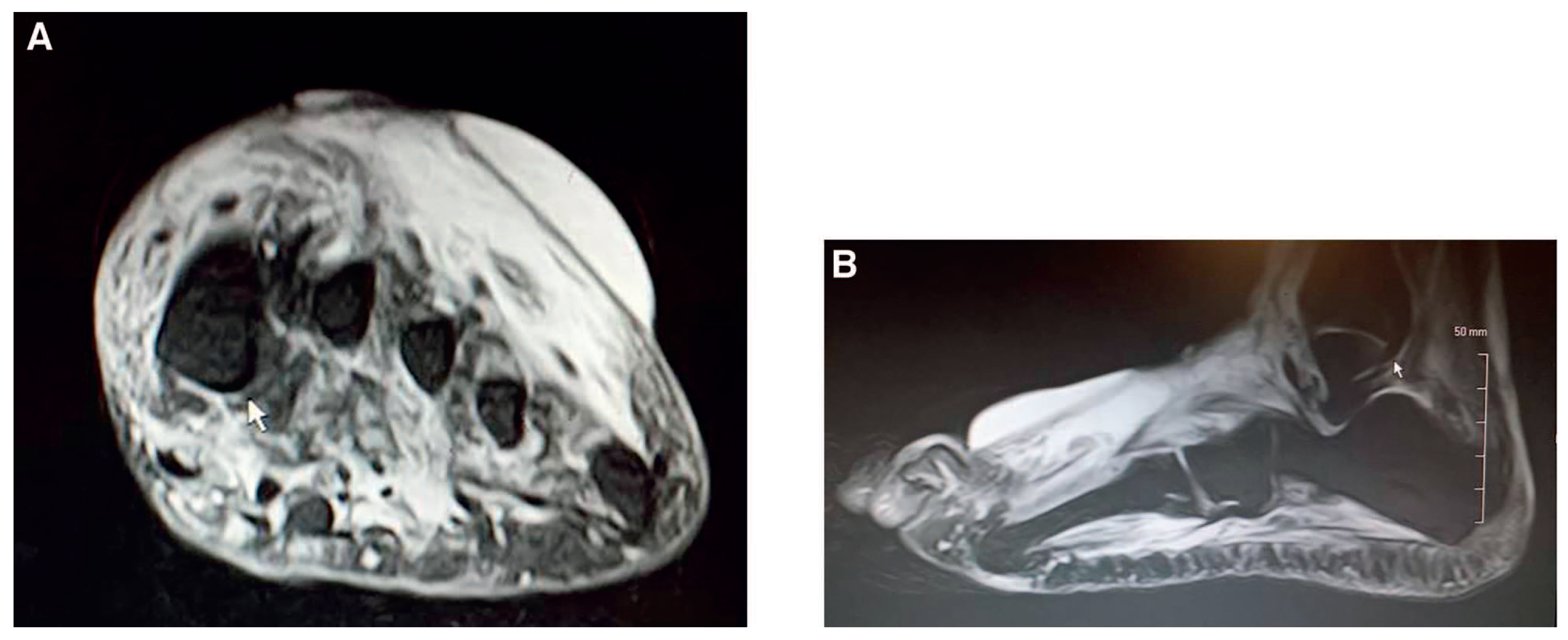
Lower-extremity magnetic resonance imaging (MRI) revealed extensive soft-tissue swelling and edema consistent with cellulitis, with no findings suggestive of osteomyelitis (
Fig. 2). The large bullae were visualized with underlying fluid edema in the dorsal subcutaneous tissue, including a measurable collection of 4.9 cm in diameter. Edema was present extending into the deep plantar foot compartments and along the flexor tendons. The arterial ultrasound described loss of triphasic flow and waveforms consistent with atherosclerotic disease as well as, occlusion of the posterior tibial artery. A computed tomographic angiogram with distal runoff was ordered; however, the patient refused the diagnostic study owing to pain.
Figure 2.
Case 1. Coronal (A) and sagittal (B) magnetic resonance imaging views revealing fluid-filled bullae, with significant subcutaneous edema across multiple tissue planes.
Figure 2.
Case 1. Coronal (A) and sagittal (B) magnetic resonance imaging views revealing fluid-filled bullae, with significant subcutaneous edema across multiple tissue planes.
After several days of intravenous antibiotic drug therapy, the white blood cell count receded to 11,300 μL; however, the ESR increased to 130 mL/h. Cultures obtained at the time of hospital admission came back with positive growth of S marcescens sensitive to ceftriaxone in the blood and S marcescens as well as Candida albicans in the wound. The antibiotic drug therapy was subsequently modified to 2 g of ceftriaxone and 200 mg of fluconazole every 24 hours.
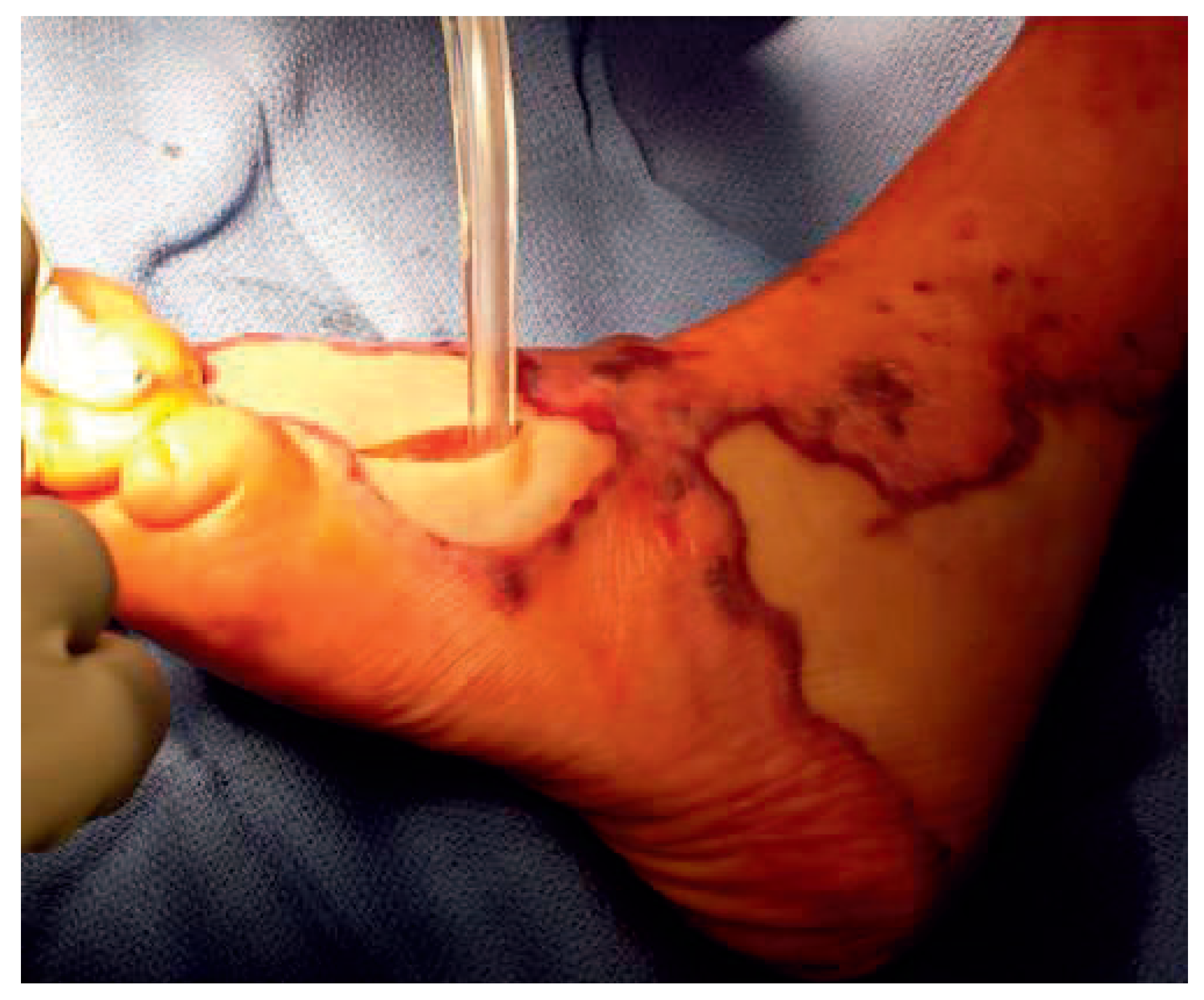
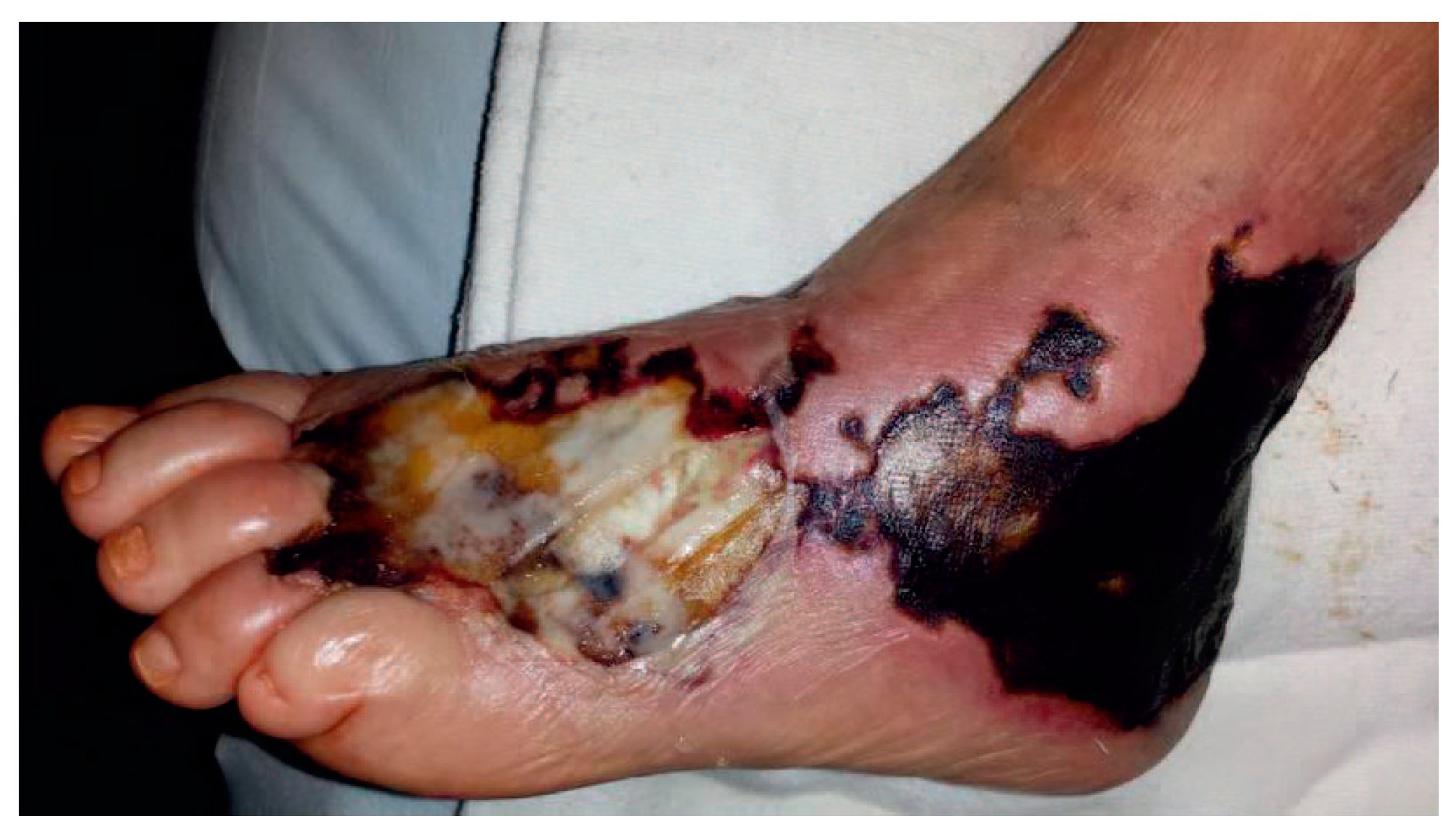
On day 6 of admission the patient was taken to the operating room for an incision and drainage with fasciotomy of the left foot. The bulla on the dorsum of the left foot was deroofed, and a deep incision was performed through the ulceration (
Fig. 3). Extensive liquefactive necrosis was noted, with a heavy purulent drainage expressed from the incision site. Blunt dissection was then performed, with tracking noted from the dorsal aspect proximal to the lateral malleolus. The remaining bullae were deroofed. New deep wound cultures were obtained before pulsed lavage irrigation.
Figure 3.
Case 1. Incision and drainage, with exploration revealing liquefactive necrosis with proximal tracking to the level of the lateral malleolus.
Figure 3.
Case 1. Incision and drainage, with exploration revealing liquefactive necrosis with proximal tracking to the level of the lateral malleolus.
After 3 days, the final cultures confirmed
S marcescens sensitive to levofloxacin. Levofloxacin 750 mg/d orally was added to the patient's antibiotic drug therapy. Topical wound care included a daily betadine flush and gentamicin cream with dry sterile dressing. Wound necrosis progressed proximally (
Fig. 4). After refusing a computed tomographic angiogram, vascular evaluation, and further surgical debridement, the patient left the hospital against medical advice.
Figure 4.
Case 1. Three days after surgery, with substantial black necrotic eschar formation, a minimal decrease of edema, and no resolution of cellulitis.
Figure 4.
Case 1. Three days after surgery, with substantial black necrotic eschar formation, a minimal decrease of edema, and no resolution of cellulitis.
Case 2
A 50-year-old man with uncontrolled IDDM presented to the emergency department with a “black foot.” The patient stated that he dropped a sheet of drywall on his right foot 1 week earlier, and approximately 3 days before presentation the top of the foot turned black. He admitted to a history of right thigh pain and right thumb abscess 3 weeks earlier, with no record of the responsible organism. He did not display any constitutional signs of sepsis, and his presenting vital signs were all stable and within normal limits. The white blood cell count (13,000 μL) and blood glucose level (353 mg/dL) were elevated.
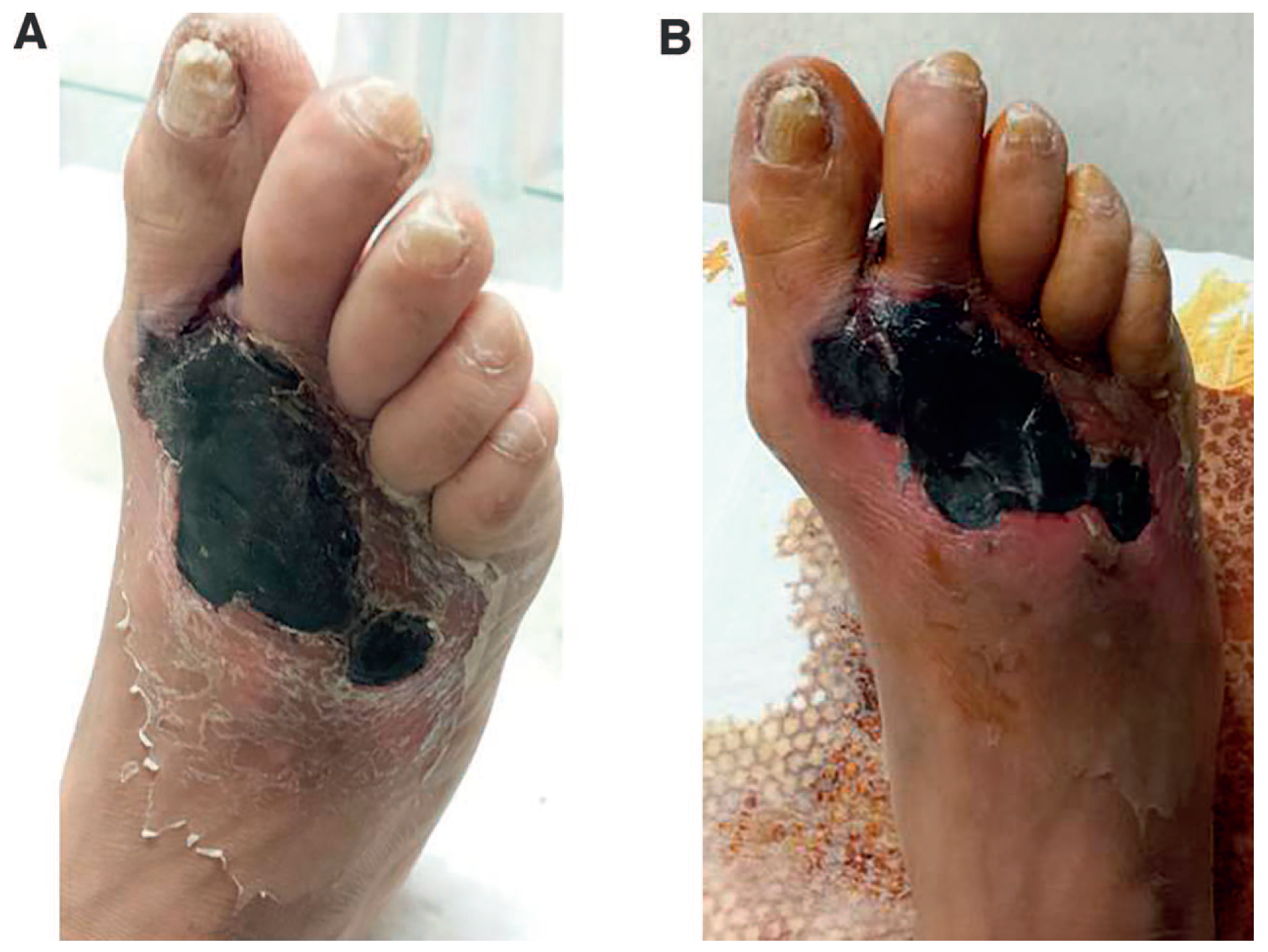
On clinical evaluation, a smooth black eschar was present to the dorsal aspect of the right foot (
Fig. 5). The eschar measured 8.5 × 4.5 cm, with 0.4 cm of elevation and well-demarcated borders spanning the width of the forefoot and extending to the first interspace. There was greater than 2 cm of periwound erythema and purulent drainage from the distal aspect. The eschar collapsed on palpation as if to be hollow, and a 1.0-cm portion at the distal edge lifted freely from the surface, indicating that the eschar was a superficial cap. The dorsalis pedis pulse was palpable +1/4, with capillary fill time to the digits. The foot was warm to the touch compared with the contralateral foot.
Figure 5.
Case 2. Dorsal right foot before (A) and after (B) incision and drainage revealing a black necrotic eschar roof that is visibly deflated after incision and drainage. Periwound cellulitis is visible.
Figure 5.
Case 2. Dorsal right foot before (A) and after (B) incision and drainage revealing a black necrotic eschar roof that is visibly deflated after incision and drainage. Periwound cellulitis is visible.
Imaging studies ordered by the emergency department physician included radiography and computed tomography without contrast of the right foot, which revealed soft-tissue edema of the dorsal aspect, and arterial ultrasound describing monophasic waveforms from the right superficial femoral artery distal to the dorsalis pedis artery, suggesting atherosclerotic disease without evidence of complete occlusion. The patient was started on broad-spectrum intravenous antibiotic drug therapy consisting of vancomycin 1 g every 24 hours and piperacillin/tazobactam 3.375 g every 6 hours.
The decision was made at the time to perform an incision and drainage at the bedside. One-centimeter linear incisions were performed through the base of the wound. On exploration through the incision sites, heavy suppuration was noted. The subcutaneous tissues were noted to have a liquefactive character with disruption of tissue plains, and the extensor tendons were clearly visible. After aerobic and anaerobic cultures were taken from the deep tissue spaces, the wound was irrigated with betadine saline solution.
After admission to the hospital, further laboratory tests revealed that the ESR was 100mL/h, and the white blood cell count remained stable at 13.2 μL, while the hemoglobin A
1c level was 14.1%. Urine analysis was cloudy with a large amount of leukocyte esterase and moderate bacteria, for which culture and sensitivity findings were not available. The toxicologic analysis was positive for cocaine. An MRI without contrast performed on day 2 of hospital admission revealed a focal fluid collection in the dorsal subcutaneous tissues extending diffusely into the plantar compartments (
Fig. 6). Marrow edema was noted in the distal aspects of the second, third, and fourth metatarsals. Infectious disease and vascular surgery specialties were consulted. The use of vancomycin and piperacillin/tazobactam was continued, and the patient's white blood cell count decreased to 9.8 μL. Topical wound care was changed to gentamicin cream on preliminary culture results positive for gram-negative rods. On day 6 of admission the final results of the deep tissue culture and sensitivity revealed growth of only
S marcescens sensitive to fluoroquinolones, aminoglycosides, and carbapenems. After refusing several doses of medication, the patient signed out of the hospital against medical advice 6 days after admission and was lost to follow-up.
Figure 6.
Case 2. Coronal (A) and sagittal (B) magnetic resonance images of the right foot performed after the initial incision and drainage procedure revealing diffuse subcutaneous edema and a focal fluid collection over the dorsal transmetatarsal region.
Figure 6.
Case 2. Coronal (A) and sagittal (B) magnetic resonance images of the right foot performed after the initial incision and drainage procedure revealing diffuse subcutaneous edema and a focal fluid collection over the dorsal transmetatarsal region.
Case 3
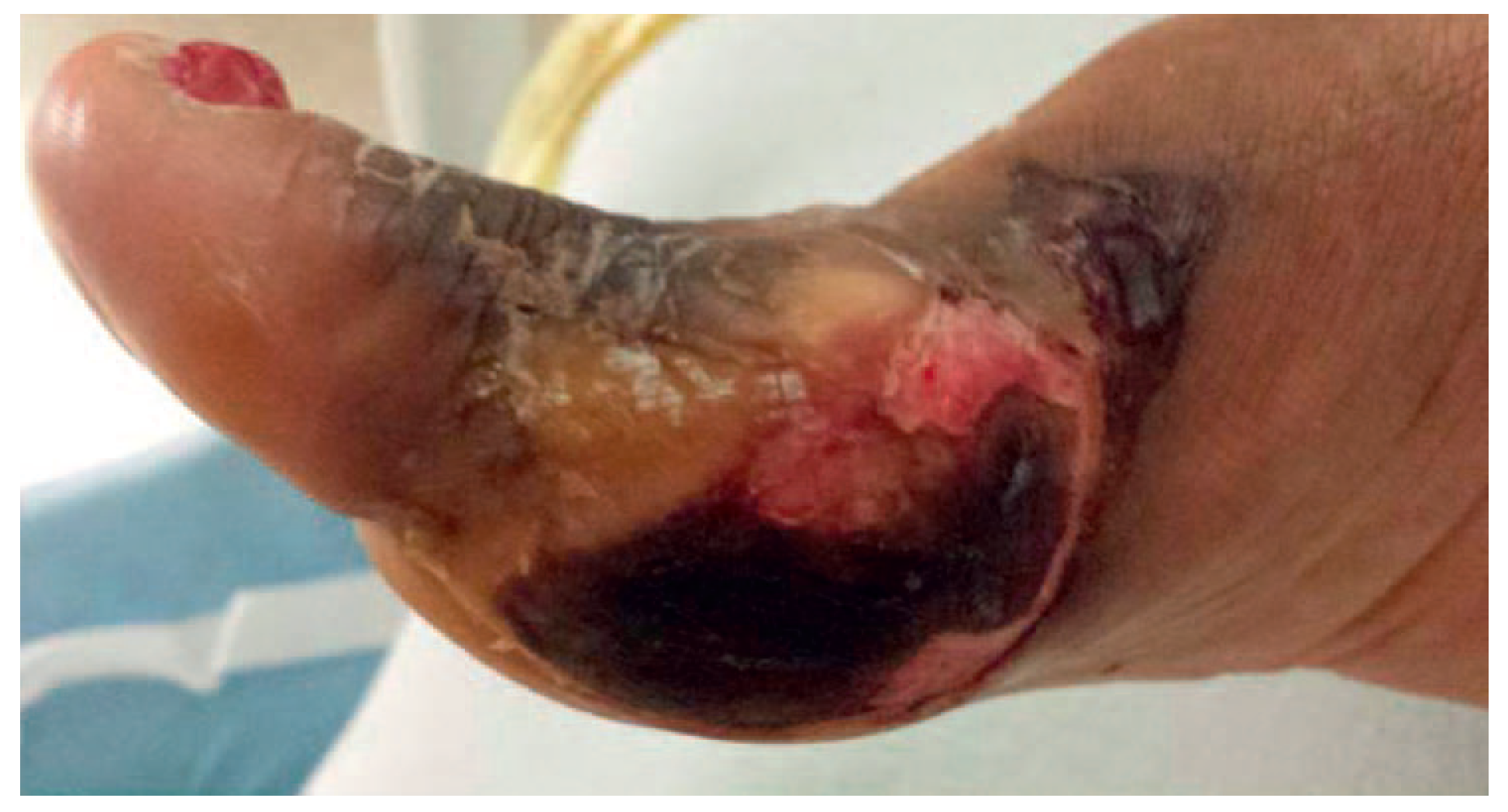
A 67-year-old woman was admitted to the hospital through the emergency department for respiratory failure secondary to a cardiac arrest. The patient had a medical history of IDDM, hypertension, and chronic renal failure for which she underwent dialysis. The patient had an elevated white blood cell count (15,000 μL) and blood glucose level (287 mg/dL). At the time of the podiatric medical service consult for a foot ulcer the patient showed no signs of sepsis, with stable vital signs. On physical evaluation, it was noted that the patient had an ulcer measuring 2.0 × 1.8 × 0.1 cm on the medial aspect of the right first metatarsophalangeal joint (
Fig. 7). The ulcer presented with a black necrotic eschar base with granular borders and a diffuse black pigmented periphery. In addition, there was a clear fluid–filled bulla on the dorsal fifth toe measuring less than 2.0 cm. There was no active drainage, purulence, or periwound erythema present, and a negative probe to bone. The pedal pulses were nonpalpable, and lower-extremity arterial ultrasound revealed findings suggestive of arterial occlusive disease in the right popliteal artery and monophasic flow in the posterior tibial and dorsalis pedis arteries. Radiographs of the right foot revealed no definitive pathologic abnormality other than soft-tissue swelling and degenerative changes. A superficial wound culture exhibited a light growth of
S marcescens that was sensitive to aminoglycosides, third- and fourth-generation cephalosporins, and monobactams. The patient was started on cefepime 1 g intravenous every 24 hours. The ulcer was treated topically with gentamicin cream and antitrypsin foam daily for 2 weeks until she was discharged.
Figure 7.
Case 3. Presentation on second hospital admission, with black necrotic eschar noted to the medial forefoot.
Figure 7.
Case 3. Presentation on second hospital admission, with black necrotic eschar noted to the medial forefoot.
After 3 months, the patient returned to the hospital with a white blood cell count of 27,800 μL and was subsequently admitted for sepsis and end-stage renal disease. On examination, the ulcer presented with a new extension to the plantar surface, now measuring 2.0 × 2.7 × 0.3 cm. There was a moderate serous drainage but no other alterations from the previous examination. New radiographs revealed newly formed cortical erosion to the base of the right first proximal phalanx and the medial aspect of the first metatarsal head suggestive of osteomyelitis. Magnetic resonance imaging confirmed bone marrow edema in the proximal phalanx and the distal first metatarsal and phlegmonous changes throughout the surrounding soft tissue. At this time, her ESR was 90 mL/h. Wound cultures now showed growth of methicillin-resistant
Staphylococcus aureus (MRSA) and
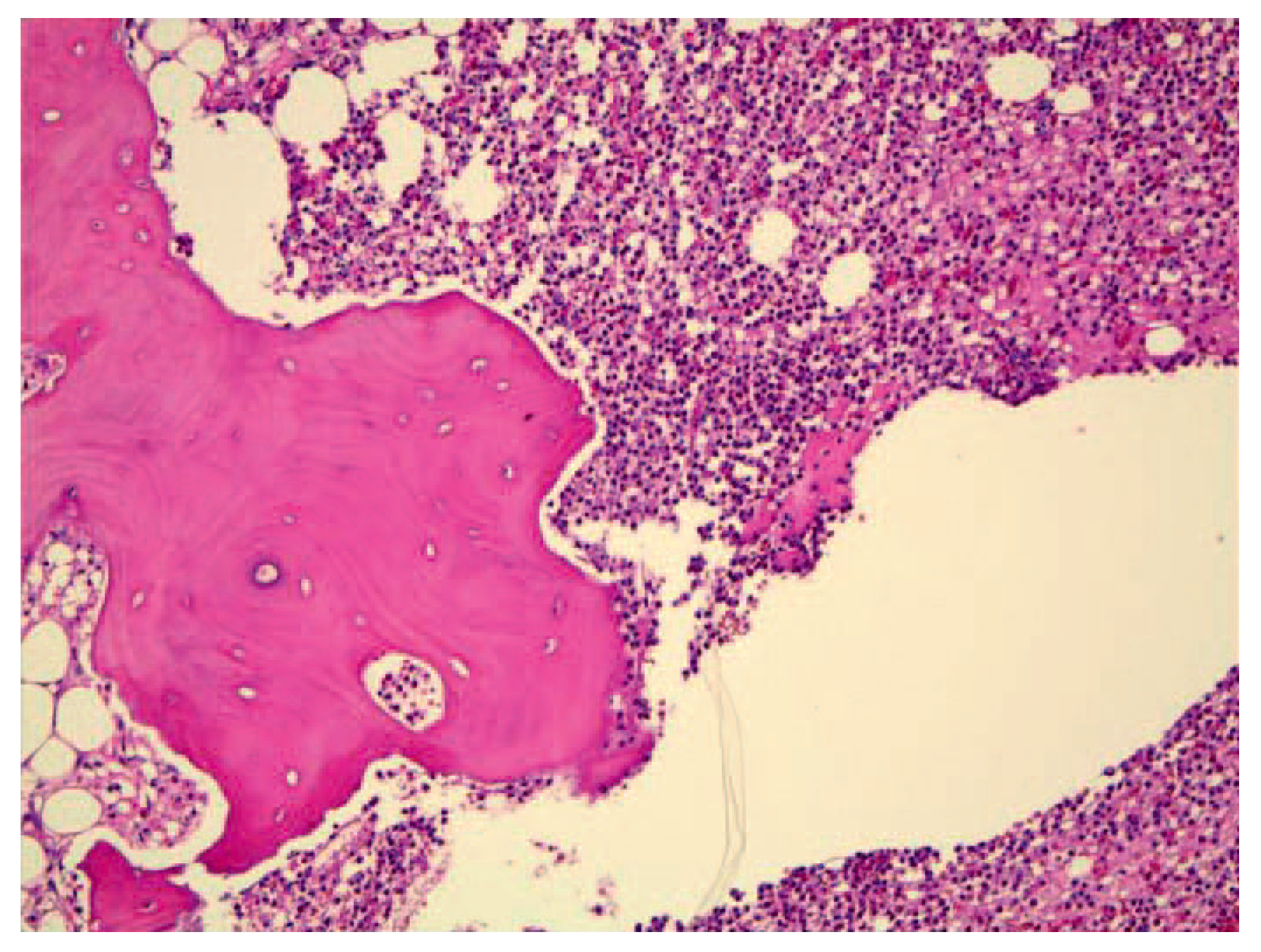
Klebsiella. A partial first-ray amputation was performed. During the surgical procedure, it was noted that the soft tissue appeared with a granular base, and no liquefactive necrosis was noted. The infected bone did seem to be necrotic, with destruction noted to the first metatarsophalangeal joint articular surfaces. Bone samples sent to the microbiology laboratory exhibited growth of MRSA, with pathologic analysis confirming osteomyelitis (
Fig. 8). During this period, the patient received intravenous vancomycin and meropenem treatment. The white blood cell count subsequently decreased to 9,400 μL.
Figure 8.
Case 3. Surgical pathology sample of the first metatarsal revealing fragments of bone with numerous intermedullary neutrophils. Destruction of bony trabecula is consistent with acute osteomyelitis.
Figure 8.
Case 3. Surgical pathology sample of the first metatarsal revealing fragments of bone with numerous intermedullary neutrophils. Destruction of bony trabecula is consistent with acute osteomyelitis.
Discussion
In the literature,
S marcescens presents as an opportunistic pathogen responsible for nosocomial outbreaks and a wide array of infections, which typically present in immunosuppressed populations or those receiving systemic corticosteroid therapy [
1,
6,
8-
10,
12]. The cases presented herein are all diabetic patients with uncontrolled blood sugar levels. Two of the three cases may have been nosocomial, considering that the patients had previous hospital admissions within the previous 6 months.
The lower-extremity infections caused by
S marcescens in the literature have presented as granulomatous ulceration, abscess, bullous cellulitis, and necrotizing fasciitis [
1,
9,
11-
15]. We presented three cases of
S marcescens infection with varying levels of severity in which some similarities exist. Two patients presented with the clinical appearance of necrotizing soft-tissue infections. The patient in the second case had a local necrotizing infection, whereas in the first case the patient had a more severe infection with systemic manifestations. On initial presentation to the emergency department the first patient was septic, with a white blood cell count of 19,700 μL and a necrotizing soft-tissue infection in the foot that may have been already progressing proximally into the leg. Although the second patient's case was less severe on presentation, with a white blood cell count of 13,000 μL, he may have simply presented earlier in the course. This allowed for immediate treatment, including an incision and drainage procedure, which may have prevented the rapid progression expected in an uncontrolled diabetic patient with a necrotizing infection [
19]. In the first patient, there was a delay between hospital admission and surgical intervention. This may be attributed to multiple factors, such as serum potassium imbalance leading to a delay in medical clearance and failure to identify this as an emergency case of necrotizing fasciitis. This culminated in a delay of 6 days to surgical intervention.
Another factor worth noting, which may account for the rapid progression seen in the first patient, may be the advanced stage of the PVD. Although all of the patients did have some degree of vascular impairment, the patient in the first case had severe disease, with complete occlusion of the posterior tibial artery on the arterial ultrasound. The full extent of vascular impairment was not known owing to the patient refusing angiography. Although the patient was receiving intravenous antibiotic drug therapy during the course of treatment, what cannot be determined is how effective the systemic regimen was at reaching the site of infection given the impaired circulation of the limb. Furthermore, certain anaerobic species, including S marcescens, may thrive in such ischemic conditions.
In the third case there was an absence of liquefactive necrosis, as witnessed during the performed debridement. There was also a negative culture of
Serratia during the second admission to the hospital, which may have a correlation. Despite the patient having diabetes and PVD, the
Serratia infection seemed to remain superficial; however, it may have created the pathway for subsequent seeding of bacteria, which infected the bone (
Fig. 8). The anatomical location of the wound is an area with minimal soft-tissue coverage over the first metatarsal head (
Fig. 7). The tissue planes are attenuated on the medial aspect, allowing for a short route to the bone, especially after a wound that protrudes into the thinned subcutaneous layer. After debridement for osteomyelitis, the bone cultures grew MRSA and
Klebsiella.
Lower-extremity bullous lesions caused by
S marcescens have been documented [
11,
12]. Bullae were present in two of the three cases. The patient in the third case had stated that the primary ulcer began as a large blister. There was the presence of superficial sloughed skin around the periphery as though a previous bulla existed and had ruptured (
Fig. 7). Large bullae were present in the first case as well. Furthermore, as the infection progressed, and ascended up the limb, new bullae formation marked the site of the next ulceration. The deroofed bullae revealed a partial-thickness wound bed that evolved into a purulent, draining, black necrotic eschar within days.
An additional similarity of all three cases was the physical appearance of the ulcerations. In each case, there was an incidence of a black escharotic ulceration. It may be argued that the presence of a black necrotic eschar is the cutaneous manifestation of a necrotizing soft-tissue infection, which is well known, or perhaps the end product of avascularity. However, herein we note three patients infected with the same bacteria in which the presence of these lesions existed, and in one case there was no necrotizing process taking place. Although all of the patients did have PVD, such necrosis typically occurs at the most distal portion of the extremity or at pressure points such as the heels. Additional causes of black eschar include MRSA and spider bites, which have both been cited as diagnostic [
20,
21]. Perhaps there is a trend that may be explained by
S marcescens' virulence factors or other unique characteristics, such as its pigment.
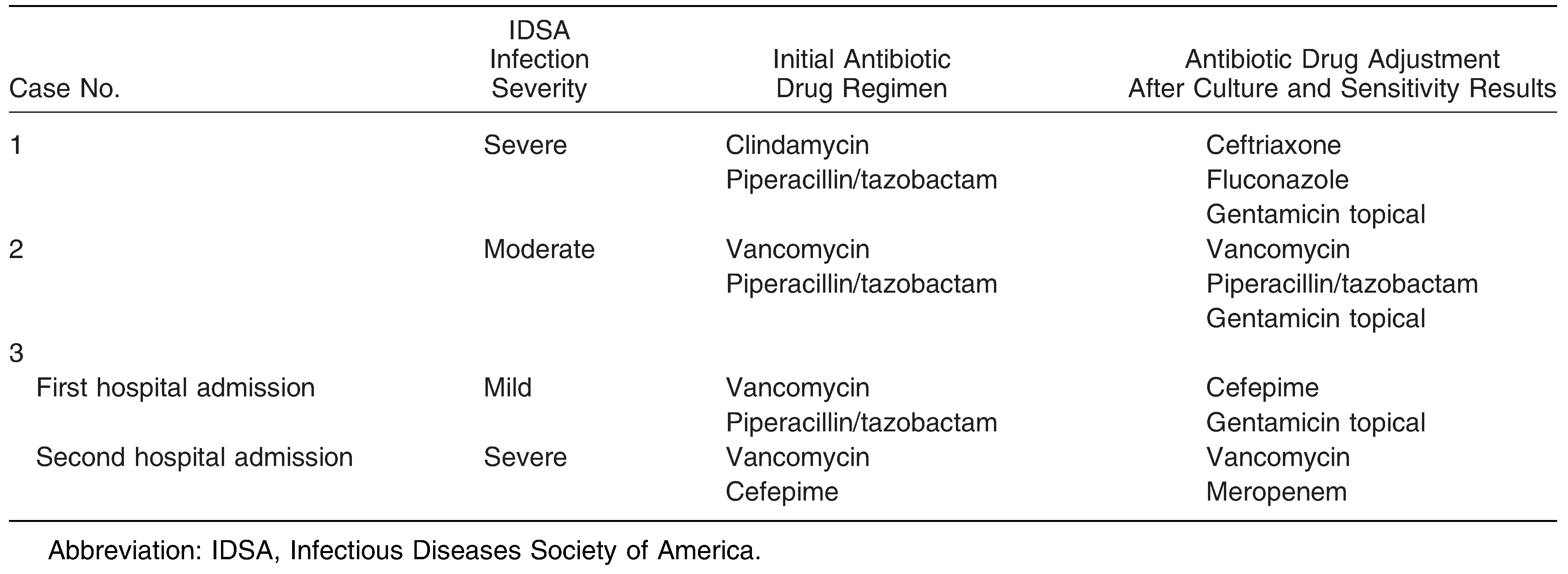
In all three cases, the patients were started on empirical intravenous antibiotic drug regimens in compliance with, and in some cases in excess of, the 2012 Infectious Diseases Society of America clinical practice guideline for the diagnosis and treatment of diabetic foot infections (
Table 1). These guidelines set forth criteria for selecting an empirical antibiotic drug regimen based on infection severity [
22]. The guidelines suggest targeting gram-positive cocci species for mild-to-moderate infections and broad-spectrum antibiotics for severe infections, pending culture and sensitivity results [
22]. Unfortunately, the microbiology laboratories at the hospitals in question test a standard set of antibiotic agents for each bacterial species, unless otherwise requested. Piperacillin/tazobactam was not tested (
Table 1). Retrospectively, it is not known with certainty whether these three strains were susceptible to the piperacillin/tazobactam with which they were initially treated.
Table 1.
Correlation of Each Case with Infection Severity (per IDSA Infection Severity Classification [
22]) and the Antibiotic Drug Regimen Before and After Culture and Sensitivity Results
Table 1.
Correlation of Each Case with Infection Severity (per IDSA Infection Severity Classification [
22]) and the Antibiotic Drug Regimen Before and After Culture and Sensitivity Results
These three cases used a combination of medical, surgical, and wound care therapies. Unfortunately, two of the patients were lost to follow-up, and the third ended up with a first-ray resection. In case 2, the white blood cell count was trending down, and the ESR had increased. The patient seemed to be responding to treatment before leaving the hospital but given the MRI results required additional surgical irrigation and debridement. The patient in case 1 was not responding to treatment and required vascular intervention and more aggressive surgical debridement, as well as medical management.
This case study has some limitations. We reviewed a small population in which some selection bias exists. There was no randomization in choosing these three cases, and all of the patients were sampled from two hospitals in the same suburban area.
Conclusions
We presented a series of three cases of lower-extremity infections in which S marcescens was the sole or a contributing pathogen. All of the patients presented with some combination of a similar set of clinical characteristics, including bullae formation, liquefactive necrosis, and black necrotic eschar. All three patients were diabetic and had PVD. We believe that further investigation into the commonalities of S marcescens infection is warranted to properly identify possible trends. The identification of risk factors and clinical characteristics of other infectious processes has proved to be extremely valuable in clinical practice. This is particularly vital now that the medical field is challenged by growing antibiotic drug resistance and a lack of available therapies for multidrug-resistant infections. It is worth noting that this is one of the greatest challenges we currently face.