Physical activity has traditionally been viewed as beneficial to health for both adults and children. It has been shown that physical activity at a moderate level of intensity can have health benefits for obese young people [
1]. The numerous health-related benefits of regular exercise depend on the type, intensity, and volume of the activity but usually include improved stamina, body image, and self-esteem [
2]. In addition, adults may achieve enhanced bone mineralization [
3] and better cardiorespiratory fitness [
4].
The participation of children and adolescents in sport activities in general, and in soccer in particular, is becoming more widespread, and, therefore, the risk of associated injuries is increasing. Soccer, although considered a safe sport for children and adolescents [
5], and, indeed, one for which injury prevention programs have been created [
6], is not exempt from injuries in practice. Studies have shown that the part of the body most commonly injured in soccer practice is the lower limb, which accounts for 60% to 80% of injuries from this sport, with the most frequent specific locations being the knee, the foot-ankle, and the leg [
7-
10].
Development of the lower limb begins with genu varus at age 6 to 12 months [
11]. From 18 to 24 months there is a progressive alignment to 0°, coinciding with the infant beginning to walk [
12], evolving toward genu valgus at age 3 to 4 years, with an average tibiofemoral angle of 12° [
13,
14]. This genu valgus is corrected spontaneously by age 7 years, approximately, when the lower extremities become aligned at 8° valgus angle in girls and 7° valgus angle in boys [
15].
Structurally, there is a higher incidence of genu varus in young soccer players. Asadi et al [
16] found that the length of the tibiofemoral joint line differed by 0.73 cm between soccer players and the control group [
16]. This circumstance may be influenced by the fact that a greater burden of force is imposed on the knee joint in high-impact sports [
17].
This difference is also apparent in the angle of the quadriceps, or Q angle, which represents the vector of the quadriceps and the patellar tendon [
18]. This parameter is used to measure patellar alignment, and it has been reported that the change in the strength and tone of the quadriceps can be caused by growth and by activity. The practice of soccer tends to decrease the Q angle [
19] from the average of 15° [
20].
The aim of the present study was to analyze possible misalignments in the lower limb, taking into account variations in the Q angle when the knee is under load, the foot position (measured by the Foot Posture Index [FPI]), the corresponding valgus index, and the orientation of the subtalar joint axis, in a group of children who regularly played soccer for 3 years to examine the extent to which this practice affects physical development.
Materials and Methods
This prospective, longitudinal, observational, analytical study is based on a population of 70 boys who practiced soccer three times per week. Seventeen patients were lost to follow-up when they gave up regular sports practice. Thus, the final analysis was conducted on 53 children who were followed for 3 years, during which they played soccer 3 times a week. This study was conducted in accordance with the Declaration of Helsinki and was approved by the ethics committee of the University of Malaga (Malaga, Spain).
The inclusion criteria were to be a boy regularly playing soccer (training and matches) for a minimum of 2 years before the start of the study and aged 7 to 12 years at the time of the study. The parents, who were previously informed about the nature of the study, completed a questionnaire with the following questions: hours of training per week, hours of competition per week, type of boot, type of boot surface, and type of cleats; they gave their signed informed consent to confirm the participation of the children in the study. The exclusion criteria were a previous fracture of the lower limb, a congenital malformation of the lower limb, or any type of musculoskeletal injury to the lower limb during the previous 6 months.
All of the participants were interviewed to obtain demographic data and for clinical examinations to be conducted. The demographic data included age, sex, number of years practicing sports, and number of training sessions per week. The measurement protocol was conducted by three technicians who had been specifically trained for this task. The study was conducted with the boys wearing appropriate clothing (shorts) so that the anatomical points could be easily located and viewed. First, anthropometric measurements were taken, and then a plantar impression was obtained, either in ink or in the form of a pedigraph, using an apparatus consisting of a plastic chassis measuring 19 × 38 cm containing an ink-impregnated sheet of latex. This operation was carefully explained to the participants, and the aim was to obtain an impression on paper of each individual's footprint.
The FPI was assessed by a podiatric physician (G.G.N.) with a previously established high intrarater reliability for FPI scoring (intraclass correlation coefficient = 0.91–0.98) [
21] who was blinded to the purposes of the study and to the participant's identity. The FPI is a six-item clinical assessment tool used to evaluate foot posture [
22]. It has acceptable validity [
23] and good intrarater reliability (intraclass correlation coefficient = 0.893–0.958) [
24]. The FPI evaluates the multisegmental nature of foot posture in all three planes and does not require the use of specialized equipment. Each item of the FPI is scored between −2 and +2, to give a total between −12 (highly supinated) and +12 (highly pronated). Items addressed include talar head palpation, curves above and below the lateral malleoli, calcaneal angle, talonavicular bulge, medial longitudinal arch, and forefoot-to-hindfoot alignment.
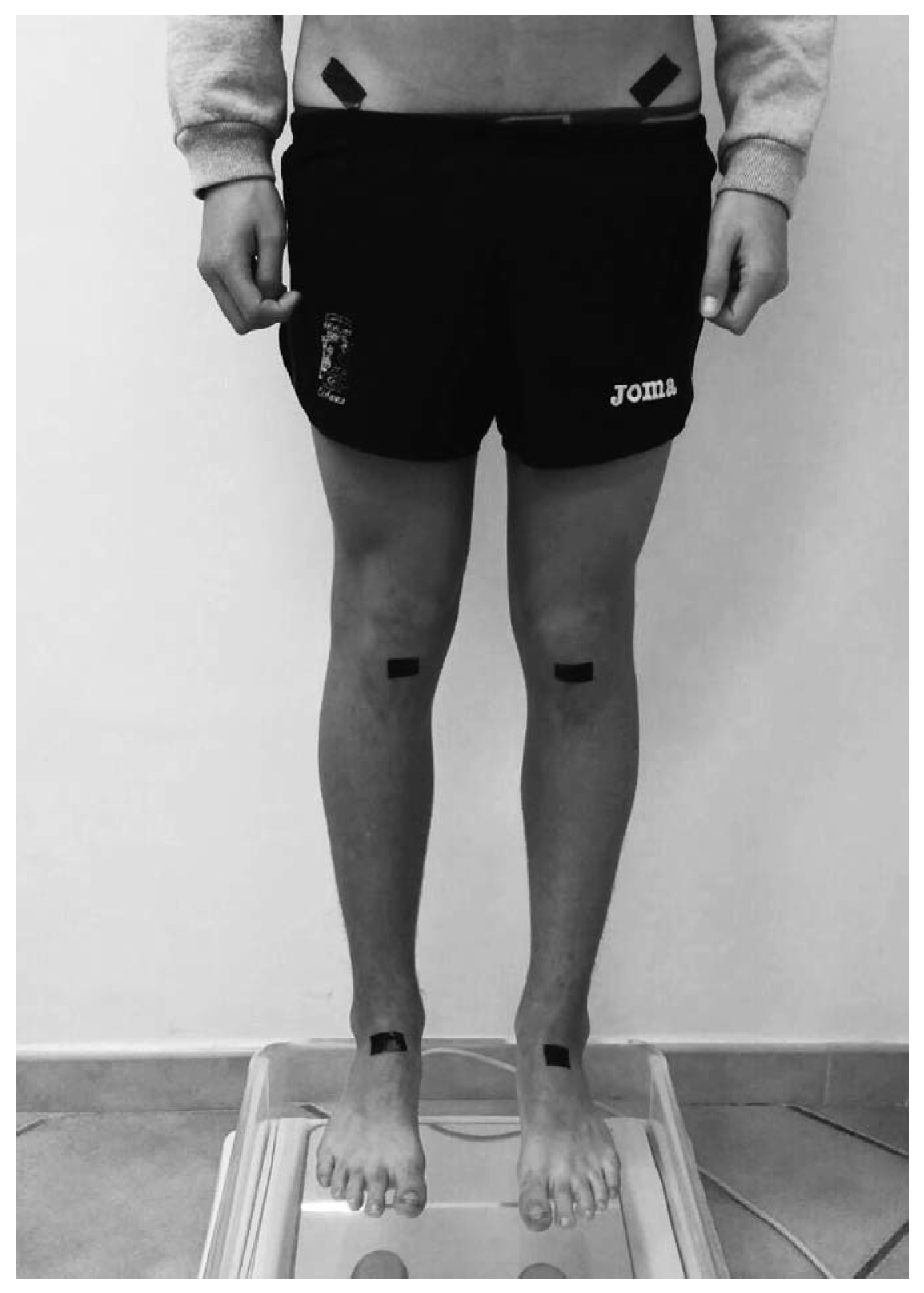
Femoral-tibial angles were measured using a tripod-mounted camera (A380; Sony Corp of America, New York, New York) to take a photograph of the front and rear of the participant's leg. Then, the Q angle under load was determined by computer software (AutoCAD; Autodesk Inc, San Rafaeal, California) following the method described by Sanchez et al [
25] to assess knee alignment with respect to the hip and tibia. To do so, the participant was asked to stand evenly on both feet at a height of 0.90 m above the ground, and the camera was placed at a distance of 2.90 m to obtain a complete picture of the entire lower limb. To standardize the image, the heels were separated by 7.5 cm and the forefoot was rotated by 10°. The precision of these measures was ensured by previously marking the surface on which the individual was standing. The participant was asked to stand with his muscles relaxed, arms hanging vertically beside the trunk, and head straight while looking at a given point on the wall. The Q angle was obtained by reference to the anterior superior iliac spine, the center of the patella, and the anterior tibial tuberosity, with the center of the patella forming the apex of the angle between the femur and the tibia such that these points would be clearly visible in the photograph (
Fig. 1). In this process, the software used (CorelCAD 2014; Corel Corp, Ottawa, Ontario, Canada), was specially designed for the accurate measurement of angles in photography.
Figure 1.
View of the position of the boys when measuring the Q angle.
Figure 1.
View of the position of the boys when measuring the Q angle.
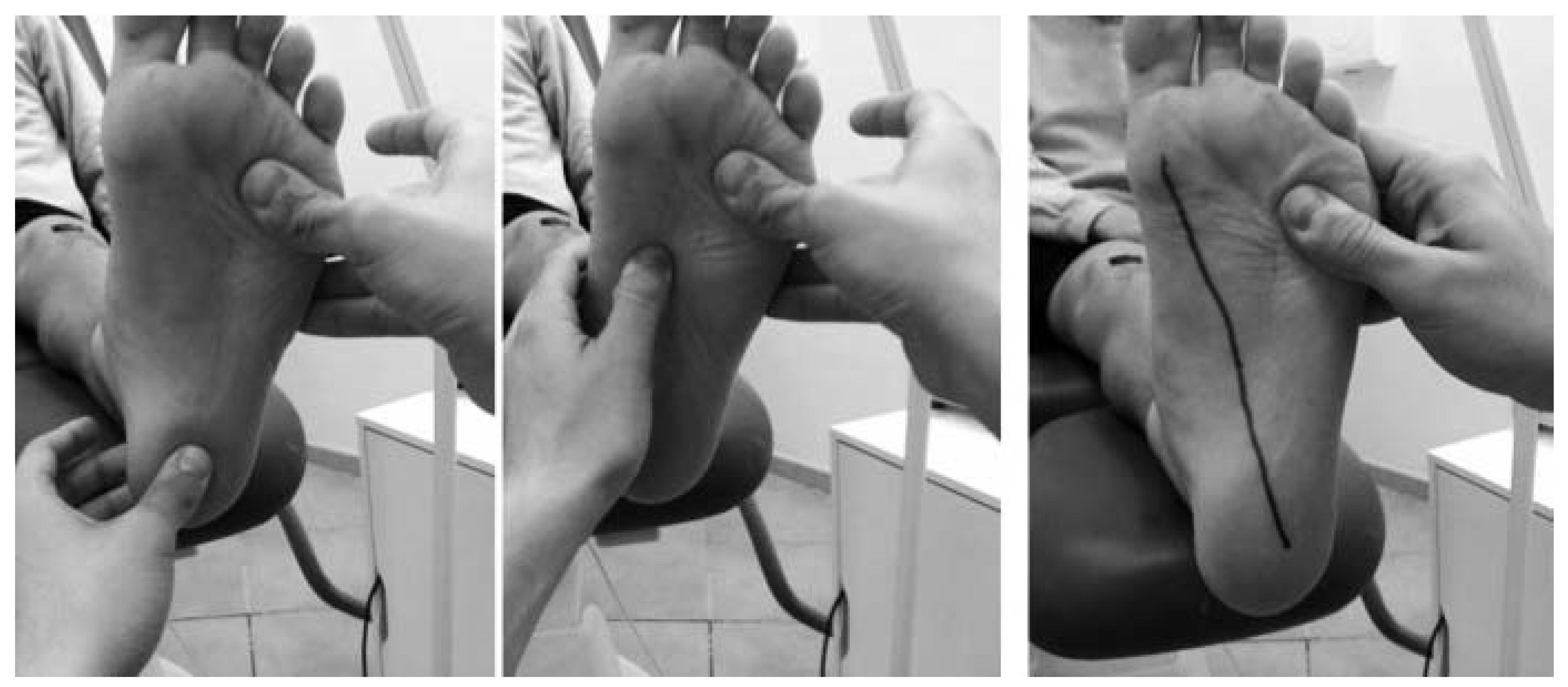
Finally, the subtalar joint axis was measured following the procedure described by Kirby [
26]. To do so, the participant was in a supine position on a flat surface, and pressure was exerted with the forefinger of one hand on the heads of the fourth and fifth metatarsals to place the foot in a neutral position (
Fig. 2). With the forefinger of the other hand, various points were then palpated along a line from the hindfoot to the forefoot. When it was observed that at a given point the foot did not perform any rotational movement, this marked a point through which the subtalar joint axis passed. Once all of the points had been marked, they were joined with a straight line. If this line passed exactly between the sesamoids, the foot was considered to have a neutral axis. If the line passed through the medial zone, the foot had a medially deviated (pronated) axis. If, however, the lateral axis was in the lateral zone, the axis was laterally deviated (supinated).
Figure 2.
Three steps in the measurement of subtalar joint axis position.
Figure 2.
Three steps in the measurement of subtalar joint axis position.
The valgus index was analyzed on the pedigraph by reference to the study by Thomson [
27]. The positions of each malleolus were marked on the plantar impression, where point A represented the external malleolus and point B the internal one, and the two points were connected by a straight line. The axis of the foot was then drawn, with a straight line from the center of the heel to the mark made by the middle toe. The intersection between line A-B and the foot axis is called point C. From these points, the following formula can be applied to determine the valgus index: (1/2AB-AC)*100/AB.
Statistical Analysis
The data obtained were analyzed using statistical software (IBM SPSS Statistics for Windows, Version 19.0; IBM Corp, Armonk, New York). Descriptive statistics of the variables were used to observe the means and SDs of the quantitative variables obtained for each of the 3 years. The Kolmogorov-Smirnov test with the Lillefors correction was used to test the hypothesis of normal distribution of the population. The analysis of variance test of repeated measures was used as a nonparametric test, and the χ2 test was used as a parametric test of the values obtained for each year. In all of these tests, the statistical significance criterion of P < .05 was used.
Results
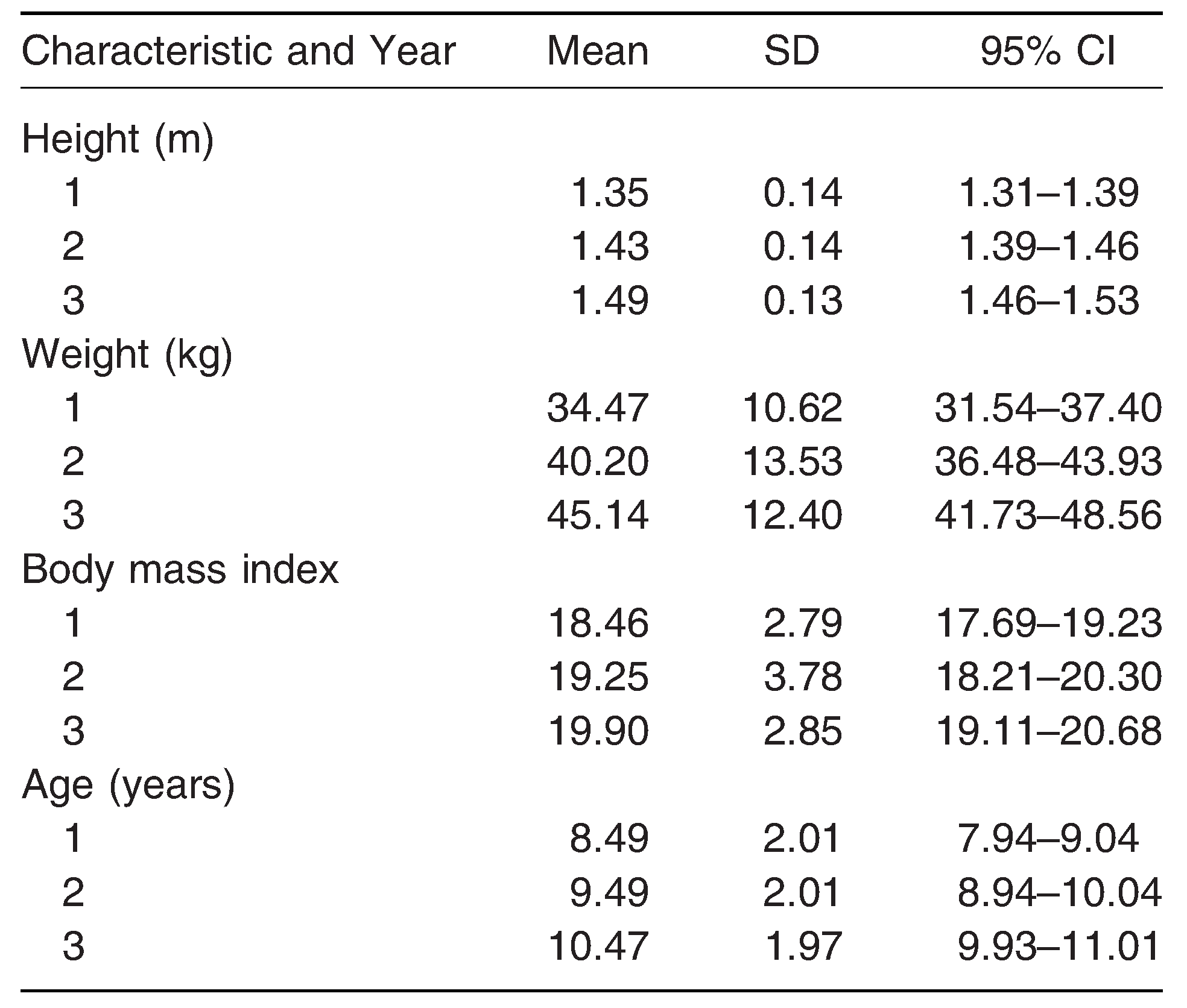
The children presented the following mean ± SD characteristics: first year—age, 8.49 ± 2.01 years; height, 1.35 ± 0.14 m; weight, 34.47 ± 10.62 kg; body mass index (BMI; calculated as the weight in kilograms divided by the square of the height in meters), 18.46 ± 2.79; second year—age, 9.49 ± 2.01 years; height, 1.43 ± 0.14 m; weight, 40.20 ± 13.53 kg; BMI, 19.25 ± 3.78; and third year—age, 10.47 ± 1.97 years; height, 1.49 ± 0.13 m; weight, 45.14 ± 12.40 kg; BMI, 19.90 ± 2.85 (
Table 1).
Table 1.
Characteristics of the 53 Study Participants by Year
Table 1.
Characteristics of the 53 Study Participants by Year
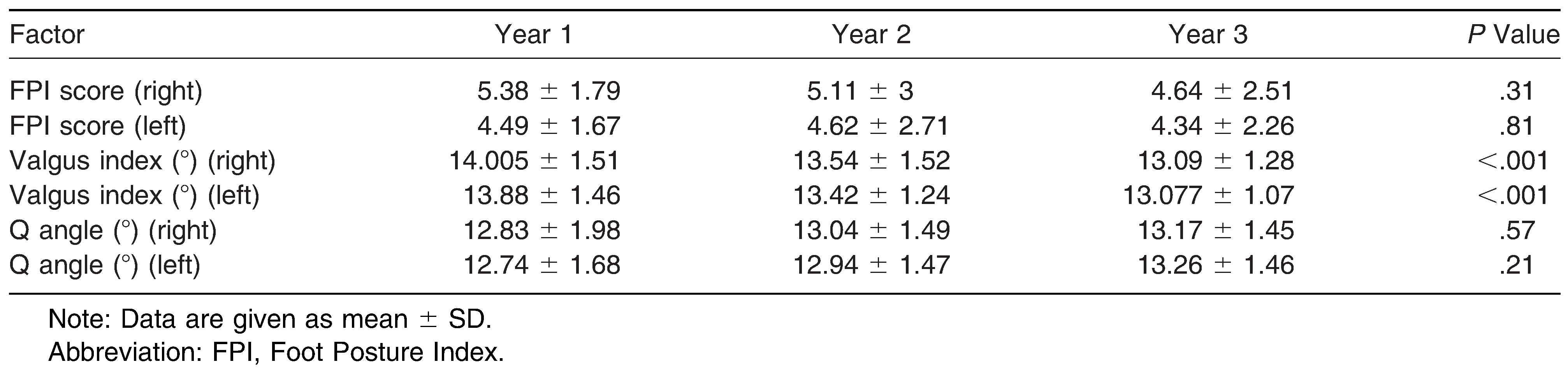
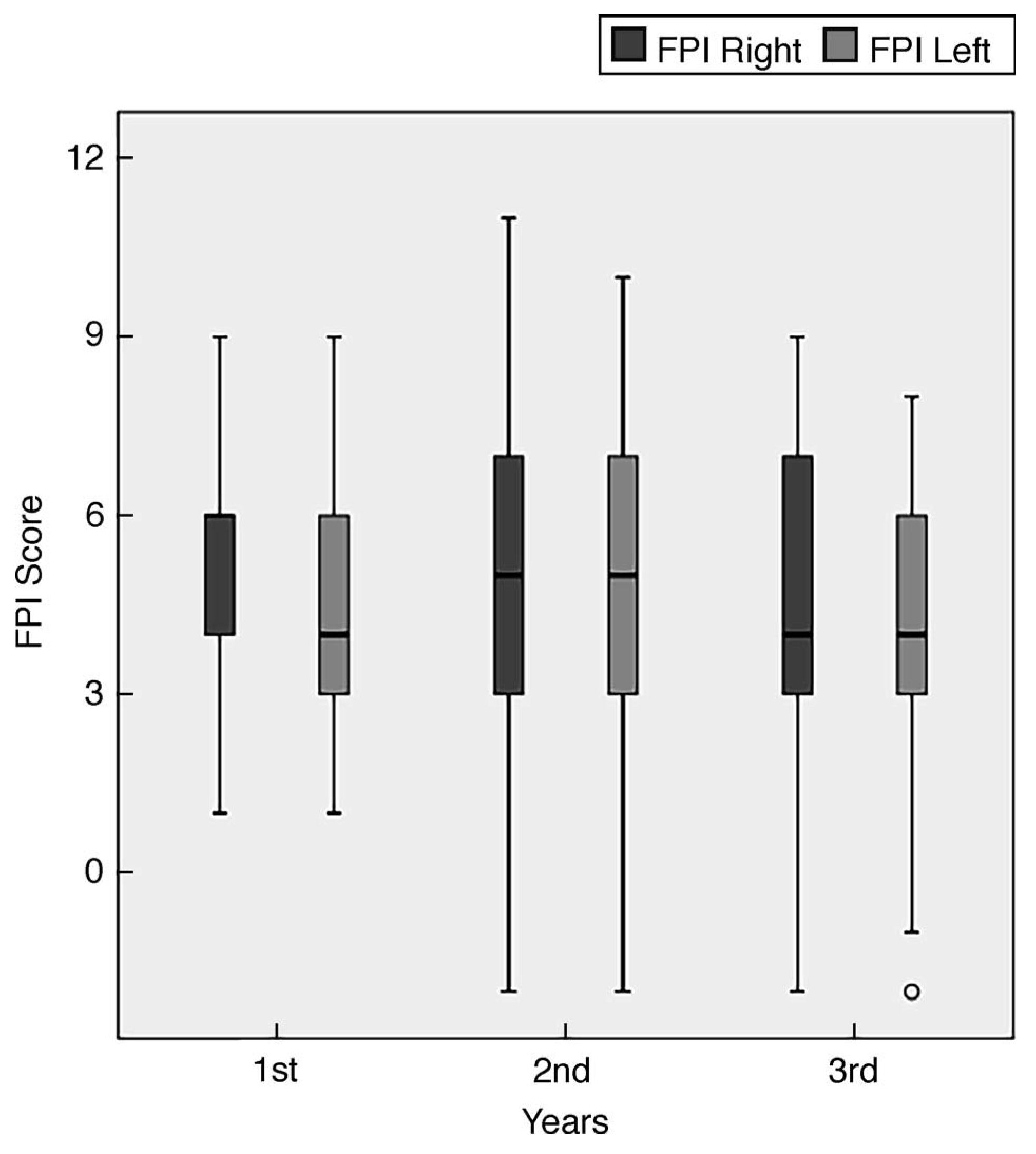
The descriptive analysis produced mean ± SD FPI scores of 5.38 ± 1.79 for the right foot and 4.49 ± 1.67 for the left foot in the first year; 5.11 ± 3 (right) and 4.62 ± 2.71 (left) in the second year; and 4.64 ± 2.51 (right) and 4.34 ± 2.26 (left) in the third year (
Table 2) (
Fig. 3).
Table 2.
FPI Scores, Valgus Index Values, and Q Angles for Each of the 3 Years Observed
Table 2.
FPI Scores, Valgus Index Values, and Q Angles for Each of the 3 Years Observed
Figure 3.
Box and whisker plot of changes in the Foot Posture Index (FPI) through 3 years. The box represents median, lower, and upper quartiles and the lower and upper inner fence. Points represent extreme values over the upper inner fence or under the lower one.
Figure 3.
Box and whisker plot of changes in the Foot Posture Index (FPI) through 3 years. The box represents median, lower, and upper quartiles and the lower and upper inner fence. Points represent extreme values over the upper inner fence or under the lower one.
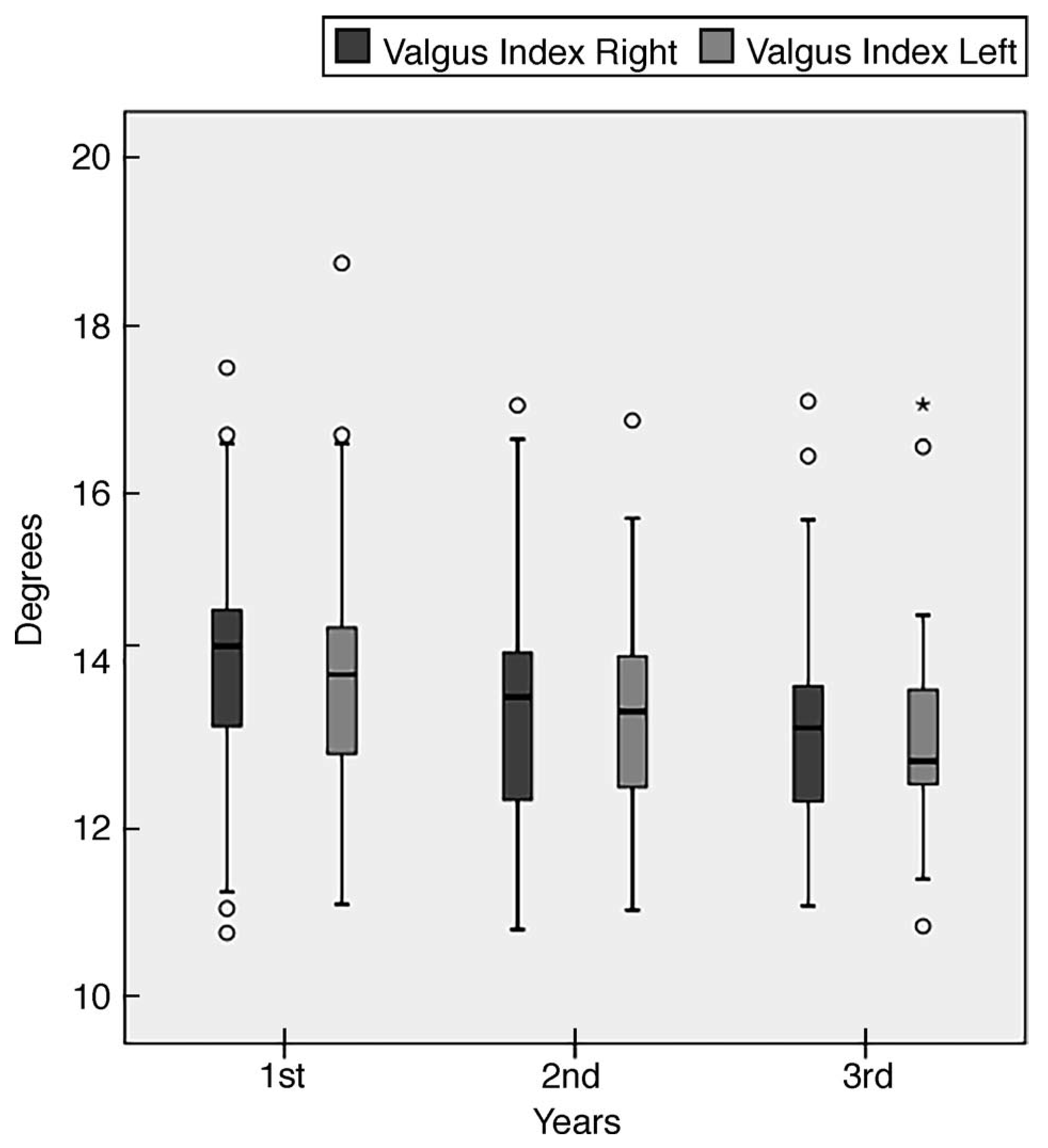
For the valgus index, the first year produced mean ± SD values of 14.05° ± 1.51° (right) and 13.88° ± 1.46° (left); for the second year, the corresponding values were 13.54° ± 1.52° (right) and 13.42° ± 1.24° (left); and in the third year, they were 13.09° ± 1.28° (right) and 13.07° ± 1.07° (left) (
Table 2) (
Fig. 4).
Figure 4.
Box and whisker plot of changes in the valgus index through 3 years. The box represents median, lower, and upper quartiles and the lower and upper inner fence. Points represent extreme values over the upper inner fence or under the lower one.
Figure 4.
Box and whisker plot of changes in the valgus index through 3 years. The box represents median, lower, and upper quartiles and the lower and upper inner fence. Points represent extreme values over the upper inner fence or under the lower one.
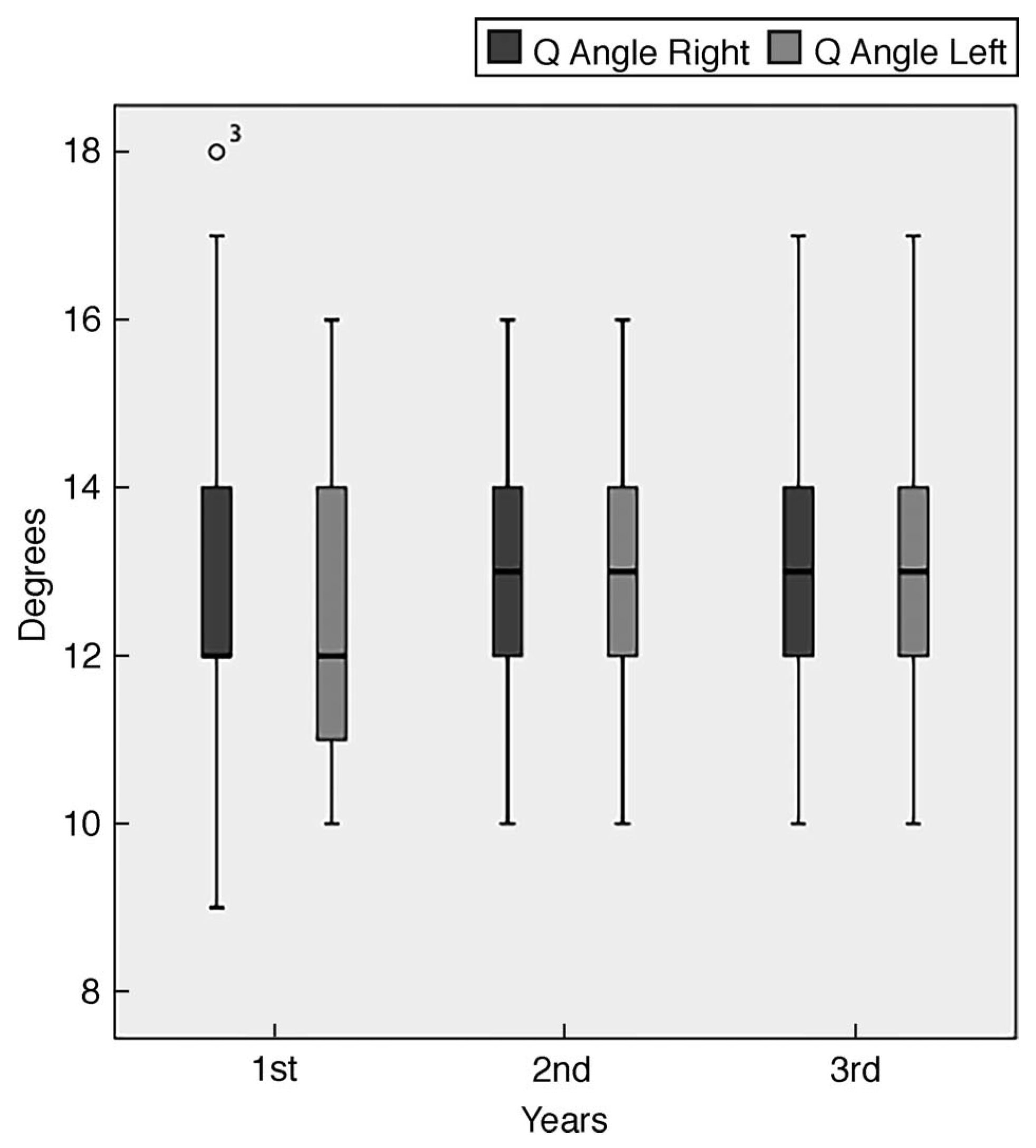
For the Q angle, the following mean ± SD values were obtained: for the first year, 12.83 ± 1.98 (right) and 12.74 ± 1.68 (left); for the second year, 13.04 ± 1.49 (right) and 12.94 ± 1.47 (left); and for the third year, 13.17 ± 1.45 (right) and 13.26 ± 1.46 (left) (
Table 2) (
Fig. 5).
Figure 5.
Box and whisker plot of changes in the Q angle through 3 years. The box represents median, lower, and upper quartiles and the lower and upper inner fence. Points represent extreme values over the upper inner fence or under the lower one.
Figure 5.
Box and whisker plot of changes in the Q angle through 3 years. The box represents median, lower, and upper quartiles and the lower and upper inner fence. Points represent extreme values over the upper inner fence or under the lower one.
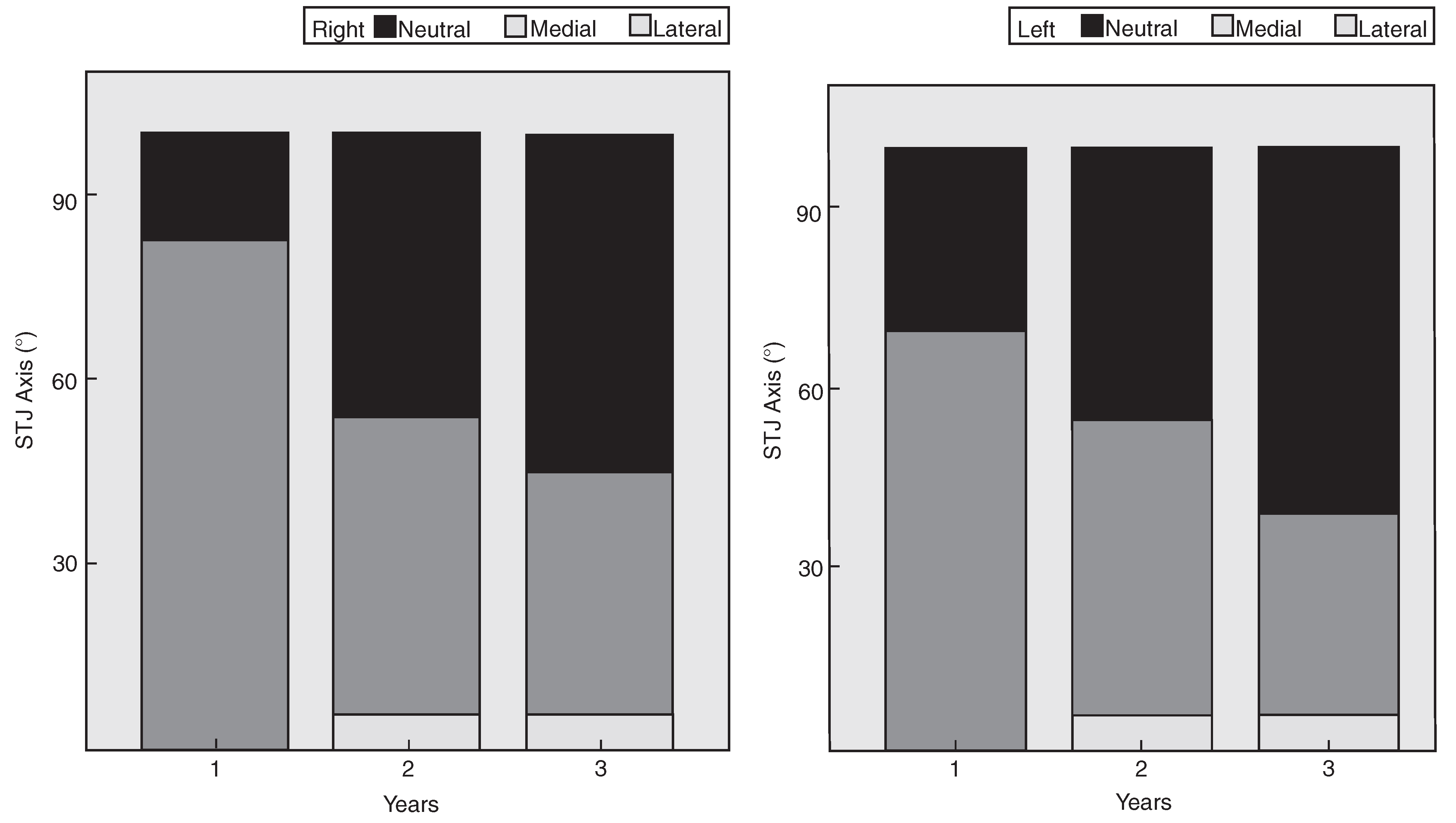
For the first year, the test of the orientation of the subtalar joint axis produced results of 83.02% (right) and 69.82% (left) of medially deviated and of 16.98% (right) and 30.18% (left) neutral axis; for the second year, the corresponding figures were 49.05% medially deviated on both feet and 45.28% neutral axis, also on both feet; for the third year, the results were 54.71% (right) and 60.37% (left) neutral axis and 39.62% (right) and 33.96% (left) medially deviated (
Table 3) (
Fig. 6).
Table 3.
Orientation of the Subtalar Joint Axis for Each of the 3 Years Observed
Table 3.
Orientation of the Subtalar Joint Axis for Each of the 3 Years Observed
Figure 6.
Histogram of changes in the subtalar joint (STJ) axis position through 3 years.
Figure 6.
Histogram of changes in the subtalar joint (STJ) axis position through 3 years.
Statistically significant results were obtained for the orientation of the subtalar joint axis, with P < .005 for the right foot and P < .001 for the left foot, and also for the valgus index, with P < .001 for each foot. However, for the FPI (P = .31 and P = .81, left and right, respectively) and the Q angle (P = .57 and P = .21, left and right, respectively), the values obtained were not statistically significant.
Discussion
The aim of this study was to observe, over 3 years, the possible structural changes caused in the lower limb by the regular practice of soccer by young children. Consequently, soccer practice could be evaluated as a potential risk factor for the occurrence of morphological and structural alterations in children, although the results obtained should be taken cautiously owing to the absence of a control group.
The mean FPI scores obtained for each year are within the range of values established for normal feet but differ slightly from the 3.7 points obtained by Redmond et al [
22] for children. However, we observed a decrease in these values from the first year to the third, with the values obtained for the first year being closer to those classified as pronated; by the third year they were closer to the values reported by Redmond et al. This pattern is also apparent in the test of the orientation of the subtalar joint axis [
26], which revealed a decrease in the percentage of medially deviated from the first year to the third; in the final year of this study, the largest group was that of neutral axes. Note that in the physiologic growth of a child's foot, there is a progressive change from an initial state of valgus toward neutrality [
28].
On comparing these results with those reported by Cain et al [
29], in which mean ± SD FPI scores of 5.3 ± 2.92 were obtained for teenage soccer players, a certain similarity is observed for the first year, but in the following 2 years the values obtained in the present study are lower for both feet.
With respect to the Q angle, for which mean values of approximately 15° have been reported elsewhere [
20], we observed little variation from the first year to the third, and the present values are lower than those found previously. Comparing the present findings with those of Ortqvist et al [
30], who obtained Q angle values of 13.5° for healthy boys aged 9 to 11 years, the present values are slightly lower for each of the 3 years.
Regarding the valgus index, Thomson [
27] established normal values of 11° to 14°, with higher values representing hindfoot valgus and lower values representing hindfoot varus. In the present results, the values for each of the 3 years are within the range of normality, but they decrease from the first year to the third, becoming progressively more distant from the threshold for hindfoot valgus.
Regarding the subtalar joint axis position test in children, there are no previous references that can be compared with the results; therefore, those obtained can be used for the next studies related to children and sports.
In view of these considerations, we interpret the data obtained as reflecting a tendency toward lower values with the passage of time for each of the variables analyzed, although the differences present statistical significance for only the valgus index and the orientation of the subtalar joint axis, and in both cases the reliability of these tests is not fully substantiated in the literature. The general trend is for the values reflecting valgus or pronation, in all of the variables, to decrease toward more neutral values, although they always remain within the physiologic range for the individuals' age.
This interpretation can be made from the values obtained, but the limitations of this study should also be taken into account: we were unable to analyze the participants to observe whether the trend of decreasing values continued with the passage of time, or with higher levels or intensities of activity, because this study was conducted at a soccer academy, where the sports activities for children are more recreational than competitive, unlike the situation found at the club level.
The results obtained lead us to believe that although structural changes do take place in the lower limb over the years, they cannot be considered harmful to the normal development of the child, at least for the age range observed. As an interesting area for further study, the same variables could be measured and analyzed with respect to a longer period and in the context of soccer clubs, where a higher degree of intensity and time competitiveness is found.
Conclusions
This study of a population of schoolchildren shows that although playing soccer might cause structural changes in the lower limb, these alterations should not be considered harmful because they may be influenced by age as well. It is shown that, over the years, feet that were originally classified by the FPI as pronated gradually evolve toward neutrality. This is confirmed by measurement of the valgus index and the orientation of the subtalar joint axis. Regarding the tibiofemoral joint, however, there is a slight increase over time in the Q angle of the knee.