Next Article in Journal
A Novel Thermochromic Liquid Crystal Fabric Design for the Early Detection of High-Risk Foot Complications: A Proof-of-Concept Study
Previous Article in Journal
Dorsal Fracture-Dislocation of the Tarsal Navicular: Case Report and Review of a Rare Injury
 
 
Journal of the American Podiatric Medical Association is published by MDPI from Volume 116 Issue 1 (2026). Previous articles were published by another publisher in Open Access under a CC-BY (or CC-BY-NC-ND) licence, and they are hosted by MDPI on mdpi.com as a courtesy and upon agreement with American Podiatric Medical Association.
Article

Evaluation of Plantar Pressure Distribution in Relationship to Body Mass Index in Czech Women During Walking

by
Kristína Tománková
1,2,*,
Miroslava PřIdalová
1,
Zdenek Svoboda
1 and
Roman Cuberek
3
1
Department of Natural Sciences in Kinanthropology, Faculty of Physical Culture, Palacký University, Olomouc, tř. Míru 117, 771 11 Olomouc, Czech Republic
2
Department of Anthropology and Health Education, Faculty of Education, Palacký University, Olomouc, Žižkovo náměstí 5, 771 40 Olomouc, Czech Republic
3
Institute of Active Lifestyle, Faculty of Physical Culture, Palacký University, Olomouc, Czech Republic
*
Author to whom correspondence should be addressed.
J. Am. Podiatr. Med. Assoc. 2017, 107(3), 208-214; https://doi.org/10.7547/15-143
Published: 1 May 2017

Abstract

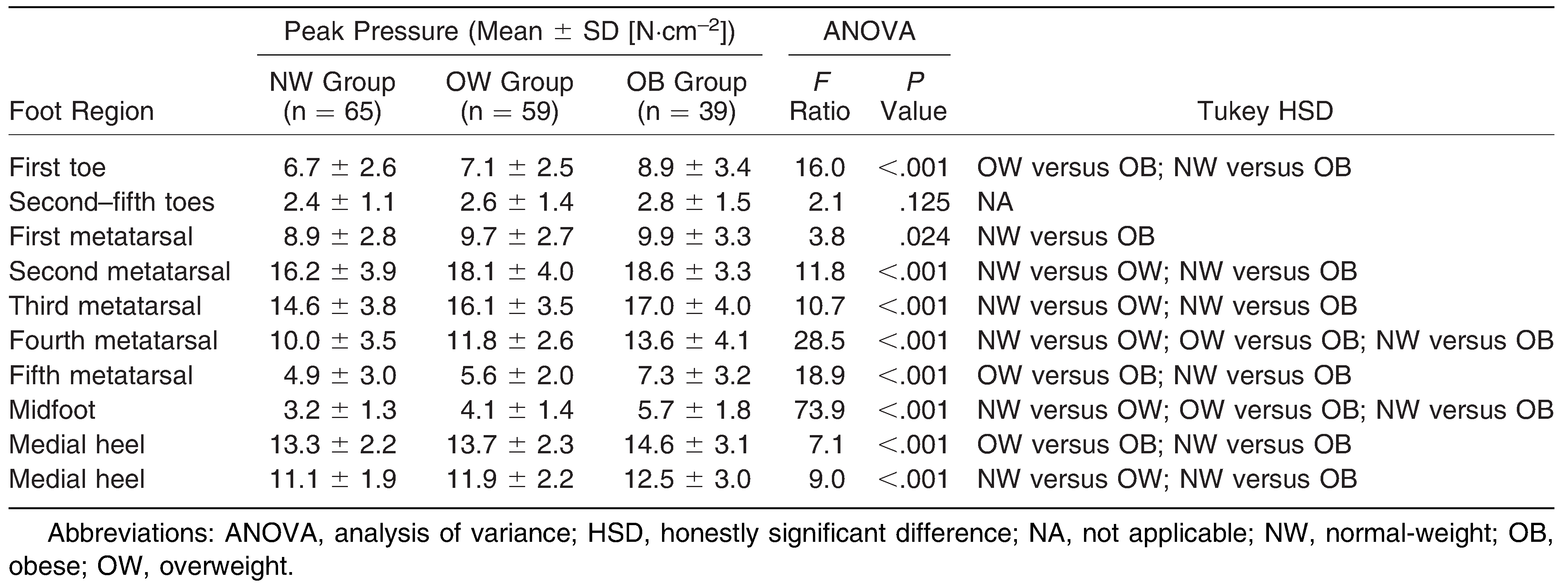
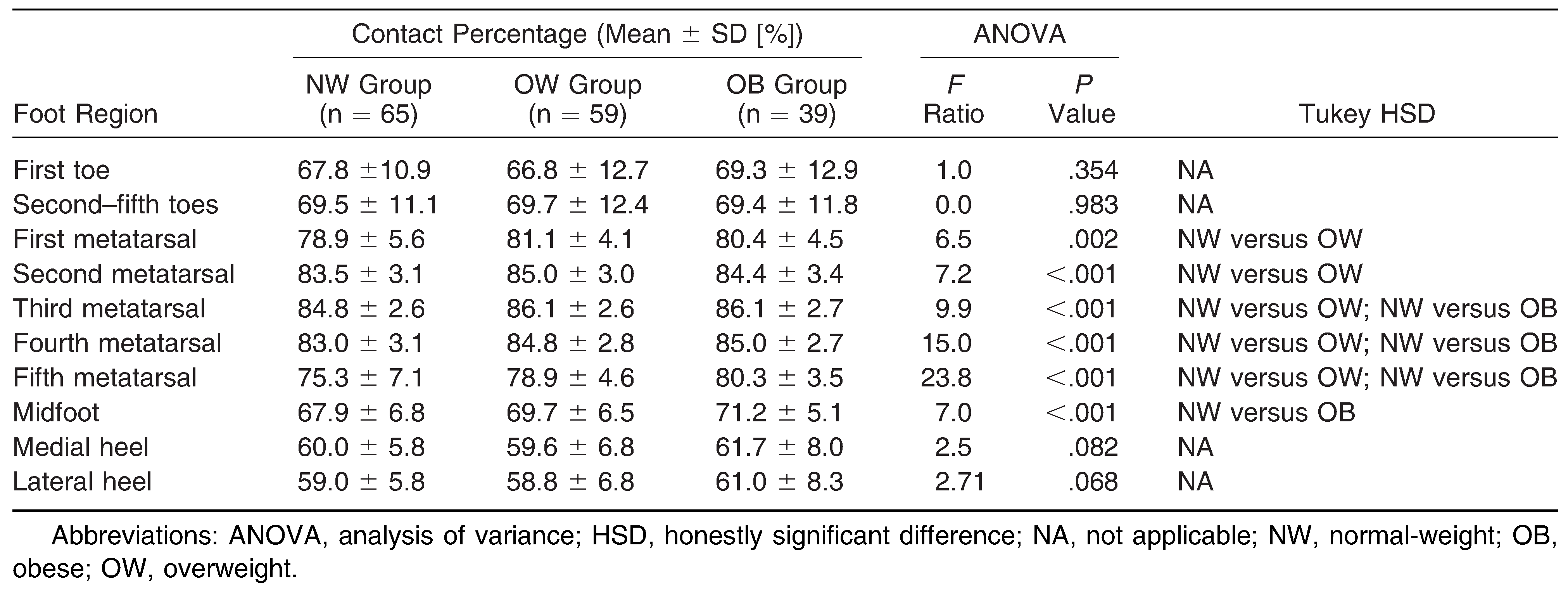
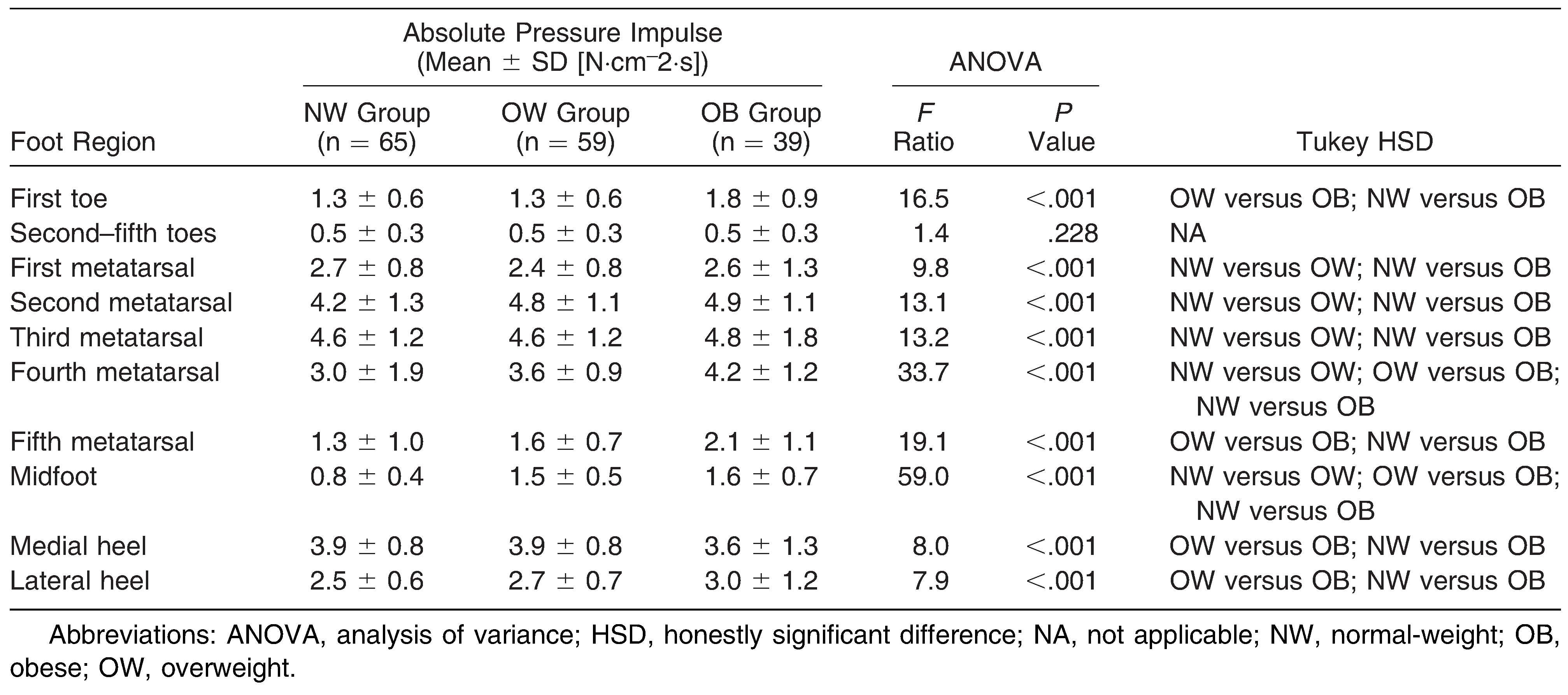
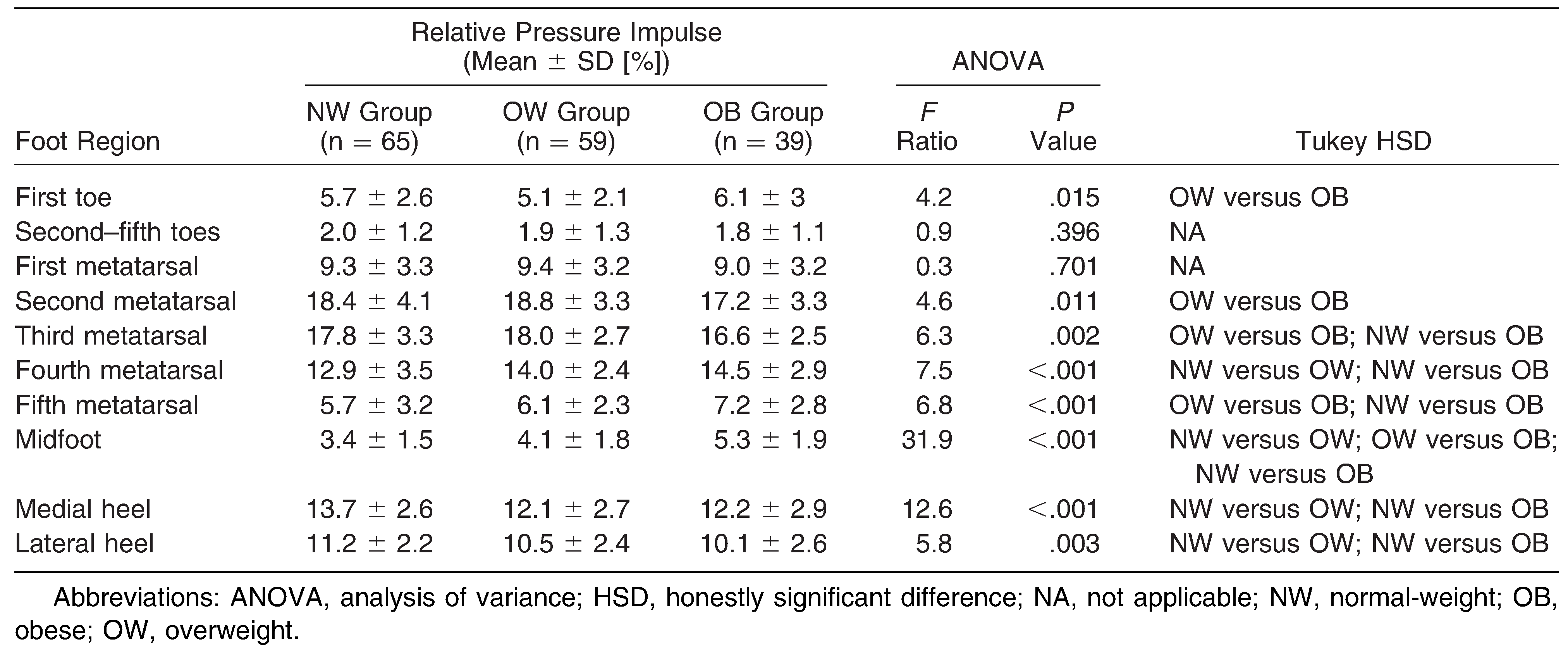
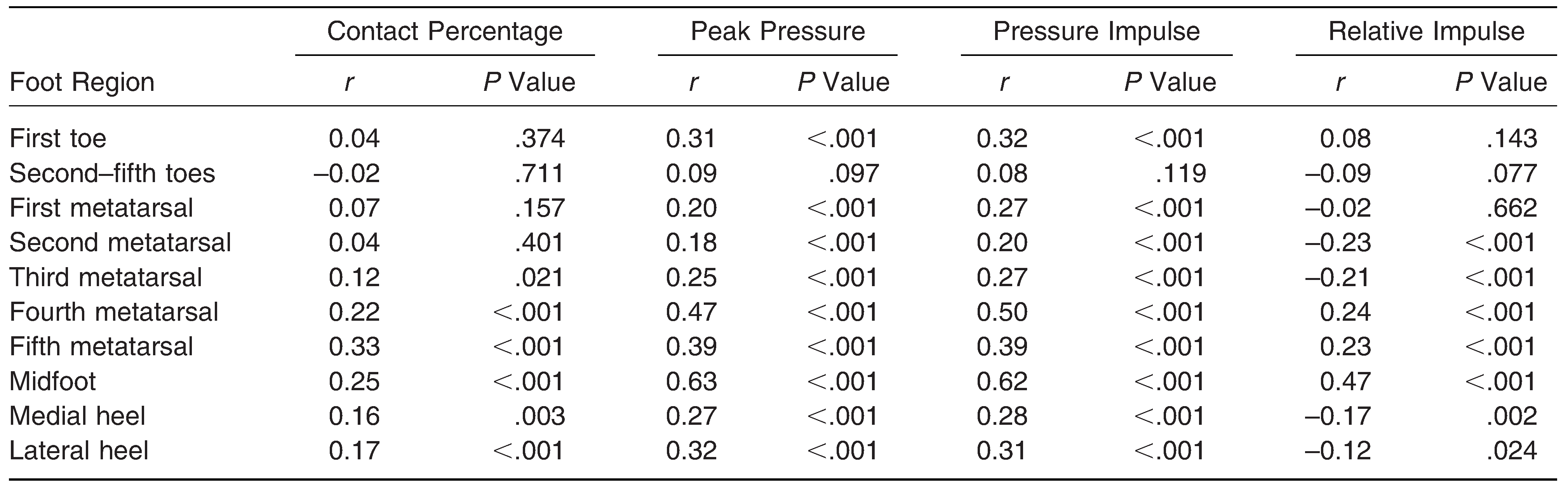
Background: Excessive body weight seems to be a risk factor for foot loading. We sought to investigate the effect of different body mass index (BMI) levels on plantar pressure distribution during walking. Methods: In total, 163 women aged 45 to 65 years (mean ± SD: age, 57.4 ± 5.3 years; BMI, 27.0 ± 5.3) participated in the study. The women were divided, on the basis of BMI, into a normal-weight, overweight, or obese group. The study used the four following plantar pressure parameters (PPPs): contact percentage, absolute pressure impulse, relative pressure impulse, and absolute peak pressure, which were recorded in ten foot regions using a pressure measurement system. Results: The normal-weight group, compared with the overweight and obese groups, had significantly lower absolute PPP values. In the hallux, second through fifth metatarsals, midfoot, and heel regions, we observed significant between-group differences in the two absolute PPPs (peak pressure and pressure impulse) (P < .001). Between-group differences in the relative PPPs were found in the fourth metatarsal, midfoot, and medial heel (relative impulse) and in the second metatarsal (contact percentage) (P < .001). Conclusions: Higher BMI values correspond to a higher load on the foot during walking in women. The relative foot load in obese women is characterized by a pressure increase in the lateral forefoot and midfoot and by a pressure decrease in the medial heel. (J Am Podiatr Med Assoc 107(3): 208-214, 2017)