The term
high-risk foot can generically be applied to feet that are associated with underlying risk factors and are at increased risk for the development of major complications, such as deformity, ulceration, infection, gangrene, and amputation. Whereas the presence of advanced underlying lower-extremity peripheral vascular disease places the foot at increased risk for serious complications, the term
high-risk is most often used in conjunction with the diabetic foot, with substantial underlying patient comorbidities/multimorbidities. These morbidities commonly include peripheral sensory, motor, and autonomic neuropathy; peripheral vascular disease (both small and large vessel); and nephropathy. As the term
multimorbidity implies, these often occur in concert with one another and can lead to major foot complications that may necessitate a lower-limb amputation. Moreover, once amputation occurs in the diabetic patient, the 5-year mortality rate is greater than 40%.[
1] The early detection and management of impending diabetic foot complications can substantially alter deleterious outcomes such as bone infection, advanced Charcot's neuroarthropathy, and amputation.
The literature supports the use of foot temperature measurement as a means of early warning of impending foot/extremity problems in high-risk vascular and diabetic foot complications. Papanas et al[
2] demonstrated higher foot temperatures in type 2 diabetic patients with peripheral neuropathy than in individuals without neuropathy. In a systematic review and meta-analysis, Houghton et al[
3] concluded that temperature monitoring is an effective way to predict and prevent diabetic foot ulcerations. In 1986, Stess et al[
4] reported on the use of contact thermography to identify temperature patterns associated with diabetic foot ulcers. Along these same lines, using liquid crystal contact thermography, Benbow et al[
5] assessed whether the development of plantar foot ulcerations could be predicted from mean plantar foot temperature. Their results demonstrated that liquid crystal thermography was a viable noninvasive method of identifying neuropathic feet that are at an increased risk for ulceration. Higher temperatures were associated with an increased risk of foot ulceration, and the presence of low mean temperature in the neuropathic foot was associated with peripheral vascular disease and increased risk of ischemia.
In addition to neuropathy and diabetic foot ulceration, infrared thermography has been used in the detection of osteomyelitis in patients with diabetes.[
6],[
7] Sinacore et al[
8] demonstrated that Charcot's neuroarthropathy may also be detected by increases in temperature that may exceed those of soft-tissue complications. The authors reported a mean increase of 6.7°F compared with the uninvolved foot. Thermography has also been shown to be useful in revealing changes secondary to inflammation, detecting abnormalities of the peripheral circulation (including venous disease and arterial disease), and assessing amputation level in ischemic limbs.[
9-
12]
Currently, there are few simple options by which high-risk diabetic and dysvascular patients can self-monitor for serious foot disorders. Liquid crystal plates[
13] (SpectraSole Pro 1000 thermal foot indicator; SpectraSole AB, Linkoping, Sweden) and walking mats are limited in that they indicate only plantar foot temperatures, can be difficult for patients to evaluate, or are impractical for home use. The focus of the present research is to explore an improved application of liquid crystal thermography technology for the early detection of potential high-risk vascular and diabetic foot complications using self-administered home assessment. Given that the prevention of lower-limb amputation is of utmost importance, the long-term goal of this project is to develop a simple, affordable sock coated with thermochromic liquid crystals (TLCs) that is accurate and easy to interpret, thereby facilitating routine use by patients (for self-monitoring) or health-care providers as an early warning system for impending foot complications. Areas of abnormally increased or decreased temperature, which can be detected by the sock, could correspondingly identify sites of inflammation (infection, trauma/Charcot's) or vascular compromise.
The purpose of this study is to evaluate the accuracy of an initial TLC fabric prototype that has increased sensitivity and extended temperature range detection. Temperature ranges in the TLC fabric are indicated by color and geometric pattern recognition. The specific aim is to determine whether the temperature on the palmar surface of the hand recorded by a thermal camera is accurately reflected by that measured with the initial TLC fabric prototype. The hypothesis is that there will be no significant differences between the temperatures measured with a thermal camera and those measured with the TLC fabric.
Materials and Methods
The TLC fabric used in this study consisted of a black knit fabric (article 00865790; Jo-Ann Stores LLC, Hudson, Ohio) coated with TLCs (product code SPN100, nematic liquid crystal sprayable coating; LCR Hallcrest LLC, Glenview, Illinois). The TLC fabric incorporated three TLC formulations in different patterns to obtain a total temperature range of 24°C to 35°C. The first formulation (ink lot number 130724-3), consisting of a temperature range from 24°C to 27°C, was applied to the fabric in a thin solid linear pattern. The second formulation (ink lot number 130724-1), ranging from 28°C to 31°C, was applied in rectangular patterns. Finally, the third formulation (ink lot number 130724-2), ranging from 32°C to 35°C, was applied to the fabric in rhomboid patterns. Within each formulation, the color ranged from red to green to blue, with red indicating the lowest temperature and blue the highest temperature. Three formulations were used to ensure that a wide range of temperatures could be detected, and the three different patterns increased the sensitivity of the fabric and allowed the investigators to know which formulation (temperature range) was activated and exhibiting color.
Employees and students from Kent State University College of Podiatric Medicine (Independence, Ohio) who were aged 18 to 40 years were invited to participate in the study. Individuals with type 1 or type 2 diabetes, inflammation or swelling of either hand, a history of an underlying vasoactive disorder, an underlying pathologic condition (metabolic, endocrine, arthropathic, or vascular disorders), and a medication history that included drugs that may directly affect peripheral circulation or temperature were excluded from the study. This study was reviewed and approved by the Kent State University institutional review board, and written informed consent was obtained from each participant before performing any research-related activities.
For the purpose of this proof-of-concept study, temperatures were recorded on the palmar surface of the hand. This site was chosen because the hands are readily accessible, provide a range of temperatures based on location, and can be easily sanitized to keep the fabric clean between participants. The study aimed to enroll 100 individuals, with data to be collected from both hands of each participant, resulting in a sample size of 200 hands. Once enrolled in the study, each participant removed any jewelry or other objects from the hands, and then the hands were sanitized with an alcohol-based sanitizer (Purell; GOJO Industries Inc, Akron, Ohio). The participant was seated at a desk for 10 minutes to allow the hands to acclimate to the conditions of the room and to recover any temperature decrease that may have occurred during hand sanitization. After 10 minutes, each hand, in turn, was positioned for data collection with the elbow placed on the desk and the forearm and hand positioned parallel to the desk with the palm facing up.
The TLC fabric, secured in a hoop measuring 12 inches in diameter, was placed over the palmar surface of the participant's hand and held in place. A thermal image was then taken of the hand using an infrared thermal camera (FlexCam TiR2; Fluke Corp, Everett, Washington) with 100% infrared light. Next, a digital image was taken of the TLC fabric on the palmar surface of the hands to capture the colors and patterns that represent the temperatures on the hands. This was repeated for the participant's opposite hand. The room conditions, including temperature and humidity, were recorded for each participant.
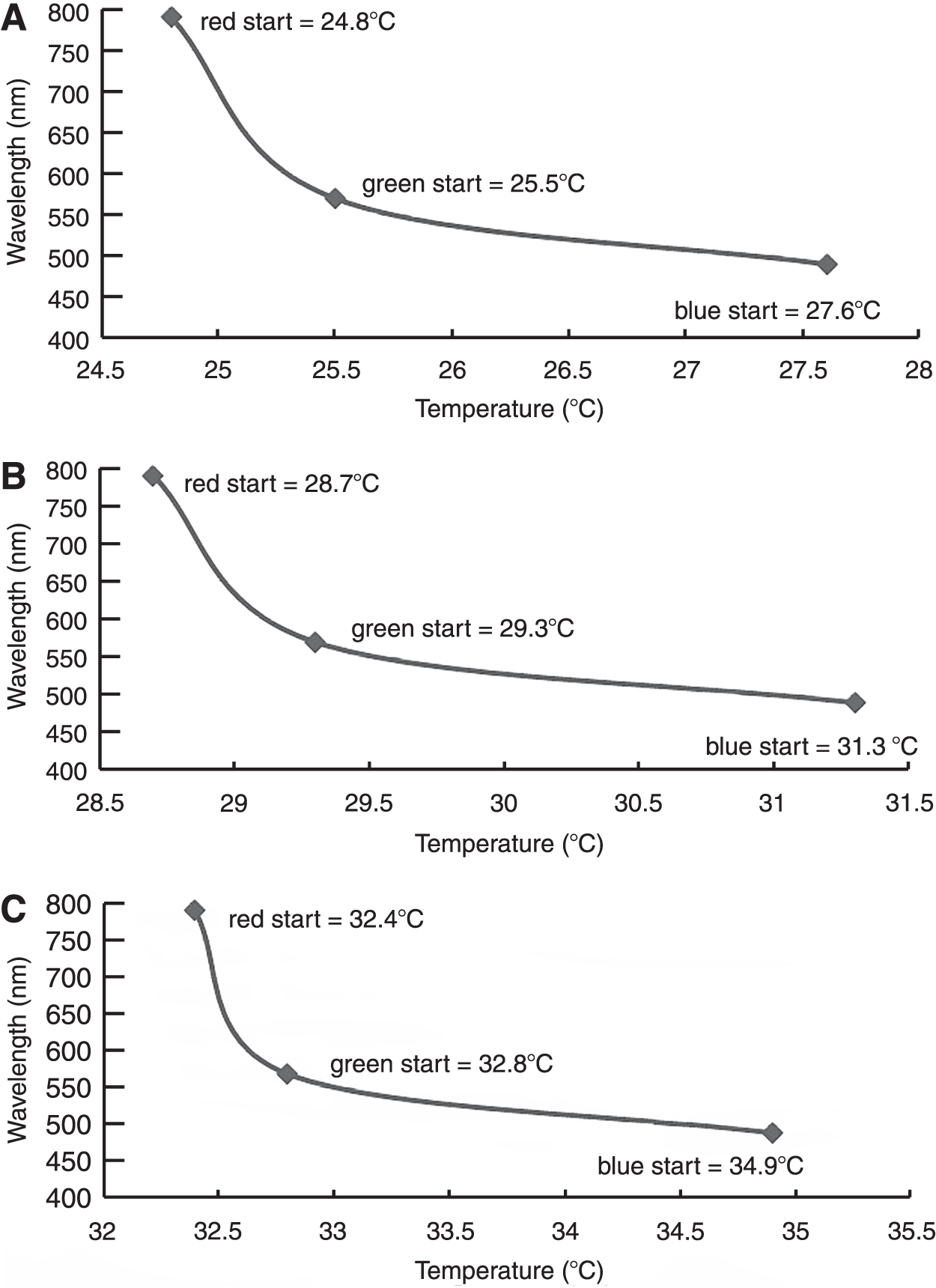
The thermal and digital images were then used to determine the mean maximum temperatures at the following regions: 1) tip of the thumb, 2) tip of the second digit, 3) tip of the third digit, 4) tip of the fourth digit, 5) tip of the fifth digit, 6) first metacarpal head, 7) second and third metacarpal heads, 8) fourth and fifth metacarpal heads, and 9) hypothenar eminence. Maximum temperatures were obtained from the thermal images using image analysis software specific to the thermal camera (SmartView 3.6; Fluke Corp). Maximum temperatures were obtained from the TLC fabric by assigning a temperature to the primary color (red, green, or blue) and pattern (solid line, rectangle, or rhomboid) combination indicated by the fabric, based on the thermal profiles for the specific TLCs used (
Fig. 1). The difference in maximum temperature was then determined by subtracting the maximum temperature recorded by the fabric from that measured with the thermal camera, and the mean difference in temperature for each region of the hand was calculated.
Figure 1.
Thermal profiles of the thermochromic liquid crystals used on the fabric indicating the temperatures that correspond to the start of each of the three primary colors. A, Formulation 1 (24°C–27°C; solid line). B, Formulation 2 (28°C–31°C; rectangle). C, Formulation 3 (32°C–35°C; rhomboid).
Figure 1.
Thermal profiles of the thermochromic liquid crystals used on the fabric indicating the temperatures that correspond to the start of each of the three primary colors. A, Formulation 1 (24°C–27°C; solid line). B, Formulation 2 (28°C–31°C; rectangle). C, Formulation 3 (32°C–35°C; rhomboid).
For each region of the hand, the maximum temperatures recorded by the thermal camera were compared with those detected with the TLC fabric using a paired t test, with significance defined as P < .05. If the data were not normally distributed (nonparametric), statistical analysis was conducted using the Wilcoxon signed rank test, with significance again defined as P < .05.
Results
A total of 125 individuals were enrolled into the study. Three of the participants did not return for data collection after signing the consent form, and two other individuals were found to be ineligible to participate in the study based on the exclusion criteria. The data from 20 individuals were determined to be unsatisfactory and therefore excluded from the analysis. An additional 20 individuals were enrolled into the study to replace the insufficient data. As a result, 200 hands from 100 participants were included in the analysis.
The temperature of the room where the study was conducted was reasonably consistent over the 9 days of data collection. The temperature ranged from 21.8°C to 23.8°C, with a mean ± SD of 22.7°C ± 0.6°C. The humidity of the room varied somewhat over the days of data collection, ranging from 26.0% to 49.0%, with a mean ± SD of 39.2% ± 7.2%. The conditions of the room did not seem to meaningfully affect the temperatures of the hand.
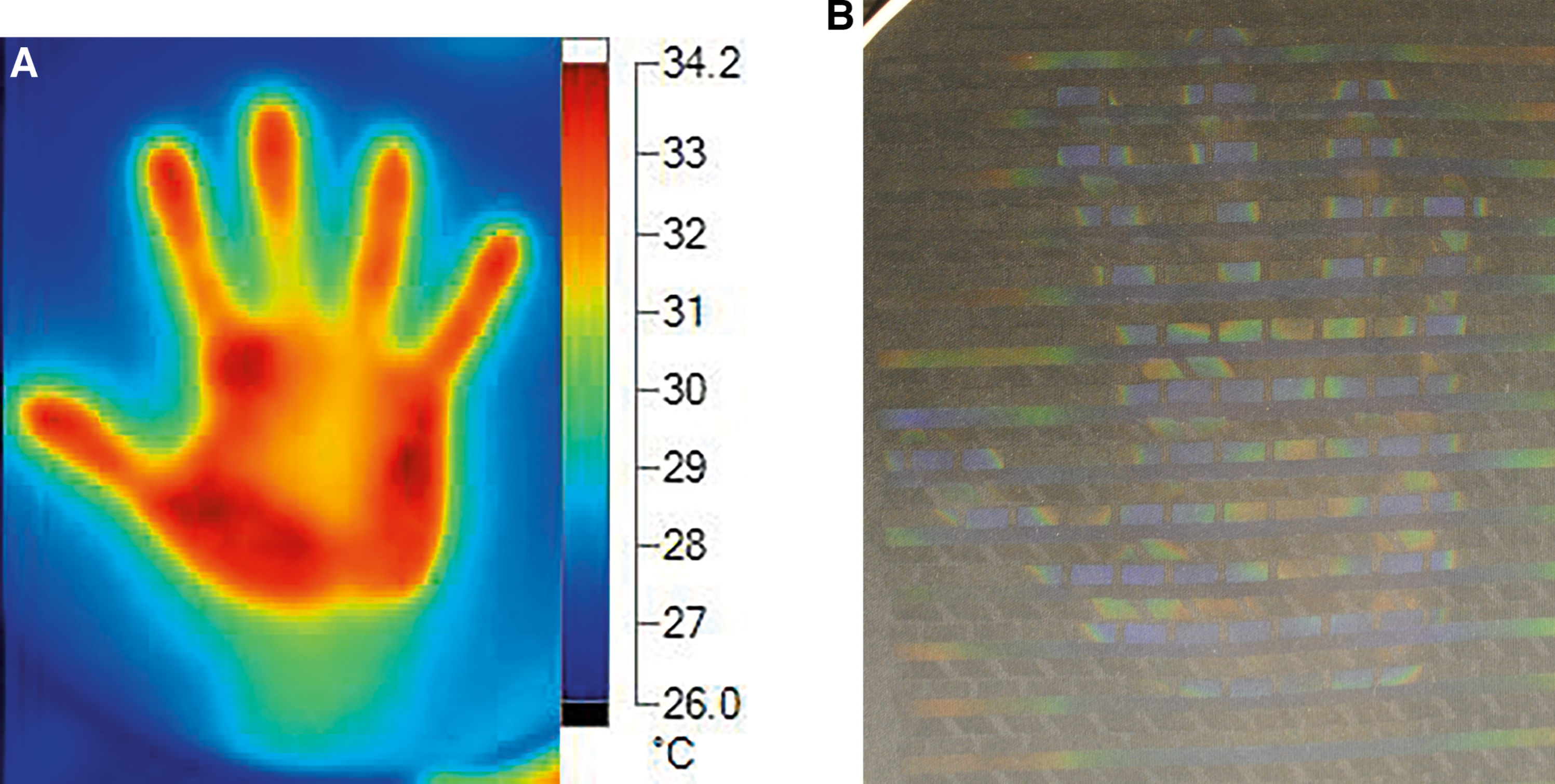
A sample thermal image of a hand is shown in
Figure 2A, with its corresponding 1.3 times (approximate) magnified TLC fabric image in
Figure 2B. The hot spots of the hand (bright red regions at the first and second metacarpal heads and the hypothenar eminence) in
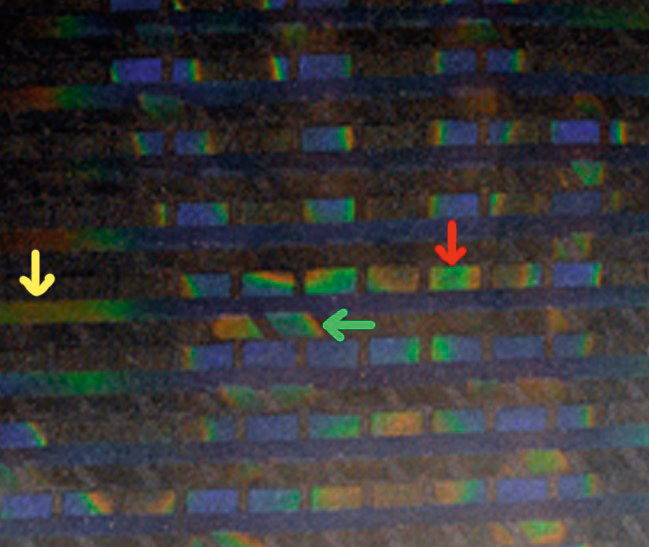
Figure 2A are captured by the TLC fabric, as demonstrated by activation of the 32°C to 35°C rhomboid pattern. This is clearly evinced in
Figure 3, with up close digital enhancement (Photoshop; Adobe Systems Inc, San Jose, California) illustrating the three patterns that have been activated by the temperature of the hand.
Figure 2.
A, Sample thermal image of the hand. B, Corresponding digital image of the thermochromic liquid crystal (TLC) fabric from the same hand. Warmer temperatures are represented by reds in the thermal image and by blues in the TLC fabric. For the TLC fabric, the solid line indicates a temperature range of 24°C to 27°C, rectangle represents a range of 28°C to 31°C, and rhomboid indicates a range of 32°C to 35°C.
Figure 2.
A, Sample thermal image of the hand. B, Corresponding digital image of the thermochromic liquid crystal (TLC) fabric from the same hand. Warmer temperatures are represented by reds in the thermal image and by blues in the TLC fabric. For the TLC fabric, the solid line indicates a temperature range of 24°C to 27°C, rectangle represents a range of 28°C to 31°C, and rhomboid indicates a range of 32°C to 35°C.
Figure 3.
Enlarged and digitally enhanced image of
Figure 2B demonstrating the three patterns of the thermochromic liquid crystals. The yellow arrow indicates the solid line (24°C–27°C), the red arrow shows the rectangle pattern (28°C–31°C), and the green arrow points to the rhomboid pattern (32°C–35°C).
Figure 3.
Enlarged and digitally enhanced image of
Figure 2B demonstrating the three patterns of the thermochromic liquid crystals. The yellow arrow indicates the solid line (24°C–27°C), the red arrow shows the rectangle pattern (28°C–31°C), and the green arrow points to the rhomboid pattern (32°C–35°C).
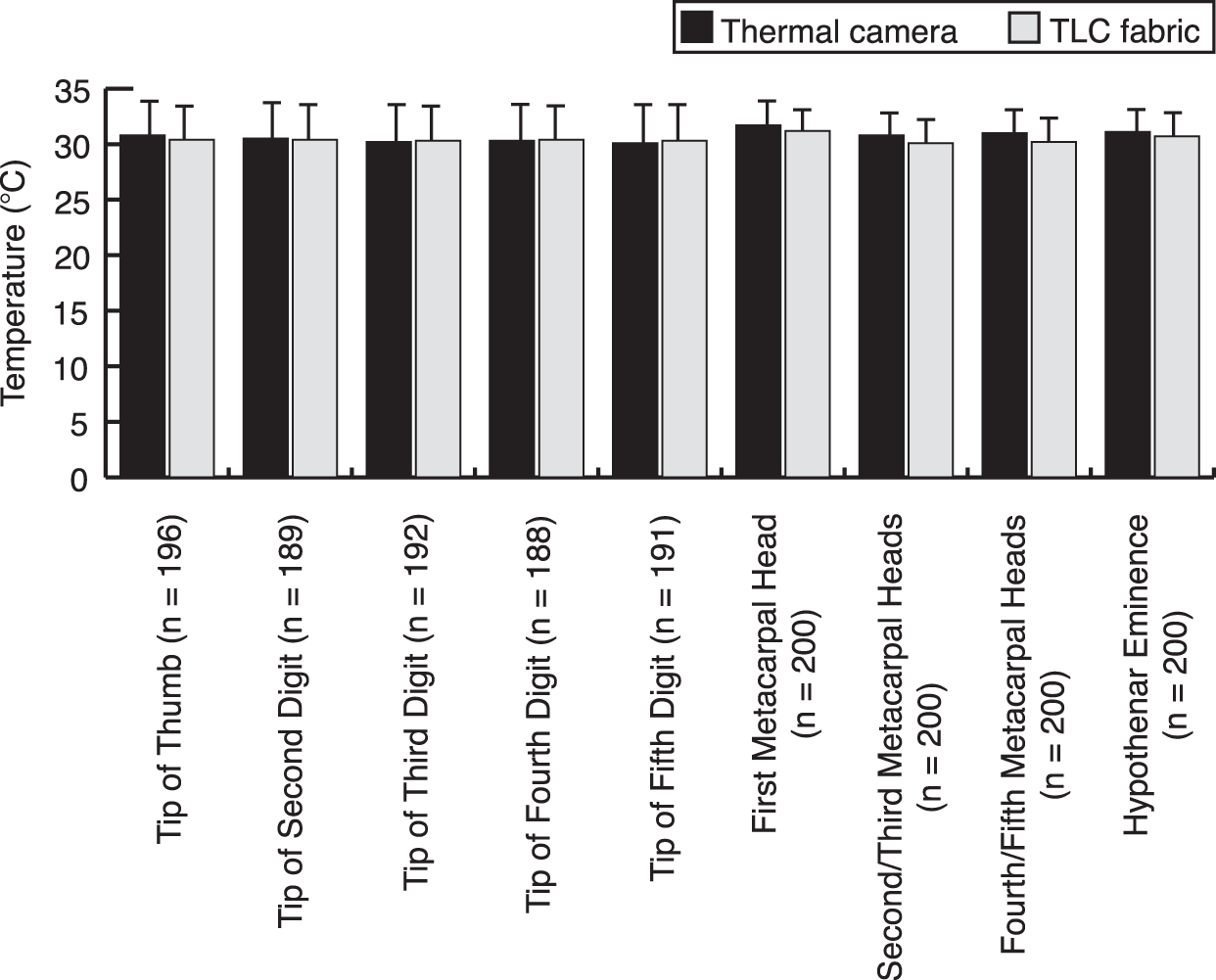
The mean maximum temperatures recorded with the thermal camera and with the TLC fabric at the nine different regions of the palmar surface of the hand are shown in
Figure 4. With respect to the digits of the hand, the peak temperature measured with the thermal camera at the tip of the thumb (n = 196) was significantly greater than that measured with the TLC fabric (
P < .05). There were no significant differences in maximum temperatures measured with the thermal camera and those measured with the TLC fabric at the tips of the second digit (
P = .772), third digit (
P = .917), fourth digit (
P = .616), and fifth digit (
P = .326). Regarding the palmar regions of the hand, the maximum temperatures measured by the thermal camera were significantly greater than those detected with the TLC fabric at the first metacarpal head, second and third metacarpal heads, fourth and fifth metacarpal heads, and the hypothenar eminence (
P < .05).
Figure 4.
Mean ± SD maximum temperatures for nine different regions of the palmar surface of the hand. TLC, thermochromic liquid crystal.
Figure 4.
Mean ± SD maximum temperatures for nine different regions of the palmar surface of the hand. TLC, thermochromic liquid crystal.
The mean differences between maximum temperatures measured with the thermal camera and those detected with the TLC fabric at all regions of the hand ranged from –0.3°C to 0.7°C. The positive values for the mean ± SD differences at the tip of the thumb (0.2°C ± 1.4°C), first metacarpal head (0.5°C ± 1.2°C), second/third metacarpal heads (0.5°C ± 1.6°C), fourth/fifth metacarpal heads (0.7°C ± 1.6°C), and the hypothenar eminence (0.3°C ± 1.5°C) suggest that the temperature was slightly greater when recorded with the thermal camera than with the TLC fabric. In contrast, the mean ± SD temperatures measured with the thermal camera were marginally less than those measured with the fabric at the tip of the third digit (–0.1°C ± 1.5°C) and the tip of the fifth digit (–0.3°C ± 1.8°C), as indicated by the negative mean difference. The mean ± SD differences between measurement techniques was zero at the tips of the second digit (0.0°C ± 1.6°C) and fourth digit (0.0°C ± 1.6°C).
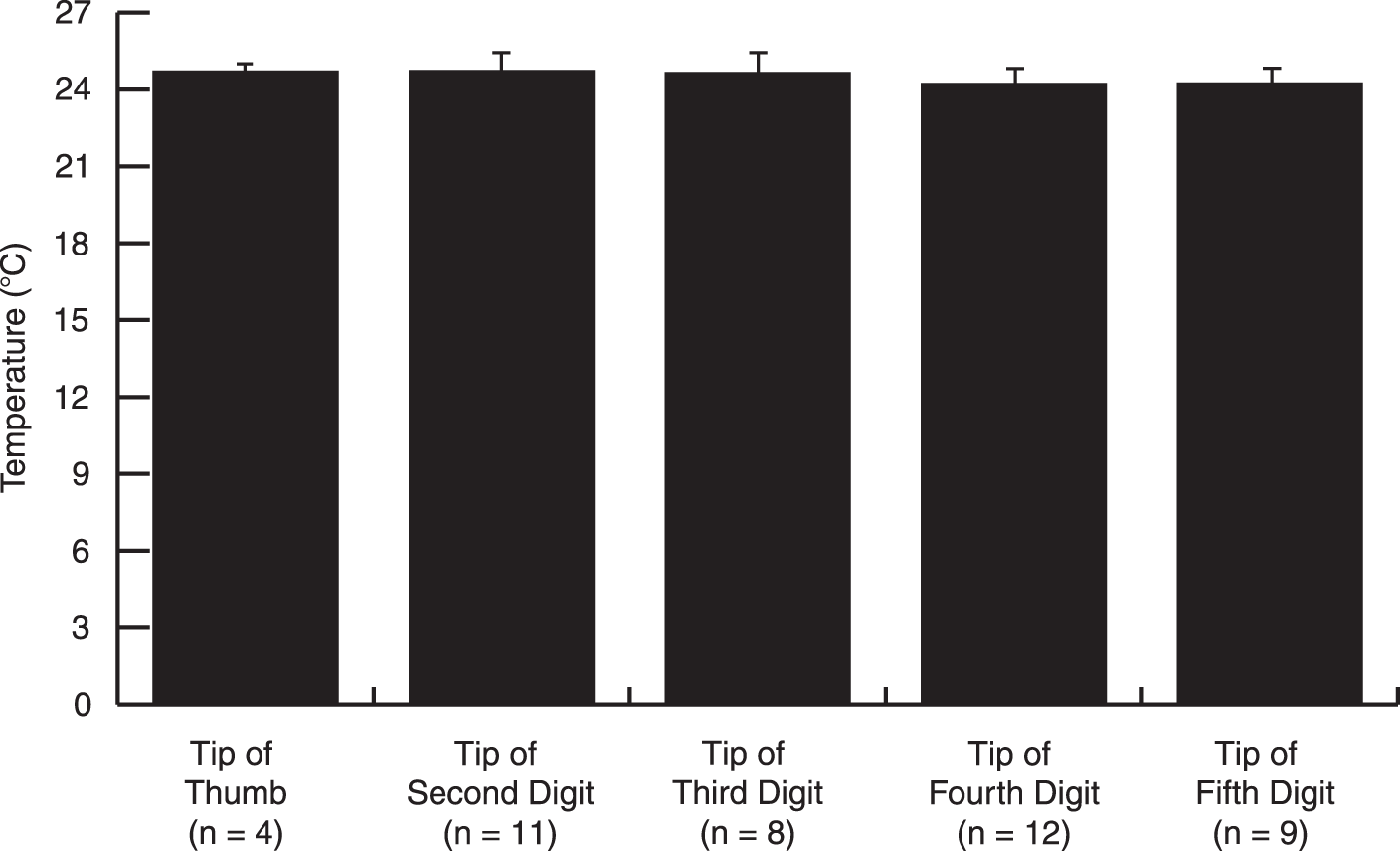
On several occasions when assessing temperature in the digits with the TLC fabric, the temperatures were lower than the minimum that could be detected by the fabric (24.8°C). In these instances, the fabric appeared black with no colors or patterns evident. The mean maximum temperatures measured in the corresponding thermal images ranged from 24.3°C at the tips of the fourth and fifth digits to 24.8°C at the tips of the thumb and the second digit (
Fig. 5).
Figure 5.
Mean ± SD maximum temperatures recorded by the thermal camera when the thermochromic liquid crystal fabric indicated temperatures less than 24.8°C.
Figure 5.
Mean ± SD maximum temperatures recorded by the thermal camera when the thermochromic liquid crystal fabric indicated temperatures less than 24.8°C.
Discussion
Thermochromic liquid crystals, or cholesteric liquid crystals, are materials that change reflected color in response to fluctuations in temperature. At lower temperatures, TLCs exist in a solid phase, and at higher temperatures they exist in a liquid phase.[
14] When in these phases, TLCs appear transparent against a black, nonreflecting surface.[
15] Between the solid and liquid phases, the material exists in the liquid crystal phase, which is a fluid phase with some degree of order.[
14] In this state, TLCs form layers that can slide over one another or twist around a fixed axis in response to temperature, thus changing the color of the reflected light. Different chemical formulations of TLCs allow for detection of various temperature ranges with high sensitivity.[
15] Within each formulation, the reflected color changes from red to green to blue as temperature increases, and the response time is typically rapid.
The TLC fabric used in this study is unique in that it has an extended temperature range with increased temperature sensitivity due to the addition of innate/inherent temperature-specific patterns. It also provides for whole-field evaluation as opposed to being restricted to smaller areas. The results of this proof-of-concept study suggest good correlation between the thermal camera and the TLC fabric, with the mean differences ranging from –0.3°C at the tip of the fifth digit to 0.7°C at the fourth/fifth metacarpal heads. These differences were not considered to be clinically relevant. The purpose of the desired end product, a sock, is to display changes in temperature that may occur in one or both feet as a result of the early onset of high-risk foot complications. In this scenario, the actual temperature values are not as important as the change in temperature.
The variability in maximum temperature values between participants was greater at the tips of the digits than at the regions in the palm of the hand, as indicated by the larger standard deviations for the digit temperatures. In several instances, the temperatures in the digits could not be detected by the fabric because they were below the minimum of the temperature range that the fabric can detect, but the temperatures in the regions of the palm were easily detected by the fabric. We postulate that this is most likely due to, separately or in combination, 1) a decrease in circulation at the tips of the digit, 2) some degree of distal digital vasoconstriction, 3) increased vascularization due to the muscle mass in the palm of the hand, or, remotely, 4) air gap/loss of fabric contact compared with the palm of the hand.
The present study found that maximum temperatures recorded by the thermal camera for the regions of the palm were statistically significantly greater than those detected by the TLC fabric. The power of these analyses ranged from 0.917 to 0.999. The differences between temperatures measured with the two techniques at all nine regions of the hand were less than 1°C. Note that the accuracy of the thermal camera is ±2°C or ±2%, whichever is greater, and the accuracy of the TLCs is ±1°C. Thus, although the differences in temperatures between the thermal camera and the TLC fabric were consistent, the values fall within the range of the accuracies of the camera and the liquid crystals.
One limitation of this study is that although the thermal camera displays the equivalent of a temperature continuum, the temperatures indicated by the TLC fabric fall into nine possible temperatures based on a combination of color (blue, green, or red) and pattern (solid line, rectangle, or rhomboid). For this preliminary study, no intermediary colors were considered when assigning temperature to the observed color. Note, however, that in the practical detection of extremity complications, the observed change in color is more important than the precise or absolute temperature.
Another potential limitation pertains to the fabric used, that is, the initial prototype evaluated in this study allowed for fabric stretch in only one direction, thus raising the possibility that there may have been loss of contact between the skin and the fabric. With loss of contact, one would surmise that the temperature measured by the fabric would be less than the actual temperature of the skin due to dissipation of heat through the gap. However, we were able to visually confirm that contact was made between the fabric and the skin at all nine regions of the hands that were evaluated and, therefore, concluded that this was not a limitation to the study.
Still another area of concern was that when the TLC fabric was placed against the hand, there appeared to be a “bleeding” of color away from the point of contact between the skin and the fabric. This suggests the possibility that the fabric was not accurately measuring the temperature at the desired locations. This effect can be clearly seen around the fingers in
Figures 2B and
3, as the dark blue color fades into green and then red. After close examination, we determined that this was not a limitation to the study, for in actuality the color is not bleeding from the point of contact. Rather, the fabric is recording the heat that is dissipating from the hand.
Finally, one other potential limitation to the study is that the time between the first and last days of data collection was 77 days, raising the concern that the TLCs on the fabric may have degraded during the study. To this end, we conducted a statistical analysis to determine whether there was a correlation between the differences in temperatures recorded with the thermal camera and the fabric and the number of days from the start of data collection. Using a Spearman rank order correlation test with significance defined as P < .05, the analysis determined that there were no significant relationships between the difference in temperature and the day that the data were collected. This suggests that degradation of the TLCs did not occur to an extent that it would affect the data collected from the TLC fabric.
Conclusions
As the data suggest, with direct visual analysis, it was determined that the TLC fabric was able to accurately map temperatures for specific regions of the hand, thereby validating the concept of an extended-range temperature-sensitive fabric. This supports the continued development of the temperature-sensitive sock. The next step is to refine components toward the production of a sock (or glove) that can monitor for temperature changes in the foot (or hand). The material used in this proof-of-concept study allowed for stretch in only one direction and did not focus on maximizing TLC color saturations. Optimal fabrics that will enhance the colors displayed by the TLCs while ensuring the appropriate elasticity to allow for complete contact of the sock with the foot are to be determined. In addition, the patterns in which the various TLC formulations are arranged will be optimized so that individuals can easily discern and recognize which temperature formulations are activated.