The talus is a tarsal bone crucial for the walking mechanism of the human body. Nearly 70% of the talus is covered by cartilage, and no capsules or tendons are attached to the surface. The osteotrophy of this bone is very critical because of its small extra-articular surface. Its close affiliation with ankles and subtalar joints raises the importance of talus fractures.[
1] Talus fractures make up 5% to 7% of all ankle fractures and are the second most common type of all tarsal bone fractures.[
2,
3] These fractures often occur in young and active people. However, simultaneous bilateral fracture and dislocation of the talus have been scarcely mentioned in the literature.[
4,
5,
6]
Most talus fractures are caused by falling from heights or motor vehicle accidents, and most of the patients have multiple injuries and fractures.[
7,
8,
9] Talus fractures are frequently associated with tibial plafond and malleolar fractures. Head and neck fractures are more common in the talus when compared to other body fractures and usually occur secondary to hyperdorsiflexion. Talus body fractures frequently occur together with talar neck fractures, and such injury usually results from axial load.[
1,
10] The most commonly used classification in talus fractures is the Hawkins classification of talar neck fractures.[
11] In this classification, Type I indicates a nondisplaced talar neck fracture; Type II, displaced talar neck fracture with subluxation or dislocation of the subtalar joint; Type III, displaced talar neck fracture with dislocation of both subtalar and tibiotalar joints; and Type IV, dislocation of the talonavicular joint in addition to Type III.
The approach taken to treat talar fractures is very important due to the significance of the talus in ankle movement and the fact that blood supply to this bone is critical.[
1,
12] Fracture-dislocations of the talus are commonly the result of high-energy trauma. Early care and anatomic reduction are essential for treatment.[
13,
14] Soft-tissue injuries are frequently associated with fracture-dislocation, and early intervention may help decrease complications in soft tissue and postoperative problems like avascular necrosis (AVN).[
15,
16] The risk of AVN in Hawkins fractures is 0% to 13% and 20% to 50% in Type I and II fractures, respectively, and in Type III and IV fractures, the risk is 80% to 100%.[
17,
18] Today, thanks to the increase in the number of surgical approaches, the risk of AVN secondary to talus fractures is lower when compared with the past. The most common surgical approach is anteromedial incision. In fractures where there is more displacement, or anterolateral or direct lateral approach, malleolar osteotomy may be used in addition to anteromedial incision.[
8,
19] However, the prognosis of fracture-dislocation of the talus is poor despite appropriate therapeutic measures, due to the risk of clinic handicaps like AVN and posttraumatic arthritis.[
1,
20]
In this study, we present the case of a patient who suffered simultaneous bilateral fracture and unilateral dislocation of the talus, and a review of the relevant literature.
Case Report
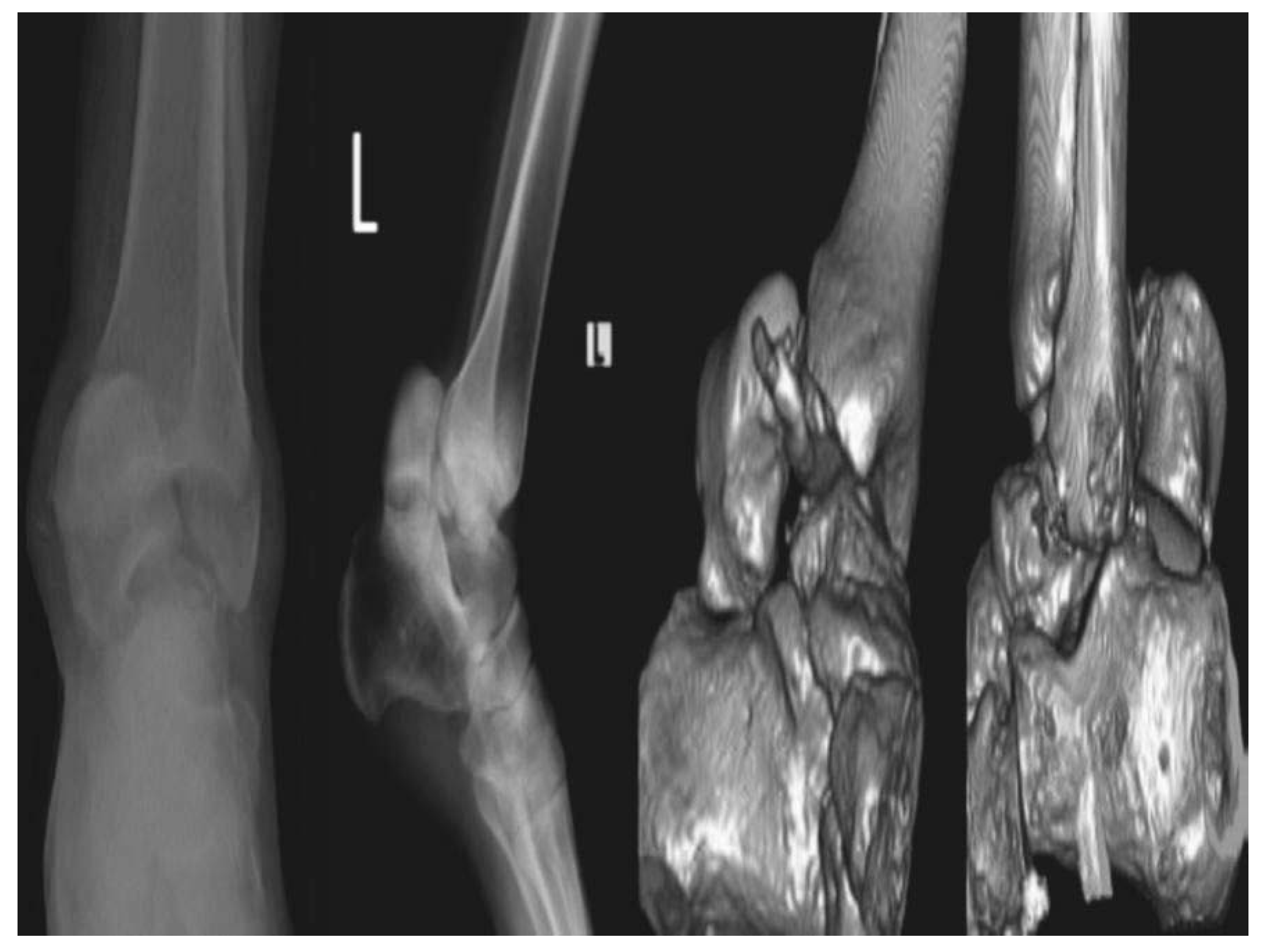
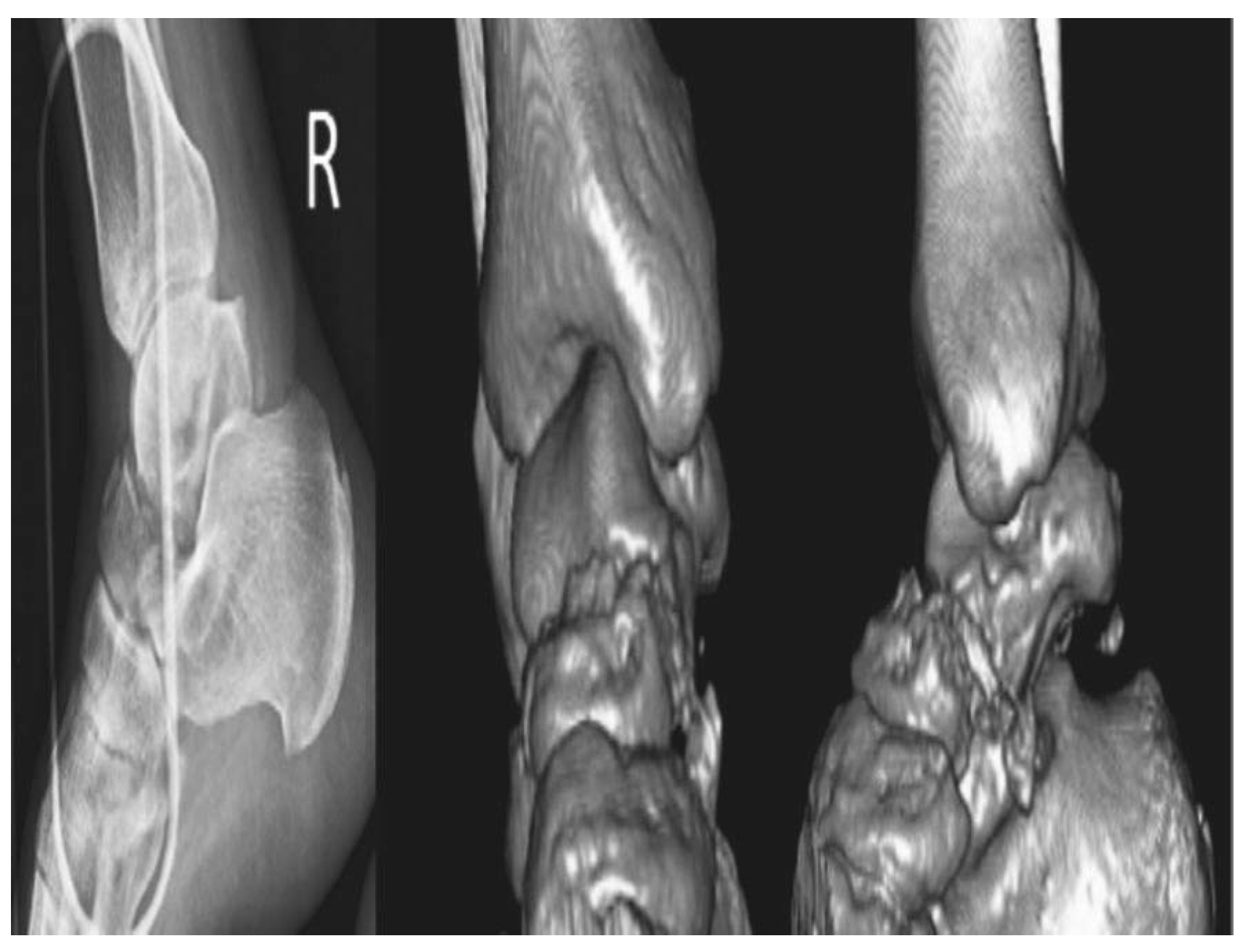
The patient was a 42-year-old man evaluated in the casualty department of İzzet Baysal Training and Research Hospital, Bolu, Turkey, due to falling from a height. The patient was conscious and hemodynamically stable. Both of his ankles and right knee were externally swollen and ecchymosed. No open wounds were present. Blood circulation was normal in both of the lower extremities. Neurological examination was unremarkable. During the systemic examination, no serious head, abdominal, or spinal trauma was detected. Imaging scans revealed fracture-dislocation of the left talus neck (Hawkins Type III), displaced fracture of the medial malleolus, and displaced fracture of the right talus neck (Hawkins Type II) (
Figs. 1 and
2). In addition, there was segmental fracture of the right patella.
Figure 1.
Three-dimensional tomographic images showing fracture-dislocation of left talus neck, fracture of medial malleolus.
Figure 1.
Three-dimensional tomographic images showing fracture-dislocation of left talus neck, fracture of medial malleolus.
Figure 2.
Three-dimensional tomographic images showing right talus neck fracture.
Figure 2.
Three-dimensional tomographic images showing right talus neck fracture.
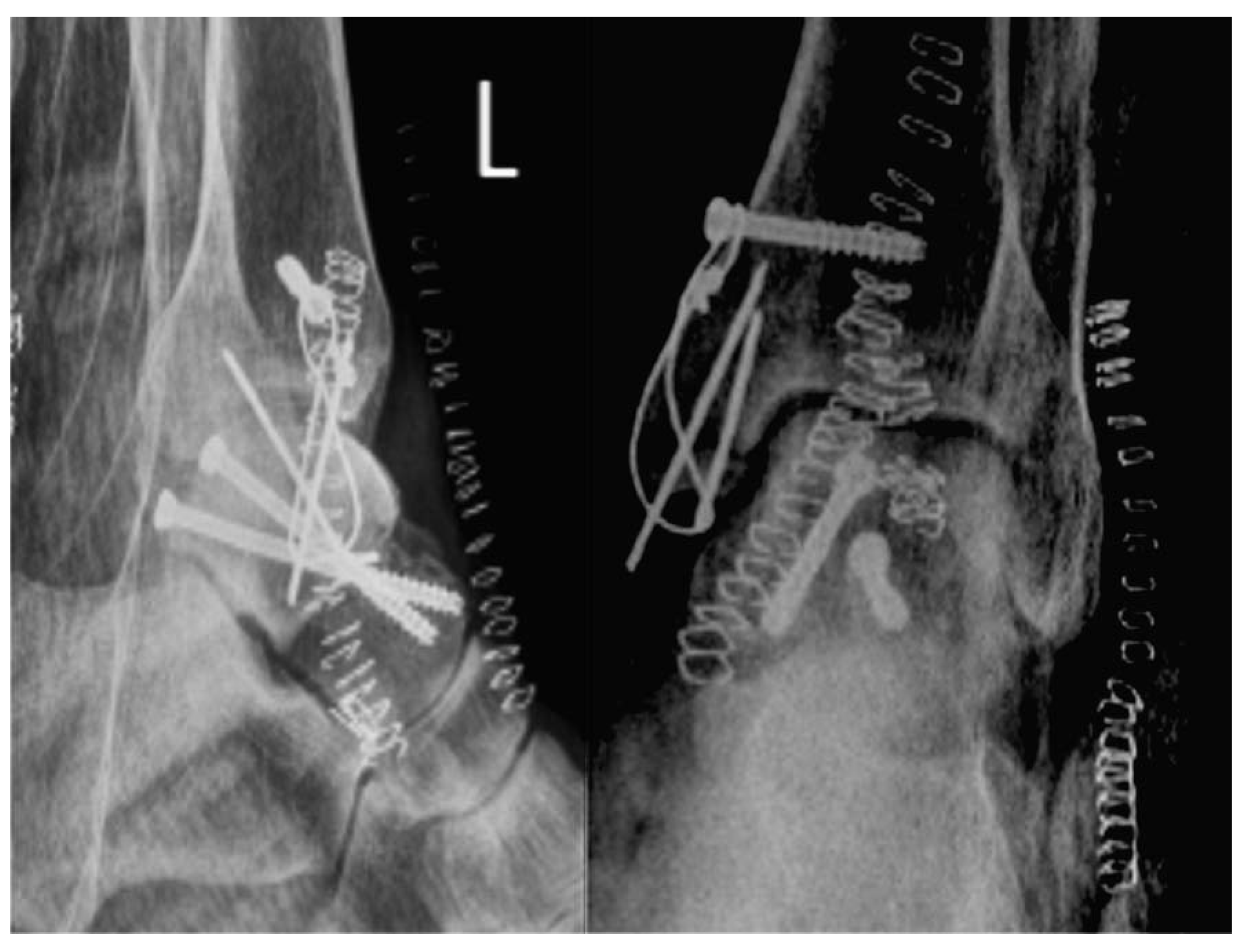
The patient was immediately taken to surgery. Two incisions (anteromedial and lateral) were made in the fracture-dislocation in the left ankle. Following intra-articular irrigation, reduction was made by removing small bone debris. Fixation was provided by two 4-mm cannulated screws. A tension band technique was applied to the fracture in the medial malleolus (
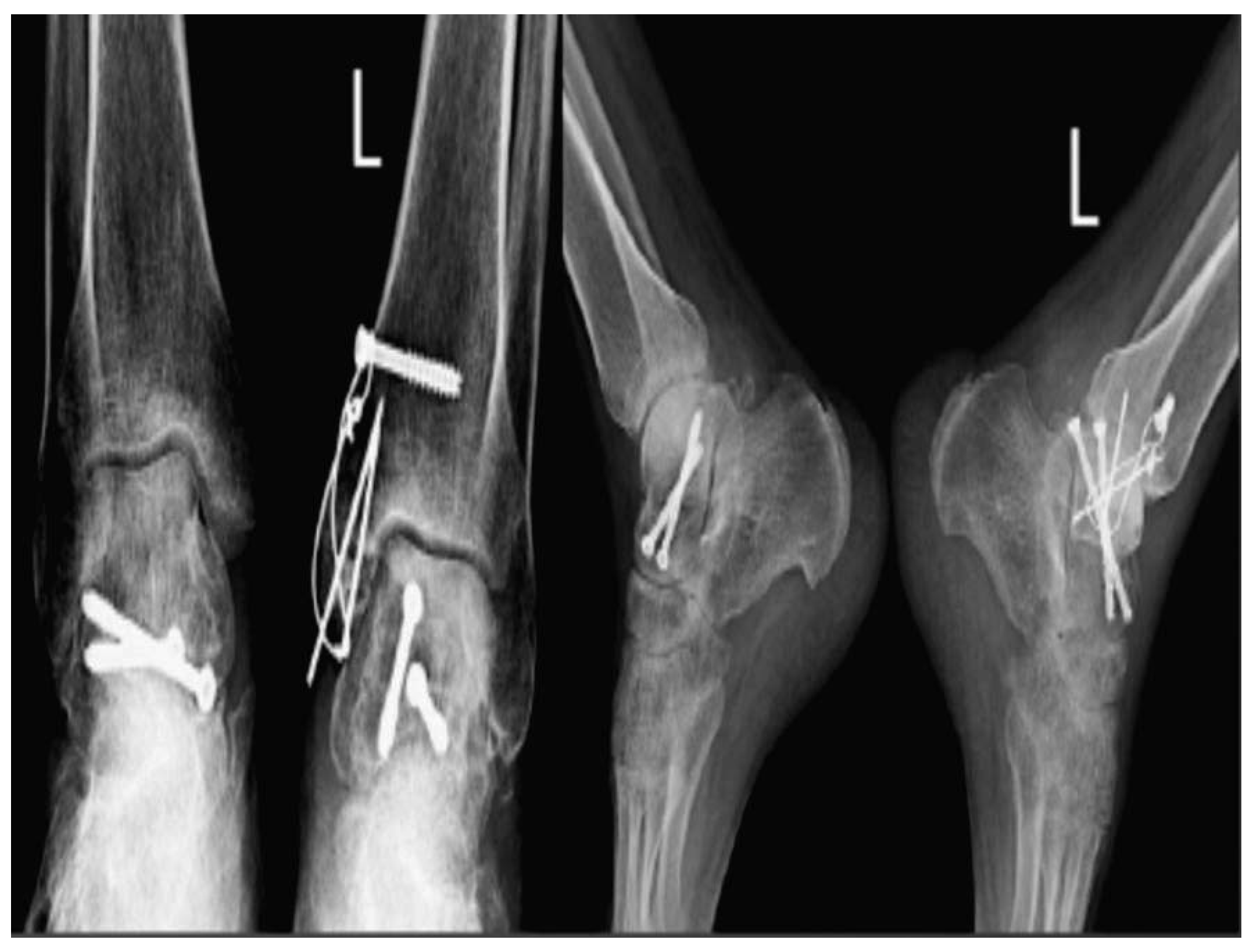
Fig. 3). An anteromedial incision was made in the right ankle. The fracture line was reduced by intra-articular irrigation, and fixation was provided by two 4-mm cannulated screws (
Fig. 4). The patella fracture was fixated by the tension band technique. A long leg splint and short leg splint were applied to the right and left lower extremities, respectively. The patient was discharged 3 days postoperatively with no complications in the wound site. During the 6-week postoperative examination, the bilateral splints were removed and the patient was taken to a 2-week rehabilitation program. Passive and active assistive joint exercises were applied to both ankles during 1-hour daily sessions. Two months after surgery, active joint movements were started and partial load was applied. In the rehabilitation program, during the first week, a 2-hour session on the continuous passive motion machine was applied to the right knee prior to active joint movements. We started full-load weightbearing 3 months after surgery.
Figure 3.
Radiograph showing fixation of left talus neck fracture and medial malleolus fracture by techniques of internal fixation and tension band.
Figure 3.
Radiograph showing fixation of left talus neck fracture and medial malleolus fracture by techniques of internal fixation and tension band.
Figure 4.
Radiograph showing internal fixation of right talus neck fracture.
Figure 4.
Radiograph showing internal fixation of right talus neck fracture.
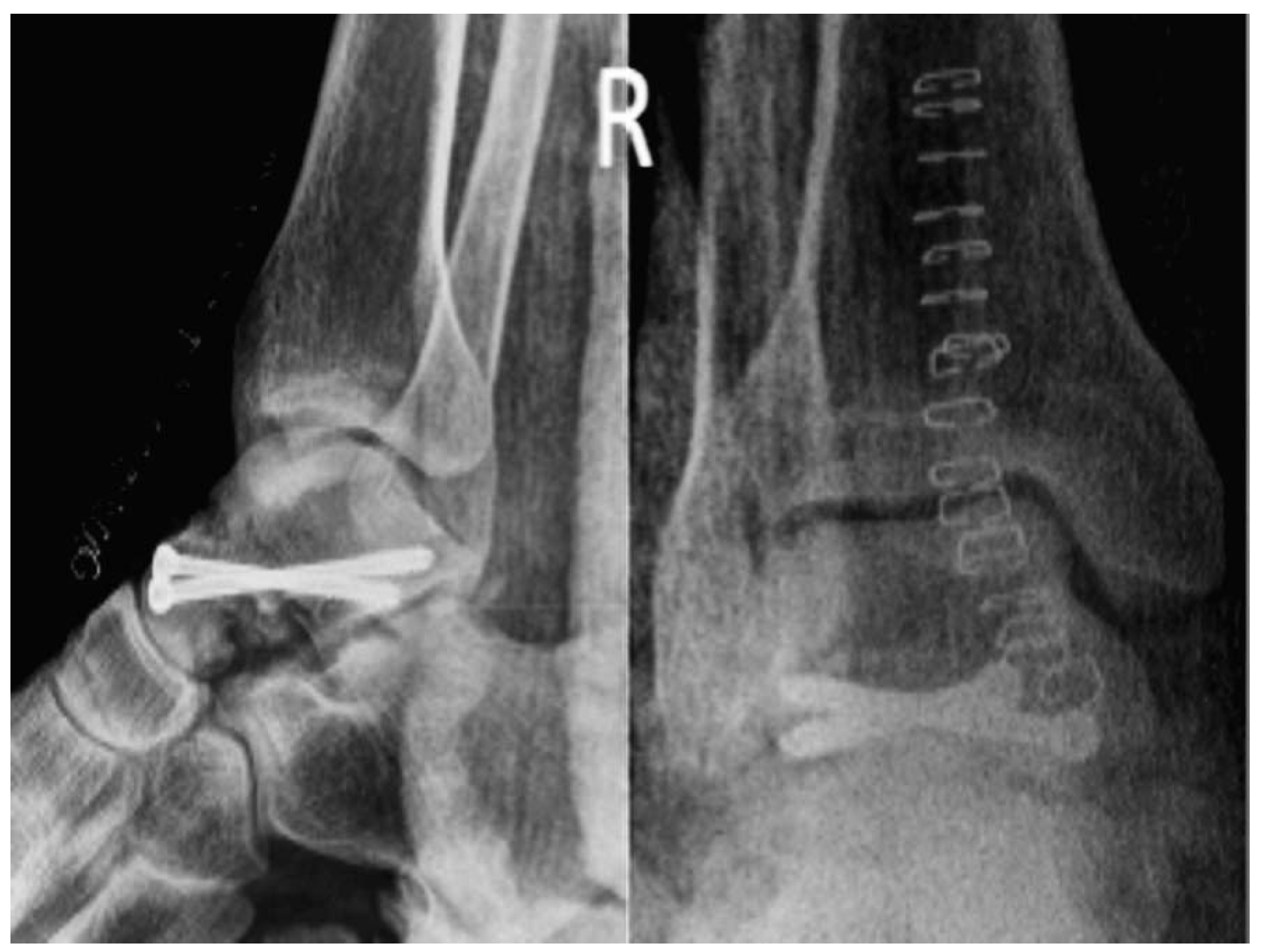
At the 6-month postoperative examination, movement in both ankles was restricted (right ankle: dorsiflexion 20°, plantarflexion 30°; left ankle: dorsiflexion 10°, plantarflexion 20°). However, the patient expressed that he was able to perform daily activities with ease and walk without pain for nearly 30 minutes. Only upon the patient's complaint that he had difficulty in some movements, especially while getting dressed, was he given a 2-week rehabilitation program including stretching exercises. These exercises were carried out as single 30-minute sessions each day, with pain control and at low-load and long-duration. The 6-month postoperative examination also revealed a radiopaque part in the left talus, which was significant for AVN (
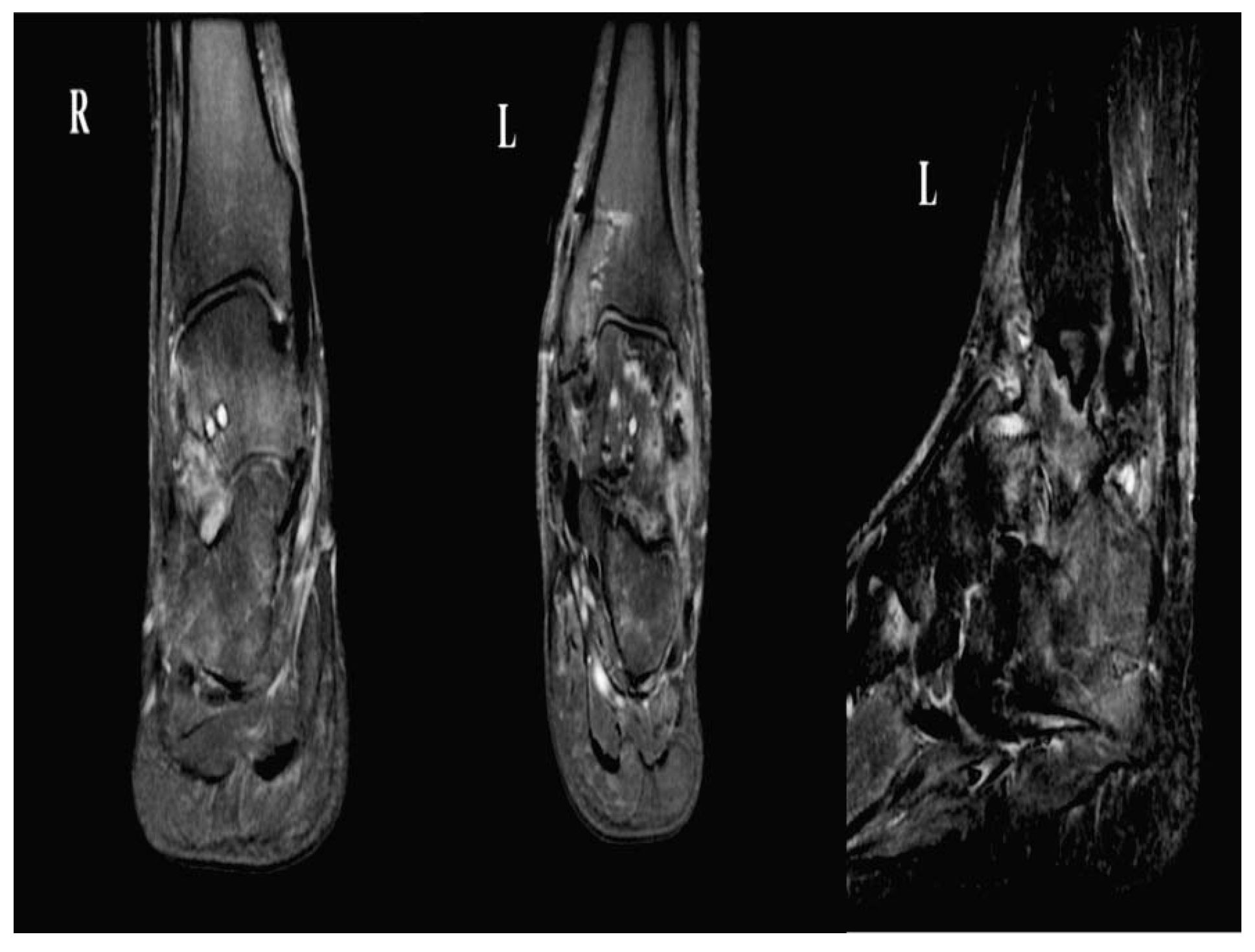
Fig. 5). During the 10-month postoperative examination, the implants were removed due to discomfort, especially in the patella and medial malleolus. At 1 year postoperatively, range of motion in both of the joints was better (right ankle: dorsiflexion 20°, plantarflexion 40°; left ankle: dorsiflexion 20°, plantarflexion 35°). The magnetic resonance image revealed that no AVN existed in the right talus, whereas in the left talus there was significant AVN (
Fig. 6). The patient expressed that although he stood up all day long because of his job, he did not experience any significant pain, and that he was able to run for 30 minutes without difficulty.
Figure 5.
Six-month postoperative radiograph showing the radiopaque display in left talus is significant for avascular necrosis.
Figure 5.
Six-month postoperative radiograph showing the radiopaque display in left talus is significant for avascular necrosis.
Figure 6.
One-year postoperative magnetic resonance image showing no development of avascular necrosis in the right talus, as opposed to the left talus.
Figure 6.
One-year postoperative magnetic resonance image showing no development of avascular necrosis in the right talus, as opposed to the left talus.
Discussion
Talus fractures are still critical due to the talus' function, the blood supply to this bone, and postoperative complications. Over the years, although knowledge regarding talus fractures has grown considerably, surgical techniques have been improved, and several implants such as talus prostheses have been used. Talus fractures remain one of the most difficult foot and ankle injuries to treat.[
1,
21]
There are few instances of bilateral fracture-dislocation of the talus in the literature. Sayegh et al[
4] described a case of bilateral fracture-dislocation of the talus in a 29-year-old multitrauma patient. As it was a dirty injury, Kirschner wires were used for fixation of the fracture. At 8 weeks postoperatively, active-passive movements were started, but the patient was kept nonweightbearing for 3 months. During the 28-month postoperative examination, there were no signs of AVN despite restricted ankle movements and the presence of posttraumatic arthritis. Taraz-Jamshidi et al[
5] described a case of bilateral open fracture-dislocation of the talus in a 25-year-old patient, in which they used cannulated screws for fixation. Examination 2 years after surgery revealed that unilateral AVN had developed. In another case involving multiple fractures as well as bilateral fracture-dislocation of the talus described by Balaji and Arockiaraj,[
6] fracture fixation was provided by an external fixator in the right ankle where there was open fracture, and cannulated screws were applied to the left ankle. Splints were removed 4 months postoperatively and partial stepping was provided. At 34 months after the surgery, they observed that ankle movements were restricted, and bilateral AVN had developed. We believe that our patient experienced a positive outcome because he underwent surgery immediately, rigid fixation was applied to the fractures by cannulated screws, and the splints were removed earlier to ensure joint mobility and loading. In some cases[
4,
5] with fracture and dislocation of the talus, AVN did not develop, and we seek to address the need for further research on AVN. In our case, in which the patient had bilateral talus fracture and unilateral dislocation, AVN developed only on the side where there was dislocation, and ankle movements were better than other cases we've treated in either side.
Talus fracture surgery carries a high risk of complication. The frequency of complications is related to the severity of the first injury. At this stage, even though the Hawkins classification is beneficial in describing complications, recent studies have emphasized the fact that dissociation of the fracture is an important factor in predicting complications.[
22,
23] Our case sets a demonstrative example, as it shows that patients with fracture-dislocation of the talus have a higher risk of developing AVN than patients with fracture of the talus alone.
We performed both lateral and anteromedial incisions on the side with the talus fracture and dislocation, thereby preventing soft-tissue injuries that arise from traction and surgical instruments and allowing easier reduction of the fracture. We believe that this technique contributed to a wider joint movement span in the patient without affecting tissue recovery. Furthermore, we were able to view the fracture site more clearly without a need for malleolar osteotomy due to the existence of medial malleolus fracture. We believe that malleolar osteotomy can facilitate anatomic reduction in such fractures. Also, in the studies of Sayegh et al[
4] and Balajiand and Arockiaraj,[
6] the time for mobilization was later than in our case, as the patients had multiple fractures and open injuries, and their joint movement range was more restricted. The fact that no other fractures existed except for the patellar fracture made early mobilization easier in our case.
Conclusions
Simultaneous bilateral fracture and dislocation of the talus is a rare injury. To the best of our knowledge, our case report is the first to reveal AVN and the benefits of early mobilization in this type of simultaneous bilateral talar injury. We believe that, in this type of fracture, rigid fixation and early mobilization are crucial for decreasing the limitation of ankle movement that occurs secondary to complications such as AVN and posttraumatic arthritis. Our case may contribute to future research, especially in assessing postoperative risks, as the patient had bilateral fractures and unilateral dislocation.
Financial Disclosure: None reported.
Conflict of Interest: None reported.