Foot ulcers are among the most serious complications of diabetes; 5% to 24% of diabetic foot ulcers (DFUs) lead to limb amputation within 18 months of diagnosis.[
1] There are approximately 50,000 to 80,000 such amputations performed on patients with diabetes each year in the United States,[
2] with 5-year mortality rates comparable to or higher than those for certain malignancies, including colon, prostate, and breast cancer.[
3] In addition to posing a risk for amputation, DFUs are considered a marker for serious disease[
4] and are associated with an increased risk of all-cause mortality and fatal myocardial infarction.[
5]
Standard treatment for DFUs includes management of underlying disease, wound debridement, infection control, offloading, revascularization procedures, and advanced wound care dressings.[
1,
4,
6] Nonetheless, DFUs remain notoriously difficult to resolve. A meta-analysis of nine controlled trials assessing standard care for DFUs reported healing in only 24.2% at 12 weeks and 30.9% at 20 weeks.[
7] Recent studies have focused on healing rate by location or etiological classification. In a prospective study of 100 individuals with neuropathic DFUs receiving standard treatments, heel ulcers were slower to heal compared with forefoot ulcers, with approximately 20% lower proportions of patients healed at 12 weeks and 20 weeks. Overall healing rates at 20 weeks were 45% and 63% for heel and forefoot ulcers, respectively.[
8] A prospective study of 84 patients with DFUs receiving standard treatment found that median healing time was 70, 113, and 233 days for neuropathic, neuro-ischemic, and ischemic DFUs, respectively.[
9] Furthermore, reported recurrence rates at 1 year are as high as 83%.[
6] Multiple physiologic factors may contribute to impaired wound healing in patients with diabetes, including peripheral vascular disease, sensory/peripheral neuropathy, altered integrin expression, impaired progenitor cell recruitment, and excess enzymatic and nonenzymatic degradation of growth factors and structural proteins in the extracellular matrix.[
6,
10]
New treatment options are needed for patients with unresolved or nonhealing DFUs to facilitate healing and reduce or prevent amputations. Add-on treatments for patients whose DFUs have not resolved with standard care include hyperbaric oxygen therapy, negative-pressure wound therapy, topical growth factors, electrical stimulation, and cellular/tissue-based products (CTPs).[
1,
4,
6] Types of CTPs in use include various cell-containing and acellular products of human, animal, or biosynthetic origins.[
1,
11] Recently, CTPs derived from placental membranes have been introduced. Human amniotic membrane is an attractive option for treating unresolved, nonhealing wounds because it is nonimmunogenic and has anti-inflammatory effects.[
12-
14] Amniotic membrane allografts are thin, pliable, and adhesive, facilitating coverage of open wounds.[
15] Amniotic membranes serve as structural tissue and also contain a number of essential growth factors and cytokines (eg, epithelial growth factor, fibroblast growth factor-7, hepatocyte growth factor, basic fibroblast growth factor, and transforming growth factor alpha and beta) that can promote epithelialization and healing.[
15]
Dehydrated amniotic-derived tissue allograft (DAMA; Amnioexcel; Derma Sciences, Inc, Princeton, New Jersey) is procured from consenting women during scheduled live births via cesarean delivery and undergoes sterilization and proprietary DryFlex processing (BioD LLC, Memphis, Tennessee) to maintain inherent extracellular matrix components, growth factors, and cytokines. The current retrospective case series evaluated the effects of DAMA on progression of wound healing in DFUs that failed to resolve with standard treatments and adjuvant therapies. This analysis aimed to examine the use of DAMA in patients who, based on their wound history and in the judgment of the treating physician, were candidates for advanced wound care with a CTP.
Methods
Study Design and Population
This is an institutional review board–approved retrospective review of charts from patients with DFUs treated with DAMA at a single institution (New England Sinai Hospital Outpatient Wound Clinic, Stoughton, Massachusetts) between February and June 2014. Criteria for application of DAMA included lack of progress toward wound healing despite standard treatments and adjuvant therapies (as judged by the physician based on clinical characteristics such as wound bed appearance, wound margin status, changes in wound size, and response to previous treatment modalities) and adequate circulation to promote wound healing as determined through vascular assessments. Patient evaluation included medical history and physical examination, infection assessment, serum creatinine and glycated hemoglobin (HbA1c) assessment, and vascular assessment including circulation to the affected extremity (dorsum transcutaneous oxygen pressure, ankle-brachial index, or Doppler arterial waveforms). Patients were ineligible for DAMA placement if they had a known sensitivity to ethanol or an active infection.
Study Procedures
Pertinent baseline demographics, history, and other patient and wound characteristics were extracted from the charts.
In all cases, the wound was cleaned by sharp debridement and confirmed to be free of clinical signs of infection prior to DAMA application. Additional debridement was performed as needed based on the judgement of the treating physician. Under sterile conditions, the DAMA was removed from its packaging and trimmed to fit the wound with an approximately 1-mm overlap of wound margins. The DAMA was placed in the wound and allowed to self-adhere with only a bolster dressing used to secure it in place. The allograft was brushed with a moistened cotton swab to remove air bubbles and ensure close contact with the wound bed. The DAMA was covered with a nonadherent contact layer and secured with retention tape. It was then covered with a foam dressing. Patients were given instructions for wound management in accordance with standard care, including offloading. Methods of offloading varied for each patient, based on the treating physician's assessment of each patient's needs; however, the preferred method was a total contact cast.[
4]
The wounds were clinically assessed and photographed at approximate 1- to 2-week intervals. At each visit, the physician or nurse recorded the length, width, and depth of the wound. Wound appearance and any additional wound care strategies employed were also documented. The DAMA and wound dressing were changed according to the manufacturer's recommendation; the DAMA was reapplied based on the physician's judgment of benefit and continued medical need.
Study Outcomes
The principal outcome, assessed retrospectively, was mean time to complete wound closure (if applicable). For this study, complete wound closure was defined as complete re-epithelialization, as assessed by the investigator. Other outcomes included mean percent reduction from baseline in area and volume of the wound at weeks 2, 4, 6, and 8 following the initial DAMA placement; number of DAMA applications; time between DAMA applications; and mean time to complete wound closure stratified by number of DAMA applications.
Statistical Analysis
For each wound, area was calculated as length × width and volume was calculated as length × width × depth. Percent reduction in wound size was calculated for each wound as the change in wound area (measured at each visit as length × width in cm2) and/or volume (measured at each visit as length × width × depth in cm3) divided by baseline measure multiplied by 100%. Area and volume were recorded until the wound dimensions were zero for both; the date on which this was achieved was considered the date of complete wound closure. Time to closure was measured as the number of weeks from baseline (first DAMA application) and also from final DAMA application to complete wound closure. Standard descriptive statistics (mean; mean percent reductions) were calculated for pooled data.
Results
Nine patients with ten wounds were treated with DAMA during the specified study dates. One patient was excluded from the analysis because he was lost to follow-up after DAMA placement and wound measurements were not available. Thus, the final analysis population includes nine wounds in eight patients (
Table 1). The mean area of the wounds prior to DAMA application was 4.4 cm
2 (median, 1.5; range, 0.8 to 24.9 cm
2) and mean volume was 2.2 cm
3 (median, 1.1; range, 0.1 to 12.5 cm
3).
Table 1.
Demographics and Baseline Characteristics of Eight Patients Undergoing DAMA Treatment for Unresolved Diabetic Foot Ulcers.
Table 1.
Demographics and Baseline Characteristics of Eight Patients Undergoing DAMA Treatment for Unresolved Diabetic Foot Ulcers.
All wounds were of greater than 1 year's duration prior to treatment with DAMA. Three of the wounds were treated with one DAMA application, two were treated with two applications, and four were treated with three applications (mean, two applications). All wounds achieved complete closure. The mean time to closure from placement of the first DAMA was 9.2 weeks (range, 3.0 to 13.5 weeks).
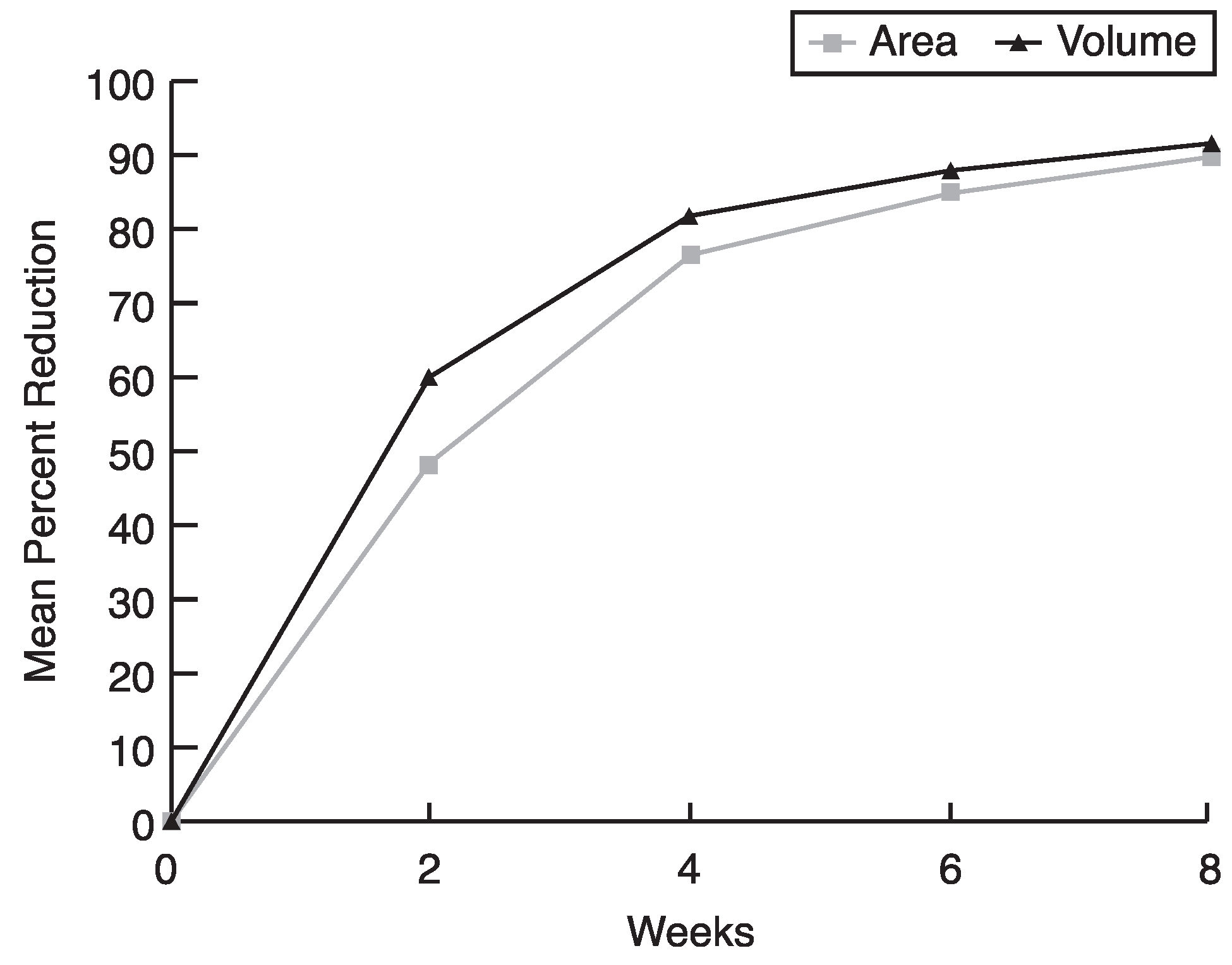
At week 2, eight (89%) of the nine wounds had decreased in size (
Table 2), with a mean percent change in wound area of −48% (range, +67% to −97%) and in volume of −60% (range, +67% to −95%). By week 4, all wounds had decreased in size, with the average wound size continuing to decrease over time (
Table 2;
Fig. 1). By week 8, mean area was reduced by 89% (range, −61% to −100%) and mean volume by 91% (range, −58% to −100%).
Table 2.
Wound Area and Reduction During 8 Weeks Following Application of DAMA.
Table 2.
Wound Area and Reduction During 8 Weeks Following Application of DAMA.
Figure 1.
Mean percent reduction from baseline in wound area and volume through 8 weeks following the first application of dehydrated amniotic membrane allograft.
Figure 1.
Mean percent reduction from baseline in wound area and volume through 8 weeks following the first application of dehydrated amniotic membrane allograft.
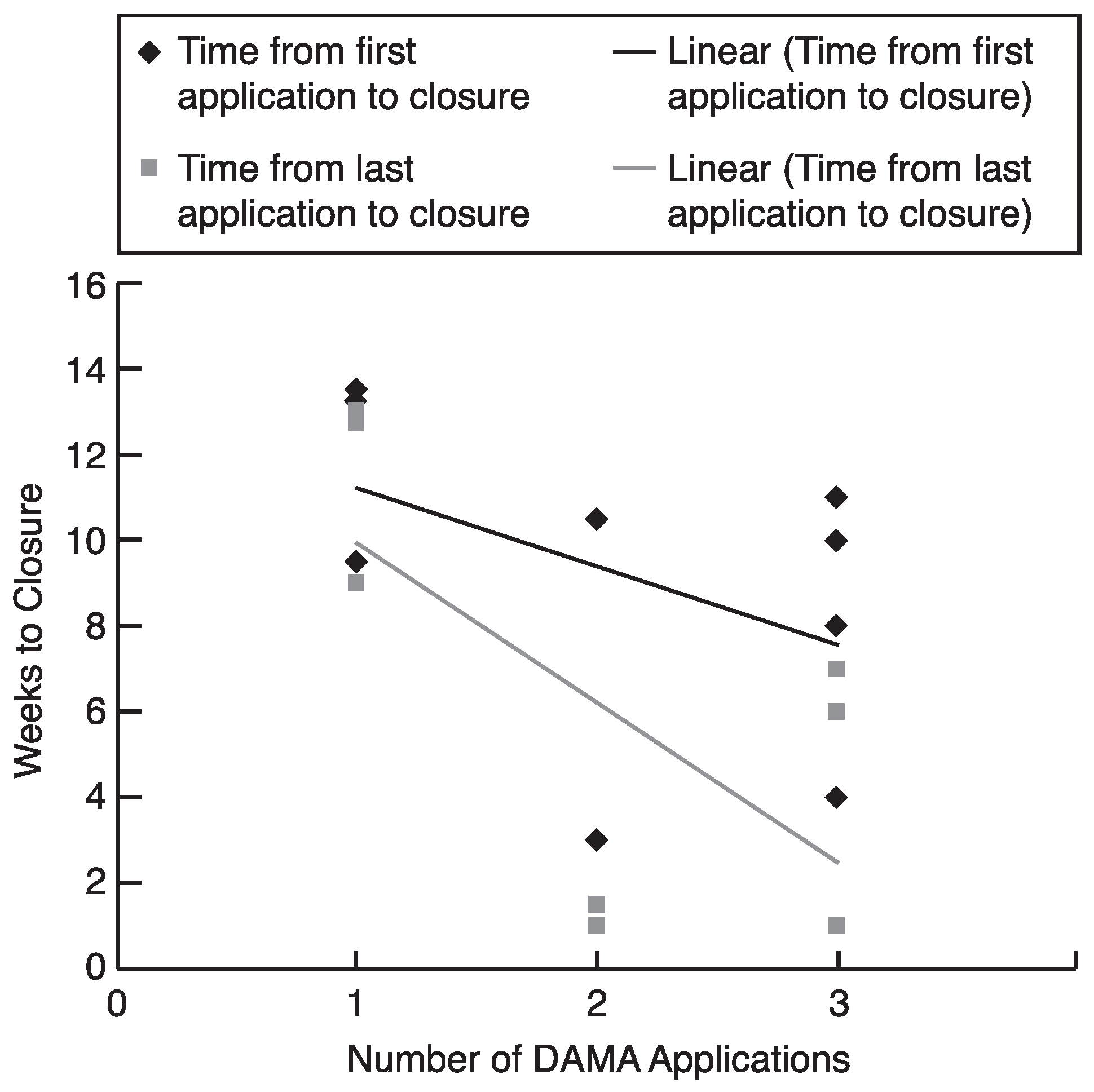
Time to closure was numerically shorter among those who had a greater number of DAMA applications (
Fig. 2). Mean time to wound closure was 8.3 weeks (range, 4.0–11.0 weeks) in those who had three applications (n = 4) compared with 12.1 weeks (range, 9.5–13.5 weeks) in those who had one application (n = 3).
Figure 2.
Overall time to closure from the first dehydrated amniotic membrane allograft (DAMA) application and time to closure from the last DAMA application relative to the number of DAMA applications. Linear trend lines were calculated using the graphing function of Microsoft Excel.
Figure 2.
Overall time to closure from the first dehydrated amniotic membrane allograft (DAMA) application and time to closure from the last DAMA application relative to the number of DAMA applications. Linear trend lines were calculated using the graphing function of Microsoft Excel.
Representative Cases
Patient 1. A 71-year-old woman with diabetes presented with a Wagner grade 2 DFU on the plantar aspect of the first metatarsal head on her left foot. Her medical history included sensory neuropathy and peripheral vascular disease. She was overweight and had a significant bone deformity of her plantarflexed first metatarsal, which caused increased pressure on the underlying soft tissue and weightbearing surface. The ulcer was debrided but failed to heal despite wound treatments including calcium alginate dressing with silver and a skin graft. Once the DAMA was placed, a nonremovable felted foam dressing was prescribed for offloading.
At the first DAMA application (day 0), the wound measured 1.7 × 1.5 × 0.5 cm (area, 2.6 cm
2; volume, 1.3 cm
3;
Fig. 3A). Within 1 week, the wound area decreased to 1.2 × 1.3 × 0.5 cm (area, 1.6 cm
2; volume, 0.8 cm
3;
Fig. 3B). She received no further DAMA applications and the wound was kept moist with Medihoney (Derma Sciences Inc, Princeton, New Jersey) with calcium alginate. Complete closure was observed at 9.0 weeks (
Fig. 3C).
Figure 3.
Patient 1. A 71-year-old woman with left plantar diabetic foot ulcer prior to dehydrated amniotic membrane allograft (DAMA) application (A); one week after DAMA application (B); 9 weeks after DAMA application (closure) (C).
Figure 3.
Patient 1. A 71-year-old woman with left plantar diabetic foot ulcer prior to dehydrated amniotic membrane allograft (DAMA) application (A); one week after DAMA application (B); 9 weeks after DAMA application (closure) (C).
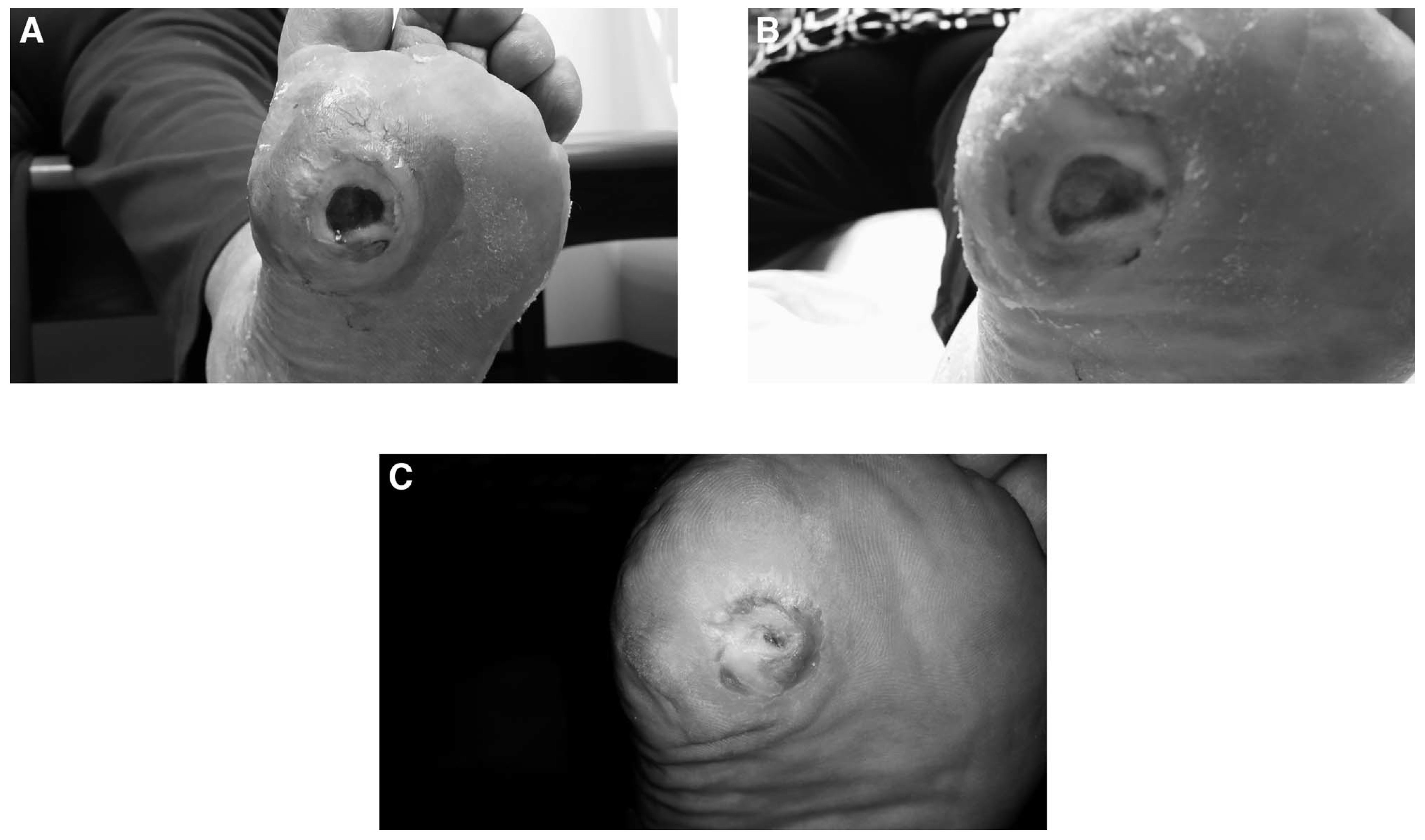
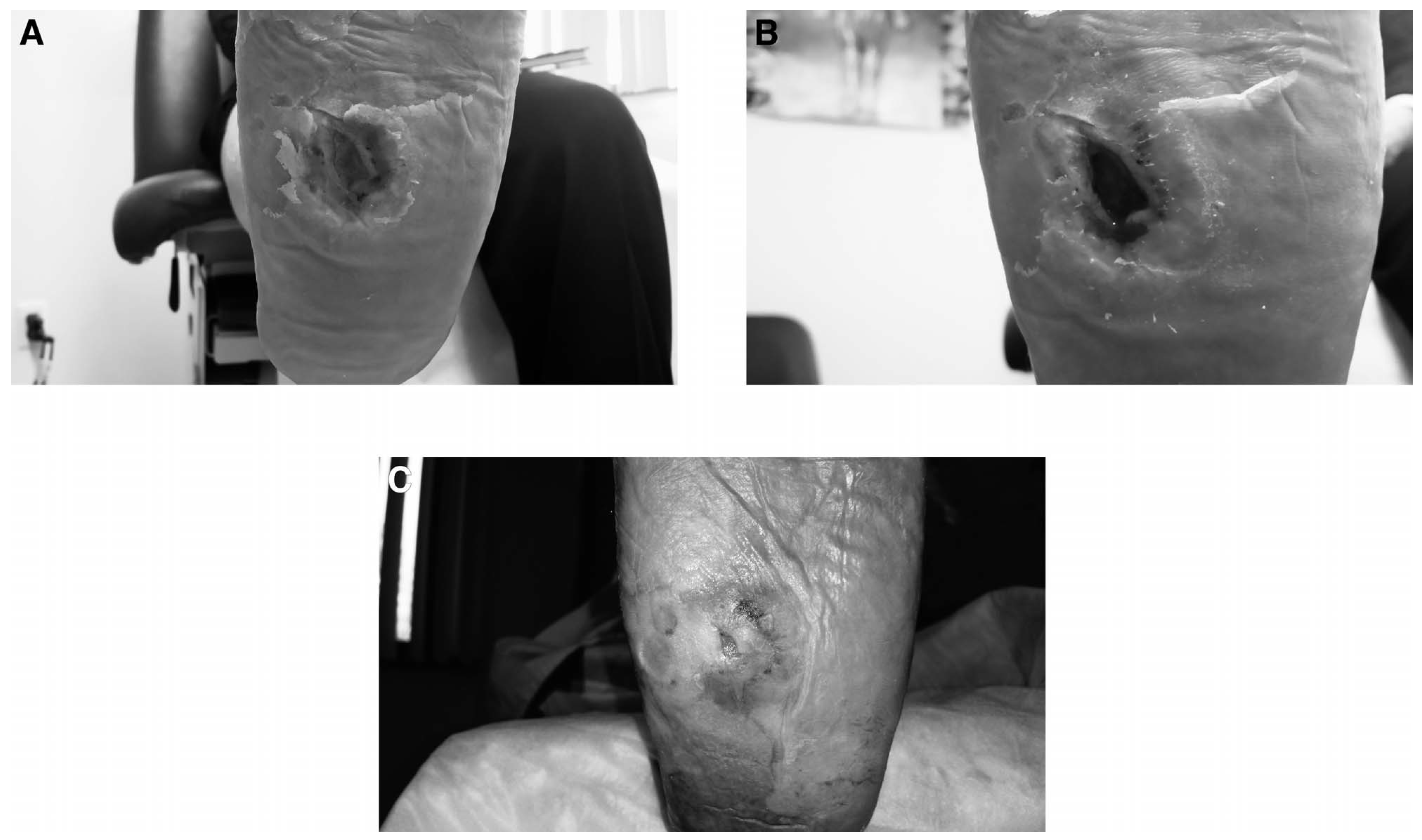
Patient 2. A 61-year-old woman presented with a right plantar midfoot ulcer. She had a long history of diabetes, neuropathy, Charcot foot deformity, and chronic recurrent DFUs. Her current DFU had failed to resolve despite debridement, calcium alginate with silver dressings, and treatment with a human bilayer CTP.
At first DAMA application (day 0), her wound was 1.7 × 1.6 × 0.5 cm (area, 2.7 cm
2; volume, 1.4 cm
3;
Fig. 4A). The patient received two additional DAMA applications 11 and 46 days after the first application, respectively. Secondary treatments included petrolatum nonadherent gauze dressing, gauze, and offloading with a total contact cast and kept moist with Medihoney with calcium alginate between DAMA placements. At the time of the second DAMA application, the wound had decreased to 0.5 × 0.5 × 0.3 cm (area, 0.3 cm
2; volume, 0.1 cm
3;
Fig. 4B). At the third placement, the wound had decreased further to 0.4 × 0.3 × 0.1 cm (area, 0.1 cm
2; volume 0.01 cm
3). Complete wound closure was achieved at 8 weeks after the first DAMA application (
Fig. 4C).
Figure 4.
Patient 2. A 61-year-old woman with a right plantar diabetic foot ulcer prior to dehydrated amniotic membrane allograft (DAMA) application (A); 2 weeks after first DAMA application (B); and wound closure following three DAMA placements, shown at 54 days after first application (C).
Figure 4.
Patient 2. A 61-year-old woman with a right plantar diabetic foot ulcer prior to dehydrated amniotic membrane allograft (DAMA) application (A); 2 weeks after first DAMA application (B); and wound closure following three DAMA placements, shown at 54 days after first application (C).
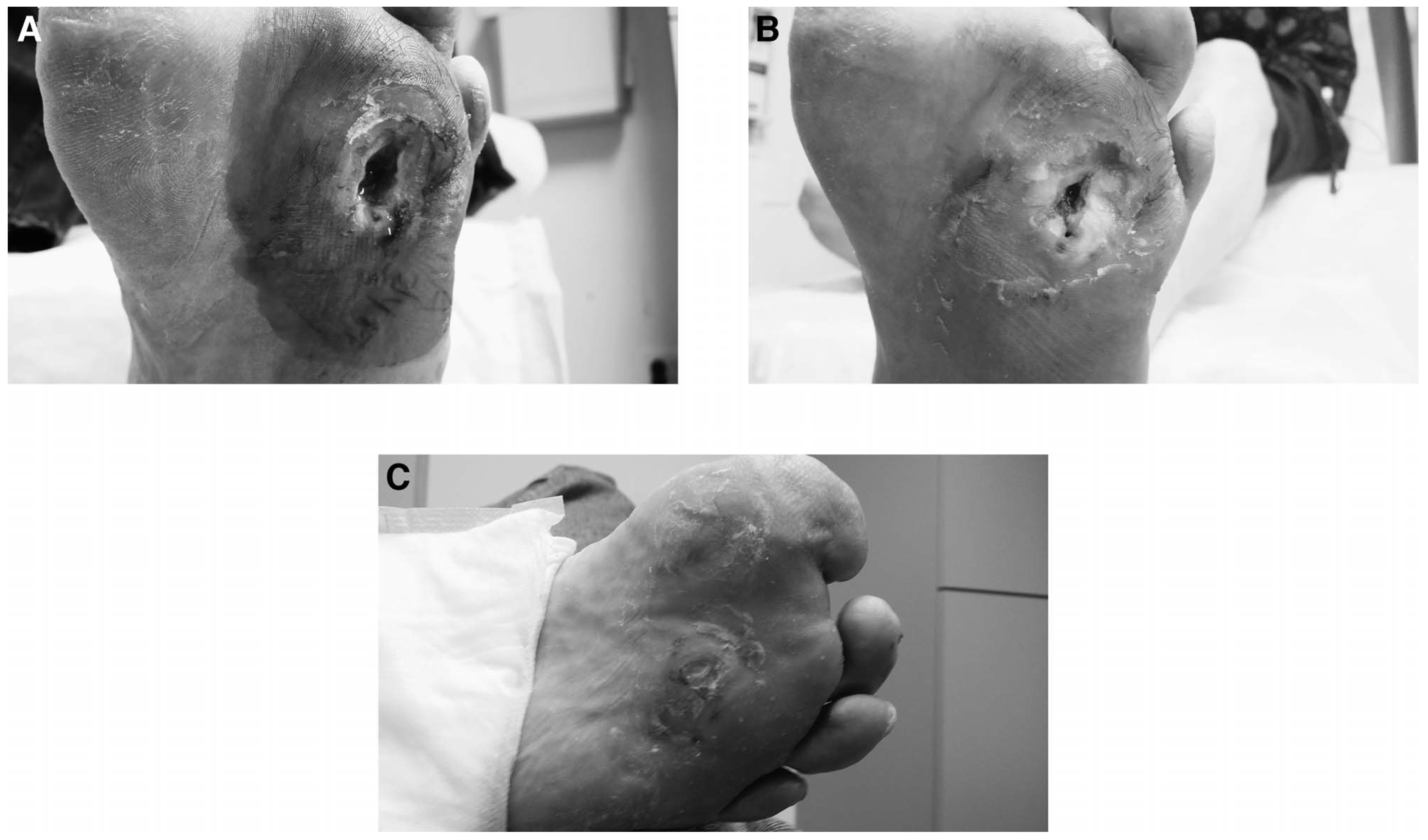
Patient 5. A 54-year-old man presented with a Wagner grade 2 DFU plantar to the fourth metatarsal head on the left foot. He had a history of diabetes, neuropathy, chronic osteomyelitis, bilateral DFUs, and multiple digital amputations. His current DFU had previously been treated with bilayer skin grafts, negative-pressure wound therapy, silver dressing, Medihoney, silver sulfadiazine, and povidone iodine.
The patient received a total of three DAMA applications at approximately 2-week intervals. Secondary treatments included Adaptic dressing (Systagenix; San Antonio, Texas), calcium alginate with silver, Medihoney, and offloading with a total contact cast. At the initial DAMA application (day 0), his wound measured 1.5 × 1.0 × 0.5 cm (area, 1.5 cm
2; volume 0.8 cm
3;
Fig. 5A). By the second week, the wound had decreased to 0.9 × 0.4 × 0.2 cm (area, 0.4 cm
2; volume, 0.1 cm
3;
Fig. 5B) and by the time of the third application, it reduced further to 0.4 × 0.3 × 0.1 cm (area, 0.1 cm
2; volume, 0.01 cm
3). At 10.5 weeks after the first DAMA application, the wound was completely closed (
Fig. 5C).
Figure 5.
Patient 5. A 54-year-old man with a left plantar diabetic foot ulcer prior to dehydrated amniotic membrane allograft (DAMA) application (A); 1 week after first DAMA application (B); and wound closure following three DAMA applications, shown at 73 days after first application (C).
Figure 5.
Patient 5. A 54-year-old man with a left plantar diabetic foot ulcer prior to dehydrated amniotic membrane allograft (DAMA) application (A); 1 week after first DAMA application (B); and wound closure following three DAMA applications, shown at 73 days after first application (C).
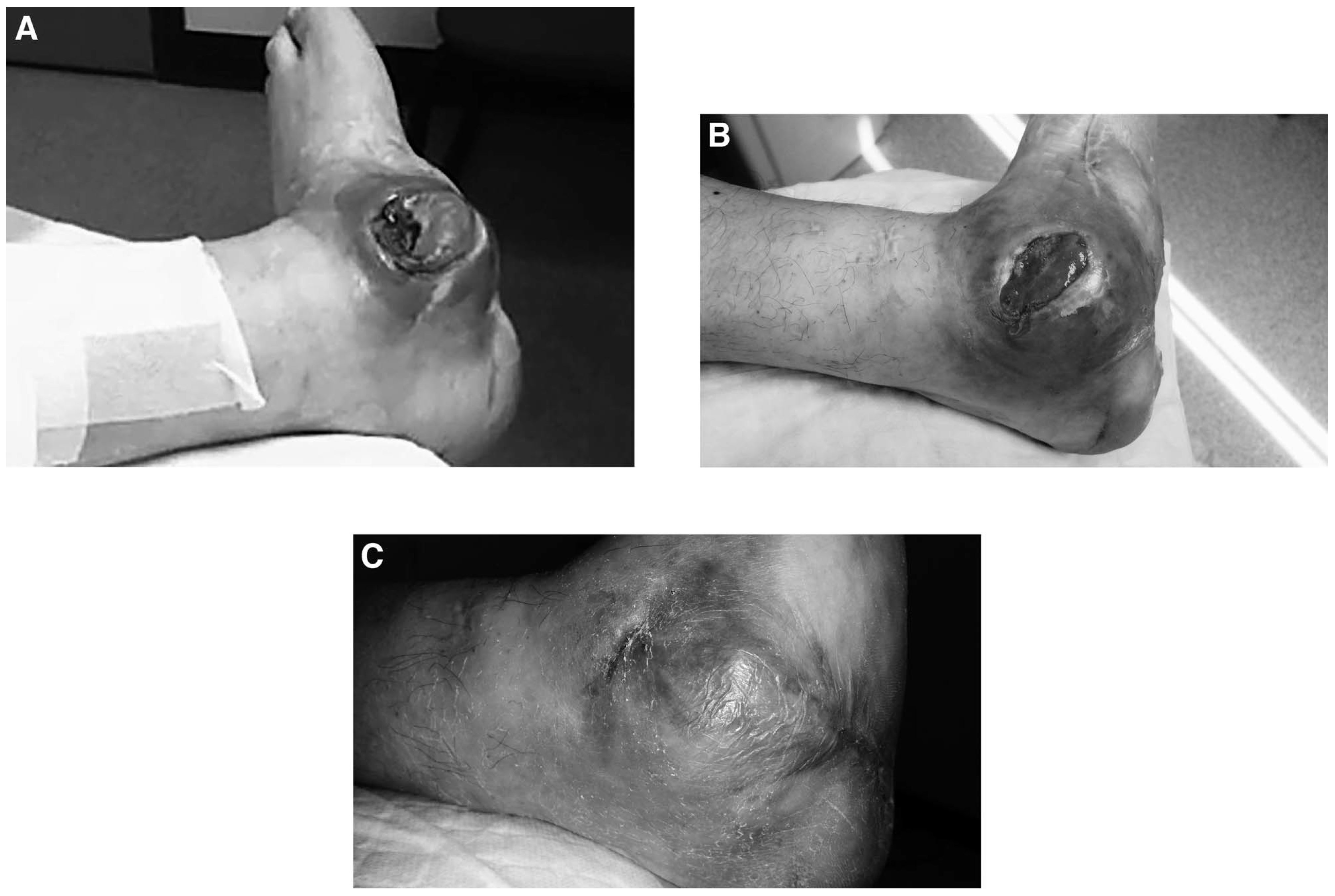
Patient 8. A 36-year-old woman presented with two Wagner grade 2 full-thickness DFUs: one on the medial aspect of her left ankle and one on the plantar aspect of her left heel. The patient had poorly controlled diabetes and a history of neuropathy and chronic ulcerations. Her left foot had significant bony deformities secondary to Charcot arthropathy. The wounds had previously been treated with standard wound care, including debridement, offloading, exudate management, various advanced wound care dressings including silver dressings, and povidone iodine, as well as negative-pressure wound therapy and bilayer skin grafts.
At the first DAMA application to the medial wound (day 0), wound dimensions were 5.8 × 4.3 × 0.5 cm (area, 24.9 cm
2; volume 12.5 cm
3;
Fig. 6A). Ten days after the initial DAMA application, the wound measured 3.0 × 3.9 × 0.5 cm (area, 11.7 cm
2; volume, 5.9 cm
3). At that time, a second DAMA was applied (
Fig. 6B). Three weeks after the first DAMA application, the wound measured 0.9 × 0.5 × 0.1 cm (area, 0.5 cm
2; volume, 0.1 cm
3), and a third DAMA was applied. The wound achieved closure by week 4 (
Fig. 6C).
Figure 6.
Patient 8. A 36-year-old woman with a diabetic foot ulcer on the medial aspect of the left ankle prior to first dehydrated amniotic membrane allograft (DAMA) application (A); 10 days later at time of second DAMA application (B); and wound closure (week 4) (C).
Figure 6.
Patient 8. A 36-year-old woman with a diabetic foot ulcer on the medial aspect of the left ankle prior to first dehydrated amniotic membrane allograft (DAMA) application (A); 10 days later at time of second DAMA application (B); and wound closure (week 4) (C).
For the patient's second DFU (plantar heel; photos not shown), the DAMA was first applied (day 0) when the wound measured 1.2 × 1.1 × 0.8 cm (area 1.3 cm2; volume 1.1 cm3). A second application was performed 11 days later, at which time the wound measured 0.6 × 0.3 × 0.3 (area, 0.2 cm2; volume, 0.1 cm3). At 18 days after the first DAMA application, the wound was closed.
Discussion
In this case series, DAMA supported rapid closure of nine Wagner grade 2 DFUs that had previously failed to resolve with standard wound care and adjuvant therapies. Following one to three DAMA applications, all of the wounds completely closed, and none necessitated amputation. Thus, it appears DAMA represents a potentially important new add-on therapy to standard care for DFUs.
These data, the first report of DAMA for this indication, were presented in poster form at the 2014 Symposium on Advanced Wound Care (SAWC). Another poster presented at SAWC, by Lintzeris and colleagues,[
16] reported a case series in which DAMA was applied to two acute wounds and four chronic wounds in patients with diabetes, vascular disease, or both. Their results were consistent with those of the cases in the current report, with all wounds achieving rapid and complete closure.
Results of the current case series are also consistent with those of previously reported cases using various other CTPs for treatment of DFUs and other chronic wounds. In individual cases, one application of a CTP resulted in substantial healing of previously intractable DFUs by 4 weeks,[
17] and one to three applications produced complete closure of various nonhealing chronic wounds at approximately 2 to 31 weeks after the first application.[
18,
19] In a case series of 20 chronic wounds treated with a mean of 1.9 CTP applications, 90% were completely closed within 12 weeks, and none of the treated patients required amputation.[
12] In addition, a retrospective chart review of 66 patients with refractory chronic wounds (including 27 DFUs) treated with a CTP found that after 12 weeks of care, 76.1% of wounds achieved complete closure, including 85.2% of DFUs.[
20]
The efficacy of CTPs has also been demonstrated in clinical trials. In a prospective, randomized, nonblinded, parallel-group, single-center study, 25 patients with DFUs of at least 4 weeks' duration were treated with either a CTP (one to six applications) plus standard wound care or with standard wound care alone.[
21] Wound area was reduced by 97.1% in the CTP group compared with 32.0% in the standard wound care group (
P < .001) at 4 weeks, and by 98.4% versus −1.8%, respectively, at 6 weeks (
P < .001).[
21] Complete closure at 6 weeks was achieved by 92% in the CTP group versus 8% in the standard wound care group (
P < 0.001).[
21] Those in the standard wound care group who failed to heal after 6 weeks were allowed to withdraw and cross over to receive the CTP; a retrospective review of the 11 patients who crossed over and subsequently received 1 to 5 CTPs reported that 10 (91%) completely closed within 12 weeks (mean, 4.2 weeks).[
22] A multicenter, randomized, open-label clinical study found that the addition of 1 or 2 CTPs to multilayer compression therapy led to ≥40% closure in 62% of venous leg ulcers compared with 32% with compression therapy alone (
P = .005), and a reduction in wound size of 48.1% versus 19.0%, respectively, after 4 weeks.[
23] It should be noted that data from randomized, controlled clinical trials in patients with DFUs comparing CTPs of placental origin to each other and to bioengineered and other CTPs are limited. A recent systematic review of 57 randomized, controlled studies for CTP skin substitute products identified 12 studies of DFUs that met inclusion criteria and concluded that the strength of evidence for these studies was low or insufficient.[
11]
The number of DAMA applications and intervals between applications is individualized based on the patient's comorbid conditions and treatment history. In the majority of cases in this series, DAMA applications were not continued until wound closure, but rather were used to transition a chronic wound into an acute phase of wound healing, after which advanced moist wound-healing techniques and offloading facilitated continued re-epithelialization until closure. It is interesting to note that the mean time to closure of DFUs was 3 weeks shorter in those who received three DAMA applications compared with those who received only one. This is an important consideration given that a more rapid wound resolution may be clinically relevant, particularly in high-risk patients. However, interpretation of this finding should take into consideration the fact that criteria for determining whether and when to perform subsequent applications were not standardized, and comparative statistical analysis was not performed. Contrary to our results, a study that randomized participants with venous leg ulcers to one versus two applications of another CTP in conjunction with multilayer compression found no added benefit from a second application with regard to proportion of patients achieving ≥40% wound closure at week 4.[
23]
There is no generally defined standard for the frequency of application of CTPs. In prospective clinical trials of patients with DFUs or other chronic wounds, CTPs have been applied at varying intervals and over variable courses of treatment.[
12,
21,
24-
27] This remains an area for further study given the lack of standardization and the scarcity of comparative data for number and frequency of applications. Furthermore, it should be noted that there are many factors in clinical practice that could potentially influence the frequency and number of allografts used.
As with all nonrandomized retrospective case series, this analysis lacks a control or active comparison, patient and physician blinding, and standardization of procedures. Also, the timing and number of DAMA applications was based on the clinical judgment of the treating physician and not according to a predefined protocol. Potential contributions of adjuvant therapies used during the study interval cannot be determined; however, the DFUs treated in this series had already failed to heal in response to many of these therapies alone. The analysis is also limited by the small sample size.
The promising results observed here suggest that DAMA may provide substantial benefits to patients with DFUs that have failed to respond to standard treatments and therefore carry a poor prognosis. Further study is needed to investigate whether benefits of DAMA vary in relation to the duration of the wound, types of previous unsuccessful treatments, number of applications, and whether application is carried to closure.
Conclusions
In this case series, nine DFUs treated with one to three applications of DAMA exhibited rapid re-epithelialization and complete closure within 3 to 13 weeks (mean, 9.2 weeks). All of these DFUs had previously failed to resolve following standard wound care as well as the application of a variety of common add-on therapies, including, in some cases, CTPs. These results are encouraging, especially given that unresolved DFUs of long duration typically have a poor prognosis, sometimes necessitating amputation. Used in conjunction with standard care, DAMA may provide benefits for patients with DFUs and is a welcome addition to the growing number of treatment options available for advanced wound care.