Historically, bone tumors of the foot have been described as uncommon. The most commonly affected bones are the phalanges, metatarsals, and calcaneus followed by the talus. [
1] Neoplasms involving the bones of the midfoot are the least frequently involved sites.
Unicameral bone cyst (UBC) was first reported by Virchow in 1876, who described these cystic lesions to be a result of impaired circulation. [
2] Unicameral bone cysts are relatively uncommon benign bone tumors typically found in the metaphysis of long bones, such as the humerus and the femur, in skeletally immature persons, with a male to female ratio of approximately 3 to 1. [
3] They represent approximately 3% of biopsied bone tumors. [
4] These benign, fluid-filled intramedullary cavities are the most common bone tumor found within the neutral triangle of the os calcis. [
1] They typically appear as mildly expansile, lytic, thin-walled bone lesions without a periosteal reaction and are usually asymptomatic in the absence of a pathologic fracture. Symptoms are most often caused by trauma, resulting in fracture through an area of very thin, expanded cortical bone. Clinical examination following a fracture of the cortex may reveal palor, erythema, edema, or painful motion.
A careful review of the American and British literature revealed no report of a UBC in the medial cuneiform.
Case Report
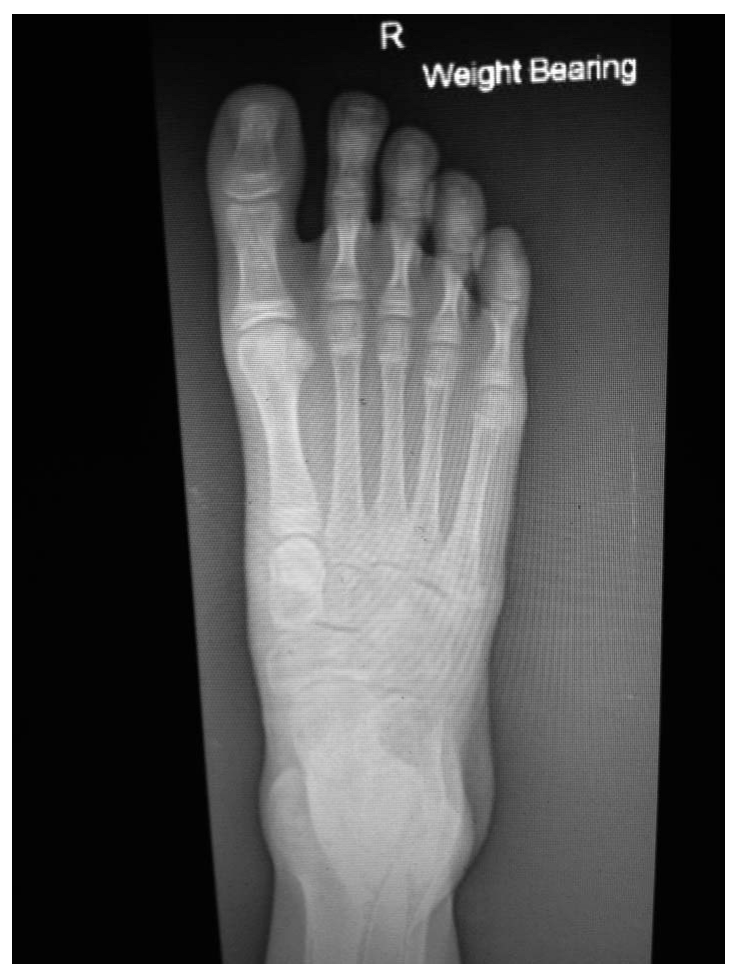
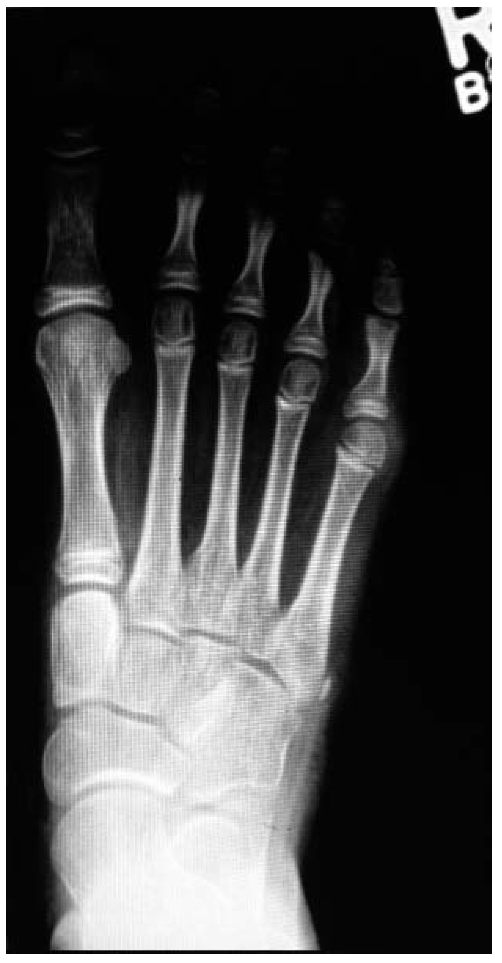
A 10-year-old female presented to the Rothman Institute, Philadelphia, Pennsylvania, with a chief complaint of worsening right medial arch pain over the past 10 months without inciting trauma. Attempts at conservative management included custom-molded orthotics, bracing, immobilization in a CAM boot, and oral anti-inflammatory medications, which provided the patient with minimal relief. Radiographic studies were obtained and revealed discrete cystic changes to the medial cuneiform without the presence of fracture (
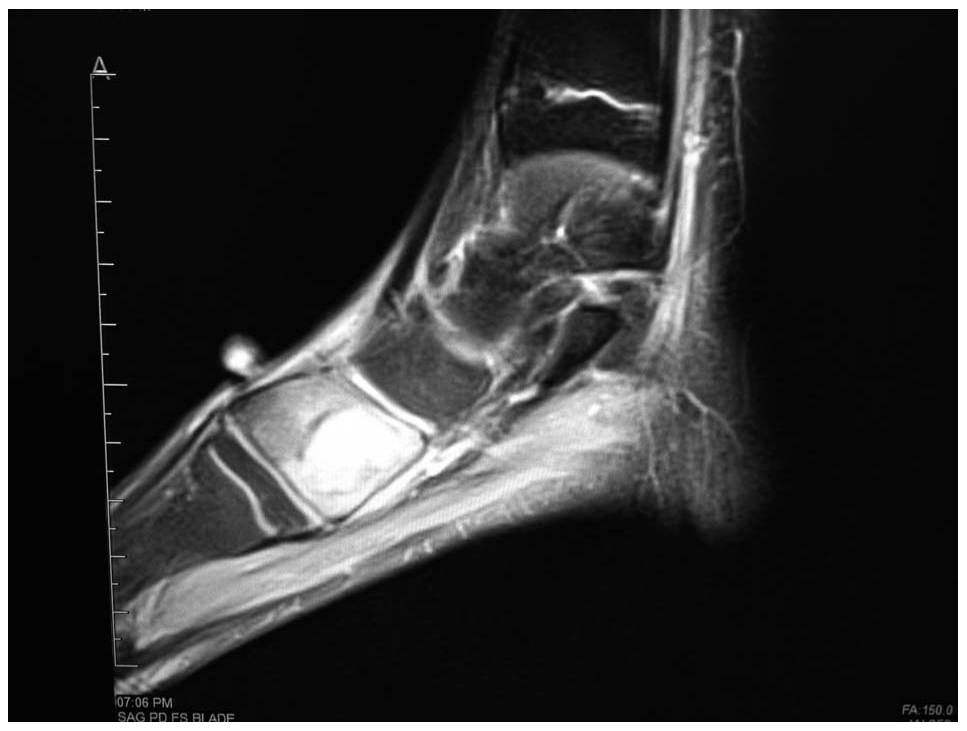
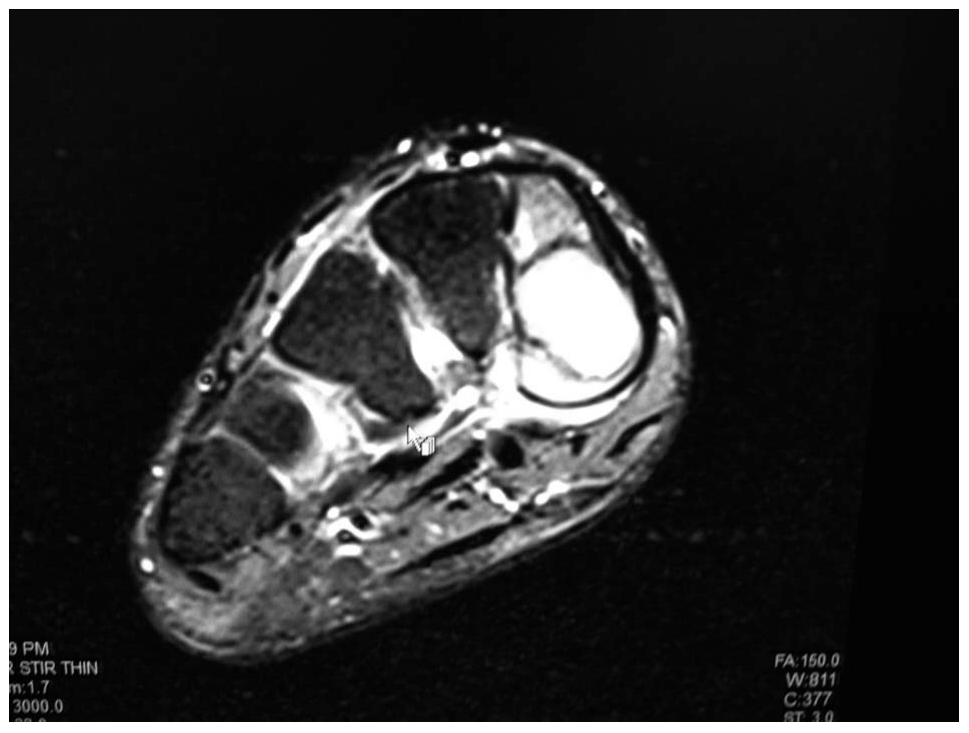
Fig. 1). Magnetic resonance imaging showed a 1.2 × 1.4 × 1.6-cm slightly expansile cystic lesion within the medial cuneiform with mild, diffuse reactive marrow edema without pathologic fracture (
Figs. 2–
3).
Figure 1.
Preoperative anteroposterior radiograph showing medial cuneiform unicameral bone cyst.
Figure 1.
Preoperative anteroposterior radiograph showing medial cuneiform unicameral bone cyst.
Figure 2.
T2 axial magnetic resonance image of the medial cuneiform unicameral bone cyst.
Figure 2.
T2 axial magnetic resonance image of the medial cuneiform unicameral bone cyst.
Figure 3.
T2 sagittal magnetic resonance image of the medial cuneiform unicameral bone cyst.
Figure 3.
T2 sagittal magnetic resonance image of the medial cuneiform unicameral bone cyst.
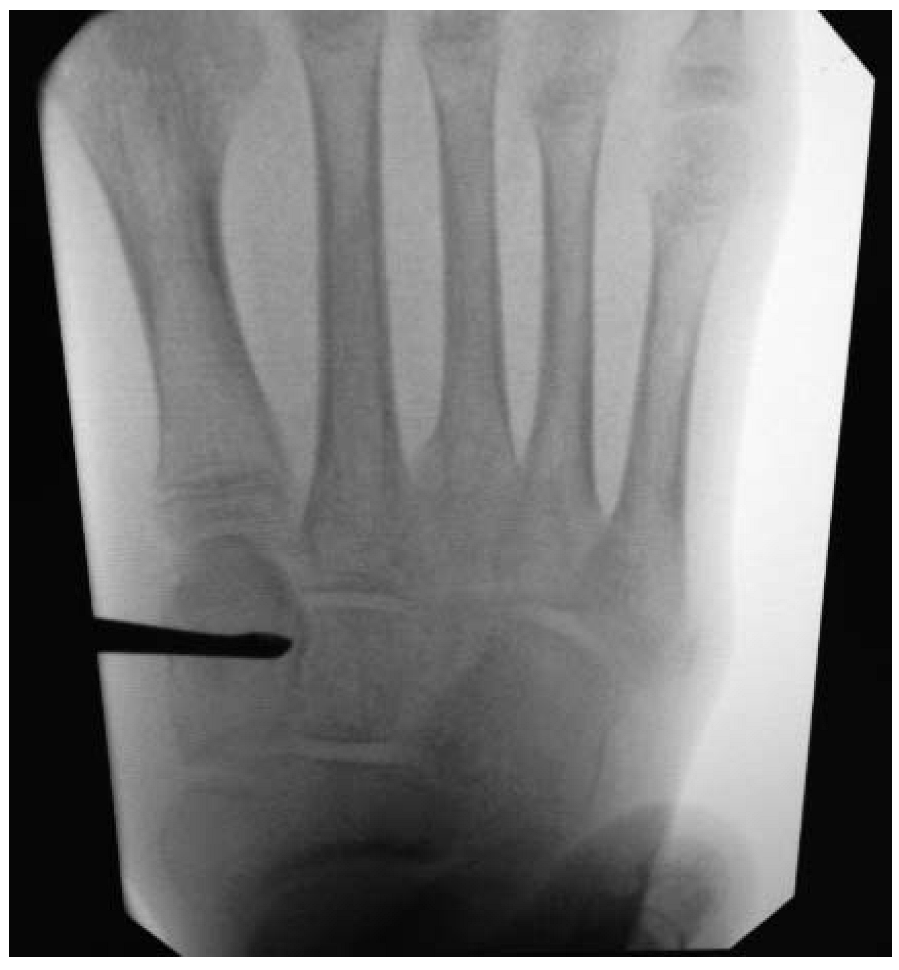
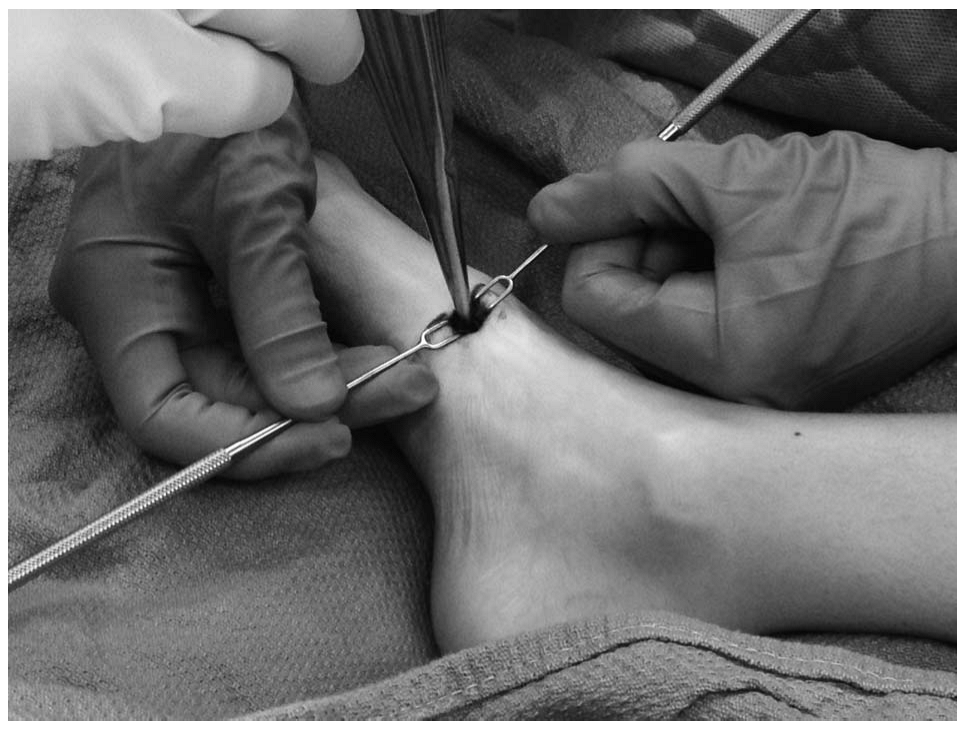
Because of the size and location of the UBC, the patient's high physical activity level, unremitting pain in the midfoot, and risk of pathologic fracture, the decision to proceed with surgical treatment was made. A minimally invasive surgical approach was performed with the medial cortex of the medial cuneiform penetrated with a small curette (
Fig. 4). The contents of the cyst were evacuated (
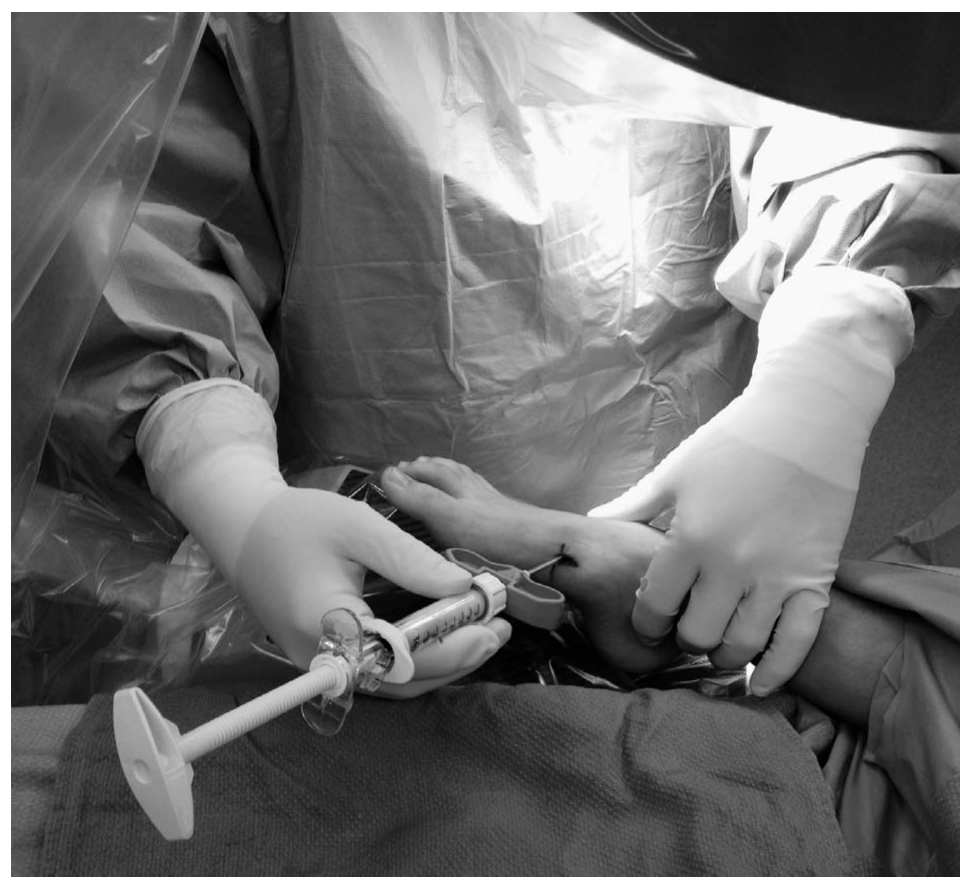
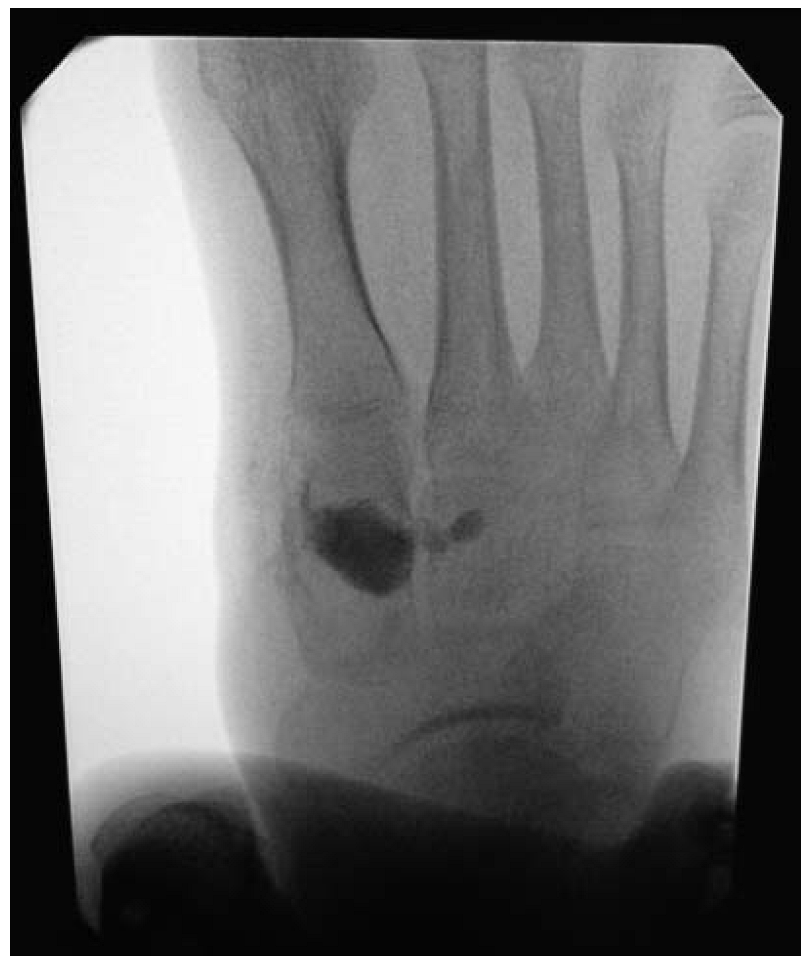
Fig. 5) and an allograft bone matrix was injected into the void under C-arm assistance (
Figs. 6–
7). Pathologic evaluation revealed fibrous tissue consistent with a UBC.
Figure 4.
Intraoperative photo showing minimally invasive surgical approach used to curette contents of bone cyst.
Figure 4.
Intraoperative photo showing minimally invasive surgical approach used to curette contents of bone cyst.
Figure 5.
Intraoperative photo showing C-arm image of evacuated cyst.
Figure 5.
Intraoperative photo showing C-arm image of evacuated cyst.
Figure 6.
PRO-DENSE (Wright Medical, Memphis, Tennessee) bone allograft injected through minimally invasive technique.
Figure 6.
PRO-DENSE (Wright Medical, Memphis, Tennessee) bone allograft injected through minimally invasive technique.
Figure 7.
Immediate postoperative C-arm image of bone cyst with injectable bone allograft.
Figure 7.
Immediate postoperative C-arm image of bone cyst with injectable bone allograft.
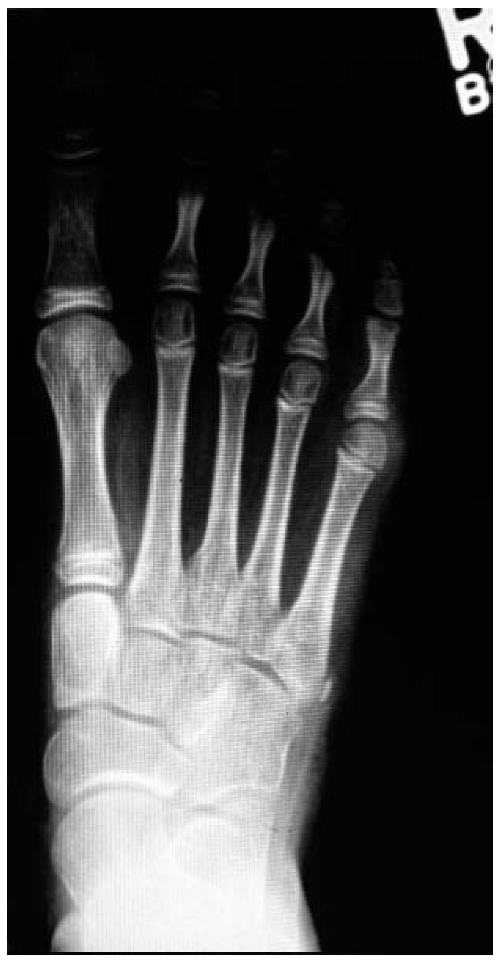
Postoperatively, the patient remained nonweightbearing in a below-the-knee cast for 4 weeks. She transitioned into a weightbearing CAM boot for 2 weeks thereafter. Follow-up radiographs were obtained at 6 weeks, which revealed excellent healing, with incorporation and consolidation of the allograft along the postoperative site (
Fig. 8). One-year follow-up of the patient revealed a return to her previous recreational cheerleading activity without discomfort, and radiographs demonstrated further healing and consolidation of the bone graft across the postoperative site (
Fig. 9).
Figure 8.
Six-week postoperative anteroposterior radiograph demonstrates consolidation of bone graft.
Figure 8.
Six-week postoperative anteroposterior radiograph demonstrates consolidation of bone graft.
Figure 9.
One-year follow-up anteroposterior weightbearing radiograph demonstrates further healing with consolidation of bone graft.
Figure 9.
One-year follow-up anteroposterior weightbearing radiograph demonstrates further healing with consolidation of bone graft.
Discussion
Unicameral bone cyst is a relatively rare, benign lesion with no reported cases in the medial cuneiform. The most commonly theorized mechanisms of pathogenesis are venous obstruction resulting in elevated intraosseous pressures, as proposed by Cohen, [
5] and enhanced bone resorption due to increased levels of prostaglandin-E2, interleukin-1β, and gelatinase content in the cyst fluid, as proposed by Komiya et al. [
6] Most recently, Lenze et al [
7] proposed cytogenetic factors as a potential etiology. They are typically unilateral, and in the foot, are most commonly found in the neutral triangle of the calcaneus. These lesions most commonly affect children and adolescents in the first two decades of life. Takada et al [
8] state that UCBs usually manifest during the first two decades of life in the long bones and are usually discovered later in life in the os calcis, most commonly in the late teens to third decade of life. Most calcaneal UBCs are asymptomatic and typically recognized as an incidental radiographic finding during evaluation of minor foot or ankle trauma, whereas UBCs of long bones are often diagnosed secondary to pain caused by mechanical weakness or pathologic fracture.
Without the presence of pathologic fracture, UBCs are usually asymptomatic and heal spontaneously after skeletal maturity. [
9] When pathologic fracture has occurred, patients may present with erythema, edema, palor, and painful range of motion. Conservative management with close outpatient monitoring is recommended for small UBCs without the presence of pathologic fracture.
Indications to treat UBC include prevention of pathologic fracture and management of symptoms associated with pathologic fracture, especially pain. Since the pathogenesis of UBC remains unclear, there has been no universal treatment protocol accepted. The essential elements in surgical treatment of UBC include adequate decompression of the intraosseous pressure, irrigation of the cyst to decrease the bone-destroying enzymes, eradication of cyst membrane activity, and stimulation of bone healing. [
9] Historically, surgical curettage and cyst excision with allograft or autograft bone graft have been used in the surgical management of these lesions. [
10]
Kadhim and colleagues [
10] reported that overall active treatment improves UBC healing, regardless of anatomic site and the type of treatment compared to observational management. In their meta-analysis, observation lead to a 64% healing rate, whereas surgical curettage and use of allograft or autograft provided a 90% healing rate.
Our pediatric patient experienced severe midfoot pain for several months although no pathologic fracture was identified on radiographic and magnetic resonance imaging. We chose to use a minimally invasive surgical approach in an effort to provide greater healing potential and preservation of function by preventing disruption of surrounding blood flow, musculature, and periosteum. We also opted to use PRO-DENSE (Wright Medical, Memphis, Tennessee) bone graft substitute rather than autograft to reduce the number of incisions, risk of infection, and need for additional healing.
In summary, this is a unique case of a UBC found in the medial cuneiform of a 10-year-old highly active female. Although UBCs in the foot are most commonly seen in the calcaneus and are typically asymptomatic in the absence of pathologic fracture, they should not be excluded as a cause of midfoot pain in pediatric patients.
Financial Disclosure: None reported.
Conflict of Interest: None reported.