There are three main types of lymphocytes: thymus-derived cells (T cells), bursa-derived cells (B cells), and natural killer cells. The two main types of lymphomas are the Hodgkin and non-Hodgkin types, the latter of which is the sixth most common type of cancer found in men.[
1] It has been infrequently reported in the foot.[
2-
9] Hodgkin's lymphoma, which tends to arise from Epstein-Barr virus, on the contrary, accounts for only 1% of cancers documented in the United States.[
10,
11] The defining characteristic is a specific type of Reed-Sternberg cell found in Hodgkin's lymphoma. In addition, Hodgkin's disease tends to present in younger individuals, most commonly aged 15 to 35 years (although there is a separate group of those aged ≥55 years), whereas non-Hodgkin's disease typically is diagnosed in people older than 60 years.[
1,
11] Also, Hodgkin's disease is more likely to present in lymph nodes of the neck, arms, and chest, but both types can be found anywhere in the body.
Non-Hodgkin's lymphoma can be further separated into B cell and T cell, where B cell is much more common, composing nearly 85% of all non-Hodgkin's lymphomas.[
10,
11] T-cell non-Hodgkin's lymphoma is much rarer, accounting for fewer than 6,000 cases in the United States each year. B lymphocytes are responsible for creating bacteria-fighting antibodies. T lymphocytes fight cells that have been taken over by viruses or cancer. In addition to the various forms of each type, they can be divided into two broad categories of aggressive and indolent. The most common type of T-cell non-Hodgkin's lymphoma is cutaneous lymphoma, which itself is a broad term describing many different disorders. It is difficult to accurately diagnose the most specific type, and it tends to be costly using different modalities, including immunochemical analysis, blood tests, genetic tests, radiographic imaging, and bone marrow biopsies. Once a diagnosis is made, there are no established treatment standards or protocols, which can be frustrating for the patient and the oncology team. There are more than 15 types of cutaneous T-cell non-Hodgkin's lymphoma. The most common type is mycosis fungoides, which is normally slow growing and appears as a scaly rash in areas of the body not commonly exposed to sun.[
12] This case report demonstrates a high-grade cutaneous T-cell lymphoma that most likely began as mycosis fungoides but that has histopathologic evidence of CD30
+ large-cell transformation. As a result of the cancer's aggressive appearance and rapid growth (longitudinally and in depth), an amputation was performed.
Case Report
A 70-year-old white man was admitted to the hospital on May 17, 2012, with a chief concern of left lower-extremity cellulitis in the setting of a worsening ulceration to the dorsal aspect of his left hallux. He stated that he was originally treated for an infected ingrown nail that was avulsed at an outside hospital in March. Since then, he had been treated regularly, by an outside facility, for a nonhealing wound with oral antibiotic agents and instructed on regular dressing changes. There were no reports of an elevated white blood cell count or a fever throughout this time. He also denied any subjective feelings of nausea or chills, but he did admit to night sweats and modest weight loss during the past year (15 pounds). Pertinent laboratory values included a white blood cell count of 5.1 × 10⁹/L, with a left shift indicated by a neutrophil percentage of 80.6%, and an erythrocyte sedimentation rate of 20 mm/h. His medical history was significant for aortic valve insufficiency, cataracts, cutaneous T-cell lymphoma, degenerative disk disease, deviated septum, diverticulitis, endocarditis, gastroesophageal reflux disease, gout, hyperlipidemia, hypertension, hypothyroidism (autoimmune), rotator cuff injury (repaired), Sjogren's syndrome, and sleep apnea. He kept regular appointments with multiple specialists. His cutaneous T-cell lymphoma was routinely monitored and was staged as IA. His primary concern with this was itchy, raised plaques scattered throughout his legs and abdomen. He has an anaphylactic allergy to penicillin and a distant (>20 years ago) history of tobacco use.
His last outpatient visit to the previous treating clinicians was May 9, 2012. The dimensions of his ulceration documented at that visit were 28 × 15 × 2 mm, with a dry, fibrogranular appearance. A superficial wound swab collected at that visit was positive for pan-sensitive 4+ Pseudomonas aeruginosa and 4+ Enterococcus species; 4+ signifies heavy growth on a scale ranging from “no growth” to 4+. Due to the aggressive nature and lack of healing, the patient was transferred to Beth Israel Deaconess Medical Center (Boston, Massachusetts) for further evaluation and treatment.
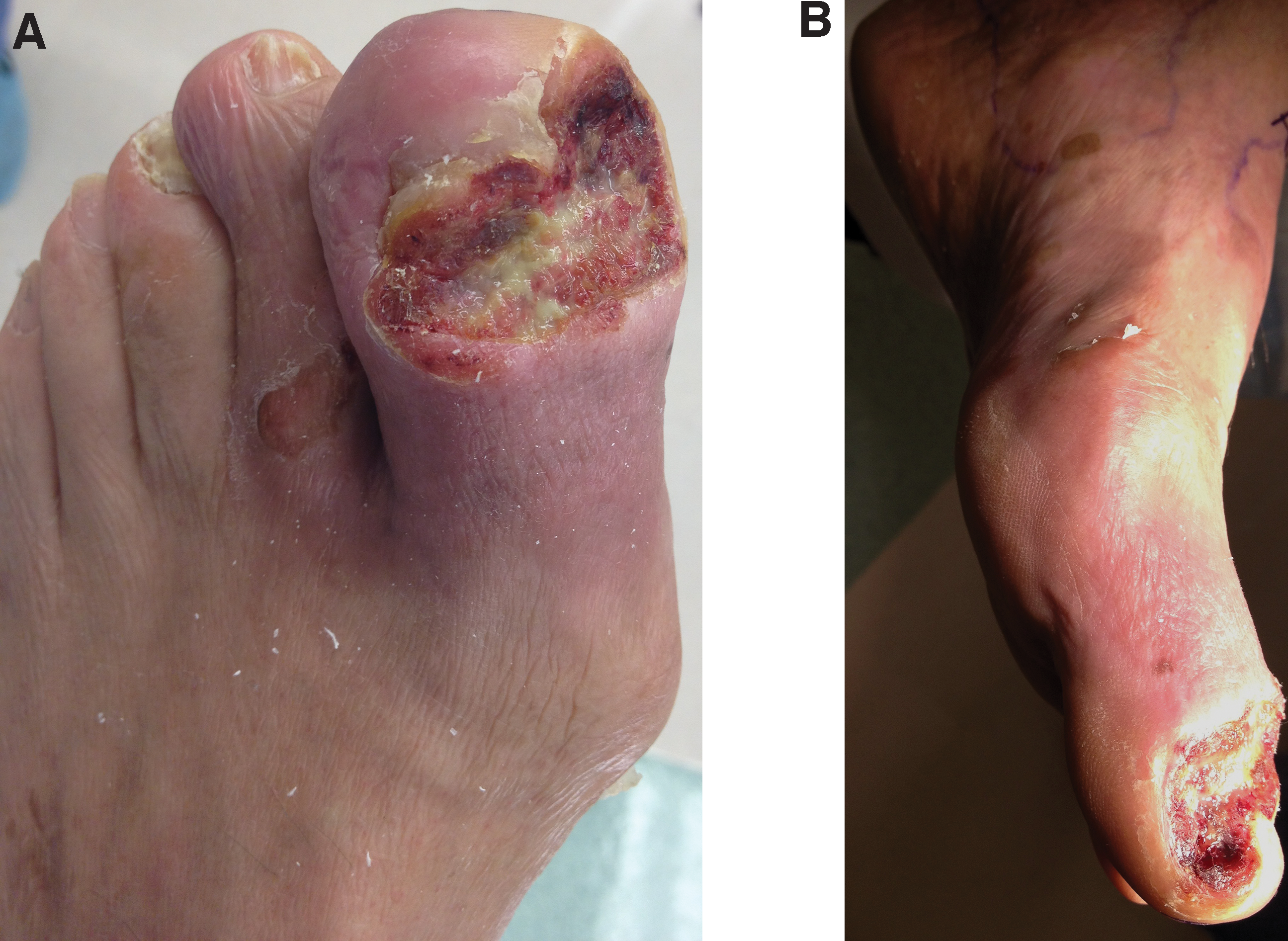
On admission, the patient was started on broad-spectrum intravenous antibiotic drug therapy. Examination of his left great toe revealed a primarily fibrotic (90%) ulceration that probed to bone and measured 40 × 27 × 3 mm, with purulent drainage. There was erythema surrounding the wound and extending dorsally to the level of the instep. Neurovascular and musculoskeletal examination findings were all normal. Laboratory values were also within normal limits, with a white blood cell count of 5.17 × 10
9/L. After 24 hours of elevation and intravenous antibiotic drug therapy, the erythema and drainage resolved (
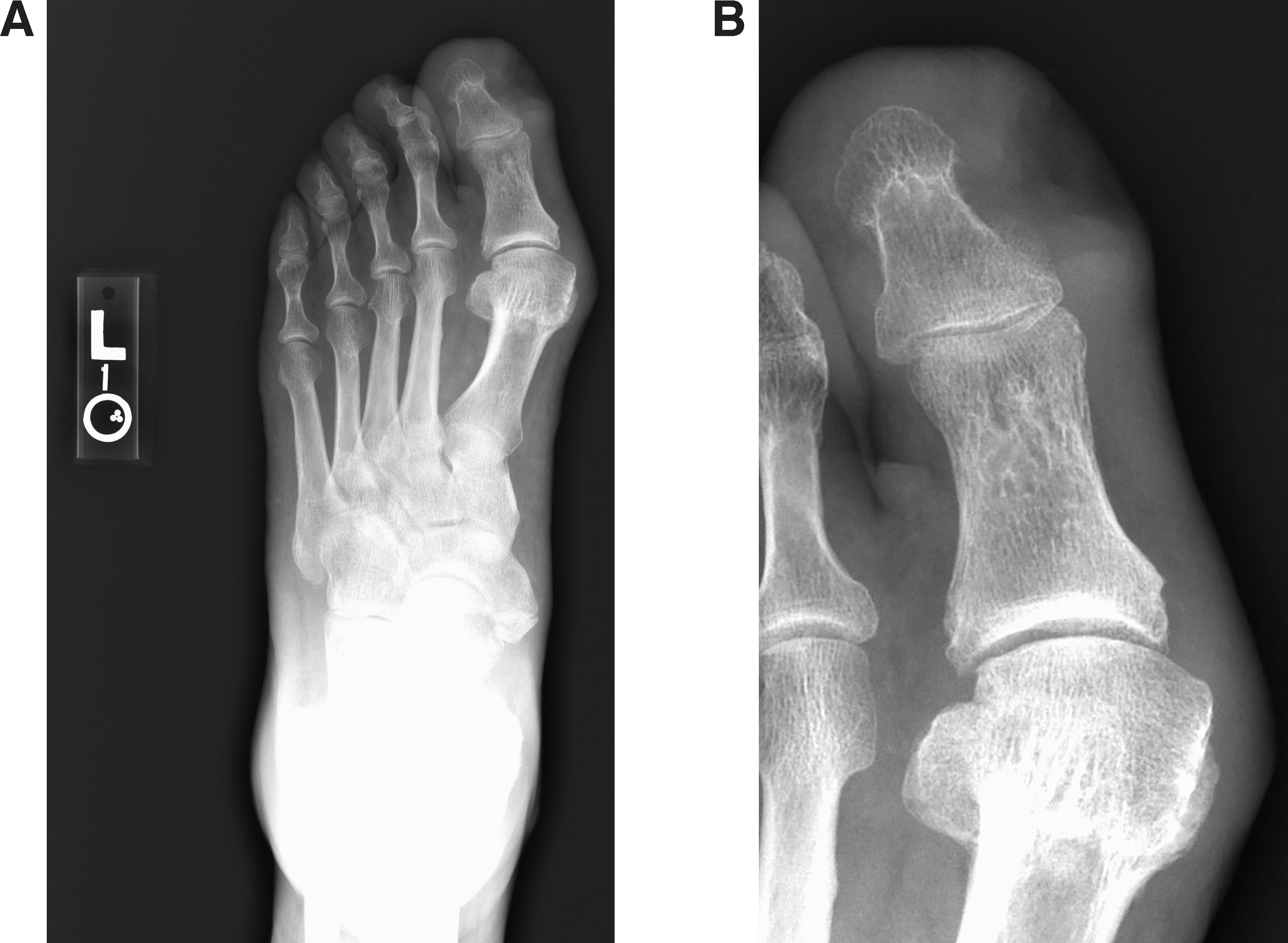
Fig. 1). Radiographs of the left foot showed an evident soft-tissue defect but were inconclusive for osteomyelitis. Considering his history of cutaneous lymphoma, high suspicion was attributed to an aggressive advancement of this defect versus the previously treated paronychia. However, given the high suspicion for malignancy, the decision was made to perform a single-step amputation. This served as our means of biopsy and wound closure and was agreed on by the patient, who was eager for definitive treatment (
Fig. 2).
Figure 1.
Anteroposterior (A) and lateral (B) views of the patient's left hallux at hospital admission.
Figure 1.
Anteroposterior (A) and lateral (B) views of the patient's left hallux at hospital admission.
Figure 2.
A, Nonweightbearing anteroposterior radiograph of the patient's left foot. B, Increased magnification (x3) of the radiograph focusing on the involved area. A soft-tissue defect is seen.
Figure 2.
A, Nonweightbearing anteroposterior radiograph of the patient's left foot. B, Increased magnification (x3) of the radiograph focusing on the involved area. A soft-tissue defect is seen.
Surgical Procedure
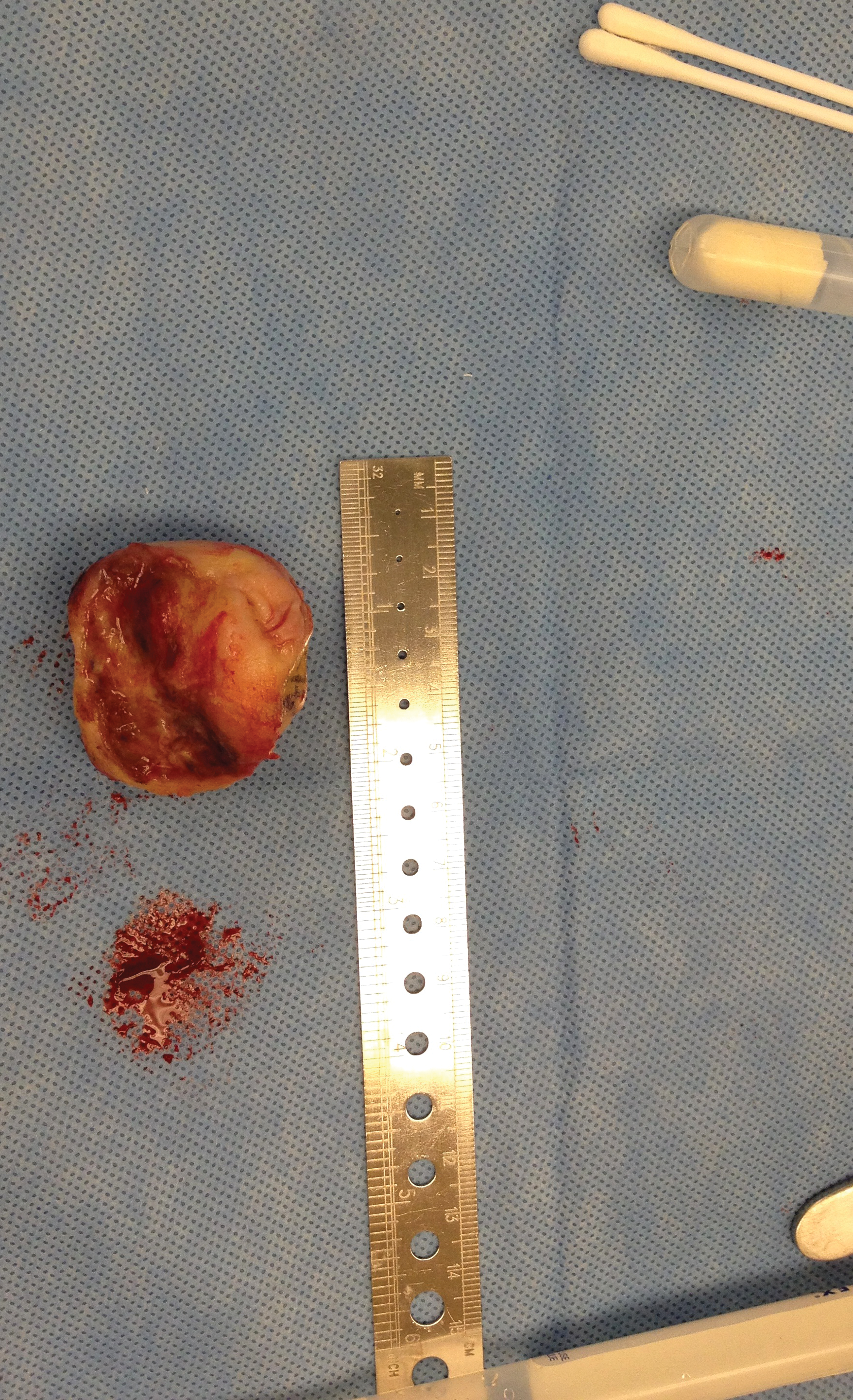
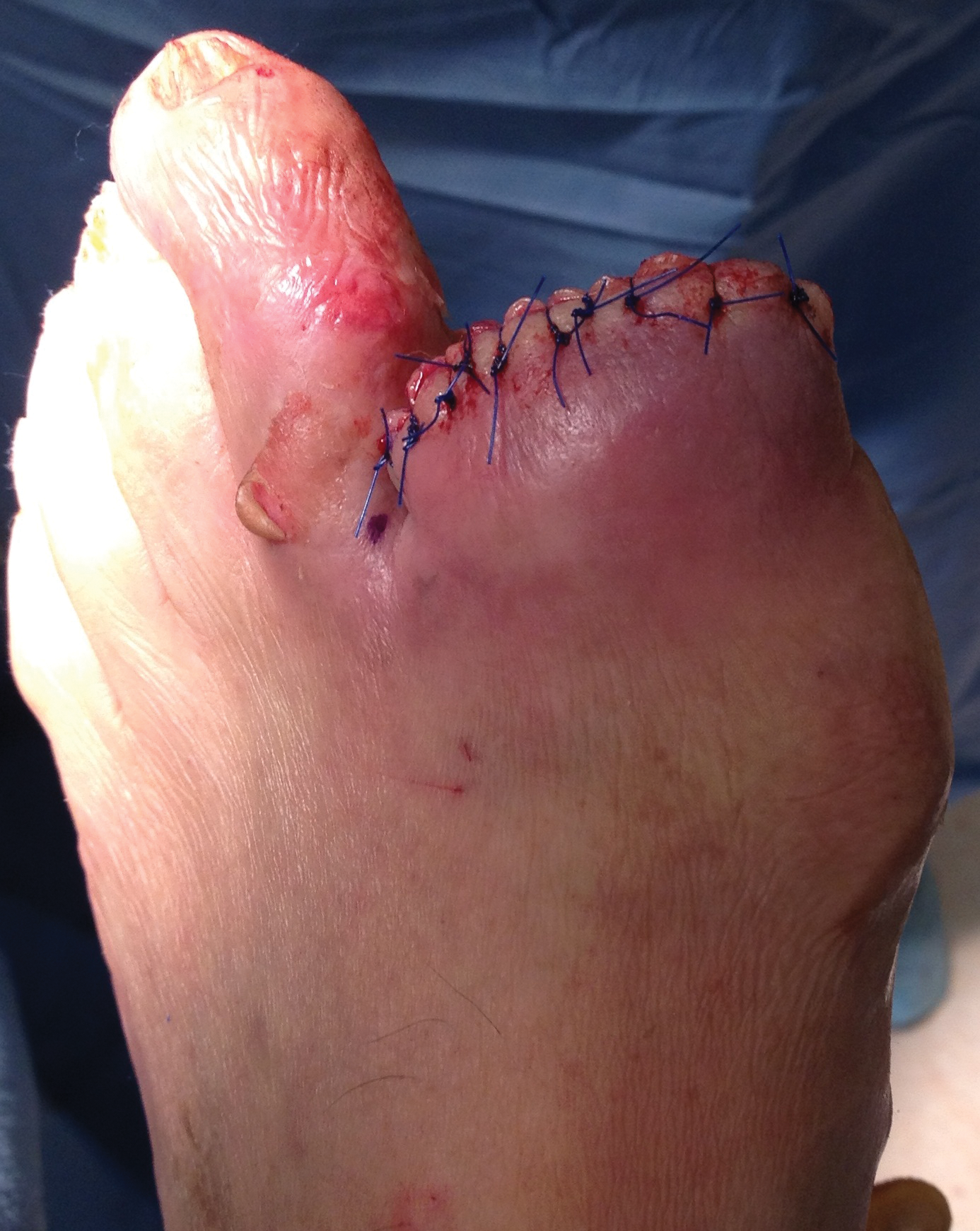
On May 18, 2012, the patient was taken to the operating room. With the patient in the supine position and without a tourniquet, a circumferential incision was made at the level of the interphalangeal joint, being certain to remove the large borders of the visually affected areas. The interphalangeal joint was disarticulated, and the specimen was removed from the operative field (
Fig. 3). The head of the proximal phalanx was then resected and sent for pathologic analysis of the proximal margins. The metatarsophalangeal joint capsule, plantar plate, and sesamoid apparatus were all preserved. Intraoperative cultures were obtained. The wound was then copiously irrigated with antibiotic solution before closure, which consisted of simple, interrupted, full-thickness polypropylene sutures (
Fig. 4). Cultures of the proximal aspect taken before irrigation showed no growth.
Figure 3.
Intraoperative depiction of gross specimens sent for pathologic analysis.
Figure 3.
Intraoperative depiction of gross specimens sent for pathologic analysis.
Figure 4.
Intraoperative appearance after amputation and closure.
Figure 4.
Intraoperative appearance after amputation and closure.
The gross pathology report returned with a description of the two specimens. The first, the left hallux, measured 36 × 32 × 27 mm, with an ulceration on the dorsal surface measuring 36 × 21 × 2 mm, with a viable resection margin. The underlying bone did not seem to be involved. The pathologic diagnosis was high-grade T-cell lymphoma. The second specimen, the proximal margin with the head of the proximal phalanx, was uninvolved. The specimens measured 22 × 17 × 9 mm and 21 × 12 × 3 mm, respectively. The pathologic diagnosis was fibroadipose tissue and bone showing reparative changes with minimal acute inflammation.
Histopathologic Examination
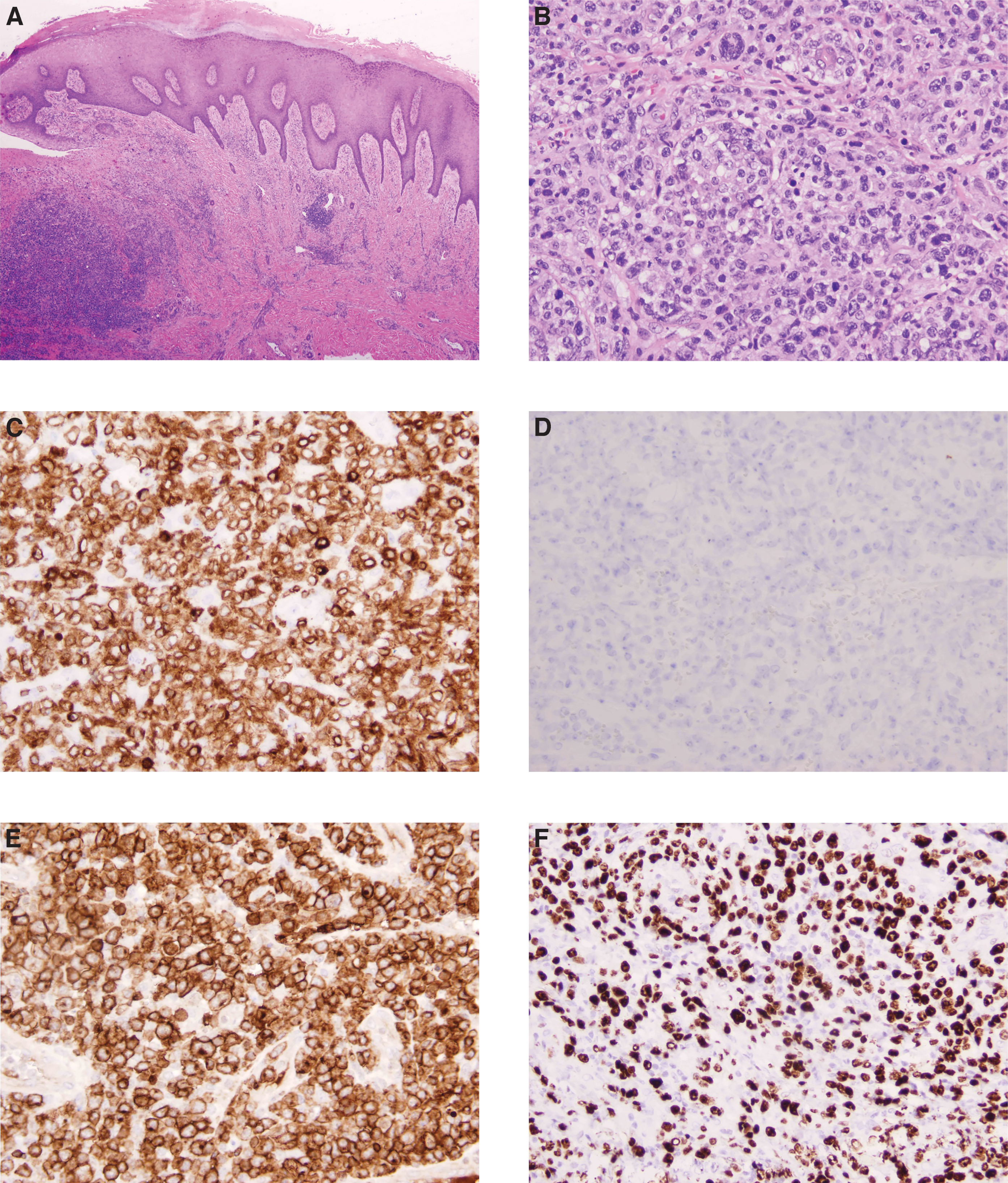
Hematoxylin and eosin–stained sections of the skin ulcer show diffuse dermal infiltration by cohesive sheets and clusters of large pleomorphic cells with sparing of the epidermis (
Fig. 5A). The cells have an irregular nuclear contour, prominent nucleoli, and abundant pale cytoplasm. Occasional cells with kidney-shaped nuclei (the hallmark cells) and multinucleated giant cells with wreath-like arrangement of the nuclei are seen. Cells with Reed-Sternberg–like morphological features are also present. The mitotic activity is brisk (
Fig. 5B). By immunohistochemical stains, the neoplastic cells are of T-cell lineage. They are immunoreactive for T-cell markers CD3 (
Fig. 5C) and CD7 and do not stain with B-cell marker CD20 (
Fig. 5D). There is variable loss of CD2 and CD5, which are normally expressed on nonneoplastic T cells. The cells stain positive for CD4, and although they are negative for CD8, they have an activated phenotype with a subset positive for the cytotoxic proteins granzyme and perforin. The neoplastic T cells also coexpress CD30 (
Fig. 5E). No immunoreactivity with anaplastic lymphoma kinase (ALK) is seen. By Ki-67 (MIB-1) staining, the proliferation index is approximately 70% (
Fig. 5F). A carcinoma is excluded by negative staining with a cytokeratin cocktail. In the context of a mycosis fungoides history, the morphological and immunohistochemical findings support a diagnosis of a CD30
+ large-cell transformation of mycosis fungoides.
Figure 5.
A, Hematoxylin and eosin section of the skin showing a dense dermal lymphoid infiltrate without epidermotropism (x20). B, On higher magnification, the infiltrate is pleomorphic, and most cells have prominent nucleoli and abundant eosinophilic cytoplasm. Hallmark cells and multinucleated giant cells are seen (H&E, x200). C, Lymphoma cells are of T-cell lineage, with strong and diffuse staining for CD3. D, There is no reactivity for B-cell marker CD20. E, The tumor cells coexpress CD30. F, The proliferation index, by MIB-1 staining, is high.
Figure 5.
A, Hematoxylin and eosin section of the skin showing a dense dermal lymphoid infiltrate without epidermotropism (x20). B, On higher magnification, the infiltrate is pleomorphic, and most cells have prominent nucleoli and abundant eosinophilic cytoplasm. Hallmark cells and multinucleated giant cells are seen (H&E, x200). C, Lymphoma cells are of T-cell lineage, with strong and diffuse staining for CD3. D, There is no reactivity for B-cell marker CD20. E, The tumor cells coexpress CD30. F, The proliferation index, by MIB-1 staining, is high.
Oncology Follow-up
The patient healed from his surgical procedure uneventfully and in a timely manner. The patient, originally staged as IA, underwent a more thorough oncology work-up. Given the progression and histological transformation documented microscopically in his left hallux; the development of additional patches and plaques scattered throughout his legs, thighs, flanks, abdomen, and face; as well as recurrent regular night sweats and documented weight loss, his stage increased to IB. Positron emission tomography and computed tomography did not show any internal organ involvement.
He completed a 3-month course of electron beam radiation, 40 Gy to the site of the residual left hallux, which remained healed. He also received brachytherapy, 4 Gy times two fractions to the persistent patches. Repeated biopsies of these remaining patches performed September 12, 2012, showed cutaneous T-cell lymphoma without evidence of transformation. He continued to receive brachytherapy, and he has been taking oral bexarotene (Targretin, Valeant Pharmaceuticals North America LLC, Bridgewater, New Jersey), 150 mg/d, and applying topical corticosteroids (triamcinolone) to no avail for the past 5 months. He continues to have persistent and worsening thick plaques along his face, flank (70-mm plaques with erythematous borders, scaling, and lichenification), hips, calves, and pedal arches. He has also been instructed to spend as much time as possible outdoors to take in UV-B. Repeated biopsies at three different sites along his thigh, back, and flank on April 25, 2013, showed CD30-positive cell transformation. His bexarotene dosage was increased, brachytherapy was resumed, and he has subsequently been transferred to the cutaneous oncology service for continued therapy and initiation of pharmacologic treatment. His left residual hallux remains uninvolved.
Discussion
Non-Hodgkin's lymphoma is not a rare cancer in the United States, especially in adults older than 60 years, and its incidence has steadily been growing during the past 20 years. Although it can present anywhere in the body, it has rarely been reported as manifesting in the foot. Cutaneous T-cell lymphoma is one of the more common types of T-cell non-Hodgkin's lymphoma, and mycosis fungoides is the most frequently encountered form (50%) of this subtype.[
12-
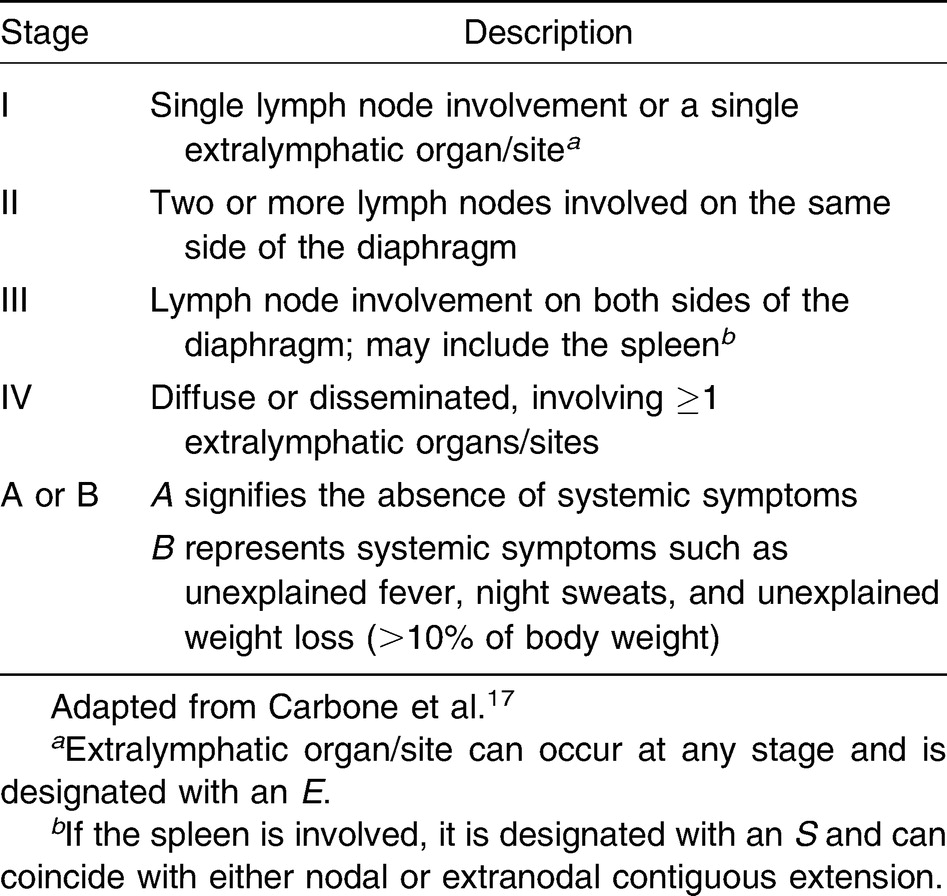
15] Although it is difficult to accurately diagnose the most specific type of B-cell or T-cell non-Hodgkin's lymphoma, this article depicts an extremely rare type of an aggressive, high-grade, transformation of cutaneous T-cell lymphoma involving the distal hallux. One of the most common types of staging classifications for Hodgkin's and non-Hodgkin's lymphomas is from the University of Michigan–Ann Arbor.[
16] There are four stages, and two subclassifications (
Table 1). This patient had an extended history of stage I, biopsy-confirmed cutaneous T-cell lymphoma. This indicates involvement of only a single lymph node region (or extralympatic site). He presented to our service with stage IA but was upgraded to stage IB. Treatment of this cancer is complicated, and along with controlling the cutaneous lesions, chemotherapy has its own systemic adverse effects. It is best to defer treatment of these patients to oncologists who treat similar patients on a regular basis.
Table 1.
Ann Arbor Lymphoma Staging Classification
Table 1.
Ann Arbor Lymphoma Staging Classification
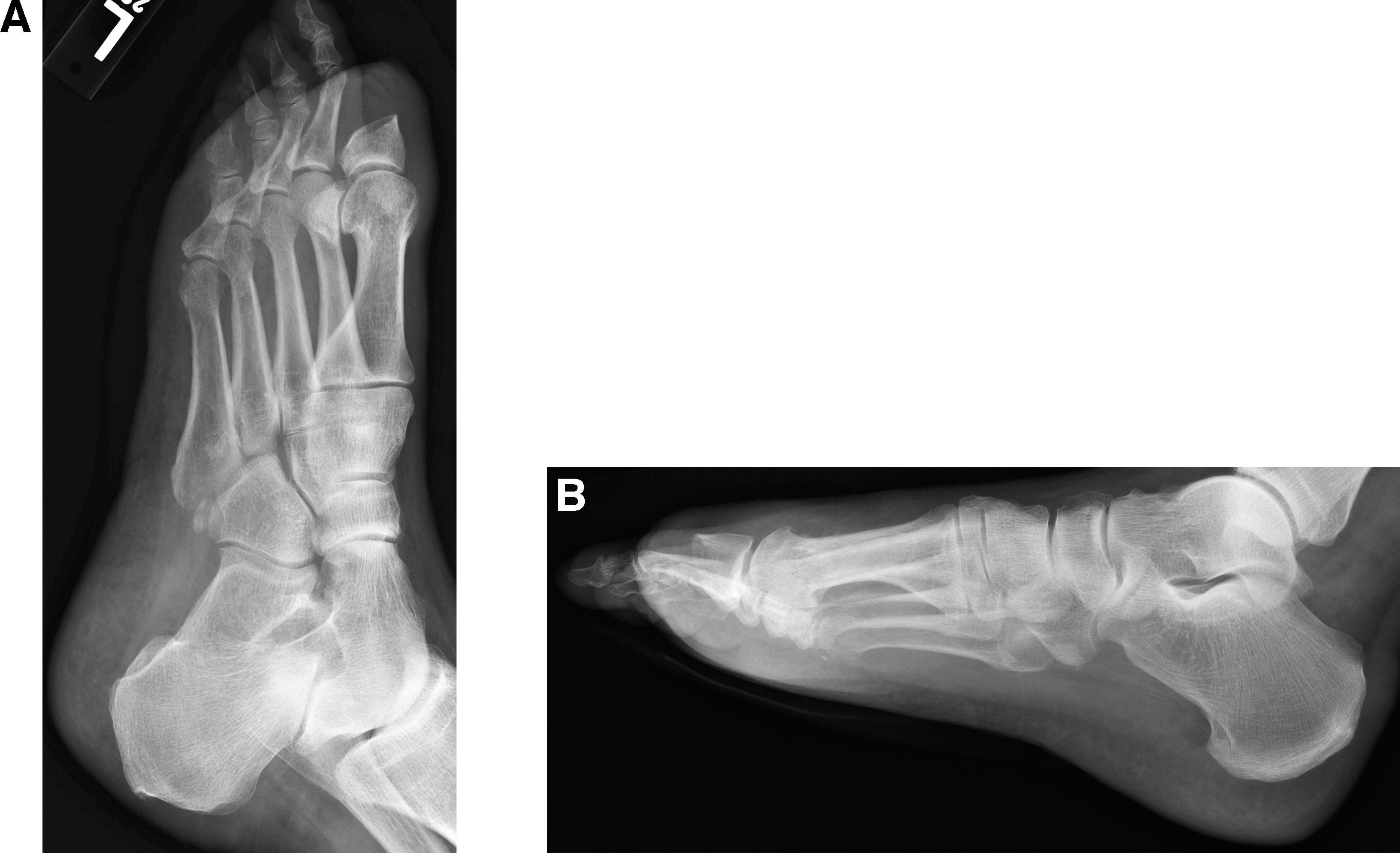
In terms of the surgical management of this patient, it is not clear whether an amputation could have been prevented. Typically, these cutaneous lesions can be treated conservatively, and there are newer medications that target specific expressions of lymphoma. However, amputation was deemed necessary based on the patient's past experiences, the newly aggressive nature of the wound, and the overall high suspicion of malignancy. Surgically, it is important to appreciate the level of resection. Fresh frozen sections may have aided in better preservation of tissue and better understanding of the tumor margins. Once the decision to amputate was made, the level of amputation and the surgical technique were vital. The preservation of the soft-tissue structures composing the metatarsophalangeal joint, when possible, helps preserve the weightbearing function of the metatarsals. Also, the angle of the cut (from distal dorsal to proximal plantar) reduces the risk of a more proximal ulceration in the future by eliminating a plantar bony prominence of the distal stump (
Fig. 6). This gentleman's primary physical activity was golf. After healing and proper shoe modification, he was able to return to the golf course 1 month after surgery.
Figure 6.
A, Postoperative anteroposterior radiograph depicting the level of amputation. B, Postoperative lateral radiograph depicting the angle of the cut.
Figure 6.
A, Postoperative anteroposterior radiograph depicting the level of amputation. B, Postoperative lateral radiograph depicting the angle of the cut.
Conclusions
Foot and ankle specialists should take a thorough history. When treating a patient with wounds, even as ubiquitous as ingrown nails, a patient's medical history can be most revealing, especially when a cutaneous lymphoma is present. Confirmatory biopsy is certainly warranted, especially if proven wound treatments are not successful. Pathologic analysis can determine the gene expression and can guide therapeutic, nonsurgical treatment options. If routine treatments are ineffective or slow to respond, the differential diagnoses should be reevaluated, and seeking a second opinion can be of great value, as proved in this case. The importance of recognition, prompt diagnosis via biopsy, and referral to the appropriate specialist remains the standard of care in questionable lesions of the foot.