Inflammation is a normal and requisite component of successful wound healing. [
1] Neutrophil influx is important for control of microbes through the release of reactive oxygen species and in the degradation of matrix and necrotic material with the production of various proteases. Macrophages recognize and phagocytize apoptotic neutrophils and are thought to be key sources of growth factors. [
2,
3] However, excessive and prolonged inflammation may result in a nonhealing chronic wound. [
4] For wounds failing to progress beyond a chronically inflamed condition, a therapy promoting resolution of the inflammation may be able to facilitate the resumption of healing.
Clostridial collagenases (CCs) have been used for decades for the debridement of burns, [
5,
6] decubitus ulcers, [
7-
9] diabetic foot ulcers, [
10] and venous leg ulcers. [
11] In addition to debridement efficacy, more rapid rates of healing have been observed with the use of CC ointment (CCO) in clinical studies of partial-thickness burn injuries compared with the respective control groups as measured by either median time to healing [
6,
12] or overall decrease in wound size. [
9] Experimental evidence developed since the mid-1990s indicates that CC enzymes can, in addition to their debridement activity, potentiate cellular responses such as proliferation and migration, which are key to wound healing. [
13-
17] It is possible that CCO may help “reset” the conditions in the wound bed, stimulating proliferation and migration of keratinocytes and fibroblasts by rendering the wound bed permissive for migration [
13,
18] or via the release of stimulatory peptide fragments. [
15] Another way that the conditions may be reset is through resolution of inflammation.
Analysis of wound fluid is an attractive way of assessing the overall wound microenvironment in a noninvasive way and can provide clues as to healing or nonhealing status. [
19] We present in vitro and clinical data supporting the notion that CC, or the fragments resulting from its collagenolytic action, can downregulate inflammatory cytokines and proteolytic enzymes, resulting in a microenvironment more favorable to wound healing.
Materials and Methods
Collagens and Collagenase
A CC solution (0.1 mg/mL, 50 mM Tris-buffered saline, pH 7.4) was prepared from the same raw material used to prepare commercial CCO (collagenase Santyl ointment; Smith & Nephew Biotherapeutics, Fort Worth, Texas). Soluble human collagen solutions (types I and III, each 1 mg/mL) (Rockland Immunochemicals, Gilbertsville, Pennsylvania) were brought to neutral pH by the addition of 0.5 N sodium hydroxide. Types I and III collagen digests were prepared by mixing collagen solution 1:1 (vol/vol) with CC solution and allowed to incubate for 24 hours at 37°C. Undigested collagens were treated in the same way except that they were incubated with Tris-buffered saline without collagenase.
Reagents
Enzyme-linked immunosorbent assay kits for the measurement of tumor necrosis factor-α (TNF-α) and interleukin-6 (IL-6) produced by cultured cells were obtained from R&D Systems (Minneapolis, Minnesota). The following MILLIPLEX multi-analyte panel kits were used for analysis and quantitation of the wound exudate analytes: HMMP2-55K, HCVD3-67K, HCVD2-67BK, HTIMP2-54K, HMMP1-55K, SKIN-50K, and TGFβ-64K-03 (EMD Millipore, Billerica, Massachusetts). Plates were read with a Bio-Plex 200 system (Bio-Rad Laboratories, Hercules, California). All other reagents were from Sigma-Aldrich (St. Louis, Missouri) unless otherwise specified.
Cell Cultures
Primary cultures of human THP-1 monocytic leukemia cells were obtained from the ATCC (Manassas, Virginia). Human dermal fibroblasts (adult) were obtained from Life Technologies (Carlsbad, California).
THP-1 cells were cultured in suspension in standard 25-cm2 tissue culture flasks containing RPMI 1640 medium supplemented with 10% fetal bovine serum (both from Life Technologies) and 50 μM 2-mercaptoethanol in a humidified incubator at 37°C with 5% carbon dioxide. Cell density was maintained at 300,000 to 500,000 cells/mL. Before use in experiments, THP-1 cells were activated by adding 4 ng/mL of recombinant human interferon-γ (IFN-γ) (eBioscience, San Diego, California) to the culture media and were incubated overnight. Activated monocytes and untreated controls were plated into 12-well plates at a density of 500,000 cells/mL per well for subsequent experiments.
Human dermal fibroblasts were cultured in medium 106 supplemented with low serum growth supplement (both from Life Technologies), 10 mL/500 mL, and incubated as for the THP-1 cells. Cells at passage 3 or 4 were seeded (100,000 cells/mL per well) in serum-free medium in 12-well plates incubated overnight before experimental manipulation.
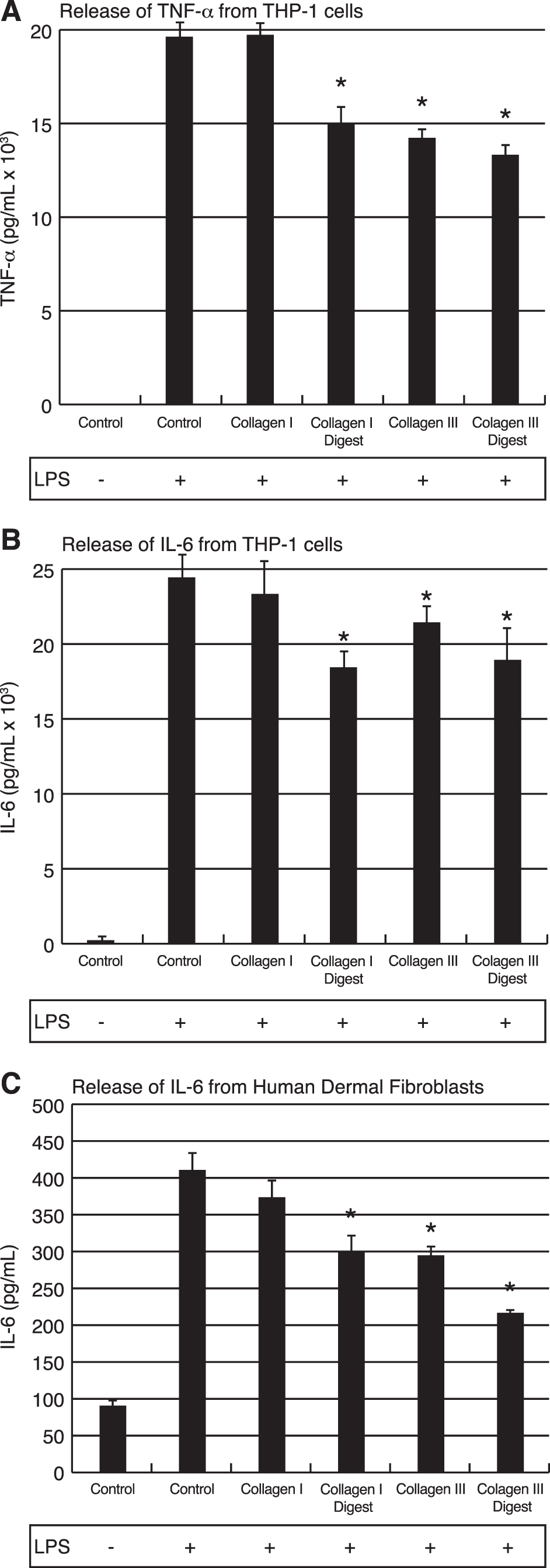
THP-1 or human dermal fibroblast cells were incubated for 1 hour at 37°C with type I collagen, type III collagen, type I collagen digest, type III collagen digest, or CC (all at 100 μL per well) or were untreated. These cells were then challenged with 100 μL of lipopolysaccharide (LPS) at 50 μg/mL for 24 hours. Each treatment was performed in duplicate. An additional two wells containing only cells and medium were left untreated (no LPS). Media from each well were then collected and centrifuged, retaining the supernatant for quantitation of TNF-α and IL-6 concentrations.
Clinical Study: Ethical Considerations
This study was performed in compliance with the ethical principles of the Declaration of Helsinki and Good Clinical Practice and is registered with ClinicalTrials.gov (NCT01143727). The study was reviewed and approved by Western Institutional Review Board (Olympia, Washington), and all of the participants read, signed, and dated the institutional review board–approved consent form before taking part in any study activity.
Study Design
This was a prospective, randomized, open-label study conducted between January and October 2011 at the private podiatric medical practice of the first author (R.C.G.) in Dallas, Texas. Although a double-blind design would have been preferred, a comparative test of CC and a purportedly autolytic treatment made such a design impractical owing to obvious differences in the appearance of the products. At the screening visit, participant eligibility for the study was determined. At the next visit (visit 1, baseline), qualified participants were randomized 1:1 to receive CCO or hydrogel (Tegaderm hydrogel; 3M, St. Paul, Minnesota). Treatment allocation bias was prevented by using a call center for randomization; the investigator did not know in advance which treatment would be assigned to each individual. Once randomized, blood and baseline wound fluid samples were collected, followed by excisional removal of callus if indicated. Sharp debridement of the wound bed itself was not permitted at any visit. Each treatment was applied daily for 4 weeks, covered with a nonadherent dressing (Allevyn; Smith & Nephew, Hull, England), and held in place with a self-adherent wrap (Coban; 3M). The dressings were appropriately padded to avoid constriction. Participants were supplied with an off-loading shoe (Darco MedSurg shoe; DARCO International, Huntington, West Virginia) to wear when ambulatory. Weekly visits were made during the next 4 weeks for evaluation of wound appearance and wound area. Wound fluid samples were collected after 2 and 4 weeks of treatment. After the final visit (visit 5) at the end of 4 weeks of treatment, participants were discharged from the trial.
Participant Population: Inclusion Criteria
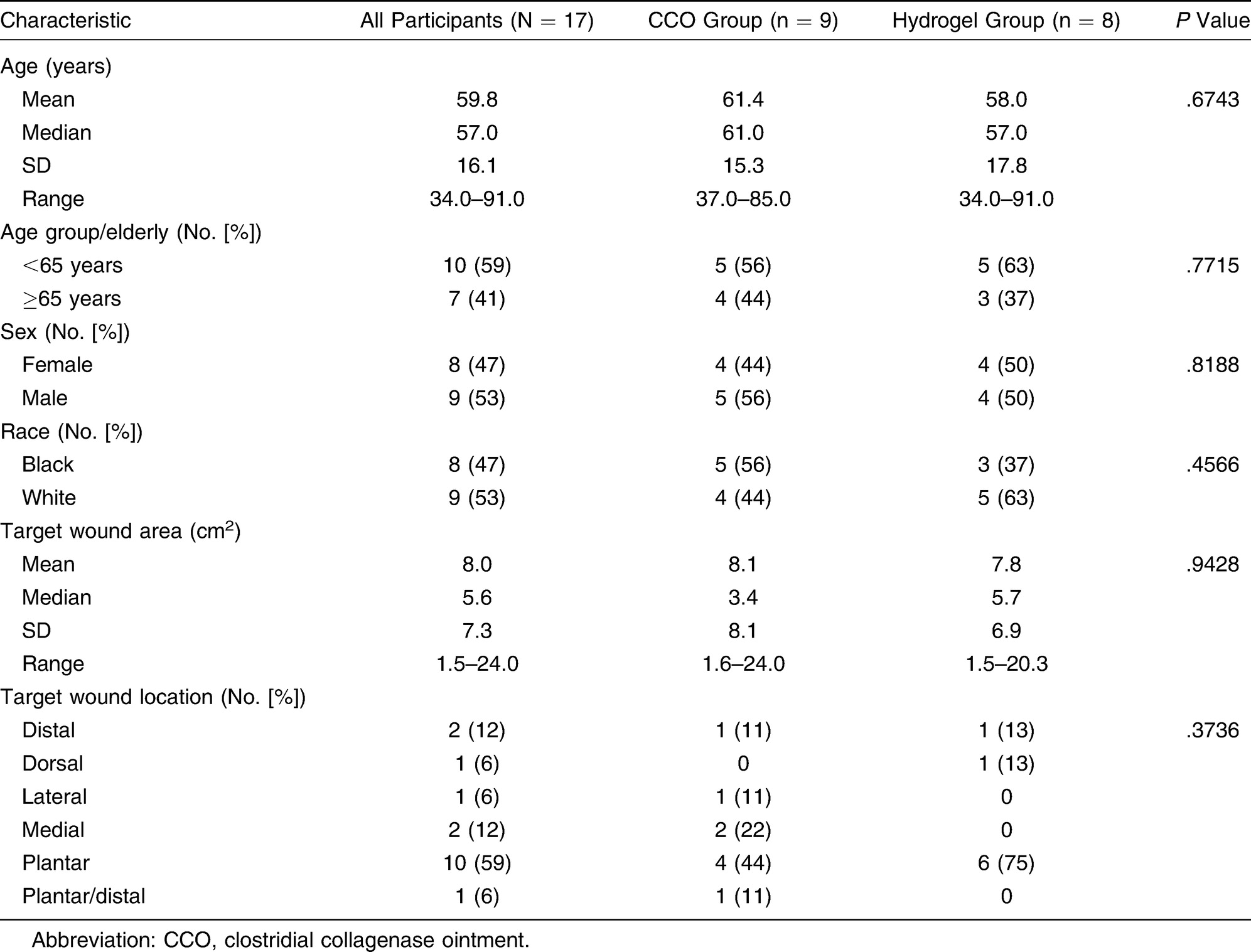
To qualify for this study, individuals must have had type 1 or 2 diabetes mellitus requiring medication to control blood glucose levels and adequate arterial blood flow to the affected foot (ankle brachial index, 0.7–1.1, inclusive). The diabetic foot ulcer must have been sufficiently moist to collect wound fluid using a filter paper disc, with an area of 1.5 cm2 or greater and a grade 1 or 2 on the Wagner classification scale (superficial to deep, without osteitis, abcess, or osteomyelitis). The appearance of the wound and periwound must have been consistent with mild inflammation (wound bed infection/inflammation grade 1 [inflamed] or 2 [mild infection]20) and not responded to treatment in the last 30 days. All 17 ulcers enrolled in this study were Wagner grade 1. Eight of 17 ulcers were grade 2 on the wound bed infection/inflammation scale, and nine were grade 1.
Wound Assessment and Measurement
An eight-category assessment tool derived from the Bates-Jensen Wound Assessment Tool (
http://www.geronet.med.ucla.edu/centers/borun/modules/Pressure_ulcer_prevention/step3e.htm) was used to collect information about the wound bed appearance, including wound edge, wound undermining, necrotic tissue type, necrotic tissue amount, exudate type, exudate amount, skin color surrounding the wound, and granulation tissue. Each subscale had a possible score of 1 (intact skin) through 5 (worst possible rating). The total score could, thus, range from 8 to 40.
Wounds were photographed and measured using the SilhouetteMobile digital wound imaging and management system (ARANZ Medical, Christchurch, New Zealand). Manual measurement (greatest length × greatest width) was used for a single participant with a toe wound that could not be measured using the ARANZ device.
Exudate Collection
Before collecting wound exudate, ulcers were gently cleansed of study medication with mild surfactant and water and of wound exudates by flushing with saline. Excess saline was blotted with gauze. If the individual was not well hydrated and had no fluid restrictions, water was offered (500 mL) approximately 15 min before collecting wound fluid.
The participant's foot was placed in a dependent position, and one 9-mm antibiotic assay disc (Whatman/GE Healthcare, Waukesha, Wisconsin) was placed on the most exudative area of the wound bed with sterile forceps. When fully saturated, the disc was removed from the ulcer and was placed into a tube containing 300 μL of phosphate-buffered saline containing a protease inhibitor cocktail (Complete EDTA-free tablets; Roche Applied Science, Branford, Connecticut). The tubes were stored in a −20°C freezer at the clinic pending transport (on ice) to the laboratory. Tubes were centrifuged at 14,000 × g for 10 min at 4°C. The supernatant was stored at −80°C until analysis.
Exudate Analysis
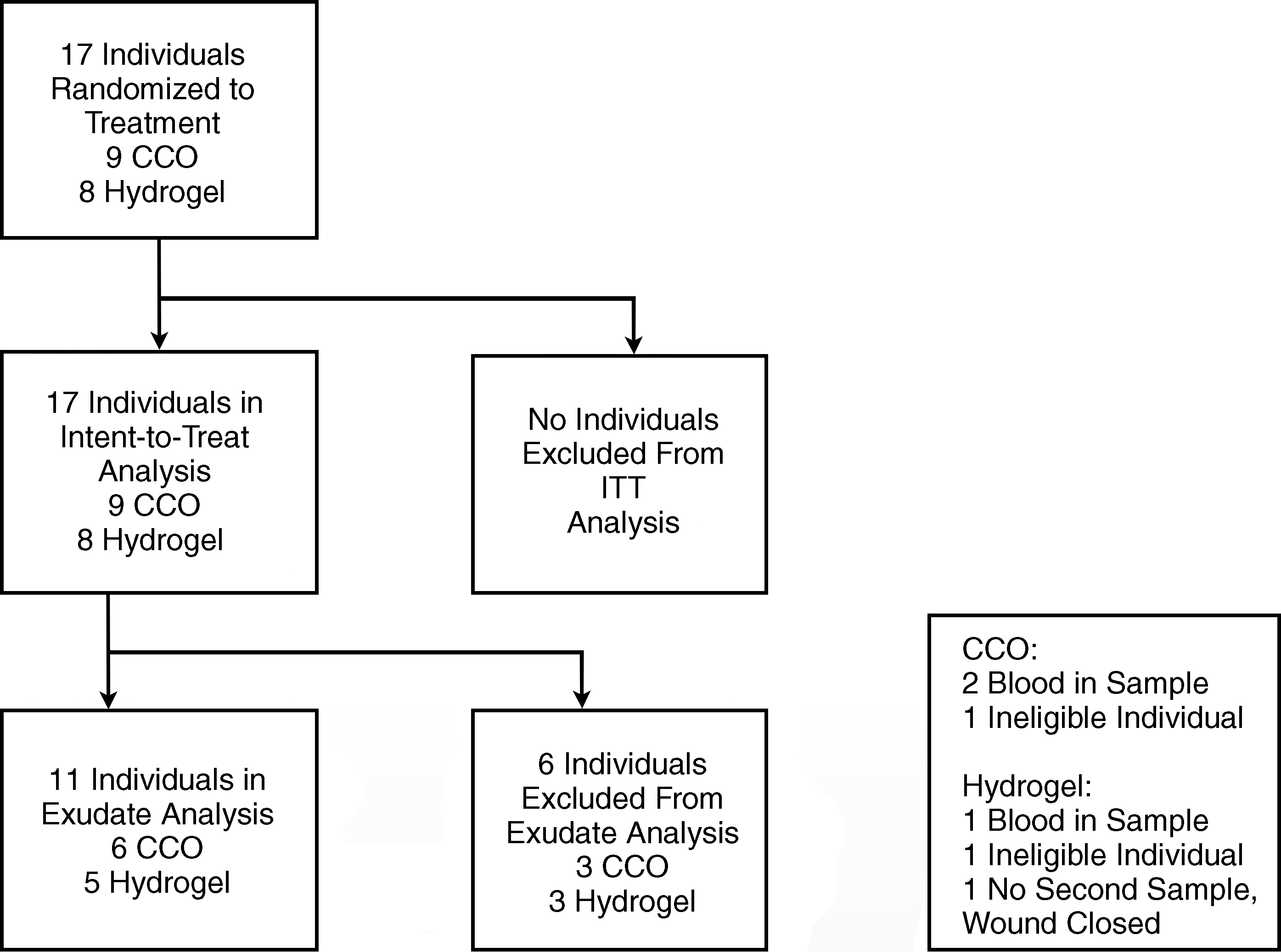
Total protein was measured using the bicinchoninic acid assay (Pierce, Rockford, Illinois) using bovine serum albumen as the standard. Samples were normalized to the same total protein concentration and were analyzed for 22 different analytes (
Table 1). These analytes were categorized a priori as being associated with either inflammation or resolution of inflammation based on the published literature. [
21-
26] All of the exudate samples were identified by participant number only; the analyst was not provided with treatment group assignments.
Table 1.
Wound Fluid Analytes
Table 1.
Wound Fluid Analytes
Data and Statistical Analysis
This was an exploratory clinical study; therefore, sample size was arbitrarily set at up to 20 evaluable participants. The primary efficacy analyses were performed, separately, on the wound status total score and each subscale score obtained at each of the 4 postbaseline treatment weeks using a mixed-effects analysis of covariance for the intention-to-treat (ITT) population. The mixed-effects model used SAS PROC MIXED (SAS Institute Inc, Chicago, Illinois) to perform the analysis and define treatment (CCO versus hydrogel) and treatment week (4 weeks) as well as their interaction as fixed effects, with participant as a random effect. The corresponding wound status score at baseline was used as a covariate. The option of variance components was used to define the covariance structure of the model.
Before conducting the analysis, missing values at each of the 4 weeks due to wound healing, early termination, or any other reasons were imputed, using the last observation carried forward, for each individual in the ITT population.
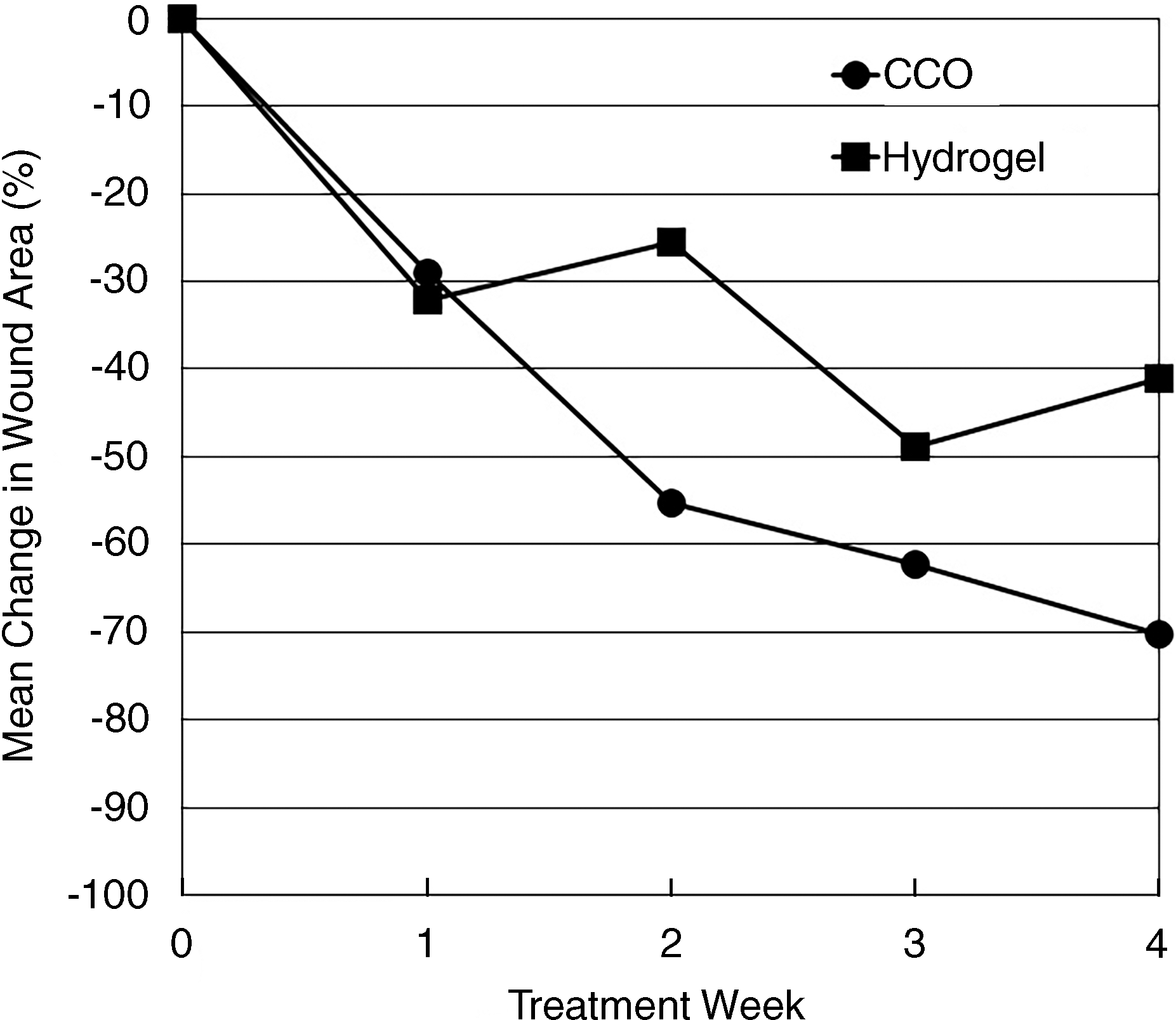
The same mixed-effects model used for the primary efficacy analysis was also used to evaluate the percentage of change from baseline in wound area obtained at each of the 4 postbaseline treatment weeks for the ITT population.
Depending on the analyte, actual concentrations may be measured in nanograms per milliliter or picomoles per milliliter. Therefore, to fairly evaluate the changes in the levels of the various wound exudate analytes, a categorical value of −1, 0, or +1 was assigned to each analyte, for each participant, representing, respectively, a twofold or greater decrease, less than a twofold change (decrease or increase), and a twofold or greater increase between the two samples. These change indices were compared between treatment groups in two ways. First,
t tests were used for the entire set of analytes. Second, multivariate analysis of variance testing of scores was performed on a subset of the analytes (
Table 1). A subset was used because the number of participants was too small to permit a multivariate analysis of variance on the full set of analytes. An effort was made to minimize interdependencies in the subset.
Discussion
Wound healing is a coordinated process involving a variety of cell populations that interact with each other and the extracellular matrix. These interactions are orchestrated by numerous biological factors, including growth factors, cytokines, proteinases, and adhesion molecules. [
27] Oversecretion of pro-inflammatory mediators, such as TNF-α, IL-1, and IL-6, is a hallmark of diabetes. The sustained hyperglycemia and consequent exposure to cytotoxic advanced glycation endproducts exacerbates the state of chronic inflammation [
28] impeding granulation and healing.
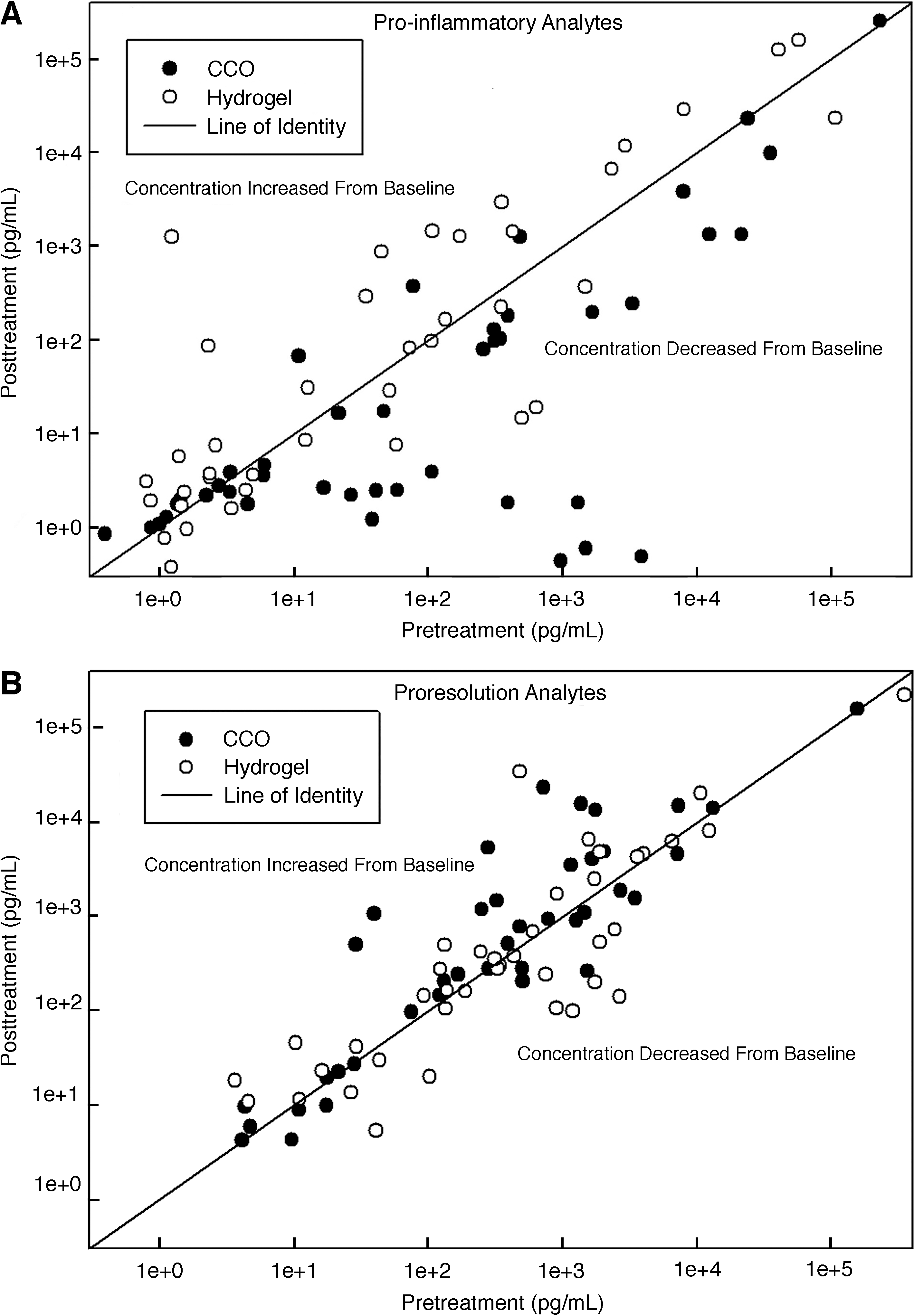
The present in vitro data show that in differentiated THP-1 monocytes, collagenase-digested collagens suppressed LPS-induced release of TNF-α and IL-6. Collagenase itself also displayed an inhibitory effect on TNF-α secretion (data not shown). The human dermal fibroblast cells displayed very similar effects on IL-6 to the activated THP-1 cells. These data align with our clinical findings showing decreases in pro-inflammatory wound fluid analytes (including TNF-α and IL-6) after 2 to 4 weeks of treatment with CCO but not with hydrogel. Taken together, it is reasonable to speculate that the action of CC on extracellular matrix releases matrikines, with the downstream effect lowering the production of pro-inflammatory mediators.
It is an accepted tenet of wound healing that a moist environment promotes healing. Hydrogel dressings, such as those used in the present study, are commonly used for this reason. [
29] Although this can be an effective strategy in normal and acute wounds, it may be less useful in the chronic wound environment, where deregulated production and excessive activity of endogenous proteases has been suggested to be a relevant factor contributing to the nonhealing nature of diabetic [
28,
30] and other chronic wounds. [
30] Hydrogel dressings have no inherent activity beyond providing moisture. It is, thus, not surprising that application of hydrogel did little in the present study to resolve inflammation and progress healing of mildly inflamed diabetic foot ulcers. Conversely, diabetic foot ulcers treated with CCO were generally less inflamed after treatment, as indicated by overall decreasing levels of pro-inflammatory factors and increasing levels of pro-resolution factors. This finding supports the idea that the action of CC on collagen and other extracellular matrix proteins produces specific peptide fragments with biological activity. Previous literature reports have shown that these biological effects include induction of cellular proliferation and migration. [
13-
15] In vitro and clinical results from the present study suggest that modulation of inflammation may also be an important mechanism of CC action. An alternative explanation for the decreased levels of pro-inflammatory factors after treatment with CCO is that these proteins were simply digested by the collagenase. This hypothesis seems unlikely for two reasons. First, collagen is a much higher-affinity substrate for CC than noncollagenous proteins and has an absolute abundance in the wound bed that is much higher than for the cytokines and proteases evaluated here. Second, to accept the idea that the proteolytic activity of collagenase was directly responsible for diminished levels of the pro-inflammatory proteins, one would also have to postulate that the resolution of inflammation proteins was somehow not subject to enzymatic attack.
The value of these studies lies not only in the additional light shed on the mechanism of action of CCO but also as a first step in the use of wound exudate biomarkers as correlates to healing [
31] and to evaluate the efficacy of a therapeutic intervention. [
27] Although the present study does not provide a diagnostic “road map” directing the course of treatment, it does provide additional data regarding the biochemical environment of inflamed wounds that may be useful for future development of such a tool. A strength of this study is that in vitro and clinical data were brought to bear as distinct approaches to test the hypothesis that CCO can promote the resolution of inflammation. A limitation of the in vitro study was that proteolytic digests resulting from the action of non-CC proteases were not evaluated. Nevertheless, human collagenase was present in vivo and was not associated with resolution of inflammation, whereas debridement with CC was. In this study, both treatments (ie, CCO and hydrogel) were used alone without sharp debridement. We acknowledge that this represents a departure from what would be routine in a clinical setting. However, clinical research and standard medical practice are not the same. The goal was to assess the biochemical environment of the mildly inflamed diabetic foot ulcer before, during, and after treatment with CC or with a passive comparator (hydrogel). Allowing sharp debridement either at baseline or during this treatment period would have made interpretation of the results (ie, the effect of collagenase) much more difficult, if not impossible, because of participant variation in the aggressiveness/thoroughness of the debridement and because the cellular environment in the wound bed would be substantially altered by an agent not under study (the scalpel). Limitations of the clinical study were the small clinical sample size, the loss of some exudate samples due to contamination by blood, and the interdependencies between some of the analytes. Nevertheless, sufficient evaluable samples were obtained to reveal an overall trend of inflammation resolution after treatment with CCO and the overall relationship of inflammation resolution to reduction in ulcer area.