Next Article in Journal
A Postaxial Polydactyly with a Partial Duplication of the Fifth Metatarsal Without a Supernumerary Digit. Is Excision of the Duplicated Metatarsal Necessary?
Previous Article in Journal
Linezolid-Associated Serotonin Syndrome. A Report of Two Cases
 
 
Journal of the American Podiatric Medical Association is published by MDPI from Volume 116 Issue 1 (2026). Previous articles were published by another publisher in Open Access under a CC-BY (or CC-BY-NC-ND) licence, and they are hosted by MDPI on mdpi.com as a courtesy and upon agreement with American Podiatric Medical Association.
Article

Giant Cell Tumor of the Tendon Sheath Around the Foot and Ankle. A Report of Three Cases and a Literature Review

by
Gauresh Vargaonkar
1,
Vikramadittya Singh
1,
Sumit Arora
2,*,
Abhishek Kashyap
1,
Vikas Gupta
1,
Geetika Khanna
1 and
Ramesh Kumar
1
1
Central Institute of Orthopaedics, Vardhman Mahavir Medical College and Safdarjung Hospital, New Delhi, India
2
Department of Orthopaedic Surgery, Lok Nayak Hospital, Maulana Azad Medical College, New Delhi, 110002, India
*
Author to whom correspondence should be addressed.
J. Am. Podiatr. Med. Assoc. 2015, 105(3), 249-254; https://doi.org/10.7547/0003-0538-105.3.249

Published: 1 May 2015

Abstract

The foot and ankle are rare sites of involvement for giant cell tumor of tendon sheath. We present three rare cases of giant cell tumor of tendon sheath arising from the tendon sheaths of the flexor hallucis longus, peroneus brevis, and extensor hallucis brevis tendons, along with a literature review of such cases in the foot and ankle region. All of the patients were treated with surgical excision of the mass and were asymptomatic after minimum follow-up of 18 months. Giant cell tumor of tendon sheath involving the foot and ankle region is a rare clinical entity, and good results can be expected after surgical excision.

Giant cell tumor of tendon sheath (GCT-TS) is a slow-growing soft-tissue tumor. The terms tenosynovial giant cell tumor, florid synovitis, extra-articular pigmented villonodular synovitis, pigmented villonodular bursitis, and pigmented nodular synovitis of tendon sheath have been used in the literature interchangeably. It affects 30- to 50-year-old individuals, and women are involved more often than men. [1] It has been considered to be a result of inflammation from chronic antigenic stimulation, reactive synovial proliferation of the tendon sheath and joint, or a lesion of monocyte/macrophage derivation. [2,3] The GCT-TS of the hand, especially of the flexor sheaths of the fingers, is a well-described entity, and up to 44% of the lesions may recur after excision. [4] The literature on GCT-TS arising from the foot and ankle region is sparse. We present three rare cases of GCT-TS arising from the tendon sheaths of the flexor hallucis longus, peroneus brevis, and extensor hallucis brevis tendons, along with a literature review of such cases in the foot and ankle region.

Case Reports

Written informed consent was obtained from all three of the patients authorizing radiologic and photographic documentation, and they were also informed that data concerning the cases might be published in print or electronic form.

Case 1

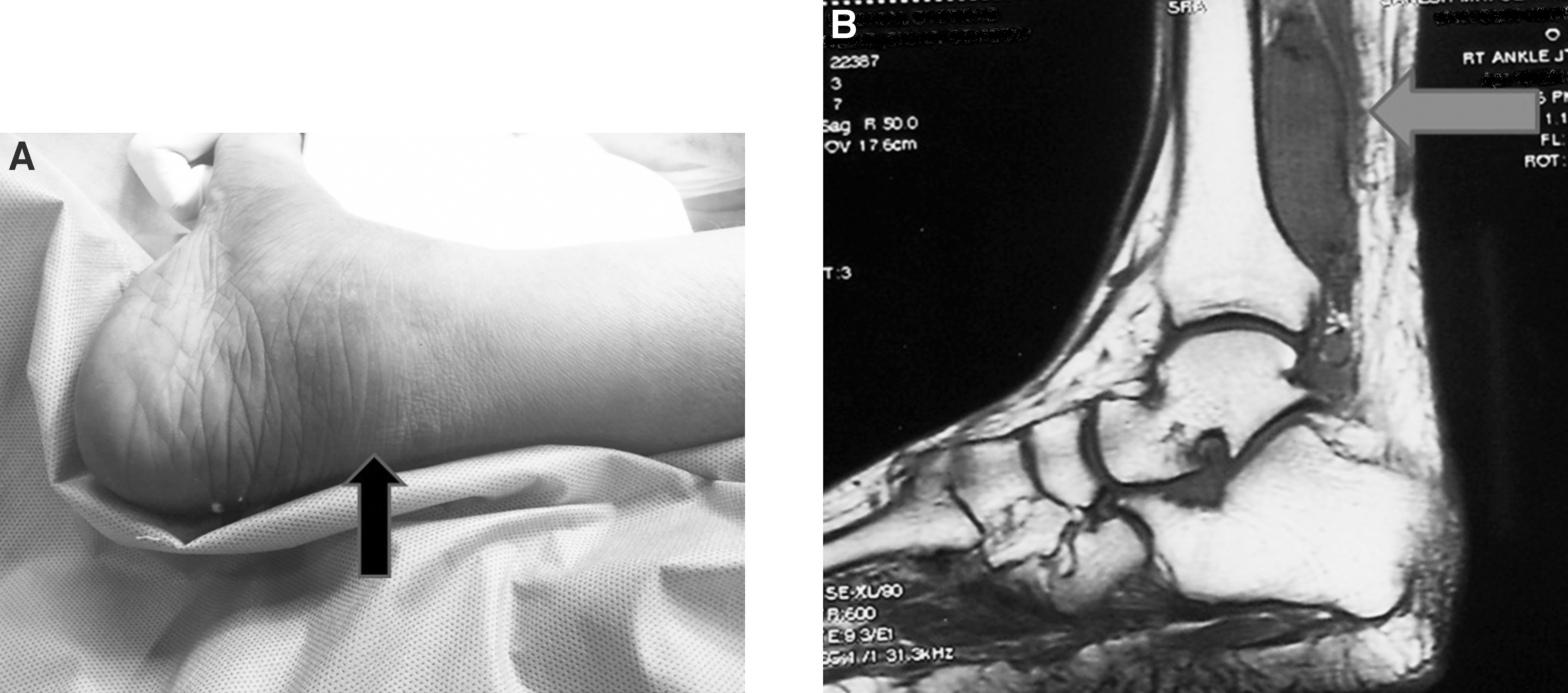
A 45-year-old woman presented with a soft-tissue mass along the medial aspect of the right ankle (Fig. 1A). It was associated with a dull-aching pain that aggravated on walking and prolonged standing and improved on taking rest and oral medication. The pain worsened at night. The mass gradually progressed in size over 5 years. There was no history of trauma. Physical examination revealed a soft-tissue mass on the medial aspect of her right ankle just posterior to the medial malleolus. The mass was firm to palpate and mildly tender. The temperature of the overlying skin was comparable with that of other body parts. The mass was free from the overlying skin. The margins were well defined. Ankle radiographs were noncontributory. Magnetic resonance imaging (MRI) of the ankle revealed a distinct soft-tissue mass over the medial aspect of the ankle that had extension to the myotendinous junction of the flexor hallucis longus tendon; it measured 8.1 × 3.8 × 3.2 cm in greatest dimensions (Fig. 1B). The patient was prepared for excisional biopsy. Intraoperatively, a posteromedial ankle incision approximately 10 cm long centered over the mass was performed. A brownish mass was seen encapsulating the flexor hallucis longus tendon extending from the tarsal tunnel distally to the myotendinous junction of the muscle proximally. After circumferential dissection, the lesion was resected in toto. Primary closure was performed after drain placement. The postoperative period was uneventful. The histopathologic features were consistent with GCT-TS. The patient was given a below-the-knee plaster cast until suture removal at 2 weeks. She was asymptomatic when last seen at 27 months' follow-up.
Figure 1. Case 1: 45-year-old female patient. A, Clinical photograph showing a swelling (arrow) over the medial aspect of the distal leg just proximal to the ankle. B, T1-weighted sagittal view magnetic resonance image showing a distinct soft-tissue mass (arrow) over the medial aspect of the distal leg extending into the myotendinous junction of the flexor hallucis longus tendon.
Japma 105 00249 g001

Case 2

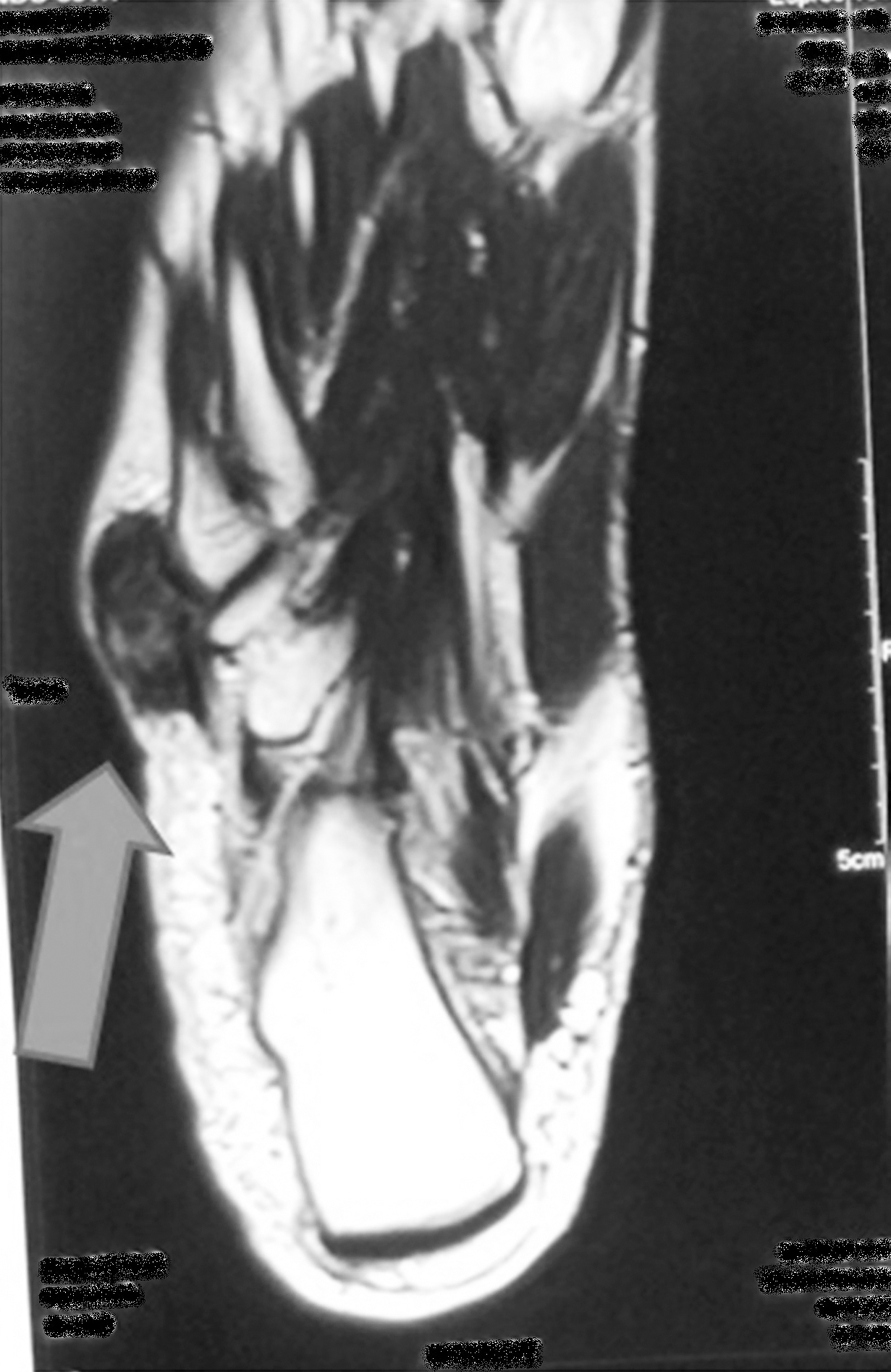
A 32-year-old woman presented with a painless mass over the lateral aspect of her right foot for the past 6 years. It was slowly progressing in size and was approximately 4 cm in diameter at the time of presentation. There was no history of trauma. On examination, the mass was localized over the lateral aspect of the right foot and measured approximately 4 × 3 cm (Fig. 2). It was firm in consistency, and the margins were well defined. The surface was smooth. The overlying skin was free from the mass. The radiographs of the foot showed no obvious abnormality except an increased soft-tissue shadow over the lateral aspect of the foot. An MRI of the foot revealed a well-defined mass along the subcutaneous fat planes on the lateral aspect of foot at the level of the fifth tarsometatarsal joint closely abutting the peroneus brevis tendon. It measured 35 × 28 × 16 mm in greatest dimensions. The lesion was isointense to muscles on T1-weighted images and heterogeneously hyperintense on T2-weighted/short tau inversion recovery images. All of the surrounding soft tissues and bones showed normal signal intensity patterns. A presumptive diagnosis of GCT-TS of the peroneus brevis tendon was made, and the patient was prepared for excisional biopsy. An incision was made on the lateral aspect of the foot centered over the mass. A grayish-white lobulated mass was seen encapsulating the peroneus brevis tendon extending just distal to the inferior peroneal retinaculum to the fifth tarsometatarsal joint. It was removed en bloc, taking care not to damage the tendon or sural nerve. The incision was closed over a drain, and a below-the-knee plaster cast was applied until suture removal. The histopathologic features were consistent with GCT-TS. She was asymptomatic when last seen at 24 months' follow-up.
Figure 2. Case 2: 32-year-old woman. T1-weighted magnetic resonance image of the foot showing a well-defined mass (isointense to muscles) (arrow) on the lateral aspect of the foot at the level of the fifth tarsometatarsal joint closely abutting the peroneus brevis tendon.
Japma 105 00249 g002

Case 3

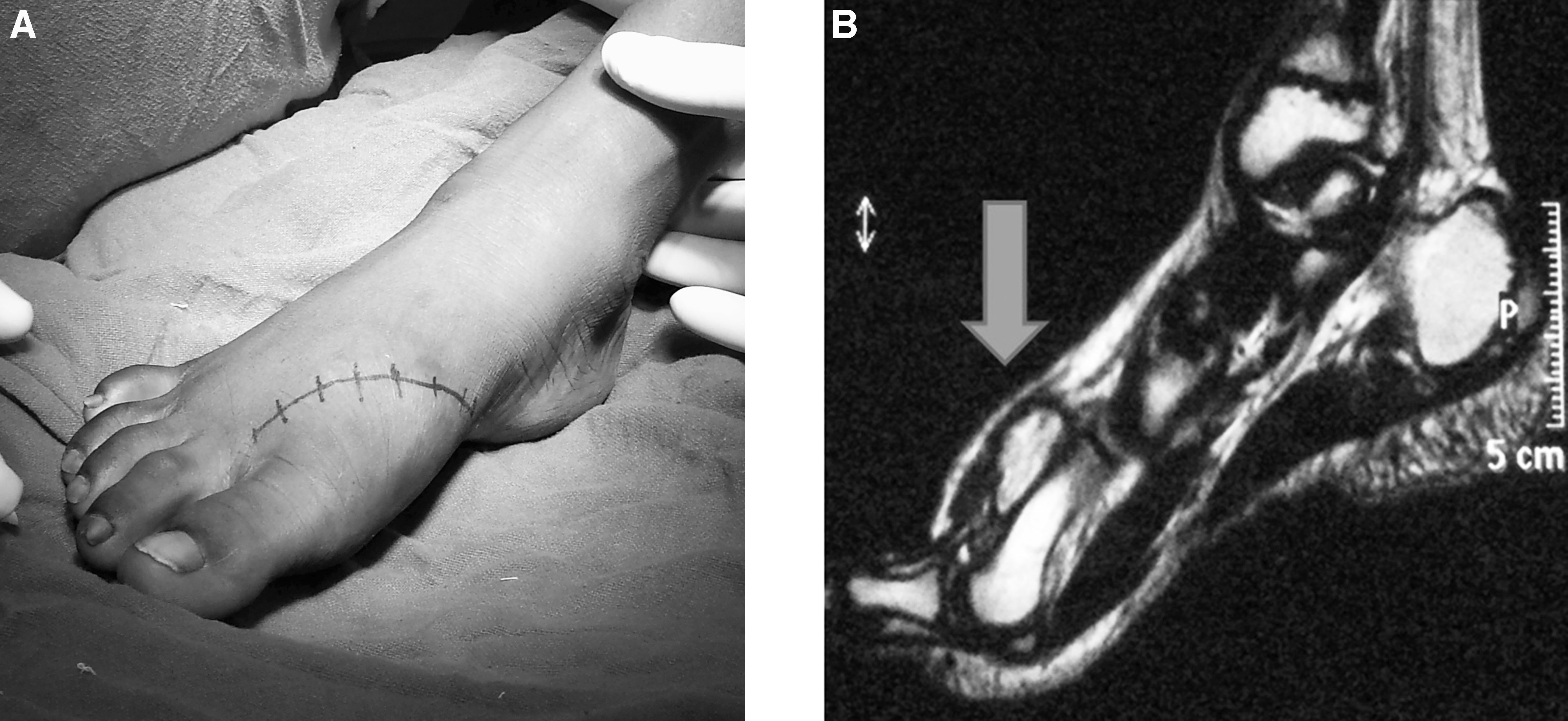
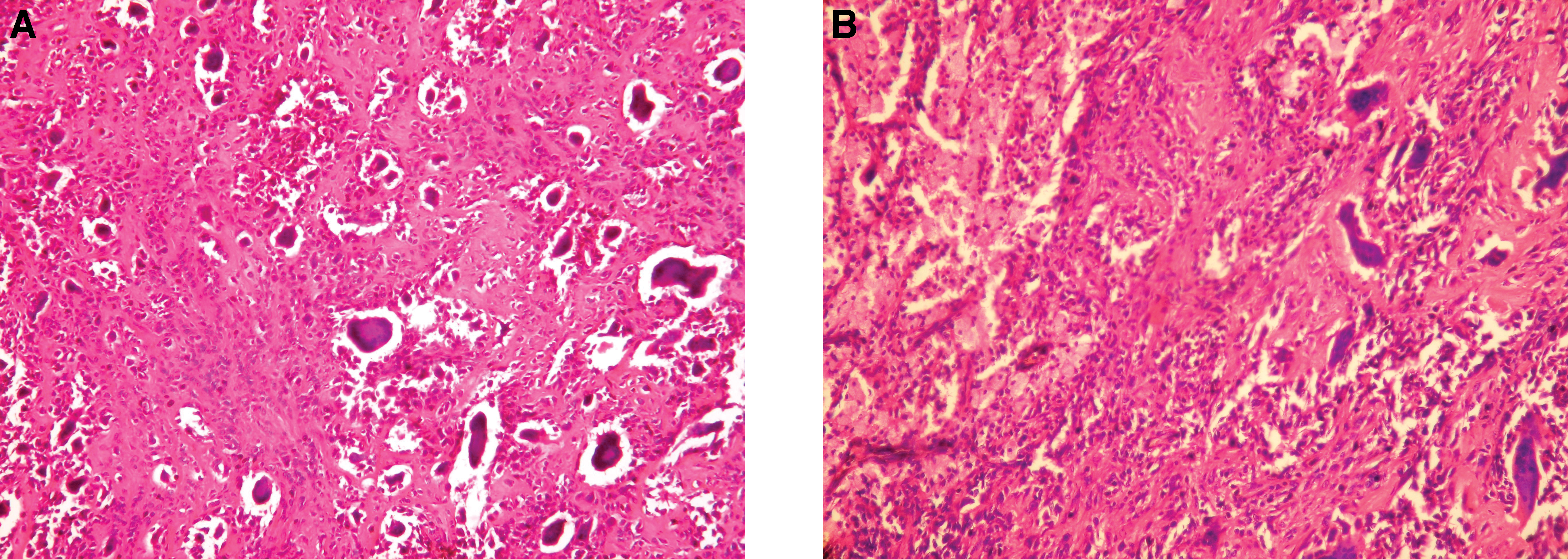
A 13-year-old boy presented with a soft-tissue mass along the medial aspect of the right foot at the level of the first metatarsal that was extending into the first web space (Fig. 3A). It was associated with a dull-aching pain on walking and prolonged standing. It improved on taking rest and oral medication. There was no diurnal variation. The mass gradually progressed in size over 3 years. There was no history of trauma. Physical examination revealed a soft-tissue mass on the medial aspect of the first metatarsal extending into the first web space, and it measured 6.5 × 3.5 cm on palpation. It was firm to palpate and mildly tender. The temperature of the overlying skin was normal. The mass was free from the overlying skin. The margins were well defined. Foot radiographs were noncontributory except for the increased soft-tissue swelling. An MRI of the foot revealed a distinct soft-tissue mass over the medial aspect of the first metatarsal in the tendon sheath of the extensor hallucis brevis measuring 5.1 × 2.8 × 2.2 cm in greatest dimensions (Fig. 3B). The patient was prepared for excisional biopsy. Intraoperatively, a curvilinear incision was made centered over the mass. The mass was seen encapsulating the tendon sheath of the extensor hallucis brevis and longus tendons and extending into the first web space. After circumferential dissection, the mass was excised. Primary closure was performed after placement of a drain. The histopathologic features were consistent with GCT-TS (Fig. 4). Marginal necrosis of the stitch line observed on postoperative dressing responded to serial dressings. The patient was asymptomatic when last seen at 18 months' follow-up.
Figure 3. Case 3: 13-year-old boy. A, Clinical photograph showing swelling over the first metatarsal extending into the first web space. B, T1-weighted sagittal view magnetic resonance image of the foot showing a well-defined mass (arrow) at the level of the first metatarsal closely abutting the tendons of the extensor hallucis brevis and longus tendons.
Japma 105 00249 g003
Figure 4. Case 3: 13-year-old boy. A, Photomicrograph showing sheets of histiocytoid cells with abundant eosinophilic cytoplasm and eccentric vesicular nuclei interspersed with multinucleated giant cells. Zones of fibrosis at places resembling osteoid are also seen (H&E, x200). B, Photomicrograph showing numerous multinucleated giant cells in a background of proliferating synovial-like mononuclear cells, foam cells, inflammatory cells, and areas of hyalinization (H&E, x200).
Japma 105 00249 g004

Discussion

Giant cell tumors of tendon sheath are benign soft-tissue tumors of the extremities that arise from the tendon sheath and periarticular soft tissues of small joints. They occur most commonly in the upper extremity, especially the fingers, but very rarely in the ankle and foot region, although it is the second most common site. The presenting concern is usually a painless, slow-growing mass in the vicinity of the peripheral joints. Additional symptoms, such as pain, limitation of motion, or joint swelling, may suggest involvement of or pressure on the adjacent structures. [5] Foot and ankle MRI may help in the anatomical assessment of the soft-tissue tumors and may be incorporated into the preoperative work-up. [6] In the present report, the patients presented with slow-growing, slightly painful, firm masses around the foot and ankle. Preoperative MRI suggested the diagnosis of GCT-TS in all of the patients, which was confirmed on histopathologic analysis. Histopathologic examination revealed sheets of histiocytoid cells with abundant eosinophilic cytoplasm and eccentric vesicular nuclei interspersed with multinucleated giant cells in a background of proliferating synovial-like mononuclear cells, foam cells, inflammatory cells, and areas of hyalinization.
It has been suggested that complete surgical excision should be performed to reduce local recurrence of the tumor [2,7,8] as recurrence rates reported in the literature vary from 4% to 44%. [9-13] It is imperative to know the anatomy of the tumor, and surgical incision should be planned accordingly that allows the surgeon to reach its extensions. The tumor must be dissected gently, without allowing any seedling, and one should not hesitate to remove a cuff of tendon sheath, part of a capsule, periosteum, or even part of a tendon to make sure that all of the pathologic tissue is removed. [14] Adjuvant therapy has been proposed for recurrent and diffuse lesions. [4,15-18] A combination of extensive synovectomy with low-dose irradiation has been suggested in such situations. Lesions that are hypercellular and have increased mitoses are more likely to recur. [19] Imatinib has also been used and may produce results in relapsing pigmented villonodular synovitis/tenosynovial GCT and may offer an option in patients in whom surgery is not feasible or would result in significant functional impairment. [20]
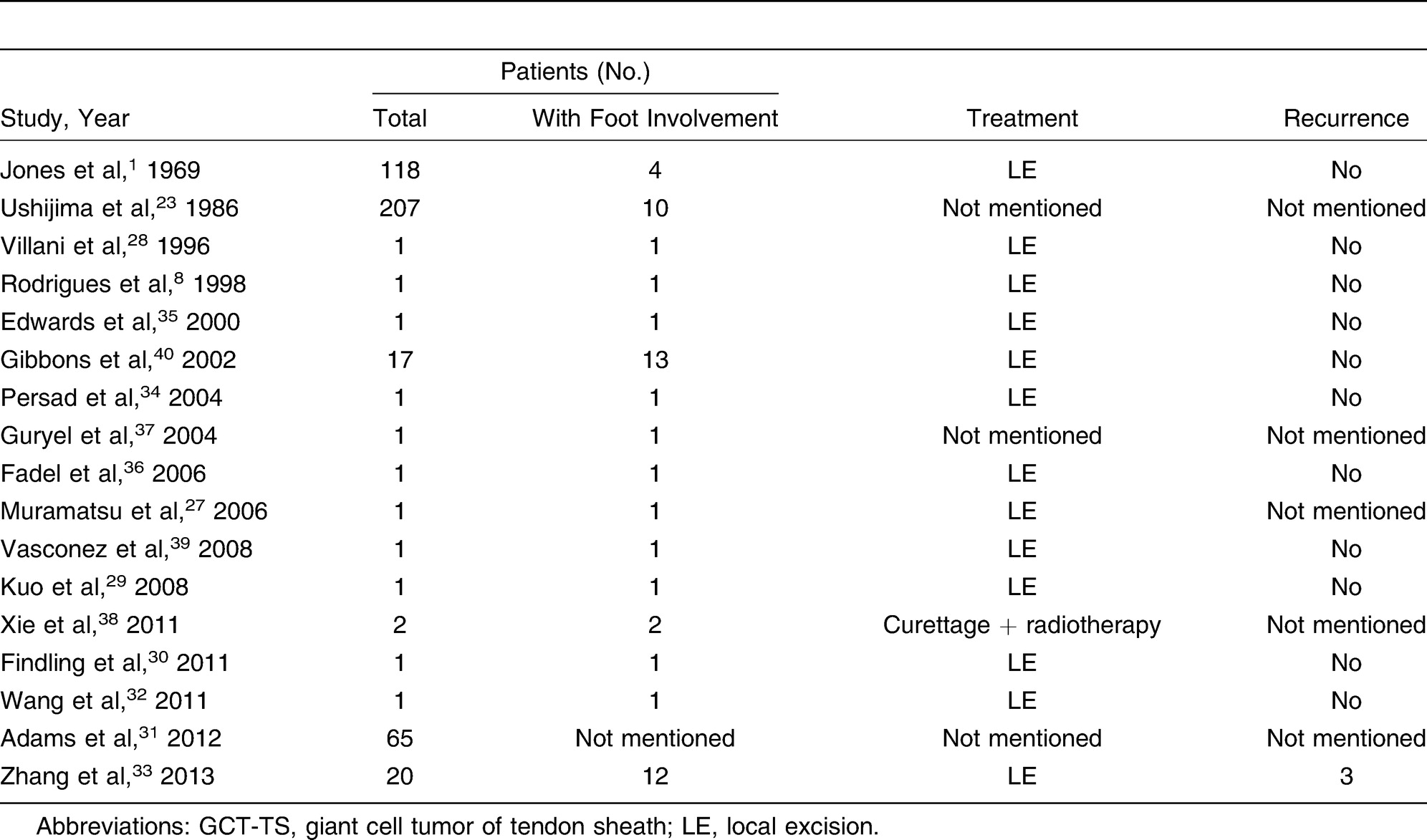
The literature on GCT-TS of the foot and ankle region is largely based on a few case reports. [5,15,21-23] It has been observed that these tumors tend to occupy the dorsal and lateral aspects of the foot, usually involving the extensor tendon sheaths around the ankle, and may involve more than one joint when they occur in the foot. [5,15,19,22-25] Rare reports of plantar and distal foot lesions involving the plantar fascia and toes have also been reported. [21,26] Most of the reports do not detail the involved tendon in the disease process (Table 1). We reported three rare cases of GCT-TS involving the flexor hallucis longus, peroneus brevis, and extensor hallucis brevis tendons. It should not dissuade one to consider the differential diagnosis of GCT-TS in the evaluation of a soft-tissue mass.
Table 1. Reported Cases of GCT-TS Around the Foot and Ankle
Japma 105 00249 t001

Financial Disclosure

None reported.

Conflict of Interest

None reported.

References

  1. JonesFE, SouleEH, CoventryMB: Fibrous xanthoma of synovium (giant cell tumour of tendon sheath, pigmented nodular synovitis): a study of one hundred and eighteen cases. J Bone Joint Surg Am51: 76, 1969.
  2. CavaliereA, SidoniA, BucciarelliE: Giant cell tumour of tendon sheath: immunohistochemical study of 20 cases. Tumori83: 841, 1997.
  3. GehweilerJA, WilsonJW: Diffuse biarticular pigmented villonodular synovitis. Radiology93: 845, 1969.
  4. KotwalPP, GuptaV, MalhotraR: Giant-cell tumour of the tendon sheath: is radiotherapy indicated to prevent recurrence after surgery?J Bone Joint Surg Br82: 571, 2000.
  5. HorvathRR, BostancheJ, AltmanMI: Diffuse type tenosynovial giant cell tumor of the ankle. JAPMA83: 231, 1993.
  6. DemouyEH, KanekoK, BearHM, et al: Giant cell tumor of the plantar tendon sheath: role of MR imaging in diagnosis: case report. Clin Imaging17: 153, 1993.
  7. MonaghanH, SalterDM, Al-NafussiA: Giant cell tumor of tendon sheath (localised nodular tenosynovitis): clinicopathological features of 71 cases. J Clin Pathol54: 404, 2001.
  8. RodriguesC, DesaiS, ChinoyR: Giant cell tumor of the tendon sheath: a retrospective study of 28 cases. J Surg Oncol68: 100, 1998.
  9. RaoAS, VigoritaVJ: Pigmented villonodular synovitis (giant-cell tumour of the tendon sheath and synovial membrane): a review of eighty-one cases. J Bone Joint Surg Am66: 76, 1984.
  10. ByersVS, LevinAS, JohnstonJO, et al: Quantitative immunofluorescence studies of the tumour antigen-bearing cell in giant cell tumour of bone and osteogenic sarcoma. Cancer Res35: 2520, 1975.
  11. LoréaP, Van De WalleH, KinnenL, et al: Giant cell tumours of the tendon sheath: lack of correlation between nm23-H1 expression and recurrence. J Hand Surg Br29: 67, 2004.
  12. Al-QattanMM: Giant cell tumours of tendon sheath: classification and recurrence rate. J Hand Surg Br26: 72, 2001.
  13. GroverR, GrobbelaarAO, RichmanPI, et al: Measurement of invasive potential provides an accurate prognostic marker for giant cell tumour of tendon sheath. J Hand Surg Br23: 728, 1998.
  14. WakelyPEJr, FrableWJ: Fine-needle aspiration biopsy cytology of giant-cell tumor of tendon sheath. Am J Clin Pathol102: 87, 1994.
  15. BisbinasI, De SilvaU, GrimerRJ: Pigmented villonodular synovitis of the foot and ankle: a 12 year experience from a tertiary orthopedic oncology unit. J Foot Ankle Surg43: 407, 2004.
  16. MartinRCII, OsborneDL, EdwardsMJ, et al: Giant cell tumour of tendon sheath, tenosynovial giant cell tumour, and pigmented villonodular synovitis: defining the presentation, surgical therapy and recurrence. Oncol Rep7: 413, 2000.
  17. SeglerCP: Irradiation as adjunctive treatment of diffuse pigmented villonodular synovitis of the foot and ankle prior to tumor surgical excision. Med Hypotheses61: 229, 2003.
  18. LoEP, KettererD: Giant cell tumor of tendon sheath in the toe. JAPMA90: 270, 2000.
  19. JaffeKA, JonesFK: “Foot Tumours,”inOperative Foot Surgery, edited byJSGould, p 249, WB Saunders Co, Philadelphia, 1994.
  20. BlayJY, El SayadiH, ThiesseP, et al: Complete response to imatinib in relapsing pigmented villonodular synovitis/ tenosynovial giant cell tumor (PVNS/TGCT). Ann Oncol19: 821, 2008.
  21. FrankelSL, ChiorosPG, SidlowCJ: Giant cell tumor of the plantar fascia: a case report. JAPMA77: 557, 1987.
  22. ButlerBW, McCartyJM, DanforthRDJr: Benign giant cell tumor of the foot. J Foot Ankle Surg32: 299, 1993.
  23. UshijimaM, HashimotoH, TsuneyoshiM, et al: Giant cell tumor of the tendon sheath (nodular tenosynovitis): a study of 207 cases to compare the large joint group with the common digit group. Cancer57: 875, 1986.
  24. GoldAG, BronfmanRA, ClarkEA, et al: Giant cell tumor of the extensor tendon sheath of the foot: a case report. JAPMA77: 561, 1987.
  25. PaezH, VuletinJC, SoaveRL, et al: Pedal giant cell tumor of tendon sheath. JAPMA89: 368, 1999.
  26. CiattagliaG, FilosaG, BugattiL: Giant cell tumor of tendon sheath. J Am Acad Dermatol25: 728, 1991.
  27. MuramatsuK, MineT, IchiharaK: Atypical tenosynovial giant cell tumor of the extensor hallucis longus tendon. JAPMA96: 359, 2006.
  28. VillaniC, TucciG, Di MilleM, et al: Extra-articular localized nodular synovitis (giant cell tumor of tendon sheath origin) attached to the subtalar joint. Foot Ankle Int17: 413, 1996.
  29. KuoCL, YangSW, ChouYJ, et al: Giant cell tumor of the EDL tendon sheath: an unusual cause of hallux valgus. Foot Ankle Int29: 534, 2008.
  30. FindlingJ, LascolaNK, GronerTW: Giant cell tumor of the flexor hallucis longus tendon sheath: a case study. JAPMA101: 187, 2011.
  31. AdamsEL, YoderEM, KasdanML: Giant cell tumor of the tendon sheath: experience with 65 cases. Eplasty12: e50, 2012.
  32. WangC-W, ChenC-Y, WuK: Giant cell tumor of the tendon sheath causing tarsal tunnel syndrome: a case report. Formosan J Musculoskelet Disord2: 75, 2011.
  33. ZhangY, HuangJ, MaX, et al: Giant cell tumor of the tendon sheath in the foot and ankle: case series and review of the literature. J Foot Ankle Surg52: 24, 2013.
  34. PersadIJ, RajanDT: Giant cell tumour of tendon sheath origin at the sinus tarsi. The Foot14: 219, 2004.
  35. EdwardsDLA, AhujaSA, NewingtonDPA: Giant cell tumour of tendon sheath. The Foot10: 46, 2000.
  36. FadelME, SchulzA, LinkerR: Giant cell tumour of the tendon sheath in the foot. Foot Ankle Surg12: 33, 2006.
  37. GuryelE, ColeridgeS, BendallS: Unusual presentation of a giant cell tumor of the tendon sheath in the foot. J Surg Orthop Adv13: 110, 2004.
  38. XieM, XiaoK, FangZH, et al: Giant cell tumour of the tendon sheath of the toe. Orthop Surg3: 211, 2011.
  39. VasconezHC, NisanciM, LeeEY: Giant cell tumour of the flexor tendon sheath of the foot. J Plast Reconstr Aesthet Surg61: 815, 2008.
  40. GibbonsCL, KhwajaHA, ColeAS, et al: Giant-cell tumour of the tendon sheath in the foot and ankle. J Bone Joint Surg Br84: 1000, 2002.