As with many nerves in the human body, the sural nerve can have many different variations in its anatomical location and distribution, depending on the individual [
1]. This variation, in many cases, places neurological structures at an increased risk for damage from both pathological and iatrogenic causes, and the sural nerve is no exception. While evaluating a patient with heel pain, one must not forget the varying distributions of the sural nerve and its branches as a possible etiology. Furthermore, one must never underestimate the pathologic possibilities of a nerve becoming a neuroma and the significant pain that can result.
It is generally accepted that the common sural nerve runs posterior to the lateral maleolus and innervates the dorsolateral aspect of the foot. Branches of the sural nerve can be found at various locations depending on the point at which the medial and lateral sural nerves unite to form the common sural nerve [
1]. Because of its strictly sensory role and relatively minimal area of effect, the sural nerve is often the donor for autologous nerve grafting or a site for diagnostic biopsies.
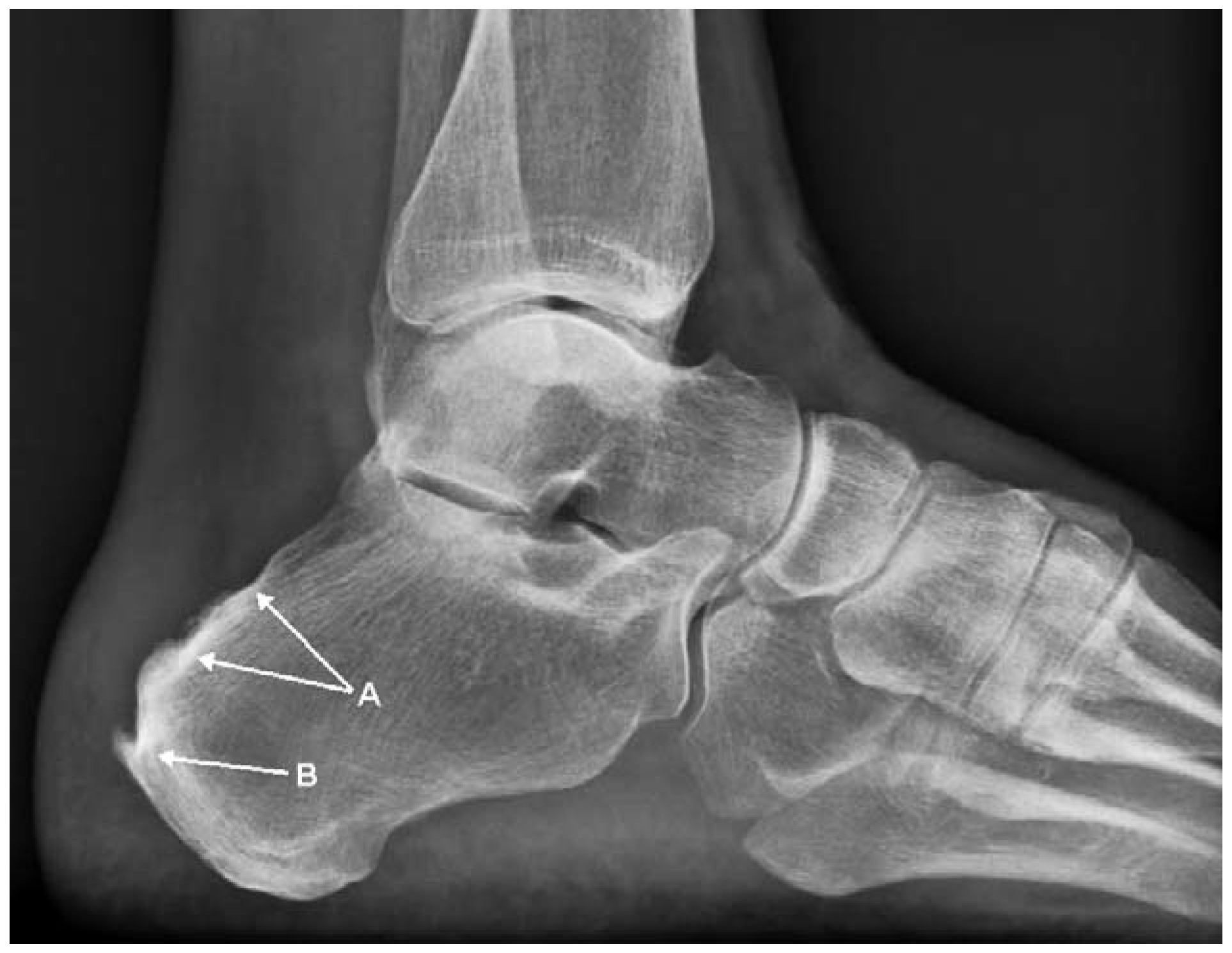
Based on our experience, in cases where there is continued pain in the posterior aspect of the calcaneus after a Haglund’s deformity resection, podiatric surgeons usually focus on an osseous or tendinous origin to the pain. This is especially the case when there is the development of a posterior enthesopathy as seen in
Figure 1. This case report illustrates the importance of recognizing peripheral nerve injury in patients with postoperative pain, and shows that there must always be awareness of multiple etiologies contributing to the current status of the patient.
When presented with a surgical scenario involving an amputation neuroma, or a neuroma in continuity, several considerations must be addressed. One must consider whether the nerve is sensory only or has motor function as well. If the nerve has motor function and denervation is the desired treatment, then one must judge how that denervation will affect the patient’s ambulatory function or protective sensation. If the nerve is only a small sensory nerve, it is universally accepted that the standard of care is to identify the neuroma if possible, and relocate the nerve proximally into innervated skeletal muscle [
2,
3,
4,
5,
6,
7,
8,
9]. If the actual neuroma is not accessible due to excessive scar tissue formation, or such that it would require extensive surgical dissection, with loss or impairment of biomechanical function, the nerve can be transected proximally with appropriate relocation into skeletal muscle. An excellent example of this can be the proximal denervation of a recurrent Morton’s neuroma in the nonweightbearing arch of the foot, without dissection directly plantar to the metatarsal heads in the forefoot, which could subsequently develop a painful scar in a high-pressure weightbearing area [
10].
Case Presentation
History and Exam
A 65-year-old female presented to Barrett Foot & Ankle complaining of pain in the posterior right heel. The patient related that the pain had been gradually getting worse for the past 2 years and had become so severe that she was unable to walk with the heel touching the ground. The patient was also unable to wear shoes with a closed heel due to the pressure placed on the heel. The history of present illness revealed that her pain began shortly after she had heel surgery 2 years prior and never resolved.
The patient had an interesting surgical history in which she had a large amount of the posterior aspect of her calcaneus removed as treatment for previous Haglund’s deformity and exostosis. This calcaneal resection was confirmed radiographically and can be seen in
Figure 1. Further examination of the radiographs revealed a small exostosis at the insertion of the Achilles tendon onto the calcaneus, which correlated with some of her symptoms.
Physical examination of the patient was normal except for plantarflexion of the right ankle, which was restricted due to severe pain. It was also noted that the patient had approximately −5 degrees of ankle dorsiflexion with the knee extended and 25 degrees with the knee flexed; this was indicative of severe gastrocnemius equinus (Silfverskiold test).
The patient experienced tenderness to palpation to the insertion of the Achilles tendon on the calcaneus, and ultrasound imaging showed a hypoechoic signal in the tendon substance at this location as well.
Further examination of the patient revealed a small soft-tissue mass on the superomedial aspect of the posterior calcaneus, which was extremely tender to palpation. The patient also exhibited a positive Tinel’s sign with percussion of the sural nerve at the level of the ankle joint, which radiated distally to the dorsolateral aspect of the foot and into the posterior lateral aspect of her heel. These findings were consistent with the patient’s complaint of pain on both the medial and lateral aspects of her heel. A diagnostic 2% lidocaine injection of 1 mL given over the sural nerve proximal to her heel relieved 100% of her pain.
Treatment
The patient was scheduled for surgical treatment with an endoscopic gastrocnemius recession procedure; exostectomy of the posterior aspect of the calcaneus; and neurolysis and decompression of the sural nerve, and if an amputation neuroma was present, denervation with transposition into the soleus muscle.
An endoscopic gastrocnemius recession was performed by transecting the gastrocnemius aponeurosis and plantaris tendon without damaging any of the muscle fibers. After complete release, there was a significant increase in the amount of ankle dorsiflexion available.
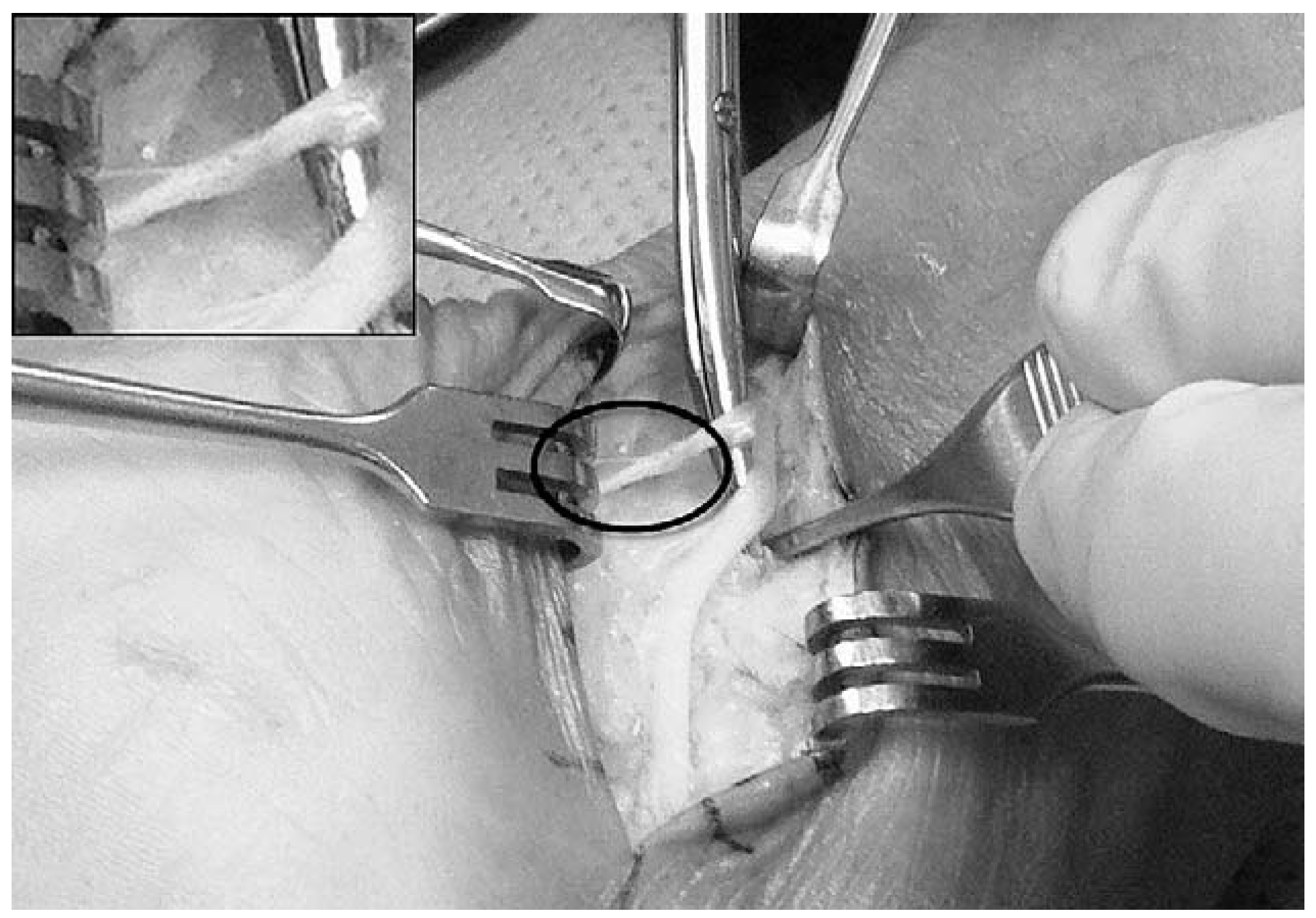
Neurolysis of the sural nerve was performed through a 5-cm curved incision, which was made on the posterior lateral aspect of the ankle just posterior to the lateral malleolus. Using blunt dissection, a long posterior nerve branch was observed stemming from the sural nerve at the level of the malleolus extending down into the posterior lateral aspect of the calcaneus.
With further loupe magnification dissection of the posterior branch, a neuroma in continuity was discovered. Distal to the neuroma was a spiderweb–like nexus of nerves terminating into the dorsal lateral aspect of the calcaneus and lateral aspect of the synovial covering of the Achilles tendon (
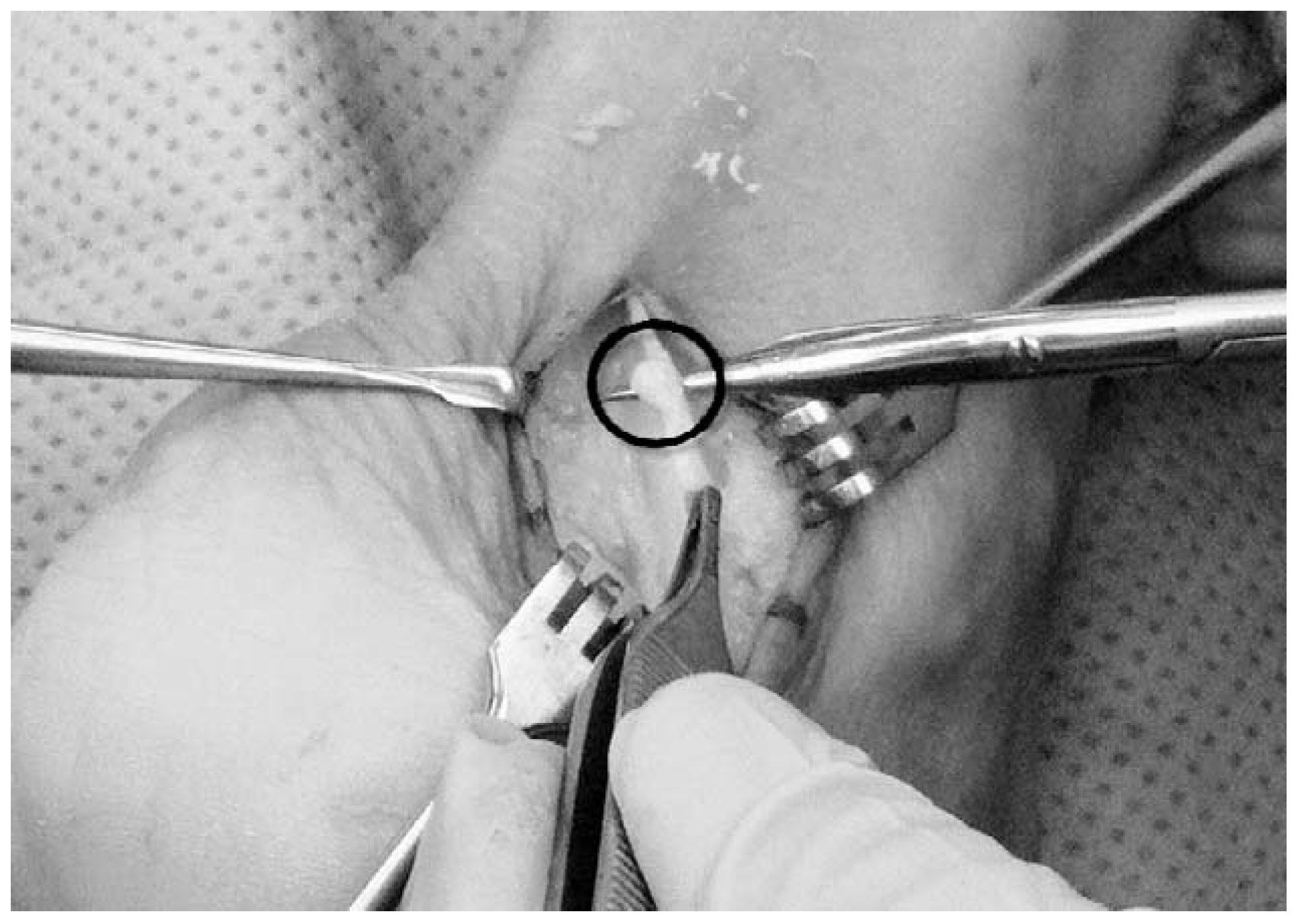
Figure 2). The neuroma in continuity was transected distally (
Figure 3) and proximally and sent for pathological examination.
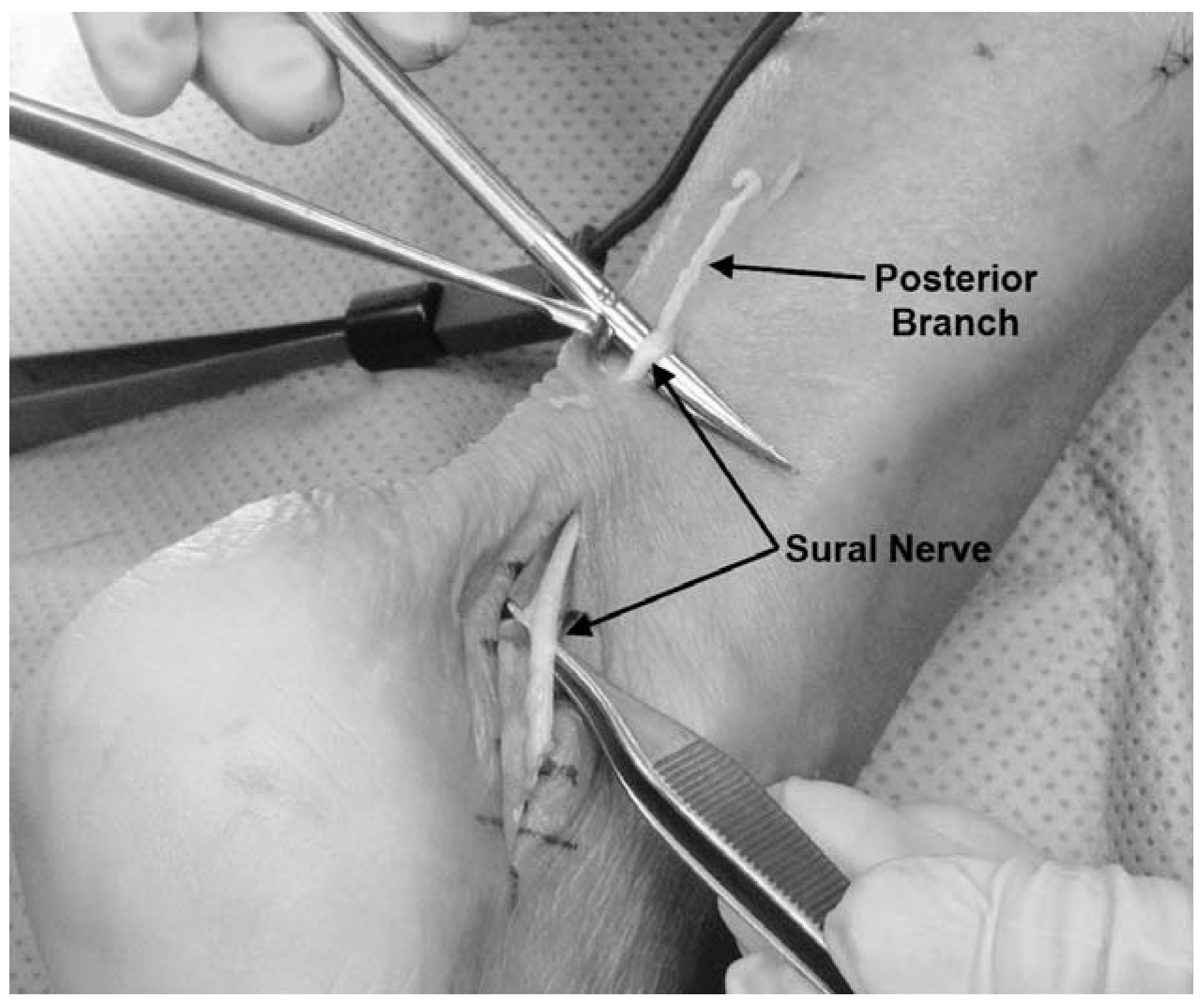
The posterior branch of the sural nerve was then separated from the main branch of the sural nerve with microdissection within the epineurium proximally such that the nerve, which was denervated, could be buried deep in the soleus muscle (
Figure 4). This was achieved using two small incisions to transfer the nerve proximally. A fasciotomy was made into the posterior gastrocnemius aponeurosis, which was windowed to allow for passage of the nerve branch into the calf. Prior to closure of the transposition site, dorsiflexion and plantarflexion of the foot was performed to ascertain that the transpositioned nerve remained deep in the muscle belly without tension being placed on the nerve with full range of motion.
Finally, another incision was made on the medial superior aspect of the calcaneus to expose the softtissue mass and posterior calcaneus. Significant hypertrophy of the Achilles tendon with degenerative changes was determined to be the cause of the mass. The degenerative areas were debrided followed by excision of the hypertrophic tendon. The small exostosis on the posterior aspect of the calcaneus was smoothed with a rasp, and using fluoroscopic control, was noted to be adequately excised.
Postoperative Status
The patient had a complete resolution of pain, with sensation maintained on the dorsal lateral aspect of the foot. She has permanent numbness in the posterior lateral and posterior aspect of the heel but is fully weightbearing and is able to wear regular closed-back shoes. The patient is now 2.5 years postoperative and remains pain free and fully functional.
Discussion
In this case, the patient’s heel pain was multifaceted and all aspects were addressed in the treatment. Gastrocnemius equinus has been proven to be a cause of heel pain and in many cases is often the first etiology addressed [
11]. It was discovered during clinical examination that this patient exhibited a gastrocnemius equinus deformity, which was addressed with an endoscopic gastrocnemius recession procedure [
6].
The patient also demonstrated pain to palpation to both the medial and lateral aspects of the heel. The pain located on the medial aspect of the heel was attributed to a degenerative fibrous mass located on the medial bands of the Achilles tendon. Debriding and excising this mass, and removing the small exostosis on the calcaneus immediately deep to the mass, will prevent continued irritation to the Achilles tendon.
The patient’s lateral heel pain was discovered to be attributable to a neuroma in continuity of the posterior branch of the sural nerve. In the clinical examination, diagnostic blocks to the area were used to determine neurological involvement in this patient’s pain and indicated surgical correction of the neural involvement. Surgical excision and proximal insertion into innervated muscle, as has been illustrated by previous studies, is an effective method for treatment of neuromas and was used in this case [
5]. Microdissection of the posterior branch allowed the patient to retain full functionality of the sural nerve while still treating the problematic posterior branch.
The patient’s past surgical history plays a major role in determining the greatest cause of her symptoms as being neurological. It is noted that the patient had a previous surgical resection of calcaneal exostoses (
Figure 1), which, based upon the location of the posterior branch of the sural nerve, may be complicated with nerve damage. No studies were found to confirm this correlation but the anatomical location of the posterior branch of the sural nerve makes the patient’s previous surgical procedure a likely cause for her neuroma generation. We suggest the need for further studies to determine the incidence of neurological complications in relation to surgical correction of Haglund’s deformities.
Within the classical musculoskeletal perioperative paradigm, one may neglect to recognize and treat neurological problems. Using the modalities mentioned herein, pain generation in this patient was treated from both musculoskeletal and neurological perspectives. In this case it was certain that the patient would have had continued pain without addressing the neuroma of the posterior branch of the sural nerve.
Conclusions
Because heel pain can have many different etiologies, it is necessary to consider all possibilities when making a diagnosis. Although osseous and tendinous problems may arise with any surgical intervention, any time patients have postoperative pain the surgeon must rule out neural etiology as a possible pain generator; this can be ascertained with clinical evaluation and peripheral nerve diagnostic blocks.