Homelessness continues to be a major problem in the United States. A health-care disparity exists in the homeless population for many reasons: lack of health insurance, difficulty accessing community care clinics, or simply daily priorities, such as waiting in line for a shelter bed, overtaking the intention to address health concerns.[
1] Studies have shown that this health-care disparity not only affects the homeless but also poses public health risks. It also increases the economic burden on health care in the community.[
2] Preventive and continual medical care for the homeless population helps prevent the spread of communicable infectious diseases, frequent emergency department care,[
3] and prolonged expensive hospital admissions.[
4] There is increasing concern about community medical care in indigent populations, especially with the exponential rise of community-acquired methicillin-resistant
Staphylococcus aureus infections.[
5]
Lower-extremity health plays an important role in an individual's overall health to allow for mobility to seek resources. In fact, articles and discussions on the health of homeless people often emphasize foot problems as a considerable public health concern.[
6-
8] Foot disorders have been shown to make up as many as 20% of the health concerns of homeless individuals.[
9] Studies have shown that homeless people are at high risk for limb-threatening and potentially life-threatening pathologic conditions.[
10] Moreover, data analyzed from the 2003 national homeless survey demonstrated that there are continuing significant unmet health-care needs.[
11] To identify these concerns and their extents, a needs assessment survey research concomitant with a community service project was conducted for a sample homeless population in San Francisco, California. The objectives of the research were to promote future studies pertaining to podiatric medical care in homeless populations and to serve as an instigator and supportive data to start new community foot care clinics nationwide. Also, the study helps highlight that foot care is an important public health concern, especially in homeless populations.
Methods
This research was approved by the Samuel Merritt University (Oakland, California) institutional review board. Collectively, the research and outreach project was titled “Step Up for Foot Care” to provide a literal campaign of the message of foot care awareness. A Web site was created to raise awareness of the project. The community service aspect of the project included weekly group sessions on various foot care topics combined with the distribution of donated and purchased foot care products, such as socks, shoes, orthotic devices, and insoles. Referrals to community foot care clinics were given as necessary. The research aspect of the project included a 37-question survey regarding general demographic characteristics, foot hygiene practices, associated risk factors, and self-reported lower-extremity pathologic conditions. The survey was administered for 7 months, culminating in April 2009, in two San Francisco homeless shelters, Multi-Service Center South and 150 Otis Drop-In Shelter, which were both run by the St. Vincent de Paul Society of San Francisco. Voluntary participation in the survey was allowed for those who met the inclusion criteria, which included being at least 18 years of age, having an understanding of spoken English, and being homeless. The exclusion criteria included individuals who were no longer homeless, homeless individuals who had just arrived in or were visiting San Francisco, and individuals who had obvious signs of dementia or cognitive impairment. The survey was read to the homeless people who had difficulty reading. Written informed consent was obtained for participation, but the individual's name was not identified or associated with the survey.
Results
The community service aspect of the project was well received, with good participation by the two shelters we visited. The project became well known in the area. In fact, a random homeless individual we met on the street many miles away from the involved shelters heard about the research and community service. We learned from the outreach project that many of the homeless people were not aware of the resources available to them.
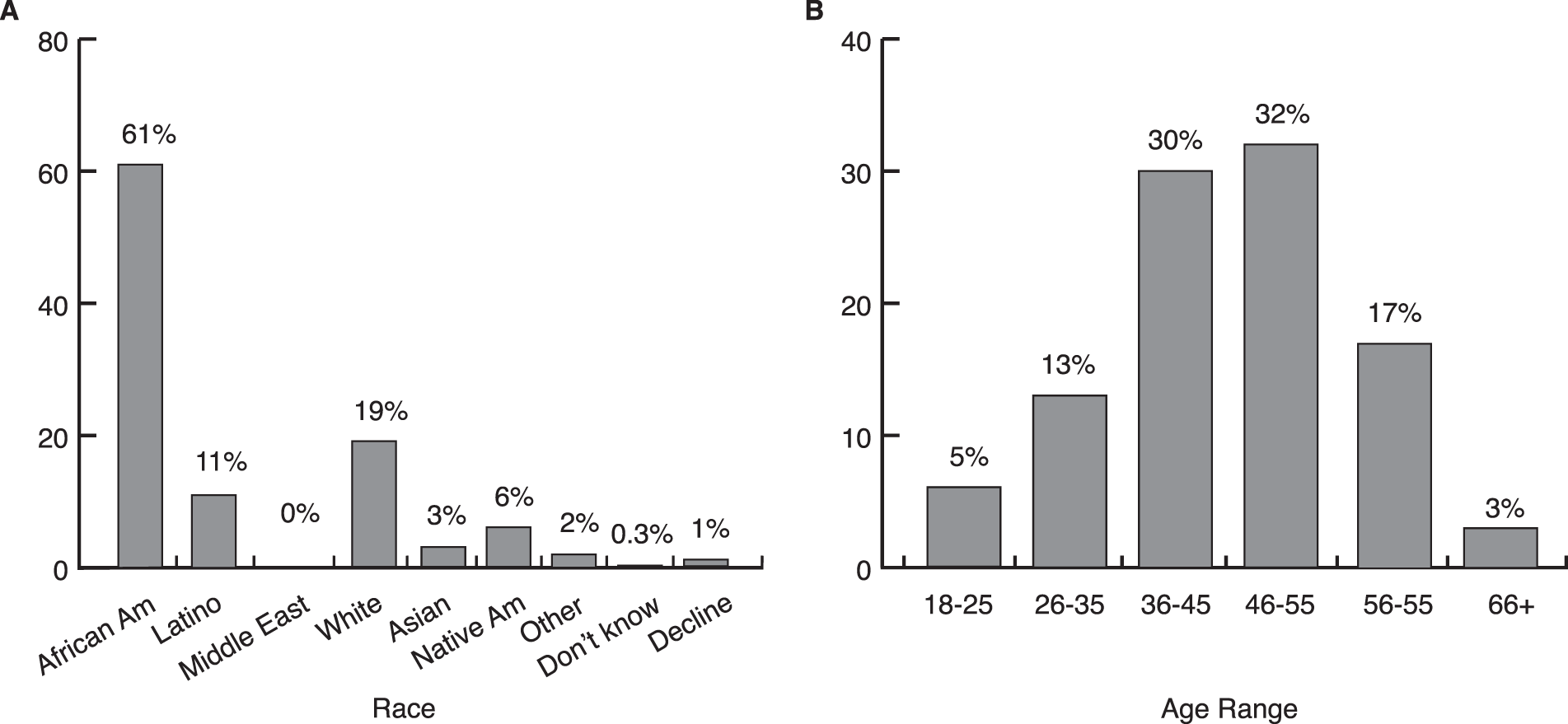
Overall, 299 individuals completed the survey. Not every survey participant answered every single question, and percentages were calculated from the total of each answered question. Approximately 92% of the participants completed the survey themselves, and the remaining were helped by friends, family, or the researchers. In terms of demographic characteristics, most of the individuals were heterosexual (79%), of African American race (61%), male (92%), and 36 to 55 years of age (62%) (
Fig. 1A and
1B). Approximately half of the respondents were homeless for the first time, and most individuals had been homeless for 3 years or less (67%), but approximately 55% of the individuals had been homeless at least once before. Eighty-seven percent of the individuals were born in the United States, and approximately 75% of respondents had at least a high school education. Most individuals resided in emergency housing (59%), followed by 21% sleeping outside on the streets. Participants lived in a motel (12%), with a friend (12%), in a treatment facility (7%), in transitional housing (6%), in a car (5%), in an abandoned building (2%), or elsewhere (5%). The most common reasons for becoming homeless among respondents included being unable to pay rent (38%), followed by individuals who became homeless due to unemployment (32%). Other reasons for becoming homeless included substance abuse (20%), mental illness (10%), incarceration (10%), family/personal illness (7%), physical violence (7%), domestic violence (4%), criminal history (3%), child abuse (1%), and other (9%). Six percent of respondents declined to respond or did not know or remember why they became homeless. Most of the respondents who specified insurance status had no insurance (53%), followed by Medi-Cal (24%), Medicare (11%), private insurance (2%), and other (10%).
Figure 1.
The homeless population studied stratified by race (298 responses) (A) and age group (295 responses) (B).
Figure 1.
The homeless population studied stratified by race (298 responses) (A) and age group (295 responses) (B).
Associated risk factors assessment revealed that 43% of the individuals consumed alcohol: 12% drank 1 d/wk, 15% drank 2 to 3 d/wk, 9% drank 4 to 5 d/wk, and 7% drank 6 to 7 d/wk. Of the 68% of respondents who smoked cigarettes, 56% smoked for more than 10 years, 15% for 6 to 10 years, 17% for 1 to 5 years, and 13% for less than 1 year; 57% of those who used cigarettes smoked at least half a pack a day. The most common illicit drug used was marijuana (38%), followed by cocaine (24%); 34% of participants denied any illicit drug use. In terms of hours on feet daily, 4% stated they did not spend time on their feet at all, while 21% stated they were on their feet 1 to 5 hours a day, and 74% of respondents stated they were on their feet 5 hours or more each day.
Assessment of foot hygiene practices revealed that only 61% of the individuals changed to a clean pair of socks daily. Other participants changed their socks weekly (30%), monthly (5%), every couple of months (1%), yearly (0.3%), and never (1%). Approximately 72% of the participants were able to wash their feet daily, 23% weekly, 3% monthly, 0.4% every couple of months, 0.4% yearly, 0.4% never, and 1% other. Additionally, approximately 73% of the participants indicated that they were able to change shoes at least every 6 months (43% every 2–5 months, 30% every 6 months, 18% yearly, and 2% never); 6% of participants did not remember how often they changed shoes, and 1% responded “other.” Sneakers were the most common footwear (84%), followed by dress shoes (28%), sandals (22%), heels and boots (3% each), and no shoes and slippers (1% each). Approximately 73% of participants trimmed their toenails at least once a month, and approximately 57% used lotion on their feet on a regular basis. Seventy-six percent of participants claimed to keep their feet dry, but approximately 13% reported that they could not really feel whether their feet were dry or wet.
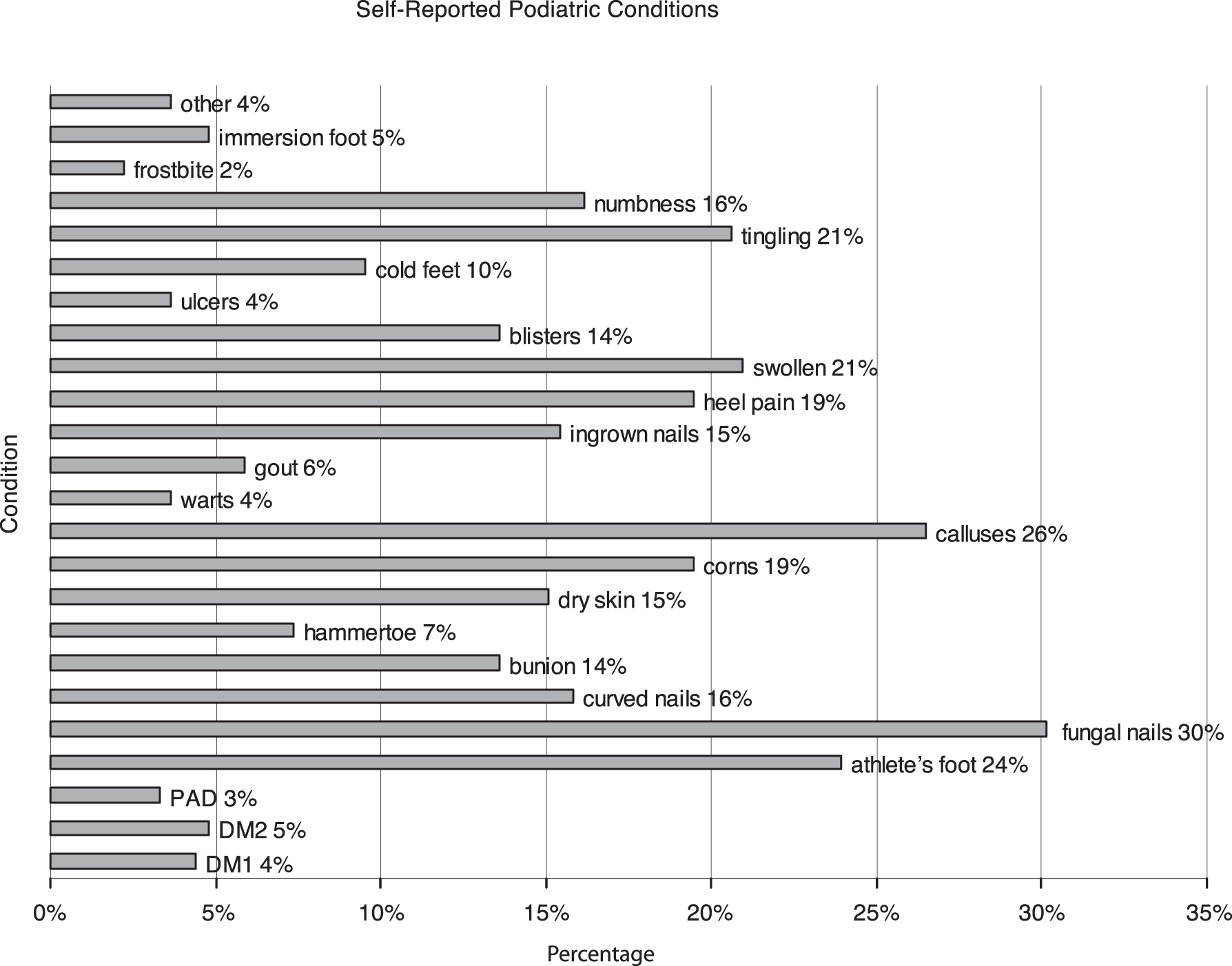
In terms of self-reported pathologic conditions, 27% stated previous foot injuries. Approximately 31% of the individuals had seen a health professional for a foot problem. Most of the individuals claimed to have experienced some sort of foot pain (56%), with 12% reporting that they had the pain all the time. The most common podiatric medical conditions reported included fungal nail (30%), calluses (26%), and athlete's foot (24%). In addition, a good percentage of participants described neuropathic symptoms, with 16% conveying numbness and 21% having tingling in their feet. Swollen feet were experienced by 21% of the respondents. However, only approximately 9% reported having diabetes. The self-reported podiatric medical conditions are summarized in
Figure 2. Survey participants were also asked to note any foot conditions they have or have experienced, and these free-response results are summarized in
Table 1.
Figure 2.
Self-reported podiatric medical conditions in the homeless population studied (272 responses). Abbreviations: DM1, type 1 diabetes mellitus; DM2, type 2 diabetes mellitus; PAD, peripheral arterial disease.
Figure 2.
Self-reported podiatric medical conditions in the homeless population studied (272 responses). Abbreviations: DM1, type 1 diabetes mellitus; DM2, type 2 diabetes mellitus; PAD, peripheral arterial disease.
Table 1.
Self-Reported Responses
Table 1.
Self-Reported Responses
Discussion
Generally, these results demonstrate that most of the individuals surveyed made a good effort in achieving in foot hygiene in terms of frequency of changing shoes and regular toenail trimming. Although most individuals were able to wash their feet and change to clean socks daily, many still were not able to perform these basic hygiene tasks on a daily basis. Moreover, there were poor general health habits, as demonstrated by the high percentages of those who smoked tobacco or drank alcohol. Smoking may lead to peripheral vascular disease,[
12] and severe alcoholism may be associated with peripheral neuropathy and gout.[
13] Also, a high percentage of the participants reported recreational drug use. Other risk factors included prolonged standing, which may cause homeless individuals to be more prone to injury and venous stasis. The most commonly self-reported pathologic conditions included fungal nails, calluses, and athlete's foot (tinea pedis). These conditions may seem trivial and more of a cosmetic concern; however, these are important conditions in the setting of risk factors such as diabetes, smoking, poor hygiene, and lack of access to care, which can then make these individuals more susceptible to ulcerations, cellulitis, and infections. It is also interesting to note that 1 in 5 participants reported neuropathic symptoms, such as tingling in their feet, but only approximately 9% claimed that they had diabetes. Although peripheral neuropathy has various causes, diabetes mellitus is the most common cause in developed countries today.[
14] This would suggest that there could be a substantial population of homeless people with undiagnosed and untreated diabetes mellitus. Complications due to diabetic peripheral neuropathy account for more hospital admissions than all other diabetes complications combined and may be responsible for up to 75% of all nontraumatic amputations.[
15] Finally, note that of the homeless people surveyed, nearly 21% were sleeping on the streets. This demonstrates that even if homeless individuals received adequate medical care for lower-extremity problems, they would not be in the proper setting to maintain their care given the living situation. Overall, these results illustrate that this homeless population possessed numerous risk factors that were compounded by a lack of resources, potentially increasing the vulnerability for serious lower-extremity disorders.
Of significance in this study is the subpopulation of participants who reported substance abuse (20%) and mental illness (10%) as their primary reason for becoming homeless. Although it cannot be assumed that all survey respondents at the time of the study continued to have substance abuse problems or mental illness, it is important to note the challenges that these individuals face even when resources are available. This can be because of their lack of self-confidence, their poor self-image, and the assumption that society is intolerable of their state of being. These individuals may refuse to seek care or access to facilities such as shelters owing to enforced behavioral guidelines imposed by such facilities even when they are fully aware that such resources exist and are available. Some homeless people may not seek access to facilities because they do not wish to live under such rules (such as restricting alcohol consumption); they also value their independence and freedom on the streets. It is important to consider intermingling cofactors, such as mental illness and substance abuse, when analyzing the results of this study because these can affect use of resources.
A health-care needs assessment study could provide valuable data if a correlation analysis was performed on the data to help determine etiology and provide a means for prevention. For example, a study published in 2004 by Dunn et al[
16] of a multiethnic elderly population in Springfield, Massachusetts, revealed that there were significant differences in pathologic foot conditions between age groups and among ethnic groups. We could not perform a correlation analysis based on age or ethnic group because the present population was not varied enough. We did, however, examine whether certain risk factors were associated with foot injury and foot self-care practice. We found that among the 30 respondents who reported mental illness as the cause of homelessness, there was no significant difference noted in the frequency of changing shoes, changing socks, or trimming toenails compared with the entire survey group. There also did not seem to be any difference in the rate of foot conditions or injuries reported compared with the entire survey population. In addition, of those who drank alcohol six to seven times a week, the frequency of trimming toenails was not significantly different from that of the overall survey population. Similarly, those who used marijuana in this survey did not seem to have an associated change in the frequency of trimming nails or changing socks, and neither did they have an associated higher rate of foot injuries. Correlation analysis of the 25 people who had been homeless for longer than 10 years also showed no significant difference in the frequency of trimming toenails and changing shoes and socks compared with the entire survey population. Of note, more than half (52%) of those who had been homeless longer than 10 years also reported previous foot injury compared with only approximately 27% of the general survey population having previous foot injury. It is difficult to discern whether this is a causal association, but it makes sense that those who were on the streets longer were more prone to foot injury. Our cursory correlation analyses on selected groups generally concluded consistent effort regarding foot self-care and hygiene regardless of risk factors.
Another way in which a health-care needs assessment study would provide useful data is a comparative study with national health assessment data from nonhomeless populations, such as national data collected by the National Institutes of Health. This would be vital in assessing the actual degree of disparity between the homeless and nonhomeless populations. For example, a French study of cutaneous infections of the homeless compared with a control nonhomeless population revealed a significantly higher incidence of tinea pedis in the homeless population.[
17] Robbins et al,[
10] in a study in Cleveland, Ohio, attempted to compare foot data in homeless people found in their community with the national homeless and general populations (via the 1990 National Health Interview Survey
18). They found that although the conditions, such as fungal infections, hyperkeratosis, and foot infections, experienced were similar in both populations, the homeless people were less likely to access care unless it was absolutely necessary. In addition, they found that financial barriers and other factors put the homeless population at greater risk for not receiving care for serious foot conditions. Data from such studies as mentioned previously herein help identify areas to focus on to prevent lower-extremity disorders in homeless populations.
Limitations of the study included the fact that the surveyed individuals were only those who accessed the shelters, so the data may not have reflected an accurate representative sample of the entire homeless population in San Francisco. Another limitation is that the comprehension of the questions may have also been variable. Also, since not every survey participant answered every single question, results may have been skewed due to lack of responses. However, for each question we felt we had adequate responses to allow the data to be representative of the population we studied. Of course, it is important to factor in survey bias in which respondents fill out what they think should be done instead of what is actually done. On another note, there were no questions regarding the diet of the homeless respondents, which is an important factor in general health and is critical for lower-extremity health, such as wound healing. Finally, an objective foot examination by a licensed clinician may have revealed more accurate data in terms of pathologic foot conditions instead of them being self-reported.
Similar studies have been performed that highlight foot issues in homeless people as a public health concern. Studies specifically on foot problems in homeless individuals are limited,[
19] but studies on general health in the homeless population often mention lower-extremity disorders. Retrospective medical record analysis from a study in Chicago revealed that foot problems were among the top ten medical problems.[
20] They also conducted a clinical study over the course of 1 year, and they found that dermatologic disorders, such as hyperkeratotic lesions, dystrophic nails, and tinea pedis, were the most common disorders. A unique study in Los Angeles attempted to find a way for lay researchers to survey and identify medical problems that affect the homeless and provide referrals to health-care providers as necessary.[
21] The study revealed a good percentage of homeless people complaining of foot problems, but, more importantly, it identified an efficient way to proactively identify health problems in and provide resources for homeless people.[
21] Raoult et al,[
6] in a 2001 review in
The Lancet Infectious Disease, found that venous stasis, frostbite, and immersion foot were the frequent causes of primary foot lesions. The article noted that homeless people tend to neglect or hide skin lesions to avoid being ostracized as having contagious diseases. Of note, lower-extremity infections and cellulitis were found to be prevalent in one study of outpatient homeless clinics. A 2010 French study by Arnaud et al[
22] found that there was a high prevalence of diabetes in the homeless population and a high frequency of major complications from the diabetes at a younger age. It was recommended to have more effective strategies for diabetes management in the homeless, especially podiatric medical care. Finally, a 2011 foot care use survey study of 100 homeless adults[
23] found that many had a history of related health problems, such as diabetes, hypertension, and peripheral vascular disease. Most respondents valued having healthy feet but had major deterrents in using foot care services, including the embarrassment of foot odor and the poor condition of their shoes and socks. This study identified the various barriers homeless people have in using foot care services and made recommendations on how to increase access to foot care. Overall, the studies summarized previously herein demonstrated foot disorders as common health problems in homeless individuals and suggested ways to tackle this important public health issue.
Recommendations
We believe that it is important for those providing services to homeless people to educate them on proper foot care practices and to allocate resources and effort in foot health promotion. The following recommendations, adapted from a clinician group associated with the National Health Care for the Homeless Council,[
24] are good general principles that should be promoted to all homeless individuals. These include educating the homeless on keeping the feet dry and taking shoes and socks off at night, unless in cold weather. They should be informed to change to a clean pair of socks or at least to wash socks every night and dry them thoroughly. Wearing sandals in public showers should be mandatory. In addition, they should be encouraged to examine their feet regularly, and they are urged to visit community clinics immediately if they notice lesions, wounds, or signs of infections. When clinically indicated, clinicians should encourage patients to elevate their legs at or above the heart level whenever possible to alleviate and prevent fluid stasis in the lower extremities.
Community resources should be available and made known to homeless individuals. It is important to allocate resources for foot care for the homeless, including volunteer clinics and hygiene care. Foot clinics and foot hygiene care services for the homeless should be held at optimal times to maximize use and not interfere with the time of day in which homeless people try to obtain a shelter bed.[
23] Foot care products should be supplied when possible, such as nail clippers, skin care lotions, corn cushions, lamb's wool, etc. Simple things such as sanitizing public showers regularly can prevent skin infections and should be implemented. Refer homeless people to respite care if available for relief of foot conditions, and obtain bed rest orders when necessary. Consideration should be given to the fact that there is often a lack of follow-up when treating foot problems in homeless individuals. Besides encouraging follow-up, clinical protocols can be adapted to minimize potential complications, although it may be initially more expensive. For example, lacerations can be repaired using self-absorbing sutures or butterfly adhesive stitches. Choosing wound dressings that can be left on for a week can also help avoid complications from the lack of follow-up.[
8] Many times, foot problems may be overlooked or not addressed at all. The previously mentioned measures would be a step forward in public health promotion of foot care for the homeless.
Conclusions
This study demonstrated the presence of risk factors in the homeless individuals surveyed that could have potentially limb-threatening sequelae. Compounded with a lack of resources and prompt medical care, lower-extremity problems are prone to worsen before they are addressed in this particular type of population. Most individuals studied were on their feet for long periods, which makes their feet more prone to injury. Although many demonstrated effort in proper foot hygiene, there were many participants who had poor health habits, such as smoking, drinking, and illicit drug use. Given the fact that nearly a third of the participants have sought medical treatment for foot problems and many reported previous foot injury, chronic foot pain, or neuropathic symptoms, this study further illustrates the vulnerability of the homeless population for potentially serious lower-extremity pathologic conditions.
Lower-extremity health in the homeless population has important public health implications in terms of preventing the spread of infection and lowering the burden of community health-care and social costs. We hope that this study will serve as an instigator for more studies on podiatric medical care for underserved populations and as a motivator to address lower-extremity public health concerns, especially in homeless populations.