Root designed a biomechanical protocol in the early 1950s based on one of the most thoroughly accepted principles of biology, namely, that form is related to function.[
1,
2] He believed that if the variations in foot morphology in the human population could be named and classified, the foot and its function might be better understood.[
3] His biomechanical protocol was focused on the concept of the subtalar joint (STJ) neutral position. In those days, this was certainly a novel idea and a turning point in the body of thought. The STJ neutral position was assumed to be the ideal position. This ideal position was based on eight biophysical criteria for normality, where the ideal relationship of osseous segments in the foot and lower leg would allow maximum efficiency during stance and movement. These criteria could be measured using an array of measurement tools. Quantification of the different foot segment positions was not only necessary to establish the boundaries between which a normal, or in the case of the Root model a neutral, foot should fall but also gave the clinician the ability to determine the severity of a structural misalignment.[
4]
When new models are developed, they have scientific credibility only if the measurements on which they are based are reliable and valid. Regarding a clinical setting, reliability is defined as the consistency of a measurement and represents the level of agreement of measurements taken from the same entity between different clinicians or repeated measurements by the same clinician over time. Validity is defined as evidence that a clinical measuring technique actually measures what it is supposed to measure.[
5]
The literature has already shown approximately 15 years ago that the different goniometric frontal plane measurements necessary to complete the biomechanical protocol as described by Root, Orien, and Weed in 1977 have poor intertester reliability and fair intratester reliability.[
6] Furthermore, the actual STJ neutral position has never been validated.[
3,
7,
8] According to Payne,[
7] the list of possible problems that have become apparent in the Root model have reached a level at which a paradigm shift might be preferable in light of modern evidence-based practice. In search of such a valid and reliable biomechanical protocol to examine the foot, a handful of new and existing models were put forward as a possible framework to perform a biomechanical examination, such as the sagittal plane facilitation-of-motion model,[
9] the Kirby model,[
10] the Fuller model,[
11] and the tissue stress model.[
12] The model chosen for further validation was the Kirby model, which focuses on the spatial location of the STJ in the transverse plane.
The STJ axis location as described in the literature has an average spatial location with a range of 20.5° to 68.5° in the transverse plane and 4° to 47° in the sagittal plane.[
13] These observed ranges explain the different foot types (high versus low arch). Clinically, regarding STJ axis inclination (sagittal plane) and deviation (transverse plane), a high and laterally deviated axis (high-arched foot) would provide greater ranges of tibial rotation in relation to rearfoot frontal plane motion. Conversely, a lower and medially deviated axis (low-arched foot) would allow for greater frontal plane rearfoot motion relative to less tibial rotation. A lower and medially deviated STJ axis should, therefore, respond better to rearfoot corrections using rearfoot medial postings in functional orthotic devices. The effects of moments produced by ground reaction force (GRF) will be influenced by the transverse plane location of the STJ axis. The effects of GRF moments are influenced by the STJ transverse axis. A more medially orientated STJ axis is likely to cause more abnormal pronation-related problems, and a more laterally deviated axis is likely to cause more supination-related problems.[
14] Orthotic devices influence GRF moments by producing an orthotic reaction force moment, and its effectiveness is related to the STJ axis. The Kirby palpation technique allows us to determine the STJ axis in the transverse plane in a clinical setting.
The goal of this project was to use three-dimensional (3-D) kinematic modeling to locate the spatial location of the STJ axis by calculating the instantaneous helical axis and then transferring the axis onto the plantar surface of the calcaneus to compare this location with the axis obtained by the Kirby palpation technique.
Methods
Mechanical Model
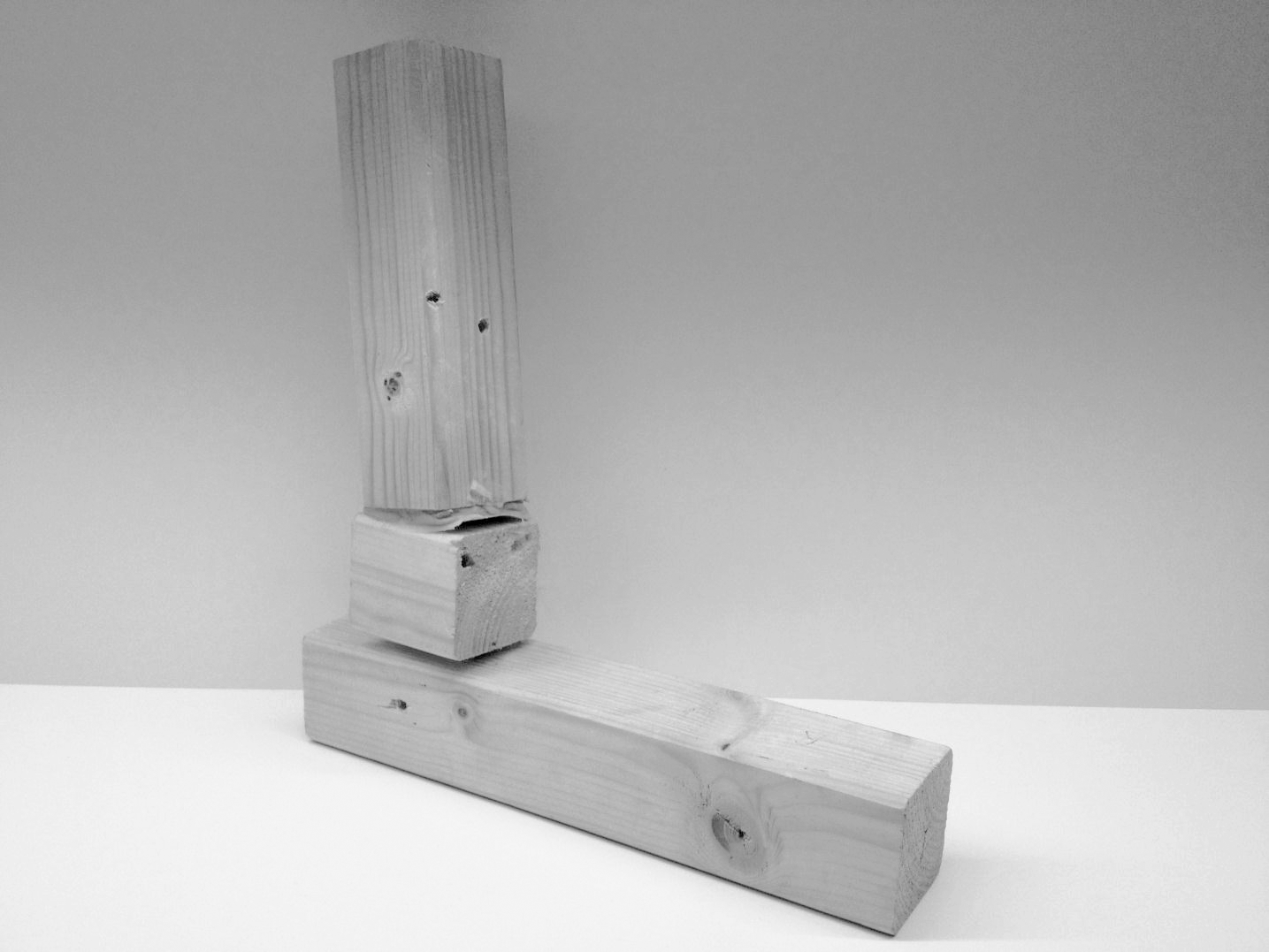
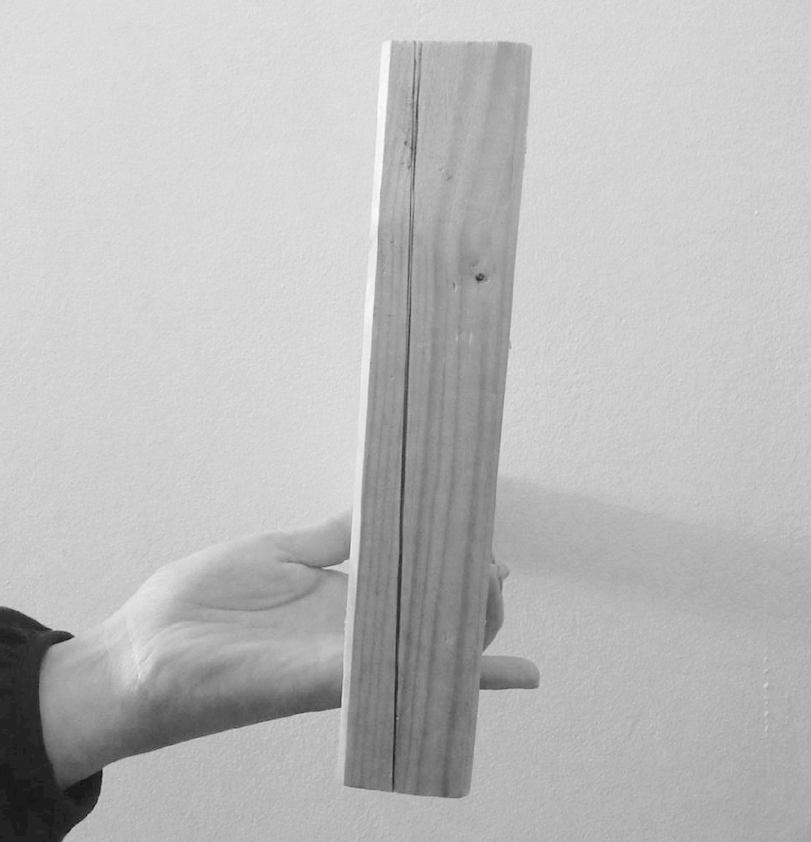
A mechanical model consisting of three elements representing the tibia, talus, and calcaneus was constructed out of wood (
Fig. 1). The calcaneus was connected with the talus through a subtalar hinge joint. An ankle joint was also included between the tibia and the talus to allow plantarflexion and dorsiflexion. The joints were filled along the edges with a soft silicone (Bland-Rosé; Fresco Podologia, Barcelona, Spain) to mimic the elastic properties at the end range of motion and to cover the precise location of the hinge joint so that testers could not see it when performing the palpation test. The mechanical foot model was taped to a table using duct tape (3M Europe, Diegem, Belgium), fixing the tibia and allowing movement only in the hinge joints. Palpation could be performed on the plantar surface of the calcaneus to determine the location of the hinge joint axis. This technique is best performed with the individual lying supine on an examination table with the foot hanging over the edge of the table. The foot is held in the plantar parallel position as described by Kirby,[
15] with the thumb of the contralateral hand positioned at the fifth metatarsal. Pressure on the plantar surface is applied with the thumb of the ipsilateral hand and is directed parallel to the sagittal plane of the patient. The thumb on the metatarsal is used to feel any pronation or supination of the STJ. If pronation occurs, the thumb is moved slightly horizontally to the lateral side and, again, pressure is applied. By moving the point of pressure application, one is able to locate the position where no rotation occurs. This point is marked, and a next point of no rotation is determined further distal on the plantar surface of the foot. The bisection connecting the points of no rotation is described as the location of the STJ axis in the transverse plane.
Figure 1.
Mechanical foot model constructed of wood.
Figure 1.
Mechanical foot model constructed of wood.
The Bone Pin Model and Marker Set
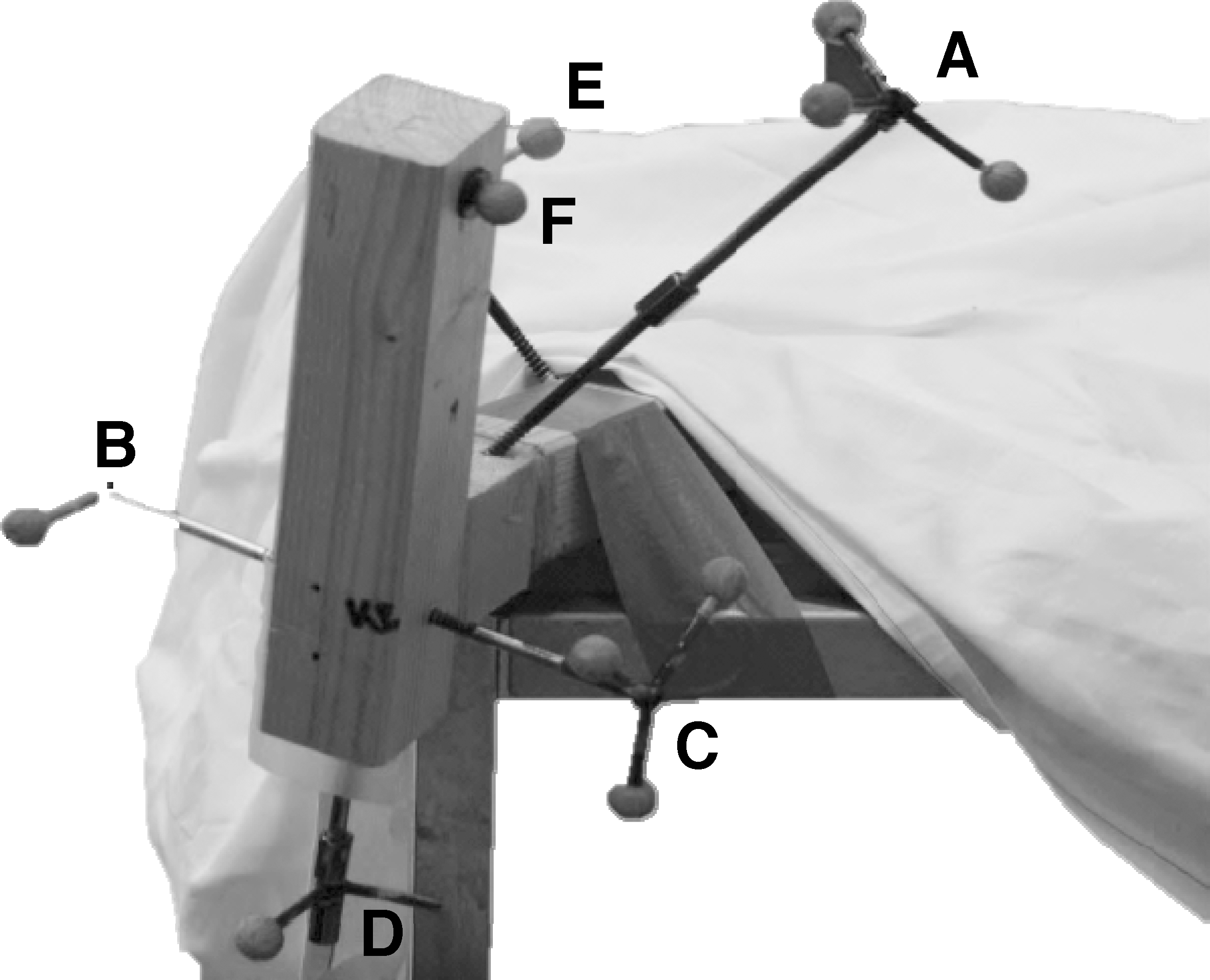
Bone pins were inserted into the wooden elements of the model to map the motion of the STJ axis. Five metal pins, each equipped with reflective markers, were inserted into the wooden model: on the talar head (A); on the medial (B), lateral (C) and posterior (D) side of the calcaneus; on the lower one-third of the tibial crest (E); and on the lateral side of the fifth metatarsal head (F) (
Fig. 2). Bone pins A, C, and E each have three reflective markers, the minimum for unambiguous 3-D tracking. Bone pins A and C track the movements of the talus and calcaneus, respectively, with the two bones moving around the STJ. Bone pin E, inserted in the tibia crest, was there to track any possible concomitant movement, helping as a visual parameter during data collection and ensuring a maximal closed-packed position of the ankle. The other two markers, B and F, were applied to map the plantar surface of the foot. Bone pin D was, at first, intended to map the plantar surface of the foot, but instead one marker of bone pin C, together with B and F, were used for this purpose.
Figure 2.
Bone pin model used in the mechanical foot model indicating different markers on the talar head (A); on the medial (B), lateral (C) and posterior (D) side of the calcaneus; on the lower one-third of the tibial crest (E); and on the lateral side of the fifth metatarsal head (F).
Figure 2.
Bone pin model used in the mechanical foot model indicating different markers on the talar head (A); on the medial (B), lateral (C) and posterior (D) side of the calcaneus; on the lower one-third of the tibial crest (E); and on the lateral side of the fifth metatarsal head (F).
Camera Setup and Calibration
A six-camera setup was arranged to track the motion of the foot model in 3-D using a video-based motion analysis system (Vicon Mcam 460, six cameras, 120 Hz; Vicon Motion Systems Ltd, Oxford, England). The cameras were positioned at different angles and heights to ensure good visibility of all of the reflective markers during data collection. Static and dynamic calibration was performed using a standard Vicon L-frame, and a wand was moved dynamically through the measuring volume. The calibration of the system resulted in a mean residual of 0.875 mm and static reproducibility of 0.696%, determining the error of measurement. These results show an acceptable error of measurement, with values of less than 1 mm for accuracy and less than 1% for reproducibility.
Data Processing
Raw data from the infrared cameras were fed into a Vicon data station controlled by a PC running Vicon Workstation version 4.6 software. The positions and trajectories of the markers were reconstructed in 3-D space based on the 2-D signals of the individual cameras. Vicon Workstation was used to label the markers and fill gaps in the marker trajectories.
In the next stage, Matlab software (The MathWorks Inc, Natick, Massachusetts) was used to analyze the data using a custom-written code (Matlab 2011; K.D.). A construction of a local Cartesian reference frame for each segment and the plantar plane were represented as row vectors and 3 × 4 matrices, respectively. Motion on the talus was transformed from the global reference frame to the calcaneus local reference frame. This resulted in a description of talus motion with respect to a (virtually) fixed calcaneus. The transformation matrix between two consecutive positions of the talus was calculated using an existing algorithm.[
16] From the transformation matrix, the instantaneous helical axis (or screw axis) was calculated[
17]; for both steps, Matlab functions written by C. Reinschmidt and made available through the International Society of Biomechanics (
http://www.isbweb.org) were used. The orientation and location of the helical axis was transformed to the plantar local reference frame to be directly comparable with the measurements taken from the palpation method.
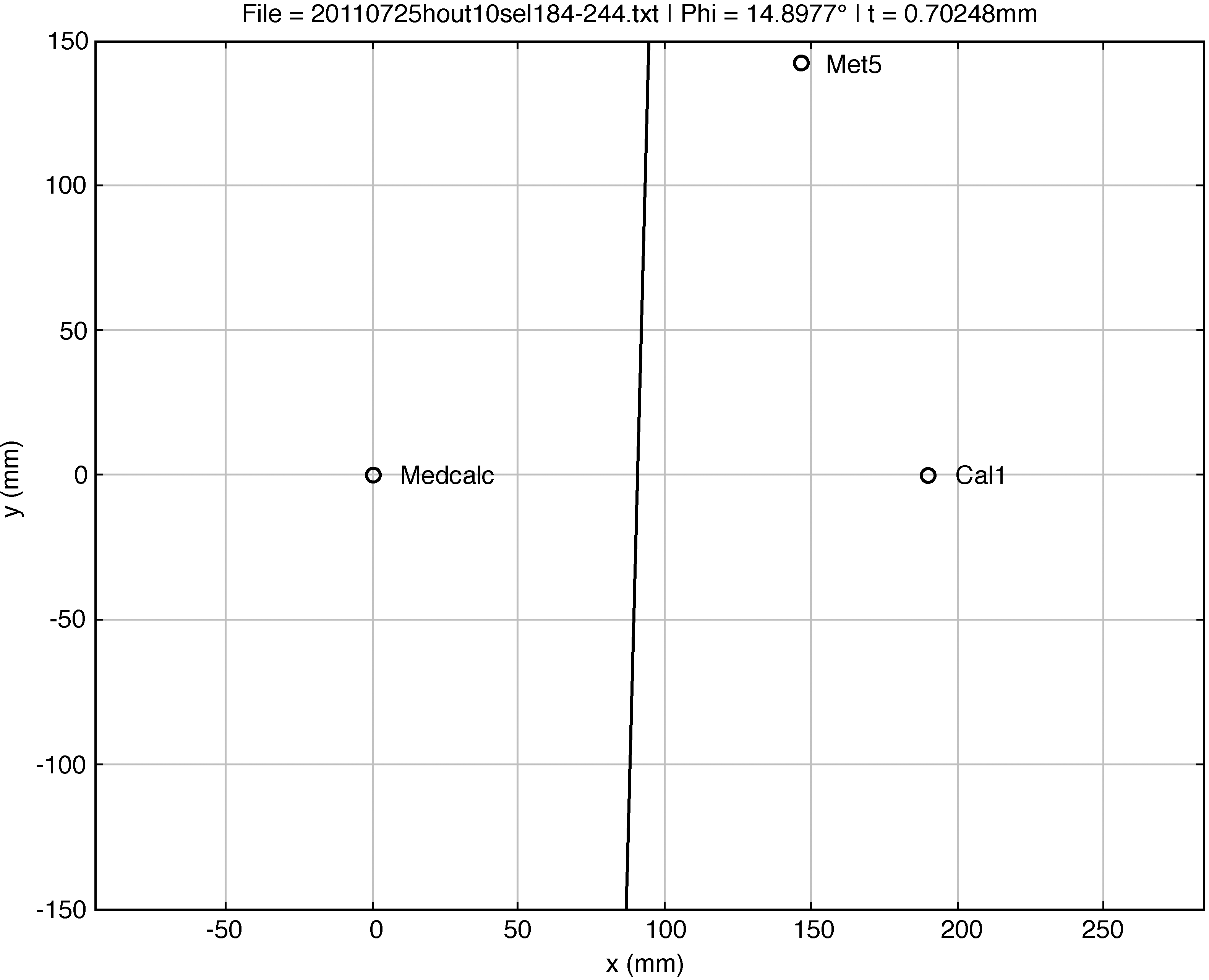
The Matlab program created a 2-D screenshot (
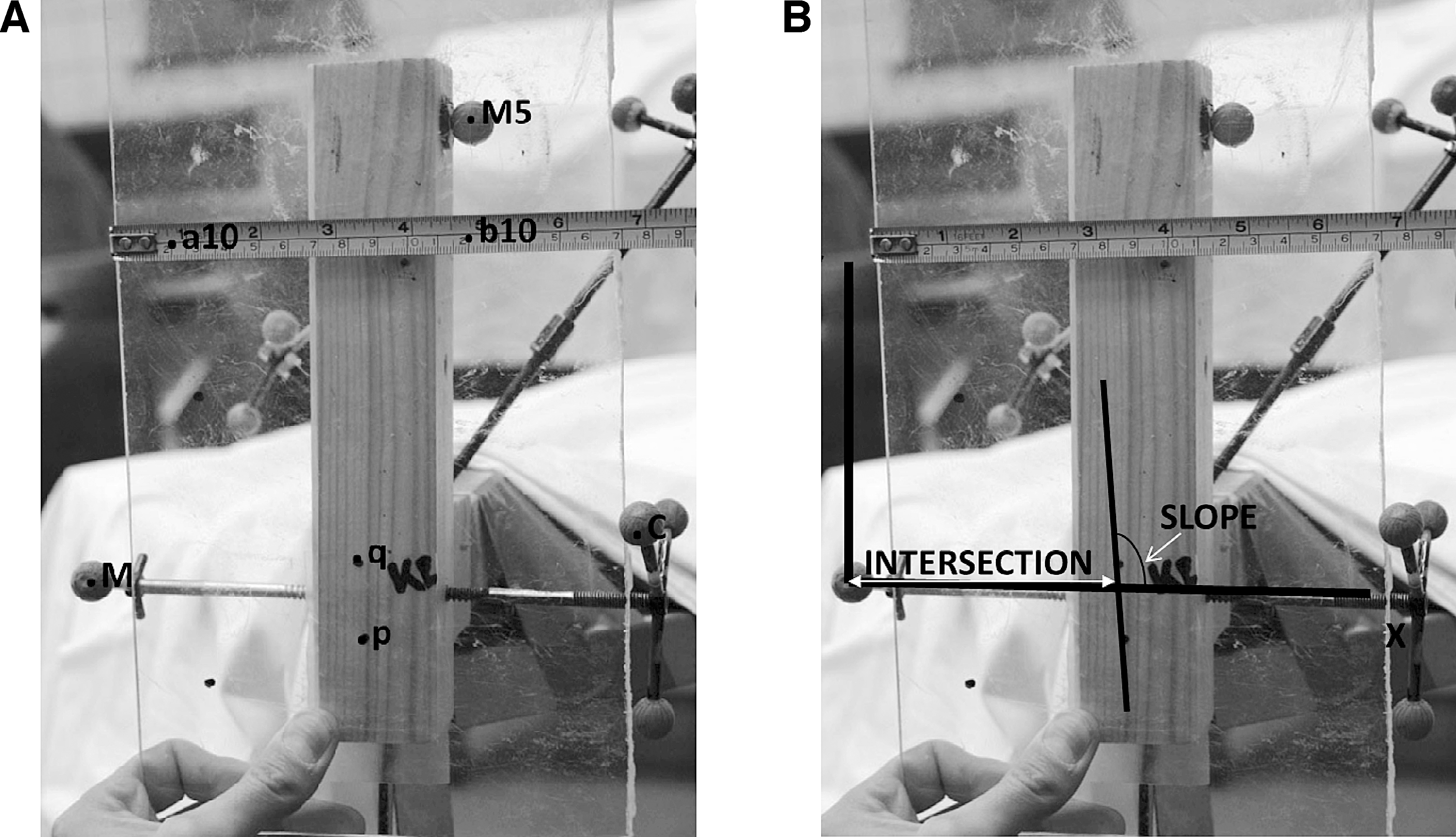
Fig. 3) for each data collection/test that was put through a transformation formula, enabling comparison of the different data sets. Data were transformed using five foot coordinates (Met5, Medcal, Cal1, p, and q) and two additional calibration coordinates (a10 and b10), all manually assigned by one of us (K.K.V.A.) (
Fig. 4A). This transformation of the raw data was performed to be able to match all digital pictures; the calibration compensated for possible picture distortion, making more accurate comparison possible. A similar transformation process was used in a previous research project.[
18] The x, y coordinates of the following points were defined: the 10-cm calibration point (a10), the point 10 cm further along the x-axis (b10), the middle of the fifth metatarsal marker (M5), the middle of the medial calcaneus marker defining the plantar surface (M), the middle of the lateral calcaneus marker defining the plantar surface (C), the most proximal point of the STJ axis recorded (p), and the most distal point of the STJ axis recorded (q), or in case of the Matlab screenshot, p and q are freely chosen points proximal and distal to the given line. Based on these coordinates, the deviation (intersection) and orientation (slope) could be calculated as shown in
Figure 4B.
Figure 3.
Screenshot showing the markers of the medial calcaneus (Medcalc), cal1 as part of the lateral cluster, and the fifth metatarsal marker (Met5).
Figure 3.
Screenshot showing the markers of the medial calcaneus (Medcalc), cal1 as part of the lateral cluster, and the fifth metatarsal marker (Met5).
Figure 4.
A, Five foot coordinates showing the calibration points a10 and b10, M5 for the fifth metatarsal head, M for the medial calcaneus marker, C for the lateral calcaneal marker, and p and q for 2 points determined by a rater indicating the subtalar joint (STJ) axis. B, The resulting intersection or deviation of the axis as the distance from the middle of the medial calcaneus marker to the intersection of the STJ axis and the slope or angle of the STJ axis related to the x-axis.
Figure 4.
A, Five foot coordinates showing the calibration points a10 and b10, M5 for the fifth metatarsal head, M for the medial calcaneus marker, C for the lateral calcaneal marker, and p and q for 2 points determined by a rater indicating the subtalar joint (STJ) axis. B, The resulting intersection or deviation of the axis as the distance from the middle of the medial calcaneus marker to the intersection of the STJ axis and the slope or angle of the STJ axis related to the x-axis.
Procedure
The mechanical foot model was moved through its complete STJ range of motion. These data, captured by the 3-D kinematic model, were used to investigate the validity of the performed palpation test.
Four testers (T1–T4) with different levels of experience in using the palpation technique as described by Kirby[
19] located the STJ axis on the wooden foot model. Two points of no rotation were determined with an interval of approximately 5 cm on the plantar surface of the mechanical foot model. The connecting line between these two points is assumed to be the plantar representation of the STJ axis in the transverse plane.[
19]
To locate the joint axis, the testers performed six alternating consecutive trials: three with the thumb and three with a punch pin. The punch pin was introduced to reduce the discrepancy between the contact surface of the thumb and the marking pen as described by De Schepper et al.[
18] Before marking the location of the joint axis, an OpSite foil (Smith & Nephew, Brussels, Belgium) was used so that any markings could easily be removed between testers to obtain independent tests. After each trial, a photograph was made of the determined hinge axis location, indicated by the markers, using a digital camera (Canon 30D; Canon USA Inc, Melville, New York). A descriptive analysis was made to summarize the data collected for the palpation technique.
Results
Validity of the Kinematic Model Setup
After all of the data were recorded, the actual location of the STJ axis of the mechanical model was marked on the plantar surface of the model (
Fig. 5). The slope and intersection of the joint axis were then matched with the mean axis determined by the kinematic model analysis (as shown in
Table 1) using the method described previously herein.
Figure 5.
Location of the hinge joint drawn on the foot model.
Figure 5.
Location of the hinge joint drawn on the foot model.
Table 1.
Overview of the Data Collected After Performing the Kinematic Model Analysis
Table 1.
Overview of the Data Collected After Performing the Kinematic Model Analysis
The data collected using thumb pressure were then compared with the data using the 3-D kinematic model. It was found that T1 was able to determine the orientation and location to 2° and 1 mm of accuracy, T2 to 6° and 2 mm, T3 to 1° and 2 mm, and T4 to 3° and 2 mm.
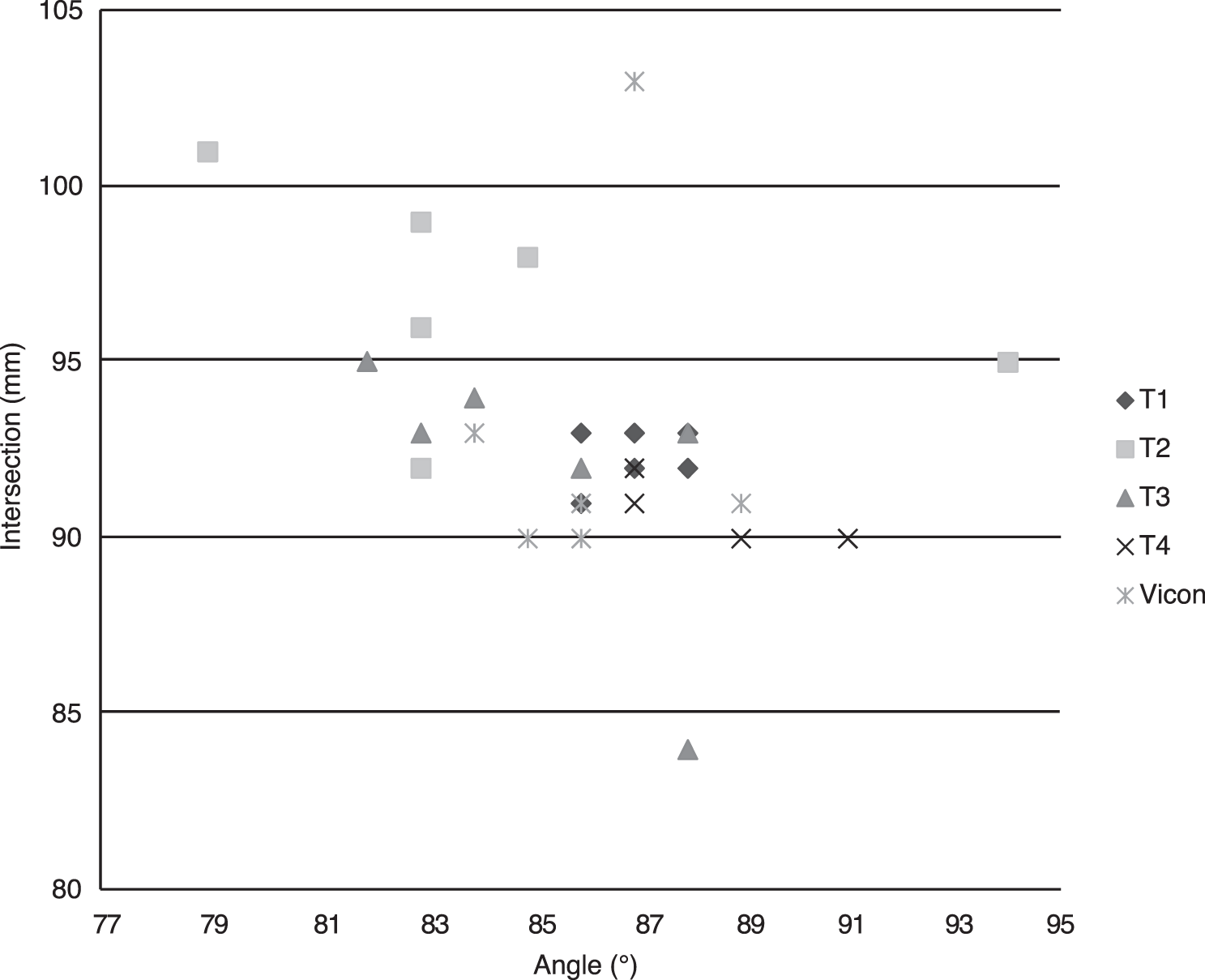
The data using the punch pin show an accuracy to the kinematic model–determined slope and intersection of 0° and 1 mm for T1, 4° and 6 mm for T2, 1° and 0 mm for T3, and 1° and 2 mm for T4 (
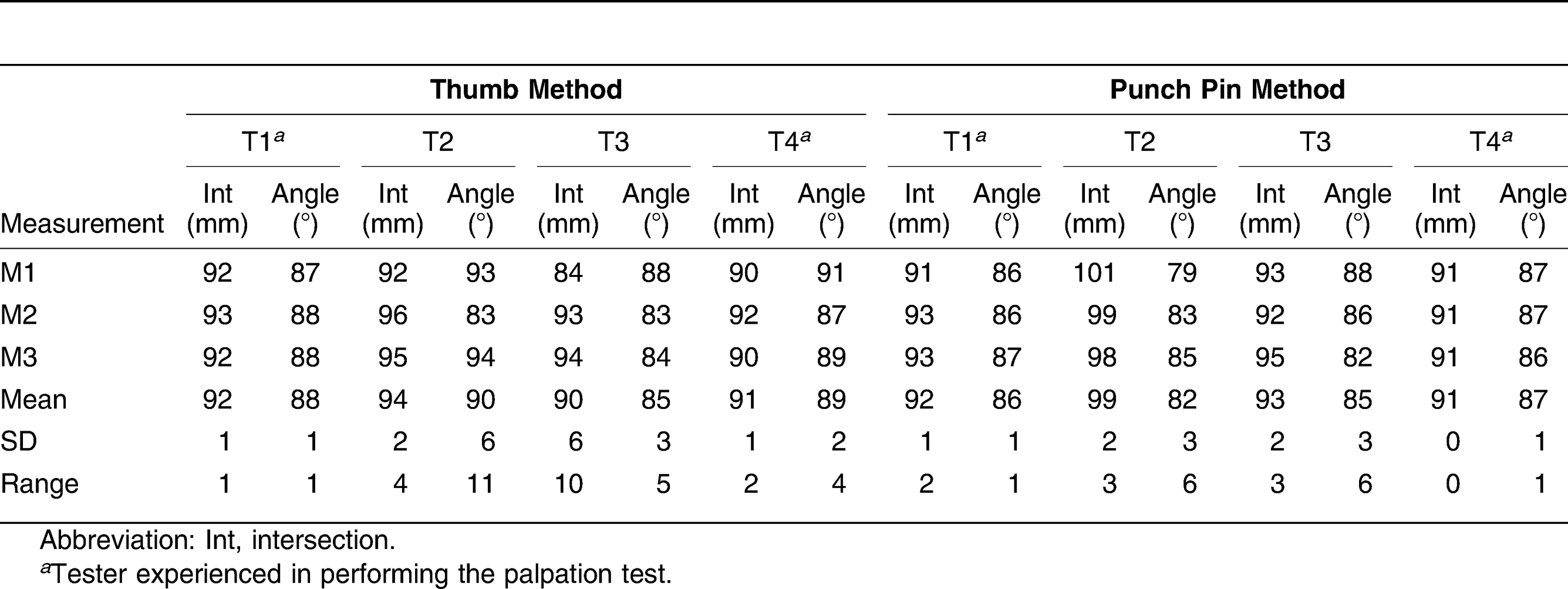
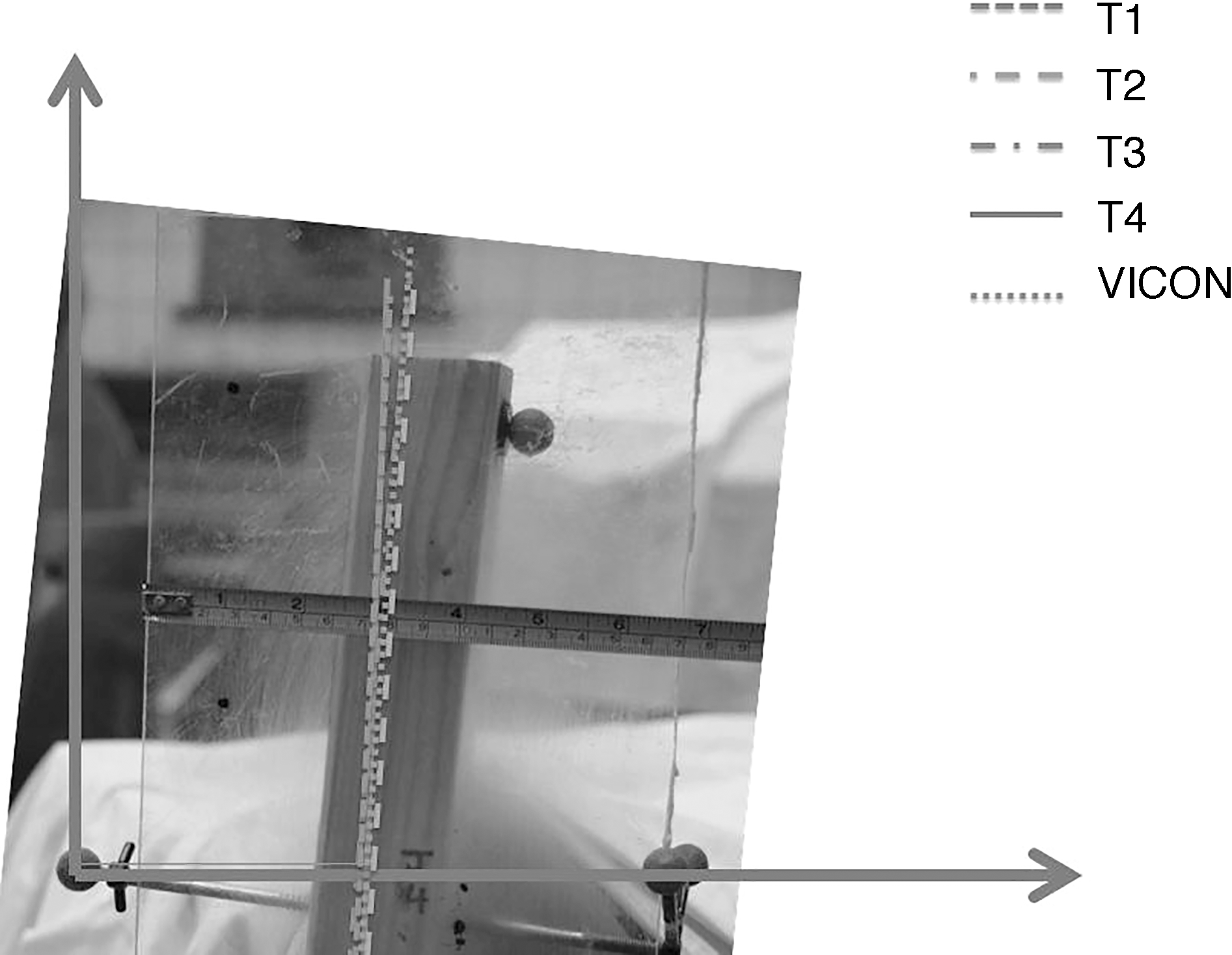
Table 2). All of the data are plotted in
Figure 6.
Table 2.
Descriptive Overview of the Data Collected After Performing the Palpation Technique Using the Thumb and Punch Pin Methods for 4 Testers (T1–T4)
Table 2.
Descriptive Overview of the Data Collected After Performing the Palpation Technique Using the Thumb and Punch Pin Methods for 4 Testers (T1–T4)
Figure 6.
The six trial coordinates (intersection/angle) determined by testers (T1–T4) and the kinematic model (Vicon).
Figure 6.
The six trial coordinates (intersection/angle) determined by testers (T1–T4) and the kinematic model (Vicon).
Precision of the Palpation Technique
In
Table 2, the test data are given as the range and mean ± SD of the joint axis location per tester (T1–T4), where T1 and T4 are experienced in performing the test. The table shows the results of the palpation technique using the thumb and punch pin. Each session consists of three measurements (M1, M2, and M3). The mean angle obtained for the joint axis ranges from 85° to 90° between testers using the thumb to palpate. When using the punch pin, the mean angle ranges from 82° to 87°. This shows, in general, a shift toward a more medially deviated axis using the punch pin method, but the intertester range stays the same. The intratester data of the experienced testers show a 1° (T1) and 4° (T2) angle deviation when using the thumb. The inexperienced testers have intratester deviations of 11° (T2) and 5° (T3). Compared with the data collected using a punch pin, the range in general reduces, except for T1, where the range stays at 1°, and T3, where the range increases 1°.
The mean intersection with the x-axis ranges from 90 to 94 mm from the medial calcaneal marker between testers. Intratester results show a range of 1 to 2 mm for the most experienced testers and 4 mm and 10 mm for the inexperienced testers. The punch pin data reduce the range to 2 mm and 0 mm for the experienced testers and to 3 mm for the other testers.
The kinematic model data show a mean angle of 86° with an intersection of 93 mm from the medial calcaneal marker (
Table 1). The overall mean angles, combining the thumb data with the punch pin data, result in mean slopes and intersections of 87° and 92 mm, 86° and 97 mm, 85° and 92 mm, and 88° and 91 mm for T1, T2, T3, and T4, respectively. A compact bundle of axes defined by different testers is visible where T1 and T3 are able to determine the orientation and location of the STJ axis with an accuracy of 1° and 1 mm, T2 to 0° and 4 mm, and T4 to 2° and 2 mm, taking into account the fact that these are mean results over six trials. These results are mapped in
Figure 7.
Figure 7.
An overview of the mean subtalar joint axis location as determined by each tester (T1–T4) and the kinematic model (Vicon).
Figure 7.
An overview of the mean subtalar joint axis location as determined by each tester (T1–T4) and the kinematic model (Vicon).
Discussion
Reliability and Validity of the Mechanical Model
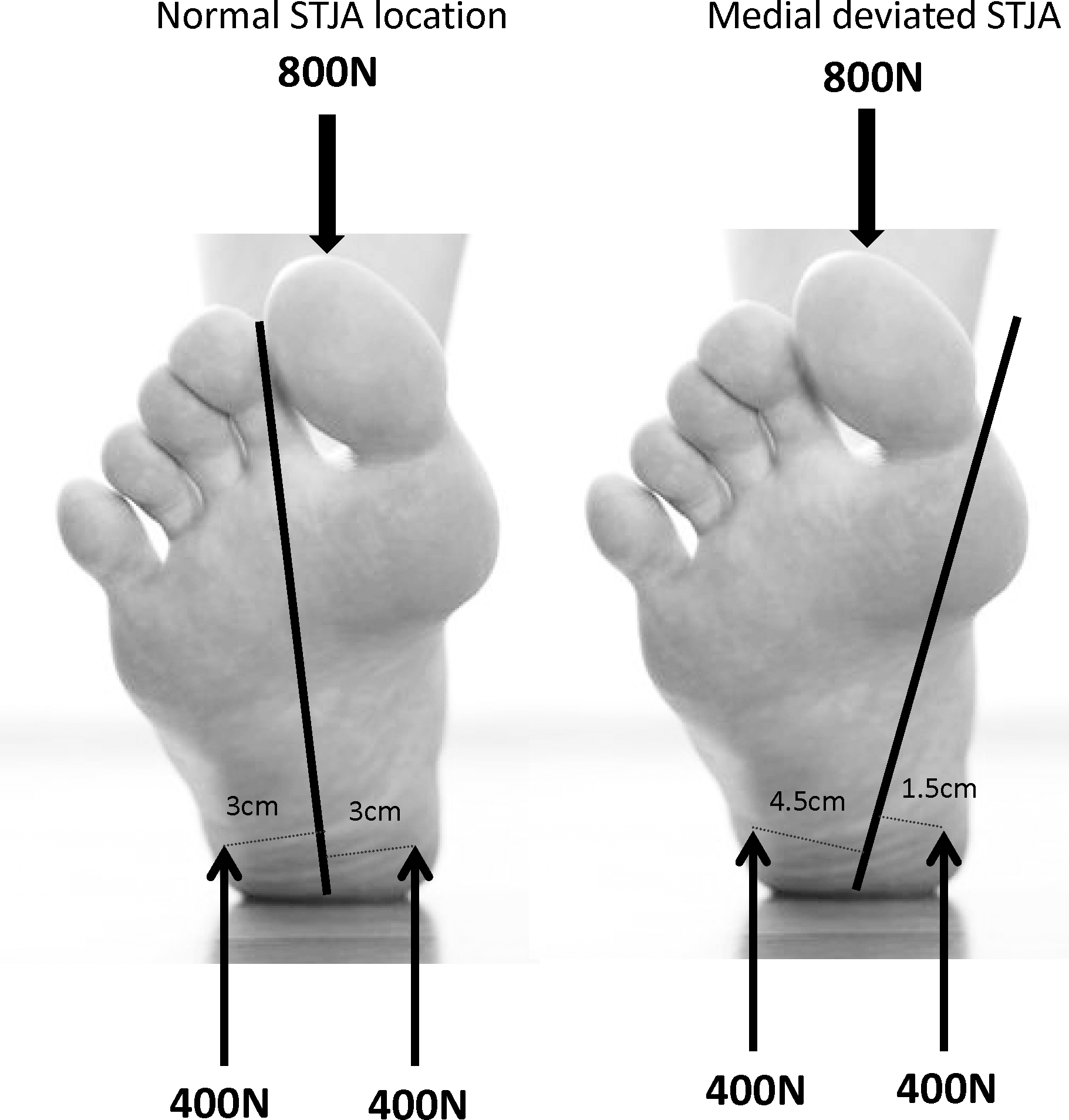
This study provided a precise protocol for evaluating the validity of Kirby's palpation technique in determining the position of the STJ axis using a kinematic model system. Implementing this concept in standard biomechanical inverse dynamic models where a longitudinal bisection of the foot is often used as the STJ axis, an equal surface and distance (ie, 4 cm) medial and lateral from the STJ axis would be standard for the GRF to act on. In an example of a person weighing 800 N, 400 N of GRF would act on the medial part of the calcaneus and 400 N of GRF would act on the lateral part of the calcaneus during initial heel contact (
Figure 8). The GRF produces an equal external STJ moment laterally and medially, counterbalancing the GRF acting on the plantar surface of the calcaneus. When the STJ axis would shift more medially, the biomechanical model would have a different result. In the same case with a different moment arm medially (ie, 1.5 cm) and laterally (4.5 cm), the GRF under the medial calcaneus would create a supination moment of 6 Nm. The GRF lateral from the STJ axis under the lateral part of the calcaneus would create a pronation moment of 18 Nm. The net external STJ pronation moment in this example would be 12 Nm. The difference becomes even more apparent when the forces are modeled on the forefoot (ie, the first and fifth metatarsal heads).
Figure 8.
An example of the rotational effect around the subtalar joint (STJ) axis of the ground reaction force under the calcaneus.
Figure 8.
An example of the rotational effect around the subtalar joint (STJ) axis of the ground reaction force under the calcaneus.
In addition, the method developed also tested the ability to detect differences between the thumb and punch pin methods. A small increase in the precision by which raters (except for T2) could determine the points of no rotation underscores the possible added value of the punch pin method.
Methodological Considerations
Before testing the Kirby palpation technique to locate the STJ axis in cadavers, it was important to develop and test the experimental methods in a mechanical model. The model allowed for testing of hypothetical concepts and for corrections (eg, the marker system) to be made. However, testing the Kirby STJ technique using a mechanical model would not be of clinical relevance because the simple hinge joints of the model do not provide a true representation of a human foot and limit the external validity of this study. Hence, cadaver models were chosen to test the clinical relevance of the developed method in a second/follow-up study.
The STJ consists of the calcaneus and the talus and has an essential role in the transmission of motion between the foot and the leg, with end of pronation and supination ranges of motion restricted by soft-tissue and osseous structures.[
20] As early as 1941, cadaver models were used to determine the STJ axis.[
21] Manter[
21] concluded that the STJ axis had an average angle of 42° to the transverse plane and 16° to the sagittal plane. This average angle of the STJ axis was verified by other authors.[
13] As a result of these studies, the biomechanics community as a whole started regarding the STJ complex as a hinge joint between the foot and the leg. In more recent years, this was challenged, and current thought is that the STJ has a helical or polyaxial axis.[
22,
23] Despite acknowledging these new insights, we have adopted a hinge model in this study because it is a suitable system to develop and test the methodological approach for studying intertester and intratester reliability using a cadaver model. It would, however, also be interesting to use a helical mechanical model in future studies.
Note that the STJ axis location as described in the literature has an average spatial location with a range of 20.5° to 68.5° in the transverse plane and 4° to 47° in the sagittal plane.[
13] Such axis orientation is difficult to replicate exactly in a mechanical model and is a limitation of this study. However, validation of the mechanical model, which was the focus of the present study, allows the use of this protocol in a cadaver study, which will be more representative and will allow more accurate determination of the actual ranges of the multitude of STJ axis spatial locations present in the human population.
Conclusions
The mechanical foot model allowed us to test a system/protocol to evaluate the reliability of the Kirby technique. This palpation technique is used in clinical practice to determine the STJ axis, yet has not been validated to date. There were a variety of limitations with the foot model, which used a hinge joint and silicone to provide a more “natural” feeling of testing a joint dynamically. Despite these limitations, this study has developed a reliable system to test this technique, and the mechanical foot model offers a valuable system to test the validity of Kirby's palpation technique that can be applied in a cadaver study.