The discovery of antibiotic drugs was one of the most significant medical achievements of the 20th century. The success of antibiotic drugs has been very impressive; however, the phenomenon of antibiotic drug resistance has curtailed this success. The improper use of antibiotic agents to prevent and treat infections has resulted in the emergence of resistance because improperly selected agents do not achieve the desired therapeutic outcome. Antibiotic drugs must be used judiciously to limit the emergence of drug-resistant bacteria. The World Health Organization Global Strategy defines the appropriate use of antimicrobial agents ‘‘as the cost- effective use of antimicrobials which maximizes clinical therapeutic effect while minimizing both drug related toxicity and the development of antimicrobial resistance’’ [
1]. Infections caused by gram-positive and gram-negative antibiotic-resistant bacteria continue to challenge clinicians across all specialties. The ‘‘ESKAPE’’ pathogens (
Entero- coccus faecium, Staphylococcus aureus, Klebsiella pneumoniae, Acinetobacter baumannii, Pseudo- monas aeruginosa,and extended-spectrum b-lactamase– positive bacteria, such as
Escherichia coliand
Enterobacterspp) have been reported to be responsible for nosocomial, hospital-acquired, and community-acquired infections whose isolates are resistant to antimicrobial agents [
2]. For example, acute foot ulcers are often caused by aerobic grampositive cocci, such as
S aureusand b-hemolytic streptococci. Chronic foot wounds are more likely to be polymicrobial, often comprising aerobic and anaerobic organisms, including those designated as ‘‘ESKAPE’’ pathogens.
Antimicrobic stewardship (AS) programs are becoming a mainstay in the fight against multi- drug-resistant organisms. Antimicrobic stewardship is a key component of the multifaceted approach to preventing the emergence of antimicrobial drug resistance. It is a marriage of infection control and antimicrobial drug management. The principles of AS have attracted much attention and have led to myths and misconceptions. This review article allows data from previously published literature to be presented and evaluated in the context of clinically based evidence to define and justify the current practice of AS. The goals of this review are threefold: 1) We review the available literature outlining the concept and practice of AS. 2) Programs for AS are increasingly recognized as important quality initiatives for health-care institutions, serving as an important patient safety plan; therefore, a discussion describing how to adopt and apply these principles to the individual clinician’s practice as it applies to lower-extremity infections is offered. 3) Specific antimicrobial pharmacologic spectra and antibiogram information are offered as a narrative and presented graphically.
Traditionally, an AS program is defined as an ongoing effort by a health-care institution to optimize antimicrobic drug use in hospitalized patients to improve patient outcomes, ensure costeffective therapy, and reduce the adverse sequelae of antimicrobial drug therapy by reducing antimicrobial drug resistance, reducing antimicrobial drug costs by limiting the overuse and inappropriate use of these agents, and promoting an active switch from intravenous to oral therapy [
7,
8]. In addition, by reducing unnecessary use of antibiotic drugs, the risks of drug-related adverse events and their associated costs are minimized [
8]. In 2007, the Infectious Diseases Society of America published guidelines in conjunction with the Society for Healthcare Epidemiology of America to outline AS core strategy practices [
9,
10,
11] for health-care institutions: 1) prospective antibiotic drug audit with intervention, 2) formulary restriction with preauthorization requirements, 3) development of guidelines and clinical pathways, 4) antibiotic drug dose optimization, and 5) conversion of antibiotic intra- venous therapy to effective oral therapy.
The duration of antibiotic drug therapy is often longer than necessary based on perceived benefit of longer durations despite clinical improvement.[
11] Factors identified that lead to inappropriate use of antimicrobial agents are presented in
Table 1. Antibiotic drug use can be improved by changing prescribing requirements so that drug orders (prescriptions) include the type of antibiotic, the quantity, the dose, the duration, and the indication. Identifying appropriate combination therapy for the prevention of resistance and identifying and implementing a process for streamlining or de-escalating antimicrobial drug therapy have been advocated by the Infectious Diseases Society of America as essential components of AS programs [
10]. This training and educational component needs to include a mechanism for quality control audits and feedback, the provision of education, and the development of guidelines and clinical pathways [
10].
Table 1.
Factors Identified that Lead to Inappropriate Use of Antimicrobial Agents.
Applying Principles to the Acute-Care Private Practice Setting
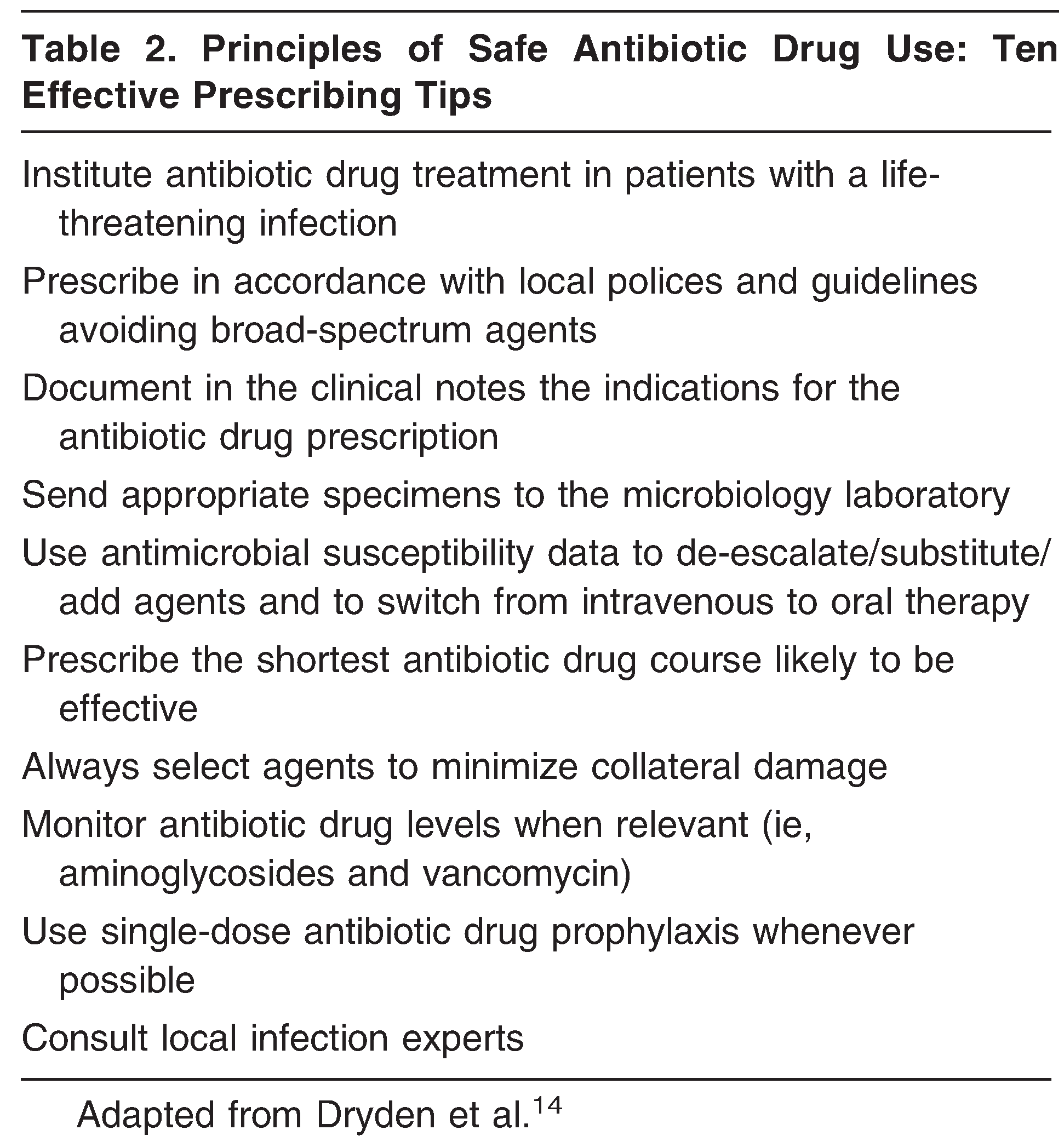
When prescribing antibiotic agents, individual clinicians should consider their clinical and public health responsibilities. The objective should be to provide optimal patient care while seeking to minimize the emergence and spread of antibiotic drug resistance. Some important criteria for selecting particular antibiotic agents include antimicrobial efficacy, toxicity, cost, and presumptive ecological impact. Two essential questions asked to determine whether appropriate antibiotic drug prescribing has occurred are 1) have the appropriate culture samples been collected before starting antibiotic drug therapy and 2) do the culture results necessitate modifying the empirical antibiotic drug therapy? Components of appropriate antibiotic drug use include appropriate selection, appropriate dosing and route, duration, and de-escalation or streamlining according to microbiology results. Principles of safe antibiotic drug use include the ten effective prescribing tips presented in
Table 2 [
14,
15].
Table 2.
Principles of Safe Antibiotic Drug Use: Ten Effective Prescribing Tips.
Table 2.
Principles of Safe Antibiotic Drug Use: Ten Effective Prescribing Tips.
De-escalation or streamlining is the practice of changing the antibiotic drug prescribed from an initial empirical broad-spectrum agent to one with a narrower, more focused spectrum once the pathogen has been isolated [
14,
15,
16]. De-escalation resolves the apparent conflict between two principles: 1) clear data that early broad-spectrum antibiotic drug therapy reduces sepsis mortality rates and 2) clear data that excess use of broad-spectrum antibiotic drugs increases the emergence of resistant organ- isms. The most common approach to streamlining involves discontinuing unnecessary or redundant antimicrobial drug therapy based on culture results and antimicrobial susceptibility and initiating targeted therapy with a more narrow spectrum of activity suited to the isolated pathogen. One observed challenge is that clinicians are often reluctant to de-escalate therapy when culture results are negative and clinical improvement has been observed [
15]. Reducing the duration of antimicrobial drug therapy is another approach to de- escalation. The duration of antibiotic drug therapy in many clinical practice guidelines is based on expert opinion, not on the results of randomized clinical trials.
Bacterial skin infections are commonly diagnosed by clinicians working in the ambulatory setting [
17]. Many soft-tissue abscess–forming infections can be successfully treated with surgical incision and drainage and no antibiotic agents [
16]. The fact that antibiotic drugs are not necessary in treating uncomplicated staphylococcal skin infections was suggested by the results of a trial published in 1957 comparing intramuscular penicillin with oral penicillin for a variety of skin infections, 80% of which were boils, abscesses, or carbuncles [
18]. Lee et al [
19] demonstrated that incision and drainage without adjunctive antibiotic drug therapy was effective management of community-acquired methicillin- resistant
S aureusskin and soft-tissue abscesses with a diameter of less than 5 cm in immunocompetent children. The findings from Moran et al [
20] reinforce those from Lee et al by emphasizing the importance of adequate drainage and debridement of skin and soft-tissue infections.
Patients with cellulitis who have mild local symptoms and no evidence of systemic disease can be treated on an outpatient basis. When empirical antibiotic drug therapy is provided for the treatment of skin and soft-tissue infections compatible with
S aureus, local susceptibility data should be used to guide treatment [
21,
22]. An antistaphylococcal penicillin or cephalosporin is still a reasonable option for first-line therapy in a patient with mild-to-moderate illness and no significant comorbidities if the local prevalence of methicillin resistance among community
S aureusisolates is low [
21,
22]. The treatment duration for cellulitis is controversial; shorter-duration therapy may be equally as effective as longer-duration therapy [
21,
22]. In general, antibiotic drug therapy may need to be continued until clinical signs and symptoms of the infection resolve. The patient should be reassessed with short-interval follow-up, ideally within 48 to 72 hours, to ensure improvement [
21,
22]. This has been aptly titled the ‘‘better plus 2’’ approach in that the patient is treated until clinically ‘‘better’’ and then is given antibiotic drugs for an additional 2 to 3 days instead of the rote use of a set duration of therapy, ie, 10 to 14 days.
Hepburn et al [
23] performed a randomized, doubleblind, placebo-controlled trial to determine whether the efficacy of 5 days of oral levofloxacin therapy is equal to that of 10 days of oral levofloxacin therapy for patients with cellulitis. Eighty-seven patients were randomized and analyzed by intention-to-treat. There was no significant difference in clinical outcomes between the two courses of therapy at 14 and 28 days of therapy [
23]. These investigators concluded that in patients with uncomplicated cellulitis, 5 days of therapy with levofloxacin seems to be as effective as 10 days of therapy [
23]. Osteomyelitis is a common and challenging condition for individual physicians to manage. An essential component of the most curative treatment regimen relies on the clinician selecting effective antibiotic therapy. Spellberg and Lipsky [
24] reviewed systemic antibiotic drug therapy for osteomyelitis in adults. Four salient points are presented by these authors when treating chronic osteomyelitis in adults: 1) Oral antibiotic drug therapy with highly bioavailable agents is an acceptable alternative to parenteral therapy [
24]. Sulfamethoxazole-trimethoprim and clindamycin are preferable oral agents for treating osteomyelitis caused by gram-positive cocci, and oral metronidazole is the agent of choice for treating anaerobic osteomyelitis [
24]. 2) The addition of rifampin to an antibiotic drug regimen has been shown to improve cure rates [
24]. 3) The duration of antibiotic therapy must be individualized based on the patient’s clinical and radiographic response, with continued monitoring after cessation of therapy [
24]. 4) Surgical resection of necrotic and infected bone, in conjunction with antibiotic drug therapy, seems to increase the cure rate of osteomyelitis [
24].
Duration of curative antimicrobial drug therapy for most patients with osteomyelitis who have received stage-appropriate surgical interventions is recommended in the literature to be a minimum of 4 to 6 weeks [
24,
25,
26,
27,
28,
29]. The duration of therapy remains empirical [
30] because there are no clinical studies or documented records indicating the superiority of the 4- to 6-week course of antibiotic drug therapy over other durations [
31,
32]. Liu et al [
29] review and emphasize that surgical debridement and drainage of associated soft-tissue abscesses is the mainstay of therapy and should be performed whenever feasible when clinicians are managing methicillinresistant
S aureusbone and joint infections. Surgical procedures and debridement help diminish the microbial load, eradicate the unviable tissues, and revitalize the dead space with healthy soft tissue and neovascularization [
27].
For septic arthritis, drainage or debridement of the joint space should always be performed [
29]. The optimal route of administration of antibiotic drug therapy for septic arthritis has not been established [
29]. Parenteral, oral, or initial parenteral therapy followed by oral therapy may be used depending on individual circumstances [
29]. Finally, a 3- to 4-week course of therapy is recommended [
29].
Diabetic foot infections require coordinated management by a multidisciplinary foot care team [
33]. Infections should be categorized by their severity on the basis of readily assessable clinical and laboratory features [
33]. Antibiotic drug therapy is necessary for almost all infected wounds, but it is often insufficient without appropriate wound care [
33]. There is only limited evidence with which to make informed choices among the various topical, oral, and parenteral antibiotic agents [
33]. Antibiotic drug therapy is continued until there is evidence that the infection has resolved but not necessarily until the wound has healed [
33]. Suggested durations of antibiotic drug therapy are as follows: for mild infections, 1 to 2 weeks usually suffices, but some require an additional 1 to 2 weeks; for moderate and severe infections, usually 2 to 4 weeks is sufficient, depending on the structures involved, the adequacy of debridement, the type of soft-tissue wound cover, and wound vascularity; and for osteomyelitis, generally at least 4 to 6 weeks is required, but a shorter duration is sufficient if the entire infected bone is removed, and probably a longer duration is needed if infected bone remains [
33].
Many clinicians have adopted the practice of using clinical assessment and normalization of inflammatory markers such as C-reactive protein and sedimentation rates to define the duration of antibiotic drug therapy [
22]. These inflammatory markers have proved useful in managing acute hematogenous pediatric osteomyelitis [
34]. On the other hand, their role in determining the duration of therapy in adults has not been thoroughly evaluated [
25].
Serum procalcitonin levels increase dramatically within 2 to 4 hours after the onset of systemic inflammation, persist as long as the inflammatory process continues, and normalize with recovery [
35]. Procalcitonin levels are increased in moderate-to- severe bacterial infections but remain at low levels in viral infections and nonspecific inflammatory diseases [
36]. Procalcitonin has been shown to reduce antimicrobial drug consumption with no adverse outcome in 11 randomized controlled trials. Procalcitonin may not be the perfect biomarker, but with further study the concept of procalcitonin-guided antibiotic drug discontinuation after clinical stabilization, in conjunction with AS programs, may prove to be very helpful in assisting the clinician in determining the duration of antibiotic drug therapy [
37].
Antibiogram
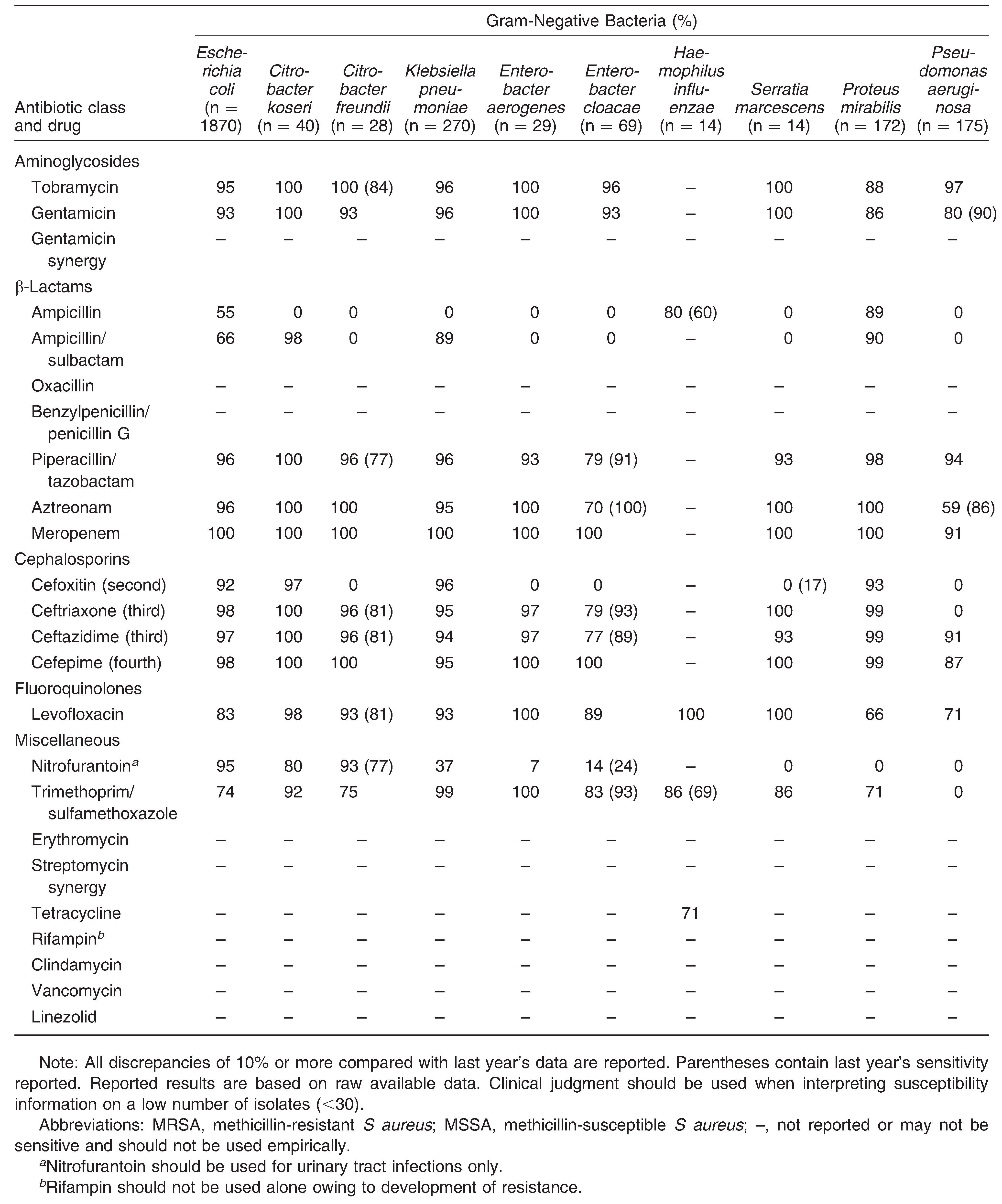
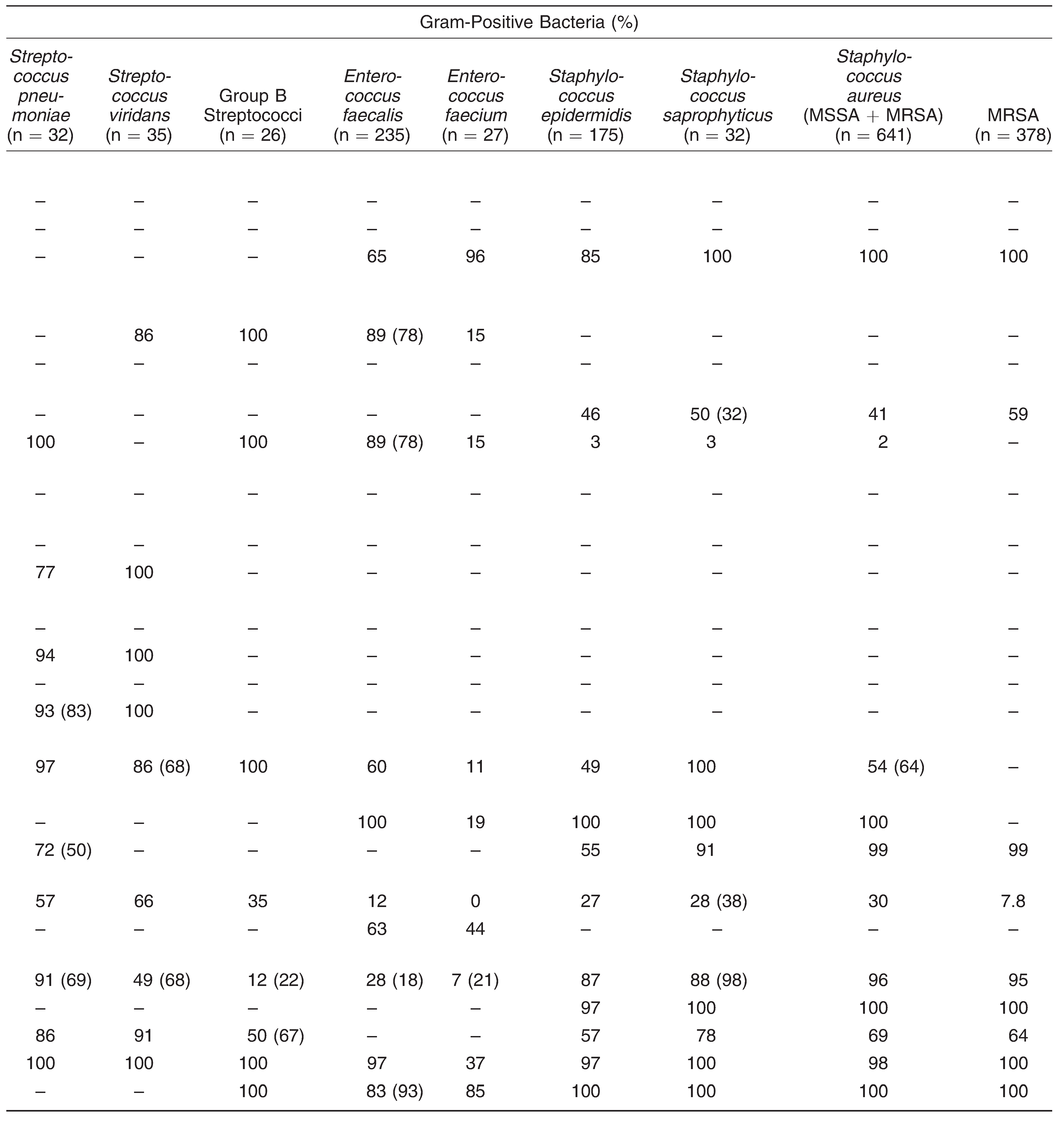
An antibiogram is the result of laboratory testing for the sensitivity of an isolated bacterial strain to different antibiotic drugs (
Table 3). The Clinical and Laboratory Standards Institute defines an antibiogram as an overall profile of antimicrobial susceptibility of a microbial species to a battery of antimicrobial agents [
38]. The primary purpose of the cumulative antibiogram is to guide community clinicians in choosing empirical antimicrobial drug therapy during the 48 to 72 hours before specific culture and sensitivity results are available [
39,
40]. At minimum, the information required on an antibiogram includes organisms, antibiotic drugs tested, and percentage susceptibility. Beyond these core susceptibility data, other useful types of accessory information that may be added to the antibiogram include formulary policy issues, criteria for use, dosing conversion charts and dosing nomograms, dosing alterations for organ impairment, antibiotic drug pricing, and others.
Table 3.
Community Hospital Antibiogram of Percentage of Susceptible Bacteria: January 2010 to June 2011.
Table 3.
Community Hospital Antibiogram of Percentage of Susceptible Bacteria: January 2010 to June 2011.
However, if drugs included in the cumulative antibiogram are tested only on selected isolates, the data will be skewed [
39,
41]. Some of the most common interpretation issues that can influence antibiogram data involve the inclusion of multiple isolates from the same patient, lack of precise data for very small numbers of certain bacterial isolates and subsequent overinterpretation of results or magnification of a perceived resistance problem, selecting and testing subsets of isolates against new antimicrobial agents, and presenting data for shortened periods, ie, monthly antibiograms. Limitations to interpretative reading of antibiograms include the high complexity of resistance mechanisms, limited information about some mechanisms of resistance, low- level resistance, multifactorial multiresistance, oversimplification of interpretive reading, and mistakes when deducing mechanisms of resistance. Finally, not all clinical laboratories currently com- ply with Clinical and Laboratory Standards Institute approved guideline M39-A3, [
41] primarily because of software limitations.
Community-level aggregated antibiogram information can enable providers and epidemiologists in that community to track antimicrobial drug resistance levels and to raise awareness of the resistance problem and the need to use optimal empirical therapy and may be used to identify opportunities to reduce inappropriate antimicrobial drug use and ascertain the success of such efforts.