Named after Napoleonic French field surgeon and physician Jacques Lisfranc, the tarsometatarsal joint complex encompasses the transverse arch of the foot. Overall, Lisfranc joint mobility is rigid.[
1] Range of motion limitation is primarily due to ligament constraints, joint contact, and muscle activity. Interaction among these factors allows for smooth load transition during the typical physiologic forces of daily living.
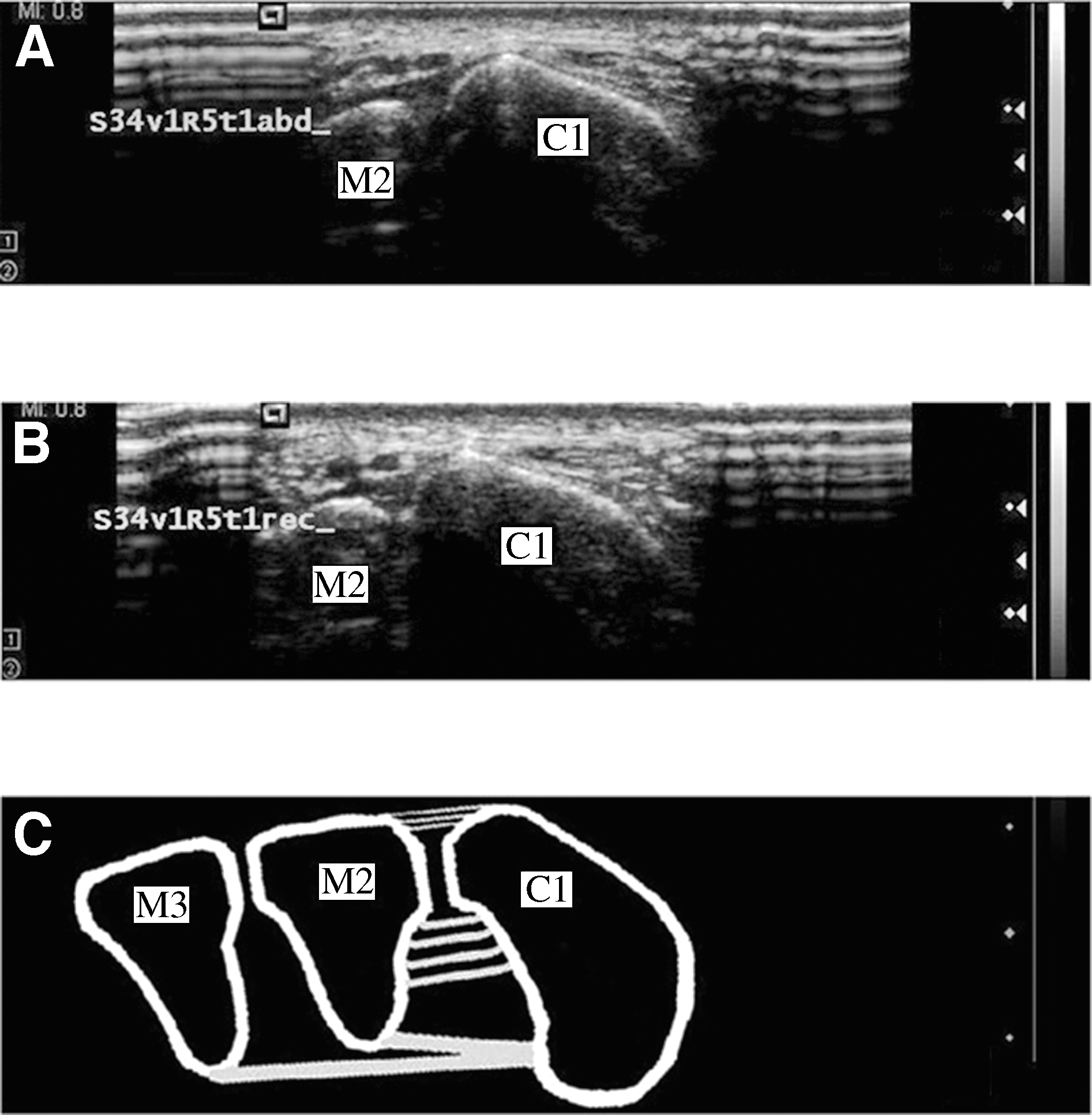
Unlike the Lisfranc joint, the Lisfranc ligament spans only the medial cuneiform and the base of the second metatarsal. This ligament complex is divided into three distinct segments: dorsal, interosseous, and plantar respective to their anatomical positions (
Fig. 1A). There is a substantial difference in cross-sectional area of these three ligaments.[
2] The interosseous ligament has the largest cross-sectional area and, thus, is the strongest, whereas the dorsal ligament is the smallest and weakest of the three.[
3] Owing to the unique absence of a transverse ligament between the first and second metatarsal bases, compared with the lesser metatarsals,[
4] this is an area of relative weakness. The interosseous Lisfranc ligament primarily provides first-ray stabilization, thereby preventing diastasis under loaded conditions.[
5] Ligamentous strain characteristics allow for elongation in a nonlinear manner until ultimate strain is achieved at ligament rupture.[
6] In addition to strain, foot position has been shown to be a factor in reaching Lisfranc ligament injury sooner.[
7] An abducted position may facilitate injury and make ligamentous instability more apparent with diagnostic evaluation. Investigation into load versus position stress/strain characteristics of the Lisfranc ligament would allow for more definitive understanding of the complex function of these structures.
Figure 1.
Transverse section through the Lisfranc joint. A, Representative drawing of the dorsal, interosseous, and plantar Lisfranc ligaments. B, Ultrasound image for medium load in the abducted position. C, Ultrasound image for medium load in the rectus position. C1, medial cuneiform; M2, second metatarsal; M3, third metatarsal.
Figure 1.
Transverse section through the Lisfranc joint. A, Representative drawing of the dorsal, interosseous, and plantar Lisfranc ligaments. B, Ultrasound image for medium load in the abducted position. C, Ultrasound image for medium load in the rectus position. C1, medial cuneiform; M2, second metatarsal; M3, third metatarsal.
The traditional osseous Lisfranc injury classification by Hardcastle et al in 1982,[
8] and later modified by Myerson et al,[
9] has a high degree of interrater reliability to communicate injury patterns but fails to address rupture without diastases.[
10] Twenty years later, Nunley and Vertullo
10 proposed a new classification system that addresses this type of subtle injury. The variable presentation patterns with subtle Lisfranc injuries make them notoriously difficult to diagnose, and this is where the true controversy lies.[
11] This variability is due to several reasons, including confusion from overlapping articulations, dislocations followed by spontaneous reduction, and the inability to tolerate weightbearing to create displacement during imaging.[
12] Injury frequency is approximately 1 case per 55,000 individuals in a year,[
13,
14] making them rare.[
15] Nonetheless, approximately 20% of initial Lisfranc joint injuries that present to emergency departments are missed on standard weightbearing radiographs.[
8,
16] The uncommon and variable nature of Lisfranc injuries makes them unique, but more recent literature suggests that they are more common than previously thought owing to the subtle nature of a pure ligamentous rupture.[
16,
17]
Missed or misdiagnosed injury not only has medicolegal implications but also carries long-term sequelae for pure ligamentous Lisfranc injury.[
18] Although soft-tissue involvement is the primary concern, individuals can experience degenerative arthritis, chronic pain, and disability if left untreated.[
1,
4,
19] Because of these insidious ramifications, this type of injury has been considered by some to be a fracture equivalent.[
20] Weightbearing radiographs are fairly standard first-line imaging for a patient presenting with midfoot pain from a known incident; however, ligamentous injuries frequently fail to receive a detailed diagnosis because of normal radiologic findings despite severe ligamentous damage. A second series of stress radiographs or additional imaging of static or dynamic nature (computed tomography, magnetic resonance imaging, sonography, or bone scintigraphy) may be more useful for a correct diagnosis when radiographs are unremarkable.[
10,
21‐
23]
Ultrasound imaging of the Lisfranc joint complex is a relatively novel concept in podiatric medicine. Literature is nearly absent in this field. Signal attenuation at the joint space, due to the proximity of the bony surfaces, does not allow for imaging of the interosseous Lisfranc ligament.[
24] In 2009, Woodward and colleagues[
23] advocated using the dorsal Lisfranc ligament as an indicator of Lisfranc complex intactness for ligamentous stability. Because the dorsal Lisfranc ligament can easily be viewed owing to its superficial location, it is the prime subject for this evaluation. An intact dorsal Lisfranc ligament indirectly indicates an intact Lisfranc ligament complex, whereas rupture or absence may indicate joint instability. This information could, thereby, provide a timely diagnosis and prompt treatment. This study assessed strain characteristics of the dorsal Lisfranc ligament under clinically and physiologically relevant stress and foot positions. Understanding the in vivo nature of the dorsal Lisfranc ligament by ultrasound imaging may potentially add another diagnostic modality for Lisfranc ligament instability.
Results
The participant population was primarily based on otherwise healthy graduate school–aged individuals (mean ± SD age, 24.74 ± 2.70 years; age range, 21–32 years) who were asymptomatic and free of foot abnormalities and previous foot surgeries. The average participant body weight was 75.17 kg; height, 173.93 cm; foot length, 25.40 cm; foot width, 9.48 cm; passive ankle dorsiflexion, 10.1°; total subtalar joint range of motion, 29.9°; and navicular height in bipedal stance, 69.80 mm (
Table 1). All of these clinical parameters were well within the normative range.[
25] In addition, the time from the start of a female participant's menstrual cycle was a mean ± SD of 12.77 ± 8.11 days (range, 1–31 days).
The Pearson correlation coefficient was used to determine any relationship between anthropometric measures and dorsal Lisfranc ligament length. This allowed for potential normative documentation of dorsal Lisfranc ligament length across individuals expressed as a percentage. The correlations between dorsal Lisfranc ligament length and anthropometric measures were low to medium at best. The dispersion of coefficients across all of the variables range from r = 0.367 to 0.435 for height, r = 0.327 to 0.382 for foot length, and r = 0.347 to 0.397 for foot width.
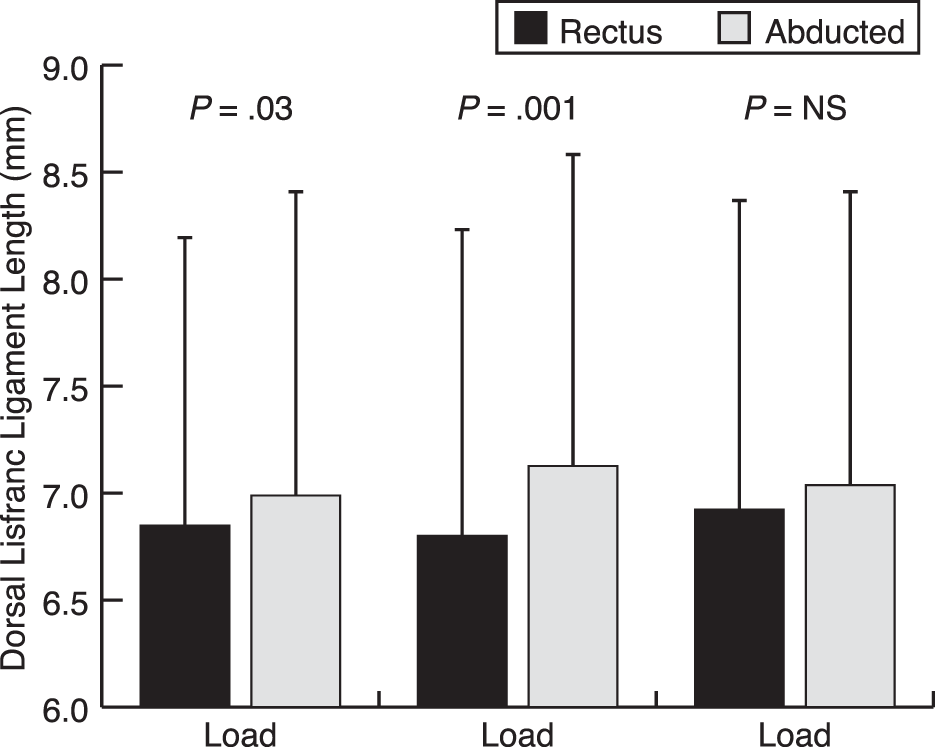
The mean ± SD dorsal Lisfranc ligament length over all of the conditions was 7.02 ± 0.21 mm (95% confidence interval [CI], 6.60–7.45 mm). The mean ± SD dorsal Lisfranc ligament length in the rectus position was 6.91 ± 0.21 mm (95% CI, 6.50–7.33 mm) and in the abducted position was 7.12 ± 0.21 mm (95% CI, 6.70–7.54 mm). The position main effect found for dorsal Lisfranc ligament length demonstrated a significant overall increase in ligament length of 0.21 mm (
P < .001) from a rectus to a 15° abducted foot orientation. Although there was a significant position main effect for the dorsal Lisfranc ligament to become elongated when moving between the rectus and abducted positions, only low and medium stress loads elicited significant length increases (
P = .03 and
P < .001, respectively) (
Fig. 3). These ligament length changes, expressed as a percentage of ligament length change, represented 2.13% and 4.03%, respectively.
Table 3 displays dorsal Lisfranc ligament length data for all of the stress loads at each position.
Figure 3.
Comparison of mean ± SD rectus and 15° abducted foot orientation dorsal Lisfranc ligament lengths for different load levels. NS, nonsignificant
Figure 3.
Comparison of mean ± SD rectus and 15° abducted foot orientation dorsal Lisfranc ligament lengths for different load levels. NS, nonsignificant
Table 3.
Dorsal Lisfranc Ligament Length by Load and Position.
Table 3.
Dorsal Lisfranc Ligament Length by Load and Position.
The mean ± SD overall dorsal Lisfranc ligament length changes with load were as follows: low load, 6.98 ± 0.20 mm (95% CI, 6.57–7.39 mm); medium load, 7.02 ± 0.21 mm (95% CI, 6.59–7.45 mm); and high load, 7.04 ± 0.21 mm (95% CI, 6.62–7.46 mm). There was no load main effect for dorsal Lisfranc ligament length overall, indicating no increase in ligament length with stress as may be expected. There was a nonsignificant decrease in dorsal Lisfranc ligament length in the rectus position from low to medium loads and from medium to high loads in the abducted position (
Table 3). We also found a nonsignificant load × position interaction.
The normalized values for dorsal Lisfranc ligament length to foot length across all of the load and position conditions ranged from 2.07% to 2.84%. The longest length, mean ± SD 2.84% ± 0.60% of foot length (95% CI, 2.66%–3.01%) was achieved at the 15° abducted position under moderate load, which can be achieved easily in bilateral stance close to 50% of the body weight (mean ± SD 56.77% ± 8.24% of body weight). These findings did not change when normalized foot length values were used instead of raw ligament lengths in the analysis.
The average (across position and load conditions) intraclass correlation coefficients were 0.889 (range, 0.873–0.913) and 0.747 (range, 0.607–0.811) for the within and between sessions, respectively. These values reflect substantial strength of measurement agreement (range, 0.61–0.80) to almost perfect (range, 0.81–1.00) according to Landis and Koch.[
28]
Discussion
The mechanical behavior of the tarsometatarsal joints is quite complex. It has been described by Huson[
29] as a constraint mechanism in which joints are interdependent on adjacent joints and motion happens simultaneously. Similarly, Lakin et al[
1] agree that forces are redirected to adjacent tarsometatarsal joints to aid in regulating pressures. Movement of the medial cuneiform–second metatarsal joint occurs in this constrained anatomical system that is bound by ligament length, insertion patterns, and joint mechanics, all of which are mutually supporting[
29] and offer rigidity.[
1] These mechanics are evident in the present data.
The Lisfranc ligament complex is responsible for structural support and for maintaining this portion of the medial column without the aid of the proximal transverse first metatarsal–second metatarsal ligament. When contrasting foot positions, the ligamentous strain observed between the low and medium stress loads demonstrates decreased ligament strain in the rectus and increased strain in the abducted position. This implies decreased motion in the Lisfranc joint in the rectus position and, thus, greater stability. Conversely, the joint structure becomes less stable in the abducted position. This mechanism of unlocking the Lisfranc joint in the abducted position has the potential for greater arch deformation under load.[
18]
Although the loads applied in this study did not exceed full body weight, some participants experienced mild knee discomfort at the higher loads. We suspect that these individuals were not fully relaxed at the high load condition and used compensatory mechanisms by either leaning back to decrease the load on the knee or by activating arch support muscle groups, potentially imposing motion limitations to resist the load discomfort.
The foot position main effect demonstrates that orientation of the foot can affect the magnitude of the length changes of the dorsal Lisfranc ligament in the asymptomatic typical foot. This finding is critical because knowing the normal dynamics of the dorsal Lisfranc ligament will not only let the examiner know what is to be expected on the asymptomatic foot but will also provide the normative range for clinical evaluation purposes. This may facilitate clinical decision making. When the ligament seems to be intact, conservative treatment could be applied versus when ruptured, which will most likely need to be surgically treated to stabilize the foot and prevent future arthrosis.
A medium-weightbearing ultrasound examination comparing the abducted and rectus positions is definitely feasible considering the clinical practice constraints. These data show that such a contrast is ideal and should detect a significant change in dorsal Lisfranc ligament length (
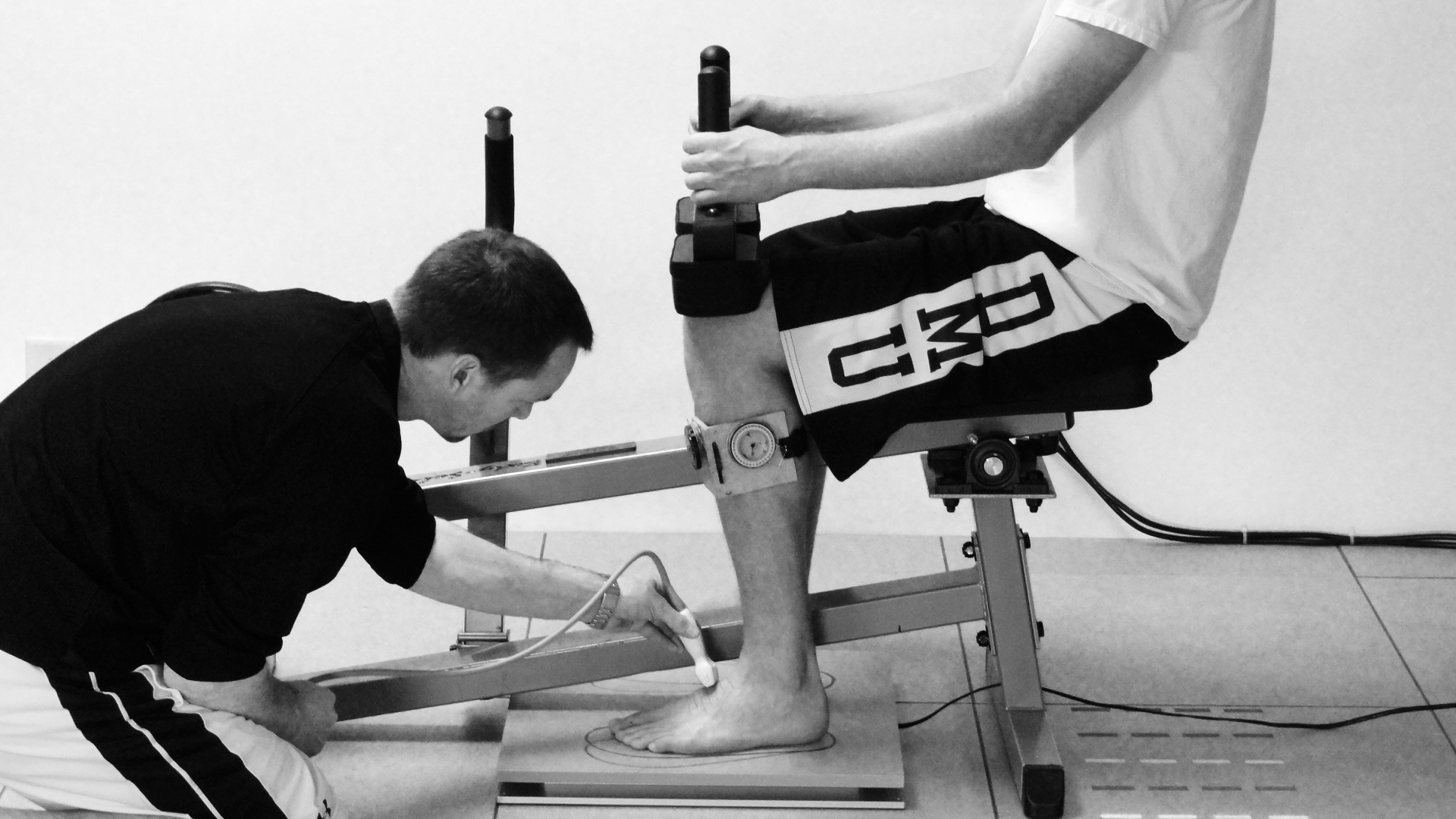
Fig. 1 A and B). This could potentially make detection of Lisfranc ligament injuries easier and more timely. Clinically, this translates into taking diagnostic images in the bilateral stance position with the patient distributing weight evenly on both feet (for medium load imaging) or sitting nonweightbearing (for low load), measuring the difference in dorsal Lisfranc ligament length between the rectus and abducted positions for each. These data show a 4.03% average Lisfranc ligament length change. This can be used as a value against which clinical measures are compared. However, depending on patient pain tolerance, this may not be feasible. In this case, significant length change could be seen at low load by comparing the abducted and rectus position measures without causing significant patient discomfort. Radiographically, pure Lisfranc ligament injury depends on evaluation of the diastasis due to change in load: nonweightbearing versus weightbearing. Local anesthetic ankle blocks have been described to make stress evaluation of an injured foot more tolerable, which may be beneficial for achieving medium loading conditions.[
30]
Pure Lisfranc ligamentous injury is difficult to pick up on radiographs, primarily because the patient cannot tolerate full weightbearing to create a diastasis. These findings suggest that significant dorsal Lisfranc ligament length change can be achieved based on change in positioning under the effect of moderate load. This could be attributed to the contact mechanics of the tarsometatarsal joint transferring load to adjacent joints to preserve ligament length and stabilize the medial column. We advocate that clinical ultrasound images acquired under variable load conditions at a fixed foot position may not be the best protocol for dorsal Lisfranc ligament length change. Ultrasound is not recommended to replace standard weightbearing radiographs on initial presentation of midfoot injury but could be used as an additional imaging procedure when there is a high clinical suspicion of Lisfranc complex injury despite negative radiographs.
Although there is some apprehension about the use of ultrasound technology among some clinicians, this technology offers many distinct advantages that make it a superb modality for imaging the dorsal Lisfranc ligament. Not only is ultrasound readily available in most clinical settings, but measures can be taken quickly and recorded reliably; it is cost effective[
27]; and, being nonionizing, it limits risk to patients and practitioners.
Current ultrasound technology allows for dynamic and real-time foot images. In the present study, we relied on single digital images to measure dorsal Lisfranc ligament length, not allowing for continuous dynamic change assessment due to load change. Further investigations of dorsal Lisfranc ligament length as it changes from low to high stress using ultrasound and stress-strain plots could possibly further the understanding of dorsal Lisfranc ligament functional characteristics. The clinical need for and relevance of this should be established first. This participant population age range was narrow, with most individuals' age in the mid-20s, and the measures were taken under static conditions. However, most current injuries happen as the result of high-velocity axial longitudinal force, such as in motor vehicle accidents,[
31] consistent with the age group around the third decade of life.[
4] Regarding female participants, ligament laxity is increased during ovulation, when estrogen levels are high,[
32] and the female participants had displayed a wide distribution across the menstrual cycle. Still, with the wide array of anthropometric measures and demographic features in this population, we believe that further studies of sex differences should be performed.