Next Article in Journal
Osteochondritis Dissecans of the Tarsal Navicular Bone. A Case Report
Previous Article in Journal
Double Crush Syndrome in the Lower Extremity. A Case Report
 
 
Journal of the American Podiatric Medical Association is published by MDPI from Volume 116 Issue 1 (2026). Previous articles were published by another publisher in Open Access under a CC-BY (or CC-BY-NC-ND) licence, and they are hosted by MDPI on mdpi.com as a courtesy and upon agreement with American Podiatric Medical Association.
Article

Surgical Treatment of a Young Patient with Bilaterally Destroyed First Metatarsophalangeal Joints Suffering from Gout

by
Markus Wünschel
1,
Nikolaus Wülker
1 and
Christian Walter
1,2,*
1
Department of Orthopaedic Surgery, University Hospital Tuebingen, Germany
2
Universität Tü bingen Orthopä die Hoppe-Seylerstr. 3 Tü bingen, 72076 Germany
*
Author to whom correspondence should be addressed.
J. Am. Podiatr. Med. Assoc. 2012, 102(4), 334-337; https://doi.org/10.7547/1020334
Published: 1 July 2012

Abstract

The authors present an unusual case of untreated gout leading to major bony destructions in both metatarsophalangeal joints, leading to joints of enormous dimensions. If untreated, gout can cause disabling destructions with direct influence on both private and working life, even in young patients. In potentially noncompliant patients, simple surgical procedures and postoperative regimes are valuable treatment options resulting in acceptable clinical results.

Case Report

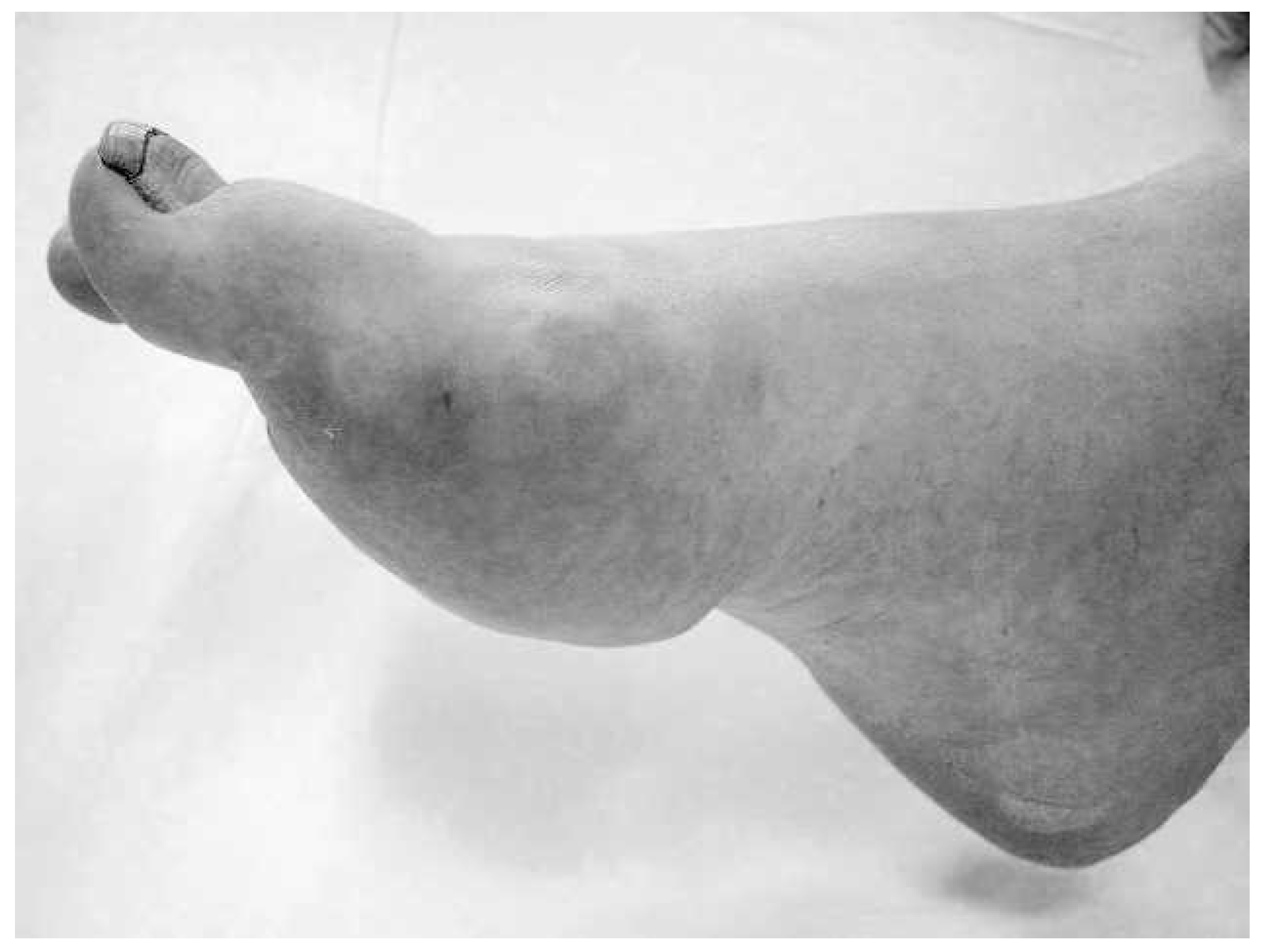
A 38-year-old male presented to the Department of Orthopaedic Surgery, University Hospital Tuebingen, Germany, with a 15-year history of gout attacks involving both feet. The patient sporadically used nonsteroidal anti-inflammatory medications (NSAIDs) to decrease the pain but refused to take any preventive medication [1] and to change his lifestyle, including a low purine diet. At the time of presentation he was not able to bear weight on his left foot nor could he wear normal shoes (Fig. 1). His first gout flare was in 1993; since that time he has had one to three gout flares per year, and although he had been offered treatment to reduce the likelihood of flare-ups, he had to date decided not to take the drugs offered.
Gout typically presents with a sudden onset and is highly painful. Similar to most cases, in this patient the first metatarsophalangeal joint is involved [2]. In clinical practice gout can usually be diagnosed by its typical clinical, laboratory, and radiologic presentation. Gout can easily be treated by preventing flare-ups with urostatic drugs like allopurinol or with uricosuric drugs like probenecid or benzbromaron. Use of these drugs can minimize gout flares and improve tophus status over time [3].

Clinical Findings

The patient had an enormous swelling with redness of both first metatarsophalangeal joints emphasizing the left side, which is typical for gout [4]. The joint was also very painful and a bizarre deformity had developed. Range of motion was reduced to 20/0/20° (Extension/Flexion). The patient’s blood uric acid level was markedly elevated to 13.8 mg/dL (Normal values: males <7 mg/dL, females <6 mg/dL) [5].

Radiologic Findings

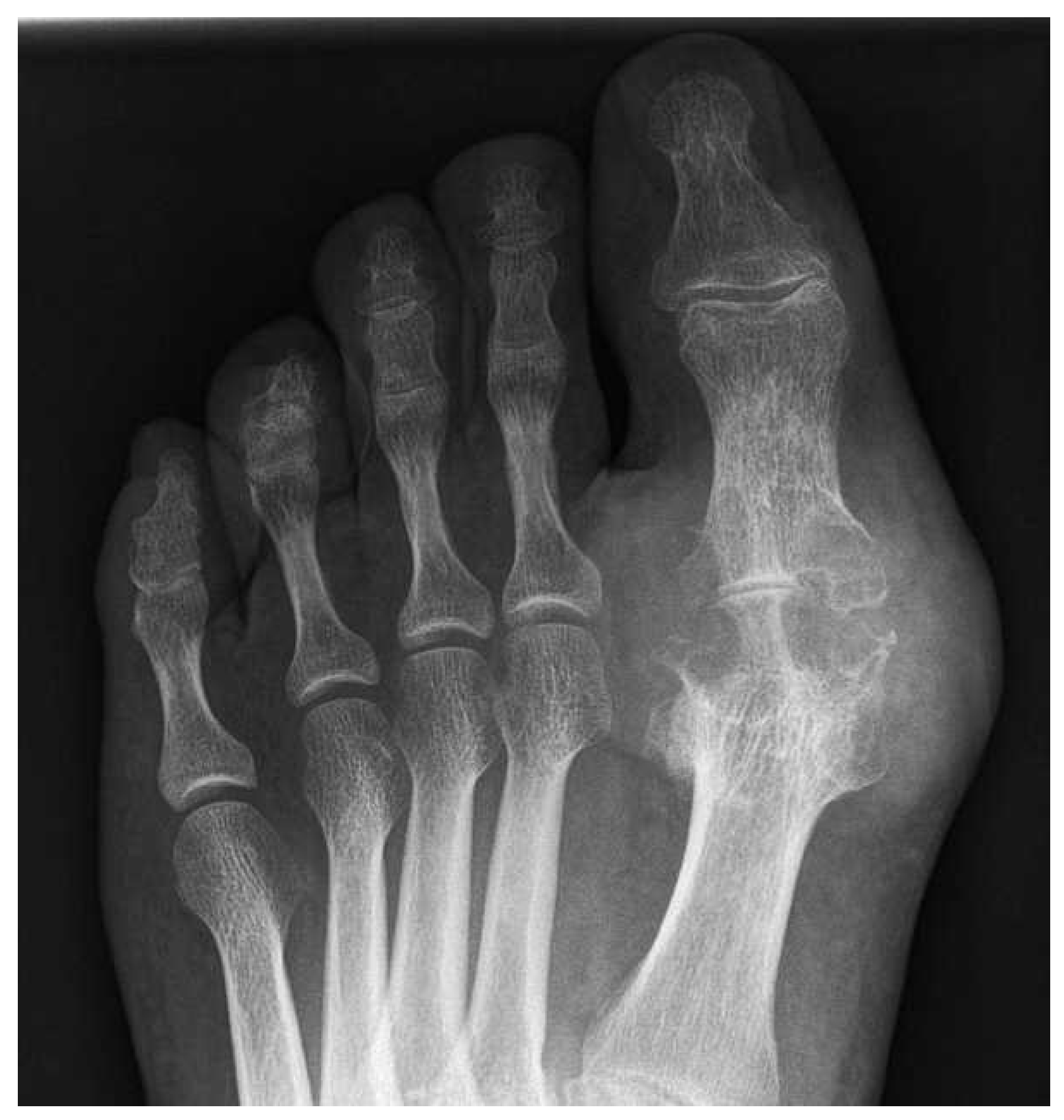
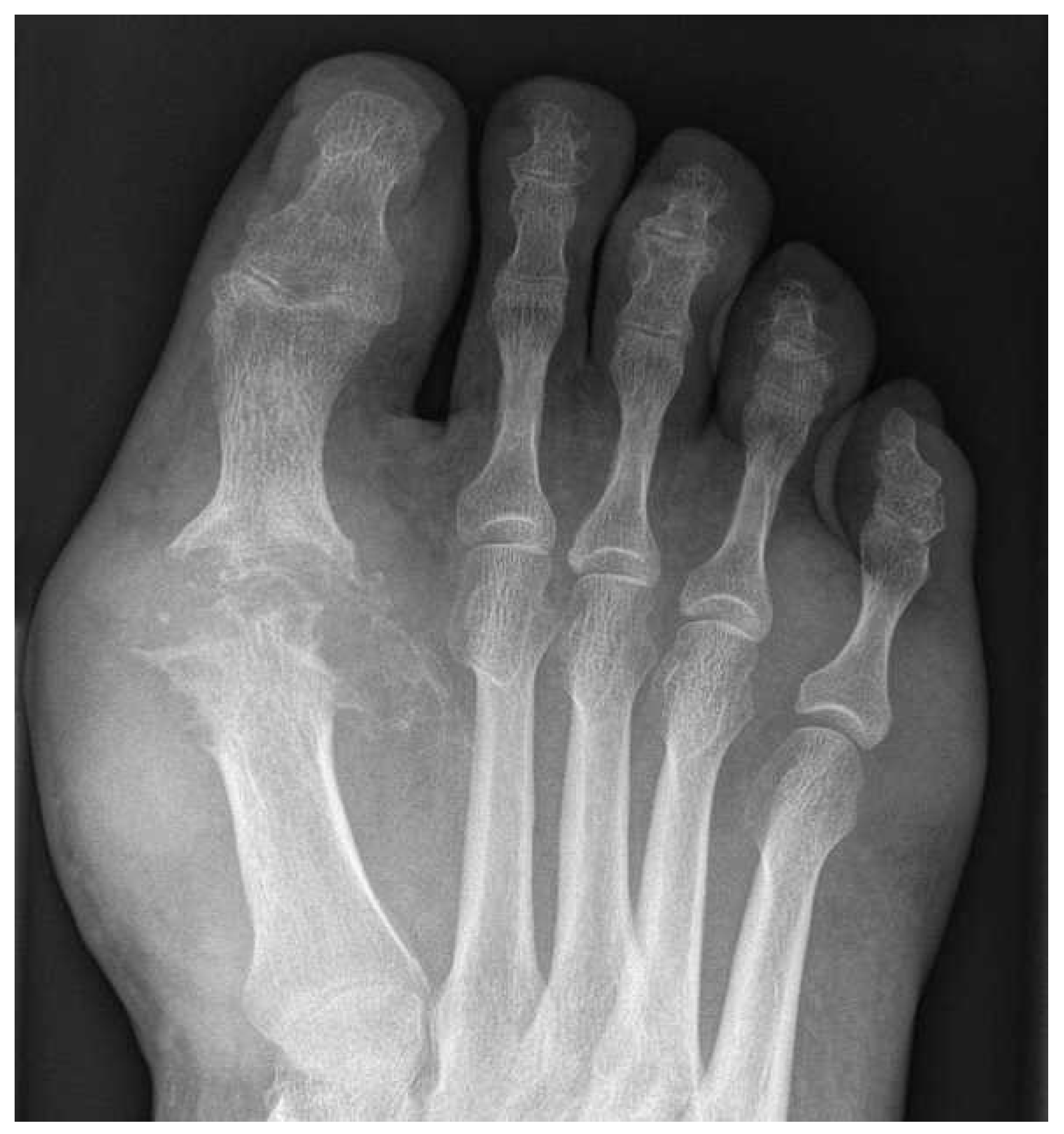
Native radiographs (Figs. 2 and 3) display a pronounced bony destruction of both the first metatarsal head and the proximal phalanx. The articular surface is almost completely destroyed and the joint space narrowed. This was markedly pronounced compared to the typical findings like periarticular erosions with overhanging edges [6]. An enormous soft-tissue reaction with urate crystal deposit is present.

Operative Treatment

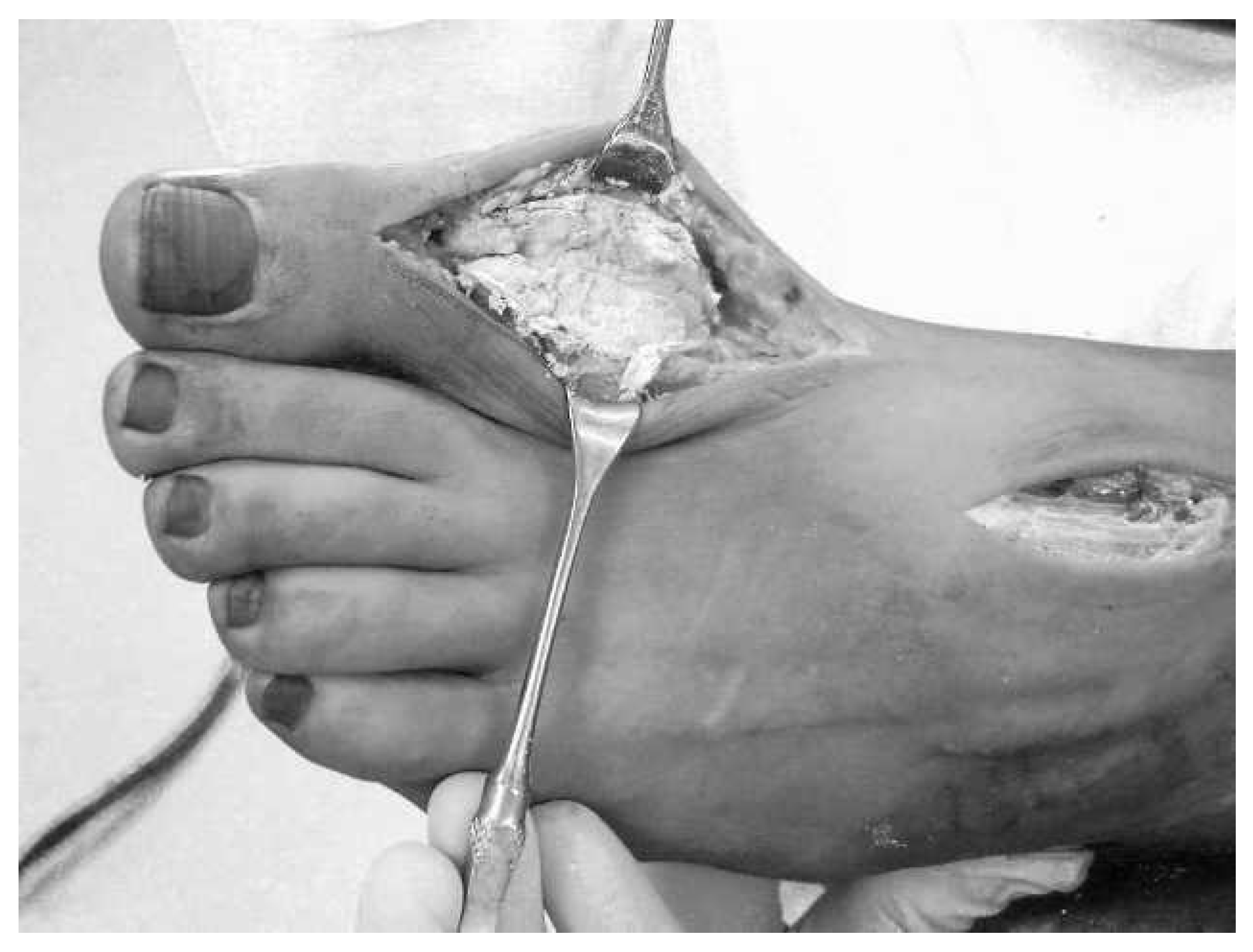
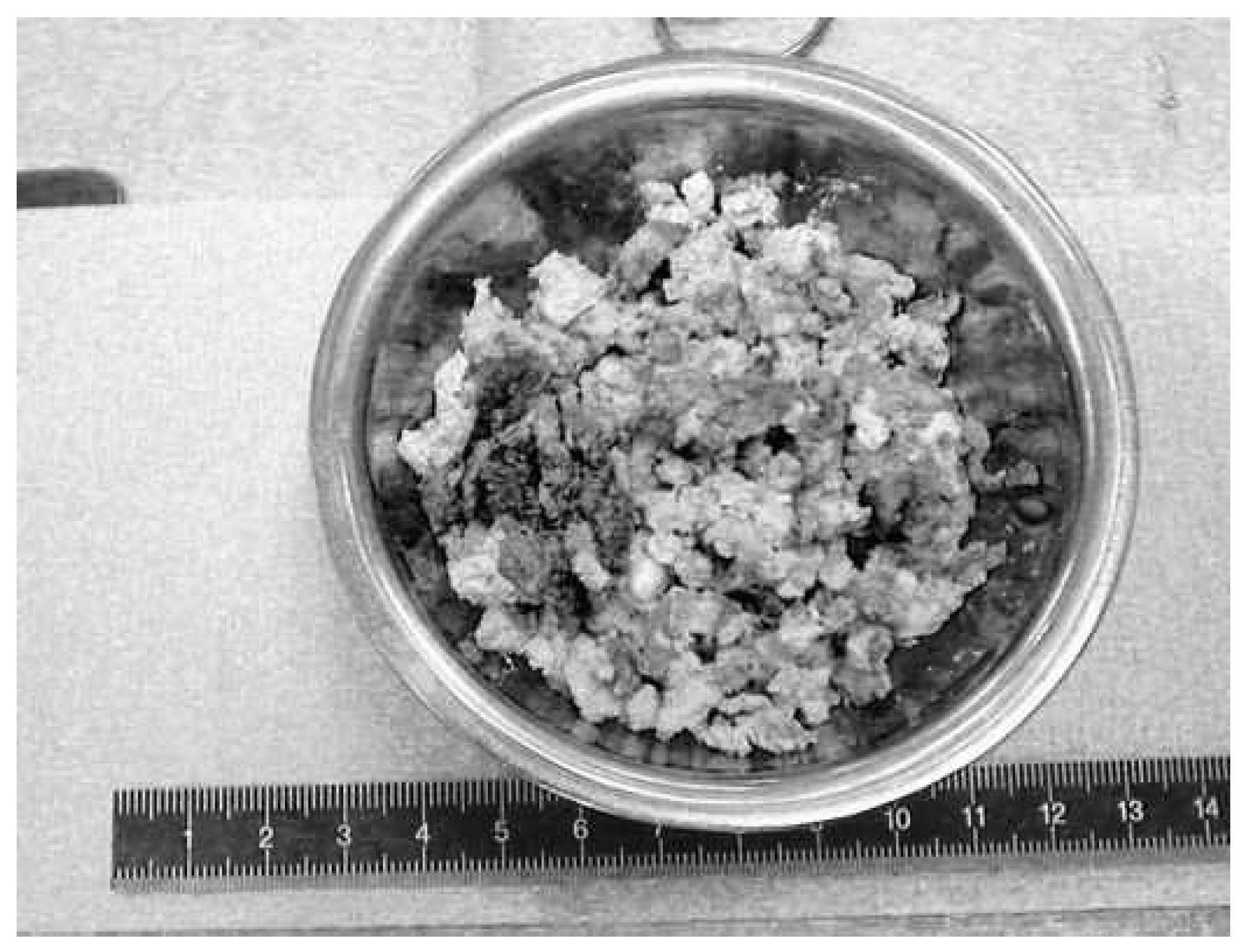
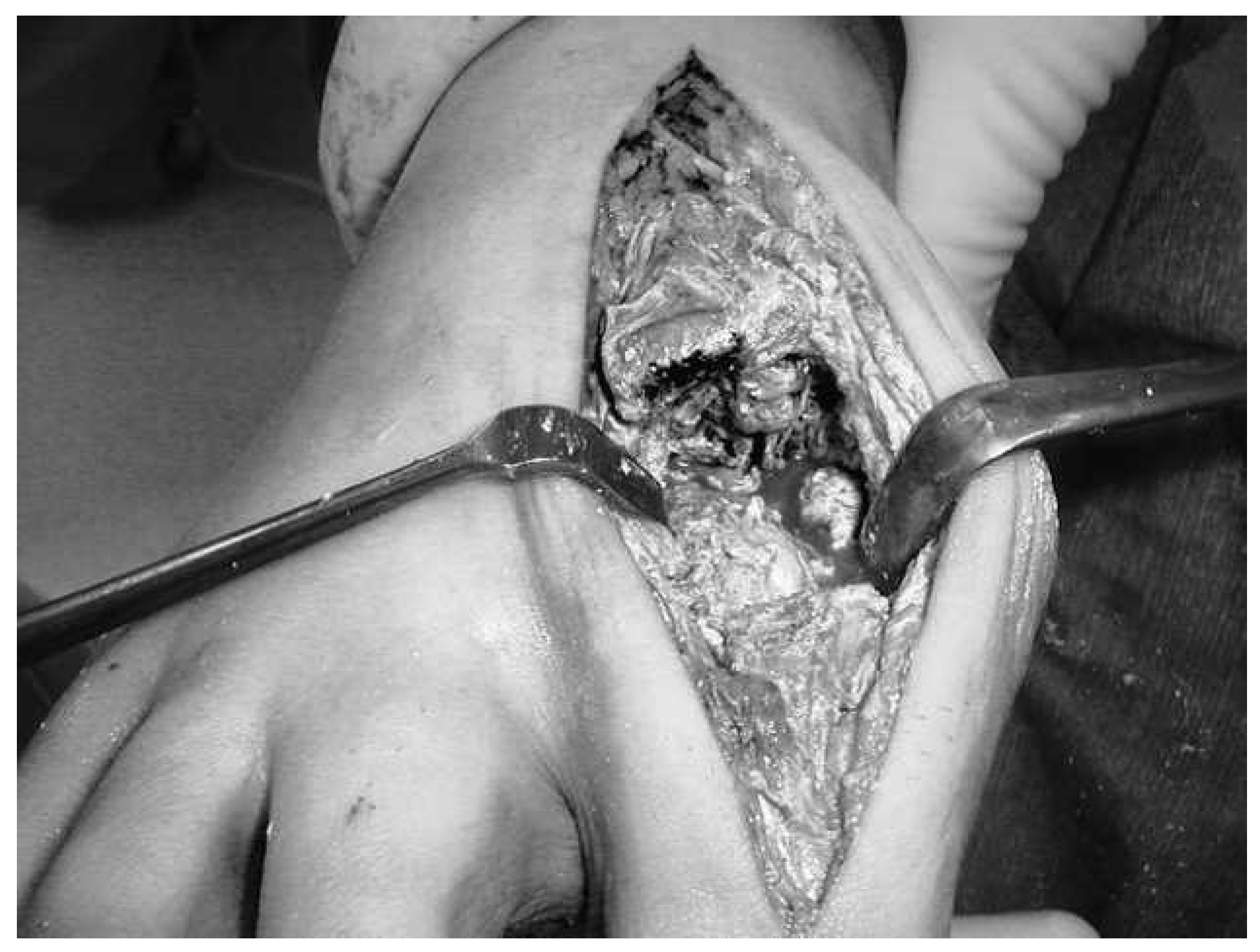
The patient was taken to the operating room. After incising the skin and joint capsule, a huge number of urate crystals could be identified within the capsule (Fig. 4). The first step of the procedure was to remove the crystals with a surgical curette, after which 30 grams of light brown- to yellow-colored, spongy, and irregularly formed tissue samples could be taken out of the joint (Figs. 5 and 6). The amount of joint damage could then be evaluated. There was a bony defect of 4 cm in length; only at the dorsal aspect of the metatarsal a small piece of cortical bone was left. In this situation it was decided that an interposition arthrodesis of the joint with bone transplantation from the iliac crest was not reasonable. We therefore performed an interposition-arthroplasty with Kirschner-wire fixation. On the right foot the same procedure was performed about 2 months later, and 27 grams of tissue were removed. The pathologic examination approved the diagnosis of gout with birefringent crystal structures in the polarization microscope. The intraoperative swabs were negative.
After surgery the patient was allowed to bear weight fully in a postoperative shoe. The Kirschner-wire was removed after 4 weeks and the patient could wear a normal shoe. At the final follow-up, 6 weeks after the second procedure, the patient was completely pain free with a well-defined contour of the feet.

Discussion

We describe the case of a 38-year-old male patient with disabling bilateral forefoot deformities that are in strong contrast to the available simple treatment options.
Figure 1. Preoperative clinical presentation with enormous swelling of the first metatarsophalangeal joint almost the size of a tennis ball.
Japma 102 00334 g001
Figure 2. Preoperative anteroposterior radiograph of the left foot, not showing the immense bone loss of the first metatarsal plantarly (see Fig. 6).
Japma 102 00334 g002
Figure 3. Preoperative anteroposterior radiograph of the right foot.
Japma 102 00334 g003
The dimension of the foot deformities is surprising in a young man living in Germany nowadays. His disease remained untreated for years but could have been treated easily with dietary measures or with adequate medication. The patient denied any therapy except for using NSAIDs for acute pain attacks. Without medication or dietary changes, the gout tophi could reach these enormous dimensions with complete destruction of his metatarsophalangeal joints bilaterally. The consequences for the patient in his daily life were incisive because he was unable to wear normal shoes or to walk without pain.
Figure 4. Surgical situs after opening the joint with the typical “toothpaste” appearance of the tophi. The proximal incision was made to excise a second tophus.
Japma 102 00334 g004
Other differential diagnoses like hallux valgus, hallux rigidus, sesamoid disorders [7], pseudogout [8], or others could be excluded because of repeated elevated blood uric acid levels, the results of the pathologic examination, and of course the clinical presentation. Rare causes of painful first metatarsophalangeal joints are osteochondritis dissecans [9] or metatarsophalangeal joint dislocation [10], which were ineligible in this case.
Figure 5. A vast number of urate crystals were removed from the joint.
Japma 102 00334 g005
A variety of different surgical procedures have been described for the treatment of arthritic defects of the first metatarsophalangeal joint. Patients with low-grade defects of the joint surface may benefit from cheilectomy and debridement [11]. In the more advanced stages other procedures like joint fusion, resection arthroplasty, or total joint arthroplasty are indicated. An arthrodesis is an everlasting method once the bone has fused and has many advantages including good postoperative mobility and the ability to perform sports activities [12]. A relevant disadvantage of the arthrodesis in our case would have been the necessity of an interposition graft. Because an infectious situation could not be definitively excluded during surgery, the use of an interposition graft was contraindicated. Another theoretical possible treatment alternative is total joint arthroplasty. The prosthesis may preserve motion, but high rates of implant loosening and bone resorption have been reported [13], and was not an option in this case. A final salvage procedure described in the literature is an amputation of the toe [14], which was not necessary in our patient.
Figure 6. Intraoperative situs after removal of the urate crystals. Take notice of the large bony defect.
Japma 102 00334 g006
We finally favored resection arthroplasty, a procedure without bone grafting, which based on our experience, can also be performed in potentially infectious situations. The advantage of this technique is long-term reduction of pain [15], an unlimited walking distance in the majority of patients [16], and a simple postoperative regime, which is helpful when treating potentially noncompliant patients.

Financial Disclosure

None reported.

Conflicts of Interest

None reported.

References

  1. Connor, M: Allopurinol for pain relief: more than just crystal clearance?Br J Pharmacol156:4, 2009.
  2. Schlesinger, N: Diagnosis of gout: clinical, laboratory, and radiologic findings.Am J Manag Care11:S443, 2005.
  3. Becker, MA, HRSchumacher, PAMacDonald, et al: Clinical efficacy and safety of successful longterm urate lowering with febuxostat or allopurinol in subjects with gout.J Rheumatol36:1273, 2009.
  4. Wallace, SL, HRobinson, ATMasi, et al: Preliminary criteria for the classification of the acute arthritis of primary gout.Arthritis Rheum20:895, 1977.
  5. Lally, EV, BZimmermann, GHoJr, et al: Urate-mediated inflammation in nodal osteoarthritis: clinical and roent-genographic correlations.Arthritis Rheum32:86, 1989.
  6. Peh, WC: Tophaceous gout.Am J Orthop30:665, 2001.
  7. Vanore, JV, JCChristensen, SRKravitz, et al: Diagnosis and treatment of first metatarsophalangeal joint disorders. Section 4: sesamoid disorders.J Foot Ankle Surg42:143, 2003.
  8. Cordoba-Fernandez, A, RRayo-Rosado: Pseudogout of the first metatarsophalangeal joint associated with hallux valgus: an atypical bilateral case.JAPMA100:138, 2010.
  9. Camasta, CA, TEPitts, SVCorey: Bilateral osteochondritis dissecans of the first metatarsophalangeal joint.JAPMA84:297, 1994.
  10. Rabin, SI: Lisfranc dislocation and associated metatarsophalangeal joint dislocations. A case report and literature review.Am J Orthop25:305, 1996.
  11. Lau, JT, TRDaniels: Outcomes following cheilectomy and interpositional arthroplasty in hallux rigidus.Foot Ankle Int22:462, 2001.
  12. Groulier, P, GCurvale, BPiclet-Legre, et al: [Arthrodesis of the first metatarsophalangeal joint].Rev Chir Orthop Reparatrice Appar Mot80:436, 1994.
  13. Fuhrmann, RA, AWagner, JOAnders: First metatarsophalangeal joint replacement: the method of choice for end-stage hallux rigidus?Foot Ankle Clin8:711, 2003.
  14. Yetkin, H: Surgical treatment of chronic tophaceous gout arthritis in the feet: a case report.Foot Ankle5:155, 1999.
  15. Love, TR, ASWhynot, IFarine, et al: Keller arthroplasty: a prospective review.Foot Ankle8:46, 1987.
  16. Flamme, CH, NWulker, KKuckerts, et al: Follow-up results 17 years after resection arthroplasty of the great toe.Arch Orthop Trauma Surg117:457, 1998.