Professional dancers are required to be skilled artists, athletes, and gymnasts to survive the highly competitive nature of the dance industry. [
1,
2] There are numerous dance styles, such as contemporary, jazz, and tap; however, classical ballet is frequently taught as the core style because it encourages fundamental principles that promote stability and strength with aesthetic appeal. [
3,
4] Literature relating to modern and contemporary dancers, however, has received limited attention. [
5] Movement patterns performed in many dance styles use extreme ranges of motion that alter the biomechanics of the lower kinetic chain. These patterns of extreme positions can be perceived as “abnormal” and can place bones, muscles, tendons, ligaments, and nerves under strain, which may lead to acute or chronic injury. [
3,
6–
8] Epidemiologic studies [
1,
2,
4,
6–
8,
9] report a lifetime injury incidence of 90% in dancers, with approximately 75% of all injuries occurring in the lower limbs. Forty percent of these injuries are linked to the foot, ankle, and lower leg. [
5,
9,
10] Moreover, overuse injuries account for most dance injuries, with some individuals seeming more susceptible than others. [
11,
12]
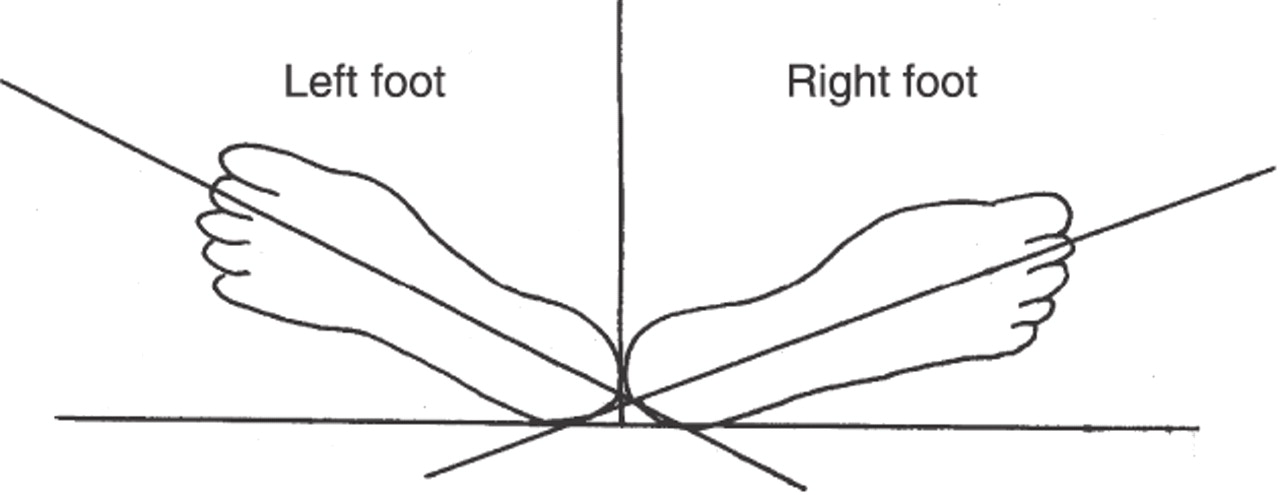
The aesthetic appeal of dance is rooted in the quality of sequential movement and is not simply a series of static positions. During the 17th century, the standard turnout position, with the feet placed heel to heel, was angled at 90°. Over the years, this position has increased to 180° because it improves aesthetic appeal and augments triplanar range of motion of the lower limb. There are various opinions about how this position should ideally be achieved. Studies by Coplan [
13] and Gilbert et al [
14] suggest that a 180° turnout should be accomplished by externally rotating the hips 140° and the tibia 10°. The remaining 30° of external rotation should come from the feet. Hamilton et al [
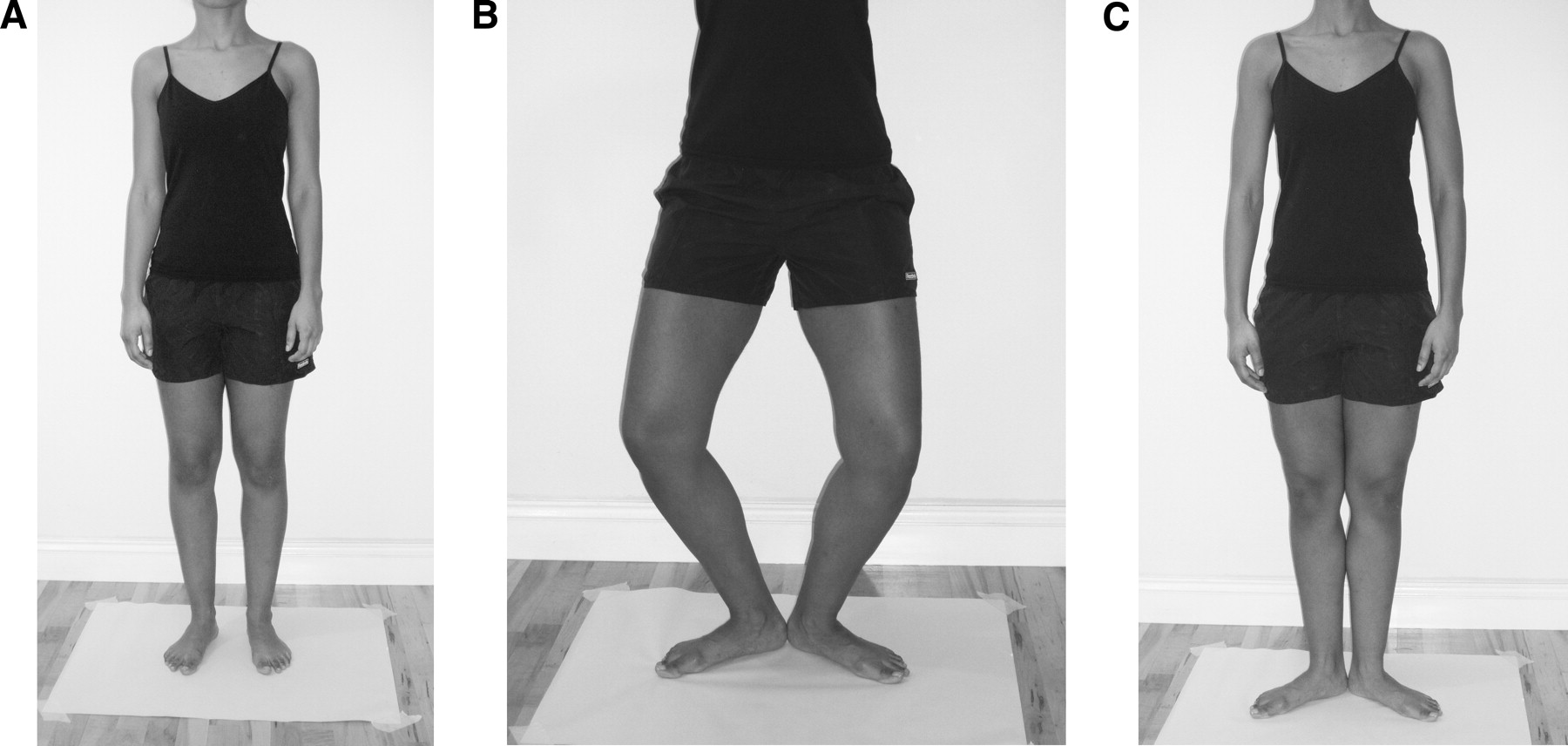
15] noted that many of the dancers performed a demi-plié before extending the knees to assume the turned out first position. This movement, in effect, anchors the feet to the supporting surface, allowing compensatory motions to occur at the subtalar and midtarsal joints to achieve a greater angle of turnout. Kravitz and Murgia [
16] support the concept that turnout should ideally be accomplished solely through hip external rotation, maintaining the sequential alignment of the hip, knee, and foot. Dancers are generally taught to assume the turnout position by externally rotating their hips and maintaining the alignment among the hip, knee, and foot. Nonetheless, the competitive environment can push dancers to strive for perfection, and individuals may try to achieve a greater turnout by rotating distally from the feet up rather than proximally from the hips down. [
9]
Many individuals cannot achieve the aesthetic ideal of 180° of turnout and force the position by abducting the feet further than the available hip external rotation. This movement can lead to excess pronation, external tibial torsion, valgus knee stress, an increased Q angle, and lumbar lordosis. [
9,
11] Coplan [
13] commented that a forced turnout beyond the available hip range of motion is potentially the most serious training error in dance and can be considered a common flaw in technique. It is, therefore, perceived that measures of functional turnout are more relevant than hip external rotation to the prevalence of nontraumatic injuries and that first position serves as a useful guide for functional turnout. Increasing subtalar joint pronation increases forefoot abduction, thus promoting the visual illusion of an increased turnout position. Nevertheless, the compensatory adjustments to this position in the lower limb have been associated with the development of a variety of overuse abnormalities commonly found in classical dancers, including tibialis posterior tendinopathy, hallux valgus, plantar fasciitis, and stress fractures. [
10,
17]
Professional dancers have a highly developed kinesthetic awareness as a result of their repetitive training regimens. This can assist in a dancer’s rehabilitation, especially if overuse injuries are associated with a poor dance technique. [
16] This characteristic, combined with a willingness to comply with treatment to achieve longevity in their career, makes these individuals a particularly interesting and challenging patient group. Turnout is a fundamental factor in many dance techniques and is frequently the start or end position of forceful and explosive movement patterns, such as jumps. Its influence as a contributing factor in the development of overuse injuries warrants investigation. Although the literature [
1,
3–
6,
10,
11,
16,
18,
19] suggests that changes in foot posture and repetitive training schedules may be associated with lower-limb overuse injury in dancers, the proposed relationship requires further exploration. The aim of this study, therefore, was to investigate the effect of turnout on foot posture and its association with overuse musculoskeletal injury in professional contemporary dancers.
Discussion
The purpose of this study was to investigate the effect of turnout on foot posture and its association with injury in professional contemporary dancers through investigation of the relationship between dance and injury. The approach focused on two key assumptions. First, a standing, weightbearing position was selected because it provides information about the functional closed kinetic relationship of the lower limb, including the foot. [
27] Moreover, inclusion of the demi-plié provided a natural and realistic maneuver used to attain angle of turnout. Second, although foot position provides evidence of how it may affect alignment of the limb, it also supports the need for standardization. This is an important factor in the consideration of clinical measures in general and in optimizing operator error and reliability specifically.
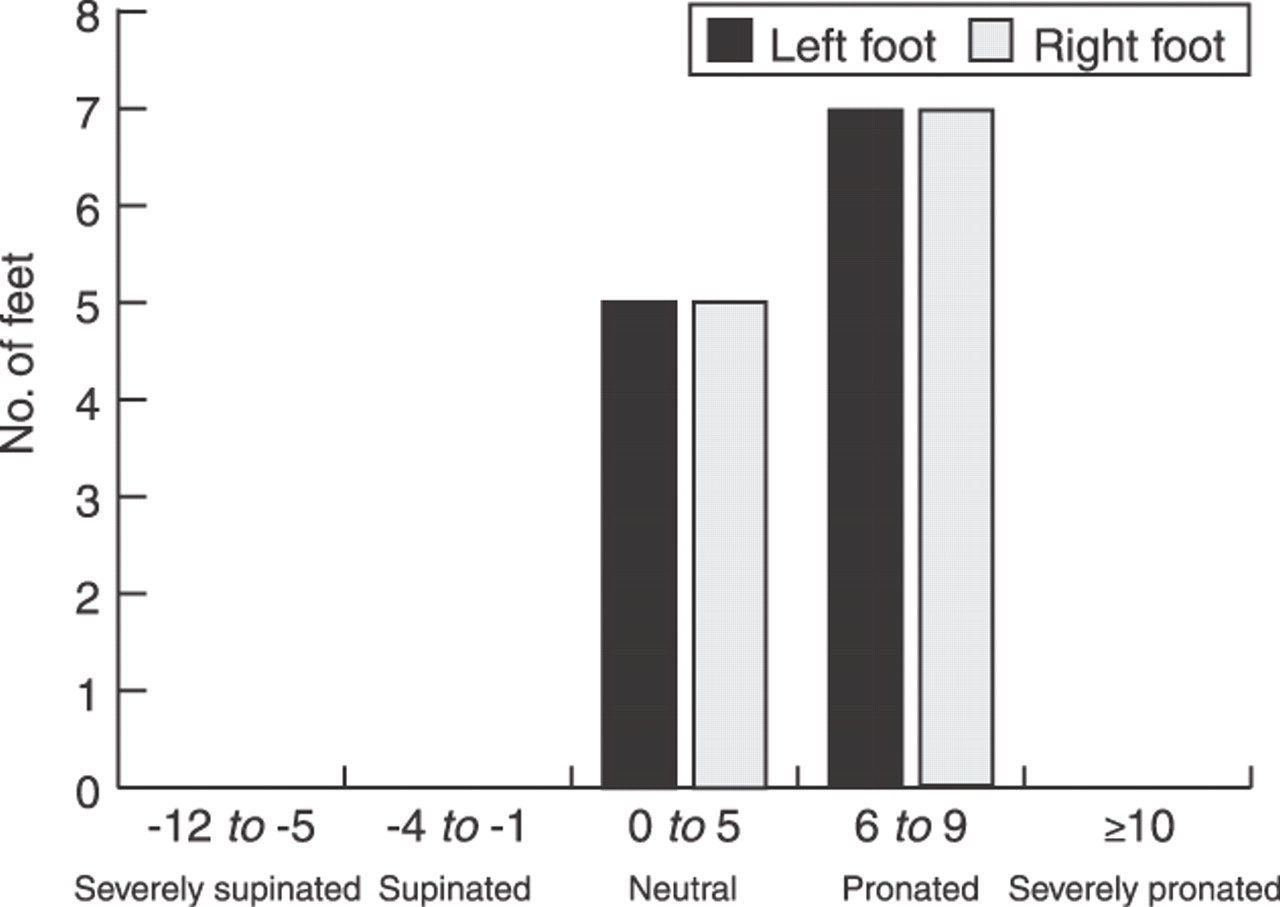
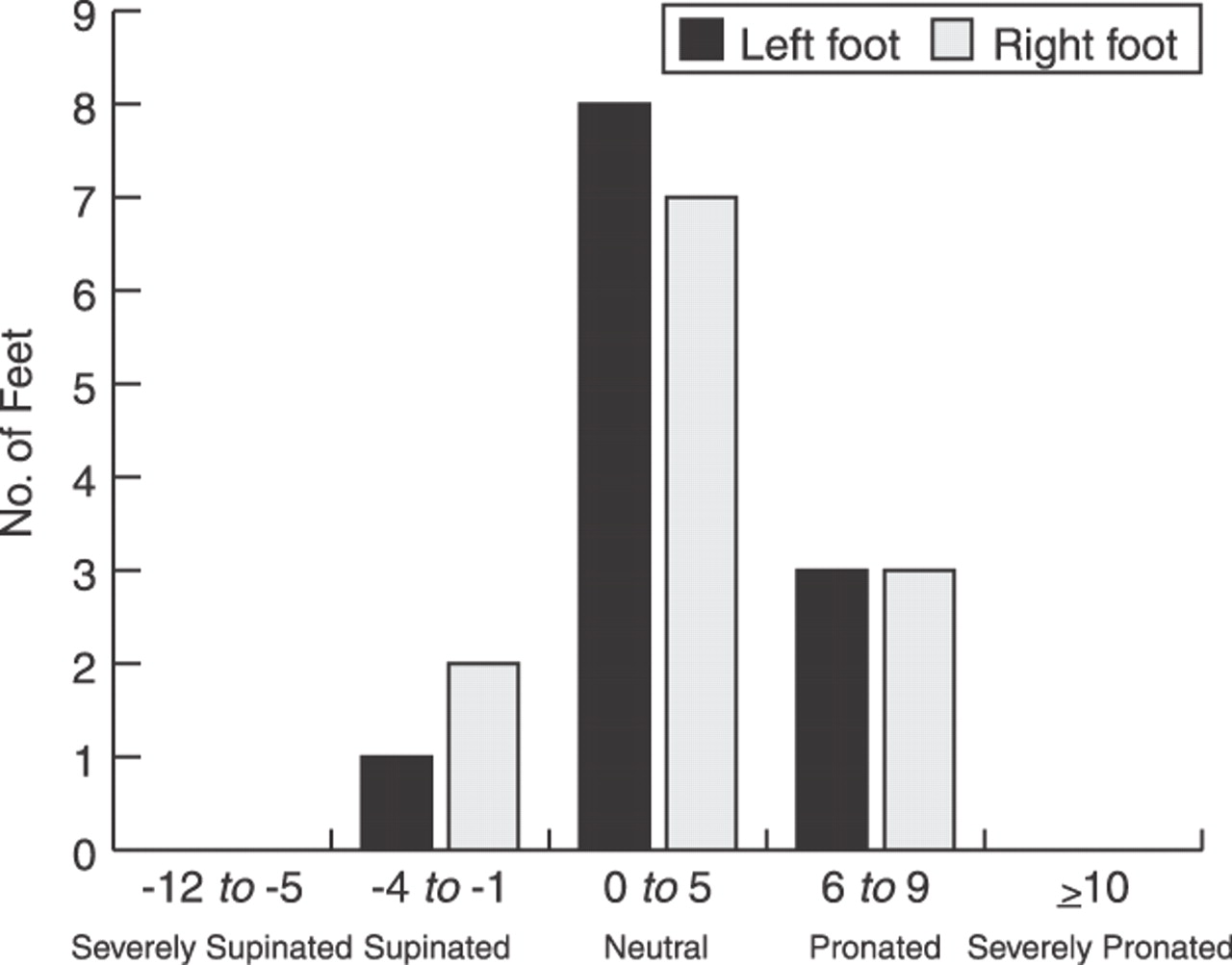
Figure 5.
Foot Posture Index scores in angle of turnout. Note the obvious change to a position beyond 5.
Figure 5.
Foot Posture Index scores in angle of turnout. Note the obvious change to a position beyond 5.
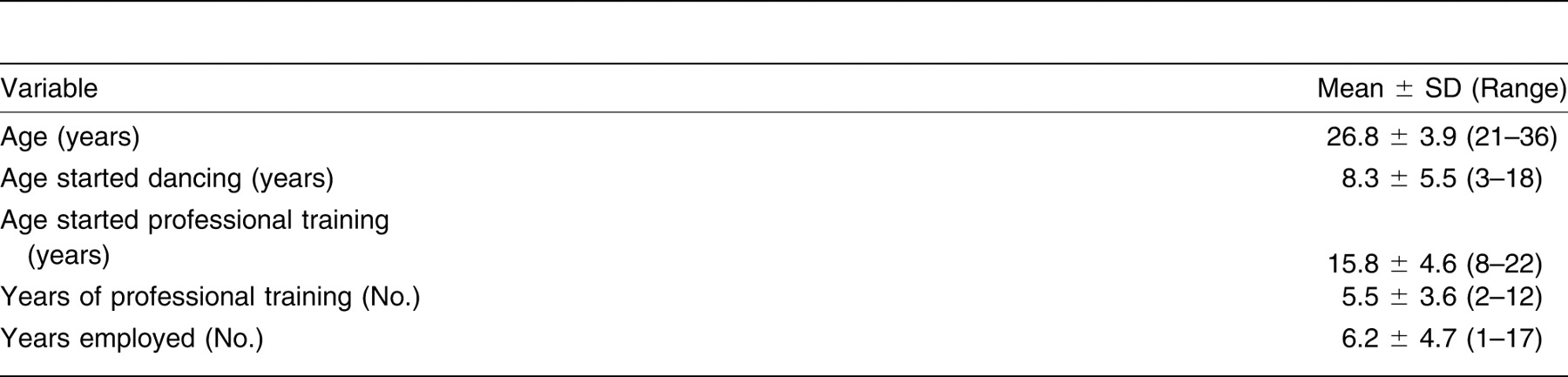
Previous studies that have investigated turnout have concentrated predominantly on female classical ballet dancers undergoing their professional training. This study differs because it is more representative of the professional contemporary dancer and with more balanced numbers of male and female dancers (seven and five, respectively). The demographic statistics illustrate the varied dance experience in a small sample of professional dancers. Of particular interest is the trend relating to the sex of the dancer. The mean ± SD age at which the women started dancing was 4 ± 1 years. This was in contrast to male dancers, who had a mean ± SD start age of 11 ± 5 years. These values are slightly lower than those of Weiss et al, [
1] who showed that women started to dance at a mean ± SD age of 6.5 ± 4.2 years and men at 15.6 ± 6.2 years. However, for this study, it could be anticipated that individuals who have been dancing from an earlier age may have accumulated more injuries attributable to the increased duration of dance participation. Contrary to this expectation were the findings that demonstrated an inverse relationship between age at training commencement and total reported injuries. This finding indicates that dancers who started their training at an earlier age accrued fewer injuries. This point is further illustrated by the fact that the male dancers accounted for 71% of the injuries, although this is likely to be affected by the slightly uneven male-to-female ratio. Nonetheless, the male dancers started their training later and experienced more injuries on an individual basis.
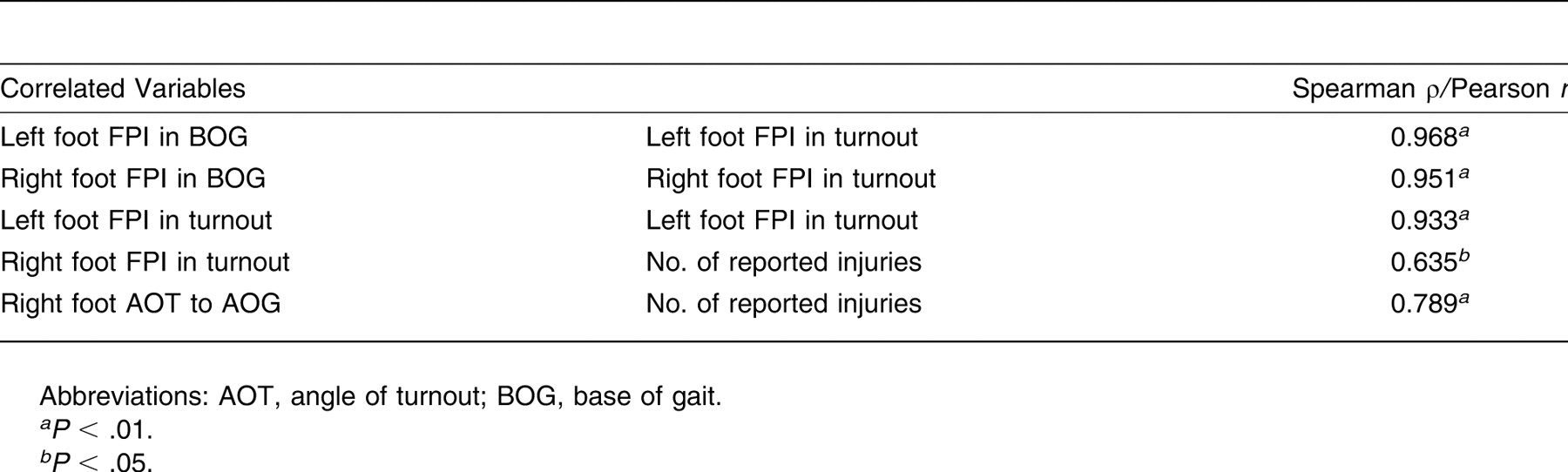
Table 3.
Relationships Between Foot Posture Index (FPI), Angle of Gait (AOG), and Turnout.
Table 3.
Relationships Between Foot Posture Index (FPI), Angle of Gait (AOG), and Turnout.
It could be argued that training from a young age promotes skeletal modeling of the individual in line with the activity, which shares similarities to the findings of Hamilton et al. [
15] Therefore, continued training in the turnout position enables adaptive physiologic changes (ie, osseous and soft-tissue structures) to develop according to the demands of dance. In contrast, individuals who commence their training later may have a soft-tissue and skeletal structure that is not adapted to dance and turnout, yet they are required to participate at the same level. [
3,
4] Adaptations to technique to enhance aesthetic appeal, such as turnout beyond the natural range of hip rotation, increases the demands on the supporting structures in the closed kinetic chain. Further investigation into this area with a larger sample size is duly indicated.
The Foot Posture Index findings showed that most of the dancers had a neutral foot posture in base of gait, but there was a marked tendency toward pronation when they moved into turnout (
Fig. 5 and
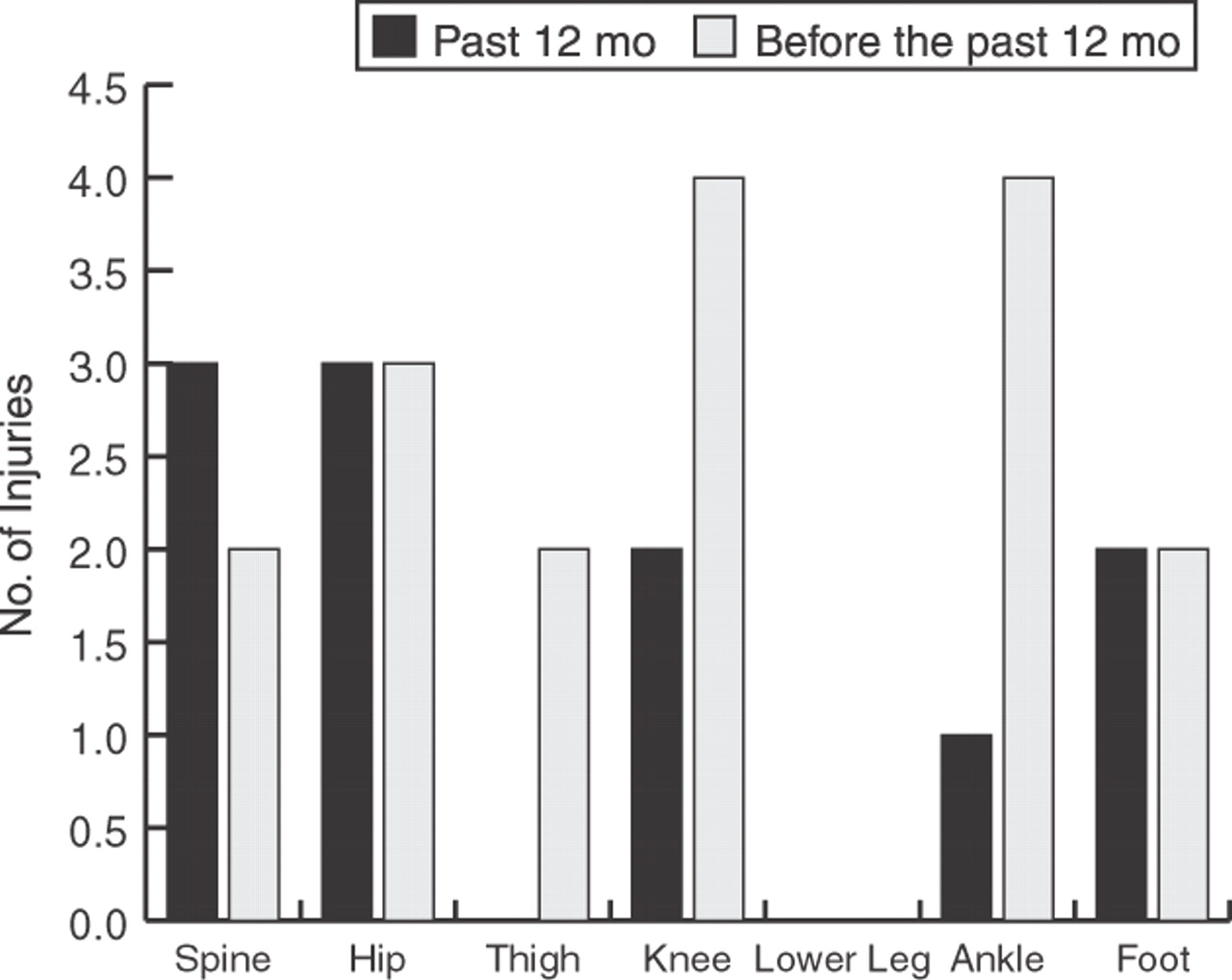
Fig. 5). Excessive subtalar joint pronation is associated with increased strain on the medial longitudinal arch, the plantar fascia, and the plantar musculature of the foot. It is also linked as an etiologic factor in the development of abnormalities such as posterior tibial tendinopathy and hallux abducto valgus, which are common foot disorders found in dancers. Each dancer in this study had experienced at least one injury, which is greater than the 90% lifetime incidence reported by Thomas and Tarr [
5] and Macintyre and Joy. [
9] The hip and knee were the most commonly affected areas, although the combined scores for the foot and ankle represent 39% of the lower-limb injuries, which is in line with the 40% reported by Macintyre and Joy. [
9] Although a small bias toward men in the sample of this study is duly noted, it was observed that compared with females, male dancers experienced more injuries to all areas except the hip, which showed an equal distribution. The spinal injuries could be related to lifting, which male dancers naturally do more than female dancers in contemporary dance and ballet. [
5,
6,
16,
28] Note that despite the considerable number of foot and ankle injuries experienced, none of the dancers had sought podiatric medical treatment.
The effects of subtalar joint pronation at the ankle, knee, hips, and spine are important when considering the frequent locality of the reported injuries. Excessive pronation causes internal tibial rotation, genu valgus, combined with muscular imbalance of the quadriceps due to an increased Q angle. Malalignment of the patella tendon, tightening of the iliotibial band, and increased lumbar lordosis, which increases the strain on the lumbar spine, can also occur. [
19] Pronation increases the demands on these structures during walking and running; therefore, it is important to consider how these effects are compounded in an individual dancing at a professional level, where impact and participation levels are extremely high. The findings in this study indicate that a relationship existed between the number of reported injuries and the change in foot posture from base of gait to turnout for the right foot. Although the left foot did not reveal the same significant associations, there were strong relationships between the right and left feet. The results infer that the greater the change in foot posture from base of gait to turnout, the greater the risk of injury. Therefore, there are grounds to reject the null hypothesis; however, further research is necessary, especially because the relationship was not significant for both feet. These observations are supported by other studies [
1,
2,
5,
9–
11,
16] that have reported injury trends in male and female ballet dancers. Miller et al, [
29] in particular, reported that male ballet dancers experienced knee pain and suggested that a lack of external rotation at the hip placed greater stress on the medial aspect of the knee. This can be further supported by the “lag concept” used to describe the absorption of limb rotation by the muscles, ligaments, and tendons of the knee. [
30]
No relationship was found between Foot Posture Index scores in turnout and angle of turnout. Therefore, despite the trend toward pronation with turnout, the amount of change in foot posture did not seem to be significantly related to the angle of turnout, and the null hypothesis could be supported. Nevertheless, a significant relationship was identified between the number of injuries and the difference between angle of gait and angle of turnout for the right foot. This finding indicates that the greater the turnout from the natural base of gait, the greater the likelihood of overuse injury. Note that the results are significant only for the right foot, and it may be useful to consider the impact of additional variables, such as limb dominance, in future studies. This was an observation also noted by Gupta et al [
3] in terms of hip strength and range of external rotation.
The results demonstrate a relationship between number of injuries and change in foot posture that accompanies turnout. The trend toward pronation and the high lower-limb injury rate in this demographic group is of clinical significance to podiatric physicians. Professional dancers are a potentially challenging patient group because the nature of the profession makes it difficult to accommodate the orthoses and modifications to footwear that are frequently prescribed to control excessive pronation. Contemporary dancers often dance barefoot, although ballet shoes and split-soled jazz shoes may also be worn. This study provides information on the relationship between turnout and injury to enable practitioners to adapt the treatment plan to their patients. The assessment procedure should ideally include assessment of turnout, and the Foot Posture Index can be incorporated to check a change in foot posture from base of gait to turnout. The good intrarater reliability of the Foot Posture Index also indicates that this can be repeated at future appointments by the same practitioner to check progress. Orthoses may be required for nondance footwear, but additional modalities that target the activity are advisable. For example, advice on a reduction in turnout angle to reduce damaging pronatory foot posture changes and taping techniques used to reduce the excessive pronation while increasing proprioceptive feedback and allowing sufficient range of motion for the individual to dance if necessary can be prescribed. It is important to consider that professionals working in a highly competitive environment may not view rest as a feasible treatment option, particularly in smaller companies with fewer dancers to cover for injuries. Treatment plans must, therefore, accommodate these significant factors.
The results indicate that further research is warranted on this subject, but the limitations of this study should be addressed. The measurement tools were quick and easy to use, but more experience in their use before the study would have further improved intrarater reliability. Likewise, the use of dancers familiar with turnout for the pilot study would have enhanced reliability and would have been more representative of the final sample. Time and accessibility made these factors difficult to accommodate in this study, but they are pertinent to future research in this area. The predominant limitation of this study was the small sample size, which was governed by the timeframe of the data collection period and the availability of the dance companies, as minimal inconvenience to dancers and the companies was a priority. The demographic data ranges are illustrative of the vast experience found in contemporary dance companies; however, future studies may benefit from a more focused demographic sample to demonstrate correlation trends.
Despite the small sample, some key relationships were revealed, and a larger-scale study that can group dancers by level of experience would be beneficial. Although previous studies have predominantly involved measurement of hip external rotation and turnout, this is the first study, to our knowledge, to investigate a relationship between turnout and foot posture. The study by Coplan [
13] supported the theory that dancers with a functional turnout greater than the available hip external rotation experienced lower-limb injuries. [
3,
4,
11,
15,
17] The present study indicates that a relationship exists between the pronatory change in foot posture in turnout and injury incidence. Therefore, it would be valuable to include a measurement of hip external rotation in future research to establish whether a relationship exists between foot posture and the difference between available hip external rotation and functional turnout. Assessment of limb dominance should also be included to determine whether this is an influential variable in relation to the significance of the right foot demonstrated in this study. All of the dancers who took part expressed an interest in the study, and it would be pertinent for future research to gain further insight into why the dancers did not visit a podiatric physician for treatment of their foot and ankle injuries in particular, especially because the combined injury rate for this body region was significant. Inclusion of an educational component would be particularly advantageous in future research to promote the profession of podiatric medicine in this patient group.