Malignant tumors metastasize to bone in one of three patients with malignancy [
1,
2]. The sites of bone metastases are frequently localized centrally in the skeleton (pelvis, vertebrae, ribs, sternum, and skull), and only 10% are in the long bones [
3]. Metastatic disease distal to the knee is unusual [
4]. Metastasis to the foot (acrometastasis) is rare (0.01%) [
5] and is usually a late manifestation of disseminated disease. We present a rare case of metastatic renal cell carcinoma with foot metastasis as the primary manifestation along with another rare localization of metastatic disease distal to the knee, in the contralateral tibial diaphysis, and to highlight the delay in diagnosis of such a rare condition to consider it in the diagnosis of a painful foot. We also present a review of the literature.
Case Report
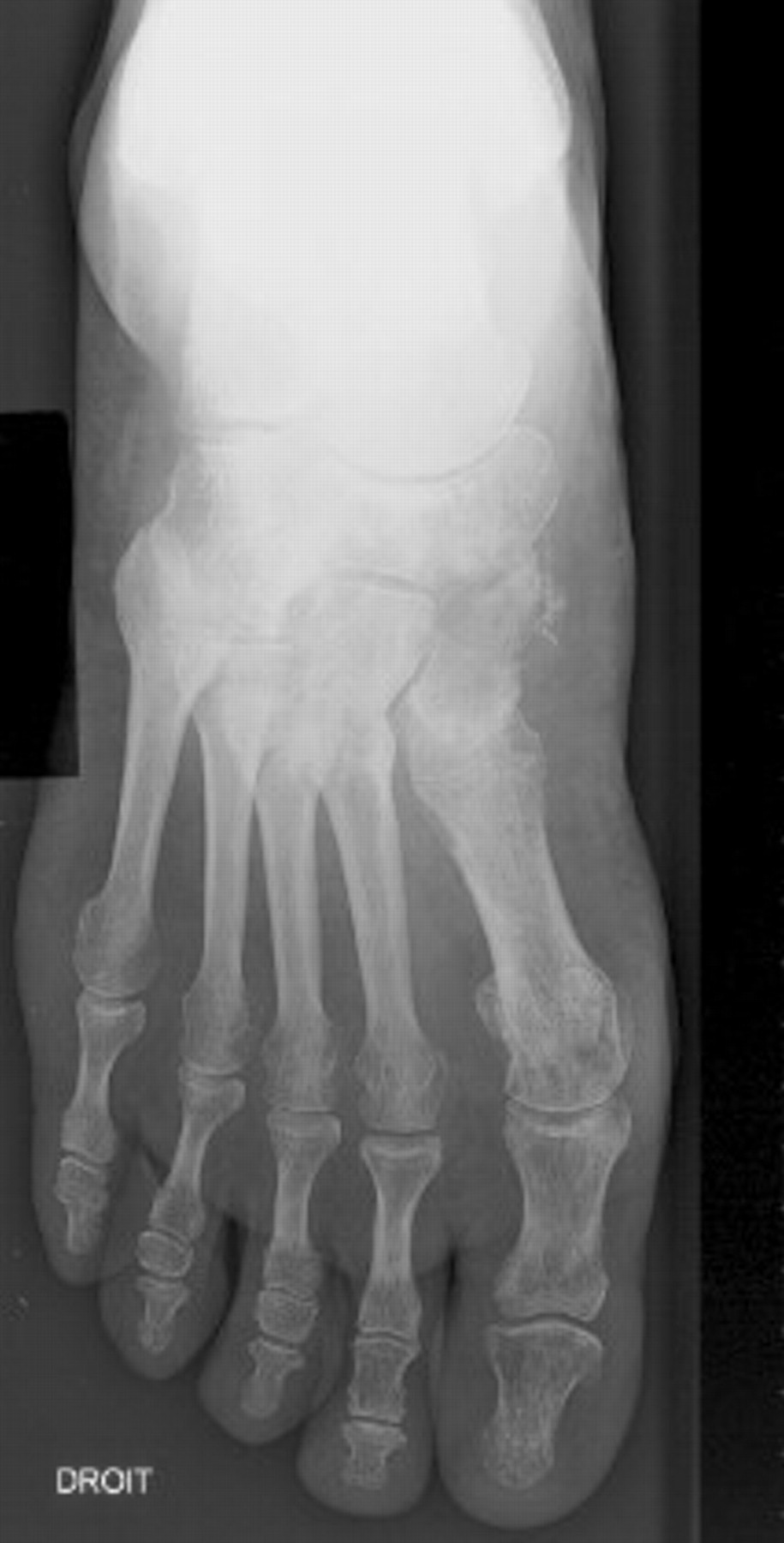
A 58-year-old man presented with increasing pain and swelling of the medial aspect of the right foot. The symptoms had started 14 months earlier after a long walk. Findings from the first radiologic study were interpreted as normal. He was treated with painkillers by his physician without relief. Five months later, a second radiologic study showed calcifications in the soft tissue near the medial cuneiform, which was taken for a calcifying tendonitis (
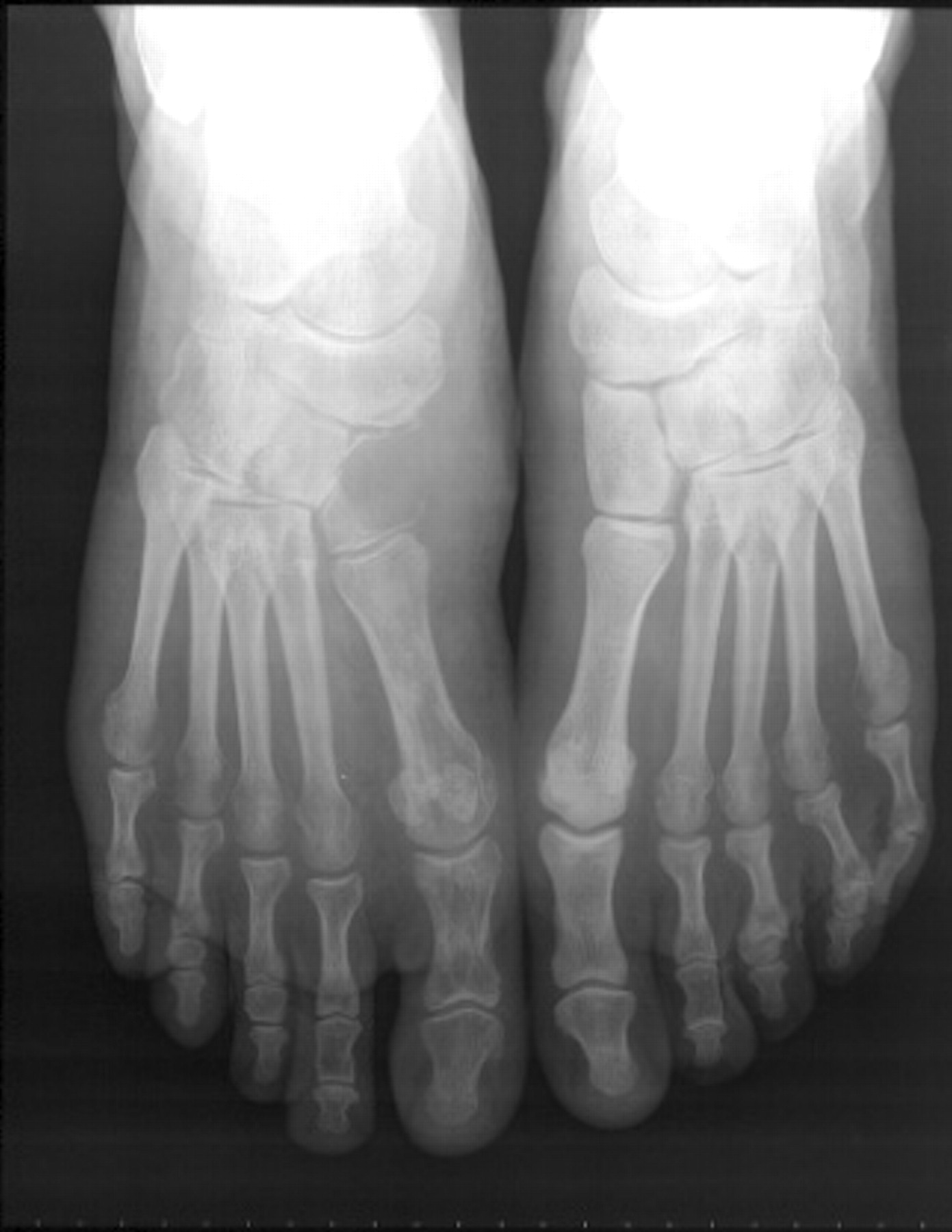
Fig. 1). On the basis of these findings, the patient was treated with two local corticosteroid injections, which temporarily gave him relief. Nine months later, a third radiologic study showed partial destruction of the medial cuneiform with soft-tissue extension (
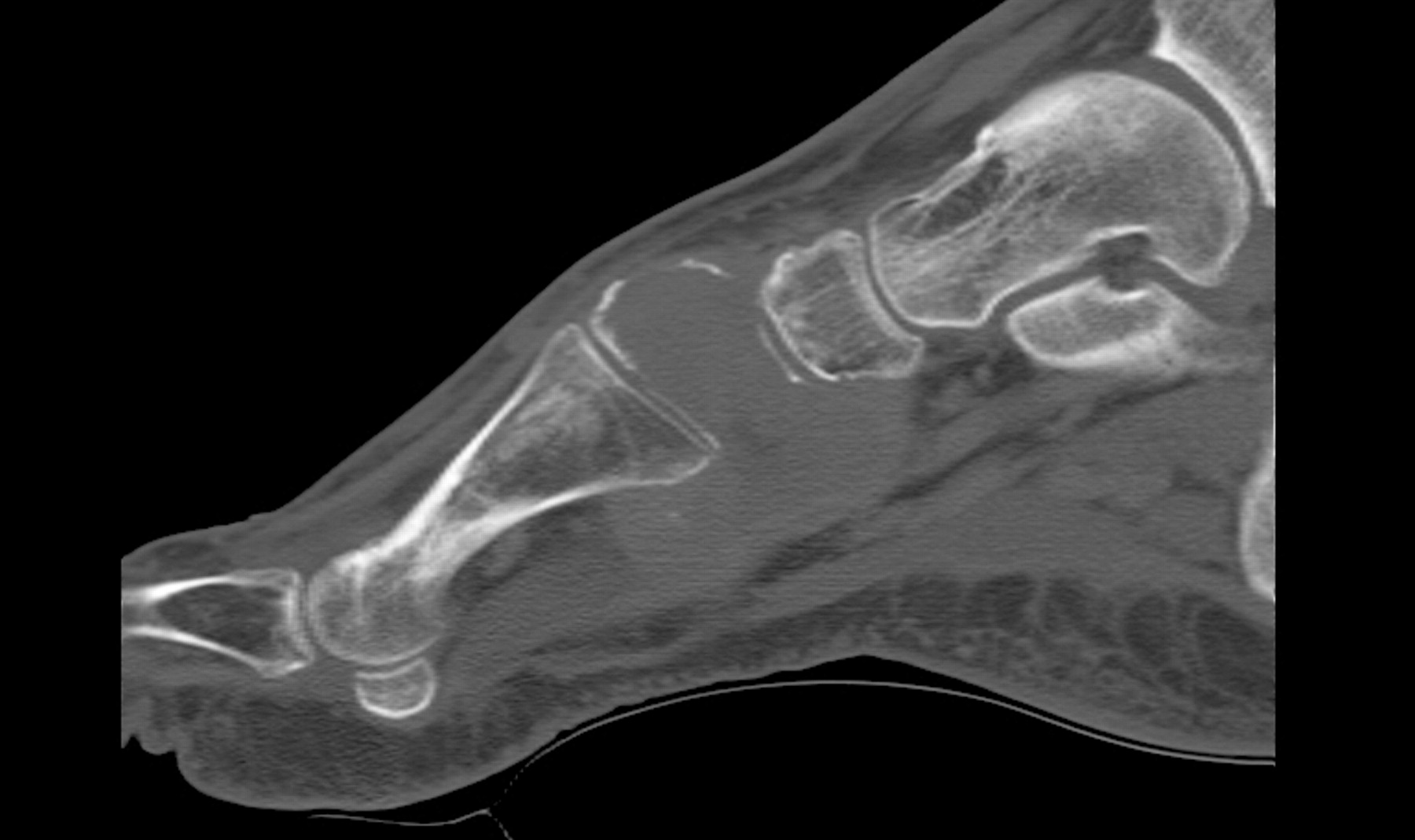
Fig. 2). An ultrasound showed the presence of a hypervascularized soft-tissue mass in the medial cuneiform. A computed tomographic (CT) scan confirmed the lytic nature of the bony lesion (
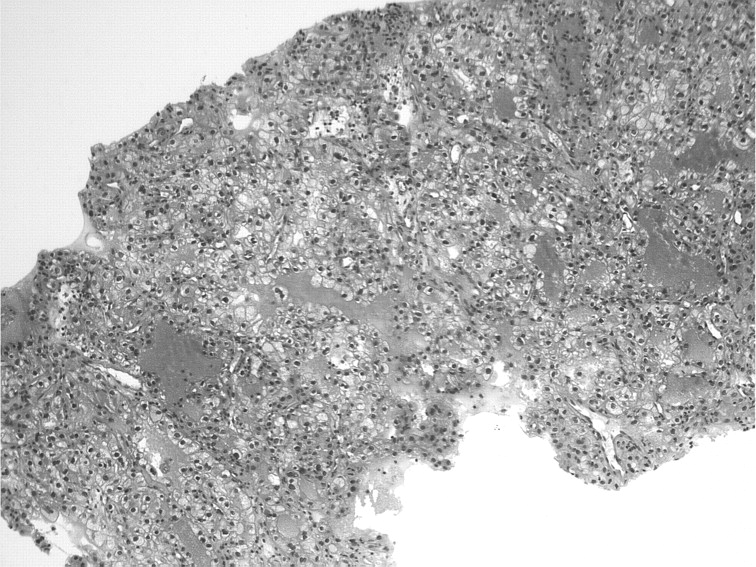
Fig. 3). At this point, he was referred to our institution. Further workup of the patient with positron emission tomography and total-body CT showed the presence of an 82-mm polar inferior left renal tumor, with bony metastases in the second and sixth posterior ribs, in the left tibial diaphysis, and in the right medial and middle cuneiform in the right foot. Other metastases were also noted in the parietal pleura bilaterally and in the right adrenal gland. The patient subsequently underwent a radical left nephrectomy and an open biopsy of the right foot lesion at the same time (
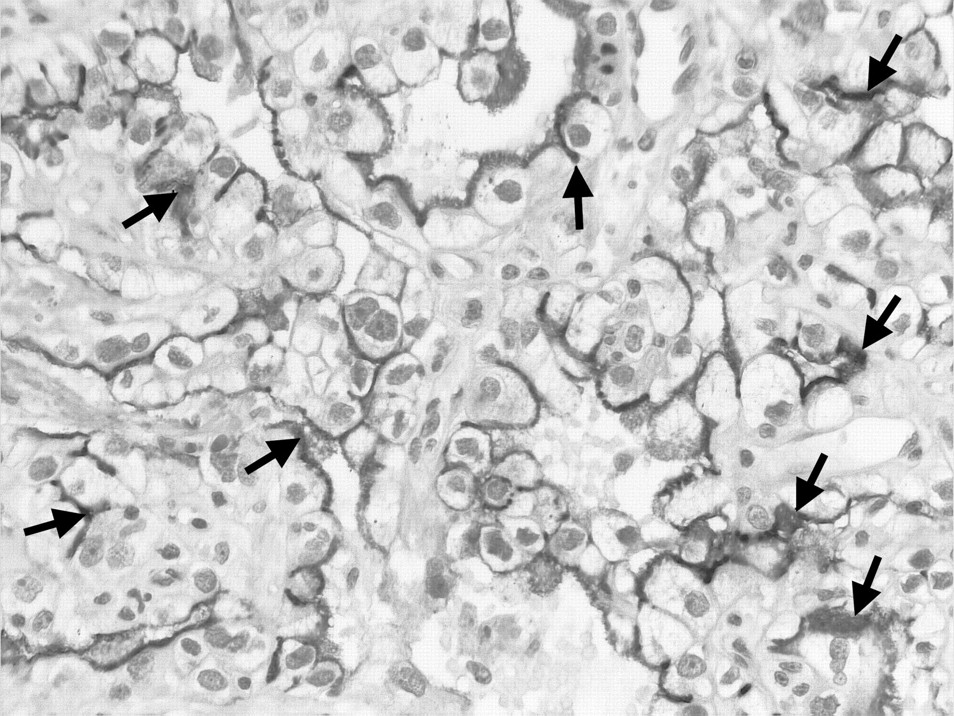
Fig. 4). The pathologic features were suggestive of metastatic renal cell carcinoma with the bone tissue entirely replaced by clear cell carcinoma confirmed by the presence of CD10 antibody, a useful marker in the diagnosis of renal cell carcinoma (
Fig. 5). After surgery, the patient started multikinase inhibitor sunitinib malate adjuvant therapy. The foot was treated with local radiation with total relief of symptoms and a slight reduction of the scanographic bony lesion at 12-month follow-up. The tibial lesion was treated preventively with intramedullary nailing with good evolution.
Figure 1.
Radiograph of the right foot showing soft-tissue calcification near the medial cuneiform.
Figure 1.
Radiograph of the right foot showing soft-tissue calcification near the medial cuneiform.
Figure 2.
Radiograph of the same foot 9 months later showing partial destruction of the medial cuneiform with soft-tissue involvement.
Figure 2.
Radiograph of the same foot 9 months later showing partial destruction of the medial cuneiform with soft-tissue involvement.
Figure 3.
Computed tomographic scan of the right foot confirming the lytic nature of the mediotarsal lesion.
Figure 3.
Computed tomographic scan of the right foot confirming the lytic nature of the mediotarsal lesion.
Figure 4.
Biopsy of the foot lesion showing the paucity of clear cell adenocarcinoma with adipomuscular tissue. The bone tissue is entirely replaced by metastatic clear cell adenocarcinoma (H&E-saffron, x63 [6.3x10]).
Figure 4.
Biopsy of the foot lesion showing the paucity of clear cell adenocarcinoma with adipomuscular tissue. The bone tissue is entirely replaced by metastatic clear cell adenocarcinoma (H&E-saffron, x63 [6.3x10]).
Discussion
The literature is in agreement about the low incidence of acrometastasis. Bloodgood [
6] reported the first case of metastasis in the foot in 1920. In 1976, Gall et al [
1] found an incidence of secondary bone tumors of the foot of approximately 0.4% of bony neoplasms in contrast to 3% of primary osseous neoplasms of the foot. Wu and Guise [
7] reported, in 1978, an incidence of acrometastasis of approximately 0.01% in patients with cancer. Zindrick et al [
4], in 1982, located 72 cases of foot acrometastasis, confirmed histologically in 50% of cases. The genitourinary tract and colon were the primary sources. The primary sites in the foot were the tarsal bones in 50% of cases, with the calcaneus being the most affected. In 1987, Libson et al [
8] identified 24 additional cases of foot acrometastasis, raising the number to 96. They concluded that subdiaphragmatic neoplasms, such as gastrointestinal, vesical, renal, and uterine malignancies, metastasize more frequently to the foot. A possible explanation for the latter finding is the retrograde spread of tumor emboli from the vertebral venous plexus down incompetent leg veins. In 2008, Maheshwari et al [
5], in a retrospective review across 19 years, detected 14 metastatic lesions to the foot in 694 feet with histologically proven metastatic skeletal disease for an incidence of 2%, higher than the 0.4% found by Gall et al [
1] in 1976, probably because Maheshwari et al [
5] reported only patients with known metastatic disease who underwent biopsy. In an exhaustive review of the literature in 2007, they identified 278 cases of foot acrometastasis. The genitourinary system was the most common primary organ system, and the lung was the most common single organ, followed by the kidney and the breast. The calcaneus was also the most common bone involved (31%), which has been linked to its size and blood supply.
Figure 5.
Immunohistochemical analysis of the bone biopsy sample showing the expression of CD10 antibody (arrows), a useful marker in the diagnosis of renal cell carcinoma.
Figure 5.
Immunohistochemical analysis of the bone biopsy sample showing the expression of CD10 antibody (arrows), a useful marker in the diagnosis of renal cell carcinoma.
Different explanations were given in the literature about the pathogenesis of acrometastases [
8–
10]. The organs draining into the systemic venous system metastasize preferentially to the lungs, microemboli spread them to the arterial circulation via erosion of lung capillaries, and the blood flow dissemination spreads the tumor cells to the distal localization. The local increase in blood flow in these distal localizations, which can be caused by functional overload or microtrauma, can play a role in increasing the incidence of metastases. Other factors can be related to the low incidence of acrometastasis, such as the paucity of red marrow in these bones, the lower temperature gradient in the acral areas suboptimal for tumor growth, insufficient lower-limb veins communicating with Batson’s plexus, and the immune system.
The kidney being the second most common organ of primary malignancy, renal cell carcinoma accounts for approximately 85% of all malignant renal tumors [
11]. It is well known for its unpredictable presentation and tendency to metastasize early. Evidence of metastasis is present in approximately one-third of patients at presentation [
12]. At the same time, foot metastasis may be the first manifestation of an occult cancer in up to 53% of cases [
13]. This shows the importance and, at the same time, the difficulty of early diagnosis of foot metastases because they are often initially mistaken for more benign processes, such as trauma, infection, abscess, osteomyelitis, inflammatory arthritis, gout, or tenosynovitis, as in the present case. Hattrup et al [
13] estimated that the delay in correct diagnosis is up to 24 months (mean, 6 months). The association between acrometastasis to the foot and another metastatic localization distal to the knee, as in the present case, is rare; Maheshwari et al [
5] noted this association in three of 14 cases of acrometastasis during a 19-year period.
The literature [
5,
7,
13] is in agreement about mean survival after diagnosis of metastases. It ranges from 10 to 15 months because usually these metastases are associated with advanced metastatic disease. Thus, the goal of therapy should be palliation of symptoms by systemic chemotherapy or radiotherapy; more aggressive treatment may be justified in solitary metastasis.