An intraosseous lipoma is a rare benign bone tumor that represents proliferation of fat tissue in the marrow of normal trabecular bone. Although any bone can be affected by intraosseous lipoma, the favored sites of the lesion are the calcaneus and the metaphyses of the long bones in the lower extremity [
1,
2]. In most cases, standard radiographs and diagnostic imaging techniques, such as computed tomography and magnetic resonance imaging (MRI), are sufficient to reach a diagnosis. However, in some cases, the radiologic appearance of this lesion may be confused with that of other bone lesions, which require postsurgical histologic examination. Differential diagnosis includes bone infarct, unicameral or aneurysmal bone cyst, nonossifying fibroma, fibrous dysplasia, giant cell tumor, osteoblastoma, and chondroblastoma [
1].
In a review of the English-language medical literature, we found only two articles describing intraosseous lipoma localized in the talus. In these articles, multiple intraosseous lipomas localized in different areas were reported [
3,
4]. We describe a patient who had an isolated intraosseous lipoma with an osteochondral defect in the talus. He was treated successfully with autologous osteochondral graft transplantation by an open procedure with medial malleolar osteotomy.
Figure 1.
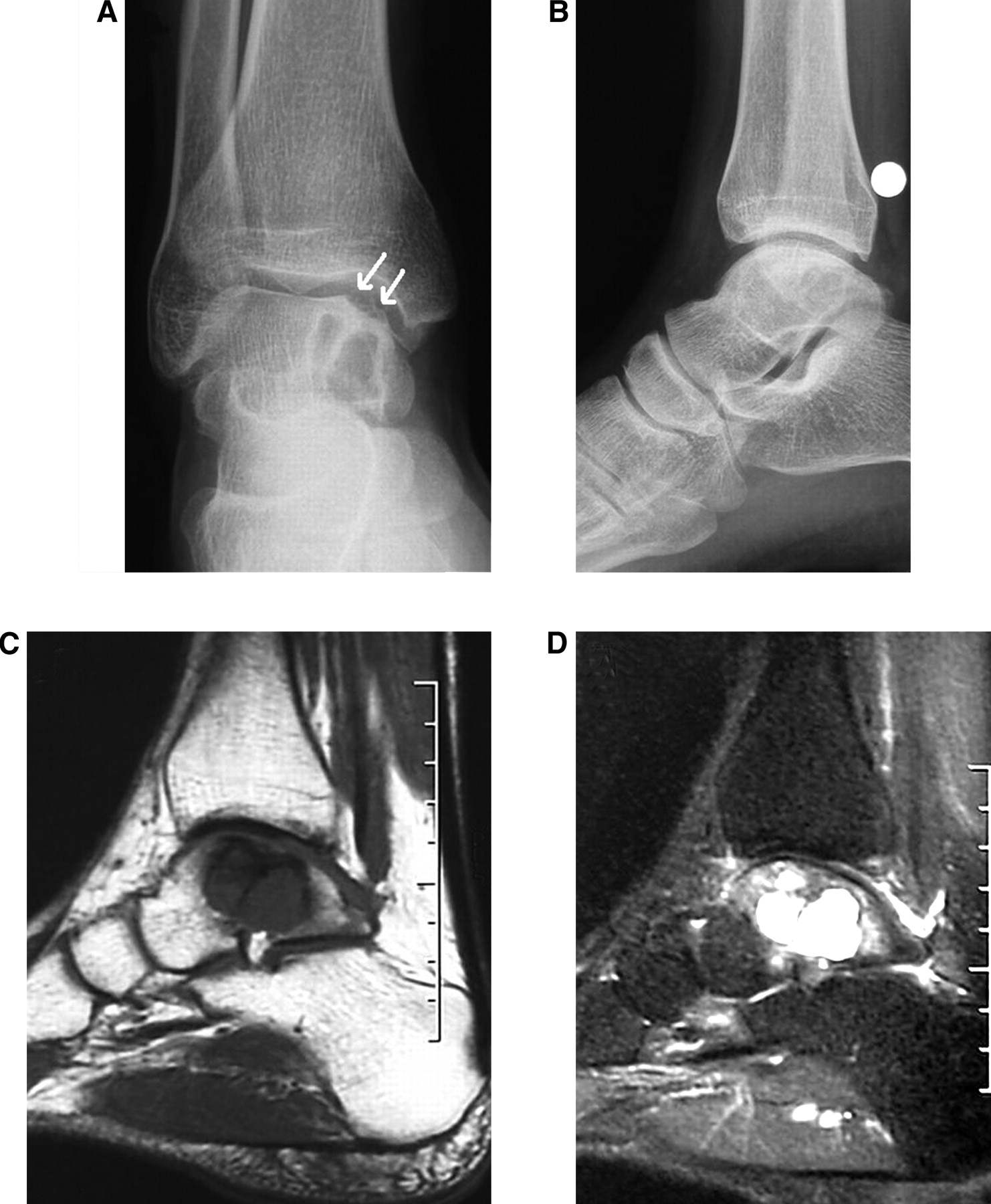
Anteroposterior (A) and lateral (B) radiographs of the right ankle show a lobulated cystic lesion and an osteochondral defect (white arrows) in the talus. Sagittal magnetic resonance images show a hypointense lesion on T1-weighted (C) and a hyperintense lesion on T2-weighted (D) images. Scale lines represent 1-cm intervals.
Figure 1.
Anteroposterior (A) and lateral (B) radiographs of the right ankle show a lobulated cystic lesion and an osteochondral defect (white arrows) in the talus. Sagittal magnetic resonance images show a hypointense lesion on T1-weighted (C) and a hyperintense lesion on T2-weighted (D) images. Scale lines represent 1-cm intervals.
Case Report
A 38-year-old male patient presented with pain and mild swelling in his right ankle of 2 years’ duration. His pain was intermittent and increased with activity. There was no history of major trauma or an inflammatory condition. Previous treatment methods, including nonsteroidal anti-inflammatory medication, physical therapy, and ankle bracing, had been unsuccessful. On physical examination, both ankles appeared identical, with no abnormalities on inspection. There was mild tenderness on the anteromedial side of the right ankle with palpation. Active and passive ranges of motion of his right ankle were not restricted.
Figure 2.
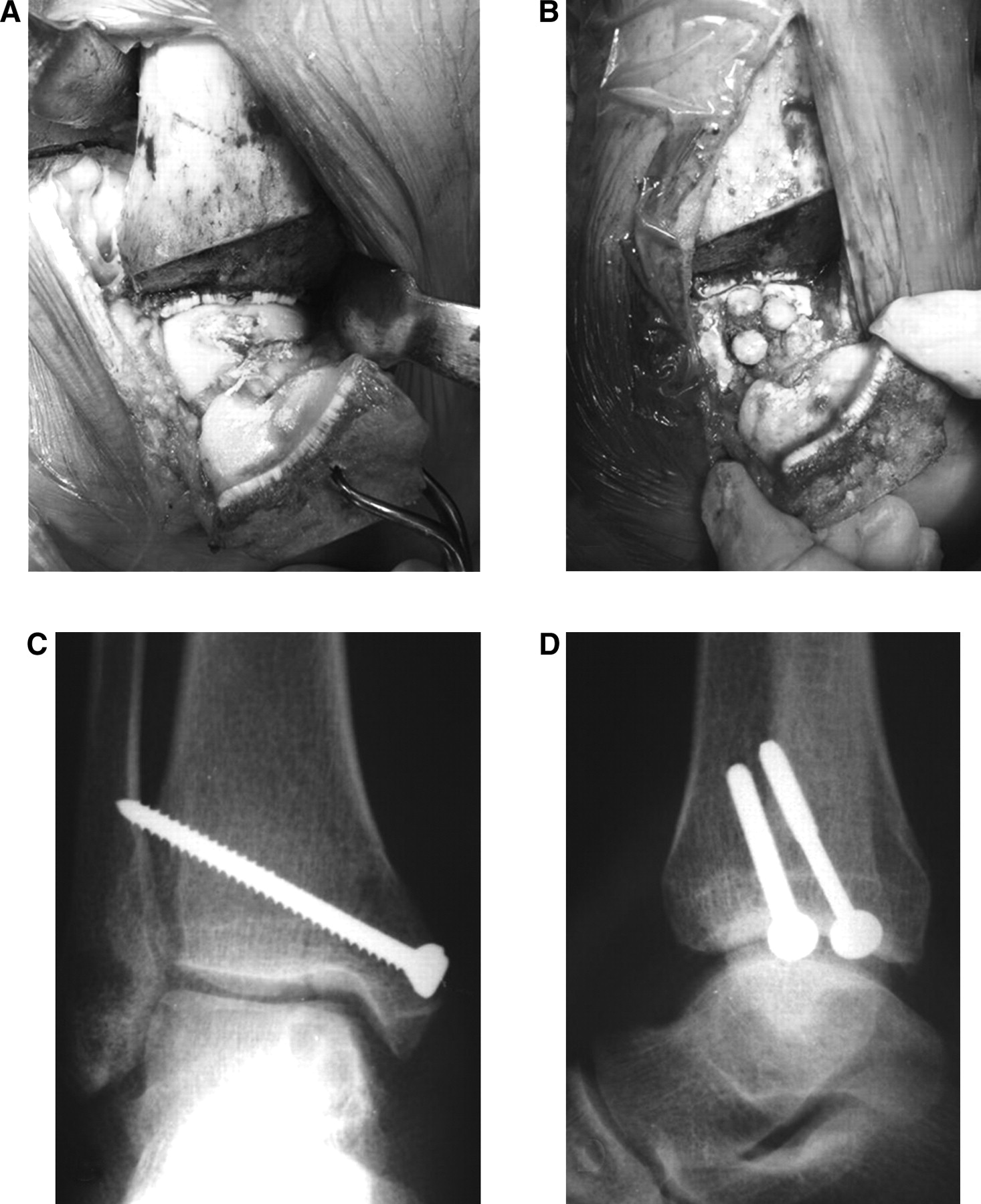
Intraoperative pictures show the talar dome defect after medial malleolar osteotomy (A) and filling of the cavity by three autologous osteochondral grafts (B). Postoperative anteroposterior (C) and lateral (D) radiographs confirm satisfactory malleolar reduction.
Figure 2.
Intraoperative pictures show the talar dome defect after medial malleolar osteotomy (A) and filling of the cavity by three autologous osteochondral grafts (B). Postoperative anteroposterior (C) and lateral (D) radiographs confirm satisfactory malleolar reduction.
Standard anteroposterior (
Fig. 1A) and lateral (
Fig. 1B) radiographs of the right ankle showed a translucent, lobulated cystic lesion with sclerotic margins and an osteochondral defect localized in the medial corner of the right talus. On MRI studies, the lesion appeared hypointense on T1-weighted images (
Fig. 1C), whereas significantly higher signal intensity was observable on T2-weighted images (
Fig. 1D). According to the MRI-based staging system suggested by Hepple et al [
5], the lesion was classified as type V, which described an osteochondral lesion with disruption of the talar articular surface and cystic extension into the body of the talus. Laboratory examination showed normal biochemical blood analysis findings and normal lipid metabolism, including the measurement of total serum lipid, serum cholesterol, high- and low-density lipoproteins, serum triglycerides, and lipid electrophoresis.
Surgery was recommended. With the patient under epidural anesthesia and tourniquet hemostasis, a 10-cm medial incision centered over the medial malleolus was made. The medial malleolus was cut with an oscillating saw (MicroAire, Charlottesville, Virginia) and retracted inferomedially to expose the talar lesion located on the anteromedial surface of the talus. The unstable osteochondral fragment was removed, and the depth and size of the lesion were determined. Three osteochondral graft cylinders (8 mm in diameter and 15 mm in length) were harvested from the superolateral margin of the lateral femoral condyle of the ipsilateral knee by using an osteochondral autograft transfer system (OATS; Arthrex, Naples, Florida). The bed of the lesion was filled with approximately 15 mL of autogeneous cancellous graft, and then osteochondral graft cylinders were plugged into the defect, ensuring that the plugs were perpendicular to the talar articular surface (
Fig. 2A and B). Range of motion of the ankle was performed to ensure that the grafts were stable. The medial malleolus was then reduced and fixed with two 4.0-mm malleolar screws (
Fig. 2C and D). A below-the-knee cast was applied postoperatively.
Figure 3.
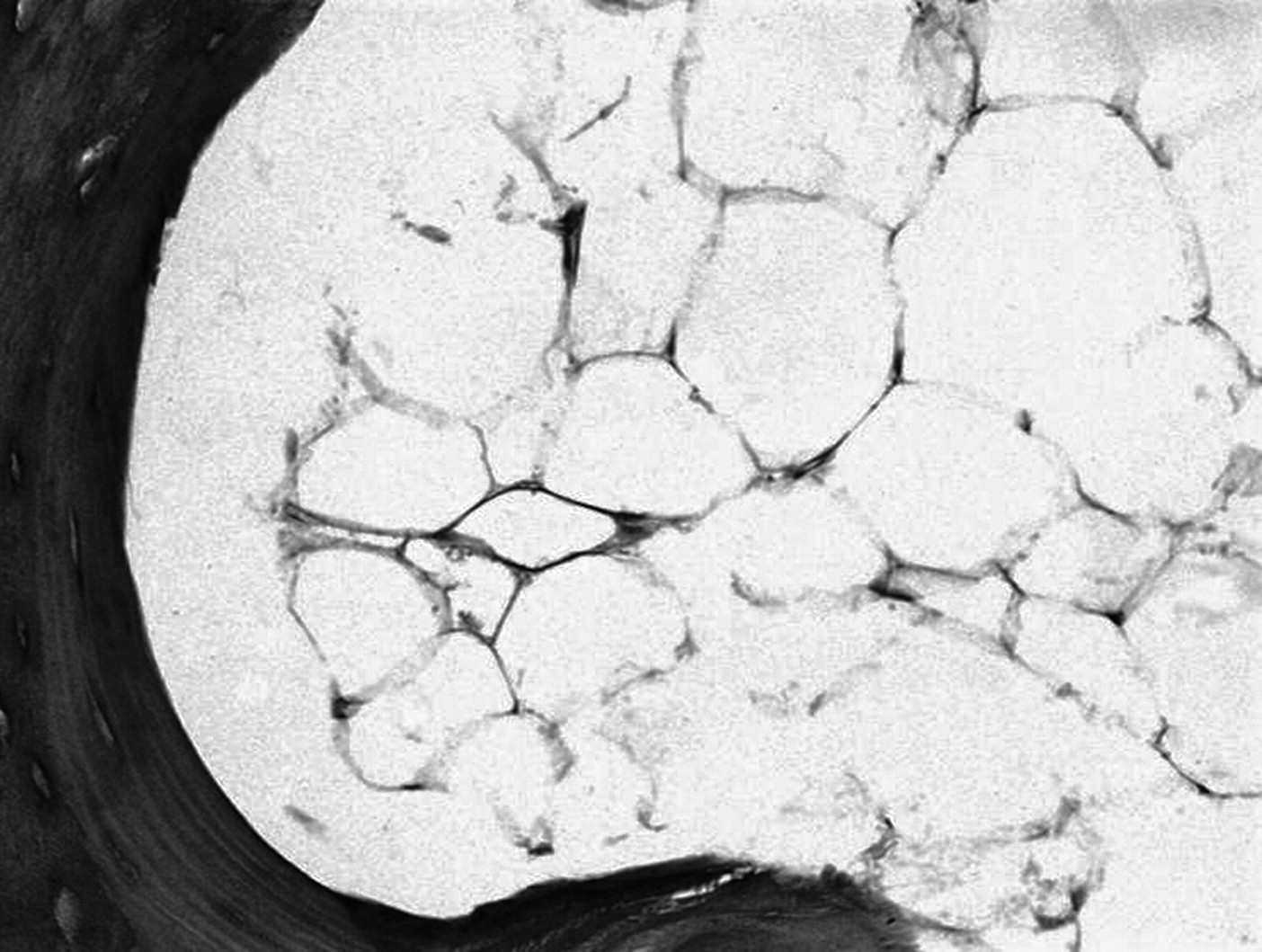
Histopathologic investigation of tissue samples shows mature adipocytes devoid of bone trabeculae (H&E, ×200).
Figure 3.
Histopathologic investigation of tissue samples shows mature adipocytes devoid of bone trabeculae (H&E, ×200).
The histopathologic results of the tissue samples were found to be consistent with intraosseous lipoma (
Fig. 3). The patient remained nonweightbearing for 6 weeks. At the end of the sixth week, the cast was removed because of radiographic healing of the malleolar osteotomy, and the patient was allowed to bear weight. At the final follow-up 12 months postoperatively, he had no pain in the right ankle and could walk without support. The American Orthopaedic Foot and Ankle Society ankle-hindfoot score [
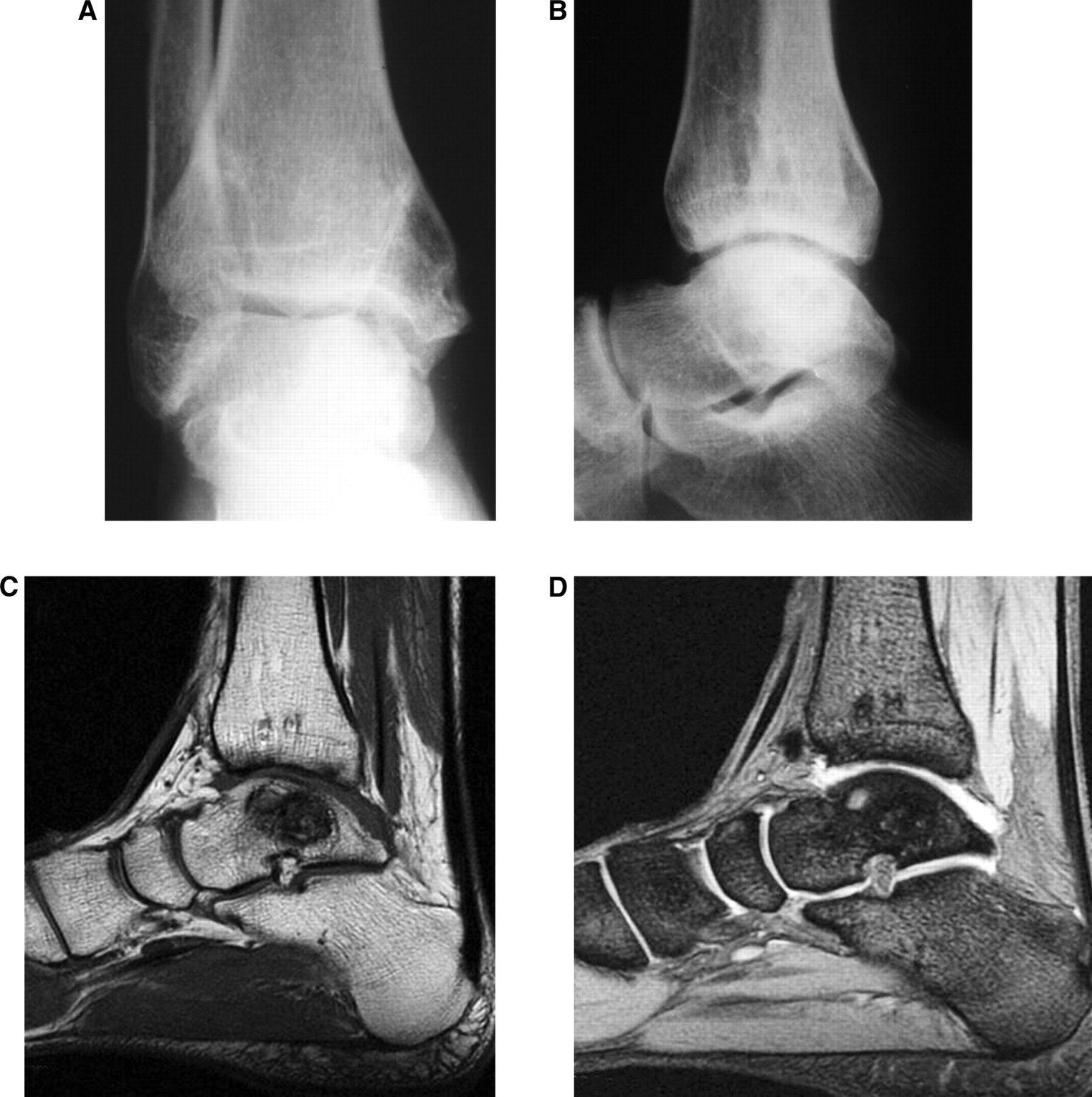
6] for the right ankle was 96. There was no loss of joint space radiographically (
Fig. 4A and B). Magnetic resonance images of his right ankle demonstrated graft incorporation and articular surface congruency (
Fig. 4C and D). Informed consent for publication was obtained from the patient.
Discussion
There are two published case reports with intraosseous lipoma localized in the talus. Szendroi et al [
4] reported a case of systemic intraosseous lipomatosis involving the proximal femur, both ends of the tibia, and the tarsal and metatarsal bones without any associated disorders of lipid metabolism. Freiberg et al [
3] described a case of multiple intraosseous lipomas associated with type IV hyperlipoproteinemia. These two cases should be described as intraosseous lipomatosis, which is fundamentally different from intraosseous lipoma. Intraosseous lipomatosis is a hamartomatous malformation attributable to hyperplasia of adipose tissue and may be associated with endocrine abnormalities such as hyperlipoproteinemia [
4]. On the other hand, intraosseous lipomatosis may affect the entire skeleton, including tarsal and metatarsal bones, whereas intraosseous lipoma occurs generally in the axial and appendicular skeleton. To our knowledge, an isolated intraosseous lipoma localized in the talus has not been previously reported.
The characteristic radiographic finding of intraosseous lipoma is a lytic lesion, which may have sclerotic margins and, occasionally, calcification at the center [
7]. Lobulation or internal osseous ridges also may be present. Milgram [
8] classified intraosseous lipomas into three types based on the degree of involution. According to this classification, stage 1 lesions consist of viable fat cells and radiologically demonstrate resorption of the trabecular structure and replacement with radiolucent fat. Stage 2 lesions include partial viable fat cells also demonstrating partial fat necrosis in the lesion, and calcification can be noted radiologically. Stage 3 lesions show complete or nearly complete necrosis of the fat cells with cyst formation and demonstrate considerable radiodensity centrally and along the periphery of the lesions. Findings from MRI of stage 1 and 2 lesions are high signal intensity on T1- and T2-weighted sequences similar to that of subcutaneous fat tissue [
9]. However, stage 3 lesions with extensive fat necrosis and cyst formation show high signal intensity on T2-weighted images and low intensity on T1-weighted images [
10].
Although there is a correlation between the histologic and radiologic features of intraosseous lipomas in general, some discrepancies may occur in the radiologic appearances of lipomas in different sites [
1]. Kamekura et al [
11] described a patient with a stage 3 intraosseous lipoma in the sacrum whose MRI findings were representative of a stage 2 lesion. The present case demonstrated histopathologic features of a stage 1 lesion, whereas MRI findings were compatible with a stage 3 lesion.
Figure 4.
At the final follow-up (12 months postoperatively), anteroposterior (A) and lateral (B) radiographs and magnetic resonance images (C and D) demonstrate graft incorporation and articular surface congruency of the talus.
Figure 4.
At the final follow-up (12 months postoperatively), anteroposterior (A) and lateral (B) radiographs and magnetic resonance images (C and D) demonstrate graft incorporation and articular surface congruency of the talus.
There are various theories about the pathogenesis of cystic lesions in the talus. One of them is intrusion of synovial fluid into the bone through the articular defects [
12,
13]. According to this theory, cyst formation is due to forceful entry of synovial fluid through a chondral fracture extending to the underlying subchondral bony plate. Therefore, we conclude that an osteochondral defect may be responsible for the discrepancy between the histopathologic result and the radiologic appearance in the present case.
Most intraosseous lipomas tend to undergo spontaneous involution, and surgery is not always necessary. The indications for surgical intervention are pain, potential risk of malignant transformation, and a lesion large enough to lead to pathologic fracture [
8]. Surgery also should be considered in patients with a talar intraosseous lipoma if it is associated with an osteochondral defect, as in the present case. Curettage and grafting is the standard surgical treatment for these benign lesions [
8]. If an osteochondral defect is present, an autologous osteochondral graft transplantation technique should be preferred as surgical intervention in talar intraosseous lipomas.