Ingrown toenail is a common condition causing pain and discomfort as well as problems with footwear, regular daily activities, hobbies, and sporting activities. Although ingrown toenail is among the most common conditions of minor surgery and various surgical modalities have been tried, it is still associated with a relatively high recurrence rate.[
1–
7] The operations are usually limiting for patients regarding daily activities, and with lengthy periods off work or school and especially when there is a recurrence, patients are less eager to have any operations. Treatment of ingrown nails with orthonyxia has been gaining attention because similar recurrence rates have been shown in comparison to matricectomies.[
1,
2]
We have been using nail braces directly without any previous surgery or correction of the nail side, and patients usually return to their daily activities pain free. We have been using one standard brace with two hooklike projections designed to be attached to the sides of the nail and a dental string in the middle exerting a pulling effect for normal-thickness adult nails. In patients with acute ingrown nails, which are usually attributable to improper nail clipping, inappropriate footwear, or prolonged physical exercises excacerbated with hyperhydrosis, we apply these braces. Even patients with granulation tissue formation, having a normal-thickness or a thin nail with a slight curve, experience relief of pain immediately after this application.[
8]
Some patients with overcurved and thick nails with chronic onychogryphosis refuse to have surgery, while others have had previous surgery. Patients who cannot have surgery because of medical or social reasons often seek relief in pedicure salons, but do not want to continue having pedicures, which are said to be painful and unhygienic. Because the nails are thick and the overcurved, classic brace application seems insufficient for pain relief, which is the most important indicator for the patient, we derived a new mode of application that seems to be helping.
At this point, we wanted to measure quantitatively and compare the forces we have been applying with various braces by using a force gauge meter, which may help evaluate and standardize the treatment regimens for various types of ingrown nails in the future.
Methods
We included 12 patients, 9 females and 3 males, with chronic ingrown toenails. All of the nails were thick and overcurved, and none had infection or granulation tissue formation. Although these patients did not have infection or granulation tissue formation, because their condition was chronic and their nails were thick and overcurved, surgery had been suggested to most. They refused surgery and requested brace application.
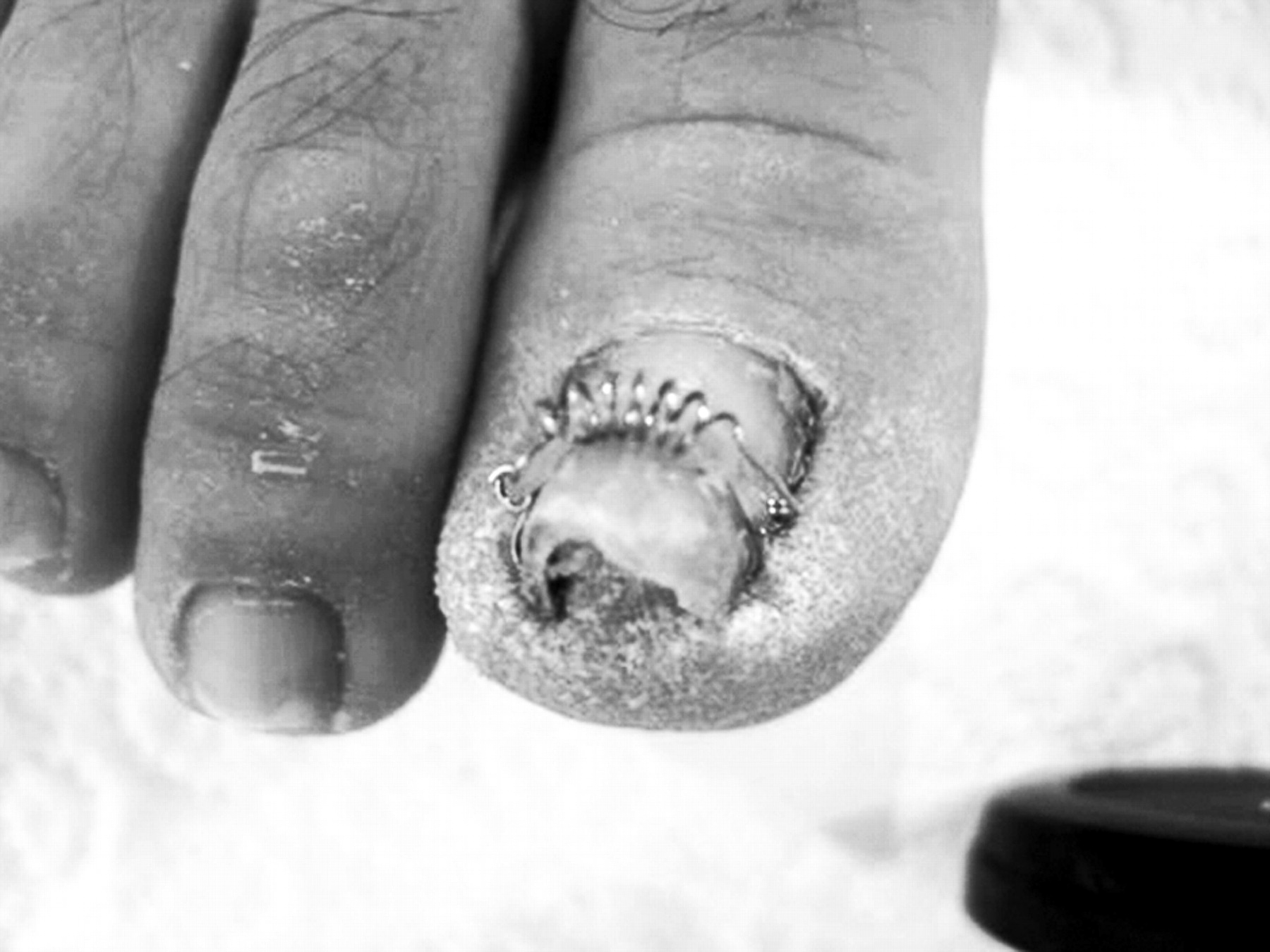
Figure 1.
A double-string nail brace with an extra spring attached on its sides applied to a patient.
Figure 1.
A double-string nail brace with an extra spring attached on its sides applied to a patient.
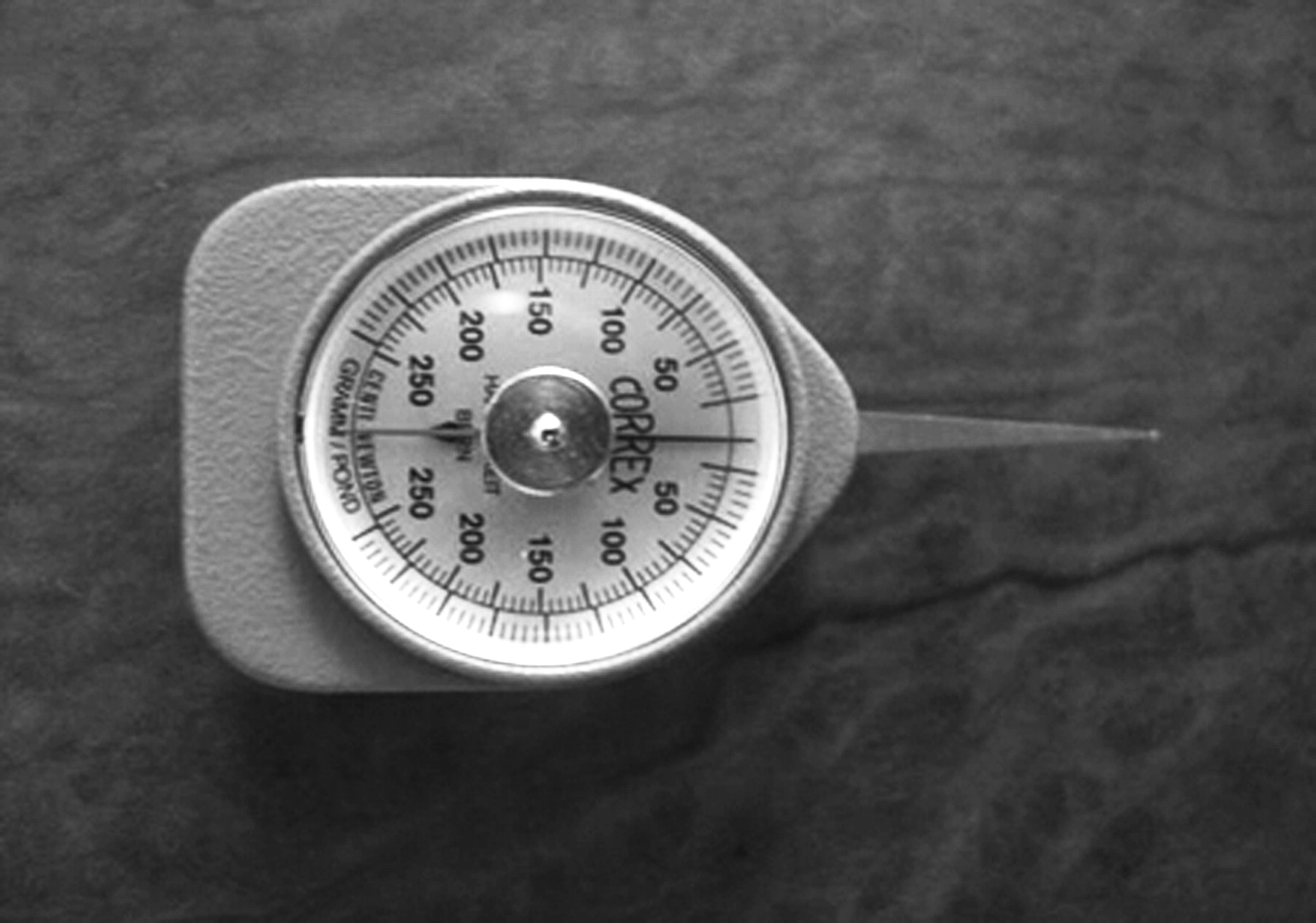
Figure 2.
The force gauge meter used to evaluate the forces exerted by nail braces.
Figure 2.
The force gauge meter used to evaluate the forces exerted by nail braces.
We applied braces to 21 nails (
Fig. 1). As a therapeutic approach, all but two male patients were undergoing special pedicure-like clipping and trimming of the lateral nail sides every 4 to 5 weeks, which was usually a bloody procedure. Their pain-free interval was 3 to 4 weeks, and once the lateral nail started to grow, the patients started to feel pain again. Six patients (2 males and 4 females) had undergone previous nail avulsion, and they had recurrent complaints after a few years.
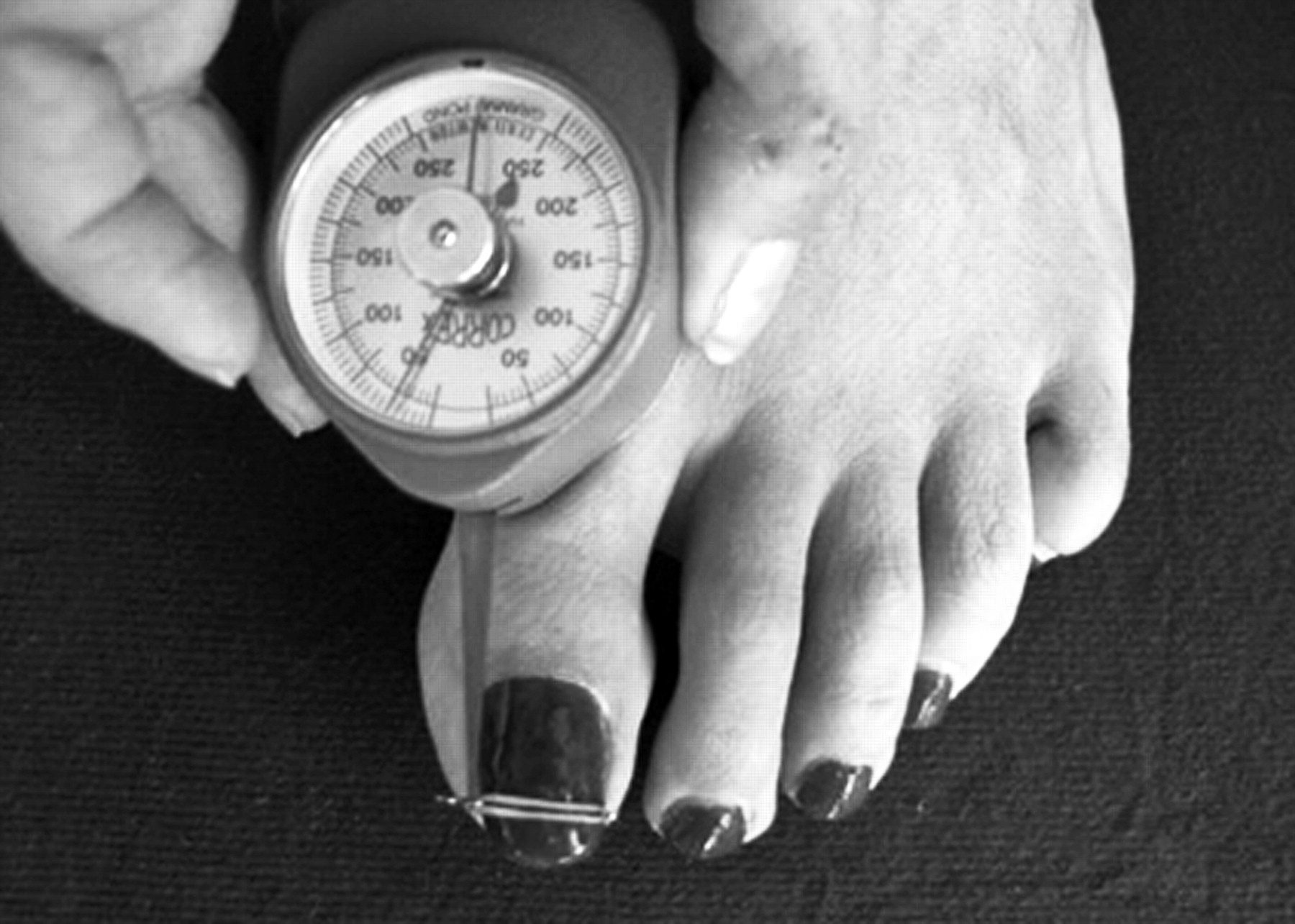
Figure 3.
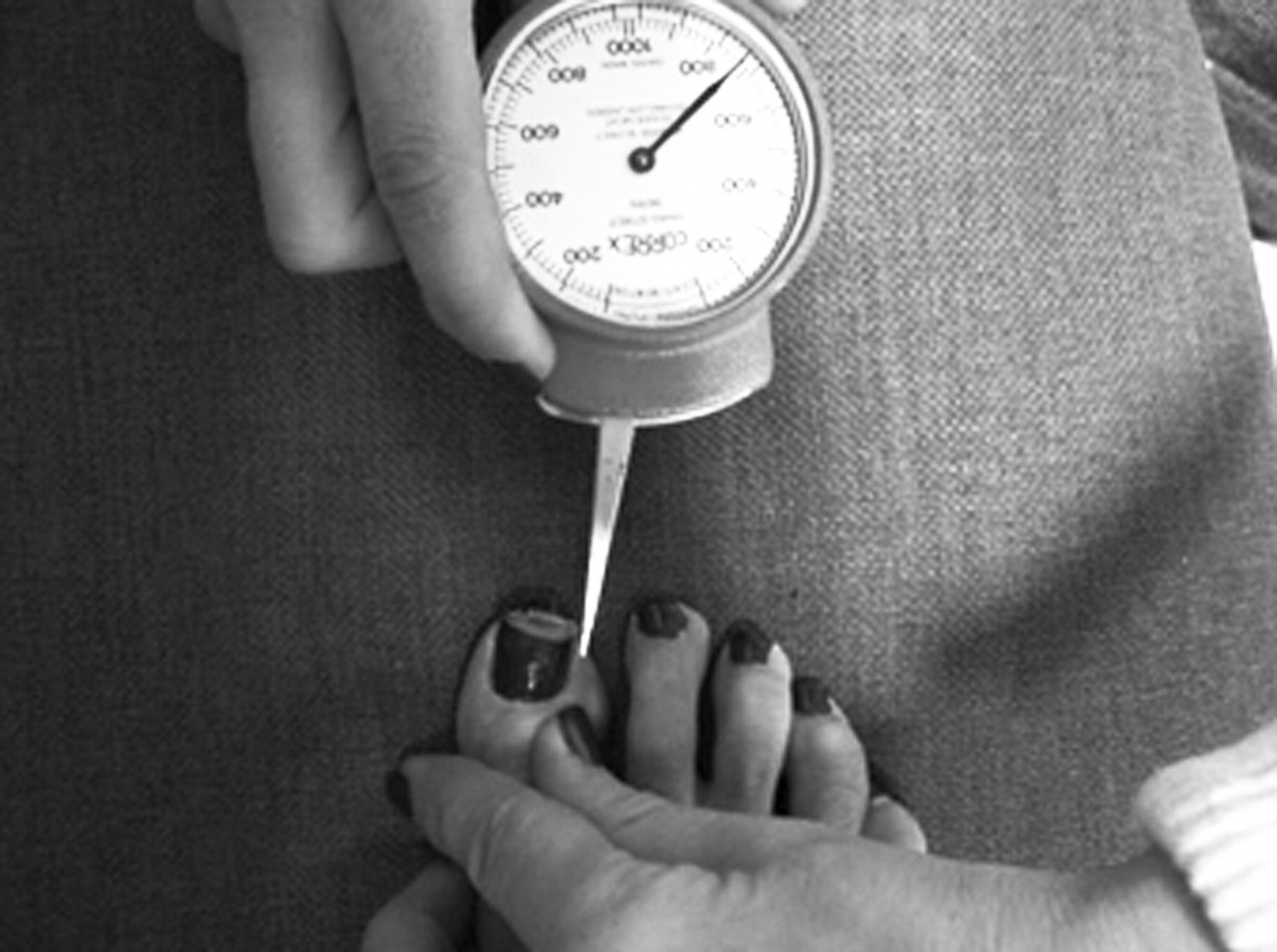
Measuring the force applied by a standard single-string nail brace on a 2.3-cm-wide nail.
Figure 3.
Measuring the force applied by a standard single-string nail brace on a 2.3-cm-wide nail.
The expectations of patients who refused to have surgery were pain-free daily activities and being able to wear shoes without pain during treatment. First, we applied the single-string brace with the hooklike projections holding the nail sides. We then asked the patients to walk with their shoes on, but they still had pain.
Then we tried the double-string brace; we applied this brace in the same manner as the previous one, and then attached to the circles on the sides of the brace, we also applied a 0.4-mm-thick stainless steel string to further pull the hooklike projections (
Fig. 1). The metal spring was also standardized as 13 mm wide and having two hooks on each side to apply to the circles of the nail brace (
Fig. 1). This time, right after the application, all of the patients managed to walk with their shoes on and step on their tiptoes without pain. We changed the braces every 2 months, but if patients felt pain before that, they came back immediately. At every follow-up visit, we replaced the braces with new ones and tried to locate the braces toward the proximal nail fold as much as possible.
To compare the pulling effects of the single-string brace and this double-string brace and the new metal spring, we measured the pulling forces with Correx (Haag-Streit, Koeniz, Switzerland) force meters used by orthodontists and orthopedic surgeons (
Fig. 2). We applied the metal distal tip of the metal spring to the circle of the opposite side of the brace and pulled the brace up to the point where we tend to apply the other hook (
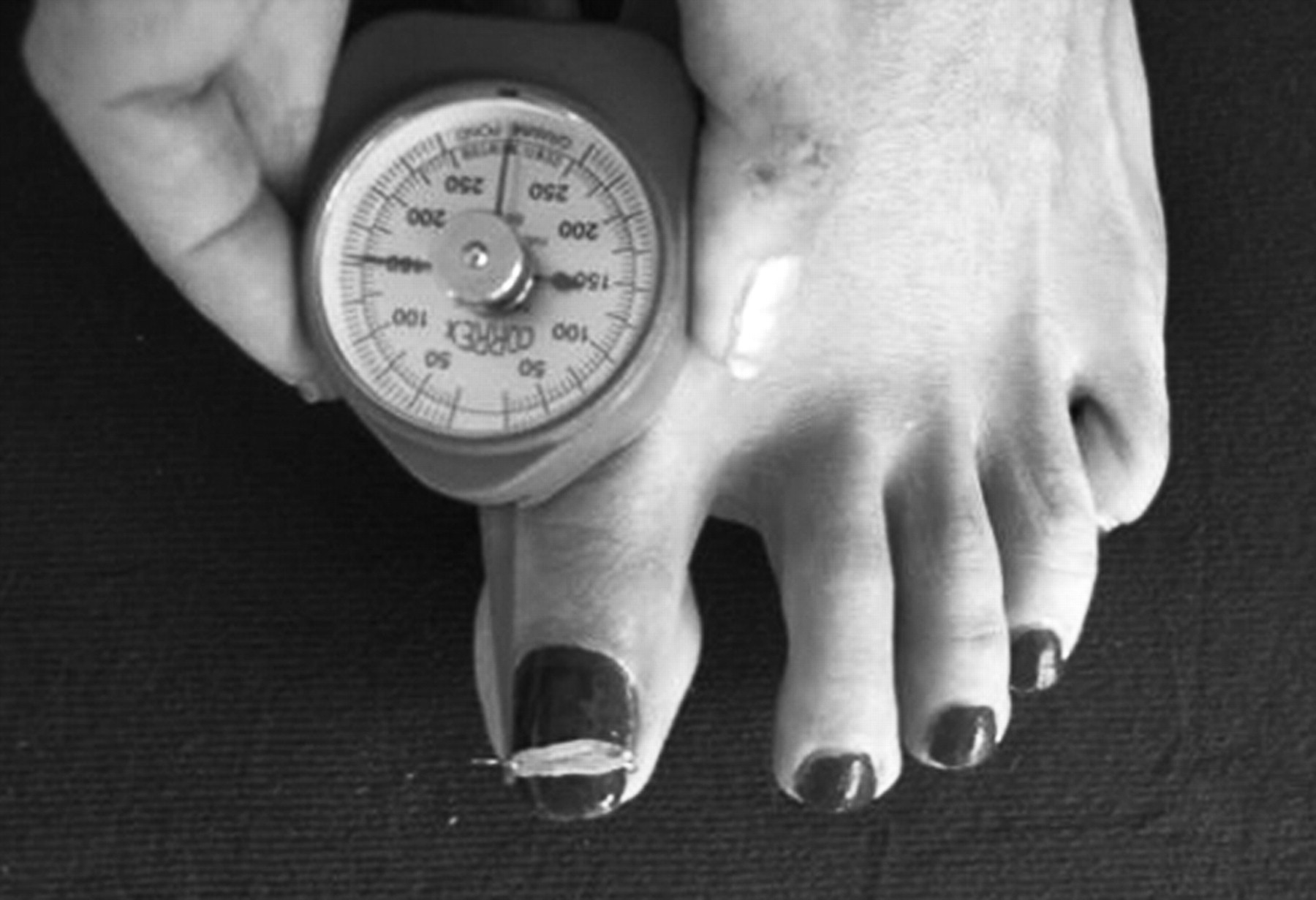
Figs. 3–
5). To measure nail width, pediatric measuring tape was used from one side of the nail toward the other, including the parts covered by lateral nail folds. Then we evaluated forces according to nail width.
Figure 4.
Measuring the force applied by a standard double-string nail brace on a 2.3-cm-wide nail.
Figure 4.
Measuring the force applied by a standard double-string nail brace on a 2.3-cm-wide nail.
Results
The duration of ingrown nail was 3 to 20 years, with an average of 7.3 years. Immediately after we applied the double-string brace with a metal spring at the top, all of the patients continued their daily activities. During the first month of treatment, in four patients the extra spring pulled out one of the hooks from the side of the nail. On examining the brace, we noted that the hooklike projection was distorted, so we understood that the pulling effect of the metal spring was much higher than the metal hook could stand. Then we applied the nail brace with double strings alone and reapplied the extra spring 2 weeks later with no problem.
Figure 5.
Measuring the force applied to the same 2.3-cm-wide nail by a standard metal spring attached to a double-string brace.
Figure 5.
Measuring the force applied to the same 2.3-cm-wide nail by a standard metal spring attached to a double-string brace.
At each follow-up visit, we removed the braces and asked the patients to walk with and without their shoes and to step on their tiptoes. Once they performed all of these moves without any pain, we stopped the application. In seven patients (13 nails), at the end of 6 months, no more treatment was required (
Table 1). In the other five patients (eight nails), all females, pain recurred after 2 to 4 weeks. So, we continued the application for 2 more months, and in three of these five patients (four nails), we stopped treatment at the end of 8 months. The other two patients (four nails) used the braces for 10 months (
Table 1).
Table 1.
Measurements of Nail Widths and Forces Applied to Each Nail
Table 1.
Measurements of Nail Widths and Forces Applied to Each Nail
Table 2.
Statistical Analysis of Relations Between Nail Width versus Force Applied to Each Side and Duration of Treatment versus Forces Applied to Each Sidea
Table 2.
Statistical Analysis of Relations Between Nail Width versus Force Applied to Each Side and Duration of Treatment versus Forces Applied to Each Sidea
We found that as the width of the nail increased, so did the force applied to the nail sides (
Table 2). Although the numeric values of force applied differed according to nail width, comparing different braces on the same nail always gave the same ratio. To demonstrate,
Figures 3,
4, and
5 show the method and comparison of the pulling forces on the same 2.3-cm-wide nail, which is a medium-curved, normal-thickness nail, enabling us to clearly visualize the measurement procedure. The pulling force of the single-string nail brace was 50 centi Newtons (cN) (
Fig. 3) and of the double-string brace was 150 cN (
Fig. 4). The metal spring (
Fig. 5) exerted approximately 700 cN to the same nail, so we applied approximately 14 times more force with the extra spring as with the single-string nail brace.
In this patient group, nail width ranged from 19 to 26 mm. Although the numeric values of force applied may differ slightly according to nail width, this enables us to evaluate the pulling forces we have been applying numerically and, thus, more objectively.
In this patient group, the pulling forces of the metal spring in 21 nails were 300 to 1,000 cN, being less in narrow nails and more in larger nails (
Table 1). In three male patients, because they had larger nails (23–26 mm), the pulling forces were 700 to 1,000 cN (
Table 1). At the end of 6 months, all three of these patients had complete remission, which may be attributables to the higher forces applied (
Table 2). Regarding statistical analysis of data, we found a positive correlation between nail width and the amount of force applied (
Table 2). On the other hand, duration of treatment was negatively correlated with force applied and, thus, nail width (
Table 2). As for female patients with narrower nails (19–23 mm), the pulling forces were lower (300–700 cN), which seems to be a factor for longer application times (
Table 2).
Conclusions
The application of nail braces is patient friendly, is practical, and usually does not require any medication. The drawback was the lack of objective evaluation of the force applied. There may be patients who have undergone surgery and have had recurrence of symptoms with no intention of having a second surgery. Some patients refuse any surgery in the first place. These patients usually seek treatment in pedicure salons. Nail bracing can be considered as an alternative treatment for these patients. However, for thick and overcurved nails, strong pulling for at least 6 months was required in this patient group.
Measuring the forces with a force gauge meter enabled us to evaluate numerically and compare the pulling forces we have been applying with various braces. Nail width seems to be an important variable that affects the force applied. Further studies with more patients may help explain the optimum forces to be applied and the duration of treatment versus various nail variables, such as nail thickness, nail width, angle of the curve of the nail, and duration of complaints.