The most general definition of
debridement is the process by which all materials incompatible with healing are removed from a wound. This definition has grown broader with time and classically involves the surgical excision of all grossly infected and necrotic tissue. Eighteenth- and 19th-century military surgeons, most notably the Belgian Antoine Depage, developed techniques of aggressive excision on the battlefields of Europe to prevent gangrene and save lives. [
1] We now know, however, that tissue does not have to be actively infected or necrotic to impair the biological wound-healing processes of the body. Effective debridement can be achieved by nonsurgical means in some cases, whereas the growing utility and importance of serial debridement of chronic wounds is becoming more apparent [
2,
3,
4,
5,
6,
7,
8,
9,
10,
11,
12,
13]. In this review of the processes of debridement in the noninfected wound, we 1) focus on the pathogenesis of the target tissue causing wound-healing impairment in the absence of infection and 2) recommend specific techniques for debridement.
Inflammation versus Infection
Because inflammation is an objective hallmark of infected and chronic wounds, it can often be a clinical challenge to determine whether a lower-extremity wound is actively infected or simply chronically inflamed. One might easily say that all infection is inflammatory but that not all inflammation is infectious. Further clouding this issue is the reality that all wounds are expected to have at least some degree of bacterial colonization, even in the absence of active clinical infection. Indeed, 60% or more of chronic wounds are found to contain a biofilm [
14]. It is important to determine at what point critical colonization has been reached, or the level at which the type and quantity of bacteria begin to cause active infection. Although the presence of any bacteria is certain to have at least some effect on the biological processes of wound healing, specific treatment and surgical interventions should depend on whether critical colonization is present with active infection.
These seemingly subtle differences should guide the surgical treatment plan and the target tissues of debridement. An infected wound is expected to be characterized by surrounding erythema, swelling, induration, tenderness, and malodor. The target tissue for debridement in this situation is all grossly infected and necrotic tissue en masse. The wound requires exploration to discover any deep pockets, abscesses, or tracking along fascial and tendinous structures. Adjunctive antibiotic drug therapy is required to help eradicate the bacteria. On the other hand, a noninfected but chronic wound can still be expected to have a rim of surrounding erythema, even without other local clinical signs of infection. Periwound erythema does not necessarily indicate cellulitis from an infection source but rather inflammation in response to an open lesion. The target tissue for debridement in this case is somewhat different. Certainly any necrotic tissue and bacterial colonization should be removed, but equally important is targeting the debridement toward the cells on the wound edge and base that are irreversibly fixed in the inflammatory stage of wound healing. The important distinction here is that in the absence of infection, a wound can be caught in a chronic inflammatory phase despite having controlled bacteria with topical and systemic antibiotics. Debridement is required to convert the chronic wound bed into an acute wound. Another situation is where a wound may have the clinical appearance of local infection and periwound cellulitis but the erythema is due to ischemic rubor. Here, all local signs of infection disappear with simple elevation of the limb. In this case, the target tissue for intervention is not local but rather involves systemic revascularization. These three situations of periwound erythema have similar presentations yet demonstrate three different interventions in terms of surgical target tissue.
Surgeons working with the lower extremity must develop a sharp clinical acumen to determine the difference between an infected wound and one that is merely chronically inflamed. It is important to appreciate that most of our laboratory and advanced diagnostic imaging tools provide clinicians with general information about inflammation and not specifically infection. These are indirect markers that should guide clinical judgment. Lower-extremity wound infection is primarily a clinical diagnosis, and experience is required to make the correct diagnosis.
Acute versus Chronic Wound Healing
Chronic inflammation is an important consideration not just in the clinical presentation of a wound but also in terms of the pathogenesis of wound development. Acute wounds should proceed quickly and uneventfully through the normal stages of the healing process: inflammation, proliferation, and maturation [
15]. These stages represent normal physiologic conditions along a linear pathway. There is a distinct start point represented by wound formation and a clear end point marked by wound closure. For chronic wounds, the progression along this linear pathway is arrested, and one sees the pathogenesis of a chronic cycle without a clear wound closure end point. A chronic wound is usually arrested in the inflammatory stage and cannot progress further. Infection is not required for a wound to become fixed in the inflammatory stage, although it could be a contributing factor. Abnormal metalloproteases produced by necrotic tissue, foreign material, and bacteria impede the body’s attempt to heal by overwhelming the building blocks—chemotactants, growth factors, and mitogens—needed for normal wound healing. This hostile environment enables bacteria to proliferate and could lead to critical colonization. This environment further inhibits healing by producing destructive enzymes and consuming the local resources necessary for healing (oxygen, nutrition, and building blocks).
Furthermore, two significant changes to the cells of a chronic wound, specifically, those on the wound base and edge, are affected by this pathogenesis even in the absence of infection. The presence of senescent cells and biofilms irreversibly impairs acute wound healing. Fibroblasts, one of the normal building blocks of an acute wound, have demonstrated phenotypically and irreversibly altered differences in the setting of chronic wounds [
16]. From a mitotic standpoint, these cells are less active and have decreased ability to perform the DNA replication required for proliferation [
17]. They also produce abnormal proteolytic enzymes and metalloproteases that contribute to the chronic wound environment [
18,
19,
20]. Similar to the critical contamination concept when considering bacteria, there may be a “critical number” of senescent cells in a wound that makes healing unlikely regardless of intervention [
21,
22].
In addition, the role of bacterial biofilms in chronic wound development has become increasingly apparent in recent years. According to one study [
14] using scanning electron microscopy, 60% of chronic wounds contained a biofilm compared with only 6% of acute wounds. A biofilm is a polymicrobial sessile community of phenotypically altered microorganisms that develop on the surface of chronic wounds and require only the presence of bacteria and not critical colonization [
23,
24]. These bacterial cells bind to each other and to the wound base, producing an extrapolymetric substance varying in depth from a single cell layer to a thick community of cells. Quorum sensing describes the process through which the cells are phenotypically altered and able to operate with downregulated cellular activity and at a lower metabolic level [
25,
26]. The embedded nature and altered metabolic state of the biofilm represent an effective barrier to traditional forms of intervention, including topical treatments and antibiotic drug therapy.
The biofilm and senescent cells on the wound base and periphery are the primary target tissues for surgical intervention of the noninfected wound. One may equate the excision of these cells from a noninfected wound as the equivalent of the excision of most, if not all, of the bacteria from an infected wound.
Surgical Debridement Techniques
The use of atraumatic surgical techniques should be maximized when performing debridement to avoid damaging the underlying healthy tissue. One should also attempt to leave behind as much viable tissue as possible because these remnants will form the building blocks for subsequent healing in terms of vascular ingrowth and the delivery of growth factors and nutrients. Traumatic techniques that cause untoward damage to otherwise healthy and biological tissue include charring of tissue with electrocautery and tying off large clumps of tissue with sutures. Although both techniques may be necessary to a lesser degree to achieve adequate hemostasis, their use should be avoided as much as possible, and topical hemostatic agents and pressure should be used instead.
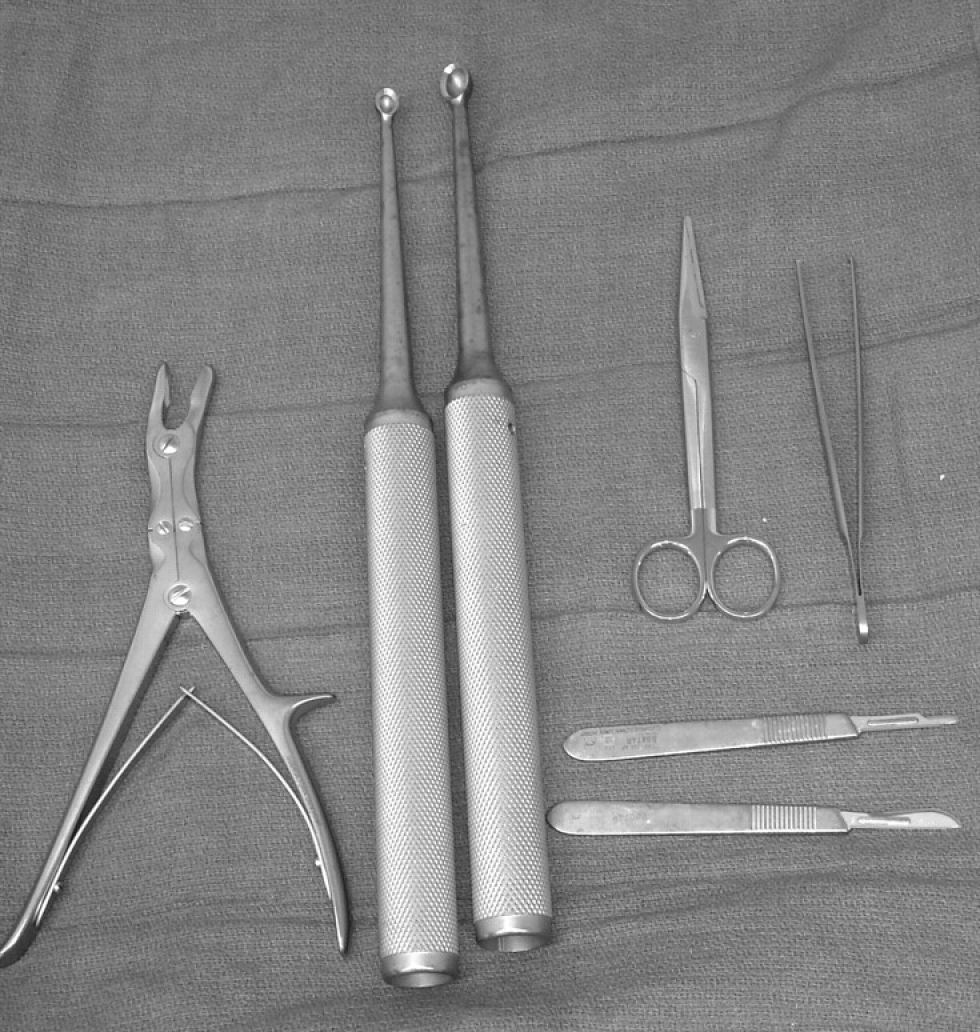
The specific tools of debridement used also have an effect on the underlying viable tissue. Whether in the office or the operating room, sterile surgical instruments are recommended over disposable suture removal kits. The latter are usually dull and may crush and damage the remaining skin edge and the underlying tissue. The basic tools of debridement include blades, forceps, scissors, curettes, and rongeurs (
Figure 1). Only the tissue being excised should be grasped with forceps, and No. 10 or 20 blades are used to sequentially slice off thin layers of tissue. These blades should be changed frequently because they can dull quickly. Sharp-edged curettes are useful for removing the proteinaceous coagulum that accumulates on top of fresh and chronic granulation tissue. Rongeurs are useful for removing hard-to-reach soft tissue and for debriding or biopsying bone. An air-driven or electrical sagittal saw can serially remove thin layers of bone until normal cortex and marrow is reached. Cutting burrs and rasps permit fine debridement of the bone surface until the telltale punctate bleeding at the freshened bone surface is visible. If serial debridement is planned, it is important to keep tissues moist to prevent desiccation between debridements. This holds particularly true for subcutaneous tissue, fascia, and tendons.
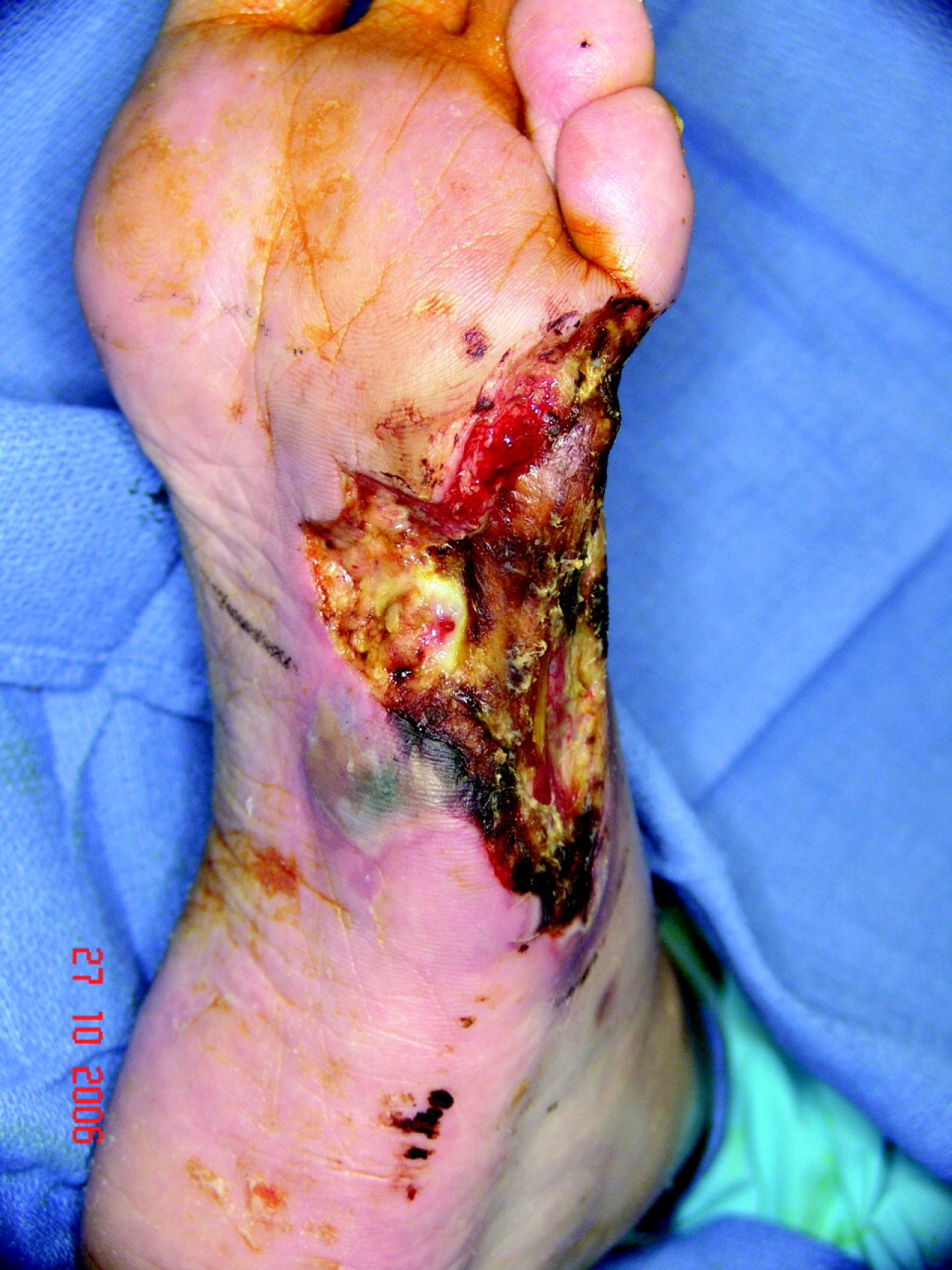
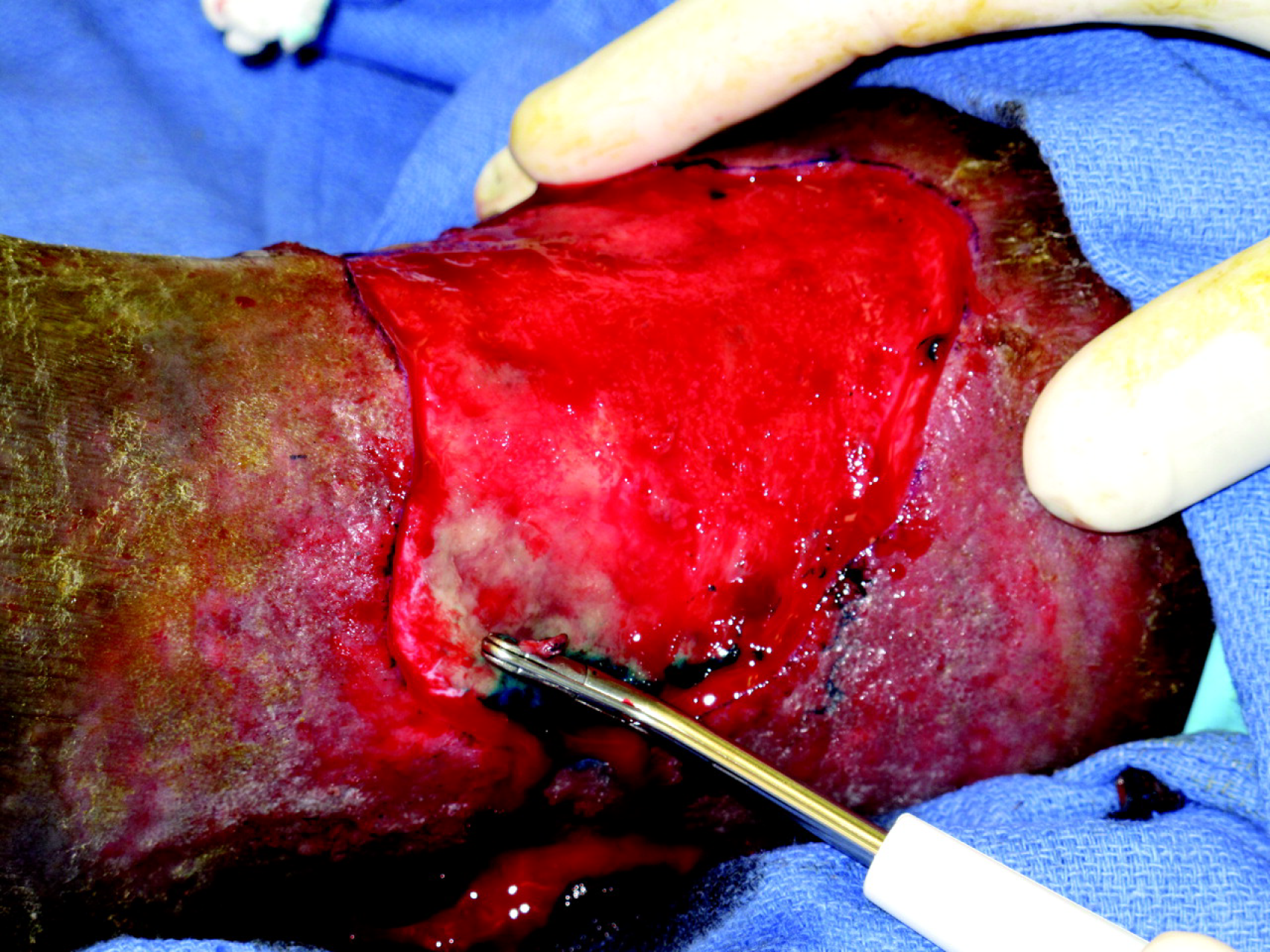
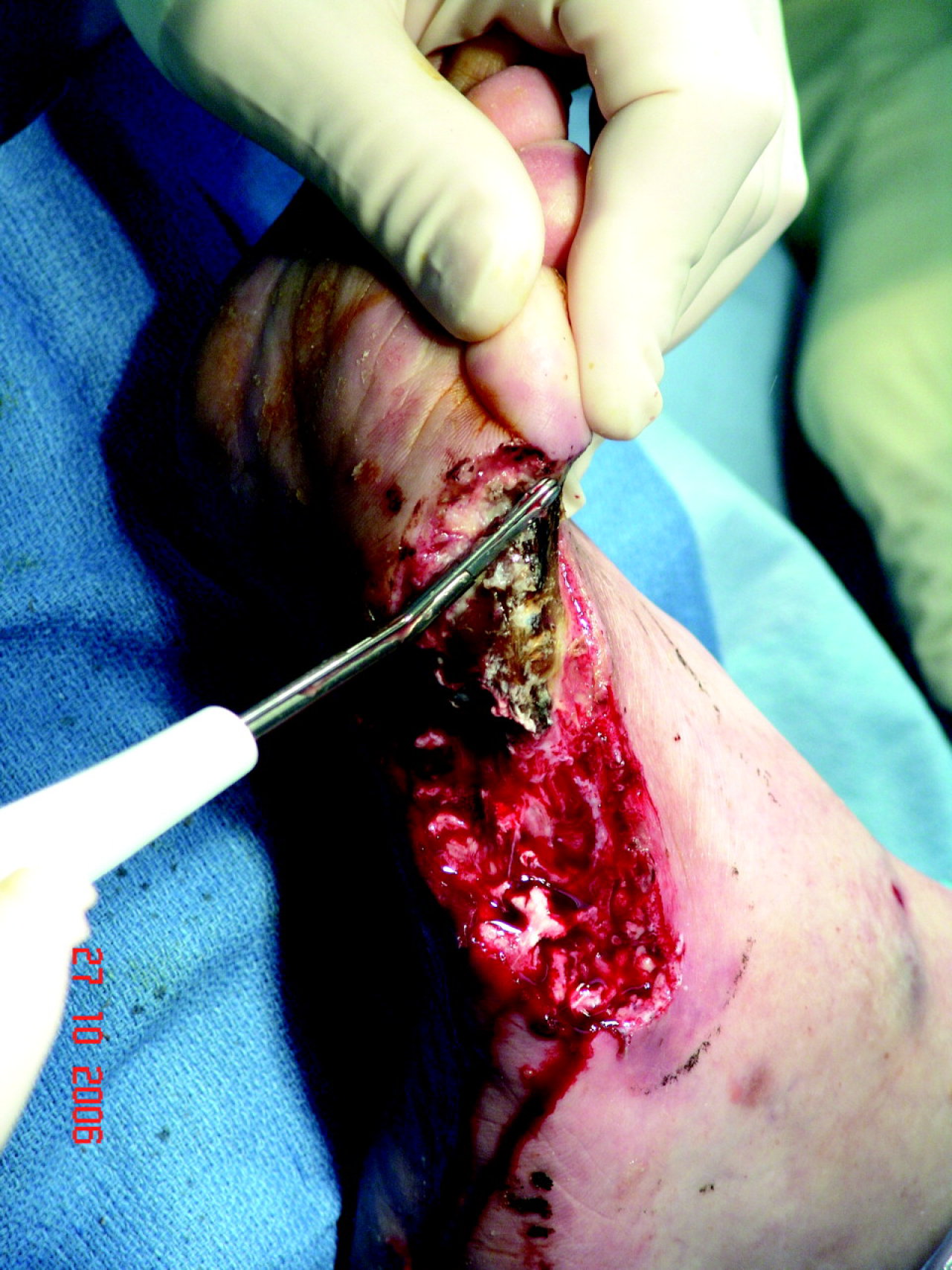
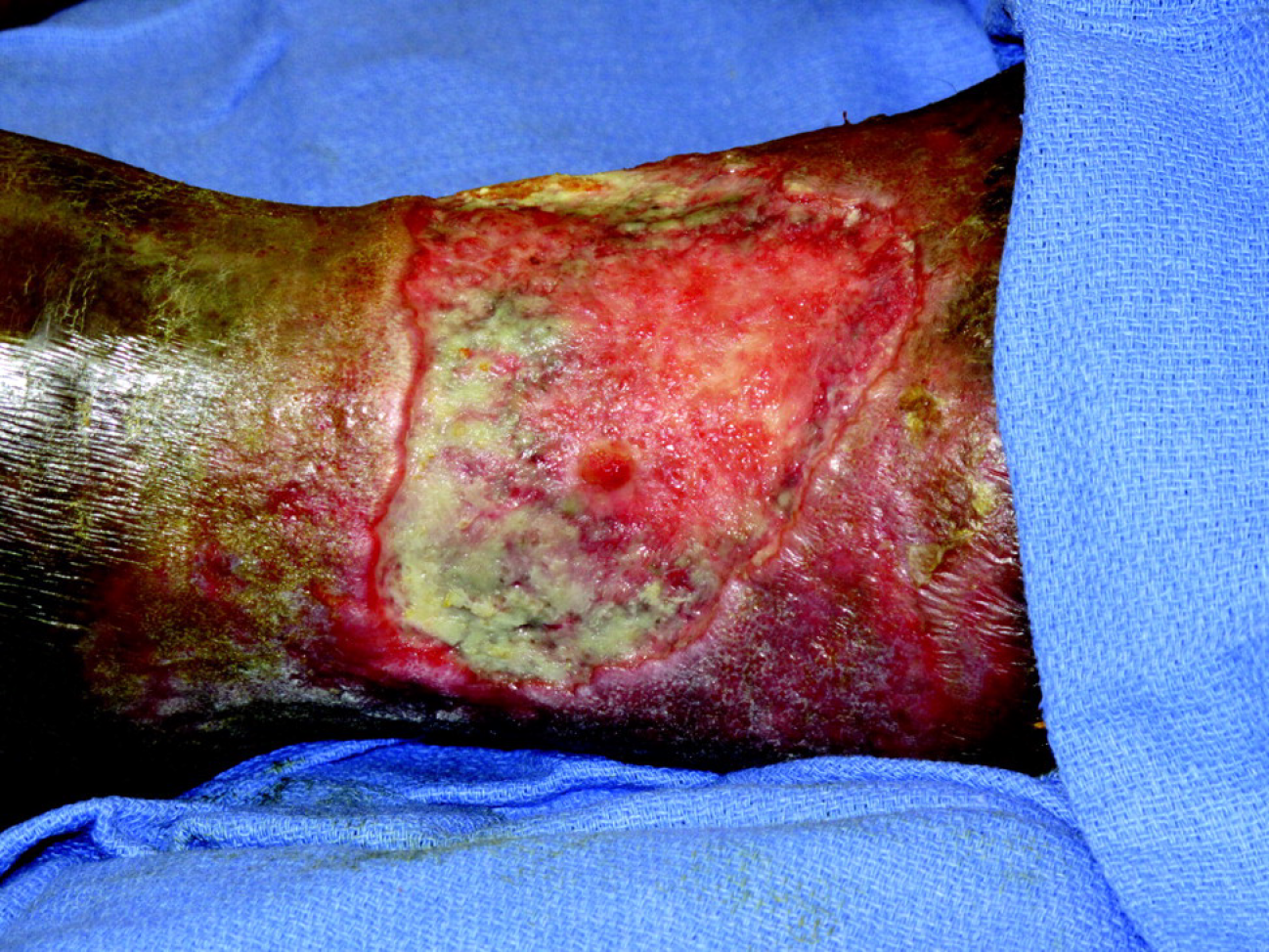
It is important to pay attention to the colors of the wound bed during debridement. Wounds should be debrided until all of the gray and black substances have been removed and only red (muscle), white (tendon, bone, and fascia), and yellow (subcutaneous fat) tissues remain. Examples of this can be seen in
Figure 2,
Figure 3,
Figure 4 and
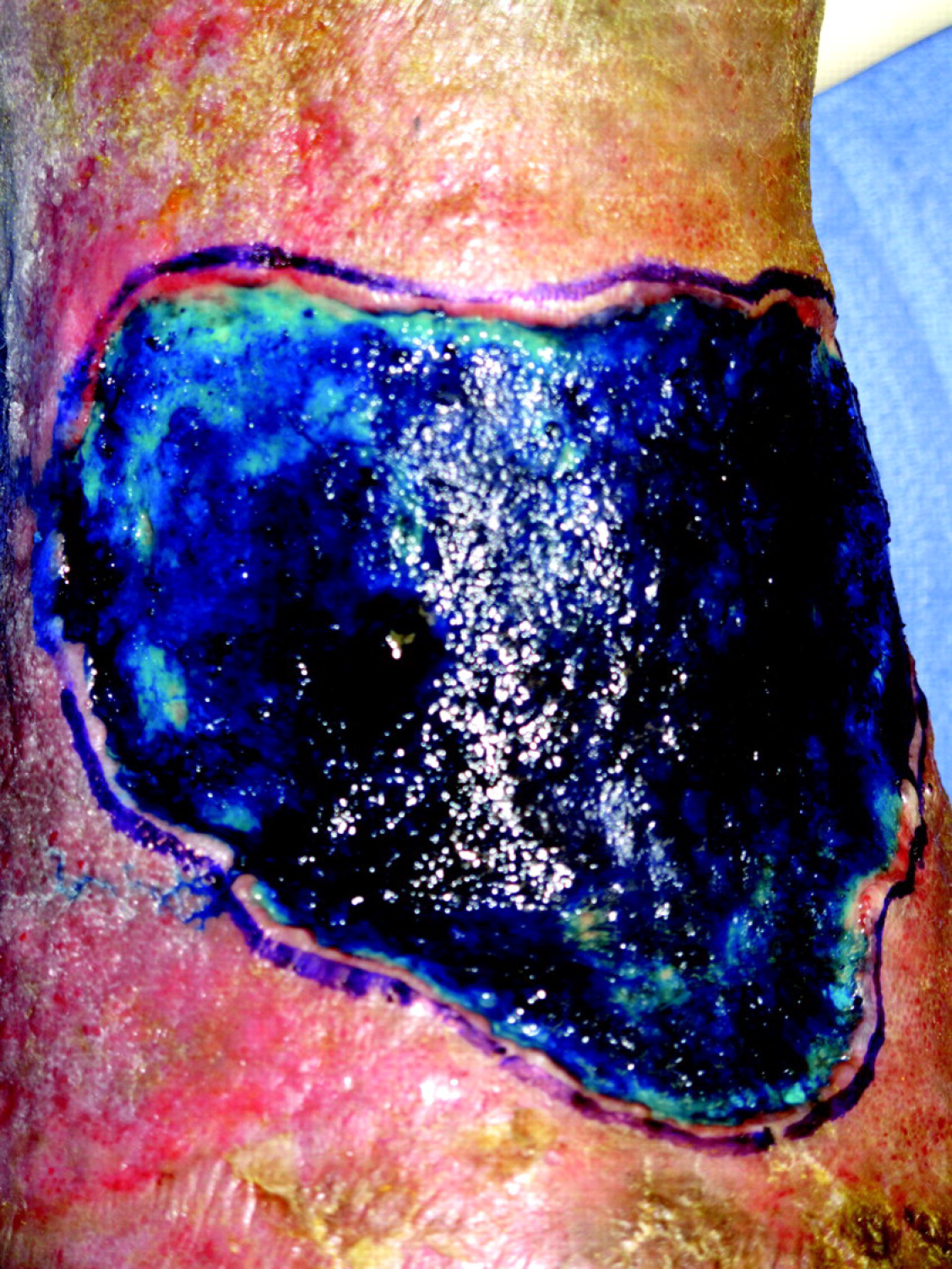
Figure 5. One useful technique is to paint methylene blue over the entire wound bed before debridement to help the surgeon ensure complete and thorough debridement of the wound (
Figure 4,
Figure 5 and
Figure 6). The blue staining binds irreversibly to the superficial cells of the wound base and to any exposed crevices or tracks. This technique helps ensure that no exposed or contaminated tissue is left in the wound bed. By removing all of the blue-stained tissue, it is easier to ensure that the entire wound surface is debrided and that colonized cells on the wound surface are removed.
Figure 1.
The basic tools of debridement include rongeurs, curettes, scissors, forceps, and surgical blades.
Figure 1.
The basic tools of debridement include rongeurs, curettes, scissors, forceps, and surgical blades.
Figure 2.
Chronic wound before debridement. Note the colors of the wound bed. All of the fibrotic gray and necrotic black tissue must be removed in total to achieve effective debridement.
Figure 2.
Chronic wound before debridement. Note the colors of the wound bed. All of the fibrotic gray and necrotic black tissue must be removed in total to achieve effective debridement.
Figure 3.
Chronic wound during debridement. Hydrosurgical debridement of the wound bed is performed to remove all of the nonviable tissue. Note the difference in wound colors compared with before debridement (
Figure 2). Only red (granulation tissue), white (tendon, bone, and fascia), and yellow (subcutaneous fat) tissue remains.
Figure 3.
Chronic wound during debridement. Hydrosurgical debridement of the wound bed is performed to remove all of the nonviable tissue. Note the difference in wound colors compared with before debridement (
Figure 2). Only red (granulation tissue), white (tendon, bone, and fascia), and yellow (subcutaneous fat) tissue remains.
Figure 4.
Chronic, noninfected venous stasis wound before debridement. Note the clinical appearance and colors of this chronic wound.
Figure 4.
Chronic, noninfected venous stasis wound before debridement. Note the clinical appearance and colors of this chronic wound.
Figure 5.
Venous stasis wound during debridement. Debridement is performed until all of the markings are removed, effectively turning the chronic wound into an acute wound. Note the wound colors in this image (red, white, and yellow) compared with those in
Figure 4.
Figure 5.
Venous stasis wound during debridement. Debridement is performed until all of the markings are removed, effectively turning the chronic wound into an acute wound. Note the wound colors in this image (red, white, and yellow) compared with those in
Figure 4.
Figure 6.
Methylene blue has been painted on the entire wound bed intraoperatively. The wound periphery is also outlined with a marking pen to demonstrate senescent cells at the wound edge that need to be removed.
Figure 6.
Methylene blue has been painted on the entire wound bed intraoperatively. The wound periphery is also outlined with a marking pen to demonstrate senescent cells at the wound edge that need to be removed.
These basic principles hold true for the debridement of infected and noninfected wounds, but special consideration must be given to noninfected wounds. Regarding the senescent cells around the wound edge, it may be necessary to excise a 2- to 3-mm rim around the periphery of the wound. Senescent cells can have the appearance of an epithelial rim and may bleed with superficial debridement. They have been found several millimeters away from the edge of chronic venous leg ulcers, although the tissue appears normal [
27]. It may seem overly aggressive to remove a rim of apparently normal-appearing tissue from a noninfected wound, but it is often necessary to remove the senescent cells to recreate an acute wound so that the wound-healing cascade can get a fresh start (
Figure 5 and
Figure 6).
The biofilm that develops on the wound base may also have the appearance of granular and viable tissue. It is important to remember that this is essentially an invisible “layer” formed by an extracellular matrix that binds to the wound base, whether dermis, fascia, muscle, tendon, or bone. Because the biofilm binds irreversibly, it is necessary to aggressively debride the wound base with blades, curettes, burrs, or electrical blades. It may not be enough to curette deeper, relatively avascular tissues such as tendon and bone [
28]. For this reason, we recently adopted the use of a hydrosurgical debrider that uses a waterjet with up to 15,000 psi to debride these tissues (
Figure 3 and
Figure 6). The Venturi effect caused by this high-pressure waterjet evacuates the debrided tissue into the stream of water, thus separating it from the underlying tissue. This type of hydrosurgical debridement has been shown to more effectively and efficiently reduce bacteria and biofilms [
29]. It also removes unwanted tissue and debris with greater precision than with a scalpel by cutting less than 1 mm at a time, therefore minimizing peripheral tissue damage and reducing the removal of healthy tissue.
Ischemic Wounds
The presence of peripheral vascular disease and chronic limb ischemia deserves special mention because noninfected wounds have slightly more flexibility in terms of the timing of debridement. In the presence of active infection, a wound should be debrided immediately regardless of the need for revascularization. However, if a wound or dry gangrene is present without clinical signs of infection, then revascularization should be performed first. The blood supply to a wound should be optimized before debridement to ensure that potentially viable tissue is not unnecessarily removed. This can be achieved by waiting 4 to 8 days after an open bypass or 3 to 4 weeks after endovascular surgery before performing definitive debridement on a noninfected wound [
30]. The difference between viable and nonviable tissue becomes markedly clouded in the presence of ischemia, even without the presence of infection.
If dry gangrene is present in a vascularized limb, closely observe for evidence of new tissue growth underneath the eschar. If there is purulence or no evidence of new tissue growth, then the wound should be debrided. However, if there is evidence of new tissue growth, then the wound may be observed until the eschar falls off or until signs of infection necessitate debridement.
Nonsurgical Debridement Techniques
Not all patients are surgical candidates, and not all wounds need to go directly to the operating room for immediate debridement. In these situations, there are several nonsurgical debridement techniques that may be used. Wet-to-dry dressings, where saline-moistened gauze is allowed to dry on the wound and then is physically ripped off, were once considered standard mechanical debridement technique. Although this nonselective form of debridement effectively removes dead tissue, it can harm the viable tissue left behind and can be painful in the sensate patient. Therefore, newer techniques, such as topical enzymatic debriding agents that can digest the collagen in necrotic tissue, are now considered first-line treatments [
31,
32,
33,
34,
35].
Maggot debridement therapy had been used for centuries to heal wounds but only recently was revisited and revised as a form of therapy when surgical intervention is not an option. It has also been found to be effective in the presence of resistant strains of bacteria. Medical maggots, most commonly the blowfly species
Lucilia sericata, are selective in debriding necrotic, fibrotic tissue while sparing healthy tissue. In addition to the secretion of proteolytic digestive enzymes that dissolve necrotic tissue,
L sericata has also been shown to secrete various cytokines and tissue growth factors that can increase local tissue oxygenation [
36]. It has, therefore, been proposed that maggot debridement therapy not only debrides and disinfects wounds but also promotes healing. Studies [
36,
37,
38] have demonstrated that maggot debridement therapy is a cost-effective, efficient method in debridement of ulcerations in nonsurgical patients with few adverse effects. However, aside from debridement of venous wounds, Dumville et al. [
39] found that maggot debridement therapy did not increase healing rates and was associated with significantly more pain compared with hydrogel debridement.
Debridement with noncontact, low-frequency ultrasound therapy also seems to play a role in debriding and healing chronic ulcers [
40,
41,
42,,
43,
44]. This technique creates a combination of cavitation and microstreaming, which provides a mechanical energy capable of altering cell membrane activity and, in turn, cellular activity [
44]. It helps separate necrotic tissue from the underlying bed and kills bacteria and disrupts biofilms. It also may induce wound healing through a broad range of factors, including leukocyte adhesion, growth factor production, collagen production, increased angiogenesis, increased macrophage responsiveness, increased fibrinolysis, and increased nitric oxide levels [
44]. One study [
38] suggests that the use of ultrasound debridement may disrupt quorum sensing in biofilms, thereby leading to decreased coordinated virulence; however, further research is needed in this area.