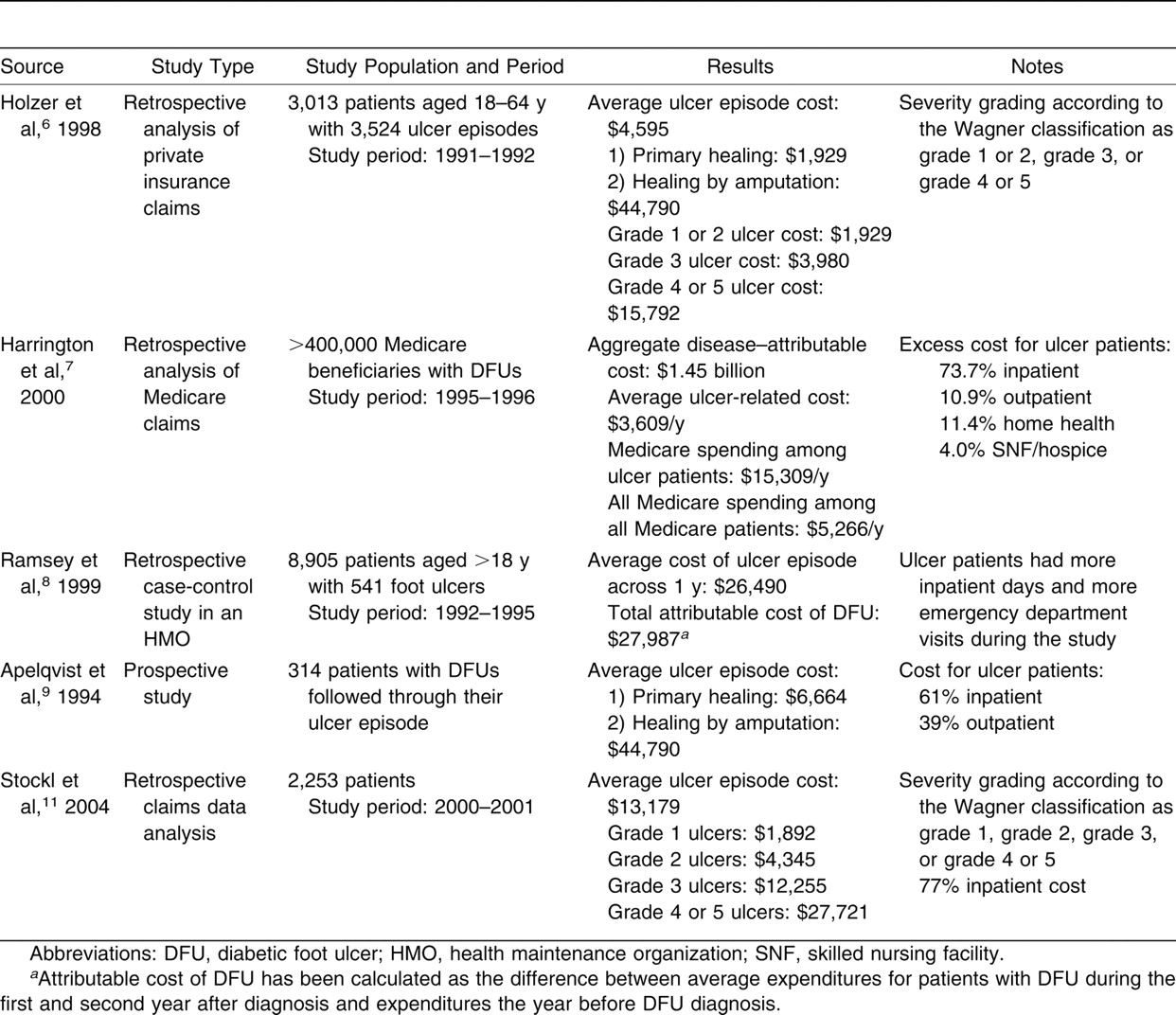
Limb preservation team services have been shown to reduce major limb amputation rates, but the associated costs are not well understood or reported. Perhaps this is true because the burden of preventing amputations is often realized at a critical health-care event such as limb-threatening infection or acute critical limb ischemia. In many cases, these diabetic patients are at high risk for limb loss, newly consulted for their acute event, and, therefore, in their highest health-related cost status. An adequate and comprehensive cost-effectiveness analysis must consider health states with limb-preserving impact figures and their relative cost as it relates to severity of disease and prevention of amputations. Lower-extremity amputations contribute disproportionately to diabetes-related costs.[
1]
Magnitude of the Problem
According to the Centers for Disease Control and Prevention,[
2] in 2007, 7.8% of the US population had diabetes, which is almost 24 million persons. In 2007, diabetes and its complications cost the United States
$174 billion:
$116 billion in direct costs and
$58.3 billion in indirect costs such as loss of productivity, disability, and premature mortality.[
3] Peripheral vascular complications and neurologic complications, which are closely linked to foot ulceration, accounted for 31% and 24% of the expenses, respectively, and were among the major contributors to inpatient length of stay.
Foot problems in persons with diabetes have been recognized as a major health issue since the times of Joslin and before the advent of insulin. The diabetic foot with gangrene was one of the leading causes of death from diabetes, second only to diabetic coma.[
4] The rate of hospital discharge for diabetic patients with leg or foot ulcers per 1,000 diabetic patients rose from 5.4 in 1980 to 6.9 in 2003.[
2] Ulcer prevalence in persons younger than 44 years was 6.5 per 1,000 diabetic patients, and it rose progressively to 10.3 per 1,000 diabetic patients in individuals older than 75 years. Hospitalizations for lower-extremity amputations rose from 33,000 in 1980 to 71,000 in 2005; however, average length of stay fell from 35.3 days to 10.7 days during the same period.
More than 60% of nontraumatic lower-limb amputations occur in diabetic patients, and at least 80% of amputations are preceded by an ulcer. The causative pathway leading from a foot ulcer to amputation is well-known. The progressive additive effects of neuropathy, minor trauma, ulceration, faulty healing, ischemia, and infection leading to amputation were first characterized in 1990.[
5] Early recognition of foot problems and effective intervention along the causative pathways may not only improve outcomes by reducing major amputations and increasing quality of life but may also reduce costs related to diabetic foot complications. Studies of diabetic-foot–related health-care costs are sometimes difficult to compare due to dissimilar healthcare systems, reimbursement methods, and access to care.
The Limb Salvage Team
It has long been recognized that the complex nature of diabetic foot abnormalities is best treated with a team approach. The group from New England Deaconess Hospital and Joslin Diabetes Clinic in Boston is regarded as the forerunner of this approach. In 1992, LoGerfo et al[
14] published the results of aggressive use of distal bypass grafting revascularization in diabetic patients with ischemic ulcers. They showed a progressive increase in the bypass-to-amputation ratio comparing outcomes of patients from 1984 to 1990. A retrospective evaluation was reported of two groups of patients followed before and after implementing diabetic foot care with a team approach that focused on aggressive early intervention and extensive use of surgical revascularization. Gibbons et al[
15] showed reductions in major amputations, overall length of stay, and total cost of care. The authors, however, pointed out that Medicare reimbursement was inadequate to cover all of the procedures.
The widespread use of endovascular revascularization techniques has further broadened the spectrum of revascularization options for diabetic patients with critical leg ischemia. A prospective study[
16] of peripheral angioplasty at the proximal and distal levels showed an excellent limb salvage rate, with only ten of 191 patients (5.2%) undergoing a major amputation. Whether an open surgical or an endovascular procedure should be the first-line treatment for diabetic patients with critical leg ischemia is still a matter of debate, and so is which of these two procedures may represent the most cost-effective treatment. Regardless of the procedure type, aggressive and effective revascularization plays a crucial role in limb salvage, particularly in amputation reduction, an important driver of cost.
Many studies have shown that a team approach to diabetic foot conditions is effective in amputation prevention. Zayed et al[
17] reported results of a retrospective analysis of 312 patients with diabetes and critical leg ischemia and demonstrated a reduction in the amputation rate in a multidisciplinary setting. The team was composed of a vascular and podiatric surgeon, diabetologist, tissue viability nurse, interventional radiologist, and radiology coordinator. A retrospective study[
18] from Sweden showed a 78% decrease in major amputations after the implementation of a multidisciplinary program for the management of patients with diabetic foot. A prospective study[
19] of a US population showed that podiatric surgery–vascular surgery collaboration resulted in 83% limb salvage at 5 years. Likewise, Driver et al[
20] reported the outcomes of a multidisciplinary team approach to prevent amputations. During a 4-year period, there was an 82% reduction in major amputations. A prospective study[
21] from the United Kingdom showed a 62% reduction in major amputations and a 40% decrease in all amputations for 11 years after implementing a diabetic-foot–care service. Implementation of existing guidelines is likely to lower amputation rates. Results of a prospective study[
22] at a specialized diabetic foot clinic in Italy showed that implementing the International Consensus on the Diabetic Foot recommendations resulted in a decrease in major amputations from 10.7 per 100,000 inhabitants at the beginning of the study to 6.24 per 100,000 inhabitants after 5 years; this decrease was paired with a progressive increase in minor amputations. The authors also document a progressive extensive referral to the diabetic foot service during the study period. This aspect is of particular interest because it shows that improving provider education about diabetic foot disease may also improve more appropriate referral patterns.
Cost-effectiveness of Interventions
Few studies have addressed the economic benefits of interventions for the prevention and treatment of diabetic foot disease. Most studies explore results from predictive models, with the most common being the Markov model. This can be a useful mathematical tool for obtaining a projection of costs and effects of an intervention. This method for modeling diseases, such as diabetic foot ulcers, is relevant because it can take into account the chronicity of the disease and the occurrence of the same events more than once.[
23] However, data from these studies are difficult to compare owing to differences in demographics and health-care systems.
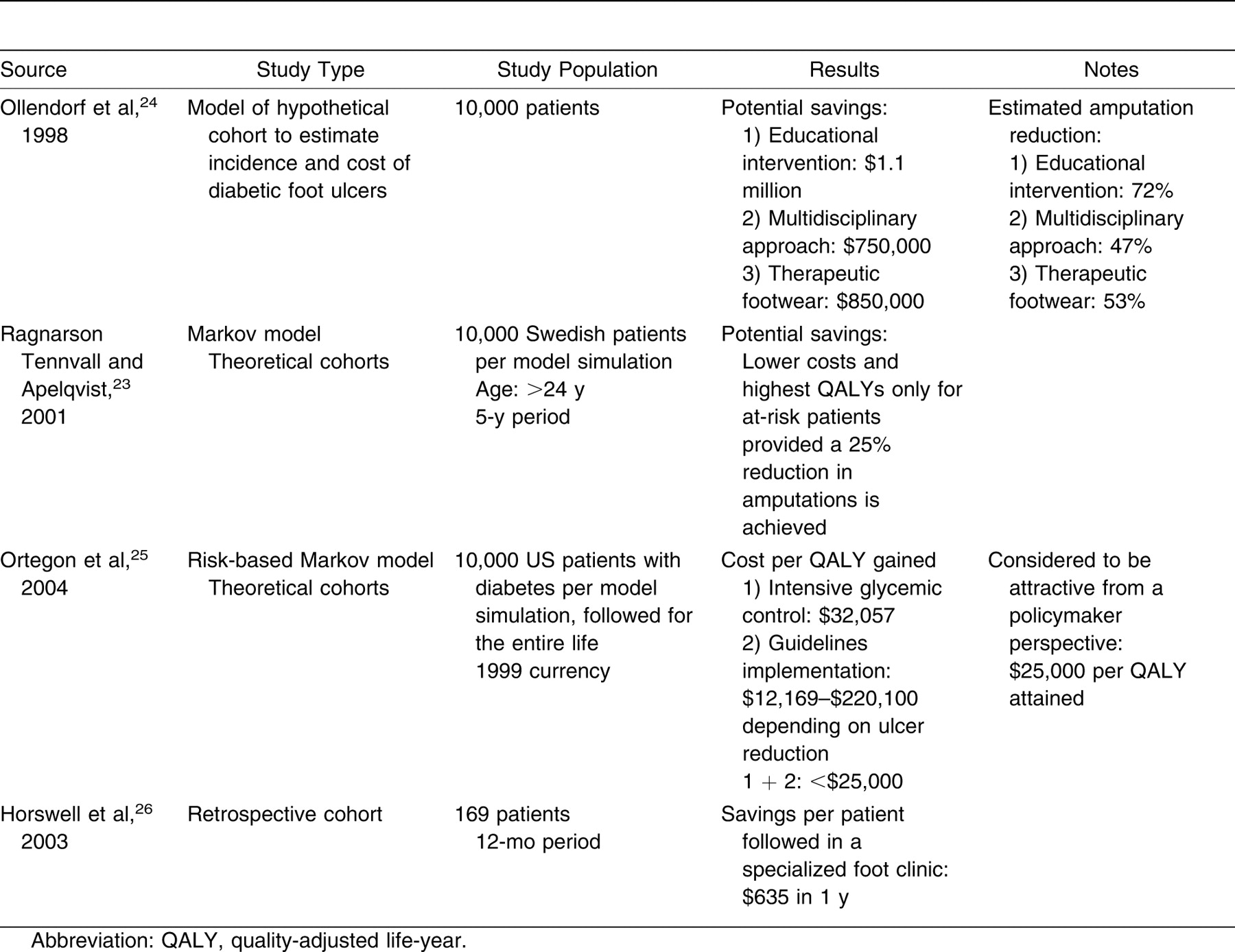
A model to evaluate the effects of different types of interventions on economic outcomes in a theoretical cohort of 10,000 diabetic patients[
24] showed that prevention and appropriate management of patients with diabetic foot might avoid up to 50% of amputations. The authors estimated that educational intervention, a multidisciplinary team approach, and therapeutic footwear coverage could avoid 72%, 47%, and 53% of amputations, respectively. This translates into
$1,100,000,
$750,000, and
$850,000 in potential savings in 1 year for each intervention. The authors concluded that prevention, a multidisciplinary team approach, and therapeutic footwear could save
$2,900 to
$4,442 in perpatient costs. These US data strongly indicate a cost-savings from the initiation of preventive strategies in the management of patients with diabetic foot in concert with a multidisciplinary team approach.
Ragnarson Tennvall and Apelqvist[
23] analyzed 5 years of cost-utility data from preventive interventions in patients with diabetic foot ulcers. The study focused on implementation of guidelines from the International Working Group on Diabetic Foot and sought to demonstrate that the costs of implementing a preventive system would be offset by the benefits of amputation prevention. This study[
23] showed that an intensive prevention strategy composed of patient education, foot care, and therapeutic footwear is cost-effective in a Swedish population if the risk of foot ulcers and amputations can be reduced by 25%.
Another European study[
25] used a Markov model to assess the potential economic effects of two interventions in patients with diabetic foot ulcers: intensive glycemic control and optimal foot care as defined by International Working Group on Diabetic Foot guidelines, taken singularly or coupled versus standard of care without guideline implementation. The study showed that the greatest reduction in amputation would have been achieved with the combination of the two interventions. The most favorable cost-effectiveness ratio was strongly linked to ulcer prevention. The increased costs for guideline implementation were associated with less than
$25,000 per quality-adjusted life-year gained (1999 currency) provided a reduction of 40% in amputations was obtained.
Management of the diabetic foot according to guideline-based care improves survival, reduces diabetic foot complications, and is cost-effective and even cost saving compared with usual care. Thus, policymakers and clinicians working in the field of diabetic foot management should see the cost of guideline implementation as an attractive option.
The effect of a staged management diabetic foot program has been retrospectively evaluated in a sample of 169 patients from a public hospital system.[
26] In this study, 45 patients who received regular foot-care visits, patient education, and footwear were compared with 169 patients who received none of these services. During a 12-month period, the diabetic-foot–care approach cohort had fewer hospitalizations, amputations, and emergency department visits for foot-related problems; outpatient visits increased. These improvements in outcomes translated into differences in charges between the two groups of
$4,776 versus
$5,411 per patient, with a savings of
$635 per patient with access to a foot and ankle specialist. Studies evaluating the cost-effectiveness of interventions for the management of patients with diabetic foot ulcers are summarized in
Table 2.
Matricali et al[
27] conducted a recent systematic review of the health economics of diabetic foot care in the context of a multidisciplinary setting. They found that the team approach seems to be costeffective, with the greatest benefits expected in the long term. The authors recommended that policymakers be particularly focused on reimbursement for preventive and early intervention procedures and for limb salvage procedures.
Conclusions
Extensive patient education, early assessment, and aggressive treatment by a multidisciplinary team represent the best approach to the management of high-risk patients with diabetes. Clinical and economic outcomes demonstrate reduced amputations, length of stay, and costs. The team must continue to become more effective, especially regarding early cost-effective use of appropriate care, interventions, and appropriate consultations to specialized teams. Early recognition and prevention of diabetic foot disease has been greatly emphasized and proved to be effective in the United States; however, limb preservation services are frequently consulted very late in the disease process, after a significant pathologic abnormality has progressed.
It is clear that in using an interdisciplinary team, we can improve function and reduce amputations, but what are the costs? Future clinical research might incorporate specific evidence-based pathways to reduce amputation while choosing the most costeffective diagnostic and treatment options. The next step is to break down silos of care between the various care settings to improve the continuum of care while realizing more productive and costeffective methods for saving limbs and caring for this high-risk population.