1. Introduction
Growing global emphasis on sustainability has placed Environmental, Social, and Governance (ESG) criteria at the center of contemporary corporate governance, regulatory compliance, and capital-market transparency. Across jurisdictions, firms are increasingly expected to explain how governance structures support accountability, oversight, and preparedness for ESG-related risks. In Greece, where the regulatory framework has evolved under both domestic reforms and wider European sustainability requirements, focused empirical evidence on the governance pillar remains comparatively limited. This gap is especially relevant in a transitional market context, where formal compliance may progress more rapidly than the substantive institutionalization of governance practices.
This study examines governance pillar ESG practices among Greek listed companies, with particular focus on firms included in the ATHEX ESG Index during 2021–2023. Using publicly available annual reports, corporate governance statements, and sustainability disclosures, the study provides a descriptive longitudinal assessment of key governance indicators, including board size, board independence, gender diversity, CEO–Chair structure, committee architecture, internal audit disclosure visibility, and audit firm concentration. The analysis is confined to these observable governance arrangements. It does not measure financial performance or the environmental and social ESG pillars; these are discussed as contextual background only.
ESG integration has moved well beyond voluntary commitment. Prior studies have demonstrated that adherence to robust ESG frameworks can significantly enhance firms’ economic performance while simultaneously elevating their social and environmental legitimacy (
Yan, 2024). Sustainable development and corporate social responsibility are now understood as drivers of competitiveness, organizational adaptation, and stakeholder trust. Today’s investors, consumers, and regulators demand that companies operate with integrity, acknowledging and addressing the environmental and social ramifications of their activities (
L. Chen et al., 2021). ESG criteria support corporate reputation and stakeholder engagement; prior literature also links them to improved long-term financial performance (
Koundouri et al., 2022).
S. Chen et al. (
2023) document a positive ESG–performance relationship among European firms;
Tahmid et al. (
2022) report similar associations. These findings highlight the relevance of examining ESG in transitional markets such as Greece.
At the policy level, initiatives such as the European Green Deal represent a fundamental reorientation toward climate neutrality and sustainable economic development. As the EU’s strategic roadmap to achieve climate neutrality by 2050, the Green Deal encompasses a comprehensive array of policy measures targeting emissions reduction, energy efficiency, and the promotion of a circular economy driven by sustainable innovation (
European Commission, 2019;
Khovrak, 2020).
This research centers on the Governance (G) pillar of ESG and is guided by four questions: (1) What governance pillar ESG patterns can be observed among firms included in the ATHEX ESG Index during 2021–2023? (2) Which of these patterns suggest gradual progress, and which point to persistent structural weaknesses in the Greek listed market? (3) How may these observed governance configurations be interpreted in light of Greek and European regulatory developments, including the Corporate Sustainability Reporting Directive (CSRD)? (4) What do the observed governance configurations imply for the strategic integration of environmental and social responsibilities and for alignment with wider European governance expectations?
Four objectives follow from these questions. The study maps key governance indicators among ATHEX ESG Index firms, tracks their movement over time, develops a theory-informed interpretation of asymmetric governance change, and evaluates the comparative and regulatory-readiness implications of the observed arrangements. The study does not estimate the causal effect of governance on corporate performance; rather, it identifies the organizational mechanisms through which such effects may arise and establishes a transparent empirical baseline for subsequent causal research. This positioning is important because the article does not treat description as an end in itself. The descriptive longitudinal evidence is used as the empirical basis for a theory-informed diagnostic assessment of ESG institutionalization. The contribution lies in identifying whether governance mechanisms that are visible, externally measurable, and threshold-based develop differently from mechanisms that require deeper organizational capabilities, such as authority redistribution, specialist oversight, internal control embedding, and assurance capacity. In this sense, the study provides an analytical baseline for understanding how the governance pillar enables, constrains, or conditions the integration of environmental and social responsibilities into corporate strategy and risk management.
Despite the expansion of ESG research, several gaps remain. Governance-focused evidence from small, open European capital markets remains limited, while many ESG studies emphasize aggregate ratings or financial outcomes rather than the organizational mechanisms through which sustainability responsibilities are governed. In the Greek context, prior research has focused primarily on formal corporate-governance compliance, with less attention to the uneven institutionalization of board oversight, leadership accountability, committee specialization, internal control visibility, and assurance capacity under intensifying European sustainability requirements (
S. Chen et al., 2023;
Tahmid et al., 2022). Where governance structures have been examined, the focus tends to fall on executive compensation rather than on how board composition, CEO–Chair dynamics, committee architecture, internal audit, and audit concentration are configured under the pressure of requirements such as the CSRD (
European Parliament and Council, 2022b,
2025,
2026;
Usman & Yahaya, 2024). Greek corporate governance research, for its part, has largely tracked formal compliance with the Hellenic Corporate Governance Code (HCGC), with less attention to the broader ESG relevance of those arrangements (
Kalialakis et al., 2022;
HOCG, 2023). The study also treats governance as the enabling architecture through which environmental and social commitments are translated into strategic responsibility, risk oversight, reliable information, disclosure, and assurance. It therefore broadens the interpretation of the governance pillar while maintaining a clear boundary between conceptual implications and empirically tested effects. The resulting contribution lies at the intersection of corporate governance, sustainable finance, and risk management and establishes a structured baseline for later causal, performance-oriented, and cross-country research.
2. Theoretical Framework
2.1. Conceptual Framework of ESG Criteria
Environmental, Social, and Governance (ESG) criteria constitute a foundational framework for evaluating the sustainability and ethical responsibility of modern business entities. The framework aligns corporate practice with environmental stewardship, social accountability, and robust governance structures, thereby supporting corporate accountability. In the present study, the governance pillar is interpreted through three interpretive frameworks. Agency theory (
Jensen & Meckling, 1976) frames board independence, CEO–Chair separation, committee structures, and internal audit as mechanisms for constraining managerial discretion and reinforcing accountability. Stakeholder theory (
Freeman, 2010) explains why gender diversity, disclosure practices, and committee specialization matter: firms are expected to answer to a wider constituency, not only to shareholders. Institutional theory (
DiMaggio & Powell, 1983), in turn, helps account for the convergence pressure that regulatory reforms, market expectations, and European reporting developments such as the CSRD exert on listed firms in transitional markets. No causal effects are tested.
The early foundations of ESG trace back to the 1990s, when investors and policymakers began to recognize the importance of integrating sustainability considerations into corporate decision-making. This shift was driven by increasing societal pressure and the advocacy of global institutions, including the United Nations Global Compact and the Principles for Responsible Investment (PRI), which encouraged the systematic integration of ESG factors in investment strategies and business organizational adaptation (
Principles for Responsible Investment, 2006;
United Nations Global Compact, 2000). The evolution from CSR-oriented approaches toward contemporary ESG frameworks has also increased attention to ESG controversies and their institutional and sociopolitical determinants (
Passas, 2024;
Passas et al., 2022).
Environmental criteria capture a firm’s ecological footprint, energy use, waste, emissions, water consumption, and have received the bulk of ESG research attention (
L. Chen et al., 2021). This study does not examine E indicators directly; they are noted here for contextual completeness.
Social criteria address how firms manage their relationships with employees, suppliers, customers, and communities, covering labor rights, health and safety, diversity, and human rights (
Koundouri et al., 2022;
Tsoukalidis et al., 2022). Like the environmental pillar, social criteria are treated here as contextual background rather than an analytical focus.
Governance criteria relate to the systems, structures, and processes through which organizations are directed and controlled. This dimension encompasses board composition and independence, executive accountability, transparency in financial and non-financial reporting, internal control mechanisms, anti-corruption policies, and compliance with legal and regulatory frameworks (
Jensen & Meckling, 1976;
OECD, 2020,
2021). Governance constitutes the foundational pillar of ESG, as it shapes the effectiveness with which environmental and social objectives are implemented and monitored. Strong governance practices enhance organizational integrity, reduce agency conflicts and build investor confidence. Mechanisms such as independent boards, specialized committees, robust internal audit functions and transparent remuneration policies contribute to effective oversight and ethical decision-making. Conversely, weak governance increases exposure to managerial opportunism, non-compliance, and greenwashing.
In contemporary governance discourse, particularly within complex and uncertain environments, governance should not be understood merely as a set of formal rules or compliance tools. Rather, it represents a dynamic organizational capability that helps firms navigate uncertainty and sustainability challenges. The
European Environment Agency (
2024) identifies key principles of governance in complexity, including systems thinking, participation, experimentation, foresight and care. Among these, foresight is central to adaptive and anticipatory decision-making, allowing organizations to respond proactively to emerging ESG risks and opportunities. Within this framework, governance connects ESG objectives to corporate strategy and risk management. Sound governance underpins credible ESG performance in regulated markets.
2.2. ESG, Risk Management and Sustainable Finance
Moving from formal ESG compliance to substantive governance embedding is not a linear process, and the Greek case illustrates why. Within financial markets, governance quality affects risk identification, capital allocation and the credibility of sustainability disclosures. Sustainable entrepreneurship is relevant insofar as firms that embed environmental and social considerations into strategy may mitigate operational risks, strengthen reputation and improve access to finance (
Alkatheeri et al., 2023). Relatedly,
Drobetz et al. (
2024) show, using a difference-in-differences framework, that private equity and venture capital backing improves the ESG performance of SMEs relative to matched non-investor-backed peers. Although SMEs are outside the empirical sample of the present study, this literature underscores the broader financial relevance of ESG.
Risk management and sustainable finance perspectives emphasize that ESG should be embedded in board oversight, internal control, assurance and disclosure systems. Organizations that integrate sustainability considerations into strategic decision-making are better positioned to anticipate regulatory change, respond to stakeholder expectations and manage non-financial risks that may affect financing conditions and long-term resilience. Human capital is also treated as a core organizational asset for achieving ESG-related goals, particularly because employee skills, knowledge-sharing and internal learning capacity influence how sustainability practices are embedded within firms (
Petre & Plesea, 2023).
From a financial-management perspective, governance mechanisms such as transparent boards, specialized committees, internal audit functions and credible external assurance reduce information asymmetry and support investor confidence. They also help firms respond to emerging sustainability-reporting and assurance expectations under the evolving CSRD framework (
European Parliament and Council, 2022b,
2025,
2026). Sound governance mechanisms, covering transparency, stakeholder engagement and regulatory compliance, are therefore central to sustainable business practice and to the management of governance-related risk (
Kalialakis et al., 2022). The broader EU sustainable-finance architecture also includes the Sustainable Finance Disclosure Regulation and the EU Taxonomy Regulation, which shape market transparency and the classification of environmentally sustainable activities (
European Parliament and Council, 2019,
2020).
On balance, ESG criteria offer a structured framework for assessing a company’s non-financial performance and commitment to sustainability. While numerous scholars argue that ESG initiatives enhance firm value by reducing costs and exposure to unsystematic risks, others question their efficacy, suggesting that such practices may divert resources from core operational goals (
Tahmid et al., 2022). The present study does not adjudicate this performance debate; instead, it focuses on the governance mechanisms through which listed firms disclose, monitor and manage ESG-related responsibilities.
2.3. The Athens Stock Exchange (ATHEX) and the ATHEX ESG Index
The Athens Stock Exchange (ATHEX) serves as the principal securities market in Greece, providing a structured platform for the trading of equities, bonds, and various financial instruments. Since its foundation in 1876, ATHEX has played a significant role in the economic development of the country, facilitating capital formation, supporting corporate growth, and encouraging investor participation. The Exchange encompasses companies from a cross-section of sectors, including banking, energy, manufacturing, and services, thereby giving investors exposure to the breadth of the Greek economy.
Over the decades, ATHEX has undergone a series of institutional reforms and technological modernizations to align with global financial standards and respond to the evolving needs of the Greek economic landscape. The COVID-19 pandemic in 2020 disrupted global financial markets and exposed systemic vulnerabilities, and the Athens market was not immune to this volatility. At the same time, the crisis accelerated attention to Environmental, Social, and Governance (ESG) considerations, as firms increasingly recognized stakeholder engagement as a lever for sustaining long-term corporate value (
S. Chen et al., 2023).
In response to the growing importance of sustainable finance, ATHEX has undertaken several initiatives aimed at embedding ESG principles within the Greek capital market. A key milestone was the launch of the ATHEX ESG Index in 2021, designed to track the performance of listed companies that stand out in adopting environmental, social and corporate governance practices and to provide investors with a transparent tool for integrating ESG practices into investment strategy (
Athens Exchange Group, 2021;
Euronext Athens, 2026b). The index serves as a benchmark for sustainability-oriented investment and enhances the visibility of companies that prioritize environmental responsibility, social cohesion, and good governance. Complementary initiatives, such as the ATHEX BONDS GREENet, further reflect the Exchange’s strategic orientation toward green finance and sustainable entrepreneurship (
Athens Exchange Group, 2022;
Euronext Athens, 2026a). These efforts align with broader European policy objectives on sustainable development and promote greater transparency, accountability, and investor engagement in ESG-related matters.
The role of ATHEX extends beyond capital allocation; it functions as a catalyst for inclusive economic development. By facilitating access to funding, promoting high standards of corporate governance, and enhancing market integrity, the Athens Stock Exchange contributes to productivity growth, job creation, and improvements in living standards. Its broad role in the national economy makes its significance clear not only as a financial institution but also as a platform for economic change that, in the current regulatory climate, is inseparable from sustainability. The 2021 launch of the ATHEX ESG Index was a clear signal that this shift was institutional, not merely rhetorical. Its engagement with ESG reflects a broader shift in how capital markets and sustainability objectives now intersect.
2.4. Governance as the Enabling Architecture of ESG Integration and Selective Institutionalization
Although the environmental, social, and governance pillars are analytically distinguishable, they are organizationally interdependent. Environmental and social commitments do not become operational merely because targets or policies are announced. Their implementation requires decision rights, board-level responsibility, oversight routines, internal controls, reliable data, escalation procedures, and credible assurance. These are governance functions. Board independence and leadership structure affect the capacity to challenge management; board diversity may widen the range of stakeholder and materiality considerations entering deliberation; specialized committees allocate sustained attention to climate, human capital, conduct, and transition risks; internal audit supports the reliability of sustainability-related controls and information; and external assurance strengthens the credibility of disclosed outcomes.
This perspective links governance to corporate strategy without assuming an automatically positive effect on financial performance. Governance mechanisms may influence how sustainability considerations enter strategic planning, capital allocation, risk appetite, executive accountability, performance measurement, and disclosure. Prior research indicates that firms with more deeply embedded sustainability systems differ in board responsibility, stakeholder-engagement processes, time orientation and non-financial measurement, while the wider ESG financial performance literature generally identifies a non-negative but heterogeneous association (
Eccles et al., 2014;
Friede et al., 2015). The present study does not test these outcome relationships. Instead, it examines whether the governance infrastructure capable of supporting them is visibly institutionalizing in the Greek listed market.
In this article, selective governance institutionalization refers to a pattern in which visible, externally verifiable, and threshold-based mechanisms adjust more readily under regulatory pressure than mechanisms requiring deeper organizational capabilities, redistribution of authority, specialist expertise, or market-wide assurance capacity. Agency theory explains the monitoring and accountability functions of these mechanisms; stakeholder theory explains their relevance to wider environmental and social responsibilities; institutional theory explains why different mechanisms may converge at different speeds under coercive, normative, and mimetic pressures. The resulting analytical expectation is that formal and measurable arrangements will generally change more rapidly than the substantive organizational capabilities needed to embed ESG responsibilities into strategy and risk management. This expectation guides the interpretation of the longitudinal evidence but is not treated as a causal hypothesis test.
The governance indicators and their theoretically supported cross-pillar and strategic channels are summarized in
Table 1.
3. Materials and Methods
This study employs a theory-informed descriptive longitudinal design. Descriptive statistics are used to establish the observed governance configuration of ATHEX ESG Index firms over time, but the analysis does not stop at numerical reporting. The methodological logic proceeds in four steps: first, firm-year governance indicators are coded from public disclosures; second, annual counts are normalized through year-specific denominators, ratios, and dispersion measures where applicable; third, the resulting longitudinal patterns are interpreted through agency, stakeholder, and institutional theory; and fourth, each governance mechanism is linked to its potential role in supporting environmental and social oversight, strategic integration, risk management, internal control, disclosure reliability, and assurance credibility. The design is therefore descriptive in its statistical technique but analytical in its theoretical and diagnostic purpose.
In addition to the annual descriptive analysis, two structured interpretive procedures were applied. First, each governance indicator was linked conceptually to the strategic and cross-pillar functions that it may support, including oversight of environmental and social risks, stakeholder accountability, sustainability data reliability, internal control, and assurance credibility. These linkages are based on the theoretical and empirical literature and are not treated as effects directly estimated by the present dataset.
Second, the observed indicators were compared with selected Greek, European Union, and wider OECD governance and sustainability-reporting benchmarks. This exercise constitutes a regulatory-alignment and readiness assessment rather than a legal-compliance audit. The benchmarks are used as contextual reference points and not as a harmonized international control group. Differences in company population, legal scope, measurement dates, board systems, and variable definitions limit direct numerical comparability. The study should therefore be read as a structured governance-readiness and cross-pillar integration assessment rather than as a causal performance study. A causal design would require standardized environmental and social outcomes, firm-level strategy variables, financial performance measures, and an identification strategy capable of addressing endogeneity. These data are not available in the present dataset. The present design instead identifies observable governance mechanisms, clarifies their theoretical channels, and specifies the empirical boundaries within which the findings can be interpreted.
Full compliance with the CSRD, the European Sustainability Reporting Standards, EU statutory-audit requirements, or company-specific national obligations cannot be verified from the present dataset. Such verification would require, among other information, company-specific reporting-scope criteria, double materiality processes, complete qualitative disclosures, board and committee expertise, assurance evidence, auditor tenure, non-audit services, and firm-level environmental and social indicators. The analysis therefore distinguishes among directly observable governance arrangements, partial readiness proxies, and regulatory requirements that are not assessable using the available data.
The research sample comprises a pooled cohort of 68 unique firms that appeared in the ATHEX ESG Index during 2021–2023. The study therefore does not employ three single-date constituent snapshots. Although the index contains 60 constituents at an individual review date, it is reviewed semi-annually under the applicable index ground rules (
Athens Exchange Group, 2023), and the pooled index cohort includes firms appearing at different review dates during the observation period. Annual observations were retained for firms within this pooled cohort when year-specific governance data were available. The resulting annual analytical sample sizes were 66 firms in 2021, 68 firms in 2022, and 65 firms in 2023. Relative to the 2021 analytical sample, Alpha Trust Mutual Funds Management Company S.A. and DIMAND S.A. were newly observed in 2022. ELGEKA S.A., European Faith S.A., and Plaisio Computers S.A. were not represented in the 2023 analytical sample. The unit of analysis is therefore an unbalanced pooled index cohort rather than a balanced panel or a single-date constituent list. All annual counts, percentages, averages, and dispersion measures are calculated using the corresponding year-specific sample size. Data collection relied on a systematic review of publicly available corporate reports, including financial statements, annual reports, and sustainability disclosures published on official company websites. The primary focus was on governance-related variables, in alignment with the study’s aim to explore corporate governance as a critical pillar of ESG performance.
Table 2 summarizes the annual analytical sample sizes and the year-to-year changes in sample composition.
The empirical analysis is confined to governance pillar indicators observable in publicly available corporate disclosures. Specifically, the study examines: (i) board structure, including board size and the proportion of independent directors; (ii) gender diversity on boards; (iii) CEO–Chair structure; (iv) board committee architecture, including audit, remuneration/nomination, and additional specialized committees; (v) the visibility of internal audit disclosure; and (vi) external audit concentration by auditor identity. Environmental and social issues, as well as financial performance and innovation, are discussed only at the level of the literature and policy context and are not directly operationalized in the dataset. Nevertheless, the environmental and social pillars enter the analysis conceptually through the governance mechanisms that enable their oversight and implementation. Board independence and CEO–Chair structure are interpreted as mechanisms of challenge and accountability for sustainability-related decisions; board diversity as a mechanism broadening stakeholder and materiality perspectives; committee architecture as a mechanism allocating attention to climate, workforce, conduct, and transition risks; internal audit disclosure visibility as a proxy for the visibility of control arrangements supporting sustainability data reliability; and external audit concentration as an indicator of assurance market capacity. This approach allows the study to examine ESG interdependence at the level of governance infrastructure, while maintaining the methodological boundary that environmental and social performance outcomes are not directly measured.
Data were compiled in Microsoft Excel 2021, with ESG attributes categorized and coded according to the above indicators. This structure facilitated comparative analysis, highlighting inter-firm variations in governance practices and disclosure patterns. Statistical and graphical analyses were performed using SPSS v29 and Microsoft Suite Professional Plus 2021. The data extraction, coding structure, and analytical workbook used for the descriptive analysis are available from the authors upon reasonable request. Regarding the operationalization of governance variables, board size was measured as the total number of directors at year-end. Board independence was calculated at the firm-year level as the number of independent non-executive directors divided by total board size. For each year, the analysis reports both the aggregate share of independent directorships and the cross-sectional mean and sample standard deviation of the firm-level independence ratios. Gender diversity was calculated analogously as the number of female directors divided by total board size, while both the underlying counts and the aggregate annual percentages are reported to make changes in the denominator transparent. CEO–Chair structure was classified into four mutually exclusive categories: duality, where the same individual held both roles; separation, where the roles were held by different individuals; affiliated leadership, where the roles were held by closely associated individuals; and multiple CEOs, where two or more individuals shared the CEO role. Committee count was obtained from each company’s annual report. Internal audit was operationalized as an internal audit disclosure-visibility indicator, coded 1 where the reviewed public documents explicitly identified an internal audit function or unit and 0 where no explicit reference was located. A value of 0 therefore does not demonstrate the substantive absence of an internal audit function or legal non-compliance. External audit concentration was examined by auditor identity after harmonizing spelling, language, abbreviation, and legal-suffix variants of the same audit provider. Joint-audit observations were retained as a separate category.
Prior to the descriptive analysis, internal consistency checks were performed at both firm-year and annual levels. Male and female directorships were reconciled to total board size; executive and non-executive directorships were reconciled to total board size; dependent and independent non-executive directors were reconciled to total non-executive directors; CEO–Chair categories were required to sum to the applicable annual sample size; and harmonized auditor observations were required to sum to the annual sample size. Any identified discrepancy was rechecked against the underlying corporate disclosure.
The methodology draws on insights from
Oliver Yébenes (
2024), emphasizing ESG compliance in contemporary investment decision-making and the alignment of corporate reporting with regulatory developments such as the EU Corporate Sustainability Reporting Directive (CSRD) and its subsequent implementation amendments (
European Parliament and Council, 2022b,
2025,
2026). Additionally, the study situates findings within the broader European ESG literature, with reference to
Iamandi et al. (
2019), who mapped ESG behaviour across European companies using a Kohonen self-organizing map approach. The present analysis relies solely on descriptive statistics and does not replicate the computational methods employed in that study. Comparative analyses were conducted to evaluate governance practices across sample companies. Tables and figures were used to present findings clearly. This framework follows recommendations by
Marti et al. (
2024) on risk management and strategic sustainability planning in sectors increasingly institutionalizing ESG integration. The study is descriptive by design. Future research could employ panel regression models, using the three-year structure of this dataset, to test causal relationships between governance characteristics and firm-level outcomes.
4. Results
Given the descriptive design of the study, this section describes observed governance configurations rather than testing associations between governance arrangements and firm-level outcomes. The results are presented descriptively and focus on the governance configurations observed among ATHEX ESG Index firms during 2021–2023. The purpose of this section is not to assess the financial consequences of ESG performance but to map observable governance pillar indicators and identify areas of stability, progress and continuing weakness. Companies performing strongly in ESG dimensions often benefit from lower financing costs, higher investor trust, and greater adaptability during economic turbulence (
Gao, 2024).
The findings below follow the seven governance dimensions set out in
Section 3.
Table 3 shows that the pooled ATHEX ESG Index sample comprises companies operating across a range of sectors within the Greek economy, including energy, banking, construction, food and beverage, healthcare, and information technology. This sectoral diversity reflects the extent to which ESG adoption has spread across the Greek listed market. The inclusion of all major Greek banks highlights the central role of the financial sector in sustainable finance and social accountability, while the participation of internationally recognized firms, such as Coca-Cola HBC AG and TITAN Cement International, shows the relevance of Greek listed companies within broader European corporate networks.
Application of ESG Criteria in Greek Listed Companies
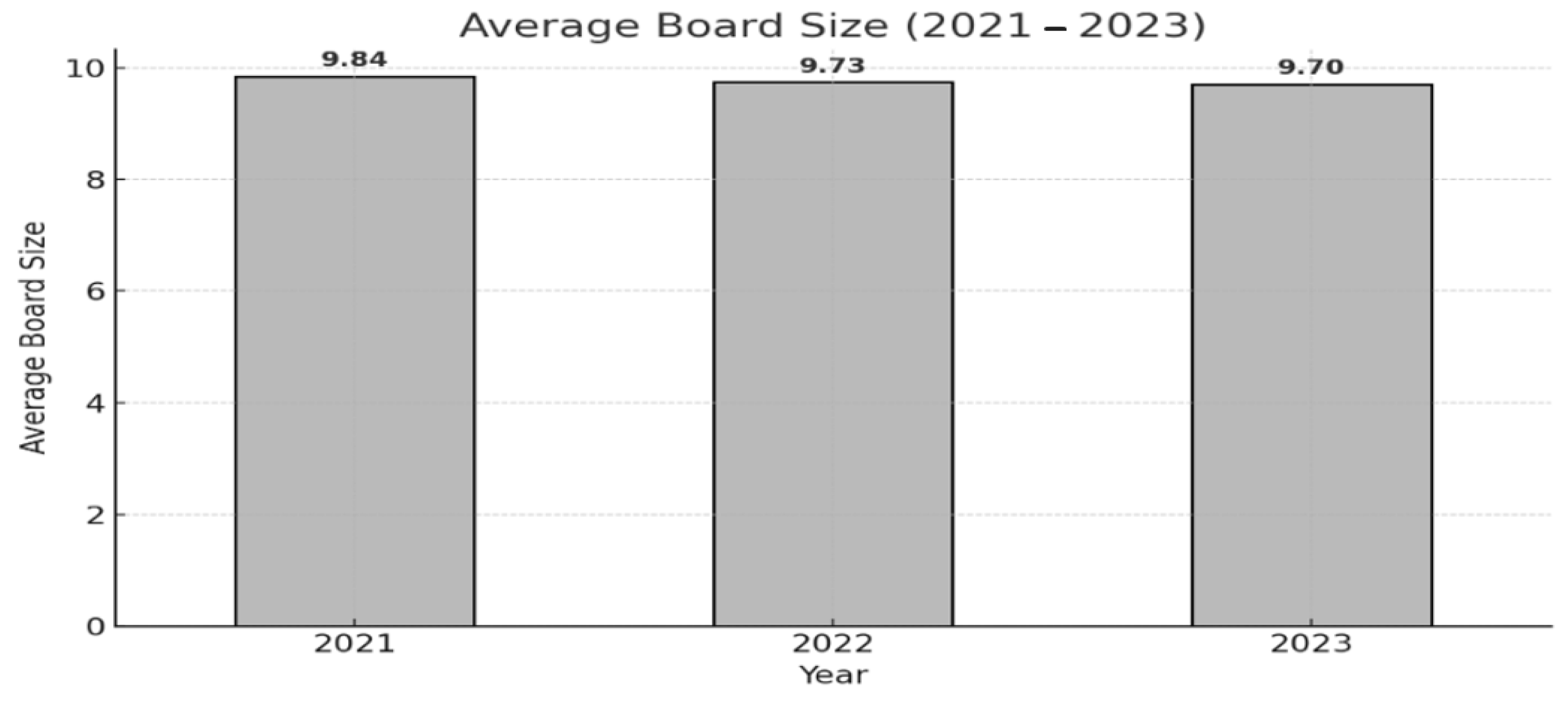
Data from the Greek corporate landscape (
Figure 1) reveal that the average number of board members across the sampled companies remained stable, hovering around 9.84–9.7 between 2021 and 2023. The OECD does not prescribe a universal optimal board size; rather, international governance guidance emphasizes effective board responsibilities, independent judgment and fit with firm context. The Hellenic Corporate Governance Code recommends that listed-company boards comprise no fewer than three and no more than fifteen members (
Hellenic Corporate Governance Council, 2021;
OECD, 2020,
2021). Moderate-sized boards may support deliberation, diversity of perspectives, and effective oversight of ESG-related decisions and strategic direction, provided that board composition includes sufficient independence, expertise, and committee support. By contrast, excessively large boards may reduce decision-making efficiency, while very small boards may concentrate authority among a limited number of executives.
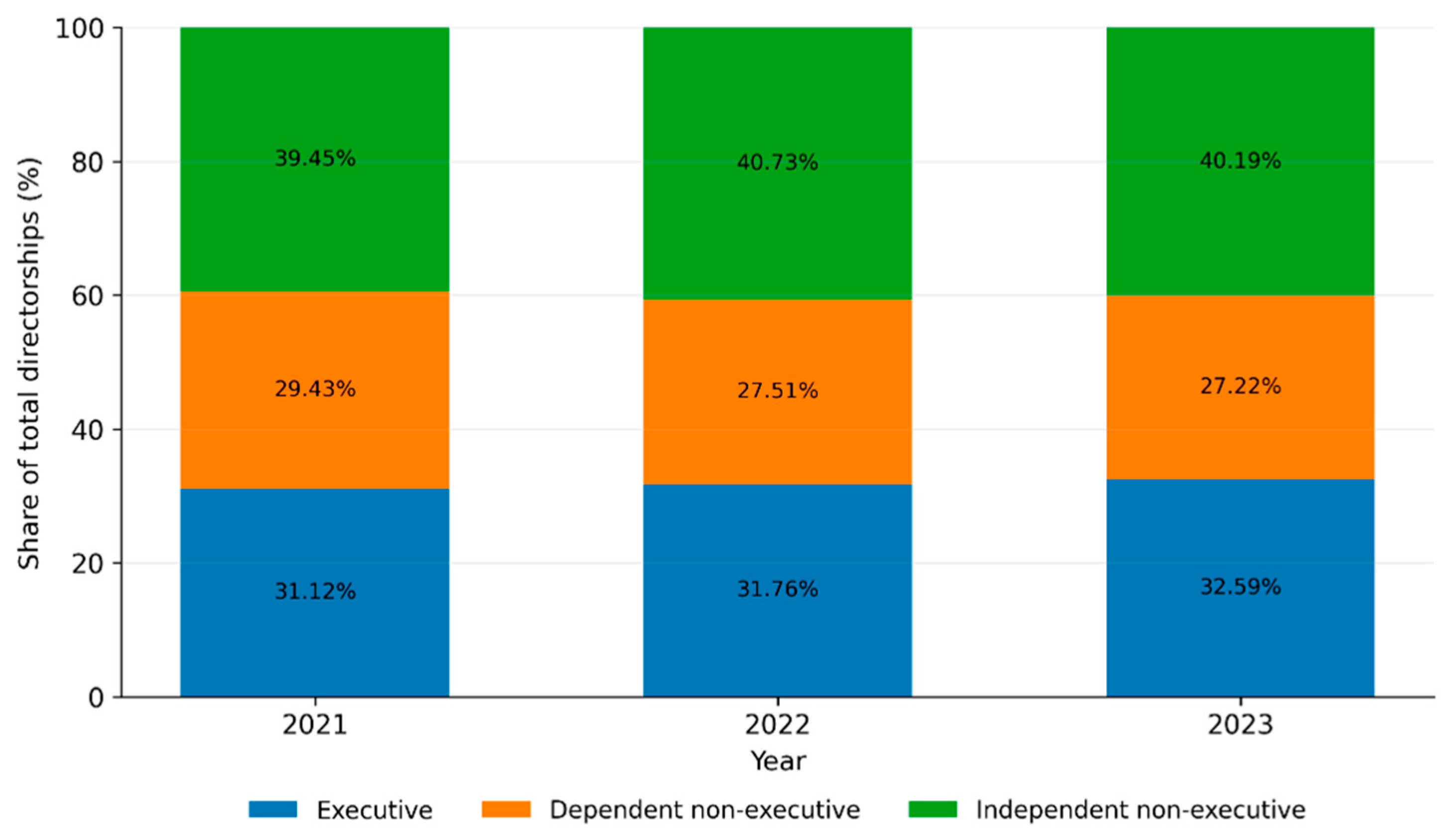
Figure 2 presents the annual distribution of board roles, while
Table 4 reports the corresponding board-independence ratios and cross-sectional dispersion measures.
Board-role composition remained broadly stable during the observation period, although the proportional evidence differs from the pattern suggested by absolute counts alone. Independent non-executive directorships numbered 256 in 2021, 268 in 2022, and 254 in 2023. As a share of all directorships, however, independent representation was 39.45% in 2021, increased to 40.73% in 2022, and then moderated to 40.19% in 2023. The corresponding mean firm-level independence ratios were 38.90% in 2021, 40.16% in 2022, and 39.36% in 2023, with standard deviations of 11.00, 10.84, and 11.96 percentage points, respectively.
The results therefore indicate a temporary peak in board independence in 2022, followed by partial moderation in 2023. Nevertheless, the 2023 proportion remained slightly above its 2021 level. This distinction matters because the number of independent directorships declined by two between 2021 and 2023, while the total number of board seats declined more substantially, from 649 to 632. The appropriate interpretation is therefore one of broad stability with a small proportional increase over the full period, rather than a complete return to the 2021 baseline.
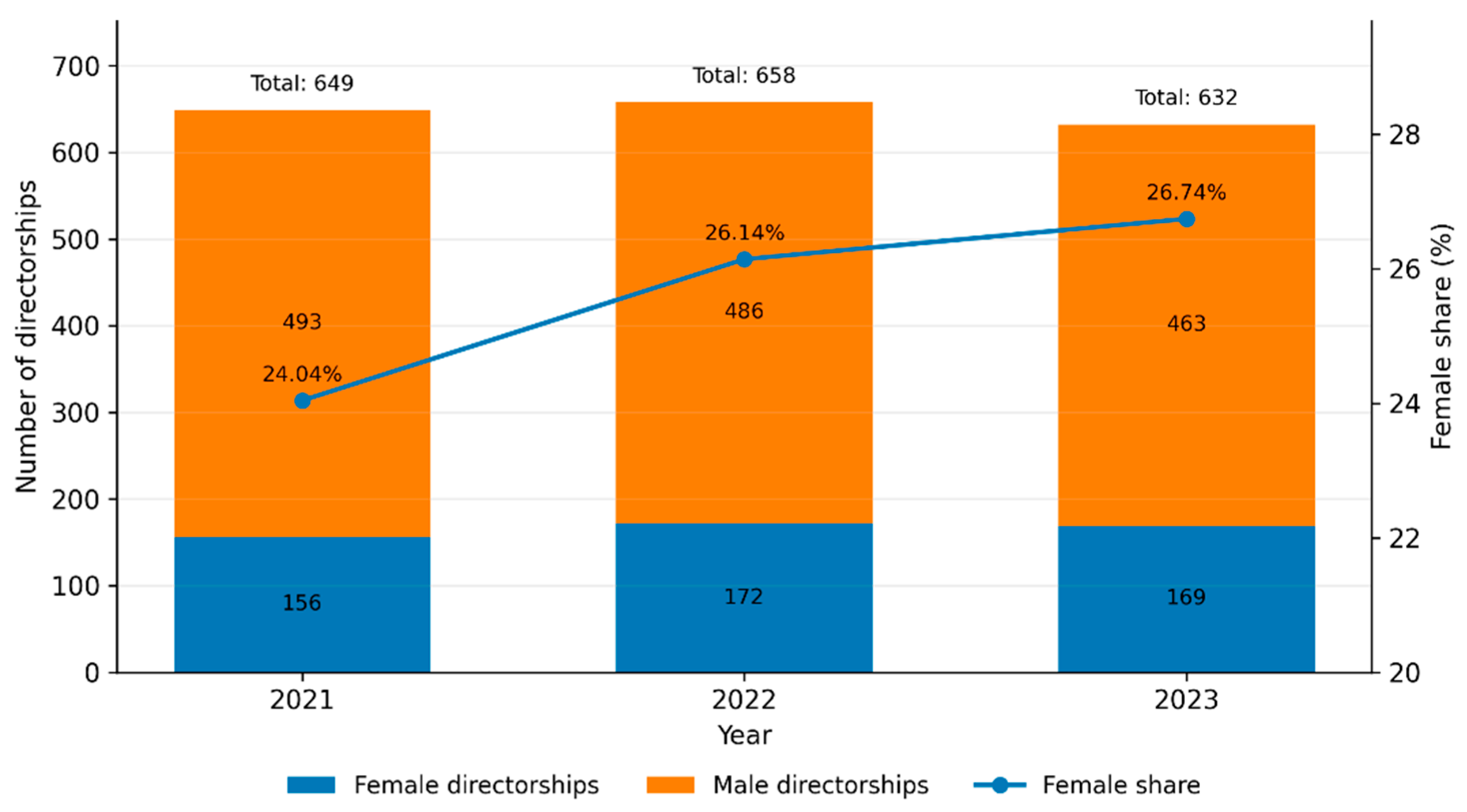
Figure 3 presents the annual gender composition of board directorships and the corresponding female share.
Female representation increased over the full observation period, although the underlying counts and percentages followed slightly different patterns. Female directorships increased from 156 in 2021 to 172 in 2022 and subsequently declined to 169 in 2023. The aggregate female share nevertheless rose from 24.04% in 2021 to 26.14% in 2022 and 26.74% in 2023.
The increase between 2021 and 2022 reflects a substantial rise in the number of female directorships. By contrast, the smaller percentage increase between 2022 and 2023 occurred despite a reduction in three female board seats, because total directorships declined more sharply, from 658 to 632. The 2023 percentage increase is therefore partly attributable to a denominator effect rather than to additional female appointments. Over the full 2021–2023 period, however, female directorships recorded a net increase of 13 seats and their aggregate share increased by 2.70 percentage points.
Although the aggregate female share exceeded 25% in 2022 and 2023, this market-wide statistic should not be interpreted as evidence that every individual firm satisfied the applicable representation requirement. Firm-level compliance would require a separate company-by-company assessment. The present findings demonstrate an aggregate directional improvement in board gender representation, but not universal compliance or a tested effect on ESG or financial outcomes.
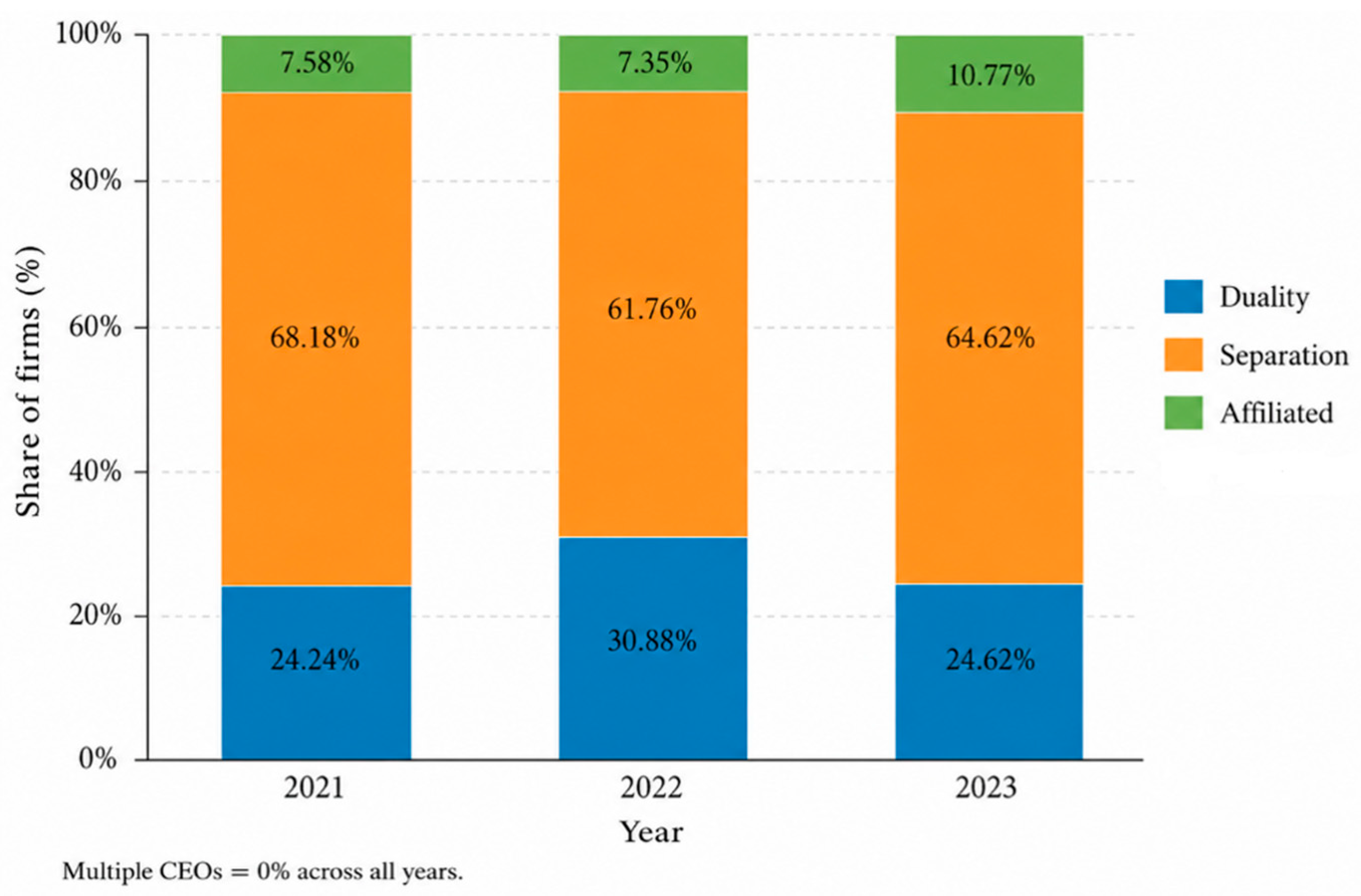
Figure 4 distinguishes among CEO–Chair duality, role separation, affiliated leadership, and multiple-CEO arrangements. In 2021, 16 firms exhibited CEO–Chair duality, 45 had separated roles, and 5 were classified as affiliated. In 2022, the corresponding counts were 21, 42, and 5, while in 2023 they were 16, 42, and 7. These totals reconcile exactly with the annual analytical samples of 66, 68, and 65 firms. No firm-year observation was classified as involving multiple CEOs.
The evidence does not indicate a monotonic increase in CEO–Chair duality. Duality increased from 24.24% of firms in 2021 to 30.88% in 2022, before declining to 24.62% in 2023, close to its initial level. Role separation followed the inverse pattern, decreasing from 68.18% in 2021 to 61.76% in 2022 and recovering partially to 64.62% in 2023. Affiliated leadership arrangements increased from five firms in 2021 and 2022 to seven firms in 2023.
CEO–Chair duality therefore remained present in a material portion of the sample, but the three-year pattern is better characterized as a temporary increase in 2022 rather than as a continuing upward trend. The increase from five to seven observations concerns affiliated leadership arrangements and must not be interpreted as an increase in multiple-CEO structures.
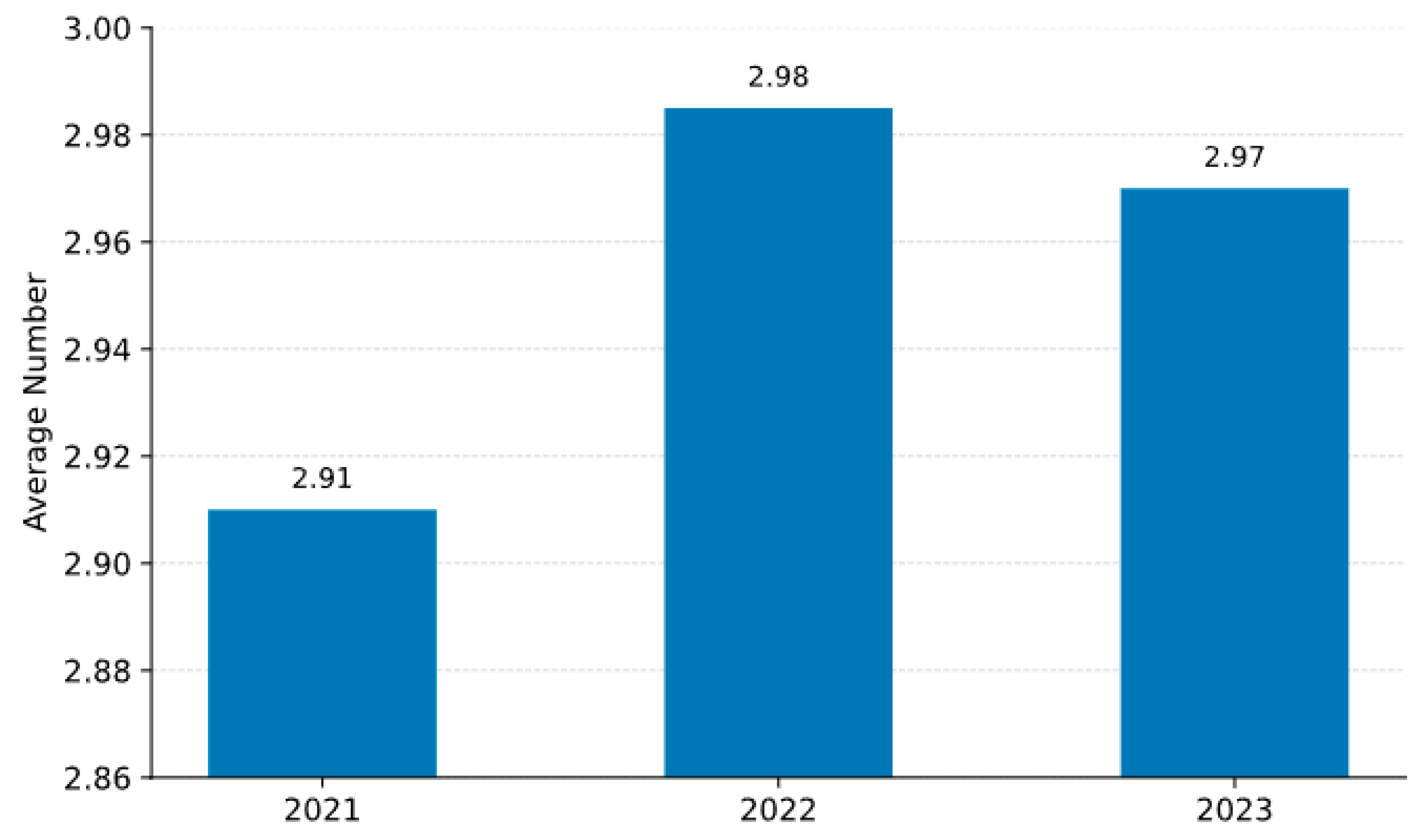
Figure 5 presents the average number of board committees in each year of the observation period.
The average number of board committees remained close to three throughout the period, increasing from 2.91 in 2021 to 2.98 in 2022 and moderating slightly to 2.97 in 2023. The evidence, therefore, indicates stability rather than material expansion in committee architecture.
Under Greek corporate-governance rules, audit and remuneration/nomination arrangements perform core oversight functions (
Hellenic Republic, 2020;
Hellenic Corporate Governance Council, 2021). However, committee counts alone do not establish the presence, composition, independence, expertise, activity, or effectiveness of specific committees. Accordingly, this indicator is interpreted as a measure of formal committee architecture only.
From an ESG interdependence perspective, committee architecture matters because committees may allocate board attention to climate, workforce, conduct, risk, assurance, and transition issues. However, the present dataset records committee counts rather than committee mandates, agendas, member expertise, or meeting content. The findings therefore show that formal committee architecture was maintained, but they do not demonstrate the depth of environmental or social oversight within those committees.
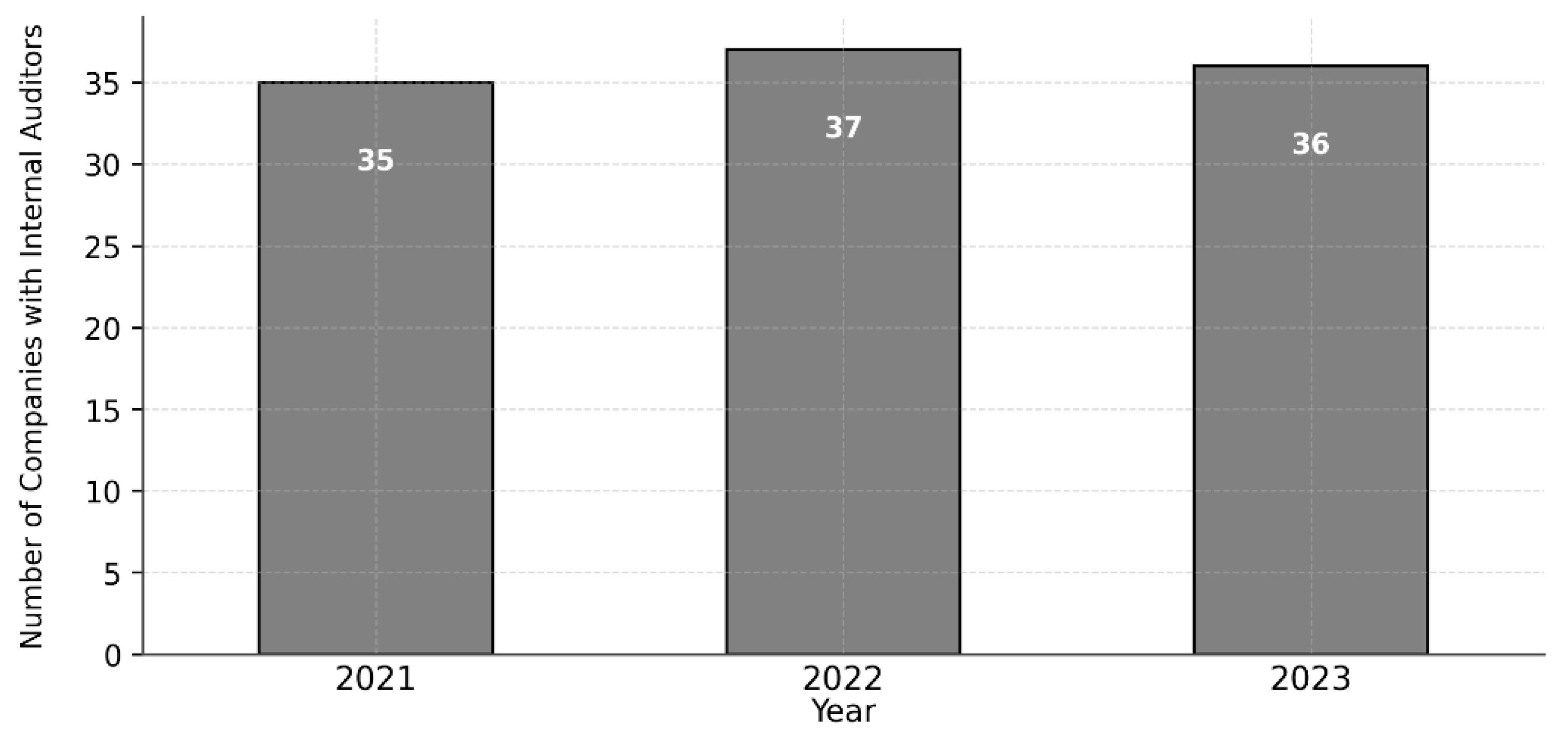
Figure 6 reports the number and annual proportion of firms for which the reviewed public disclosures explicitly identify an internal audit function or unit. Such disclosure was identifiable for 35 of 66 firms in 2021, 37 of 68 firms in 2022, and 36 of 65 firms in 2023, corresponding to 53.03%, 54.41%, and 55.38% of the respective annual analytical samples.
These figures measure disclosure visibility rather than the substantive existence of an internal audit function. The decline of one identifiable case between 2022 and 2023 should therefore not be interpreted as evidence that an internal audit function disappeared or that legal compliance weakened. Indeed, after accounting for the smaller annual sample, the proportion of firms with explicitly identifiable disclosure increased slightly in 2023. The result indicates modest variation in the clarity and accessibility of public internal audit disclosure, not an organizational or regulatory fragility trend.
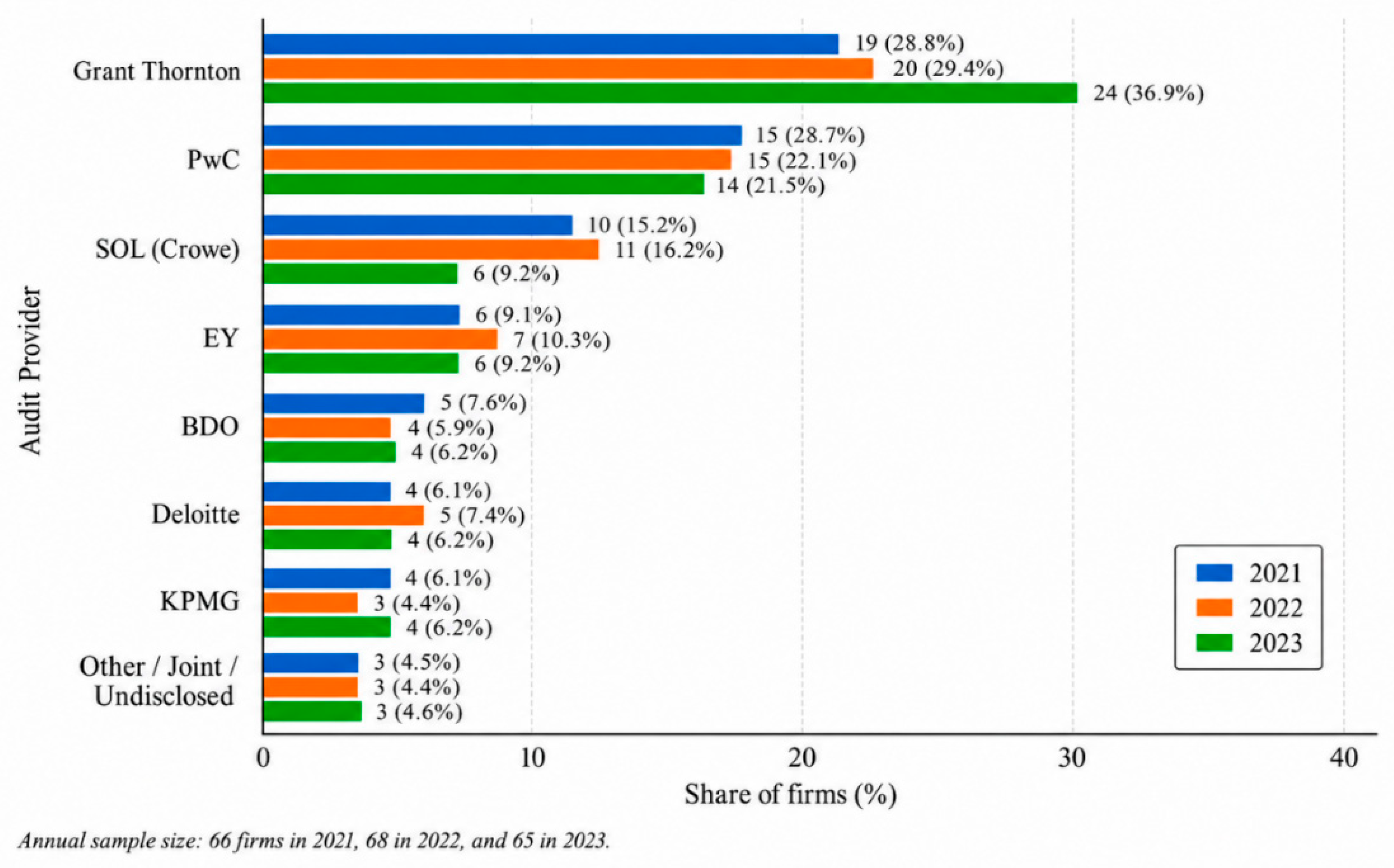
Figure 7 presents the external audit provider distribution separately for each annual analytical sample after harmonization of spelling, abbreviation, language, and legal-suffix variants. Grant Thornton held the largest annual share, auditing 19 of 66 firms in 2021, 20 of 68 in 2022, and 24 of 65 in 2023. Its share therefore increased from 28.8% to 36.9%. PwC remained the second-largest provider, with annual shares of 22.7%, 22.1%, and 21.5%.
SOL (Crowe) was also a major participant and must be distinguished from the residual category. It audited 10 firms in 2021, 11 in 2022, and 6 in 2023, corresponding to 15.2%, 16.2%, and 9.2% of the annual samples. EY, Deloitte, BDO, and KPMG each held smaller but continuing market positions. One joint SOL–BDO engagement in 2022 was retained separately and included in the “Other/Joint” category rather than being allocated to either provider.
The combined share of the two largest providers, Grant Thornton and PwC, was approximately 51.5% in both 2021 and 2022 and increased to 58.5% in 2023. The longitudinal evidence, therefore, indicates increasing top-two concentration in 2023. At the same time, the material presence of SOL illustrates the role of domestic and mid-tier assurance capacity in the Greek market. These findings are more accurately represented by a grouped horizontal bar chart than by a pooled three-dimensional pie chart.
This distribution reflects both client preferences and auditor specialization, especially in governance disclosures and regulatory alignment. Concentration among top-tier audit networks can support assurance capacity, but it may also create dependence on a limited number of providers and reduce diversity in audit perspectives. In the Greek context, capacity building among smaller and mid-tier audit firms could enhance competition and resilience as sustainability assurance expectations expand under the CSRD framework (
European Parliament and Council, 2022b,
2025,
2026).
A limitation of this study is that the sample is confined to listed companies. SMEs and non-indexed firms are excluded, and their governance patterns may differ substantially, given differences in resources, regulatory exposure, and disclosure capacity.
Taken together, the seven indicators reveal an asymmetric rather than uniform governance transition. The most visible threshold-related indicator, gender representation, shows the clearest aggregate movement; proportional board independence changes only modestly; leadership structure and committee architecture remain relatively persistent; internal audit disclosure visibility improves only marginally; and external audit concentration rises in 2023. The empirical results therefore provide the basis for examining whether formal, readily measurable governance arrangements are institutionalizing more rapidly than capability-intensive mechanisms. This pattern is interpreted theoretically in the Discussion but is not treated as proof of causal relationships with strategy, environmental or social performance, or financial outcomes.
5. Discussion
The analysis of governance-related indicators among Greek listed companies offers evidence on the current stage of ESG adoption in the domestic corporate landscape. In line with the descriptive longitudinal design of the study, the findings should be interpreted as evidence of observable governance configurations and trends rather than as proof of causal relationships with firm-level financial performance, innovation, or broader firm-level outcomes. The general pattern shows that Greek listed firms are moving toward more structured ESG, though the pace remains uneven.
The findings may be interpreted through the theoretical perspectives introduced earlier in the manuscript. From an agency theory perspective, variables such as board independence, CEO–Chair separation, committee structures, and internal audit disclosure visibility represent governance mechanisms intended to reduce managerial discretion, strengthen monitoring, and improve accountability (
Fama & Jensen, 1983;
Jensen & Meckling, 1976). From a stakeholder theory perspective, governance arrangements such as gender diversity, disclosure practices, and committee specialization reflect the increasing expectation that firms should respond not only to shareholders, but also to broader stakeholder demands for transparency and responsible governance (
Freeman, 2010). Institutional theory is also relevant in explaining why Greek listed companies appear to be gradually aligning with broader European governance norms under the influence of regulatory developments, market expectations, and growing ESG-related scrutiny (
DiMaggio & Powell, 1983). More specifically, the coercive pressure of CSRD implementation, mimetic adoption of practices from higher-performing peer markets, and the normative expectations of ESG-oriented institutional investors collectively generate isomorphic pressures toward governance convergence (
European Parliament and Council, 2022b).
The revised evidence does not indicate a uniform transition from weaker to stronger governance. Instead, it shows asymmetric movement across governance dimensions. Average board size remained stable at 9.84 members in 2021, 9.73 in 2022, and 9.70 in 2023. Stability in board size may preserve organizational continuity and deliberative capacity, but size alone provides no evidence regarding expertise, engagement, or governance effectiveness.
Board independence also remained broadly stable in proportional terms. Independent non-executive directorships represented 39.45% of all directorships in 2021, 40.73% in 2022, and 40.19% in 2023. The mean firm-level independence ratios were 38.90%, 40.16%, and 39.36%, respectively. The evidence therefore indicates a temporary peak in 2022 followed by partial moderation, rather than either a sustained increase or a complete return to the 2021 baseline. From an agency-theory perspective, this pattern suggests the preservation of formal monitoring capacity, but the dataset cannot determine the quality of challenge exercised by independent directors or its effect on strategic decisions and performance.
Gender representation shows the clearest aggregate movement. Female directorships increased from 156 in 2021 to 172 in 2022 and then declined slightly to 169 in 2023, while their aggregate share increased from 24.04% to 26.14% and then to 26.74%. The 2023 percentage increase therefore partly reflects the contraction of total board seats from 658 to 632 rather than additional female appointments. Nevertheless, over the full period, both the number and share of female directorships increased. This is consistent with stronger institutional pressure surrounding board diversity, but it does not demonstrate that diversity caused improvements in decision quality, ESG performance, or firm value.
The CEO–Chair structure was persistent but non-monotonic. Duality was observed in 24.24% of firms in 2021, increased to 30.88% in 2022, and declined to 24.62% in 2023. Separation remained the majority arrangement, while affiliated leadership arrangements increased from five cases in 2021 and 2022 to seven in 2023. No multiple-CEO cases were recorded. The temporary increase in duality and the persistence of affiliated arrangements illustrate that formal governance reform does not necessarily produce a linear redistribution of leadership authority. Agency theory and international governance guidance generally view separation of leadership and oversight roles as more consistent with accountability-oriented governance structures (
Fama & Jensen, 1983;
Jensen & Meckling, 1976;
OECD, 2021). The decline in role separation during the observation period suggests that governance reform in the Greek listed market remains partial and that traditional leadership models continue to coexist with more independence-oriented governance expectations.
Committee architecture provides evidence of formal continuity, but the dataset does not capture committee mandates, member expertise, meeting frequency, agenda content, or effectiveness. Accordingly, the analysis does not infer the substantive quality of committee oversight from committee counts alone.
Internal audit disclosure visibility increased modestly from 53.03% in 2021 to 54.41% in 2022 and 55.38% in 2023. Because this indicator measures disclosure visibility, it cannot be interpreted as evidence regarding the existence, effectiveness, or legal compliance of the internal audit function. The findings therefore point to modest improvement in the visibility of internal audit disclosure rather than volatility or institutional fragility. Prior work by
HOCG (
2023) and
Marti et al. (
2024) supports the view that committee specialization is increasingly important in contemporary governance systems, while
Yan (
2024) notes similar trends in more mature sustainability-oriented markets. In the Greek case, the evidence points to gradual institutionalization rather than full convergence with advanced European practice.
Finally, the external audit market displayed a different pattern. The combined share of Grant Thornton and PwC was approximately 51.5% in both 2021 and 2022 and increased to 58.5% in 2023. At the same time, SOL maintained a material market position, demonstrating that the Greek assurance environment is not confined exclusively to the Big Four. The increase in top-two concentration is relevant to assurance capacity and market resilience, but auditor identity alone does not establish audit quality, independence, or compliance with rotation and non-audit-service requirements.
Overall, the evidence indicates that Greek listed companies are progressing toward a more structured ESG framework, but that this transition remains uneven and incomplete. Improvements in gender diversity, committee structures, and certain dimensions of board oversight coexist with persistent challenges in leadership duality, internal audit disclosure consistency, and audit market concentration. From a regulatory perspective, these findings underline the importance of continued alignment with the CSRD framework and broader European governance expectations (
European Parliament and Council, 2022b).
Taken together, the findings are consistent with selective governance institutionalization. Visible and threshold-based arrangements, particularly aggregate gender representation, appear to respond more readily to regulatory and normative pressure. By contrast, mechanisms involving the redistribution of authority, specialist committee capability, internal control visibility, and assurance market structure change more slowly or unevenly. The scientific relevance of the study therefore lies not only in documenting annual counts but in identifying a patterned difference between formal adjustment and deeper organizational embedding.
5.1. Interdependencies Between the Environmental, Social, and Governance Pillars
The findings also clarify the organizational interdependence of the ESG pillars. Governance is not a substitute for environmental or social performance; it is the infrastructure through which environmental and social responsibilities are assigned, monitored, controlled, and reported. A board may approve climate, workforce, health-and-safety, or community commitments, but implementation requires clear responsibility, specialist oversight, reliable information flows, internal control testing, escalation procedures, and credible assurance. Weaknesses in governance can therefore reduce the credibility and consistency of environmental and social commitments even where formal policies exist.
The indicators examined in this study capture different components of this enabling system. Board independence and CEO–Chair structure relates to challenge, monitoring, and accountability. Board diversity relates to the breadth of stakeholder and materiality considerations entering decision-making. Committees allocate management attention and specialist expertise. Internal audit supports the reliability of controls and reported information, while external audit and assurance contribute to disclosure credibility and investor confidence. Through these channels, governance can influence how E and S issues enter corporate strategy, risk appetite, capital allocation, management incentives, and performance monitoring.
The mixed Greek pattern suggests that cross-pillar integration is likely to be uneven. Progress in representation and the maintenance of formal committee structures coexist with limited movement in leadership separation, modest internal audit disclosure visibility, and increasing top-two auditor concentration. These conditions may affect the organizational capacity to translate environmental and social commitments into consistent practices. However, this is an interpretive implication of the governance evidence, not a direct empirical test of environmental or social outcomes. The study therefore identifies theoretically relevant pathways while preserving the distinction between observed governance arrangements and unobserved performance effects.
The cross-pillar implication of the findings is therefore not that the Greek firms necessarily achieved stronger environmental or social performance, but that their governance infrastructure conditions the credibility and implementability of such performance. For example, environmental commitments require board-level responsibility, risk identification, capital-allocation oversight, reliable data, internal controls, and assurance. Social commitments require stakeholder-sensitive decision-making, workforce and human capital oversight, escalation channels, and credible reporting. The governance mechanisms examined in this study are the organizational channels through which these environmental and social responsibilities can be embedded.
The evidence suggests that these channels are unevenly institutionalized. Gender representation and formal committee architecture show visible structural development or persistence, while leadership accountability, internal control visibility, and assurance market concentration remain more constrained. This pattern implies that E–S–G integration in the Greek listed market is likely to be strongest where sustainability issues can be addressed through formal and visible board structures, and weakest where integration depends on deeper capabilities, information systems, internal control routines, committee expertise, and assurance capacity. This is the core reason why the descriptive evidence has scientific value: it identifies the governance conditions under which environmental and social commitments may become strategically credible, even though the study does not directly test environmental, social, or financial outcomes.
5.2. European Comparison and Regulatory Readiness
In a European context, the Greek evidence indicates partial convergence rather than either complete alignment or clear divergence. The aggregate female directorship share in the ATHEX ESG sample reached 26.74% in 2023. This is very close to the 26.8% reported by the European Institute for Gender Equality for Greece’s largest listed companies in October 2023, but below the corresponding EU-27 average of 33.9% (
EIGE, 2024). The populations and weighting methods are not identical, so this comparison should be interpreted as contextual rather than exact.
EIGE also reported that women represented 39.2% of board members in Member States with binding national quotas, compared with 33.5% in Member States relying on soft measures and 16.7% in Member States with no specific action. These differences reinforce the institutional theory expectation that coercive and normative pressure can accelerate change in visible board composition indicators. The ATHEX ESG sample exceeded the aggregate Greek 25% benchmark in 2022 and 2023 but remained below the forward-looking objective under Directive (EU) 2022/2381 of 33% of all director positions or 40% of non-executive positions for covered companies by 30 June 2026. Aggregate evidence, however, does not establish compliance by every individual firm.
For leadership structure, the OECD reports that 76% of surveyed jurisdictions require or encourage separation of the CEO and board-chair roles (
OECD, 2025). This is a jurisdiction-level policy indicator rather than a directly comparable company-level percentage. Nevertheless, it demonstrates that role separation is a widely recognized international governance norm. In the ATHEX ESG sample, separation remained the majority arrangement, at 68.18% in 2021, 61.76% in 2022, and 64.62% in 2023, while duality and affiliated structures continued to be present in a material part of the market.
Committee architecture is also directionally consistent with the international emphasis on specialized board oversight, particularly the central role assigned to audit committees in financial reporting, internal control, auditor selection, and auditor independence monitoring. However, an average committee count of approximately three cannot establish whether individual committees satisfy requirements concerning composition, independence, expertise, activity, or effectiveness.
The audit market findings correspond to a broader European regulatory concern. European Commission monitoring of statutory audits for public-interest entities explicitly evaluates market concentration, audit-quality deficiencies, and audit-committee performance (
European Commission, 2024). The Greek sample displays a concentrated but not homogeneous provider structure because Grant Thornton, PwC, and SOL each hold material positions. The increase in the combined annual share of the two largest providers to 58.5% in 2023 nevertheless indicates that provider choice and assurance market resilience warrant continued monitoring.
The present regulatory assessment does not establish full EU compliance. CSRD and ESRS requirements extend well beyond the seven indicators examined and include company-specific reporting scope, governance responsibilities, strategy, double materiality, impacts, risks and opportunities, policies, actions, metrics, targets, and assurance. Moreover, the amended framework under Directive (EU) 2026/470 makes the current CSRD scope dependent on firm-level employee and turnover thresholds that are not included in the dataset. The empirical evidence should therefore be interpreted as an assessment of governance readiness and partial structural alignment, not as a legal opinion, a full ESRS content analysis, or a company-level compliance certification.
Table 5 summarizes the relationship between the observed governance indicators and the relevant Greek, EU, and OECD benchmarks.
A final methodological point concerns the role of descriptive research in ESG scholarship. In emerging or transitional governance settings, descriptive longitudinal mapping can provide scientific value when it is transparent, theory-guided, and bounded in its claims. The present study does not claim that descriptive statistics alone establish causality. Instead, it uses verified firm-year indicators to identify a structured pattern of selective governance institutionalization and to specify the mechanisms through which the governance pillar may support or constrain E and S integration. This diagnostic contribution is a necessary step before causal performance studies can be credibly designed, because such studies require validated governance constructs, longer panels, outcome variables, and appropriate identification strategies.
6. Conclusions
This study provides theory-informed longitudinal evidence on governance pillar ESG practices among a pooled cohort of 68 firms that appeared in the ATHEX ESG Index during 2021–2023. The annual analytical samples comprise 66 firms in 2021, 68 in 2022, and 65 in 2023. By examining board size, board independence, gender diversity, CEO–Chair structure, committee architecture, internal audit disclosure visibility, and external audit concentration, the study identifies areas of relative stability, incremental progress, and continuing structural constraint in the Greek listed market.
The verified findings show stable average board size; proportional board independence that peaked in 2022 and remained slightly above its 2021 level in 2023; and an increase in the aggregate female board seat share, although the smaller rise between 2022 and 2023 partly resulted from a declining number of total directorships. CEO–Chair duality remained present but did not increase monotonically, while affiliated leadership arrangements became somewhat more frequent in 2023. Committee architecture remained close to the average of three committees. Internal audit disclosure visibility increased only marginally in proportional terms, and the external audit market became more concentrated at the top in 2023 while retaining a material role for SOL and other providers.
The study’s principal theoretical contribution is a theory-informed interpretation of this mixed pattern as selective governance institutionalization. Visible, externally measurable, and threshold-based governance arrangements appear to adjust more readily than mechanisms requiring deeper changes in authority, organizational routines, internal control embedding, specialist expertise, and assurance market capacity. The evidence therefore suggests a compliance-to-capability gap: formal governance adjustment may advance without all underlying organizational capabilities institutionalizing at the same speed.
This interpretation also clarifies the relationship among the E, S, and G pillars. Governance provides the organizational architecture through which environmental and social responsibilities enter strategic planning, risk oversight, target monitoring, internal control, disclosure, and assurance. The study identifies the relevant organizational channels but does not demonstrate that the observed governance arrangements caused improved environmental, social, strategic, or financial outcomes. Such effects require firm-level outcome variables and a research design capable of addressing endogeneity and causal identification.
The European comparison indicates partial convergence. The 2023 female directorship share was close to the contemporaneous EIGE benchmark for Greece but remained below the EU-27 average and the forward-looking EU all-director objective. CEO–Chair separation was the majority practice in the sample, consistent with its status as a widely recognized international governance norm, while continuing duality and affiliated structures indicate incomplete convergence. Audit market concentration also reflects a wider European regulatory concern regarding assurance capacity, provider choice and market resilience.
The regulatory assessment should be interpreted as evidence of alignment and readiness rather than as certification of full compliance. Aggregate board composition ratios cannot establish that every firm satisfied company-specific legal requirements. Internal audit non-identification cannot be interpreted as the absence of a legally required function. Auditor identity cannot establish compliance with independence, rotation, or non-audit-service rules. Likewise, the seven governance indicators do not provide sufficient evidence to verify company-specific CSRD scope, double materiality processes, ESRS completeness, or sustainability assurance compliance.
Several limitations define the appropriate level of inference. The 2021–2023 observation period is short, and the annual samples are modest and unbalanced, although they represent the relevant pooled index cohort rather than an arbitrarily reduced convenience sample. The dataset does not include standardized environmental and social scores, corporate strategy measures, financial performance outcomes, or an exogenous identification strategy. Public disclosures may also differ from internal organizational practice, and the European benchmarks used do not have populations and definitions identical to those of the ATHEX ESG sample.
Future research should extend the observation period, merge governance indicators with environmental, social, financial, and strategic outcomes, include non-indexed firms and Southern European comparison samples, and employ panel, event-study, difference-in-differences, or other credible quasi-experimental designs where appropriate. Such extensions would permit direct tests of whether governance mechanisms affect sustainability performance, financing conditions, innovation, risk and firm value.
The article also clarifies the scientific role of descriptive longitudinal evidence. Its contribution is not to estimate whether governance causes superior financial, environmental, or social outcomes. Rather, it establishes which governance mechanisms are visibly institutionalizing, which remain constrained, and how these mechanisms condition the organizational capacity to translate environmental and social commitments into strategy, risk oversight, internal control, disclosure, and assurance. This makes the study a diagnostic baseline for future causal research rather than merely an informational catalogue of governance counts.
Overall, the article contributes more than a catalogue of annual governance counts. It offers a transparent longitudinal baseline, a theory-informed diagnosis of selective institutionalization, an explicit account of ESG interdependence, a structured European comparison, and a bounded assessment of regulatory readiness. For managers, investors, and regulators, the results identify where Greek ESG has advanced and where substantive capability gaps remain in leadership accountability, internal control, specialist oversight and assurance market resilience.




 ,
,