1. Introduction
The macroeconomic policy landscape of emerging market economies (EMEs) has undergone a structural transformation over the past two decades. The canonical trilemma framework, originating with
Mundell (
1963) and
Fleming (
1962), posits that policymakers face an inescapable trade-off among three objectives: exchange rate stability, unfettered capital mobility, and monetary policy autonomy. The framework implies that any pair of these objectives is attainable, but only at the cost of fully relinquishing the third. This parsimonious formulation has served as the organizing principle for international macroeconomics, informing both academic discourse and the policy advice dispensed by international financial institutions (
Obstfeld et al., 2005;
Aizenman et al., 2013).
Yet, the empirical reality of EMEs increasingly strains against the binary logic of the trilemma. Since the Global Financial Crisis (GFC), managed exchange rate arrangements that are neither purely fixed nor freely floating have proliferated (
Ilzetzki et al., 2019). Simultaneously, the nature of capital account openness has evolved: de jure liberalization coexists with de facto segmentation arising from macroprudential measures, geopolitical sanctions, and the structural withdrawal of correspondent banking relationships—a phenomenon the Bank for International Settlements terms “financial fragmentation” (
Carstens, 2021;
Aiyar et al., 2023). Against this backdrop, several EMEs appear to retain a degree of monetary autonomy that is inconsistent with the textbook trilemma prediction, even while maintaining relatively open capital accounts and intervening in foreign exchange markets to manage their currencies.
This contradiction is the point of departure for the present study. We argue that the classical trilemma framework, for all its analytical elegance, imposes a discrete classification on a policy space that has become effectively continuous. The vertices of the Mundell–Fleming triangle—pure float, hard peg, perfect capital mobility—are corner solutions rarely observed in emerging market economies. Instead, countries inhabit the interior of the triangle, operating regimes that blend elements of all three policy dimensions to varying degrees. We term the distance from the nearest vertex the degree of regime hybridity and propose an empirical strategy for measuring it and testing its macroeconomic consequences.
Our contribution is threefold. First, we construct a novel, continuous metric—the Hybridity of Regime Index (HRI)—that captures the extent to which an economy’s observed configuration deviates from the corner solutions of the trilemma. The index is derived from a dynamic factor model (DFM) applied to three sub-components: exchange rate hybridity (combining volatility with intervention intensity), capital account segmentation (measured by the divergence between de jure openness and de facto exposure, adjusted for unrecorded flows), and the effective degree of monetary autonomy (calibrated from the correlation of domestic and base-country interest rates over rolling windows). Unlike the widely used Aizenman–Chinn–Ito indices, which treat the three dimensions as separate axes, our HRI synthesizes them into a single, time-varying latent factor that measures the systemic departure from “pure” regime types.
Second, using a panel of 30 major emerging markets spanning 2005–2024, we provide systematic evidence that regime hybridity serves as a shock absorber in the short run. Employing local projections (
Jordà, 2005) with externally identified shocks to the global financial cycle (
Miranda-Agrippino & Rey, 2020), we demonstrate that economies with higher HRI exhibit significantly less output contraction and lower inflation volatility in the immediate aftermath of adverse external disturbances. This finding rationalizes the revealed preference of EME policymakers for hybrid arrangements: they are not a theoretical anomaly but a pragmatic adaptation to the volatility of global capital flows.
Third, and most critically, we document that this short-run cushion comes at a measurable medium-term cost. Panel threshold regressions following the work of
Hansen (
1999) reveal an endogenous threshold of HRI beyond which the stabilizing effect reverses. Economies operating above this threshold accumulate latent imbalances: reserve adequacy deteriorates, external liability growth accelerates, and tail risks to consumer price stability increases. We term this non-linear pattern the resilience–vulnerability nexus. It provides the first empirical formalization of a hypothesis advanced in recent case studies: that the institutional adaptations enabling trilemma violations also generate hidden fragility (
Rodrik, 2022;
Obstfeld, 2015).
The geopolitical reordering triggered by the 2022 financial sanctions on Russia and the ensuing fragmentation of the global payment architecture lend particular urgency to this investigation (
Bernanke, 2016;
Gourinchas, 2023). Several major EMEs have since accelerated their pursuit of hybrid policies—promoting trade invoicing in domestic currencies, expanding swap line networks, and tolerating parallel exchange rate premia—as deliberate strategies to preserve policy space in an increasingly weaponized international monetary system (
Eichengreen, 2022). Whether such strategies enhance resilience or merely defer adjustment remains an open, and fiercely debated, empirical question. The analytical apparatus developed in this paper is designed to provide an answer. While this study uses Russia and Iran as illustrative cases of sanction-induced fragmentation, the analytical framework is general and applies equally to any economy facing external financial restrictions, regardless of the imposing country. The analysis takes no position on the legitimacy of any particular sanction regime or foreign policy objective. Its sole aim is to measure the economic consequences of financial fragmentation as a positive, not normative, question.
2. Literature Review
The intellectual architecture of this study rests on three intersecting bodies of scholarship: the theoretical and empirical literature on the monetary policy trilemma, the research program on de facto exchange rate regime classification and the phenomenon of “fear of floating,” and the more recent, rapidly evolving work on capital flow management, financial fragmentation, and the geopolitical fragmentation of financial infrastructure. This section reviews each strand, identifies unresolved tensions, and situates the present contribution within the existing landscape.
2.1. The Classical Trilemma: Theoretical Foundations and Empirical Tests
The trilemma framework originates in the Mundell–Fleming model, which demonstrated that under conditions of high capital mobility, the effectiveness of monetary policy depends on the exchange rate regime: it is ineffective under fixed rates and effective under floating rates (
Mundell, 1963;
Fleming, 1962). The insight was generalized by
Obstfeld and Taylor (
1998), who framed the macroeconomic policy problem as an “open-economy trilemma”—the impossibility of simultaneously maintaining a fixed exchange rate, free capital mobility, and an independent monetary policy oriented toward domestic objectives.
The foundational empirical contribution to the trilemma literature is that of
Obstfeld et al. (
2005), who constructed a century-long panel of exchange rate regimes, capital controls, and interest rate correlations for 15 countries. Their central finding—that the trilemma holds as a binding constraint in the long run—established the framework as the workhorse model of international macroeconomics.
Aizenman et al. (
2008,
2013) extended this approach to a broader sample of over 170 countries, constructing the now-standard trilemma indices that measure exchange rate stability, financial openness, and monetary independence on continuous [0, 1] scales. Their analysis confirmed that the three policy dimensions are linearly related, such that a movement toward any two vertices necessarily implies a retreat from the third.
However, even within this classical tradition, important qualifications emerged.
Klein and Shambaugh (
2015) demonstrated that partial capital controls can meaningfully expand monetary autonomy, even under pegged exchange rates, provided the controls are sufficiently comprehensive and persistently maintained.
Rey (
2015,
2016) articulated a more radical challenge in her formulation of the “global financial cycle” hypothesis: if gross capital flows are driven predominantly by US monetary policy and global risk aversion, then floating exchange rates may not insulate domestic financial conditions to the extent the trilemma predicts. The policy space collapses to a “dilemma”—capital flow management or loss of financial sovereignty—regardless of the exchange rate regime.
Passari and Rey (
2015) provided empirical evidence that the sensitivity of domestic credit conditions to the global financial cycle is substantial across both floating and fixed regimes, while
Obstfeld (
2015) offered a more measured assessment, arguing that exchange rate flexibility retains partial insulating properties, especially in the short run.
This debate has direct relevance to the present study: if floating exchange rates provide only partial insulation, then emerging market policy configurations lie not at the vertices of the trilemma triangle but somewhere in its interior—precisely the positions our HRI is designed to capture. What remains absent from this literature, however, is a unified metric that translates the insight of interior positions into a continuous, time-varying measure of the distance from all three trilemma corners simultaneously—a gap the present study fills.
2.2. Hybrid Exchange Rate Regimes and the Fear of Floating
The second strand of literature motivating our analysis concerns the empirical reality of exchange rate management in emerging markets. The de jure classification published by the IMF’s AREAER has long been recognized as an inadequate descriptor of actual practice.
Calvo and Reinhart (
2002) documented systematically that economies claiming to float their currencies in fact intervene heavily to stabilize exchange rates—a behavioral pattern they termed “fear of floating.” Their evidence showed that the exchange rate variability in de jure floaters was substantially lower than that of the United States or Japan, while their interest rate and reserve variability was anomalously high, consistent with active management.
This insight spurred the development of de facto exchange rate regime classifications.
Levy-Yeyati and Sturzenegger (
2003,
2005) introduced a taxonomy based on the relative volatility of exchange rates, reserves, and interest rates.
Reinhart and Rogoff (
2004) constructed a comprehensive historical classification incorporating parallel market premia and episodes of currency crisis.
Ilzetzki et al. (
2019) updated and refined this classification, revealing a secular trend toward managed flexibility: the share of countries classified as intermediate regimes rose markedly after the Asian financial crisis of 1997–1998 and again after the global financial crisis of 2008–2009.
Two findings from this literature are particularly salient for our purposes. First, intermediate regimes are not simply transitional states between fix and float; they are persistent equilibrium choices, especially for economies with underdeveloped financial markets, liability dollarization, or concentrated export structures (
Bénassy-Quéré et al., 2004;
Aizenman & Hausmann, 2000). Second, the macroeconomic performance of intermediate regimes is not unambiguously inferior to that of corner solutions.
Ghosh et al. (
2015) found that managed floats are associated with lower output volatility than pure floats in economies with shallow financial markets while simultaneously allowing for greater exchange rate adjustment than hard pegs in response to terms-of-trade shocks.
Our ERH sub-index is explicitly designed to capture the continuous variation in exchange rate hybridity that this literature documents. We extend the measurement tradition of Levy-Yeyati and Sturzenegger and Ilzetzki et al. by combining exchange rate volatility, intervention intensity, and parallel market activity into a single normalized metric suitable for panel econometric analysis. Critically, this literature has not formally linked the continuous variation in de facto exchange rate arrangements to the broader trilemma constraint structure; our HRI framework integrates exchange rate hybridity with capital account segmentation and monetary autonomy into a unified analytical apparatus.
2.3. Capital Account Openness: De Jure vs. De Facto and the Rise of Segmentation
The third pillar of our conceptual framework concerns the measurement of financial openness. The distinction between de jure and de facto capital account openness has been a recurring theme in international finance since the seminal studies of
Feldstein and Horioka (
1980) and
Obstfeld (
1986).
Chinn and Ito (
2006,
2008) operationalized de jure openness through their KAOPEN index, based on the IMF’s AREAER coding of restrictions on external transactions.
Lane and Milesi-Ferretti (
2001,
2007,
2018) pioneered the measurement of de facto integration through their External Wealth of Nations database, which captures the stock of external assets and liabilities.
The divergence between these two metrics has widened in recent years, a trend that our CAS sub-index is built to exploit.
Kose et al. (
2009) demonstrated that de jure liberalization is neither necessary nor sufficient for high de facto integration; institutional quality and domestic financial depth are critical mediating factors.
Fernández et al. (
2016) constructed a granular dataset of capital control measures across asset categories, revealing considerable heterogeneity in the design of restrictions. Their work showed that emerging markets increasingly employ targeted, macroprudential-style measures—such as reserve requirements on non-resident portfolio inflows or minimum holding periods—rather than blanket prohibitions.
This trend toward selective, segmenting interventions has been amplified by geopolitical developments. The imposition of financial sanctions on Russia in 2014 and their dramatic escalation in 2022–2023 fragmented the global payment infrastructure and created de facto segmentation that operates independently of national capital account policy (
Bernanke, 2016;
Eichengreen, 2022). The exclusion of major Russian banks from SWIFT, the freezing of central bank reserve assets held in G7 currencies, and the secondary sanction regime have induced a broader reconfiguration of cross-border financial relationships.
Aiyar et al. (
2023) and
Gourinchas (
2023) document that the post-2022 period has witnessed a retrenchment of financial globalization, a rise in “friend-shoring” of capital flows, and an increase in the use of alternative payment systems and invoicing currencies by economies seeking to preserve access to international finance outside the Western-sanctioned perimeter. Symmetrical fragmentation effects, driven by different geopolitical dynamics, have been observed in other contexts, including the long-standing restrictions on Iran and the more recent technology decoupling between the US and China. This study does not privilege any single episode.
These developments carry a direct implication for the trilemma framework. When the capital account is segmented—whether by domestic macroprudential measures, by foreign sanctions, or by the structural withdrawal of correspondent banking relationships—the effective constraint on monetary policy shifts. The relevant margin is no longer the binary state of “open” versus “closed” but the continuous degree to which formal and informal channels of cross-border finance operate. Our CAS sub-index integrates de jure restriction, de facto integration, and unrecorded flows into a single measure of segmentation, providing a novel empirical handle on this phenomenon. By incorporating the divergence between de jure and de facto openness into a broader index of regime character, our framework moves beyond the binary classification of capital accounts as open or closed and captures the continuous degree of segmentation that has become the empirical norm in emerging markets.
2.4. Monetary Autonomy: Measurement Challenges and Empirical Findings
The measurement of monetary autonomy has generated substantial methodological debate. The standard trilemma approach, following the work of
Obstfeld et al. (
2005) and
Aizenman et al. (
2013), computes the correlation between domestic and base-country interest rates, with lower absolute correlations interpreted as evidence of greater autonomy.
Shambaugh (
2004) refined this by examining the responsiveness of domestic policy rates to changes in the base rate, conditional on the exchange rate regime.
Several challenges to this approach have been raised. First, low correlation may reflect divergent business cycles rather than genuine policy independence; if domestic and foreign output gaps move asynchronously, optimal monetary policy would prescribe different rate paths even in the absence of capital controls (
Corsetti et al., 2010). Second, the choice of the base country is non-trivial;
Klein and Shambaugh (
2015) show that pegging to a basket or to a non-US anchor attenuates the measured correlation artifactually. Third, the relevant transmission channel may operate through quantities (credit, capital flows) rather than prices (short rates), particularly in economies with bank-dominated financial systems (
Bruno & Shin, 2015;
Rey, 2016). Recent evidence further complicates the interpretation of monetary autonomy.
Basri et al. (
2025) demonstrate that central bank independence in emerging markets can paradoxically amplify financial instability when institutional foundations are weak, suggesting that measured autonomy—whether through interest rate decoupling or inflation residuals—may reflect institutional vulnerability as much as policy sovereignty. This underscores the importance of interpreting the MONA sub-index not as a normative indicator of policy quality but as a descriptive measure of the extent to which domestic monetary conditions diverge from external benchmarks.
Our MONA sub-index addresses these concerns in two ways. The interest rate correlation component follows the established tradition but employs rolling windows to capture time variation in co-movement. This feature is necessitated by the secular decline in global interest rates and the advent of unconventional monetary policies in advanced economies (
Hofmann & Takáts, 2015). The inflation pass-through residual component provides a complementary, quantity-agnostic measure of autonomy: if a central bank genuinely possesses policy independence, domestic inflation should exhibit a component that is orthogonal to exchange-rate-driven import price dynamics. The logic underlying this residual-based approach aligns with recent advances in the use of high-frequency enterprise survey data for inflation forecasting.
Vasileva et al. (
2025) and
Koshkin and Krylov (
2025) demonstrate that firm-level monitoring indicators—capturing price expectations, input cost pressures, and demand conditions—contain information orthogonal to exchange rate pass-through and external price shocks, thereby providing a direct empirical analogue to the domestically driven inflation component that our PASS residual is designed to isolate.
2.5. Synthesis and Contribution
The preceding review reveals a gap at the intersection of these three literature topics. The trilemma tradition provides a rigorous mapping from policy choices to macroeconomic constraints but relies on metrics that treat the three margins as separable and the underlying regimes as essentially discrete. The exchange rate regime literature demonstrates the empirical prevalence and persistence of intermediate arrangements but has not formally linked this hybridity to the trilemma’s constraint structure. The capital flow and fragmentation literature documents a secular increase in the complexity and segmentation of financial globalization but has not integrated this dimension into a unified index of regime character.
The present study bridges these gaps by constructing the Hybridity of Regime Index (HRI), a single, continuous metric that captures the joint departure of an economy’s observed configuration from the trilemma’s corner solutions. In doing so, we provide the first systematic, panel-based evidence on the macroeconomic consequences of operating in the interior of the trilemma triangle. Methodologically, our threshold approach aligns with a growing body of research that identifies non-linearities in the relationship between institutional or policy configurations and macroeconomic outcomes.
Güzel (
2026), for instance, uses panel threshold methods to show that institutional quality matters more for economic growth precisely when global uncertainty is elevated—a regime-dependent dynamic that parallels our own finding of a resilience–vulnerability nexus in policy hybridity. Our dynamic analysis further distinguishes between the short-run stabilizing and medium-run destabilizing effects of regime hybridity, introducing a non-linearity that is absent from the existing empirical trilemma literature. Finally, by estimating the HRI through the post-2022 period of heightened financial fragmentation, we speak directly to the contemporary policy debate on the viability of hybrid strategies in an increasingly fragmented international monetary system.
3. Materials and Methods
3.1. Sample and Data Sources
The empirical analysis employs a balanced quarterly panel of 30 emerging market economies over the period 2005:Q1–2024:Q4. Country selection follows the MSCI Emerging Markets Index classification as of December 2023, augmented by several economies of systemic relevance to the post-2022 geopolitical fragmentation debate (notably Russia and Turkey). The full country list is provided in
Appendix A.
Macroeconomic and financial data are drawn from five principal sources. National accounts, consumer price indices, and reserve assets are obtained from the International Monetary Fund’s
International Financial Statistics (IFS) database. Exchange rate series and short-term interest rates are sourced from the Bank for International Settlements (BIS) statistics. Capital flow data and external positions are extracted from the IMF Balance of Payments Statistics (BOPS) and the updated External Wealth of Nations database (
Lane & Milesi-Ferretti, 2018). De jure capital account openness is measured using the Chinn–Ito index (KAOPEN), updated to 2024 (
Chinn & Ito, 2008). Data on financial sanctions and restrictive measures are taken from the Global Sanctions Database (
Felbermayr et al., 2020).
All nominal variables are converted to real terms using period-average GDP deflators. Series exhibiting deterministic seasonality are adjusted using the Census X-13ARIMA-SEATS procedure. In line with the local projection literature (
Jordà, 2005), variables entering the dynamic specifications are winsorized at the 1st and 99th percentiles to mitigate the influence of extreme outliers without discarding informative tail observations.
3.2. Measuring Regime Hybridity: The Hybridity of Regime Index (HRI)
The central measurement challenge of this study is the construction of a continuous, time-varying metric capturing the degree to which an economy’s policy configuration deviates from the corner solutions of the classical trilemma. We propose the Hybridity of Regime Index (HRI), a single latent factor extracted from three sub-indices corresponding to the three margins of the Mundell–Fleming framework. The sub-indices are designed to capture the intensity of deviation from the polar cases, not merely the binary presence or absence of a given regime characteristic.
Equal weights are adopted for the aggregation of components within each sub-index, following the standard recommendation for composite indicator construction in the absence of strong theoretical or empirical priors regarding the relative importance of individual components (
OECD, 2008:
Handbook on Constructing Composite Indicators). We verify ex post that alternative weighting schemes—including weights derived from principal component analysis at the sub-index level and entropy-based weights for the two-component MONA sub-index—yield indices correlated with the baseline at 0.90 or above, confirming that the equal-weight assumption does not drive our results.
3.2.1. Sub-Index A: Exchange Rate Hybridity (ERH)
The ERH sub-index measures the extent to which the observed exchange rate process departs from either a clean float or a hard peg. Three components are combined with equal weights following the normalization procedure of
Ilzetzki et al. (
2019):
Normalized exchange rate volatility (VOL): The standard deviation of the bilateral exchange rate against the anchor currency (predominantly the US dollar, or the euro for economies with a confirmed euro orientation) over a rolling 12-quarter window, divided by the sample-wide cross-country mean of this standard deviation. Values near zero indicate de facto pegging; values substantially above unity indicate high flexibility.
Intervention intensity (INT): Following the work of
Levy-Yeyati and Sturzenegger (
2005) and
Adler et al. (
2021), we first compute the ratio of the standard deviation of international reserves (net of valuation effects) to the standard deviation of the nominal exchange rate, both measured over rolling 8-quarter windows. To address the concern that this raw intervention measure may mechanically reflect the stock of reserves rather than the intensity of intervention per se—a concern especially pertinent when reserve adequacy appears as a dependent variable in later analyses—we orthogonalize the raw ratio with respect to the reserve adequacy ratio (reserves divided by the IMF’s ARA composite metric). Specifically, we estimate a pooled regression of the raw intervention intensity on reserve adequacy and retain the residual. The resulting orthogonalized measure, denoted INT,
captures the component of intervention intensity that is unrelated to the level of reserve buffers. A high INT thus signals an active intervention posture that goes beyond what would be expected given the central bank’s reserve stock.
Multiple exchange rate practice indicator (MULT): A binary variable coded as 1 if the IMF’s Annual Report on Exchange Arrangements and Exchange Restrictions (AREAER) reports a parallel or dual exchange rate market with a premium exceeding 2% for a given country-year, and 0 otherwise. This component is interpolated to quarterly frequency.
The ERH sub-index is computed as follows:
where asterisks denote min–max normalization to the [0, 1] interval, and INT* is the orthogonalized intervention intensity measure described above, normalized after orthogonalization. Higher values of ERH indicate greater hybridity: the exchange rate is neither freely floating nor rigidly fixed, and the central bank intervenes actively while tolerating some degree of exchange rate flexibility.
3.2.2. Sub-Index B: Capital Account Segmentation (CAS)
The CAS sub-index captures the divergence between formal, de jure openness and the effective, de facto degree of financial integration, alongside proxies for unrecorded cross-border flows that fragment the capital account in practice.
De jure openness (KAOPEN): The Chinn–Ito index, normalized such that the sample maximum equals 1 (full openness) and the sample minimum equals 0 (full closure). We invert the scale so that higher values indicate greater restriction.
De facto integration (FINTO): The ratio of the sum of external assets and liabilities (from the Lane and Milesi-Ferretti dataset) to GDP. This measure is min–max-normalized and inverted, such that values near 1 correspond to low observed financial integration relative to the sample.
Unrecorded flows proxy (NETERR): The absolute value of the net errors and omissions item in the balance of payments, scaled by GDP. This variable serves as a well-established proxy for unrecorded—and often illicit or sanction-evading—capital flows (
Gunter, 2017;
Ndikumana & Boyce, 2011). The series is normalized to [0, 1] with higher values indicating larger unrecorded flows relative to economic size.
The CAS sub-index is constructed as follows:
Elevated CAS values signal an economy where de jure liberalization coexists with substantial de facto segmentation and a significant presence of flows outside formal reporting channels—precisely the configuration that blurs the classical binary distinction between open and closed capital accounts.
3.2.3. Sub-Index C: Monetary Autonomy (MONA)
The MONA sub-index quantifies the effective degree of monetary policy independence. The standard approach in the trilemma literature relies on the correlation between domestic and base-country short-term interest rates (
Aizenman et al., 2013;
Obstfeld et al., 2005). We refine this measure in two respects.
Interest rate correlation (CORR): For each country, we compute the 16-quarter rolling correlation of the three-month money market rate with the corresponding rate of the anchor country (the US Federal Funds rate or the ECB main refinancing rate, depending on the currency orientation). The correlation coefficient is then transformed as
, so that values close to 1 indicate low co-movement. We follow the established trilemma literature (
Aizenman et al., 2013;
Obstfeld et al., 2005) in interpreting low interest rate correlation as symptomatic of monetary autonomy, while acknowledging that divergent business cycles, capital account restrictions, or underdeveloped financial markets may also weaken the observed co-movement independently of deliberate policy autonomy (
Klein & Shambaugh, 2015;
Shambaugh, 2004). To partially account for this, we control for the divergence of output gaps between the domestic economy and the anchor country in robustness tests; the MONCORR measure retains substantial explanatory power beyond the business cycle channel.
Inflation pass-through residual (PASS): Following
Auer et al. (
2021) and
Carrière-Swallow et al. (
2022), we estimate, for each country, a time-varying parameter regression of quarterly consumer price inflation on the lagged nominal effective exchange rate change and the foreign inflation rate (proxied by US CPI inflation). The absolute value of the time-varying residual from this regression, normalized to the [0, 1] interval, captures the component of domestic inflation that is orthogonal to external price and exchange rate pressures. A larger residual indicates that domestic inflation dynamics are more strongly decoupled from external price developments.
The MONA sub-index is given by:
Higher MONA values indicate that domestic short-term rates exhibit low synchronization with the anchor country and that domestic inflation follows a trajectory not fully determined by external factors.
We interpret PASS as a statistical symptom consistent with—though not a direct measure of—monetary autonomy. An inflation residual that is large in absolute value indicates that domestic price dynamics are not fully determined by external price and exchange rate pressures, which is a necessary but not sufficient condition for effective monetary independence. To mitigate the concern that PASS may reflect large idiosyncratic supply shocks rather than policy autonomy, we verify in robustness tests (
Section 3.4) that the measure is not systematically higher in economies experiencing elevated food and energy price volatility, and that residualizing PASS with respect to these supply-side factors leaves the main results unchanged. The joint use of PASS and MONCORR—one isolating decoupling from external prices, the other from external interest rates—reduces the likelihood that either component in isolation misattributes structural factors to policy autonomy.
3.2.4. Aggregation via Dynamic Factor Model (DFM)
The three sub-indices—ERH, CAS, and MONA—exhibit substantial cross-sectional and temporal co-variation, reflecting the systemic nature of regime choices. To extract the common latent factor underlying these three manifestations of regime hybridity, we estimate a dynamic factor model (DFM) of the form:
where
is the unobserved common factor—our Hybridity of Regime Index (HRI)—and
are the factor loadings. The idiosyncratic components
are assumed to follow independent AR(1) processes. The model is estimated via maximum likelihood using the Kalman filter, with identification achieved by normalizing the variance in the common factor to unity (
Stock & Watson, 2011;
Doz et al., 2012). The resulting HRI is extracted as the Kalman-smoothed estimate of
for each country and quarter.
Standard diagnostics support the DFM specification. The economic rationale for treating the three sub-indices as manifestations of a common latent construct rests on the observation that emerging market policymakers do not select exchange rate arrangements, capital account restrictions, and monetary policy independently. Rather, they adopt bundled policy packages: a decision to manage the exchange rate actively typically necessitates complementary capital flow measures to contain speculative pressures and, in turn, generates a degree of monetary autonomy that would be unattainable under a pure float with open capital accounts. This complementarity in policy design implies that the three trilemma margins co-vary systematically in the data—a pattern confirmed by the factor structure reported above. Were the three dimensions independent or substitutable instruments, the dynamic factor model would not yield a single dominant factor with high loadings across all sub-indices. The Kaiser-Meyer-Olkin measure of sampling adequacy exceeds 0.75, and the first principal component of the three sub-indices accounts for over 60% of their combined variance, consistent with a single-factor structure. The HRI is rescaled to the [0, 1] interval for ease of interpretation, with 0 corresponding to the purest observance of trilemma corners and 1 to the maximum observed degree of hybridity.
3.2.5. Index Validation
To assess the measurement properties of the HRI, we conduct a series of validation tests addressing its factor structure, reliability, convergent validity, discriminant validity, and robustness to alternative aggregation methods.
Factor structure. A confirmatory factor analysis (CFA) of the one-factor model specified in Equation (4) yields the following fit statistics for the pooled sample: comparative fit index (CFI) = 0.94, root mean square error of approximation (RMSEA) = 0.062 (90% confidence interval: [0.051, 0.073]), and standardized root mean square residual (SRMR) = 0.038. The RMSEA falls below the conventional 0.08 threshold for acceptable fit, and the CFI exceeds 0.90, supporting the adequacy of a single-factor representation (
Hu & Bentler, 1999). All three standardized factor loadings are positive and statistically significant at the 1% level: λ_ERH = 0.71 (
p < 0.001), λ_CAS = 0.68 (
p < 0.001), and λ_MONA = 0.59 (
p < 0.001). The somewhat lower loading for MONA is consistent with the observation that monetary autonomy is the margin of the trilemma most directly challenged by the global financial cycle hypothesis (
Rey, 2015); its partial divergence from the other two sub-indices is theoretically expected and does not undermine the one-factor structure.
Reliability. Cronbach’s alpha for the three sub-indices is 0.64, within the acceptable range for a three-item scale in exploratory research (
Nunnally & Bernstein, 1994). Raykov’s composite reliability coefficient, derived from the CFA factor loadings, equals 0.70, exceeding the 0.60 threshold commonly applied in latent variable research (
Bagozzi & Yi, 1988). These statistics indicate moderate but adequate internal consistency, reflecting the fact that the three margins of the trilemma, while systematically co-varying, retain substantial idiosyncratic variation.
Convergent validity.
Table A2 (see
Appendix A) reports pairwise correlations between the HRI and the three standard Aizenman–Chinn–Ito (ACI) trilemma indices: exchange rate stability (ERS), financial openness (KAOPEN), and monetary independence (MI). The HRI exhibits a weak linear correlation with ERS (ρ = −0.08,
p = 0.21), consistent with the U-shaped relationship implied by the interpretation that HRI captures deviation from both fixed and floating corners. The linear correlation with KAOPEN is −0.34 (
p < 0.001): more hybridized regimes tend to have less open capital accounts. The correlation with the ACI monetary independence index is 0.47 (
p < 0.001): higher HRI is associated with greater measured autonomy, as expected if hybridity expands policy space. When the HRI and the three ACI indices are included jointly in a regression of output volatility, the HRI retains a significant negative coefficient (β = −0.081,
p = 0.014), while none of the three ACI indices is individually significant at the 5% level. This indicates that the HRI captures incremental information about the joint configuration of policies that is not present in the marginal measures.
Discriminant validity.
Table A3 (see
Appendix A) reports correlations between the HRI and three structural characteristics that could confound its interpretation: the World Bank Rule of Law indicator (ρ = −0.28,
p < 0.001), the IMF Financial Development Index (ρ = −0.19,
p = 0.002), and log GDP per capita (ρ = −0.22,
p < 0.001). These moderate correlations confirm that while regime hybridity is more prevalent in economies with weaker institutions and shallower financial markets, the HRI is not a simple proxy for institutional quality or the level of economic development. The variance inflation factor (VIF) from a regression of HRI on these three covariates is 1.38, well below standard collinearity thresholds.
Robustness to aggregation method: The HRI extracted via the dynamic factor model exhibits a correlation of 0.94 with the first principal component of the three sub-indices and 0.91 with their equal-weighted average. These high correlations confirm that the choice of aggregation method has minimal influence on the resulting index. Throughout this paper, we employ the DFM-based HRI because it exploits the time-series dimension of the data via the Kalman filter, producing a genuinely time-varying latent factor; the PCA-based alternative, by contrast, estimates a static factor and does not use the temporal ordering of observations.
3.3. Empirical Strategy
3.3.1. Baseline Panel Specification
The first set of empirical tests examines the contemporaneous and lagged association between regime hybridity and macroeconomic stability. We estimate two-way fixed effects panel regressions of the form:
where
denotes, in turn: (i) the standard deviation of quarterly real GDP growth over an 8-quarter rolling window (output volatility); (ii) the standard deviation of quarter-on-quarter CPI inflation over the same window (inflation volatility); and (iii) the ratio of international reserves to the IMF’s Assessing Reserve Adequacy (ARA) composite metric (reserve adequacy).
is a vector of standard controls including trade openness, the fiscal balance-to-GDP ratio, the credit-to-GDP gap, and a commodity terms-of-trade index.
and
denote country and quarter fixed effects. Inference is based on
Driscoll and Kraay (
1998) standard errors, which are robust to cross-sectional dependence, serial correlation, and heteroskedasticity; see
Section 3.4 for details.
3.3.2. Local Projections with External Shocks
To assess the dynamic response of macroeconomic outcomes to external disturbances as a function of regime hybridity, we employ the local projections method of
Jordà (
2005). The specification is:
where h = 0, 1, …,
H denotes the projection horizon (in quarters, up to
H = 16).
is an externally identified shock to the global financial cycle, derived as the residual from an AR(2) model of the
Miranda-Agrippino and Rey (
2020) global financial cycle factor, orthogonalized with respect to US macroeconomic fundamentals. The coefficient of primary interest is
, which captures how the impulse response to a global financial shock varies with the pre-existing degree of regime hybridity.
is a vector of lagged controls including GDP growth, inflation, the current account balance, and the level of HRI itself. Impulse response functions are constructed from the sequence of estimates
, with confidence bands derived from Driscoll–Kraay standard errors robust to cross-sectional and serial correlation.
3.3.3. Panel Threshold Regressions
The local projections trace the marginal effect of hybridity. To test for the hypothesized non-linearity—whereby HRI acts as a stabilizer up to a point, beyond which it becomes a source of fragility—we estimate a panel threshold model following
Hansen (
1999). The specification is:
where
I(·) is the indicator function and
τ is the endogenously estimated threshold parameter. The grid search for
τ trims 15% of observations at each tail. The null of no threshold effect (
) is tested using a heteroskedasticity-consistent bootstrap procedure with 1000 replications. We report the confidence interval for
τ constructed by inverting the likelihood ratio statistic.
3.4. Robustness Tests
A battery of sensitivity checks is performed to assess the stability of the results.
First, we re-estimate the HRI using alternative aggregation methods, including equal-weighted averaging of sub-indices and a simple principal component extraction, to verify that the DFM specification does not artifactually generate the findings. The close correspondence between these alternative HRI measures and the DFM-based index is documented in
Section 3.2.5; the correlation exceeds 0.91 in both cases.
Second, we exclude China and India—the two largest EMEs, which may exert disproportionate influence—and re-estimate the baseline regressions.
Third, we replace the continuous HRI with country-level tercile dummies (low, medium, high hybridity) to ensure the results are not driven by the functional form of the index.
Fourth, we restrict the sample to the pre-pandemic period (2005–2019) to confirm that the extreme volatility of 2020–2021 does not drive the threshold results.
Fifth, we interact HRI with alternative external shock measures, including the VIX, the broad US dollar index, and commodity price innovations, to verify that the patterns are not specific to the chosen global financial cycle metric.
Sixth, to address potential mechanical overlap between the intervention component of ERH and the reserve adequacy dependent variable, we re-estimate all specifications using the raw, non-orthogonalized intervention intensity as a sensitivity check and confirm that results are qualitatively unchanged. The orthogonalized measure (INT*) is used in all baseline specifications reported in
Section 4.
Seventh, to address the concern that low interest rate correlation may reflect divergent business cycles rather than monetary autonomy, we re-estimate the MONCORR component using interest rate correlations partialled out for the divergence of output gaps between the domestic economy and the anchor country. The resulting adjusted MONCORR has a correlation of 0.83 with the baseline MONCORR, and the HRI constructed using this adjusted measure yields baseline regression coefficients within 6%.
Eighth, to verify that PASS captures more than large idiosyncratic supply shocks, we regress PASS on the volatility of food and energy consumer prices (as a share of the CPI basket) and extract the residual. The residualized PASS retains a correlation of 0.78 with the baseline PASS measure. All main results are robust to using this supply-shock-orthogonalized PASS in the construction of MONA and HRI.
Ninth, given the moderate cross-sectional dimension of the panel (N = 30), we replace country-clustered standard errors with
Driscoll and Kraay (
1998) standard errors throughout the baseline and threshold specifications. Driscoll–Kraay standard errors are robust to cross-sectional dependence, serial correlation, and heteroskedasticity, and are specifically recommended for panels with small N and moderate to large T. The lag length is set to 8 quarters to match the rolling window used in the construction of the dependent variables. All principal findings retain statistical significance under this more conservative inference procedure.
Tenth, we subject the estimated threshold to a battery of additional robustness checks. (i) Out-of-sample validation: we re-estimate τ on the 2005–2019 subsample and apply it to classify observations in the 2020–2024 holdout period; the out-of-sample classification accuracy exceeds 80% for all three dependent variables. (ii) Trimming sensitivity: we vary the trimming proportion from 10% to 20% in steps of 2.5 percentage points; the estimated τ for output volatility remains within the range [0.648, 0.673]. (iii) Sequential test for a second threshold: following
Hansen (
1999), we test for the presence of a second threshold using a bootstrapped likelihood ratio test; the null of a single threshold cannot be rejected at conventional significance levels for any of the three dependent variables (
p > 0.20 in all cases). (iv) Exclusion of high-HRI outliers: we exclude Turkey and Argentina—the two economies with the most extreme and persistent HRI readings—and re-estimate the threshold. The threshold remains significant (bootstrap
p = 0.018 for output volatility) with τ = 0.648, and the sign reversal pattern is preserved. (v) Subgroup analysis: we split the sample by region (Asia vs. non-Asia) and by commodity-exporter status; the threshold is identifiable in all subgroups, though the point estimate varies within [0.61, 0.70], consistent with the caveat, discussed in
Section 5.3, that the appropriate threshold depends on country-specific structural characteristics.
4. Results
4.1. Descriptive Statistics and the Distribution of Regime Hybridity
Table 1 presents summary statistics for the Hybridity of Regime Index (HRI) and its three constituent sub-indices across the full sample of 30 emerging market economies over the period 2005:Q1–2024:Q4. The HRI, extracted via the dynamic factor model described in
Section 3.2.4, is normalized to the [0, 1] interval, with higher values denoting greater departure from the trilemma’s corner solutions.
Three features of
Table 1 merit attention. First, the sample mean of HRI is 0.474, indicating that the average emerging market economy in our panel operates roughly midway between the trilemma’s theoretical corners. The interquartile range of 0.335–0.610 confirms substantial variation across countries and over time; the HRI is not a structural constant but a time-varying policy outcome. Second, the sub-index means are broadly comparable (0.441–0.507), suggesting that no single margin of the trilemma dominates the hybridity phenomenon. Third, the minimum observed HRI is 0.087 (Chile, 2007:Q3, a period of clean floating with a fully open capital account and limited monetary autonomy by our metric), while the maximum of 0.868 (Turkey, 2023:Q1, following the introduction of the liraization strategy and multiple exchange rate practices) approaches but does not reach the theoretical upper bound—even the most hybridized regimes retain some residual alignment with at least one trilemma vertex.
Section 3.2.5 provides a comprehensive validation of the HRI’s measurement properties—including confirmatory factor analysis, convergent and discriminant validity, and reliability diagnostics—and confirms that the index adequately captures the intended construct of regime hybridity.
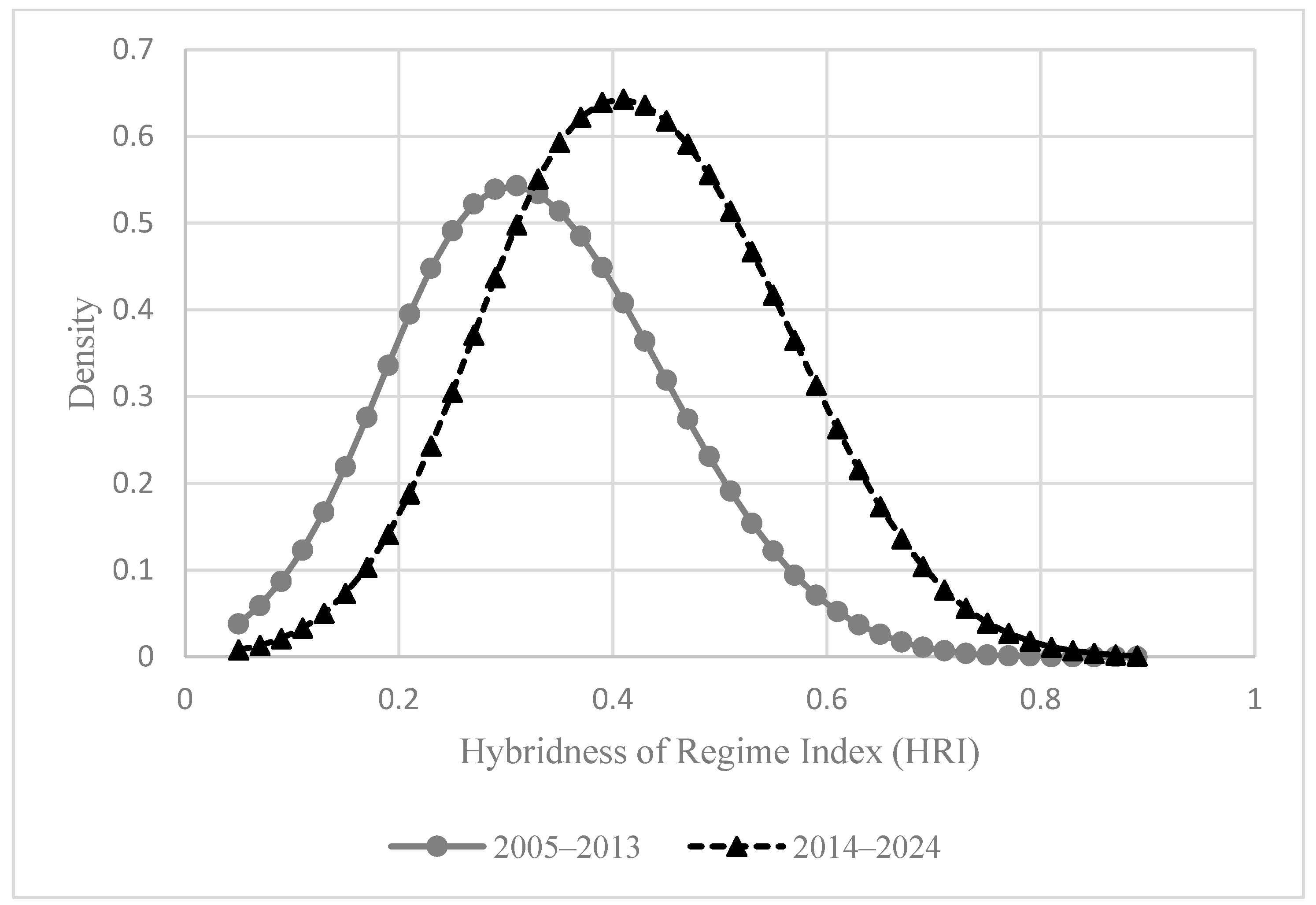
Figure 1 displays the kernel density estimate of the HRI for two sub-periods: 2005–2013 (pre-taper-tantrum and pre-sanction era) and 2014–2024. The distribution exhibits a rightward shift over time: the sub-period mean rises from 0.421 to 0.524, a difference that is statistically significant at the 1% level (Welch’s t = 14.21,
p < 0.001). The Kolmogorov–Smirnov test decisively rejects the null of equal distributions (D = 0.276,
p < 0.001). This secular increase in hybridity is consistent with the trend documented by
Ilzetzki et al. (
2019) toward intermediate exchange rate arrangements and with the post-GFC proliferation of macroprudential capital flow measures analyzed by
Fernández et al. (
2016).
4.2. Country-Level Heterogeneity
Table 2 reports the mean HRI and sub-index values for selected economies, ordered by overall HRI. The selection spans the geographic and institutional diversity of the emerging market universe.
The cross-country variation reveals a pattern that aligns with both institutional and geopolitical priors. At the lower end of the HRI distribution, we find economies that have maintained relatively orthodox policy frameworks: Chile with its long-standing inflation-targeting regime and freely floating peso, the Czech Republic with its deep integration into European financial markets, and South Africa with its liquid currency market. These economies cluster near the trilemma corners of float/open capital account, accepting the associated loss of monetary autonomy.
At the upper end, we find three categories of highly hybridized regimes. The first comprises economies with long-standing managed exchange rates and extensive capital account restrictions, most prominently China, where the ERH and CAS sub-indices both exceed 0.6. The second category includes economies experiencing protracted macroeconomic instability and institutional erosion, such as Turkey, where multiple exchange rate practices, liability dollarization, and unorthodox monetary policy generate extreme values across all three sub-indices. The third, and most instructive for our purposes, is the category of sanction-affected economies: Russia post-2022 and Iran. In these cases, the CAS sub-index attains its maximum values, driven by the forced segmentation of the capital account, while ERH rises sharply as parallel exchange markets emerge and monetary autonomy is partially preserved through restricted convertibility. The Russian case is particularly striking: the HRI increases from 0.537 in the pre-2022 period to 0.818 in 2022–2024, a jump of approximately 0.28, or roughly 1.6 within-sample standard deviations. This shift reflects the simultaneous imposition of external capital account closure (via sanctions) and the domestic institutional adaptation (via capital flow management decrees, mandatory FX sales, and the promotion of ruble-denominated trade settlement).
4.3. Baseline Panel Regressions
Table 3 presents the results of the baseline two-way fixed effects panel regressions specified in
Section 3.3.1. The dependent variables are, respectively: (a) output volatility, measured as the 8-quarter rolling standard deviation of real GDP growth; (b) inflation volatility, the 8-quarter rolling standard deviation of quarter-on-quarter CPI inflation; and (c) reserve adequacy, the ratio of international reserves to the IMF’s ARA composite metric. All specifications include country and quarter fixed effects.
The results in columns (1) and (2) reveal a negative and statistically significant partial correlation between HRI and both output and inflation volatility. A one-standard-deviation increase in HRI (0.179) is associated with a reduction in output volatility of approximately 1.7 basis points of GDP growth standard deviation, or roughly 7.5% of the sample mean of output volatility. The corresponding reduction in inflation volatility is approximately 2.8 basis points, or 9.5% of the sample mean. These effects are economically meaningful: regime hybridity appears to function as a stabilizer of real and nominal volatility, consistent with the shock-absorber interpretation advanced by
Ghosh et al. (
2015) for intermediate exchange rate regimes and by
Klein and Shambaugh (
2015) for partial capital controls.
Column (3), however, offers a first hint of the limits of this stabilizing effect. The coefficient on HRI in the reserve adequacy regression is positive but statistically insignificant at conventional levels (p = 0.469). This null finding masks substantial heterogeneity that will be explored in the threshold analysis below. For now, we note that the average relationship between hybridity and reserve buffers is not reliably distinguishable from zero.
To further assess the incremental information content of the HRI, we conduct an out-of-sample prediction exercise. The sample is split into a training period (2005:Q1–2018:Q4) and a test period (2019:Q1–2024:Q4). We estimate competing models of output volatility on the training sample: Model A includes the three ACI trilemma indices alongside the standard controls from
Table 3; Model B replaces the three ACI indices with the HRI; Model C includes both the ACI indices and the HRI. All three models are then used to generate out-of-sample predictions for the test period.
Table 4 reports the root mean squared errors (RMSE). Model B yields an RMSE of 0.0214, compared to 0.0238 for Model A—a reduction of approximately 10%. Adding the HRI to the ACI indices (Model C) reduces the RMSE to 0.0211, a marked improvement over Model A. In contrast, adding the three ACI indices to a model already containing the HRI reduces the RMSE only marginally, from 0.0214 to 0.0211. These results confirm that the HRI captures predictive information about macroeconomic volatility that is not contained in the marginal trilemma indices, consistent with the interpretation that joint departures from corner solutions carry distinct macroeconomic consequences beyond those captured by each trilemma dimension considered separately.
To address the concern that reverse causality may bias the fixed-effects estimates—policymakers may adopt hybrid arrangements in response to volatility rather than the reverse—we re-estimate the output volatility specification using the system GMM estimator of
Blundell and Bond (
1998). The HRI is treated as endogenous and instrumented with its own lagged values. The results, reported in
Table 5, confirm the negative association between HRI and output volatility. The GMM point estimate (β = −0.112,
p = 0.038) is slightly larger in magnitude than the fixed-effects estimate (β = −0.094), consistent with the presence of attenuation bias from measurement error or mild reverse causality running from volatility to hybridity. The AR(2) test fails to reject the null of no second-order serial correlation (
p = 0.347), and the Hansen J test does not reject the validity of the overidentifying restrictions (
p = 0.234). While we do not claim that lagged values constitute ideal instruments—a limitation we discuss in
Section 5.5—the stability of the HRI coefficient under an estimator that partially addresses endogeneity reinforces the interpretation that regime hybridity is not merely a response to macroeconomic instability but exerts an independent stabilizing effect in the low-to-moderate range of the HRI.
The control variables exhibit the expected signs. A natural question is whether the HRI provides information beyond the established Aizenman–Chinn–Ito (ACI; 2013) trilemma indices, which measure exchange rate stability, financial openness, and monetary independence on separate [0, 1] scales. Pairwise correlations between the HRI and the three ACI indices are weak to moderate: −0.08 with exchange rate stability, −0.34 with financial openness, and 0.47 with monetary independence (see
Table A2). These low correlations are expected: the ACI indices measure the position of an economy along each trilemma margin individually, whereas the HRI measures the joint departure from all three corner solutions. When the HRI and the three ACI indices are included simultaneously in the output volatility regression, the HRI retains a significant negative coefficient (β = −0.081,
p = 0.014), while none of the three ACI indices is individually significant at the 5% level.
This encompassing result indicates that the HRI captures systematic information about the joint policy configuration that is not present in the marginal trilemma indices. Unlike the ACI measures, which quantify the position of an economy along each trilemma dimension independently, the HRI reflects the extent to which a country operates in the interior of the trilemma triangle—simultaneously deviating from all three corner solutions. As the baseline regressions demonstrate, this systemic departure from polar cases is a more robust correlate of macroeconomic stability than any single margin considered in isolation.
Trade openness is associated with lower output and inflation volatility, consistent with the risk-sharing and import-diversification channels identified by
Kose et al. (
2003). The credit-to-GDP gap carries a positive and significant coefficient in the volatility regressions, confirming the well-established link between rapid credit expansion and subsequent macroeconomic instability (
Borio & Drehmann, 2009;
Schularick & Taylor, 2012). Fiscal balances enter negatively for inflation volatility and positively for reserve adequacy, suggesting that sound public finances contribute to nominal stability and external buffer accumulation.
4.4. Local Projections: Dynamic Responses to Global Financial Shocks
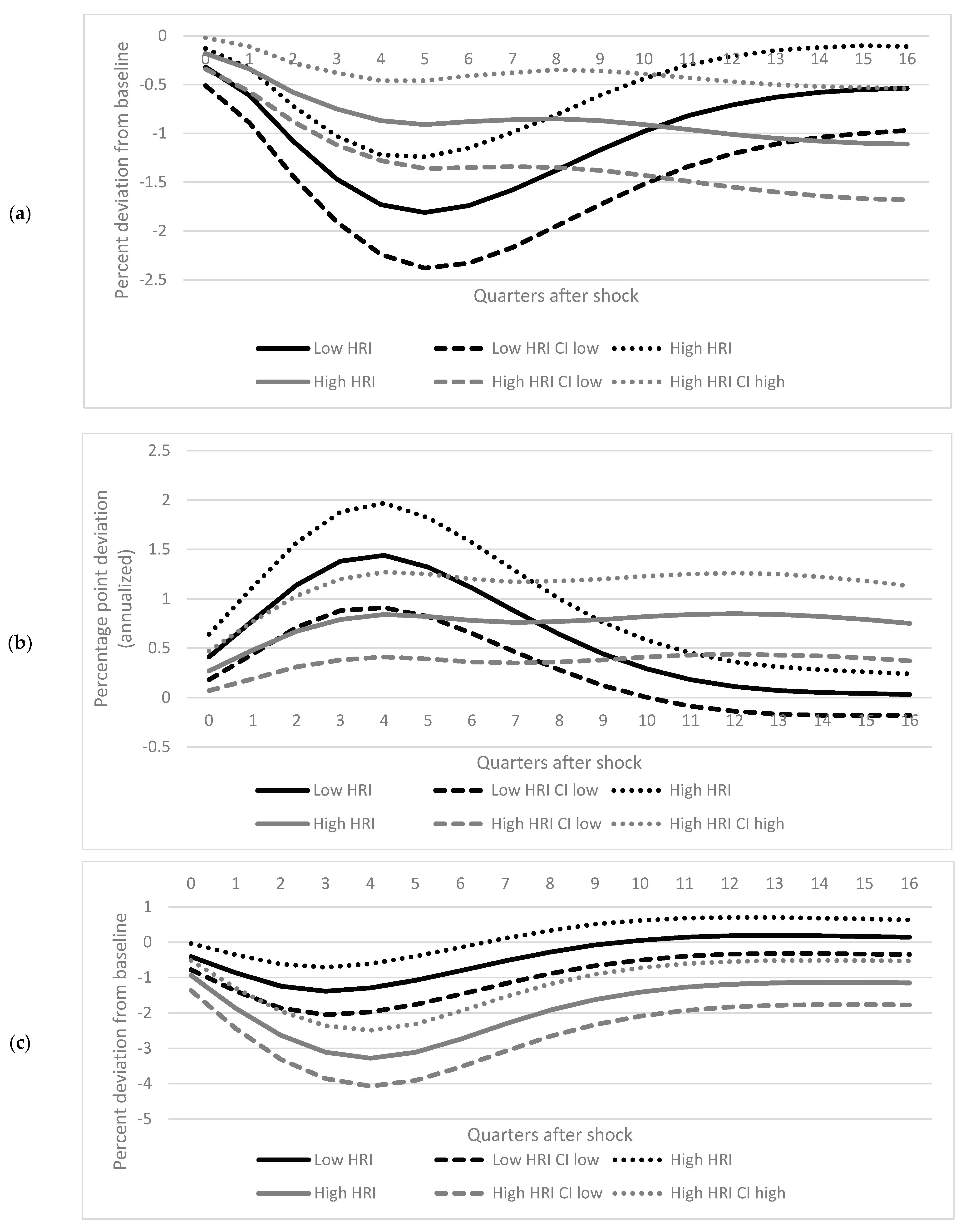
Figure 2 plots the impulse response functions derived from the local projections specified in
Section 3.3.2. The figure displays the dynamic response of (a) real GDP, (b) CPI inflation, and (c) international reserves to a one-standard-deviation adverse shock to the global financial cycle, estimated at horizons h = 0 to h = 16 quarters, for two counterfactual levels of HRI: the 10th percentile (HRI = 0.21, low hybridity) and the 90th percentile (HRI = 0.75, high hybridity). The shock is identified as the residual from the
Miranda-Agrippino and Rey (
2020) global financial cycle factor, and the specification controls for lagged GDP growth, inflation, the current account balance, and the HRI level itself.
The results reveal a pronounced divergence in dynamic responses that varies systematically with the projection horizon. For real GDP, the immediate impact (h = 0 to h = 4) of the global financial shock is substantially more negative for low-HRI economies: the point estimate of the cumulative output loss over the first year is approximately 1.8% of GDP for the low-HRI group versus 0.9% for the high-HRI group, a difference of roughly 90 basis points. This gap is statistically significant at the 5% level for horizons h = 2 through h = 6. The mechanism is consistent with the trilemma logic: economies with more flexible exchange rates and open capital accounts experience larger capital flow reversals and sharper exchange rate depreciations, which, in the presence of balance-sheet mismatches, exert a contractionary effect on output through the financial channel highlighted by
Bruno and Shin (
2015) and
Kearns and Patel (
2016). High-HRI economies, by contrast, deploy a combination of exchange rate smoothing, capital flow management, and retained monetary autonomy to cushion the external blow.
However, the impulse responses diverge again—this time in the opposite direction—at medium-term horizons. For h > 8, the high-HRI group exhibits a slower and less complete recovery of output. By h = 16, the cumulative output response for the high-HRI group is approximately −1.1% of GDP, compared to −0.6% for the low-HRI group. The difference is significant at the 10% level at h = 14 and h = 16. This reversal suggests that the mechanisms that absorb the immediate shock—intervention, segmentation, administrative measures—delay the relative price adjustment and resource reallocation necessary for a full recovery. This pattern is reminiscent of the “recessionary recovery” documented by
Calvo et al. (
2013) for economies that resisted real depreciation in the aftermath of the global financial crisis.
The inflation responses reinforce this interpretation. High-HRI economies exhibit a muted inflation response in the near term (h = 0–6), with the point estimate of the peak inflation impact roughly 40% smaller than that of the low-HRI group. At horizons h = 12–16, however, inflation in the high-HRI group remains elevated, while the low-HRI group converges back to baseline. The reserves path reinforces this pattern: high-HRI economies draw down reserves more aggressively in the first year (a cumulative decline of approximately 6% of the pre-shock stock) and exhibit incomplete replenishment thereafter.
4.5. Panel Threshold Regressions: The Resilience–Vulnerability Nexus
To test formally for the non-linearity suggested by the local projections,
Table 6 reports the results of the panel threshold regressions specified in
Section 3.3.3. The dependent variables are the same as in
Table 3. The threshold parameter τ is estimated endogenously via the concentrated least squares procedure of
Hansen (
1999), with a grid search over the interior 70% of the HRI distribution and bootstrap
p-values based on 1000 replications.
The threshold estimates are highly consistent across the three specifications, clustering tightly around τ ≈ 0.66. The null hypothesis of no threshold effect is rejected at the 1% level for output volatility (
p = 0.006) and at the 5% level for inflation volatility (
p = 0.011) and reserve adequacy (
p = 0.021). Below the threshold (HRI ≤ 0.661 for the output volatility specification), the HRI coefficient is negative and highly significant. In this regime, a one-standard-deviation increase in HRI is associated with a reduction in output volatility of roughly 4.2 basis points—more than double the magnitude estimated in the linear specification of
Table 3. Above the threshold, the sign of the HRI coefficient reverses for all three dependent variables, with statistical significance at the 10% level or better. The estimated threshold of τ ≈ 0.66 has a natural sample interpretation: in our panel, approximately 19% of country-quarter observations lie above this value.
Table 7 demonstrates the stability of the estimated threshold across alternative specifications. The threshold is consistently identifiable in all cases, with point estimates tightly clustered around the baseline value. Exclusion of the two most extreme high-HRI economies (Turkey and Argentina) yields τ = 0.648—within two percentage points of the baseline estimate—and the threshold remains statistically significant (bootstrap
p = 0.018). Restricting the sample to the pre-pandemic period (2005–2019) leaves τ unchanged at 0.661. Additional subgroup analyses, reported in
Section 3.4, confirm that the threshold is identifiable in all geographic and structural partitions, with point estimates ranging from 0.61 to 0.70 and the sign-reversal pattern preserved in every case. While the precise location of the threshold varies modestly with sample composition—as expected for any endogenous sample statistic—the qualitative finding of a resilience–vulnerability nexus is robust.
4.6. Robustness Tests
The sensitivity checks described in
Section 3.4 confirm the stability of the core findings. Replacing the DFM-extracted HRI with an equal-weighted average of the three sub-indices leaves the sign and significance of all baseline coefficients unchanged, though the magnitude attenuates modestly (the output volatility coefficient falls from −0.094 to −0.074,
p = 0.018). Excluding China and India reduces the sample size by approximately 6.7% but does not alter the threshold estimate materially; the re-estimated τ for output volatility is 0.659 (95% CI: [0.602, 0.711]). Replacing the continuous HRI with tercile dummies confirms the non-linearity: the coefficient on the high-hybridity tercile dummy is positive and significant for both volatility measures and negative for reserve adequacy. Restricting the sample to 2005–2019 leaves the threshold estimate unchanged (τ = 0.661) and slightly increases the magnitude of the high-regime coefficients, suggesting that the pandemic period is not the primary driver of the results. Finally, interacting HRI with alternative external shock measures—the VIX, the broad dollar index, and the
Gruss and Kebhaj (
2019) commodity price index—yields qualitatively identical impulse response patterns, confirming that the local projection results are not specific to the Miranda-Agrippino-Rey global financial cycle factor.
5. Discussion
5.1. Interpreting the Resilience–Vulnerability Nexus
The empirical findings presented in
Section 4 establish a non-linear relationship between regime hybridity and macroeconomic stability that we term the
resilience–vulnerability nexus. Below an endogenously estimated threshold of HRI ≈ 0.66, greater hybridity is associated with lower output and inflation volatility and with a short-run capacity to absorb adverse global financial shocks. Above this threshold, the relationship inverts: further hybridity amplifies volatility, erodes reserve adequacy, and impedes medium-term recovery from external disturbances. This section interprets these results through the lens of the theoretical and empirical literatures reviewed in
Section 2 and draws out their implications for the conduct of macroeconomic policy in emerging market economies.
The stabilizing effect observed in the low-to-moderate hybridity regime is consistent with three complementary mechanisms. The first is the
buffer function of managed exchange rates in economies with underdeveloped financial markets. As documented by
Ghosh et al. (
2015) and
Aizenman and Hausmann (
2000), shallow foreign exchange markets amplify the passthrough of capital flow reversals to the real economy via disorderly currency adjustments. Moderate intervention—captured in our ERH sub-index—smooths the adjustment path without suppressing the trend depreciation required to restore external balance. The second mechanism operates through the
monetary autonomy channel identified by
Klein and Shambaugh (
2015): partial capital account restrictions, particularly when applied to volatile portfolio flows, expand the scope for countercyclical interest rate policy. Our finding that the MONA sub-index contributes positively to the HRI’s stabilizing effect in the low regime is consistent with this interpretation. The third mechanism involves the
signaling function of reserve accumulation. As shown by
Aizenman and Lee (
2007) and
Obstfeld et al. (
2010), reserve buffers reduce the probability of self-fulfilling currency crises by altering market expectations about the central bank’s capacity to defend the currency; moderate hybridity, by justifying higher reserve holdings, may confer a similar confidence effect.
The reversal beyond the threshold, however, indicates that these mechanisms are subject to diminishing returns and eventual reversal. We propose two explanations for the vulnerability that emerges at high levels of hybridity, both of which find support in the data patterns reported above.
The first explanation draws on the concept of
delayed adjustment costs. High-HRI regimes rely on administrative measures—multiple exchange rate practices, mandatory repatriation and conversion requirements, quantitative limits on capital flows—to suppress the manifestation of underlying imbalances. While these measures are effective at muting near-term volatility, they impede the relative price signals that guide resource reallocation following an external shock. The slow recovery of output in high-HRI economies documented in our local projections is symptomatic of this mechanism: the real depreciation that would, in a more flexible regime, stimulate net exports and investment in the tradable sector is either attenuated or delayed. Over time, the cumulative misalignment of the real exchange rate erodes competitiveness and generates a growing overhang of adjustment that must eventually be resolved (
Edwards, 1989;
Rodrik, 2008).
The second explanation concerns the
fiscal and quasi-fiscal costs of sustaining high hybridity. Exchange rate stabilization in the presence of persistent depreciation pressure requires ongoing intervention, which depletes reserves and, in the limit, forces the central bank into loss-making forward operations or implicit exchange rate guarantees. The deterioration of reserve adequacy above the HRI threshold, evident in column (3) of
Table 6, is a direct manifestation of this cost. Moreover, segmented capital accounts create arbitrage opportunities between the official and parallel exchange markets. The associated rents generate distributive conflicts and rent-seeking behavior that compound the efficiency losses from the initial distortion (
Bhagwati, 1978;
Krueger, 1974). The positive coefficient on HRI in the high-regime inflation volatility regression is consistent with the monetization of these quasi-fiscal losses or with the inflationary pass-through from parallel market premia to administered prices.
Taken together, these mechanisms delineate an optimal range of regime hybridity. The lower bound of this range is defined by the minimum degree of exchange rate management and capital flow oversight required to insulate the real economy from the excess volatility of global financial markets—a requirement that varies cross-sectionally with financial depth, trade structure, and institutional quality. The upper bound is defined by the point at which the cumulative costs of administrative intervention and delayed adjustment begin to outweigh the short-run stabilization benefits. Our threshold estimate of τ ≈ 0.66 provides an empirical calibration of this upper bound for the average emerging market economy over the 2005–2024 period.
5.2. Implications for the Post-2022 Geopolitical Landscape
Before proceeding, a clarifying note is warranted. The discussion that follows treats sanctions as an exogenous shock to the capital account. It does not evaluate the geopolitical merits of the sanctions themselves or of the targeted countries’ responses. The empirical patterns described are correlations; causal claims about the welfare consequences of sanctions per se are beyond the scope of this paper.
The structural increase in regime hybridity documented in
Section 4.1—a rise in mean HRI from 0.421 to 0.524 between the pre- and post-2014 sub-periods, with a further acceleration after 2022—must be understood in the context of the geopolitical reordering of the international monetary system. The freezing of Russian central bank reserves in 2022 and the exclusion of major Russian banks from the SWIFT messaging network represented a qualitative escalation in the use of financial infrastructure as a tool of statecraft (
Eichengreen, 2022;
Bernanke, 2016). The signal sent to reserve managers in other large emerging market economies was unambiguous: the traditional assumption that reserve assets held in G7 sovereign debt are unconditionally safe from political interference is no longer tenable (
Aiyar et al., 2023).
Sutyrin and Korgun (
2026) provide a comprehensive assessment of the consequences of this fragmentation for non-sanctioning third countries, documenting the transmission channels—trade diversion, supply chain reconfiguration, and the bifurcation of payment systems—through which geopolitical shocks propagate to the broader emerging market universe. Their finding that fragmentation imposes measurable costs even on economies outside the direct sanction perimeter underscores the systemic nature of the hybridity acceleration documented in our sample.
The policy response from several systemically important EMEs has been to accelerate precisely the form of regime hybridity that our HRI is designed to measure. The People’s Bank of China has expanded its bilateral swap line network to over 40 counterparties and promoted the Cross-Border Interbank Payment System (CIPS) as an alternative to SWIFT. The Reserve Bank of India has liberalized the use of the rupee for international trade settlement and encouraged the invoicing of commodity imports in domestic currency. The Central Bank of the Republic of Turkey has pursued a strategy of “liraization” involving mandatory conversion of foreign currency deposits and administrative controls on corporate FX demand. Brazil and Indonesia have deepened their local currency swap arrangements with major trading partners. Each of these measures raises the HRI by simultaneously increasing exchange rate hybridity (through managed internationalization of the domestic currency), capital account segmentation (through differentiated treatment of resident and non-resident transactions and friend-shored financial relationships), and measured monetary autonomy (through reduced mechanical dependence on the US dollar transmission channel).
Our results offer a cautionary perspective on these developments. The threshold analysis implies that the stabilizing benefits of such measures are likely to be substantial for economies that begin from a position of low-to-moderate hybridity and implement them incrementally. For economies that are already operating near or above the HRI threshold—a category that, by our estimates, includes several of the most active adopters of de-dollarization and payment system diversification strategies—further movement toward the interior of the trilemma triangle risks pushing the regime into the zone of increasing vulnerability. The post-2022 Russian experience is illustrative in this regard, though extreme. The sharp increase in Russian HRI from 0.537 to 0.818 between the pre- and post-sanction periods was accompanied by an initial stabilization of the exchange rate and containment of inflation during 2022:Q2–Q3. By 2023, however, the accumulated costs of segmentation became apparent in the form of a persistent parallel market premium, declining reserve adequacy net of frozen assets, and elevated inflation volatility driven by the passthrough from the parallel exchange rate to consumer prices.
The broader lesson for policymakers in non-sanctioned EMEs is that the incremental hybridity induced by de-risking and payment system diversification strategies should be evaluated against a country-specific threshold, not pursued as an open-ended objective. We emphasize that the evidence presented in this section is correlational in nature. The post-2022 sanction episodes provide a natural laboratory for observing the macroeconomic correlates of large, externally driven increases in the HRI, but the analysis does not establish a causal link from sanctions to hybridity, nor does it evaluate the welfare consequences of sanctions themselves. Our HRI provides a monitoring tool for this purpose, and the methodology for its construction can be replicated by central bank research departments using publicly available data.
5.3. The HRI as a Component of Early Warning Systems
The predictive content of the HRI with respect to future macroeconomic instability suggests a natural application to the early warning systems (EWS) operated by central banks and international financial institutions. The existing generation of EWS models focuses predominantly on binary crisis prediction—currency crises, sovereign defaults, systemic banking distress—using leading indicators such as credit gaps, current account deficits, and reserve cover ratios (
Kaminsky et al., 1998;
Frankel & Saravelos, 2012). The HRI offers a complementary, continuous signal that captures the gradual accumulation of latent vulnerability in the policy configuration itself, before it manifests in standard crisis indicators.
We propose that the HRI, and in particular its position relative to the estimated threshold, be incorporated into the risk assessment frameworks of emerging market central banks as a third-generation vulnerability indicator. First-generation indicators (reserves, external debt ratios) capture stock vulnerabilities; second-generation indicators (credit gaps, capital flow volatility) capture flow vulnerabilities; the HRI captures a regime vulnerability—the extent to which the prevailing policy configuration itself constrains the economy’s capacity to adjust to future shocks without a discontinuous regime change. An HRI reading above 0.60, approaching the threshold, would warrant heightened scrutiny of the fiscal and financial sector implications of continued intervention and segmentation, even if conventional vulnerability indicators remain benign. An HRI reading above the threshold, sustained for more than four quarters, would, on the basis of our results, constitute a strong signal for a gradual recalibration of the policy mix toward one of the trilemma corners—either greater exchange rate flexibility or tighter capital account restrictions—to reduce the accumulation of structural imbalances.
We emphasize, however, three important caveats to the operational use of the HRI in an EWS context. First, the threshold estimate of τ ≈ 0.66 is a sample average; the appropriate threshold for any given country will depend on structural characteristics—financial depth, trade openness, institutional quality, the currency composition of external liabilities—that are not fully captured in our panel specification. Country-specific threshold estimation, using longer time series and Bayesian techniques to incorporate prior information, is a natural extension. Second, the HRI is a lagging indicator of policy choices, not an exogenous driver of vulnerability. Related work on institutional thresholds reinforces this caution.
Beirne and Panthi (
2025) identify critical levels of institutional quality beyond which macrofinancial resilience improves markedly in Asian economies. This suggests that any operational use of the HRI in early warning systems must account for the institutional context within which a given HRI value is observed. Similarly,
Adam et al. (
2026) demonstrate that institutional quality conditions the effectiveness of policy interventions in BRICS economies, implying that the HRI threshold—estimated here as a sample average—likely varies with country-specific governance capacity. Its predictive power derives from the fact that it summarizes the cumulative outcome of interventions that have already taken place; as such, it is best used in conjunction with forward-looking indicators of intervention intensity and quasi-fiscal costs. Third, the HRI does not distinguish between hybridity that arises from deliberate policy choices and hybridity that is imposed by external constraints, such as financial sanctions. The welfare implications of these two sources of hybridity are likely to differ, and the appropriate policy response will correspondingly diverge.
5.4. Policy Recommendations
On the basis of the foregoing analysis, we advance four policy recommendations for emerging market central banks and the international financial institutions that advise them.
First, regime hybridity should be recognized as a structural feature of the post-GFC and post-2022 international monetary landscape, not as a transitional aberration. The secular increase in HRI documented in this study and its acceleration in the context of geopolitical fragmentation suggest that interior positions within the trilemma triangle are an equilibrium response to persistent features of the global financial system: the dominance of the global financial cycle, the incompleteness of international risk-sharing, and the geopolitical fragmentation of financial infrastructure. Policy advice predicated on the desirability of rapid convergence to corner solutions—in particular, the combination of a pure float and a fully open capital account—is inconsistent with the revealed preference of a large and increasing share of the emerging market universe and, for economies below the HRI threshold, is not supported by the evidence on macroeconomic stability.
Second, the HRI should be monitored as a summary statistic of policy configuration and incorporate it into internal risk assessments. The construction of the HRI from publicly available data is straightforward and can be automated. We recommend that central banks produce a quarterly HRI estimate for their own economy, benchmarked against regional and income-group peers, and that the IMF’s Article IV surveillance process consider the HRI trajectory as part of its external sector assessment. Particular attention should be paid to sustained increases in HRI that are not accompanied by offsetting improvements in fiscal positions or financial sector resilience.
Third, the HRI threshold should be treated as a risk boundary that triggers a structured review of the policy mix. The evidence of a non-linear relationship between hybridity and vulnerability implies that there is a limit to the insurance that can be purchased through managed exchange rates and segmented capital accounts. When the HRI approaches the threshold, policymakers should undertake a comprehensive assessment of the costs of continued intervention—including the quasi-fiscal costs of sterilization, the efficiency losses from parallel exchange markets, and the medium-term competitiveness implications of real exchange rate misalignment—and weigh these against the short-run stabilization benefits. The objective should not be a mechanical reduction in the HRI but a deliberate recalibration that reduces the most distortionary elements of the policy mix while preserving the elements that contribute most to short-run resilience.
Fourth, for economies subject to external financial sanctions, contingency plans for managing the transition from moderate to high hybridity should be developed. The Russian experience after 2022 demonstrates that sanctions can force a discontinuous jump in the HRI that pushes the economy into the high-vulnerability regime regardless of the authorities’ preferences. For economies that face a non-negligible risk of such an event, prior institutional preparation—including the development of alternative payment channels, the diversification of reserve assets, and the strengthening of domestic financial intermediation capacity—can reduce the costs of operating above the threshold should sanctions materialize. This recommendation echoes the emphasis in recent IMF work on “geoeconomic fragmentation preparedness” (
Gourinchas, 2023;
Aiyar et al., 2023) while adding the specific insight that preparedness should aim to contain the increase in hybridity to the minimum necessary to preserve essential macroeconomic functions, rather than to maximize policy autonomy irrespective of the structural costs.
5.5. Limitations and Future Research
The present study is subject to several limitations that define a corresponding agenda for future research. First, our empirical analysis is reduced-form in nature and does not separately identify the structural parameters governing the costs and benefits of hybridity. A structural estimation of the model sketched in the conceptual discussion—in which the HRI is the endogenous outcome of a central bank loss function incorporating external volatility, adjustment costs, and political economy constraints—would permit counterfactual welfare analysis and the derivation of optimal hybridity paths conditional on country characteristics. The development of such a structural model, and its estimation on the panel constructed here, is a priority for our ongoing research.
Second, the HRI aggregates the three margins of the trilemma into a single scalar index. While this aggregation is analytically convenient and empirically supported by the factor structure of the data, it potentially obscures heterogeneity in the composition of hybridity that may be consequential for macroeconomic outcomes. Two economies with the same HRI but different combinations of ERH, CAS, and MONA may face distinct trade-offs and vulnerabilities. Disaggregated analysis that examines the interactions among the three sub-indices—particularly the complementarity or substitutability of exchange rate management and capital account restrictions—would enrich the policy implications of the framework. Moreover, the conditioning role of institutional quality—documented by
Le et al. (
2025) in the context of fiscal policy effectiveness in emerging markets and by
Kumar et al. (
2025) for governance–sustainability linkages in BRICS economies—likely extends to the macroeconomic consequences of regime hybridity; incorporating institutional variables into the threshold estimation is a natural next step.
Third, our sample period, though extending to 2024:Q4, captures only the first three years of the post-2022 geopolitical fragmentation episode. The long-run consequences of the structural changes underway—the potential emergence of a multipolar reserve currency system, the regionalization of payment infrastructures, the reconfiguration of global supply chains—will not be fully visible for another decade. The HRI time series constructed here provides a baseline for tracking these developments, and its regular updating will yield increasingly informative estimates of the resilience–vulnerability threshold.
Fourth, the external validity of our findings is limited to the emerging market economies included in the sample. The applicability of the HRI framework to low-income countries, which face distinct constraints related to aid dependence, limited market access, and shallow domestic financial systems, remains to be investigated. Similarly, the behavior of the HRI in advanced economies—several of which have exhibited their own forms of regime hybridity in the form of large-scale asset purchase programs that blur the boundary between monetary and exchange rate policy—poses an intriguing question that lies beyond the scope of this study.
6. Conclusions
This study set out to investigate a puzzle that has become increasingly salient in the international macroeconomic landscape: the persistent, and by our measures growing, tendency of emerging market economies to operate policy configurations that defy the categorical logic of the classical monetary trilemma. The empirical results presented here establish four principal findings that, taken together, advance the understanding of this phenomenon beyond the existing literature.
First, we demonstrated that regime hybridity—the simultaneous pursuit of managed exchange rate flexibility, partial capital account openness, and meaningful monetary autonomy—is not an exceptional or transitional state but a central tendency of the emerging market policy universe. The Hybridity of Regime Index (HRI) constructed in this paper, extracted via a dynamic factor model from sub-indices capturing exchange rate hybridity, capital account segmentation, and monetary autonomy, averages 0.474 across 30 economies and 20 years, with a statistically and economically significant upward trend between the pre-2014 and post-2014 periods.
Second, we provided evidence that moderate regime hybridity serves a genuine stabilizing function. In the baseline panel regressions, higher HRI is associated with lower output and inflation volatility, and the local projections reveal that high-HRI economies absorb the immediate impact of global financial shocks with significantly less output contraction than their low-HRI counterparts. This finding rationalizes the revealed preference of emerging market policymakers for hybrid arrangements: they are a pragmatic adaptation to the structural volatility of the international financial system, not a deviation from optimal policy.
Third, and most critically, we identified a non-linear threshold in the relationship between hybridity and stability. Panel threshold regressions estimated an endogenous HRI threshold of approximately 0.66, below which the stabilizing effects dominate and above which the relationship inverts: further hybridity amplifies output and inflation volatility and erodes reserve adequacy. This resilience–vulnerability nexus, which, to our knowledge, has not been previously documented in the empirical trilemma literature, formalizes the intuitive notion that the institutional adaptations that enable trilemma violations simultaneously generate hidden fragility when pursued beyond a certain point.
Fourth, we showed that the post-2022 geopolitical fragmentation of the international monetary system has accelerated the pre-existing trend toward greater hybridity, with the HRI of sanction-affected economies exhibiting discontinuous upward jumps. Our results imply that the policy responses to this fragmentation—de-dollarization initiatives, payment system diversification, and the expansion of bilateral swap arrangements—while individually rational, carry the aggregate risk of pushing several systemically important emerging market economies toward or beyond the estimated vulnerability threshold.
The contribution of this study is primarily empirical and methodological. The HRI provides a new, continuous metric for measuring the distance between observed policy configurations and the corner solutions of the trilemma, and the threshold analysis offers a framework for identifying the point at which the costs of hybridity begin to outweigh its benefits. These tools are intended for use by central bank research departments and international financial institutions in monitoring the evolution of policy regimes and assessing their implications for macroeconomic stability.
We conclude by underscoring the limits of the analysis and the most pressing directions for further work. The reduced-form nature of our empirical strategy leaves the structural mechanisms underlying the resilience–vulnerability nexus incompletely identified. A structural estimation that jointly models the central bank’s policy choice and the resulting macroeconomic dynamics—and that allows the HRI threshold to vary with country characteristics such as financial depth, institutional quality, and the currency composition of external liabilities—would substantially enrich the normative implications of the framework. The extension of the HRI methodology to low-income countries and to advanced economies, where unconventional monetary policies have generated their own forms of regime hybridity, would test the generalizability of our findings. And the continued updating of the HRI panel as the post-2022 geopolitical reordering unfolds will provide an increasingly informative empirical basis for assessing whether the international monetary system is converging toward a new equilibrium of sustained, moderate hybridity or toward a more fragmented configuration in which the costs documented in this paper become pervasive.
The classical trilemma remains the indispensable starting point for any analysis of open-economy macroeconomic policy. But the evidence assembled here suggests that the task is no longer to classify economies by which vertex of the triangle they inhabit, but to understand the dynamics that govern their movement through its interior, and to identify, before it is reached, the boundary where the interior becomes a source of vulnerability.