Article

Islamic Bankers’ Niyyah Toward Green Sukuk for Attaining Sustainable Finance: Evidence from Bangladesh


by
Mohammad Ali Ashraf
*,
Mir Rafiul Islam Ratul
and
Md. Kaium Hossain
School of Business and Economics, United International University, Dhaka 1212, Bangladesh
*
Author to whom correspondence should be addressed.
J. Risk Financial Manag. 2026, 19(2), 159; https://doi.org/10.3390/jrfm19020159
Submission received: 26 December 2025 / Revised: 8 February 2026 / Accepted: 13 February 2026 / Published: 20 February 2026
(This article belongs to the Special Issue Sustainable Finance and Corporate Responsibility)

Abstract

This study investigates the factors associated with niyyah (worshipful intention) of Islamic bankers toward issuing green sukuk (G-sukuk) investment instruments. In particular, it analyses how bankers’ empathy, moral and ethical responsibilities, and self-efficacy are related with environmental awareness, perceived social support, and green tech innovation, respectively. These factors then predicted bankers’ niyyah toward issuing G-sukuk. The present research employed the theory of bounded rational planned behavior as its theoretical foundation. Data were collected from 390 bankers employed in different Islamic banks. Random sampling technique was employed for this cross-sectional study and for analyzing data, this study applied structural equation modeling. Findings indicate that all predictors are statistically significant and positively associated with bankers’ niyyah toward G-sukuk for ensuring sustainable finance. Furthermore, G-sukuk initiatives can help to lower the carbon emissions and other harmful substances, which would improve overall environmental sustainability and ecological contexts related to SDG-13. There is limited empirical evidence available on the G-sukuk perspective in Bangladesh. This study will provide practical insights for the bankers and policymakers.

1. Introduction

Over the past several years, climate change mitigation has emerged as a central issue of international development initiatives, indicating the perilous social and economic effects that climate change poses around the world (Mahomed & Mahbot, 2024; Salingan, 2021). Although Bangladesh is not a prominent contributor to the international emissions scale, Bangladesh is largely susceptible to the detrimental effects of change (World Bank Group, 2022). As of 2021, total greenhouse gas (GHG) emissions in Bangladesh amounted to 169.06 million metric tons of greenhouse gases (GHGs) (representing 0.09 per cent of total emissions worldwide) and are estimated to increase to about 409.41 million tons by 2030 (Illias, 2021). The energy sector is the largest contributor with 93.09 tons (55.07%). Agriculture, livestock and forestry contribute 27.35%, amounting to 46.24 metric tons; cement and fertilizer contribute 3.32% or 5.6 metric tons; and municipal solid waste and wastewater contribute 14.26%, which is equivalent to 24.11 metric tons (Illias, 2021).
If climate change is not properly addressed in time, Bangladesh is likely to face significant rises in average temperature, followed by deterioration in the availability of water in most territories of the country. Without having appropriate mitigation and adaptation, Bangladesh faces a growing risk of higher burdens from waterborne diseases and other health problems due to climate change. As the world’s seventh most climate risk-affected nation, with 185 extreme events recorded and 0.38 fatalities per 100,000 residents over the past two decades, Bangladesh must adapt fast to climate change. At the same time, it must take the initiative in accessing cleaner, more efficient technologies, which induce development, is associated with co-benefits in health, air and water quality, and limit GHGs emissions. The report also revealed that climate change will be most stringent for poor and vulnerable people. Average tropical cyclones cost Bangladesh around USD 1 billion per year. By 2050, one-third of agricultural GDP could be lost, and 13 million people could become internal climate refugees, as the report says. In the case of a severe flooding, GDP could fall by as much as 9 percent (World Bank Group, 2022).
In fact, the country is already facing a monumental challenge of meeting the existing financial gap by mobilizing the conventional funds and mechanisms to achieve the Sustainable Development Goals (SDGs) and the Nationally Determined Contributions (NDCs). In this precarious condition, Bangladesh needs to pursue alternative financing mechanisms and instruments. In this respect, Bangladesh has an opportunity to adopt Islamic finance grounded in Islamic ethical law, which has emerged as a promising alternative financing avenue for sustainable growth and development (Mishrif & Balushi, 2018). In line with this development, Islamic finance can share its ideological treasure trove, enriched with ethical or green finance, which in itself has become a vital development finance counterpart (Mishrif & Balushi, 2018; Endri et al., 2022, Abdullah & Keshminder, 2022).
G-sukuk is such a specific instrument that merges the premises of Islamic law and green finance initiatives. In addition to that, it is also being recognized as a viable financial tool for attaining SDGs globally. On the one hand, it can fulfill the purpose of financing environmental projects and, on the other hand, it can also provide investors with a financial return (Abdullah & Keshminder, 2022). Based on the situation of existing environmental degradation, the gap in sustainable development financing, and the Muslim majority demographic feature of the country, G-sukuk can be a potential tool for addressing climate change mitigation and attaining a successful transition to a green economy.
Acknowledging this potential, the first sovereign investment Sukuk was issued in Bangladesh to raise funds for a project titled, “Safe Water Supply for the Whole Country” on 28 December 2020. The first Sukuk was oversubscribed by almost four times, which indicates that investing in such Sukuk could be a new prospective route for the financial markets of Bangladesh. Similar to the rising share of Islamic banking in Bangladesh, the overwhelming demand for this initial Sukuk showed the interest of investors in Islamic financial products in the capital market. Consequently, the issuance of these Sukuks enables the Bangladesh government to investigate financing options for projects that comply with Shariah.
Moreover, the Islamic banks are facing adverse effects from the substantial excess liquidity they currently hold, as they are unable to invest in government securities that yield interest due to non-Shariah-compliance concerns (Mahomed & Mahbot, 2024). Although it is true that G-sukuk incurs some cost of fund efficiency and higher non-performing sequence in the green financing sector, the recently released Sukuk provides an opportunity to invest surplus liquid funds in these Shariah-compliant securities. Hence, it is evident that there is a huge potential to deliver further scopes of developing similar sorts of Sukuk in the country, considering the huge excess liquidity in the Islamic banking sector.
The word “sukuk” is a plural term derived from the Arabic word “sakk”, which is derived from another plural term “sikāk”. Sikāk is a procedural term of early Islamic financial, commercial and legal usage, present in Persian, through a standard change of sound, as čak, meaning “document or contract of sale” (Bacha & Mirakhor, 2018). In fact, the sakk has a long history. During the Umayyad period, the sakk was used as a payment tool to compensate government officials such as the army and bureaucrats. It worked as a trustee certificate that authorized the holders to redeem a specific and pre-determined number of commodities from the state treasury at a particular time (Abdullah & Keshminder, 2022).
As a matter of fact, there is no universal definition of sukuk. According to the Accounting and Auditing Organization for Islamic Financial Institutions (AAOIFIs), sukuk is defined as “certificates of equal value representing undivided shares in ownership of tangible assets, usufruct and services or (in the ownership of) the assets of particular projects or special investment activity (AAOIFI, 2017). Sukuk are “an interest-free bond that generates returns to investors without infringing the principles of Shariah (Islamic law), which prohibits the payment of interest. It is a Shariah-compliant security backed by a specific pool of underlying assets” (Bacha & Mirakhor, 2018). The Islamic Financial Services Board (IFSB) defined sukuk as “certificates”, with each sakk representing a proportional undivided ownership right in tangible assets, or a pool of predominantly tangible assets, or a business venture. These assets may be in a specific project or investment activity, in accordance with Shariah rules and principles (Al-Amine, 2011). In addition, the Securities Commission of Malaysia (SCM) defined sukuk as “documents or certificates, which represent the value of an asset” (Paldi, 2014). The G-sukuk Working Group (GSWG), a combination of the Climate Bonds Initiative, the Clean Energy Business Council, and the Gulf Bond and Sukuk Association, defined sukuk as: “Shariah-compliant investments in renewable energy and other environmental assets. They address Shariah concern for protecting the environment” (Habibullah & Hassan, 2023).
Notably, sukuk must be a Shariah–compliant security used for halal business activities out of which the sukuk holders are entitled to derive non-fixed revenues as profit or loss based on the underlying assets or projects (Alam et al., 2016). Thus, G-sukuk appears to be a combination of the properties of Islamic financial tools with an eco-friendly activity, which is termed G-sukuk. The main purpose of G-sukuk is to achieve sustainable environmental and climate-friendly development projects (Mahomed & Mahbot, 2024; Endri et al., 2022). In fact, it is a flexible Islamic financial instrument capable of supporting both eco-friendly mitigation and adaptation initiatives (Panda, 2017).
Indonesia has shown leadership through issuances of the world’s first sovereign G-sukuk and the world’s first retail G-sukuk. Malaysia, KSA, and UAE also followed, issuing G-sukuk in their respective countries to address precarious environmental problems (Mahomed & Mahbot, 2024; Shalhoob, 2023). In Bangladesh, the first G-sukuk amounting USD 283 million was issued on 8 July 2021 by an export–import company (Financial Express, 2022). The Sustainable Finance Department of the Central Bank of Bangladesh announced a Policy on Green Bond Financing for Banks and Financial Institutions on 18 September 2022. Hence, the G-sukuk market in Bangladesh is still at its very initial phase.
G-sukuk directly supports environmentally friendly project financing and climate change mitigation. Countries such as Malaysia and Indonesia showed that, to achieve the Sustainable Development Goals, specifically SDG-13 (Climate Action), G-sukuk played a vital role (Ziarmal, 2025). Both countries achieved significant success in using G-sukuk to support the achievement of the SDGs and to reduce carbon dioxide (Abubakar & Handayani, 2020). Recently, another empirical study was conducted in Indonesia, where the authors investigated the effectiveness of G-sukuk. The study suggests that Indonesia has emerged as one the global leaders in terms of green bond issuance among the developing countries. The study mainly focused on two factors: bond characteristics and macroeconomic factors. All three bond characteristic factors (coupon rate, credit rating, and maturity) show significance over the issuance of green bonds in Indonesia (Endri et al., 2025). Moreover, Indonesia was the first country in the world to issue global green sukuk in 2018. As of 2025, they are the world’s largest G-sukuk issuer, with USD 7.7 billion. Shariah-based G-sukuk has been implemented there in the financial development projects and to achieve sustainability (Endri et al., 2025).
Several studies have been conducted on Islamic bankers’ perspective on different issues (Rianti & Syamlan, 2022; Syamlan & Easti, 2020), but there has been a crucial dearth of studies which investigate different relationships conjectured in the present research framework, based on the theoretical background. Therefore, the present study is important to fill up the extant research gap in the field of G-sukuk and Islamic bankers’ perspectives.
Empirical evidence evaluating the behavioral determinants of Islamic bankers niyyah towards G-sukuk is still scarce. Against this backdrop, the present study aims to examine the intention of Islamic bankers to provide sustainable development funds for different financial projects with green sukuk. In particular, it analyzes how bankers’ empathy, moral and ethical responsibilities, and self-efficacy are impacted by environmental awareness, perceived social support, and green tech innovation, respectively. Furthermore, it investigates how these factors then are associated with bankers’ niyyah toward issuing G-sukuk for catering sustainable green finance in Bangladesh. A prior study from Bangladesh shows the pro-environmental green banking intentions of bankers within the conventional banking system (Ashraf, 2024). The current study examines the G-sukuk intentions of Islamic bankers within a shariah-compliant Islamic capital market instrument and sustainable finance perspective, following shariah principles. The Islamic banking sector is rapidly growing in Bangladesh. However, the sector is still underexplored in terms of the G-sukuk literature in Bangladesh’s context. In achieving these aims, at first, the present research employs the theory of bounded rational planned behavior (TBRPB) as its theoretical framework. The TBRPB is extended from the theory of planned behavior (TPB) (Ajzen, 1991) by including Herbert Simon’s bounded rationality to the model which replaces intention from the TPB framework. Secondly, this paper conceptualizes behavioral intention as niyyah, a worshipful intention. Finally, by implementing moral and ethical obligations, self-efficacy, empathy, environmental awareness, perceived social support, and green tech innovation as distinct constructs, the research shows Islamic bankers’ niyyah towards attaining sustainable and environmental finance. For data analysis, this study applies structural equation modeling (SEM) through smart-PLS.
The structure of the paper is as follows. Section 1 presents an overview of the G-sukuk alongside its definition. Section 2 elaborates the theoretical underpinning, reviews the previous literature, and outlines the research framework and hypothesis development. Section 3 provides the methodology. Section 4 outlines the results of this study. Finally, Section 5 presents the discussion, followed by the conclusions, along with implications, limitations, and directions for further research.

2. Literature Review and Hypotheses Development

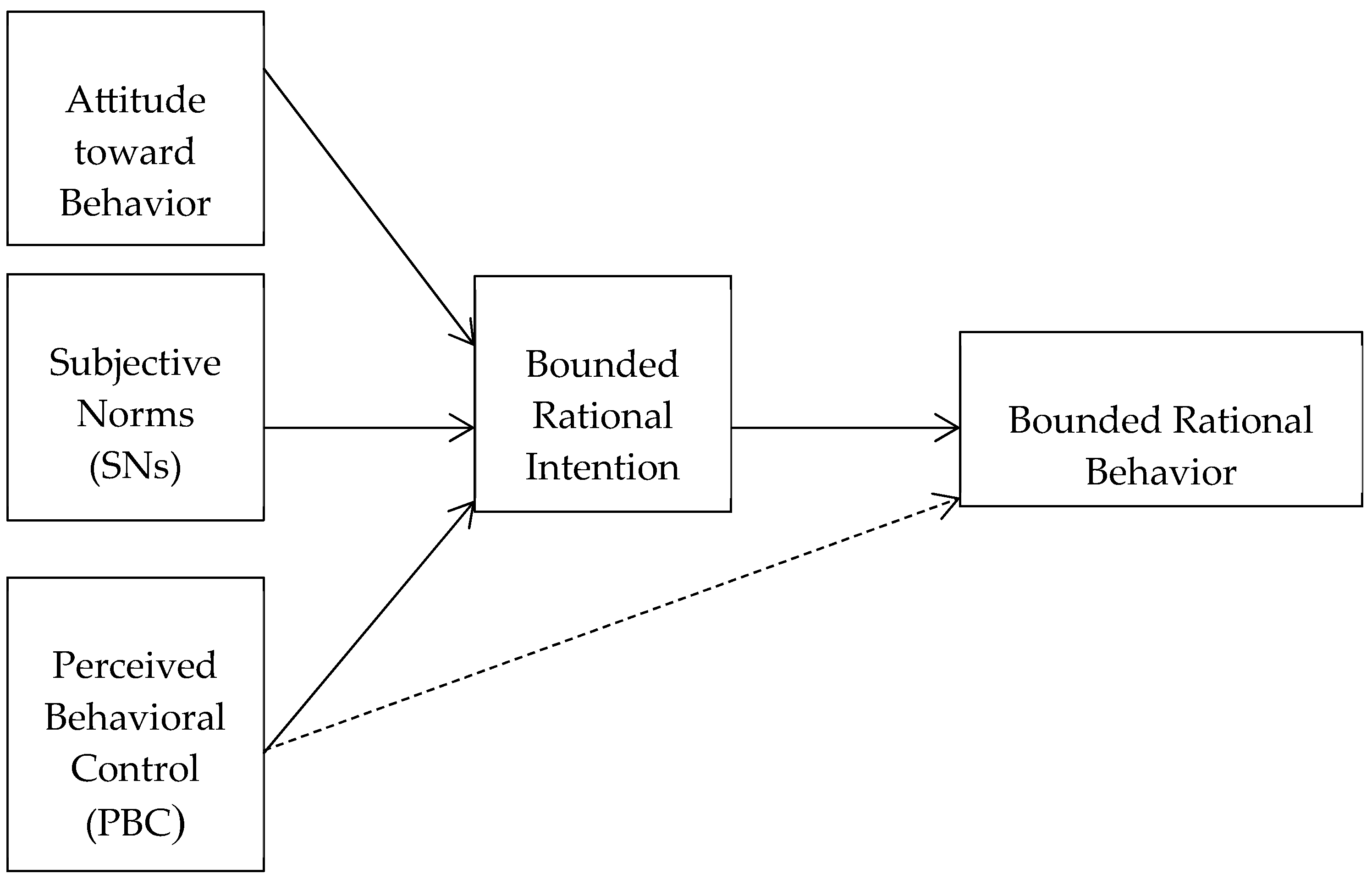
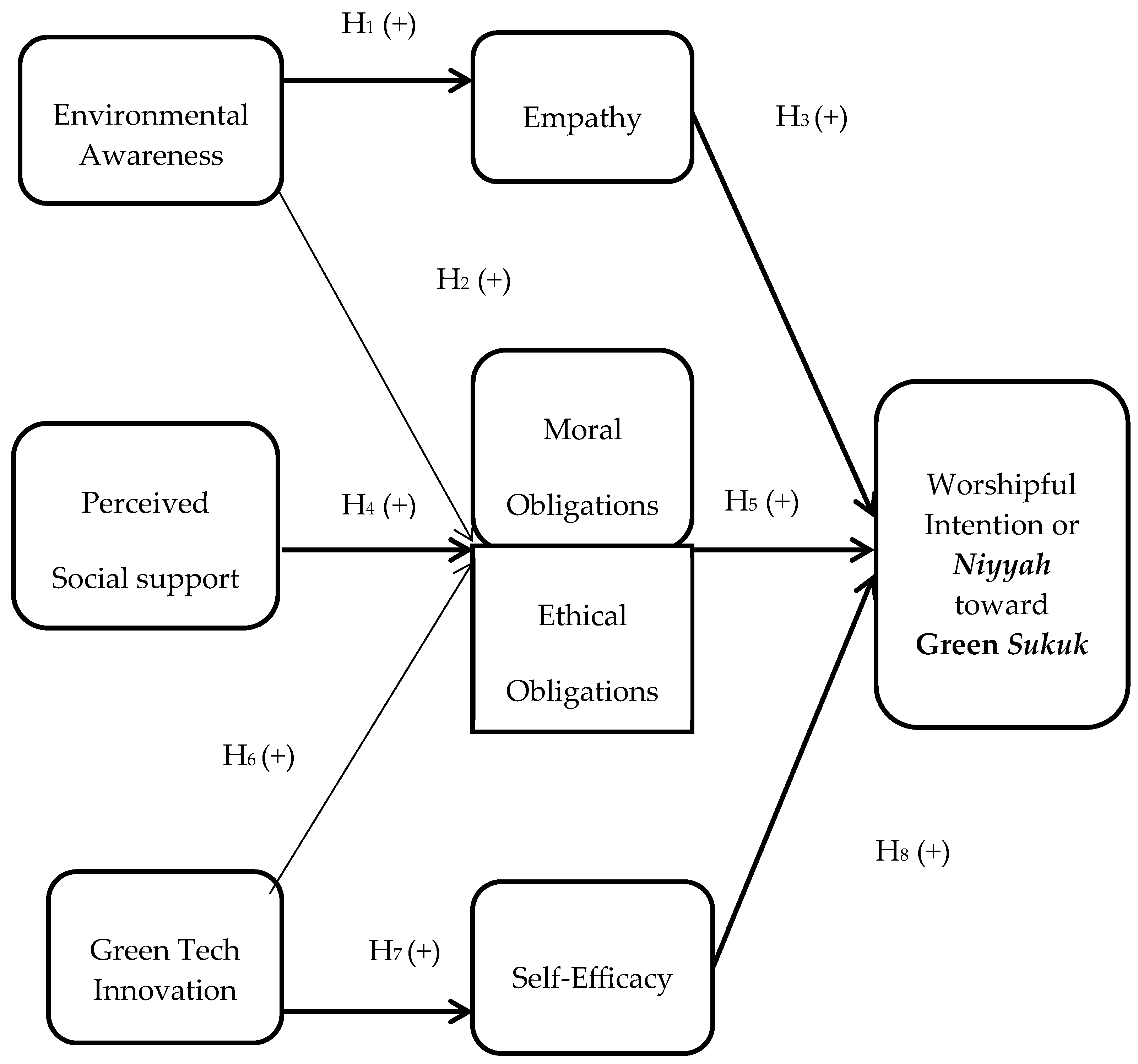
This study used the theory of bounded rational planned behavior (TBRPB; Figure 1) for formulating the research framework presented in Figure 2. It is the authors’ conviction that the TBRPB can provide a robust theoretical underpinning for inspecting this type of phenomenon, employing a research model to investigate if empathy is really linked to the worshipful intention (niyyah) to engage in a specific conduct. Based on the theoretical model, beliefs about how significant individuals ponder the environment and G-sukuk might also be associated with Islamic bankers’ moral and ethical obligations and their niyyah to initiate G-sukuk. Lastly, beliefs about availing the required green tech innovations and resources might be connected to bankers’ self-efficacy to take part in initiating G-sukuk.
Since the 1950s, a new understanding of rationality and its limitations has emerged, driven by the recognition that numerous factors significantly predict sound judgment, reasoning, and decision-making within constrained internal and external contexts (Wildfeuer, 2024). In this context, American economist Herbert Simon (1916–2001) introduced the notion of “bounded” or “limited” rationality. Given the significant restrictions in human cognitive and computational abilities, knowledge is always inherently incomplete, and time is limited. These cognitive characteristics result in behavioral outcomes that profoundly affect decision-making (Wildfeuer, 2024). As a subject that crosses disciplinary boundaries, the idea of bounded rationality has recently gained considerable attention in the social sciences (Wildfeuer, 2024). Thus, an important contribution of this paper is that it has incorporated the concept of bounded rationality in its research framework, which gives rise to more pragmatic results in the present investigation.
Additionally, there are some institutional, informational, and regulatory constraints regarding green sukuk adoption (Seth & Pathan, 2025; Wan Zahari, 2025). Under such constraints, the decision-making process of bankers cannot be fully interpreted by the theory of planned behavior (TPB) (Ajzen, 1991) because the TPB assumes comparatively informed, practical, and generally more controllable behavioral intention. However, green sukuk decisions are not only shaped by the TPB variables (attitudes, subjective norms, and perceived behavioral control) but also by bounded rational intention. Hence, these are some other reasons this research implemented the TBRPB as the theoretical background of this study rather than the TPB, which captures planned behavior with real world constraints. Thus, the TBRPB can perfectly predict decision-making when the regulatory framework is complex, information is asymmetric and limited, institutional capacity is limited, and risk of high uncertainty, which is consistent with (Jordão et al., 2020).
G-Sukuk is the combination of green finance and sukuk. Lately, it has become a major instrument for channeling Islamic finance to achieve Shariah-compliant initiatives and environmental sustainability (Liu & Lai, 2021; Endri et al., 2022). Sukuks are Shariah-compliant financial (debt) instruments. Since it follows Islamic law (Shariah), sukuk generates asset-based returns. Differing from conventional sukuk, G-sukuk particularly finances projects that aim to combat climate change and support sustainability (Lee et al., 2025).
“Taking interest despite its prohibition, and consuming people’s wealth unjustly. We have prepared for the disbelievers among them a painful punishment” (Surah An-Nisa, 4:161). It is crystal clear that interest (riba) is haram (prohibited) in Islam. G-sukuk complies with Shariah, as it is interest-free. It also complies with other Shariah laws, namely risk sharing (profit and loss sharing) and ownership of assets (Ulfah et al., 2024). G-sukuk follow Shariah compliance and fulfills sustainability needs that align with Islamic moral and ethical obligations (Billah & Adnan, 2024).
Based on Mair and Noboa (2003), K. Hockerts (2017), and Ajzen (1991), the following adaptation is made to the current research model:
  • Empathy as a proxy for attitudes toward behavior;
  • Moral judgment as a proxy for social norms;
  • Self-efficacy as a proxy for internal behavioral control;
  • Perceived presence of social support as a proxy for external behavioral control.
Following this approach, the present research model modifies its constructs based on Islamic ideas and terminologies. The term ‘intention’ has been termed niyyah, which means worshipful intention (Ashraf, 2019). Similarly, the construct of attitude has been transformed into empathy (Ajzen, 1991), conveying a caring or empathetic attitude toward worshipful intention or niyyah (H3). In line with this modification, subjective norms have been replaced with moral judgments or ethical obligations (Ajzen, 1991), which are expected to stimulate niyyah (H5). Moreover, perceived behavioral control has been removed, and self-efficacy has been posited to predict niyyah (H8), as advanced by Bandura (2006). The original theoretical model has been extended into the research model by introducing environmental awareness to assess empathy (H1) and moral and ethical obligations (H2), perceived social support to predict moral and ethical obligations (H4), and green tech innovations to affect self-efficacy (H7) and moral and ethical obligations (H6), all of which, in turn, evaluate niyyah toward G-sukuk.

2.1. Environmental Awareness (EA)

The Holy Qura’n says: “Remember˺ when your Lord said to the angels, “I am going to place a successive ˹human˺ authority on earth” (Surah Al-Baqarah, 2:30). Humans are established as stewards of the earth. Thus, protecting the environment is also a religious duty. None can keep silent in coping with environmental crises and must accept a change in the values (such as instrumental value and intrinsic value) assumed by modern man (Lithoxoidou et al., 2017). Eco-centric values linked with creating a caring (determined by reference to the well-being of people) relation with nature and the nurturing empathy can become vehicles of transformation toward a society based on ecological principles (Lithoxoidou et al., 2017). These values can only be created in individuals, if knowledge about the environment can be instilled in their conscience from childhood education (Liefländer et al., 2015), creating awareness of the environment, which can be referred to as environmental citizenship education (Činčera et al., 2020).
Several studies show that environmental awareness and empathy, or attitudes, are rooted in a person’s value system (Ajzen, 1991; Van De Wetering et al., 2022; Schultz, 2000). A few other studies assess that people’s different levels of environmental empathy and moral reasoning are positively related (Berenguer, 2008; Thogersen, 2009). Thus, it can be postulated that:
H1: 
Environmental awareness is positively associated with empathy.
H2: 
Environmental awareness is positively associated with moral and ethical obligations.

2.2. Empathy (EMP)

The Holy Qura’n says: “All living beings roaming the earth and winged birds soaring in the sky are communities like yourselves. We have left nothing out of the Record. Then to their Lord they will be gathered all together” (Surah Al-An’nm, 6:38). This verse indicates the need to show respect for all creatures and all living beings. Empathy is by and large the ability to understand and share the feelings of another. In the present research model, attitude has been replaced by empathy based on Ajzen (1991, 2002) and Ashraf (2019), who originally established attitude as a direct antecedent to intention toward actual behavior. One study suggests that an empathetic approach helps to develop altruistic intentions toward actual behavior (Pasquier & Grüter, 2016). Environmental empathy is positively associated with actual pro-environmental behavior (Schultz, 2000). Some other studies show that there is a significant positive relationship between empathy and niyyah in exploring the determinants of Islamic social entrepreneurial intention (Ashraf, 2019; K. Hockerts, 2017). Thus, it can be hypothesized that:
H3: 
Empathy is positively associated with niyyah toward green sukuk.

2.3. Perceived Social Support (PSS)

The perception of controllability by a person from external or social sources is a significant determinant of intention, and it could be termed as perceived social support (Ajzen, 2002; Mair & Noboa, 2003). It refers to the strength of an individual’s beliefs that can influence the individual’s will in a particular situation of behavior (K. Hockerts, 2017). In line with this argument, it is considered that this external construct is affected by the support a person anticipates receiving from a specific environment. This support could take the form of financial backing or the technical skills required for a particular activity (K. Hockerts, 2017). It is also important in an Islamic social environment for organizing Islamic activities. Thus, it would be reasonable to suggest that perceived social support can predict the moral and ethical obligations of an individual to accomplish one’s personal Islamic conduct, such as using green Sukuk funds to produce renewable energy (Mishrif & Balushi, 2018; Rahim & Mohamad, 2018). Hence, it can be conjectured that:
H4: 
Perceived social support is positively associated with moral and ethical obligations toward niyyah.

2.4. Moral and Ethical Obligations (MEOs)

Moral and ethical obligations refer to duties that a person feels they should perform based on their own conscience and ethical perspective, as guided by Islamic Shariah principles, rather than because of a contract or agreement between two parties (Al-Bar & Chamsi-Pasha, 2015). It is a sense of responsibility to do what is right based on ethical principles (Dodsworth, 2007; Spano, 2007). The essence of morality and ethics in Islam empowers human beings, giving them full responsibility for their actions. Supporting these measures, the Holy Qura’n says: “Every soul will be held responsible for what it has done” (Surah Al-Muddaththir, 74:38). In line with this code of conduct, Islam emphasizes that intention (niyyah) is vitally important in any deed (conduct or behavior) in Islam. The Prophet (peach be upon him) said: “Niyyah precedes actual behavior” (Al-Bukhari), which is at the heart of the underlying theory of the present study.
Several empirical studies conducted by Ashraf (2019) on Islamic entrepreneurship; Bulutoding et al. (2018) on tax compliance behavior; and K. Hockerts (2017) and K. N. Hockerts (2013) on social entrepreneurship showed that moral and ethical obligations can positively and significantly predict niyyah toward actual behavior. Based on these studies, it can be hypothesized that:
H5: 
Moral and ethical obligations are positively associated with niyyah toward G-sukuk.

2.5. Green Tech Innovation (GTI)

According to the Holy Qura’n, environmental degradation is the result of human actions and unsustainable practices (Surah Ar-Rum, 30:41). Green tech innovation (GTI), or green innovation (GI), can reduce the harm on nature, and it refers to the innovative technology that reduces environmental pollution and costs of operations in any production processes (Takalo et al., 2020; Castellacci & Lie, 2017). These innovations can be related to product, service, and process. However, the ultimate goals of these innovations are to enhance the functioning of products and services for stakeholders (Takalo et al., 2020). An empirical study conducted by Novitasari and Tarigan (2022) assessed that green tech innovation has a role in inducing corporate social obligation, which intuitively corresponds to a form of moral and ethical obligation of an organization. Corporate social obligations relate to social relations and environmental obligations that could predict companies’ and the economic sector’s performance (Munasunghe, 2019). Based on this evidence, it can be deductively hypothesized that:
H6: 
Green tech innovation can positively predict moral and ethical obligations toward G-sukuk.
H7: 
Green tech innovation is positively associated with self-efficacy.

2.6. Self-Efficacy (SE)

Self-efficacy is a concept that was pioneered by (Bandura, 2006, 2010). According to him, self-efficacy is referred to as individuals’ belief in their abilities to achieve the expected outcomes using skills and resources. It is an essential requirement for achieving control in any human conduct, extending from societal to individual contexts (Alshebami, 2023). Therefore, this would be equally applicable to green sukuk behavior. In fact, self-efficacy in relation to green sukuk refers to individuals’ belief about their abilities and the confidence to find solutions to environmental challenges (Chu et al., 2021). An empirical study, done by Puerta et al. (2022), found that environmental knowledge and technology are positively and significantly associated with perceived behavioral control towards environmental behavior. In the present article, perceived behavioral control has been replaced by self-efficacy based on the arguments mentioned earlier (K. Hockerts, 2017). In respect of self-efficacy, environmental factors including innovative technology are positively related to self-efficacy in the Islamic entrepreneurship context (Fitriana, 2022). Another empirical study finds that self-efficacy is positively and significantly associated with niyyah toward Islamic entrepreneurship (Ashraf, 2021). Hence, based on these past studies, it can be hypothesized that
H8: 
Self-efficacy is positively associated with niyyah toward G-sukuk.

3. Methodology

3.1. Measurements and Data Collection

A survey questionnaire was formulated to align with the purpose of this study. It has two sections. The first section includes the demographic profile of the survey respondents and the second section contains the items of the variables of this study that were extracted from previous literature. The demographic section collected respondents’ information on age, gender, marital status, education, monthly income, religion, and the list of the respondents’ serving banks. Notably, respondent bankers’ official positions ranged from junior officers to vice presidents across all the sampled Islamic banks in Bangladesh. As the members of the Board of Directors were unreachable, they could not be included in the survey.
The items of niyyah (3 items) were taken from Ashraf (2023), while the items of empathy (3), moral obligation (3), and ethical obligation (2) were extracted from Ashraf (2021). The items of self-efficacy (3) were adapted from Ashraf (2021) and Bandura (2006). The items of environmental awareness (5) were extracted from Aslam and Jawaid (2023), and the items of perceived social support (8) were adapted from Aslam and Jawaid (2023) and Ashraf (2021). The items of green tech innovation were constructed based on past studies that are related to the environment (Khan et al., 2022; Chin et al., 2022). All these items were extracted from established scales and then contextually reworded to align with Islamic banking and green sukuk niyyah.
The survey questionnaire in this study applied a five-point Likert scale, where 1 represents strongly disagree and 5 represents strongly agree, following (Likert, 1932). The data was collected from current employees of several Islamic banks and the Islamic windows of conventional commercial banks in Bangladesh, through a respondent-completed survey developed on Google Forms. The questionnaire was e-mailed to the selected bankers, who were chosen from employee lists by using the random sampling technique. To determine the sample size of the respondents for this study, the formula provided by Cochran (1977) was used. According to this formula, 384 data points were considered adequate for the analysis. Thus, in total, 460 survey questionnaires were shared with the respondents. Lastly, 393 (85.43%) data points were collected. Among all the collected respondent data points, some were incomplete and erroneous. Finally, 390 data points were selected for software analysis.

3.2. Data Analysis

Data screening for detecting outliers and missing values was performed using a renowned statistical software (SPSS v. 25), following Hair et al. (2017). The demographic profile features were also observed using the same statistical software. PLS-SEM was used to assess the data for hypothesis testing. The data analysis was accomplished in two phases, by following Anderson and Gerbing (1988), which are: first, measurement model evaluation; and second, structural model evaluation. In the structural model evaluation, the authors conducted two types of analyses. These analyses are: (1) Exploratory Factor Analysis (EFA), conducted in SPSS to examine the items’ behavior; and (2) Confirmatory Factor Analysis (CFA), conducted to examine construct validity, reliability, and the measurement model.

4. Results

4.1. Respondents’ Demographic Profile

All the respondents’ demographic profile details are presented in Table 1. Almost all the sampled banks employed young employees because they are classified as most energetic and high-performing. For this reason, the sample collection shows that the age structure is skewed toward younger employees. In addition, the majority of the employees were male, as Muslim women are generally prejudiced about working outside their home. Most of the respondents were married. The respondents were mainly bachelor’s degree holders, followed by postgraduate degree holders. However, the majority of the respondents were earning in the middle-level income range of Bangladeshi taka (BDT) 45,001–60,000. A total of 20 survey questionnaires were sent to the selected employees of each of the 23 commercial banks, including a few international banks. The response rates were observed to be satisfactory.

4.2. Nonresponse Bias

Nonresponse bias occurs when survey participants become reluctant to respond to survey questions. The reasons for nonresponse vary from person to person. To be considered a form of bias, a source of error must be systematic in nature. Nonresponse bias is not an exception to this rule (Armstrong & Overton, 1977). Nonresponse bias is used to identify the errors that researchers make during the estimation of specific population characteristics. Biases such as these can lead to wrong conclusions, so it is very important that the collected sample remains consistent (Armstrong & Overton, 1977). To evaluate the incidence of nonresponse bias, the difference between the mean score of early and late respondents was observed. For the early respondents, the first 10 percent of responses were considered (Rahman et al., 2019). On the other hand, the last 10 percent of responses were considered late respondents (Rahman et al., 2019). The results showed that the differences were statistically insignificant for both groups. Hence, the collected responses are free from nonresponse bias.

4.3. Common Method Variance (CMV)

CMV is a problematic issue that might overstate the structural relationships among the variables (Ameen et al., 2018). Two types of statistical evaluation were conducted in this study to see if CMV is an issue. In the first assessment, Harman’s test was performed following Podsakoff and Organ (1986). The outcome of the assessment showed that the highest variance explained by a single factor was 39.21 percent, which is less than 50 percent. Moreover, the accumulated variance explained by all the variables used in this study was 73.30 percent, which is more than 50 percent. Therefore, CMV is not a problem in this study. This approach to identifying CMV is also available in some recent studies (Leong et al., 2020, 2019; Rahman et al., 2017). In the second assessment, the correlation of coefficient between each pair of variables was evaluated by the following Bagozzi et al. (1991). The highest correlation value is 0.873, which is lower than the threshold level (0.90), as suggested by Chin et al. (2022). Finally, CMV is not a problem in this study’s data.

4.4. Measurement Model Evaluation

In this measurement model evaluation, reliability, convergent validity and discriminant validity were examined. The value of item loadings, Cronbach’s alpha, composite reliability (CR), and average variance extracted (AVE) must be the levels of 0.70, 0.70, 0.70, and 0.50 to ensure item reliability, construct reliability, and convergent validity of the constructs, respectively (Hair et al., 2017). In Table 2, it is evident that all four values substantially surpass the recommended minimum levels. Thus, it can be confirmed that the construct reliability and convergent validity of the study were achieved. See Appendix A for the details of the items.
This paper also evaluated discriminant validity by applying the Fornell and Larcker (1981) method and the Heterotrait–Monotrait (HTMT) approach. Table 3 shows that the coefficient of correlation value of any of the cells is smaller than the square root of the Average Variance Explained (AVE) in its corresponding column or row. The study model has attained the discriminant validity (Fornell & Larcker, 1981). According to the HTMT approach, all the ratio values must be less than 0.85 (Kline, 2011). As shown in Table 4, all the ratio values are much lower than 0.85. Hence, this assessment also shows that discriminant validity among constructs has been achieved.

4.5. Structural Model Evaluation

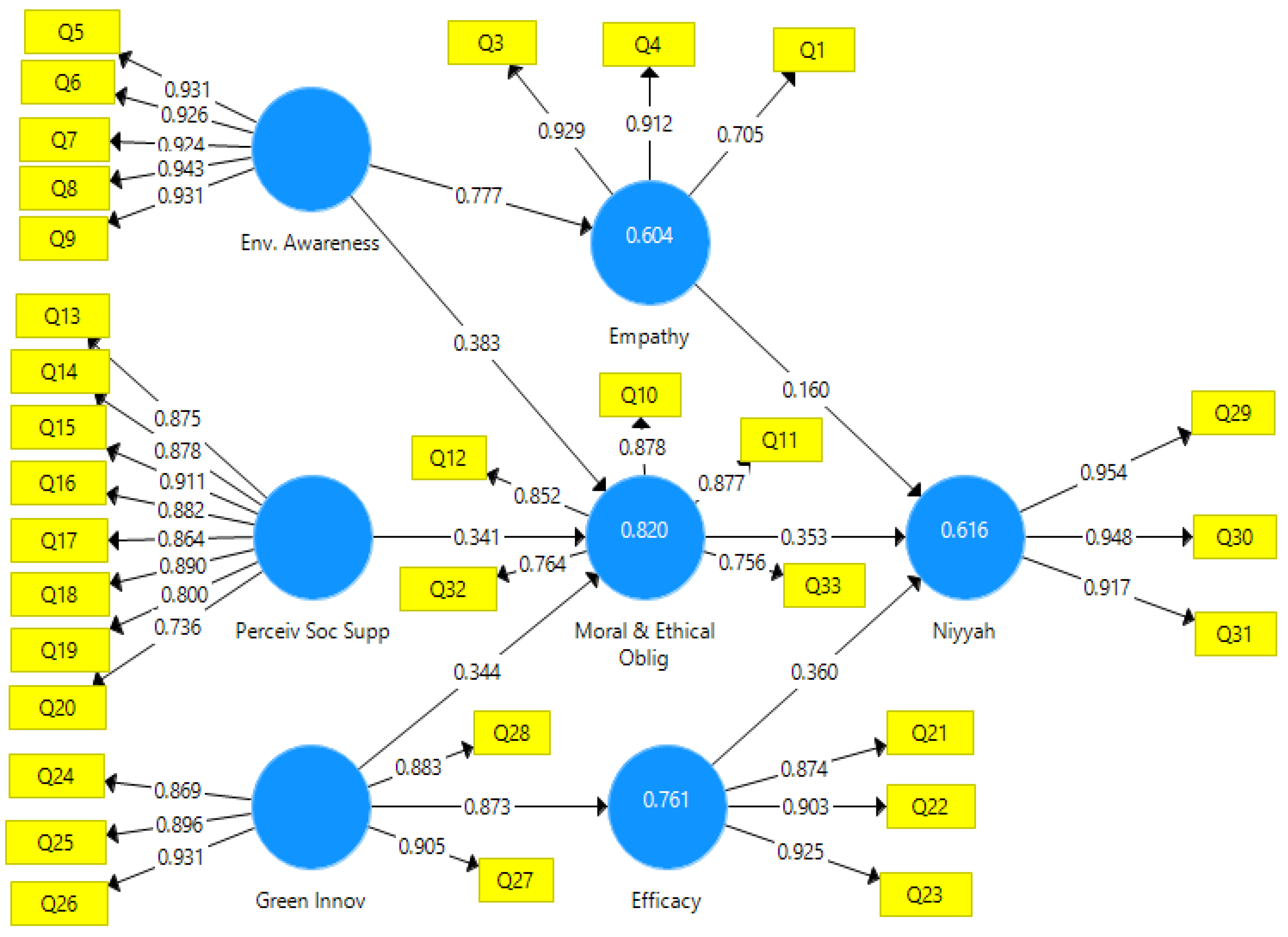
This assessment executes a total of five steps of evaluation, as guided by (Hair et al., 2017). Firstly, the multicollinearity test was performed. Table 5 demonstrates that all VIF (Value Inflation Factor) scores are below 3.3, as guided by Kock and Lynn (2012). Therefore, there is no multicollinearity present in this study. Secondly, the path coefficients were evaluated using the bootstrapping technique utilizing 5000 re-samples. Table 5 shows that each of the path coefficients is positively significant at the p-value significance level of 0.000, except for the path coefficient between moral and ethical obligations and niyyah, which is positively significant at the p-value significance level of 0.05. Hence, these outcomes show that all the hypotheses in this study are supported. Thirdly, the coefficient of determination (R2) was examined. This demonstrates the explanatory power of the predictors of the dependent variables. Table 5 shows that all four R2 values for empathy, moral and ethical obligations, self-efficacy, and niyyah are 0.604, 0.820, 0.761, and 0.676, respectively, suggesting that the models have considerable explanatory power. Fourthly, the effect size was inspected by checking the value of f2, as recommended by Hair et al. (2017). According to their references, the f2 values of 0.02, 0.15, and 0.35 are considered small, medium, and large effects, respectively (Cohen, 1988). Table 5 illustrates that all the independent constructs have large effects on their corresponding dependent constructs, except for one small effect of moral and ethical obligations on niyyah. Finally, predictive relevance (Q2) was investigated, guided by Hair et al. (2017) and Henseler et al. (2009). If the Q2 value is more than zero, the research model can maintain predictive relevance (Hair et al., 2017). Table 5 shows, all the Q2 values are greater than zero, then predictive relevance is significantly robust.
This study intends to examine the factors influencing Islamic bankers’ niyyah toward G-sukuk investments’ behavior in different development or construction projects. Founded on the theory of bounded rational planned behavior (TBRPB), this study examined the relationships of environmental awareness, perceived social support, and green technological innovation with empathy, moral and ethical obligations, and self-efficacy, respectively, which, in turn, predict niyyah toward G-sukuk investment behavior in Bangladesh. The results of the confirmatory factor analyses are presented in Figure 3.

5. Discussion

The findings of this paper indicate that all the hypothesized relationships are statistically significant. Particularly, bankers’ perspectives on environmental awareness positively associated with their empathy toward niyyah, as reinforced by Fujii (2006), who examined peoples’ behavioral intentions to reduce the use of electricity, gas, and garbage, etc. Ordonez-Borrallo et al. (2024) and Cicchiello et al. (2022) also show that environmental awareness and performance based on informed and innovative ideas have a crucial role in forming behavioral intention toward issuing green bonds. This evidence supports our results and underscores the importance of green sukuk investment behavior.
The positive impact of empathy, in turn, directly and significantly predicts niyyah toward G-sukuk investment behavior. The findings of this study are consistent with previous research (Nasar et al., 2019; Law & Breznik, 2017; Boubker et al., 2021), which examined entrepreneurial intention and environmental concern toward the use of electric vehicle. The statistical association of perceived social support on moral and ethical obligations was found to be statistically significant and positive, as supported by Ashraf (2019, 2023). The analyses show that moral and ethical obligations related to G-sukuk investment behavior are positively associated with niyyah. It indicates that niyyah toward G-sukuk activities is the result of social pressure, particularly from individuals who are highly religious and spiritual and who are also influential in social decision-making. This finding is supported by many past scholarly works (Choukir et al., 2019; Dalila et al., 2020; Eid et al., 2019) but contradicted by Buabeng-Andoh et al. (2019). The hypothesized positive association between green technology and self-efficacy was found to be statistically significant, which means that Islamic bankers have the abilities to improve ultimate behavioral performance in carrying out G-sukuk activities. This outcome is validated by work in several research fields (Doanh & Bernat, 2019; Hau & Kang, 2016). Finally, this paper illustrates that niyyah toward G-banking is the function of self-efficacy, and this result is reinforced by Anggadwita and Dhewanto (2015) and Zaremohzzabieh et al. (2019).
Over the previous decade, the notion of ‘sustainable or green finance’ has become prominently visible in several financial discourses, mostly advancing financial tools directed toward sustainable development schemes and initiatives, endorsing environmental measures, and stimulating green transformation to attain zero-carbon and climate-shock-mitigating processes (Liu & Lai, 2021). Internationally, green bonds have earned much appreciation as financial mechanisms supporting green initiatives employing renewable energy, such as green buildings and similar green infrastructures, with the growing participation of emerging economies in green bond markets (Habibullah & Hassan, 2023).
One of the most contentious topics among academics is the expansion of green bond markets as a suitable means of reducing environmental damage. However, this market’s growth is a complicated issue that depends on a number of variables. As an example, Tu et al. (2020) conducted a study on Vietnam, which has been attempting to develop the green bond market as a successful investment channel to finance low-carbon projects for the past few years. The primary conclusions indicated that the most significant variables directly influencing the growth of the green bond market are green finance investors’ intention, legal infrastructure, official green bond interest rates, and economic stability. Consequently, policy makers need to consider both economic and legal factors. In this respect, G-sukuk could also be considered as an important tool of taking care of the environment.
The results of this study demonstrate the accuracy of the TBRPB in portraying niyyah toward G-sukuk investment intentions among bank employees in some selected Islamic banks located in Bangladesh. The TBRPB model has been found to be an accurate theoretical framework in many other contexts. These include observing the consumers’ intention toward halal food purchase (Ashraf, 2019), f-commerce (Ashraf, 2021), organic food purchase (Ratan et al., 2021), and green financing (Asma, 2022). The bounded rationality concept has also been used in network marketing (Kiet & Kim, 2008) and digital shopping (Massad & Berardelli, 2016). Evidence shows that the impact of subjective norms intention formation is comparatively weaker than the impact of attitude (Ham et al., 2015). Hence, the findings of this study support the theoretical claim of the TBRPB as a foundation in showing the G-sukuk niyyah toward actual green finance investment.

6. Implications

6.1. Theoretical Implications

From a theoretical perspective, this study offers valuable contribution and an initial empirical basis by developing a conceptual model and implementing environmental, social, and moral factors to understand Islamic bankers’ G-sukuk niyyah. As the present study employs an underlying theoretical model to evaluate the G-sukuk niyyah of bank employees, a few aspects of this paper and its theoretical implications can be enunciated. The TBRPB has been extended incorporating a few new variables undertaken from the context of Islamic finance and investment. In place of subjective norm, this study added moral and ethical obligations as the normative dimension. Moreover, attitude and perceived behavioral control were replaced by empathy and self-efficacy, respectively. The key contribution of this study highlights that these factors can significantly predict niyyah, and this study also offers theoretical insight tino understanding Islamic bankers’ niyyah toward G-sukuk.

6.2. Practical Implications

From a practical perspective, in the coming days as more research regarding G-sukuk intentions comes up, authors will be able to suggest to the managerial bodies and policy makers to pursue G-sukuk initiatives in their investment facilities. All the evidence of this study implies that respondent bankers in the sample responded positively to provide their positive intention toward G-sukuk activities based on their environmental knowledge and awareness. From a managerial and policy perspective both environmental awareness and green technology innovation are most influential in G-sukuk initiatives. Thus, banks should provide training programs related to environmental awareness and knowledge to the bankers to attain sustainable finance. Moreover, financial institutions should promote Shariah-compliance green investment. Financial institutions, policymakers, and regulatory authorities, should formulate a clear regulatory framework to provide guidance about G-sukuk. This study also suggests to ensure strong governance mechanism. It is necessary to maintain transparency, accountability, and follow environmental awareness. These features will strengthen the acceptance and credibility of G-sukuk market. Overall, the findings of this paper will inspire the bank employees and authorities to articulate the exact banking policies and initiatives to make our environment sustainable and green. These findings of this study will not only rectify the ongoing environmental issues, but also will assist to gain financial and economic growth in a developing country like Bangladesh. In this respect, more practical and immediate actionable recommendations are that both the government policy makers and banking authorities can prioritize the energy, transport and industrial sectors by using G-sukuk and setting out a number of quantified targets with a view to reducing GHG emissions for climate change mitigation and adaptation. As key policy recommendations, the authors suggest ensuring that G-sukuk are priced affordably and enhancing economic and financial stability to promote the growth of Islamic green bond markets. Also, strong governance and effective decision-making toward G-sukuk will significantly improve its acceptance and effectiveness as a financial tool to achieve sustainable and environmental finance and SDG-13 oriented climatic initiatives.

7. Conclusions, Limitations, and Future Research Directions

In this study the authors examined the drivers of Islamic bankers’ niyyah toward G-sukuk in Bangladesh to attain sustainable finance using the TBRPB as its theoretical framework. This paper developed four literary contributions. First, the authors developed a conceptual model, that evaluates Islamic bankers’ niyyah toward G-sukuk. Second, it provides evidence to support the proposed model by the authors. Third, by integrating the model to cross-sectional Islamic Bankers’ niyyah in Bangladesh, this paper fills a gap in the literature. Finally, the hypothesized results of this study suggest that all eight hypotheses are statistically significant. In this paper, environmental awareness of bank employees seems to be highly significant antecedents to predict their empathy toward G-sukuk intention. Similarly, perceived social support also indicates a robust antecedent of moral and ethical obligations to predict G-sukuk niyyah the respondent bankers. In addition to that, green tech innovation seems to be the most significant predictor of G-sukuk activities.
Even though this paper has a significant role in suggesting the G-sukuk niyyah of bank employees in an emerging country like Bangladesh, it has limitations. Firstly, this paper considers environmental awareness as a preceding factor of empathy bankers toward G-sukuk investment initiatives. Studies in the future can examine it by implementing other variables close to environmental issues to assess G-sukuk adoption intention and behavior in other emerging economies. Secondly, this paper only considers Islamic bank employees as respondents to analyze G-sukuk niyyah. In the future, other types of bankers, such as bankers from public banks and conventional private commercial bankers could be included as respondents. Thirdly, this study was conducted in an emerging economies context. In the future, researchers can replicate this model in their studies in the context of developed economies.
This study engaged the TBRPB as the theoretical framework. Future research can replicate different theories as their theoretical background and can compare the findings with those of this study. Furthermore, since this study focuses on a cross-sectional survey, future research could involve a longitudinal study by changing constructs such as moral and ethical obligations and niyyah into multiple timeframes. Experimental researchers can capture the causal relationships among bankers after providing a Shariah-compliant sustainable finance training program and then examine their niyyah towards G-sukuk. A mixed method approach (combining surveys and interviews) could provide further explanation of how intentions and attitudes toward G-sukuk evolve over time, especially as green finance initiatives grow. Future research can also be suggested regarding the religious awareness of bankers in relation to potential G-sukuk investment initiatives. Therefore, more factors ought to be explored and comparisons made with other developing countries, such as Pakistan and Indonesia. Moreover, studies from Indonesia examined the niyyah of customers’ towards G-sukuk (Faisal et al., 2023) and another study from Pakistan examined the niyyah of investors’ towards G-sukuk (Ansari & Ansari, 2024). Future studies from Bangladesh can also be conducted to evaluate the niyyah of customers and investors towards G-sukuk, similar to those in Indonesia and Pakistan.

Author Contributions

Conceptualization, M.A.A.; data curation, M.A.A., M.R.I.R., and M.K.H.; formal analysis, M.A.A. and M.R.I.R.; funding acquisition, M.A.A.; investigation, M.A.A., M.R.I.R., and M.K.H.; methodology, M.A.A., M.R.I.R., and M.K.H.; project administration, M.A.A.; resources, M.A.A.; software, M.A.A., M.R.I.R., and M.K.H.; supervision, M.A.A.; validation, M.A.A., M.R.I.R., and M.K.H.; visualization, M.A.A. and M.R.I.R.; writing—original draft preparation, M.A.A., M.R.I.R., and M.K.H.; writing—review and editing, M.A.A. and M.R.I.R. All authors have read and agreed to the published version of the manuscript.

Funding

The article was funded by the Institute for Advanced Research (IAR) Publication Grant of United International University, Ref. No.: IAR-2025-Pub-114.

Institutional Review Board Statement

Ethical review and approval were waived for this study, since this study involved adult participants only and did not include any clinical procedures, interventions, or vulnerable populations. No personally identifiable information was collected, and all responses were recorded anonymously and used solely for academic research purposes. United International University (UIU), Bangladesh, does not require formal ethical approval from an Institutional Review Board (IRB) or Ethics Committee for anonymous, minimal-risk, questionnaire-based research of this nature. Accordingly, formal ethical approval was waived. All ethical principles regarding confidentiality, anonymity, and the right to withdraw were strictly observed.

Informed Consent Statement

Informed consent was obtained from all the subjects involved in this study.

Data Availability Statement

The data supporting the conclusions of this article will be made available by the authors on request.

Acknowledgments

The authors are grateful to Kirsten Gudgeon for her valuable assistance in proofreading of this paper.

Conflicts of Interest

The authors declare no conflicts of interest.

Appendix A. Measurement Instruments on Green Sukuk

ConstructItemSource
EmpathyQ1. Adoption of green sukuk is a good idea.(Ashraf, 2021)
Q2. Adoption of green sukuk is a silly idea
Q3. I would like to adopt green sukuk and its procedures.
Q4. Adoption of green sukuk would be pleasant
Environmental AwarenessQ5. Green sukuk is reliable for us to take care of our environment(Aslam & Jawaid, 2023)
Q6. Taking care of the environment through these newest movements like “green sukuk” is a good idea
Q7. Green sukuk is an innovative financial solution for environmental improvement.
Q8. Starting up green sukuk is a good idea to help save the environment.
Q9. Green sukuk will help build up a sustainable environment
Moral & Ethical ObligationsQ10. It is an Islamic religious responsibility to adopt green sukuk to save environment.(Ashraf, 2021)
Q11. We are obliged by Islamic moral values to adopt green sukuk for making healthy environment
Q12. Islamic ethics required that we help to save our environment
Q32. It is one of the Islamic principles that oblige us to adopt green sukuk
Q33. Islamic ethics tells that we should take care of sound environment
Perceived Social SupportQ13. My friends think that I should adopt green sukuk(Ashraf, 2021; Aslam & Jawaid, 2023)
Q14. Generally speaking, I want to do what my friends think I should do
Q15. My colleagues think that I should adopt green sukuk
Q16. Generally speaking, I want to do what my colleagues think I should do
Q17. My seniors think that I should adopt green sukuk
Q18. Generally speaking, I want to do what my seniors think I should do
Q19. My parents think that I should adopt green sukuk.
Q20. Generally speaking, I want to do what my parents think I should do.
Self-EfficacyQ21. Adoption of green sukuk is entirely within my control.(Ashraf, 2021; Bandura, 2006)
Q22. I have the resources and the ability to do adopt green sukuk
Q23. I would feel comfortable adopting green sukuk on my own.
Green Tech InnovationQ24. If I wanted to, I could easily implement green sukuk technology(Khan et al., 2022; Chin et al., 2022)
Q25. I would be able to implement green sukuk technology even if there is no one around me to show how to do it.
Q26. For me, being able to implement green sukuk technology by myself is important even if there is no one around me.
Q27. I like to adopt Green sukuk technology, because I care for our environment.
Q28. I intend to adopt green sukuk technology that can induce our healthy living.
Niyyah toward Green SukukQ29. I like to adopt green sukuk, because I care for our environment.(Ashraf, 2023)
Q30. I intend to adopt green sukuk that can induce our healthy living.
Q31. I like to adopt green sukuk that can improve societal well-being

References

  1. AAOIFI. (2017). Exposure draft of the financial accounting standard “sukuk” and invites opinion from Islamic finance industry. Available online: https://aaoifi.com/announcement/aaoifi-publishes-exposure-draft-of-the-financial-accounting-standard-sukuk-and-invites-opinion-from-islamic-finance-industry/?lang=en (accessed on 19 December 2025).
  2. Abdullah, M. S., & Keshminder, J. S. (2022). What drives green sukuk? A leader’s perspective. Journal of Sustainable Finance & Investment, 12(3), 985–1005. [Google Scholar] [CrossRef]
  3. Abubakar, L., & Handayani, T. (2020). Green sukuk: Sustainable financing instruments for infrastructure development in Indonesia. In 1st borobudur international symposium on humanities, economics and social sciences (BIS-HESS 2019) (pp. 983–987). Atlantis Press. [Google Scholar]
  4. Ajzen, I. (1991). The theory of planned behavior. Organizational Behavior and Human Decision Processes, 50(2), 179–211. [Google Scholar] [CrossRef]
  5. Ajzen, I. (2002). Perceived behavioral control, self-efficacy, locus of control, and the theory of planned behavior1. Journal of Applied Social Psychology, 32(4), 665–683. [Google Scholar] [CrossRef]
  6. Alam, N., Duygun, M., & Ariss, R. T. (2016). Green sukuk: An innovation in Islamic capital markets. In Energy and finance: Sustainability in the energy industry (pp. 167–185). Springer International Publishing. [Google Scholar]
  7. Al-Amine, M. A.-B. M. (2011). Global SUKŪK and Islamic securitization market: Financial engineering and product innovation. Brill. [Google Scholar]
  8. Al-Bar, M. A., & Chamsi-Pasha, H. (2015). The origins of Islamic morality and ethics. In Contemporary bioethics (pp. 49–74). Springer International Publishing. [Google Scholar]
  9. Alshebami, A. S. (2023). Green innovation, self-efficacy, entrepreneurial orientation and economic performance: Interactions among Saudi small enterprises. Sustainability, 15(3), 1961. [Google Scholar] [CrossRef]
  10. Ameen, N., Willis, R., & Shah, M. H. (2018). An examination of the gender gap in smartphone adoption and use in Arab countries: A cross-national study. Computers in Human Behavior, 89, 148–162. [Google Scholar] [CrossRef]
  11. Anderson, J. C., & Gerbing, D. W. (1988). Structural equation modelling in practice: A review and recommended two-step approach. Journal of Psychological Bulletin, 103(3), 411–423. [Google Scholar] [CrossRef]
  12. Anggadwita, G., & Dhewanto, W. (2015). Women’s entrepreneurial intentions in Micro and Small Enterprises (MSEs) in Indonesia: The influence of environmental factors on perceived behavioral control. Journal of Administrative and Business Studies, 1(1), 1–7. [Google Scholar] [CrossRef]
  13. Ansari, S., & Ansari, H. A. (2024). Factors influencing investors’ decision to invest in Pakistan’s Sukuk market. Islamic Banking and Finance Review, 11(2), 133–153. [Google Scholar] [CrossRef]
  14. Armstrong, J. S., & Overton, T. S. (1977). Estimating nonresponse bias in mail surveys. Journal of Marketing Research, 14(3), 396–402. [Google Scholar] [CrossRef]
  15. Ashraf, M. A. (2019). Islamic marketing and consumer behavior toward halal food purchase in Bangladesh. Journal of Islamic Marketing, 10(3), 893–910. [Google Scholar] [CrossRef]
  16. Ashraf, M. A. (2021). “Is old gold?” The role of prior experience in exploring the determinants of Islamic social entrepreneurial intentions: Evidence from Bangladesh. Journal of Social Entrepreneurship, 12(2), 265–290. [Google Scholar] [CrossRef]
  17. Ashraf, M. A. (2023). Theory of Islamic planned behavior: Applying to investors’ sukuk purchase intention. Journal of Islamic Accounting and Business Research, 14(4), 554–573. [Google Scholar] [CrossRef]
  18. Ashraf, M. A. (2024). “Go green”–evaluating the roles of environmental concerns, environmental social norms and green technology in fostering pro-green banking behaviors. Journal of Financial Reporting and Accounting, 22(1), 181–203. [Google Scholar] [CrossRef]
  19. Aslam, W., & Jawaid, S. T. (2023). Green banking adoption practices: Improving environmental, financial, and operational performance. International Journal of Ethics and Systems, 39, 820–840. [Google Scholar] [CrossRef]
  20. Asma, D. N. (2022). Determinants of behavioral intention toward green banking: From students’ perspective [Master’s thesis, Department of Economics, United International University]. [Google Scholar]
  21. Bacha, O. I., & Mirakhor, A. (2018). Funding development infrastructure without leverage: A risk-sharing alternative using innovative sukuk structures. World Economy, 41(3), 752–762. [Google Scholar] [CrossRef]
  22. Bagozzi, R. P., Yi, Y., & Phillips, L. W. (1991). Assessing construct validity in organizational research. Administrative Science Quarterly, 36, 421. [Google Scholar] [CrossRef]
  23. Bandura, A. (2006). Guide for constructing self-efficacy scales. Self-Efficacy Beliefs of Adolescents, 5(1), 307–337. [Google Scholar]
  24. Bandura, A. (2010). An agentic perspective on positive psychology. Positive Psychology: Exploring the Best in People, 1(5), 167–196. [Google Scholar]
  25. Berenguer, J. (2008). The effect of empathy in environmental moral reasoning. Environment and Behavior, 42(1), 110–134. [Google Scholar] [CrossRef]
  26. Billah, S. M., & Adnan, N. (2024). Navigating environmental concerns and geopolitical risks: A study on green sukuk and Islamic equities amid climate crisis and the Russia-Ukraine conflict. Energy Strategy Reviews, 53, 101372. [Google Scholar] [CrossRef]
  27. Boubker, O., Arroud, M., & Ouajdouni, A. (2021). Entrepreneurship education versus management students’ entrepreneurial intentions. A PLS-SEM approach. The International Journal of Management Education, 19(1), 100450. [Google Scholar] [CrossRef]
  28. Buabeng-Andoh, C., Yaokumah, W., & Tarhini, A. (2019). Investigating students’ intentions to use ICT: A comparison of theoretical models. Education and Information Technologies, 24(1), 643–660. [Google Scholar] [CrossRef]
  29. Bulutoding, L., Asse, A., Habbe, A. H., & Fattah, S. (2018). The influence of akhlaq to tax compliance behavior, and Niyyah as mediating variable of Moslem taxpayers in Malaysia. Scientific Research Journal (SCIRJ), 6(1), 26–34. [Google Scholar]
  30. Castellacci, F., & Lie, C. M. (2017). A taxonomy of green innovators: Empirical evidence from South Korea. Journal of Cleaner Production, 143, 1036–1047. [Google Scholar] [CrossRef]
  31. Chin, M.-Y., Ong, S.-L., Ooi, D. B.-Y., & Puah, C.-H. (2022). The impact of green finance on environmental degradation in BRI region. Environment Development and Sustainability, 26, 303–318. [Google Scholar] [CrossRef]
  32. Choukir, J., Aloulou, W. J., Ayadi, F., & Mseddi, S. (2019). Influences of role models and gender on Saudi Arabian freshman students’ entrepreneurial intention. International Journal of Gender and Entrepreneurship, 11, 186–206. [Google Scholar] [CrossRef]
  33. Chu, F., Zhang, W., & Jiang, G. (2021). How does policy perception affect green entrepreneurship behaviour? An empirical analysis from China. Discrete Dynamics in Nature and Society, 2021, 7973046. [Google Scholar] [CrossRef]
  34. Cicchiello, A. F., Cotugno, M., Monferrà, S., & Perdichizzi, S. (2022). Which are the factors influencing green bonds issuance? Evidence from the European Bonds Market. Finance Research Letters, 50, 103190. [Google Scholar] [CrossRef]
  35. Cochran, W. G. (1977). Sampling techniques (3rd ed.). John Wiley and Sons. [Google Scholar]
  36. Cohen, J. (1988). Statistical power analysis for the behavioral sciences (2nd ed.). Routledge. [Google Scholar]
  37. Činčera, J., Romero-Ariza, M., Zabic, M., Kalaitzidaki, M., & Del Consuelo Díez Bedmar, M. (2020). Environmental citizenship in primary formal education. In Environmental discourses in science education (pp. 163–177). Springer. [Google Scholar]
  38. Dalila, D., Latif, H., Jaafar, N., Aziz, I., & Afthanorhan, A. (2020). The mediating effect of personal values on the relationships between attitudes, subjective norms, perceived behavioral control and intention to use. Management Science Letters, 10(1), 153–162. [Google Scholar] [CrossRef]
  39. Doanh, D. C., & Bernat, T. (2019). Entrepreneurial self-efficacy and intention among Vietnamese students: A meta-analytic path analysis based on the theory of planned behavior. Procedia Computer Science, 159, 2447–2460. [Google Scholar] [CrossRef]
  40. Dodsworth, F. (2007). Police and the prevention of crime: Commerce, temptation and the corruption of the body politic, from fielding to colquhoun. The British Journal of Criminology, 47(3), 439–454. [Google Scholar] [CrossRef][Green Version]
  41. Eid, R., Badewi, A., Selim, H., & El-Gohary, H. (2019). Integrating and extending competing intention models to understand the entrepreneurial intention of senior university students. Education + Training, 61(2), 234–254. [Google Scholar] [CrossRef]
  42. Endri, E., Hania, B. T., & Ma’ruf, A. (2022). Corporate green sukuk issuance for sustainable financing in Indonesia. Environmental Economics, 13(1), 38–49. [Google Scholar] [CrossRef]
  43. Endri, E., Harahap, I. M., & Hindardjo, A. (2025). The determinants of green bond issuance in Indonesia: An analysis of sustainable financial instruments. Journal of Risk and Financial Management, 18(12), 672. [Google Scholar] [CrossRef]
  44. Faisal, Y. A., Gunawan, I., Cupian, Hayati, A., Apriliadi, A., & Fajri, M. (2023). Examining the purchase intentions of Indonesian investors for green sukuk. Sustainability, 15(9), 7430. [Google Scholar] [CrossRef]
  45. Financial Express. (2022, January 13). Beximco G-sukuk makes debut trading. The Financial Express. Available online: https://thefinancialexpress.com.bd/stock/bangladesh/beximco-green-sukuk-makes-debut-trading-1642060126 (accessed on 19 December 2025).
  46. Fitriana, N. (2022). Does pesantren environment have impact on Islamic entrepreneurial intention? Jurnal Ilmiah Syi’ar, 22(1), 1–14. [Google Scholar] [CrossRef]
  47. Fornell, C., & Larcker, D. F. (1981). Evaluating structural equation models with unobservable variables and measurement error. Journal of Marketing Research, 18(1), 39–50. [Google Scholar] [CrossRef]
  48. Fujii, S. (2006). Environmental concern, attitude toward frugality, and ease of behavior as determinants of pro-environmental behavior intentions. Journal of Environmental Psychology, 26(4), 262–268. [Google Scholar] [CrossRef]
  49. Habibullah, N. M., & Hassan, N. R. (2023). Developing a conceptual shariah framework of green sukuk for Bangladesh: Its implications on social welfare by realizing SDGs. Journal of Islamic Finance, 12(1), 73–82. [Google Scholar] [CrossRef]
  50. Hair, J. F., Hult, G. T. M., Ringle, C. M., & Sarstedt, M. (2017). A primer on partial last squares structural equation modeling. Sage. [Google Scholar]
  51. Ham, M., Jeger, M., & Ivković, A. F. (2015). The role of subjective norms in forming the intention to purchase green food. Economic Research-Ekonomska Istraživanja, 28(1), 738–748. [Google Scholar] [CrossRef]
  52. Hau, Y. S., & Kang, M. (2016). Extending lead user theory to users’ innovation-related knowledge sharing in the online user community: The mediating roles of social capital and perceived behavioral control. International Journal of Information Management, 36(4), 520–530. [Google Scholar] [CrossRef]
  53. Henseler, J., Ringle, C. M., & Sinkovics, R. R. (2009). The use of partial least squares path modeling in international marketing. In Advances in international marketing (pp. 277–319). Emerald Group Publishing Limited. [Google Scholar] [CrossRef]
  54. Hockerts, K. (2017). Determinants of social entrepreneurial intentions. Entrepreneurship Theory and Practice, 41(1), 105–130. [Google Scholar] [CrossRef]
  55. Hockerts, K. N. (2013). Antecedents of social entrepreneurial intentions: A validation study. Academy of Management Proceedings, 2013(1), 16805. [Google Scholar] [CrossRef]
  56. Illias, S. (2021, November 9). Bangladesh pledges to reduce 22% carbon emission by 2030. The Business Standard. Available online: https://www.tbsnews.net/bangladesh/environment/climate-change/bangladesh-pledges-reduce-22-carbon-emission-2030-327415 (accessed on 19 December 2025).
  57. Jordão, A. R., Costa, R., Dias, Á. L., Pereira, L., & Santos, J. P. (2020). Bounded rationality in decision making: An analysis of the decision-making biases. Business: Theory and Practice, 21(2), 654–665. [Google Scholar] [CrossRef]
  58. Khan, M. A., Riaz, H., Ahmed, M., & Saeed, A. (2022). Does green finance really deliver what is expected? An empirical perspective. Borsa Istanbul Review, 22, 586–593. [Google Scholar] [CrossRef]
  59. Kiet, H. A. T., & Kim, B. J. (2008). Network marketing with bounded rationality and partial information. Physica a Statistical Mechanics and Its Applications, 387(19–20), 4896–4902. [Google Scholar] [CrossRef]
  60. Kline, R. B. (2011). Principles and practice of structural equation modeling. Guilford Publications. [Google Scholar]
  61. Kock, N., & Lynn, G. (2012). Lateral collinearity and misleading results in variance-based SEM: An illustration and recommendations. Journal of the Association for Information Systems, 13(7), 546–580. [Google Scholar] [CrossRef]
  62. Law, K. M. Y., & Breznik, K. (2017). Impacts of innovativeness and attitude on entrepreneurial intention: Among engineering and non-engineering students. International Journal of Technology and Design Education, 27(4), 683–700. [Google Scholar] [CrossRef]
  63. Lee, E., Kim, J. Y., & Lee, Y. (2025). A comparative analysis of green sukuk and green bonds. International Journal of Islamic and Middle Eastern Finance and Management, 18, 1353–1373. [Google Scholar] [CrossRef]
  64. Leong, L.-Y., Hew, T.-S., Ooi, K.-B., & Lin, B. (2019). Do electronic word-of-mouth and elaboration likelihood model influence hotel booking? Journal of Computer Information Systems, 59(2), 146–160. [Google Scholar] [CrossRef]
  65. Leong, L.-Y., Hew, T.-S., Ooi, K.-B., & Wei, J. (2020). Predicting mobile wallet resistance: A two-staged structural equation modeling-artificial neural network approach. International Journal of Information Management, 51, 102047. [Google Scholar] [CrossRef]
  66. Liefländer, A. K., Bogner, F. X., Kibbe, A., & Kaiser, F. G. (2015). Evaluating environmental knowledge dimension convergence to assess educational programme effectiveness. International Journal of Science Education, 37(4), 684–702. [Google Scholar] [CrossRef]
  67. Likert, R. (1932). A technique for the measurement of attitudes. Archives of Psychology, 22, 55. [Google Scholar]
  68. Lithoxoidou, L. S., Georgopoulos, A. D., Dimitriou, A. T., & Xenitidou, S. C. (2017). “Trees have a soul too!” Developing empathy and environmental values in early childhood. International Journal of Early Childhood Environmental Education, 5(1), 68–88. [Google Scholar]
  69. Liu, F. H., & Lai, K. P. (2021). Ecologies of green finance: Green sukuk and development of green Islamic finance in Malaysia. Environment and Planning a Economy and Space, 53(8), 1896–1914. [Google Scholar] [CrossRef]
  70. Mahomed, Z., & Mahbot, A. (2024). Sustainable and Responsible Investment (SRI) sukuk: Lessons from Khazanah’s sukuk ihsan. International Journal of Islamic and Middle Eastern Finance and Management, 17(6), 1065–1081. [Google Scholar] [CrossRef]
  71. Mair, J., & Noboa, E. (2003). Social entrepreneurship: How intentions to create a social enterprise get formed. SSRN Electronic Journal. [Google Scholar] [CrossRef]
  72. Massad, V. J., & Berardelli, K. (2016). The roles of bounded rationality and ethical self-efficacy in online shopping orientation. Academy of Marketing Studies Journal, 20(3). Available online: https://www.researchgate.net/publication/311928761_The_roles_of_bounded_rationality_and_ethical_self-efficacy_in_online_shopping_orientation (accessed on 19 December 2025).
  73. Mishrif, A., & Balushi, Y. A. (2018). Economic diversification in the gulf region, 2. Springer. [Google Scholar]
  74. Munasunghe, M. (2019). Sustainability in the twenty-first century: Applying sustainomics to implement the sustainable development goals (2nd ed.). Cambridge University Press. [Google Scholar]
  75. Nasar, A., Kamarudin, S., Rizal, A. M., Ngoc, V. T. B., & Shoaib, S. M. (2019). Short-term and long-term entrepreneurial intention comparison between Pakistan and Vietnam. Sustainability, 11(23), 6529. [Google Scholar] [CrossRef]
  76. Novitasari, M., & Tarigan, Z. J. H. (2022). The role of green innovation in the effect of corporate social responsibility on firm performance. Economies, 10(5), 117. [Google Scholar] [CrossRef]
  77. Ordonez-Borrallo, R., Ortiz-de-Mandojana, N., & Delgado-Ceballos, J. (2024). Green bonds and environmental performance: The effect of management attention. Corporate Social Responsibility and Environmental Management, 31(6), 5311–5326. [Google Scholar] [CrossRef]
  78. Paldi, C. (2014, October 19). History of sukuk. Available online: https://www.slideshare.net/slideshow/the-history-of-sukuk/40456290 (accessed on 19 December 2025).
  79. Panda, P. (2017). Green bond: A Socially Responsible Investment (SRI) instrument. Research Bulletin, 43(1), 97–113. [Google Scholar]
  80. Pasquier, G., & Grüter, C. (2016). Individual learning performance and exploratory activity are linked to colony foraging success in a mass-recruiting ant. Behavioral Ecology, 27, arw079. [Google Scholar] [CrossRef]
  81. Podsakoff, P. M., & Organ, D. W. (1986). Self-reports in organizational research: Problems and prospects. Journal of Management, 12(4), 531–544. [Google Scholar] [CrossRef]
  82. Puerta, J. G., Malagón, M. C. G., Gijón, M. K., & Simón, E. J. L. (2022). Levels of stress, anxiety, and depression in university students from spain and Costa Rica during periods of confinement and virtual learning. Education Sciences, 12(10), 660. [Google Scholar] [CrossRef]
  83. Rahim, S. R. M., & Mohamad, Z. Z. (2018). Green sukuk for financing renewable energy projects. Turkish Journal of Islamic Economics, 5(2), 129–144. [Google Scholar] [CrossRef]
  84. Rahman, S. A., Alam, M. M. D., & Taghizadeh, S. K. (2019). Do mobile financial services ensure the subjective well-being of micro-entrepreneurs? An investigation applying UTAUT2 model. Information Technology for Development, 26(2), 421–444. [Google Scholar] [CrossRef]
  85. Rahman, S. A., Taghizadeh, S. K., Ramayah, T., & Alam, M. M. D. (2017). Technology acceptance among micro-entrepreneurs in marginalized social strata: The case of social innovation in Bangladesh. Technological Forecasting and Social Change, 118, 236–245. [Google Scholar] [CrossRef]
  86. Ratan, S., Ashraf, M., Tat, H., & Latiff, A. (2021). Effects of food safety and perceived social support on mediating consumers’ attitude toward organic food purchase. Food Research, 5(4), 350–359. [Google Scholar] [CrossRef]
  87. Rianti, D. O., & Syamlan, Y. T. (2022). Do Islamic bankers optimist on Islamic banking growth? Case study of Islamic banking employees in Indonesia. Tazkia Islamic Finance and Business Review, 15(2), 62–82. [Google Scholar] [CrossRef]
  88. Salingan, G. (2021, April 2). Pre-feasibility study for G-sukuk issuance in the Republic of Uzbekistan. United Nations Development Program (UNDP). Available online: https://www.undp.org/uzbekistan/publications/pre-feasibility-study-green-sukuk-issuance-republic-uzbekistan (accessed on 19 December 2025).
  89. Schultz, P. W. (2000). Empathizing with nature: The effects of perspective taking on concern for environmental issues. Journal of Social Issues, 56(3), 391–406. [Google Scholar] [CrossRef]
  90. Seth, S., & Pathan, M. I. (2025). Green sukuk: Contextual spectrum and alignments. Journal of Marketing & Social Research, 2, 540–548. [Google Scholar]
  91. Shalhoob, H. (2023). Green sukuk in Saudi Arabia: Challenges and potentials of sustainability in the light of Saudi vision 2030. Journal of Governance and Regulation, 12(4), 351–360. [Google Scholar] [CrossRef]
  92. Spano, R. (2007). How does reactivity affect police behavior? Describing and quantifying the impact of reactivity as behavioral change in a large-scale observational study of police. Journal of Criminal Justice, 35(4), 453–465. [Google Scholar] [CrossRef]
  93. Syamlan, Y. T., & Easti, R. R. (2020). Islamic retirement planning among Indonesian bankers. Equilibrium Jurnal Ekonomi Syariah, 8(1), 25–40. [Google Scholar] [CrossRef]
  94. Takalo, S. K., Tooranloo, H. S., & Parizi, Z. S. (2020). Green innovation: A systematic literature review. Journal of Cleaner Production, 279, 122474. [Google Scholar] [CrossRef]
  95. Thogersen, J. (2009). The motivational roots of norms for environmentally responsible behavior. Basic and Applied Social Psychology, 31(4), 348–362. [Google Scholar] [CrossRef]
  96. Tu, C. A., Sarker, T., & Rasoulinezhad, E. (2020). Factors influencing the green bond market expansion: Evidence from a multi-dimensional analysis. Journal of Risk and Financial Management, 13(6), 126. [Google Scholar] [CrossRef]
  97. Ulfah, I. F., Sukmana, R., Laila, N., & Sulaeman, S. (2024). A structured literature review on green sukuk (Islamic bonds): Implications for government policy and future studies. Journal of Islamic Accounting and Business Research, 15(7), 1118–1133. [Google Scholar] [CrossRef]
  98. Van De Wetering, J., Leijten, P., Spitzer, J., & Thomaes, S. (2022). Does environmental education benefit environmental outcomes in children and adolescents? A meta-analysis. Journal of Environmental Psychology, 81, 101782. [Google Scholar] [CrossRef]
  99. Wan Zahari, W. M. Z. (2025). Operationalising green sukuk within the world bank environmental and social framework. Discover Environment, 3(1), 288. [Google Scholar] [CrossRef]
  100. Wildfeuer, A. G. (2024). Rationality and bounded rationality. In J. C. Chennattuserry, M. Deshpande, & P. Hong (Eds.), Encyclopedia of new populism and responses in the 21st century. Springer. [Google Scholar] [CrossRef]
  101. World Bank Group. (2022). Bangladesh country climate and development report. Available online: https://openknowledge.worldbank.org/entities/publication/1d6b85c3-4959-5f93-af88-dda33f52ee37 (accessed on 19 December 2025).
  102. Zaremohzzabieh, Z., Ahrari, S., Krauss, S. E., Samah, A. A., Meng, L. K., & Ariffin, Z. (2019). Predicting social entrepreneurial intention: A meta-analytic path analysis based on the theory of planned behavior. Journal of Business Research, 96, 264–276. [Google Scholar] [CrossRef]
  103. Ziarmal, A. (2025). Exploring the contribution of green sukuk in achieving Sustainable Development Goals (SDGs) (case study of Malaysia and Indonesia). El-Barka Journal of Islamic Economics and Business, 8(1), 31–49. [Google Scholar] [CrossRef]
Figure 1. The theory of bounded rational planned behavior (TBRPB).
Jrfm 19 00159 g001
Figure 2. Research framework: Islamic Environmental Behavior (IEB).
Jrfm 19 00159 g002
Figure 3. Path Analyses.
Jrfm 19 00159 g003
Table 1. Demographic profile of the respondents (n = 390).
VariablesPercentVariablesPercent
Age Employee of
25 to 3027Islami Bank Bangladesh5.3
31 to 3533.2ICB Islamic Bank5
36 to 4026Social Islami Bank5
>4013.8Al-Arafah Islami Bank5.2
Gender Exim Bank4.7
Male65Shahjalal Islami Bank3.8
Female35First security Islami Bank2.8
Marital Status Union Bank 5.1
Single21.5Standard Bank4.8
Married78.2Global Islami Bank5.2
Separated/Divorced0.3City Bank5.3
Education AB Bank3.6
Undergraduate17Dhaka Bank2.7
Graduate70.8Premier Bank3,1
Postgraduate22.2Southeast Bank4.8
Monthly Income (in BDT) Jamuna Bank4.9
25,000–45,00038.3Bank Alfalah3.6
45,001–60,00042.1BRB Bank3.1
60,001–90,00015.6One Bank5.3
Above 90,0004United Commercial Bank4.7
Religion Prime Bank5
Islam85.2NRBC Bank4.2
Hindu14.8Mutual Trust Bank3
Table 2. Reliability and convergent validity.
ConstructItemLoadingsαCRAVE
EmpathyQ10.7050.810.8890.73
Q30.929
Q40.912
Environmental AwarenessQ50.9310.9620.970.867
Q60.926
Q70.924
Q80.943
Q90.931
Green Tech InnovationQ240.8690.9390.9540.805
Q250.896
Q260.931
Q270.905
Q28883
Moral and Ethical ObligationQ100.8780.8830.9150.684
Q110.877
Q120.852
Q320.764
Q330.756
NiyyahQ290.9540.9340.9580.883
Q300.948
Q310.917
Perceived Social SupportQ130.8750.9470.9560.733
Q140.878
Q150.911
Q160.882
Q170.864
Q180.89
Q190.8
Q200.736
Self-EfficacyQ210.8740.8830.9240.811
Q220.903
Q230.925
Note: α = Cronbach’s alpha; CR = composite reliability; AVE = average variance extracted.
Table 3. Discriminant validity (Fornell & Larcker (1981) method).
ConstructSEEMPEAGTIMEONIYPSS
SE0.901
EMP0.5690.855
EA0.5860.7770.931
GTI0.8730.5640.5840.897
MEO0.7140.7980.780.7630.827
NIY0.7020.6460.680.7420.7370.94
PSS0.5380.5820.5750.5710.7580.5240.856
The bold diagonal elements are the square root of the constructs’ AVEs.
Table 4. Discriminant validity (HTMT—Heterotrait–Monotrait method).
Discriminant Validity (HTMT—Heterotrait–Monotrait Method)
SEEMPEAGTIMEONIYPSS
SE
EMP0.672
EA0.6320.841
GTI0.8470.6530.614
MEO0.8020.840.8480.83
NIY0.7680.7380.7180.790.807
PSS0.5850.660.5980.6060.8240.554
Note: EMP = empathy; EA = environmental awareness; GTI = green tech innovation, MEO = moral and ethical obligation; NIY = niyyah; PSS = perceived social support; SE = self-efficacy.
Table 5. Outputs of the structural path analyses.
HsRelationshipBetaSEt-ValueSupportedR2f2Q2VIF
H1EA → EMP0.7770.03919.805 ***Yes0.6041.5240.4371
H2EMP → NIY0.160.0662.407 ***Yes0.6160.0240.5342.751
H3EA → MEO0.3830.0458.544 ***Yes0.820.4670.551.746
H4PSS → MEO0.3410.0437.892 ***Yes 0.377 1.707
H5MEO → NIY0.3530.0874.065 ***Yes 0.086 2.791
H6GTI → MEO0.3440.0379.276 ***Yes 0.379 1.734
H7GTI → SE0.8730.02337.322 ***Yes0.7613.1920.611
H8SE → NIY0.360.0774.683 ***Yes 0.165 2.038
*** p < 0.001.
Disclaimer/Publisher’s Note: The statements, opinions and data contained in all publications are solely those of the individual author(s) and contributor(s) and not of MDPI and/or the editor(s). MDPI and/or the editor(s) disclaim responsibility for any injury to people or property resulting from any ideas, methods, instructions or products referred to in the content.