1. Introduction
Micro, small, and medium enterprises have always been considered the mainstay of Indonesia’s economy. Given their share of the domestic Gross Domestic Product and their ability to create jobs, reduce poverty, and empower communities, MSMEs are vital to the country’s development (
Miran et al., 2025;
Ratnaningtyas et al., 2025;
Zuhroh et al., 2025). The agriculture, fisheries, and tourism sectors are promising areas for MSMEs because they are resource-rich, employ local populations, and create conditions for the sustainable development of adjacent provinces (
Satpathy et al., 2025). Furthermore, all three sectors are aligned with the country’s Vision of Asta Cita, which focuses on inclusive, fair economic growth that is resilient to global challenges (
Bappenas, 2023).
MSMEs in both agriculture and fisheries sectors are not only major contributors to national self-sufficiency and sustainable use of natural resources but also face critical challenges, such as low levels of technological development and digitalization, a lack of innovation in production and marketing, and others. At the same time, the sectors have recently faced the increased influence of external factors, such as climate change and fluctuations in global commodities prices (
Jha & Kumar, 2024;
Sisay et al., 2025). In coping with the COVID-19 pandemic, MSMEs in the tourism sector have been forced to adapt rapidly to external challenges such as the digitalization of services, changes in tourist behavior, and the sustainable development of their products and destinations (
Dejardin et al., 2023;
Satpathy et al., 2025;
Zuñiga-Collazos et al., 2025).
Financial performance is a dependent variable in this study and also serves as a measure of the competitiveness of MSMEs. Financial performance includes competitiveness indicators because when MSMEs have better financial performance, they can compete effectively with other businesses and survive market changes, thus maintaining their business. The competitiveness of small and medium-sized businesses can help gauge how long the value generated by a company can be financed. Directly, both competitiveness and the right business model represent the financial performance of MSMEs (
Budiman et al., 2024;
Csapi & Balogh, 2020;
Soesetio et al., 2024). Therefore, financial performance metrics such as sales growth, market leadership, and profitability can indicate how competitive the business is in the market.
Given the rapid changes in the market environment and the broader global dynamics, it is critical to empower MSMEs across sectors. Digital transformation and sustainable development principles are increasingly required for small and medium enterprises to become more competitive and improve their financial performance. Information technologies can help expand market scope, improve operations, and make production and distribution more rational (
Afandi, 2023;
H. Li et al., 2024;
Yunus et al., 2025;
Zuñiga-Collazos et al., 2025). Additionally, to remain adaptable and continue operating in line with global environmental trends and market dynamics, innovation is required across products, operations, and business models (
Nuryanto et al., 2024;
Wijaya et al., 2025;
Yunus et al., 2025).
Nevertheless, the implementation of digitalization, innovation, and sustainable development among micro, small, and medium enterprises (MSMEs), particularly in the agriculture, fisheries, and tourism sectors, cannot be separated from government support. The government’s efforts to support infrastructure development, capacity-building programs, access to finance, and the formulation of supportive regulations are essential to improving the financial performance of MSMEs through digitalization and innovation (
Abu et al., 2025;
Nuryanto et al., 2024;
Ratnaningtyas et al., 2025;
UKM, 2023;
Wijaya et al., 2025). Better financial performance is anticipated to enable the achievement of the Asta Cita Vision, including the goals of inclusive economic development, reduced poverty, and sustainable development (
Bappenas, 2023).
Policies and initiatives have been implemented and carried out, yet the competitive skills and financial performance of MSMEs in the agriculture, fishery, and tourism sectors are even worse than those in the other sectors (
Apriono et al., 2023;
Zuñiga-Collazos et al., 2025). Four main obstacles, including a lack of digitalization adoption, a lack of product and process innovation, the inadequate implementation of sustainable development principles, and ineffective government support as a catalyst for MSME transformation, have been identified (
Wijaya et al., 2025). Often, such government policies and actions are too general to address specific sectoral or contextual needs. They are often not fully aligned with national strategic objectives (
Satpathy et al., 2025;
Yunus et al., 2025).
Several critical challenges have impeded the generation of creative, inclusive, and viable MSMEs environments. These issues are the digital divide between urban and rural MSMEs, the absence of human capital to exploit technology, and a lack of cooperation among groups. Another challenge is that MSMEs in the agriculture and fisheries sectors are confined to elementary innovations, including line extension and quality differentiation, and have yet to advance to functional innovations or digital marketing (
Satpathy et al., 2025). In addition, many MSMEs report that they have not yet fully experienced the tangible benefits of government initiatives during the pandemic, particularly those related to access to financing, digitalization training, and innovation development support (
Abu et al., 2025;
Ratnaningtyas et al., 2025;
Xiao et al., 2022). This situation is further aggravated by the lack of data-driven monitoring and evaluation of policy effectiveness, as well as the absence of integrated measurement tools to assess the impact of digitalization, innovation, sustainable development, and government assistance on the financial performance of MSMEs across various sectors.
Empirically, this research contributes to the development of theory, engineering, and policy. Conceptually, there is still little research that focuses on MSMEs in the agriculture, fisheries, and tourism sectors, especially on financial performance. It is essential to develop and test new integrative models with independent variables such as digitalization, sustainable development, and innovation, mediating variables such as government support, and as dependent variables, improved financial performance to achieve Asta Cita’s goals. According to (
Bappenas, 2023;
Satpathy et al., 2025) by focusing on the unevenness of policy perceptions and relevant impacts across sectors and linking them to the achievement of the Asta Cita Goals, it can measure the improvement in the financial performance of MSMEs, especially in the three sectors. Finally, this study provides new evidence that can guide policy-making on practical business strategies in the context of digital transformation, sustainable development, innovation and government support. This is based on empirical evidence that shows that three variables can improve the financial performance of MSMEs in these sectors either directly or through government support (
Nguyen et al., 2023).
Thus, this research is expected to contribute to the following: (1) strengthening the theory of MSME competitiveness through improving the financial performance of MSMEs in three sectors, namely agriculture, fisheries, and tourism. The reason is that the empirical model analyzes the influence of digitalization, sustainable development, and innovation on the financial performance of MSMEs by considering the mediating role played by government support; (2) decision-makers will benefit from evidence-based recommendations on the types of interventions that are effective to promote roles and attitudes among MSMEs in the agriculture, fisheries, and tourism sectors. In addition, (3) MSME stakeholders will consider the results of this research to develop competitive and adaptive business strategies; (4) this study will analyze the extent to which MSME policies contribute to the realization of national development with the theme Asta Cita to assist the government in achieving the vision of inclusive and sustainable national growth.
The remainder of the paper is structured as follows.
Section 2 provides a literature review.
Section 3 presents the research method.
Section 4 provides the results.
Section 5 provides a discussion.
Section 6 wraps up the paper.
2. Literature Review
2.1. President Prabowo’s Asta Cita: Ideas and Impacts for MSMEs
President Prabowo Subianto introduced the National Development Vision and Mission (Asta Cita) as part of the National Long-Term Development Plan (RPJPN) for the period 2025 to 2045 (
Bappenas, 2023) Asta Cita means “Eight Goals,” referring to eight main goals, which the following:
Asta Cita emphasizes the importance of strengthening national identity through the application of Pancasila values, the development of democracy, and the enforcement of human rights. The goal is to ensure that all government policies, especially those related to the economic empowerment of individuals and micro, small, and medium enterprises (MSMEs), are based on the principles of social justice, equal rights, and inclusivity (
Bappenas, 2023)
- 2.
Strengthening the Modern State Defense and Security System
Building a comprehensive defense system is critical, including maintaining food and natural resource security, as well as protecting businesses in all sectors, especially micro, small, and medium enterprises (MSMEs) in vital sectors such as agriculture, fisheries, and tourism. This protection is expected to create a stable, safe, and sustainable business environment.
- 3.
Realizing an Independent Economy Based on People’s Welfare
There is a strong desire to achieve an independent economy, characterized by self-reliance, in which economic progress is distributed equitably throughout society rather than being limited to a specific group. Strengthening MSMEs is considered a key driver for inclusive economic growth, poverty reduction, and regional inequality reduction, primarily through the development of the local agriculture, fisheries, and tourism sectors (
Didachos & Tambunan, 2024;
Satpathy et al., 2025).
- 4.
Promoting Equitable Development and Poverty Alleviation
Asta Cita emphasized the importance of equitable development between digital, economic, and physical infrastructure throughout Indonesia. The government is committed to reducing extreme poverty by empowering MSMEs and encouraging innovation in key sectors, including financing, market access, technology, and training.
- 5.
Improving the Quality of Human Resources and Mastery of Science and Technology
The main goal is to improve vocational education, entrepreneurship training, information technology capabilities, and the quality of human resources. The purpose of this initiative is to enable employees and micro, small, and medium enterprises (MSMEs) to adapt to the digital era, encourage innovation, and adapt to global market fluctuations.
- 6.
Accelerating Digital-Based Economic Transformation and Green Industries
Asta Cita’s agenda mainly emphasizes digital transformation and sustainable economic development. These policies aim to facilitate the integration of digital technologies across sectors of the economy, especially small and medium-sized enterprises, while promoting sustainable and environmentally friendly business practices. This is expected to increase productivity, competitiveness, and business sustainability, especially in the agriculture, fisheries, and tourism sectors.
- 7.
Building Equitable and Environmentally Friendly Infrastructure
Transportation, telecommunications, electricity, and other public infrastructure are built on the principles of equality and environmental sustainability. To increase digital penetration in rural areas, digital infrastructure and logistics are strengthened to facilitate connectivity, marketing, and distribution of MSME products.
- 8.
Increasing Indonesia’s Role in the Global Arena
Asta Cita seeks to increase Indonesia’s presence in the global arena through economic diplomacy, domestic product promotion, and international partnerships. Micro, small, and medium enterprises (MSMEs) are encouraged to increase access to export markets, strengthen local product branding, and participate in global competition through digitalization and innovation.
2.2. Dynamic Capabilities Theory (DCT)
The Dynamic Capability Theory was developed by (
Teece et al., 1997). It explains how firms achieve and maintain competitiveness through opportunity sensing and seizing, as well as through the reconfiguration of internal resources to adapt to changing environments. Recent theoretical developments define dynamic capabilities as not static resources, but as particular organizational routines and practices that allow continuous resource reconfiguration and renewal (
Anning-Dorson et al., 2025;
Fakhreddin et al., 2025;
Nguyen et al., 2023). This view emphasizes that it is not enough for the firm to have valuable resources to stay in a competitive advantage, instead, it needs to utilize and change these resources dynamically (
Cao & Weerawardena, 2023;
Dejardin et al., 2023;
Rath et al., 2025).
In this regard, dynamic capabilities are considered crucial for firms to address the complicated issues of digitalization, innovation, and sustainability. Through sensing, seizing, and transforming, the processes inherent in dynamic capabilities enable organizations to integrate external environmental changes into their operations to enhance financial results (
Teece, 2016). Consequently, there is ample evidence that investing in dynamic capabilities improves organizational agility, innovation, and favorable financial results (
Dejardin et al., 2023;
Setiawan et al., 2025).
Nonetheless, while DCT mainly focuses on the organization’s internal environmental factors, external elements, such as government support, can be vital enablers in the reconfiguration of internal. The government, through policies and incentives, as well as capacity building, fosters the influx of the middle class to create a supportive institutional environment that reduces uncertainty and encourages them to mobilize and effectively reconfigure the internal resources at their disposal (
Setiawan et al., 2025;
Wijaya et al., 2025). Again, the government may be seen to moderate as the functional external to the relationship, aiming to attain a balance between dynamic capabilities and firm performance, as it could enable access to digital infrastructure, funding for innovation, and training in support of sustainability.
This integration is consistent with emerging extensions of DCT that highlight the importance of external environmental conditions and institutional support, enabling firms to mobilize and leverage their dynamic capabilities (
H. Li et al., 2024;
Rahman et al., 2025;
Zuñiga-Collazos et al., 2025). Firms operating in supportive ecosystems are more likely to sense opportunities, access complementary knowledge, and appropriately reconfigure resources to drive sustainable innovation. When DCT is complemented by external enablers such as government support, it can offer a broader explanation of how and why MSMEs develop their digital readiness, sustainability orientation, and financial outcomes in the changing business environment.
To summarize, the interaction between internal dynamic capabilities and external government support highlights that a competitive advantage in the digital age relies on a non-deterministic internal reconfiguration, as well as the complementary capacity to take advantage of external policies that create opportunities. In this sense, companies that combine the two perspectives are more likely to build resilience, foster innovation, and ensure long-term financial performance.
2.3. Institutional Theory
Institutional Theory, as stated by
Scott (
2015), suggests that organizational behavior and structure are shaped not only by factors such as resources and strategy but also by external institutions. These external institutions include rules, norms, and social pressures that come from official groups such as the government. This theory focuses on three main pillars of an institution: the regulatory, normative, and cognitive pillars. These three things together influence how organizations act to gain legitimacy, resources, and survive in a particular environment.
The relevance of institutional theory to this study is in the mediating variable, government support. Government support is one of the external factors that determine the sustainability of MSMEs. The regulations and policies made by the Indonesian government to encourage the growth of MSMEs are financial and taxation support, capacity building and digitization, as well as market access and legality. This support will encourage MSMEs to modify their behavior and internal resources to align with external institutional standards (
Fauzi & Sheng, 2020).
Empirically, the literature has found that government support can significantly improve the performance and financial competitiveness of SMEs by mediating factors such as digitization, sustainable development, and innovation. For example, (
Abu et al., 2025) data shows that public support through technology-related financing significantly increases the growth and survival of SMEs. Similarly, (
Jayeola et al., 2022) also states that the relationship between internal business skills and SME performance can be further enhanced with government support in the financial sector. A study by (
Setiawan et al., 2025) also underlines that the success of digital transformation in SMEs is highly dependent on government policies that are capable of building dynamic capabilities.
Agriculture, Fisheries, and Tourism Sector: The Role and Challenges of MSMEs
Indonesia’s regional economy depends on agriculture, fisheries, and tourism. These sectors are the primary source of employment and income for millions of families (
Didachos & Tambunan, 2024;
Tambunan, 2022). However, MSMEs in these three sectors face structural barriers, including inadequate, unsustainable, and targeted government support, minimal adoption of sustainable practices, and limited access to digital technology and infrastructure (
Satpathy et al., 2025).
Digital divides, lack of business skills, and limited access to capital are the main obstacles that hinder the growth and competitiveness of MSMEs in these sectors (
Didachos & Tambunan, 2024;
Tambunan, 2022). The importance of innovation and sustainability in improving the competitiveness and financial performance of MSMEs has been emphasized by the impact of climate change, price fluctuations, and the COVID-19 pandemic (
Zuñiga-Collazos et al., 2025).
2.4. Digitalization and Improvement in Financial Performance
Digitization of small and medium enterprises (MSMEs) is the process of applying digital technology in all aspects of business, such as production, marketing, financial management, and distribution. Currently, digital literacy, the use of e-commerce, digital payment systems, financial recording applications, and online promotions are important components to increase the efficiency and competitiveness of MSMEs (
Hai et al., 2024;
H. Li et al., 2024;
Zuñiga-Collazos et al., 2025).
In this case, dynamic capability theory is a relevant theoretical framework for explaining how digitization can improve financial performance (
Teece et al., 1997). According to this theory, an organization’s ability to identify opportunities (sensing), respond quickly and strategically (seizing), and transform its business model to adapt to environmental changes (transformation) is crucial. For MSMEs, digital literacy, organizational agility, and the integration of technology into business processes help them adjust to the ever-changing market dynamics (
Anning-Dorson et al., 2025;
Teece et al., 1997).
In the agricultural sector, digitalization supports smart agriculture, marketing agricultural products through online markets, and supply chain optimization (
Apriono et al., 2023) In the fisheries sector, digital technologies support product tracking, distribution efficiency, and connectivity to export markets. In the tourism sector, digitalization expands destination promotion, improves reservation services, and improves customer experience (
Zuñiga-Collazos et al., 2025).
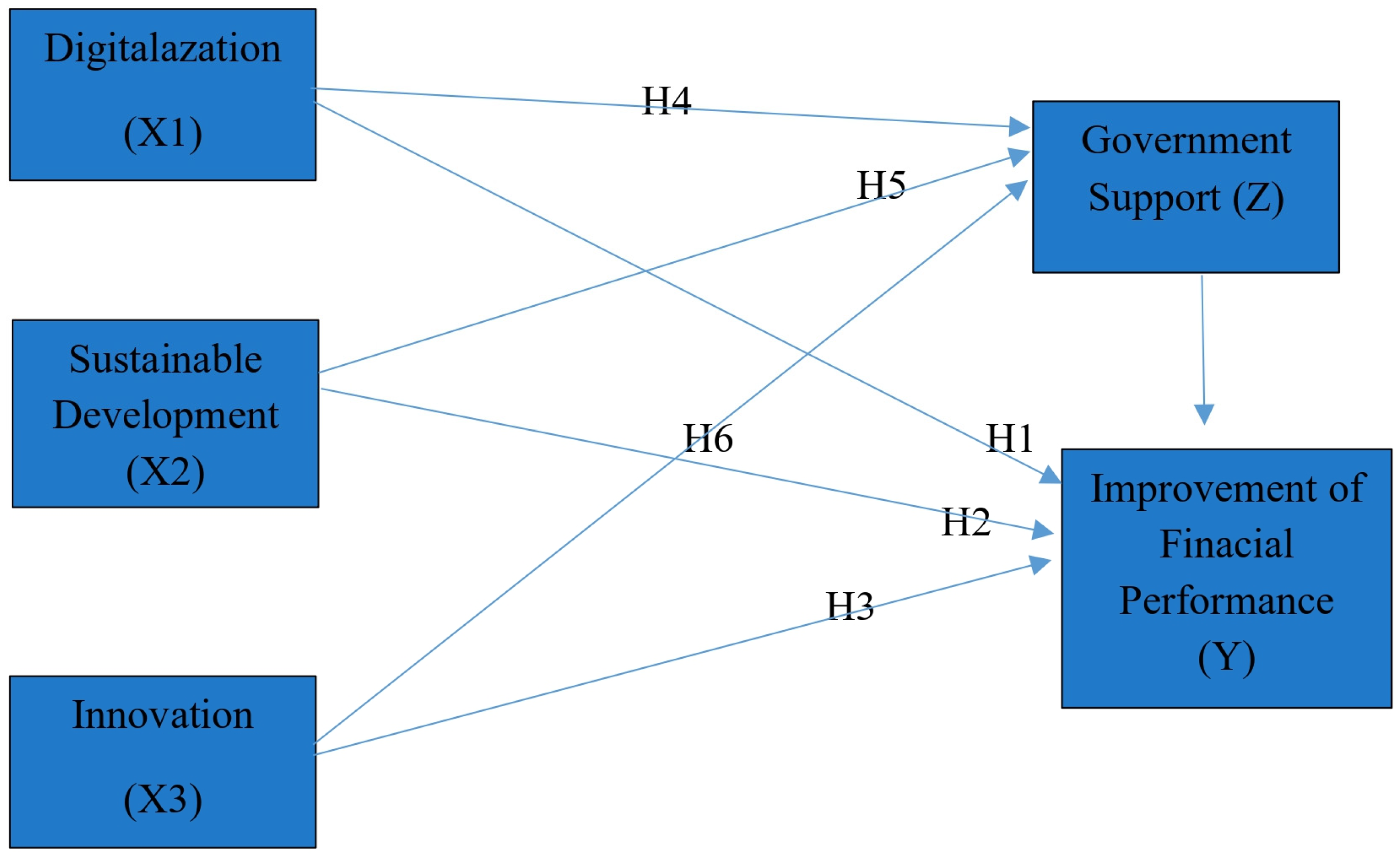
H1: Digitalization affects improving financial performance in MSMEs in the Agriculture, Fisheries, and Tourism Sectors.
2.5. Sustainable Development and Improvement in Financial Performance
Sustainable development in MSMEs includes the implementation of environmentally friendly business practices, resource use efficiency, and empowerment of the surrounding community (
Kurniawati, 2023;
Nuryanto et al., 2024) In the agriculture and fisheries sector, the implementation of sustainable development is crucial to ensure environmental sustainability, food security, and improve the quality of life of people in coastal areas (
Apriono et al., 2023;
L. Li et al., 2025) In the context of tourism, ecotourism and cultural preservation serve as an attraction for tourists and differentiate Indonesian products in the global market (
Zuñiga-Collazos et al., 2025) Empirical studies show that MSMEs that adopt sustainability principles gain higher market loyalty, better investment access, and more stable financial performance (
Kusuma et al., 2024;
Satpathy et al., 2025).
From the perspective of Dynamic Capability Theory, MSMEs can proactively adopt sustainability principles. This is demonstrated by their ability to sense (detect environmental opportunities and risks), seize (make strategic decisions), and transform (adjust business models) in the face of rapid changes in the business environment. According to this theory, MSMEs can gain a sustainable competitive advantage by utilizing resources in flexible and creative ways (
Mishra & Kiran, 2024). In this situation, sustainability is not only a social responsibility but also a vital part of an adaptive business strategy that improves operational efficiency and financial stability.
Recent studies have shown that the competitiveness, market loyalty, and financial performance of MSMEs are enhanced by adopting sustainability-based strategies supported by dynamic capabilities. Even when infrastructure and market access are scarce, MSMEs can keep a competitive edge through capabilities like innovation and organizational learning (
Al-Moaid & Almarhdi, 2024). Additionally, other research has shown that the economic, social, and environmental facets of sustainability increase MSMEs’ stability and profitability simultaneously, particularly when internal capabilities like innovation and market orientation are managed in concert (
Vrabcová & Urbancová, 2023).
H2: Sustainable development enhances the financial performance of MSMEs in the Agriculture, Fisheries, and Tourism Sectors.
2.6. Innovation and Improvement in Financial Performance
Innovation is a key factor that affects the increase in the competitiveness and performance of MSMEs in various economic sectors. Innovation in the agriculture and fisheries sector is characterized by product development, product diversification, appropriate use of technology, and effective distribution methods. (
Audretsch et al., 2023;
Yunus et al., 2025;
Zuñiga-Collazos et al., 2025). Innovation in the tourism sector is characterized by the creation of experiential tour packages, the digitization of services, and collaboration between business stakeholders to increase value for visitors. (
Audretsch et al., 2023;
Zuñiga-Collazos et al., 2025).
From the standpoint of DCT, MSMEs are capable of consistently developing and modifying innovations. This competency illustrates an organization’s internal ability to recognize changes in the market, respond appropriately, and actively modify internal structures and business processes to sustain peak performance (
Mishra & Kiran, 2024). To put it another way, innovation is more than just original ideas; it also shows how adaptable and sensitive a business is to change, which is essential to its long-term success.
Wijaya et al. (
2025) stated that MSMEs that prioritize innovation show better adaptability to market fluctuations, can take advantage of emerging opportunities, and show greater resilience to external constraints. Indonesia faces significant obstacles, including limited financial resources, inadequate innovation infrastructure, and an underdeveloped collaborative ecosystem (
Anjaningrum et al., 2024;
Zuñiga-Collazos et al., 2025).
H3: Innovation affects the improvement in financial performance in MSMEs in the Agriculture, Fisheries, and Tourism Sectors.
2.7. Government Support as a Mediating Variable
DCT states that, most of the time, government support is a factor outside the business. More specifically, it makes it easier for them to identify, seize, and/or change digital business opportunities. Therefore, government activities like building the digital infrastructure, making it easier for MSMEs to obtain loans, offering them training, and giving them incentives to come up with new ideas and do that more frequently than the competition directly make it easier for them to do so. Much evidence from various national and international sources proves that government support directly influences MSMEs’ efforts in digitization, sustainable development, innovation, and ensuring better financial performance (
Abu et al., 2025;
Jayeola et al., 2022;
Wijaya et al., 2025). The term government support encompasses a range of factors, including those mentioned above, as well as making laws understandable, friendship, and offering training programs, as well as giving money to businesses or making it easier for them to borrow it (
Abu et al., 2025). Furthermore, recent empirical findings indicate that MSMEs that were directly supported by government initiatives such as innovation training, digital programs, and green business incentives perform better financially and more sustainably (
Abu et al., 2025;
Wijaya et al., 2025).
In addition to DCT, these dynamics can be conceptually studied through Institutional Theory (
Scott, 2015), which holds that internal strategic action and external institutional compulsion both affect organizational behavior. IT contends that public policies and programs create coercive pressure through regulations, normative pressure through community-wide professional standards, and mimetic pressure by enabling firms to copy successful practices observed in other firms (
Fauzi & Sheng, 2020). In sum, the compliance pressures encourage MSMEs to adopt digital technologies and novel organizational practices to preserve legitimacy and competitiveness within their institutional environments (
Jayeola et al., 2022). Furthermore, state institutions act not only as a source but also as a normative example, shaping MSMEs’ disposition to transform. Studies have found that state backing significantly enhances MSME competitiveness. This is achieved by ensuring that institutional stimuli align with market needs and business objectives. Other research has supported this notion and emphasized the relevance of the institutional setting for inclusive growth programs and MSME efficiency (
Setiawan et al., 2025). Nevertheless, despite its many benefits, disparities in outcomes across areas and domains persist due to problems in execution, monitoring, and evaluation, which all undermine the effectiveness of institutional intervention (
Satpathy et al., 2025).
H4: Government support to mediate the influence of digitalization on improving financial performance in MSMEs in the Agriculture, Fisheries, and Tourism Sectors.
H5: Government support to mediate the influence of sustainable development on improving financial performance in MSMEs in the Agriculture, Fisheries, and Tourism Sectors.
H6: Government support to mediate the influence of innovation on improving financial performance in MSMEs in the Agriculture, Fisheries, and Tourism Sectors.
2.8. Improving MSME Financial Performance as an Outcome
The success and competitiveness of small and medium-sized enterprises (SMEs) are highly dependent on financial performance, which includes revenue growth, profits, liquidity, and operational efficiency. Internal aspects such as digitalization, innovation, and sustainable practices, as well as external factors such as government policy assistance, market access, and strategic collaboration (
Abu et al., 2025;
Fakhreddin et al., 2025;
Kawatu & Kewo, 2021;
Miran et al., 2025;
Sisay et al., 2025;
Verma et al., 2024).
Research by Zuñiga-Collazos et al. shows that digitalization improves cost efficiency and expands market access, while product innovation increases profit margins. On the other hand, the implementation of sustainable development improves corporate sustainability, attracts a more loyal consumer base, and facilitates access to green investment-based funding (
Nuryanto et al., 2024;
Zuñiga-Collazos et al., 2025).
2.9. Conceptual Framework
Technological developments and changes in the business environment require the company to adapt through digitalization, sustainable development, and innovation in order to improve financial performance. This is also stated in Asta Cita’s Vision for the Government of President Prabowo-Gibran. In addition, the existence of debt elimination policies, tax incentives, digitalization, and training for MSMEs is government support to encourage the growth and sustainability of MSMEs. Especially for the policy of eliminating MSME debt on the bank side applies to MSMEs in the Fisheries sector. There are many MSME sectors in Indonesia, but the MSMEs that are closely related to Asta Cita are the Agriculture, Fisheries, and Tourism sectors. MSMEs must strive to improve their financial performance so that their business continuity can survive or be able to compete. Therefore, this study examines the influence of digitalization (X1), sustainable development (X2), and Innovation (X3) on Improving Financial Performance with government support as a mediation variable. Our research model is depicted in
Figure 1, and shows how digitalization influences sustainable development, innovation, government support, and financial performance.
3. Research Method
3.1. Reasearch Design
This study uses quantitative methods to investigate and explain the relationships between variables in the research model. A quantitative research approach is used in this methodology. This methodology aims to measure and analyze information systematically and objectively (
Kusuma et al., 2024;
Miran et al., 2025;
Pesak et al., 2022;
Satpathy et al., 2025). This approach seeks to explain the causal relationships between specific variables, including digitalization, sustainable development, and innovation, and their impact on the financial performance of MSMEs, while taking into account the moderating effect of government support. On the other hand, quantitative methods facilitate the collection of numerical data that can be analyzed statistically for hypothesis validation (
Nuryanto et al., 2024;
Permatasari et al., 2025). This study analyzes the relative strength of independent and dependent variables in the model, as well as the impact of mediator variables on these relationships. This is done through statistical analysis, including path analysis (
Chua, 2023;
Miran et al., 2025). This selection process must be carried out to draw meaningful conclusions. This procedure ensures the generalization of the sample results to the overall population. The quantitative method used in this study identifies the causal relationships between variables in the model and provides a detailed analysis of the dynamics that affect the overall financial performance of MSMEs, particularly in North Sulawesi. This study is expected to provide significant theoretical and practical insights for the management of MSMEs in North Sulawesi.
3.2. Sampling and Data Collection
The research was conducted on MSMEs in the agriculture, fisheries, and tourism industry sectors in North Sulawesi Province. Primary data is the source of data for this study, namely, data taken directly through questionnaires from MSMEs in the Agriculture, Fisheries, and Tourism sectors in North Sulawesi. The population of this study is all MSMEs operating in the agriculture, fisheries, and tourism industry sectors in North Sulawesi. To establish whether our sample was of a sufficient size for PLS-SEM (Partial Least Squares Structural Equation Modeling), we used the recommendations advanced by (
Kock & Hadaya, 2018) based on two alternative minimum sample size estimation methods: the inverse square root method and the minimum R-squared method. In our model, the characteristic in which the maximum of predictor arrows converge has three incoming paths and we would expect at least a small effect size (path coefficient = 0.20–0.25) for the smallest relationship of these in terms of level to be explained by direct predictors. Furthermore, the minimum for R-squared (R
2) of 0.245 occurs for Government Support in the model. Based on these parameters:
- (1)
Inverse Square Root Method
With the minimum expected effect size of 0.20, the sample size is approximated by:
This means that at least 25 respondents would be required to test the validity of a path coefficient of ≥0.20 under this approach.
- (2)
The Minimum R-Squared Method
The tables provided by (
Kock & Hadaya, 2018) show that for an expected R
2 value of 0.245, the sample size needs to be between 70 and 80 respondents. This is based on a power level of 0.80 and a significance level of 0.05. Our study’s sample size of 435 respondents is much larger than the minimum set by either method.
This validates the statistical reliability and robustness of the model estimation, indicating that the study is adequately powered to identify medium to large effect sizes within the PLS-SEM framework.
3.3. Variable Definition
The variables of this research are digitalization, sustainable development, and innovation as independent variables, government support as a moderating variable, and improvement in financial performance as a dependent variable. The digitalization of this research is the adoption of information and communication technology to create new value chains and revitalize business structures. Indicators of digitalization include business resources, the ability to implement, high internet connectivity, and systems tailored to needs (
Arroyabe et al., 2024;
Zuñiga-Collazos et al., 2025). Sustainable development is a development concept that balances social, economic, and environmental factors to ensure business continuity without harming the environment, which can increase business competitiveness. Indicators of sustainable development are employee motivation, competitive advantage, business image and reputation, customer satisfaction, cost, time, and funding (
Zuñiga-Collazos et al., 2025) The innovation variable of this research is the process of creating new goods and services that enable businesses to gain a competitive advantage, adapt to market trends, and create value. Innovation indicators are product/service improvement, market launch, process improvement, and improvement in sales (
Lestari et al., 2024;
Zuñiga-Collazos et al., 2025). Government support is an intervention offered by the government to address many issues, including regulatory development, talent development, and access to finance. Indicators of government support are as follows: governments offer support to help MSMEs get easier financing; government financial assistance increases MSME growth; having access to government assistance is key to encouraging the growth and sustainability of MSMEs; government assistance improves MSME performance and changes the relationship between business skills and MSME survival; and although government assistance is helpful, it must be improved to get the best (
Abu et al., 2025). Improving financial performance: This study aims to increase the measure of achieving organizational goals in financial aspects, based on efficiency and effectiveness indicators that reflect the company’s ability to optimize resources to achieve desired results and support business development and management in various sectors. The variable indicators of financial performance are product quality, increased market share, sales growth, and increased profits (
Miran et al., 2025;
Zuñiga-Collazos et al., 2025).
3.4. Data Analysis
The data collection technique for this research involves distributing questionnaires to MSMEs, which serve as research samples. The questionnaire is compiled in the form of a Google Form to facilitate distribution and filling. The data obtained from the questionnaire were analyzed with the Partial Least Squares-Structural Equation Model (PLS-SEM) analysis tool, assisted by Smart PLS software version 4.0.0. The type of PLS SEM used is covariance-based (CB-SEM) because it confirms the existing theory (
Chua, 2023) The analysis process of this research goes through several stages, starting from the outer model test to the inner model. In the outer model, convergent validity is used to evaluate the correlation between an indicator or gauge and its construct. This can be done by assessing the outer loading or loading factor and average variance extracted (AVE). The loading factor value must be greater than 0.6, and AVE must be greater than 0.5 to indicate a positive relationship between the gauge and the structure. Internal consistency is used to measure reliability at the construct level. This is measured by the combination of composite reliability and Cronbach’s alpha. The combined value of composite reliability and Cronbach’s alpha must be greater than 0.7 because the reliability of the construct is higher if the value is higher. Furthermore, the inner test of the model is used to test the direct influence of variables on the model.
The inner model can provide the expected results, namely, knowing the influence of digitalization, sustainable development, and innovation variables both directly and through government support as a mediating variable on improving the financial performance of MSMEs. By knowing the influence of these variables, it can produce a financial strategy model for MSMEs based on Asta Cita, increase competitiveness in the domestic and international markets with the right approach, ensure long-term growth to promote the sustainability of MSMEs in the national economy, increase the financial literacy of MSMEs and can significantly improve the position of MSMEs in the national economy.
The PLS-SEM approach is used to explain the influence of digitalization, innovation, and sustainable development on the financial performance of MSMEs in the agriculture, fisheries, and tourism sectors, considering government support as a mediator factor. Data were collected through questionnaires compiled using a Likert scale, with 1 for strongly disagree, 2 for disagree, 3 for neutral, 4 for agree, and 5 for strongly agree.
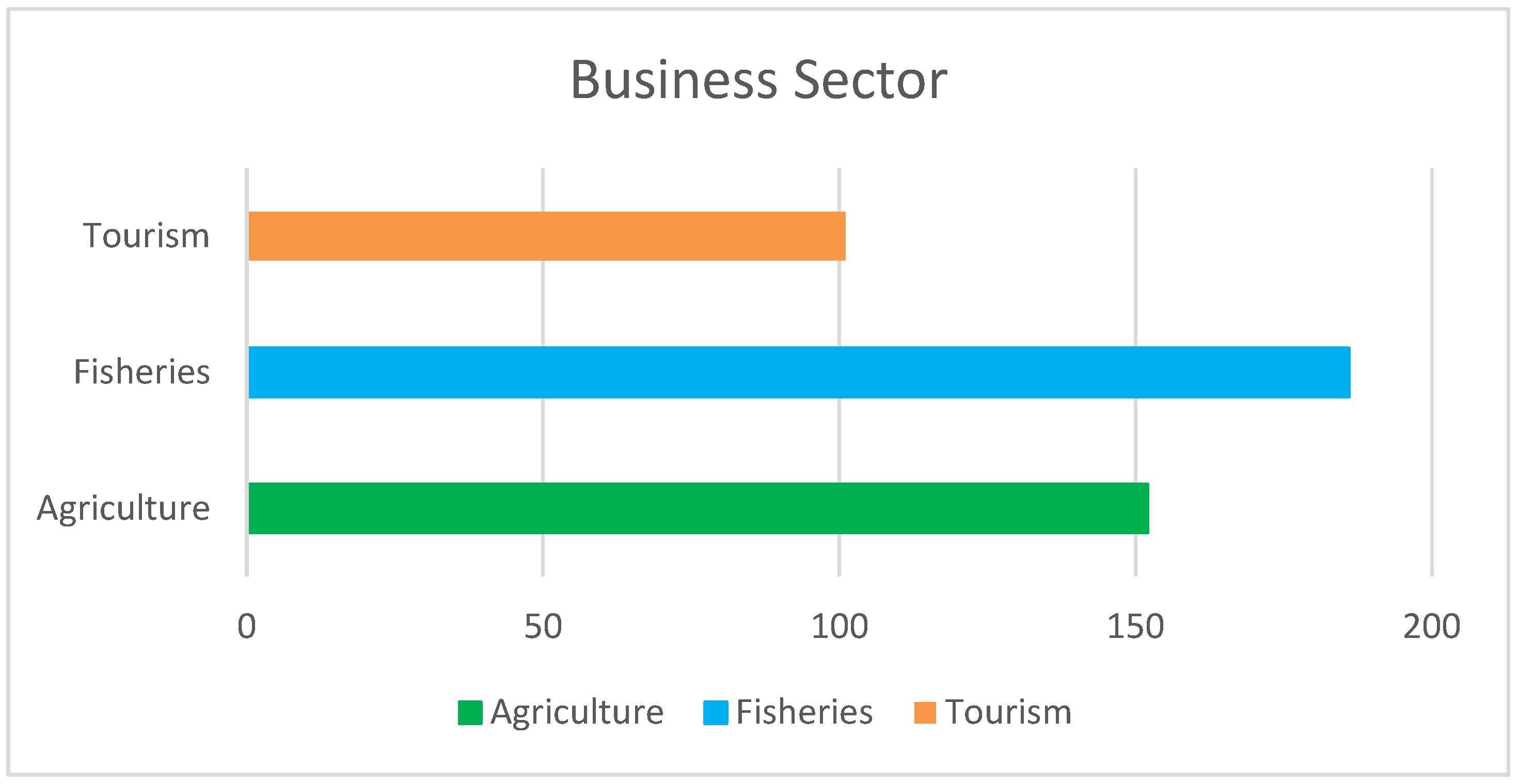
Data analysis was carried out using a PLS-SEM involving 435 MSME respondents from three different industries spread across South Minahasa Regency, South Bolaang Mongondow Regency, Bitung City, Manado City, North Minahasa Regency, Minahasa Regency, and Talaud Regency. The respondents consisted of 152 respondents from MSMEs from the Agriculture sector, 186 from the Fisheries sector, and 101 from the Tourism sector. The most significant number of respondents came from the Fisheries Sector, while the smallest came from the Tourism sector. The dispersion of respondents’ business type is shown in
Figure 2, which is segmented by different economic sectors: agriculture, fisheries, and tourism.
The SEM-PLS technique was chosen for its ability to analyze simultaneous correlations between latent variables in depth. In addition, this technique is also effective in handling large samples and complex model frameworks.
The analysis of this data resulted in an empirical assessment of the strength and importance of correlations between the research variables. This can be a solid scientific foundation to formulate a strategic plan to improve the competitiveness and financial performance of small and medium enterprises (SMEs) in Indonesia.
This research model integrates reflective constructs to analyze the interactions between variables. The results of the outer model test for the convergence validity of each indicator can be seen in
Table 1. The validity of the convergence is measured by an outer loading above 0.6, indicating that each indicator correlates well with the same variable.
4. Results
Discriminant validity is a measure that shows that a construct is different from another. The results of the discriminatory validity test of this study can be seen in
Table 2. The root value of the AVE, determined by the Fornell-Larcker criterion for each structure, is greater than the correlation value between the structures.
The reliability test used Cronbach’s alpha and composite reliability values. If Cronbach’s alpha and composite reliability values are above 0.7, then the measuring tool is more reliable. The results of the reliability test, as shown in
Table 3, indicate a value above 0.7. It means that the measuring tool or variable used is reliable.
Independent variables in the model, including digitalization, sustainable development, innovation, and government support as mediator variables, explain 68.9% variation in financial performance, as shown by the R-square value of 0.689. As a result, the remaining 31,1% can be attributed to factors not included in the model. The model underwent modifications to the number of variables and sample size, as indicated by the adjusted R-squared value of 0.686. These figures show that, although the model has been adapted for its complexity, its predictive capabilities remain highly effective. There is no overfitting, as shown by the minimal difference between the modified R-squared values.
Based on
Table 4, the R-Square value of 0.245 indicates that the variables in the model explained only 24.5% of the variation in government support. As a result, external variables not included in the model explain about 75.5% of the variation. An adjusted R-squared value of 0.240 indicates an adjustment to the number of variables and sample size, and the minimal difference between these two values indicates that the model is not overfitting these variables.
The results of the hypothesis test using SEM-PLS in
Table 5 indicate that digitalization has a positive and significant effect on financial performance. The path coefficient is 0.242, indicating a positive relationship. Furthermore, a calculated t-value of 4.065 exceeds the t-value of 2.01505, and a
p-value of 0.000 or less than 0.05 indicates that the hypothesis of digitalization’s effect on improving the financial performance of MSMEs in the agriculture, fisheries, and tourism sectors is accepted.
Sustainable growth has a positive effect on the improvement in financial performance, which can be seen in the calculation of 8.539 or greater than the t table and p values of 0.000. The direction of the relationship is positive because the path coefficient value is 0.481 and is marked positive. Innovation has a positive influence on improving financial performance, as shown by a calculated t value of 3.147 or greater than the t table and p values of 0.002. However, the influence of digitalization, innovation, and sustainable development, supported by government initiatives to improve financial performance, has no significant effect, as indicated by a p-value greater than 0.05.
Robustness Test
This study performed a robustness assessment within the structural equation modeling–partial least squares (SEM-PLS) framework by integrating quadratic terms to assess the stability of path relationships under non-linear specifications. This procedure seeks to ascertain the consistency of observed associations between constructs when alternative, non-linear patterns are integrated into the model. Out of the seven proposed structural paths, four exhibited statistically significant quadratic effects. These notably included the impact of digitalization on financial performance, government support, and the influence of sustainable development. These findings indicate that the examined relationships demonstrate stability and are not mere artifacts of linear modeling assumptions.
On the other hand, three paths did not show statistically significant quadratic effects. These were the effects of innovation on both financial performance and government support, as well as the effect of government support on financial performance. Nonetheless, the lack of significance of these paths in the robustness test should not be construed as evidence of model bias or inferential invalidity. Instead, it might mean that the relationships are naturally linear or that the quadratic test lacks sufficient statistical power to detect more subtle forms of interaction. Neumayer and (
Neumayer & Plümper, 2017) stress that robustness tests are not the only way to determine whether a model should be rejected (
Zhang et al., 2021). Contend that robustness failures may stem from constraints in test design or particular data distributions, rather than from theoretical or empirical shortcomings inherent in the model itself (
Zhang et al., 2021). Consequently, the existence of several non-significant paths in the robustness analysis does not undermine the overall integrity of the model. Instead, it shows how complex empirical relationships can be. It stresses the need to use robustness checks as part of a larger methodological triangulation, not just as a single test of model validity.
5. Discussion
5.1. Digitalization Has a Positive Effect on Improving Financial Performance
The results of the hypothesis test indicate that digitalization has a positive effect on improving financial performance. Consequently, digitalization or digital transformation by MSMEs in the agriculture, fisheries, and tourism sectors will likely improve their financial performance. Digital transformation, or digitalization, has a significant impact on the financial performance of micro, small, and medium enterprises (MSMEs). Digitalization implemented by MSMEs in the Agriculture, Fisheries, and Tourism sectors is in the form of the use of the internet in business areas, the use of technological tools according to business needs, and the marketplace as a place for marketing in addition to marketing in the local market. Digital transformation involves using digital technology to improve operational efficiency, drive product innovation, and facilitate data-driven decision-making. A successful transition to the digital era requires changes in MSME strategies and organizational structures, as well as technological advancements (
Savvakis et al., 2024;
Zuñiga-Collazos et al., 2025).
Dynamic Capability Theory offers a valuable framework for analyzing how Micro, Small, and Medium Enterprises (MSMEs) can leverage digitalization to improve their financial performance. This theory states that companies require not only static resources, but also dynamic capabilities—skills and competencies that allow them to adapt and reorganize their resources in response to ever-changing contexts (
Fakhreddin et al., 2025) In the context of digitalization, this competency is essential because it allows MSMEs to effectively integrate digital technology into their operations, thereby improving efficiency and financial results.
The evolution of digital services according to (
Setiawan et al., 2025) Not only does it make transactions easier and faster for businesses, but it also improves financial well-being by increasing operational efficiency. According to (
Anning-Dorson et al., 2025) The integration of digital tools such as financial management apps allows MSMEs to improve their financial oversight, which in turn results in better business performance. MSMEs can increase productivity, reduce costs, and ultimately increase their profits by using digital financial instruments.
Furthermore, digitalization must be supported by the ability to implement information and communication technology in MSME business activities. This is under the answers from respondents of 62.1% who strongly agree with the statement of the second indicator of the digitization variable. In addition, the Dynamic Capacity theory states that the ability to respond to digital developments is linked to better financial performance (
Gao, 2024). Explains how the application of digital accounting techniques improves financial monitoring in MSMEs. Research shows that increased accuracy and reliability in financial reporting, combined with reduced transaction processing time, result in significant operational efficiencies (
Koesrianti & Tanega, 2024). Found a correlation between better financial management practices, supported by digital tools, and better financial outcomes in MSMEs. The authors affirm that increased financial literacy and the adoption of digital reporting methods are essential for sustainable growth.
5.2. Sustainable Development Has a Positive Effect on Improving Financial Performance
The positive influence of sustainable development on financial performance suggests that implementing sustainable development practices will improve the financial performance of MSMEs. The implementation of sustainable development such as the concern of MSMEs in the agriculture, fisheries and tourism sectors for the surrounding environment, for example, not throwing business waste carelessly, providing garbage cans around the place of business and cleanliness in the environment where the business is located will have an impact on customer satisfaction. It will ultimately improve the financial performance of MSMEs.
Dynamic Capacity Theory (DCT) emphasizes the importance of an organization’s ability to adapt, integrate, and reconfigure internal and external resources in order to gain a competitive advantage, especially related to sustainable development (SD) and financial performance (
Hu et al., 2024;
López-Gamero et al., 2025) By developing dynamic skills, organizations can drive innovation that aligns with sustainability goals, thereby improving overall financial performance.
An important element in sustainable development is the integration of environmental factors into the Company’s strategy, enabling MSME actors to be recognized by their customers for their unique qualities that differentiate them from competitors. This is under the answers from respondents in the second indicator of the Sustainable Development variable, with 58.6% strongly agree. Furthermore, 60.2% of respondents strongly agree that the use of environmentally friendly technology can speed up the production process, and 60% of respondents strongly agree that the implementation of sustainable development reduces operational costs. For example, in the agricultural sector, using organic fertilizers from agricultural waste not only increases crop yields but also reduces dependence on chemical fertilizers that farmers must purchase, resulting in lower operational costs.
The implementation of sustainable development enhances the competitiveness of MSMEs in the agriculture, fisheries, and tourism sectors by providing them with opportunities to secure funding from institutions or the government. This was approved by 59.5% of respondents. The funding will ultimately improve the financial performance of these MSMEs.
5.3. Innovation Has a Positive Effect on Improving Financial Performance
The application of innovation by MSME actors in the agriculture, fisheries, and tourism sectors improves financial performance. Innovation in question is the process of creating new goods and services that allow companies to gain a competitive advantage, follow market trends, and generate value. There are many types of innovations, including product or service innovations, processes, technology, green and business models. For example, the use of online reservations, digital payments, digital promotions, and local culinary innovations with packaging innovations.
MSME actors who develop products or services tailored to customer needs and supported by effective marketing strategies will expand their market, thereby improving their financial performance. In addition, innovation in the production process will make the process time-efficient, save costs, and increase productivity. Therefore, the actors actively try to improve business processes that will increase revenue and ultimately improve financial performance. This is in line with dynamic capacity theory that integrates organizational innovation strategies with financial success, especially for Small and Medium Enterprises (SMEs). The dynamic capabilities of an organization allow it to identify market opportunities, take advantage of them, and reorganize resources to successfully adapt to the changing environment, thereby improving financial outcomes (
Boutbhirt & Adaskou, 2023;
Yunus et al., 2025).
A fundamental element of innovation emphasized by DCT is its ability to improve financial performance through efficient resource allocation and strategic decision-making. Boutbhirt and Adaskou point out that financial innovation allows MSMEs to access various financing alternatives, thereby strengthening their capital structure and improving performance (
Boutbhirt & Adaskou, 2023) By adopting innovative financial practices, MSMEs can improve operational efficiency and better respond to market needs, thereby strengthening their financial viability. (
Wang et al., 2024) describe the relationship between diverse innovation strategies, including product and process advancement, and better financial performance. They highlight the importance of organizational innovation as an intermediary in this relationship, while pointing out the need to re-evaluate the interactions between different types of innovation. This shows that understanding the context and interaction of various innovations is essential to maximizing their potential in improving financial performance.
(
Zuñiga-Collazos et al., 2025) Emphasize the crucial function of innovation in linking core skills to financial performance, showing that MSMEs that can make good use of their capabilities are more likely to shift from mere survival to growth, thereby improving their financial metrics. This transition is in line with the principles of DCT, demonstrating that an environment that supports innovation drives both operational success and financial prosperity.
5.4. Government Support Cannot Mediate the Influence of Digitalization, Sustainable Development, and Innovation on Improving Financial Performance
Government support, particularly in the form of accessible financing, remains largely unavailable to many MSMEs—especially those operating in agriculture, fisheries, and tourism. This limitation is empirically reflected in respondents’ assessments, where 14.2% rated the first indicator of the government support variable as “strongly disagree” to “neutral,” indicating perceived inadequacy and limited inclusiveness of such policies. Most assistance provided to MSMEs is concentrated in tangible and collective forms, such as the distribution of basic equipment or group-based programs, which, while beneficial at the community level, do not effectively address individual firms’ needs for working capital or facilitate their transition toward digital and sustainable business models.
MSMEs in the agriculture, fisheries, and tourism sectors express strong expectations that government intervention could enhance their growth and sustainability. However, the persistently uneven distribution of assistance across regions and industries has weakened the intended role of government support as a moderating factor between digitalization, innovation, and sustainable development in improving financial performance. Existing programs—ranging from regulatory facilitation and fiscal incentives to training schemes—tend to adopt a “one-size-fits-all” approach that fails to account for sectoral heterogeneity and firm size diversity. Consequently, these initiatives often lack the specificity and contextual sensitivity required to effectively amplify the performance impact of internal strategic capabilities.
Moreover, national sustainability frameworks, such as Presidential Decree No. 111 of 2022 on the SDGs and POJK No. 51/POJK.03/2017 on Sustainable Finance, are applied inconsistently across sectors. Many MSMEs lack both access to and understanding of these regulatory frameworks, resulting in fragmented and uneven policy implementation. Government support is also frequently dispersed among multiple ministries and agencies, creating institutional silos that hinder policy synchronization and inter-agency coordination. The resulting policy fragmentation diminishes the systemic coherence required to support MSMEs’ transition toward sustainability and innovation-driven competitiveness.
Theoretically, these findings are consistent with Dynamic Capability Theory (
Teece, 2016;
Teece et al., 1997), which posits that the success of digital transformation, innovation, and sustainable development is contingent upon an organization’s internal capacity to sense opportunities, seize resources, and transform operational routines. In this context, external support mechanisms—such as government programs—may provide enabling conditions but are insufficient to substitute for weak internal dynamic capabilities. The absence of robust absorptive capacity, digital literacy, and innovation orientation within MSMEs limits the extent to which government interventions can effectively mediate the relationship between technological and sustainability practices and financial performance. Hence, the non-significant moderating effect of government support underscores a critical theoretical insight: without internally embedded dynamic capabilities, external policy stimuli remain peripheral and fail to translate into measurable performance gains.
A substantial body of literature recognizes the pivotal role of government intervention in facilitating the growth and resilience of micro, small, and medium enterprises (MSMEs). Nevertheless, empirical evidence remains inconclusive regarding its moderating effectiveness in strengthening the relationship between digitalization, innovation, sustainable development, and financial performance. Several studies have found that while government initiatives create an enabling environment, they often fail to generate measurable improvements in firm-level outcomes due to variations in absorptive capacity and contextual readiness among MSMEs. For instance,
Manne (
2022) demonstrated that the digitalization of Islamic finance contributes to enhanced financial performance among MSMEs; however, many enterprises still struggle to fully exploit digital tools and platforms due to limited technological literacy and weak integration capabilities. This finding suggests that government policies and regulatory frameworks may provide the necessary infrastructure but are not sufficient to ensure that firms can capture and internalize the potential benefits of financial digitalization.
Similarly,
Okello Candiya Bongomin et al. (
2018) emphasized that while both internal and external factors, including government policy interventions, can influence MSME performance, their effect sizes may not be substantial enough to produce statistically significant moderating impacts. In other words, even in the presence of external support, the intrinsic ability of MSMEs to innovate, adapt, and digitally transform remains the principal determinant of financial performance. This insight resonates with Dynamic Capability Theory (
Teece et al., 1997;
Teece, 2016), which posits that sustainable competitive advantage arises not merely from access to external resources but from the organization’s internal capability to sense, seize, and reconfigure them into value-creating processes.
In alignment with this view,
Klonowski (
2012) further highlighted that financial literacy and technological competence constitute core micro-foundations of dynamic capabilities, directly influencing MSMEs’ capacity to leverage innovation and digitalization for improved performance. These findings collectively indicate that while government support may serve as a facilitating backdrop, the real transformative momentum originates from internal organizational learning, financial capability, and strategic adaptation. Therefore, policies that overemphasize regulatory or incentive-based interventions without addressing the micro-level absorptive mechanisms of MSMEs are unlikely to yield significant performance outcomes. This underscores the need for integrated approaches that simultaneously enhance external enabling conditions and internal dynamic capabilities—particularly in financial literacy, digital adoption, and innovation management—to realize the full potential of sustainable MSME growth.
6. Conclusions
This research aims to examine the influence of digitalization, sustainable development, and innovation on improving financial performance for MSMEs in the Agriculture, Fisheries, and Tourism sectors in Indonesia. In addition, it examines whether government support is able to mediate the influence of digitalization, sustainable development, and innovation on improving financial performance using primary data analyzed with SEM-PLS. The results show that digitalization, sustainable development, and innovation have a direct positive effect on improving financial performance, while government support does not mediate these influences. This means that the internal dynamic capabilities of MSMEs in the Agriculture, Fisheries, and Tourism sectors, especially in terms of digitalization, sustainable development, and innovation, play an important role in improving financial performance, while government intervention needs to be more targeted and improve the ability to provide stronger results for MSMEs.
6.1. Theoretical Contributions
Based on the findings of the research, it can be concluded that digitalization, sustainable development, and innovation significantly improve the financial performance of MSMEs in the fields of agriculture, fisheries, and tourism. The results confirm that the application of digital technology, the application of sustainability principles, and innovation in products, processes, and business models are important components that can improve operational efficiency, increase competitiveness, and optimize MSME financial results. The results of this empirical research are in line with the Dynamic Capacity Theory (DCT). DCT emphasizes that the ability to adapt, integrate, and transform internal resources to cope with the changing dynamic business environment is essential.
In addition, this study shows that government support has not been able to mediate the impact of digitalization, sustainable development, and innovation on the financial performance of MSMEs. Factors that cause this ineffectiveness include unequal access to government programs, a lack of sectoral and special assistance, and low levels of financial and technology literacy among MSMEs. Therefore, rather than external support alone, the improvement in MSMEs’ financial performance is more determined by internal initiatives and strengthening adaptive capabilities.
Further research is expected to investigate a more contextual and integrated model of policy intervention to maximize the role of the government in encouraging the transformation of MSMEs towards a better performance. In addition, this study emphasizes the importance of strengthening MSMEs internally in terms of digital literacy, financial literacy, and sustainable innovation.
Agriculture and Fisheries
These sectors are characterized by significant dependence on natural resources, cyclical production trends, vulnerability to climate and market fluctuations, and the urgent need for technological advances in processing and distribution. The results of this study emphasize the value of integrating digital transformation, product innovation, and sustainable practices into agriculture and fisheries to improve operational efficiency and strengthen long-term resilience. We recommend tailored policies to support the adoption of new technologies, such as smart agriculture and digital traceability in fisheries, along with targeted training programs to enhance the digital competence of local stakeholders.
Tourism
Unlike the production-based sectors, tourism is a service-intensive and experience-driven industry. In this sector, government support and innovation, especially in digital marketing, sustainable tourism practices, and service quality, play a dominant role in improving financial outcomes. Thus, tourism policies should emphasize the integration of digital tools for customer engagement, the development of green tourism certifications, and capacity building for local tourism providers. Further research is expected to investigate a more contextual and integrated model of policy intervention to maximize the role of the government in encouraging the transformation of MSMEs towards better performance. In addition, this study emphasizes the importance of strengthening MSMEs internally in terms of digital literacy, financial literacy, and sustainable innovation.
6.2. Practical Implications
As resource-based and production-oriented industries, agriculture and fisheries highlight the significance of laws and programs that support environmental sustainability and technological advancement. Digital solutions that enhance traceability, predictive analytics, and market access can be highly beneficial to these industries, which are frequently limited by seasonal fluctuation, reliance on natural resources, and logistical difficulties. Innovative agricultural technology, sensor-based monitoring, and digital supply chain platforms are examples of the infrastructure that enable digital agriculture and fisheries systems. Governments and regional institutions are encouraged to invest in them. Programs aimed at enhancing the digital literacy of farmers and fishermen should be given priority in parallel. Additionally, sectoral policies must incorporate environmental sustainability by providing subsidies or incentives for eco-friendly activities like resource conservation, organic farming, and responsible fishing. These initiatives have the potential to boost resilience and production, particularly for the industry’s core small and medium-sized producers.
Tourism, unlike agriculture and fisheries, offers a different combination of opportunities and needs because it is a sector that depends on services and experiences. Research shows that components such as institutional support, consumer interaction, and digital innovation have a greater impact on tourism company performance. New tourism technologies such as digital storytelling, AR, and online booking platforms should be the primary focus of industry initiatives to increase tourist engagement and operational efficiency. Public regulations should encourage sustainable tourism practices, such as green certification, ecotourism initiatives, and community-based tourism development. These resources enhance the reputation and attractiveness of travel destinations and support global sustainability goals. Local tourism operators must strengthen their capabilities, particularly in terms of communication technology and environmental requirements, to ensure quality and resilience.
To close the gap found in this study between government support and MSME performance outcomes, we suggest a number of specific and concrete policy actions for each sector. The government should encourage the use of smart farming technologies, digital supply chain systems, and environmentally friendly production tools in the agriculture and fisheries sectors. This should be done with the help of local infrastructure and access to digital markets. In the tourism industry, policy should focus on improving digital marketing tools, creating green tourism certifications, and giving local tourism operators more skills through training programs that are specific to their needs.
The government should set up data-driven dashboards and use performance-based metrics to check how well policies are working at both the regional and sectoral levels. This would improve monitoring and evaluation systems. Also, there should be more focus on co-creation and collaboration. This could include setting up sectoral innovation labs, community-based policy design forums, and MSME advisory panels to make sure that policy design fits with how businesses really work. Lastly, support systems should go beyond just giving people access to money. They should also include training in digital literacy, financial management, and sustainability, which can be done through mobile and modular learning platforms that MSMEs in rural or underserved areas can use. The goal of these combined steps is to make government support a better way to help MSMEs be more innovative, resilient, and grow in a way that includes everyone.
6.3. Limitations and Suggestions for Future Research
This study has several methodological limitations that should be acknowledged. The data were collected solely from MSMEs operating in the agriculture, fishery, and tourism sectors within selected regions of Indonesia, which may limit the generalizability of the results to other industries or regions. Additionally, the use of self-reported data may introduce response and social desirability biases. The cross-sectional nature of the research also constrains the ability to infer causal relationships among the examined variables.
Future studies are encouraged to adopt longitudinal research designs to capture the dynamic and temporal effects of digitalization, sustainable development, innovation, and government support on MSME performance. Moreover, conducting multi-region or cross-country comparative analyses would enhance the external validity and generalizability of the findings. Expanding the scope to include other relevant variables—such as institutional quality, cultural factors, and market competitiveness—would further enrich the understanding of MSME resilience and financial sustainability across different contexts.
Moreover, owing to data constraints, this study could not include additional external variables such as market dynamics, institutional quality, and financing constraints, which may also significantly influence variations in MSME outcomes. At the time of the analysis, there was no comprehensive and comparable data for these constructs across the sampled regions and sectors. Similarly, the operationalization of the government support variable in this study mainly concentrated on access to financing and overall assistance. This approach was informed by existing literature and empirical evidence demonstrating that financial access and direct assistance constitute the most urgent challenges for MSMEs in Indonesia, especially within the agriculture, fisheries, and tourism sectors. Even though the government has made significant efforts, many MSMEs still report that they cannot legally access inclusive financing or receive broader support services, such as training, infrastructure, or regulatory assistance. Acknowledging this constraint, subsequent research should be encouraged to enhance the assessment of governmental support by incorporating a broader range of dimensions, such as capacity-building initiatives, digital infrastructure advancement, and policy/regulatory facilitation. Incorporating these elements, along with additional contextual variables, would facilitate the creation of a more comprehensive and multilevel framework that elucidates the interaction between internal capabilities, external environments, and government interventions in influencing MSME performance.




 ,
,