
Article

Pandemic-Era Uncertainty

1
Federal Reserve Bank of Atlanta, Research Department, Atlanta, GA 30309, USA
2
Instituto Tecnológico Autónomo de México Business School, Mexico City 01080, Mexico
3
Booth School of Business, University of Chicago, Chicago, IL 60637, USA
4
Hoover Institution, Stanford, CA 94305, USA
5
Department of Economics, Stanford University, Stanford, CA 94305, USA
*
Author to whom correspondence should be addressed.
J. Risk Financ. Manag. 2022, 15(8), 338; https://doi.org/10.3390/jrfm15080338
Submission received: 14 April 2022 / Revised: 19 July 2022 / Accepted: 26 July 2022 / Published: 30 July 2022
(This article belongs to the Special Issue Impact of Uncertainty Vis a Vis Risk in Investment Decisions)

Abstract

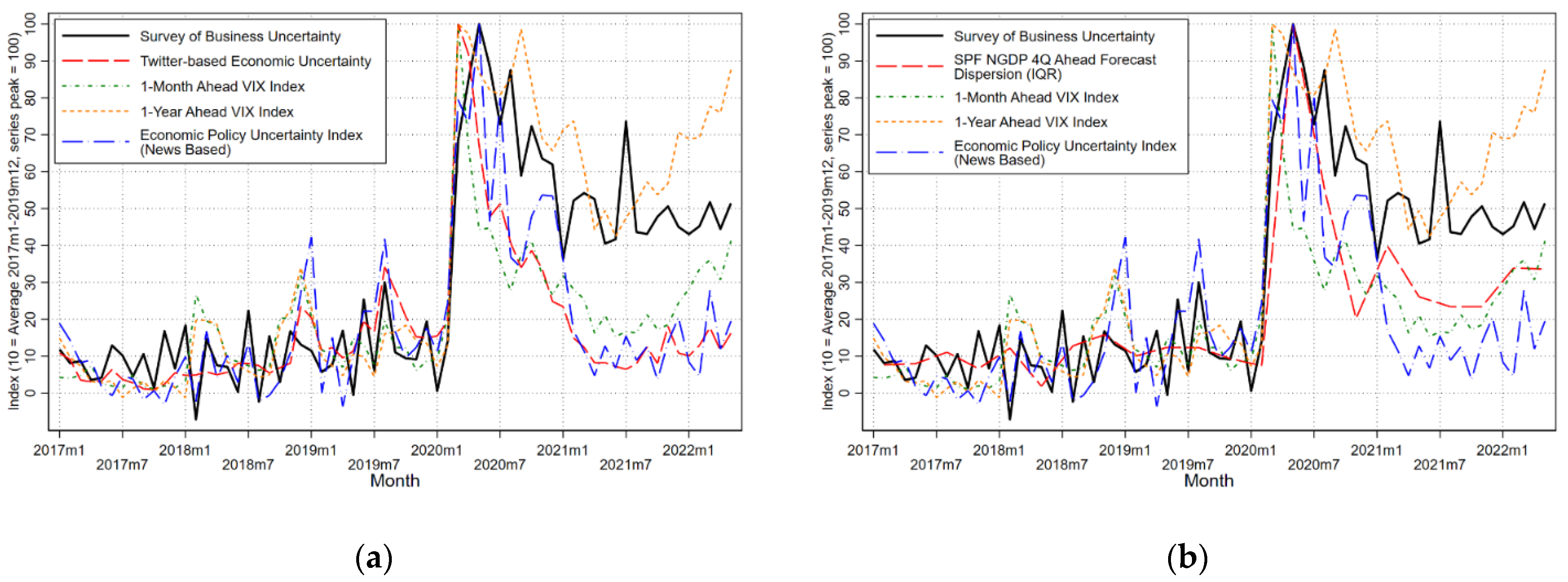
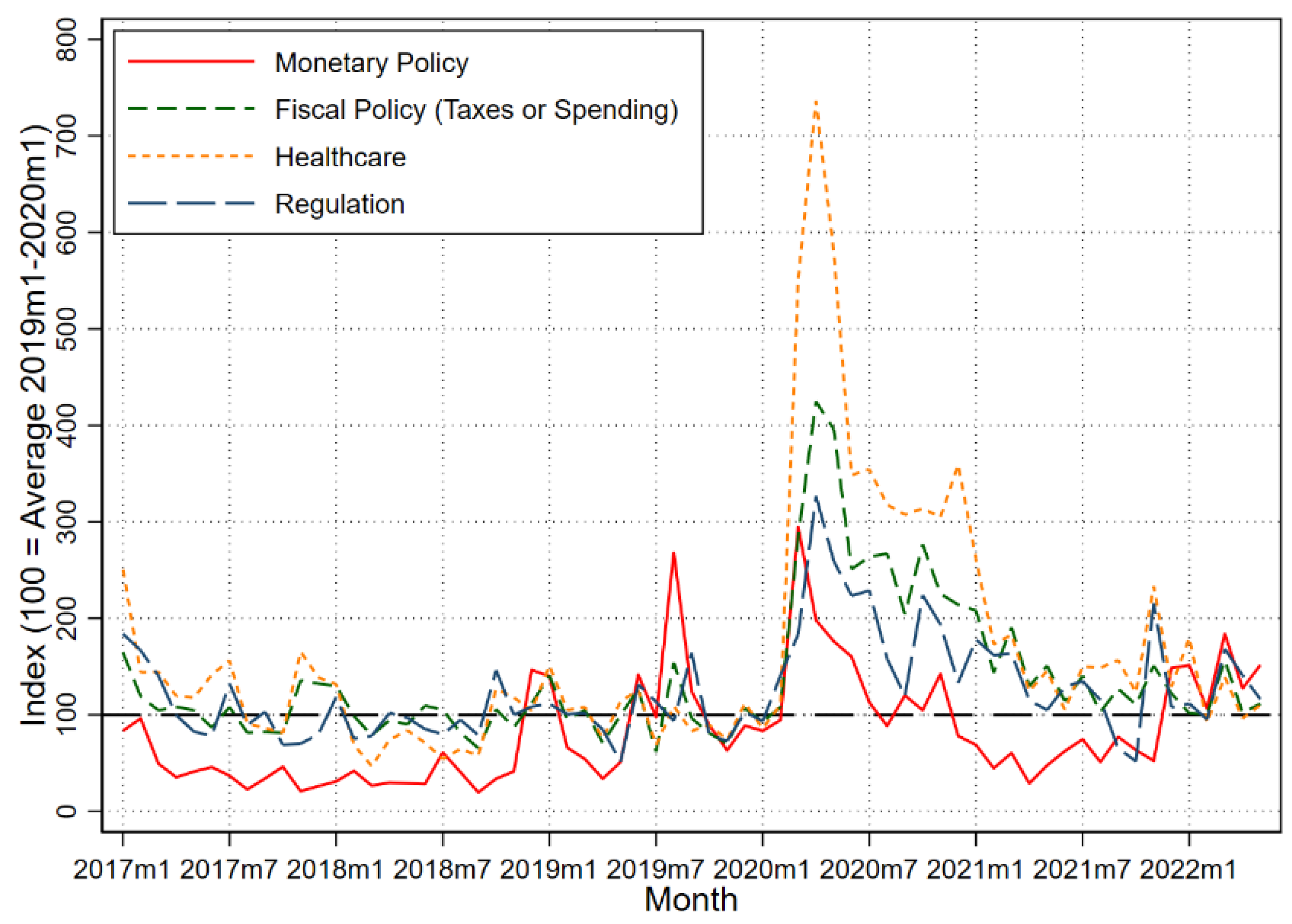
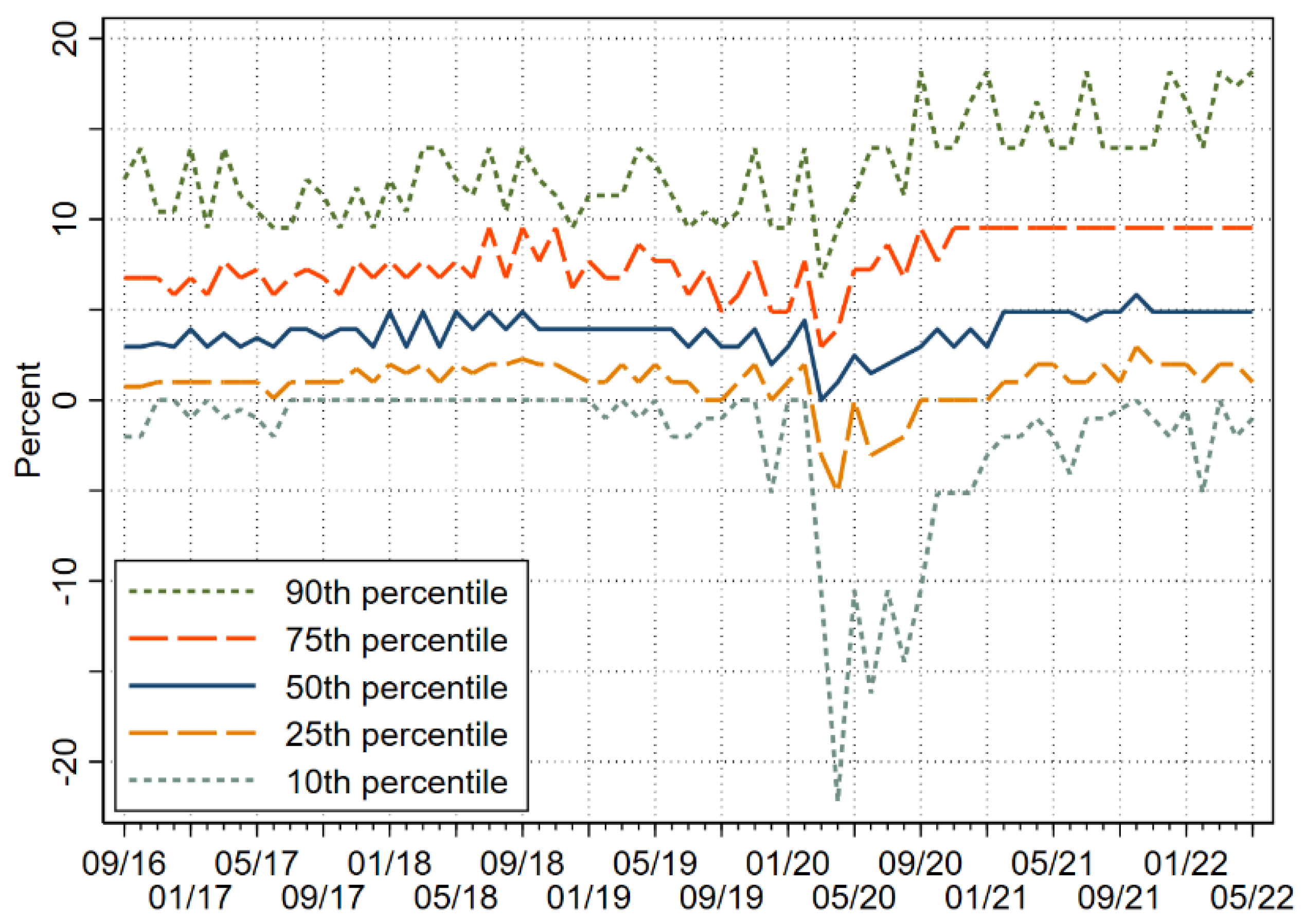
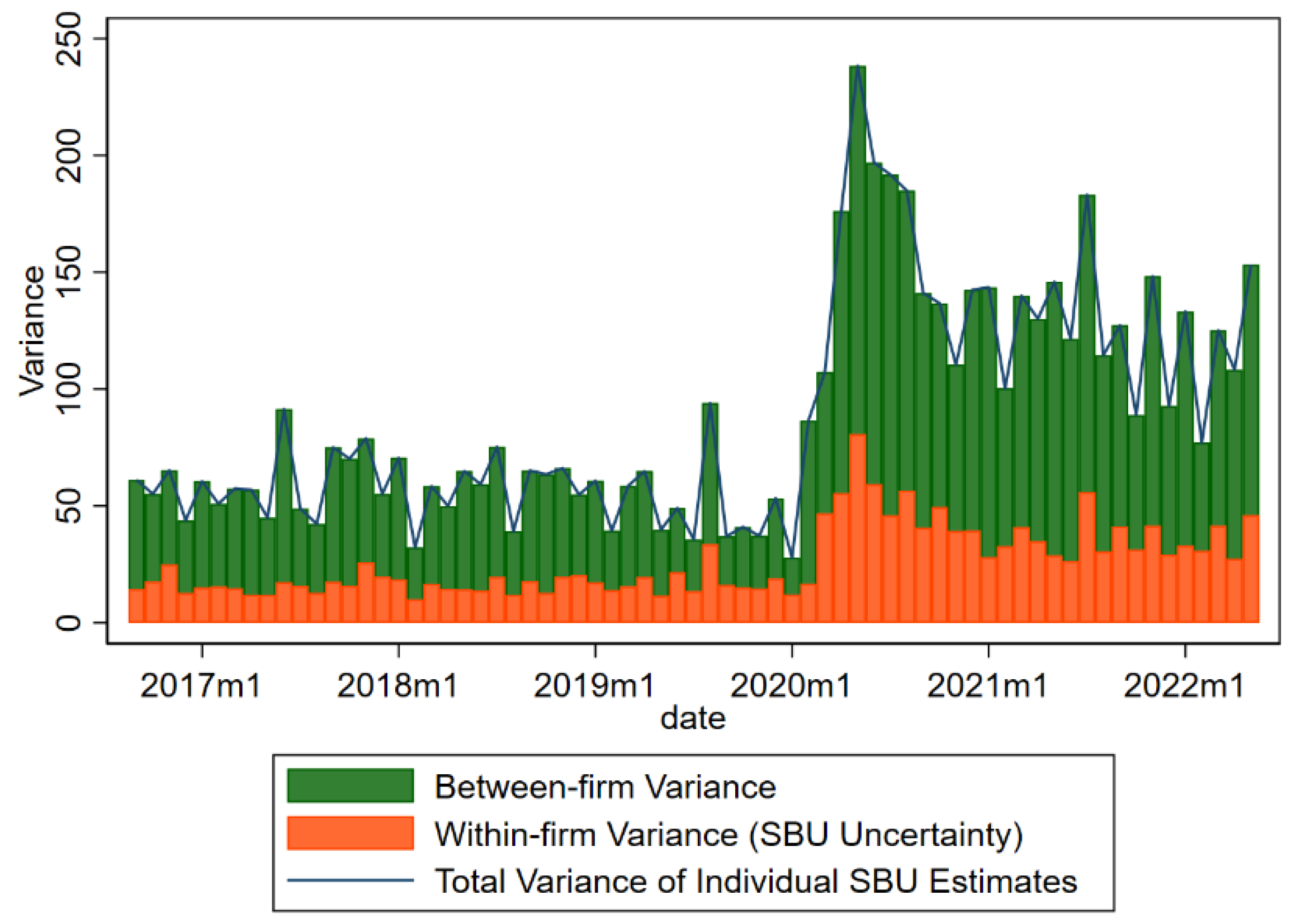
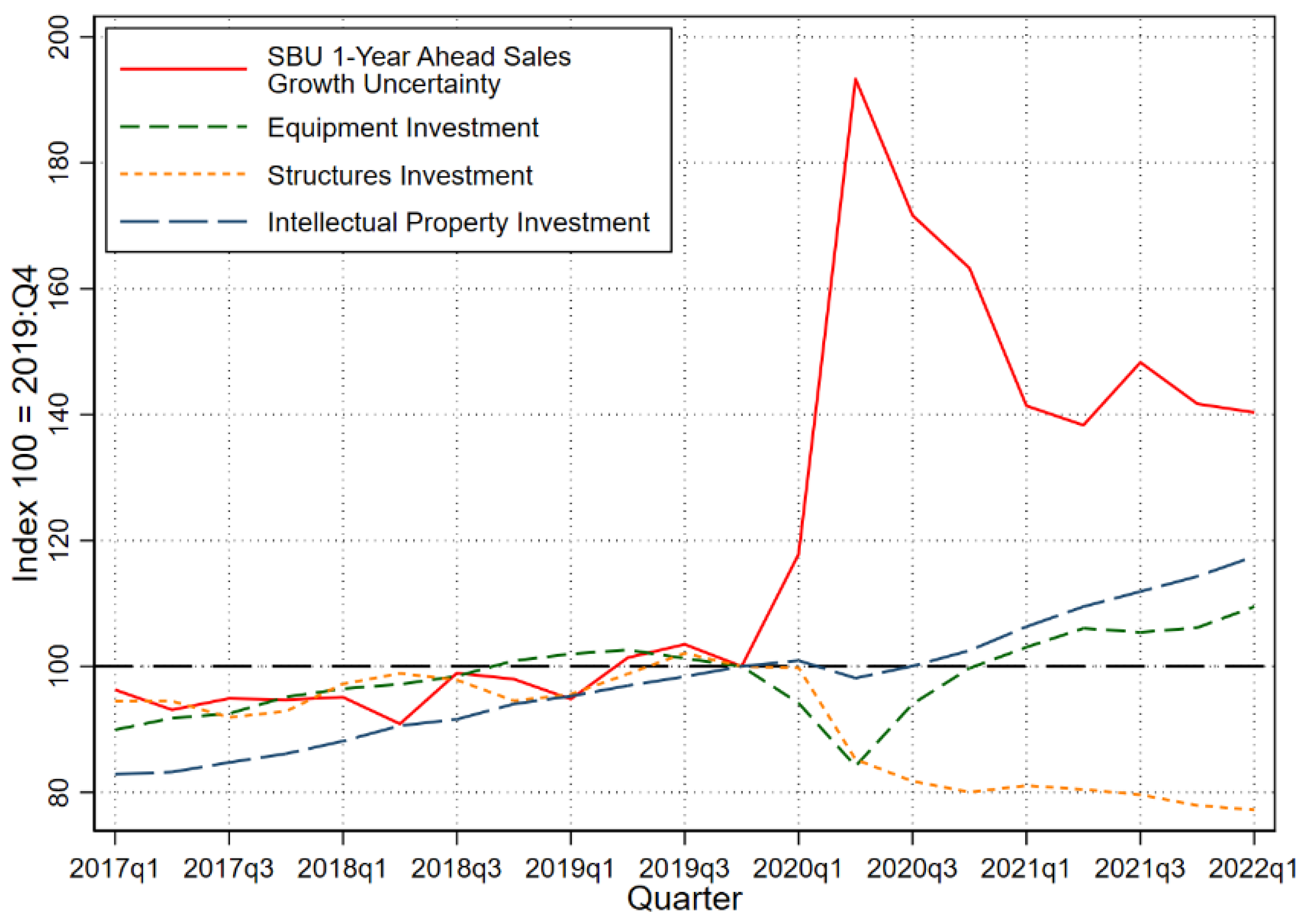
We examine several measures of uncertainty to make five points. First, equity market traders and executives at nonfinancial firms have shared similar assessments about one-year-ahead uncertainty since the pandemic struck. Both the one-year VIX and our survey-based measure of firm-level uncertainty at a one-year forecast horizon doubled at the onset of the pandemic and then fell about half-way back to pre-pandemic levels by mid-2021. Second, and in contrast, the 1-month VIX, a Twitter-based Economic Uncertainty Index, and macro forecaster disagreement all rose sharply in reaction to the pandemic but retrenched almost completely by mid-2021. Third, Categorical Policy Uncertainty Indexes highlight the changing sources of uncertainty—from healthcare and fiscal policy uncertainty in spring 2020 to elevated uncertainty around monetary policy and national security as of May 2022. Fourth, firm-level risk perceptions skewed heavily to the downside in spring 2020 but shifted rapidly to the upside from fall 2020 onwards. Perceived upside uncertainty remains highly elevated as of early 2022. Fifth, our survey evidence suggests that elevated uncertainty is exerting only mild restraint on capital investment plans for 2022 and 2023, perhaps because perceived risks are so skewed to the upside.
Keywords: business expectations; uncertainty; subjective forecast distributions; capital investments business expectations; uncertainty; subjective forecast distributions; capital investments