
Article

Credit Risk Model Based on Central Bank Credit Registry Data

1
IT Department, National Bank of North Macedonia, 1000 Skopje, North Macedonia
2
Faculty of Computer Science and Engineering, Ss. Cyril and Methodius University, 1000 Skopje, North Macedonia
*
Author to whom correspondence should be addressed.
J. Risk Financ. Manag. 2021, 14(3), 138; https://doi.org/10.3390/jrfm14030138
Submission received: 28 February 2021 / Revised: 21 March 2021 / Accepted: 22 March 2021 / Published: 23 March 2021
(This article belongs to the Special Issue Financial Optimization and Risk Management)

Abstract

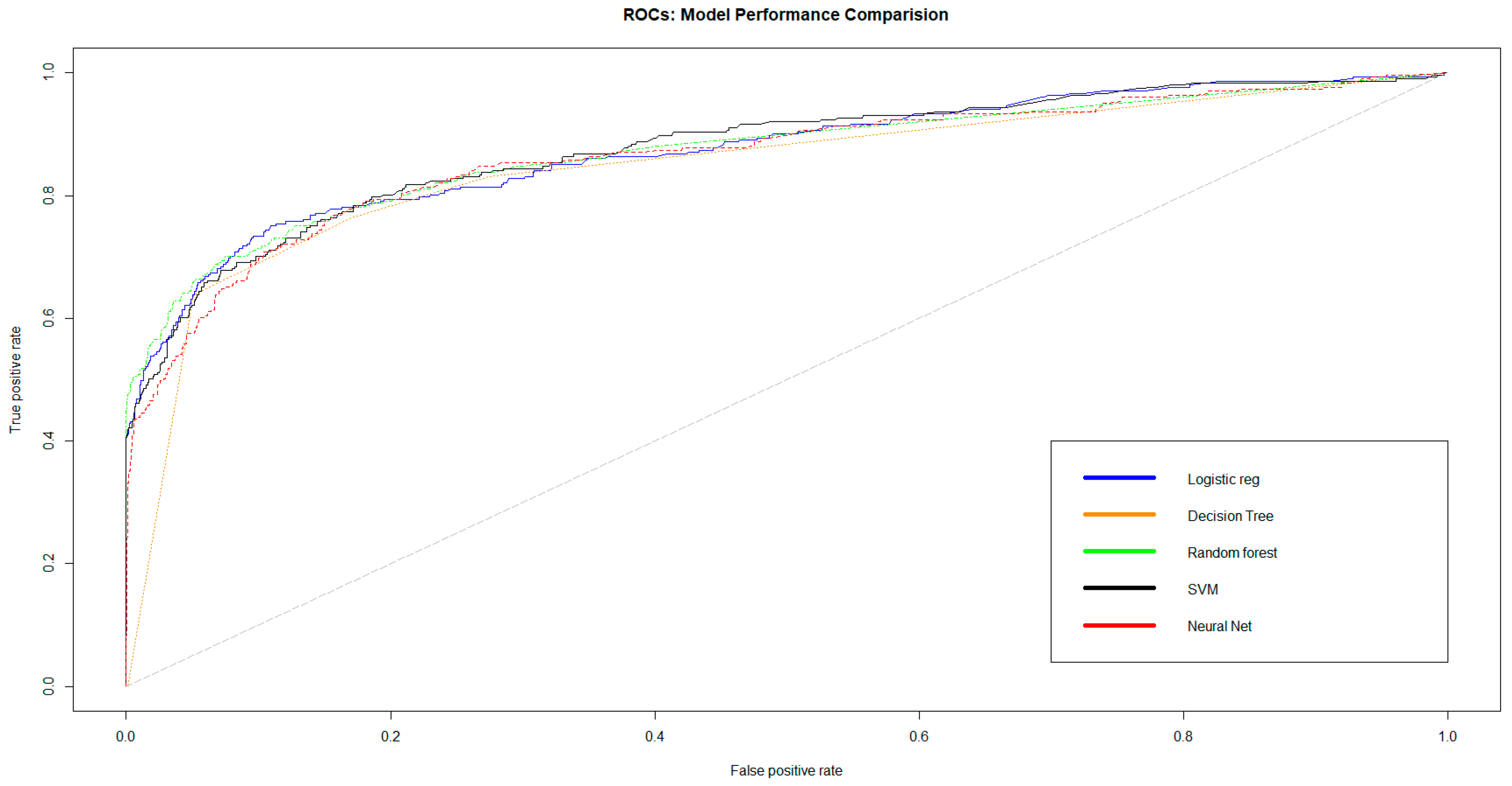
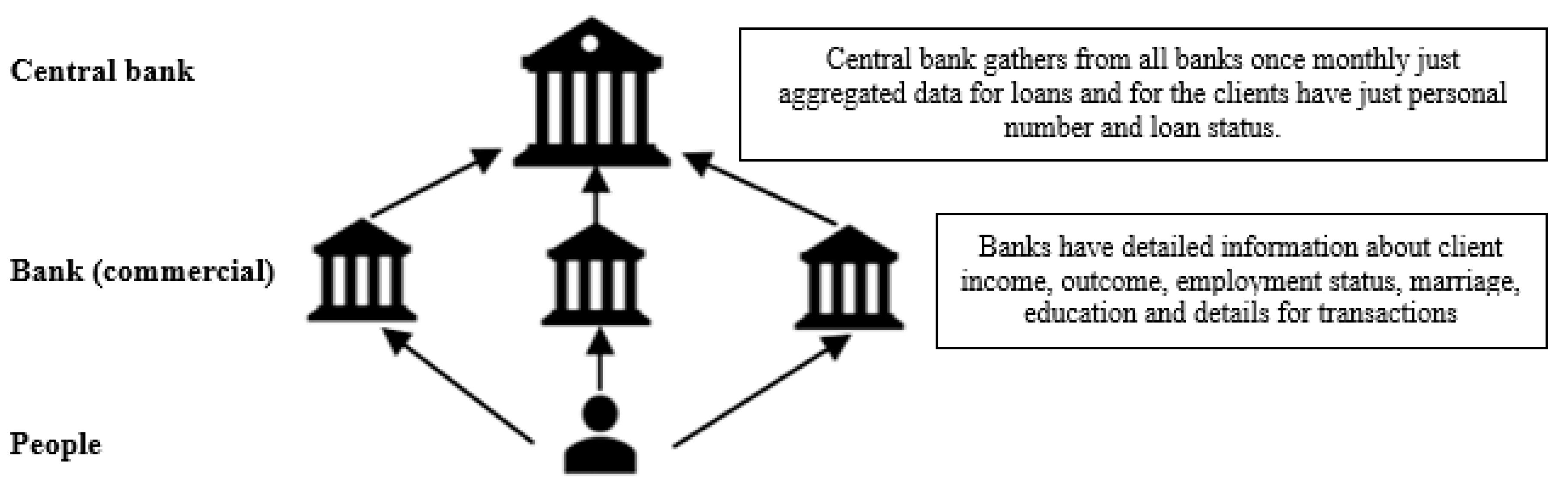
Data science and machine-learning techniques help banks to optimize enterprise operations, enhance risk analyses and gain competitive advantage. There is a vast amount of research in credit risk, but to our knowledge, none of them uses credit registry as a data source to model the probability of default for individual clients. The goal of this paper is to evaluate different machine-learning models to create accurate model for credit risk assessment using the data from the real credit registry dataset of the Central Bank of Republic of North Macedonia. We strongly believe that the model developed in this research will be an additional source of valuable information to commercial banks, by leveraging historical data for all the population of the country in all the commercial banks. Thus, in this research, we compare five machine-learning models to classify credit risk data, i.e., logistic regression, decision tree, random forest, support vector machines (SVM) and neural network. We evaluate the five models using different machine-learning metrics, and we propose a model based on credit registry data from the central bank with detailed methodology that can predict the credit risk based on credit history of the population in the country. Our results show that the best accuracy is achieved by using decision tree performing on imbalanced data with and without scaling, followed by random forest and linear regression.
Keywords: credit risk; credit registry; data science credit risk; credit registry; data science