
An Exploratory Study Based on a Questionnaire Concerning Green and Sustainable Finance, Corporate Social Responsibility, and Performance: Evidence from the Romanian Business Environment


Abstract
1. Introduction
2. Literature Review
- Enterprises need to seriously take into consideration “more substantial corporate expenditures or investments in large-scale social improvement” (Committee for Economic Development of the Conference Board (CED) 1971, p. 45);
- Corporations are expected to accomplish and fulfill government expectations, the public’s increasing interest in consumer protection measures and actions, as well as in environmental protection (Committee for Economic Development of the Conference Board (CED) 1971, p. 15);
- Organizations should keep in mind that they should “enhance equal opportunities for employment and career development in industry” (Committee for Economic Development of the Conference Board (CED) 1971, p. 15);
- Businesses are required “to behave in accordance with social customs, high moral standards, and human values” (Committee for Economic Development of the Conference Board (CED) 1971, p. 21).
- Convey to them the idea of legal responsibility or obligation, while for others it means socially responsible behavior in an ethical sense;
- Associate its meaning with the idea of “being responsible for” in a causal way, which man be translated into a charitable contribution;
- Understand it as a social consciousness, or even as a synonym for “legitimacy”, which might be seen in accordance with the idea of “being appropriate” or “valid”;
- Perceive it as a sort of duty of hope that requires high standards of behavior for both businesspeople and citizens.
- The above-named specialists considered that it takes place in the day-to-day business of the company.
- Organizations have psychological, security, affiliation, affection, etc. needs, all parallel to those of the individuals presented in Maslow’s pyramid.
- Firstly, unlocking “more investment from the EU and the rest of the world”, in order to generate, attract, circulate and transfer capital in Europe with the purpose of supporting “SMEs, infrastructure and long term sustainable projects” targeting better solutions to meet households retirement aims, business opportunities expansion, economic growth, job creation, and inclusive and robust sustainable development (European Commission 2015, p. 3) (where the acronym SMEs stands for Small and Medium Enterprises);
- Secondly, better connecting “financing to investment projects across the EU”, which has the goal of encouraging small markets development, and, at the same time, addresses the requirements of high growth capacity for businesses and projects, as well as enhancing business potential (European Commission 2015, p. 3);
- Thirdly, creating a more stable financial system, taking into account the fact that “integrated financial and capital markets can help Member States, especially those inside the euro area, share the impact of shocks”, by sharing financial risks, which makes “EU citizens and companies (…) less vulnerable to banking contractions”, and, in like manner, by favoring investments in the context of “more developed equity markets, as opposed to increased indebtedness” (European Commission 2015, p. 3);
- Fourthly, deepening financial integration and intensifying competition, which implicates the existence of several advantages, namely “more cross-border risk-sharing, deeper and more liquid markets and diversified sources of funding will deepen financial integration, lower costs and increase European competitiveness” (European Commission 2015, p. 3).
- First of all, a key element on the European Commission’s is represented by facilitating a “consult on the key insolvency barriers and take forward a legislative initiative on business insolvency, addressing the most important barriers to the free flow of capital and building on national regimes that work well” (European Commission 2015, p. 6).
- Second of all, a representative aspect in the eyes of the European Commission’s members is to “tackle uncertainty around securities ownership, and pursue improvements in the arrangements for clearing and settlement of cross-border securities transactions” (European Commission 2015, p. 6).
- Third of all, the European Commission is keen on promoting “the development of capital markets (…), as part of the European Semester and by offering Member States tailored support to strengthen administrative capacity through the Commission’s Structural Reform Support Service” (European Commission 2015, p. 6).
- Fourth of all, the European Commission takes pride in and believes it is a necessity to “work with the European Supervisory Authorities (ESAs) to develop and implement a strategy to strengthen supervisory convergence and identify areas where a more collective approach can improve the functioning of the single market for capital” (European Commission 2015, p. 6).
- Fifth of all, the European Commission draws “on the forthcoming European Systemic Risk Board (ESRB) review and international work, to ensure that national and European macro-prudential authorities have the tools to react appropriately to developments in capital markets” (European Commission 2015, p. 6).
3. Research Methodology
4. Research Results
4.1. Descriptive Statistics
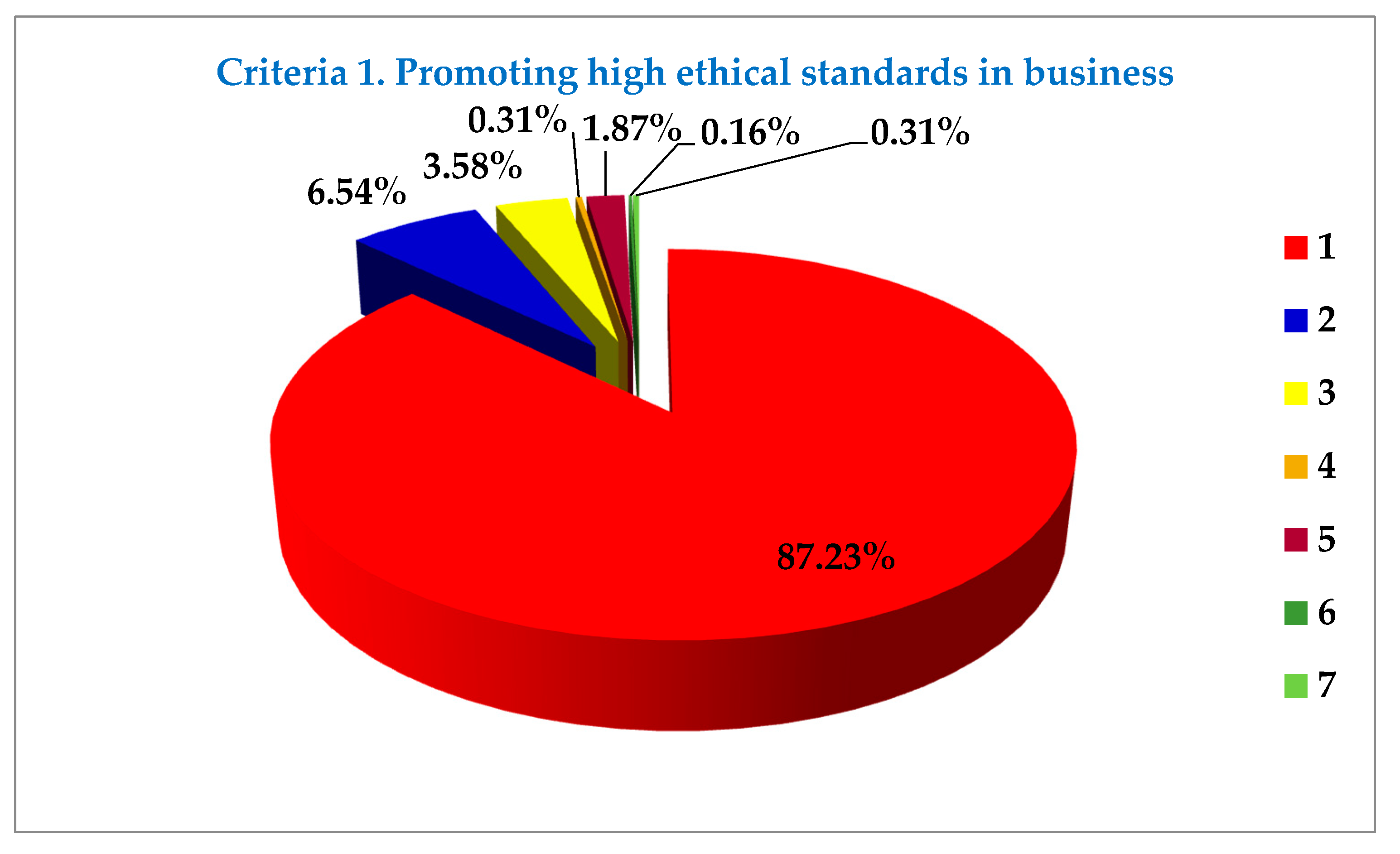
- Promoting high ethical standards in business: Comparing the results, it can be seen that 85.23% of the answerers remarked that for their institution, promoting high ethical standards in business is very important, 6.54% perceived it as important, 3.58% said it was somewhat important, while 0.31% declared themselves undecided in this matter, followed by 1.87% viewing it as somewhat unimportant, in comparison with 0.16% presenting this issue as unimportant, and 0.31% as very unimportant. The results on promoting high ethical standards in business can be seen in Appendix B, Figure A8.
- Informing constantly the shareholders about the organization’s business model, vision, objectives and steps taken for acquiring better corporate social responsibility knowledge: In short, peoples’ perception towards their company’s informing constantly the shareholders about the business model, vision, objectives and steps taken for acquiring better corporate social responsibility knowledge revealed that 55.45% noted it was very important, followed by 20.87% important, 15.26% somewhat important, 2.18% undecided, 1.56% somewhat unimportant, while 2.34% saw this action as unimportant and the same percentage (2.34%) as very unimportant.
- Informing constantly the stakeholders about the organization’s business model, vision, objectives and steps taken for acquiring better corporate social responsibility knowledge: The results at this point are similar to those reflecting the importance of informing constantly the shareholders about the organization’s business model, vision, objectives and steps taken for acquiring better corporate social responsibility knowledge. Thus, peoples’ perception towards their company’s informing constantly the stakeholders about the organization’s business model, vision, objectives and steps taken for acquiring better corporate social responsibility knowledge revealed that 54.36% noted it was very important, followed by 20.56% important, 15.58% somewhat important, 2.65% undecided, 3.89% somewhat unimportant, while 2.18% saw this action as unimportant and 0.78% as very unimportant.
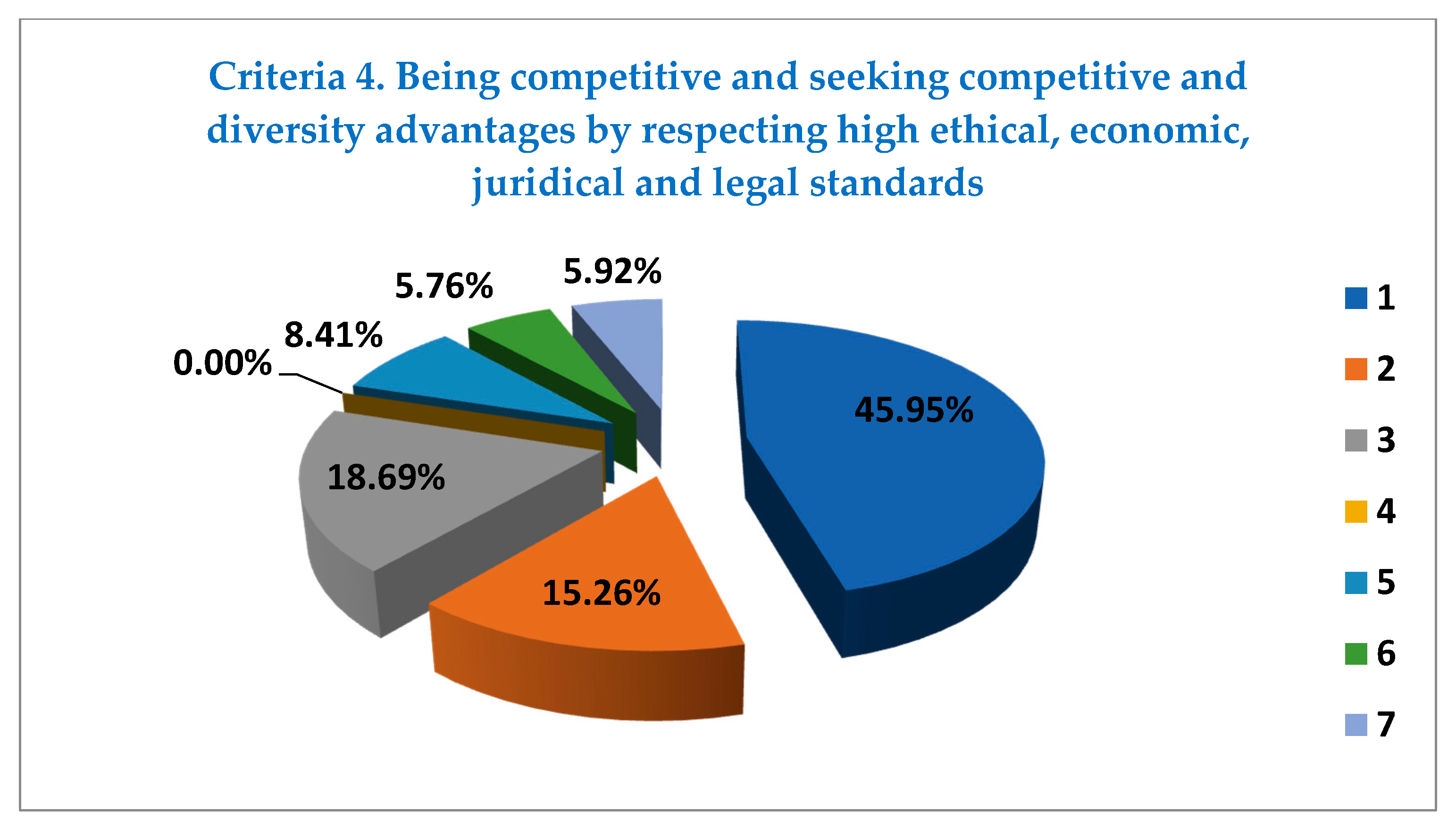
- Being competitive and seeking competitive and diversity advantages by respecting high ethical, economic, juridical and legal standards: Interestingly, only 45.95% individuals said that for their company it is very important to be competitive and seek competitive and diversity advantages by respecting high ethical, economic, juridical and legal standards, 15.26% considered this aspect as being important for their organization, and 18.69% reported this criteria as somewhat important. However, in contrast, this time nobody felt undecided, and there was an increase in the percentages reflecting somewhat unimportant, unimportant and very unimportant views. Hence, 8.41% of the answerers said this issue was somewhat unimportant, while 5.76% saw this action as unimportant, and 5.92% as very unimportant. In Appendix B, Figure A9 indicates exactly the values compared at this point.
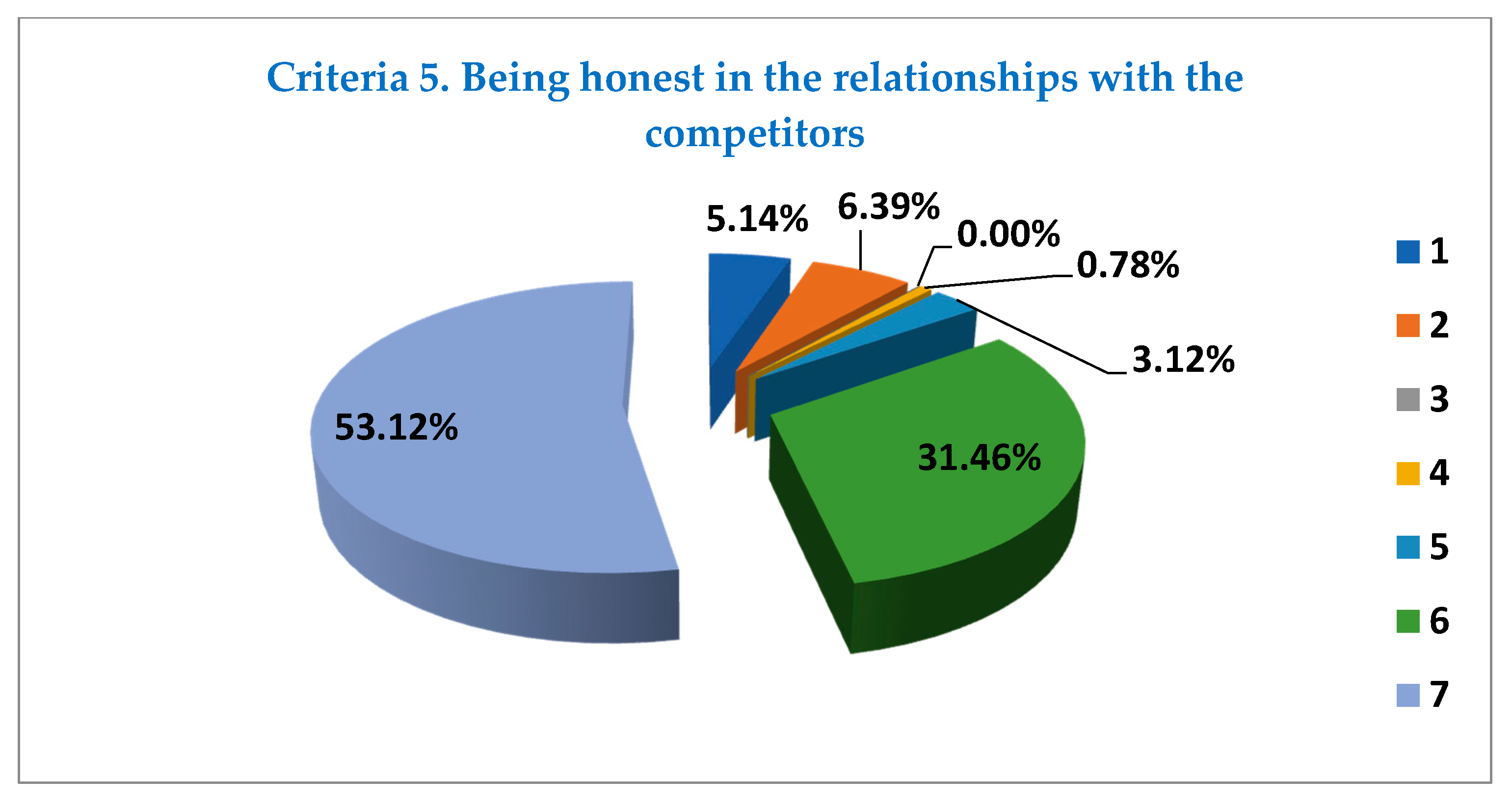
- Being honest in the relationships with the competitors: A most striking observation to emerge from the data comparison was the employees’ perception concerning the honesty of their organization in the relationships with their competitors. Although the organizations were described by the employees as keen on promoting high ethical standards in business, as seen in the description of the first criteria above (see, in this matter, that 85.23% of the answerers remarked that for their institution promoting high ethical standards in business is very important, 6.54% perceived it as important, 3.58% said it was somewhat important), being honest in the relationships with their competitors seems not to be among the values of their institutions. By way of illustration, it can be remarked that only 3.12% respondents declared that being honest in the relationships with their competitors is very important for their organization, 6.39% reported being important, 0.00% proved to be somewhat important, while 0.78% were undecided and 5.14% acknowledged this aspect as somewhat unimportant. Nevertheless, most striking, 31.46% declared that being honest in the relationships with their competitors is unimportant for their organization and, even more worrying, 53.12% reported it is very unimportant. In Appendix B, Figure A10 pinpoints exactly the values compared at this section.
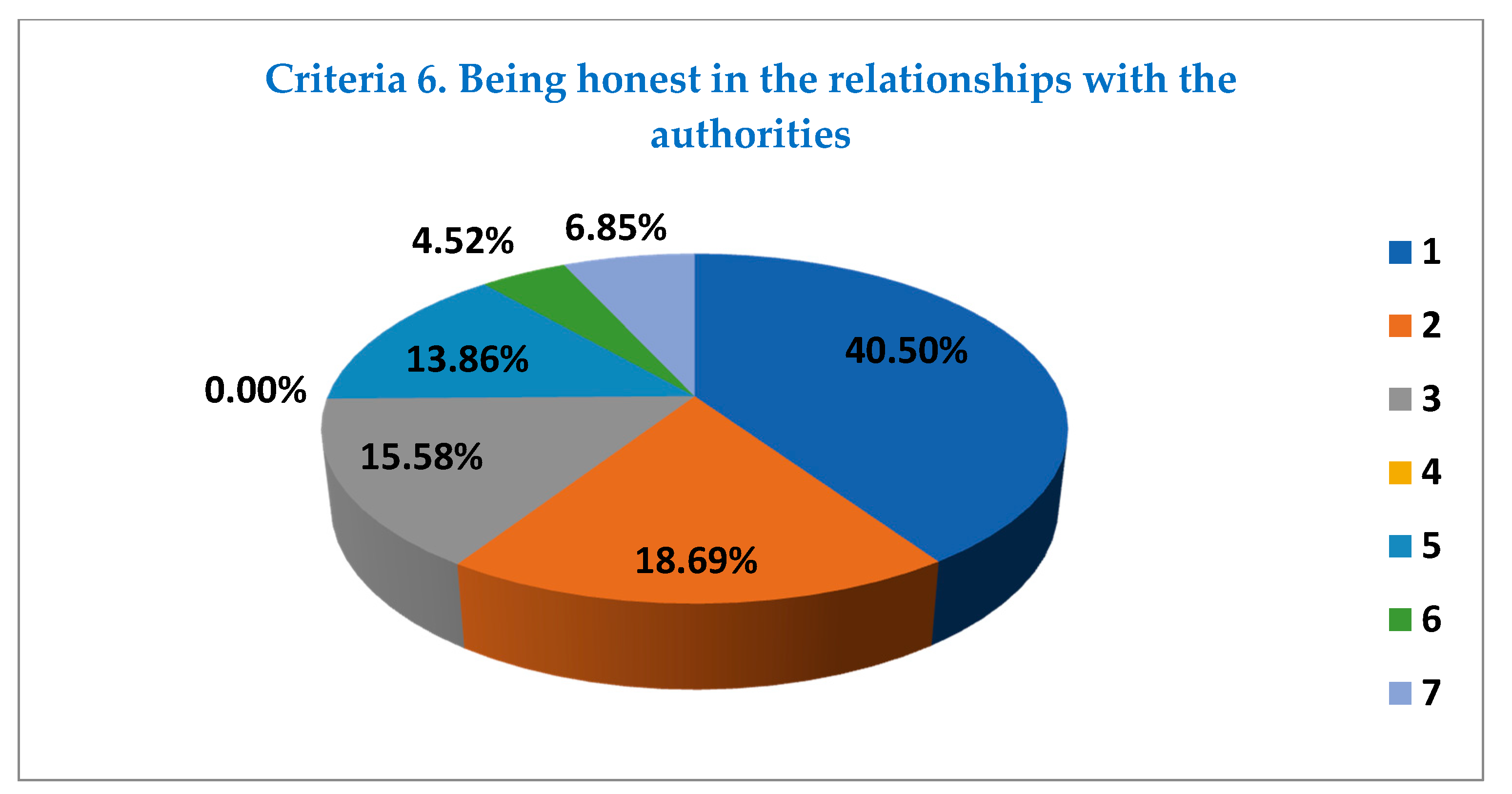
- Being honest in the relationships with the authorities: When the respondents were asked to describe the importance of being honest in the relationships with the authorities in the eyes of their organizations, a significant difference was detected in comparison to the answers offered at the fifth criteria (see, in this matter, the criteria above, namely being honest in the relationships with their competitors). Most of the answerers (40.05%) established as very important for their companies being honest in the relationships with the authorities, while 18.69% named this criteria only as important, immediately followed by 15.58% evaluating this issue as somewhat important, while 0.00% were undecided and 13.86% acknowledged this aspect as somewhat unimportant, 4.52% unimportant, and 6.85% very unimportant. In Appendix B, Figure A11 highlights exactly the values targeted here.
- Paying taxes and respecting the legal framework of the business environment where active: The overall answers concerning companies paying taxes and respecting the legal framework of the business environment where active were very positive. For instance, 46.88% of the respondents positioned paying taxes and respecting the legal framework of the business environment among the top priorities for their organizations, declaring this aspect as very important, while 21.18% presented this element as important, and 9.81% as somewhat unimportant. Yet, 5.14% were undecided in this matter. However, 7.48% demonstrated that this issue is somewhat unimportant for their organization, 5.30% unimportant, and 4.21% very unimportant.
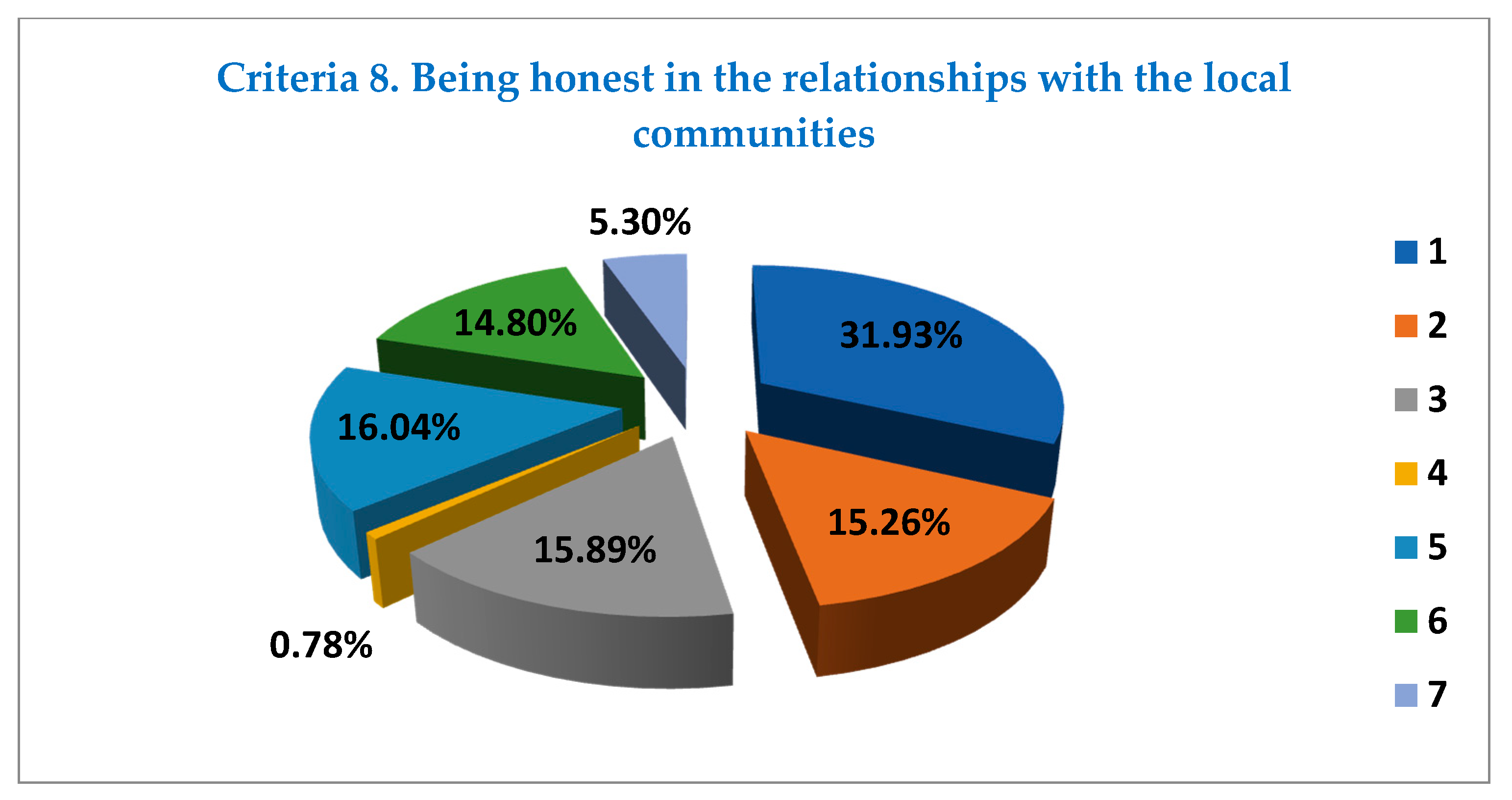
- Being honest in the relationships with the local communities: The findings highlight that 31.93% respondents presented being honest in the relationships with the local communities very important for their companies, 15.26% important, 15.89% somewhat important, 0.78% undecided, while 16.04% considered being honest in the relationships with the local communities somewhat unimportant for their organizations, 14.80% unimportant, and 5.30% very unimportant. In this matter, the study offers some important insights into the people’s perception with regard to their organizations being honest in the relationships with the local communities; the top three positions occupied show 31.93% acknowledging this corporate social criterion as very important, while surprisingly 16.04% view it as somewhat unimportant and 15.89% somewhat important. In Appendix B, Figure A12 demonstrates exactly the values discussed and analyzed here.
- Ensuring the safety and health of employees: On the one hand, ensuring the safety and health of employees was for 70.40% individuals very important for their organizations, 12.93% saw this criterion as important, 10.59% somewhat important and 0.00% were undecided. On the other hand, ensuring the safety and health of employees was for 3.12% people somewhat unimportant for their companies, 2.65% unimportant, and 0.31% very unimportant. In our opinion, this question provided an important opportunity to advance the understanding of ensuring the safety and health of employees.
- Ensuring high quality working conditions for employees: Ensuring and maintaining high quality working conditions for employees was acknowledged by 34.58% respondents as very important for their organizations, immediately followed by 31.31% that stated that it is an important criterion and 31.00% that described it as somewhat important, while 0.78% were undecided, 1.56% noted it was somewhat unimportant, 0.78% unimportant, and 0.00% very unimportant. In summation, organizations concern in ensuring and maintaining high quality working conditions for employees was substantiated once more by the fact that none of the respondents declared this criterion as very unimportant for their organization.
- Protecting employees’ rights: According to the data gathered, protecting employees’ rights holds a great significance on the agenda of organizations. Commenting on protecting employees’ rights it could be determined that 31.31% respondents stated it was very important for their organizations, 30.06% perceived it as important, and 27.73% noted it as somewhat important. However, 1.25% respondents were undecided, 6.54% saw protecting employees’ rights as somewhat unimportant for their companies, 6.12% as unimportant, while 0.00% as very unimportant, which turned out to be a very promising description of the current situation in Romania.
- Promoting employees’ diversity concerning gender, religion, (…): In view of the data obtained, we could observe that 69.16% of the answerers described promoting employees’ diversity concerning gender, religion, as very important for the organizations, 18.69% important and 8.72% somewhat important, while 0.31% were undecided, 2.18% considered this aspect as somewhat unimportant, 0.31% unimportant, and 0.61% very unimportant.
- Creating and promoting programs to prevent employee discrimination: The evidence presented in this section suggests that 60.75% of the respondents saw creating and promoting programs to prevent employee discrimination as very important for their institutions, 17.13% important, 10.59% somewhat important and 0.16% were undecided. Yet, 10.28% declared that creating and promoting programs to prevent employee discrimination represents a somewhat unimportant criterion for their organization, 0.78% unimportant one, and 0.31% very unimportant.
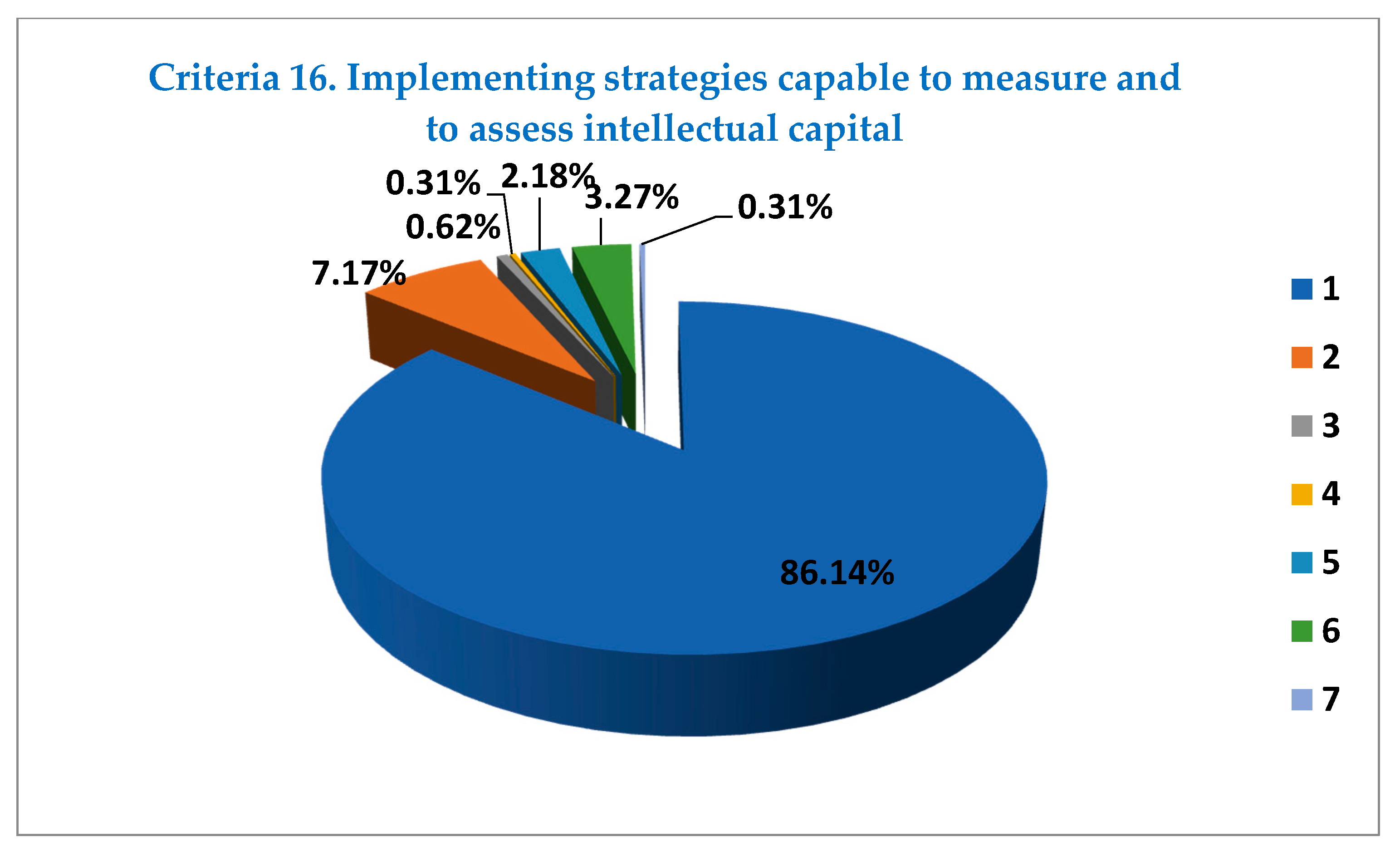
- Implementing strategies capable to measure and to assess intellectual capital: By comparing the scores concerning implementing strategies capable to measure and to assess intellectual capital, the results showed that 86.14% respondents viewed this matter as very important, 7.17% important, while 0.62% somewhat important. In addition, 0.31% was undecided, while 2.18% shared the vision that it is somewhat unimportant, 3.27% unimportant, and 0.31% very unimportant. In Appendix B, Figure A13 demonstrates exactly the values discussed and analyzed here.
- Solving customer questions and showing constant respect for consumer suggestions: After closely examining the data, our conclusion was that solving customer questions and showing constant respect for consumer suggestions was of utmost importance for the employees: 53.43% said this was a very important issue in their organization, 27.88% important, and 17.29% somewhat important. Additionally, 0.00% was undecided, while 0.62% saw this aspect as somewhat unimportant, 0.47% unimportant, and 0.31% very unimportant.
- Developing customer education programs: This point provides employees’ perception concerning the importance of developing customer education programs for the institution where they are currently working. The information gathered pinpoints that 27.73% of the respondents believed that developing customer education programs is very important, 17.29% important and 23.36% somewhat important, while, in contrast, 0.00% were undecided, 12.46% indicated that it is somewhat unimportant, 8.72% unimportant, and 10.44% very unimportant.
- Implementing strategies capable to help investigate consumer satisfaction: The percentages calculated according to the responses identified that for 51.87% of the individuals implementing strategies capable to help investigate consumer satisfaction plays a very important role in their organizations, for 38.63% important, and for 3.74% somewhat important, while 0.00% turned out to be undecided, 4.67% emphasized it was somewhat unimportant, 1.09% unimportant, and 0.00% very unimportant.
- Monitoring closely green promotional actions: In terms of monitoring closely green promotional actions, companies were described as showing a great concern in this regard. Thus, 10.28% of the respondents stated this aspect as very important, 26.01% as important, and 46.42% as somewhat important. In comparison, 0.78% was undecided, while 12.15% noted this issue as somewhat unimportant, 2.18% unimportant, and 2.18% very unimportant.
- Providing important data for green product design: The results on providing important data for green product design pinpointed that 8.88% of the respondents acknowledged the 22 criterion on our list as very important, while 26.17% reported it as important and 35.05% as somewhat important. Additionally, 1.07% of the responses stressed that they were undecided, 13.86% emphasized that this criteria was for them somewhat unimportant, 13.86% unimportant, and 1.09% very unimportant. Under these circumstances, by adding the data gathered from the respondents choosing as preferences on the Likert scale, in this case, the degrees very important, important and somewhat important, we can conclude that providing important data for green product design occupies a key position in the companies’ organizational agenda.
- Focusing on developing research on increasing product safety: The data revealed that 54.05% of the surveyed population considered very important focusing on developing research on increasing product safety, 27.41% acknowledged this issue as important, while 15.58% stated it was somewhat important. In continuation, 0.00% was undecided, 2.96% presented somewhat unimportant focusing on developing research on increasing product safety, while 0.00% illustrated it was unimportant, and 0.00% very unimportant.
- Participating in the protection of the environment and promotion of biodiversity: We observed from the information processed that participating in the protection of the environment and promotion of biodiversity was declared as very important for 96.57% of the surveyed individuals, while 2.04% of the answerers said it was important and 1.40% somewhat important. Interestingly, the numbers showed that a total of 0.00% were undecided, or considered this issue as somewhat unimportant, unimportant, and very unimportant.
- Supporting art, educational institutions, health, medicine: If we now turn to supporting art, educational institutions, health, medicine, 97.98% of the respondents declared that it is very important in terms of corporate social responsibility measures, while 1.71% looked at this criteria as important, and 0.31% somewhat important. However, we considered extremely positive the fact that 0.00% of the answerers were undecided, or considered this issue as somewhat unimportant, unimportant and very unimportant.
- The majority of the surveyed population (98.85%) declared that the first statement “Knowledge circulates at every level of a business, either at the human resources level, structural or at the clients’ level” is very important, while 0.66% considered this element as important and 0.49% as somewhat important.
- Moving on to the second statement “Knowledge circulates at every level of a business, either at the human resources level, structural or at the clients’ level”, 98.85% believed that it was very important, while 0.66% revealed it was important and 0.49% somewhat important.
- According to the answerers, there was a total agreement (100.00%) that knowledge represents one of the main assets of an organization.
- With regard to the statement “Human resources represent one of the main assets of an organization”, 99.67% of the individuals considered it was very important, reflecting best their organization’s vision and perception towards intellectual capital, while 0.16% emphasized it was very important and 0.16% important.
- The results for the fifth statement “Intellectual capital represents one of the main assets of an organization” showed that 99.67% detected this aspect reflected best their organization’s vision and perception towards intellectual capital, while 0.16% emphasized it was very important and 0.16% important.
- Concerning the statement “Intellectual capital offers competitive advantages for an organization”, 99.67% of the surveyed population remarked that this issue reflected best their organization’s vision and perception towards intellectual capital, while 0.16% emphasized it was very important and 0.16% important.
- The fact that “Intellectual capital offers diversity advantages for an organization” was considered by 99.67% of the surveyed population as very important when discussing about their organization’s vision and perception towards intellectual capital, while 0.16% emphasized it was very important and 0.16% important.
- Remarkably, in the case of the statement “The intellectual capital possessed by the organization must be well managed”, 98.68% of the individuals were fully aware that intellectual capital possessed by the organization must be well managed, this being of crucial importance for any institution, while 0.82% of the population said it was important and 0.49% somewhat important.
- It is fundamental, in our opinion, that the statement “The intellectual capital possessed by the organization must be measured” was regarded as very important by 93.42% of the respondents, while 3.95% saw this matter as important and 0.16% somewhat important. In opposition, 0.33% of the answerers were undecided, and 2.14% considered this aspect as somewhat unimportant in relation with their organization’s vision and perception towards intellectual capital.
- The most striking result to emerge from the data is that the respondents indicated the lack of intellectual capital measuring tools in their organizations. Hence, in the case of the statement “The organization does not possess all the necessary tools in order to measure its intellectual capital by using financial and economic analysis”, 22.04% stressed it was very important, 22.70% argued it was important, 38.49% somewhat important, 1.15% were undecided, while 5.59% said this issue was somewhat unimportant, 9.38% unimportant and 0.66% very unimportant.
- Importantly, the statement “The intellectual capital possessed by the organization must be properly exploited in order to enhance success on the marketplace” was acknowledged by 98.52% of the surveyed individuals as very important, while only a small minority (1.48%) said it was important.
- Further on, the results strengthened our confidence in the importance of intellectual capital in organizations, due to the fact that 98.36% of the respondents considered the statement “The intellectual capital has a strong impact on an organizations corporate social responsibility decisions and actions” as very important in terms of reflecting their organization’s vision and perception towards intellectual capital. Nonetheless, 1.32% declared that this matter was important; while 0.33% stressed that it was somewhat important.
- The twelfth sentence “The organizational practices associated with intellectual capital strengthen the organization’s position towards innovation and creative processes” was considered by 99.41% as very important when analyzing their organization’s vision and perception towards intellectual capital, while 0.49% asserted it was important.
- While analyzing the statement “The notions of production and productivity need to be totally revised in order to offer a better adaptation to the information age”, we discovered that 81.58% of the individuals regarded this issue as very important for their organization, while 3.78% presented it as important, 10.69% as somewhat important, 0.00% declared themselves as part of the undecided category, 3.29% somewhat unimportant, 0.33% unimportant, and 0.33% very unimportant.
- Moreover, speaking in synthesis, the results for the statement “The notion of performance needs to be totally revised in order to offer a better adaptation to the information age” showed that 81.58% of the surveyed population declared it reflected best their organization’s vision and perception towards intellectual capital, while 5.43% acknowledged it as important, 10.69% as somewhat important, while 0.00% were undecided, 1.64% stated it was somewhat unimportant, 0.33% unimportant, and 0.33% very unimportant.
- The data gathered for the last statement “The notion of efficiency needs to be totally revised in order to offer a better adaptation to the information age” is somewhat similar to the aforementioned statement, namely 81.58% of the surveyed population declared it reflected best their organization’s vision and perception towards intellectual capital, while 5.43% acknowledged it as important, 10.69% as somewhat important, while 0.00% were undecided, 1.64% stated it was somewhat unimportant, 0.33% unimportant, and 0.33% very unimportant.
- Concerning good governance 93.15% of the respondents declared that they strongly agree it is connected with corporate social responsibility, while 4.05% agreed and 2.80% agreed somewhat.
- While analyzing the case of gender balance 91.74% acknowledged the fact that they strongly agree it is a component in relation to corporate social responsibility, while 3.89% declared they agree with this, 2.49% somewhat agreed, and 1.87% were undecided.
- The results offer compelling evidence concerning environment protection considering the fact that 93.77% of the surveyed population strongly agreed it is connected to corporate social responsibility, 4.36% agreed, and 1.87% somewhat agreed with this matter.
- The data gathered concerning sustainable performance shows indisputable evidence for the connection between this component and corporate social responsibility, since 93.61% strongly agreed, 3.58% agreed, and 2.80% somewhat agreed that there exists a link between sustainable performance and corporate social responsibility.
- Correct labor standards are, according to the answerers, connected with corporate social responsibility, since 77.26% strongly agree that correct labor standards represents a component connected with corporate social responsibility, 11.37% agree, and 11.37% somewhat agrees.
- Additionally, our technique showed that sustainable employer and employees relations are connected with corporate social responsibility, 71.96% declaring there is a connection between these two elements, while 15.26% agreed, and 12.77% somewhat agreed.
- As expected, intellectual capital is strongly connected to corporate social responsibility, 93.15% stating that they strongly agree that there is a link between intellectual capital and corporate social responsibility, 4.05% agreed with the existence of such a link, and 2.80% stressed the fact that they somewhat agree with the existence of such a bond.
- With a few exceptions (represented by 3.43% of the respondents which agreed and 2.96% which somewhat agreed), the anti-corruption measures were acknowledged by 93.61% of the surveyed population as strongly connected with the concept of corporate social responsibility.
- It is worth mentioning that sustainable productivity is in the opinion of 97.98% strongly connected with corporate social responsibility. However, 1.71% of the total number of the respondents said that they agree with the existence of a bond between sustainable productivity and corporate social responsibility, while 0.31% somewhat agree.
- Significantly, eco-efficiency was acknowledged by 88.47% of the individuals as strongly linked to corporate social responsibility, while 10.59% agreed with the existence of this type of bond and 0.93% stated that they somewhat agree.
- Importantly, respect for human rights was presented by 87.85% of the surveyed population as strongly agreeing to be linked to corporate social responsibility, and in the meanwhile 8.41% emphasized they agree with the existence of such bond, while 3.74% somewhat agree with this type of connection.
- Remarkably, 81.78% of the respondents strongly agreed that between responsible production and corporate social responsibility there is a connection, while 17.60% agreed and 0.62% somewhat agreed.
- It is critical to note that 53.74% of the respondents believed that between stakeholder engagement and corporate social responsibility it is a connection, while 20.72% agreed, 23.92% somewhat agreed, and 2.02% were undecided.
- It was found that according to 72.43% of the surveyed individuals responsible working conditions are strongly connected with corporate social responsibility, while 24.30% agreed with the existence of such link, and 3.27% somewhat agreed.
- As anticipated, sustainable employees and community relations are strongly connected with corporate social responsibility. In this matter, 84.58% of the population strongly agreed, while 5.76% agreed and 9.66% somewhat agreed when asked about the existence of a bond between sustainable employees and community relations and corporate social responsibility.
- It was discovered that, according to 60.59% of the respondents, shareholder engagement and corporate social responsibility are strongly connected, while 5.14% agreed to this, 32.40% somewhat agreed and 1.87% turned out to be undecided.
- Critically, 67.13% of the answerers stressed that they strongly considered that between social and gender equity and corporate social responsibility there is a connection, while 2.65% declared they agreed, 28.82% somewhat agreed, and 1.40% were undecided.
- With regard to the environmental and social performance and corporate social responsibility connection, 92.68% of the respondents strongly agreed, 4.67% agreed, and 2.65% somewhat agreed.
4.2. Correlations Analysis
5. Discussion and Conclusions
- Firstly, currently our business environment confronts itself with the complex and profound changes derived from the spectacular evolution, unprecedented expansion and eye-catching transformations imposed by artificial intelligence—which is opposed to natural intelligence specific to both humans and animals (Popescu 2005a, 2007, 2019e). To date, the differences between data science, deep learning, machine learning and artificial intelligence are truly substantial and undeniably extraordinary, especially since we are living in a knowledge-based society, characterized by learning organizations as part of the new “modern” economy (Popescu 2005b, 2005c, 2005d). On the one hand, artificial intelligence suggestively describes those machines and systems capable of imitating human intelligence and performing certain tasks based on the collected information (Popescu 2004a, 2004b). On the other hand, artificial intelligence includes those functions and processes capable of enabling robots to think and to analyze similarly to human beings. That is the reason why, adopting devices that operate based on artificial intelligence in our daily lives and adapting to artificial intelligence expansion are acknowledged as two natural steps in both human beings’ evolution and our planet’s development. Moreover, artificial intelligence inspires the idea of perfection in performing different tasks and operating in the business environment (and not only). Furthermore, artificial intelligence induces the ideas of increased quality, high performance, and even excellence when operating in certain environments, since it has shown its tremendous power and its almost unlimited capacity to replace people more than once in recent history (Popescu 2004c, 2008b). These can be illustrated briefly by the situations in which the robots used to interact with people during phone calls are capable of identifying faster the problems and to formulate, in the same time, much easier and more efficient solutions. These are also exemplified in informatics and programing where artificial intelligence is used in analyzing complex data and in processing impressive quantities of information in order to improve the quality of knowledge and to enrich entities’ data bases. The evidence presented thus far supports the idea that, in the near future, numerous tasks performed these days by human beings will be done by robots, which makes us wonder: Which will be exactly the human trades that will disappear; how will the business environment look over the next years; what will green and sustainable finance, corporate social responsibility, and performance look like in those days; which will be the influences of artificial intelligence on economic growth and economic development; and even what will the meaning of sustainable and responsible business environment implicate then (Popescu 2006a, 2006b). However, there are strong voices that come to contradict the theory according to which our world will soon be governed by robots equipped with artificial intelligence. Thus, even though artificial intelligence is a driving factor for business performance and business excellence, its purpose is not to replace people. On the contrary, it looks as though artificial intelligence targets significantly increasing human functionality especially when performing delicate tasks and to meaningfully enlarge human contributions especially when performing complex activities. The mixing of human intelligence with artificial intelligence exerts a powerful effect upon the business environment through all the characteristics and functions that come to define both human intelligence and artificial intelligence, which transforms artificial intelligence, in particular, into a very valuable asset for business.
- Secondly, these days our business environment confronts itself with the difficulties generated by different forms of espionage, such as: (a) industrial espionage—which, unlike the general concept of “espionage” that mainly addresses the matters specific to national security, tackles the issues derived from spying for commercial purposes and might be analyzed together with the notions of “information”, “knowledge”, and “intellectual capital”; (b) corporate espionage—which emphasizes those situations in which certain individuals or organizations are collecting information, in a legal or illegal manner, from employees and companies, without their knowledge or without having their approval, leading to the absence of transparency while performing economic activities, economic and financial involution, illicit economic and financial acts, greed, unfear competition, fraudulent activities, lack of social responsibility and corporate social responsibility; and (c) economic espionage—which refers to the theft of trade secrets committed by a foreign government, affects business ethics and integrity, proper businesses’ development and growth, economic security, dissolves entrepreneurial spirit and innovation (European Commission 2018; European Parliament 2001, 2013). In the very beginning, the term “espionage” was associated with military sciences and practices, and has been referring to the states that spy on potential enemies (Federal Bureau of Investigation (FBI) 2019). There is evidence that industrial espionage, for example, may seriously affect business organizations on the marketplace and government agencies alike, the entities from these categories suffering, unfortunately, huge financial losses, which for some reasons are not always reported due to the fear of losing, on the one matter, customer confidence, and, on the other matter, shareholder interest and support (European Parliament 2018). What is more, since we are living in the information era, industrial, corporate and economic espionage represent a truly genuine, most upsetting and otherwise severe threat for all the businesses that depend on data, information and knowledge (European Parliament 2014). Although differences of opinion still exist in defining, characterizing and even understanding the meaning and the consequences derived from espionage actions and practices, what is clear is that the lists with the organizations’ clients, documents, plans, codes, as well as different records containing details related to the companies’ activity, present and future objectives, products and so on and so forth, fall in the category of essential and precious information (Popescu 2019c, 2019d), which makes corporations and governments, in the same time, subject to the risk of espionage, which in turn might also lead to economic and financial risk (European Union Institute for Security Studies 2015; PricewaterhouseCoopers 2019; Council of Europe/European Court of Human Rights 2013; National Counterintelligence and Security Center 2018).
- Thirdly, these days our business environment confronts itself with the consequences derived from migration (Comisia Europeană 2019). Migration is a phenomenon that arises mainly from individuals’ need to have access to a better life, a safer future for them and their families, more facilities, improved social lives, better education, higher salaries, and alternative earning opportunities, but might also appear due to severe forms of economic, financial, social and political crisis, wars, and natural disasters (such as, for instance, floods or draughts) (European Commission 2019a). Among the positive implications of migration we can mention the following aspects: reduced unemployment rate; creation of better jobs, which leads to better employment opportunities; increased quality of lives for people associated with high living standards for individuals; greater economic development and economic growth; and also increased birth rate (European Commission 2019b). Nonetheless, the phenomenon of migration also brings negative consequences for our society, among which the following elements can be brought to light: A decrease concerning the output level in the areas from where the population has migrated, followed by a decrease at the economic, social and financial level, transposed also in the decrease of economic growth and economic development (European Commission 2019c). What can be added in this respect refers to the fact that the unity of the family is gravely affected when one or several members are forced to or decide to leave for one reason or another, which leads to social and psychological problems, combined with the excruciating abandonment feeling. What is more is that migration increases competition in finding jobs or places to live in, being considered, at the same time, responsible for creating or enhancing the problems specific to the environment, especially in the situation in which we are talking about uneven distribution of population, such as: natural resources being affected; air becoming more polluted than before; crime may rise; and living conditions may become improper and unhygienic. Another delicate consequence of migration is represented by the fact that it encourages human exploitation, unfair or discriminatory behavior, and even violence or slavery. In continuation, as a consequence of migration, we might also bring into discussion the fact that these days our business environment confronts itself with the implications of talent acquisition, executive search and headhunting: In this case, the complex phenomenon of migration of exceedingly skilled, highly trained and extremely talented workers leads to greater economic growth and higher economic development of the area or country where they settle. In particular, in the case of Romania, statistics have shown the following alarming trends: “In 2017, the relative share of national immigrants (immigrants with the citizenship of the EU Member State to which they were migrating) within the total number of immigrants was highest in Romania (82% of all immigrants), Poland (63%), Slovakia (60%), Portugal (55%), Bulgaria (51%) and Croatia (51%). These were the only EU Member States where national immigration accounted for more than half of the total number of immigrants (…). By contrast, in Luxembourg, national immigration represented no more than 5% of their total immigration in 2017” (European Union 2019, p. 4). In addition, the following elements need to be taken into consideration as well: “In absolute terms, the main groups of EU-28 citizens acquiring citizenship of another EU Member State were Romanians becoming citizens of Italy (8.0 thousand persons) or Germany (4.3 thousand persons), Poles becoming citizens of the United Kingdom (7.1 thousand persons) or Germany (6.3 thousand persons), British becoming citizens of Germany (6.9 thousand persons) or France (1.7 thousand persons), Italians becoming citizens of Germany (4.2 thousand persons) or the United Kingdom (3.5 thousand persons)” (European Union 2019, p. 16). For example, interestingly “Romanian is second most common non-British nationality in UK” since the “number of Romanian nationals living in UK in 2017” has been “estimated to be 411,000, up 25% on 2016” (Grierson 2018).
- Fourthly, these days our business environment confronts itself with the consequences derived from the phenomenon known as the aging of the population. According to some of the most recent statistics, by the 2030, the Europeans will be the oldest citizens in the world, as expressed by the median age by regions of the world (the median age being, in this case, 45), which symbolizes that Europe is aging very rapidly, on the one matter, and life expectancy is reaching unprecedented levels, on the other matter (Comisia Europeană 2017, p. 10). In this matter, the following aspects need further consideration: “new family structures, demographic change, urbanization and greater diversification of active life affect the foundations of social cohesion”, since “in a generation, the average European worker has gone from having a lifetime job to more than ten throughout his career” (Comisia Europeană 2017, p. 10). Unfortunately, even though according to recent figures there are an unprecedented number of women that work these days, there still exist barriers in achieving genuine gender equality, which means that the near future should also aim at removing the remaining barriers (Comisia Europeană 2017, p. 10). What is more, “given that the aging population working in Europe is currently in decline, the full potential of its talents must be mobilized”, especially taking into consideration that “Europe already has the most advanced state social systems in the world, which can provide solutions to the challenges facing society worldwide”, while “its scientific community is at the forefront of global research to address health challenges (…)” (Comisia Europeană 2017, p. 10).
Author Contributions
Funding
Conflicts of Interest
Appendix A
| ☐ less than 18 | ☐ 36–40 | ☐ 56–60 |
| ☐ 18–24 | ☐ 41–45 | ☐ 61–65 |
| ☐ 25–30 | ☐ 46–50 | ☐ 65–70 |
| ☐ 31–35 | ☐ 51–55 | ☐ 70+ |
| ☐ Professional training | ☐ Masters or equivalent |
| ☐ Technical training | ☐ PhD |
| ☐ Bachelor or equivalent | ☐ Other |
| ☐ Intern | ☐ Upper-level management | ☐ Independent |
| ☐ Employee | ☐ CEO/Owner | ☐ Volunteer |
| ☐ Manager | ☐ Retired, continuing work as a part-time employee |
| ☐ I don’t want to offer a response to this question | ☐ 1501–3000 Ron |
| ☐ I don’t have any income, since I am currently offering my services on a volunteer bases in this organization | ☐ 3001–5000 Ron |
| ☐ Under 900 Ron | ☐ 5001–9000 Ron |
| ☐ 901–1500 Ron | ☐ Over 9001 Ron |
| ☐ Currently, I am in the trial period | ☐ Between 5 year and 10 years |
| ☐ Less than 6 month, but not in the trial period | ☐ Between 10 year and 15 years |
| ☐ Between 6 month and 1 year | ☐ Between 15 year and 20 years |
| ☐ Between 1 year and 5 years | ☐ More than 20 years |
| ☐ Bucharest | ☐ South-East |
| ☐ Center | ☐ South-Muntenia |
| ☐ North-East | ☐ South-West |
| ☐ North-West | ☐ West |
| ☐ Labor market | ☐ Human resources | ☐ Culture | ☐ Green marketing |
| ☐ Human rights | ☐ Financial resources | ☐ Sports | ☐ Intellectual capital |
| ☐ Environmental protection | ☐ Sustainable development | ☐ Education | ☐ Innovation and creativity |
| ☐ Technological progress | ☐ Communities’ lives | ☐ Health | ☐ Social problems |
| Corporate social responsibility criteria: |
|
|
|
|
|
|
|
|
|
|
|
|
|
|
|
|
|
|
|
|
|
|
|
|
|
|
|
|
|
|
|
|
|
|
|
|
|
|
|
|
|
|
|
|
|
|
|
| ☐ Ethical responsibility | ☐ Philanthropically responsibility |
| ☐ Volunteering in the community | ☐ Promoting a specific cause |
| ☐ Social marketing | ☐ Business practices based on social responsibility norms |
| ☐ Economic responsibility | ☐ Legal responsibility |
| ☐ National level | ☐ International level |
| ☐ Rural level | ☐ At the level of a small community |
| ☐ Urban level | ☐ At the level of a large community |
| ☐ Regional level | ☐ Local level |
| ☐ Ethical responsibility | ☐ Philanthropically responsibility |
| ☐ Volunteering in the community | ☐ Promoting a specific cause |
| ☐ Social marketing | ☐ Business practices based on social responsibility norms |
| ☐ Economic responsibility | ☐ Legal responsibility |
|
|
|
|
|
|
|
|
|
|
|
|
|
| ☐ Good governance | ☐ Eco-efficiency |
| ☐ Gender balance | ☐ Respect for human rights |
| ☐ Environment protection | ☐ Responsible production |
| ☐ Sustainable performance | ☐ Stakeholder engagement |
| ☐ Correct labor standards | ☐ Responsible working conditions |
| ☐ Sustainable employer and employees relations | ☐ Sustainable employees and community relations |
| ☐ Intellectual capital | ☐ Shareholder engagement |
| ☐ Anti-corruption measures | ☐ Social and gender equity |
| ☐ Sustainable productivity | ☐ Environmental and social performance |
| ☐ Enhanced consumer loyalty | ☐ Profitability |
| ☐ Improved products and services quality | ☐ Added values |
| ☐ Efficient human resources actions | ☐ Maximizing performance |
| ☐ Increased intellectual capital value | ☐ Maximizing growth |
| ☐ Taking better decisions | ☐ Increased sales |
| ☐ Acting more cautiously while managing risks | ☐ Increased profit |
| ☐ Improved brad image | ☐ Enhancing productivity |
| ☐ Improved reputation | ☐ Effectiveness |
| ☐ Operational cost savings | ☐ Enhanced cooperation |
| ☐ Human rights | ☐ Animal rights |
| ☐ Sustainable environment | ☐ Sustainable employment |
| ☐ Education | ☐ Sports |
| ☐ Research | ☐ Innovation |
| ☐ Bio-technology | ☐ Bio-economics |
| ☐ Culture | ☐ Rural development |
| ☐ Health | ☐ Intelligent system creation |
| ☐ Human capital | |
| Source: Authors’ contribution. | |
Appendix B

| Corporate Social Responsibility Criteria | Responses (%) | ||||||
|---|---|---|---|---|---|---|---|
| 1 | 2 | 3 | 4 | 5 | 6 | 7 | |
| Promoting high ethical standards in business | 82.23 | 6.54 | 3.58 | 0.31 | 1.87 | 0.16 | 0.31 |
| Informing constantly the shareholders about the organization’s business model, vision, objectives and steps taken for acquiring better corporate social responsibility knowledge | 55.45 | 20.87 | 15.26 | 2.18 | 1.56 | 2.34 | 2.34 |
| Informing constantly the stakeholders about the organization’s business model, vision, objectives and steps taken for acquiring better corporate social responsibility knowledge | 54.36 | 20.56 | 15.58 | 2.65 | 3.89 | 2.18 | 0.78 |
| Being competitive and seeking competitive and diversity advantages by respecting high ethical, economic, juridical and legal standards | 45.95 | 15.26 | 18.69 | 0.00 | 8.41 | 5.76 | 5.92 |
| Being honest in the relationships with the competitors | 3.12 | 6.39 | 0.00 | 0.78 | 5.14 | 31.46 | 53.12 |
| Being honest in the relationships with the authorities | 40.05 | 18.69 | 15.58 | 0.00 | 13.86 | 4.52 | 6.85 |
| Paying taxes and respecting the legal framework of the business environment where activating | 46.88 | 21.18 | 9.81 | 5.14 | 7.48 | 5.30 | 4.21 |
| Being honest in the relationships with the local communities | 31.93 | 15.26 | 15.89 | 0.78 | 16.04 | 14.80 | 5.30 |
| Ensuring the safety and health of employees | 70.40 | 12.93 | 10.59 | 0.00 | 3.12 | 2.65 | 0.31 |
| Ensuring high quality working conditions for employees | 34.58 | 31.31 | 31.00 | 0.78 | 1.56 | 0.78 | 0.00 |
| Protecting employees’ rights | 31.31 | 30.06 | 27.73 | 1.25 | 6.54 | 3.12 | 0.00 |
| Promoting employees’ diversity concerning gender, religion, (…) | 69.16 | 18.69 | 8.72 | 0.31 | 2.18 | 0.31 | 0.61 |
| Creating and promoting programs to prevent employee discrimination | 60.75 | 17.13 | 10.59 | 0.16 | 10.28 | 0.78 | 0.31 |
| Employing people with disabilities in order to offer equal working chances | 26.48 | 18.69 | 15.58 | 33.96 | 4.05 | 0.78 | 0.47 |
| Developing training programs for the unemployed and recruiting future employees among the trainees | 5.30 | 5.14 | 11.68 | 1.71 | 38.47 | 27.88 | 9.81 |
| Implementing strategies capable to measure and to assess intellectual capital | 86.14 | 7.17 | 0.62 | 0.31 | 2.18 | 3.27 | 0.31 |
| Promoting consumer protection and rights | 41.43 | 25.86 | 2.49 | 0.00 | 18.69 | 10.59 | 0.93 |
| Solving customer questions and showing constant respect for consumer suggestions | 53.43 | 27.88 | 17.29 | 0.00 | 0.62 | 0.47 | 0.31 |
| Developing customer education programs | 27.73 | 17.29 | 23.36 | 0.00 | 12.46 | 8.72 | 10.44 |
| Implementing strategies capable to help investigate consumer satisfaction | 51.87 | 38.63 | 3.74 | 0.00 | 4.67 | 1.09 | 0.00 |
| Monitoring closely green promotional actions | 10.28 | 26.01 | 46.42 | 0.78 | 12.15 | 2.18 | 2.18 |
| Providing important data for green product design | 8.88 | 26.17 | 35.05 | 1.07 | 13.86 | 13.86 | 1.09 |
| Focusing on developing research on increasing product safety | 54.05 | 27.41 | 15.58 | 0.00 | 2.96 | 0.00 | 0.00 |
| Improving quality control systems | 46.73 | 31.31 | 19.63 | 0.00 | 2.34 | 0.00 | 0.00 |
| Providing important data for green and sustainable packaging and labeling of products | 39.88 | 19.16 | 38.01 | 0.00 | 2.96 | 0.00 | 0.00 |
| Closely monitoring suppliers, in order to select the trustworthy ones, those sharing the same vision concerning a sustainable, efficient, responsible and reliable business model | 27.88 | 29.75 | 34.58 | 0.00 | 7.01 | 0.31 | 0.00 |
| Supporting charities and being part in charitable actions and events | 2.65 | 4.52 | 40.65 | 3.74 | 24.61 | 19.47 | 4.36 |
| Participating in the protection of the environment and promotion of biodiversity | 96.57 | 2.04 | 1.40 | 0.00 | 0.00 | 0.00 | 0.00 |
| Supporting art, educational institutions, health, medicine | 97.98 | 1.71 | 0.31 | 0.00 | 0.00 | 0.00 | 0.00 |
| Creating and supporting programs to help the elderly | 27.73 | 29.44 | 18.69 | 0.47 | 15.73 | 7.48 | 0.47 |
| Supporting urban renewal and reconstruction | 50.31 | 2.49 | 40.50 | 1.09 | 2.02 | 1.87 | 1.71 |
| Participating in the creation process of programs for crime prevention and abuse prevention | 4.21 | 6.07 | 40.50 | 2.80 | 36.49 | 7.01 | 2.96 |

| Organization’s Vision and Perception towards Intellectual Capital | Responses (%) | ||||||
|---|---|---|---|---|---|---|---|
| 1 | 2 | 3 | 4 | 5 | 6 | 7 | |
| Knowledge circulates at every level of a business, either at the human resources level, structural or at the clients’ level. | 98.85 | 0.66 | 0.49 | 0.00 | 0.00 | 0.00 | 0.00 |
| Knowledge represents one of the main assets of an organization. | 100.00 | 0.00 | 0.00 | 0.00 | 0.00 | 0.00 | 0.00 |
| Human resources represent one of the main assets of an organization. | 99.67 | 0.16 | 0.16 | 0.00 | 0.00 | 0.00 | 0.00 |
| Intellectual capital represents one of the main assets of an organization. | 99.67 | 0.16 | 0.16 | 0.00 | 0.00 | 0.00 | 0.00 |
| Intellectual capital offers competitive advantages for an organization. | 99.67 | 0.16 | 0.16 | 0.00 | 0.00 | 0.00 | 0.00 |
| Intellectual capital offers diversity advantages for an organization. | 99.67 | 0.16 | 0.16 | 0.00 | 0.00 | 0.00 | 0.00 |
| The intellectual capital possessed by the organization must be well managed. | 98.68 | 0.82 | 0.49 | 0.00 | 0.00 | 0.00 | 0.00 |
| The intellectual capital possessed by the organization must be measured. | 93.42 | 3.95 | 0.16 | 0.33 | 2.14 | 0.00 | 0.00 |
| The organization does not possess all the necessary tools in order to measure its intellectual capital by using financial and economic analysis. | 22.04 | 22.70 | 38.49 | 1.15 | 5.59 | 9.38 | 0.66 |
| The intellectual capital possessed by the organization must be properly exploited in order to enhance success on the marketplace. | 98.52 | 1.48 | 0.00 | 0.00 | 0.00 | 0.00 | 0.00 |
| The intellectual capital has a strong impact on an organizations corporate social responsibility decisions and actions. | 98.36 | 1.32 | 0.33 | 0.00 | 0.00 | 0.00 | 0.00 |
| The organizational practices associated with intellectual capital strengthen the organization’s position towards innovation and creative processes. | 99.41 | 0.49 | 0.00 | 0.00 | 0.00 | 0.00 | 0.00 |
| The notions of production and productivity need to be totally revised in order to offer a better adaptation to the information age. | 81.58 | 3.78 | 10.69 | 0.00 | 3.29 | 0.33 | 0.33 |
| The notion of performance needs to be totally revised in order to offer a better adaptation to the information age. | 81.58 | 5.43 | 10.69 | 0.00 | 1.64 | 0.33 | 0.33 |
| The notion of efficiency needs to be totally revised in order to offer a better adaptation to the information age. | 81.58 | 5.43 | 10.69 | 0.00 | 1.64 | 0.33 | 0.33 |
| Components and Connections with Corporate Social Responsibility | Responses (%) 1 | ||||||
|---|---|---|---|---|---|---|---|
| 1 | 2 | 3 | 4 | 5 | 6 | 7 | |
| Good governance | 93.15 | 4.05 | 2.80 | 0.00 | 0.00 | 0.00 | 0.00 |
| Gender balance | 91.74 | 3.89 | 2.49 | 1.87 | 0.00 | 0.00 | 0.00 |
| Environment protection | 93.77 | 4.36 | 1.87 | 0.00 | 0.00 | 0.00 | 0.00 |
| Sustainable performance | 93.61 | 3.58 | 2.80 | 0.00 | 0.00 | 0.00 | 0.00 |
| Correct labor standards | 77.26 | 11.37 | 11.37 | 0.00 | 0.00 | 0.00 | 0.00 |
| Sustainable employer and employees relations | 71.96 | 15.26 | 12.77 | 0.00 | 0.00 | 0.00 | 0.00 |
| Intellectual capital | 93.15 | 4.05 | 2.80 | 0.00 | 0.00 | 0.00 | 0.00 |
| Anti-corruption measures | 93.61 | 3.43 | 2.96 | 0.00 | 0.00 | 0.00 | 0.00 |
| Sustainable productivity | 97.98 | 1.71 | 0.31 | 0.00 | 0.00 | 0.00 | 0.00 |
| Eco-efficiency | 88.47 | 10.59 | 0.93 | 0.00 | 0.00 | 0.00 | 0.00 |
| Respect for human rights | 87.85 | 8.41 | 3.74 | 0.00 | 0.00 | 0.00 | 0.00 |
| Responsible production | 81.78 | 17.60 | 0.62 | 0.00 | 0.00 | 0.00 | 0.00 |
| Stakeholder engagement | 53.74 | 20.72 | 23.92 | 2.02 | 0.00 | 0.00 | 0.00 |
| Responsible working conditions | 72.43 | 24.30 | 3.27 | 0.00 | 0.00 | 0.00 | 0.00 |
| Sustainable employees and community relations | 84.58 | 5.76 | 9.66 | 0.00 | 0.00 | 0.00 | 0.00 |
| Shareholder engagement | 60.59 | 5.14 | 32.40 | 1.87 | 0.00 | 0.00 | 0.00 |
| Social and gender equity | 67.13 | 2.65 | 28.82 | 1.40 | 0.00 | 0.00 | 0.00 |
| Environmental and social performance | 92.68 | 4.67 | 2.65 | 0.00 | 0.00 | 0.00 | 0.00 |
| Elements Representing Competitive Advantages for Organizations Acting in Favor of Corporate Social Responsibility Activities | Responses (%) 1 | ||||||
|---|---|---|---|---|---|---|---|
| 1 | 2 | 3 | 4 | 5 | 6 | 7 | |
| Enhanced consumer loyalty | 98.75 | 1.09 | 0.16 | 0.00 | 0.00 | 0.00 | 0.00 |
| Improved products and services quality | 90.03 | 2.65 | 0.16 | 0.31 | 0.00 | 0.00 | 0.00 |
| Efficient human resources actions | 71.03 | 3.89 | 8.57 | 0.47 | 16.04 | 0.00 | 0.00 |
| Increased intellectual capital value | 93.61 | 4.21 | 0.16 | 1.56 | 0.00 | 0.00 | 0.00 |
| Taking better decisions | 69.94 | 2.65 | 3.43 | 0.41 | 4.36 | 19.31 | 0.00 |
| Acting more cautiously while managing risks | 86.60 | 3.58 | 3.27 | 0.31 | 6.28 | 0.00 | 0.00 |
| Improved brad image | 93.61 | 4.52 | 1.56 | 0.31 | 0.00 | 0.00 | 0.00 |
| Improved reputation | 93.77 | 5.92 | 0.31 | 0.00 | 0.00 | 0.00 | 0.00 |
| Operational cost savings | 74.61 | 10.44 | 0.78 | 0.31 | 8.72 | 5.14 | 0.00 |
| Profitability | 96.73 | 3.12 | 0.16 | 0.00 | 0.00 | 0.00 | 0.00 |
| Added values | 98.75 | 1.25 | 0.00 | 0.00 | 0.00 | 0.00 | 0.00 |
| Maximizing performance | 96.88 | 3.13 | 0.00 | 0.00 | 0.00 | 0.00 | 0.00 |
| Maximizing growth | 96.88 | 3.13 | 0.00 | 0.00 | 0.00 | 0.00 | 0.00 |
| Increased sales | 94.08 | 5.76 | 0.16 | 0.00 | 0.00 | 0.00 | 0.00 |
| Increased profit | 94.08 | 5.76 | 0.16 | 0.00 | 0.00 | 0.00 | 0.00 |
| Enhancing productivity | 95.95 | 2.49 | 1.56 | 0.00 | 0.00 | 0.00 | 0.00 |
| Effectiveness | 97.35 | 2.34 | 0.31 | 0.00 | 0.00 | 0.00 | 0.00 |
| Enhanced cooperation | 92.52 | 4.21 | 1.09 | 0.31 | 1.87 | 0.00 | 0.00 |
References
- Anderson, Neil, Kristina Potočnik, and Jing Zhou. 2014. Innovation and Creativity in Organizations: A State-of-the-Science Review, Prospective Commentary, and Guiding Framework. Journal of Management 40: 1297–333. [Google Scholar] [CrossRef] [Scilit]
- Asquith, Paul, and Lawrence A. Weiss. 2019. Lessons in Corporate Finance: A Case Studies Approach to Financial Tools, Financial Policies, and Valuation, 2nd ed. Hoboken: Wiley. [Google Scholar]
- Association négaWatt. 2017. Scénario Négawatt 2017–2050: Dossierde Synthèse. Alixan: Institut négaWatt, pp. 1–48. Available online: https://negawatt.org/IMG/pdf/synthese_scenario-negawatt_2017-2050.pdf (accessed on 14 May 2019). (In French)
- Barrena-Martinez, Jesus, Macarena Lopez-Fernandez, and Pedro M. Romero-Fernandez. 2019. The link between socially responsible human resource management and intellectual capital. Corporate Social Responsibility and Environmental Management 26: 71–81. [Google Scholar] [CrossRef] [Scilit]
- Ben Khediri, Karim, and Souad Lajili-Jarjir. 2010. Les Déterminants de la Couverture des Risques en France. La Revue des Sciences de Gestion Direction et Gestion 245–46: 119–27. (In French) [Google Scholar] [CrossRef] [Scilit]
- BenSaïda, Ahmed, Sabri Boubaker, Duc Khuong Nguyen, and Skander Slim. 2018. Value-at-Risk under market shifts through highly flexible models. Journal of Forecasting 37: 790–804. [Google Scholar] [CrossRef] [Scilit]
- Berman, Karen, Joe Knight, and John Case. 2013. Financial Intelligence, Revised Edition: A Manager’s Guide to Knowing What the Numbers Really Mean Revised. Expanded Edition. Brighton: Harvard Business Review Press. [Google Scholar]
- Berry, Adrian. 1996. The Next 500 Years: Life in the Coming Millennium. New York: W H Freeman & Co. USA, pp. 1–338. [Google Scholar]
- Bierman, Harold, Jr. 2017. Case Studies for Corporate Finance: From A (Anheuser) to Z (Zyps) (In 2 Volumes). Singapore: World Scientific Publishing Co Pte Ltd. [Google Scholar]
- Boubaker, Sabri, Lamia Chourou, Samir Saadi, and Syrine Sassi. 2019a. External Governance and the Cost of Equity Financing. Journal of Financial Research. [Google Scholar] [CrossRef] [Scilit]
- Boubaker, Sabri, Duc Khuong Nguyen, Vanja Piljak, and Andreas Savvides. 2019b. Financial Development, Government Bond Returns, and Stability: International Evidence. Journal of International Financial Markets, Institutions and Money. [Google Scholar] [CrossRef] [Scilit]
- Bourdieu, Pierre. 1986. The Forms of Capital. In Handbook of Theory and Research for the Sociology of Education. Edited by John G. Richardson. New York: Greenwood Press, pp. 241–58. Available online: http://www.socialcapitalgateway.org/content/paper/bourdieu-p-1986-forms-capital-richardson-j-handbook-theory-and-research-sociology-educ (accessed on 14 May 2019).
- Bowen, Howard R. 1953. Social Responsibilities of the Businessman. New York: Harper. [Google Scholar]
- Brealey, Richard A., Stewart C. Myers, and Franklin Allen. 2019. Principles of Corporate Finance, 13th ed. New York: McGraw Hill Education. [Google Scholar]
- Bulai, Vlad-Cosmin, Alexandra Horobeț, and Lucian Belascu. 2019. Improving Local Governments’ Financial Sustainability by Using Open Government Data: An Application of High-Granularity Estimates of Personal Income Levels in Romania. Sustainability 11: 5632. [Google Scholar] [CrossRef] [Scilit]
- California Budget Project (CBP). 2012. Special Report: Falling Behind—The Impact of the Great Recession and the Budget Crisis on California’s Women and their Families. Sacramento: California Budget Project (CBP). Available online: https://calbudgetcenter.org/wp-content/uploads/120201_Falling_ Behind.pdf (accessed on 29 April 2019).
- Campos, Vanessa, Joan-Ramon Sanchis, and Ana Ejarque. 2019. Social entrepreneurship and Economy for the Common Good: Study of their relationship through a bibliometric analysis. The International Journal of Entrepreneurship and Innovation. [Google Scholar] [CrossRef] [Scilit]
- Carroll, Archie B. 1991. The Pyramid of Corporate Social Responsibility: Toward the Moral Management of Organizational Stakeholders. Business Horizons 34: 39–48. [Google Scholar] [CrossRef] [Scilit]
- Carroll, Archie B., and George W. Beiler. 1975. Landmarks in the Evolution of the Social Audit. Academy of Management Journal 18: 589–99. [Google Scholar] [CrossRef] [Scilit]
- Carvajal, Aldo Colorado. 2019. El Capital Cultural y Otros Tipos de Capital en la Definición de las Trayectorias Escolares Universitarias; X Congreso Nacional De Investigación Educativa, área 16: sujetos de la educación. pp. 1–21. Available online: http://www.comie.org.mx/congreso/memoriaelectronica/v10/pdf/area_tematica_16/ponencias/1732-F.pdf (accessed on 19 April 2019).
- Center for Ethical Business Cultures. 2005. The Influence of Shareholders on Corporate Social Responsibility. Available online: http://www.cebcglobal.org/ (accessed on 10 June 2019).
- Centre for Local Economic Strategies (CLES). 2019. Research Methods Handbook: Introductory Guide to Research Methods for Social Research. Manchester: Centre for Local Economic Strategies, pp. 1–72. Available online: http://www.cles.org.uk/wp-content/uploads/2011/01/Research-Methods-Handbook.pdf (accessed on 10 June 2019).
- CES Romania. 2014. Studiul Rolul Consiliilor Economice si Sociale si al institutiilor similare din UE in promovarea conceptului de Responsabilitate Sociala a Companiilor. Available online: http://www.ces.ro/newlib/studii-ces/STUDIUL-Responsabilitate-Sociala-Companii.pdf (accessed on 19 April 2019). (In Romanian)
- Chollet, Pierre, and Alexis Cellier. 2011. The Impact of Corporate Social Responsibility Rating Announcements on European Stock Prices. SSRN Electronic Journal. [Google Scholar] [CrossRef] [Scilit]
- Chollet, Pierre, and Blaise W. Sandwidi. 2016. L’impact sur les marchés financiers européens de la diffusion d’alertes sociétales et de leurs évènements déclencheurs. Finance Contrôle Stratégie. (In French) [Google Scholar] [CrossRef] [Scilit]
- Chollet, Pierre, and Blaise W. Sandwidi. 2018. CSR engagement and financial risk: A virtuous circle? International evidence. Global Finance Journal 38: 65–81. [Google Scholar] [CrossRef] [Scilit]
- Cartea Albă privind Viitorul Europei: Reflecții și scenarii pentru UE-27 până în 2025, COM(2017)2025. Brussels. 2017. Available online: https://europa.eu/european-union/sites/europaeu/files/whitepaper_ro.pdf (accessed on 12 June 2019).
- Comisia Europeană. 2019. Migrație: Către o agendă europeană privind migrația. Available online: https://ec.europa.eu/commission/priorities/migration_ro (accessed on 12 June 2019). (In Romanian)
- Commission for Architecture and The Built Environment. 2005. Physical Capital: How Great Places Boost Public Value; High Street Epsom: Ernest Bond Printing Ltd., pp. 1–75. Available online: https://webarchive.nationalarchives.gov.uk/20110118134615/http://www.cabe.org.uk/files/physical-capital.pdf (accessed on 15 May 2019).
- Commission of the European Communities. 2002. Communication from the Commission Concerning Corporate Social Responsibility: A Business Contribution to Sustainable Development. Brussels, 2.7.2002; COM(2002) 347 Final. pp. 1–48. Available online: https://ec.europa.eu/europeaid/sites/devco/files/communication-corporate -social-responsibility-sustainable-development-com2002347-20020702_en.pdf (accessed on 15 May 2019).
- Commission of the European Communities. 2003. Communication from the Commission: Investing in Research: An Action Plan for Europe. Brussels, 4.6.2003; COM(2003) 226 final/2, {SEC(2003) 489}. pp. 1–26. Available online: http://ec.europa.eu/invest-in-research/pdf/226/en.pdf (accessed on 15 May 2019).
- Committee for Economic Development of the Conference Board (CED). 1971. Social Responsibilities of Business Corporations. A statement by the Research and Policy Committee. Available online: https://www.ced.org/reports/single/social-responsibilities-of-business-corporations (accessed on 14 June 2019).
- Convention sur la diversité biologique. 2010. Scénarios de Biodiversité: Projections des Changements de la Biodiversité et des Services Écosystémiques pour le 21e siècle—Rapport technique pour les Perspectives mondiales de la diversité biologique 3. Montréal: Cahier technique n° 50 de la CDB, pp. 1–57. Available online: https://www.cbd.int/doc/publications/cbd-ts-50-fr.pdf (accessed on 14 May 2019). (In French)
- Cooperman, Elizabeth S. 2016. Managing Financial Institutions: Markets and Sustainable Finance. Abingdon: Routledge. [Google Scholar]
- Corporate Finance Institute (CFI). 2019. Capital: Anything that Increases One’s Ability to Generate Value. Available online: https://corporatefinanceinstitute.com/resources/knowledge/finance/capital/ (accessed on 15 May 2019).
- Council of Europe/European Court of Human Rights. 2013. National Security and European Case-Law. Available online: https://www.echr.coe.int/Documents/Research_report_national_security_ENG.pdf (accessed on 12 June 2019).
- Cruz, Luciano Barin, and Eugenio Pedrozo. 2009. Corporate social responsibility and green management: Relation between headquarters and subsidiary in multinational corporations. Management Decision 47: 1174–99. [Google Scholar] [CrossRef] [Scilit]
- Dang, Chongyu, Zhichuan Frank Li, and Chen Yang. 2013. Measuring Firm Size in Empirical Corporate Finance. J. Bank. Financ. 86: 159–76. [Google Scholar] [CrossRef] [Scilit]
- Dans, Enrique. 2018. Corporate Social Responsibility Is Turning Green, and That’s A Good Thing. Forbes. Available online: https://www.forbes.com/sites/enriquedans/2018/09/14/corporate-social-responsibility-is-turning-green-and-thats-a-good-thing/#50f3472a4dca (accessed on 14 June 2019).
- Davis, Keith, and Robert L. Blomstrom. 1966. Business and Its Environment, 1st ed. New York: McGraw-Hill, pp. 1–403. [Google Scholar]
- Desban, Marc, and Souad Lajili-Jarjir. 2018. Corporate ownership structure, market anomalies and asset pricing. Journal of Asset Management 19. [Google Scholar] [CrossRef] [Scilit]
- Directiva 2013/34/UE a Parlamentului European și a Consiliului din 26 iunie 2013 Privind Situațiile Financiare Anuale, Situațiile Financiare Consolidate și Rapoartele Conexe ale Anumitor tipuri de întreprinderi, de Modificare a Directivei 2006/43/CE a Parlamentului European și a Consiliului și de abrogare a Directivelor 78/660/CEE și 83/349/CEE ale Consiliului. 2013. Available online: https://eur-lex.europa.eu/legal-content/RO/TXT/PDF/?uri=CELEX:32013L0034&from=NL (accessed on 15 June 2019). (In Romanian)
- Directive 2013/34/EU of the European Parliament and of the Council of 26 June 2013 on the Annual Financial Statements, Consolidated Financial Statements and Related Reports of Certain Types of Undertakings, Amending Directive 2006/43/EC of the European Parliament and of the Council and repealing Council Directives 78/660/EEC and 83/349/EEC. 2013. Available online: https://eur-lex.europa.eu/LexUriServ/LexUriServ.do?uri=OJ:L:2013:182:0019:0076:EN:PDF (accessed on 15 June 2019).
- Directorate-General for Regional Policy Unit Conception. 2009. Background Paper on: Climate Change. Regional Challenges in the Perspective of 2020 Regional Desparities and Future Challenges. Contract N° 2008.CE.16.AT.060/2008.CE.16.C.AT.022. pp. 1–54. Available online: https://ec.europa.eu/regional_policy/sources/docgener/studies/pdf/challenges2020/regional_challenges_climate_change.pdf (accessed on 6 May 2019).
- Donald, P. Addison, II, Tony Lingham, Can Uslay, and Olivia F. Lee. 2017. An entrepreneurial relationship marketing approach to B2B selling: The case for intellectual capital sharing. Journal of Research in Marketing and Entrepreneurship 19: 2–25. [Google Scholar] [CrossRef] [Scilit]
- Drucker, Peter F. 1984. The New Meaning of Corporate Social Responsibility. California Management Review 26: 53–63. [Google Scholar] [CrossRef] [Scilit]
- Dumay, John. 2016. A critical reflection on the future of intellectual capital: from reporting to disclosure. Journal of Intellectual Capital 17: 168–84. [Google Scholar] [CrossRef] [Scilit]
- Dyson, Freeman. 2015. Dreams of Earth and Sky, 1st ed. New York: New York Review Books, pp. 1–313. [Google Scholar]
- Dyson, Freeman. 2016. Originile vieții. București: Editura Humanitas, pp. 1–144. (In Romanian) [Google Scholar]
- Eilbirt, Henry, and I. Robert Parket. 1973. The practice of business: The current status of corporate social responsibility. Business Horizons 16: 5–14. [Google Scholar] [CrossRef] [Scilit]
- European Commission. 2006. Encourage Corporate Measuring and Reporting on Research and Other Forms of Intellectual Capital, Directorate-General for Research Support for the Coherent Development of Policies Specific Programme: ‘Integrating and Strengthening the European Research Area’. Available online: http://ec.europa.eu/invest-in-research/pdf/download_en/2006-2977_web1.pdf (accessed on 14 June 2019).
- European Commission. 2011. Communication from the Commission to the European Parliament, the Council, the European Economic and Social Committee and the Committee of the Regions: A Renewed EU Strategy 2011-14 for Corporate Social Responsibility. Brussels, 25.10.2011; COM(2011) 681 Final. pp. 1–15. Available online: http://www.europarl.europa.eu/meetdocs/2009_2014/documents/com/com_com(2011)0681_/com_com(2011)0681_en.pdf (accessed on 14 May 2019).
- European Commission. 2015. Communication from the Commission to the European Parliament, the Council, the European Economic and Social Committee and the Committee of the Regions: Action Plan on Building a Capital Markets Union. Available online: https://ec.europa.eu/transparency/regdoc/rep/1/2015/EN/1-2015-468-EN-F1-1.PDF (accessed on 12 June 2019).
- European Commission. 2016a. Commission Decision on the Creation of a High-Level Expert Group on Sustainable Finance in the Context of the Capital Markets Union, 28 October 2016. Available online: https://ec.europa.eu/info/publications/commission-decision-creation-high-level-expert-group-sustainable-finance-context-capital-markets-union_en (accessed on 12 June 2019).
- European Commission. 2016b. Commission Decision of 28.10.2016 on the Creation of a High-Level Expert Group on Sustainable Finance in the Context of the Capital Markets Union. Available online: https://ec.europa.eu/info/system/files/161028-decision_en.pdf (accessed on 12 June 2019).
- European Commission. 2018. The Scale and Impact of Industrial Espionage and Theft of Trade Secrets through Cyber. Available online: http://www.europarl.europa.eu/sides/getDoc.do?pubRef=-//EP //NONSGML+REPORT+A5-2001-0264+0+DOC+PDF+V0//EN&language=EN (accessed on 12 June 2019).
- European Commission. 2019a. Legal Migration and Integration. Available online: https://ec.europa.eu/home-affairs/what-we-do/policies/legal-migration_en (accessed on 12 June 2019).
- European Commission. 2019b. European Agenda on Migration. Available online: https://ec.europa.eu/home-affairs/what-we-do/policies/european-agenda-migration_en (accessed on 12 June 2019).
- European Commission. 2019c. Organised Crime & Human Trafficking. Available online: https://ec.europa.eu/home-affairs/what-we-do/policies/organized-crime-and-human-trafficking_en (accessed on 12 June 2019).
- European Parliament & Committee on Employment and Social Affairs. 2006. Report on Corporate Social Responsibility: 2004–2009, Session Document. Available online: http://www.europarl.europa.eu/ meetdocs/2004_2009/documents/a6/p6_a%282006%290471_/p6_a%282006%290471_en.pdf (accessed on 14 June 2019).
- European Parliament. 2001. REPORT on the Existence of a Global System for the Interception of Private and Commercial Communications (ECHELON Interception System) (2001/2098(INI)). Available online: http://www.europarl.europa.eu/EPRS/EPRS_STUDY_538877_AffaireEchelon-EN.pdf (accessed on 12 June 2019).
- European Parliament. 2013. National Programmes for Mass Surveillance of Personal Data in EU Member States and Their Compatibility with EU Law—Stud. Available online: http://www.europarl.europa.eu/RegData/etudes/etudes/join/2013/493032/IPOL-LIBE_ET%282013%29493032_EN.pdf (accessed on 12 June 2019).
- European Parliament. 2014. The ECHELON Affair: The EP and the Global Interception System 1998–2002. Available online: http://www.europarl.europa.eu/EPRS/EPRS_STUDY_538877_AffaireEchelon-EN.pdf (accessed on 12 June 2019).
- European Parliament. 2018. Briefing: What Think Tanks Are Thinking. Cyber-Security. Available online: http://www.europarl.europa.eu/RegData/etudes/BRIE/2018/620239/EPRS_BRI(2018)620239_EN.pdf (accessed on 12 June 2019).
- European Union. 2019. Migration and Migrant Population Statistics: Statistics Explained. Available online: https://ec.europa.eu/eurostat/statistics-explained/pdfscache/1275.pdf (accessed on 12 June 2019).
- European Union Institute for Security Studies. 2015. The Threat of State-Sponsored Industrial Espionage. Available online: https://www.iss.europa.eu/sites/default/files/EUISSFiles/Alert_26_Industrial_espionage.pdf (accessed on 12 June 2019).
- Federal Bureau of Investigation (FBI). 2019. What Is “Economic Espionage”? Available online: https://www.fbi.gov/about/faqs/what-is-economic-espionage (accessed on 12 June 2019).
- Felber, Christina, Vanessa Campos, and Joan-Ramon Sanchis. 2019. The Common Good Balance Sheet, an Adequate Tool to Capture Non-Financials? Sustainability 11: 3791. [Google Scholar] [CrossRef] [Scilit]
- Financial Crisis Inquiry Commission USA. 2011. The Financial Crisis Inquiry Report: Final Report of The National Commission on the Causes of the Financial and Economic Crisis in the United States; Official Government Edition. Pursuant to Public Law 111-21; Washington: U.S. Government Printing Office, pp. 1–663. Available online: https://www.govinfo.gov/content/pkg/GPO-FCIC/pdf/GPO-FCIC.pdf (accessed on 25 April 2019).
- Food and Agriculture Organization of the United Nations (FAO). 2014. Natural Resources Management and the Environment in Small Islands Developing States (SIDS). pp. 1–16. Available online: http://www.fao.org/3/a-i3928e.pdf (accessed on 14 May 2019).
- Food and Agriculture Organization of the United Nations (FAO). 2016. Climate Change and Food Security: Risks and Responses. pp. 1–110. Available online: http://www.fao.org/3/a-i5188e.pdf (accessed on 6 May 2019).
- Frederick, William C. 2009. Corporate Social Responsibility: Deep Roots, Flourishing Growth, Promising Future. In The Oxford Handbook of Corporate Social Responsibility. Edited by Andrew Crane, Dirk Matten, Abagail McWilliams, Jeremy Moon and Donald S. Siegel. Oxford: Oxford University Press. [Google Scholar] [CrossRef]
- Friedman, Milton. 1970. The Social Responsibility of Business is to Increase its Profits. The New York Times Magazine. Available online: http://umich.edu/~thecore/doc/Friedman.pdf (accessed on 11 June 2019).
- Gallardo-Vázquez, Dolores. 2017. Towards the Concept of Sustainable Intellectual Capital. In 9th European Conference on Intellectual Capital. Kidmore End: Academic Conferences International Limited, pp. 106–13. Available online: http://toc.proceedings.com/34504webtoc.pdf (accessed on 15 June 2019).
- Gangi, Franceso, Dario Salerno, Antonio Meles, and Lucia Michela Daniele. 2019. Do Corporate Social Responsibility and Corporate Governance Influence Intellectual Capital Efficiency? Sustainability 11: 1899. [Google Scholar] [CrossRef] [Scilit]
- Global Reporting Initiative (GRI). 2002. Sustainable Reporting Guidelines. Boston and Amsterdam: GRI. [Google Scholar]
- Global Reporting Initiative (GRI). 2007. Global Reporting Initiative Sustainability Report, 2004–2007. Amsterdam: GRI. Available online: https://www.globalreporting.org/ resourcelibrary/GRI-Sustainability-Report-2004-2007.pdf (accessed on 14 June 2019).
- Global Reporting Initiative (GRI). 2009. Global Reporting Initiative Sustainability Report, 2008–2009. Amsterdam: GRI. Available online: https://www.globalreporting.org/ resourcelibrary/GRI-Sustainability-Report-2008-2009.pdf (accessed on 14 June 2019).
- Global Sustainability Institute (GSI), Anglia Ruskin University. 2019. Available online: https://www.anglia.ac.uk/global-sustainability-institute-gsi (accessed on 14 May 2019).
- Gore, Al. 2006. Earth in the Balance: Ecology and the Human Spirit. Emmaus: Rodale Books. [Google Scholar]
- Gore, Al. 2007. Un adevăr Incomod. București: Editura RAO. (In Romanian) [Google Scholar]
- Gore, Al. 2009a. Our Choice: How We Can Solve the Climate Crisis. London: Puffin Books. [Google Scholar]
- Gore, Al. 2009b. Our Choice: A Plan to Solve the Climate Crisis. Emmaus: Rodale Books. [Google Scholar]
- Gore, Al. 2013. The Future: Six Drivers of Global Change. New York: Random House Trade Paperbacks. [Google Scholar]
- Gore, Al. 2017a. The Assault on Reason: Our Information Ecosystem, from the Age of Print to the Age of Trump. London: Penguin Audio. [Google Scholar]
- Gore, Al. 2017b. An Inconvenient Sequel: Truth to Power: Your Action Handbook to Learn the Science, Find Your Voice, and Help Solve the Climate Crisis. Emmaus: Rodale Books. [Google Scholar]
- Gould, Ingrid Ellen, and Samuel Dastrup. 2012. Housing and the Great Recession. Stanford, CA: Stanford Center on Poverty and Inequality, Russell Sage Foundation and Stanford Center on Poverty and Inequality, pp. 1–6. Available online: https://furmancenter.org/files/publications/HousingandtheGreatRecession.pdf (accessed on 27 April 2019).
- Grierson, Jamie. 2018. Romanian is Second Most Common non-British Nationality in UK: Number of Romanian Nationals Living in UK in 2017 Estimated to Be 411,000, up 25% on 2016. Available online: https://www.theguardian.com/uk-news/2018/may/24/romanian-second-most-common-non-british-nationality-uk (accessed on 12 June 2019).
- Hacker, Jacob S., Gregory A. Huber, Austin Nichols, Philipp Rehm, and Stuart Craig. 2011. Economic Insecurity and the Great Recession: Findings from the Economic Security Index (ESI). New York: Rockefeller Foundation, pp. 1–32. Available online: http://economicsecurityindex.org/assets/ESI%20Full%20Report%202011.pdf (accessed on 29 April 2019).
- Hamann, Ralph. 2003. Mining companies’ role in sustainable development: The ‘why’ and ‘how’ of corporate social responsibility from a business perspective. Development Southern Africa 20: 237–54. [Google Scholar] [CrossRef] [Scilit]
- Hawking, Stephen. 2016. Universul într-o coajă de nucă. București: Editura Humanitas, pp. 1–220. (In Romanian) [Google Scholar]
- Hawking, Stephen. 2018a. Scurtă istorie a timpului. De la Big Bang la găurile negre. București: Editura Humanitas, pp. 1–212. (In Romanian) [Google Scholar]
- Hawking, Stephen. 2018b. Teoria Universala: Originea si Soarta Universului. București: Editura Humanitas, pp. 1–144. (In Romanian) [Google Scholar]
- Hawking, Stephen, and Leonard Mlodinow. 2018. Marele Plan. București: Editura Humanitas, pp. 1–168. (In Romanian) [Google Scholar]
- Hodulova, Krisi. 2019. Green Corporate Social Responsibility. Climate Change Platform. Available online: https://co2cards.com/green-corporate-social-responsibility (accessed on 14 June 2019).
- Infocat—Business Software Information & Resources. 2019. Sustainability/Green/Corporate Social Responsibility (CSR). Available online: http://infocat.com/sustainability.htm (accessed on 14 June 2019).
- Institute for the Study of Labor (IZA). 2010. The Great Recession of 2008–2009: Causes, Consequences and Policy Responses. Discussion Paper No. 4934. Bonn: Institute for the Study of Labor (IZA), pp. 1–554. Available online: http://ftp.iza.org/dp4934.pdf (accessed on 19 April 2019).
- Institutul Național de Statistică (INS). 2019. În anul 2018, rata de ocupare a populaţiei în vârstă de muncă (15-64 ani) a fost de 64,8%, în creştere faţă de anul anterior cu 0,9 puncte procentuale. Available online: http://www.insse.ro/cms/sites/default/files/com_presa/com_pdf/somaj_2018r.pdf (accessed on 10 June 2019).
- Intergovernmental Panel on Climate Change (IPCC), and United Nations (UN). 2014. Climate Change 2014 Synthesis Report Summary for Policymakers. pp. 1–32. Available online: https://www.ipcc.ch/site/assets/uploads/ 2018/02/AR5_SYR_FINAL_SPM.pdf (accessed on 29 April 2019).
- International Bank for Reconstruction and Development, and World Bank. 2012. Turn down the Heat: Why a 4 °C Warmer World Must Be Avoided—A Report for the World Bank by the Potsdam Institute for Climate Impact Research and Climate Analytics. pp. 1–106. Available online: https://unfccc.int/sites/default/files/resource/World %20Bank_Turn%20Down%20the%20Heat.pdf (accessed on 6 May 2019).
- International Institute for Sustainable Development (IISD). 2008. The Natural Capital Approach: A Concept Paper. Winnipeg: IISD, pp. 1–85. Available online: https://www.iisd.org/pdf/2008/natural_capital_approach.pdf (accessed on 15 May 2019).
- Invernizzi, Diletta Colette, Giorgio Locatelli, and Naomi J. Brookes. 2017. Managing social challenges in the nuclear decommissioning industry: A responsible approach towards better performance. International Journal of Project Management 35: 1350–64. [Google Scholar] [CrossRef] [Scilit]
- Jacobsen, Joseph. 2011. Sustainable Business and Industry: Designing and Operating for Social and Environmental Responsibility. Seattle: Quality Press. [Google Scholar]
- Jeucken, M. 2015. Sustainable Finance and Banking: The Financial Sector and the Future of the Planet. Abingdon: Routledge. [Google Scholar]
- Johnson, Harold L. 1971. Business in Contemporary Society: Framework and Issues. Belmont: Wadsworth Pub. Co. [Google Scholar]
- Kaku, Michio. 2010. Fizica Imposibilului. București: Editura Trei, pp. 1–448. (In Romanian) [Google Scholar]
- Kaku, Michio. 2012. Fizica viitorului. București: Editura Trei, pp. 1–640. (In Romanian) [Google Scholar]
- Kaku, Michio. 2015. Lumi paralele. O călătorie prin creaţie, Dimensiuni Superioare şi Viitorul Cosmosului. București: Editura Trei, pp. 1–576. (In Romanian) [Google Scholar]
- Kaku, Michio. 2016. Viitorul Minții Umane. București: Editura Trei, pp. 1–640. (In Romanian) [Google Scholar]
- Kaku, Michio. 2018. Viitorul Omenirii. București: Editura Trei, pp. 1–528. (In Romanian) [Google Scholar]
- Kiernan, Matthew. 2008. Investing in a Sustainable World: Why GREEN Is the New Color of Money on Wall Street. New York: AMACOM. [Google Scholar]
- Kotler, Philip, and Nancy Lee. 2005. Corporate Social Responsibility: Doing the Most Good for Your Company and Your Cause. Hoboken: John Wiley & Sons, pp. 1–320. [Google Scholar]
- Kuenkel, Petra. 2016. The Art of Leading Collectively: Co-Creating a Sustainable, Socially Just Future. Hartford: Chelsea Green Publishing. [Google Scholar]
- Lajili-Jarjir, Souad. 2005. Size and Book to Market Effects: Further Evidence from the French Case. SSRN Electronic Journal. [Google Scholar] [CrossRef] [Scilit]
- Lancaster University Management School (LUMS). 2019. LUMS Effective Learning: Qualitative and Quantitative Research, Lancaster, United Kingdom. Available online: https://www.lancaster.ac.uk/media/lancaster-university/content-assets/documents/learning-skills/quantitativevqualitativeresearchanswers.pdf (accessed on 10 June 2019).
- Lehner, Othmar M. 2016. Routledge Handbook of Social and Sustainable Finance (Routledge International Handbooks). Abingdon: Routledge. [Google Scholar]
- Malloch, Theodore Roosevelt. 2010. Spiritual capital and practical wisdom. Journal of Management Development 29: 755–59. [Google Scholar] [CrossRef] [Scilit]
- Manne, Henry G., and Henry Christopher Wallich. 1972. The Modern Corporation and Social Responsibility. Washington: American Enterprise Institute for Public Policy Research. [Google Scholar]
- McGuire, Joseph William. 1963. Business and Society. New York: McGraw-Hill. [Google Scholar]
- Messy, Yves Guillaume A. 2016. Sustainable Finance: Investment Strategies for the Social and Environmental Purpose Investor. Seattle: Amazon Digital Services LLC, USA. [Google Scholar]
- Ministerul pentru Mediul de Afaceri, Comerț și Antreprenoriat and Academia Română. 2018. Creșterea capacității administrative a Ministerului pentru Mediul de Afaceri, Comerț și Antreprenoriat de dezvoltare și implementare a sistemului de politici publice bazate pe dovezi, SIPOCA 5, Fondul Social European (FSE) prin Programul Operațional Capacitate Administrativă (POCA), Rezultat R1.1.: Analiză cu privire la evoluția și situația actuală a sectorului IMM și a mediului de afaceri din România (realizări, dificultăți întâmpinate, cerințe și perspective). Identificarea și propunerea unor măsuri și acțiuni necesare pentru rezolvarea problemelor semnalate. Available online: http://imm.gov.ro/wp-content/uploads/2018/11/Sipoca5-R1.1.pdf (accessed on 10 June 2019). (In Romanian)
- Naidoo, Vannie, and Rahul Verma. 2019. Green Marketing as a Positive Driver toward Business Sustainability. Hershey: IGI Global. [Google Scholar] [CrossRef] [Scilit]
- Nasreddine, Aya, and Souad Lajili-Jarjir. 2017. Scrutinizing Portfolio Strategies and Asset Pricing Models: The French Case. In Bankers Markets & Investors: An Academic & Professional Review. Paris: Groupe Banque, pp. 38–48. Available online: http://www.revue-banque.fr/article/scrutinizing-portfolio-strategies-and-asset-pricin (accessed on 12 June 2019). (In French)
- National Consumer Law Center (NCLC). 2019. Wealth Creation in Rural Communities: Discovering Eight Forms of Community Wealth. pp. 1–3. Available online: https://www.nclc.org/images/pdf/conferences_and_webinars/rural_webinars/discovering_eight_forms_of_wealth.pdf (accessed on 14 May 2019).
- National Counterintelligence and Security Center. 2018. Foreign Economic Espionage in Cyberspace. Available online: https://www.dni.gov/files/NCSC/documents/news/20180724-economic-espionage-pub.pdf (accessed on 12 June 2019).
- Network of European Museum Organisations (NEMO). 2019. Cartea Albă a Sectoarelor Culturale și Creative din România. pp. 1–99. Available online: https://www.ne-mo.org/fileadmin/Dateien/public/Working_Group_1/Working_Group_MCI/White_paper_for_CCS_in_Romania.pdf (accessed on 15 May 2019). (In Romanian)
- OECD. 2008. DAC Guidelines and Reference Series: Natural Resources and Pro-Poor Growth—The Economics and Politics. Paris: OECD, pp. 1–170. Available online: https://www.oecd.org/environment/environment-development/42440224.pdf (accessed on 14 May 2019).
- OECD. 2019a. The Value of People. pp. 1–18. Available online: https://www.oecd.org/insights/37967294.pdf (accessed on 15 May 2019).
- OECD. 2019b. OECD Insights: Human Capital: What Is Social Capital? pp. 1–4. Available online: https://www.oecd.org/ insights/37966934.pdf (accessed on 15 May 2019).
- Opariuc-Dan, Cristian. 2009. Statistică Aplicată în Ştiinţele Socio-Umane: Noţiuni de bază-Statistici Univariate. Available online: https://www.researchgate.net/profile/Cristian_Opariuc-Dan/publication/215691876_Applied_statistics_in_Socio-human_sciences_-_Beginnings_Univariate_statistics/links/0fcfd5006d9921d6f1000000/Applied-statistics-in-Socio-human-sciences-Beginnings-Univariate-statistics.pdf (accessed on 10 June 2019).
- Opariuc-Dan, Cristian. 2011. Statistică Aplicată în Stiinţele Socio-Umane. Analiza Relațiilor și a Diferențelor dintre vaRiabile. Available online: https://www.scribd.com/document/168883602/Statistica-Aplicata-in-Stiintele-Socio-umane-Volume-2-Romanian) (accessed on 15 June 2019).
- Ottman, Jacquelyn A. 2011. The New Rules of Green Marketing: Strategies, Tools, and Inspiration for Sustainable Branding. Oakland: Berrett-Koehler Publishers. [Google Scholar]
- Palmer, Karen, Wallace E. Oates, and Paul R. Portney. 1995. Tightening Environmental Standards: The Benefit-Cost or the No-Cost Paradigm? Journal of Economic Perspectives 9: 119–32. [Google Scholar] [CrossRef] [Scilit]
- Pew Research Center. 2010a. A Social and Demographic Trends Report—A Balance Sheet at 30 Months: How the Great Recession Has Changed Life in America. pp. 1–120. Available online: https://www.pewresearch.org/wp-content/uploads/sites/3/2010/11/759-recession.pdf (accessed on 27 April 2019).
- Pew Research Center. 2010b. Covering the Great Recession: How the Media Have Depicted the Economic Crisis during Obama’s Presidency—Project for Excellence in Journalism. pp. 1–41. Available online: https://www.pewresearch.org/wp-content/uploads/sites/8/legacy/Covering-the-Great-Recession.pdf (accessed on 29 April 2019).
- Popescu, Gheorghe N. 1997. Procedurile Controlului intern şi Auditul Financiar. Bucureşti: Editura Gestiunea. [Google Scholar]
- Popescu, Gheorghe N. 2003. Activitatea grupului de lucru: Răspunsuri profesioniste pentru auditorii financiari. Audit financiar Camera Auditorilor Financiari din România (CAFR), numărul 3/2003. pp. 16–20. Available online: http://www.revista.cafr.ro/Revista-Audit-Financiar--Sumar (accessed on 12 June 2019).
- Popescu, Veronica Adriana. 2004a. Auditul sistemelor informatice—o cerinţă a epocii informaţionale actuale. In Contabilitatea, Expertiza şi Auditul Afacerilor, Corpul Experţilor Contabili şi Contabililor Autorizaţi din România (CECCAR) 12. Bucuresti: CECCAR. (In Romanian) [Google Scholar]
- Popescu, Veronica Adriana. 2004b. Sistemele expert—Valorificarea pragmatică a rezultatelor cercetării în domeniile inteligenţei artificiale şi teoriei cunoaşterii. In bITEconomic. București: Academia de Studii Economice, Catedra de Informatică de Gestiune. (In Romanian) [Google Scholar]
- Popescu, Veronica Adriana. 2004c. Inteligenţa artificială între vis şi realitate. In bITEconomic. București: Academia de Studii Economice, Catedra de Informatică de Gestiune. (In Romanian) [Google Scholar]
- Popescu, Veronica Adriana. 2005a. Auditul sistemelor informatice de gestiune aflate în exploatare. Audit Financiar 3. Available online: http://revista.cafr.ro/ArticolRO?CodArticol=9002 (accessed on 12 June 2019). (In Romanian)
- Popescu, Veronica Adriana. 2005b. Auditul sistemelor informatice—o cerinţă a epocii informaţionale actuale. Principii, reguli, metode şi tehnici. Tribuna Economică 30. (In Romanian) [Google Scholar]
- Popescu, Veronica Adriana. 2005c. Standarde, principii, metode, tehnici şi instrumente utilizate în realizarea auditului sistemelor informatice (partea I). In Contabilitatea, Expertiza şi Auditul Afacerilor, Corpul Experţilor Contabili şi Contabililor Autorizaţi din România (CECCAR) 3. Bucuresti: CECCAR. (In Romanian) [Google Scholar]
- Popescu, Veronica Adriana. 2005d. Standarde, principii, metode, tehnici şi instrumente utilizate în realizarea auditului sistemelor informatice (partea a II–a). In Contabilitatea, Expertiza şi Auditul Afacerilor, Corpul Experţilor Contabili şi Contabililor Autorizaţi din România (CECCAR) 4. Bucuresti: CECCAR. (In Romanian) [Google Scholar]
- Popescu, Veronica Adriana. 2006a. Managementul schimbării—Cheia succesului unei organizaţii. Paper presented at Sesiunea a VII–a de Comunicări Ştiinţifice a Facultăţii de Ştiinţe Economice, Bucureşti, Romania, May 10; pp. 23–28. (In Romanian) [Google Scholar]
- Popescu, Veronica Adriana. 2006b. Impactul Noii Economii asupra României în contextul integrării în Uniunea Europeană. Paper presented at A XI–a Sesiune de Comunicări Ştiinţifice a Cadrelor Didactice: “Creşterea Competitivităţii Economice a României în contextul integrării în Uniunea Europeană”, Bucureşti, Romania, May 19–20; pp. 1639–1646. ISBN 973-7854-46-2, ISBN 978-973-7854-46-9(In Romanian) [Google Scholar]
- Popescu, Veronica Adriana. 2007. The economic and financial impact of crisis. Journal of Accounting, Auditing and Information Systems 1. (In Romanian) [Google Scholar]
- Popescu, Veronica Adriana. 2008a. The Organization and the Advantage of Information Systems and Datawarehouse in the Management Activity, SIMPOZION “Abordări Moderne în Managementul şi Economia Organizaţiei, Ediţia a II–a, 21 noiembrie 2008, Facultataea de Management, Catedra de Management. București: Academia de Studii Economice. ISBN 978-606-505-059-4. (In Romanian) [Google Scholar]
- Popescu, Veronica Adriana. 2008b. România şi importanţa promovării marketingului on-line de către mediul antreprenorial. Paper presented at Sesiunea Naţională de Comunicări “Marketingul întreprinderilor româneşti în procesul integrării europene”, Bucureşti, Romania, May 9–10; ISBN 978-606-505-059-4. (In Romanian) [Google Scholar]
- Popescu, Cristina Raluca Gh. 2017. The Role of Total Quality Management in Developing the Concept of Social Responsibility to Protect Public Interest in Associations of Liberal Professions. Amfiteatru Economic Journal 19: 1091–106. [Google Scholar]
- Popescu, Cristina Raluca Gh. 2018. “Intellectual Capital”—Role, Importance, Components and Influences on the Performance of Organizations—A Theoretical Approach. In Education Excellence and Innovation Management through Vision 2020: From Regional Development Sustainability to Global Economic Growth. Paper presented at the 32nd International Business Information Management Association Conference, Seville, Spain, November 15–16. Edited by Khalid S. Soliman. Madrid: International Business Information Management Association (IBIMA), pp. 7045–59. [Google Scholar]
- Popescu, Cristina Raluca Gh. 2019a. Business development opportunities: Demonstrating present and future performance, auditing intellectual capital—A case study on Romanian organizations. In Education Excellence and Innovation Management through Vision 2020. Paper presented at the 33nd International Business Information Management Association Conference, Granada, Spain, April 10–11. Edited by Khalid S. Soliman. Madrid: International Business Information Management Association (IBIMA), pp. 1521–39. [Google Scholar]
- Popescu, Cristina Raluca Gh. 2019b. Intellectual capital, integrated strategy and performance: focusing on companies’ unique value creation mechanism and promoting better organizational reporting in Romania—A framework dominated by the impact of green marketing and green marketing strategies. In Education Excellence and Innovation Management through Vision 2020. Paper presented at the 33nd International Business Information Management Association Conference, Granada, Spain, April 10–11. Edited by Khalid S. Soliman. Madrid: International Business Information Management Association (IBIMA), pp. 1540–55. [Google Scholar]
- Popescu, Cristina Raluca Gh. 2019c. Addressing Intellectual Capital in the Context of Integrated Strategy and Performance: Emphasizing the Role of Companies’ Unique Value Creation Mechanism, While Targeting Better Organizational Reporting In Romania: The Case of Green Marketing and Green Marketing Strategies. Journal of Marketing Research and Case Studies. [Google Scholar] [CrossRef] [Scilit]
- Popescu, Cristina Raluca Gh. 2019d. “Intellectual Capital”: Major Role, Key Importance and Decisive Influences on Organizations’ Performance. Journal of Human Resources Management Research. [Google Scholar] [CrossRef]
- Popescu, Cristina Raluca Gh. 2019e. Corporate Social Responsibility, Corporate Governance and Business Performance: Limits and Challenges Imposed by the Implementation of Directive 2013/34/EU in Romania. Sustainability 11: 5146. [Google Scholar] [CrossRef] [Scilit]
- Popescu, Cristina Raluca Gh. 2020a. Developing a Model for Entrepreneurship Competencies—Innovation, Knowledge Management and Intellectual Capital: Success Competences for Building an Inclusive Entrepreneurship and Organizations’ Performance. In Developing Entrepreneurial Competencies for Start-Ups and Small Business. Edited by Jarmila Šebestová. Hershey: IGI Global, ISBN13: 9781799827146, ISBN10: 1799827143, EISBN13: 9781799827160. [Google Scholar] [CrossRef] [Scilit]
- Popescu, Cristina Raluca Gh. 2020b. Analyzing the Impact of Green Marketing Strategies on the Financial and Non-Financial Performance of Organizations: The Intellectual Capital Factor. In Green Marketing as a Positive Driver toward Business Sustainability. Edited by Vannie Naidoo and Rahul Verma. Hershey: IGI Global, pp. 186–218, ISBN13: 9781522595588, ISBN10: 1522595589, ISBN13 Softcover: 9781522595595, EISBN13: 9781522595601. [Google Scholar] [CrossRef] [Scilit]
- Popescu, Cristina Raluca Gh., and Viorel Costin Banța. 2019. Performance Evaluation of the Implementation of the 2013/34/EU Directive in Romania on the Basis of Corporate Social Responsibility Reports. Sustainability 11: 2531. [Google Scholar] [CrossRef] [Scilit]
- Popescu, Gheorghe N., and Veronica Adriana Popescu. 2000. Impozitul pe venit şi Contabilitatea în Partidă Simplă. Bucureşti: Editura Gestiunea. (In Romanian) [Google Scholar]
- Popescu, Gheorghe N., and Veronica Adriana Popescu. 2002a. Manualul Consultantului Fiscal pentru Impozitul pe venit şi Contabilitatea în Partidă Simplă. Bucureşti: Editura Gestiunea. (In Romanian) [Google Scholar]
- Popescu, Gheorghe N., and Veronica Adriana Popescu. 2002b. Contabilitatea Simplificată, Armonizată cu Directivele Europene şi Fiscalitatea Societăţilor Comerciale. Bucureşti: Editura Gestiunea. (In Romanian) [Google Scholar]
- Popescu, Gheorghe N., and Veronica Adriana Popescu. 2002c. Contabilitatea şi Fiscalitatea Microîntreprinderilor. Bucureşti: Editura Gestiunea. (In Romanian) [Google Scholar]
- Popescu, Veronica Adriana, and Gheorghe N. Popescu. 2002d. Manualul Inspectorului de Salarii. Bucureşti: Editura Gestiunea. (In Romanian) [Google Scholar]
- Popescu, Gheorghe N., and Veronica Adriana Popescu. 2003. Ghidul Inspectorului de Impozite şi Taxe Locale—Reglementări şi Ghid Practic. Bucureşti: Editura Gestiunea. (In Romanian) [Google Scholar]
- Popescu, Gheorghe N., and Veronica Adriana Popescu. 2005. Contabilitatea în Partidă Simplă. Bucureşti: Editura Gestiunea. (In Romanian) [Google Scholar]
- Popescu, Gheorghe N., and Veronica Adriana Popescu. 2006. Modelul francez de audit, sursă de inspiraţie. Audit financiar nr. 2/2006, editată de Camera Auditorilor Financiari din România (CAFR). pp. 34–38. Available online: http://www.revista.cafr.ro/Revista-Audit-Financiar--Sumar (accessed on 15 June 2019). (In Romanian)
- Popescu, Gheorghe N., and Veronica Adriana Popescu. 2008. A Few Procedures Regarding the Audit and Control of Transferring Old Data into a New Accountancy Information System. Paper presented at the 3rd International Conference Accounting and Management Information Systems AMIS 2008 “Knowledge, Information and Communication” (Section: Information Systems Audit) a Facultăţii de Contabilitate şi Informatică de Gestiune, Bucureşti, Romania, June 19–20; pp. 30–41, ISBN 978-606-505-059-4. Available online: http://online-cig.ase.ro/jcig/DetNo.aspx?JAMIS=Supp/2008 (accessed on 15 June 2019).
- Popescu, Cristina Raluca Gh., and Gheorghe N. Popescu. 2018a. Risks of cyber attacks on financial audit activity. Audit Financiar XVI: 140–47. [Google Scholar] [CrossRef] [Scilit]
- Popescu, Cristina Raluca Gh., and Gheorghe N. Popescu. 2018b. Methods of Evaluating "Intellectual capital" of an Organization and Ways of Enhancing Performance in the Knowledge-based Economy—A Synthetically Approach. In Education Excellence and Innovation Management through Vision 2020: From Regional Development Sustainability to Global Economic Growth. Paper presented at the 32nd International Business Information Management Association Conference, Seville, Spain, November 15–16. Edited by Khalid S. Soliman. Madrid: International Business Information Management Association (IBIMA), pp. 7060–74. [Google Scholar]
- Popescu, Cristina Raluca Gh., and Gheorghe N. Popescu. 2019. The Social, Economic, and Environmental Impact of Ecological Beekeeping in Romania. In Agrifood Economics and Sustainable Development in Contemporary Society. Edited by Gabriel Popescu. Hershey: IGI Global, pp. 75–96, ISBN13: 9781522557395, ISBN10: 1522557393, ISBN13 Softcover: 9781522588054, EISBN13: 9781522557401. [Google Scholar] [CrossRef] [Scilit]
- Popescu, Gheorghe N., Veronica Adriana Popescu, and Cristina Raluca Gh. Popescu. 2006. Fiscalitatea Anului 2006—Sinteze, Răspunsuri Argumentate şi repere în Fundamentarea Deciziilor Fiscale. Bucureşti: Editura Gestiunea. (In Romanian) [Google Scholar]
- Popescu, Gheorghe N., Veronica Adriana Popescu, and Cristina Raluca Gh. Popescu. 2014. Corporate Governance in Romania: Theories, Practices and Future Perspectives. In Corporate Governance and Corporate Social Responsibility. Emerging Markets Focus. Edited by Sabri Boubaker and Duc K. Nguyen. Singapore: World Scientific Publishing House, pp. 375–401. [Google Scholar] [CrossRef] [Scilit]
- Popescu, Cristina Raluca Gh., Gheorghe N. Popescu, and Veronica Adriana Popescu. 2017. Assessment of the State of Implementation of Excellence Model Common Assessment Framework (CAF) 2013 by the National Institutes of Research—Development—Innovation in Romania. Amfiteatru Economic 19: 41–60. [Google Scholar]
- PricewaterhouseCoopers. 2019. Study on the Scale and Impact of Industrial Espionage and Theft of Trade Secrets through Cyber. Available online: https://www.pwc.com/it/it/publications/docs/study-on- the-scale-and-Impact.pdf (accessed on 12 June 2019).
- Priyanka, Jain, Vyas Vishal, and Roy Ankur. 2017. Exploring the mediating role of intellectual capital and competitive advantage on the relation between CSR and financial performance in SMEs. Social Responsibility Journal 13: 1–23. [Google Scholar] [CrossRef] [Scilit]
- Responsibilitate Socială (Corporativă) în România. 2011. Analiză situaţională şi recenzie a practicilor actuale. Focalizare asupra întreprinderilor mici şi mijlocii—Versiune Limba Română 1. Available online: http://www.csrmedia.ro/wp-content/uploads/2013/01/Analiza-Situatiei-RSC-in-Romania-RO1.pdf (accessed on 19 April 2019). (In Romanian)
- Ripken, Susanna Kim. 2009. Corporations are People Too: A Multi-Dimensional Approach to the Corporate Personhood Puzzle. Fordham Journal of Corporate & Financial Law 15: 97. [Google Scholar]
- Roland, Ethan, and Gregory Landua. 2015. Regenerative Enterprise: Optimizing for Multi-capital Abundance. Lulu.com. pp. 1–59. Available online: http://www.lulu.com/ch/de/shop/ethan-roland-and-gregory-landua/regenerative-enterprise-optimizing-for-multi-capital-abundance/ebook/product-22139234.html (accessed on 14 May 2019).
- Ross, Stephen A., Randolph Westerfield, and Bradford D. Jordan. 2018. Fundamentals of Corporate Finance, 12th ed. New York: McGraw Hill. [Google Scholar]
- Ross, Stephen A., Randolph Westerfield, and Bradford D. Jordan. 2019. Essentials of Corporate Finance, 10th ed. New York: McGraw Hill Education. [Google Scholar]
- Rudito, Bambang. 2014. The Improvement of Community Economy as Impact of Corporate Social Responsibility Program: A Case Study in Pengalengan, Bandung, West Java, Indonesia. Procedia Social and Behavioral Sciences 16: 471–76. [Google Scholar] [CrossRef] [Scilit]
- Sachs, Jeffrey D. 2015. The Age of Sustainable Development. New York: Columbia University Press. [Google Scholar]
- Sachs, Jeffrey D., Wing Thye Woo, Naoyuki Yoshino, and Farhad Taghizadeh-Hesary. 2019. Handbook of Green Finance: Energy Security and Sustainable Development, 1st ed. Berlin: Springer. [Google Scholar]
- Said, Roshima, Yuserrie Hj Zainuddin, and Hasnah Haron. 2009. The relationship between corporate social responsibility disclosure and corporate governance characteristics in Malaysian public listed companies. Social Responsibility Journal 5: 212–26. [Google Scholar] [CrossRef] [Scilit]
- Schoenmaker, Dirk. 2017. Investing for the Common Good: A Sustainable Finance Framework. Bruegel: Saint-Josse-ten-Noode. [Google Scholar]
- Schoenmaker, Dirk, and Willem Schramade. 2019. Principles of Sustainable Finance. Oxford: Oxford University Press. [Google Scholar]
- Šebestová, Jarmila, and P. Krejčí. 2018. Social innovation ties: A dilemma of product and employee orientation. Polish Journal of Management Studies 17: 123–33. [Google Scholar] [CrossRef] [Scilit]
- Šebestová, Jarmila, Petra Krejčí, and Petr Šiška. 2018. “Be or Not To Be”: A Dilemma of Business Policy Support on a Regional Level. Central European Business Review 7: 3–13. [Google Scholar] [CrossRef] [Scilit]
- Steiner, George A. 1971. Business and Society. New York: Random House. [Google Scholar]
- Strategia Națională privind Promovarea Responsabilității Sociale a Companiilor în România. 2010. Document Proiect. Available online: http://www.anpm.ro/anpm_resources/migrated_content/uploads/22165_Strategia_CSR_v_20_sept_2010.pdf (accessed on 19 April 2019). (In Romanian)
- Tsai, Sang-Bing, Chung-Hua Shen, Hua Song, and Baozhuang Niu. 2019. Green Finance for Sustainable Global Growth (Advances in Environmental Engineering and Green Technologies), 1st ed. Hershey: IGI Global. [Google Scholar]
- Tuzzolino, Frank, and Barry R. Armandi. 1981. A Need—Hierarchy Framework for Assessing Corporate Social Responsibility. Academy of Management Review 6: 21–28. [Google Scholar] [CrossRef] [Scilit]
- U.S. Department of the Treasury. 2012. The Financial Crisis Response in Charts; pp. 1–24. Available online: https://www.treasury.gov/resource-center/data-chart-center/Documents/20120413_FinancialCrisisResponse.pdf (accessed on 27 April 2019).
- UN Interagency Framework Team for Preventive Action. 2012. Toolkit and Guidance for Preventing and Managing Land and Natural Resources Conflict: Renewable Resources and Conflict. pp. 1–119. Available online: https://www.un.org/en/land-natural-resources-conflict/pdfs/GN_Renew.pdf (accessed on 14 May 2019).
- Uniunea Europeană. 2018. Planeta Noastră, Viitorul Nostru: Să Combatem împreună Schimbările Climatice. pp. 1–32. Available online: https://ec.europa.eu/clima/sites/clima/files/youth/docs/youth_magazine_ro.pdf (accessed on 14 May 2019). (In Romanian)
- Vanetti, Renzo. 2007. Tavola rotonda: Etica, Reputazione e Competitivà—Competitività d’impresa e dimensione etica della tecnologia. Notizie di Politeia XXIII: 175–77. (In Italian) [Google Scholar]
- Ven, Bert. 2008. An Ethical Framework for the Marketing of Corporate Social Responsibility. Journal of Business Ethics 82: 339–52. [Google Scholar]
- Votaw, Dow. 1972. Genius Becomes Rare: A Comment on the Doctrine of Social Responsibility Pt. I. California Management Review 15: 25–31. [Google Scholar] [CrossRef] [Scilit]
- Walker, Julia, Alma Pekmezovic, and Gordon Walker. 2019. Sustainable Development Goals: Harnessing Business to Achieve the SDGs through Finance, Technology and Law Reform. Hoboken: Wiley. [Google Scholar]
- Walton, Clarence Cyril. 1967. Problems in a Business Society. Belmont: Wadsworth Pub. [Google Scholar]
- Weber, Olaf, and Sven Remer. 2011. Social Banks and the Future of Sustainable Finance. Abingdon: Routledge. [Google Scholar]
- Willis, Alan. 2003. The Role of the Global Reporting Initiative’s Sustainability Reporting Guidelines in the Social Screening of Investments. Journal of Business Ethics 43: 233–37. [Google Scholar] [CrossRef] [Scilit]
- Wiswall, Richard. 2009. The Organic Farmer’s Business Handbook: A Complete Guide to Managing Finances, Crops, and Staff—And Making a Profit. Hartford: Chelsea Green Publishing. [Google Scholar]
- World Bank, Sustainable Development Network, Global Facility for Disaster Reduction, and Recovery Unit. 2009. Economic Modeling of Income, Different Types of Capital and Natural Disasters. Policy Research Working Paper 4875. pp. 1–33. Available online: https://openknowledge.worldbank.org/ bitstream/handle/10986/4070/WPS4875.pdf?sequence=1 (accessed on 15 May 2019).
- World Health Organization Regional Office for Europe, and European Observatory on Health Systems and Policies. 2015. Economic Crisis, Health Systems and Health in Europe. Observatory Study Series No. 41; World Health Organization Regional Office for Europe & European Observatory on Health Systems and Policies: pp. 1–554. Available online: http://www.euro.who.int/__data/assets/pdf_file/0010/279820/Web-economic-crisis-health-systems-and-health-web.pdf?ua=1 (accessed on 19 April 2019).
- World Resources Forum. 2015. Natural Resources: Sustainable Targets, Technologies, Lifestyles and Governance. Villigen: Paul Scherrer Institute (PSI), pp. 1–356. Available online: https://www.wrforum.org/wp-content/uploads/2015/11/WRF-2013-2014-Natural-Resources.pdf (accessed on 14 May 2019).
- Yu, Hui-Cheng, Lopin Kuo, and Mao-Feng Kao. 2017. The relationship between CSR disclosure and competitive advantage. Sustainability Accounting, Management and Policy Journal 8: 547–70. [Google Scholar] [CrossRef] [Scilit]
- Zahar, Alexander. 2018. Climate Change Finance and International Law (Routledge Advances in Climate Change Research). Abingdon: Routledge. [Google Scholar]
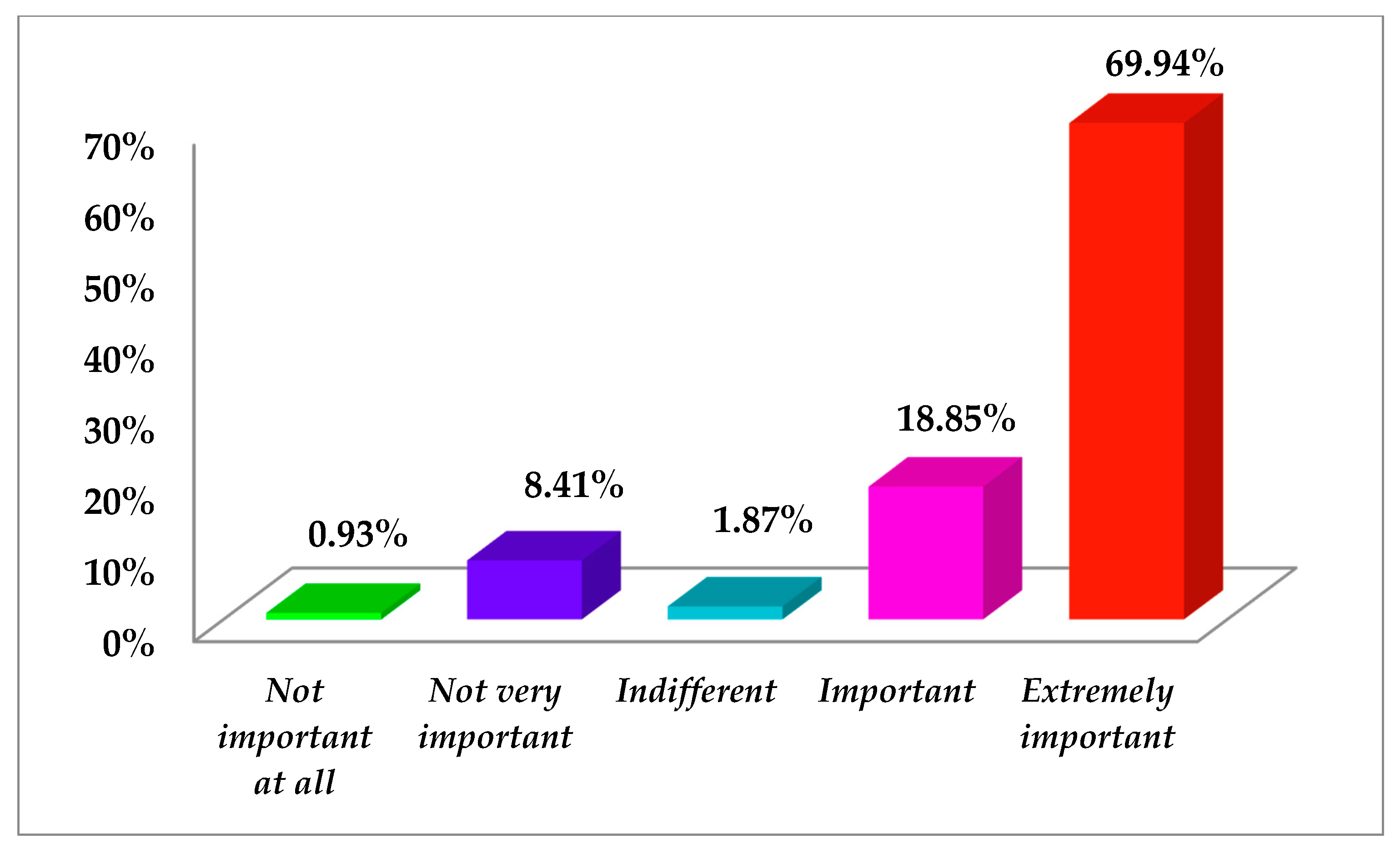
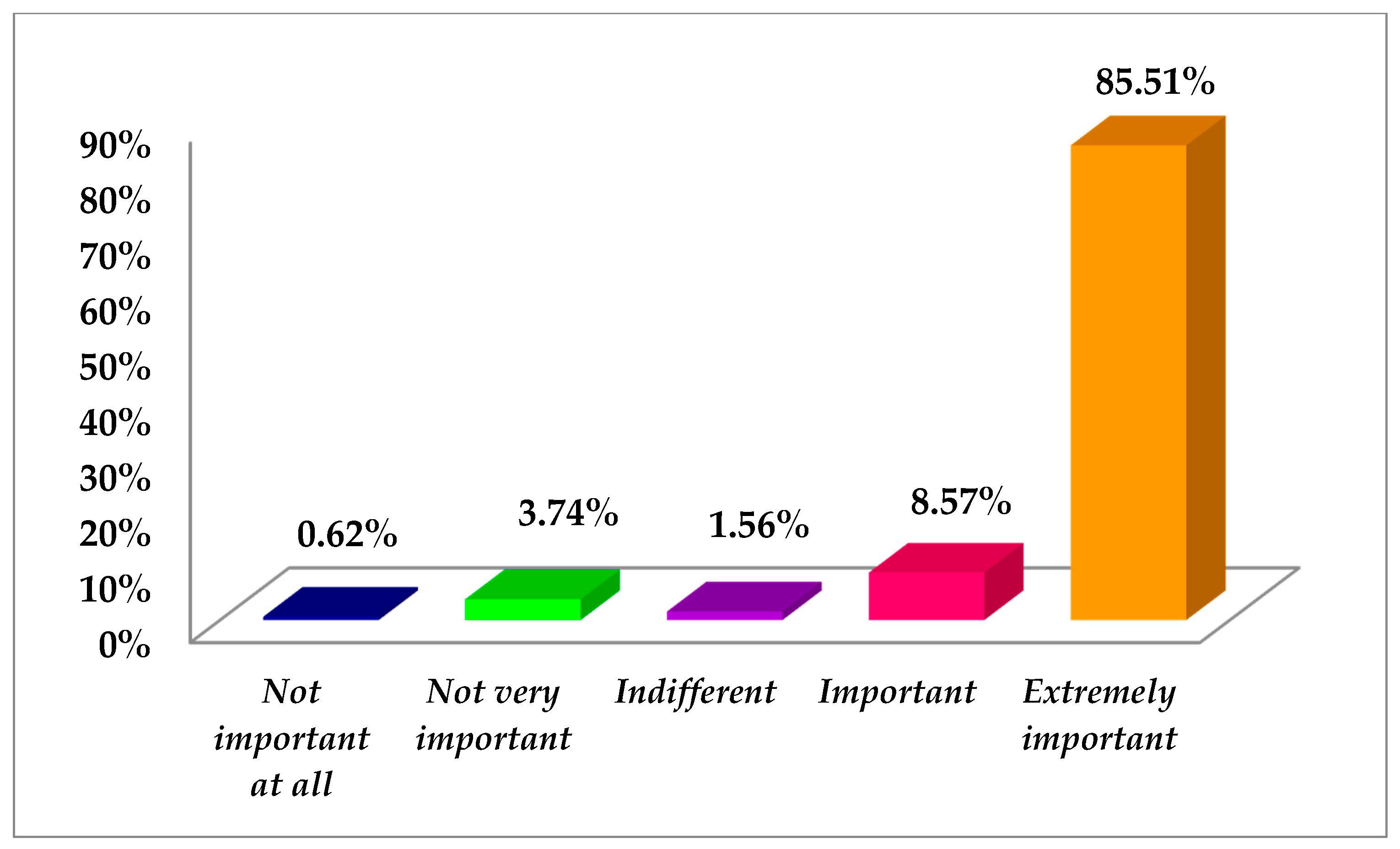
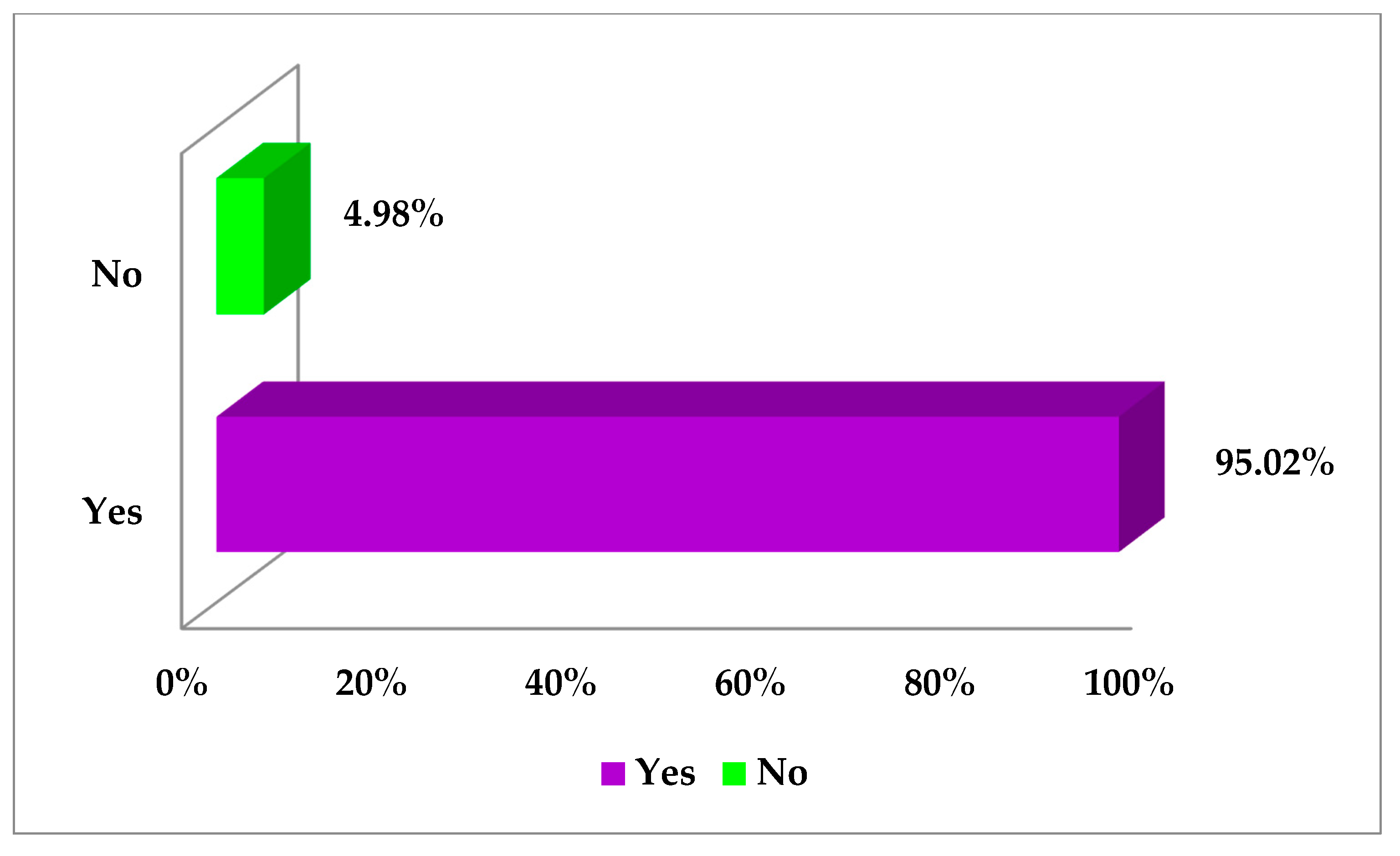
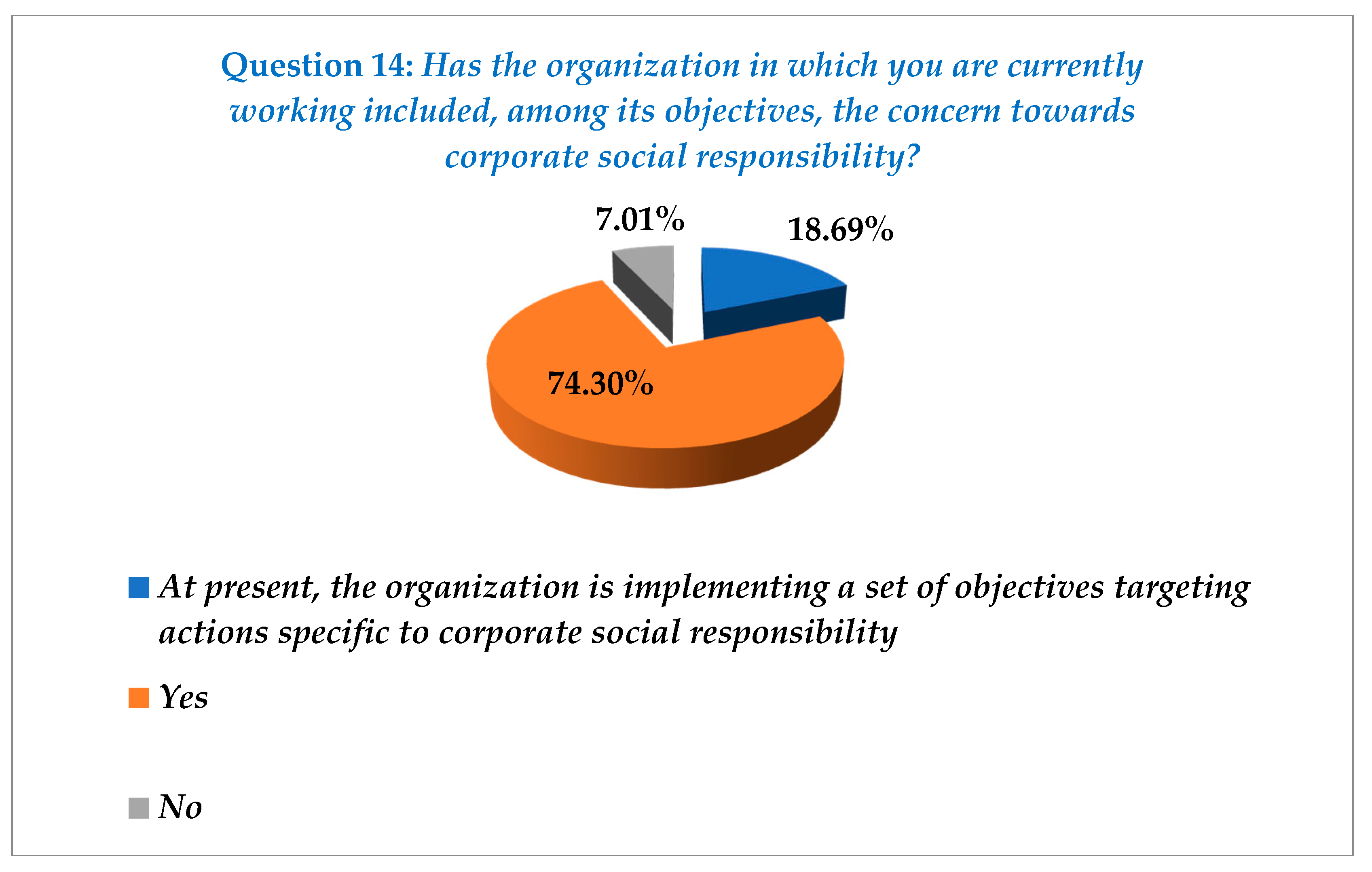
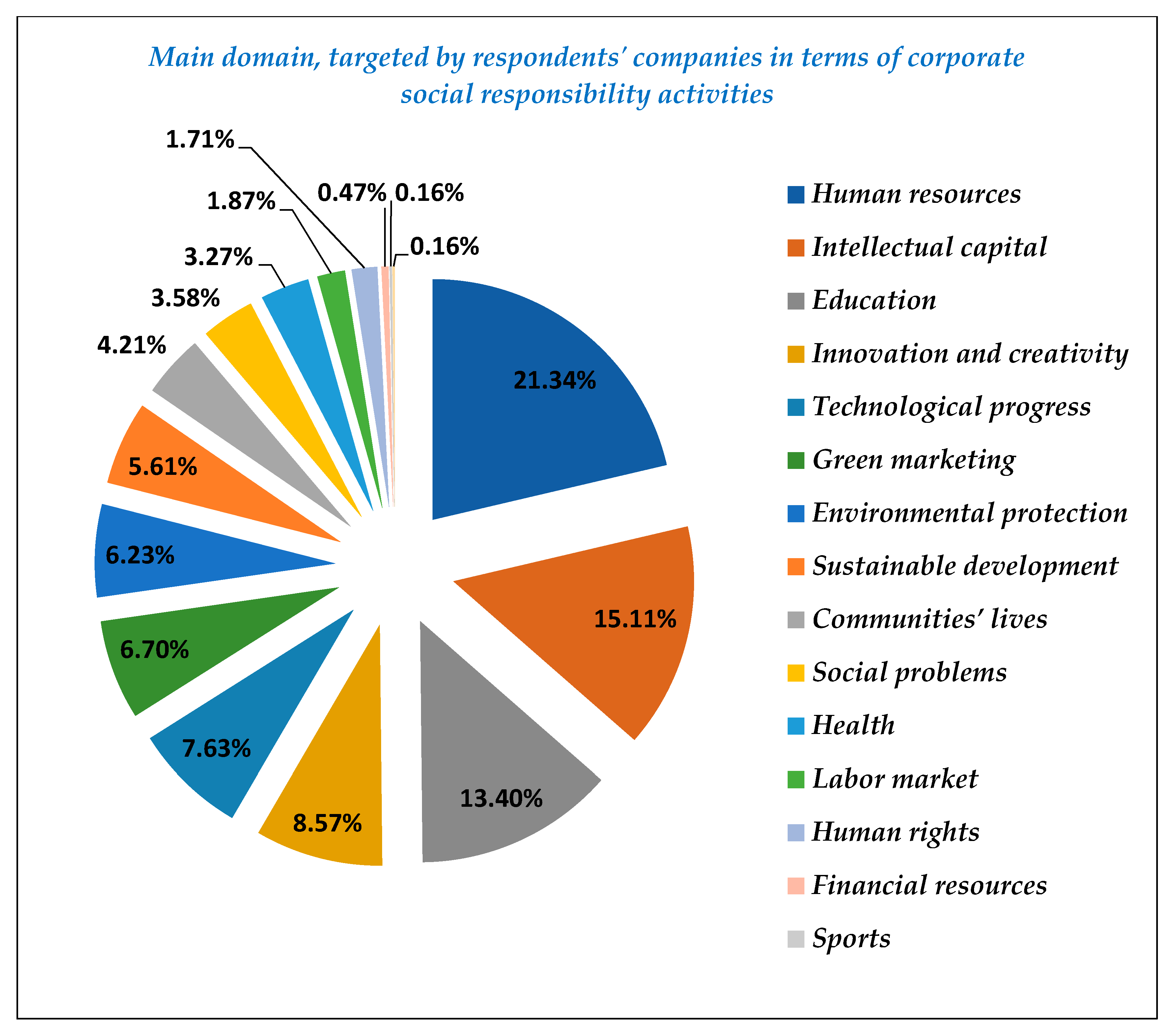
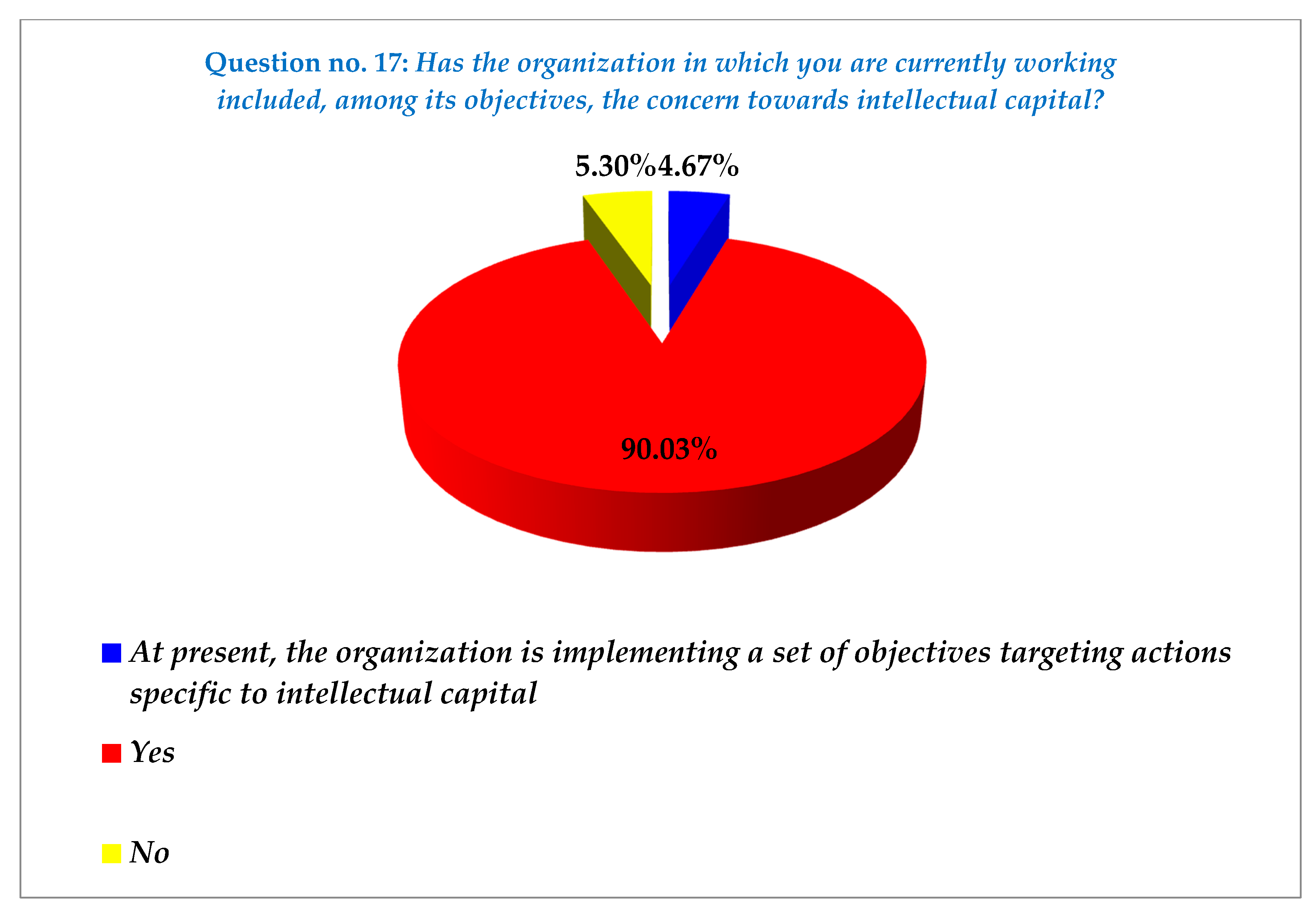
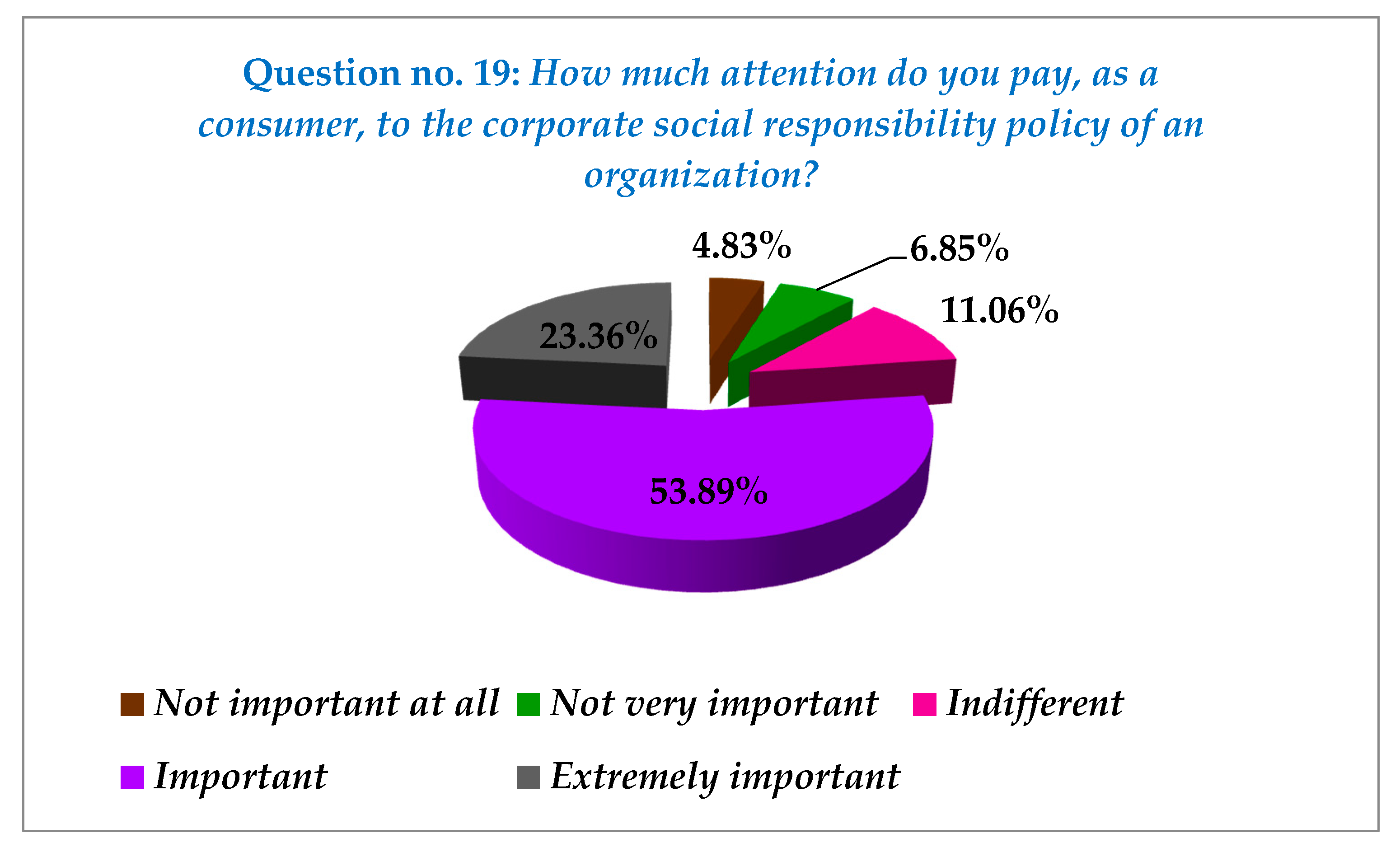
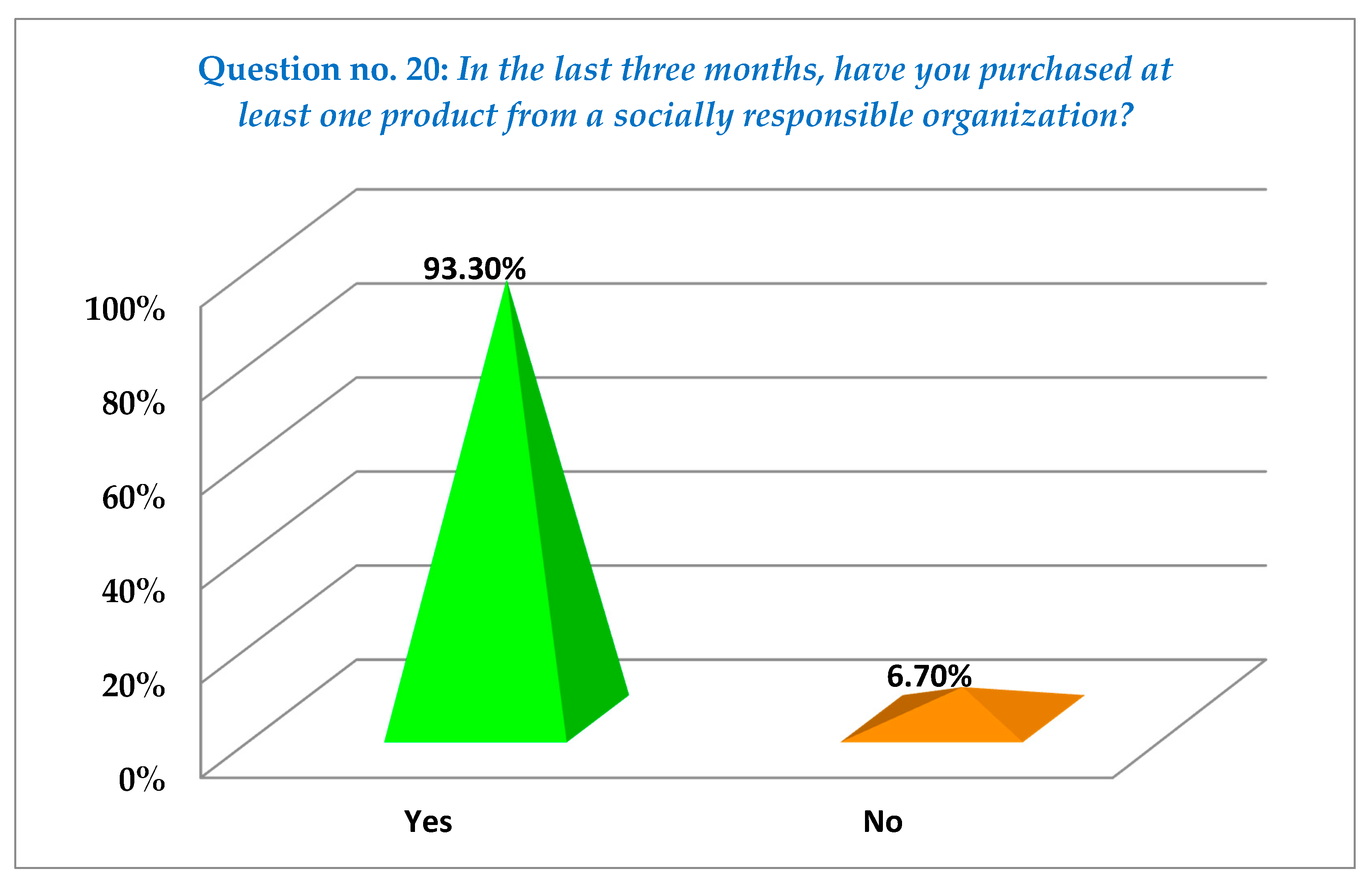
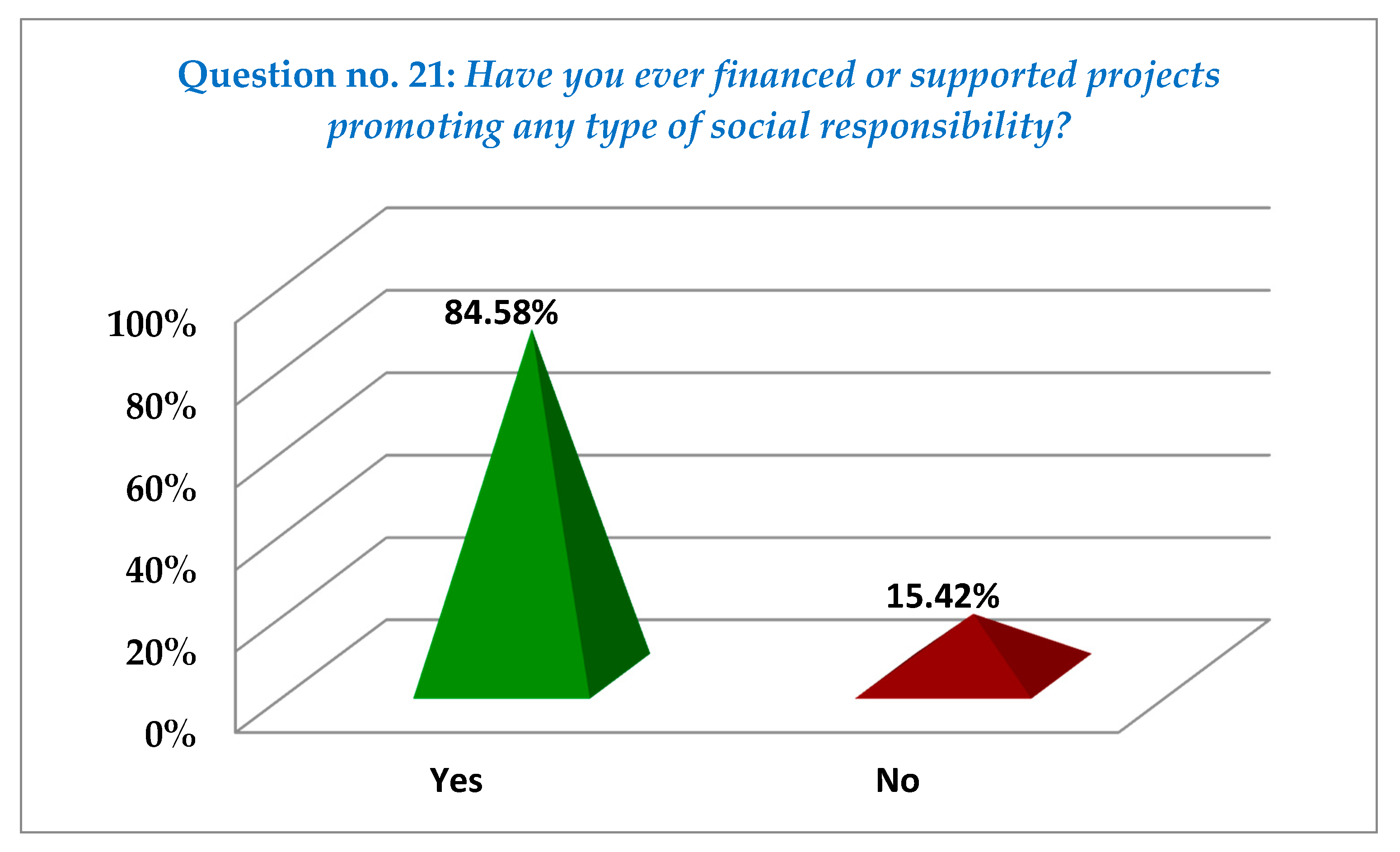
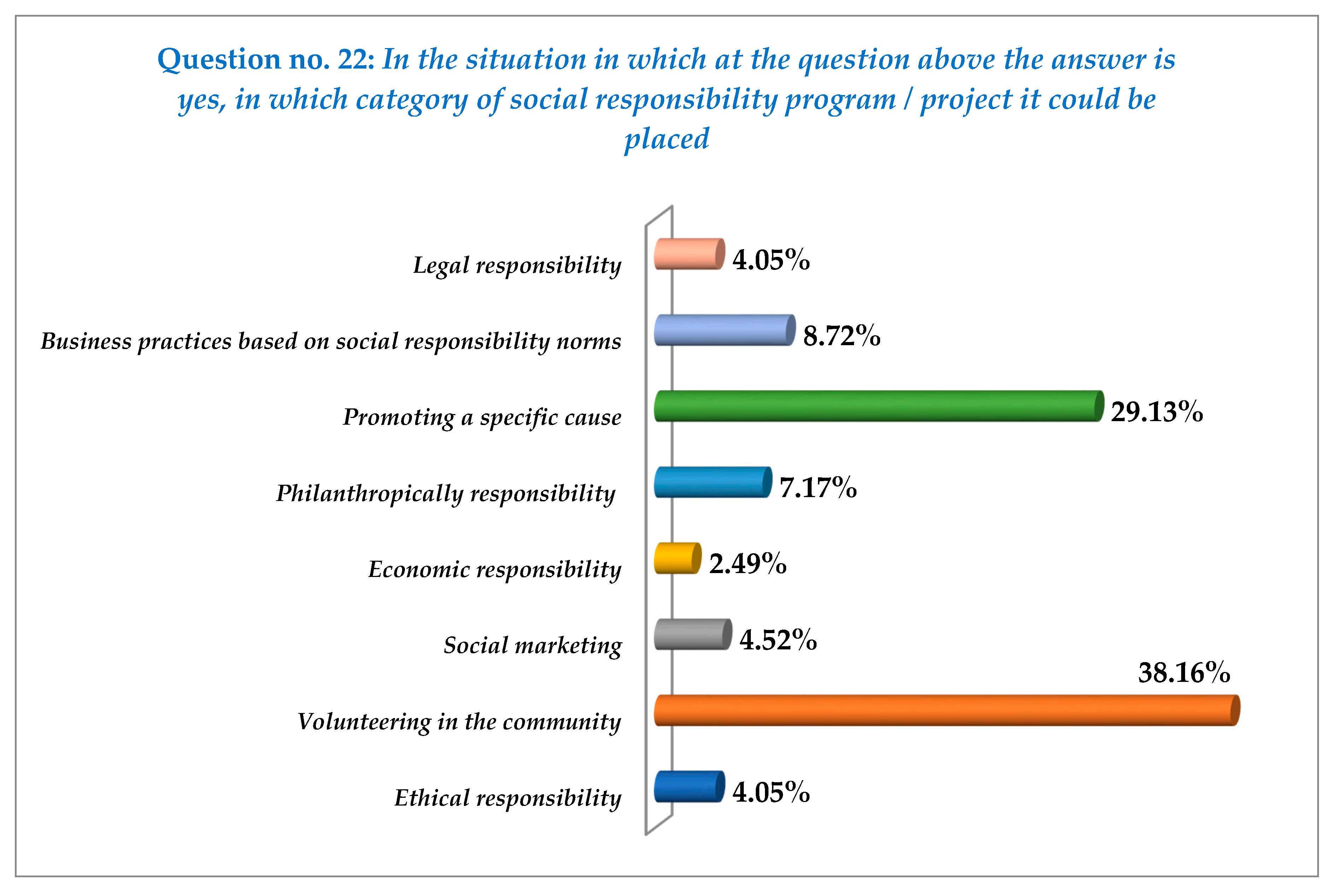
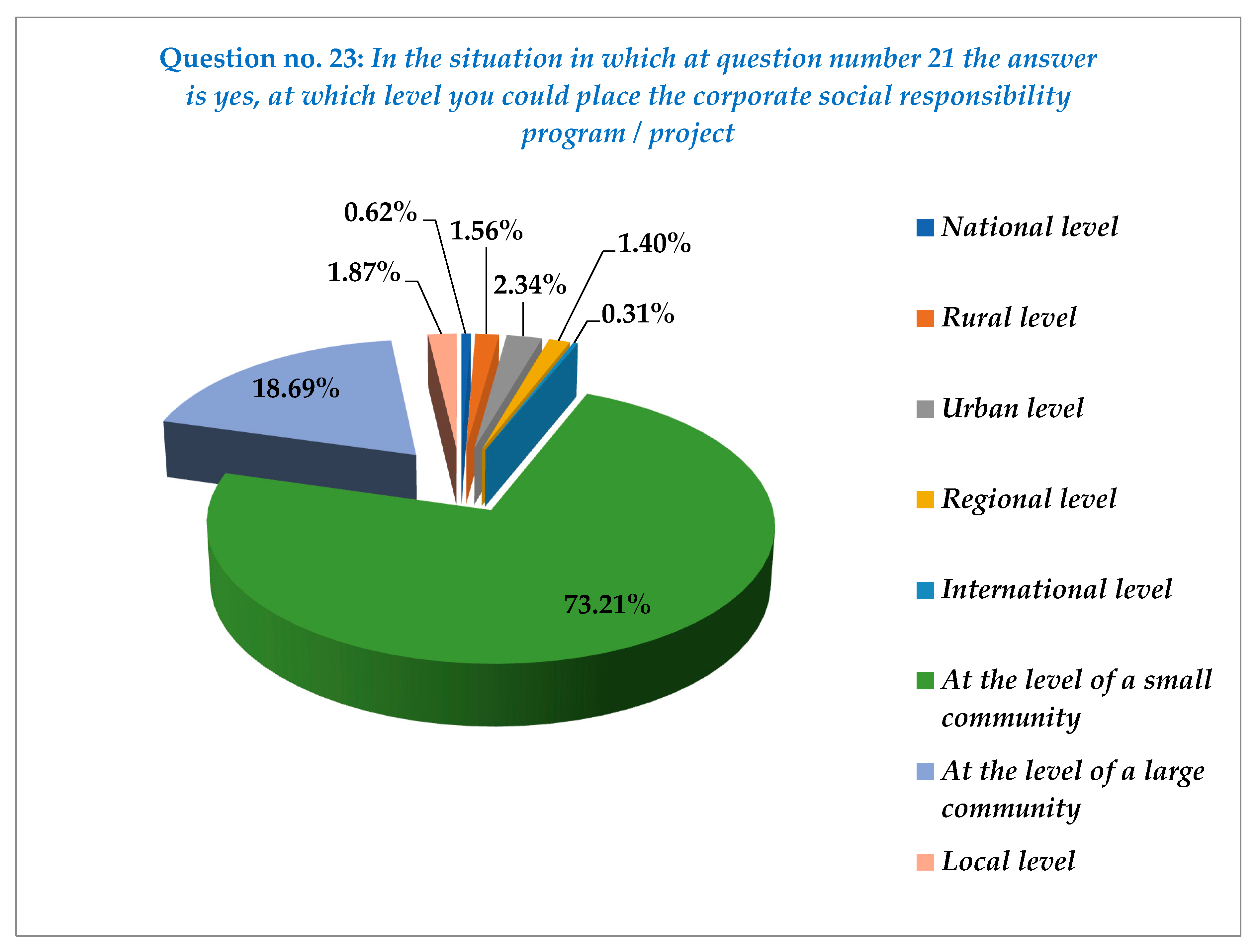
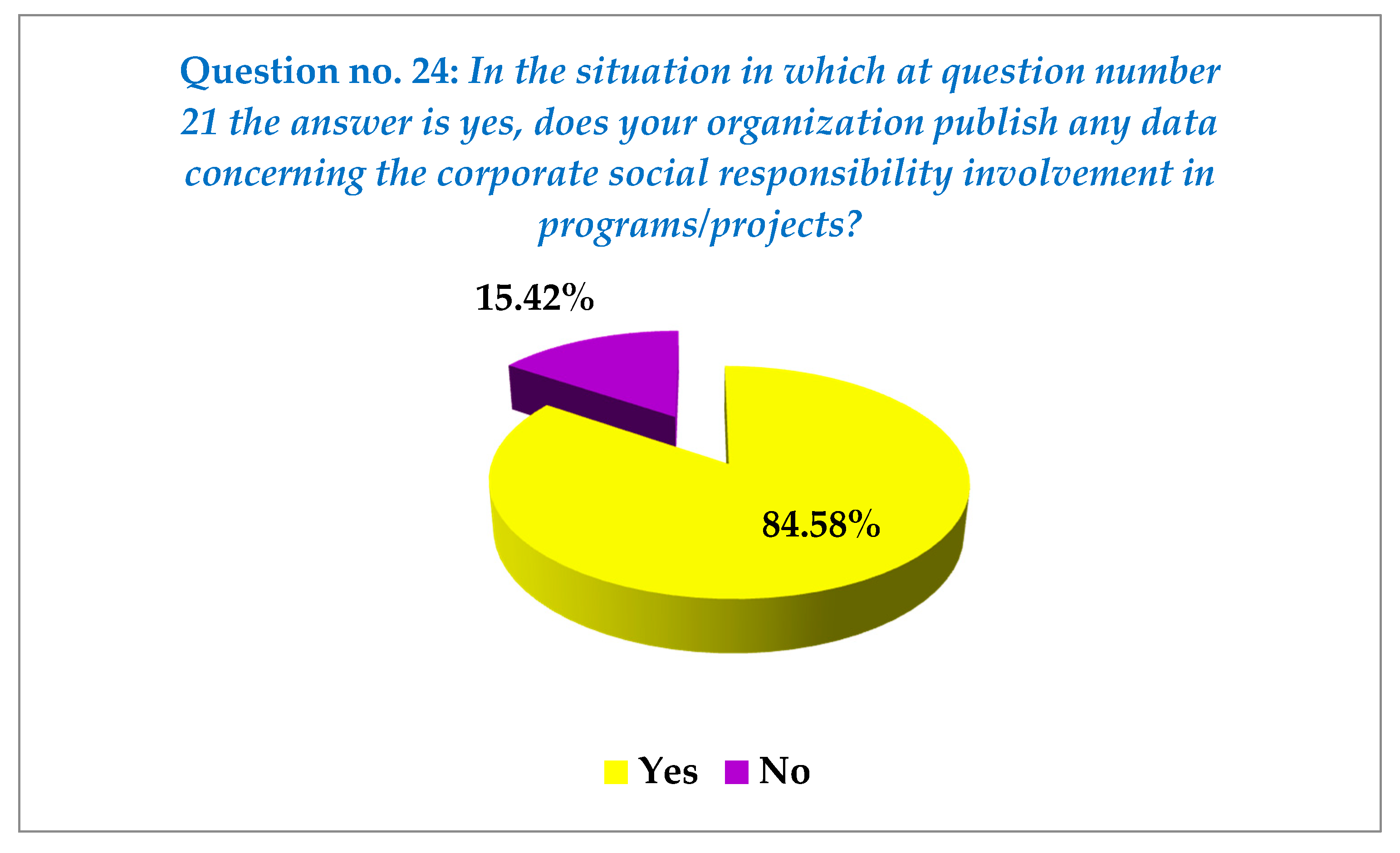
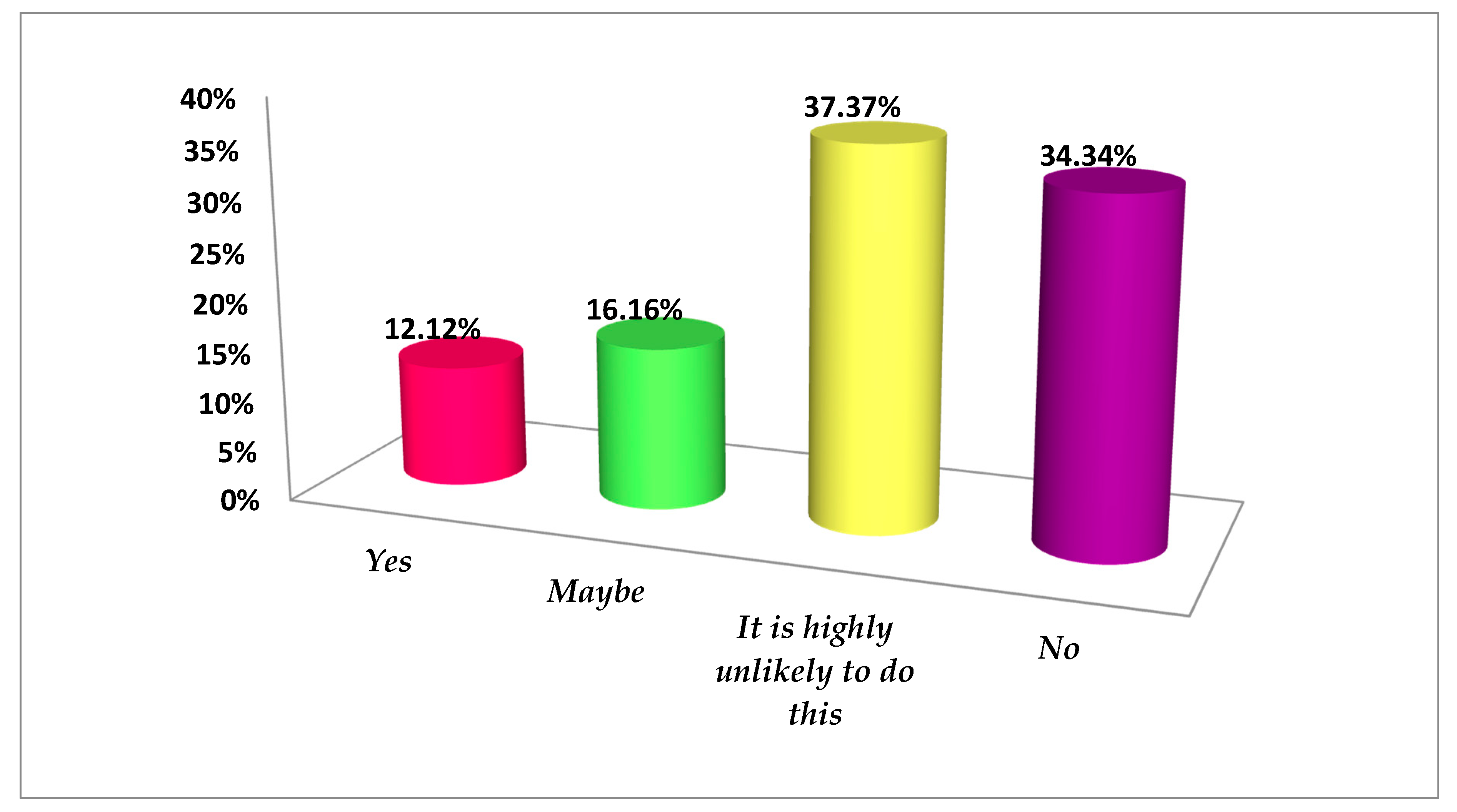
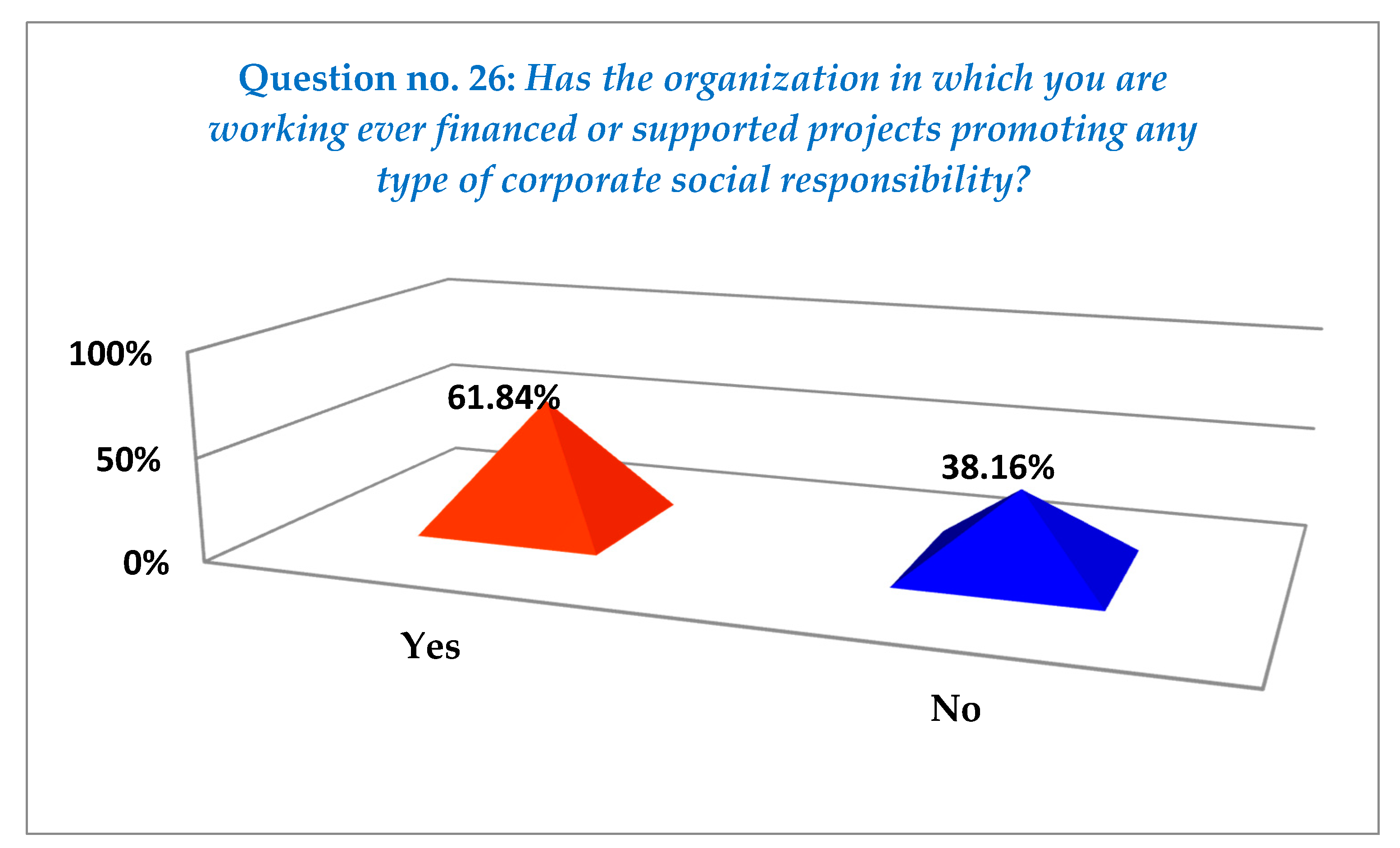
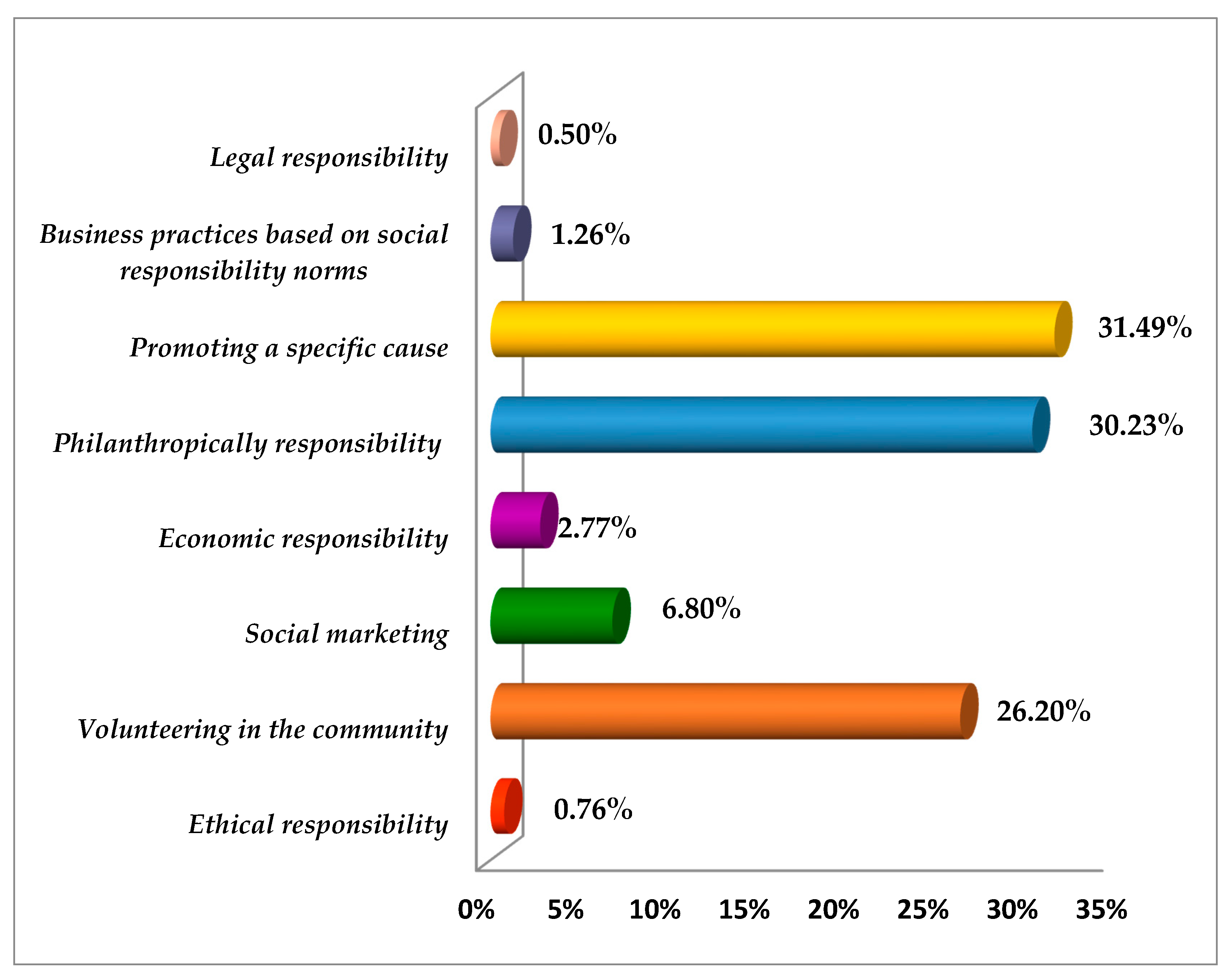
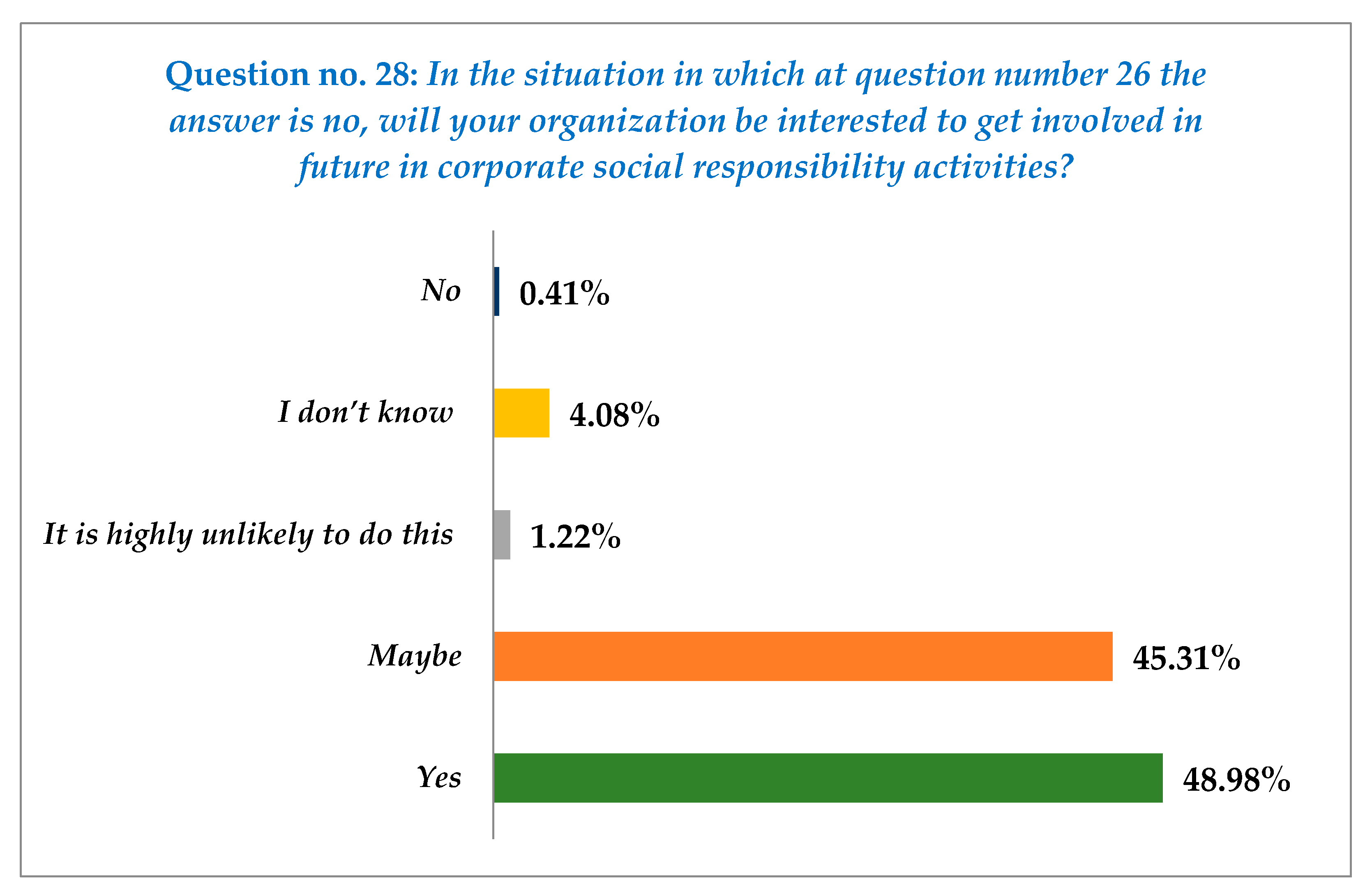
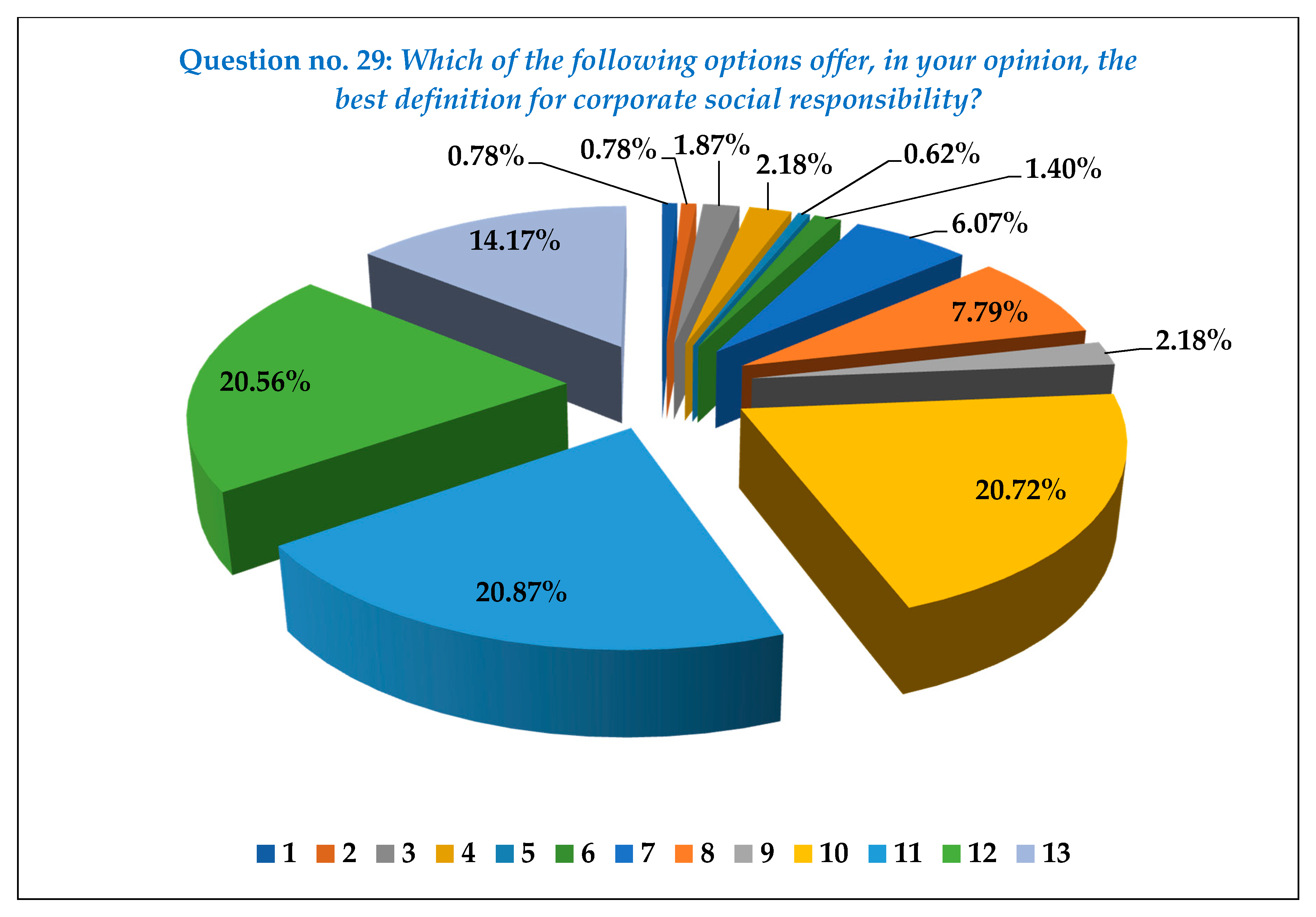
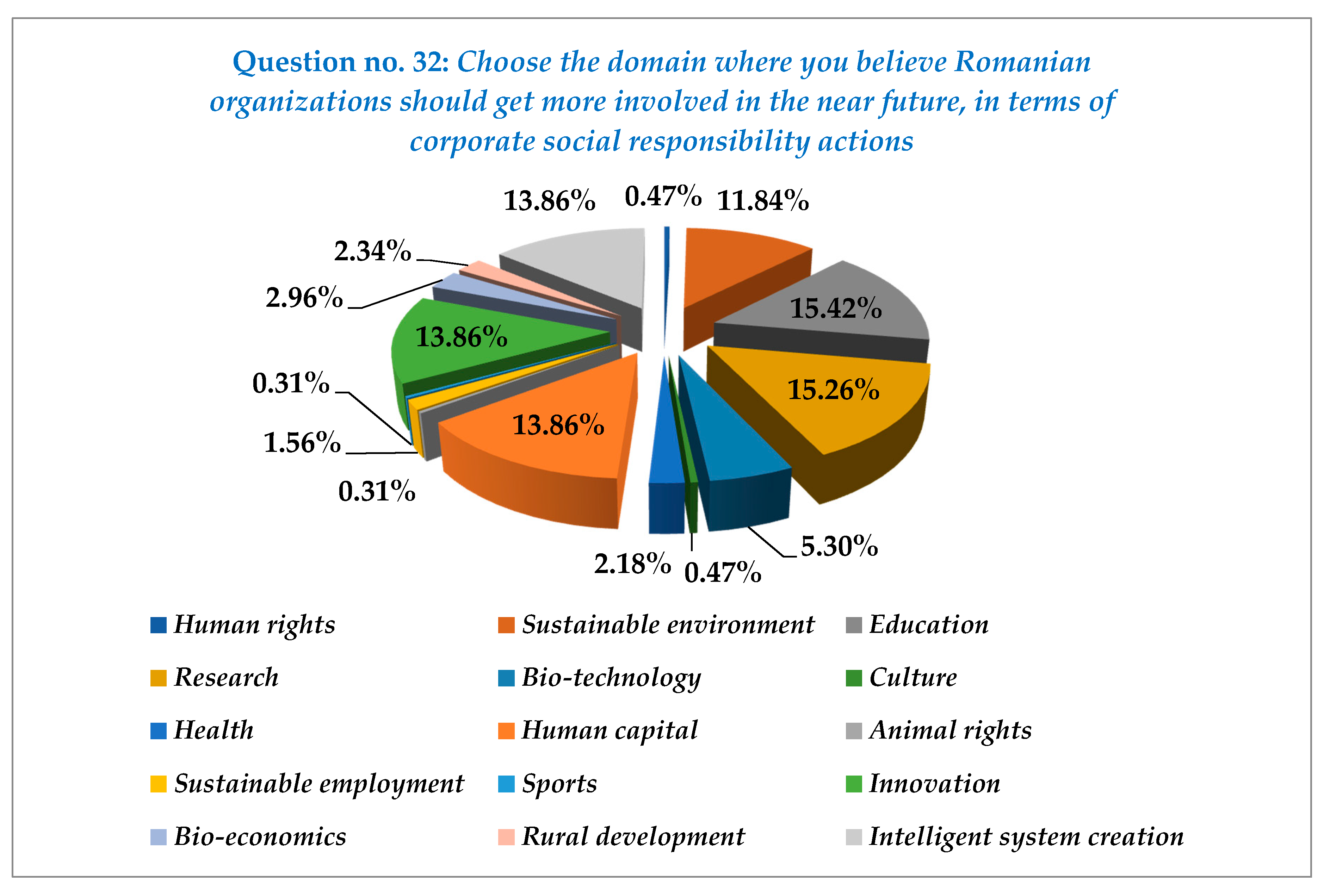
| Pros | Cons 1 |
|---|---|
| Ensures respondents’ higher anonymity, while compared, for example, with face-to-face interviews | It has limited application since it is addressed solely to a population that can read and write |
| Is a better choice in cases in which respondents may feel reluctant to discuss directly with an investigator | It has limited application since it is addressed to solely to individuals that not fall in one of the following categories: very young or very old, illiterate or handicapped |
| Represents a less expensive research method if potential respondents are scattered over a wide geographical area | It should be acknowledged that there is a self-selecting bias: not all the respondents return the questionnaires and those answering them may have different backgrounds, attributes and motivations from those who do not |
| It is inexpensive, while compared with other research methods such as the interview | The quality of the information provided may be affected by the manner in which the respondents interpret the questionnaire, since the questions are subject to interpretation |
| In particular, when it is administered collectively to the study population, it is an inexpensive method of data collection | The responses may not be explained, arguments may not be provided and responses may not be supplemented with further details |
| Even though, according to statistics, the response rate is low, this may no longer constitute a problem when the questionnaires are administered collectively | The response rate is low: In most cases, it may be somewhere between 20 per cent and 50 per cent |
| No. | Definitions for Corporate Social Responsibility | Responses (%) 1 |
|---|---|---|
| 1. | Addresses the expectations of stakeholders, as part of the strategic management plan; | 0.78 |
| 2. | Addresses the expectations of shareholders, as part of the strategic management plan; | 0.78 |
| 3. | Represents the form in which the organizations’ image can be improved in the eyes of public and an alternative to promote the organizations’ image at a larger scale; | 1.87 |
| 4. | Makes environmental efforts and shows respect for environment standards; | 2.18 |
| 5. | Supports philanthropically practices, by donating money, products or services to social causes and nonprofit organizations; | 0.62 |
| 6. | Protects the public interest, by putting people first on the working agenda; | 1.40 |
| 7. | Shows strong working ethics; | 6.07 |
| 8. | Is inclined towards ethical labor practices, by treating employees fairly and supporting; | 7.79 |
| 9. | Encourages making good deeds without expecting anything in return, thus volunteering to commit to certain causes in the benefit of the communities; | 2.18 |
| 10. | Is a tool capable to aid organizations to be sustainable, by being financially secure, minimizing negative environmental impacts and acting according to communities expectations; | 20.72 |
| 11. | Represents an instrument capable to determine the manner in which organizations are capable to reach the social and environmental standards, without compromising their performance, productivity and competitiveness; | 20.87 |
| 12. | Is a framework capable to measure and report corporate performance; | 20.56 |
| 13. | Empowers organizations to gain competitive advantages by using intellectual capital as part of organizations’ strategy. | 14.17 |
| No. | Domains Where Romanian Organizations Should Get More in Terms of Corporate Social Responsibility Actions | Responses (%) 1 |
|---|---|---|
| 1. | Human rights | 0.47 |
| 2. | Sustainable environment | 11.84 |
| 3. | Education | 15.42 |
| 4. | Research | 15.26 |
| 5. | Bio-technology | 5.30 |
| 6. | Culture | 0.47 |
| 7. | Health | 2.18 |
| 8. | Human capital | 13.86 |
| 9. | Animal rights | 0.31 |
| 10. | Sustainable employment | 1.56 |
| 11. | Sports | 0.31 |
| 12. | Innovation | 13.86 |
| 13. | Bio-economics | 2.96 |
| 14. | Rural development | 2.34 |
| 15. | Intelligent system creation | 13.86 |
| Associations | Cases | |||||
|---|---|---|---|---|---|---|
| Valid | Missing | Total | ||||
| Gender * The best definition for corporate social responsibility | 642 | 100.0% | 0 | 0.0% | 642 | 100.0% |
| Level of education * The best definition for corporate social responsibility | 642 | 100.0% | 0 | 0.0% | 642 | 100.0% |
| Career level * The best definition for corporate social responsibility | 642 | 100.0% | 0 | 0.0% | 642 | 100.0% |
| The domain CSR * The best definition for corporate social responsibility | 642 | 100.0% | 0 | 0.0% | 642 | 100.0% |
| Correlation Coefficients | Value | df | Asymp. Sig. (2-sided) |
|---|---|---|---|
| Pearson Chi-Square | 13.614 | 12 | 0.326 |
| Likelihood Ratio | 13.909 | 12 | 0.307 |
| Linear-by-Linear Association | 0.041 | 1 | 0.840 |
| N of Valid Cases | 642 |
| Correlation Coefficients | Value | df | Asymp. Sig. (2-sided) |
|---|---|---|---|
| Pearson Chi-Square | 60.335 | 60 | 0.464 |
| Likelihood Ratio | 64.455 | 60 | 0.324 |
| Linear-by-Linear Association | 0.648 | 1 | 0.421 |
| N of Valid Cases | 642 |
| Correlation Coefficients | Value | df | Asymp. Sig. (2-sided) |
|---|---|---|---|
| Pearson Chi-Square | 77.835 | 84 | 0.669 |
| Likelihood Ratio | 83.217 | 84 | 0.504 |
| Linear-by-Linear Association | 2.229 | 1 | 0.135 |
| N of Valid Cases | 642 |
| Correlation Coefficients | Value | df | Asymp. Sig. (2-sided) |
|---|---|---|---|
| Pearson Chi-Square | 231.554 | 168 | 0.001 |
| Likelihood Ratio | 147.777 | 168 | 0.867 |
| Linear-by-Linear Association | 1.165 | 1 | 0.280 |
| N of Valid Cases | 642 |
| Correlation Coefficients | Value | Asymptotic Standard Errors | Approximation Linear or Tangent | Approximation Significance | ||
|---|---|---|---|---|---|---|
| Nominal by Nominal | Lambda | Symmetric | 0.056 | 0.020 | 2.729 | 0.006 |
| The domain CSR 2 Dependent | 0.052 | 0.024 | 2.082 | 0.037 | ||
| The best definition for corporate social responsibility Dependent | 0.061 | 0.029 | 2.055 | 0.040 | ||
| Goodman and Kruskal tau | The domain CSR 2 Dependent | 0.017 | 0.003 | 0.765 | ||
| The best definition for corporate social responsibility Dependent | 0.021 | 0.004 | 0.589 | |||
| Uncertainty Coefficient | Symmetric | 0.054 | 0.007 | 7.136 | 0.867 | |
| The domain CSR 2 Dependent | 0.052 | 0.007 | 7.136 | 0.867 | ||
| The best definition for corporate social responsibility Dependent | 0.057 | 0.008 | 7.136 | 0.867 | ||
| Correlation Coefficients | Value | Approximation Significance | |
|---|---|---|---|
| Nominal by Nominal | Phi | 0.601 | 0.001 |
| Cramer’s V | 0.173 | 0.001 | |
| Contingency Coefficient | 0.515 | 0.001 | |
| N of Valid Cases | 642 | ||
© 2019 by the authors. Licensee MDPI, Basel, Switzerland. This article is an open access article distributed under the terms and conditions of the Creative Commons Attribution (CC BY) license (http://creativecommons.org/licenses/by/4.0/).
Share and Cite
Popescu, C.R.G.; Popescu, G.N. An Exploratory Study Based on a Questionnaire Concerning Green and Sustainable Finance, Corporate Social Responsibility, and Performance: Evidence from the Romanian Business Environment. J. Risk Financ. Manag. 2019, 12, 162. https://doi.org/10.3390/jrfm12040162
Popescu CRG, Popescu GN. An Exploratory Study Based on a Questionnaire Concerning Green and Sustainable Finance, Corporate Social Responsibility, and Performance: Evidence from the Romanian Business Environment. Journal of Risk and Financial Management. 2019; 12(4):162. https://doi.org/10.3390/jrfm12040162
Chicago/Turabian StylePopescu, Cristina Raluca Gh., and Gheorghe N. Popescu. 2019. "An Exploratory Study Based on a Questionnaire Concerning Green and Sustainable Finance, Corporate Social Responsibility, and Performance: Evidence from the Romanian Business Environment" Journal of Risk and Financial Management 12, no. 4: 162. https://doi.org/10.3390/jrfm12040162
APA StylePopescu, C. R. G., & Popescu, G. N. (2019). An Exploratory Study Based on a Questionnaire Concerning Green and Sustainable Finance, Corporate Social Responsibility, and Performance: Evidence from the Romanian Business Environment. Journal of Risk and Financial Management, 12(4), 162. https://doi.org/10.3390/jrfm12040162