Explainable Deep Learning Model for Predicting Overall Survival in Patients Receiving Palliative Radiotherapy for Bone Metastases


Department of Radiology, Daiyukai General Hospital, Ichinomiya 491-8551, Japan
*
Author to whom correspondence should be addressed.
Curr. Oncol. 2026, 33(9), 528; https://doi.org/10.3390/curroncol33090528
Submission received: 24 July 2026
/
Revised: 25 August 2026
/
Accepted: 31 August 2026
/
Published: 2 September 2026
(This article belongs to the Section Palliative and Supportive Care)
Simple Summary
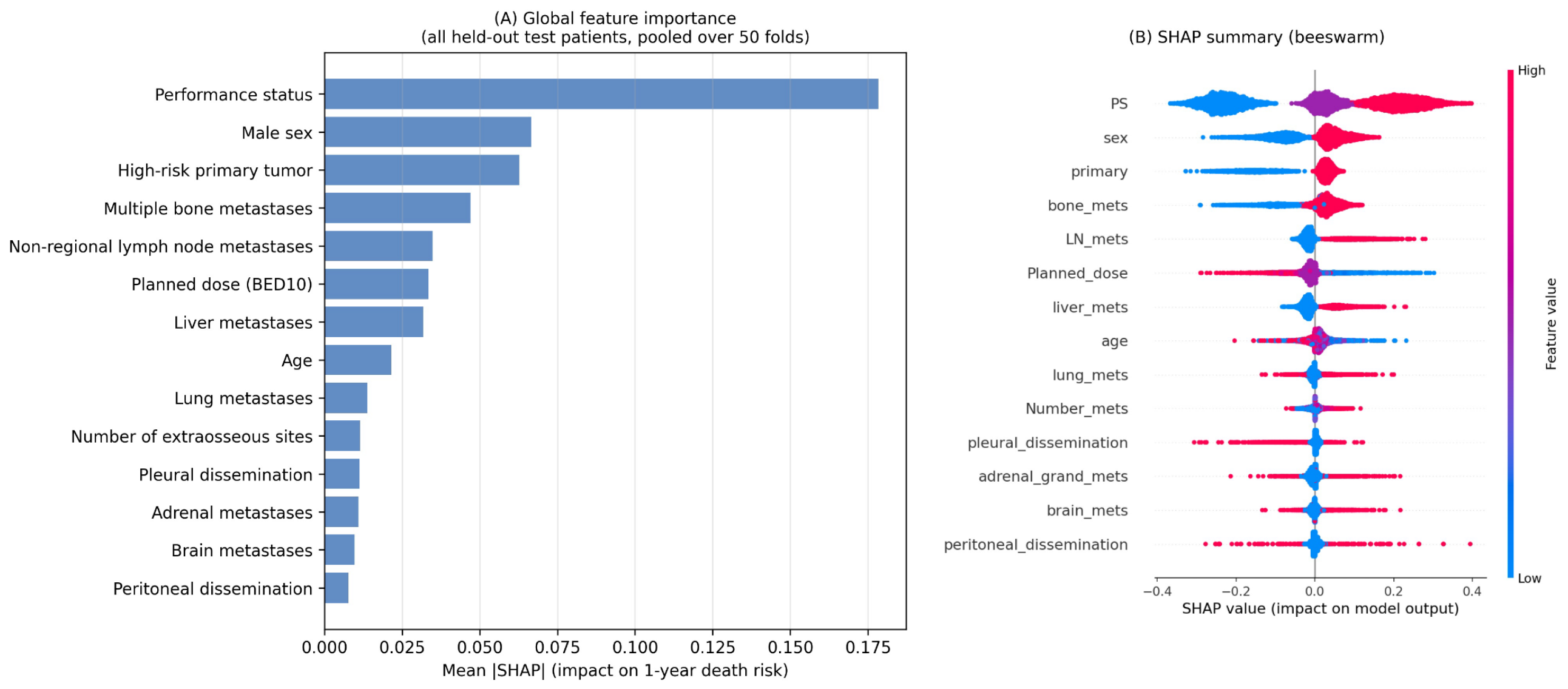
Predicting overall survival after palliative radiotherapy for bone metastases plays a critical role in determining appropriate treatment strategies, including adjusting treatment intensity according to individual patient prognosis. Although machine learning-based survival prediction has been investigated in this setting, explainable deep learning models remain underexplored. Prognostic scores used in this setting add up risk points for individual factors, but whether this simple additive form misses prognostic information had not been tested. This study developed and evaluated an explainable deep learning model, which can capture more complex patterns, using data from 472 patients. The model predicted survival during the first year after radiotherapy with discrimination and calibration comparable to those of a Cox proportional hazards model, indicating that this prognostic information can be provided as a simple bedside score rather than requiring artificial intelligence software. The explainability analyses identified poor performance status as by far the strongest predictor, followed by male sex, high-risk primary tumor type, the burden of metastatic disease, and the planned radiation dose; a higher planned dose was the only leading factor associated with lower predicted mortality. These findings support explainable, individualized survival estimation as an aid to decisions on treatment goals and radiation schedules.
Abstract
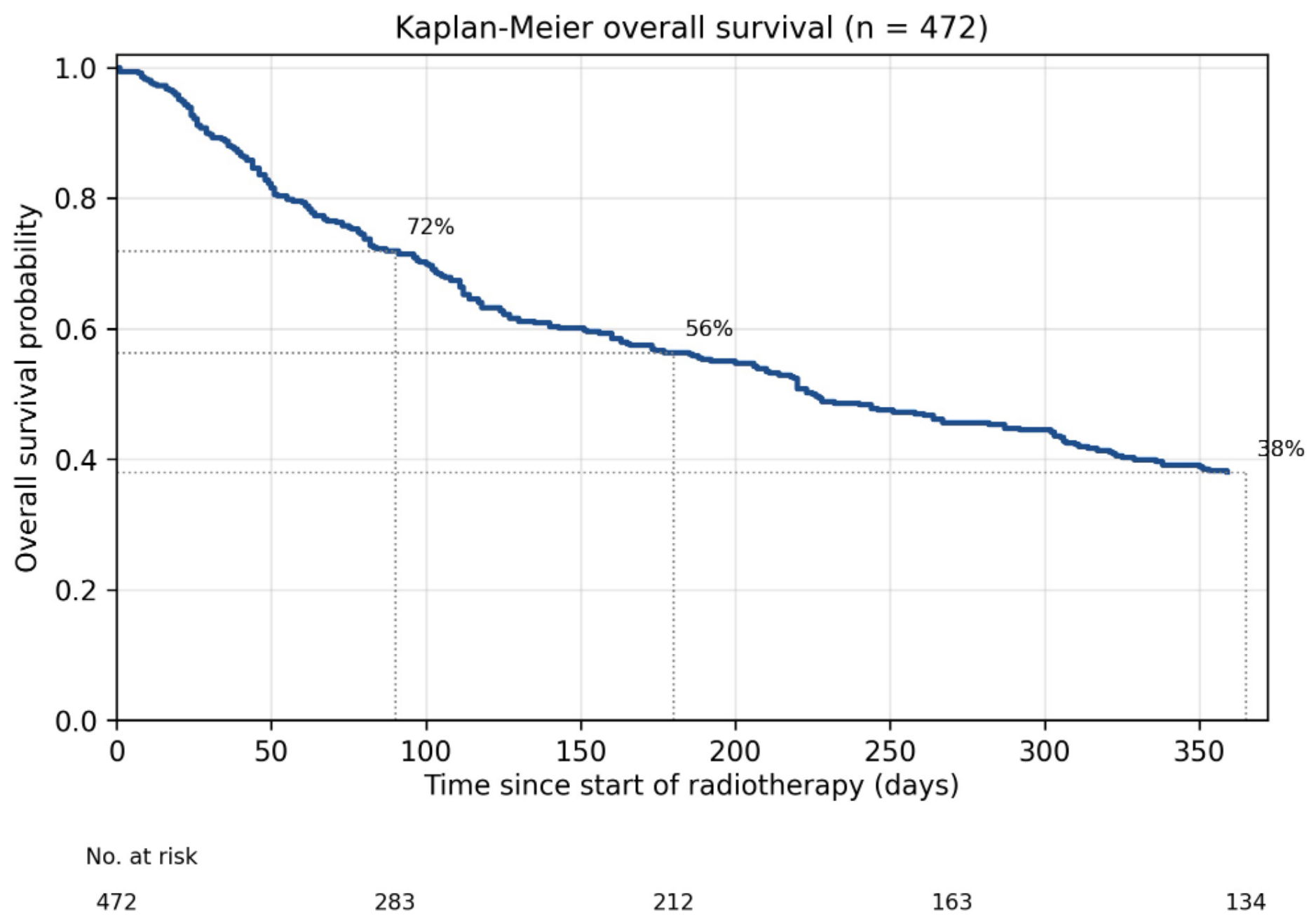
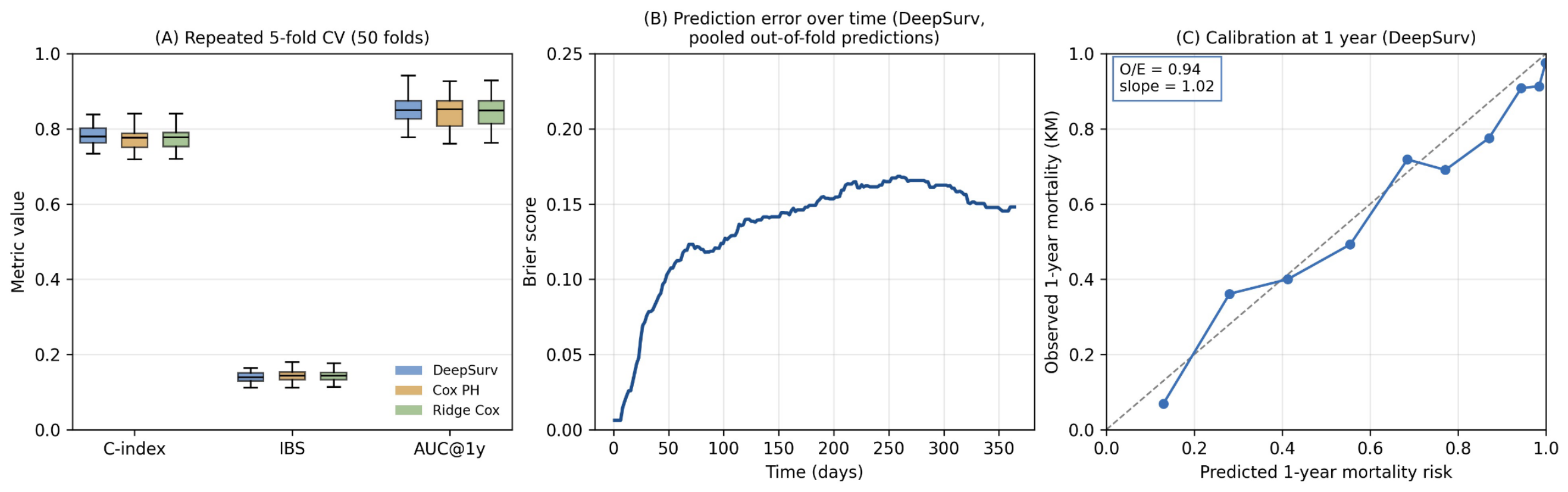
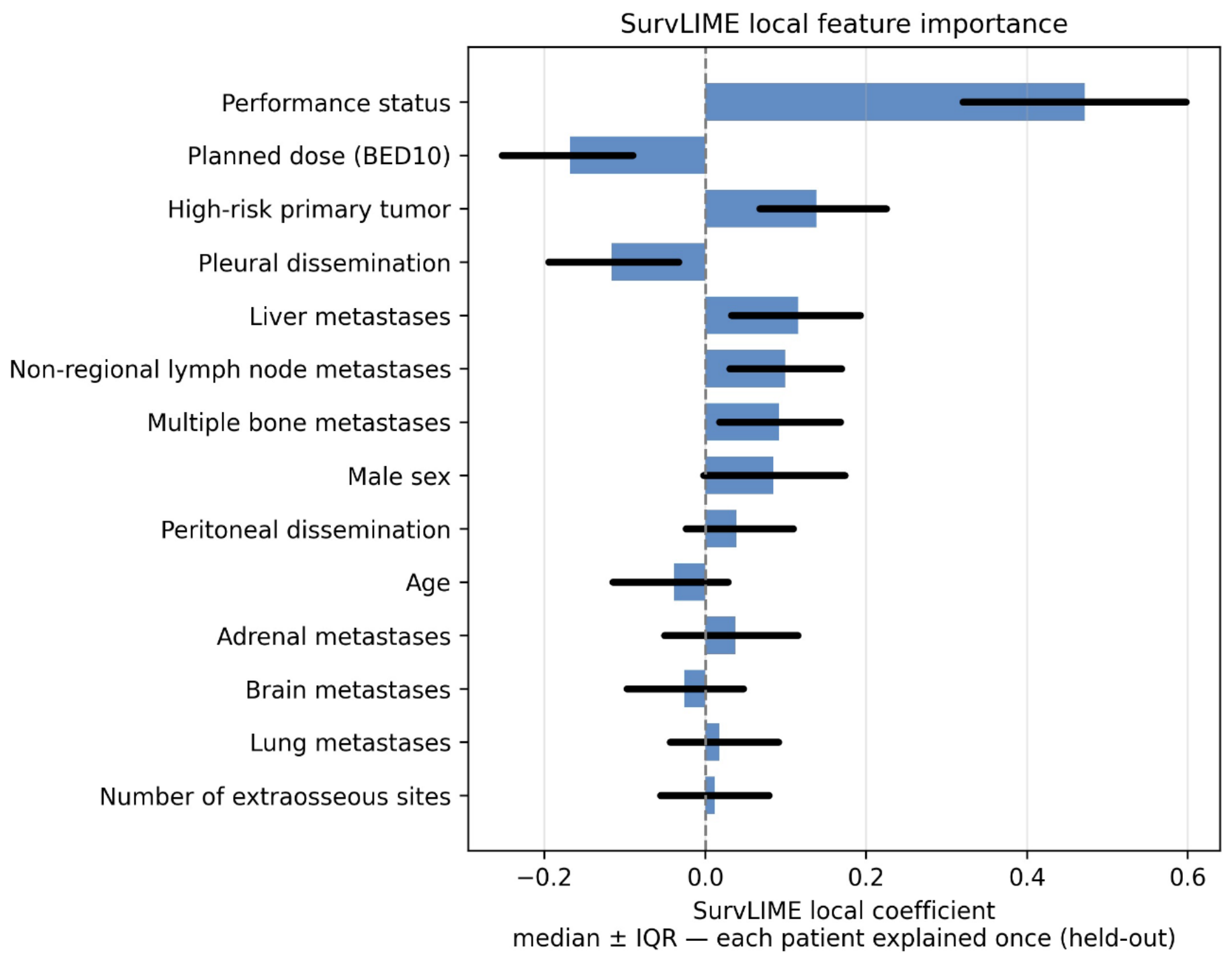
Purpose: Although machine learning-based prediction of overall survival (OS) in palliative radiotherapy for bone metastases has been investigated, explainable deep learning (DL) models remain underexplored. This study aimed to develop and validate an explainable DL model to predict OS in this setting, and to examine whether this flexible model provides predictive value beyond a standard Cox model based on routinely collected baseline variables. Methods and Materials: We analyzed all 472 eligible patients who received palliative radiotherapy for bone metastases between January 2013 and August 2024; patients alive with less than one year of follow-up were retained as right-censored observations. The primary endpoint was OS over a fixed 1-year horizon. A DeepSurv model using 14 baseline predictors, including the planned prescribed dose (biologically effective dose, BED10), was developed with repeated 5-fold cross-validation (K = 5, R = 10) and compared with standard and ridge-penalized Cox models fitted on identical splits. Performance was assessed by the time-dependent concordance index (C-index), integrated Brier score (IBS), time-dependent area under the curve (AUC) at 90, 180, and 365 days, and a calibration analysis at one year; 95% confidence intervals (CI) were obtained by patient-level bootstrapping of the pooled out-of-fold predictions. Shapley Additive Explanations (SHAP) and SurvLIME were computed on the held-out test sets. Results: Within one year, 242 patients (51.3%) died; median OS was 225 days (95% CI: 189–287). The DeepSurv model achieved a pooled time-dependent C-index of 0.779 (95% CI: 0.751–0.807), an IBS of 0.135 (95% CI: 0.122–0.149), and AUCs of 0.892 (0.857–0.925), 0.862 (0.822–0.895), and 0.856 (0.814–0.895) at 90, 180, and 365 days, with an observed/expected ratio of 0.94 and a calibration slope of 1.02; discrimination was comparable to the Cox model (C-index 0.763, 95% CI: 0.737–0.789). SHAP identified poor performance status as the dominant predictor (mean |SHAP| 0.178), followed by male sex (0.067), high-risk primary tumor type (0.063), multiple bone metastases (0.047), and planned dose (0.033), the latter being the only leading feature associated with lower predicted mortality; SurvLIME gave consistent results. In multivariable Cox analysis, performance status (hazard ratio [HR] 2.21 per standard deviation [SD], p < 0.001) and planned dose (HR 0.71 per SD, p < 0.001) were independently associated with OS. Conclusions: The explainable DL model predicted OS after palliative radiotherapy for bone metastases with discrimination and calibration comparable to those of a well-specified Cox model, and its feature attributions agreed with the Cox coefficients, suggesting that the prognostic information in these baseline variables is essentially additive and can therefore be delivered at the bedside as a simple score, without dedicated AI infrastructure and without loss of predictive performance. The combined use of SHAP and SurvLIME verified that the model relies on established clinical factors, most prominently performance status, and provides patient-level explanations. Pending external validation, such prediction may support individualized decisions on treatment goals and radiation schedules.
Keywords:
deep learning; prognosis; radiotherapy; bone neoplasms; radiation dosage