


Simple Summary
Lymphoma is the most common hematological malignancy and is associated with an increased risk for venous thromboembolism (VTE), especially in patients with aggressive non-Hodgkin lymphoma where VTE incidence approaches 12%. Although current guidelines recommend the use of prophylactic anticoagulation in patients with high risk for VTE, the existing evidence regarding the appropriate risk stratification in patients with lymphoma is still insufficient. We aimed to critically analyze the existing evidence regarding predictors and new developed risk assessment models for VTE in patients diagnosed with lymphoma and to evaluate the already existing models for VTE risk stratification in cancer patients. The role of the Khorana score in identifying patients with lymphoma at high risk for VTE has been under intense scrutiny, alongside the evaluation of more recently developed assessment models, which currently show significant risk of bias.
Abstract
Among hematological malignancies, lymphoma is associated with an increased incidence of venous thromboembolism (VTE) ranging between 4 and 12%. Although Khorana score was validated for stratifying VTE risk in cancer, its discrimination reliability in lymphoma is reduced by the lack of specific predictors. The aim of this systematic review was to summarize the evidence regarding predictors and available risk assessment models (RAMs) for VTE in patients with lymphoma. A systematic search was conducted on PubMed, Embase and Scopus in order to identify papers published until February 2026, which evaluated predictors and RAMs for VTE in patients diagnosed with lymphoma. Out of 592 evaluated papers, 44 met the inclusion criteria. The widely used Khorana score failed to appropriately identify patients with lymphoma at high risk for VTE, while the Thrombosis Lymphoma predictive score (ThroLy) showed modest improvement. Strong predictors for VTE were a poor performance status, older age, previous history of VTE, the use of central venous catheters, and bulky disease. However, the lack of external validation, the small sample size and bias due to confounding factors limit the generalizability of the results. Therefore, larger studies with external validation cohorts are needed to design lymphoma-specific RAMs and to identify predictors with high discrimination power.
1. Introduction
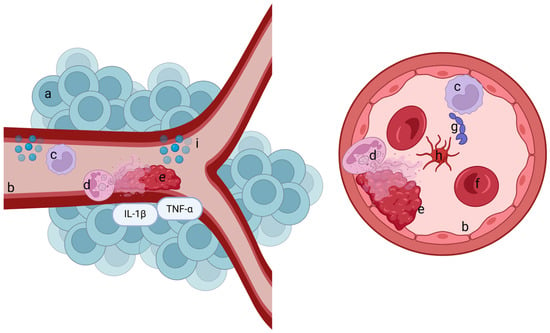
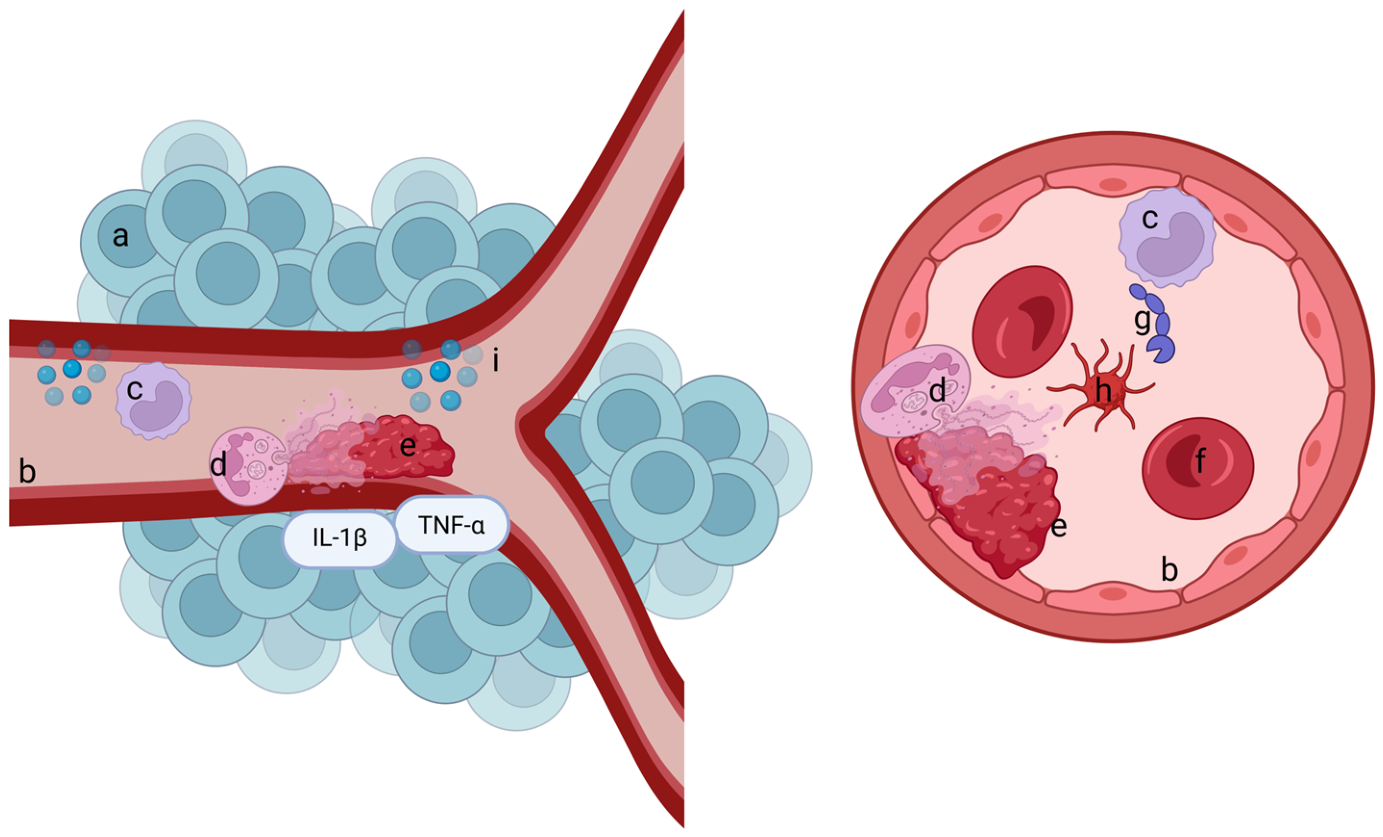
Venous thromboembolism (VTE) is a frequent and serious complication in patients with cancer, being the second cause of mortality after cancer progression itself [1]. Among hematological malignancies, lymphoma is associated with an increased risk for VTE [2]; data from the literature report a VTE prevalence of approximately 4% in Hodgkin lymphoma (HL), which can increase up to 12% in non-Hodgkin lymphoma (NHL), especially in diffuse large B-cell lymphoma (DLBCL) [3]. The VTE risk is particularly high in the first months after diagnosis and is enhanced through several pathophysiological mechanisms [4]. Patients with lymphoma usually exhibit an increased inflammatory and hypercoagulant activity, which also worsens disease prognosis. The high level of proinflammatory cytokines leads to the activation of the coagulation cascade through the secretion of tissue factor by circulating blood monocytes, which further activates the extrinsic coagulation pathway. Moreover, thrombosis involves a supplementary inflammatory response in the vessel wall, facilitating the expression of adhesion molecules and the activation of neutrophils [5]. A unique feature of lymphoma is the complex inflammatory milieu leading to immune dysregulation and lastly to lymphomagenesis. Various polymorphisms of interleukin (IL)-6, IL-10, as well as high levels of tumor necrosis factor alpha (TNF-α) are associated with NHL and are also involved in thrombogenesis [6] (Figure 1).
Figure 1.
Schematic illustration of the pathophysiological mechanisms leading to venous thrombosis in lymphoma. The clonal lymphoma cells release various cytokines, among them TNF-α and IL-1β, which enhance the endothelial activation. The circulating CD14-monocytes release tissue factor (TF), which leads to platelet degranulation and adhesion. Moreover, the platelet adhesion is favored by the activated neutrophils, which build neutrophil extracellular traps (NETs). a = clonal lymphoma cells, b = blood vessel in longitudinal and transversal section, c = activated CD14-monocyte containing tissue factor, d = neutrophil with adjacent neutrophil extracellular traps, e = thrombus, f = circulating erythrocyte, g = activated tissue factor, h = degranulated platelet, i = various cytokines released by lymphoma cells. Created in BioRender, https://BioRender.com/9y5mlmc (accessed on 30 June 2026).
The current guidelines of the European Society for Medical Oncology recommend the use of prophylactic anticoagulation in patients with hematological malignancies with high risk for VTE [7]; however, the simultaneously increased hemorrhagic risk in this category of malignancies and the chemotherapy-associated thrombocytopenia limit the wide use of prophylactic anticoagulation [8,9]. VTE prophylaxis is widely prescribed for cancer patients admitted to hospitals, but evidence regarding the appropriate thromboprophylaxis for ambulatory settings is still insufficient [7]. Several risk assessment models (RAMs) for VTE in patients with cancer were developed, with the most widely known being the Khorana score [10]. However, the Khorana score addresses cancer patients as a whole entity, without taking lymphoma-specific particularities into consideration. In an effort to better define precise RAMs for VTE in lymphoma patients, various multivariable models and predictors were evaluated in the last decade; however, most of them did not reach clinical significance.
The aim of this systematic review was to summarize the available evidence regarding already-developed RAMs and predictors for VTE in patients diagnosed with lymphoma.
2. Materials and Methods
2.1. Algorithm for the Systematic Search and Selection of Studies
A systematic literature search was performed according to the Preferred Reporting Items for Systematic Reviews and Meta-analysis (PRISMA) guidelines [11]. The research protocol was registered and approved by the International Prospective Register for Systematic Reviews and Meta-analysis (PROSPERO) under the number CRD420251237060. The systematic database search was performed on PubMed, Scopus and Embase using combinations of the keywords “venous thromboembolism”, “pulmonary embolism”, “deep vein thrombosis” and “lymphoma”, which were aligned with MeSH and Emtree vocabulary. The detailed search strategy and the PRISMA checklist are included in the Supplementary Files S1 and S2. All available original research articles focusing on RAMs and predictors of VTE in patients diagnosed with lymphoma, published from inception until February 2026 (last access of all databases on 7 March 2026), have been further screened based on eligibility criteria. Duplicates were screened and appropriately verified using Mendeley.
The inclusion criteria were: prospective and retrospective studies written in English with a minimum level of evidence of IV, and studies evaluating patients over 18 years of age and with a histological diagnosis of HL or NHL under treatment, either ambulatory or hospitalized. The type of the discrimination statistics reported or the validation methods used in the studies were not predefined outcomes. The exclusion criteria were: studies also focusing on other hematological malignancies other than lymphoma, studies including pediatric population, case reports/series and reviews and non-English articles. The titles and abstracts of the selected papers were evaluated independently by both authors. In case of disagreement, the final decision of inclusion was met upon consensus.
2.2. Quality Assessment
The quality of the studied prediction models was evaluated based on the PROBAST tool (Prediction model Risk of Bias Assessment Tool), which classifies prediction models as having low, high or unclear risk of bias by assessing four domains: participants, predictors, outcome and analysis [12]. Since the evaluation of one domain as having high risk of bias leads to evaluation of the whole prediction model as having high risk of bias, many papers fail to achieve a consistent quality based on the PROBAST tool. However, for descriptive purposes, all papers focusing on prediction models were included in the final analysis with the necessary explanations regarding bias concern. Studies assessing only predictors for VTE were evaluated based on the QUIPS tool (Quality In Prognosis Studies), which evaluates six domains including participation, attrition, prognostic factor and outcome measurement, confounding and statistical analysis [13]. The studies can be classified as having low (maximum one criterion evaluated as having moderate risk of bias), moderate (four criteria with low risk of bias and two with moderate risk of bias) or high risk of bias (maximum three criteria with low risk and at least three criteria with moderate risk of bias or one criterion with high risk of bias).
2.3. Data Extraction and Statistical Analysis
Data from the selected studies were extracted by the first author (A.M.P.), who summarized the baseline characteristics of the studies, such as author names, study design, year of publication, number of participants, histological type of lymphoma, prior use of thromboprophylaxis and the type of predictors and RAMs evaluated. Supplementary Information on the outcome reported in the study in the form of area under the curve (AUC), C-index, sensitivity and specificity, odds (OR), and hazard ratio (HR) was also extracted by the first author into a Microsoft Excel spreadsheet (MS Microsoft, Redmond, WA, USA). After the process of extraction, all collected data were reviewed by the senior author (M.R.) and any disagreements were resolved upon discussion among the two authors. Continuous variables were presented as means with confidence intervals. A value of p < 0.05 was considered statistically significant.
3. Results
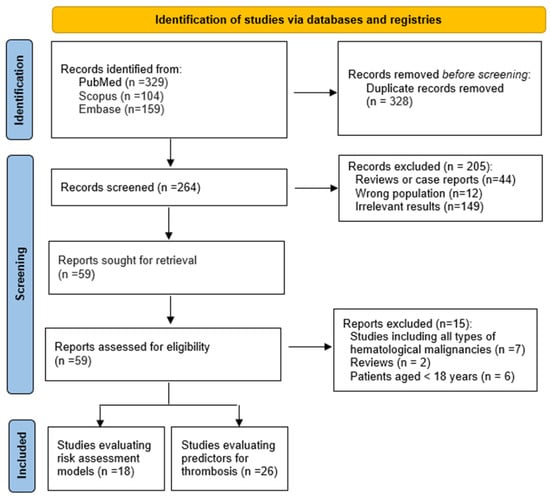
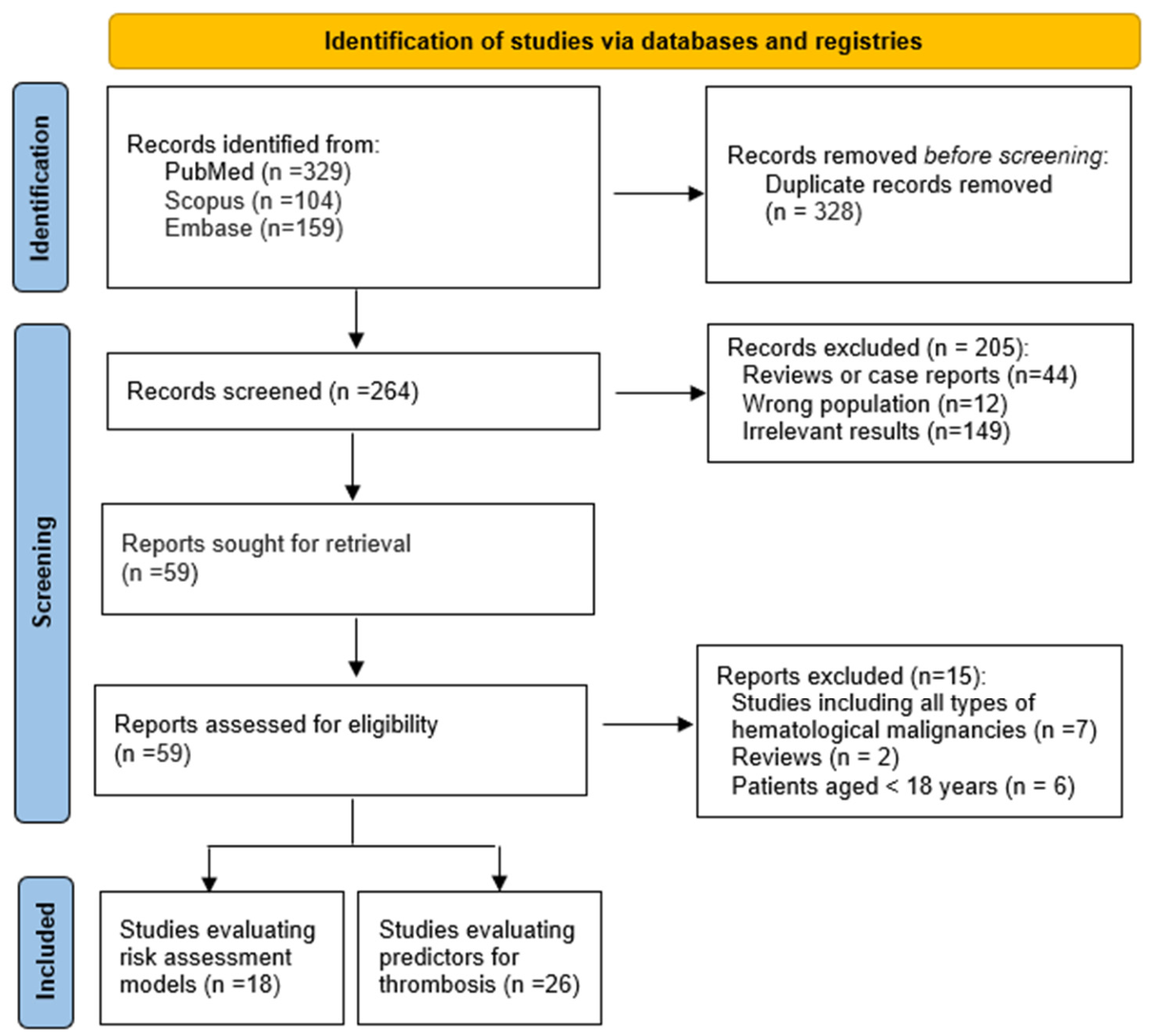
The initial literature search identified 592 papers, out of which 44 met the inclusion criteria according to the selection protocol (Figure 2). The results were evaluated separately for studies focusing on multivariable RAMs and for studies assessing VTE predictors without including them in a RAM.
Figure 2.
PRISMA diagram illustrating study selection protocol.
3.1. Studies Evaluating RAMs
Out of the studies evaluating RAMs, thirteen were single-center [14,15,16,17,18,19,20,21,22,23,24,25,26] and mainly conducted in Asia [14,15,18,19,20,21,22,23,26,27,28]. The prevalence of lymphoma ranged between 4 and 15%, depending on the histological type of lymphoma predominantly included. Abdel et al. [14,15] conducted two studies focusing exclusively on DLBCL and reported prevalences of VTE between 13.5 and 15%. Within a follow-up of 6 months, He et al. [19] found a VTE prevalence of 10.1% among hospitalized patients with NHL. By including all types of lymphoma, Liang et al. [21] reported a VTE prevalence of 4.9%, while Jiang et al. [27] recorded a prevalence of 10.8% in hospitalized patients.
With regard to the nomograms proposed for VTE prediction, the included studies focused either on evaluating or repurposing already existing scores or on developing new VTE risk assessment models. Abdel [14] and Hantrakun [18] focused on the repurposing of the already existing IPI index. Antic et al. [29] developed the Thrombosis–Lymphoma (ThroLy) predictive score, which was further applied in five studies, considered external validation studies [15,16,20,22,25]. The already existing Khorana score for VTE prediction in cancer was employed in six studies [16,17,20,22,24,30], while ten studies focused on developing new nomograms or prediction models for VTE risk in patients with lymphoma [16,17,19,21,23,26,27,28,29,31].
The risk of bias was high in the majority of the included papers. Only three papers reported competing risks such as death [18,30,31]. Moreover, among the newly proposed prediction models, only three received external validation [27,28,31], which is a crucial criterion for the analysis domain of the PROBAST tool. The detailed description of the risk of bias among the included studies is presented in Table 1, and the characteristics of the evaluated studies are summarized in Table 2.
Table 1.
PROBAST risk of bias assessment of the included studies.
Table 2.
Characteristics of the studies assessing RAMs for VTE prediction.
The most frequently evaluated predictors, identified by multivariate analysis, are summarized in Table 3.
Table 3.
Frequent predictors for VTE evaluated by multivariate analysis.
3.1.1. Khorana Score
The Khorana score showed an insufficient discrimination power in lymphoma patients, mainly due to the lack of lymphoma-specific predictors. Rupa et al. [24] recorded a positive predictive value of 15%, a negative predictive value of 82% and a C-statistic of 0.51 corresponding to a near-chance discrimination, in the context of an appropriate sample size and a rate of events per variable up to 12. Moreover, Rupa et al. [24] found the histological type of DLBCL, bulky disease and poor prognosis to be associated with VTE risk; however, they did not include these parameters in a new VTE RAM. These results are in accordance with the findings of other studies, which reported an area under the curve of the Khorana score ranging between 0.502 and 0.639 [16,20,23,26]. In a smaller study sample with fewer events per variable, Ma’koseh et al. [22] also found no correlation between the occurrence of VTE and a Khorana score > 2. However, Santi et al. [30] concluded that a higher Khorana score is statistically significantly positively associated with the VTE risk, but they did not report any discrimination statistics, which makes the difference between discrimination power and pure statistical association difficult.
3.1.2. Thrombosis Lymphoma (ThroLy) Predictive Score
The ThroLy score was developed by Antic et al. [29] and recorded a C-statistic of 0.85–0.87 in the derivation and validation cohort. However, the authors conducted no external validation and also included the occurrence of arterial thrombosis, which exhibits a different pathophysiological background compared to VTE. The score recorded a high positive predictive value of 65.2% in high-risk categories (≥4), but with a wide confidence interval ranging from 42 to 83%. Other studies acting as external validation cohorts for the ThroLy score [16,20,23] reported areas under the curve of the ThroLy score ranging from 0.579 to 0.695. Rupa-Matysek et al. [25] found that 48% of the VTE events occur in low-risk ThroLy categories and calculated a C-statistic of 0.55, which was modestly better than the C-statistic of 0.51 recorded by the Khorana score in the same cohort of lymphoma patients.
3.1.3. International Prognostic Index
Abdel et al. [14] used the already available International Prognostic Index for non-Hodgkin lymphoma and found a 19.8% VTE occurrence in patients with high- and high–intermediate scores compared to 9.7% in those with low- and low–intermediate scores; however, they did not report any discrimination statistics. Hantrakun et al. [18] obtained a C-statistic of 0.65 based on the age-adjusted IPI in a cohort of 591 patients, but the low rate of events per variable might increase the risk of overfitting.
3.1.4. Newly Developed VTE Risk Assessment Models
Ma et al. [31] developed a VTE RAM with seven routinely accessible predictors selected using LASSO regression. The study population included 13,025 patients, divided into one training and two external validation cohorts. The authors obtained a C-statistic of 0.68–0.72 in all sets of patients, with narrow confidence intervals and based on the highest rate of events per variable among available studies, which strengthened the generalizability of the results and decreased the risk of bias.
Dharmavaram et al. [17] added four lymphoma-relevant parameters to the Khorana score (bulky disease, lymphoma histological subtype, albumin and leukocyte count), which increased the C-index at 2 years follow-up from 0.601, as obtained for the Khorana score, to 0.775 for the proposed new model.
Liang et al. [21] developed a nomogram for VTE prediction, including risk factors of age, gender, D-dimer level, platelet count, and the chemotherapy cycle, and obtained an area under the curve of 0.838 with a high Royston D statistic and acceptable rate of events per variable, indicating a robust internal validation and good discrimination power.
Pan et al. [23] designed a similar nomogram, taking into consideration already validated risk factors for VTE such as ECOG performance score, prior VTE history, the use of central venous catheters, D-dimer levels, and the presence of coronary heart disease, and obtained an area under the curve at 1 year of 0.818, which was higher than the values of 0.587 and 0.527 recorded for the Khorana and ThroLy scores, respectively; however, at 2 years, the area under the curve decreased to 0.733, which indicated a lower power of discrimination over time.
Yang et al. [26] reported an area under the curve of 0.731 for a five-variable nomogram, which was also higher than the value of 0.557 recorded for the Khorana score in the same cohort of patients.
A distinctive study is the one conducted by Wang et al. [28], in which the authors focused exclusively on the PICC-associated thrombosis; based on five variables, the authors obtained a very high area under the curve of 0.907 in the training set and of 0.896 in the external validation set, respectively; however, the wide confidence intervals and the low rate of events per variable increased the risk of overfitting.
3.2. Studies Evaluating VTE Predictors
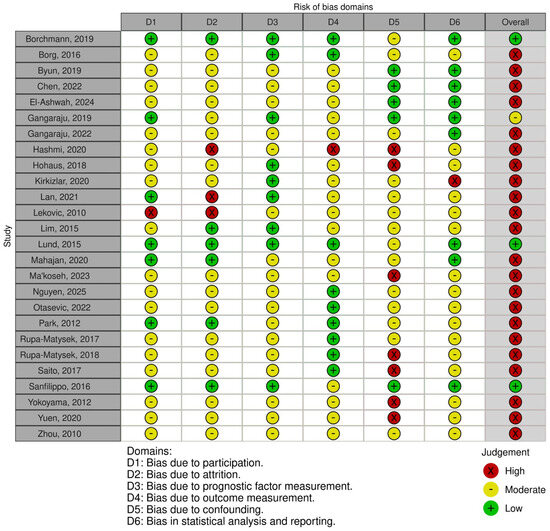
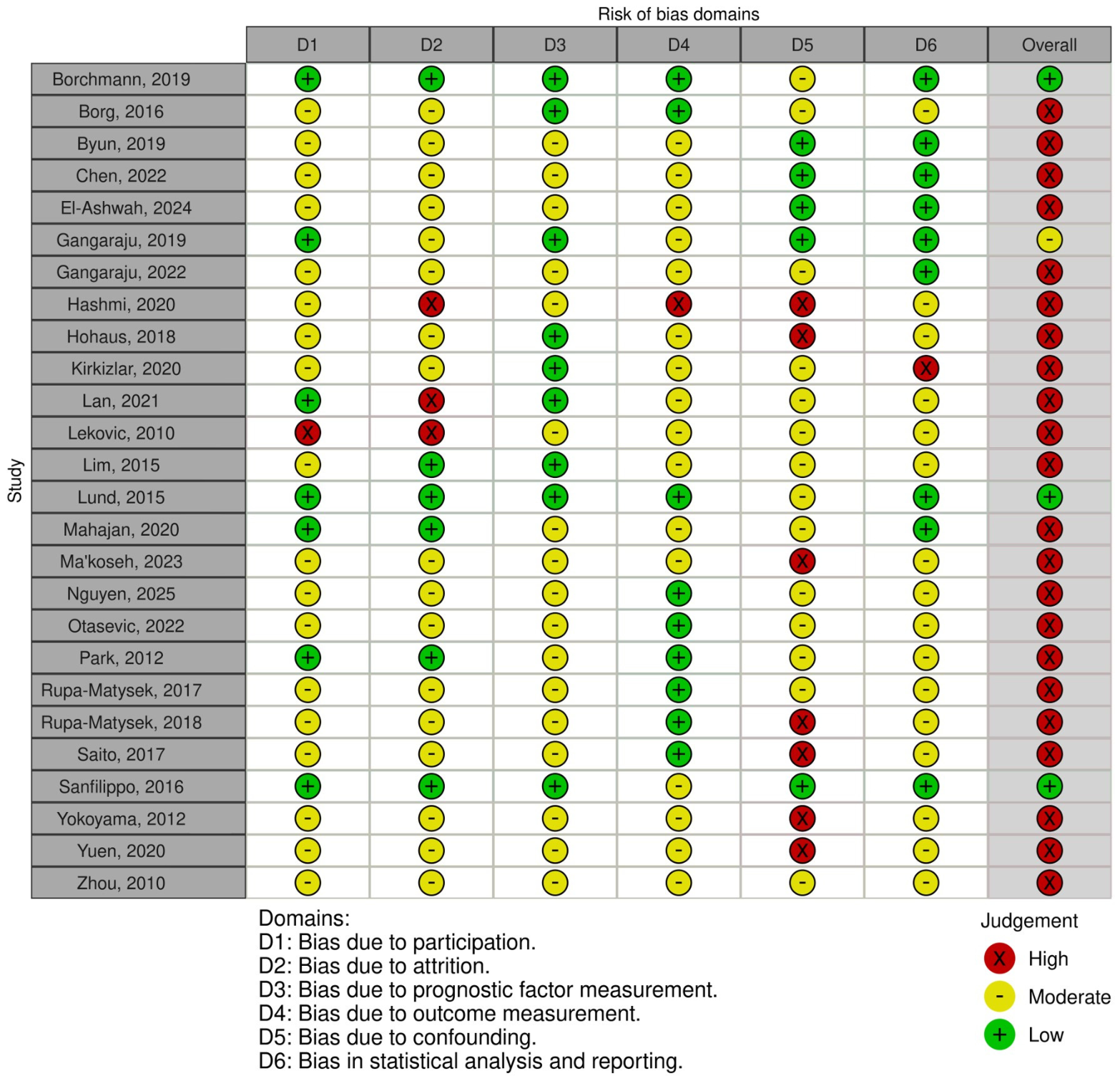
Twenty-six studies evaluating predictors for VTE were included in the final analysis [2,4,6,32,33,34,35,36,37,38,39,40,41,42,43,44,45,46,47,48,49,50,51,52,53,54]. The detailed description of the risk of bias among the included studies is presented in Figure 3.
Figure 3.
QUIPS risk of bias assessment of the included studies [2,4,6,32,33,34,35,36,37,38,39,40,41,42,43,44,45,46,47,48,49,50,51,52,53,54]. Created in robvis [55].
The risk of bias was considered high in the majority of studies, especially due to bias in considering the confounding factors. The prevalence of VTE ranged between 3 and 35%, depending on the histological type of lymphoma included. Higher age was associated with two- to threefold higher odds of developing VTE [34,35,42,47], while a poor performance status was also associated with higher VTE risk [33,34,38,39,42,52]. Previous VTE history was a strong predictor for thrombosis development, associated with four- to fivefold higher odds of VTE development [33,44,50,51]. Borg et al. [33] reported a VTE prevalence of 11% in 289 patients with DLBCL, although 100 patients were already receiving thromboprophylaxis; the authors identified the past history of VTE as the strongest predictor for a new thrombotic event. In two large cohorts of patients with lymphoma, Borchmann [32] and Lund [29] obtained a VTE prevalence of only 3%, significantly associated with the use of central venous catheters (CVC). Moreover, in a large cohort of patients with DLBCL and FL, Sanfilippo et al. [51] reported significantly higher odds of VTE during chemotherapy and also in patients with previous VTE.
The characteristics of the included studies with evaluated predictors for VTE are summarized in Table 4.
Table 4.
Characteristics of the studies assessing predictors of VTE.
4. Discussion
Patients with lymphoma are at high risk for VTE due to the active disease itself, but also due to chemotherapy [15], insertion of CVCs, or hospitalizations leading to immobilization [45,56]. In a large cohort study conducted by Martens et al. [57], aggressive NHL was associated with the highest VTE incidence among hematological malignancies, second to acute lymphoblastic leukemia.
The Khorana score remains the current standard for prescribing prophylactic anticoagulation in patients with cancer, showing reasonable performance in solid tumors; however, its ability to discriminate patients with lymphoma who are at high risk for VTE is insufficient, since all histological types of lymphoma are categorized as one entity, ranging from indolent to very aggressive forms [29]. Our systematic review identified 18 studies focusing on multivariable RAMs and 26 studies evaluating predictors for VTE in lymphoma patients. Most of them were single-center studies that lacked external validation, making generalization of the obtained results rather difficult. Furthermore, in most studies, VTE was defined as DVT of either the upper or the lower extremity, which are separate entities with different underlying pathophysiological mechanisms: DVT of the upper extremity is CVC-related, while DVT of the lower extremity is a result of the inflammatory milieu and may lead to PE [57].
Lymphoma-specific RAMs for VTE frequently used predictors such as the ECOG performance status, extranodal localization, prior history of VTE and the histological subtype of lymphoma, which were previously identified in prevalence studies. The poor performance status in lymphoma patients is associated with lower overall and progression-free survival [39]. Moreover, available data in the literature identify a poor performance status, defined as ECOG ≥ 2, to be correlated with a higher VTE risk [52,58]. Nguyen et al. [46] found that patients with newly diagnosed lymphoma have fivefold higher odds of developing VTE compared to those with ECOG 0–1. In the same manner, patients with prolonged immobilization are at increased risk of developing VTE, especially in cases of primary central nervous system lymphoma (PCNSL), where VTE prevalence may increase up to almost 60% [59] or in frail patients with DLBCL [60]. Bulky disease was also identified as a risk factor for VTE development [46], mainly due to the compression effect and venous stasis caused by large mediastinal masses [61]. Moreover, older age associated with poorer health condition in patients diagnosed with lymphoma may further augment the VTE risk [47].
The thrombosis risk in patients with lymphoma is considered high at the beginning of chemotherapy, leading to possible hospitalizations due to VTE [62,63]. Liang et al. [21] found that the VTE risk is increased, especially during the 6th to 10th or after the 11th chemotherapy cycle, explaining that the cumulative effect of chemotherapy induces the damage of vascular cells, platelet activation and release of procoagulant proteins [21,64]. Li et al. [65] found a higher VTE incidence in female patients, in those with platelet count abnormality and Ann Arbor stage III/IV undergoing chemotherapy. On the other hand, Borg et al. [33] concluded that the VTE risk is especially high before treatment initiation and it further decreases during and after chemotherapy. Among the most widely used chemotherapeutic agents, doxorubicin is associated with a three- to fourfold increase in the VTE risk [51,54,66,67]. Moreover, asparaginase derivatives, which are used in lymphoblastic lymphoma treated with acute lymphoblastic leukemia protocols, carry a well-known, very high risk for VTE development, especially due to the decreased synthesis of anticoagulant proteins [68,69]. Novel therapies, such as chimeric antigen receptor (CAR) T-cell therapy used for refractory or relapsed lymphomas, are also associated with increased VTE incidence due to the advanced disease itself and the systemic inflammation caused by therapy [38].
The histological variety is a unique feature of lymphoma, which is associated with disease aggressiveness and therefore with VTE risk. NHL is three to five times more frequent than HL [70] and among NHL types, DLBCL is the most common and aggressive form, accounting for up to 30–40% of cases [71]. Gangaraju et al. [37] found an eightfold higher risk of VTE in elderly patients with DLBCL compared to healthy controls. In a large cohort of patients from Denmark, Lund et al. [43] found the highest VTE incidence at one year after diagnosis in patients with peripheral T-cell lymphoma (4.3%) and DLBCL (4.2%). In a meta-analysis comprising over 18.000 patients, Caruso et al. [72] reported a statistically significant higher VTE incidence in NHL (6.5%) compared to HL (4.7%).
Our review aimed to characterize the efficiency of novel and already existing RAMs for VTE detection in patients diagnosed with lymphoma, starting from the premise that general RAMs for VTE like Khorana score lack appropriate discrimination ability in lymphoma. Moreover, we aimed to summarize the available evidence on the studied predictors for VTE detection in patients diagnosed with lymphoma. Ten out of the 18 included RAMs were newly developed, while six were designed as validation cohorts for the Khorana and ThroLy scores. The most frequent histological type of lymphoma was DLBCL, which is associated with a high VTE risk and may consequently lead to the overestimation of the VTE burden in patients with lymphoma. Moreover, eleven studies originated from Asia, where the incidence of NHL is constantly increasing [73], thus limiting the generalizability of the results. Most studies evaluating RAMs excluded patients who were receiving anticoagulants, as previous thromboprophylaxis represents an important confounding factor. However, there are still many studies evaluating predictors, where there were no detailed data regarding previous anticoagulation or where patients already receiving thromboprophylaxis developed VTE [32,33,45,52,53].
The generalizability of the results is mainly limited due to the significant risk of bias, consisting in the single-center design with insufficient sample size, lack of external validation and discrimination statistics, as well as the heterogeneous VTE definition (inclusion of catheter-associated VTE). The identified predictors were mainly selected using univariate analysis, which is a common practice with an increased risk of overfitting, especially when not using cross-validation or independent training sets for the selection of predictors [74]. Ma et al. [31] developed a promising and robust RAM for VTE, externally validated in two cohorts and with reliable predictors; the model also differentiates between overall VTE and lower extremity DVT/PE, emphasizing once again the different pathophysiological mechanisms underlying these conditions. The selected predictors are similar within the selected studies and comprise the ECOG performance status, Ann Arbor stage, histological type of lymphoma, D-dimer and hemoglobin levels, and extranodal and bulky disease.
A critical issue in the design of clinical prediction models is the number of events per variable (EPV). Historically, a rule of thumb of ≥10 EPV should be sufficient for achieving statistical significance; however, in clinical practice, the risk of overfitting or even of paradoxical associations is increased when the number of EPV is low [75]. Ma et al. [31] achieved a number of over 70 EPV for a RAM evaluating seven covariates, which, according to Balachandran et al. [76], meets the requirements for nomograms in oncology. However, the authors report the results as C-statistic, which assesses exclusively discrimination capacity, without weighing clinical benefit. In order to translate into clinical significance, decision curve analysis should be employed in order to evaluate clinical utility beyond simple discrimination [77].
4.1. Limitations and Future Directions
An important limitation of our systematic review is the lack of a meta-analysis, which is mainly driven by the substantial data heterogeneity. The relevant variability in lymphoma subtypes with different associated VTE risks (for example DLBCL versus HL) as well as the treatment settings limit pooling and comparability. Moreover, most of the studies present retrospective data and do not differentiate patients according to histological subtype of lymphoma or type of thrombosis (upper or lower extremity). Another important aspect is the lack of external validation in most of the reviewed models, which together with the low number of EPV weaken the strength and generalizability of the identified predictors for VTE in patients with lymphoma. We acknowledge that a closer look is needed when analyzing the way in which the noted bias and confounding variables affect the predictor validity and hope that this review may aid in the design of future studies with strengthened methodology.
4.2. Clinical Implications
Thromboprophylaxis is recommended by guidelines in hospitalized patients with hematological malignancies [78]. However, there is no clear consensus regarding thromboprophylaxis in ambulatory settings, since most of the available data regarding the efficiency and safety of anticoagulant agents originate from studies evaluating the treatment, instead of the prophylaxis of VTE. Direct oral anticoagulants exhibited an acceptable safety profile compared to the standard low-molecular-weight heparin and may be considered in stable patients with lymphoma. Due to the existing evidence gaps, a tailored approach, which takes into account the histological type of lymphoma (especially PCNSL and DLBCL), previous history of VTE, performance status, age, the use of CVCs, and associated risks, for example thrombocytopenia, is required in order to guide the decision of ambulatory thromboprophylaxis.
5. Conclusions
VTE is a frequent and serious complication in patients with lymphoma. Although robust predictors for VTE risk stratification were defined (ECOG performance status, VTE history, histological subtype), the substantial risk of bias in most of the studies, the retrospective and heterogeneous nature of data, the unclear handling of confounders, and lack of external validation make the evidence regarding an appropriate VTE prediction tool insufficient. Larger, multicentric studies with external validation cohorts are required in order to design VTE RAMs for patients with lymphoma.
Supplementary Materials
The following supporting information can be downloaded at: https://www.mdpi.com/article/10.3390/curroncol33070401/s1, Supplementary File S1: Search strategy; Supplementary File S2: PRISMA checklist.
Author Contributions
Conceptualization, A.M.P. and M.R.; methodology, A.M.P. and M.R.; software, A.M.P.; validation, M.R.; formal analysis, M.R.; investigation, A.M.P. and M.R.; data curation, A.M.P.; writing—original draft preparation, A.M.P.; writing—review and editing, M.R.; supervision, M.R. All authors have read and agreed to the published version of the manuscript.
Funding
This research received no external funding.
Institutional Review Board Statement
Ethical review and approval were waived, since the paper is a systematic review.
Informed Consent Statement
Not applicable.
Data Availability Statement
No new data were created in this study. Data sharing is not applicable to this article.
Conflicts of Interest
The authors declare no conflicts of interest.
Abbreviations
The following abbreviations are used in this manuscript:
| AMI | acute myocardial infarction |
| ANC | absolute neutrophil count |
| ATIII | antithrombin III |
| AUC | area under the curve |
| BEACOPP | bleomycin, etoposide, doxorubicin, cyclophosphamide, vincristine, procarbazine, prednisone |
| BMI | body mass index |
| BMT | bone marrow transplant |
| CAR | chimeric antigen receptor |
| CVC | central venous catheter |
| CEA | carcinoembryonic antigen |
| CI | confidence interval |
| CLL/SLL | chronic lymphocytic leukemia/small lymphocytic lymphoma |
| CTCAE | Common Terminology Criteria for Adverse Events |
| DLBCL/LBCL | diffuse large B-cell lymphoma/large B-cell lymphoma |
| DVT | deep vein thrombosis |
| ECOG | Eastern Cooperative Oncology Group Performance Status |
| EPV | events per variable |
| ESAs/G-CSFs | erythropoiesis stimulating agents/granulocyte colony-stimulating factors |
| FL | follicular lymphoma |
| GvHD | graft versus host disease |
| HL | Hodgkin lymphoma |
| HR/SHR/aHR | hazard ratio/subdistribution hazard ratio/adjusted hazard ratio |
| IL | interleukin |
| INHL | indolent non-Hodgkin lymphoma |
| IPI | International Prognostic Index |
| LASSO | Least Absolute Shrinkage and Selection Operator |
| LDH | lactate dehydrogenase |
| MCL | mantle cell lymphoma |
| MPV | mean platelet volume |
| N/A | not applicable |
| NET | neutrophil extracellular trap |
| NHL | non-Hodgkin lymphoma |
| NK/TCL | natural killer/T-cell lymphoma |
| NPV | negative predictive value |
| OR/aOR | odds ratio/adjusted odds ratio |
| PCNSL | primary central nervous system lymphoma |
| PE | pulmonary embolism |
| PICC | peripherally inserted central catheter |
| PMBCL | primary mediastinal B-cell lymphoma |
| PPV | positive predictive value |
| PRISMA | Preferred Reporting Items for Systematic Reviews and Meta-analysis |
| PROBAST | Prediction model Risk of Bias Assessment Tool |
| PROSPERO | International Prospective Register for Systematic Reviews and Meta-analysis |
| RAM | risk assessment model |
| TCL/PTCL | T-cell lymphoma/peripheral T-cell lymphoma |
| TF | tissue factor |
| ThroLy | Thrombosis Lymphoma predictive score |
| TNF-α | tumor necrosis factor-α |
| VTE | venous thromboembolism |
| WBC | white blood cells |
References
- Yıldız, A.; Albayrak, M.; Pala, Ç.; Afacan Öztürk, H.B.; Maral, S.; Şahin, O.; Cömert, P. The incidence and risk factors of thrombosis and the need for thromboprophylaxis in lymphoma and leukemia patients: A 9-year single-center experience. J. Oncol. Pharm. Pract. 2020, 26, 386–396. [Google Scholar] [CrossRef] [Scilit] [PubMed]
- El-Ashwah, S.; Elashwah, S.; Khaled, O.; Ghanem, A.A.; AboElfarh, H.E.; Selim, R.A.; Mansour, R.O.; Shaaban, Y. Evaluation of the incidence, predictors, risk assessment scores and outcomes of thromboembolism in a cohort of Egyptian NHL patients -Real World Experience. Ann. Hematol. 2024, 103, 4271–4283. [Google Scholar] [CrossRef] [Scilit] [PubMed]
- Hohaus, S.; Bartolomei, F.; Cuccaro, A.; Maiolo, E.; Alma, E.; D’Alò, F.; Bellesi, S.; Rossi, E.; De Stefano, V. Venous Thromboembolism in Lymphoma: Risk Stratification and Antithrombotic Prophylaxis. Cancers 2020, 12, 1291. [Google Scholar] [CrossRef] [Scilit] [PubMed]
- Kirkizlar, O.; Alp Kirkizlar, T.; Umit, E.G.; Asker, I.; Baysal, M.; Bas, V.; Gulsaran, S.K.; Demirci, U.; Demir, A.M. The Incidence of Venous Thromboembolism and Impact on Survival in Hodgkin Lymphoma. Clin. Lymphoma Myeloma Leuk. 2020, 20, 542–547. [Google Scholar] [CrossRef] [Scilit] [PubMed]
- Kim, A.S.; Khorana, A.A.; McCrae, K.R. Mechanisms and biomarkers of cancer-associated thrombosis. Transl. Res. 2020, 225, 33–53. [Google Scholar] [CrossRef] [Scilit] [PubMed]
- Otasevic, V.; Mihaljevic, B.; Milic, N.; Stanisavljevic, D.; Vukovic, V.; Tomic, K.; Fareed, J.; Antic, D. Immune activation and inflammatory biomarkers as predictors of venous thromboembolism in lymphoma patients. Thromb. J. 2022, 20, 20. [Google Scholar] [CrossRef] [Scilit] [PubMed]
- Falanga, A.; Ay, C.; Di Nisio, M.; Gerotziafas, G.; Jara-Palomares, L.; Langer, F.; Lecumberri, R.; Mandala, M.; Maraveyas, A.; Pabinger, I.; et al. Venous thromboembolism in cancer patients: ESMO Clinical Practice Guideline. Ann. Oncol. 2023, 34, 452–467. [Google Scholar] [CrossRef] [Scilit] [PubMed]
- Khorana, A.A.; Cohen, A.T.; Carrier, M.; Meyer, G.; Pabinger, I.; Kavan, P.; Wells, P. Prevention of venous thromboembolism in ambulatory patients with cancer. ESMO Open 2020, 5, e000948. [Google Scholar] [CrossRef] [Scilit] [PubMed]
- Antic, D.; Jelicic, J.; Vukovic, V.; Nikolovski, S.; Mihaljevic, B. Venous thromboembolic events in lymphoma patients: Actual relationships between epidemiology, mechanisms, clinical profile and treatment. Blood Rev. 2018, 32, 144–158. [Google Scholar] [CrossRef] [Scilit] [PubMed]
- Khorana, A.A.; Kuderer, N.M.; Culakova, E.; Lyman, G.H.; Francis, C.W. Development and validation of a predictive model for chemotherapy-associated thrombosis. Blood 2008, 111, 4902–4907. [Google Scholar] [CrossRef] [Scilit] [PubMed]
- Page, M.J.; McKenzie, J.E.; Bossuyt, P.M.; Boutron, I.; Hoffmann, T.C.; Mulrow, C.D.; Shamseer, L.; Tetzlaff, J.M.; Akl, E.A.; Brennan, S.E.; et al. The PRISMA 2020 statement: An updated guideline for reporting systematic reviews. BMJ 2021, 372, n71. [Google Scholar] [CrossRef] [Scilit] [PubMed]
- Moons, K.G.M.; Wolff, R.F.; Riley, R.D.; Whiting, P.F.; Westwood, M.; Collins, G.S.; Reitsma, J.B.; Kleijnen, J.; Mallett, S. PROBAST: A Tool to Assess Risk of Bias and Applicability of Prediction Model Studies: Explanation and Elaboration. Ann. Intern. Med. 2019, 170, W1–W33. [Google Scholar] [CrossRef] [Scilit] [PubMed]
- Hayden, J.A.; van der Windt, D.A.; Cartwright, J.L.; Côté, P.; Bombardier, C. Assessing bias in studies of prognostic factors. Ann. Intern. Med. 2013, 158, 280–286. [Google Scholar] [CrossRef] [Scilit] [PubMed]
- Abdel-Razeq, H.; Ma’koseh, M.; Abdel-Razeq, R.; Amarin, R.; Abufara, A.; Mansour, R.; Manasrah, M.; Al-Rwashdeh, M.; Bater, R. The Application of the Lymphoma International Prognostic Index to Predict Venous Thromboembolic Events in Diffuse Large B-Cell Lymphoma Patients. Front. Oncol. 2021, 11, 677776. [Google Scholar] [CrossRef] [Scilit] [PubMed]
- Abdel-Razeq, H.; Ma’koseh, M.; Mansour, A.; Bater, R.; Amarin, R.; Abufara, A.; Halahleh, K.; Manassra, M.; Alrwashdeh, M.; Almomani, M.; et al. The Application of the ThroLy Risk Assessment Model to Predict Venous Thromboembolism in Patients with Diffuse Large B-Cell Lymphoma. Clin. Appl. Thromb. Hemost. 2021, 27, 10760296211045908. [Google Scholar] [CrossRef] [Scilit] [PubMed]
- Bastos-Oreiro, M.; Ortiz, J.; Pradillo, V.; Salas, E.; Marínez-Laperche, C.; Muñoz, A.; Buño, I.; Diéz-Martin, J.L.; Soria, J.M.; Izquierdo, C.P. Incorporating genetic and clinical data into the prediction of thromboembolism risk in patients with lymphoma. Cancer Med. 2021, 10, 7585–7592. [Google Scholar] [CrossRef] [Scilit] [PubMed]
- Dharmavaram, G.; Cao, S.; Sundaram, S.; Ayyappan, S.; Boughan, K.; Gallogly, M.; Malek, E.; Metheny, L.; Tomlinson, B.; Otegbeye, F.; et al. Aggressive lymphoma subtype is a risk factor for venous thrombosis. Development of lymphoma—Specific venous thrombosis prediction models. Am. J. Hematol. 2020, 95, 918–926. [Google Scholar] [CrossRef] [Scilit] [PubMed]
- Hantrakun, N.; Phinyo, P.; Tantiworawit, A.; Rattarittamrong, E.; Chai-Adisaksopha, C.; Rattanathammethee, T.; Hantrakool, S.; Piriyakhuntorn, P.; Punnachet, T.; Niprapan, P.; et al. Incidence of venous thromboembolism and predictive ability of age-adjusted international prognostic index for prediction of venous thromboembolism in Asian patients with diffuse large B-cell lymphoma. J. Thromb. Thrombolysis 2024, 57, 473–482. [Google Scholar] [CrossRef] [Scilit] [PubMed]
- He, C.; Wang, Y.; Zhang, H.; Li, S.; Kang, F.; Cai, F. A study on a real-world data-based VTE risk prediction model for lymphoma patients. Front. Pharmacol. 2025, 16, 1691271. [Google Scholar] [CrossRef] [Scilit] [PubMed]
- Li, W.; Liu, R.; Shen, Y.; Gao, G.; Yang, R.; Wang, Y.; Yang, R.; Lin, Z.; Dong, R.; Zhao, W.; et al. Incidence, Risk Factors, and Modified Risk Assessment Model of Venous Thromboembolism in Non-Hodgkin Lymphoma Patients. Cancer Med. 2024, 13, e70510. [Google Scholar] [CrossRef] [Scilit] [PubMed]
- Liang, G.; Li, X.; Xu, Q.; Yang, Z.; Li, J.; Yang, T. Development and validation of a nomogram model for predicting the risk of venous thromboembolism in lymphoma patients undergoing chemotherapy: A prospective cohort study conducted in China. Ann. Med. 2023, 55, 2275665. [Google Scholar] [CrossRef] [Scilit] [PubMed]
- Ma’koseh, M.; Abufara, A.; Albaghdadi, D.; Ghalayni, R.; Abdel-Razeq, S.; Alzughali, E.; Rahman, F.A.; Alhalaseh, Y.; Halahleh, K.; Abdel-Razeq, H. The Application of Existing Risk Assessment Models (RAMS) to Predict the Occurrence of Venous Thromboembolic Events among Patients with Classic Hodgkin Lymphoma. J. Clin. Med. 2024, 13, 436. [Google Scholar] [CrossRef] [Scilit] [PubMed]
- Pan, L.; Lin, W.; Qiu, Y.; Chen, J.; Li, N.; Liu, T. Development and internal validation of a lymphoma-specific nomogram for predicting venous thromboembolism: A retrospective cohort of 790 patients. BMC Cancer 2025, 25, 1720. [Google Scholar] [CrossRef] [Scilit] [PubMed]
- Rupa-Matysek, J.; Gil, L.; Kaźmierczak, M.; Barańska, M.; Komarnicki, M. Prediction of venous thromboembolism in newly diagnosed patients treated for lymphoid malignancies: Validation of the Khorana Risk Score. Med. Oncol. 2017, 35, 5. [Google Scholar] [CrossRef] [Scilit] [PubMed]
- Rupa-Matysek, J.; Brzeźniakiewicz-Janus, K.; Gil, L.; Krasiński, Z.; Komarnicki, M. Evaluation of the ThroLy score for the prediction of venous thromboembolism in newly diagnosed patients treated for lymphoid malignancies in clinical practice. Cancer Med. 2018, 7, 2868–2875. [Google Scholar] [CrossRef] [Scilit] [PubMed]
- Yang, J.; Zhang, Y.; Yang, P.; Zhang, X.; Li, M.; Zou, L. A novel nomogram based on prognostic factors for predicting venous thrombosis risk in lymphoma patients. Leuk. Lymphoma 2021, 62, 2383–2391. [Google Scholar] [CrossRef] [Scilit] [PubMed]
- Jiang, T.; Yang, Z.; Tang, X.; Fan, N.; Hu, Z.; Li, J.; Liu, T.; Peng, Y.; Chen, S.; Guo, B.; et al. Development and validation of a machine learning-based early warning system for predicting venous thromboembolism risk in hospitalized lymphoma patients undergoing chemotherapy: A multicenter and retrospective cohort study. Front. Oncol. 2025, 15, 1566905. [Google Scholar] [CrossRef] [Scilit] [PubMed]
- Wang, X.X.; He, Y.; Chu, J.; Xu, J.S. Risk factors analysis and the establishment of nomogram prediction model for PICC-related venous thrombosis in patients with lymphoma: A double-center cohort-based case-control study. Front. Oncol. 2024, 14, 1347297. [Google Scholar] [CrossRef] [Scilit] [PubMed]
- Antic, D.; Milic, N.; Nikolovski, S.; Todorovic, M.; Bila, J.; Djurdjevic, P.; Andjelic, B.; Djurasinovic, V.; Sretenovic, A.; Vukovic, V.; et al. Development and validation of multivariable predictive model for thromboembolic events in lymphoma patients. Am. J. Hematol. 2016, 91, 1014–1019. [Google Scholar] [CrossRef] [Scilit] [PubMed]
- Santi, R.M.; Ceccarelli, M.; Bernocco, E.; Monagheddu, C.; Evangelista, A.; Valeri, F.; Monaco, F.; Vitolo, U.; Cortelazzo, S.; Cabras, M.G.; et al. Khorana score and histotype predicts incidence of early venous thromboembolism in non-Hodgkin lymphomas. A pooled-data analysis of 12 clinical trials of Fondazione Italiana Linfomi (FIL). Thromb. Haemost. 2017, 117, 1615–1621. [Google Scholar] [CrossRef] [Scilit] [PubMed]
- Ma, S.; La, J.; Swinnerton, K.N.; Guffey, D.; Bandyo, R.; De Las Pozas, G.; Hanzelka, K.; Xiao, X.; Rojas-Hernandez, C.M.; Amos, C.I.; et al. Thrombosis risk prediction in lymphoma patients: A multi-institutional, retrospective model development and validation study. Am. J. Hematol. 2024, 99, 1230–1239. [Google Scholar] [CrossRef] [Scilit] [PubMed]
- Borchmann, S.; Müller, H.; Hude, I.; Fuchs, M.; Borchmann, P.; Engert, A. Thrombosis as a treatment complication in Hodgkin lymphoma patients: A comprehensive analysis of three prospective randomized German Hodgkin Study Group (GHSG) trials. Ann. Oncol. 2019, 30, 1329–1334. [Google Scholar] [CrossRef] [Scilit] [PubMed]
- Borg, I.H.; Bendtsen, M.D.; Bøgsted, M.; Madsen, J.; Severinsen, M.T. Incidence of venous thromboembolism in patients with diffuse large B-cell lymphoma. Leuk. Lymphoma 2016, 57, 2771–2776. [Google Scholar] [CrossRef] [Scilit] [PubMed]
- Byun, J.M.; Hong, J.; Yoon, S.S.; Koh, Y.; Ock, C.Y.; Kim, T.M.; Lee, J.H.; Kim, S.-H.; Lee, J.-O.; Bang, S.-M.; et al. Incidence and characteristics of venous thromboembolism in Asian patients with primary central nervous system lymphoma undergoing chemotherapy. Thromb. Res. 2019, 183, 131–135. [Google Scholar] [CrossRef] [Scilit] [PubMed]
- Chen, Y.; Lei, H.; Wang, W.; Zhu, J.; Zeng, C.; Lu, Z.; Li, L.; Li, D.; Long, B.; Liu, H. Characteristics and Predictors of Venous Thromboembolism Among Lymphoma Patients Undergoing Chemotherapy: A Cohort Study in China. Front. Pharmacol. 2022, 13, 901887. [Google Scholar] [CrossRef] [Scilit] [PubMed]
- Gangaraju, R.; Chen, Y.; Hageman, L.; Wu, J.; Francisco, L.; Kung, M.; Ness, E.; Parman, M.; Weisdorf, D.J.; Forman, S.J.; et al. Risk of venous thromboembolism in patients with non-Hodgkin lymphoma surviving blood or marrow transplantation. Cancer 2019, 125, 4498–4508. [Google Scholar] [CrossRef] [Scilit] [PubMed]
- Gangaraju, R.; Davis, E.S.; Bhatia, S.; Kenzik, K.M. Venous-thromboembolism and associated health care utilization in elderly patients with diffuse large B cell lymphoma. Cancer 2022, 128, 2348–2357. [Google Scholar] [CrossRef] [Scilit] [PubMed]
- Hashmi, H.; Mirza, A.S.; Darwin, A.; Logothetis, C.; Garcia, F.; Kommalapati, A.; Mhaskar, R.S.; Bachmeier, C.; Chavez, J.C.; Shah, B.; et al. Venous thromboembolism associated with CD19-directed CAR T-cell therapy in large B-cell lymphoma. Blood Adv. 2020, 4, 4086–4090. [Google Scholar] [CrossRef] [Scilit] [PubMed]
- Hohaus, S.; Tisi, M.C.; Bartolomei, F.; Cuccaro, A.; Maiolo, E.; Alma, E.; D’aLò, F.; Bellesi, S.; Rossi, E.; De Stefano, V. Risk factors for venous thromboembolism in patients with lymphoma requiring hospitalization. Blood Cancer J. 2018, 8, 54. [Google Scholar] [CrossRef] [Scilit] [PubMed]
- Lan, Y.; Guan, J.; Zhu, J.; Wang, J.; Li, M.; Sun, C.; Sun, F.; Huang, J.; Lu, S.; Zhang, Y. Venous thromboembolic events in T-cell lymphoma patients: Incidence, risk factors and clinical features. Leuk. Res. 2021, 103, 106537. [Google Scholar] [CrossRef] [Scilit] [PubMed]
- Lekovic, D.; Miljic, P.; Mihaljevic, B. Increased risk of venous thromboembolism in patients with primary mediastinal large B-cell lymphoma. Thromb. Res. 2010, 126, 477–480. [Google Scholar] [CrossRef] [Scilit] [PubMed]
- Lim, S.H.; Woo, S.Y.; Kim, S.; Ko, Y.H.; Kim, W.S.; Kim, S.J. Cross-sectional Study of Patients with Diffuse Large B-Cell Lymphoma: Assessing the Effect of Host Status, Tumor Burden, and Inflammatory Activity on Venous Thromboembolism. Cancer Res. Treat. 2016, 48, 312–321. [Google Scholar] [CrossRef] [Scilit] [PubMed]
- Lund, J.L.; Østgård, L.S.; Prandoni, P.; Sørensen, H.T.; de Nully Brown, P. Incidence, determinants and the transient impact of cancer treatments on venous thromboembolism risk among lymphoma patients in Denmark. Thromb. Res. 2015, 136, 917–923. [Google Scholar] [CrossRef] [Scilit] [PubMed]
- Mahajan, A.; Brunson, A.; Keegan, T.H.M.; Rosenberg, A.; Wun, T. High incidence of venous thromboembolism and major bleeding in patients with primary CNS lymphoma. Leuk. Lymphoma 2020, 61, 2605–2613. [Google Scholar] [CrossRef] [Scilit] [PubMed]
- Ma’koseh, M.; Alrwashdeh, M.; Abdel-Razeq, N.; Alfar, R.; Edaily, S.; Bater, R.; Zmaily, M.; Almomani, M.; Abdel-Razeq, H. Prevalence, Patterns, and Predictors of Venous Thromboembolic Events in Patients Undergoing Salvage Chemotherapy and Autologous Stem Cell Transplantation for Relapsed Lymphomas. Hematol. Oncol. Stem Cell Ther. 2023, 16, 323–329. [Google Scholar] [CrossRef] [Scilit] [PubMed]
- Nguyen, T.T.H.; Do, H.N.; Le, T.Y.; Nguyen, T.T.; Nguyen, T.L.; Le, V.Q. Venous thromboembolism risk in newly diagnosed lymphoma patients: A real-world prospective observational study from Vietnam National Cancer Hospital. BMC Cancer 2025, 25, 1301. [Google Scholar] [CrossRef] [Scilit] [PubMed]
- Park, L.C.; Woo, S.Y.; Kim, S.; Jeon, H.; Ko, Y.H.; Kim, S.J.; Kim, W.S. Incidence, risk factors and clinical features of venous thromboembolism in newly diagnosed lymphoma patients: Results from a prospective cohort study with Asian population. Thromb. Res. 2012, 130, e6–e12. [Google Scholar] [CrossRef] [Scilit] [PubMed]
- Rupa-Matysek, J.; Gil, L.; Kroll-Balcerzak, R.; Barańska, M.; Komarnicki, M. Mean platelet volume as a predictive marker for venous thromboembolism and mortality in patients treated for diffuse large B-cell lymphoma. Hematol. Oncol. 2017, 35, 456–464. [Google Scholar] [CrossRef] [Scilit] [PubMed]
- Rupa-Matysek, J.; Gil, L.; Barańska, M.; Dytfeld, D.; Komarnicki, M. Mean platelet volume as a predictive marker for venous thromboembolism in patients treated for Hodgkin lymphoma. Oncotarget 2018, 9, 21190–21200. [Google Scholar] [CrossRef] [Scilit] [PubMed]
- Saito, M.; Wages, N.A.; Schiff, D. Incidence, risk factors and management of venous thromboembolism in patients with primary CNS lymphoma. J. Neuro-Oncol. 2021, 154, 41–47. [Google Scholar] [CrossRef] [Scilit] [PubMed]
- Sanfilippo, K.M.; Wang, T.F.; Gage, B.F.; Luo, S.; Riedell, P.; Carson, K.R. Incidence of venous thromboembolism in patients with non-Hodgkin lymphoma. Thromb. Res. 2016, 143, 86–90. [Google Scholar] [CrossRef] [Scilit] [PubMed]
- Yokoyama, K.; Murata, M.; Ikeda, Y.; Okamoto, S. Incidence and risk factors for developing venous thromboembolism in Japanese with diffuse large b-cell lymphoma. Thromb. Res. 2012, 130, 7–11. [Google Scholar] [CrossRef] [Scilit] [PubMed]
- Yuen, H.L.A.; Slocombe, A.; Heron, V.; Chunilal, S.; Shortt, J.; Tatarczuch, M.; Grigoriadis, G.; Patil, S.; Gregory, G.P.; Opat, S.; et al. Venous thromboembolism in primary central nervous system lymphoma during frontline chemoimmunotherapy. Res. Pract. Thromb. Haemost. 2020, 4, 997–1003. [Google Scholar] [CrossRef] [Scilit] [PubMed]
- Zhou, X.; Teegala, S.; Huen, A.; Ji, Y.; Fayad, L.; Hagemeister, F.B.; Gladish, G.; Vadhan-Raj, S. Incidence and risk factors of venous thromboembolic events in lymphoma. Am. J. Med. 2010, 123, 935–941. [Google Scholar] [CrossRef] [Scilit] [PubMed]
- McGuinness, L.A.; Higgins, J.P.T. Risk-of-bias VISualization (robvis): An R package and Shiny web app for visualizing risk-of-bias assessments. Res. Synth. Meth 2020, 12, 55–61. [Google Scholar] [CrossRef] [Scilit] [PubMed]
- Khamis, Z.; Araji, G.; Al Saidi, I.; Araji, M.; Wei, C.; Mustafa, A.; Barakat, S.; Chowdhry, V.; Odaimi, M. Cancer-Associated Venous Thromboembolism Among Hospitalized Patients with Solid and Hematological Malignancies: A Comprehensive National Study. Cancers 2025, 17, 729. [Google Scholar] [CrossRef] [Scilit] [PubMed]
- Martens, K.L.; Li, A.; La, J.; May, S.B.; Swinnerton, K.N.; Tosi, H.; Elbers, D.C.; Do, N.V.; Brophy, M.T.; Gaziano, J.M.; et al. Epidemiology of Cancer-Associated Venous Thromboembolism in Patients With Solid and Hematologic Neoplasms in the Veterans Affairs Health Care System. JAMA Netw. Open 2023, 6, e2317945. [Google Scholar] [CrossRef] [Scilit] [PubMed]
- Jiang, C.; Liu, T.; Xu, L.; Lv, J.; Liu, Y. Prevalence of and Risk Factors for Venous Thromboembolism in Patients With Lymphoma: A Meta-Analysis. Oncol. Nurs. Forum 2023, 51, 59–69. [Google Scholar] [CrossRef] [Scilit] [PubMed]
- Goldschmidt, N.; Linetsky, E.; Shalom, E.; Varon, D.; Siegal, T. High incidence of thromboembolism in patients with central nervous system lymphoma. Cancer 2003, 98, 1239–1242. [Google Scholar] [CrossRef] [Scilit] [PubMed]
- Otasevic, V.; Gran, C.; Milic, N.; Ivanovic, J.; Kozarac, S.; Vukovic, V.; Mihaljevic, B.; Dukic, N.; Masic, J.V.; Fareed, J.; et al. Extracellular Vesicles Profile and Risk of Venous Thromboembolism in Patients with Diffuse Large B-Cell Lymphoma. Int. J. Mol. Sci. 2025, 26, 5655. [Google Scholar] [CrossRef] [Scilit] [PubMed]
- Chan, T.S.; Hwang, Y.Y.; Tse, E. Risk assessment of venous thromboembolism in hematological cancer patients: A review. Expert Rev. Hematol. 2020, 13, 471–480. [Google Scholar] [CrossRef] [Scilit] [PubMed]
- Aslan, N.A.; Elver, O.; Korkmaz, C.; Senol, H.; Hayla, A.H.; Guler, N. Incidence of and risk factors for venous thrombosis in hospitalized patients with hematologic malignancies: A single-center, prospective cohort study. North. Clin. Istanb. 2024, 11, 292–301. [Google Scholar] [CrossRef] [Scilit] [PubMed]
- Bakalov, V.; Tang, A.; Yellala, A.; Kaplan, R.; Lister, J.; Sadashiv, S. Risk factors for venous thromboembolism in hospitalized patients with hematological malignancy: An analysis of the National Inpatient Sample, 2011–2015. Leuk Lymphoma 2020, 61, 370–376. [Google Scholar] [CrossRef] [Scilit] [PubMed]
- Oppelt, P.; Betbadal, A.; Nayak, L. Approach to chemotherapyassociated thrombosis. Vasc. Med. 2015, 20, 153–161. [Google Scholar] [CrossRef] [Scilit] [PubMed]
- Li, X.; Hou, S.L.; Li, X.; Li, L.; Lian, K.; Cui, J.Y.; Wang, G.G.; Yang, T. Risk Factors of Thromboembolism in Lymphoma Patients Undergoing Chemotherapy and its Clinical Significance. Clin. Appl. Thromb. Hemost. 2021, 27, 10760296211037923. [Google Scholar] [CrossRef] [Scilit] [PubMed]
- Zhao, S.; Wang, Y.; Jia, J.; Bu, Q.; Chen, W. Risk factors for venous thromboembolism in newly diagnosed multiple myeloma patients based on thrombosis prophylaxis. Ann. Hematol. 2026, 105, 166. [Google Scholar] [CrossRef] [Scilit] [PubMed]
- Ma, W.; Rousseau, Z.; Slavkovic, S.; Shen, C.; Yousef, G.M.; Ni, H. Doxorubicin-Induced Platelet Activation and Clearance Relieved by Salvianolic Acid Compound: Novel Mechanism and Potential Therapy for Chemotherapy-Associated Thrombosis and Thrombocytopenia. Pharmaceuticals 2022, 15, 1444. [Google Scholar] [CrossRef] [Scilit] [PubMed]
- Shimony, S.; Raman, H.S.; Flamand, Y.; Keating, J.; Paolino, J.D.; Valtis, Y.K.; Place, A.E.; Silverman, L.B.; Sallan, S.E.; Vrooman, L.M.; et al. Venous thromboembolism in adolescents and young adults with acute lymphoblastic leukemia treated on a pediatric-inspired regimen. Blood Cancer J. 2024, 14, 191. [Google Scholar] [CrossRef] [Scilit] [PubMed]
- Lee, J.H.; Lee, J.; Yhim, H.Y.; Oh, D.; Bang, S.M. Venous thromboembolism following L-asparaginase treatment for lymphoid malignancies in Korea. J. Thromb. Haemost. 2017, 15, 655–661. [Google Scholar] [CrossRef] [Scilit] [PubMed]
- Zhang, N.; Wu, J.; Wang, Q.; Liang, Y.; Li, X.; Chen, G.; Ma, L.; Liu, X.; Zhou, F. Global burden of hematologic malignancies and evolution patterns over the past 30 years. Blood Cancer J. 2023, 13, 82. [Google Scholar] [CrossRef] [Scilit] [PubMed]
- Skafi, M.; Caserta, S.; Vigna, E.; Bruzzese, A.; Amodio, N.; Lucia, E.; Olivito, V.; Labanca, C.; Mendicino, F.; Alvaro, M.E.; et al. Frontline Therapy in Diffuse Large B-Cell Lymphoma: Evolving Standards, Biological Insights, and Future Directions. Eur. J. Haematol. 2026, 116, 522–534. [Google Scholar] [CrossRef] [Scilit] [PubMed]
- Caruso, V.; Di Castelnuovo, A.; Meschengieser, S.; Lazzari, M.A.; de Gaetano, G.; Storti, S.; Iacoviello, L.; Donati, M.B. Thrombotic complications in adult patients with lymphoma: A meta-analysis of 29 independent cohorts including 18,018 patients and 1149 events. Blood 2010, 115, 5322–5328. [Google Scholar] [CrossRef] [Scilit] [PubMed]
- Lin, M.; Sun, W.; Huang, X.; Zhao, X. Disease burden of hematological malignancies worldwide, in China and in the United States based on the GLOBOCAN 2022 and Global Burden of Disease 2021 data. Chin. Med. J. 2026, 139, 1042–1053. [Google Scholar] [CrossRef] [Scilit] [PubMed]
- Subramanian, J.; Simon, R. Overfitting in prediction models—Is it a problem only in high dimensions? Contemp. Clin. Trials 2013, 36, 636–641. [Google Scholar] [CrossRef] [Scilit] [PubMed]
- Wynants, L.; Bouwmeester, W.; Moons, K.G.; Moerbeek, M.; Timmerman, D.; Van Huffel, S.; Van Calster, B.; Vergouwe, Y. A simulation study of sample size demonstrated the importance of the number of events per variable to develop prediction models in clustered data. J. Clin. Epidemiol. 2015, 68, 1406–1414. [Google Scholar] [CrossRef] [Scilit] [PubMed]
- Balachandran, V.P.; Gonen, M.; Smith, J.J.; DeMatteo, R.P. Nomograms in oncology: More than meets the eye. Lancet Oncol. 2015, 16, e173–e180. [Google Scholar] [CrossRef] [Scilit] [PubMed]
- Alba, A.C.; Agoritsas, T.; Walsh, M.; Hanna, S.; Iorio, A.; Devereaux, P.J.; McGinn, T.; Guyatt, G. Discrimination and Calibration of Clinical Prediction Models: Users’ Guides to the Medical Literature. JAMA 2017, 318, 1377–1384. [Google Scholar] [CrossRef] [Scilit] [PubMed]
- Farge, D.; Frere, C.; Connors, J.M.; Khorana, A.A.; Kakkar, A.; Ay, C.; Muñoz, A.; Brenner, B.; Prata, P.H.; Brilhante, D.; et al. 2022 international clinical practice guidelines for the treatment and prophylaxis of venous thromboembolism in patients with cancer, including patients with COVID-19. Lancet Oncol. 2022, 23, e334–e347. [Google Scholar] [CrossRef] [Scilit] [PubMed]

Disclaimer/Publisher’s Note: The statements, opinions and data contained in all publications are solely those of the individual author(s) and contributor(s) and not of MDPI and/or the editor(s). MDPI and/or the editor(s) disclaim responsibility for any injury to people or property resulting from any ideas, methods, instructions or products referred to in the content. |
© 2026 by the authors. Licensee MDPI, Basel, Switzerland. This article is an open access article distributed under the terms and conditions of the Creative Commons Attribution (CC BY) license.