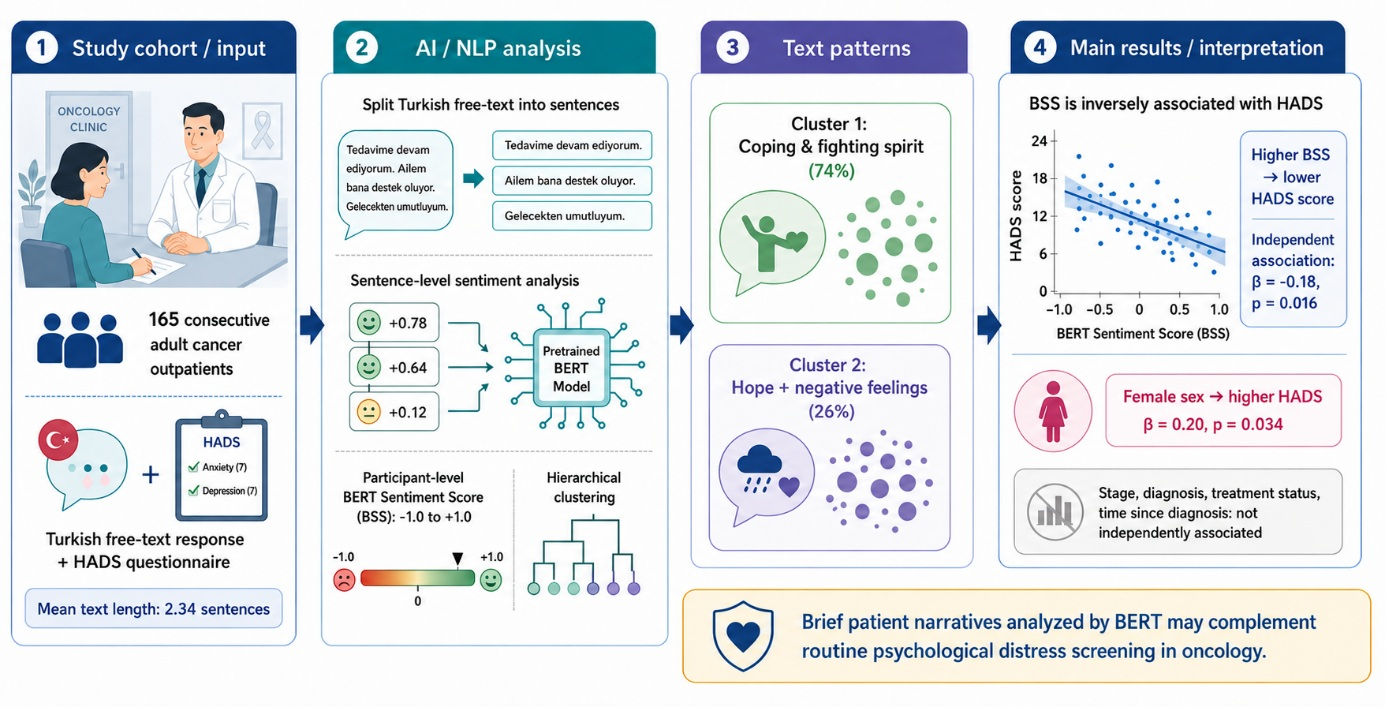

Analysing Emotional Well-Being in Cancer Patients: A Natural Language Processing Approach to Correlating Text with Hospital Anxiety and Depression Scale Scores

Simple Summary
Abstract
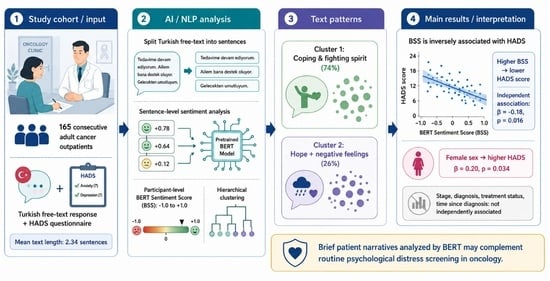
1. Introduction
2. Material and Methods
2.1. Study Design and Patient Population
2.2. Clinical Data Collection
2.3. Psychological Assessment
2.4. Free-Text Data Collection
2.5. Natural Language Processing Analysis
2.6. Statistical Analysis
3. Results
3.1. Patient Characteristics
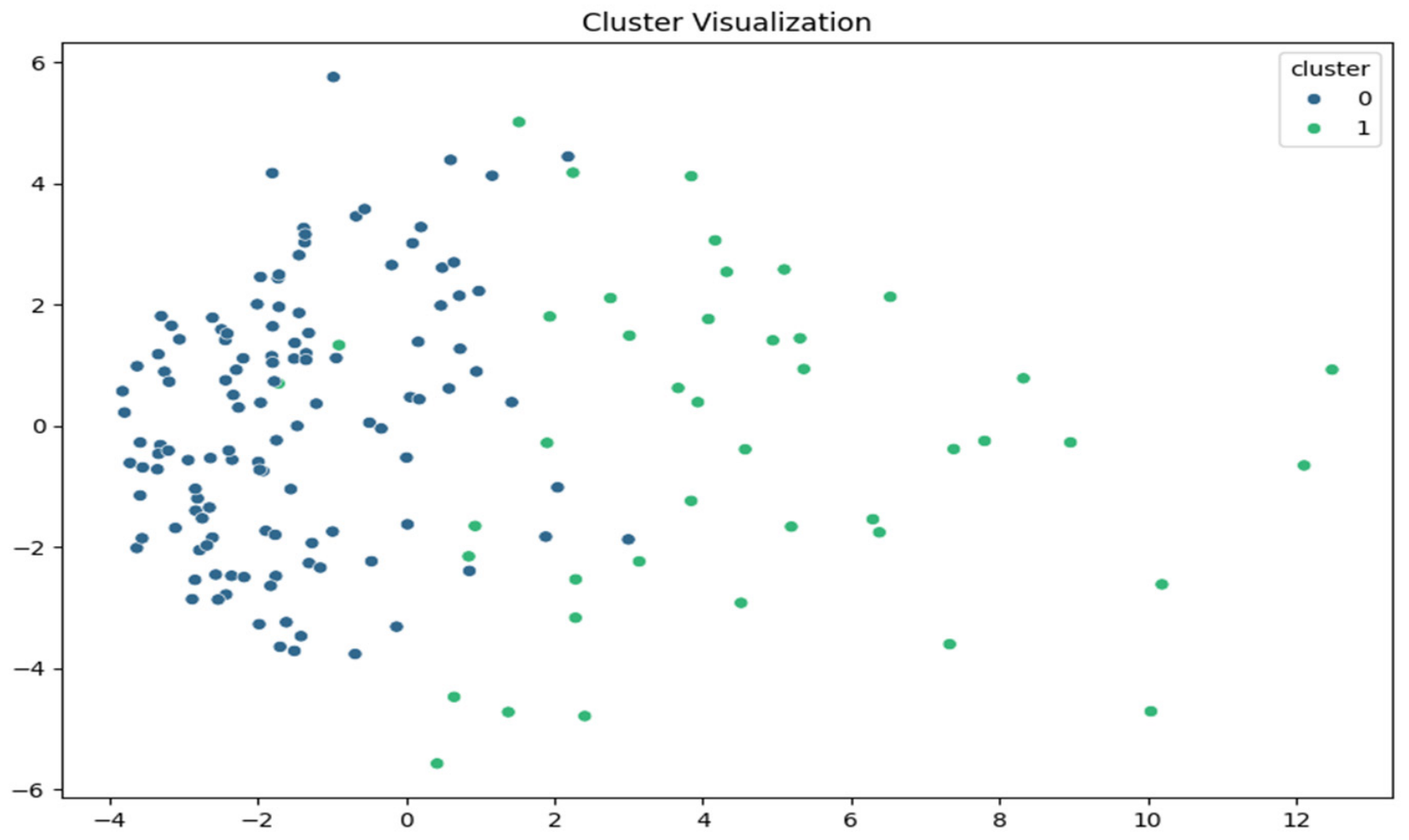
3.2. HADS Scores, Textual Data and NLP Analysis
3.3. Regression Analyses
4. Discussion
5. Conclusions
Author Contributions
Funding
Institutional Review Board Statement
Informed Consent Statement
Data Availability Statement
Conflicts of Interest
References
- Bray, F.; Laversanne, M.; Sung, H.; Ferlay, J.; Siegel, R.L.; Soerjomataram, I.; Jemal, A. Global cancer statistics 2022: GLOBOCAN estimates of incidence and mortality worldwide for 36 cancers in 185 countries. CA Cancer J. Clin. 2024, 74, 229–263. [Google Scholar] [CrossRef] [Scilit] [PubMed]
- Mitchell, A.J.; Chan, M.; Bhatti, H.; Halton, M.; Grassi, L.; Johansen, C.; Meader, N. Prevalence of depression, anxiety, and adjustment disorder in oncological, haematological, and palliative-care settings: A meta-analysis of 94 interview-based studies. Lancet Oncol. 2011, 12, 160–174. [Google Scholar] [CrossRef] [Scilit] [PubMed]
- Krebber, A.M.; Buffart, L.M.; Kleijn, G.; Riepma, I.C.; de Bree, R.; Leemans, C.R.; Becker, A.; Brug, J.; van Straten, A.; Cuijpers, P.; et al. Prevalence of depression in cancer patients: A meta-analysis of diagnostic interviews and self-report instruments. Psychooncology 2014, 23, 121–130. [Google Scholar] [CrossRef] [Scilit]
- Mehnert, A.; Brähler, E.; Faller, H.; Härter, M.; Keller, M.; Schulz, H.; Wegscheider, K.; Weis, J.; Boehncke, A.; Hund, B.; et al. Four-week prevalence of mental disorders in patients with cancer across major tumor entities. J. Clin. Oncol. 2014, 32, 3540–3546. [Google Scholar] [CrossRef] [Scilit] [PubMed]
- Linden, W.; Vodermaier, A.; Mackenzie, R.; Greig, D. Anxiety and depression after cancer diagnosis: Prevalence rates by cancer type, gender, and age. J. Affect. Disord. 2012, 141, 343–351. [Google Scholar] [CrossRef] [Scilit] [PubMed]
- Ge, M.W.; Sheng, J.; Shen, L.T.; Hu, F.H.; Jia, Y.J.; Ur-Rehman, A.; Li, W.; Lan, J.Z.; Liu, P.; Chen, H.L. Global Prevalence of Mental Health Problems Among Cancer Survivors: A Meta-Analysis From 31 Countries. Psychooncology 2025, 34, e70077. [Google Scholar] [CrossRef] [Scilit] [PubMed]
- Getie, A.; Ayalneh, M.; Bimerew, M. Global prevalence and determinant factors of pain, depression, and anxiety among cancer patients: An umbrella review of systematic reviews and meta-analyses. BMC Psychiatry 2025, 25, 156. [Google Scholar] [CrossRef] [Scilit] [PubMed]
- Pinquart, M.; Duberstein, P.R. Depression and cancer mortality: A meta-analysis. Psychol. Med. 2010, 40, 1797–1810. [Google Scholar] [CrossRef] [Scilit] [PubMed]
- DiMatteo, M.R.; Lepper, H.S.; Croghan, T.W. Depression is a risk factor for noncompliance with medical treatment: Meta-analysis of the effects of anxiety and depression on patient adherence. Arch. Intern. Med. 2000, 160, 2101–2107. [Google Scholar] [CrossRef] [Scilit] [PubMed]
- Skarstein, J.; Aass, N.; Fosså, S.D.; Skovlund, E.; Dahl, A.A. Anxiety and depression in cancer patients: Relation between the Hospital Anxiety and Depression Scale and the European Organization for Research and Treatment of Cancer Core Quality of Life Questionnaire. J. Psychosom. Res. 2000, 49, 27–34. [Google Scholar] [CrossRef] [Scilit] [PubMed]
- Pitman, A.; Suleman, S.; Hyde, N.; Hodgkiss, A. Depression and anxiety in patients with cancer. BMJ 2018, 361, k1415. [Google Scholar] [CrossRef] [Scilit] [PubMed]
- Grassi, L.; Caruso, R.; Riba, M.B.; Lloyd-Williams, M.; Kissane, D.; Rodin, G.; McFarland, D.; Campos-Ródenas, R.; Zachariae, R.; Santini, D.; et al. Anxiety and depression in adult cancer patients: ESMO Clinical Practice Guideline. ESMO Open 2023, 8, 101155. [Google Scholar] [CrossRef] [Scilit] [PubMed]
- National Comprehensive Cancer Network. NCCN Clinical Practice Guidelines in Oncology (NCCN Guidelines®): Distress Management; Version 2.2026; National Comprehensive Cancer Network: Plymouth Meeting, PA, USA, 2026. [Google Scholar]
- Zigmond, A.S.; Snaith, R.P. The hospital anxiety and depression scale. Acta Psychiatr. Scand. 1983, 67, 361–370. [Google Scholar] [CrossRef] [Scilit] [PubMed]
- Aydemir, O.; Guvenir, T.; Kuey, L.; Kultur, S. Reliability and Validity of the Turkish version of Hospital Anxiety and Depression Scale. Turk. J. Psychiatry 1997, 8, 280–287. [Google Scholar]
- Ibbotson, T.; Maguire, P.; Selby, P.; Priestman, T.; Wallace, L. Screening for anxiety and depression in cancer patients: The effects of disease and treatment. Eur. J. Cancer 1994, 30, 37–40. [Google Scholar] [CrossRef] [Scilit] [PubMed]
- Devlin, J.; Chang, M.-W.; Lee, K.; Toutanova, K. BERT: Pre-Training of Deep Bidirectional Transformers for Language Understanding; Association for Computational Linguistics: Minneapolis, MN, USA, 2019; pp. 4171–4186. [Google Scholar]
- Pires, T.; Schlinger, E.; Garrette, D. How Multilingual is Multilingual BERT? Association for Computational Linguistics: Florence, Italy, 2019; pp. 4996–5001. [Google Scholar]
- van Buchem, M.M.; de Hond, A.A.H.; Fanconi, C.; Shah, V.; Schuessler, M.; Kant, I.M.J.; Steyerberg, E.W.; Hernandez-Boussard, T. Applying natural language processing to patient messages to identify depression concerns in cancer patients. J. Am. Med. Inform. Assoc. 2024, 31, 2255–2262. [Google Scholar] [CrossRef] [Scilit] [PubMed]
- de Hond, A.; van Buchem, M.; Fanconi, C.; Roy, M.; Blayney, D.; Kant, I.; Steyerberg, E.; Hernandez-Boussard, T. Predicting Depression Risk in Patients With Cancer Using Multimodal Data: Algorithm Development Study. JMIR Med. Inform. 2024, 12, e51925. [Google Scholar] [CrossRef] [Scilit] [PubMed]
- Nunez, J.J.; Leung, B.; Ho, C.; Ng, R.T.; Bates, A.T. Predicting which patients with cancer will see a psychiatrist or counsellor from their initial oncology consultation document using natural language processing. Commun. Med. 2024, 4, 69. [Google Scholar] [CrossRef] [Scilit] [PubMed]
- Lho, S.K.; Park, S.C.; Lee, H.; Oh, D.Y.; Kim, H.; Jang, S.; Jung, H.Y.; Yoo, S.Y.; Park, S.M.; Lee, J.Y. Large Language Models and Text Embeddings for Detecting Depression and Suicide in Patient Narratives. JAMA Netw. Open 2025, 8, e2511922. [Google Scholar] [CrossRef] [Scilit] [PubMed]
- Kim, J.; Ma, S.P.; Chen, M.L.; Galatzer-Levy, I.R.; Torous, J.; van Roessel, P.J.; Sharp, C.; Pfeffer, M.A.; Rodriguez, C.I.; Linos, E.; et al. Optimizing large language models for detecting symptoms of depression/anxiety in chronic diseases patient communications. NPJ Digit. Med. 2025, 8, 580. [Google Scholar] [CrossRef] [Scilit] [PubMed]
- Wang, Y.; Ye, X.; Luo, H.; Feng, W. Large language models for identifying depression concerns in cancer patients. J. Am. Med. Inform. Assoc. 2025, 32, 1390–1391. [Google Scholar] [CrossRef] [Scilit] [PubMed]
- Bjelland, I.; Dahl, A.A.; Haug, T.T.; Neckelmann, D. The validity of the Hospital Anxiety and Depression Scale. An updated literature review. J. Psychosom. Res. 2002, 52, 69–77. [Google Scholar] [CrossRef] [Scilit] [PubMed]
- Herrmann, C. International experiences with the Hospital Anxiety and Depression Scale-A review of validation data and clinical results. J. Psychosom. Res. 1997, 42, 17–41. [Google Scholar] [CrossRef] [Scilit] [PubMed]
- Walker, J.L.; Hansen, C.H.; Martin, P.; Symeonides, S.; Ramessur, R.; Murray, G.D.; Sharpe, M. Prevalence, associations, and adequacy of treatment of major depression in patients with cancer: A cross-sectional analysis of routinely collected clinical data. Lancet Psychiatry 2014, 1, 343–350. [Google Scholar] [CrossRef] [Scilit] [PubMed]
- Jacobsen, P.B.; Jim, H.S. Psychosocial interventions for anxiety and depression in adult cancer patients: Achievements and challenges. CA Cancer J. Clin. 2008, 58, 214–230. [Google Scholar] [CrossRef] [Scilit] [PubMed]
- Aggarwal, I.; Joseph, S.; Jaganathan, N.; Patel, A.; Kumar, V.; Devarapalli, M. Sentiment Analysis in Healthcare: A Comparison of VADER, BERT, and Flair NLP Models on Patient Reviews of Pain Management Physicians. Cureus 2025, 17, e88902. [Google Scholar] [CrossRef] [Scilit] [PubMed]
- Stark, D.; Kiely, M.; Smith, A.; Velikova, G.; House, A.; Selby, P. Anxiety disorders in cancer patients: Their nature, associations, and relation to quality of life. J. Clin. Oncol. 2002, 20, 3137–3148. [Google Scholar] [CrossRef] [Scilit] [PubMed]
- Vitale, E.; Halemani, K.; Shetty, A.; Chang, Y.C.; Hu, W.Y.; Massafra, R.; Moretti, A. Sex Differences in Anxiety and Depression Conditions among Cancer Patients: A Systematic Review and Meta-Analysis. Cancers 2024, 16, 1969. [Google Scholar] [CrossRef] [Scilit] [PubMed]
- Seiler, A.; Jenewein, J. Resilience in Cancer Patients. Front. Psychiatry 2019, 10, 208. [Google Scholar] [CrossRef] [Scilit] [PubMed]
- Caldiroli, C.L.; Sarandacchi, S.; Tomasuolo, M.; Diso, D.; Castiglioni, M.; Procaccia, R. Resilience as a mediator of quality of life in cancer patients in healthcare services. Sci. Rep. 2025, 15, 8599. [Google Scholar] [CrossRef] [Scilit] [PubMed]
- Esteban Blanco, M.; Martinez de la Viuda, I.; Rodriguez Chico, M.G.; Félix Montalvo, M.D.M.; Garcia Salas, A.; Garcia Palomo, A.; Quintana Asenjo, M.T. Psychological Resilience and Associated Factors in Cancer Patients: A Cross-Sectional Analysis. Cancer Rep. 2026, 9, e70415. [Google Scholar] [CrossRef] [Scilit] [PubMed]
- White, B.M.; Aitken, G.L.; Zink, J.A.; Kheirkhah Rahimabad, P.; Kumsa, F.A.; Hashtarkhani, S.; Rashid, R.; Kheirinejad, S.; Girdwood, T.; Brett, C.L.; et al. Empathic AI for Patient-Centered Cancer Care: A Scoping Review of Patient Navigation, Support, and Clinical Practice. JMIR Cancer 2026, 12, e82336. [Google Scholar] [CrossRef] [Scilit] [PubMed]




| Variable | Category | n (%) | Range | Median | Mean |
|---|---|---|---|---|---|
| Clinical characteristics | |||||
| Age | 31–81 | 61 | 59 | ||
| Up to 60 years | 82 (50) | ||||
| More than 60 years | 83 (50) | ||||
| Sex | Male | 64 (39) | |||
| Female | 101 (61) | ||||
| Diagnosis | Breast cancer | 63 (38) | |||
| Lung or colorectal cancer | 46 (28) | ||||
| Other cancers | 56 (34) | ||||
| Stage | Stage 1 to 3 | 87 (53) | |||
| Stage 4 | 78 (47) | ||||
| Active treatment | Yes | 56 (34) | |||
| No | 109 (66) | ||||
| Time since diagnosis | Less than 6 months | 37 (22) | |||
| 6 to 12 months | 27 (17) | ||||
| More than 12 months | 101 (61) | ||||
| Education | Primary or secondary school | 59 (36) | |||
| Lycee | 35 (21) | ||||
| University | 71 (43) | ||||
| Income | Poor | 25 (15) | |||
| Medium | 128 (78) | ||||
| High | 12 (7) | ||||
| Marital status | Single | 35 (21) | |||
| Married | 130 (79) | ||||
| HADS score | 0–33 | 10 | 10.46 | ||
| Textual characteristics | |||||
| Total sentence count | 0–10 | 2 | 2.34 | ||
| BERT sentiment score * | −1.00 to 1.00 | 0.52 | 0.02 | ||
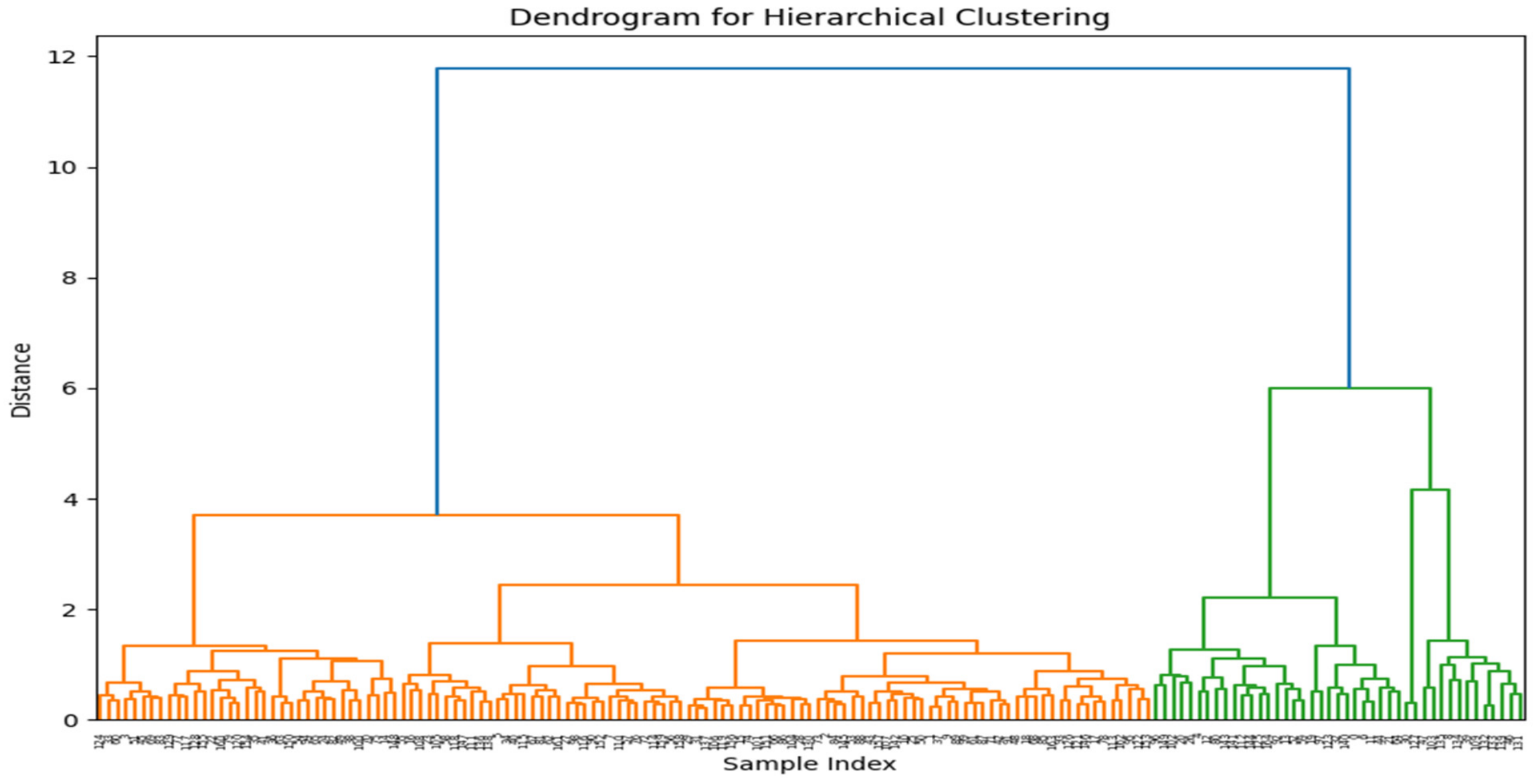
| BERT sentiment cluster ** | Coping and fighting spirit | 122 (74) | |||
| Hope and negative feelings | 43 (26) |
| Variable | Comparison | Univariate Analyses | Multivariate Analyses | ||||
|---|---|---|---|---|---|---|---|
| β * | t | p | β * | t | p | ||
| Clinical variables | |||||||
| Age | Up to 60 years vs. older | −0.17 | −2.14 | 0.034 | −0.04 | −0.48 | 0.633 |
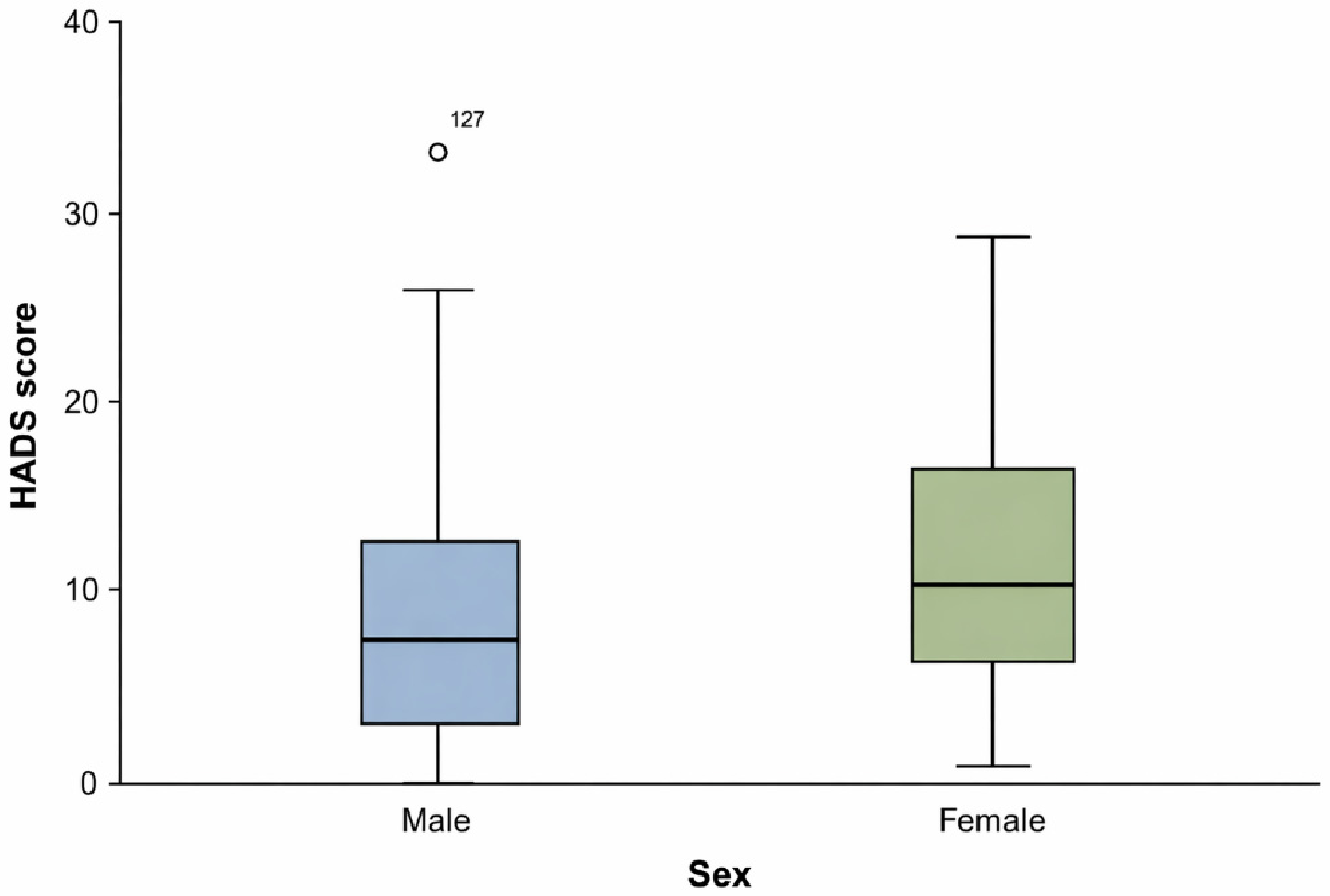
| Sex | Male vs. female | 0.26 | 3.40 | 0.001 | 0.20 | 2.14 | 0.034 |
| Diagnosis-1 ** | Breast cancer vs. other cancers | −0.05 | −0.56 | 0.574 | — | — | — |
| Diagnosis-2 ** | Lung or colorectal cancer vs. other cancers | −0.15 | −1.75 | 0.082 | −0.05 | −0.61 | 0.544 |
| Stage | Stages 1–3 vs. 4 | −0.12 | −1.58 | 0.117 | −0.04 | −0.46 | 0.645 |
| Active treatment | Yes vs. no | −0.06 | −0.82 | 0.414 | — | — | — |
| Time since diagnosis | <6 vs. 6–12 vs. >12 months | −0.02 | −0.26 | 0.795 | — | — | — |
| Education | Primary/secondary vs. lycee vs. university | −0.06 | −0.79 | 0.429 | — | — | — |
| Income | Poor vs. medium vs. high | −0.08 | −0.99 | 0.323 | — | — | — |
| Marital status | Single vs. married | 0.03 | 0.43 | 0.668 | — | — | — |
| Textual variables | |||||||
| BERT sentiment cluster £ | Coping and fighting spirit vs. hope and negative feelings | −0.02 | −0.27 | 0.789 | — | — | — |
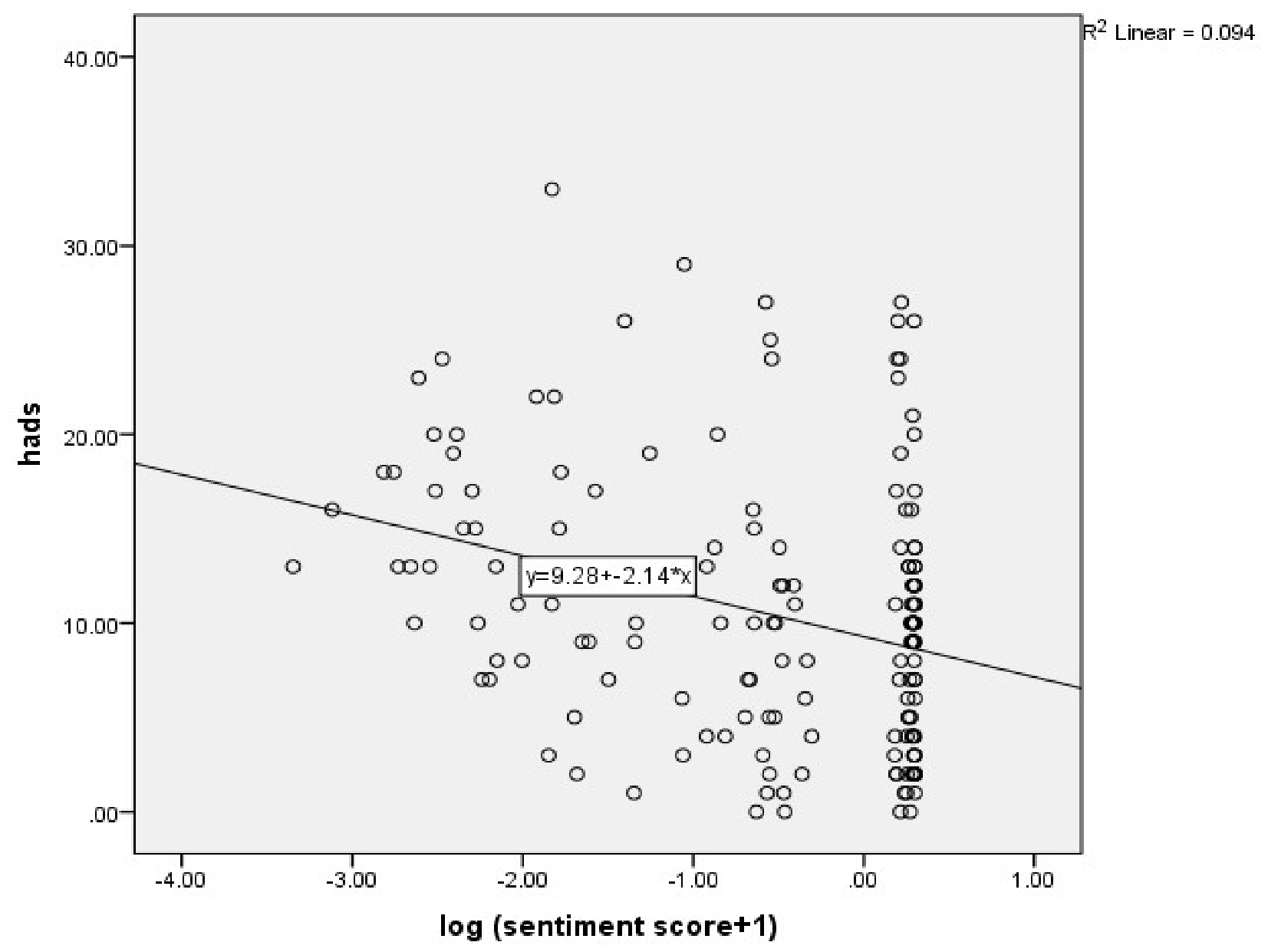
| BERT sentiment score # | Continuous score | −0.21 | −2.71 | 0.008 | −0.18 | −2.43 | 0.016 |
Disclaimer/Publisher’s Note: The statements, opinions and data contained in all publications are solely those of the individual author(s) and contributor(s) and not of MDPI and/or the editor(s). MDPI and/or the editor(s) disclaim responsibility for any injury to people or property resulting from any ideas, methods, instructions or products referred to in the content. |
© 2026 by the authors. Licensee MDPI, Basel, Switzerland. This article is an open access article distributed under the terms and conditions of the Creative Commons Attribution (CC BY) license.
Share and Cite
Alemdar, M.S.; Bozcuk, H.Ş. Analysing Emotional Well-Being in Cancer Patients: A Natural Language Processing Approach to Correlating Text with Hospital Anxiety and Depression Scale Scores. Curr. Oncol. 2026, 33, 400. https://doi.org/10.3390/curroncol33070400
Alemdar MS, Bozcuk HŞ. Analysing Emotional Well-Being in Cancer Patients: A Natural Language Processing Approach to Correlating Text with Hospital Anxiety and Depression Scale Scores. Current Oncology. 2026; 33(7):400. https://doi.org/10.3390/curroncol33070400
Chicago/Turabian StyleAlemdar, Mustafa Serkan, and Hakan Şat Bozcuk. 2026. "Analysing Emotional Well-Being in Cancer Patients: A Natural Language Processing Approach to Correlating Text with Hospital Anxiety and Depression Scale Scores" Current Oncology 33, no. 7: 400. https://doi.org/10.3390/curroncol33070400
APA StyleAlemdar, M. S., & Bozcuk, H. Ş. (2026). Analysing Emotional Well-Being in Cancer Patients: A Natural Language Processing Approach to Correlating Text with Hospital Anxiety and Depression Scale Scores. Current Oncology, 33(7), 400. https://doi.org/10.3390/curroncol33070400