Acquired Resistance to Afatinib Mediated by EGFR T790M in Lung Adenocarcinoma Patients Harboring EGFR-KDD: A Case Report and Literature Review

Department of Respiratory and Critical Care Medicine, The Second Affiliated Hospital of Zhejiang University School of Medicine, Hangzhou 310009, China
*
Author to whom correspondence should be addressed.
Curr. Oncol. 2026, 33(4), 214; https://doi.org/10.3390/curroncol33040214
Submission received: 28 February 2026
/
Revised: 31 March 2026
/
Accepted: 13 April 2026
/
Published: 14 April 2026
(This article belongs to the Section Thoracic Oncology)
Simple Summary
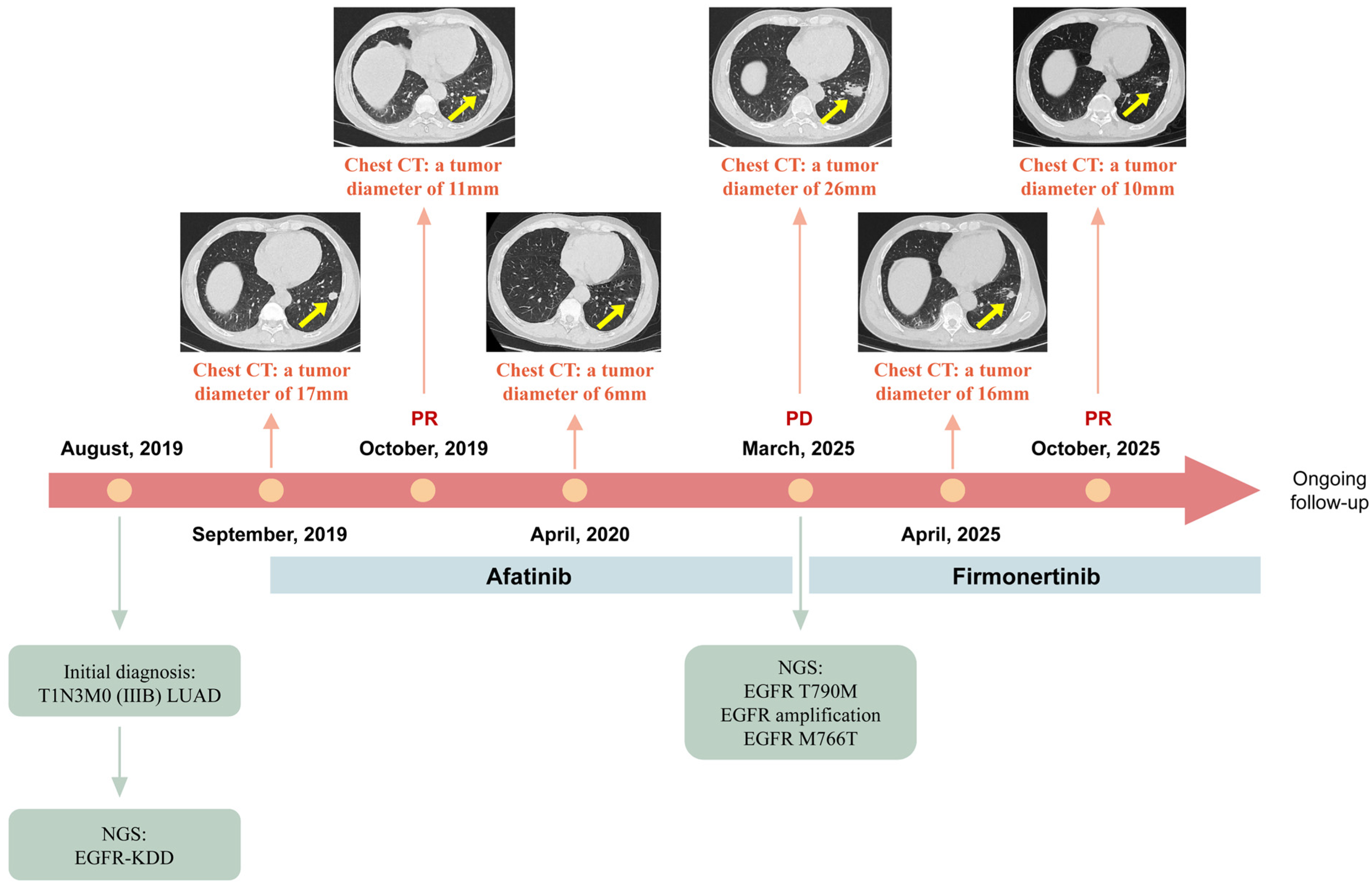
Epidermal growth factor receptor (EGFR)-kinase domain duplication (KDD) represents an uncommon genetic alteration identified in a minority of patients with lung cancer, but the mechanisms underlying resistance to first- and second-generation EGFR-tyrosine kinase inhibitors (TKIs) remain unclear. We report a patient with EGFR-KDD who developed an EGFR T790M mutation after disease progression on afatinib and achieved a second remission following a switch to firmonertinib. We also conducted a literature review of EGFR-KDD cases to further refine treatment strategies for patients with this rare mutation.
Abstract
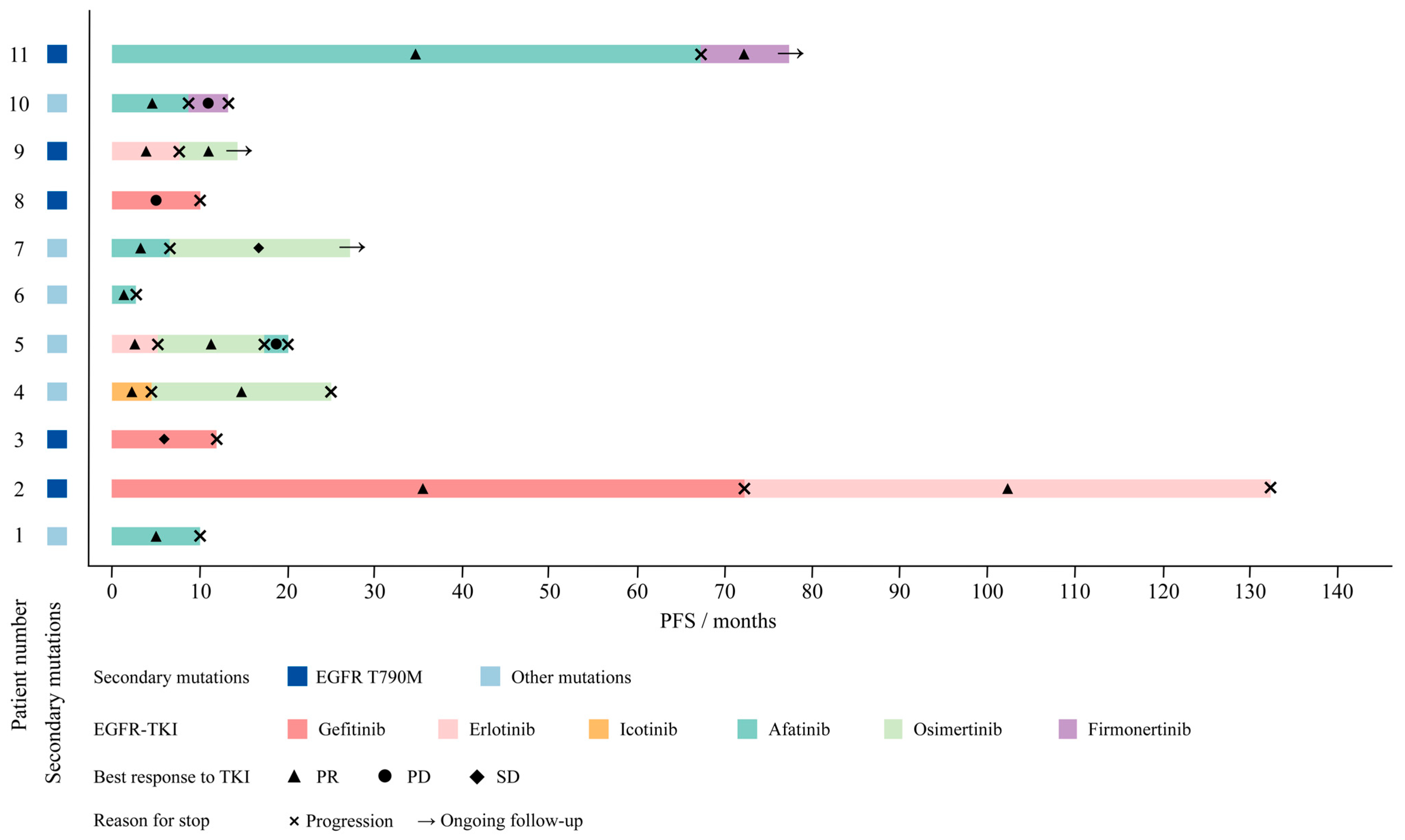
Epidermal growth factor receptor (EGFR)-kinase domain duplication (KDD) represents an atypical mutation distinct from classical EGFR mutations in lung adenocarcinoma (LUAD). Although first- and second-generation EGFR-tyrosine kinase inhibitors (TKIs) have demonstrated clinical activity in EGFR-KDD, the mechanisms of acquired resistance in this setting remain poorly characterized. Herein, we present a LUAD patient with EGFR-KDD who achieved a sustained initial response to afatinib lasting 67 months before developing acquired resistance. Re-biopsy with next-generation sequencing (NGS) uncovered EGFR T790M, accompanied by EGFR amplification and EGFR M766T. The patient was switched to firmonertinib, with subsequent tumor regression. We reviewed published EGFR-KDD cases that had both acquired resistance to first- or second-generation EGFR-TKIs and corresponding repeat biopsy findings. Five of the eleven cases harbored EGFR T790M, yielding a prevalence of 45%, which is similar to that seen in classical EGFR mutations. This case suggests that EGFR T790M mediates acquired resistance to first- and second-generation EGFR-TKIs in EGFR-KDD, mirroring the resistance pattern observed in classical EGFR mutations.