Improving Quality of End-of-Life Care Through the K-HOPE Consultative Palliative Care Model: A Prospective Study in a Tertiary Hospital
by
 , , and
Yoo Jeong Lee
1,2 ,
,
In Cheol Hwang
3,
Eun Jeong Lee
1,
Soon-Young Hwang
4 and
Youn Seon Choi
1,2,* 1
Palliative Care Center, Korea University Guro Hospital, Seoul 08308, Republic of Korea
2
Department of Family Medicine, Korea University Guro Hospital, Seoul 08308, Republic of Korea
3
Department of Family Medicine, Gil Medical Center, Gachon University College of Medicine, Incheon 21936, Republic of Korea
4
Department of Biostatistics, Korea University College of Medicine, Seoul 02841, Republic of Korea
*
Author to whom correspondence should be addressed.
Curr. Oncol. 2026, 33(4), 213; https://doi.org/10.3390/curroncol33040213
Submission received: 6 March 2026
/
Revised: 6 April 2026
/
Accepted: 11 April 2026
/
Published: 13 April 2026
(This article belongs to the Special Issue Palliative Care in Oncology: Current Advances)
Simple Summary
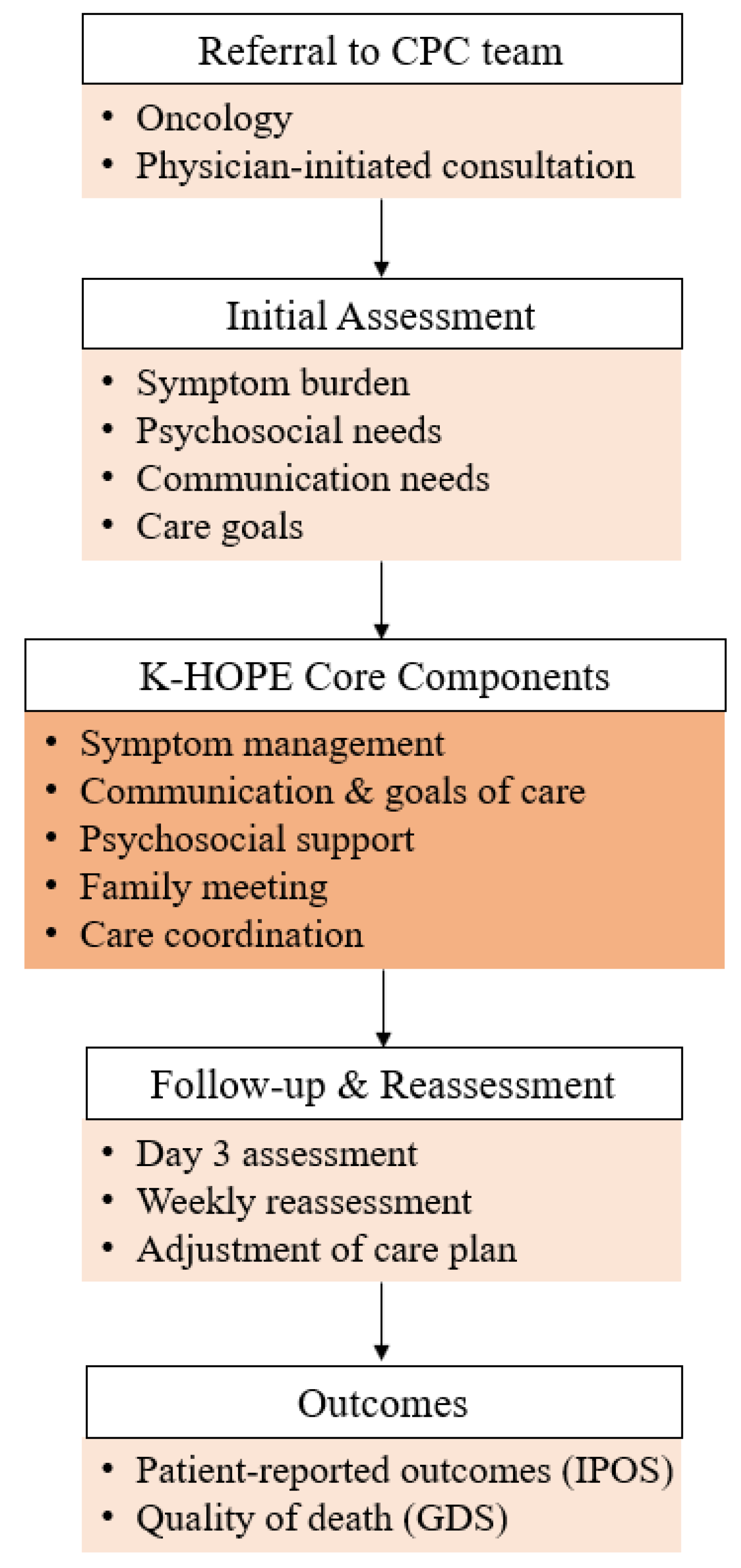
Patients with terminal cancer in Korea often receive end-of-life (EOL) care in acute-care hospitals, where limited time and fragmented care processes can make it difficult to address their complex needs. To address this challenge, we developed a structured consultative palliative care (CPC) model tailored to the Korean healthcare system, the Korea Holistic Optimized Palliative Care for End-of-Life (K-HOPE) model. In this study, we applied the K-HOPE model in a tertiary hospital and evaluated its effects on patients’ unmet needs and EOL care experiences. We found that this approach improved communication and reduced unmet needs among hospitalized patients with terminal cancer. Importantly, meaningful improvements in EOL care were observed even during relatively short periods of palliative care involvement. These findings highlight the potential role of structured CPC in supporting high-quality EOL care within routine oncology practice in tertiary hospitals, particularly by providing a standardized approach that may enhance consistency of care delivery within the Korean healthcare system.
Abstract
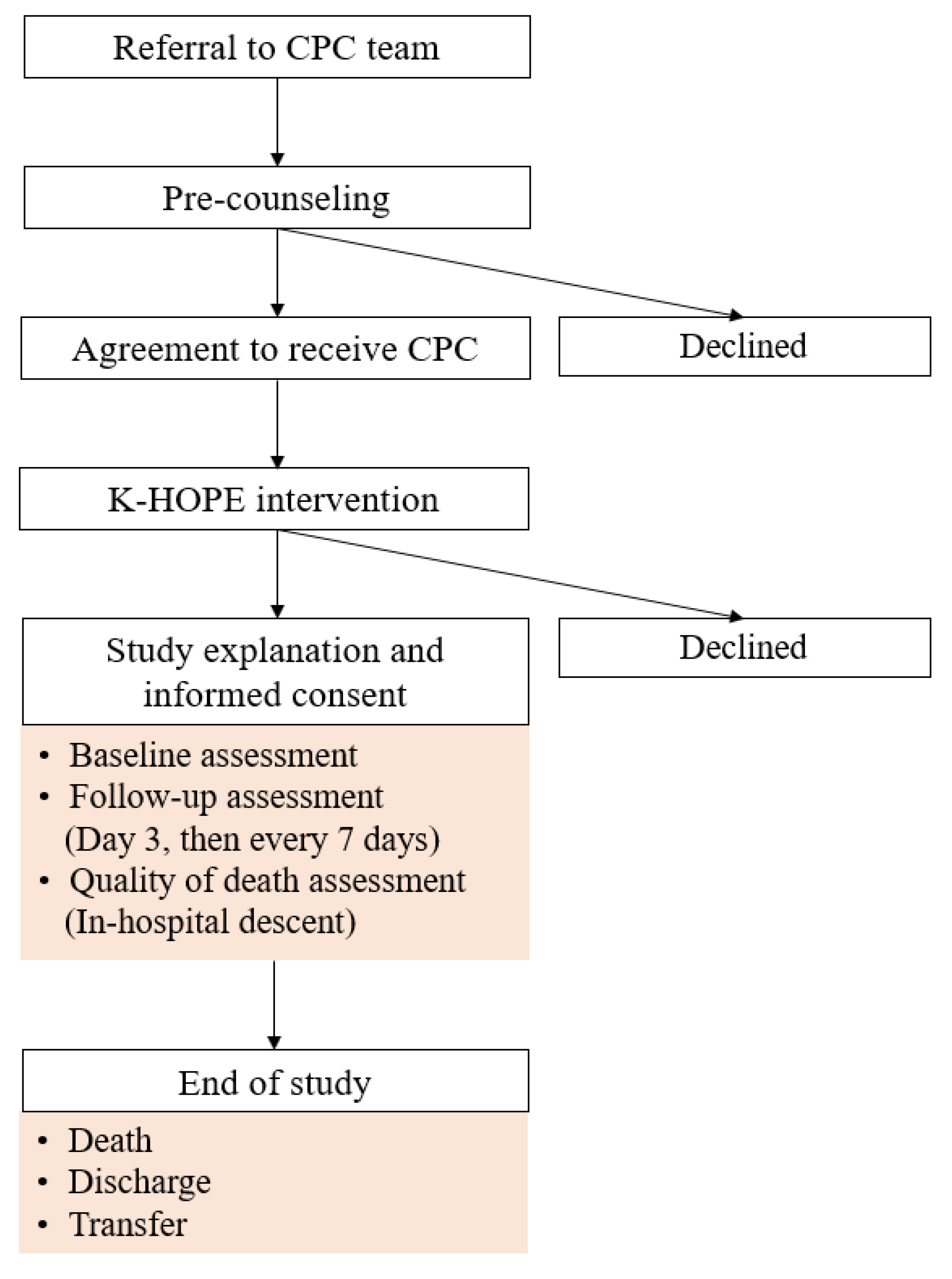
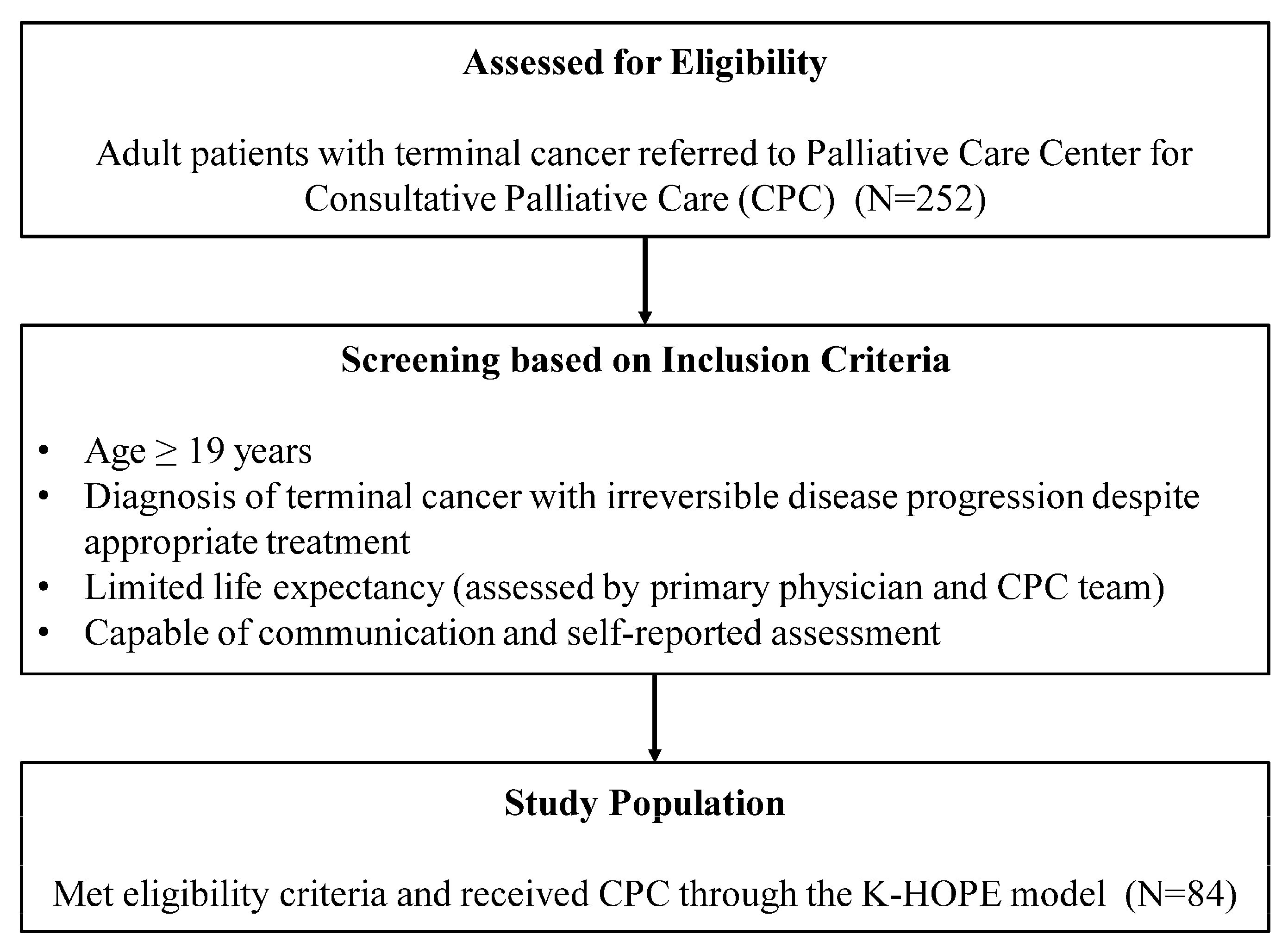
As population aging accelerates, the demand for high-quality end-of-life (EOL) care continues to rise. However, a substantial proportion of patients with terminal cancer still experience death in acute-care hospitals without adequate palliative care. Consultative palliative care (CPC) represents a feasible model for delivering palliative care without requiring dedicated inpatient units, yet evidence evaluating its clinical impact remains limited. In this study, we developed a structured hospital-based CPC model tailored to the Korean healthcare system, the Korea Holistic Optimized Palliative care for End-of-life (K-HOPE) model, and prospectively evaluated its clinical impact. K-HOPE was delivered by an interdisciplinary CPC team in a tertiary hospital. Unmet needs were assessed using the Integrated Palliative care Outcome Scale (IPOS), and longitudinal changes were analyzed using mixed-effects models for repeated measures. Among patients who died during hospitalization, quality of death was evaluated using the Good Death Scale (GDS). A total of 84 patients with terminal cancer received K-HOPE. The total IPOS score significantly decreased over time (β = −10.4, 95% CI −12.8 to −8.0; p < 0.001), indicating reduced overall burden and unmet needs. Significant improvements were observed in psychological distress (p = 0.010) and communication and information needs (p < 0.001), whereas changes in physical symptoms and practical concerns were not statistically significant. Among 22 patients who died during hospitalization, 59.1% achieved a good quality of death (GDS ≥ 12). Longer duration of CPC involvement was significantly associated with higher quality of death and remained an independent predictor in multivariable analysis. These findings suggest that the K-HOPE CPC model improves communication and overall EOL care experiences among hospitalized patients with terminal cancer, indicating that meaningful improvements in EOL care can occur even during short periods of CPC involvement. Structured CPC integrated into routine oncology practice represents a feasible strategy for improving EOL care in tertiary hospitals, and a standardized CPC framework may enhance the consistency and reproducibility of care delivery within the Korean healthcare system.