Robotic Partial Cystectomy and Extended Pelvic Lymph Node Dissection for Node-Positive Urachal Adenocarcinoma in a 34-Year-Old Woman: A Case Report

 , , , ,
Simple Summary
Abstract
1. Introduction
2. Case Presentation
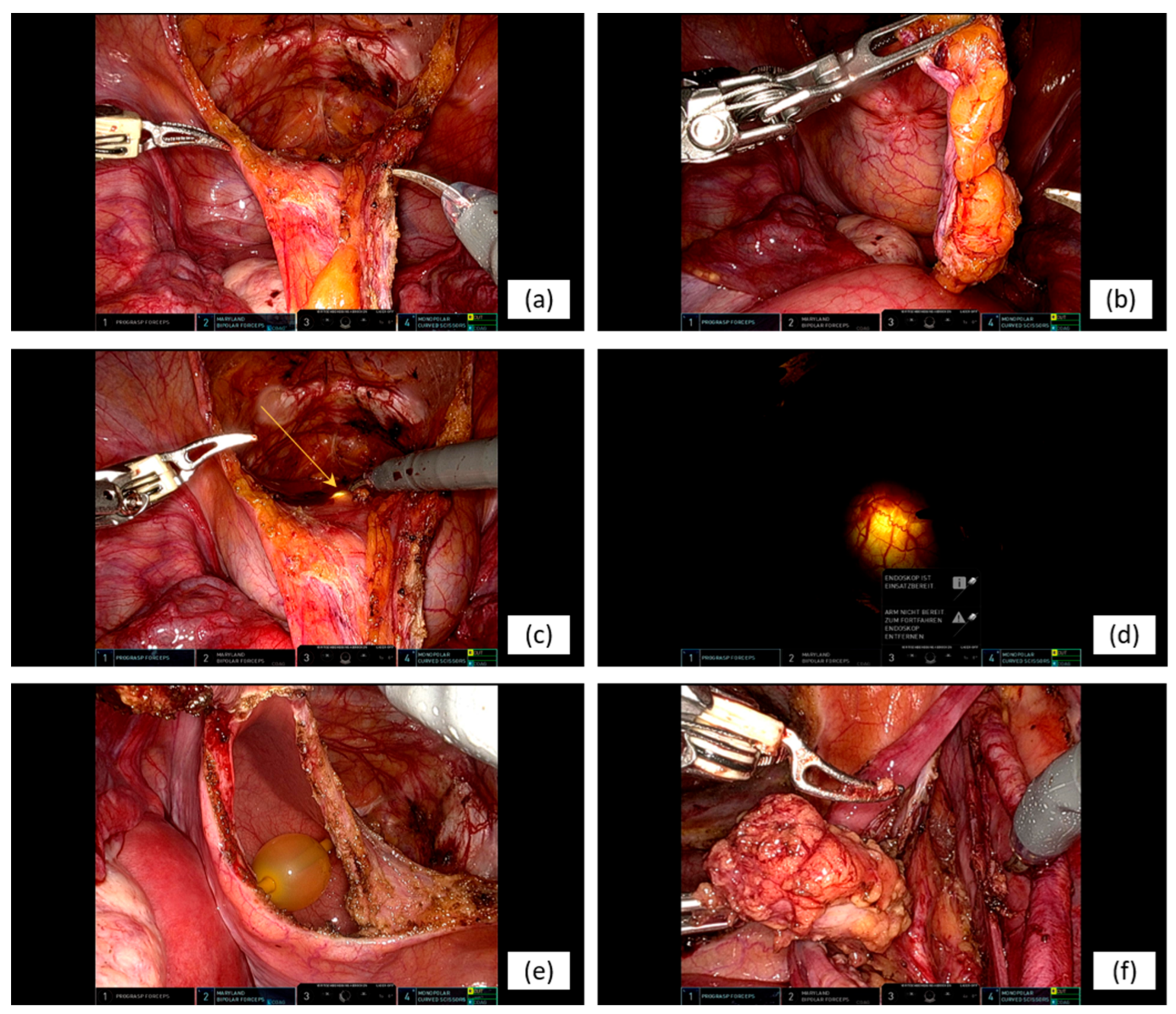
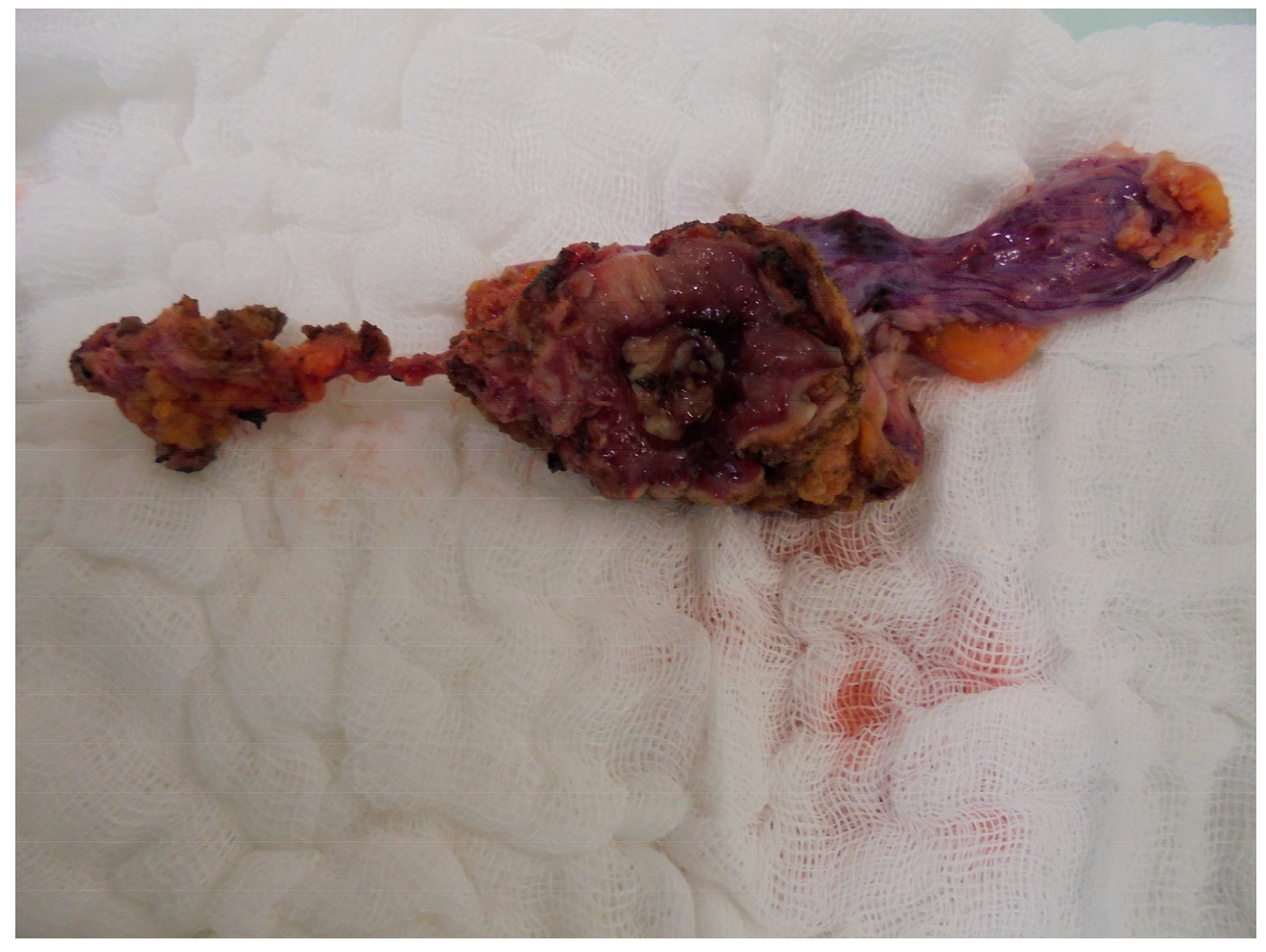
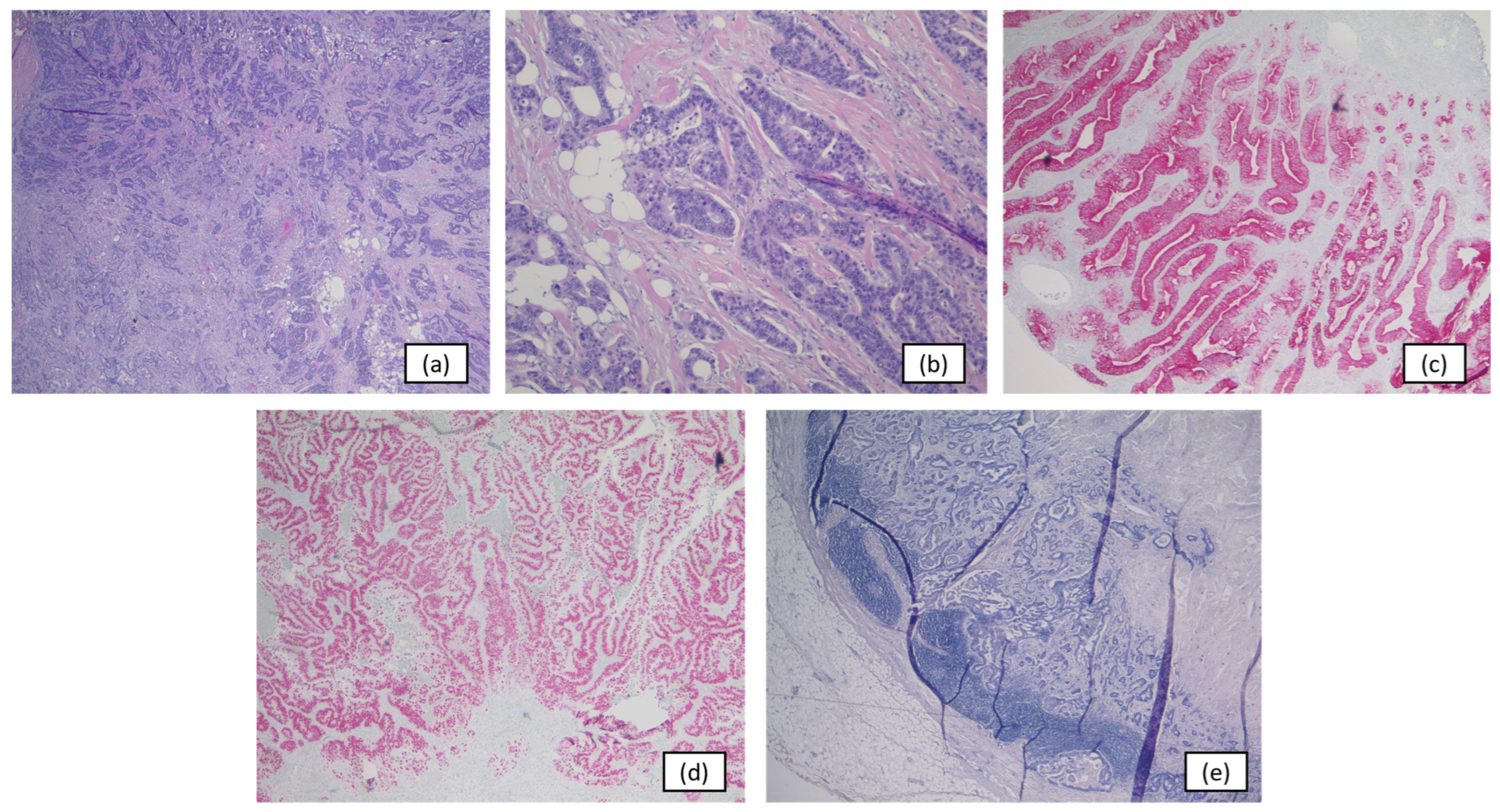
2.1. Diagnosis, Preoperative Work-Up, and Surgical Management
2.2. Postoperative Multidisciplinary Evaluation and Adjuvant Therapy Decision-Making
2.3. Early Follow-Up
3. Discussion
4. Conclusions
Author Contributions
Funding
Institutional Review Board Statement
Informed Consent Statement
Data Availability Statement
Conflicts of Interest
Abbreviations
| ADC | antibody–drug conjugate |
| CDX2 | caudal type homeobox 2 |
| CNV | copy number variation |
| CPS | combined positive score |
| DNA | deoxyribonucleic acid |
| ERBB | erb-B receptor tyrosin kinase |
| FGFR1 | fibroblast growth factor receptor 1 |
| FOLFIRINOX | leucovorin, 5 fluorouracil, irinotecan and oxaliplatin chemotherapy regimen |
| FOLFOX | fluoropyrimidine and oxaliplatin chemotherapy regimen |
| Fr | French |
| GIS | genomic instability score |
| H&E | hematoxylin and eosin |
| HER2 | human epidermal growth factor receptor 2 |
| HRD | homologous recombination deficiency |
| H-Score | histochemical score |
| IC | immune cells |
| IHC | immunohistochemistry |
| KRAS | Kirsten rat sarcoma viral oncogene homolog |
| Mb | megabase |
| MLH | MutL homolog |
| MMR | mismatch repair |
| MSH | MutS homolog |
| MYC | myelocytomatosis oncogene |
| MYCL | MYC proto-oncogene |
| NGS | next-generation sequencing |
| PARP | poly (ADP-ribose) polymerase |
| PCR | polymerase chain reaction |
| PD-L1 | programmed death-ligand 1 |
| PLND | pelvic lymph node dissection |
| PMS | postmeiotic segregation increased |
| RNA | ribonucleic acid |
| TMB | tumor mutational burden |
| TNM | tumor node metastasis |
| TPS | tumor proportion score |
| TP53 | tumor protein 53 |
| Trop-2 | trophoblast surface antigen 2 |
| UrCA | urachal carcinoma |
References
- Olah, C.; Kubik, A.; Mátrai, P.; Engh, M.A.; Barna, V.; Hegyi, P.; Reis, H.; Nyirády, P.; Szarvas, T. Estimation of the incidence of urachal cancer: A systematic review and meta-analysis of registry-based studies. Urol. Oncol. 2024, 42, 221.e1–221.e7. [Google Scholar] [CrossRef]
- Suartz, C.V.; Martinez, L.M.; Silvestre, M.H.L.; Lima, R.D.; Brito, P.H.S.; Galhardo, K.A.; Lopes, R.I.; Moraes, V.H.S.; Moraes, C.M.T.; Covatti, L.; et al. Urachal Carcinomas: A Comprehensive Systematic Review and Meta-analysis. Int. Braz. J. Urol. 2025, 51, e20240665. [Google Scholar] [CrossRef]
- Akhtar, S.N.; Gudbrandsdottir, G.; Aarsæther, E.; Carlsen, B.; Dimmen, M.; Hannestad, I.; Haug, E.S.; Hopland, O.A.; Karlsvik, A.K.; Kjøbli, E.; et al. Presentation and survival for urachal cancer: Findings from a nationwide multicenter cohort study in Norway. Urologia 2025, 92, 595–602. [Google Scholar] [CrossRef]
- Benjamin, D.J.; Adeyelu, T.T.; Elliott, A.; Darabi, S.; Lee, T.; McKay, R.R.; Oberley, M.J.; Rezazadeh Kalebasty, A. Comprehensive analysis of targetable mutations and tumor microenvironment in urachal cancer. NPJ Precis. Oncol. 2025, 9, 12. [Google Scholar] [CrossRef] [PubMed]
- Guerin, M.; Miran, C.; Colomba, E.; Cabart, M.; Herrmann, T.; Pericart, S.; Maillet, D.; Neuzillet, Y.; Deleuze, A.; Coquan, E.; et al. Urachal carcinoma: A large retrospective multicentric study from the French Genito-Urinary Tumor Group. Front. Oncol. 2023, 13, 1110003. [Google Scholar] [CrossRef]
- Szarvas, T.; Modos, O.; Niedworok, C.; Reis, H.; Szendröi, A.; Szász, M.A.; Nyirády, P. Clinical, prognostic, and therapeutic aspects of urachal carcinoma-A comprehensive review with meta-analysis of 1010 cases. Urol. Oncol. 2016, 34, 388–398. [Google Scholar] [CrossRef] [PubMed]
- Ashley, R.A.; Inman, B.A.; Sebo, T.J.; Leibovich, B.C.; Blute, M.L.; Kwon, E.D.; Zincke, H. Urachal carcinoma: Clinicopathologic features and long-term outcomes of an aggressive malignancy. Cancer 2006, 107, 712–720. [Google Scholar] [CrossRef]
- Orsini, A.; Bignante, G.; Lasorsa, F.; Bologna, E.; Mossack, S.M.; Pacini, M.; Marchioni, M.; Porpiglia, F.; Lucarelli, G.; Schips, L.; et al. Urachal Carcinoma: Insights From a National Database. Clin. Genitourin. Cancer 2024, 22, 102175. [Google Scholar] [CrossRef]
- Chen, H.; Wu, M.; Chen, M. Evaluation of the Management of Urachal Carcinoma: A Single-Center Experience over 13 Years. Urol. Int. 2024, 108, 508–516. [Google Scholar] [CrossRef]
- Reis, H.; Al-Ahmadie, H.; Gaisa, N.T.; Lopez-Beltran, A.; Maclean, F.; Tsuzuki, T.; Werneck da Cunha, I.; Amin, M.B.; Aning, J.; Aron, M.; et al. The Dublin International Society of Urological Pathology (ISUP) Consensus Conference on Best Practice Recommendations on the Pathology of Urachal Neoplasms. Am. J. Surg. Pathol. 2025, 49, e18–e26. [Google Scholar] [CrossRef] [PubMed]
- Sanguedolce, F.; Cormio, A.; Zanelli, M.; Palicelli, A.; Zizzo, M.; Falagario, U.G.; Mazzucchelli, R.; Galosi, A.B.; Carrieri, G.; Cormio, L. Diagnostic workout of glandular malignant lesions of the bladder according to the 5th WHO classification. Crit. Rev. Clin. Lab. Sci. 2025, 62, 301–312. [Google Scholar] [CrossRef]
- Reis, H.; Krafft, U.; Niedworok, C.; Módos, O.; Herold, T.; Behrendt, M.; Al-Ahmadie, H.; Hadaschik, B.; Nyirady, P.; Szarvas, T. Biomarkers in Urachal Cancer and Adenocarcinomas in the Bladder: A Comprehensive Review Supplemented by Own Data. Dis. Markers 2018, 2018, 7308168. [Google Scholar] [CrossRef]
- Sakthivel, D.K.; Prabhakar, P.; Raja Iyub, M.J.; Garje, R.; Manoharan, M. Signet ring cell carcinoma of the urachus: Survival and pathologic outcomes from the national cancer database. Int. Urol. Nephrol. 2025. [Google Scholar] [CrossRef] [PubMed]
- Han, T.; Cui, H.; Du, G.; Guan, Y.; Bi, X.; Guo, L.; Shi, H.; Shou, J. Expression and Prognostic Significance of Different Antibody-Drug Conjugate Target Proteins in Urachal Carcinoma. Clin. Genitourin. Cancer 2025, 23, 102403. [Google Scholar] [CrossRef]
- Tegegne, C.Y.; Bekele, F.S.; Alene, A.T.; Gebreegziabher, K.T.; Jiffar, A.D.; Ahmed, S.E. Primary urachal adenocarcinoma treated with partial cystectomy—Case report. Int. J. Surg. Case Rep. 2025, 131, 111449. [Google Scholar] [CrossRef]
- Kochvar, A.P.; Bednar, G.; Albani, J.M. Low-Grade Urachal Cystadenoma with Abundant Calcification Removed Using Robot-Assisted Laparoscopy: A Case Report. Cureus 2023, 15, e47209. [Google Scholar] [CrossRef]
- Ye, C.; Xie, Q.; Liu, Z.; Zhong, F.; Wei, K.; Pu, X. Robot-assisted laparoscopic partial cystectomy for urachal carcinoma: A case report. Oncol. Lett. 2025, 29, 257. [Google Scholar] [CrossRef]
- Suartz, C.V.; Martinez, L.M.; Brito, P.H.; Neto, C.V.; Cordeiro, M.D.; Botelho, L.A.A.; Gallucci, F.P.; Mota, J.M.; Nahas, W.C.; Ribeiro-Filho, L.A. Robotic-assisted approaches to urachal carcinoma: A comprehensive systematic review of the safety and efficacy outcomes. BJUI Compass 2024, 5, 327–333. [Google Scholar] [CrossRef] [PubMed]
- Juhasz, D.; Csizmarik, A.; Szalontai, J.; Keszthelyi, A.; Dér, B.; Kubik, A.; Szűcs, M.; Kenessey, I.; Ertl, I.E.; Berger, W.; et al. Precision Oncology Approach for Urachal Carcinoma: A Clinical Case Report. Int. J. Mol. Sci. 2024, 25, 13315. [Google Scholar] [CrossRef] [PubMed]
- Stokkel, L.E.; van Rossum, H.H.; van de Kamp, M.W.; Boellaard, T.N.; Bekers, E.M.; Kok, N.F.M.; van Rhijn, B.W.G.; Mertens, L.S. Clinical value of preoperative serum tumor markers CEA, CA19-9, CA125, and CA15-3 in surgically treated urachal cancer. Urol. Oncol. 2023, 41, 326.e17–326.e24. [Google Scholar] [CrossRef]
- Magers, M.J.; Lopez-Beltran, A.; Montironi, R.; Williamson, S.R.; Kaimakliotis, H.Z.; Cheng, L. Staging of bladder cancer. Histopathology 2019, 74, 112–134. [Google Scholar] [CrossRef]
- Sheldon, C.A.; Clayman, R.V.; Gonzalez, R.; Williams, R.D.; Fraley, E.E. Malignant urachal lesions. J. Urol. 1984, 131, 1–8. [Google Scholar] [CrossRef]
- Benjamin, D.J.; Kalebasty, A.R. Treatment approaches for urachal cancer: Use of immunotherapy and targeted therapies. Rare Tumors 2023, 15, 20363613231189984. [Google Scholar] [CrossRef]
- Kumar, R.; Harilal, S.; Abdelgawad, M.A.; Ghoneim, M.M.; Kumar, A.; Mathew, B. Urachal carcinoma: The journey so far and the road ahead. Pathol. Res. Pract. 2023, 243, 154379. [Google Scholar] [CrossRef] [PubMed]
- Vlachou, E.; Johnson, B.A., 3rd; Baraban, E.; Nadal, R.; Hoffman-Censits, J. Current Advances in the Management of Nonurothelial Subtypes of Bladder Cancer. Am. Soc. Clin. Oncol. Educ. Book 2024, 44, e438640. [Google Scholar] [CrossRef]
- Reis, H.; van der Vos, K.E.; Niedworok, C.; Herold, T.; Módos, O.; Szendrői, A.; Hager, T.; Ingenwerth, M.; Vis, D.J.; Behrendt, M.A.; et al. Pathogenic and targetable genetic alterations in 70 urachal adenocarcinomas. Int. J. Cancer 2018, 143, 1764–1773. [Google Scholar] [CrossRef]
- Varadi, M.; Nagy, N.; Reis, H.; Hadaschik, B.; Niedworok, C.; Modos, O.; Szendroi, A.; Ablat, J.; Black, P.C.; Keresztes, D.; et al. Clinical sequencing identifies potential actionable alterations in a high rate of urachal and primary bladder adenocarcinomas. Cancer Med. 2023, 12, 9041–9054. [Google Scholar] [CrossRef]
- Park, I.; Lee, J.L.; Yoon, S.; Shin, S.J.; Shin, S.H.; Kim, J.H.; Park, K.; Lee, H.J. A Multicenter Phase II Study of Modified FOLFIRINOX for First-line Treatment for Advanced Urachal Cancer (ULTMA; KCSG GU20-03). Cancer Res. Treat. 2025, 58, 284–291. [Google Scholar] [CrossRef] [PubMed]
- Collazo-Lorduy, A.; Castillo-Martin, M.; Wang, L.; Patel, V.; Iyer, G.; Jordan, E.; Al-Ahmadie, H.; Leonard, I.; Oh, W.K.; Zhu, J.; et al. Urachal Carcinoma Shares Genomic Alterations with Colorectal Carcinoma and May Respond to Epidermal Growth Factor Inhibition. Eur. Urol. 2016, 70, 771–775. [Google Scholar] [CrossRef] [PubMed]
- Wright, J.L.; Porter, M.P.; Li, C.I.; Lange, P.H.; Lin, D.W. Differences in survival among patients with urachal and nonurachal adenocarcinomas of the bladder. Cancer 2006, 107, 721–728. [Google Scholar] [CrossRef]
- Begg, R.C. The Urachus: Its Anatomy, Histology and Development. J. Anat. 1930, 64, 170–183. [Google Scholar]
- Zhu, J.; Ma, X.; Xie, F.; Wang, Y. TNM Stage-Stratified Comparison Between Urachal and Nonurachal Adenocarcinomas of the Bladder: A Single-Center Retrospective Cohort Study. Clin. Genitourin. Cancer 2026, 24, 102509. [Google Scholar] [CrossRef]
- Jia, Z.; Chang, X.; Li, X.; Wang, B.; Zhang, X. Urachal Carcinoma: Are Lymphadenectomy and Umbilectomy Necessary? Med. Sci. Monit. 2020, 26, e927913. [Google Scholar] [CrossRef] [PubMed]
- Slusarczyk, A.; Scilipoti, P.; Marcq, G.; Pradere, B.; Contieri, R.; Krajewski, W.; Laukthina, E.; Del Giudice, F.; Longoni, M.; Gallioli, A.; et al. Comparison of extended and standard lymph node dissection in radical cystectomy for urothelial bladder cancer: A systematic review and meta-analysis. World J. Urol. 2025, 43, 181. [Google Scholar] [CrossRef] [PubMed]
- Aman, H.; Hamza, M.; Ramzan, A.; Saqib, M.; Ul Abideen, Z.; Haseeb, A.; Habib, H.; Bint-E-Shafqat, A.; Azad, A.A.U.; Waris, H.; et al. Standard Versus Extended Pelvic Lymphadenectomy in Patients with Bladder Cancer: A Systematic Review and Meta-analysis. Am. J. Clin. Oncol. 2025, 48, 479–487. [Google Scholar] [CrossRef] [PubMed]
- Shitara, K.; Yamazaki, K.; Tsushima, T.; Naito, T.; Matsubara, N.; Watanabe, M.; Sarholz, B.; Johne, A.; Doi, T. Phase I trial of the MET inhibitor tepotinib in Japanese patients with solid tumors. Jpn. J. Clin. Oncol. 2020, 50, 859–866. [Google Scholar] [CrossRef]



| Biomarker/Pathway | Method | Result | Clinical Interpretation | Potential Therapeutic Relevance |
|---|---|---|---|---|
| MMR/MSI status | PCR-based microsatellite analysis; IHC (MLH1, PMS2, MSH2, MSH6) | Microsatellite stable; preserved nuclear expression of mismatch repair proteins | Mismatch repair-proficient tumor biology | No biological rationale for immune checkpoint inhibition |
| Tumor mutational burden (TMB) | NGS (522-gene panel) | 0.0 mutations/Mb (low) | Molecularly “cold” tumor profile | No biological rationale for immune checkpoint inhibition |
| Homologous recombination deficiency (HRD) | NGS-based genomic instability score | Negative; GIS 27 | Intact DNA double-strand break repair capacity | No rationale for PARP inhibitor-based approaches |
| Mutation analysis | NGS (522-gene panel) | TP53 pathogenic missense mutation c.742C>T/p.R248W (NM_000546.6) (allele fraction 50%) | Disruptive DNA-binding domain mutation | Potential prognostic relevance only; no approved targeted therapy |
| Gene fusions/splice variants | NGS (RNA-based fusion analysis) | None detected | No targetable rearrangements identified | No role for fusion-directed therapies |
| Copy number variations (CNV) | NGS | Low-level copy number gains involving MYC, FGFR1, ERBB3, KRAS, and MYCL | Subclonal or low-amplitude alterations without established predictive relevance | No validated indication for targeted therapy |
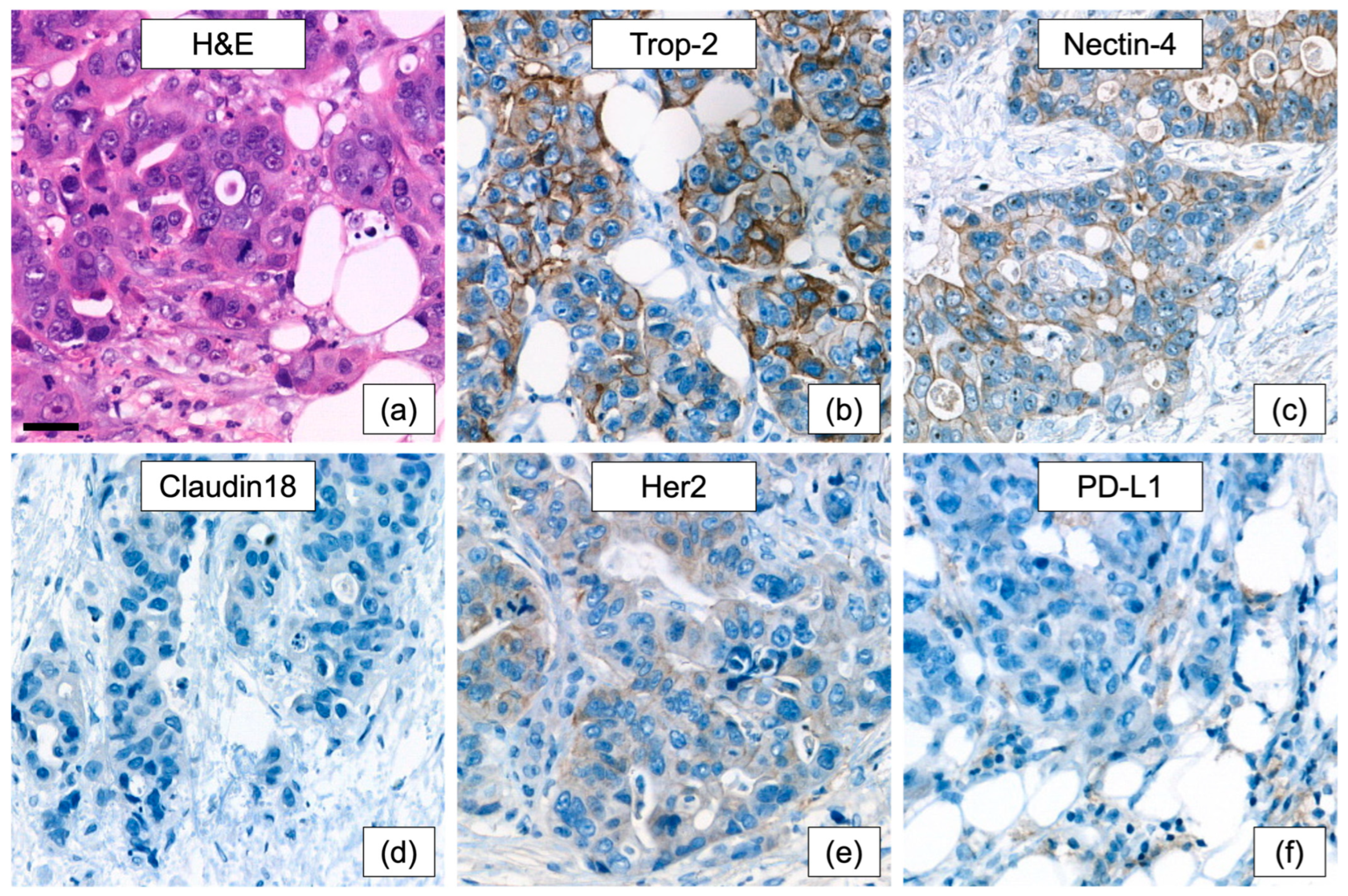
| PD-L1 | IHC (Dako, clone 22C3) | TPS 0%; IC 1%; CPS 2 | Absence of tumor cell PD-L1 expression | No biological rationale for immune checkpoint inhibition, but no established cut-off values for UrCA type |
| HER2 (ERBB2) | IHC (Dako, rabbit polyclonal) | low (Rüschoff-score 1+) | No HER2-driven tumor biology | No sufficient evidence for HER2-targeting therapy in UrCA |
| Trop-2 | IHC (Abcam plc., clone SP294) | Moderate expression (H-score 185) | Antigen present at intermediate level without an established predictive threshold in UrCA | No biological rationale for Trop-2-ADC therapy |
| Nectin-4 | IHC (Abcam plc., clone EPR15613-68) | Low expression (H-score 65) | Antigen present at low level without an established predictive threshold in UrCA | No biological rationale for Nectin-4-ADC therapy |
| Claudin-18 | IHC (LifeSpan BioSciences) | 0% membranous expression | Target antigen absent | No biological rationale for Claudin 18.2-targeting therapy |
Disclaimer/Publisher’s Note: The statements, opinions and data contained in all publications are solely those of the individual author(s) and contributor(s) and not of MDPI and/or the editor(s). MDPI and/or the editor(s) disclaim responsibility for any injury to people or property resulting from any ideas, methods, instructions or products referred to in the content. |
© 2026 by the authors. Licensee MDPI, Basel, Switzerland. This article is an open access article distributed under the terms and conditions of the Creative Commons Attribution (CC BY) license.
Share and Cite
Herrmann, S.; Gilfrich, C.; Siepmann, S.; Rodas Garzaro, J.R.; Eder, F.; Schleder, S.; Aubele, P.; Keil, F.; May, M.; Kravchuk, A. Robotic Partial Cystectomy and Extended Pelvic Lymph Node Dissection for Node-Positive Urachal Adenocarcinoma in a 34-Year-Old Woman: A Case Report. Curr. Oncol. 2026, 33, 190. https://doi.org/10.3390/curroncol33040190
Herrmann S, Gilfrich C, Siepmann S, Rodas Garzaro JR, Eder F, Schleder S, Aubele P, Keil F, May M, Kravchuk A. Robotic Partial Cystectomy and Extended Pelvic Lymph Node Dissection for Node-Positive Urachal Adenocarcinoma in a 34-Year-Old Woman: A Case Report. Current Oncology. 2026; 33(4):190. https://doi.org/10.3390/curroncol33040190
Chicago/Turabian StyleHerrmann, Stefanie, Christian Gilfrich, Stephan Siepmann, Julio Ruben Rodas Garzaro, Fabian Eder, Stephan Schleder, Philipp Aubele, Felix Keil, Matthias May, and Anton Kravchuk. 2026. "Robotic Partial Cystectomy and Extended Pelvic Lymph Node Dissection for Node-Positive Urachal Adenocarcinoma in a 34-Year-Old Woman: A Case Report" Current Oncology 33, no. 4: 190. https://doi.org/10.3390/curroncol33040190
APA StyleHerrmann, S., Gilfrich, C., Siepmann, S., Rodas Garzaro, J. R., Eder, F., Schleder, S., Aubele, P., Keil, F., May, M., & Kravchuk, A. (2026). Robotic Partial Cystectomy and Extended Pelvic Lymph Node Dissection for Node-Positive Urachal Adenocarcinoma in a 34-Year-Old Woman: A Case Report. Current Oncology, 33(4), 190. https://doi.org/10.3390/curroncol33040190