Efficacy of Lenvatinib as Second-Line Therapy After Atezolizumab Plus Bevacizumab for Hepatocellular Carcinoma
by
 , , , , , and
Daichi Takizawa
1 ,
,
Hirotaka Arai
1,
Mitsuhiko Shibasaki
1,
Yuki Tamura
1,
Satoru Kakizaki
2,* ,
,
Takeshi Hatanaka
3,
Atsushi Naganuma
4,
Takashi Ueno
5,
Toru Fukuchi
6,
Masashi Namikawa
7,
Satoshi Takakusagi
8,
Shuichi Saito
9,
Takayoshi Suga
10,
Hiroki Tojima
11,
Yuichi Yamazaki
11 and
Toshio Uraoka
11 1
Department of Gastroenterology, Maebashi Red Cross Hospital, Maebashi 371-0811, Japan
2
Department of Clinical Research, NHO Takasaki General Medical Center, Takasaki 370-0829, Japan
3
Department of Gastroenterology, Gunma Saiseikai Maebashi Hospital, Maebashi 371-0821, Japan
4
Department of Gastroenterology, NHO Takasaki General Medical Center, Takasaki 370-0829, Japan
5
Department of Internal Medicine, Isesaki Municipal Hospital, Isesaki 372-0817, Japan
6
Department of Internal Medicine, Kiryu Kosei General Hospital, Kiryu 376-0024, Japan
7
Department of Gastroenterology, Subaru Health Insurance Society Ota Memorial Hospital, Ota 373-8585, Japan
8
Department of Gastroenterology and Hepatology, Kusunoki Hospital, Fujioka 375-0024, Japan
9
Department of Gastroenterology, Public Tomioka General Hospital, Tomioka 370-2393, Japan
10
Department of Gastroenterology, NHO Shibukawa Medical Center, Shibukawa 377-0280, Japan
11
Department of Gastroenterology and Hepatology, Gunma University Graduate School of Medicine, Maebashi 371-8511, Japan
*
Author to whom correspondence should be addressed.
Curr. Oncol. 2026, 33(3), 159; https://doi.org/10.3390/curroncol33030159
Submission received: 5 February 2026
/
Revised: 2 March 2026
/
Accepted: 9 March 2026
/
Published: 11 March 2026
(This article belongs to the Section Gastrointestinal Oncology)
Simple Summary
Atezolizumab plus bevacizumab is used as first-line treatment for advanced hepatocellular carcinoma, but evidence regarding subsequent second-line therapy remains insufficient. This multicenter collaborative study retrospectively examined cases treated with lenvatinib as second-line therapy. Results showed that patients receiving lenvatinib had improved survival compared with those who did not receive it. Additionally, factors contributing to prognosis in patients receiving lenvatinib as second-line therapy included hepatic reserve before first-line treatment and a total lenvatinib dose of 400 mg or more. Maintaining hepatic reserve through appropriate dose management was considered important. These findings provide clinically useful information regarding the feasibility of sequential systemic therapy following atezolizumab plus bevacizumab treatment and highlight factors associated with preserved hepatic reserve and treatment continuation in routine clinical practice.
Abstract
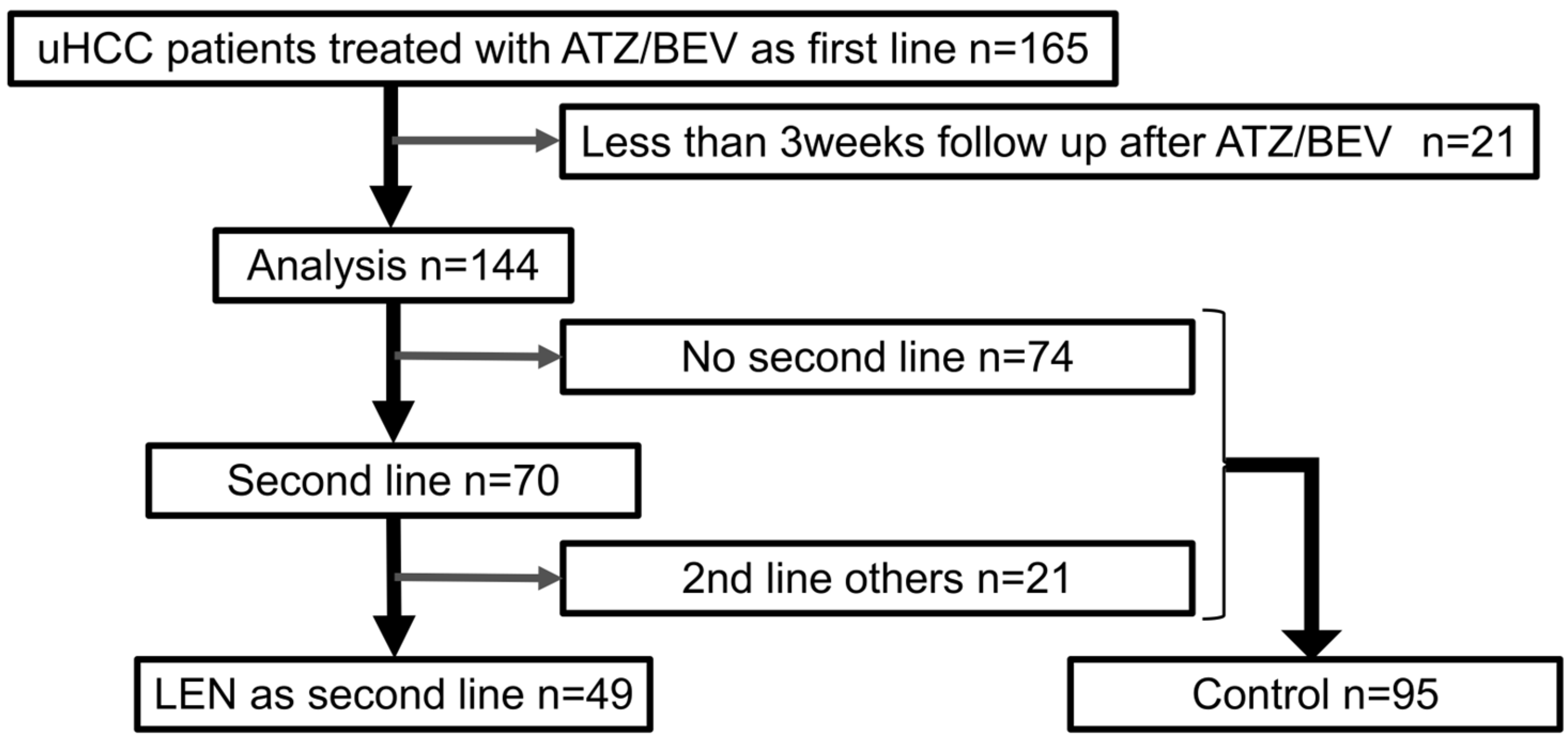
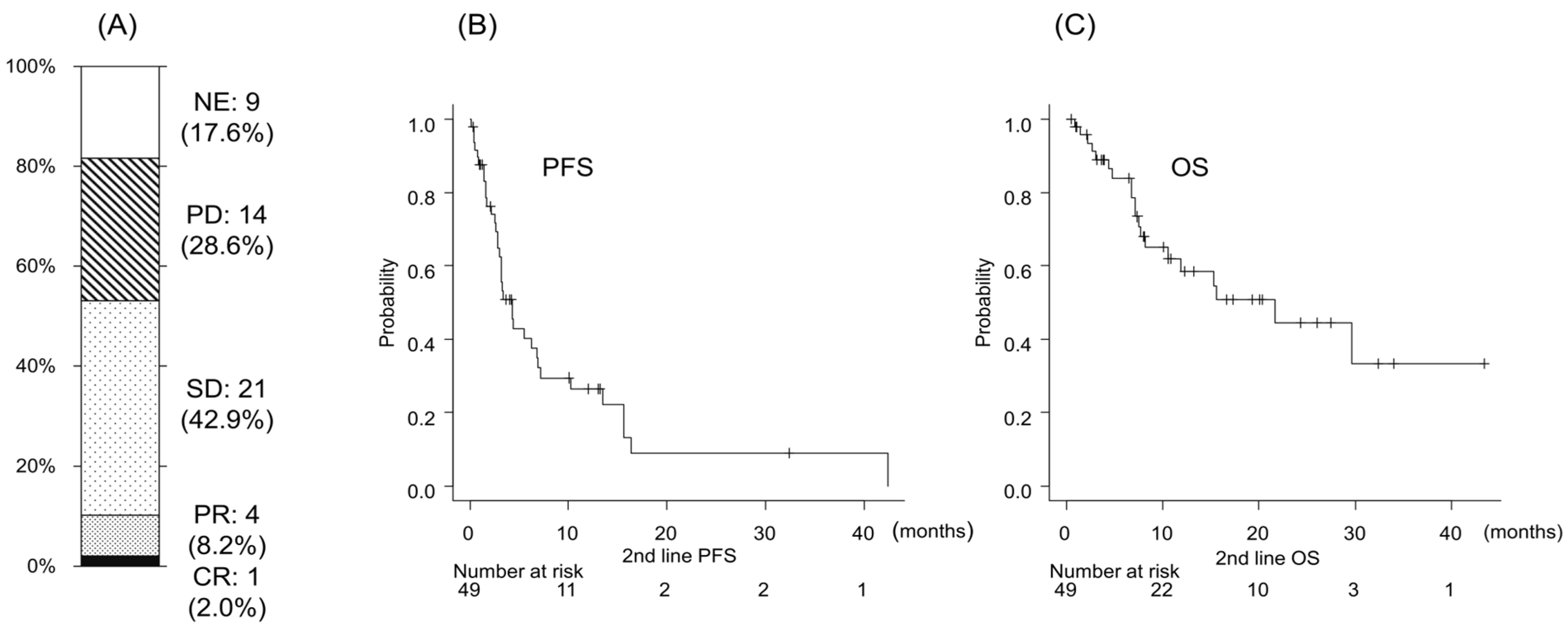
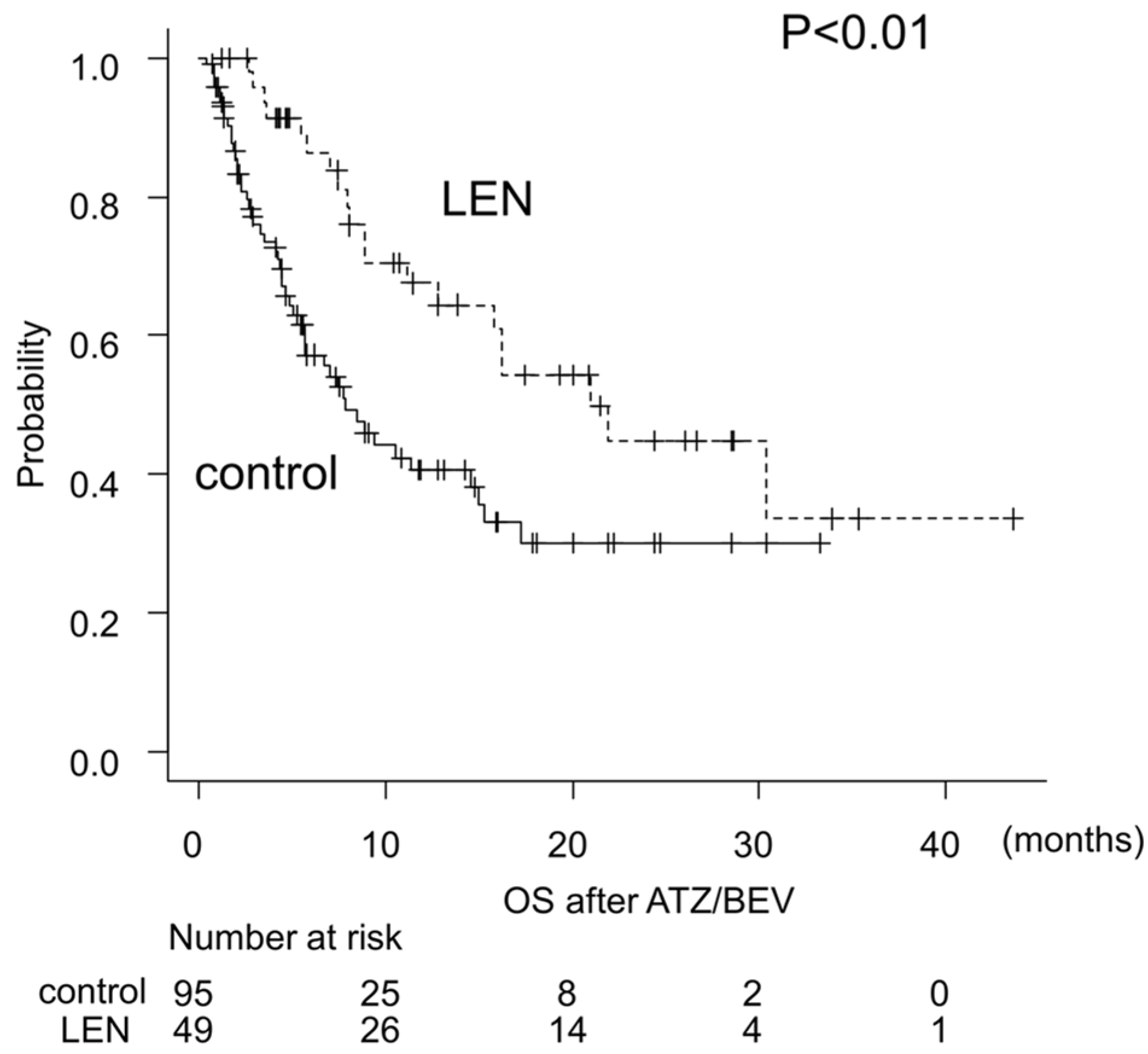
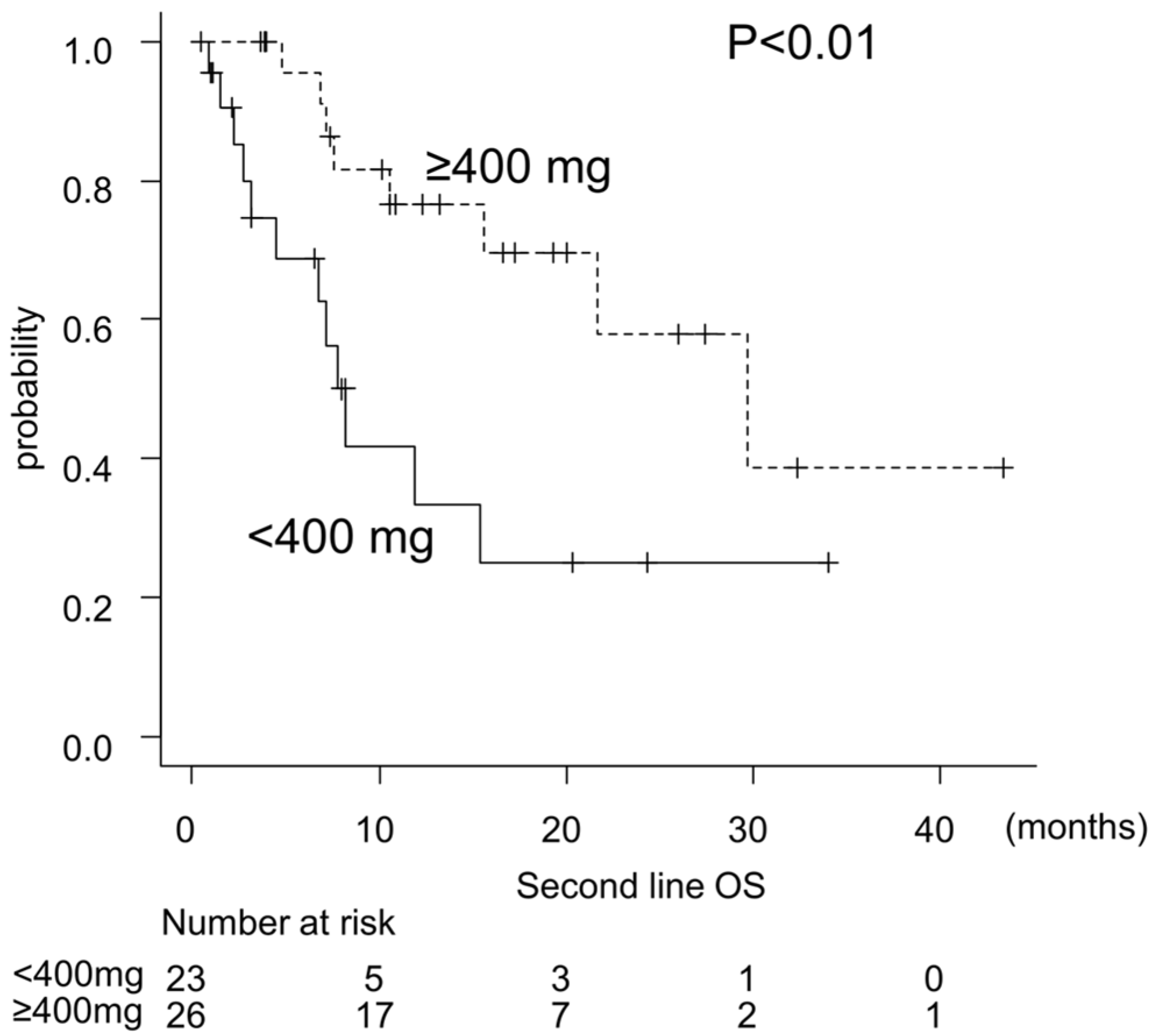
Background: Atezolizumab plus bevacizumab (ATZ/BEV) is widely used as first-line therapy for advanced hepatocellular carcinoma (HCC); however, optimal subsequent treatment after ATZ/BEV failure remains unclear. Methods: Between October 2020 and August 2024, 165 patients with unresectable HCC treated with first-line ATZ/BEV were retrospectively analyzed. After excluding patients with insufficient follow-up, outcomes were compared between those who received lenvatinib (LEN) as second-line therapy (n = 49) and those who did not (n = 95). Results: Median overall survival (OS) was significantly longer in the LEN group than in the non-LEN group (20.9 vs. 8.47 months, p < 0.01). LEN administration was independently associated with improved OS (hazard ratio 0.48), and this benefit remained significant after inverse probability weighting adjustment (adjusted hazard ratio 0.50). Among LEN-treated patients, a lower albumin–bilirubin score before ATZ/BEV and a total LEN dose ≥ 400 mg were independent prognostic factors. Conclusions: Lenvatinib as second-line therapy after ATZ/BEV was associated with improved survival in unresectable HCC. Preservation of liver function and the ability to maintain adequate lenvatinib exposure were associated with favorable outcomes, likely reflecting baseline prognosis and treatment feasibility rather than lenvatinib-specific predictive factors.
Keywords:
lenvatinib; atezolizumab; bevacizumab; second-line; hepatocellular carcinoma