Review

Trop2-Based Antibody–Drug Conjugates: Emerging Strategy and Progress in Triple-Negative Breast Cancer Therapy

1
The First Clinical Medical College, Lanzhou University, No. 199 Donggang West Road, Lanzhou 730000, China
2
Department of Oncology, The First Hospital of Lanzhou University, No. 1 Donggang West Road, Lanzhou 730000, China
*
Author to whom correspondence should be addressed.
Curr. Oncol. 2026, 33(2), 92; https://doi.org/10.3390/curroncol33020092
Submission received: 12 November 2025 / Revised: 16 January 2026 / Accepted: 26 January 2026 / Published: 3 February 2026
(This article belongs to the Section Breast Cancer)

Simple Summary

With the aim of providing evidence-based insights for improved prognosis in TNBC patients, this article conducts a systematic review of the clinical research progress of Trop2-targeted ADCs. Trop2-targeted therapies are set to become a cornerstone of precision medicine for solid tumors, thereby paving the way for superior treatment options for patients.

Abstract

Triple-negative breast cancer (TNBC) accounts for 15–20% of invasive breast cancers and represents a highly heterogeneous, aggressive subtype with poor prognosis and limited treatment options, necessitating the identification of novel therapeutic targets to improve clinical outcomes. Trophoblast cell-surface antigen 2 (Trop2), a calcium signal transducer, is frequently overexpressed in TNBC (approximately 88% of cases) while exhibiting minimal expression in normal tissues. Its overexpression is significantly associated with tumor invasion, metastasis, and unfavorable prognosis. Antibody–drug conjugates (ADCs) targeting Trop2 have demonstrated significant clinical potential. This article systematically reviews the clinical research progress of Trop2-targeted ADCs, aiming to provide evidence-based insights for improving the prognosis of TNBC patients.

1. Introduction

As the most common malignant tumor in women, breast cancer constitutes 32% of new cancer cases according to the 2025 Global Cancer Statistics Report, representing the leading component of female cancer incidence [1]. Among breast cancer subtypes, triple-negative breast cancer (TNBC) is characterized by the lack of established therapeutic targets and insensitivity to endocrine and targeted therapies. This results in limited treatment options and a typically poor prognosis [2,3,4]. It is important to consider immunotherapy and Poly (ADP-ribose) Polymerase inhibitors (PARPi) as standard treatment options, which have been shown to improve the prognosis of TNBC. However, a substantial unmet clinical need remains for the broader TNBC population, particularly for patients with treatment-resistant or recurrent/metastatic disease [5]. This pressing situation underscores the urgent necessity to explore novel therapeutic targets and mechanisms of action.
Antibody–drug conjugates (ADCs), which combine a targeted antibody with a potent cytotoxic payload, offer a paradigm shift in cancer therapy by enabling precise delivery of chemotherapy to tumor cells [6]. Against this backdrop, Trophoblast cell-surface antigen 2 (Trop2), a type I transmembrane glycoprotein belonging to the tumor-associated calcium signal transducer (TACSTD) family, has emerged as an ideal target for ADC development [7,8]. Its suitability as a target rests on several key features: First, Trop2 expression is extremely low in normal tissues but is stably and highly expressed on the membrane of various epithelial-derived malignancies, including TNBC, where its positivity rate reaches approximately 88%. This differential expression provides a favorable therapeutic window. Second, its overexpression correlates with aggressive tumor behavior, metastatic potential, and poor clinical prognosis [6,7,8]. Mechanistically, Trop2 promotes tumor cell proliferation, migration, and invasion by regulating key signaling pathways such as the Phosphatidylinositol 3-Kinase (PI3K)/Protein Kinase B (AKT) and Mitogen-activated Protein Kinase (MAPK) [9,10]. Furthermore, the Trop2-antibody complex undergoes efficient internalization, ensuring the precise delivery and intracellular release of the conjugated cytotoxic payload, thereby completing the “target binding-internalization-killing” cycle that underlies ADC efficacy [11,12]. These intrinsic biological properties collectively form the molecular foundation for the remarkable therapeutic activity of Trop2-targeted ADCs.
To date, Sacituzumab govitecan (SG), as the first Trop2-targeted ADC approved for metastatic TNBC (mTNBC) treatment, has demonstrated significant survival benefits in clinical studies [13]. Additionally, next-generation agents such as datopotamab deruxtecan (Dato-DXd) and sacituzumab tirumotecan (SKB-264) also show promise [14,15]. Notably, differences in their design—including linker chemistry, payload class, and drug-to-antibody ratio (DAR)—directly translate into distinct efficacy and safety profiles, as well as potential resistance mechanisms. Therefore, systematically elucidating their mechanisms of action, critically synthesizing and comparatively analyzing of their clinical data, and a thorough discussion of current challenges and future directions are essential for advancing precision therapy in TNBC. This review aims to provide a comprehensive overview of the current landscape and progress in Trop2-targeted ADCs development for TNBC, with the goal of offering an evidence-based reference to inform both clinical practice and future research.

2. Molecular Structure and Biological Characteristics of Trop-2

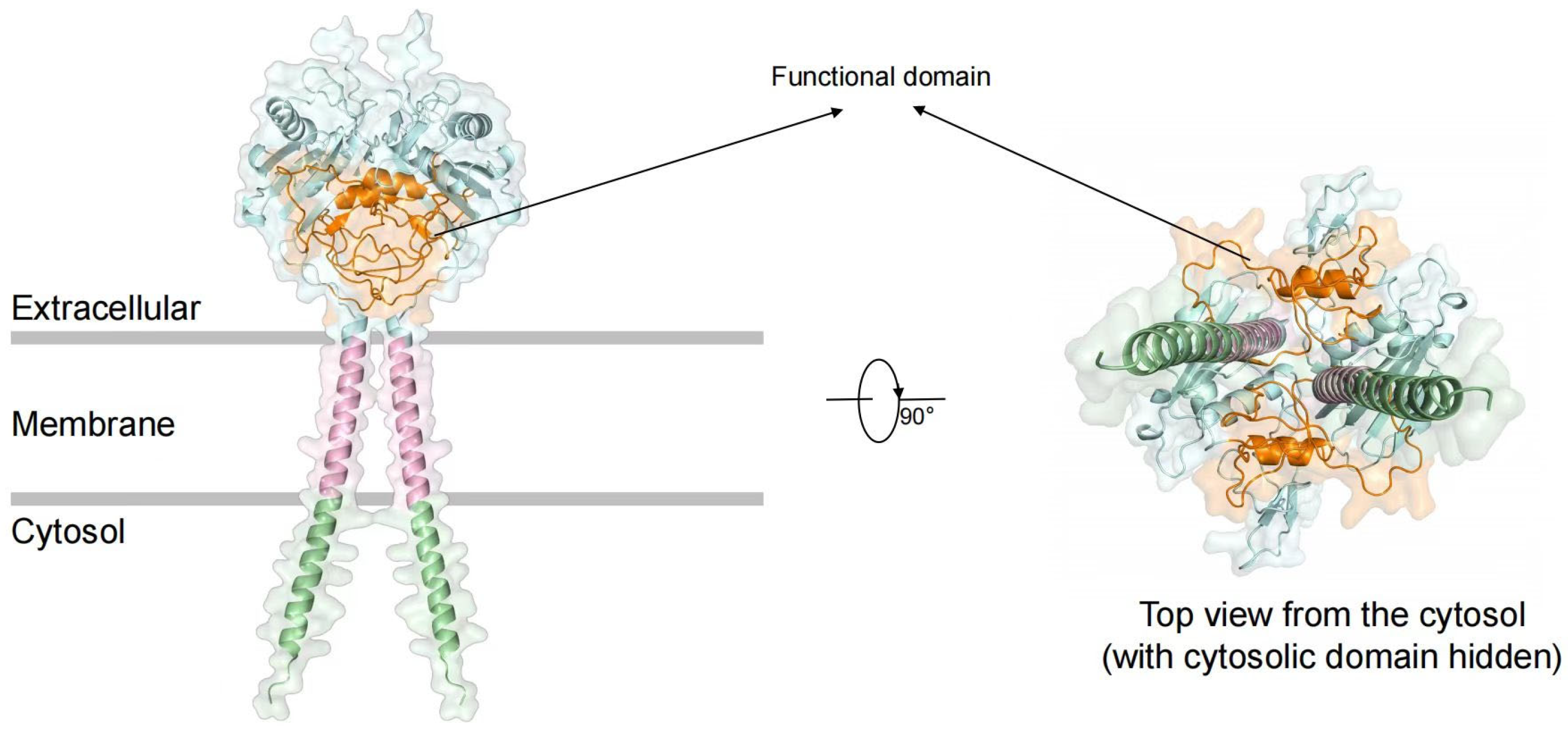
Trop2 is a type I transmembrane glycoprotein encoded by the TACSTD2 gene located on chromosome 1p32.1, and it consists of 323 amino acid residues [16]. The protein comprises three critical structural domains: an extracellular domain (ECD) containing thyroglobulin-like domains and cysteine-rich regions with four N-glycosylation sites; a single-pass transmembrane α-helix (TM); and an intracellular domain (ICD) harboring a conserved PIP2-binding motif (GAPALPPK) that participates in the regulation of signal transduction (Figure 1) [17,18]. Functionally, Trop2 mediates calcium ion signaling to activate both the PI3K/AKT and MAPK pathways, with its unique oligomerization properties significantly enhancing the intensity of signal transduction [19]. Preclinical studies have shown that Trop2-targeted Fab fragments effectively inhibit the growth of TNBC xenograft tumors, exhibiting potent antitumor activity [20]. Clinical investigations reveal that Trop2 expression positivity reaches 88% [Trop2 Immunohistochemistry (IHC) 2+/3+] in patients with mTNBC, and Trop2 serves as an independent prognostic factor significantly associated with poor clinical outcomes (hazard ratio [HR] = 1.010, 95% confidence interval [CI]: 1.001–1.020, p < 0.05) [21]. In contrast, Trop2 is expressed at low levels or shows limited expression in normal tissues (such as normal breast epithelium, intestinal mucosa, and pancreatic ductal epithelium), where it is present only in small amounts within certain differentiated epithelial cells. Consequently, Trop2 has emerged as a promising therapeutic target in TNBC and various other malignancies, with multiple Trop2-targeting ADC candidates currently under clinical investigation.

3. Molecular Mechanisms of Trop2-Targeted ADCs

3.1. Basic Components and Intracellular Delivery

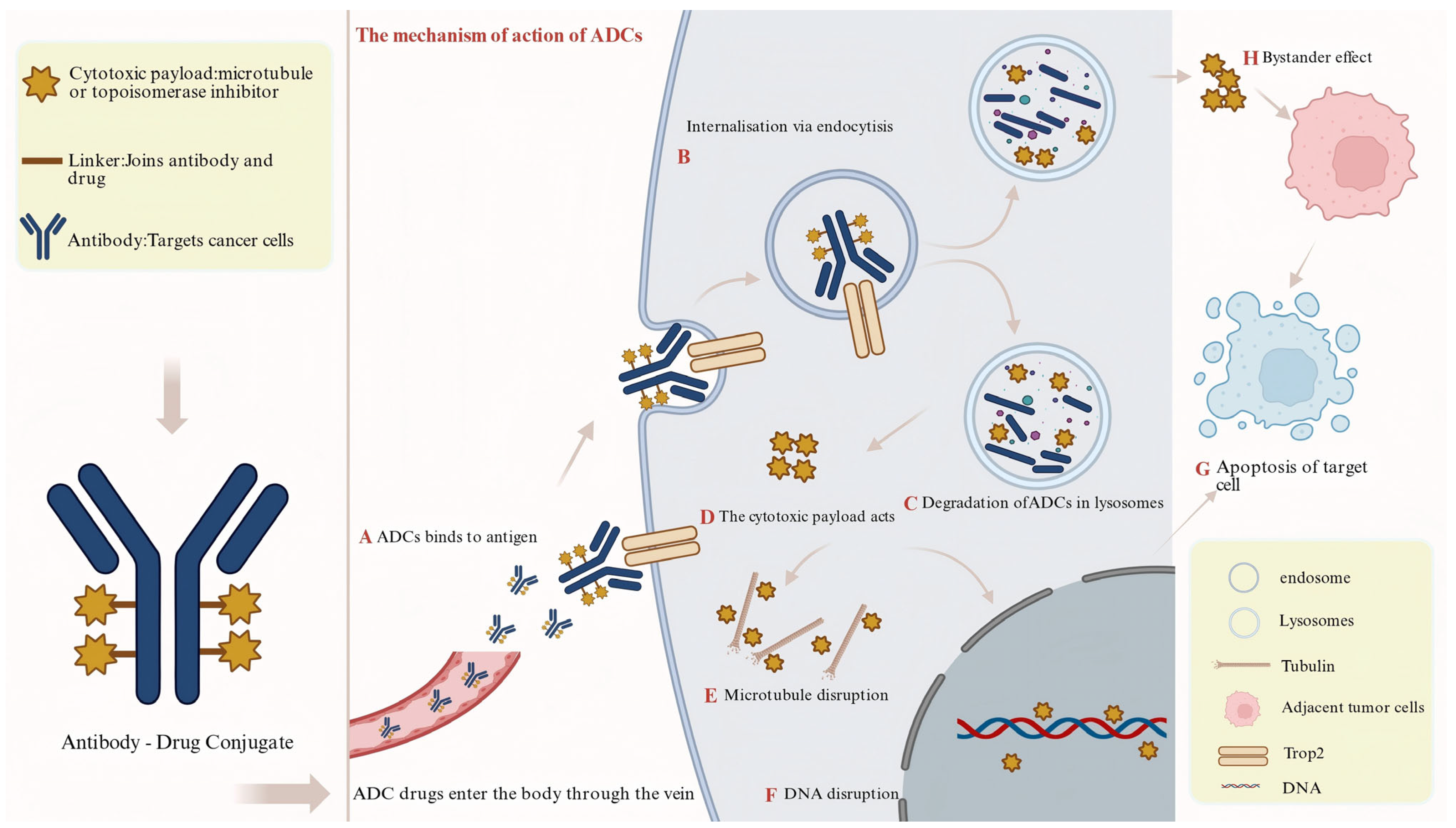
Trop2-targeted ADCs comprise three critical components: a monoclonal antibody that specifically recognizes the ECD of Trop2, a cleavable linker (e.g., the pH-sensitive CL2A or the protease-sensitive Val-Cit sequence), and a highly potent cytotoxic payload (e.g., the topoisomerase I (Top I). inhibitor SN-38 or the tubulin inhibitor DM4) [22,23]. These therapeutic agents enter tumor cells through receptor-mediated endocytosis and follow the endosomal–lysosomal trafficking route. Within the acidic lysosomal compartment, proteases such as cathepsin B cleave the linker, releasing the active toxin. The freed payload then induces DNA damage or disrupts microtubule function, ultimately triggering tumor cell death [17,18,19] (Figure 2).

3.2. Direct Cytotoxic Mechanisms

The released payloads directly induce tumor cell death by interfering with core cellular processes. Based on their molecular targets, the primary mechanisms are categorized as follows.

3.2.1. Mechanism of Topoisomerase I Inhibitors

Top I Inhibitors (e.g., SN-38, DXd, T030): These agents exert cytotoxicity by stabilizing the topoisomerase I-DNA cleavage complex (Top1cc), leading to replication fork collapse, DNA double-strand breaks, and activation of apoptotic pathways [24]. Although sharing this core mechanism, different derivatives (e.g., SN-38, DXd, T030) exhibit distinct pharmacological properties such as membrane permeability and metabolic stability, which directly influence the potency of their bystander effect and clinical toxicity profiles [13,17,25,26] (Table 1).

3.2.2. Mechanism of Tubulin Inhibitors

Tubulin inhibitors, represented by DM4, bind with high affinity to β-tubulin subunits, disrupting microtubule dynamics and causing mitotic spindle defects. This aberrant spindle assembly activates the spindle assembly checkpoint (SAC), arresting the cell cycle at the G2/M phase and eventually inducing cell death [20].

3.3. Indirect Antitumor Effects

3.3.1. Bystander Effect

The Bystander Effect (BE) is crucial for ADCs to overcome tumor antigen heterogeneity. Hydrophobic payloads (e.g., SN-38) released inside target cells can diffuse across the plasma membrane and kill neighboring tumor cells that express low or no Trop2. This mechanism significantly expands the therapeutic reach of ADCs in antigenically heterogeneous tumors [21].

3.3.2. Immunomodulation and Remodeling of the Tumor Microenvironment

ADCs induced tumor cell death can exhibit immunogenic features, resulting in the release of damage-associated molecular patterns (DAMPs) such as High mobility group box-1 protein (HMGB1) and ATP. These signals promote the maturation and activation of APCs (e.g., dendritic cells, marked by upregulation of CD86) and enhance cytokine production (e.g., interferon-gamma [IFN-γ]) by effector CD8+ T cells, thereby stimulating an adaptive anti-tumor immune response [24]. Moreover, by effectively clearing tumor cells, ADCs indirectly suppress cancer-cell-driven pro-survival and immunosuppressive pathways (e.g., NF-κB, Wnt/β-catenin) in the tumor microenvironment (TME) while reducing the secretion of immunosuppressive factors such as interleukin-6 (IL-6) and Vascular Endothelial Growth Factor (VEGF). This remodeling creates a more favorable context for combination therapies, including immune checkpoint inhibitors [27].

3.4. Summary: A Synergistic Multi-Effect Framework

In summary, Trop2-targeted ADCs achieve precise drug delivery and exert a coordinated, multi-layered impact encompassing direct cytotoxicity, the BE, and immunomodulation of the TME. Together, these actions establish an integrated therapeutic framework characterized by precision targeting, broad coverage, and sustained control. This provides the molecular foundation for the profound and durable clinical responses observed in breast cancer treatment. The following sections will explore how these mechanistic principles are translated into the clinical reality of three leading Trop2-targeted ADCs and how their distinct molecular architectures correlate with observed differences in efficacy and safety profiles in TNBC trials.

4. Research Progress of Trop2-ADCs in TNBC Treatment

4.1. Sacituzumab Govitecan (SG): From Mechanistic Innovation to Clinical Validation and Expansion

4.1.1. Design Rationale and Mechanistic Foundation

Sacituzumab govitecan (SG) (Table 2), the first globally approved Trop2-targeted ADC, consists of a humanized IgG1 monoclonal antibody conjugated to SN-38 (the active metabolite of irinotecan) via a hydrolyzable CL2A linker, with a DAR of 7.6 [24]. Its design underpins a dual mechanism of action: intracellular SN-38 release following lysosomal degradation, and extracellular release via cleavage of the pH-sensitive CL2A linker in the acidic TME [27]. This strategy facilitates potent cytotoxic activity and a pronounced bystander effect, contributing to its clinical efficacy in pretreated mTNBC [28].

4.1.2. Pivotal Clinical Efficacy and Safety Data

In the treatment of mTNBC, SG has demonstrated substantial antitumor efficacy with a manageable safety profile. Pivotal data from the Phase I/II IMMU-132-01 trial (NCT01631552) [25] and Phase III ASCENT study (NCT02574455) [29] demonstrated that in patients with mTNBC, SG yield an Objective Response Rate (ORR) of 33%,with a median Progression-free survival (mPFS) of 5.5 months and a median Overall Survival (mOS) of 13.0 months. Compared with treatment of physician’s choice (TPC) chemotherapy (TPC: eribulin, vinorelbine, gemcitabine, or capecitabine), SG significantly improves both mPFS (5.6 months vs. 1.7 months; HR = 0.39, 95% CI: 0.30–0.49) and mOS (12.1 months vs. 6.7 months; HR = 0.48, 95% CI: 0.38–0.59). The U.S. Food and Drug Administration (FDA) and China’s National Medical Products Administration (NMPA) have approved SG for the second-line or later treatment of mTNBC [30,31]. The Phase III ASCENT-03 study (NCT05382299) evaluated SG versus TPC (Paclitaxel, nab-Paclitaxel or Gemcitabine + Carboplatin) as first-line treatment for mTNBC [32]. Results showed SG significantly prolonged mPFS (9.7 vs. 6.9 months; HR = 0.62) and median duration of response (mDOR) (12.2 vs. 7.2 months), although ORRs were comparable (48% vs. 46%). The SG arm had lower rates of treatment discontinuation and dose reduction. Common grade ≥ 3 adverse events (AEs) included neutropenia and diarrhea, indicating manageable tolerability in the first-line treatment.

4.1.3. Correlation of Design with Clinical Profile and Future Directions

The clinical profile of SG stems from its innovative design. Its high DAR and TME-cleavable linker are engineered to maximize intratumoral delivery of SN-38 and its bystander effect, providing the molecular basis for its efficacy [25]. This potent payload delivery also shapes its safety profile, manifesting primarily as neutropenia and diarrhea [30]. Ongoing clinical development is now focused on evaluating SG in combination strategies (e.g., with immune checkpoint inhibitors) and assessing its role in earlier lines of therapy.
Combination strategies have shown promise. The phase II NeoSTAR study (NCT04230109) [33] has established a novel strategy for the neoadjuvant treatment of early-stage TNBC. It demonstrated that after 4 cycles of neoadjuvant SG in combination with pembrolizumab, 34% of patients achieved a pathological complete response (pCR) without receiving any additional chemotherapy. This outcome represents a dual breakthrough: firstly, it marks the first successful extension of SG’s application from the metastatic setting to the early-stage neoadjuvant arena; secondly, the regimen is the first to validate the significant potential of an ADC combined with immunotherapy in early-stage TNBC. The most common treatment-related AEs included nausea (56%), alopecia (52%), and fatigue (46%). In terms of immune combination therapy, The phase III ASCENT-04/KEYNOTE-D19 study (NCT05382286)demonstrated a trend towards improved mPFS with SG plus pembrolizumab versus chemotherapy plus immunotherapy in PD-L1-positive patients (11.2 vs. 7.8 months; HR = 0.65) [34]. Furthermore, the SG combination regimen was associated with lower rates of treatment discontinuation and dose reduction due to adverse events. This phase III study, the first of its kind globally to demonstrate the superiority of an ADC combined with immunotherapy over traditional chemotherapy combined with immunotherapy, was designed to evaluate the efficacy of this combination as first-line treatment in patients with advanced PD-L1-positive (combined positive score [CPS] ≥ 10) TNBC. The MORPHEUS-pan BC study (NCT03424005) [35] demonstrates the Respectable efficacy of SG combined with atezolizumab (a PD-L1 inhibitor) as first-line treatment for PD-L1-positive mTNBC, with an ORR of 76.7% and a significantly prolonged mPFS (12.2 months vs. 5.9 months). Currently, multiple studies are further exploring SG’s combination strategies with different immunotherapies, including the SACI-IO TNBC study (NCT04468061) [36] for PD-L1-negative patients, the ASPRIA study (NCT04434040) [37] for recurrence prevention, and combination regimens for brain metastasis (NCT06238921) [38]. These studies preliminarily confirm the safety and synergistic antitumor activity of SG combined with immunotherapy. In terms of targeted combination therapy, SG followed by the PARPi talazoparib (NCT04039230) [39] achieved an ORR of 30.1% and a mPFS of 7.6 months (vs. 2.3 months). Additionally, the efficacy of SG combined with the CDK4/6 inhibitor trilaciclib (NCT05113966) [40] and the PI3K inhibitor alpelisib (NCT05143229) [41] is still under investigation. In summary, these data collectively indicate that SG, through its unique drug structure and dual mechanism of action, exhibits advantages in both monotherapy and combination therapy for mTNBC, providing an important treatment option for clinical practice.

4.2. Datopotamab Deruxtecan (Dato-DXd): Engineering for an Optimized Therapeutic Index

4.2.1. Design Philosophy and Distinctive Features

As a next-generation Trop2-targeted ADC, Datopotamab deruxtecan (Dato-DXd) (Table 3) is designed with a focus on optimizing the therapeutic window. It employs a moderate DAR of 4 and an enzyme-cleavable glycine-glycine-phenylalanine-glycine (GGFG) tetrapeptide linker, conjugated to the Top 1 inhibitor DXd, which exhibits high membrane permeability. This design is engineered to balance plasma stability with potent intracellular cytotoxicity [42], In vitro studies have confirmed that DXd induces caspase-dependent apoptosis in tumor cells by stabilizing Top1cc, leading to double-strand breaks (DSBs) and replication fork collapse [43].

4.2.2. Clinical Development and Emerging Efficacy Data

Clinical activity has been observed across settings. The Phase I basket trial TROPION-PanTumor01 (NCT03401385) evaluated the efficacy and safety of Dato-DXd in multiple advanced solid tumors [44]. In the TNBC cohort (n = 44)—which included patients who had received a median of three prior lines of therapy—the ORR was 31.8%, the disease control rate (DCR) reached 79.5%, mPFS was 4.4 months, and mOS was 14.3 months [45]. In the Ib/II BEGONIA study (NCT03742102), first-line treatment with Dato-DXd combined with durvalumab (DUR) demonstrated efficacy in the mTNBC cohort (n = 62), characterized by an ORR of 79%, an mPFS of 13.8 months, and an mDOR of 15.5 months [46]. In contrast, the Phase III TROPION-Breast01 trial (NCT05104866) investigated its application in patients with hormone receptor-positive (HR+)/human epidermal growth factor receptor 2-negative (HER2-) breast cancer, Dato-DXd significantly prolonged mPFS compared with the investigator’s choice of chemotherapy (6.9 vs. 4.9 months; HR = 0.63), with a lower incidence of grade ≥ 3 treatment-related AEs (21% vs. 45%) [47]. Based on these data, a marketing application for Dato-DXd has been submitted and accepted for review [48] for the treatment of previously treated patients with HR+/HER2-breast cancer. TROPION-Breast02 (NCT05374512) [49] was a Phase III study evaluating Dato-DXd versus investigator’s choice of chemotherapy (ICC: nab-paclitaxel, capecitabine, eribulin, or carboplatin), which included, as first-line treatment for patients with inoperable locally recurrent or mTNBC who were ineligible for immunotherapy. With a median follow-up of 27.5 months, Dato-DXd demonstrated statistically significant and clinically meaningful improvements in both co-primary endpoints of progression-free survival (PFS) and OS, showing superior mPFS (10.8 months vs. 5.6 months) and mOS (23.7 months vs. 18.7 months) compared to ICC. The safety profile of Dato-DXd was manageable, featuring a longer treatment duration alongside a lower discontinuation rate. These results support Dato-DXd as a new standard first-line treatment for this patient population.

4.2.3. Safety Profile and Ongoing Combination Strategie

The distinct engineering of Dato-DXd correlates with its efficacy and a unique toxicity risk of interstitial lung disease (ILD) requiring vigilant monitoring [13]. Furthermore, research on Dato-DXd-based combination therapy in TNBC is progressively advancing. Multiple clinical trials are currently evaluating the efficacy of Dato-DXd ± DUR in different TNBC treatment settings: The Phase III TROPION-Breast05 trial (NCT06103864) targets patients with advanced TNBC (aTNBC) [50], The Phase III TROPION-Breast04 trial (NCT06112379) explores its use in the neoadjuvant/adjuvant setting for TNBC patients [51], The Phase II TROPION-Breast03 trial (NCT05629585) focuses on TNBC patients who did not achieve a pCR after neoadjuvant therapy [52]. Additionally, a preclinical study (P4-03-23) [53] demonstrated that the combination of trastuzumab deruxtecan (T-DXd) with the PARPi olaparib exhibited synergistic antitumor activity in HER2-low/negative TNBC patient-derived xenograft (PDX) models, providing critical evidence for this combination strategy. collectively, these data indicate the clinical activity of Dato-DXd and warrant further investigation in combination therapies for TNBC.

4.3. Sacituzumab Tirumotecan (SKB-264): Refinement of the First-Generation Blueprint

4.3.1. Optimized Molecular Design

Sacituzumab tirumotecan (SKB-264) (Table 4) is the first Trop2-targeted ADC developed independently in China. It incorporates refinements upon first-generation Trop2 ADCs. It maintains a high DAR of 7.4 while employing a novel, stable linker (TL033) based on a mesyl-sulfonyl-pyrimidine–CL2A–carbonate architecture, together with a proprietary Top I inhibitor payload (KL610023, also known as T030). This design leverages irreversible antibody conjugation via the mesyl-sulfonyl-pyrimidine group to enhance plasma stability [14]. Under the acidic environment of lysosomes and under the action of proteases, T030 is released. T030 exerts its cytotoxic effect by inhibiting Top I, inducing DNA damage, and ultimately leading to tumor cell apoptosis [54].

4.3.2. Clinical Efficacy Across Treatment Lines

The Phase I/II clinical trial (NCT04152499) demonstrated significant efficacy in 59 patients with TNBC [55]. The confirmed ORR was 46.1% and 62.5% in the 4 mg/kg and 5 mg/kg dose groups, respectively. The primary grade 3 treatment-related AEs were neutropenia (23.7%) and anemia (20.3%). The pivotal Phase III OptiTROP-Breast01 study (NCT0537134, n = 263) confirmed that, compared with chemotherapy, SKB-264 significantly prolonged mPFS (6.7 months vs. 2.5 months; HR = 0.31, 95% CI: 0.22–0.45, p < 0.05) and mOS (not reached vs. 9.4 months; HR = 0.53, 95% CI: 0.36–0.78, p < 0.05) [56]. Blinded independent central review showed an ORR of 45.4% in the SKB-264 group (compared to 12.0% in the chemotherapy group), which increased to 52.1% in the Trop2-high expression subgroup. Regarding safety, the primary grade 3 treatment-related AEs were neutropenia (32.3%) and anemia (27.7%). Based on these data, SKB-264 has received three Breakthrough Therapy designations, and its New Drug Application (NDA) has been accepted by the NMPA in 2023 [57], The phase II OptiTROP-Breast05 study (NCT05445908) [58] evaluated SKB-264 as first-line treatment for advanced/metastatic TNBC. With a median follow-up of 18.6 months, the primary efficacy outcomes demonstrated an ORR of 70.7% and a DCR of 92.7%. The mPFS was 13.4 months, with a 12-month PFS rate of 64.6%. Notably, substantial efficacy was maintained in the PD-L1 low-expression subgroup. Regarding safety, grade ≥ 3 treatment-related AEs occurred in 63.4% of patients, predominantly hematological toxicities.

4.3.3. Design-Outcome Correlation and Evolving Therapeutic Role

SKB-264’s design retains a high DAR akin to SG for potency but incorporates optimizations for plasma stability and therapeutic index [17,20,56]. This translates into a safety profile with myelosuppression (neutropenia, anemia) similar to SG but potentially a lower incidence of severe diarrhea. Current research is exploring combination therapy strategies for SKB-264. Two Phase III studies targeting first-line treatment of PD-L1-negative (CPS < 10) advanced or metastatic TNBC (a/mTNBC) are underway: a China-based study (NCT06279364): SKB-264 versus investigator’s choice of chemotherapy; and a global study (NCT06841354): SKB-264 ± pembrolizumab versus chemotherapy. A Phase II clinical study is evaluating the efficacy and safety of SKB-264 ± KL-A167 (a PD-L1 inhibitor) in treatment-naïve patients with locally advanced or metastatic TNBC (LA/mTNBC), further expanding its potential for clinical application.

4.4. Others

Beyond these agents, a pipeline of early-stage Trop2-targeted ADCs represents diversified engineering strategies aimed at addressing the limitations of first-generation constructs, with a primary focus on enhancing the therapeutic index. These efforts bifurcate into two main directions: linker technology optimization (e.g., ESG401 [NCT04892342], which utilizes stable linker technology [DAR = 8] to conjugate SN-38, aiming to reduce off-target toxicity [59]) and the development of novel payloads to overcome resistance (e.g., DB-1305 [NCT05438329], which conjugates the novel Top I inhibitor P1021 to an anti-Trop2 antibody via a cleavable tetrapeptide linker and has demonstrated significant antitumor activity in breast, colon, and lung cancer models [60]; BL-M02D1 [NCT05339685], which employs the camptothecin derivative Ed-04 [61]). The historical discontinuation of PF-06664178 (NCT02122146) due to dose-limiting toxicities underscores the persistent challenge of balancing efficacy and toxicity [62]. Collectively, these candidates exemplify a “design iteration” centered on linker stability, payload innovation, and DAR optimization, all aimed at expanding future therapeutic options for patients with Trop2-positive cancers.

5. Summary and Outlook

5.1. Limitations of Current Evidence and Unmet Needs

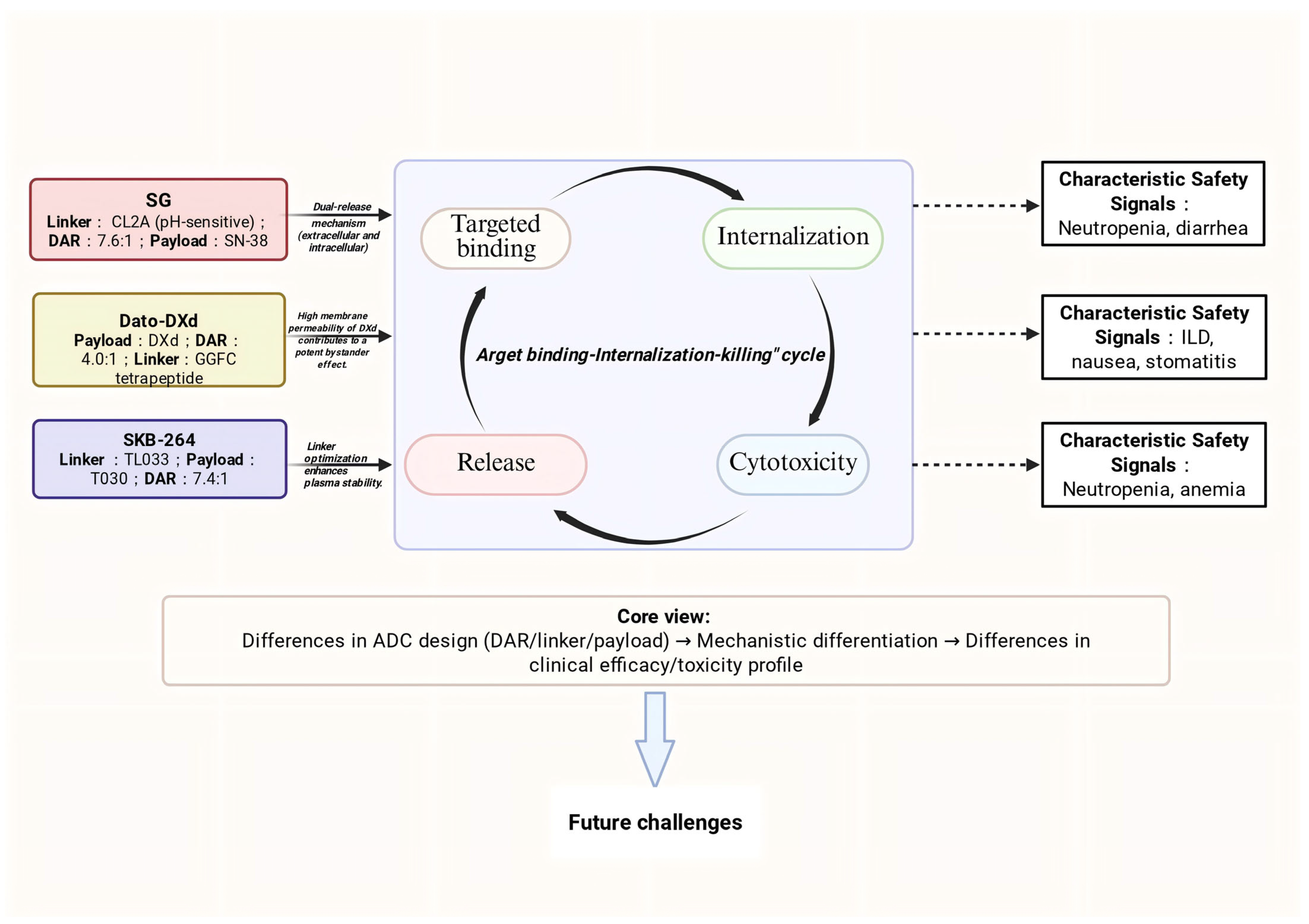
Trop2-targeted ADCs represent a significant breakthrough in solid tumor therapy, As summarized in Figure 3 (Figure 3), the evolution of this field, from Trop2 biology to the design, mechanisms, and clinical outcomes of various ADCs, demonstrates a clear and interconnected trajectory. Currently, first-generation agents such as SG have achieved clinical success in TNBC, while next-generation candidates (e.g., SKB-264 and Dato-DXd) are enhancing therapeutic windows through technological innovations, including linker optimization and the development of novel payloads. Despite the promising outlook, the field of Trop2 ADCs faces a series of scientific and clinical challenges that constitute critical directions for future research and clinical optimization.

5.1.1. Overcoming Resistance Mechanisms

The emerging issue of drug resistance requires in-depth elucidation. The underlying mechanisms are complex and multifaceted, primarily including: (a) Target-related mechanisms: such as spatial heterogeneity in Trop2 expression or genetic mutations (e.g., T256R), which can prevent effective ADC binding or internalization [63]; (b) Intracellular trafficking and metabolic barriers: including altered lysosomal pH or dysfunction of transporter proteins (e.g., SLC46A3), hindering the effective release of the payload [64,65]; and (c) Enhanced payload efflux: tumor cells may upregulate drug efflux pumps like ABCG2 and ABCB1 (MDR1), actively reducing the intracellular concentration of the cytotoxic payload. These resistance mechanisms may partly explain the observed clinical phenomena where some patients show primary resistance or subsequently develop progressive disease on ADC therapy [66,67]. Furthermore, the sequential use of different ADCs may lead to cross-resistance due to shared targets or payload mechanisms [68], underscoring the need for careful planning of treatment sequences in clinical practice.

5.1.2. Advancing Predictive Biomarkers

Currently, IHC detection of Trop2 protein remains the primary method for patient selection, yet its clinical application faces significant hurdles: a lack of globally unified scoring standards (antibodies, thresholds), results confounded by tumor spatial heterogeneity, and the inability of static IHC scoring to reflect the dynamic changes in Trop2 expression during treatment or the potential impact of post-translational modifications (e.g., glycosylation) on ADC binding efficiency [69,70]. Although studies such as the OptiTROP-Breast01 trial for SKB-264 suggest that high Trop2 expression may be associated with a better ORR [56], static IHC scoring alone remains insufficient for precise individual outcome prediction. Future efforts must focus on developing standardized detection methods, integrating multi-region biopsies or liquid biopsies (e.g., dynamic circulating tumor DNA (ctDNA) monitoring) [71], and exploring evaluation systems that assess the functional status of Trop2—not merely its expression level—for more precise patient stratification.

5.1.3. Managing Differentiated Safety Profiles

As evidenced by the clinical trial data in Section 4, different Trop2 ADCs possess characteristic safety profiles that directly influence clinical management. The phase III ASCENT trial for SG reported grade ≥ 3 neutropenia and diarrhea as predominant toxicities [29]. Clinical data for Dato-DXd warrant special vigilance for the risk of ILD [72,73]. The OptiTROP-Breast01 study for SKB-264 reported significant incidences of grade ≥ 3 neutropenia and anemia [56]. A deep understanding of these differentiated toxicities and the establishment of targeted prevention and management protocols are therefore fundamental. For SG, the most common grade ≥ 3 AEs are neutropenia and diarrhea; however, real-world studies indicate that prophylactic use of granulocyte colony-stimulating factor (G-CSF) and supportive care can significantly reduce their incidence [74,75]. Dato-DXd requires special vigilance for the risk of ILD, in addition to managing common events like stomatitis, ocular toxicity, and infusion-related reactions. SKB-264 management primarily focuses on hematological toxicities (neutropenia, anemia) and stomatitis. A deep understanding of these differentiated toxicities and the establishment of targeted prevention, monitoring, and intervention protocols are fundamental to ensuring patient safety and treatment tolerability.

5.1.4. Prudent Interpretation of Cross-Trial Data: Analysis of Key Trial Design Differences

The rapid clinical translation of Trop2-targeted ADCs presents several interpretive challenges. Current understanding of the efficacy and safety profiles of SG, Dato-DXd, and SKB-264 is derived from several independent pivotal trials. In the absence of direct head-to-head comparisons, cross-trial interpretation must acknowledge fundamental differences in target population, treatment context, and evaluation framework, which limit direct data comparability.
Key design heterogeneities and limitations include:
Differences in Treatment Stage and Patient Baseline: The pivotal trials enrolled patients at distinct stages of disease, aiming to evaluate each drug’s value in different clinical contexts. For instance, the phase III ASCENT trial for SG primarily focused on refractory mTNBC after ≥2 prior lines of therapy [29], while the TROPION-Breast02 trial for Dato-DXd and the OptiTROP-Breast05 study for SKB-264 evaluated efficacy in the first-line treatment [49,58]. The expected survival and baseline treatment response inherently differ among populations at different treatment lines.
Uncertainty Regarding Optimal Treatment Strategy and Sequencing: As these trials were designed independently and focused on specific lines of therapy, the optimal sequencing of these ADC agents both among themselves and in relation to other standard therapies (e.g., immune checkpoint inhibitors, PARPi) remains a critical and unresolved clinical question [68].
Varying Criteria for Defining Study Populations: Trials employed different biomarkers (e.g., PD-L1) for screening or stratification, meaning they address fundamentally different clinical questions. For example, studies limiting enrollment to PD-L1-positive patients (e.g., The phase III ASCENT-04/KEYNOTE-D19 study) have fundamentally different applicability of their results compared to those without such restrictions [34].
Divergent Contexts for Efficacy Evaluation: The choice of primary endpoint (e.g., PFS versus PFS/OS co-primary) reflects different research objectives. Moreover, the specific composition of the control arm regimen and whether cross-over was permitted significantly influence the interpretation of the magnitude and attribution of survival benefit [49].
Diversity and Methodological Limitations in Study Design: For instance, some trials are underpowered due to limited sample sizes [44,55], which compromises the precision of treatment effect estimates and the detection of rare AEs. Observational studies are prone to selection bias and baseline imbalances, potentially leading to confounding by indication that obscures true efficacy assessments [76]. Furthermore, issues with follow-up adherence contribute to attrition bias, undermining the completeness and reliability of outcome data. Finally, concerns regarding limited external validity (EV) remain, further compounded by the relatively short follow-up in trials of newer agents and the paucity of robust real-world evidence, which together constrain the assessment of long-term outcomes and generalizability [77], as findings derived from controlled trial settings may not be fully generalizable to the broader, more heterogeneous patient populations seen in routine clinical practice.

5.2. Future Therapeutic Strategies and Directions

Confronting tumor heterogeneity and resistance, combination therapy is an inevitable trend. The synergistic effects of SG combined with immune checkpoint inhibitors in both advanced and neoadjuvant settings have been preliminarily validated. Combination strategies of Dato-DXd or SKB-264 with immunotherapy or targeted agents (e.g., PARPi) are also under active exploration. Regarding treatment strategy, network meta-analyses suggest that SG may offer superior monotherapy survival benefits in pretreated aTNBC [78]. Clinical decision-making should comprehensively consider tumor molecular characteristics (e.g., Trop2 expression level and distribution, PD-L1 status), prior treatment history (especially previous chemotherapy and ADC exposure), patient comorbidities, and tolerance to different toxicity profiles to individualize the choice of agent and its timing of application (first-line, second-line, or sequential).
Looking ahead, key directions for advancing the ADC therapeutic landscape in TNBC include:
(1)
Structure-based rational drug design to overcome the current limited understanding of the full-length Trop2 protein activation mechanism and to facilitate the development of more selective next-generation Trop2 ADCs.
(2)
Exploring target diversity beyond Trop2.
Given the high heterogeneity of TNBC, ADCs targeting other tumor-associated antigens are showing promise in early-stage clinical research. Among these, HER2 represents a significant target, with low expression present in approximately 50% of TNBC cases. The novel HER2-targeted ADCs, T-DXd, has demonstrated remarkable progress [79]. T-DXd is composed of trastuzumab linked to the Top I inhibitor DXd via a cleavable linker, with a DAR of approximately 8. The pivotal Phase III DESTINY-BREAST04 trial showed that in previously treated patients with HER2-low advanced breast cancer (including a TNBC subgroup), T-DXd significantly improved PFS and OS compared to chemotherapy, with an ORR exceeding 50%, although its primary AEs were hematologic toxicities [80]. The Phase II DAISY study further confirmed the antitumor activity of T-DXd in patients with HER2-low and HER2-zero expression (including TNBC) [81]. Beyond HER2, explorations targeting other antigens are underway. For instance, patritumab deruxtecan (HER3-DXd) targeting HER3 demonstrated an ORR of 22.6% in a Phase I/II study involving TNBC [82]; agents such as HS-20089 targeting B7-H4 and ladiratuzumab vedotin (LV) targeting LIV-1 have also shown preliminary antitumor activity [83,84]. These explorations may provide new potential options for patients with low Trop2 expression or those unsuitable for Trop2-targeted therapy.
(3)
Developing novel ADC technology platforms, such as bispecific ADCs and prodrug-based ADCs, to overcome resistance and expand the therapeutic window [85].
(4)
Deepening translational research and advancing intelligent clinical trial design: Utilizing patient-derived models and real-world data to elucidate resistance mechanisms and validate novel biomarkers; designing dynamic, biomarker-guided treatment strategies and optimal sequential or combination regimens involving different ADCs (including those with diverse targets).
Through continuous platform optimization, target expansion, and mechanistic exploration, ADC therapies are poised to further solidify their cornerstone role in the precision medicine of TNBC and solid tumors at large, ultimately delivering superior survival outcomes for patients.

6. Conclusions

Trop2-targeted ADCs have emerged as a significant breakthrough in the treatment of TNBC, demonstrating substantial clinical efficacy, particularly in advanced and treatment-resistant patients. Moving forward, their clinical value is expected to be further enhanced through structural optimization, combination strategies, and the development of predictive biomarkers, thereby advancing the field of precision therapy for TNBC.

Author Contributions

X.L. and T.L.; software, T.L.; formal analysis, T.L.; writing—original draft preparation, T.L.; writing—review and editing, T.L. and T.Z.; visualization, T.L.; supervision, Y.D. and X.L. (Xiaotong Li) and Y.L.; project administration, Y.D.; funding acquisition, X.L. (Xiaoling Ling) All authors have read and agreed to the published version of the manuscript.

Funding

This study has been supported in part by Gansu Provincial Department of Science and Technology for Research called “Mechanism Study on the Demethylase FTO-Mediated m6A Modification of E2F1 Promoting the Invasion and Metastasis of Triple-Negative Breast Cancer (No. 23YFFA0035)”.

Data Availability Statement

No new data were created or analyzed in this study. Data sharing is not applicable to this article.

Conflicts of Interest

The authors declare no conflicts of interest. The funders had no role in the design of the study; in the collection, analyses, or interpretation of data; in the writing of the manuscript, or in the decision to publish the results.

References

  1. Siegel, R.L.; Kratzer, T.B.; Giaquinto, A.N.; Sung, H.; Jemal, A. Cancer statistics, 2025. CA A Cancer J. Clin. 2025, 75, 10. [Google Scholar] [CrossRef]
  2. Asleh, K.; Riaz, N.; Nielsen, T.O. Heterogeneity of triple negative breast cancer: Current advances in subtyping and treatment implications. J. Exp. Clin. Cancer Res. 2022, 41, 265. [Google Scholar] [CrossRef]
  3. Foulkes, W.D.; Smith, I.E.; Reis-Filho, J.S. Triple-negative breast cancer. N. Engl. J. Med. 2010, 363, 1938–1948. [Google Scholar] [CrossRef] [PubMed]
  4. Yin, L.; Duan, J.J.; Bian, X.W.; Yu, S.C. Triple-negative breast cancer molecular subtyping and treatment progress. Breast Cancer Res. 2020, 22, 61. [Google Scholar] [CrossRef] [PubMed]
  5. McDougall, A.R.; Tolcos, M.; Hooper, S.B.; Cole, T.J.; Wallace, M.J. Trop2: From development to disease. Dev. Dyn. 2015, 244, 99–109. [Google Scholar] [CrossRef]
  6. Guerra, E.; Trerotola, M.; Tripaldi, R.; Aloisi, A.L.; Simeone, P.; Sacchetti, A.; Relli, V.; D’Amore, A.; La Sorda, R.; Lattanzio, R. Trop-2 induces tumor growth through AKT and determines sensitivity to AKT inhibitors. Clin. Cancer Res. 2016, 22, 4197–4205. [Google Scholar] [CrossRef] [PubMed]
  7. Zhao, W.; Zhu, H.; Zhang, S.; Yong, H.; Wang, W.; Zhou, Y.; Wang, B.; Wen, J.; Qiu, Z.; Ding, G. Trop2 is overexpressed in gastric cancer and predicts poor prognosis. Oncotarget 2015, 7, 6136. [Google Scholar] [CrossRef]
  8. Goldenberg, D.M.; Stein, R.; Sharkey, R.M. The emergence of trophoblast cell-surface antigen 2 (TROP-2) as a novel cancer target. Oncotarget 2018, 9, 28989–29006. [Google Scholar] [CrossRef]
  9. Zhao, W.; Kuai, X.; Zhou, X.; Jia, L.; Wang, J.; Yang, X.; Tian, Z.; Wang, X.; Lv, Q.; Wang, B.; et al. Trop2 is a potential biomarker for the promotion of EMT in human breast cancer. Oncol. Rep. 2018, 40, 759–766. [Google Scholar] [CrossRef]
  10. Li, X.; Teng, S.; Zhang, Y.; Zhang, W.; Zhang, X.; Xu, K.; Yao, H.; Yao, J.; Wang, H.; Liang, X.; et al. Correction: TROP2 promotes proliferation, migration and metastasis of gallbladder cancer cells by regulating PI3K/AKT pathway and inducing EMT. Oncotarget 2019, 10, 6540. [Google Scholar] [CrossRef]
  11. Dumontet, C.; Reichert, J.M.; Senter, P.D.; Lambert, J.M.; Beck, A. Antibody-drug conjugates come of age in oncology. Nat. Rev. Drug Discov. 2023, 22, 641–661. [Google Scholar] [CrossRef]
  12. Tsuchikama, K.; Anami, Y.; Ha, S.Y.Y.; Yamazaki, C.M. Exploring the next generation of antibody-drug conjugates. Nat. Rev. Clin. Oncol. 2024, 21, 203–223. [Google Scholar] [CrossRef]
  13. Bardia, A.; Hurvitz, S.A.; Tolaney, S.M.; Loirat, D.; Punie, K.; Oliveira, M.; Brufsky, A.; Sardesai, S.D.; Kalinsky, K.; Zelnak, A.B. Sacituzumab govitecan in metastatic triple-negative breast cancer. N. Engl. J. Med. 2021, 384, 1529–1541. [Google Scholar] [CrossRef] [PubMed]
  14. Cheng, Y.; Yuan, X.; Tian, Q.; Huang, X.; Chen, Y.; Pu, Y.; Long, H.; Xu, M.; Ji, Y.; Xie, J. Preclinical profiles of SKB264, a novel anti-TROP2 antibody conjugated to topoisomerase inhibitor, demonstrated promising antitumor efficacy compared to IMMU-132. Front. Oncol. 2022, 12, 951589. [Google Scholar] [CrossRef]
  15. Royce, M.; Shah, M.; Zhang, L.; Cheng, J.; Bonner, M.K.; Pegues, M.; Miller, C.P.; Leu, L.; Price, L.S.L.; Qiu, J.; et al. FDA Approval Summary: Datopotamab Deruxtecan-dlnk for Treatment of Patients with Unresectable or Metastatic, HR-Positive, HER2-Negative Breast Cancer. Clin. Cancer Res. 2025, 31, 4405–4411. [Google Scholar] [CrossRef]
  16. Wen, Y.; Ouyang, D.; Zou, Q.; Chen, Q.; Luo, N.; He, H.; Anwar, M.; Yi, W. A literature review of the promising future of TROP2: A potential drug therapy target. Ann. Transl. Med. 2022, 10, 1403. [Google Scholar] [CrossRef]
  17. Cubas, R.; Li, M.; Chen, C.; Yao, Q. Trop2: A possible therapeutic target for late stage epithelial carcinomas. Biochim. Biophys. Acta (BBA)-Rev. Cancer 2009, 1796, 309–314. [Google Scholar] [CrossRef]
  18. Stoyanova, T.; Goldstein, A.S.; Cai, H.; Drake, J.M.; Huang, J.; Witte, O.N. Regulated proteolysis of Trop2 drives epithelial hyperplasia and stem cell self-renewal via β-catenin signaling. Genes Dev. 2012, 26, 2271–2285. [Google Scholar] [CrossRef]
  19. Hu, Y.; Zhu, Y.; Qi, D.; Tang, C.; Zhang, W. Trop2-targeted therapy in breast cancer. Biomark. Res. 2024, 12, 82. [Google Scholar] [CrossRef] [PubMed]
  20. Liu, X.; Deng, J.; Yuan, Y.; Chen, W.; Sun, W.; Wang, Y.; Huang, H.; Liang, B.; Ming, T.; Wen, J. Advances in Trop2-targeted therapy: Novel agents and opportunities beyond breast cancer. Pharmacol. Ther. 2022, 239, 108296. [Google Scholar] [CrossRef] [PubMed]
  21. Jeon, Y.; Jo, U.; Hong, J.; Gong, G.; Lee, H.J. Trophoblast cell-surface antigen 2 (TROP2) expression in triple-negative breast cancer. BMC Cancer 2022, 22, 1014. [Google Scholar] [CrossRef]
  22. Jiang, X.; Nik Nabil, W.N.; Ze, Y.; Dai, R.; Xi, Z.; Xu, H. Unlocking Natural Potential: Antibody-Drug Conjugates with Naturally Derived Payloads for Cancer Therapy. Phytother. Res. 2025, 39, 789–874. [Google Scholar] [CrossRef]
  23. Adair, J.R.; Howard, P.W.; Hartley, J.A.; Williams, D.G.; Chester, K.A. Antibody-drug conjugates—A perfect synergy. Expert. Opin. Biol. Ther. 2012, 12, 1191–1206. [Google Scholar] [CrossRef] [PubMed]
  24. Goldenberg, D.M.; Cardillo, T.M.; Govindan, S.V.; Rossi, E.A.; Sharkey, R.M. Trop-2 is a novel target for solid cancer therapy with sacituzumab govitecan (IMMU-132), an antibody-drug conjugate (ADC). Oncotarget 2015, 6, 22496. [Google Scholar] [CrossRef] [PubMed]
  25. Bardia, A.; Messersmith, W.; Kio, E.; Berlin, J.; Vahdat, L.; Masters, G.; Moroose, R.; Santin, A.; Kalinsky, K.; Picozzi, V. Sacituzumab govitecan, a Trop-2-directed antibody-drug conjugate, for patients with epithelial cancer: Final safety and efficacy results from the phase I/II IMMU-132-01 basket trial. Ann. Oncol. 2021, 32, 746–756. [Google Scholar] [CrossRef] [PubMed]
  26. Tong, Y.; Fan, X.; Liu, H.; Liang, T. Advances in Trop-2 targeted antibody-drug conjugates for breast cancer: Mechanisms, clinical applications, and future directions. Front. Immunol. 2024, 15, 1495675. [Google Scholar] [CrossRef]
  27. Tolaney, S.M.; Cardillo, T.M.; Chou, C.C.; Dornan, C.; Faris, M. The Mode of Action and Clinical Outcomes of Sacituzumab Govitecan in Solid Tumors. Clin. Cancer Res. 2025, 31, 1390–1399. [Google Scholar] [CrossRef]
  28. Birrer, M.J.; Moore, K.N.; Betella, I.; Bates, R.C. Antibody-Drug Conjugate-Based Therapeutics: State of the Science. J. Natl. Cancer Inst. 2019, 111, 538–549. [Google Scholar] [CrossRef]
  29. Bardia, A.; Tolaney, S.M.; Punie, K.; Loirat, D.; Oliveira, M.; Kalinsky, K.; Zelnak, A.; Aftimos, P.; Dalenc, F.; Sardesai, S.; et al. Biomarker analyses in the phase III ASCENT study of sacituzumab govitecan versus chemotherapy in patients with metastatic triple-negative breast cancer. Ann. Oncol. 2021, 32, 1148–1156. [Google Scholar] [CrossRef]
  30. Michaleas, S.; Oliver, A.M.; Mueller-Berghaus, J.; Sarac, S.; van der Elst, M.; Müller-Egert, S.; Zander, H.; Enzmann, H.; Pignatti, F. The European Medicines Agency review of sacituzumab govitecan for the treatment of triple-negative breast cancer. ESMO Open 2022, 7, 100497. [Google Scholar] [CrossRef]
  31. Wang, L.; Liu, L.; Zhang, Z.; Li, F.; Ruan, Y.; He, Y.; Huang, J.; Zheng, X. Cost-effectiveness of sacituzumab govitecan versus single-agent chemotherapy for patients with metastatic triple-negative breast cancer in China. Clin. Breast Cancer 2024, 24, e545–e553.e6. [Google Scholar] [CrossRef]
  32. Cortés, J.; Bardia, A.; Punie, K.; Barrios, C.; Hurvitz, S.; Schneeweiss, A.; Sohn, J.; Tokunaga, E.; Brufsky, A.; Park, Y. LBA20 Primary results from ASCENT-03: A randomized phase III study of sacituzumab govitecan (SG) vs chemotherapy (chemo) in patients (pts) with previously untreated advanced triple-negative breast cancer (TNBC) who are unable to receive PD-(L) 1 inhibitors (PD-[L] 1i). Ann. Oncol. 2025, 36, S1680–S1681. [Google Scholar]
  33. Abelman, R.O.; McLaughlin, S.; Fell, G.G.; Garrido-Castro, A.C.; Lynce, F.; Trippa, L.; Poorvu, P.D.; Rosenstock, A.S.; Medford, A.J.; Wander, S.A. A phase 2 study of response-guided neoadjuvant sacituzumab govitecan and pembrolizumab (SG/P) in patients with early-stage triple-negative breast cancer: Results from the NeoSTAR trial. J. Clin. Oncol. 2025, 43, 511. [Google Scholar] [CrossRef]
  34. Tolaney, S.; De Azambuja, E.; Emens, L.; Loi, S.; Pan, W.; Huang, J.; Sun, S.; Lai, C.; Schmid, P. 276TiP ASCENT-04/KEYNOTE-D19: Phase III study of sacituzumab govitecan (SG) plus pembrolizumab (pembro) vs treatment of physician’s choice (TPC) plus pembro in first-line (1L) programmed death-ligand 1-positive (PD-L1+) metastatic triple-negative breast cancer (mTNBC). Ann. Oncol. 2022, 33, S664–S665. [Google Scholar]
  35. Schmid, P.; Loi, S.; De la Cruz Merino, L.; Yerushalmi, R.; Im, S.; Sonnenblick, A.; Garcia, M.M.; Candilejo, I.M.; Kennedy, L.; Griffiths, K. 181O Interim analysis (IA) of the atezolizumab (atezo)+ sacituzumab govitecan (SG) arm in patients (pts) with triple-negative breast cancer (TNBC) in MORPHEUS-pan BC: A phase Ib/II study of multiple treatment (tx) combinations in pts with locally advanced/metastatic BC (LA/mBC). ESMO Open 2024, 9, 103203. [Google Scholar]
  36. Garrido-Castro, A.C.; Keenan, T.E.; Li, T.; Lange, P.; Callahan, C.; Guerriero, J.; Tayob, N.; Anderson, L.; Yam, C.; Daniel, B.R. Saci-IO TNBC: Randomized phase II trial of sacituzumab govitecan (SG)+/-pembrolizumab in PD-L1–metastatic triple-negative breast cancer (mTNBC). J. Clin. Oncol. 2021, 39, TPS1106. [Google Scholar] [CrossRef]
  37. Tarantino, P.; Tolaney, S. Challenging immune exhaustion in early recurrent triple-negative breast cancer: Pitfalls and hopes. Ann. Oncol. 2024, 35, 579–581. [Google Scholar] [CrossRef] [PubMed]
  38. Ahmed, K.A.; Kim, Y.; DeJesus, M.; Oliver, D.E.; Mills, M.; Nair, R.; Armaghani, A.J.; Costa, R.L.; Lee, K.T.; Loftus, L.S. Phase I/II study of stereotactic radiation and sacituzumab govitecan with zimberelimab in the management of metastatic triple negative breast cancer with brain metastases. J. Clin. Oncol. 2024, 42, TPS1140. [Google Scholar] [CrossRef]
  39. Bardia, A.; Sun, S.; Thimmiah, N.; Coates, J.T.; Wu, B.; Abelman, R.O.; Spring, L.; Moy, B.; Ryan, P.; Melkonyan, M.N. Antibody–drug conjugate sacituzumab govitecan enables a sequential TOP1/PARP inhibitor therapy strategy in patients with breast cancer. Clin. Cancer Res. 2024, 30, 2917–2924. [Google Scholar] [CrossRef]
  40. Seneviratne, L.; Harnden, K.; Mardones, M.; Blau, S.; Gillespie-Twardy, A.; Danso, M.; Berz, D.; Guaqueta, D.; Schwerkoske, J.; O’Shaughnessy, J. 201P trilaciclib combined with sacituzumab govitecan (SG) in metastatic triple-negative breast cancer (mTNBC): Preliminary phase II results. ESMO Open 2023, 8, 101390. [Google Scholar] [CrossRef]
  41. Sharma, P.; Heldstab, J.; Yoder, R.; Staley, J.M.; Fernandez, I.; Heinrich, A.; Cupp, C.; Owens, H.; Sear, B.; Beaman, S. Results of a phase I study of alpelisib and sacituzumab govitecan (SG) in patients with HER2-negative metastatic breast cancer (MBC). J. Clin. Oncol. 2025, 43, 1094. [Google Scholar] [CrossRef]
  42. Nelson, B.E.; Meric-Bernstam, F. Leveraging TROP2 Antibody-Drug Conjugates in Solid Tumors. Annu. Rev. Med. 2024, 75, 31–48. [Google Scholar] [CrossRef]
  43. Okajima, D.; Yasuda, S.; Maejima, T.; Karibe, T.; Sakurai, K.; Aida, T.; Toki, T.; Yamaguchi, J.; Kitamura, M.; Kamei, R.; et al. Datopotamab Deruxtecan, a Novel TROP2-directed Antibody-drug Conjugate, Demonstrates Potent Antitumor Activity by Efficient Drug Delivery to Tumor Cells. Mol. Cancer Ther. 2021, 20, 2329–2340. [Google Scholar] [CrossRef] [PubMed]
  44. Shimizu, T.; Sands, J.; Yoh, K.; Spira, A.; Garon, E.B.; Kitazono, S.; Johnson, M.L.; Meric-Bernstam, F.; Tolcher, A.W.; Yamamoto, N.; et al. First-in-Human, Phase I Dose-Escalation and Dose-Expansion Study of Trophoblast Cell-Surface Antigen 2-Directed Antibody-Drug Conjugate Datopotamab Deruxtecan in Non-Small-Cell Lung Cancer: TROPION-PanTumor01. J. Clin. Oncol. 2023, 41, 4678–4687. [Google Scholar] [CrossRef] [PubMed]
  45. Bardia, A.; Krop, I.E.; Kogawa, T.; Juric, D.; Tolcher, A.W.; Hamilton, E.P.; Mukohara, T.; Lisberg, A.; Shimizu, T.; Spira, A.I.; et al. Datopotamab Deruxtecan in Advanced or Metastatic HR+/HER2- and Triple-Negative Breast Cancer: Results From the Phase I TROPION-PanTumor01 Study. J. Clin. Oncol. 2024, 42, 2281–2294. [Google Scholar] [CrossRef] [PubMed]
  46. Schmid, P.; Wysocki, P.; Ma, C.; Park, Y.; Fernandes, R.; Lord, S.; Baird, R.; Prady, C.; Jung, K.; Asselah, J. 379MO Datopotamab deruxtecan (Dato-DXd)+ durvalumab (D) as first-line (1L) treatment for unresectable locally advanced/metastatic triple-negative breast cancer (a/mTNBC): Updated results from BEGONIA, a phase Ib/II study. Ann. Oncol. 2023, 34, S337. [Google Scholar] [CrossRef]
  47. Bardia, A.; Jhaveri, K.; Im, S.-A.; Pernas, S.; De Laurentiis, M.; Wang, S.; Martínez Jañez, N.; Borges, G.; Cescon, D.W.; Hattori, M. Datopotamab deruxtecan versus chemotherapy in previously treated inoperable/metastatic hormone receptor–positive human epidermal growth factor receptor 2–negative breast cancer: Primary results from TROPION-Breast01. J. Clin. Oncol. 2025, 43, 285–296. [Google Scholar] [CrossRef]
  48. FDA. FDA Approves Datopotamab Deruxtecan-Dlnk for Unresectable or Metastatic, HR-Positive, HER2-Negative Breast Cancer. Available online: https://www.fda.gov/drugs/resources-information-approved-drugs/fda-approves-datopotamab-deruxtecan-dlnk-unresectable-or-metastatic-hr-positive-her2-negative-breast (accessed on 30 July 2025).
  49. Dent, R.; Shao, Z.; Schmid, P.; Cortés, J.; Cescon, D.; Saji, S.; Jung, K.; Bachelot, T.; Wang, S.; Ramirez, E.M. LBA21 Datopotamab deruxtecan (Dato-DXd) vs chemotherapy (CT) in patients (pts) with locally recurrent inoperable or metastatic triple-negative breast cancer (TNBC) who are not candidates for PD-(L) 1 inhibitor therapy: Primary results from the randomised, phase 3 TROPION-Breast02 trial. Ann. Oncol. 2025, 36, S1681–S1682. [Google Scholar]
  50. Schmid, P.; Oliveira, M.; O’Shaughnessy, J.; Cristofanilli, M.; Graff, S.; Im, S.; Loi, S.; Saji, S.; Wang, S.; Cescon, D. 261TiP TROPION-Breast05: Phase (Ph) III study of datopotamab deruxtecan (Dato-DXd)±durvalumab (D) vs chemotherapy (CT)+ pembrolizumab (pembro) in patients (pts) with PD-L1+ locally recurrent inoperable or metastatic triple-negative breast cancer (TNBC). ESMO Open 2024, 9, 103282. [Google Scholar] [CrossRef]
  51. Loibl, S.; Tolaney, S.M.; Schmid, P.; Pistilli, B.; Dent, R.A.; Asslelah, J.; Liu, Q.; Meisel, J.L.; Niikura, N.; Park, Y.H. TROPION-Breast04: A phase 3 study of neoadjuvant datopotamab deruxtecan (Dato-DXd)+ durvalumab followed by adjuvant durvalumab vs standard of care in treatment-naïve early-stage triple negative and HR-low/HER2–breast cancer. Ther. Adv. Med. Oncol. 2025, 17, 1–15. [Google Scholar]
  52. Bardia, A.; Pusztai, L.; Albain, K.; Ciruelos, E.M.; Im, S.-A.; Hershman, D.; Kalinsky, K.; Isaacs, C.; Loirat, D.; Testa, L. TROPION-Breast03: A randomized phase III global trial of datopotamab deruxtecan±durvalumab in patients with triple-negative breast cancer and residual invasive disease at surgical resection after neoadjuvant therapy. Ther. Adv. Med. Oncol. 2024, 16, 17588359241248336. [Google Scholar] [CrossRef]
  53. Gonzalez-Gonzalez, A.; Guo, Z.; Meroni, A.; Cybulla, E.; Hoog, J.; Vindigni, A.; Ma, C. Abstract P2-17-03: Preclinical study of trastuzumab deruxtecan (T-Dxd; DS-8201a) in combination with DNA damage response pathway inhibitors in HER2-low/hormone receptor negative breast cancer patient-derived xenograft models. Cancer Res. 2023, 83, P2-17-03. [Google Scholar] [CrossRef]
  54. Liu, Y.; Lian, W.; Zhao, X.; Diao, Y.; Xu, J.; Xiao, L.; Qing, Y.; Xue, T.; Wang, J. SKB264 ADC: A first-in-human study of SKB264 in patients with locally advanced unresectable/metastatic solid tumors who are refractory to available standard therapies. J. Clin. Oncol. 2020, 38, TPS3659. [Google Scholar] [CrossRef]
  55. Yin, Y.; Wu, X.; Ouyang, Q.; Yan, M.; Song, L.; Liu, Y.; Tong, Z.; Geng, C.; Wang, Y.; Yu, G. Abstract OT1-03-02: Efficacy and safety of SKB264 for previously treated metastatic triple negative breast cancer in Phase 2 study. Cancer Res. 2023, 83, OT1-03-02. [Google Scholar] [CrossRef]
  56. Yin, Y.; Fan, Y.; Ouyang, Q.; Song, L.; Wang, X.; Li, W.; Li, M.; Yan, X.; Wang, S.; Sun, T. Sacituzumab tirumotecan in previously treated metastatic triple-negative breast cancer: A randomized phase 3 trial. Nat. Med. 2025, 31, 1969–1975. [Google Scholar] [CrossRef]
  57. Crescioli, S.; Kaplon, H.; Wang, L.; Visweswaraiah, J.; Kapoor, V.; Reichert, J.M. Antibodies to watch in 2025. In Proceedings of the Mabs 2025, Detroit, MI, USA, 19 May 2025; p. 2443538. [Google Scholar]
  58. Yin, Y.; Ouyang, Q.; Yan, M.; Zhang, J.; Song, L.; Li, W.; Gu, Y.; Liu, X.; Wang, J.; Wang, X. Sacituzumab tirumotecan (sac-TMT) as first-line treatment for unresectable locally advanced/metastatic triple-negative breast cancer (a/mTNBC): Initial results from the phase II OptiTROP-Breast05 study. J. Clin. Oncol. 2025, 43, 1019. [Google Scholar] [CrossRef]
  59. Wang, J.; Tong, Z.; Tan, Y.; Shi, Y.; Wu, Y.; Zhou, Q.; Xing, X.; Chen, X.; Qiu, F.; Ma, F. Phase 1a study of ESG401, a Trop2 antibody-drug conjugate, in patients with locally advanced/metastatic solid tumors. Cell Rep. Med. 2024, 5, 101707. [Google Scholar] [CrossRef]
  60. Zhang, Y.; Li, B.; Shi, R.; Qiu, Y.; Zhong, C. The Trop-2-targeting antibody drug conjugate DB-1305 has higher antitumor activity and a potentially better safety profile compared with DS-1062. Eur. J. Cancer 2022, 174, S91–S92. [Google Scholar] [CrossRef]
  61. Zhang, Y.; Wan, W.; Zhuo, S.; Chen, L.; Li, G.; Zhao, S.; Khalili, J.S.; Xiao, S.; Yan, Y.; Shen, X. BL-M02D1, a novel Trop2-targeting ADC, demonstrates robust anti-tumor efficacy in preclinical evaluation. Cancer Res. 2023, 83, 2644. [Google Scholar] [CrossRef]
  62. Zaman, S.; Jadid, H.; Denson, A.C.; Gray, J.E. Targeting Trop-2 in solid tumors: Future prospects. OncoTargets Ther. 2019, 12, 1781–1790. [Google Scholar] [CrossRef]
  63. Coates, J.T.; Sun, S.; Leshchiner, I.; Thimmiah, N.; Martin, E.E.; McLoughlin, D.; Danysh, B.P.; Slowik, K.; Jacobs, R.A.; Rhrissorrakrai, K. Parallel genomic alterations of antigen and payload targets mediate polyclonal acquired clinical resistance to sacituzumab govitecan in triple-negative breast cancer. Cancer Discov. 2021, 11, 2436–2445. [Google Scholar] [CrossRef]
  64. Valle, I.; Grinda, T.; Antonuzzo, L.; Pistilli, B. Antibody–drug conjugates in breast cancer: Mechanisms of resistance and future therapeutic perspectives. npj Breast Cancer 2025, 11, 102. [Google Scholar] [CrossRef] [PubMed]
  65. Zippelius, A.; Tolaney, S.M.; Tarantino, P.; Balthasar, J.P.; Thurber, G.M. Unveiling the molecular and immunological drivers of antibody–drug conjugates in cancer treatment. Nat. Rev. Cancer 2025, 25, 925–944. [Google Scholar] [CrossRef] [PubMed]
  66. Khoury, R.; Saleh, K.; Khalife, N.; Saleh, M.; Chahine, C.; Ibrahim, R.; Lecesne, A. Mechanisms of Resistance to Antibody-Drug Conjugates. Int. J. Mol. Sci. 2023, 24, 9674. [Google Scholar] [CrossRef]
  67. Chen, Y.F.; Xu, Y.Y.; Shao, Z.M.; Yu, K.D. Resistance to antibody-drug conjugates in breast cancer: Mechanisms and solutions. Cancer Commun. 2023, 43, 297–337. [Google Scholar] [CrossRef]
  68. Abelman, R.O.; Spring, L.; Fell, G.G.; Ryan, P.; Vidula, N.; Medford, A.J.; Shin, J.; Abraham, E.; Wander, S.A.; Isakoff, S.J. Sequential use of antibody-drug conjugate after antibody-drug conjugate for patients with metastatic breast cancer: ADC after ADC (A3) study. J. Clin. Oncol. 2023, 41, 1022. [Google Scholar] [CrossRef]
  69. Sung, M.S.; Wilson, M.; Vonficht, D.; Meier, A.; Rane, C.; Dunlop, C.; Patel, G.; Przybyla, A.; Wallez, Y.; Liu, X. The role of TROP2 in the MoA of Dato-DXd and how it underpins the biologic rationale of the novel AI-guided biomarker TROP2 normalized membrane ratio. Cancer Res. 2025, 85, 7149. [Google Scholar] [CrossRef]
  70. Cursano, G.; Concardi, A.; Ivanova, M.; Frascarelli, C.; Mane, E.; Mangione, E.; Santaguida, S.; Tosoni, D.; Pece, S.; Marra, A. Inter-Assay Variability of TROP2 Immunohistochemistry in Triple-Negative Breast Cancer: G. Cursano et al. Mol. Diagn. Ther. 2025, 29, 849–857. [Google Scholar] [CrossRef]
  71. Morganti, S.; Kusmick, R.; Hughes, M.; Brasó-Maristany, F.; Smith, K.; Tarantino, P.; Vega-Leon, R.; Grinda, T.; Pardo, F.; Dvir, K. Survival outcomes and the role of DNADX ctDNA testing in patients treated with sacituzumab govitecan for metastatic breast cancer. ESMO Open 2025, 10, 105828. [Google Scholar] [CrossRef]
  72. Heist, R.S.; Sands, J.; Bardia, A.; Shimizu, T.; Lisberg, A.; Krop, I.; Yamamoto, N.; Kogawa, T.; Al-Hashimi, S.; Fung, S.S. Clinical management, monitoring, and prophylaxis of adverse events of special interest associated with datopotamab deruxtecan. Cancer Treat. Rev. 2024, 125, 102720. [Google Scholar] [CrossRef] [PubMed]
  73. Koganemaru, S.; Fuchigami, H.; Morizono, C.; Shinohara, H.; Kuboki, Y.; Furuuchi, K.; Uenaka, T.; Doi, T.; Yasunaga, M. Potential Mechanisms of Interstitial Lung Disease Induced by Antibody–Drug Conjugates Based on Quantitative Analysis of Drug Distribution. Mol. Cancer Ther. 2025, 24, 242–250. [Google Scholar] [CrossRef]
  74. Pommier, Y. Topoisomerase I inhibitors: Camptothecins and beyond. Nat. Rev. Cancer 2006, 6, 789–802. [Google Scholar] [CrossRef]
  75. Janke, C.; Magiera, M.M. The tubulin code and its role in controlling microtubule properties and functions. Nat. Rev. Mol. Cell Biol. 2020, 21, 307–326. [Google Scholar] [CrossRef]
  76. Berger, M.L.; Sox, H.; Willke, R.J.; Brixner, D.L.; Eichler, H.G.; Goettsch, W.; Madigan, D.; Makady, A.; Schneeweiss, S.; Tarricone, R.; et al. Good practices for real-world data studies of treatment and/or comparative effectiveness: Recommendations from the joint ISPOR-ISPE Special Task Force on real-world evidence in health care decision making. Pharmacoepidemiol. Drug Saf. 2017, 26, 1033–1039. [Google Scholar] [CrossRef] [PubMed]
  77. Rothwell, P.M. External validity of randomised controlled trials: “To whom do the results of this trial apply?”. Lancet 2005, 365, 82–93. [Google Scholar] [CrossRef]
  78. Wang, J.; Lin, S.; Zhang, J.; Su, J. A meta-analysis and systematic review of the first Trop-2-targeting antibody–drug conjugate (sacituzumab govitecan) in treating metastatic breast cancer. Eur. J. Clin. Pharmacol. 2025, 81, 1275–1285. [Google Scholar] [CrossRef] [PubMed]
  79. Peiffer, D.S.; Zhao, F.; Chen, N.; Hahn, O.M.; Nanda, R.; Olopade, O.I.; Huo, D.; Howard, F.M. Clinicopathologic characteristics and prognosis of ERBB2-low breast cancer among patients in the national cancer database. JAMA Oncol. 2023, 9, 500–510. [Google Scholar] [CrossRef]
  80. Modi, S.; Jacot, W.; Yamashita, T.; Sohn, J.; Vidal, M.; Tokunaga, E.; Tsurutani, J.; Ueno, N.T.; Prat, A.; Chae, Y.S. Trastuzumab deruxtecan in previously treated HER2-low advanced breast cancer. N. Engl. J. Med. 2022, 387, 9–20. [Google Scholar] [CrossRef]
  81. Mosele, F.; Deluche, E.; Lusque, A.; Le Bescond, L.; Filleron, T.; Pradat, Y.; Ducoulombier, A.; Pistilli, B.; Bachelot, T.; Viret, F. Trastuzumab deruxtecan in metastatic breast cancer with variable HER2 expression: The phase 2 DAISY trial. Nat. Med. 2023, 29, 2110–2120. [Google Scholar] [CrossRef]
  82. Krop, I.E.; Masuda, N.; Mukohara, T.; Takahashi, S.; Nakayama, T.; Inoue, K.; Iwata, H.; Yamamoto, Y.; Alvarez, R.H.; Toyama, T. Patritumab deruxtecan (HER3-DXd), a human epidermal growth factor receptor 3–directed antibody-drug conjugate, in patients with previously treated human epidermal growth factor receptor 3–expressing metastatic breast cancer: A multicenter, phase I/II trial. J. Clin. Oncol. 2023, 41, 5550–5560. [Google Scholar] [CrossRef] [PubMed]
  83. Tsai, M.; Han, H.; Montero, A.; Tkaczuk, K.; Assad, H.; Pusztai, L.; Hurvitz, S.; Wilks, S.; Specht, J.; Nanda, R. 259P Weekly ladiratuzumab vedotin monotherapy for metastatic triple-negative breast cancer. Ann. Oncol. 2021, 32, S474–S475. [Google Scholar] [CrossRef]
  84. Wu, J.; Zhang, J.; Li, H.; Wang, X.; Zhang, Q.; Shi, Y.; Pan, Y.; Shen, A.; Chen, Q.; Rao, Q. 381O First-in-human/phase I trial of HS-20089, a B7-H4 ADC, in patients with advanced solid tumors. Ann. Oncol. 2023, 34, S336. [Google Scholar] [CrossRef]
  85. Zeng, H.; Ning, W.; Liu, X.; Luo, W.; Xia, N. Unlocking the potential of bispecific ADCs for targeted cancer therapy. Front. Med. 2024, 18, 597–621. [Google Scholar] [CrossRef] [PubMed]
Figure 1. Schematic structure of Trop2 protein (viewed from the cytosolic side with the intracellular domain hidden). In the figure, the Extracellular domain is colored blue; the Membrane region is colored pink; and the Cytoplasmic domain is colored green. the functional domain shown is Thyroglobulin type-1, colored orange. Trop2 is a type I transmembrane glycoprotein comprising an extracellular domain (ECD), a single-pass transmembrane α-helix (TM), and an intracellular domain (ICD). The ECD contains thyroglobulin-like domains and N-glycosylation sites, while the ICD harbors a PIP2-binding motif. Its homomeric oligomerization potentiates signal transduction. The figure was created using the PyMOL Molecular Graphics System, Version 3.0.3.
Curroncol 33 00092 g001
Figure 2. Mechanism of action of Trop2-targeted ADCs. (1) Targeted Binding: The antibody component of the ADC specifically recognizes and binds to antigens on the surface of tumor cells. (2) Internalization & Trafficking: The resulting antigen–antibody complex is internalized into the cell via endocytosis. (3) Payload Release: Within the lysosome, the linker is cleaved, releasing the highly potent cytotoxic payload. (4) Effector Function: The released drug (e.g., a microtubule disruptor or a DNA-damaging agent) acts on its intracellular target, disrupting essential cellular functions and ultimately inducing apoptosis in the target cell. Furthermore, certain ADCs can exert a “bystander effect (BE)”, where the released drug diffuses to and kills adjacent tumor cells, enhancing the overall antitumor activity. Figure created with BioRender.com.
Curroncol 33 00092 g002
Figure 3. Summary figure: A comparative overview of the design parameters (linker, DAR, payload), mechanisms of action, and characteristic safety signals of three ADCs. This figure highlights how differences in ADCs design drive mechanistic differentiation and lead to distinct clinical efficacy and toxicity profiles, and outlines future challenges in the field. Figure created with BioRender.com.
Curroncol 33 00092 g003
Table 1. Comparison of three drugs.
FeatureSGDato-DXdSKB-264
Trop-2 mAbHumanized IgG1Humanized IgG1Humanized IgG1
LinkerCL2A (pH-sensitive)GGFG tetrapeptide (enzyme-sensitive)TL033 (pH-sensitive, optimized from CL2A)
PayloadSN-38 (active metabolite of irinotecan)DXd (derivative of exatecan)T030 (derivative of belotecan)
DAR7.6:14.0:17.4:1
Primary Release MechanismLysosomal acidic environment + tumor extracellular cleavageIntratumoral cellular lysosomal protease cleavageLysosomal acidic environment
Pharmacological FocusPotent bystander effect, dual release mechanismHigh plasma stability, precise intracellular release, highly active payloadOptimized plasma stability, high DAR, potent payload
Characteristic Safety SignalsNeutropenia, diarrheaILD, nausea, stomatitisNeutropenia, anemia
mAb: monoclonal antibody; DAR: drug-to-antibody ratio; ILD: interstitial lung disease; GGFG: glycine-glycine-phenylalanine-glycine.
Table 2. Major Clinical Studies on SG.
IDEarly or Advanced StagesResearch StagingEndpointKey FindingsTreatmentEnrolled Patients
Monotherapy
NCT01631552advanced stagesThe Phase I/II IMMU-132-01 studyORRORR: 33.3%, mPFS: 5.5 months, mOS: 13 monthsSGmTNBC patients
NCT02574455advanced stagesThe Phase III ASCENT studyPFSmPFS: 5.6 months vs. 1.7 months;
mOS: 12.1 months vs. 6.7 months;
SG vs. TPC aPatients with mTNBC Who received at least two prior treatments
NCT05382299advanced stagesThe Phase III ASCENT-03 studyPFSmPFS: 9.7 vs. 6.9 months;
mDOR: 12.2 vs. 7.2 months
SG vs. TPC bPatients with previously untreated advanced TNBC(aTNBC) who are unable to receive PD-(L)1 Inhibitors c
Combination Therapy
NCT04230109Early stagesThe phase II NeoSTAR studypCRpCR: 34%SG + PembrolizumabEarly stage TNBC patients without prior treatment
NCT05382286advanced stagesThe ASCENT-04 studyPFSmPFS: 11.2 vs. 7.8 monthsSG + pembrolizumab vs. TPC + pembrolizumabPatients with untreated LA/mTNBC d who have PD-L1-positive tumors (CPS ≥ 10)
NCT03424005advanced stagesThe MORPHEUS-pan BC studyORRORR: 76.7% vs. 66.7%;
mPFS: 12.2 vs. 5.9 months
Atezo + SG vs.
Atezo + nabP
Patients with untreated, PD-L1-positive, unresectable LA/mTNBC.
mPFS: median Progression-free survival; ORR: Objective Response Rate; mOS: median Overall Survival; mDOR: median duration of response; SG: Sacituzumab govitecan; Atezo: atezolizumab; a TPC: physician’s choice chemotherapy (eribulin, vinorelbine, gemcitabine, or capecitabine); b TPC: physician’s choice chemotherapy(Paclitaxel, nab-Paclitaxel or Gemcitabine + Carboplatin); c Patients are unable to receive PD-(L)1 Inhibitors c: PD-L1-negative tumors(combined positive score [CPS] < 10), PD-L1-positive tumors(CPS10) and previously treated with a PD-(L)1 inhibitor in curative setting Ineligible for a PD-(L)1 inhibitor due to a comorbidity; d LA/mTNBC: locally advanced or metastatic TNBC.
Table 3. Major Clinical Studies on Dato-DXd.
IDEarly or Advanced StagesResearch StagingEndpointKey FindingsTreatmentEnrolled Patients
Monotherapy
NCT03401385advanced stagesThe Phase I basket trial TROPION-PanTumor01 studySafety and TolerabilityORR: 31.8%, mPFS: 4.4 months, mOS: 14.3 monthsDato-DXdAdvanced/unresectable or metastatic
HR+/HER2-BCor HR-/HER2-(TNBC)
Relapsed or progressed after local standard treatments
NCT05104866advanced stagesThe Phase III TROPION-Breast01 studyPFSmPFS: 6.9 vs. 4.9 monthsDato-DXd vs. ICCPatients with unresectable/metastatic HR+/HER2-breast cancer, post-progression on or ineligible for endocrine therapy, and with 1–2 prior lines of metastatic chemotherapy.
NCT05374512advanced stagesThe TROPION-Breast02 Phase III studyPFS and OSmPFS: 10.8 vs. 5.6 months and mOS: 23.7 vs. 18.7 monthsDato-DXd vs. ICCPatients with untreated TNBC that is either unresectable locoregionally recurrent or metastatic, and who are ineligible for immunotherapy.
Combination Therapy
NCT03742102advanced stagesThe Ib/II BEGONIA studySafety and TolerabilityORR: 79%
mPFS: 13.8 months
Dato-DXd + DURFirst-line treatment for patients with unresectable a/mTNBC a.
Dato-DXd: Datopotamab deruxtecan; ICC: investigator’s choice of chemotherapy (nab-paclitaxel, capecitabine, eribulin, or carboplatin); DUR: durvalumab; mPFS: median Progression-free survival; ORR: Objective Response Rate; mOS: median Overall Survival; a a/mTNBC: advanced or metastatic TNBC.
Table 4. Major Clinical Studies on SKB-264.
IDEarly or Advanced StagesResearch StagingEndpointKey FindingsTreatmentEnrolled Patients
Monotherapy
NCT04152499advanced stagesThe Phase I/II clinical studyOS ORR (4 mg/kg vs. 5 mg/kg): 46.1% vs. 62.5% SKB-264Advanced HER2-negative breast cancer
NCT0537134advanced stagesThe pivotal Phase III OptiTROP-Breast01 studyPFSmPFS: 6.7 months vs. 2.5 months SKB-264 vs. TPCPatients with LA/mTNBC a previously treated with ≥2 chemotherapy regimens
NCT05445908advanced stagesThe Phase II OptiTROP-Breast05 studyORR and DCR ORR: 70.7%
DCR: 92.7%.
mDoR: 12.2 months
mPFS: 13.4 months
SKB-26Patients with a/mTNBC who have not received prior treatment for advanced disease (regardless of CPS or Trop2 expression status)
SKB-264: Sacituzumab tirumotecan; TPC: physician’s choice chemotherapy (eribulin, vinorelbine, gemcitabine, or capecitabine); mPFS: median Progression-free survival; ORR: Objective Response Rate; mDOR: median duration of response; DCR: disease control rate; a LA/mTNBC: locally advanced or metastatic TNBC.
Disclaimer/Publisher’s Note: The statements, opinions and data contained in all publications are solely those of the individual author(s) and contributor(s) and not of MDPI and/or the editor(s). MDPI and/or the editor(s) disclaim responsibility for any injury to people or property resulting from any ideas, methods, instructions or products referred to in the content.