The Role of Cancer-Associated Fibroblasts and Tumor-Associated Macrophages in the Tumor Microenvironment and Their Impact on Ovarian Cancer Survival and Therapy

 , , and
Simple Summary
Abstract
1. Introduction
2. Materials and Methods
3. Cancer-Associated Fibroblasts in the Tumor Microenvironment
3.1. Origins and Heterogeneity of CAFs in Epithelial Ovarian Cancer
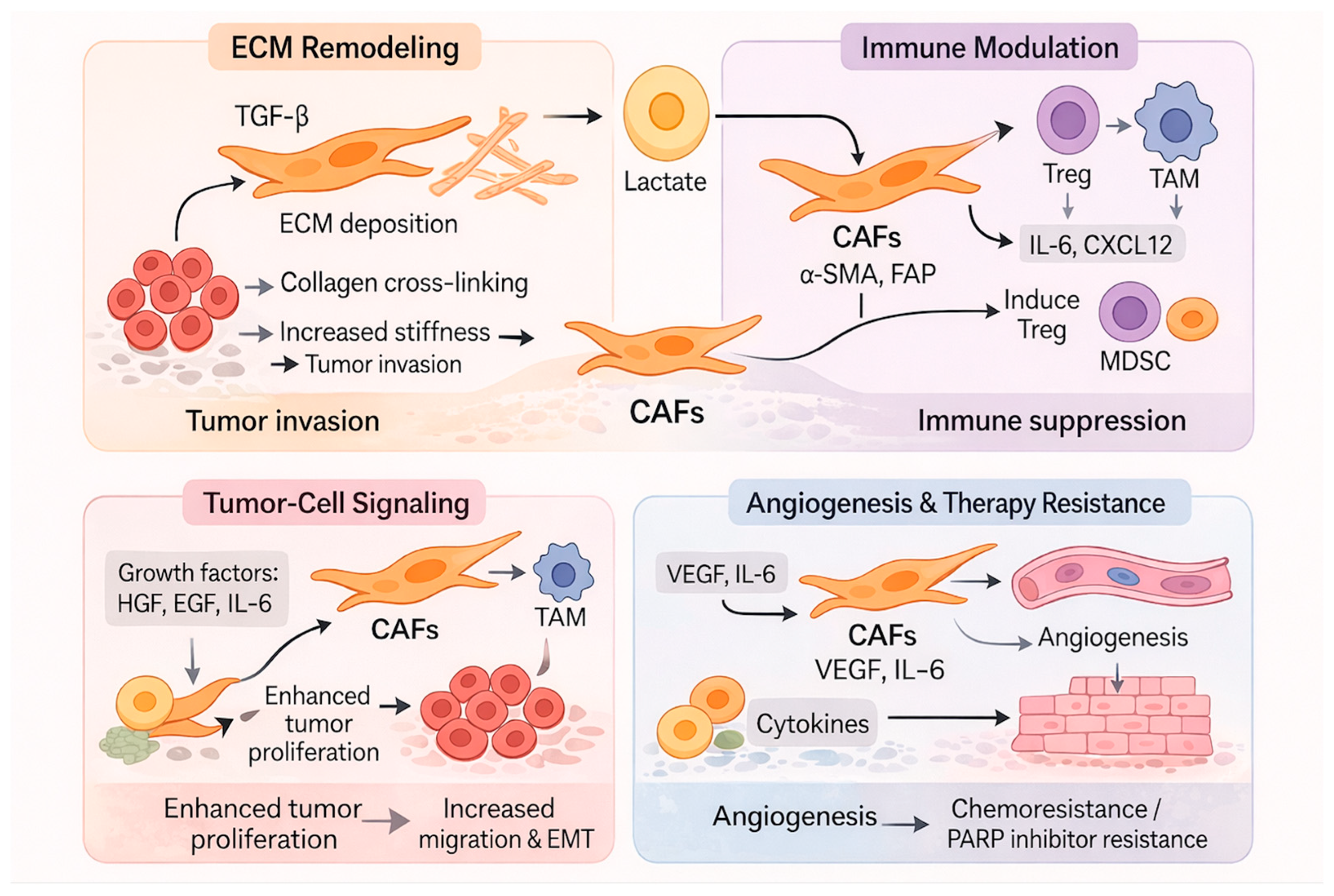
3.2. Functional Roles of CAFs in Tumor Progression in Epithelial Ovarian Cancer
3.3. Autophagy-Induced Ovarian Cancer Cells Promote Activation and Transformation of CAFs
3.4. CAF Plasticity and Transcriptional Regulation in Epithelial Ovarian Cancer
3.5. CAF Risk Scores in Epithelial Ovarian Cancer
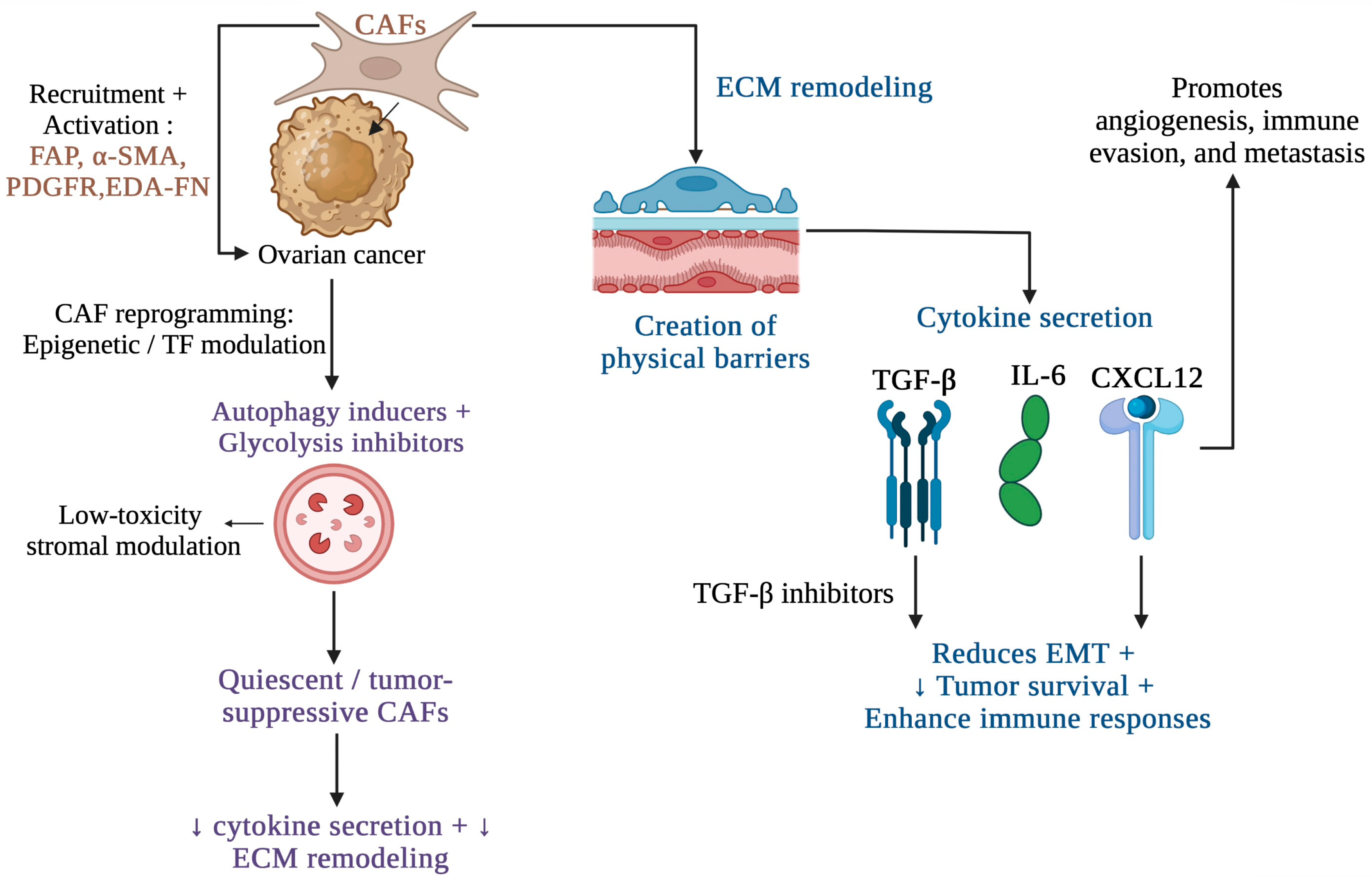
3.6. Potential Therapeutic Strategies Targeting CAFs in Epithelial Ovarian Cancer
4. Tumor-Associated Macrophages (TAMs) in the Ovarian Cancer Tumor Microenvironment
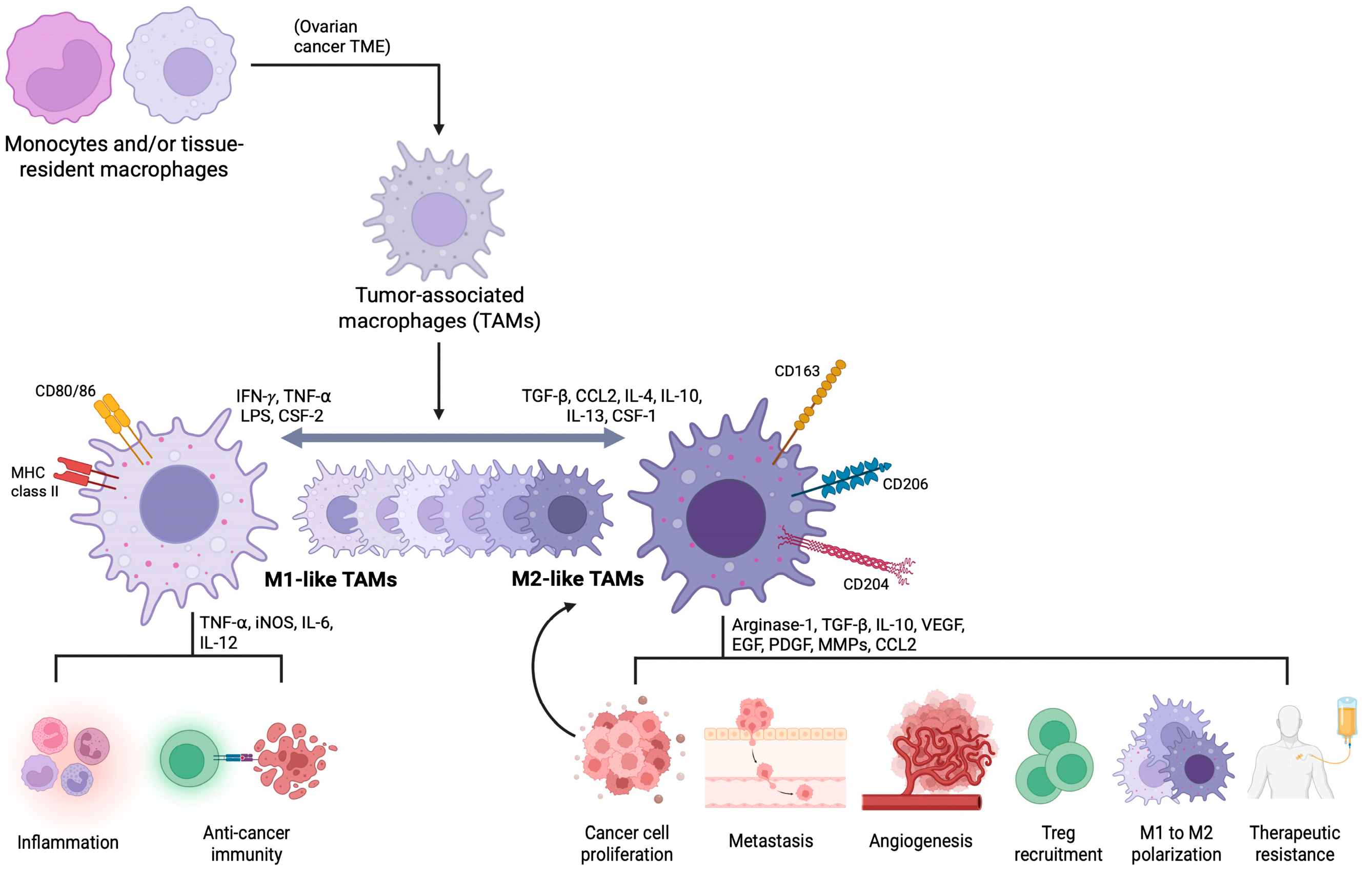
4.1. Characteristics of M1 and M2 TAMs in the TME in Ovarian Cancer
4.2. M2 Phenotype Pathways in Ovarian Cancer
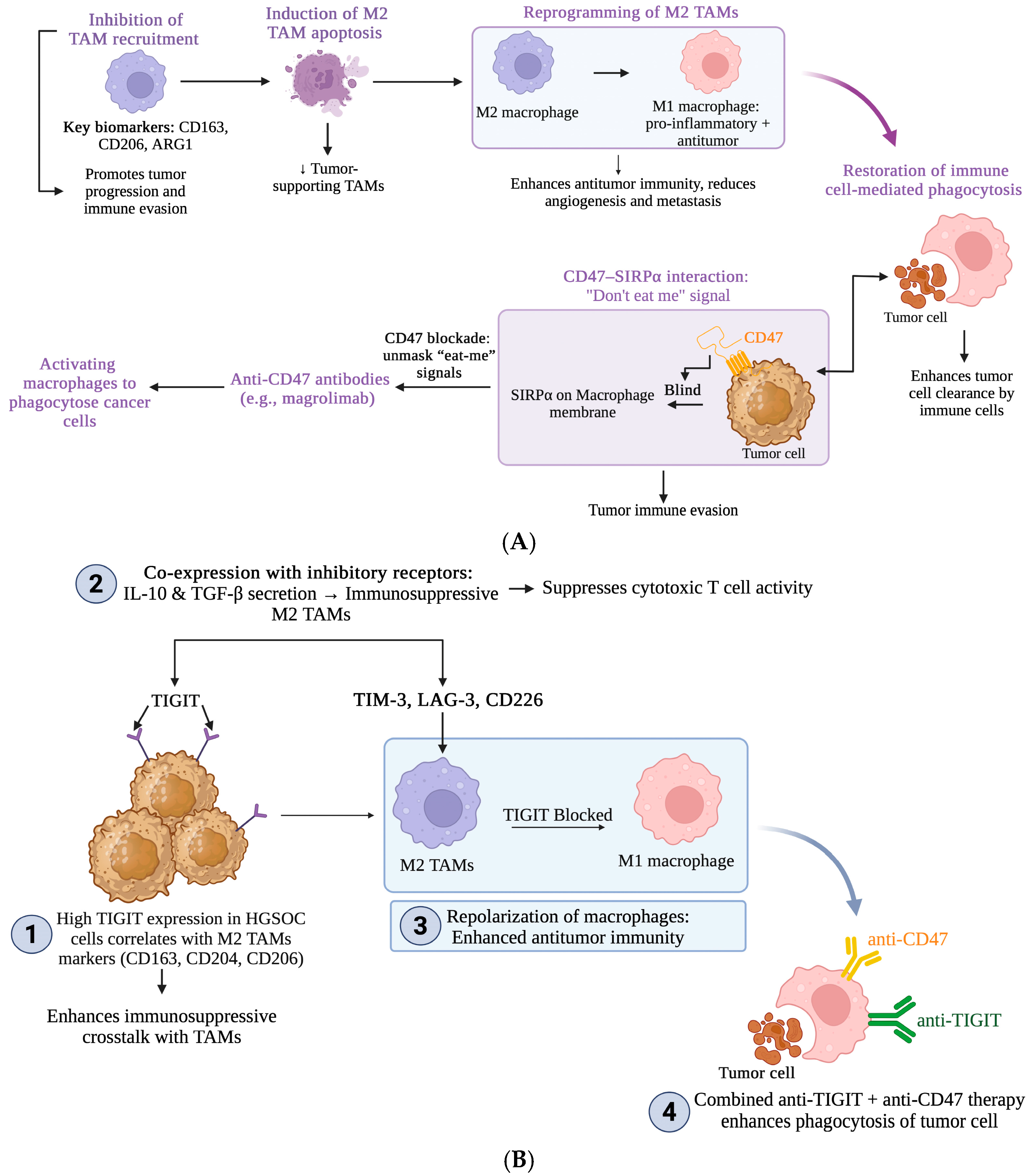
4.3. Potential Therapeutic Strategies Targeting TAMs in Ovarian Cancer
4.4. Inhibiting M2 TAM Recruitment in Epithelial Ovarian Cancer
4.5. M2 TAM Reprogramming and Restoration of Antitumor Activity in Epithelial Ovarian Cancer
4.6. Depleting M2 TAMs in Epithelial Ovarian Cancer
4.7. Potential Combination Therapies Targeting CAFs and TAMs in Epithelial Ovarian Cancer
5. CAFs, TAMs, and Ascitic Fluid in Epithelial Ovarian Cancer
6. Challenges and Future Goals
7. Conclusions
Author Contributions
Funding
Institutional Review Board Statement
Informed Consent Statement
Data Availability Statement
Acknowledgments
Conflicts of Interest
Abbreviations
| CAFs | Cancer-associated fibroblasts |
| TME | Tumor microenvironment |
| TAMs | Tumor-associated macrophages |
| ECM | Extracellular matrix |
| EOC | Epithelial ovarian cancers |
| EMT | Epithelial-to-mesenchymal transition |
| iCAFs | Inflammatory cancer-associated fibroblasts |
| myCAFs | Myofibroblast cancer-associated fibroblasts |
| apCAFs | Antigen-presenting cancer-associated fibroblasts |
| ICIs | Immune checkpoint inhibitors |
| VEGF | Vascular endothelial growth factor |
| HGF | Hepatocyte growth factor |
| NF-κB | Nuclear factor kappa-light-chain-enhancer of activated B cells |
| FAP | Fibroblasts activation protein |
| EDA-FN | Extra domain A-fibronectin |
| TGF-β | Transforming growth factor-beta |
| PDGF | Platelet-derived growth factor |
| PDGFR | Platelet-derived growth factor receptor |
| IL-2 | Interleukin-2 |
| IL-4 | Interleukin-4 |
| IL-6 | Interleukin-6 |
| IL-10 | Interleukin-10 |
| IL-13 | Interleukin-13 |
| TCSF1 | Cell survival factor 1 |
| JAK | Janus kinase |
| STAT3 | Signal transducer and activator of transcription 3 |
| CXCL12 | C-X-C motif chemokine ligand 12 |
| CCL2 | C-C motif chemokine ligand 2 |
| CCR2 | C-C motif chemokine ligand 2 receptor |
| ARG-1 | Arginase-1 |
| EGF | Epidermal growth factor |
| PD-1 | Programmed cell death-1 |
| PD-L1 | Programmed death ligand-1 |
| ROR2/PKC/CREB1 | Components of the noncanonical Wnt signaling pathway |
| CREB1 | cAMP response element binding protein 1 |
| TCF21 | Transcription factor 21 |
| SMAD | suppressor of mothers against decapentaplegic |
| PI3K | Phosphatidylinositol 3-kinase |
| AKT | Protein kinase B |
| mTOR | Mechanistic target of rapamycin kinase |
| TIGIT | T-cell immunoreceptor with Ig and ITIM domains |
| CD47 | Integration associated protein |
| SIRPa | Signal regulatory protein alpha |
| TIM-3 | T-cell immunoglobulin and mucin-domain containing-3 |
| LAG-3 | Lymphocyte-activation gene 3 |
| MDSCs | Myeloid-derived suppressor cells |
| Treg | Regulatory T cells |
| PARP | Poly-ADP-ribose polymerase |
| PARPi | Poly-ADP-ribose polymerase inhibitors |
| FRβ | Folate receptor beta |
| BET | Bromodomain and extra-terminal domain proteins |
| BETi | Bromodomain and extra-terminal domain inhibitors |
| CAR-T cell | Chimeric antigen receptor T-cell |
| CTL | Cytotoxic T-lymphocyte |
| TNF-α | Tumor necrosis factor alpha |
| IFN-y | Interferon-gamma |
| LPS | Lipopolysaccharide |
| CSF-1 | Macrophage colony-stimulating factor-1 |
| CSF-1R | Colony-stimulating factor-1 receptor |
| CSF-2 | Granulocyte-macrophages colony-stimulating factor-2 |
| α-SMA | Alpha-smooth muscle actin |
References
- Miree, O.; Srivastava, S.K.; Dasgupta, S.; Singh, S.; Rocconi, R.; Singh, A.P. Current and Futuristic Roadmap of Ovarian Cancer Management: An Overview. Adv. Exp. Med. Biol. 2021, 1330, 1–19. [Google Scholar] [CrossRef]
- Tao, L.; Huang, G.; Song, H.; Chen, Y.; Chen, L. Cancer associated fibroblasts: An essential role in the tumor microenvironment. Oncol. Lett. 2017, 14, 2611–2620. [Google Scholar] [CrossRef] [PubMed]
- Veneziani, A.C.; Gonzalez-Ochoa, E.; Alqaisi, H.; Madariaga, A.; Bhat, G.; Rouzbahman, M.; Sneha, S.; Oza, A.M. Heterogeneity and treatment landscape of ovarian carcinoma. Nat. Rev. Clin. Oncol. 2023, 20, 820–842. [Google Scholar] [CrossRef]
- Smolarz, B.; Biernacka, K.; Łukasiewicz, H.; Samulak, D.; Piekarska, E.; Romanowicz, H.; Makowska, M. Ovarian Cancer-Epidemiology, Classification, Pathogenesis, Treatment, and Estrogen Receptors’ Molecular Backgrounds. Int. J. Mol. Sci. 2025, 26, 4611. [Google Scholar] [CrossRef]
- Wright, K.; Ly, T.; Kriet, M.; Czirok, A.; Thomas, S.M. Cancer-Associated Fibroblasts: Master Tumor Microenvironment Modifiers. Cancers 2023, 15, 1899. [Google Scholar] [CrossRef] [PubMed]
- Chen, X.; Song, E. Turning foes to friends: Targeting cancer-associated fibroblasts. Nat. Rev. Drug Discov. 2019, 18, 99–115. [Google Scholar] [CrossRef]
- Alrosan, K.; Alrosan, A.Z.; Heilat, G.B.; Alrousan, A.F.; Gammoh, O.S.; Alqudah, A.; Madae’En, S.; Alrousan, M.J. Treatment of ovarian cancer: From the past to the new era (Review). Oncol. Lett. 2025, 30, 384. [Google Scholar] [CrossRef] [PubMed]
- Zhang, C.; Fei, Y.; Wang, H.; Hu, S.; Liu, C.; Hu, R.; Du, Q. CAFs orchestrates tumor immune microenvironment-A new target in cancer therapy? Front. Pharmacol. 2023, 14, 1113378. [Google Scholar] [CrossRef]
- Ganguly, D.; Chandra, R.; Karalis, J.; Teke, M.; Aguilera, T.; Maddipati, R.; Wachsmann, M.B.; Ghersi, D.; Siravegna, G.; Zeh, H.J., 3rd; et al. Cancer-Associated Fibroblasts: Versatile Players in the Tumor Microenvironment. Cancers 2020, 12, 2652. [Google Scholar] [CrossRef]
- Hourani, T.; Holden, J.A.; Li, W.; Lenzo, J.C.; Hadjigol, S.; O’Brien-Simpson, N.M. Tumor Associated Macrophages: Origin, Recruitment, Phenotypic Diversity, and Targeting. Front. Oncol. 2021, 11, 788365. [Google Scholar] [CrossRef]
- Gupta, V.; Yull, F.; Khabele, D. Bipolar Tumor-Associated Macrophages in Ovarian Cancer as Targets for Therapy. Cancers 2018, 10, 366. [Google Scholar] [CrossRef]
- Yin, M.; Shen, J.; Yu, S.; Fei, J.; Zhu, X.; Zhao, J.; Zhai, L.; Sadhukhan, A.; Zhou, J. Tumor-Associated Macrophages (TAMs): A Critical Activator In Ovarian Cancer Metastasis. OncoTargets Ther. 2019, 12, 8687–8699. [Google Scholar] [CrossRef]
- Wang, Y.; Ma, C.; Li, X.; Yang, F.; Wang, N.; Ji, G.; Liu, Q.; Zhu, H.; Xu, S.; Li, H. Unraveling the role of M2 TAMs in ovarian cancer dynamics: A systematic review. J. Transl. Med. 2025, 23, 623. [Google Scholar] [CrossRef]
- Liu, T.; Zhou, L.; Li, D.; Andl, T.; Zhang, Y. Cancer-Associated Fibroblasts Build and Secure the Tumor Microenvironment. Front. Cell Dev. Biol. 2019, 7, 60. [Google Scholar] [CrossRef] [PubMed]
- Glabman, R.A.; Choyke, P.L.; Sato, N. Cancer-Associated Fibroblasts: Tumorigenicity and Targeting for Cancer Therapy. Cancers 2022, 14, 3906. [Google Scholar] [CrossRef] [PubMed]
- Li, Y.; Zhan, Z.; Yin, X.; Fu, S.; Deng, X. Targeted Therapeutic Strategies for Triple-Negative Breast Cancer. Front. Oncol. 2021, 11, 731535. [Google Scholar] [CrossRef] [PubMed]
- Kalluri, R. The biology and function of fibroblasts in cancer. Nat. Rev. Cancer 2016, 16, 582–598. [Google Scholar] [CrossRef]
- Joshi, R.S.; Kanugula, S.S.; Sudhir, S.; Pereira, M.P.; Jain, S.; Aghi, M.K. The Role of Cancer-Associated Fibroblasts in Tumor Progression. Cancers 2021, 13, 1399. [Google Scholar] [CrossRef]
- Öhlund, D.; Elyada, E.; Tuveson, D. Fibroblast heterogeneity in the cancer wound. J. Exp. Med. 2014, 211, 1503–1523. [Google Scholar] [CrossRef]
- Axemaker, H.; Plesselova, S.; Calar, K.; Jorgensen, M.; Wollman, J.; de la Puente, P. Normal Uterine Fibroblast Are Reprogramed into Ovarian Cancer-Associated Fibroblasts by Ovarian Tumor-derived Conditioned Media. bioRxiv 2023, in press. [Google Scholar] [CrossRef]
- Frantz, C.; Stewart, K.M.; Weaver, V.M. The extracellular matrix at a glance. J. Cell Sci. 2010, 123, 4195–4200. [Google Scholar] [CrossRef]
- Zhang, M.; Chen, Z.; Wang, Y.; Zhao, H.; Du, Y. The Role of Cancer-Associated Fibroblasts in Ovarian Cancer. Cancers 2022, 14, 2637. [Google Scholar] [CrossRef]
- Chen, Y.; McAndrews, K.M.; Kalluri, R. Clinical and therapeutic relevance of cancer-associated fibroblasts. Nat. Rev. Clin. Oncol. 2021, 18, 792–804. [Google Scholar] [CrossRef]
- Sharma, P.; Allison, J.P. The future of immune checkpoint therapy. Science 2015, 348, 56–61. [Google Scholar] [CrossRef]
- Givel, A.M.; Kieffer, Y.; Scholer-Dahirel, A.; Sirven, P.; Cardon, M.; Pelon, F.; Magagna, I.; Gentric, G.; Costa, A.; Bonneau, C.; et al. miR200-regulated CXCL12β promotes fibroblast heterogeneity and immunosuppression in ovarian cancers. Nat. Commun. 2018, 9, 1056. [Google Scholar] [CrossRef]
- Izar, B.; Tirosh, I.; Stover, E.H.; Wakiro, I.; Cuoco, M.S.; Alter, I.; Rodman, C.; Leeson, R.; Su, M.J.; Shah, P.; et al. A single-cell landscape of high-grade serous ovarian cancer. Nat. Med. 2020, 26, 1271–1279. [Google Scholar] [CrossRef]
- Chai, C.; Liang, L.; Mikkelsen, N.S.; Wang, W.; Zhao, W.; Sun, C.; Bak, R.O.; Li, H.; Lin, L.; Wang, F.; et al. Single-cell transcriptome analysis of epithelial, immune, and stromal signatures and interactions in human ovarian cancer. Commun. Biol. 2024, 7, 131. [Google Scholar] [CrossRef] [PubMed]
- Chen, Z.; Zhuo, S.; He, G.; Tang, J.; Hao, W.; Gao, W.Q.; Yang, K.; Xu, H. Prognosis and Immunotherapy Significances of a Cancer-Associated Fibroblasts-Related Gene Signature in Gliomas. Front. Cell Dev. Biol. 2021, 9, 721897. [Google Scholar] [CrossRef]
- Martinez-Outschoorn, U.E.; Trimmer, C.; Lin, Z.; Whitaker-Menezes, D.; Chiavarina, B.; Zhou, J.; Wang, C.; Pavlides, S.; Martinez-Cantarin, M.P.; Capozza, F.; et al. Autophagy in cancer associated fibroblasts promotes tumor cell survival: Role of hypoxia, HIF1 induction and NFκB activation in the tumor stromal microenvironment. Cell Cycle 2010, 9, 3515–3533. [Google Scholar] [CrossRef] [PubMed]
- Ferraresi, A.; Girone, C.; Maheshwari, C.; Vallino, L.; Dhanasekaran, D.N.; Isidoro, C. Ovarian Cancer Cell-Conditioning Medium Induces Cancer-Associated Fibroblast Phenoconversion through Glucose-Dependent Inhibition of Autophagy. Int. J. Mol. Sci. 2024, 25, 5691. [Google Scholar] [CrossRef] [PubMed]
- Sari, D.; Gozuacik, D.; Akkoc, Y. Role of autophagy in cancer-associated fibroblast activation, signaling and metabolic reprograming. Front. Cell Dev. Biol. 2023, 11, 1274682. [Google Scholar] [CrossRef] [PubMed]
- Chen, Y.; Zhang, X.; Yang, H.; Liang, T.; Bai, X. The “Self-eating” of cancer-associated fibroblast: A potential target for cancer. Biomed. Pharmacother. 2023, 163, 114762. [Google Scholar] [CrossRef] [PubMed]
- Hussain, A.; Voisin, V.; Poon, S.; Karamboulas, C.; Bui, N.H.B.; Meens, J.; Dmytryshyn, J.; Ho, V.W.; Tang, K.H.; Paterson, J.; et al. Distinct fibroblast functional states drive clinical outcomes in ovarian cancer and are regulated by TCF21. J. Exp. Med. 2020, 217, e20191094. [Google Scholar] [CrossRef]
- Ziani, L.; Chouaib, S.; Thiery, J. Alteration of the Antitumor Immune Response by Cancer-Associated Fibroblasts. Front. Immunol. 2018, 9, 414. [Google Scholar] [CrossRef]
- Menezes, S.; Okail, M.H.; Jalil, S.M.A.; Kocher, H.M.; Cameron, A.J.M. Cancer-associated fibroblasts in pancreatic cancer: New subtypes, new markers, new targets. J. Pathol. 2022, 257, 526–544. [Google Scholar] [CrossRef]
- Sarkar, M.; Nguyen, T.; Gundre, E.; Ogunlusi, O.; El-Sobky, M.; Giri, B.; Sarkar, T.R. Cancer-associated fibroblasts: The chief architect in the tumor microenvironment. Front. Cell Dev. Biol. 2023, 11, 1089068. [Google Scholar] [CrossRef]
- Chai, X.; Zhang, Y.; Shi, Z.; Yang, R.; Liu, X.; Zhou, Y.; Li, C.; Li, Z. An Overview of Predictive Biomarkers and Detection Approaches for Immunotherapy Response in GI Malignancies. J. Gastroenterol. Hepatol. 2025, 40, 1059–1069. [Google Scholar] [CrossRef]
- Cen, X.; Lan, Y.; Zou, J.; Chen, R.; Hu, C.; Tong, Y.; Zhang, C.; Chen, J.; Wang, Y.; Zhou, R.; et al. Pan-cancer analysis shapes the understanding of cancer biology and medicine. Cancer Commun. 2025, 45, 728–746. [Google Scholar] [CrossRef]
- Hellevik, T.; Berzaghi, R.; Lode, K.; Islam, A.; Martinez-Zubiaurre, I. Immunobiology of cancer-associated fibroblasts in the context of radiotherapy. J. Transl. Med. 2021, 19, 437. [Google Scholar] [CrossRef]
- Wang, Z.; Tang, Y.; Tan, Y.; Wei, Q.; Yu, W. Cancer-associated fibroblasts in radiotherapy: Challenges and new opportunities. Cell Commun. Signal. 2019, 17, 47. [Google Scholar] [CrossRef] [PubMed]
- Caligiuri, G.; Tuveson, D.A. Activated fibroblasts in cancer: Perspectives and challenges. Cancer Cell 2023, 41, 434–449. [Google Scholar] [CrossRef]
- Ding, Z.; Shi, R.; Hu, W.; Tian, L.; Sun, R.; Wu, Y.; Zhang, X. Cancer-associated fibroblasts in hematologic malignancies: Elucidating roles and spotlighting therapeutic targets. Front. Oncol. 2023, 13, 1193978. [Google Scholar] [CrossRef]
- Yang, Y.; Yang, Y.; Yang, J.; Zhao, X.; Wei, X. Tumor Microenvironment in Ovarian Cancer: Function and Therapeutic Strategy. Front. Cell Dev. Biol. 2020, 8, 758. [Google Scholar] [CrossRef]
- Calon, A.; Lonardo, E.; Berenguer-Llergo, A.; Espinet, E.; Hernando-Momblona, X.; Iglesias, M.; Sevillano, M.; Palomo-Ponce, S.; Tauriello, D.V.; Byrom, D.; et al. Stromal gene expression defines poor-prognosis subtypes in colorectal cancer. Nat. Genet. 2015, 47, 320–329. [Google Scholar] [CrossRef]
- Mariathasan, S.; Turley, S.J.; Nickles, D.; Castiglioni, A.; Yuen, K.; Wang, Y.; Kadel, E.E., III; Koeppen, H.; Astarita, J.L.; Cubas, R.; et al. TGFβ attenuates tumour response to PD-L1 blockade by contributing to exclusion of T cells. Nature 2018, 554, 544–548. [Google Scholar] [CrossRef]
- Kraman, M.; Bambrough, P.J.; Arnold, J.N.; Roberts, E.W.; Magiera, L.; Jones, J.O.; Gopinathan, A.; Tuveson, D.A.; Fearon, D.T. Suppression of antitumor immunity by stromal cells expressing fibroblast activation protein-alpha. Science 2010, 330, 827–830. [Google Scholar] [CrossRef] [PubMed]
- Huang, J.; Zhang, L.; Wan, D.; Zhou, L.; Zheng, S.; Lin, S.; Qiao, Y. Extracellular matrix and its therapeutic potential for cancer treatment. Signal Transduct. Target. Ther. 2021, 6, 153. [Google Scholar] [CrossRef]
- Martinez-Outschoorn, U.E.; Pavlides, S.; Howell, A.; Pestell, R.G.; Tanowitz, H.B.; Sotgia, F.; Lisanti, M.P. Stromal-epithelial metabolic coupling in cancer: Integrating autophagy and metabolism in the tumor microenvironment. Int. J. Biochem. Cell Biol. 2011, 43, 1045–1051. [Google Scholar] [CrossRef] [PubMed]
- Kitami, K.; Yoshihara, M.; Tamauchi, S.; Sugiyama, M.; Koya, Y.; Yamakita, Y.; Fujimoto, H.; Iyoshi, S.; Uno, K.; Mogi, K.; et al. Peritoneal restoration by repurposing vitamin D inhibits ovarian cancer dissemination via blockade of the TGF-β1/thrombospondin-1 axis. Matrix Biol. 2022, 109, 70–90. [Google Scholar] [CrossRef]
- Cong, G.; Zhu, X.; Chen, X.R.; Chen, H.; Chong, W. Mechanisms and therapeutic potential of the hedgehog signaling pathway in cancer. Cell Death Discov. 2025, 11, 40. [Google Scholar] [CrossRef] [PubMed]
- Laviron, M.; Boissonnas, A. Ontogeny of Tumor-Associated Macrophages. Front. Immunol. 2019, 10, 1799. [Google Scholar] [CrossRef]
- Duan, Z.; Luo, Y. Targeting macrophages in cancer immunotherapy. Signal Transduct. Target. Ther. 2021, 6, 127. [Google Scholar] [CrossRef]
- El-Arabey, A.A.; Alkhalil, S.S.; Al-Shouli, S.T.; Awadalla, M.E.; Alhamdi, H.W.; Almanaa, T.N.; Mohamed, S.; Abdalla, M. Revisiting macrophages in ovarian cancer microenvironment: Development, function and interaction. Med. Oncol. 2023, 40, 142. [Google Scholar] [CrossRef]
- Truxova, I.; Cibula, D.; Spisek, R.; Fucikova, J. Targeting tumor-associated macrophages for successful immunotherapy of ovarian carcinoma. J. Immunother. Cancer 2023, 11, e005968. [Google Scholar] [CrossRef] [PubMed]
- Pan, Y.; Yu, Y.; Wang, X.; Zhang, T. Tumor-Associated Macrophages in Tumor Immunity. Front. Immunol. 2020, 11, 583084. [Google Scholar] [CrossRef] [PubMed]
- Kobayashi, H. Potential scenarios leading to ovarian cancer arising from endometriosis. Redox Rep. 2016, 21, 119–126. [Google Scholar] [CrossRef]
- Brauneck, F.; Oliveira-Ferrer, L.; Muschhammer, J.; Sturmheit, T.; Ackermann, C.; Haag, F.; Schulze Zur Wiesch, J.; Ding, Y.; Qi, M.; Hell, L.; et al. Immunosuppressive M2 TAMs represent a promising target population to enhance phagocytosis of ovarian cancer cells in vitro. Front. Immunol. 2023, 14, 1250258. [Google Scholar] [CrossRef]
- Belotti, D.; Paganoni, P.; Manenti, L.; Garofalo, A.; Marchini, S.; Taraboletti, G.; Giavazzi, R. Matrix Metalloproteinases (MMP9 and MMP2) Induce the Release of Vascular Endothelial Growth Factor (VEGF) by Ovarian Carcinoma Cells: Implications for Ascites Formation1. Cancer Res. 2003, 63, 5224–5229. [Google Scholar]
- Zhou, K.; Cheng, T.; Zhan, J.; Peng, X.; Zhang, Y.; Wen, J.; Chen, X.; Ying, M. Targeting tumor-associated macrophages in the tumor microenvironment. Oncol. Lett. 2020, 20, 234. [Google Scholar] [CrossRef] [PubMed]
- Xu, C.; Chen, J.; Tan, M.; Tan, Q. The role of macrophage polarization in ovarian cancer: From molecular mechanism to therapeutic potentials. Front. Immunol. 2025, 16, 1543096. [Google Scholar] [CrossRef]
- Wesolowski, R.; Sharma, N.; Reebel, L.; Rodal, M.B.; Peck, A.; West, B.L.; Marimuthu, A.; Severson, P.; Karlin, D.A.; Dowlati, A.; et al. Phase Ib study of the combination of pexidartinib (PLX3397), a CSF-1R inhibitor, and paclitaxel in patients with advanced solid tumors. Ther. Adv. Med. Oncol. 2019, 11, 1758835919854238. [Google Scholar] [CrossRef]
- Al-Sudani, H.; Ni, Y.; Jones, P.; Karakilic, H.; Cui, L.; Johnson, L.D.S.; Rose, P.G.; Olawaiye, A.; Edwards, R.P.; Uger, R.A.; et al. Targeting CD47-SIRPa axis shows potent preclinical anti-tumor activity as monotherapy and synergizes with PARP inhibition. npj Precis. Oncol. 2023, 7, 69. [Google Scholar] [CrossRef]
- Bolli, E.; Scherger, M.; Arnouk, S.M.; Pombo Antunes, A.R.; Straßburger, D.; Urschbach, M.; Stickdorn, J.; De Vlaminck, K.; Movahedi, K.; Räder, H.J.; et al. Targeted Repolarization of Tumor-Associated Macrophages via Imidazoquinoline-Linked Nanobodies. Adv. Sci. 2021, 8, 2004574. [Google Scholar] [CrossRef] [PubMed]
- Wu, Y.; Jennings, N.B.; Sun, Y.; Dasari, S.K.; Bayraktar, E.; Corvigno, S.; Stur, E.; Glassman, D.; Mangala, L.S.; Lankenau Ahumada, A.; et al. Targeting CCR2+ macrophages with BET inhibitor overcomes adaptive resistance to anti-VEGF therapy in ovarian cancer. J. Cancer Res. Clin. Oncol. 2022, 148, 803–821. [Google Scholar] [CrossRef]
- Rodriguez-Garcia, A.; Lynn, R.C.; Poussin, M.; Eiva, M.A.; Shaw, L.C.; O’Connor, R.S.; Minutolo, N.G.; Casado-Medrano, V.; Lopez, G.; Matsuyama, T.; et al. CAR-T cell-mediated depletion of immunosuppressive tumor-associated macrophages promotes endogenous antitumor immunity and augments adoptive immunotherapy. Nat. Commun. 2021, 12, 877. [Google Scholar] [CrossRef] [PubMed]
- Schweer, D.; McAtee, A.; Neupane, K.; Richards, C.; Ueland, F.; Kolesar, J. Tumor-Associated Macrophages and Ovarian Cancer: Implications for Therapy. Cancers 2022, 14, 2220. [Google Scholar] [CrossRef]
- Nowak, M.; Klink, M. The Role of Tumor-Associated Macrophages in the Progression and Chemoresistance of Ovarian Cancer. Cells 2020, 9, 1299. [Google Scholar] [CrossRef] [PubMed]
- Yu, M.; Wu, Y.; Li, Q.; Hong, W.; Yang, Y.; Hu, X.; Yang, Y.; Lu, T.; Zhao, X.; Wei, X. Colony-stimulating factor-1 receptor inhibition combined with paclitaxel exerts effective antitumor effects in the treatment of ovarian cancer. Genes Dis. 2024, 11, 100989. [Google Scholar] [CrossRef]
- Moisan, F.; Francisco, E.B.; Brozovic, A.; Duran, G.E.; Wang, Y.C.; Chaturvedi, S.; Seetharam, S.; Snyder, L.A.; Doshi, P.; Sikic, B.I. Enhancement of paclitaxel and carboplatin therapies by CCL2 blockade in ovarian cancers. Mol. Oncol. 2014, 8, 1231–1239. [Google Scholar] [CrossRef]
- Yang, Y.I.; Wang, Y.Y.; Ahn, J.H.; Kim, B.H.; Choi, J.H. CCL2 overexpression is associated with paclitaxel resistance in ovarian cancer cells via autocrine signaling and macrophage recruitment. Biomed. Pharmacother. 2022, 153, 113474. [Google Scholar] [CrossRef]
- Yu, L.; Ding, Y.; Wan, T.; Deng, T.; Huang, H.; Liu, J. Significance of CD47 and Its Association With Tumor Immune Microenvironment Heterogeneity in Ovarian Cancer. Front. Immunol. 2021, 12, 768115. [Google Scholar] [CrossRef]
- Maute, R.; Xu, J.; Weissman, I.L. CD47-SIRPα-targeted therapeutics: Status and prospects. Immunooncol. Technol. 2022, 13, 100070. [Google Scholar] [CrossRef]
- Luo, X.; Shen, Y.; Huang, W.; Bao, Y.; Mo, J.; Yao, L.; Yuan, L. Blocking CD47-SIRPα Signal Axis as Promising Immunotherapy in Ovarian Cancer. Cancer Control 2023, 30, 10732748231159706. [Google Scholar] [CrossRef] [PubMed]
- Park, H. A Phase 1, Open-Label Dose Escalation and Dose-Expansion Study Evaluating the Safety, Tolerability, Pharmacokinetics, Pharmacodynamics, and Preliminary Efficacy of D3L-001 Monotherapy in Subjects with HER2-Positive Advanced Solid Tumors; Dana-Farber Cancer Institute: Boston, MA, USA, 2023. [Google Scholar]
- Cresswell, G.M.; Wang, B.; Kischuk, E.M.; Broman, M.M.; Alfar, R.A.; Vickman, R.E.; Dimitrov, D.S.; Kularatne, S.A.; Sundaram, C.P.; Singhal, S.; et al. Folate Receptor Beta Designates Immunosuppressive Tumor-Associated Myeloid Cells That Can Be Reprogrammed with Folate-Targeted Drugs. Cancer Res. 2021, 81, 671–684. [Google Scholar] [CrossRef] [PubMed]
- Sarnik, J.; Popławski, T.; Tokarz, P. BET Proteins as Attractive Targets for Cancer Therapeutics. Int. J. Mol. Sci. 2021, 22, 11102. [Google Scholar] [CrossRef]
- Li, M.; Ma, Y.; Dai, T.; Wang, Y.; Yue, Y. Advance in therapies targeting tumor-associated macrophages in ovarian cancer. Front. Immunol. 2025, 16, 1677839. [Google Scholar] [CrossRef] [PubMed]
- Wilson, A.J.; Stubbs, M.; Liu, P.; Ruggeri, B.; Khabele, D. The BET inhibitor INCB054329 reduces homologous recombination efficiency and augments PARP inhibitor activity in ovarian cancer. Gynecol. Oncol. 2018, 149, 575–584. [Google Scholar] [CrossRef] [PubMed]
- Gunaydin, G. CAFs Interacting With TAMs in Tumor Microenvironment to Enhance Tumorigenesis and Immune Evasion. Front. Oncol. 2021, 11, 668349. [Google Scholar] [CrossRef]
- Roane, B.M.; Meza-Perez, S.; Katre, A.A.; Goldsberry, W.N.; Randall, T.D.; Norian, L.A.; Birrer, M.J.; Arend, R.C. Neutralization of TGFβ Improves Tumor Immunity and Reduces Tumor Progression in Ovarian Carcinoma. Mol. Cancer Ther. 2021, 20, 602–611. [Google Scholar] [CrossRef]
- Pei, L.; Liu, Y.; Liu, L.; Gao, S.; Gao, X.; Feng, Y.; Sun, Z.; Zhang, Y.; Wang, C. Roles of cancer-associated fibroblasts (CAFs) in anti- PD-1/PD-L1 immunotherapy for solid cancers. Mol. Cancer 2023, 22, 29. [Google Scholar] [CrossRef]
- Zhang, Y.; Cui, Q.; Xu, M.; Liu, D.; Yao, S.; Chen, M. Current Advances in PD-1/PD-L1 Blockade in Recurrent Epithelial Ovarian Cancer. Front. Immunol. 2022, 13, 901772. [Google Scholar] [CrossRef] [PubMed]
- Rickard, B.P.; Conrad, C.; Sorrin, A.J.; Ruhi, M.K.; Reader, J.C.; Huang, S.A.; Franco, W.; Scarcelli, G.; Polacheck, W.J.; Roque, D.M.; et al. Malignant Ascites in Ovarian Cancer: Cellular, Acellular, and Biophysical Determinants of Molecular Characteristics and Therapy Response. Cancers 2021, 13, 4318. [Google Scholar] [CrossRef]
- Cheng, K.C.; Lin, Y.H.; Wu, D.S.; Shih, I.M.; Wang, T.L. Macrophages and neutrophils in ovarian cancer microenvironment. Front. Immunol. 2025, 16, 1677441. [Google Scholar] [CrossRef]
- Giuntoli, R.L., 2nd; Webb, T.J.; Zoso, A.; Rogers, O.; Diaz-Montes, T.P.; Bristow, R.E.; Oelke, M. Ovarian cancer-associated ascites demonstrates altered immune environment: Implications for antitumor immunity. Anticancer Res. 2009, 29, 2875–2884. [Google Scholar]
- Ford, C.E.; Werner, B.; Hacker, N.F.; Warton, K. The untapped potential of ascites in ovarian cancer research and treatment. Br. J. Cancer 2020, 123, 9–16. [Google Scholar] [CrossRef]
- Rakina, M.; Kazakova, A.; Villert, A.; Kolomiets, L.; Larionova, I. Spheroid Formation and Peritoneal Metastasis in Ovarian Cancer: The Role of Stromal and Immune Components. Int. J. Mol. Sci. 2022, 23, 6215. [Google Scholar] [CrossRef] [PubMed]
- Steitz, A.M.; Steffes, A.; Finkernagel, F.; Unger, A.; Sommerfeld, L.; Jansen, J.M.; Wagner, U.; Graumann, J.; Müller, R.; Reinartz, S. Tumor-associated macrophages promote ovarian cancer cell migration by secreting transforming growth factor beta induced (TGFBI) and tenascin C. Cell Death Dis. 2020, 11, 249. [Google Scholar] [CrossRef]
- Carmi, Y.K.; Agbarya, A.; Khamaisi, H.; Farah, R.; Shechtman, Y.; Korobochka, R.; Gopas, J.; Mahajna, J. Ovarian cancer ascites confers platinum chemoresistance to ovarian cancer cells. Transl. Oncol. 2024, 44, 101939. [Google Scholar] [CrossRef] [PubMed]



| Therapeutic Approach | Target Cell Population | Key Outcomes | Identified Weaknesses | Reference |
|---|---|---|---|---|
| TGF-β pathway inhibition (e.g., galunisertib, TGF-β neutralizing antibodies) | CAFs and CAF-driven ECM programs in EOC cell lines and xenograft models | Reduced CAF activation, decreased α-SMA expression and ECM deposition, improved immune infiltration, and enhanced chemotherapy sensitivity | Broad TGF-β inhibition may disrupt normal tissue homeostasis; context-dependent effects; limited ovarian-specific clinical trial data | [44,45] |
| FAP-targeted strategies (FAP inhibitors, FAP-CAR-T cells) | FAP+ CAFs in ovarian cancer xenograft and murine models | Selective depletion of pro-tumorigenic CAFs reduced tumor growth, enhanced T-cell infiltration, and improved response to immunotherapy | CAF heterogeneity limits complete stromal targeting; risk of on-target off-tumor toxicity; minimal clinical data in EOC | [46] |
| IL-6/JAK-STAT3 axis inhibition | Inflammatory CAFs (iCAFs) and tumor cells in EOC models | Decreased CAF-mediated cytokine signaling, reduced immune suppression, impaired tumor growth, and increased chemotherapy response | Redundant inflammatory signaling pathways; incomplete CAF reprogramming; systemic immune effects | [22] |
| ECM remodeling inhibition (LOX/LOXL inhibitors, collagen cross-linking inhibitors) | ECM-associated CAFs in ovarian cancer and peritoneal metastasis models | Reduced matrix stiffness, impaired invasion and metastatic spread, and improved drug penetration | Targeting ECM alone may not suppress inflammatory CAF signaling; limited ovarian-specific clinical validation | [47] |
| Autophagy modulation in CAFs | Metabolically active CAFs in EOC co-culture and xenograft models | Altered CAF metabolic support, reduced tumor growth, diminished therapy resistance, and impaired stromal support of cancer cells | Cell-type specificity remains challenging; autophagy inhibition may have opposing effects in cancer cells versus CAFs | [48] |
| Vitamin D receptor (VDR) activation | CAFs and stromal fibroblasts in ovarian and other epithelial tumor models | Reprogramming of CAFs toward a quiescent phenotype, reduced ECM production, enhanced immune infiltration | Variable VDR expression across CAF subsets; limited EOC-specific clinical trials | [49] |
| Hedgehog (Hh) pathway inhibition (e.g., vismodegib) | Stromal fibroblasts/CAFs in ovarian cancer models | Transient reduction in stromal density and CAF activation, modest improvement in chemotherapy delivery | Limited efficacy in clinical trials; compensatory stromal pathways; inconsistent outcomes | [50] |
| Therapeutic Approach | Target Cell Population | Key Outcomes | Identified Weaknesses | Reference |
|---|---|---|---|---|
| CSF-1R inhibition using pexidartinib (PLX3397) combined with paclitaxel | Phase Ib trial in advanced, treatment-refractory solid tumors, including EOCs | Of 38 patients, 3% had complete response, 13% had partial response, 34% stable disease, and 45% showed progressive disease | Omission of tumor biopsies—the effect of treatment on TAM and lymphocyte infiltration in the TME was not measured; some patients had a history of numerous failed therapies | [61] |
| Targeting anti-CD47–SIRPa axis using magrolimab (Hu-5F9) or TTI-621 combined with PARP inhibition | EOC cell lines, cell-line derived xenograft and patient-derived xenograft (PDX) mouse models | CD47 blockade enhanced the anti-tumor activity of PARP inhibitors and extended survival of the mice | Limited representation of human macrophage biology, immune activation, and tumor heterogeneity | [62] |
| Targeting CD206 TAMs with the Toll-like receptor 7/8 agonist imidazoquinoline IMDQ | Murine models with ovalbumin-expressing Lewis lung carcinoma (LLC-OVA) tumors | IMDQ led to reprogramming of pro-tumoral TAMs into anti-tumoral TAMs, increased T-cell response, and decreased tumor growth | Limited representation of human macrophage biology, immune activation, and tumor heterogeneity. Questionable duration of response | [63] |
| Treatment with the BET inhibitor ABBV-075 combined with the anti-VEGF antibody bevacizumab | EOC cell lines and murine xenograft models | BETi with bevacizumab induced cancer cell death and favored the survival and polarization of M1 TAMs. BETi sensitized EOC cells to anti-VEGF therapy. | Did not observe effects on other immune cell populations (e.g., effector T cells). | [64] |
| CAR-T cell-mediated depletion of FRβ-expressing TAMs | Murine ovarian cancer and colon cancer cell lines and xenograft models | Reduced M2-like TAMs and increased anti-tumor TAMs and T cells. Hindered tumor progression and prolonged survival in murine models. | Unknown duration and systemic impact of FRβ TAM depletion, due to the transient persistence of murine CAR-T cells. CAR-T cell therapies yield incomplete solid tumor response | [65] |
Disclaimer/Publisher’s Note: The statements, opinions and data contained in all publications are solely those of the individual author(s) and contributor(s) and not of MDPI and/or the editor(s). MDPI and/or the editor(s) disclaim responsibility for any injury to people or property resulting from any ideas, methods, instructions or products referred to in the content. |
© 2026 by the authors. Licensee MDPI, Basel, Switzerland. This article is an open access article distributed under the terms and conditions of the Creative Commons Attribution (CC BY) license.
Share and Cite
McQuarter, A.A.; Cruz, J.; Yamauchi, C.R.; Chouchen, M.; Carter, C.S.; Webb, T.J.; Khan, S. The Role of Cancer-Associated Fibroblasts and Tumor-Associated Macrophages in the Tumor Microenvironment and Their Impact on Ovarian Cancer Survival and Therapy. Curr. Oncol. 2026, 33, 59. https://doi.org/10.3390/curroncol33010059
McQuarter AA, Cruz J, Yamauchi CR, Chouchen M, Carter CS, Webb TJ, Khan S. The Role of Cancer-Associated Fibroblasts and Tumor-Associated Macrophages in the Tumor Microenvironment and Their Impact on Ovarian Cancer Survival and Therapy. Current Oncology. 2026; 33(1):59. https://doi.org/10.3390/curroncol33010059
Chicago/Turabian StyleMcQuarter, Alena A., Joseph Cruz, Celina R. Yamauchi, Mariem Chouchen, Cody S. Carter, Tonya J. Webb, and Salma Khan. 2026. "The Role of Cancer-Associated Fibroblasts and Tumor-Associated Macrophages in the Tumor Microenvironment and Their Impact on Ovarian Cancer Survival and Therapy" Current Oncology 33, no. 1: 59. https://doi.org/10.3390/curroncol33010059
APA StyleMcQuarter, A. A., Cruz, J., Yamauchi, C. R., Chouchen, M., Carter, C. S., Webb, T. J., & Khan, S. (2026). The Role of Cancer-Associated Fibroblasts and Tumor-Associated Macrophages in the Tumor Microenvironment and Their Impact on Ovarian Cancer Survival and Therapy. Current Oncology, 33(1), 59. https://doi.org/10.3390/curroncol33010059