Article

Real-World Predictors of Survival in CDK4/6 Inhibitor-Treated Metastatic Breast Cancer: The Significance of ER Expression Level and Treatment Naivety


by
Büşra Bülbül
1,*,
Bekir Ucun
1,
Can Cangür
1,
İrem Turgut Yeğen
1,
Orhan Önder Eren
1,
Cengiz Yılmaz
2,
Gürkan Gül
2,
Atike Pınar Erdoğan
3,
Ece Şahin Hafızoğlu
3,
Erhan Gökmen
4,
Oguzcan Ozkan
4,
Murat Araz
5,
Ahmet Oruç
5 and
Serkan Yıldırım
1
1
Medical Oncology Department Tıbbi Onkoloji, Medical Faculty, Selçuk University, Konya 42250, Turkey
2
Medical Oncology, İzmir City Hospital, İzmir 35540, Turkey
3
Medical Oncology Department, Medical Faculty, Manisa Celal Bayar University, Manisa 45030, Turkey
4
Medical Oncology Department, Medical Faculty, Ege University, İzmir 35100, Turkey
5
Medical Oncology Department, Medical Faculty, Necmettin Erbakan University, Konya 42090, Turkey
*
Author to whom correspondence should be addressed.
Curr. Oncol. 2025, 32(12), 709; https://doi.org/10.3390/curroncol32120709
Submission received: 27 September 2025 / Revised: 17 November 2025 / Accepted: 24 November 2025 / Published: 16 December 2025
(This article belongs to the Section Breast Cancer)

Simple Summary

CDK4/6 inhibitors represent a cornerstone in managing hormone receptor-positive, HER2-negative metastatic breast cancer. However, identifying which patients derive the greatest benefit remains challenging. In this multicenter analysis of 603 patients, we demonstrate that treatment-naive patients and those with exceptionally high oestrogen receptor (ER) expression (≥90%) experience significantly longer overall survival when treated with CDK4/6 inhibitors. These findings provide clinicians with practical biomarkers for optimizing treatment selection and highlight the importance of quantitative ER assessment beyond conventional positivity thresholds.

Abstract

Objective: CDK4/6 inhibitors constitute standard first-line therapy for hormone receptor (HR)-positive, HER2-negative metastatic breast cancer (MBC). We investigated real-world predictors of overall survival (OS), with particular focus on high ER expression (≥90%). Methods: In this multicenter, retrospective study, we analyzed 603 HR-positive/HER2-negative MBC patients treated with CDK4/6 inhibitors (ribociclib or palbociclib) between May 2020 and June 2024. We evaluated demographic, clinical, and pathological factors for their impact on OS using univariate and multivariate Cox regression analyses. Results: In univariate analysis, significantly longer OS was observed in endocrine therapy-naive patients (median OS: 51.0 vs. 33.3 months; p < 0.001), those without liver metastases (50.0 vs. 34.0 months; p = 0.019), bone-only metastases (57.7 vs. 40.5 months; p = 0.022), and PR-positive patients (50.0 vs. 36.0 months; p = 0.037). Patients with ER expression ≥90% showed a strong trend toward longer OS (49.0 vs. 41.0 months; p = 0.072). In multivariate analysis, endocrine therapy naivety (p = 0.045) and high ER expression (≥90%) (p = 0.031) emerged as independent predictors of superior OS. Conclusions: Our study identifies treatment naivety and exceptionally high ER expression (≥90%) as key independent predictors of prolonged OS in CDK4/6 inhibitor-treated MBC patients. These findings underscore the importance of early CDK4/6 inhibitor implementation and suggest that quantitative ER assessment may refine patient selection beyond conventional positivity thresholds.

1. Introduction

Breast cancer remains the most frequently diagnosed malignancy and the leading cause of cancer-related mortality among women worldwide [1]. Hormone receptor (HR)-positive, HER2-negative disease represents the most common molecular subtype of metastatic breast cancer (MBC), for which endocrine therapy has historically formed the therapeutic backbone [2].
The introduction of cyclin-dependent kinase 4/6 (CDK4/6) inhibitors has substantially improved outcomes for patients with HR-positive/HER2-negative MBC. When combined with endocrine therapy, these agents have demonstrated significant improvements in both progression-free survival (PFS) and overall survival (OS) across multiple phase III trials, establishing them as the first-line standard of care per current international guidelines [3].
The efficacy of CDK4/6 inhibitors stems from their targeting of the cyclin D-CDK4/6-retinoblastoma (Rb) pathway, a critical downstream effector of oestrogen receptor (ER) signalling [4]. In ER-positive breast cancer, cyclin D-CDK4/6 complex formation promotes Rb phosphorylation, triggering cell cycle progression from the G1 phase to the S phase [5]. The synergistic inhibition of both ER signalling and CDK4/6 has proven highly effective in advanced breast cancer, forming the rational basis for their combined use [6].
Robust clinical evidence supports this approach. Ribociclib has demonstrated significant OS benefits in combination with endocrine therapy in both post-menopausal (MONALEESA-2) and pre-menopausal (MONALEESA-7) populations [7]. Similarly, palbociclib showed substantial PFS improvement with letrozole in the PALOMA-2 trial [8], with subsequent analyses confirming OS benefits in first-line settings [9]. Abemaciclib, with its distinct pharmacologic properties, also demonstrated significant PFS improvement when combined with a nonsteroidal aromatase inhibitor in the MONARCH 3 trial [10].
Despite these advances, significant heterogeneity in the treatment response persists. While CDK4/6 inhibitors combined with endocrine therapy represent the gold standard first-line treatment for HR-positive/HER2-negative MBC, acquired resistance develops in most patients, and certain subgroups derive limited benefit [11]. Consequently, identifying clinical and pathological biomarkers to predict which patients are most likely to benefit from CDK4/6 inhibitors represents an urgent unmet need.
The ER expression level represents a compelling candidate biomarker. While a 1% threshold defines ER positivity clinically, emerging evidence suggests a continuous relationship between ER abundance and therapeutic response [12]. Previous studies have indicated that higher ER expression levels correlate with improved outcomes with endocrine therapy alone [13], and subgroup analyses from pivotal CDK4/6 inhibitor trials suggest enhanced benefit in patients with higher ER expression [7,11]. However, these studies utilised varying thresholds, and the optimal cutoff for predicting CDK4/6 inhibitor benefit remains undefined. Quantitative ER expression is considered a potential surrogate for tumor endocrine sensitivity. We hypothesized that tumours exhibiting exceptionally high ER expression (≥90%) represent a subset with maximal endocrine sensitivity, which may, in turn, translate to a superior response to the synergistic blockade of both the ER pathway and the cell cycle via CDK4/6 inhibitors.
In this multi-centre real-world study, we investigated a comprehensive set of clinical and pathological parameters to identify predictors of OS in patients receiving CDK4/6 inhibitor therapy. Based on a biological rationale suggesting that tumours with exceptionally high ER expression might exhibit maximal dependence on the ER pathway, we specifically hypothesised that an ER expression threshold of ≥90% would identify patients deriving superior benefit from CDK4/6 inhibition.

2. Materials and Methods

2.1. Study Design and Patient Selection

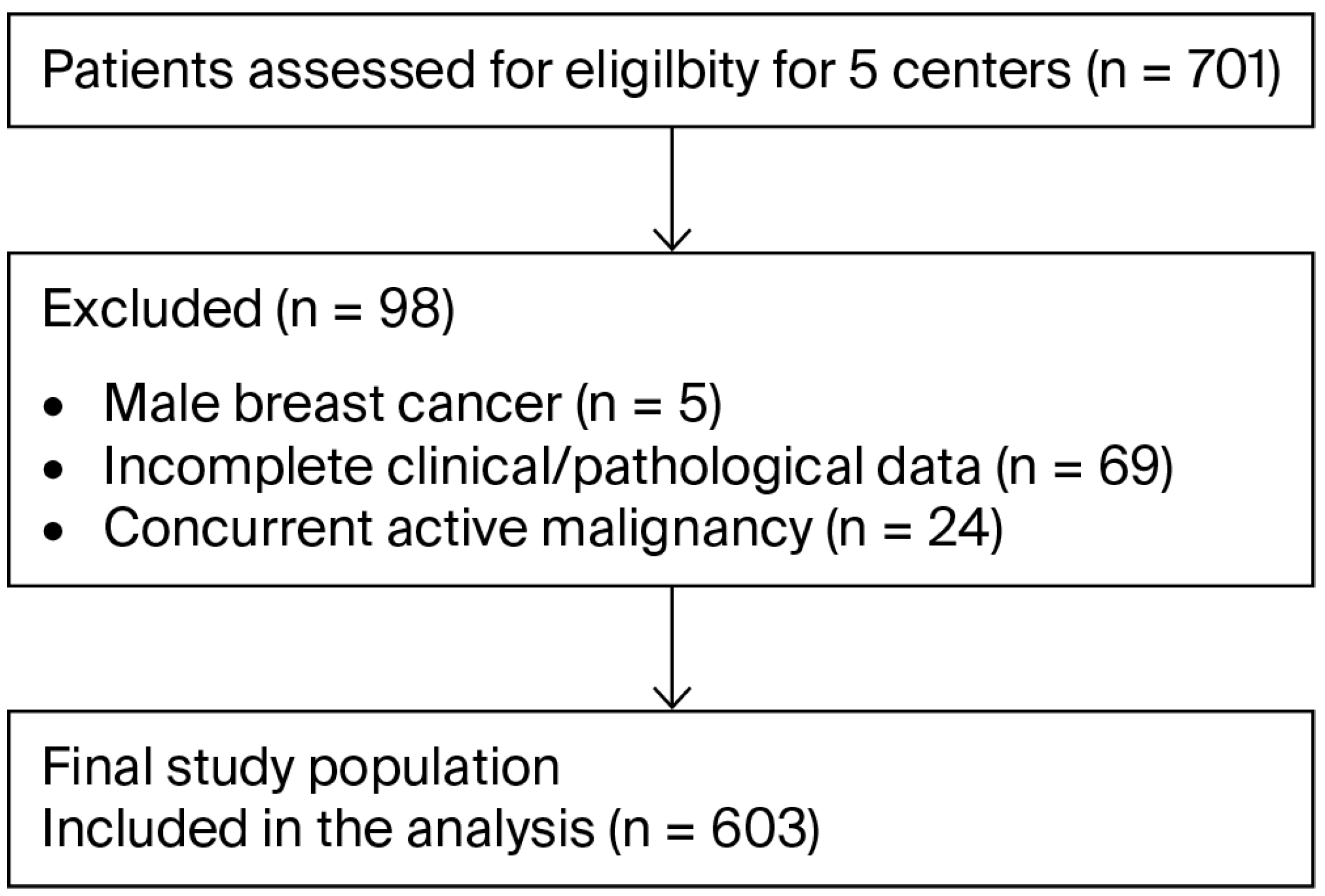
This multicenter, retrospective study analyzed data from consecutive patients with HR-positive/HER2-negative MBC treated with CDK4/6 inhibitors (ribociclib or palbociclib) at five tertiary medical centers in Turkey between May 2020 and June 2024. A flowchart illustrating patient selection is presented in Figure 1.
Inclusion criteria were: (1) histologically confirmed metastatic breast cancer; (2) HR-positive (ER ≥ 1% and/or PR ≥ 1%) and HER2-negative status; (3) documented pathology report; (4) treatment with a CDK4/6 inhibitor at any line of therapy; and (5) female sex.
Exclusion criteria included: (1) male breast cancer; (2) incomplete clinical or pathological data; and (3) concurrent active malignancy.
HER2 status was determined according to ASCO/CAP guidelines [10]. HER2-negative was defined as immunohistochemistry (IHC) 0 or 1+, or IHC 2+ with negative in situ hybridization. HER2-low was defined as IHC 1+ or IHC 2+ with negative in situ hybridization. HER2-positive cases (IHC 3+ or IHC 2+ with positive in situ hybridization) were excluded.
Endocrine therapy naivety was defined as no prior endocrine therapy for metastatic disease. Consequently, all non-naive patients (23.9%) initiated CDK4/6 inhibitors in the second or later line. Overall, the CDK4/6 inhibitor was started in the first line for 76.1% of the cohort and in subsequent lines for 23.9%.

2.2. Data Collection and Variables

We collected comprehensive demographic, clinical and pathological data, including: age at CDK4/6 inhibitor initiation, menopausal status, metastatic status (de novo vs. recurrent), metastatic sites (visceral, bone-only or liver), histological subtype, HER2 status (low vs. negative), Oestrogen (ER) expression level (<90% vs. ≥90%), Progesterone (PR) status (negative vs. positive), specific CDK4/6 inhibitor used (ribociclib vs. palbociclib) and prior endocrine therapy or chemotherapy before CDK4/6 inhibitor initiation.
An ER expression threshold of ≥90% was selected based on biological rationale and clinical considerations. Pre-clinical data suggest a continuous relationship between ER abundance and sensitivity to endocrine therapy [12]. Clinically, while lower thresholds define ER positivity, emerging evidence suggests that higher thresholds may better identify tumours with maximal endocrine dependence [13]. The ≥90% threshold was chosen to identify a population with very high ER expression that might derive exceptional benefit from CDK4/6 inhibitor therapy. This was a pre-specified analysis to test this specific hypothesis.

2.3. Outcomes and Statistical Analysis

The primary endpoint was OS, defined as the time from CDK4/6 inhibitor initiation to death from any cause. Patients alive at the last follow-up were censored.
Categorical variables are presented as frequencies and percentages, and continuous variables are presented as medians with ranges. Survival curves were estimated using the Kaplan–Meier method and compared with log-rank tests. Univariate Cox proportional hazards models were used to assess the impact of each variable on OS. Variables with a p-value < 0.1 in the univariate analysis were included in a multivariate Cox regression model to identify independent predictors. All statistical analyses were performed using SPSS version 20.0 (IBM Corp., Armonk, NY, USA), with statistical significance defined as p < 0.05.

2.4. Ethical Considerations

The study was conducted in accordance with the Declaration of Helsinki and approved by the Institutional Review Board of Selçuk University Faculty of Medicine (Protocol code: 2025/20, Date of approval: 14 January 2025). Patient consent was waived due to the retrospective nature of the study, and the analysis used anonymized clinical data.

3. Results

3.1. Patient Characteristics

A total of 603 patients met the inclusion criteria. Baseline characteristics are summarised in Table 1. The median age was 56.5 years (range 28–85). Most patients were post-menopausal (66.5%) and had invasive ductal carcinoma (87.1%). HER2-low status was present in 49.3% of the patients. Regarding ER expression, 310 patients (51.4%) had an ER ≥ 90%, while 259 (43.0%) had an ER < 90%. De novo metastatic disease was present in 51.1% of the patients. Visceral metastases were observed in 52.4% of the patients, liver metastases in 22.6% and bone-only metastases in 22.4%. Ribociclib was used more frequently than palbociclib (70.0% vs. 30.0%). Most patients were endocrine therapy-naive (76.0%) and chemotherapy-naive (69.3%) before initiating CDK4/6 inhibitor therapy.

3.2. Univariate Analysis of Overall Survival

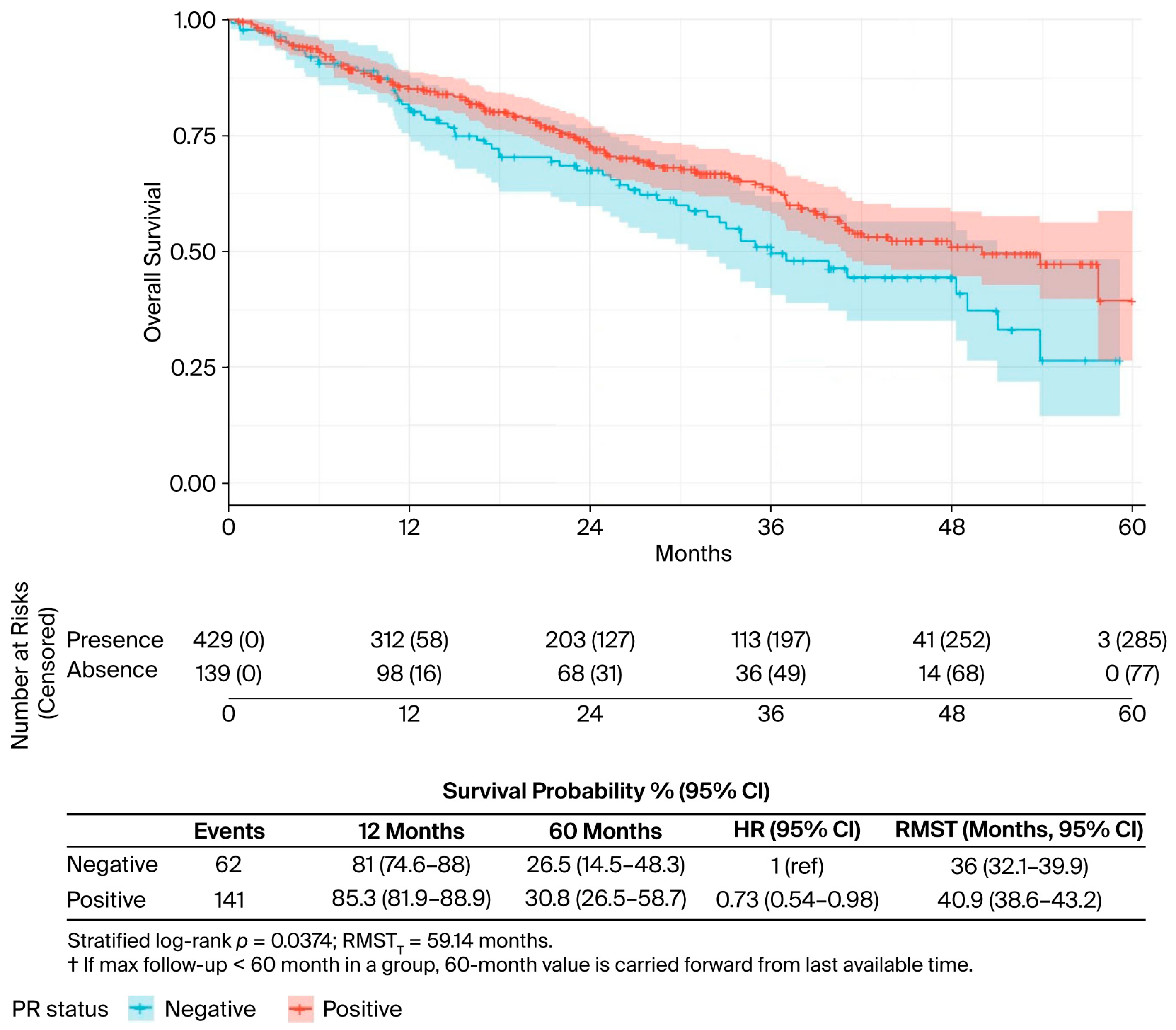
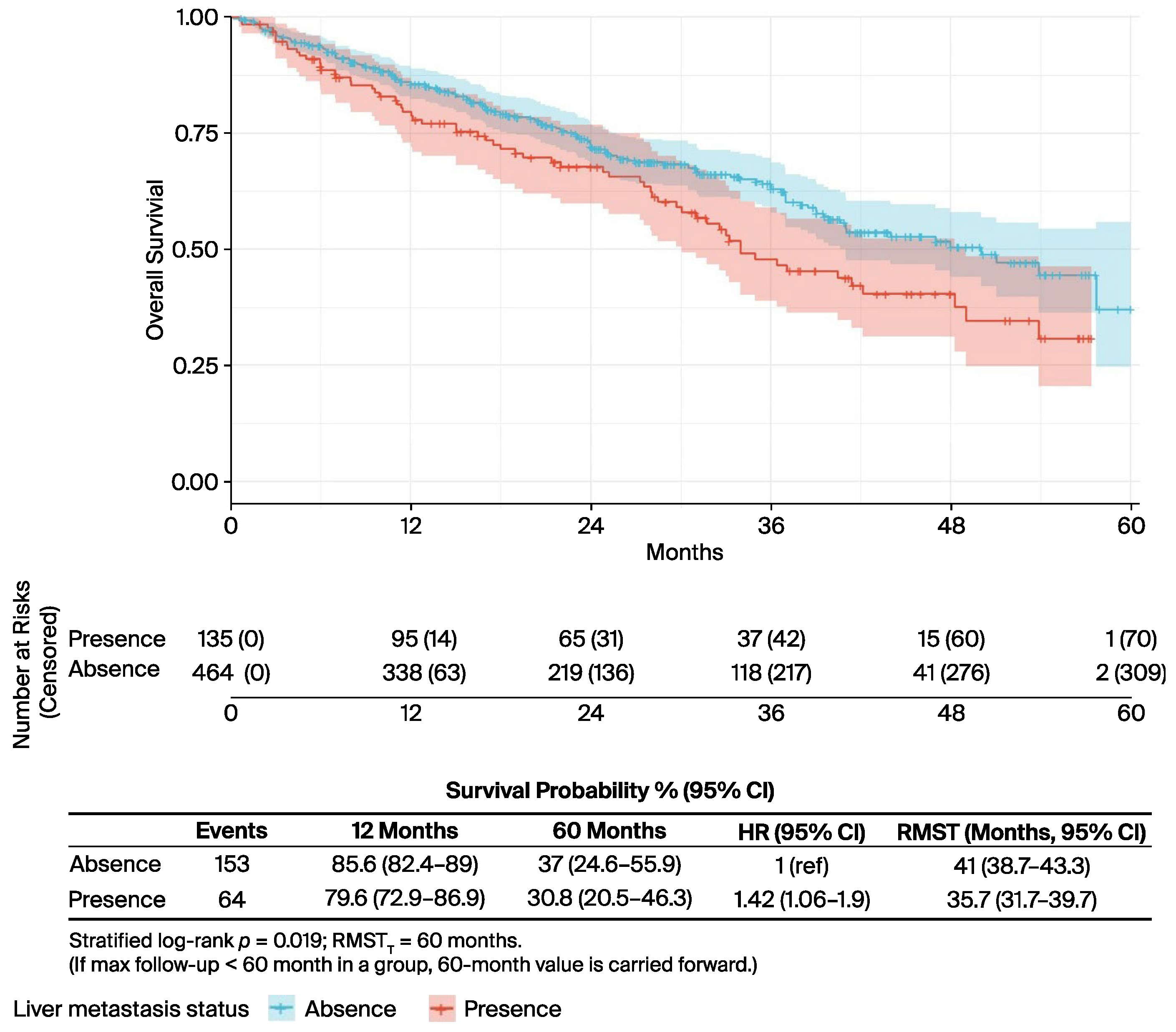
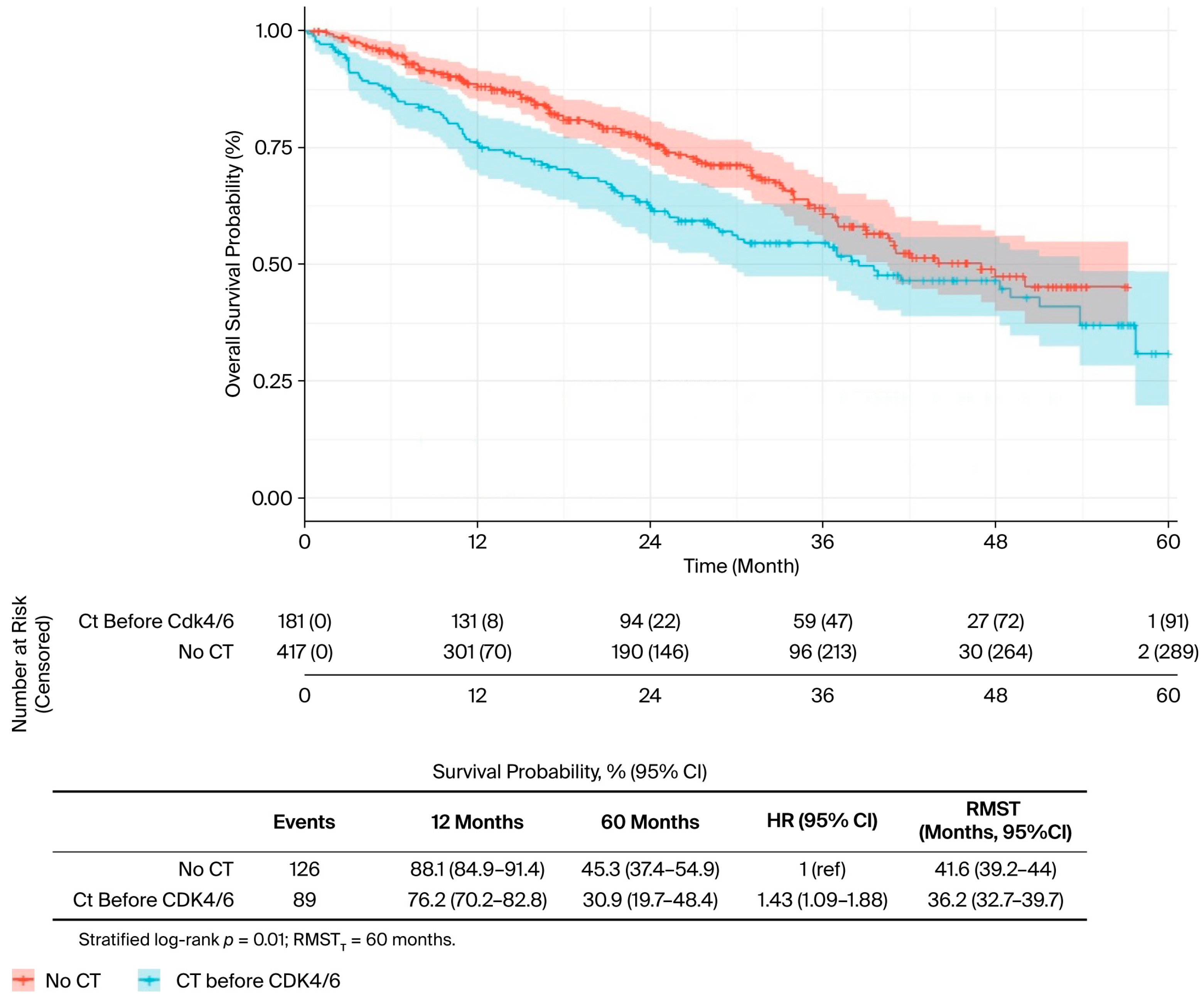
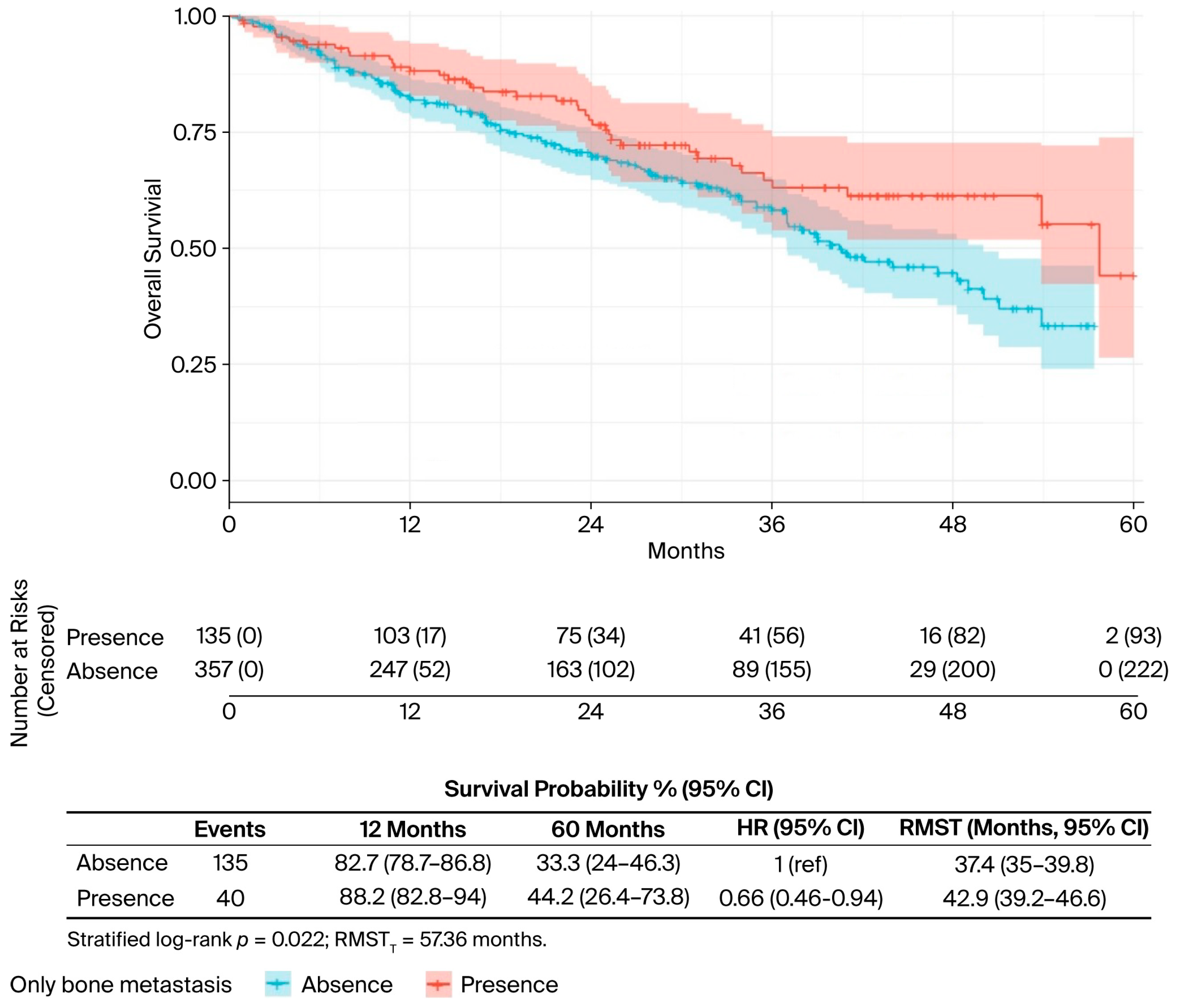
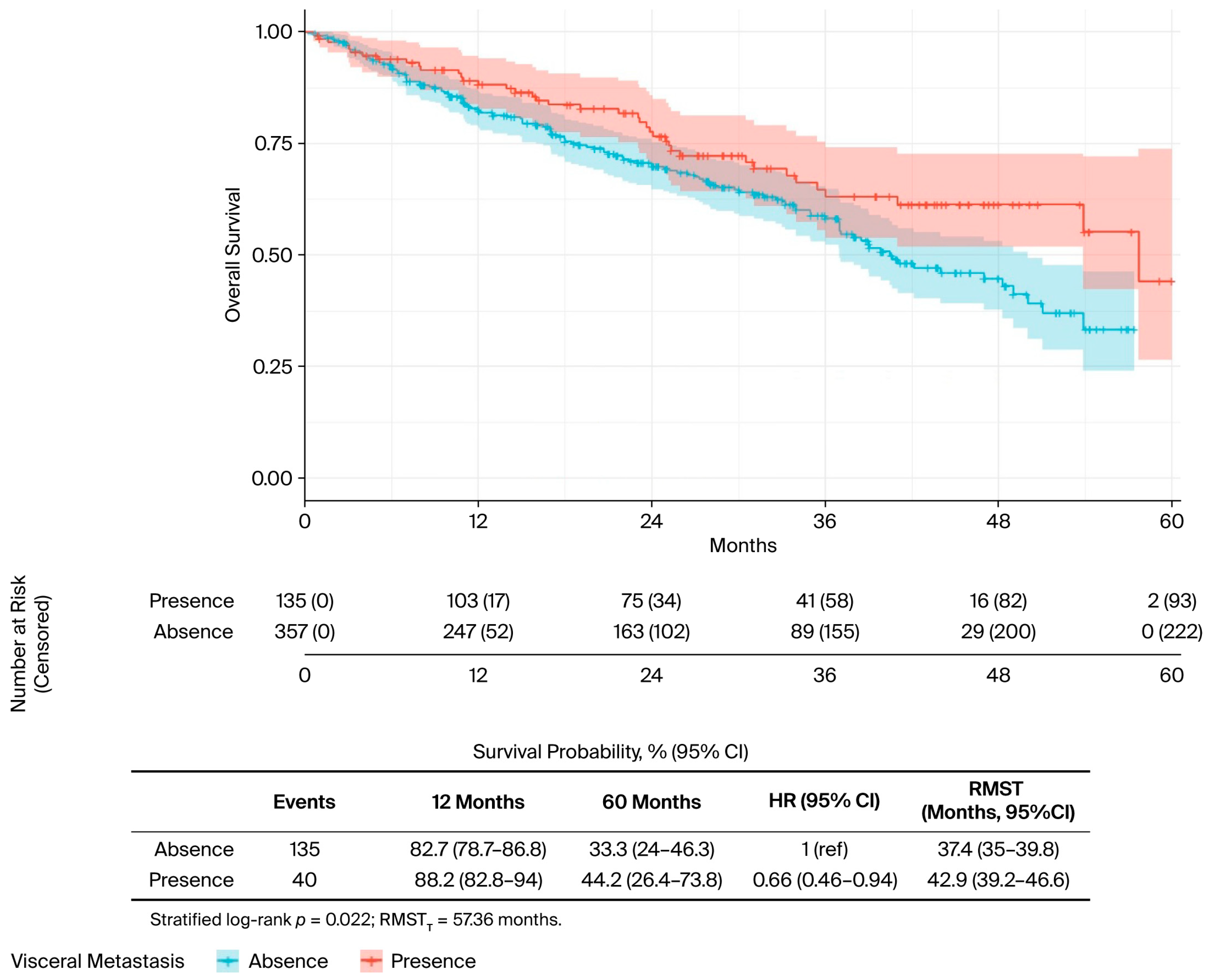
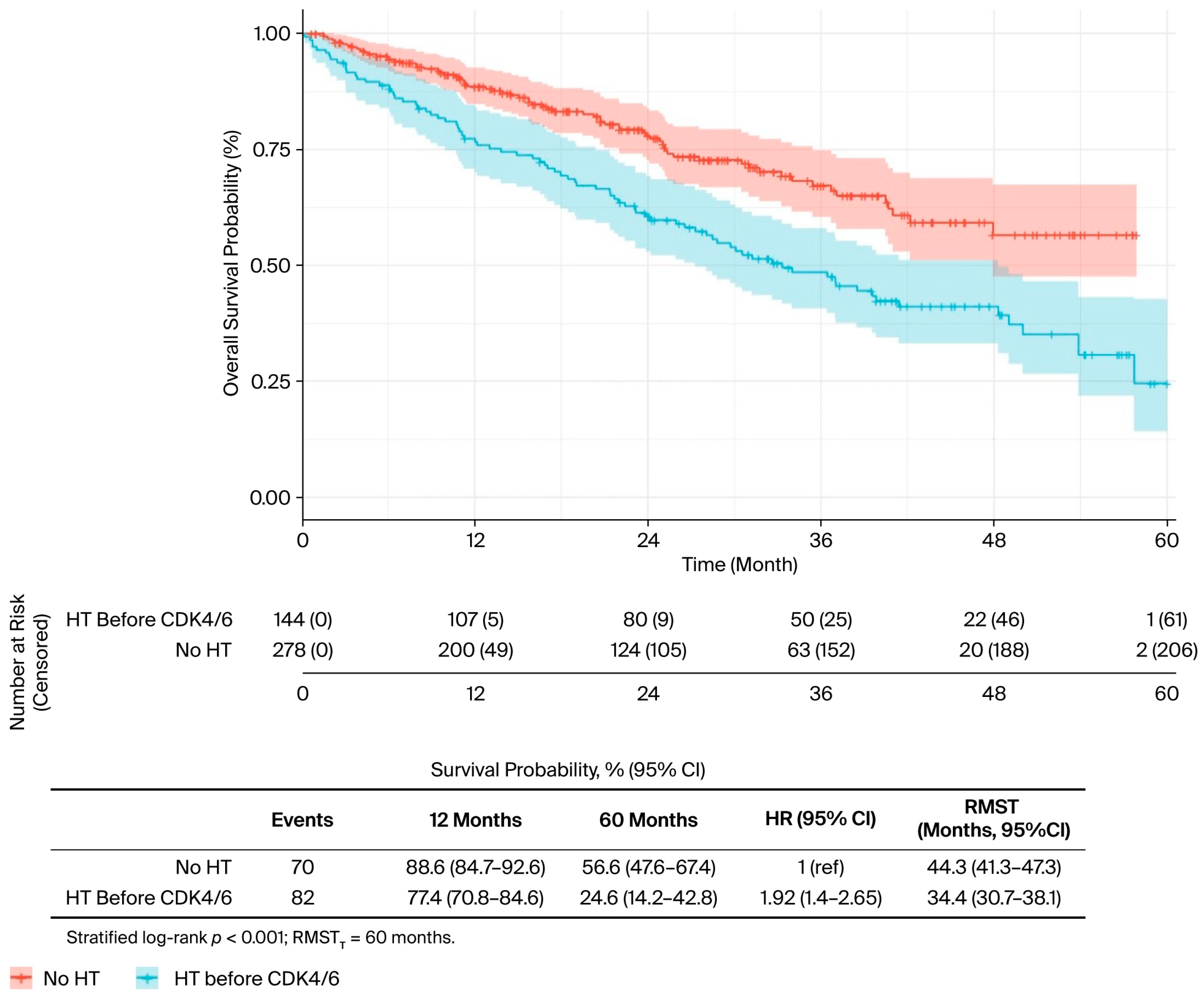
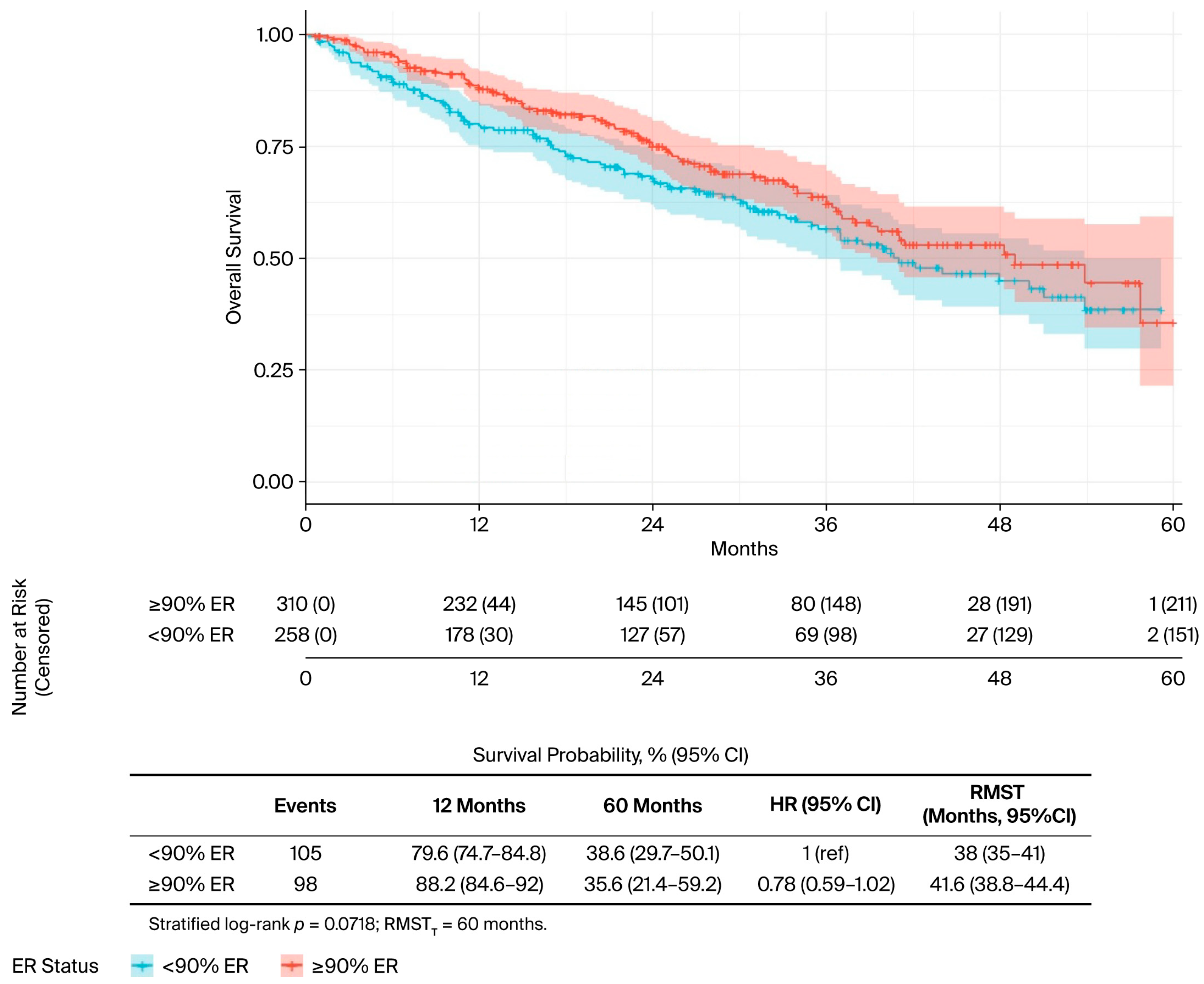
In the univariate analysis (Table 2), several factors were significantly associated with OS. The presence of liver metastases was associated with worse outcomes (median OS: 34.0 vs. 50.0 months; p = 0.019) (Figure 2), while bone-only metastases conferred a favourable prognosis (57.7 vs. 40.5 months; p = 0.022) (Figure 3). PR-positive status was associated with longer OS (50.0 vs. 36.0 months; p = 0.037) (Figure 4). Endocrine therapy-naive patients had substantially longer median OS compared to those with prior endocrine therapy exposure (51.0 vs. 33.3 months; p < 0.001) (Figure 5. Similarly, chemotherapy-naïve patients showed longer OS (47.0 vs. 38.5 months; p = 0.010) (Figure 6). Similarly, patients with visceral metastases had a significantly shorter median OS compared to those without (40.5 vs. 51.0 months; p = 0.025) (Figure 7). Although ER expression ≥90% showed only a trend towards significance in univariate analysis (49.0 vs. 41.0 months; p = 0.072) (Figure 8), it was included in the multivariate model based on our pre-specified hypothesis. No significant differences in OS were observed based on CDK4/6 inhibitor type, HER2 status, menopausal status, metastatic status or histological subtype.

3.3. Multivariate Analysis of Overall Survival

In the multivariate Cox regression analysis (Table 3), which included variables with p < 0.1 from the univariate analysis, two factors remained independently associated with superior OS: endocrine therapy naivety and high ER expression (≥90%) (HR: 0.74, 95% CI [0.56, 0.97]; p = 0.031). The presence of liver metastasis, which was significant in the univariate analysis, showed a numerical but not statistically significant association in the multivariate model (HR: 1.25, 95% CI [0.92, 1.70]; p = 0.157).

4. Discussion

This large multicentre real-world study identified two key independent predictors of prolonged overall survival in HR-positive/HER2-negative metastatic breast cancer patients treated with CDK4/6 inhibitors: naivety to endocrine therapy before CDK4/6 inhibitor initiation and exceptionally high ER expression (≥90%). These findings have important implications for clinical practice and patient selection.
Our most significant finding concerns the prognostic importance of quantitative ER expression. While ER positivity is traditionally defined by a ≥1% threshold, accumulating evidence suggests a continuous relationship between ER abundance and therapeutic response [10,12]. Previous studies have indicated that higher ER expression levels correlate with improved outcomes with endocrine therapy alone [12], and subgroup analyses from pivotal CDK4/6 inhibitor trials have suggested enhanced efficacy in patients with higher ER expression [7,11]. However, these investigations utilised varying thresholds, and to our knowledge, this is the first study to specifically demonstrate that an ER expression threshold of ≥90% identifies patients deriving superior overall survival benefit from CDK4/6 inhibitor therapy in a real-world setting.
The biological plausibility of this finding is substantial. Tumours with exceptionally high ER expression likely exhibit maximal dependence on the ER signalling pathway, rendering them particularly vulnerable to the combined ER pathway and CDK4/6 inhibition [5,6]. This heightened dependence may translate to more durable disease control and improved survival outcomes. Our data suggest that the ≥90% threshold may represent a clinically meaningful cutoff that could help identify patients most likely to achieve long-term benefit from first-line CDK4/6 inhibitor therapy.
The superior outcomes observed in endocrine therapy-naive patients align with the established biology of acquired endocrine resistance [13]. Patients who have progressed on prior endocrine therapy likely harbour resistance mechanisms that can diminish the effectiveness of subsequent CDK4/6 inhibition [12]. Our results strongly reinforce current guideline recommendations to implement CDK4/6 inhibitor combinations in first-line settings to maximise patient benefit [3]. The loss of statistical significance for prior chemotherapy in the multivariate analysis underscores that prior endocrine therapy status is the more dominant factor influencing OS in this treatment context.
Although PR positivity was associated with better OS in the univariate analysis, consistent with its role as a functional indicator of an intact ER pathway [13], it was not an independent factor in our multivariate model. This suggests that its prognostic information may be superseded by the more powerful effects of quantitative ER expression and prior treatment history. Similarly, the favourable prognosis associated with bone-only metastases [14,15] and the poor prognosis linked to liver metastases [16,17] observed in our univariate analysis are well documented. Their non-significance in the multivariate model indicates that their impact may be contextual and influenced by other stronger predictors.
Our findings regarding other clinical parameters are consistent with those of the broader literature. We found no significant difference in OS based on the specific CDK4/6 inhibitor used, which aligns with real-world comparative effectiveness studies [18]. Similarly, no significant differences were observed based on HER2-low status, supporting recent evidence that HER2-low and HER2-negative tumours derive similar benefit from CDK4/6 inhibitors [19,20,21].
The loss of independent prognostic significance for PR status and the presence of liver metastases in the multivariate model is noteworthy. This suggests that the prognostic information provided by PR positivity may be captured by the more dominant predictors of quantitative ER expression and prior treatment history. Similarly, the impact of established prognostic factors such as liver metastases may become contextual and less distinct when adjusted for the stronger driving forces of tumor biology and treatment line.
Several limitations warrant consideration. The retrospective design of this study introduces the potential for unmeasured confounding despite multivariate adjustment. Selection bias is possible, as patients receiving CDK4/6 inhibitors in real-world practice may differ from clinical trial populations. The heterogeneity in treatment protocols across five centres, while reflecting real-world practice, introduces variability. The lack of a central pathology review is another limitation, though all centres followed ASCO/CAP guidelines [10]. Fourth, data on ER expression were missing for a subset of patients (n = 34, 5.6%), and the analysis was performed as a complete-case analysis, excluding these cases. The potential impact of this missing data on the results should be considered a limitation of our study. Finally, data on other potential biomarkers (e.g., ESR1 mutations and Ki-67 index) were not available for the analysis.
We have refined our language to frame the strong recommendation for first-line use as a direct conclusion derived from the powerful effect of “naivety” observed in our data, which is intrinsically linked to the line of therapy.
We believe these clarifications have resolved the potential contradiction and provide a much clearer context for interpreting our results.

5. Conclusions

In conclusion, our real-world analysis identified treatment naivety and exceptionally high ER expression (≥90%) as key independent predictors of prolonged OS in HR-positive/HER2-negative metastatic breast cancer patients treated with CDK4/6 inhibitors. These findings underscore the importance of early CDK4/6 inhibitor implementation and suggest that quantitative ER assessment may refine patient selection beyond conventional positivity thresholds. The proposed ≥90% threshold warrants validation in prospective studies and collaborative pooled analyses to further personalise treatment strategies and optimise outcomes for patients with advanced breast cancer.

Author Contributions

Conceptualization: B.B., S.Y., B.U. and C.C.; Methodology: B.B., B.U., C.C. and S.Y.; Software: C.C.; Validation: B.U., C.C., A.O. and M.A.; Formal Analysis: C.C. and B.B.; Investigation: B.B., B.U., İ.T.Y., O.Ö.E., C.Y., G.G., A.P.E., E.Ş.H., E.G., O.O., M.A. and A.O.; Resources: B.B., S.Y., İ.T.Y., O.Ö.E., C.Y., G.G., A.P.E., E.Ş.H., E.G., O.O. and M.A.; Data Curation: B.B., C.C., İ.T.Y. and O.Ö.E.; Writing—Original Draft Preparation: B.B. and B.U.; Writing—Review & Editing: B.B., B.U., C.C., S.Y., C.Y., G.G., A.O. and M.A.; Visualization: B.B. and C.C.; Supervision: S.Y., C.Y., G.G. and A.O.; Project Administration: B.B. and S.Y. All authors have read and agreed to the published version of the manuscript.

Funding

This research received no external funding.

Institutional Review Board Statement

The study was conducted in accordance with the Declaration of Helsinki and approved by the Institutional Review Board of Selçuk University Faculty of Medicine. Protocol code: 2025/20. Date of approval: 14 January 2025.

Informed Consent Statement

Patient consent was waived due to the retrospective nature of the study, and the analysis used anonymous clinical data. This waiver was approved by the Selçuk University Faculty of Medicine Ethics Committee.

Data Availability Statement

The data presented in this study are available upon request from the corresponding author. The data are not publicly available due to privacy and ethical restrictions.

Conflicts of Interest

The authors declare no conflicts of interest.

References

  1. Torre, L.A.; Siegel, R.L.; Ward, E.M.; Jemal, A. Global cancer incidence and mortality rates and trends: An update. Cancer Epidemiol. Biomark. Prev. 2016, 25, 16–27. [Google Scholar] [CrossRef]
  2. Reinert, T.; de Paula, B.; Shafaee, M.N.; Souza, P.H.; Ellis, M.J.; Bines, J. Endocrine therapy for ER-positive/HER2-negative metastatic breast cancer. Chin. Clin. Oncol. 2018, 7, 25. [Google Scholar] [CrossRef]
  3. Cardoso, F.; Paluch-Shimon, S.; Senkus, E.; Curigliano, G.; Aapro, M.S.; André, F.; Barrios, C.H.; Bergh, J.; Bhattacharyya, G.S.; Biganzoli, L.; et al. 5th ESO-ESMO international consensus guidelines for advanced breast cancer (ABC 5). Ann. Oncol. 2020, 31, 1623–1649. [Google Scholar] [CrossRef]
  4. Sherr, C.J.; Roberts, J.M. CDK inhibitors: Positive and negative regulators of G1-phase progression. Genes Dev. 1999, 13, 1501–1512. [Google Scholar] [CrossRef] [PubMed]
  5. Alves, C.L.; Ehmsen, S.; Terp, M.G.; Portman, N.; Tuttolomondo, M.; Gammelgaard, O.L.; Hundebøl, M.F.; Kaminska, K.; Johansen, L.E.; Bak, M.; et al. Co-targeting CDK4/6 and AKT with endocrine therapy prevents progression in CDK4/6 inhibitor and endocrine therapy-resistant breast cancer. Nat. Commun. 2021, 12, 5112. [Google Scholar] [PubMed]
  6. Im, S.A.; Lu, Y.S.; Bardia, A.; Harbeck, N.; Colleoni, M.; Franke, F.; Chow, L.; Sohn, J.; Lee, K.-S.; Campos-Gomez, S.; et al. Overall Survival with Ribociclib plus Endocrine Therapy in Breast Cancer. N. Engl. J. Med. 2019, 381, 307–316. [Google Scholar] [CrossRef] [PubMed]
  7. Finn, R.S.; Martin, M.; Rugo, H.S.; Jones, S.; Im, S.-A.; Gelmon, K.; Harbeck, N.; Lipatov, O.N.; Walshe, J.M.; Moulder, S.; et al. Palbociclib and Letrozole in Advanced Breast Cancer. N. Engl. J. Med. 2016, 375, 1925–1936. [Google Scholar] [CrossRef]
  8. Finn, R.S.; Crown, J.P.; Ettl, J.; Slamon, D.J.; Dieras, V.; Im, S.-A.; Harbeck, N.; Lipatov, O.N.; Walshe, J.M.; Martin, M.; et al. Overall Survival Results from the Phase 3 PALOMA-2 Trial of First-Line Palbociclib plus Letrozole for Hormone Receptor–Positive/HER2-Negative Metastatic Breast Cancer. J. Clin. Oncol. 2024, 42, 994–1004. [Google Scholar]
  9. Goetz, M.P.; Toi, M.; Campone, M.; Sohn, J.; Paluch-Shimon, S.; Huober, J.; Park, I.H.; Trédan, O.; Chen, S.-C.; Manso, L.; et al. MONARCH 3: Abemaciclib As Initial Therapy for Advanced Breast Cancer. J. Clin. Oncol. 2017, 35, 3638–3646. [Google Scholar] [CrossRef]
  10. Allison, K.H.; Hammond, M.E.H.; Dowsett, M.; McKernin, S.E.; Carey, L.A.; Fitzgibbons, P.L.; Hayes, D.F.; Lakhani, S.R.; Chavez-MacGregor, M.; Perlmutter, J.; et al. Estrogen and Progesterone Receptor Testing in Breast Cancer: ASCO/CAP Guideline Update. J. Clin. Oncol. 2020, 38, 1346–1366. [Google Scholar] [CrossRef]
  11. Finn, R.S.; Liu, Y.; Zhu, Z.; Martin, M.; Rugo, H.S.; Diéras, V.; Im, S.-A.; Gelmon, K.A.; Harbeck, N.; Lu, D.R.; et al. Biomarker analyses of response to cyclin-dependent kinase 4/6 inhibition and endocrine therapy in women with treatment-naïve metastatic breast cancer. Clin. Cancer Res. 2020, 26, 110–121. [Google Scholar] [CrossRef]
  12. Pandey, K.; An, H.J.; Kim, S.K.; Lee, S.A.; Kim, S.; Lim, S.M.; Kim, G.M.; Sohn, J.; Moon, Y.W. Molecular mechanisms of resistance to CDK4/6 inhibitors in breast cancer: A review. Int. J. Cancer 2019, 145, 1179–1188. [Google Scholar] [CrossRef] [PubMed]
  13. Fang, H.; Huang, D.; Yang, F.; Guan, X. Potential biomarkers of CDK4/6 inhibitors in hormone receptor-positive advanced breast cancer. Breast Cancer Res. Treat. 2018, 168, 287–297. [Google Scholar] [CrossRef]
  14. Toss, A.; Venturelli, M.; Sperduti, I.; Molinaro, E.; Isca, C.; Barbieri, E.; Piacentini, F.; Omarini, C.; Cortesi, L.; Cascinu, S.; et al. First-line treatment for endocrine-sensitive bone-only metastatic breast cancer: Systematic review and meta-analysis. Clin. Breast Cancer 2019, 19, e701–e716. [Google Scholar] [CrossRef] [PubMed]
  15. Niikula, N.; Liu, J.; Hayashi, N.; Palla, S.L.; Tokuda, Y.; Hortobagyi, G.N.; Ueno, N.T.; Theriault, R.L. Treatment outcome and prognostic factors for patients with bone-only metastases of breast cancer: A single-institution retrospective analysis. Oncologist 2011, 16, 155–164. [Google Scholar] [CrossRef] [PubMed]
  16. Cummings, M.C.; Simpson, P.T.; Reid, L.E.; Jayanthan, J.; Skerman, J.; Song, S.; Reed, A.E.M.; Kutasovic, J.R.; Morey, A.L.; Marquart, L.; et al. Metastatic progression of breast cancer: Insights from 50 years of autopsies. J. Pathol. 2014, 23212, 23–31. [Google Scholar] [CrossRef]
  17. Zhao, H.Y.; Gong, Y.; Ye, F.G.; Ling, H.; Hu, X. Incidence and prognostic factors of patients with synchronous liver metastases upon initial diagnosis of breast cancer: A population-based study. Cancer Manag. Res. 2018, 10, 5937–5950. [Google Scholar] [CrossRef]
  18. Thill, M.; Zahn, M.O.; Welt, A.; Nusch, A.; Zaiss, M.; Engelken, K.; Kaltenecker, G.; Ringwald, K.; Gratzke, K.; Dille, S.; et al. Head-to-head comparison of palbociclib and ribociclib in first-line treatment of HR-positive/HER2-negative metastatic breast cancer with real-world data from the OPAL registry. Int. J. Cancer 2025, 156, 1770–1782. [Google Scholar] [CrossRef]
  19. Schettini, F.; Giudici, F.; Giuliano, M.; Cristofanilli, M.; Arpino, G.; Del Mastro, L.; Puglisi, F.; De Placido, S.; Paris, I.; De Placido, P.; et al. Overall Survival of CDK4/6-Inhibitor-Based Treatments in Clinically Relevant Subgroups of Metastatic Breast Cancer: Systematic Review and Meta-Analysis. J. Natl. Cancer Inst. 2020, 112, 1089–1097. [Google Scholar] [CrossRef]
  20. Kahraman, S.; Hızal, M.; Gümüşay, Ö.; Başaran, G.; Seyyar, M.; Sahin, E.; Çabuk, D.; Yaşar, A.; Bayoğlu, V.; Bayram, E.; et al. HER2-low expression in patients with hormone receptor positive and HER2 negative advanced breast cancer treated with ribociclib or palbociclib in combination with endocrine therapy. Turk. J. Clin. Lab. 2025, 16, 255–262. [Google Scholar] [CrossRef]
  21. Toda, E.; Hoshino, M.; Shimoi, T.; Yamanaka, T.; Kitadai, R.; Saito, A.; Kita, S.; Kawachi, A.; Maejima, A.; Kojima, Y.; et al. Genetic insights into CDK4/6 inhibitor efficacy in invasive lobular carcinoma and invasive ductal carcinoma. ESMO Open 2025, 10, 104620. [Google Scholar] [CrossRef]
Figure 1. Patient selection flowchart.
Curroncol 32 00709 g001
Figure 2. Liver metastasis status, univariate analysis. Kaplan–Meier curves for overall survival by metastatic pattern (liver metastasis vs. other sites). The risk table shows the number of patients at risk at specified time intervals. p-value from log-rank test is shown.
Curroncol 32 00709 g002
Figure 3. Only bone metastasis status, univariate analysis. Kaplan–Meier curves for overall survival by metastatic pattern (bone-only metastases vs. other sites). The risk table shows the number of patients at risk at specified time intervals. p-value from log-rank test is shown.
Curroncol 32 00709 g003
Figure 4. PR status, univariate analysis. Kaplan–Meier curves for overall survival by progesterone receptor (PR) status. The risk table shows the number of patients at risk at specified time intervals. p-value from log-rank test is shown.
Curroncol 32 00709 g004
Figure 5. Endocrine therapy before CDK 4/6 Inhibitor, univariate analysis (ET: Endocrine therapy).
Curroncol 32 00709 g005
Figure 6. Chemotherapy before CDK 4/6 Inhibitors, univariate analysis (CT: Chemotherapy).
Curroncol 32 00709 g006
Figure 7. Visceral metastasis status, univariate analysis. Kaplan–Meier curves for overall survival by visceral metastasis status. The risk table shows the number of patients at risk at specified time intervals. p-value from log-rank test is shown.
Curroncol 32 00709 g007
Figure 8. ER status, univariate analysis. Kaplan–Meier curves for overall survival by oestrogen receptor (ER) status. The risk table shows the number of patients at risk at specified time intervals. p-value from log-rank test is shown.
Curroncol 32 00709 g008
Table 1. Patient Characteristics (n = 603).
CharacteristicN%
Age (years)
   Median (Range)56.5 (28–85)
   <35294.8
   35–5018630.8
   51–6522036.5
   >6516827.9
Menopausal Status
   Pre/Perimenopausal20133.3
   Postmenopausal40166.5
   Unknown10.2
Tumor Characteristics
Histological Subtype
   Invasive Ductal Carcinoma52587.1
   Invasive Lobular Carcinoma518.5
   Other193.2
   Unknown81.2
Receptor Status
ER Expression
   <90%25943.0
   ≥90%31051.4
   Unknown345.6
PR Status
   Negative13923.1
   Positive43071.3
   Unknown345.6
HER2 Status
   HER2-negative30150.0
   HER2-low29749.3
   Unknown50.7
Disease Status
   Metastatic Presentation
   De novo30851.1
   Recurrent29548.9
Metastatic Sites
   Visceral Metastasis31652.4
   Liver Metastasis13622.6
   Bone-Only Metastasis13522.4
   Unknown162.6
Treatment Characteristics
CDK4/6 Inhibitor
   Ribociclib42270.0
   Palbociclib18130.0
Prior Therapy History
   Prior Endocrine Therapy14423.9
   Prior Chemotherapy18130.0
Table 2. Univariate Analysis of Overall Survival.
VariableMedian OS (Months)HR (95% CI)p-Value
Prior endocrine therapy
   No51.01.68 (1.32–2.14)<0.001
   Yes33.3
Liver metastases
   No50.01.42 (1.06–1.90)0.019
   Yes34.0
Bone-only metastases
   No40.50.67 (0.48–0.94)0.022
   Yes57.7
PR status
   Positive50.01.35 (1.02–1.79)0.037
   Negative36.0
ER status
   ≥90%49.01.24 (0.98–1.57)0.072
   <90%41.0
Prior chemotherapy
   No47.01.38 (1.08–1.76)0.010
   Yes38.5
Visceral metastases
   No51.01.34 (1.04–1.73)0.025
   Yes40.5
Table 3. Multivariate Cox Regression Analysis of Overall Survival.
VariableHR95% CIp-Value
Prior endocrine therapy (Yes vs. No)1.381.01–1.880.045
ER status (≥90% vs. <90%)0.740.56–0.970.031
Liver metastases (Yes vs. No)1.250.92–1.700.157
Bone-only metastases (Yes vs. No)0.860.60–1.230.408
PR status (Negative vs. Positive)1.220.89–1.660.216
Prior chemotherapy (Yes vs. No)1.130.86–1.490.380
Visceral metastases (Yes vs. No)1.180.89–1.570.247
Disclaimer/Publisher’s Note: The statements, opinions and data contained in all publications are solely those of the individual author(s) and contributor(s) and not of MDPI and/or the editor(s). MDPI and/or the editor(s) disclaim responsibility for any injury to people or property resulting from any ideas, methods, instructions or products referred to in the content.