Impact of Multidisciplinary Team Care on Patient-Reported Outcomes in Patients with Lung Cancer: A Systematic Review


Simple Summary
Abstract
1. Background
- To examine how the involvement of a multidisciplinary team (MDT) in the care of patients with lung cancer affects their overall quality of life, with a focus on understanding patients’ physical, emotional, social, and functional well-being through patient-reported outcomes (PROs).
- To investigate the enablers and barriers for implementing and running MDT care in lung cancer management. This included studying system-, process-, and patient-level factors that affect how MDTs function, communicate, and provide care.
2. Methods
2.1. Review Design
2.2. Definitions and Scope of Multidisciplinary Team (MDT)
2.3. Search Strategies and Databases
2.4. Inclusion and Exclusion Criteria
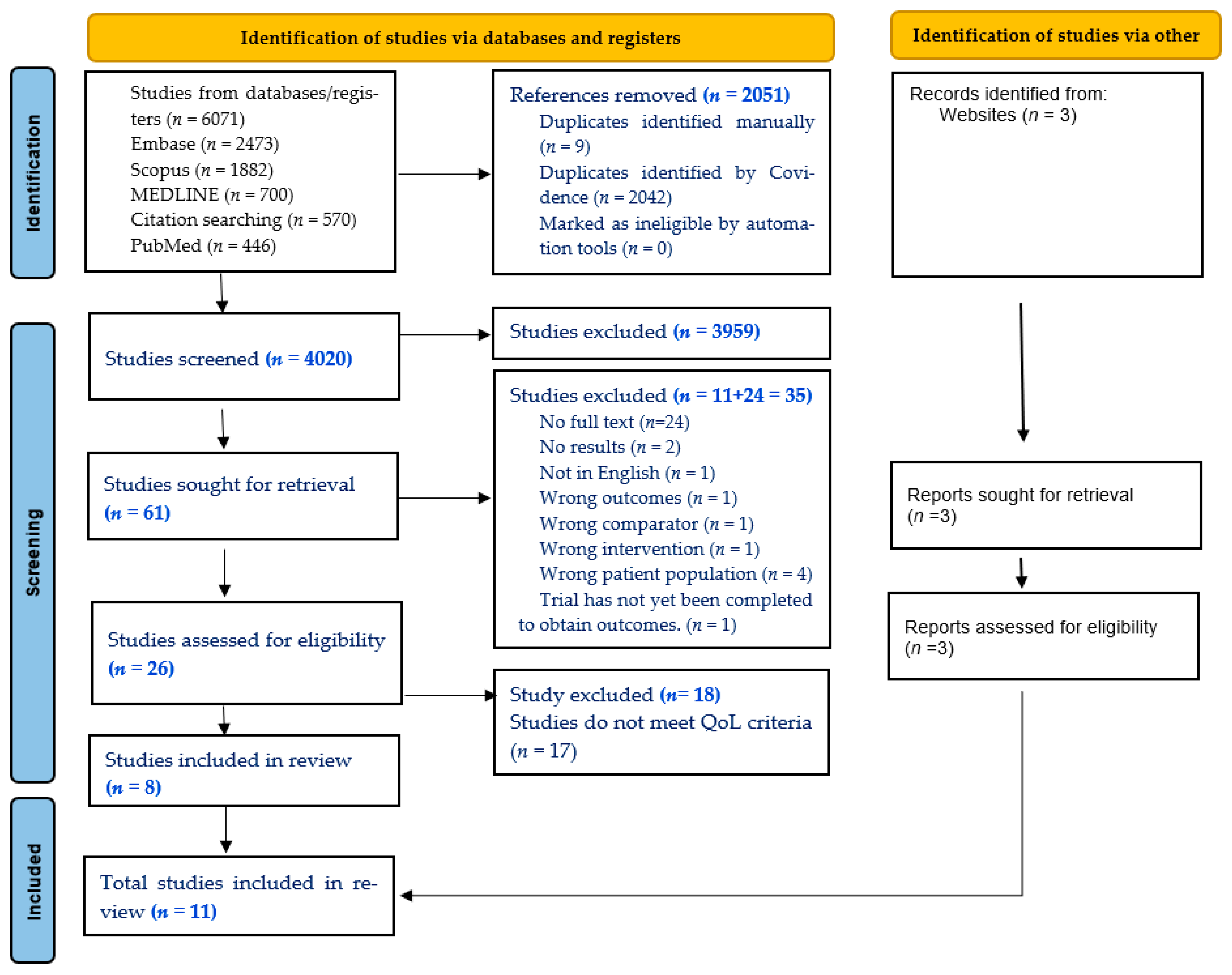
2.5. Study Selection
2.6. Data Extraction
2.7. Critical Appraisal
2.8. Data Synthesis
3. Results
3.1. Study Characteristics
3.2. Intervention Description
3.3. Patient Reported Measures—Quality of Life
3.4. Overall Patient Satisfaction
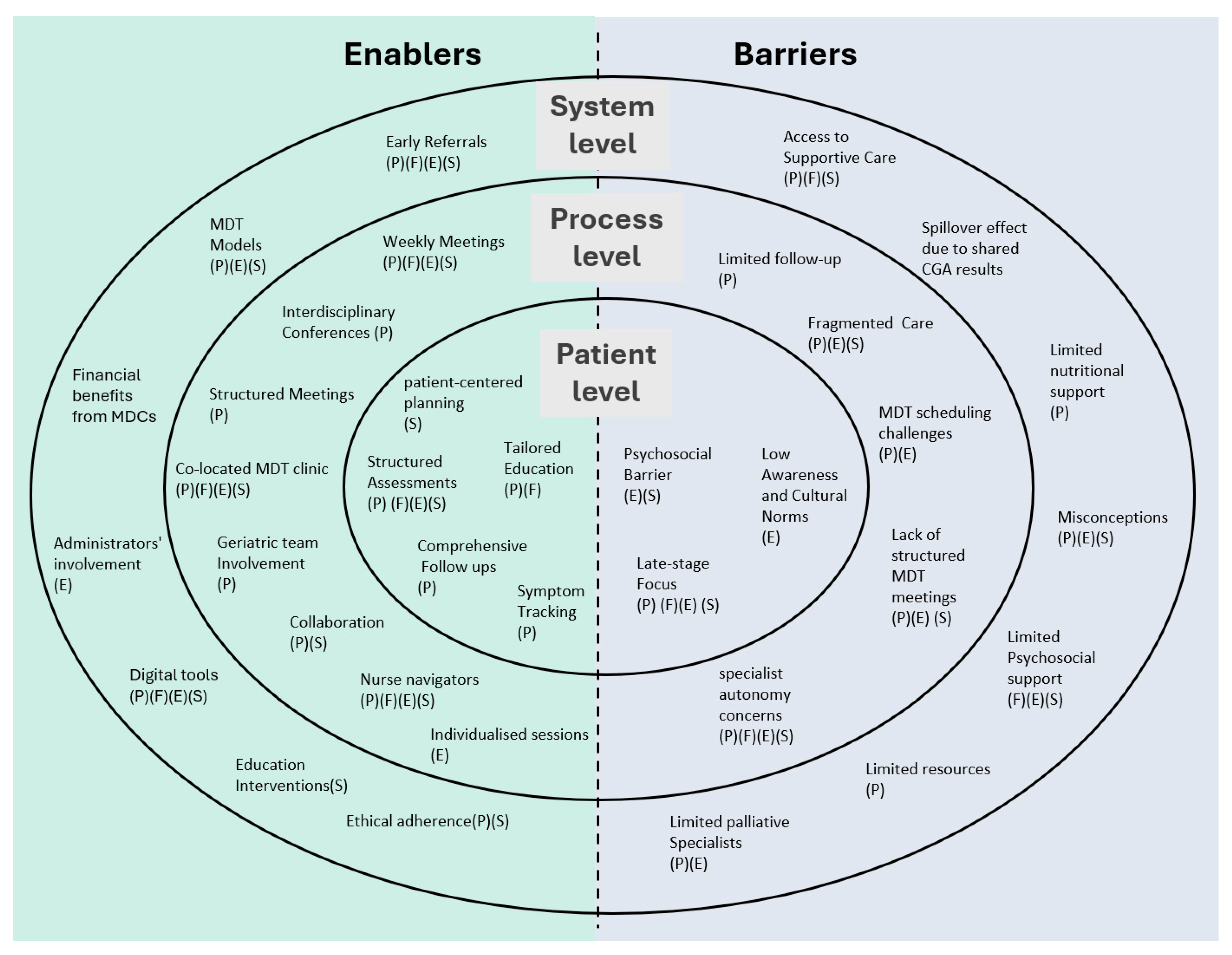
3.5. Barriers and Enablers
4. Discussion
4.1. Multidisciplinary Team Composition and Process Characteristics
4.2. Physical and Functional Well-Being
4.3. Emotional Well-Being and Psychosocial Integration
4.4. Social and Spiritual Well-Being
4.5. Patient Satisfaction and Care Experience
4.6. Other Barriers
4.7. Implications for Practice and Future Research
5. Strength and Limitations
6. Conclusions
Supplementary Materials
Author Contributions
Funding
Institutional Review Board Statement
Informed Consent Statement
Data Availability Statement
Acknowledgments
Conflicts of Interest
Appendix A

| Database | Search String |
|---|---|
| Medline |
|
| Embase |
|
| Cochrane | respiratory tract neoplasms or exp lung neoplasms or exp pleural neoplasms or tracheal neoplasms in Title Abstract Keyword OR (lung or pleural or respiratory tract) adj2 (cancer * or neoplasm * or tumor * or tumour * or malignanc * or metast * or carcinoma *) in Title Abstract Keyword OR (lung cancer * or lung neoplasm * or non small cell lung carcinoma * or nonsmall cell carcinoma * or NSCLC or SCLC or small cell lung cancer *) in Title Abstract Keyword AND Patient Care Team in Title Abstract Keyword OR (multidisciplinary team * or MDT * or multidisciplinary care team * or multidisciplinary tumor board * or MTBs or multidisciplinary clinic * or multidisciplinary team meeting *) |
| Scopus | (TITLE-ABS-KEY (“respiratory tract neoplasms”) OR TITLE-ABS-KEY (“lung neoplasms”) OR TITLE-ABS-KEY (“pleural neoplasms”) OR TITLE-ABS-KEY (“tracheal neoplasms”) OR TITLE-ABS-KEY ((lung OR pleural OR “respiratory tract”) W/2 (cancer * OR neoplasm * OR tumor * OR tumour * OR malignanc * OR metast * OR carcinoma *)) OR TITLE-ABS-KEY (“lung cancer *”) OR TITLE-ABS-KEY (“lung neoplasm *”) OR TITLE-ABS-KEY (“non small cell lung carcinoma *”) OR TITLE-ABS-KEY (“nonsmall cell carcinoma *”) OR TITLE-ABS-KEY (nsclc) OR TITLE-ABS-KEY (sclc) OR TITLE-ABS-KEY (“small cell lung cancer *”) AND TITLE-ABS-KEY (“patient care team”) OR TITLE-ABS-KEY (“multidisciplinary team *”) OR TITLE-ABS-KEY (mdt *) OR TITLE-ABS-KEY (“multidisciplinary care team *”) OR TITLE-ABS-KEY (“multidisciplinary tumor board *”) OR TITLE-ABS-KEY (mtbs) OR TITLE-ABS-KEY (“multidisciplinary clinic *”) OR TITLE-ABS-KEY (“multidisciplinary team meeting *”)) AND (LIMIT-TO (LANGUAGE, “english”)) |
| Author | Positive/Methodologically Sound | Negative/Relatively Poor Methodology | Unknowns |
|---|---|---|---|
| Borneman (2008) [18] |
|
|
|
| Chen (2023) [19] |
|
|
|
| Edbrooke (2019) [20] |
|
|
|
| Ferrell (2015) [21] |
|
|
|
| Friedman (2018) [22] |
|
|
|
| Gregersen (2024) [23] |
|
|
|
| Raz (2016) [24] |
|
|
|
| Shao (2023) [25] |
|
|
|
| Schofields (2013) [26] |
|
|
|
| Smeltzer (2018) [27] |
|
|
|
| Wang (2014) [28] |
|
|
|
| Author | Scale | Non-MDT | MDT | p Value | ||
|---|---|---|---|---|---|---|
| Physical Well-Being (N = 10) | ||||||
| Borneman (2008) [18] | Physical QOL | 5.8 (SD = 2) | 5.5 (SD = 1.5) | <0.003 | ||
| Chen (2023) [19] | Nutritional Status No (0–1)—PG-SGA | 30 (21.43%) | 53 (37.86%) | 0.007 | ||
| Nutritional Status Mild (2–8)—PG—SGA | 78 (55.71%) | 67 (47.86%) | 0.007 | |||
| Nutritional Status Severe (≥9)—PG—SGA | 32 (22.86%) | 20 (14.29%) | 0.007 | |||
| No Pain (0)—NRS | 76 (54.29%) | 53 (37.86%) | 0.003 | |||
| Mild Pain (1–3)—NRS | 52 (37.14%) | 67 (47.86%) | 0.003 | |||
| Moderate Pain (4–6)—NRS | 12 (8.57%) | 20 (14.29%) | 0.003 | |||
| Severe Pain (7–10)—NRS | 0 | 0 | 0.003 | |||
| Edbrooke (2019) [20] | Fatigue—EORTC QLQ-C30 | 39.7 | 30.9 | 0.01 | ||
| Dyspnoea—EORTC QLQ-C30 | 29.7 | 20.5 | 0.03 | |||
| Ferrell (2015) [21] | Physical well-being (Early) | 19.5 ± 6.2 | 23.3 ± 3.3 | 0.004 | ||
| Physical well-being (Late) | 21.2 ± 6.2 | 22.2 ± 4.9 | 0.004 | |||
| Physical well-being (Total) | 20.3 ± 6.2 | 22.8 ± 4.2 | 0.004 | |||
| Gregersen (2024) [23] | Fatigue—EORTC QLQ-C30 | +26.8 ± 31.3 | +30.0 ± 33.7 | 0.50 | ||
| Insomnia—EORTC QLQ-C30 | −1.77 ± 38.0 | −10.2 ± 42.1 | 0.89 | |||
| Pain—EORTC QLQ-C30 | +2.27 ± 33.4 | −1.74 ± 32.5 | 0.63 | |||
| Dyspnea—EORTC QLQ-C30 | −6.82 ± 32.4 | +0.75 ± 32.3 | 0.06 | |||
| Appetite Loss—EORTC QLQ-C30 | −2.78 ± 46.6 | +0.75 ± 47.1 | 0.40 | |||
| Diarrhea—EORTC QLQ-C30 | −5.05 ± 35.1 | +2.24 ± 27.2 | 0.06 | |||
| Constipation—EORTC QLQ-C30 | −2.27 ± 25.1 | −1.99 ± 28.8 | 0.82 | |||
| Nausea/Vomiting—EORTC QLQ-C30 | −1.89 ± 25.9 | +2.86 ± 27.0 | 0.40 | |||
| Mobility—EORTC QLQ-ELD14 | +3.11 ± 22.7 | +1.87 ± 20.1 | 0.69 | |||
| Joint Stiffness—EORTC QLQ-ELD14 | +5.30 ± 31.9 | +6.97 ± 32.7 | 0.69 | |||
| Raz (2016) [24] | Lung Cancer Subscale | 23.6 ± 4.2 | 29.4 ± 2.1 | <0.001 | ||
| Physical Well-being | 22.2 ± 4.1 | 25.2 ± 2.3 | <0.001 | |||
| Shao (2023) [25] | 6-Minute Walk Distance (6MWD, m) | 352 ± 84 | 393 ± 92 | 0.02 | ||
| Dyspnea (mMRC) | 2.1 ± 1.0 | 1.6 ± 0.9 | <0.01 | |||
| Fatigue (FAS) | 22.5 ± 5.3 | 18.9 ± 5.1 | <0.01 | |||
| Schofields (2013) [26] | Physical Well-Being (FACT-L) | 18.6 ± 5.5 | 21.2 ± 4.3 | 0.005 | ||
| Fatigue (Distress thermometer) | 65.6% reported | 45.8% reported | 0.02 | |||
| Pain (Distress thermometer) | 49.2% reported | 28.8% reported | 0.02 | |||
| Smeltzer (2018) [27] | Physical Well-Being | 24.9 ± 7.0 | 24.9 ± 7.6 | <0.001 | ||
| Wang (2014) [28] | Fever | 23.97% | 25.46% | - | ||
| Dyspnea and Respiratory Abnormalities | 13.53% | 13.23% | - | |||
| Chest Pain | 10.20% | 7.94% | - | |||
| Abdominal Pain | 9.39% | 9.99% | - | |||
| Dizziness and Fainting | 7.50% | 7.17% | - | |||
| Nausea and Vomiting | 7.00% | 7.00% | - | |||
| Malaise and Fatigue | 4.24% | 5.17% | - | |||
| Hemoptysis | 4.21% | 3.29% | - | |||
| Headache | 2.66% | 2.00% | - | |||
| Cough | 2.24% | 1.06% | - | |||
| Sleep disturbances | 2.17% | 1.70% | - | |||
| Functional Well-Being (N = 8) | ||||||
| Borneman (2008) [18] | Functional Scale | not reported | 21.1 (SD = 7.1) | |||
| Edbrooke (2019) [20] | Physical Functioning—EORTC QLQ-C30 | 64.5 | 70.8 | 0.04 | ||
| Role Functioning—EORTC QLQ-C30 | 51.0 | 64.6 | 0.04 | |||
| Ferrell (2015) [21] | Functional Well-Being (Early) | 14.6 ± 4.9 | 19.5 ± 3.5 | <0.001 | ||
| Functional Well-Being (Late) | 17.5 ± 5.4 | 16.6 ± 6.0 | <0.001 | |||
| Functional Well-Being (Total) | 16.1 ± 5.4 | 18.0 ± 5.1 | <0.001 | |||
| Gregersen (2024) [23] | Role Functioning—EORTC QLQ-C30 | −6.94 ± 49.0 | −14.4 ± 46.1 | 0.21 | ||
| Physical Functioning—EORTC QLQ-C30 | −9.82 ± 25.5 | −9.20 ± 26.2 | 0.89 | |||
| Maintaining Purpose—EORTC QLQ-ELD14 | +1.26 ± 29.8 | +1.62 ± 29.1 | 0.75 | |||
| Raz (2016) [24] | Functional Well-Being | 14.4 ± 5.1 | 22.6 ± 2.6 | <0.001 | ||
| Shao (2023) [25] | EORTC QLQ-C30 Physical Function | 61.2 ± 17.6 | 71.5 ± 15.9 | <0.01 | ||
| Schofields (2013) [26] | Functional Well-Being (FACT-L) | 13.3 ± 6.3 | 16.4 ± 6.0 | 0.01 | ||
| Smeltzer (2018) [27] | Functional Well-Being | 22.0 ± 7 | 22.1 ± 7.3 | <0.001 | ||
| Emotional Well-Being (N = 9) | ||||||
| Borneman (2008) [18] | Psychological QOL | 4.5 (SD = 2.2) | 4.7 (SD = 1.4) | |||
| Chen (2023) [19] | Anxiety Subscale—(HADS-A) | 2.66 ± 2.86 | 1.45 ± 2.86 | <0.001 | ||
| Depression Subscale—(HADS-D) | 3.54 ± 4.61 | 1.5 ± 2.05 | <0.001 | |||
| Depression (0–4)—No | 111 (79.29%) | 127 (90.71%) | 0.003 | |||
| Depression—Mild (5–9) | 5 (3.57%) | 12 (8.57%) | 0.003 | |||
| Depression—Moderate (10–14) | 5 (3.57%) | 1 (0.71%) | 0.003 | |||
| Depression—Moderately severe (15–19) | 5 (3.57%) | 1 (0.71%) | 0.003 | |||
| Edbrooke (2019) [20] | Emotional Functioning—EORTC QLQ-C30 | 74.1 | 76.4 | 0.42 | ||
| Ferrell (2015) [21] | Emotional Well-Being (Early) | 16.7 ± 4.8 | 20.8 ± 3.5 | <0.001 | ||
| Emotional Well-Being (Late) | 17.6 ± 4.9 | 19.0 ± 3.9 | <0.001 | |||
| Emotional Well-Being (Total) | 17.6 ± 4.9 | 19.9 ± 3.8 | <0.001 | |||
| Gregersen (2024) [23] | Emotional Functioning—EORTC QLQ-C30 | +5.67 ± 18.3 | +8.25 ± 22.6 | 0.26 | ||
| Future Worries—EORTC QLQ-ELD14 | −10.9 ± 29.1 | −12.3 ± 32.5 | 0.57 | |||
| Burden of Illness—EORTC QLQ-ELD14 | −3.66 ± 35.5 | +6.84 ± 35.4 | 0.04 | |||
| Raz (2016) [24] | Emotional Well-Being (FACT-L) | 19.4 ± 3.6 | 23.2 ± 1.8 | <0.001 | ||
| Psychological Distress | 4.0 ± 2.3 | 1.0 ± 1.4 | <0.001 | |||
| Shao (2023) [25] | Anxiety (HADS-A) | 9.3 ± 3.7 | 6.7 ± 3.2 | <0.01 | ||
| 8.5 ± 3.9 | 6.2 ± 3.5 | <0.01 | ||||
| Schofields (2013) [26] | Distress Score (NCCN DT) | 4.5 ± 2.4 | 3.1 ± 2.6 | 0.01 | ||
| Anxiety (HADS) | 7.7 ± 4.6 | 5.5 ± 3.7 | 0.01 | |||
| Depression (HADS) | 5.7 ± 3.7 | 4.2 ± 3.6 | 0.04 | |||
| Smeltzer (2018) [27] | Emotional well-being | 24.0 ± 6 | 24.2 ± 6.0 | <0.001 | ||
| Social Well-Being (N = 7) | ||||||
| Borneman (2008) [18] | Social QOL | 4.9 (SD = 2.3) | 5 (SD = 1.9) | - | ||
| Spiritual QOL | 6.3 (Sd = 2.1) | 5.8 (Sd = 2.2) | - | |||
| Edbrooke (2019) [20] | Social Functioning—EORTC QLQ-C30 | 78.1 | 82.4 | 0.25 | ||
| Ferrell (2015) [21] | Social/Family Well-Being (Early) | 20.4 ± 6.9 | 24.5 ± 5.0 | <0.001 | ||
| Social/Family Well-Being (Late) | 24.1 ± 4.3 | 22.7 ± 6.5 | <0.001 | |||
| Social/Family Well-Being (Total) | 22.3 ± 6.0 | 23.6 ± 5.8, | <0.001 | |||
| Gregersen (2024) [23] | Social Functioning—EORTC QLQ-C30 | +2.75 ± 24.5, p = 0.25 | −4.48 ± 28.9, p = 0.24 | 0.24 | ||
| Family Support—EORTC QLQ-C30 | 0.51 ± 41.0 | +1.24 ± 36.2 | 0.44 | |||
| Financial Difficulties—EORTC QLQ-C30 | +1.27 ± 11.3 | +0.75 ± 7.61 | 0.62 | |||
| Raz (2016) [24] | Social/Family Well-Being | 19.1 ± 9.1 | 25.6 ± 3.6 | <0.001 | ||
| FACIT-Spiritual Well-Being | 32.7 ± 9.5 | 43.1 ± 6.8 | <0.001 | |||
| Schofields (2013) [26] | Social Well-Being (FACT-L) | 17.0 ± 6.0 | 19.3 ± 5.7 | 0.04 | ||
| Smeltzer (2018) [27] | Social Well-Being | 18.3 ± 3.9 | 17.7 ± 5.2 | <0.001 | ||
| Overall Quality of Life (N = 9) | ||||||
| Borneman (2008) [18] | Overall QOL (0–10) | 5.0 ± 2.1 | 4.6 ± 2.1 | 0.53 | ||
| Chen (2023) [19] | FACT-L Scale | 111.66 ± 14.90 | 117.81 ± 11.15 | <0.001 | ||
| Trial Outcome Index (TOI) | 70.66 ± 11.35 | 75.62 ± 8.62 | <0.001 | |||
| Lung Cancer Subscale | 29.64 ± 3.94 | 30.90 ± 2.96 | <0.003 | |||
| Edbrooke (2019) [20] | Global QoL—EORTC QLQ-C30 | 62.4 | 67.1 | |||
| Ferrell (2015) [21] | Overall FACT-L Early | 93.7 ± 20.6 | 115.4 ± 12.6 | <0.001 | ||
| Overall FACT-L Late | 105.3 ± 20.1 | 105.8 ± 18.8 | <0.001 | |||
| Gregersen (2024) [23] | Global QoL—EORTC QLQ-C30 | +1.52 ± 23.8 | +0.93 ± 23.7 | 0.57 | ||
| Raz (2016) [24] | FACT-L Total Score (0–140) | 98.7 ± 20.5 | 126.1 ± 8.2 | <0.001 | ||
| Shao (2023) [25] | Global QoL (EORTC QLQ-C30 | 51.7 ± 20.3 | 62.5 ± 19.8 | <0.01 | ||
| Schofields (2013) [26] | Total QoL Score (FACT-L Total) | 83.3 ± 18.1 | 91.6 ± 15.5 | 0.01 | ||
| Smeltzer (2018) [27] | Lung Cancer Scale | 32.2 ± 5.8 | 31.9 ± 5.5 | <0.001 | ||
| Green represents Better in MDT. | White represents No Difference. | Red represents Non-MDT Better. | ||||
| Study | Physical Well-Being Outcomes | Key Enablers | Key Barriers | Result |
|---|---|---|---|---|
| Raz (2016) [24] | ↑ Physical well-being: 22.2 → 25.2 (p < 0.001) | Digital tools (e-referrals, telehealth), weekly MDTs, tailored education | Limited availability of palliative care specialists, lack of MDT structure | Better in MDT |
| Chen (2023) [19] | ↑ Lung cancer subscale: 29.64 → 30.90 (p < 0.003) | E-Warm MDT model, regular assessments, multidisciplinary collaboration | Limited resources, low awareness, limited psych/nutritional support | Better in MDT |
| Edbrooke (2019) [20] | ↓ Fatigue: –6.7 points (p = 0.03) ↓ Dyspnoea: –6.2 points (p = 0.03) | Tailored 8-week MDT rehab program, Home-based delivery improving accessibility, Multidisciplinary involvement, Structured and individualized exercise plans | Patient frailty (advanced stage lung cancer), variation in home environments and adherence, limited system capacity for coordinated home-based MDT services | Better in MDT |
| Ferrell (2015) [21] | ↑ Physical well-being early: 19.5 → 23.3 (p = 0.004) ↑ Total: 20.3 → 22.8 | Standardized assessments, structured meetings, tailored education | Late stage focus of palliative care | Better in MDT |
| Smeltzer (2018) [27] | ↑ Physical well-being: 24.9 → 24.9 (p < 0.001) | Nurse navigator, co-located MDT clinic, outreach to underserved patients | Scheduling challenges, specialist autonomy concerns, fragmented care | Statistically better, not clinically |
| Borneman (2008) [18] | ↓ Physical QOL: 5.8 → 5.5 (p < 0.003, lower = better) | Early referral, standardized tools, interdisciplinary case conferences | Misconceptions, psychosocial barriers, limited follow-up | Better in MDT |
| Gregersen (2024) [23] | No significant differences in physical metrics Pain: +2.27 → −1.74 (p = 0.63) Dyspnea: −6.82 → +0.75 (p = 0.06) | Randomized allocation, ethical adherence, geriatric MDT involvement | High attrition, clinicians not blinded | No meaningful difference |
| Shao (2023) [25] | ↑ 6MWD: 352 → 393 m (p = 0.02); ↓ mMRC, ↓ Fatigue (p < 0.01) | Home-based MDT visits (physio, dietitian, nurse, psychologist), structured 8-week program, high adherence | Resource-intensive, coordination complexity, limited scalability in systems lacking home care infrastructure | Better in MDT |
| Schofields (2013) [26] | ↑ FACT-L physical well-being: 18.6 → 21.2 (p = 0.005) ↓ Fatigue: 65.6% → 45.8% ↓ Pain: 49.2% → 28.8% | Structured distress assessment (NCCN tool), weekly MDTs, lung cancer nurse coordinators | Time constraints, variation in services across sites | Better in MDT |
| Wang (2014) [28] | No meaningful difference across symptoms | Large sample, symptom tracking [18] | No MDT intervention, limited detail on enablers/barriers | No difference |
| Study | Functional Outcome | Key Enablers | Key Barriers | Result |
|---|---|---|---|---|
| Raz (2016) [24] | +8.2 in functional well-being | Digital integration, weekly MDTs, tailored education | Non prominent | Better in MDT |
| Chen (2023) [19] | +6.15 in FACT-L | Structured MDT, regular assessments | Low awareness, limited psychological support | Better in MDT |
| Edbrooke (2019) [20] | ↑ Physical Functioning: +6.0 points (p = 0.01) | Multidisciplinary team coordination (PT, nurse, OT, etc.), personalized activity and care plans, emphasis on functional goal setting, and home-based setting enabled engagement | Difficulty in standardizing functional interventions at home, long-term follow-up | Better in MDT |
| Ferrell (2015) [21] | +4.9 early, +1.9 total | Structured meetings, education | Late-stage focus | Better in MDT |
| Gregersen (2024) [23] | No significant change | Randomized design, questionnaires | High attrition, clinician blinding | No meaningful difference |
| Smeltzer (2018) [27] | +0.1 | Nurse navigator, co-located clinic | Autonomy concerns, fragmented care | No meaningful difference |
| Shao (2023) [25] | ↑ EORTC QLQ-C30 physical function: 61.2 → 71.5 (p < 0.01) | Structured 8-week home-based MDT care, high adherence, baseline ECOG 0 higher in MDT | Blinding not feasible, process complexity, scalability concerns | Better in MDT |
| Schofields (2013) [26] | ↑ Functional well-being: 13.3 → 16.4 (p = 0.01) | Structured needs assessment (NCCN Distress Thermometer), nurse coordinator support, weekly MDTs | Time constraints, service variability across sites, occasional gaps in referrals | Better in MDT |
| Borneman (2008) [18] | 21.1 (no comparator) | Early referral, education | Psychosocial barriers, limited follow-up | Unclear benefit |
| Study | Emotional Outcome | Key Enablers | Key Barriers | Result |
|---|---|---|---|---|
| Chen (2023) [19] | ↓ Anxiety: 2.66 → 1.45 (p < 0.001) ↓ Depression: 3.54 → 1.5 ↑ Normal Mood Cases: 79.3% → 90.7% | Structured E-Warm model, regular assessments, collaborative MDT care | Low awareness, cultural norms, limited psychological support | Better in MDT |
| Edbrooke (2019) [20] | ↑ Emotional Functioning: +3.2 points (p = 0.21) ↓ HADS Anxiety: –0.8 (p = 0.61) ↓ HADS Depression: –0.7 (p = 0.55) | Supportive care integrated into MDT model, home-based setting reduced travel stress | No formal psychological or psychiatric intervention included | Better in MDT |
| Ferrell (2015) [21] | ↑ Emotional Well-being (Early): 16.7→20.8 ↑ Total: 17.6 → 19.9 (p < 0.001) | Tailored education, structured MDT meetings, standardized assessments | Late stage focus of care | Better in MDT |
| Raz (2016) [24] | ↑ Emotional Well-being: 19.4 → 23.2 ↓ Distress: 4.0 → 1.0 (p < 0.001) | Digital tools, weekly MDT meetings, individualized sessions | Lack of structured MDTs, limited palliative specialists | Better in MDT |
| Smeltzer (2018) [27] | ↑ Emotional well-being: 24.0 → 24.2 (p < 0.001) | Nurse navigator, co-located MDT clinic, admin support | Scheduling conflicts, autonomy concerns, fragmented referrals | Better in MDT |
| Borneman (2008) [18] | ↑ Psychological QOL: 4.5 → 4.7 | Early referral, interdisciplinary conferences, patient education | Misconceptions, psychosocial barriers, limited follow-up | Slight improvement |
| Gregersen (2024) [23] | Emotional Functioning: +5.67 → +8.25 (p = 0.26) Future Worries: ↓ (ns) | Randomized MDT allocation, ethical rigor, comprehensive measures | High attrition, clinicians not blinded | No meaningful difference |
| Shao (2023) [25] | ↓ Anxiety (HADS-A): 9.3 → 6.7 (p < 0.01) ↓ Depression (HADS-D): 8.5 → 6.2 (p < 0.01) | Home-based MDT (including psychologist), structured 8-week intervention, regular monitoring | Emotional distress may hinder engagement; cognitive/functional burden; no long-term follow-up | Better in MDT |
| Schofields (2013) [26] | ↓ Anxiety: 7.7 → 5.5 (p = 0.01) ↓ Depression: 5.7 → 4.2 (p = 0.04) ↓ Distress: 4.5 → 3.1 (p = 0.01) | Use of NCCN distress thermometer, lung cancer nurse coordinators, systematic psychosocial screening | Emotional readiness of patients, stigma around mental health, variable access to psychology services | Better in MDT |
| Study | Social Outcome | Key Enablers | Key Barriers | Result |
|---|---|---|---|---|
| Edbrooke (2019) [20] | ↑ Social Functioning: +3.4 points (p = 0.15) | Holistic MDT care, including psychosocial support; home-based setting enabled patients to remain connected with family and carers | Short duration (8 weeks) may not capture long-term social gains | Better In MDT |
| Ferrell (2015) [21] | ↑ Social/Family Well-being (Early): 20.4 → 24.5 ↑ Total: 22.3 → 23.6 (p < 0.001) | Tailored education, structured MDTs, patient-centered planning | Late-stage care focus | Significantly better in MDT |
| Raz (2016) [24] | ↑ Social Well-being: 19.1 → 25.6 ↑ Spiritual Well-being: 32.7 → 43.1 (p < 0.001) | Weekly MDTs, digital referrals, personalized sessions | Poor MDT structure, limited specialists | Significantly better |
| Borneman (2008) [18] | Social QOL: 4.9 → 5.0 Spiritual QOL: 6.3 → 5.8 (no significant difference) | Early palliative referral, case conferences, education | Misconceptions, psychosocial barriers | No meaningful difference |
| Gregersen (2024) [23] | ↓ Social Functioning: +2.75 → −4.48 (p = 0.24) Family Support: ~no change (p = 0.44) | Comprehensive CGA, randomization, ethical oversight | High attrition, lack of blinding | No meaningful difference |
| Smeltzer (2018) [27] | ↓ Social well-being: 18.3 → 17.7 (p < 0.001) | Co-located MDT clinic, nurse navigator | Specialist autonomy concerns, fragmented care | Non-MDT better |
| Chen (2023) [19] | Not reported | E-Warm model, structured assessments, collaborative MDTs | Low awareness, lack of psychosocial support | Not assessed |
| Shao (2023) [25] | ↑ Satisfaction with care team: 13.99 → 15.97 (p < 0.01) ↑ Global QoL: 51.7 → 62.5 (p < 0.01) | Psychosocial support integrated in MDT (nurse, psychologist), high engagement, personalized approach | Resource-intensive, limited scalability, no long-term data on social participation | Better in MDT |
| Schofields (2013) [26] | ↑ Social Well-being: 17.0 → 19.3 (p = 0.04) | Nurse coordination, structured psychosocial screening via MDT | Variable service availability across sites; patients may underreport needs due to stigma or stoicism | Better in MDT |
References
- Li, C.; Lei, S.; Ding, L.; Xu, Y.; Wu, X.; Wang, H.; Zhang, Z.; Gao, T.; Zhang, Y.; Li, L. Global burden and trends of lung cancer incidence and mortality. Chin. Med. J. 2023, 136, 1583–1590. [Google Scholar] [CrossRef]
- Hardavella, G.; Frille, A.; Theochari, C.; Keramida, E.; Bellou, E.; Fotineas, A.; Bracka, I.; Pappa, L.; Zagana, V.; Palamiotou, M. Multidisciplinary care models for patients with lung cancer. Breathe 2021, 16, 200076. [Google Scholar] [CrossRef] [PubMed]
- Pluyter, J.R.; Jacobs, I.; Langereis, S.; Cobben, D.; Williams, S.; Curfs, J.; van den Borne, B. Looking through the eyes of the multidisciplinary team: The design and clinical evaluation of a decision support system for lung cancer care. Transl. Lung Cancer Res. 2020, 9, 1422. [Google Scholar] [CrossRef]
- Cancer Institute NSW. Multidisciplinary Cancer Care Team. Available online: https://www.cancer.nsw.gov.au/what-we-do/supporting-cancer-care/know-the-t-i-p-s-improve-your-cancer-care/multidisciplinary-cancer-care-team#:~:text=The%20multidisciplinary%20team%20allows%20all,coordination%20necessary%20for%20your%20care (accessed on 1 December 2025).
- Cancer Council Victoria and Department of Health Victoria. Optimal Care Pathway for People with Lung Cancer, 2nd ed.; Cancer Council Victoria and Department of Health Victoria: Melbourne, Australia, 2016.
- Denton, E.; Conron, M. Improving outcomes in lung cancer: The value of the multidisciplinary health care team. J. Multidiscip. Healthc. 2016, 9, 137–144. [Google Scholar]
- Coory, M.; Gkolia, P.; Yang, I.; Bowman, R.; Fong, K. Systematic review of multidisciplinary teams in the management of lung cancer. Lung Cancer 2008, 60, 14–21. [Google Scholar] [CrossRef]
- Stirling, R.G.; Harrison, A.; Huang, J.; Lee, V.; Taverner, J.; Barnes, H. Multidisciplinary meeting review in nonsmall cell lung cancer: A systematic review and meta-analysis. Eur. Respir. Rev. 2024, 33, 230157. [Google Scholar] [CrossRef]
- Liam, C.-K.; Liam, Y.-S.; Poh, M.-E.; Wong, C.-K. Accuracy of lung cancer staging in the multidisciplinary team setting. Transl. Lung Cancer Res. 2020, 9, 1654. [Google Scholar] [CrossRef]
- Taberna, M.; Gil Moncayo, F.; Jané-Salas, E.; Antonio, M.; Arribas, E.; Vilajosana, E.; Peralvez Torres, E.; Mesía, R. The multidisciplinary team (MDT) approach and quality of care. Front. Oncol. 2020, 10, 85. [Google Scholar] [CrossRef]
- Russell, A.M.; Saketkoo, L.A. Patient-Centredness and Patient-Reported Measures (PRMs) in Palliation of Lung Disease. Palliat. Care Lung Dis. 2021, 43–75. [Google Scholar]
- Heinke, M.Y.; Vinod, S.K. A review on the impact of lung cancer multidisciplinary care on patient outcomes. Transl. Lung Cancer Res. 2020, 9, 1639. [Google Scholar] [CrossRef] [PubMed]
- Page, M.J.; Moher, D.; Bossuyt, P.M.; Boutron, I.; Hoffmann, T.C.; Mulrow, C.D.; Shamseer, L.; Tetzlaff, J.M.; Akl, E.A.; Brennan, S.E.; et al. PRISMA 2020 explanation and elaboration: Updated guidance and exemplars for reporting systematic reviews. BMJ 2021, 372, n160. [Google Scholar] [CrossRef]
- Cancer Australia. Lung Cancer Framework—Principles for Best Practice Lung Cancer Care in Australia; Cancer Australia: Sydney, Australia, 2018.
- Schardt, C.; Adams, M.B.; Owens, T.; Keitz, S.; Fontelo, P. Utilization of the PICO framework to improve searching PubMed for clinical questions. BMC Med. Inform. Decis. Mak. 2007, 7, 16. [Google Scholar] [CrossRef]
- Tod, D.; Booth, A.; Smith, B. Critical appraisal. Int. Rev. Sport. Exerc. Psychol. 2022, 15, 52–72. [Google Scholar] [CrossRef]
- Damschroder, L.J.; Aron, D.C.; Keith, R.E.; Kirsh, S.R.; Alexander, J.A.; Lowery, J.C. Fostering implementation of health services research findings into practice: A consolidated framework for advancing implementation science. Implementation science 2009, 4, 1–15. [Google Scholar] [CrossRef] [PubMed]
- Borneman, T.; Koczywas, M.; Cristea, M.; Reckamp, K.; Sun, V.; Ferrell, B. An interdisciplinary care approach for integration of palliative care in lung cancer. Clin. Lung Cancer 2008, 9, 352–360. [Google Scholar] [CrossRef]
- Chen, M.; Yu, H.; Yang, L.; Yang, H.; Cao, H.; Lei, L.; Ma, L.; Liu, S.; Tian, L.; Wang, S. Combined early palliative care for non-small-cell lung cancer patients: A randomized controlled trial in Chongqing, China. Front. Oncol. 2023, 13, 1184961. [Google Scholar] [CrossRef]
- Edbrooke, L.; Aranda, S.; Granger, C.L.; McDonald, C.F.; Krishnasamy, M.; Mileshkin, L.; Clark, R.A.; Gordon, I.; Irving, L.; Denehy, L. Multidisciplinary home-based rehabilitation in inoperable lung cancer: A randomised controlled trial. Thorax 2019, 74, 787–796. [Google Scholar] [CrossRef]
- Ferrell, B.; Sun, V.; Hurria, A.; Cristea, M.; Raz, D.J.; Kim, J.Y.; Reckamp, K.; Williams, A.C.; Borneman, T.; Uman, G. Interdisciplinary palliative care for patients with lung cancer. J. Pain Symptom Manag. 2015, 50, 758–767. [Google Scholar] [CrossRef]
- Friedman, E.L.; Kruklitis, R.J.; Patson, B.J.; Sopka, D.M.; Weiss, M.J. Effectiveness of a thoracic multidisciplinary clinic in the treatment of stage III non-small-cell lung cancer. J. Multidiscip. Healthc. 2016, 267–274. [Google Scholar] [CrossRef]
- Gregersen, M.; Jensen, K.; Ørum, M. The impact of multidisciplinary geriatric follow-up on quality of life in older, non-surgical prefrail and frail patients with cancer A randomized controlled trial. J. Geriatr. Oncol. 2024, 15, 102069. [Google Scholar] [CrossRef] [PubMed]
- Raz, D.J.; Sun, V.; Kim, J.Y.; Williams, A.C.; Koczywas, M.; Cristea, M.; Reckamp, K.; Hayter, J.; Tiep, B.; Ferrell, B. Long-term effect of an interdisciplinary supportive care intervention for lung cancer survivors after surgical procedures. Ann. Thorac. Surg. 2016, 101, 495–503. [Google Scholar] [CrossRef]
- Shao, H.; Faris, N.R.; Ward, K.D.; Chen, W.; McHugh, L.; Smeltzer, M.; Ray, M.A.; Osarogiagbon, R.U. Lung Cancer Patients’ and Caregivers’ Satisfaction with Multidisciplinary Versus Serial Care in a Community Healthcare Setting: A Prospective Comparative-Effectiveness Cohort Study. Clin. Lung Cancer 2023, 24, e267–e274. [Google Scholar] [CrossRef]
- Schofield, P.; Ugalde, A.; Gough, K.; Reece, J.; Krishnasamy, M.; Carey, M.; Ball, D.; Aranda, S. A tailored, supportive care intervention using systematic assessment designed for people with inoperable lung cancer: A randomised controlled trial. Psycho-Oncology 2013, 22, 2445–2453. [Google Scholar] [CrossRef] [PubMed]
- Smeltzer, M.P.; Rugless, F.E.; Jackson, B.M.; Berryman, C.L.; Faris, N.R.; Ray, M.A.; Meadows, M.; Patel, A.A.; Roark, K.S.; Kedia, S.K. Pragmatic trial of a multidisciplinary lung cancer care model in a community healthcare setting: Study design, implementation evaluation, and baseline clinical results. Transl. Lung Cancer Res. 2018, 7, 88. [Google Scholar] [CrossRef] [PubMed]
- Wang, S.-M.; Kung, P.-T.; Wang, Y.-H.; Huang, K.-H.; Tsai, W.-C. Effects of multidisciplinary team care on utilization of emergency care for patients with lung cancer. Am. J. Manag. Care 2014, 20, e353–e364. [Google Scholar] [PubMed]
- Lung Foundation Australia. Available online: https://lungfoundation.com.au/patients-carers/living-with-a-lung-disease/multidisciplinary-teams-mdts/ (accessed on 1 January 2025).
- Pillay, B.; Wootten, A.C.; Crowe, H.; Corcoran, N.; Tran, B.; Bowden, P.; Crowe, J.; Costello, A.J. The impact of multidisciplinary team meetings on patient assessment, management and outcomes in oncology settings: A systematic review of the literature. Cancer Treat. Rev. 2016, 42, 56–72. [Google Scholar] [CrossRef] [PubMed]
- Prades, J.; Remue, E.; van Hoof, E.; Borras, J.M. Is it worth reorganising cancer services on the basis of multidisciplinary teams (MDTs)? A systematic review of the objectives and organisation of MDTs and their impact on patient outcomes. Health Policy 2015, 119, 464–474. [Google Scholar] [CrossRef]
- Kochovska, S.; Ferreira, D.H.; Luckett, T.; Phillips, J.L.; Currow, D.C. Earlier multidisciplinary palliative care intervention for people with lung cancer: A systematic review and meta-analysis. Transl. Lung. Cancer Res. 2020, 9, 1699–1709. [Google Scholar] [CrossRef]
- Larson, J.L.; Rosen, A.B.; Wilson, F.A. The Effect of Telehealth Interventions on Quality of Life of Cancer Patients: A Systematic Review and Meta-Analysis. Telemed. J. E. Health 2018, 24, 397–405. [Google Scholar] [CrossRef]
- Taplin, S.H.; Weaver, S.; Chollette, V.; Marks, L.B.; Jacobs, A.; Schiff, G.; Stricker, C.T.; Bruinooge, S.S.; Salas, E. Teams and teamwork during a cancer diagnosis: Interdependency within and between teams. J. Oncol. Pract. 2015, 11, 231–238. [Google Scholar] [CrossRef]
- Jacobsen, P.B.; Wagner, L.I. A new quality standard: The integration of psychosocial care into routine cancer care. J. Clin. Oncol. 2012, 30, 1154–1159. [Google Scholar] [CrossRef] [PubMed]
- IPOS International Standard of Quality Cancer Care. Available online: https://www.ipos-society.org/about/quality (accessed on 1 December 2025).
- Metzl, J.M.; Hansen, H. Structural competency: Theorizing a new medical engagement with stigma and inequality. Soc. Sci. Med. 2014, 103, 126–133. [Google Scholar] [CrossRef] [PubMed]
- Levit, L.A.; Balogh, E.; Nass, S.J.; Ganz, P. Delivering High-Quality Cancer Care: Charting a New Course for a System in Crisis; National Academies Press: Washington, DC, USA, 2013.
- O’Daniel, M.; Rosenstein, A.H. Patient Safety and Quality: An Evidence-Based Handbook for Nurses; Professional communication and team collaboration; The Agency for Healthcare Research and Quality: Rockville, MD, USA, 2008.
- The Picker Principles of Person Centred Care. Available online: https://picker.org/who-we-are/the-picker-principles-of-person-centred-care/ (accessed on 1 December 2025).
- Andrulis, D.P.; Brach, C. Integrating literacy, culture, and language to improve health care quality for diverse populations. Am. J. Health Behav. 2007, 31 Suppl. 1, S122–S133. [Google Scholar] [CrossRef] [PubMed]


| PICO Concept Areas | MeSH Terms and Free Text Terms |
|---|---|
| Population (P): Patients diagnosed with lung cancer | “Lung Cancer” “lung neoplasm” “small lung cancer” |
| Intervention (I): Multidisciplinary team management | “Multidisciplinary team” “multidisciplinary team” “multidisciplinary care team” “tumor board” “multidisciplinary clinic” “multidisciplinary approach” |
| Comparison (C): Standard or non-multidisciplinary team management | N/A |
| Outcome (O): Effectiveness of treatment outcomes and survival rates, patient satisfaction | “Quality of Life”/exp OR “Patient-Reported Outcomes” OR “Patient Reported Outcome Measures” OR “Palliative Care”/exp OR “Symptom Management” |
| Category | Inclusion Criteria | Exclusion Criteria |
|---|---|---|
| Population | Patients diagnosed with any type of lung cancer (NSCLC, SCLC, and other lung neoplasms) at any disease stage (early, locally advanced, or metastatic). | Studies not including patients with lung cancer. |
| Intervention/Exposure | Involvement of a multidisciplinary team (MDT) in patient management, including roles such as oncologists, pulmonologists, palliative care specialists, nurses, and social workers. | Studies focusing solely on single-specialty care (e.g., surgery or chemotherapy only) or complementary/alternative medicine not integrated into MDT care. |
| Models of MDT Care | Studies describing different MDT care models (e.g., tumor boards, coordinated care plans, integrated care approaches). | Studies not describing or involving MDT-based care. |
| Comparative Group | Inclusion of a comparative group (e.g., historical or contemporaneous cohort without MDT care). Groups are inclusive of peri-operative care, systemic therapy, and palliative care pathways. | Studies lacking a comparative group (no control or comparison cohort). |
| Outcomes | Reporting on quality of life (physical well-being, emotional well-being, social well-being and functional well-being). Reporting on patient-reported outcomes (symptoms, side effects, emotional well-being, satisfaction with care). | Studies that do not report relevant outcomes related to MDT or QoL or Patient reported measures. |
| Study Design | Randomized controlled trials, controlled clinical trials, before–after studies, retrospective/prospective cohort studies, cross-sectional studies. | Case reports, editorials, opinion pieces, reviews, and studies without appropriate methodological design. |
| Language | Published in English. | Published in languages other than English. |
| Publication Type | Peer-reviewed original research articles. | Non-peer-reviewed publications, abstracts only, or conference posters without full data. |
| Author | Study Design Country | Setting | MDT Group (n) Non-MDT Group (n) | Male (%) Age (y) | Lung Cancer Type and Stage | Follow-Up Time Window | Quality of Study (Using CASP) |
|---|---|---|---|---|---|---|---|
| Borneman (2008) [18] | Pre-post study and Descriptive study United States | National Cancer Institute–designated Comprehensive Cancer Centre | Barrier Study—28 and 18 QoL Pilot-10 | 48% (Barriers Study), 33% (QoL Pilot) 64 (Barriers Study), 67 (QoL Pilot) | Stage I–IV | 1 month 3 months | Moderate |
| Chen (2023) [19] | Randomized Controlled Trial China | Chongqing University Cancer Hospital | 140 (Early palliative care group) 140 (Standard care group) | 70% Mean 63 | Stage IIIB-IV NSCLC | 6 months | High |
| Edbrooke (2019) [20] | Randomized Controlled Trial Australia | Home-based rehabilitation | 41 41 | 55% 72 years | Inoperable NSCLC and SCLC, mostly stage III–IV | 9 weeks 6 months | Moderate |
| Ferrell (2015) [21] | Controlled Clinical Trial United States | California (outpatient thoracic surgery and medical oncology clinics) | 272 219 | 38.5% <65 (46.4%), 65–74 (34%), ≥75 (19.6%) | NSCLC (Stages I–IV) | 3 months 6 months 12 months | Low |
| Friedman (2016) [22] | Cohort Study United States | Lehigh Valley Health Network | 52 57 | Stage III NSCLC | No follow-up | Moderate | |
| Gregersen (2024) [23] | Randomized Controlled Trial Denmark | Aarhus University Hospital (Oncological Outpatient Clinic) | 182 181 | 55% Mean 76 (SD 4.6) | Cancer patients (prefrail and frail, non-surgical) | 3 months | High |
| Raz (2016) [24] | Before–after (pre–post) study United States | National Cancer Institute-Designated Comprehensive Cancer Centre | 38 33 | 42.40% | Not explicitly stated | 6 months 12 months | High |
| Shao (2023) [25] | Randomized Controlled Trial Japan | Home-based care | 36 35 | 76% 74 | Inoperable NSCLC and SCLC; mainly Stage III–IV | 3 months 6 months | High |
| Schofields (2013) [26] | Randomized Controlled Trial Australia | Multicenter (three oncology clinics in Victoria) | 59 61 | 48.3% 66 years | Advanced (stage III/IV) (NSCLC) | 8 weeks 12 weeks | Moderate |
| Smeltzer (2018) [27] | Cohort Study United States | Community-based healthcare system in Memphis, TN | 178 348 | 50% | Various lung cancer stages, including Stage IV | 3 months 6 months | Moderate |
| Wang (2014) [28] | Cohort Study Taiwan | National Health Insurance system | 2724 5448 | Not specified Mean 64.75 | Newly diagnosed patients with lung cancer | 3 months 6 months 12 months | Moderate |
| Author | Core MDT Members | Allied Health/Support Members | MDT Meeting Frequency |
|---|---|---|---|
| Borneman (2008) [18] | Medicine, nurse specialists | Social work, chaplaincy, counseling, nursing assistants | Not reported |
| Chen (2023) [19] | Medical oncologists, oncology nurse specialists | Dietitians, psychologists | Monthly |
| Edbrooke (2019) [20] | Physiotherapist, Nurse | Occupational therapist, dietitian, and palliative care physician | 8-week homebased program |
| Ferrell (2015) [21] | Oncologists, thoracic surgeons, nurse specialists, palliative physicians | Social workers, chaplains, dietitians, physical therapists | Weekly |
| Friedman (2016) [22] | Thoracic surgeons, medical and radiation oncologists, palliative care | Diagnostic radiology, pulmonary medicine, nutrition | Weekly |
| Gregersen (2024) [23] | Geriatricians, specialized nurses | Medication review, nutrition support, psychological support (via follow-ups, not formal MDT) | Not a formal MDT meeting |
| Raz (2016) [24] | Thoracic surgeons, nurse specialist, pulmonologists | Pain specialists, social workers, chaplains, dietitians, physical therapists | Weekly |
| Shao (2023) [25] | Physiotherapist | Dietitians, nurses, psychologists. | Delivered 8-week program: 2 home visits/week + 1 call/week |
| Schofields (2013) [26] | Oncologists, lung cancer nurse | Psychologists, Palliative care nurses | Weekly |
| Smeltzer (2018) [27] | Thoracic surgeon, medical oncologist, radiation oncologist, pulmonologist | Radiologist, nurse navigator | Weekly |
| Wang (2014) [28] | Physicians, nursing specialist | Psychological consultants, social workers, case managers | Not reported |
| Domain | Number of Studies Reporting Improvement | Findings |
|---|---|---|
| Physical well-being | 8/10 | Most studies report reduced fatigue, pain, dyspnea, and improved mobility/nutrition; some minor symptoms worsening in select studies. |
| Functional well-being | 6/8 | Improvements mostly in physical and role functioning; effect less consistent in one study. |
| Emotional well-being | 7/9 | Anxiety and depression reduced; some domains unchanged or worse (e.g., burden of illness). |
| Social well-being | 5/7 | Family support and financial outcomes improved; some studies showed minimal change or slight decrease. |
| Overall QoL | 6/9 | Higher total QoL scores in most studies; effect varies by patient group and study. |
Disclaimer/Publisher’s Note: The statements, opinions and data contained in all publications are solely those of the individual author(s) and contributor(s) and not of MDPI and/or the editor(s). MDPI and/or the editor(s) disclaim responsibility for any injury to people or property resulting from any ideas, methods, instructions or products referred to in the content. |
© 2025 by the authors. Licensee MDPI, Basel, Switzerland. This article is an open access article distributed under the terms and conditions of the Creative Commons Attribution (CC BY) license (https://creativecommons.org/licenses/by/4.0/).
Share and Cite
Srivastava, A.; Daniel, E.; Lam, V.; Kwedza, R.K.; Rushton, S.; Li, L. Impact of Multidisciplinary Team Care on Patient-Reported Outcomes in Patients with Lung Cancer: A Systematic Review. Curr. Oncol. 2025, 32, 697. https://doi.org/10.3390/curroncol32120697
Srivastava A, Daniel E, Lam V, Kwedza RK, Rushton S, Li L. Impact of Multidisciplinary Team Care on Patient-Reported Outcomes in Patients with Lung Cancer: A Systematic Review. Current Oncology. 2025; 32(12):697. https://doi.org/10.3390/curroncol32120697
Chicago/Turabian StyleSrivastava, Aastha, Elizabeth Daniel, Vincent Lam, Ru Karen Kwedza, Shelley Rushton, and Ling Li. 2025. "Impact of Multidisciplinary Team Care on Patient-Reported Outcomes in Patients with Lung Cancer: A Systematic Review" Current Oncology 32, no. 12: 697. https://doi.org/10.3390/curroncol32120697
APA StyleSrivastava, A., Daniel, E., Lam, V., Kwedza, R. K., Rushton, S., & Li, L. (2025). Impact of Multidisciplinary Team Care on Patient-Reported Outcomes in Patients with Lung Cancer: A Systematic Review. Current Oncology, 32(12), 697. https://doi.org/10.3390/curroncol32120697