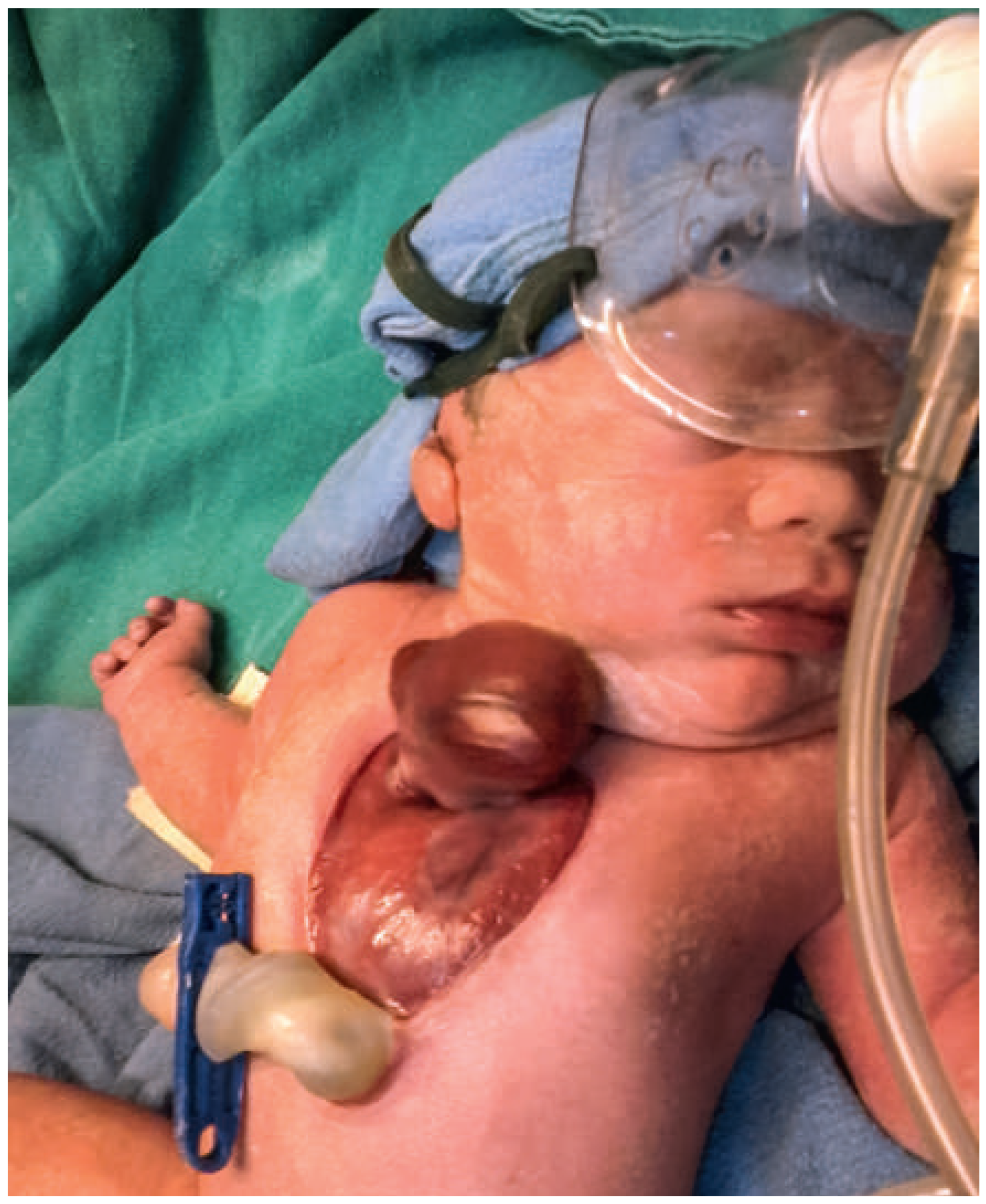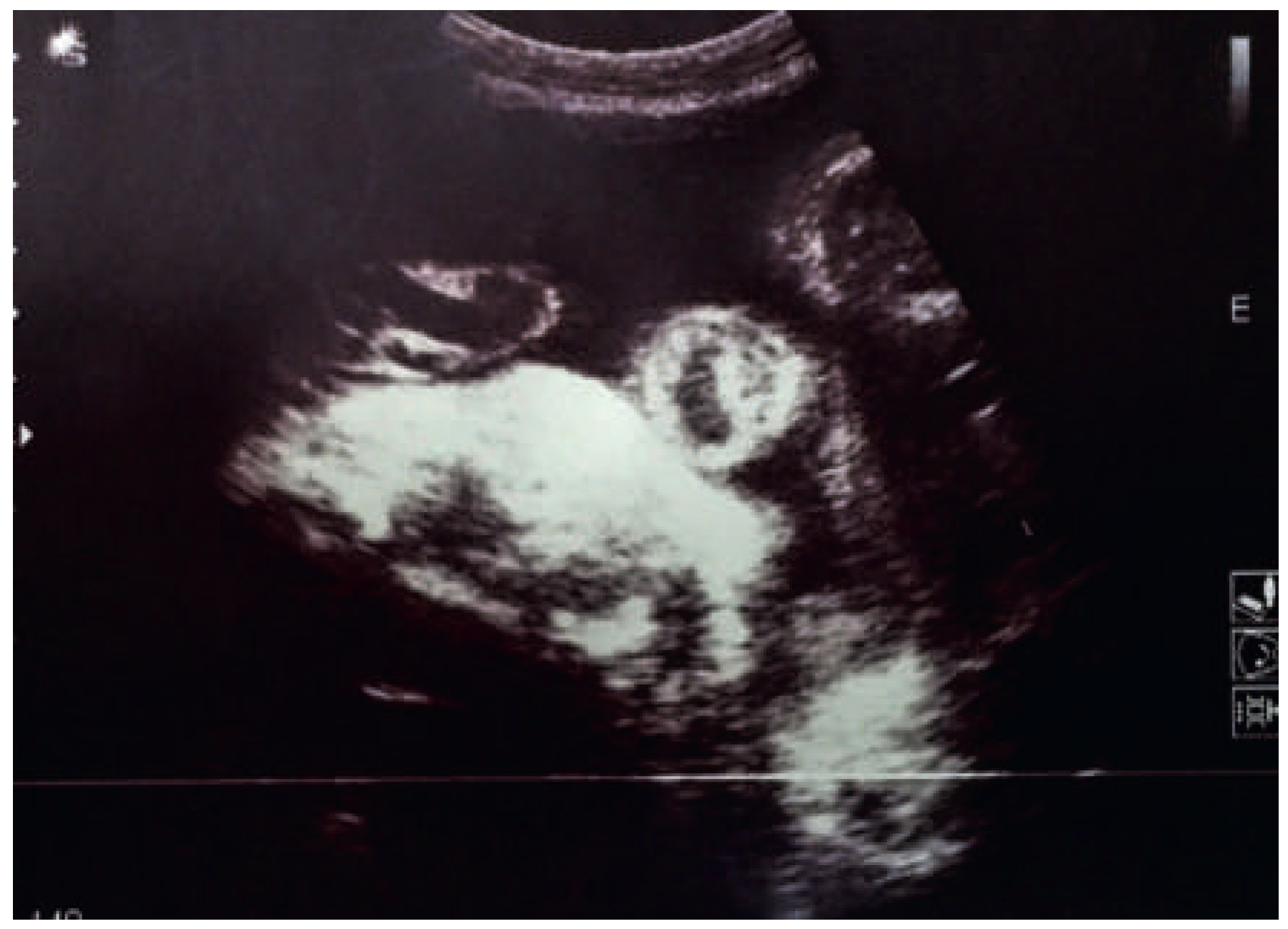

A 22-year-old primigravida presented to the antenatal clinic at 34 weeks of gestation. She had been followed-up at another centre, where she was told that she had a normal pregnancy. She had no complaints except for hyperemesis in the first trimester. Abdominal examination revealed a uterus of 34 weeks gestation with breech presentation. An ultrasound examination revealed the presence of ectopia cordis with breech presentation (Figure 1). After counselling, the mother decided to terminate the pregnancy and was induced with misoprostol to augment labour but eventually had to undergo a lower segment caesarean section and a live male baby weighing 2.4 kilograms with ectopia cordis was delivered. The cardiac surface was covered with a serous pericardium and the beating heart had a membranous ventricular septal defect (Figure 2). However, the infant died after two days before any surgical intervention could be performed.
Figure 1.
Ultrasound examination which revealed the presence of ectopia cordis.
Figure 2.
Infant with ectopia cordis. Photo published with informed consent from the mother.
Ectopia cordis is a very rare condition which presents as a live, beating heart outside the thorax and has a very poor prognosis. The prevalence reported is 5 to 8 per million births. Cantrell, Haller and Ravitch, in 1958, were the first to describe this syndrome, which is characterised by a midline supraumbilical abdominal wall defect, a defect of the lower sternum, a deficiency of the anterior diaphragm, a defect in the diaphragmatic pericardium, and congenital intracardiac defects.
Disclosure statement
No financial support and no other potential conflict of interest relevant to this article was reported.
References
- Cantrell, J.R.; Haller, J.A.; Ravitch, M.M. A syndrome of congenital defects involving the abdominal wall, sternum, diaphragm, pericardium, and heart. Surg Gynecol Obstet. 1958, 107, 602–614. [Google Scholar] [PubMed]
© 2015 by the author. Attribution - Non-Commercial - NoDerivatives 4.0.