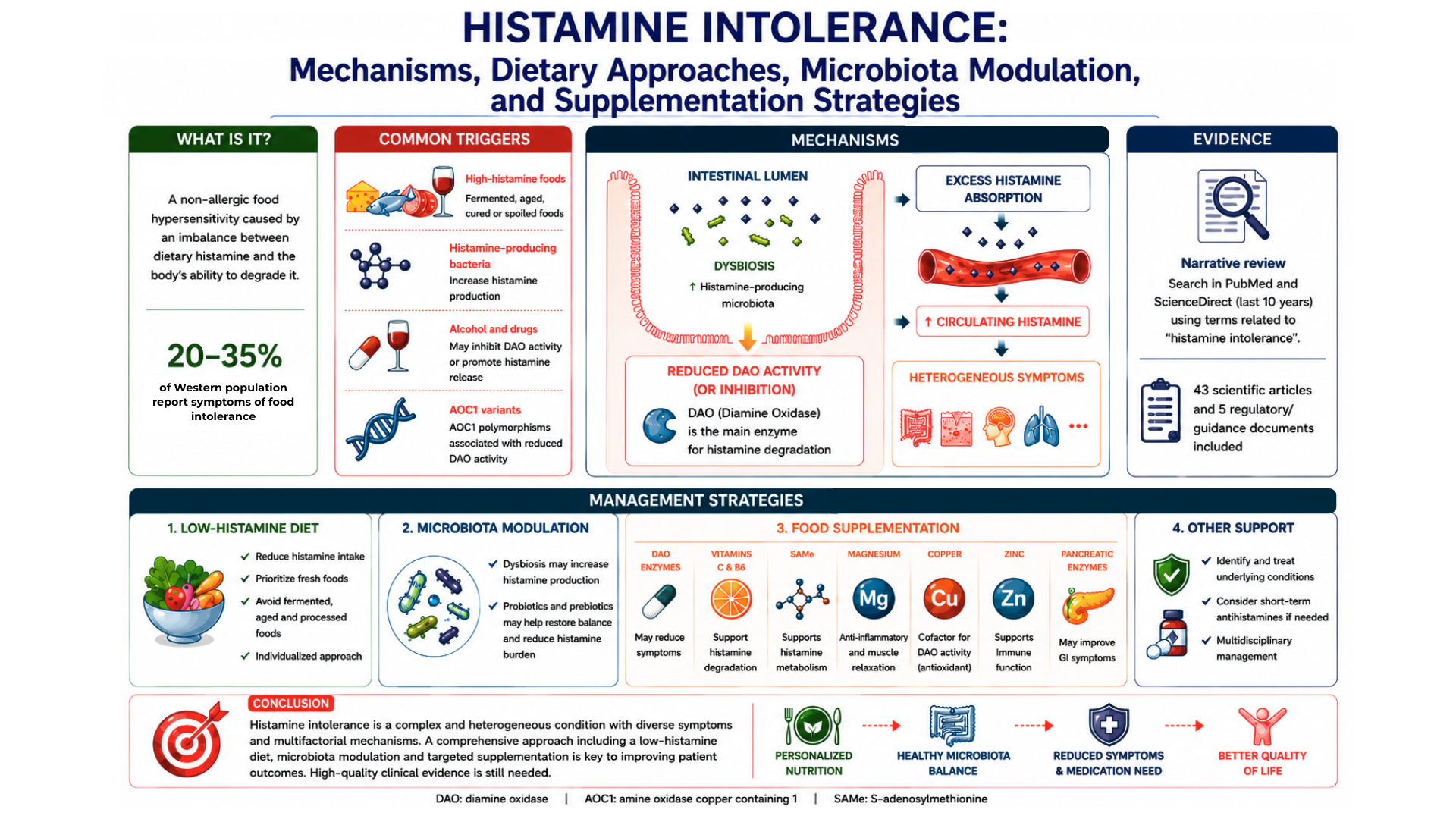

Histamine Intolerance: Mechanisms, Dietary Approaches, Microbiota Modulation, and Supplementation Strategies

 , ,
, ,  , and
, and 
Abstract
1. Introduction
2. Materials and Methods
3. Histamine Intolerance
4. Clinical Manifestations and Diagnosis of Histamine Intolerance
4.1. Signs and Symptoms
4.2. Diagnosis and Complementary Diagnostic Methods
5. Histamine in Food
6. Strategies for Intervention in Histamine Intolerance
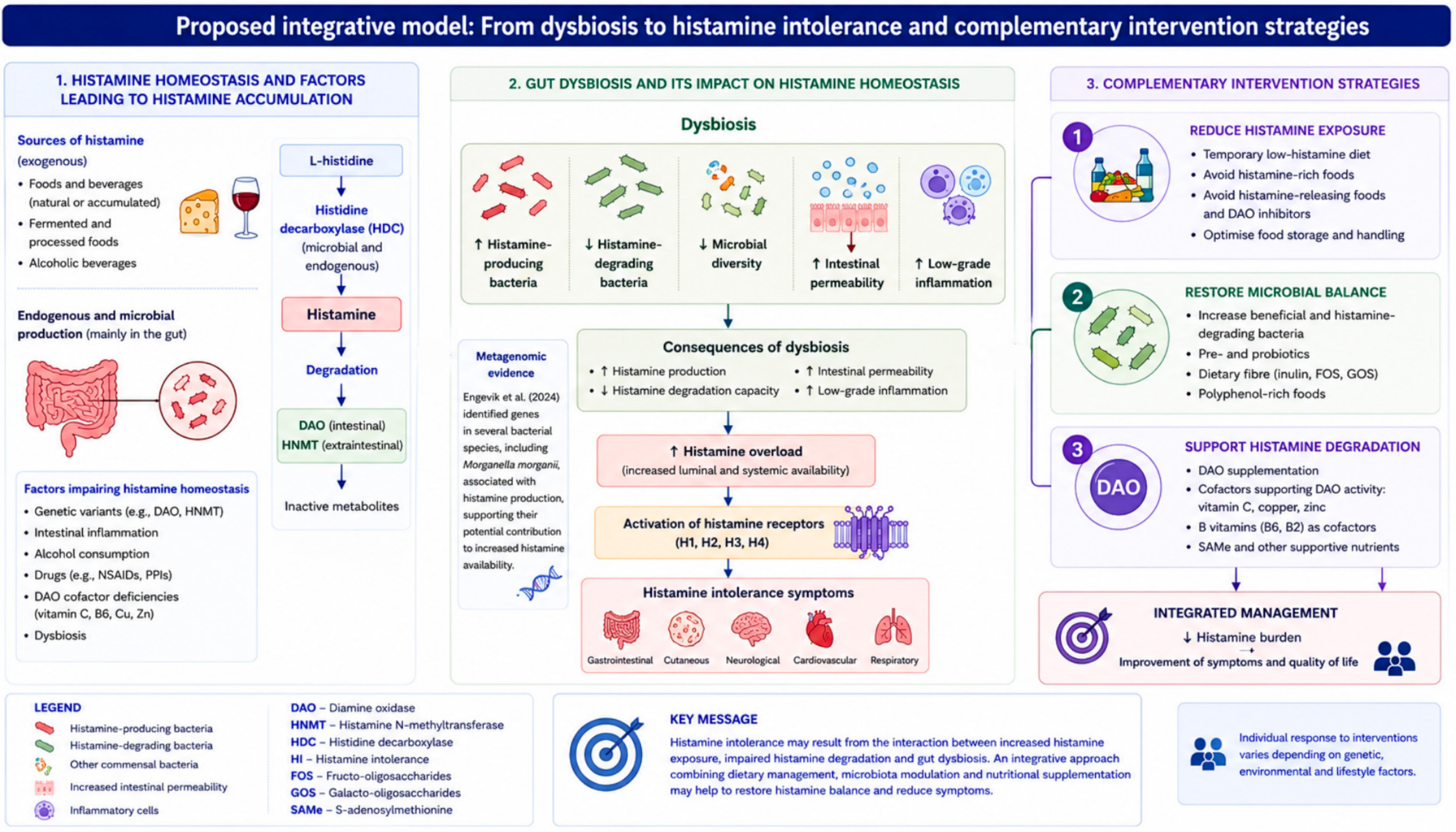
6.1. Gut Microbiota and Dysbiosis as Modulatory Factors in Histamine Intolerance
6.2. Low-Histamine Diet: Principles and Clinical Application
Effects, Therapeutic Applications, and Limitations of LHD
6.3. Role of Supplementation
6.3.1. Oral DAO Supplementation: Forms and Clinical Evidence
6.3.2. Other Food Supplements in the Therapy of HI
7. Conclusions
8. Future Perspectives
Author Contributions
Funding
Institutional Review Board Statement
Informed Consent Statement
Data Availability Statement
Acknowledgments
Conflicts of Interest
Correction Statement
Abbreviations
| HI | Histamine intolerance |
| DAO | Diamine oxidase |
| MAOB | Enzyme monoamine oxidase B |
| HNMT | Histamine-N-methyltransferase |
| EFSA | European Food Safety Authority |
| LHD | Low Histamine Diet |
| SAMe | S-adenosylmethionine |
References
- Zingone, F.; Bertin, L.; Maniero, D.; Palo, M.; Lorenzon, G.; Barberio, B.; Ciacci, C.; Savarino, E.V. Myths and Facts about Food Intolerance: A Narrative Review. Nutrients 2023, 15, 4969. [Google Scholar] [CrossRef] [Scilit] [PubMed]
- Duelo, A.; Sánchez-Pérez, S.; Ruiz-Leon, A.M.; Casanovas-Garriga, F.; Pellicer-Roca, S.; Iduriaga-Platero, I.; Costa-Catala, J.; Veciana-Nogués, M.T.; Fernández-Solà, J.; Muñoz-Cano, R.M.; et al. Study Protocol for a Prospective, Unicentric, Double-Blind, Randomized, and Placebo-Controlled Trial on the Efficacy of a Low-Histamine Diet and DAO Enzyme Supplementation in Patients with Histamine Intolerance. Nutrients 2025, 17, 29. [Google Scholar] [CrossRef] [Scilit] [PubMed]
- Bent, R.K.; Kugler, C.; Faihs, V.; Darsow, U.; Biedermann, T.; Brockow, K. Placebo-Controlled Histamine Challenge Disproves Suspicion of Histamine Intolerance. J. Allergy Clin. Immunol. Pract. 2023, 11, 3724–3731.e11. [Google Scholar] [CrossRef] [Scilit] [PubMed]
- Johansson, S.G.; Bieber, T.; Dahl, R.; Friedmann, P.S.; Lanier, B.Q.; Lockey, R.F.; Motala, C.; Ortega Martell, J.A.; Platts-Mills, T.A.; Ring, J.; et al. Revised nomenclature for allergy for global use: Report of the Nomenclature Review Committee of the World Allergy Organization, October 2003. J. Allergy Clin. Immunol. 2004, 113, 832–836. [Google Scholar] [CrossRef] [PubMed]
- Pasta, A.; Formisano, E.; Calabrese, F.; Plaz Torres, M.C.; Bodini, G.; Marabotto, E.; Pisciotta, L.; Giannini, E.G.; Furnari, M. Food Intolerances, Food Allergies and IBS: Lights and Shadows. Nutrients 2024, 16, 265. [Google Scholar] [CrossRef] [Scilit] [PubMed]
- Jochum, C. Histamine Intolerance: Symptoms, Diagnosis, and Beyond. Nutrients 2024, 16, 1219. [Google Scholar] [CrossRef] [Scilit] [PubMed]
- Afify, S.M.; Pali-Schöll, I. Adverse reactions to food: The female dominance—A secondary publication and update. World Allergy Organ. J. 2017, 10, 43. [Google Scholar] [CrossRef] [Scilit] [PubMed]
- Hrubisko, M.; Danis, R.; Huorka, M.; Wawruch, M. Histamine Intolerance—The More We Know the Less We Know. A Review. Nutrients 2021, 13, 2228. [Google Scholar] [CrossRef] [Scilit] [PubMed]
- EFSA Panel on Biological Hazards (BIOHAZ). Scientific Opinion on risk based control of biogenic amine formation in fermented foods. EFSA J. 2011, 9, 2393. [Google Scholar] [CrossRef] [Scilit]
- Shulpekova, Y.O.; Nechaev, V.M.; Popova, I.R.; Deeva, T.A.; Kopylov, A.T.; Malsagova, K.A.; Kaysheva, A.L.; Ivashkin, V.T. Food Intolerance: The Role of Histamine. Nutrients 2021, 13, 3207. [Google Scholar] [CrossRef] [Scilit] [PubMed]
- Elmore, B.O.; Bollinger, J.A.; Dooley, D.M. Human kidney diamine oxidase: Heterologous expression, purification, and characterization. J. Biol. Inorg. Chem. 2002, 7, 565–579. [Google Scholar] [CrossRef] [Scilit] [PubMed]
- Kovacova-Hanuskova, E.; Buday, T.; Gavliakova, S.; Plevkova, J. Histamine, histamine intoxication and intolerance. Allergol. Immunopathol. 2015, 43, 498–506. [Google Scholar] [CrossRef] [Scilit] [PubMed]
- Rentzos, G.; Weisheit, A.; Ekerljung, L.; van Odijk, J. Measurement of diamine oxidase (DAO) during low-histamine or ordinary diet in patients with histamine intolerance. Eur. J. Clin. Nutr. 2024, 78, 726–731. [Google Scholar] [CrossRef] [Scilit] [PubMed]
- Comas-Basté, O.; Sánchez-Pérez, S.; Veciana-Nogués, M.T.; Latorre-Moratalla, M.; Vidal-Carou, M.d.C. Histamine Intolerance: The Current State of the Art. Biomolecules 2020, 10, 1181. [Google Scholar] [CrossRef] [Scilit] [PubMed]
- Durak-Dados, A.; Michalski, M.; Osek, J. Histamine and Other Biogenic Amines in Food. J. Vet. Res. 2020, 64, 281–288. [Google Scholar] [CrossRef] [Scilit] [PubMed]
- Loy, B.D.; O’Connor, P.J. The effect of histamine on changes in mental energy and fatigue after a single bout of exercise. Physiol. Behav. 2016, 153, 7–18. [Google Scholar] [CrossRef] [Scilit] [PubMed]
- Romero, S.A.; Hocker, A.D.; Mangum, J.E.; Luttrell, M.J.; Turnbull, D.W.; Struck, A.J.; Ely, M.R.; Sieck, D.C.; Dreyer, H.C.; Halliwill, J.R. Evidence of a broad histamine footprint on the human exercise transcriptome. J. Physiol. 2016, 594, 5009–5023. [Google Scholar] [CrossRef] [Scilit] [PubMed]
- Schnedl, W.J.; Enko, D. Histamine Intolerance Originates in the Gut. Nutrients 2021, 13, 1262. [Google Scholar] [CrossRef] [Scilit] [PubMed]
- Schink, M.; Konturek, P.C.; Tietz, E.; Dieterich, W.; Pinzer, T.C.; Wirtz, S.; Neurath, M.F.; Zopf, Y. Microbial patterns in patients with histamine intolerance. J. Physiol. Pharmacol. 2018, 69, 579–593. [Google Scholar] [CrossRef] [Scilit] [PubMed]
- Maintz, L.; Novak, N. Histamine and histamine intolerance2. Am. J. Clin. Nutr. 2007, 85, 1185–1196. [Google Scholar] [CrossRef] [Scilit] [PubMed]
- Schnedl, W.J.; Enko, D. Considering histamine in functional gastrointestinal disorders. Crit. Rev. Food Sci. Nutr. 2021, 61, 2960–2967. [Google Scholar] [CrossRef] [Scilit] [PubMed]
- Izquierdo-Casas, J.; Comas-Basté, O.; Latorre-Moratalla, M.L.; Lorente-Gascón, M.; Duelo, A.; Soler-Singla, L.; Vidal-Carou, M.C. Diamine oxidase (DAO) supplement reduces headache in episodic migraine patients with DAO deficiency: A randomized double-blind trial. Clin. Nutr. 2019, 38, 152–158. [Google Scholar] [CrossRef] [Scilit] [PubMed]
- Alemany-Fornés, M.; Bori, J.; Muguerza, B.; Suárez, M. Diamine oxidase deficiency implications for health, current management, and future directions in the treatment of histamine intolerance: A review. Int. J. Biol. Macromol. 2025, 327, 147130. [Google Scholar] [CrossRef] [Scilit] [PubMed]
- Reese, I.; Ballmer-Weber, B.; Beyer, K.; Dölle-Bierke, S.; Kleine-Tebbe, J.; Klimek, L.; Lämmel, S.; Lepp, U.; Saloga, J.; Schäfer, C.; et al. Guideline on management of suspected adverse reactions to ingested histamine: Guideline of the German Society for Allergology and Clinical Immunology (DGAKI), the Society for Pediatric Allergology and Environmental Medicine (GPA), the Medical Association of German Allergologists (AeDA) as well as the Swiss Society for Allergology and Immunology (SGAI) and the Austrian Society for Allergology and Immunology (ÖGAI). Allergol. Sel. 2021, 5, 305–314. [Google Scholar] [CrossRef] [Scilit] [PubMed]
- Fischer, K.; Jones, M.; O’Neill, H.M. Prevalence of Intolerance to Amines and Salicylates in Individuals with Atopic Dermatitis: A Systematic Review and Meta-Analysis. Nutrients 2025, 17, 1628. [Google Scholar] [CrossRef] [Scilit] [PubMed]
- Jackson, K.; Busse, W.; Gálvez-Martín, P.; Terradillos, A.; Martínez-Puig, D. Evidence for Dietary Management of Histamine Intolerance. Int. J. Mol. Sci. 2025, 26, 9198. [Google Scholar] [CrossRef] [Scilit] [PubMed]
- McIntosh, K.; Reed, D.E.; Schneider, T.; Dang, F.; Keshteli, A.H.; De Palma, G.; Madsen, K.; Bercik, P.; Vanner, S. FODMAPs alter symptoms and the metabolome of patients with IBS: A randomised controlled trial. Gut 2017, 66, 1241–1251. [Google Scholar] [PubMed]
- Di Cesare, F.; Calgaro, M.; Ghini, V.; Squarzanti, D.F.; De Prisco, A.; Visciglia, A.; Zanetta, P.; Rolla, R.; Savoia, P.; Amoruso, A.; et al. Exploring the Effects of Probiotic Treatment on Urinary and Serum Metabolic Profiles in Healthy Individuals. J. Proteome Res. 2023, 22, 3866–3878. [Google Scholar] [CrossRef] [Scilit] [PubMed]
- Engevik, K.A.; Hazzard, A.; Puckett, B.; Hoch, K.M.; Haidacher, S.J.; Haag, A.M.; Spinler, J.K.; Versalovic, J.; Engevik, M.A.; Horvath, T.D. Phylogenetically diverse bacterial species produce histamine. Syst. Appl. Microbiol. 2024, 47, 126539. [Google Scholar] [CrossRef] [Scilit] [PubMed]
- de Oliveira Formiga, R.; Li, Q.; Zhao, Y.; Campos Ribeiro, M.A.; Guarino-Vignon, P.; Fatouh, R.; Dubois, L.; Creusot, L.; Puchois, V.; Amouyal, S.; et al. Immunometabolic reprogramming of macrophages by gut microbiota-derived cadaverine controls colon inflammation. Cell Host Microbe 2025, 33, 1855–1872. [Google Scholar] [CrossRef] [Scilit] [PubMed]
- Botschuijver, S.; Roeselers, G.; Levin, E.; Jonkers, D.M.; Welting, O.; Heinsbroek, S.E.M.; de Weerd, H.H.; Boekhout, T.; Fornai, M.; Masclee, A.A.; et al. Intestinal Fungal Dysbiosis Is Associated with Visceral Hypersensitivity in Patients with Irritable Bowel Syndrome and Rats. Gastroenterology 2017, 153, 1026–1039. [Google Scholar] [CrossRef] [Scilit] [PubMed]
- Bush, J.R.; Han, J.; Deehan, E.C.; Harding, S.V.; Maiya, M.; Baisley, J.; Schibli, D.; Goodlett, D.R. Resistant potato starch supplementation reduces serum histamine levels in healthy adults with links to attenuated intestinal permeability. J. Funct. Foods 2023, 108, 105740. [Google Scholar] [CrossRef] [Scilit]
- Wagner, N.; Dirk, D.; Peveling-Oberhag, A.; Reese, I.; Rady-Pizarro, U.; Mitzel, H.; Staubach, P. A Popular myth—Low-histamine diet improves chronic spontaneous urticaria—Fact or fiction? J. Eur. Acad. Dermatol. Venereol. 2017, 31, 650–655. [Google Scholar] [CrossRef] [Scilit] [PubMed]
- Son, J.H.; Chung, B.Y.; Kim, H.O.; Park, C.W. A Histamine-Free Diet Is Helpful for Treatment of Adult Patients with Chronic Spontaneous Urticaria. Ann. Dermatol. 2018, 30, 164–172. [Google Scholar] [CrossRef] [Scilit] [PubMed]
- Lackner, S.; Malcher, V.; Enko, D.; Mangge, H.; Holasek, S.J.; Schnedl, W.J. Histamine-reduced diet and increase of serum diamine oxidase correlating to diet compliance in histamine intolerance. Eur. J. Clin. Nutr. 2019, 73, 102–104. [Google Scholar] [CrossRef] [Scilit] [PubMed]
- Alnouri, G.; Cha, N.; Sataloff, R.T. Histamine Sensitivity: An Uncommon Recognized Cause of Living Laryngopharyngeal Reflux Symptoms and Signs—A Case Report. Ear Nose Throat J. 2022, 101, Np155–Np157. [Google Scholar] [CrossRef] [Scilit] [PubMed]
- Chiang, H.L.; Chen, C.H.; Koo, M.; Tsai, T.Y.; Wu, C.H. Predictors of Response to Oral Medications and Low-Histamine Diet in Patients with Chronic Urticaria. J. Immunol. Res. 2022, 2022, 5243825. [Google Scholar] [CrossRef] [Scilit] [PubMed]
- Yacoub, M.-R.; Ramirez, G.A.; Berti, A.; Mercurio, G.; Breda, D.; Saporiti, N.; Burastero, S.; Dagna, L.; Colombo, G. Diamine oxidase supplementation in chronic spontaneous urticaria: A randomized, double-blind placebo-controlled study. Int. Arch. Allergy Immunol. 2018, 176, 268–271. [Google Scholar] [CrossRef] [Scilit] [PubMed]
- Commission Implementing Regulation (EU) 2017/2470 of 20 December 2017 Establishing the Union List of Novel Foods in Accordance with Regulation (EU) 2015/2283 of the European Parliament and of the Council on Novel Foods. 2017. Available online: https://eur-lex.europa.eu/eli/reg_impl/2017/2470/oj (accessed on 27 May 2026).
- Commission Implementing Regulation (EU) 2024/2048 of 29 July 2024 Amending Implementing Regulation (EU) 2017/2470 as Regards the Specifications and the Conditions of Use of the Novel Food Protein Extract from Pig Kidneys. 2024. Available online: https://eur-lex.europa.eu/eli/reg_impl/2024/2048/oj (accessed on 27 May 2026).
- Commission Implementing Regulation (EU) 2018/1023 of 23 July 2018 Correcting Implementing Regulation (EU) 2017/2470 Establishing the Union List of Novel Foods. 2018. Available online: https://eur-lex.europa.eu/eli/reg_impl/2018/1023/oj (accessed on 27 May 2026).
- Noland, D.; Drisko, J.A.; Wagner, L. Integrative and Functional Medical Nutrition Therapy: Principles and Practices; Springer Nature: Berlin, Germany, 2020. [Google Scholar]
- Schnedl, W.J.; Lackner, S.; Enko, D.; Schenk, M.; Holasek, S.J.; Mangge, H. Evaluation of symptoms and symptom combinations in histamine intolerance. Intest. Res. 2019, 17, 427–433. [Google Scholar] [CrossRef] [Scilit] [PubMed]


| Organs and Systems | Symptoms |
|---|---|
| Gastrointestinal (H1, H2, H3, H4) | Bloating, flatulence, postprandial fullness, diarrhea, abdominal pain, constipation, nausea, vomiting |
| Respiratory (H1, H2, H3) | Rhinorrhea, rhinitis, nasal congestion, dyspnea, sneezing |
| Skin (H1, H2, H4) | Pruritus, flushing, urticaria, dermatitis, swelling |
| Cardiovascular (H1, H2) | Tachycardia, hypotonia, collapse |
| Nervous System (H2, H3) | Headache/migraine, dizziness |
| Food Category | Main Mechanism | Reported Histamine Concentration (mg/kg) * | Recommendation During Elimination Phase | |
|---|---|---|---|---|
| Fish and seafood products | ||||
| Fermented and canned fish | Sardines, mackerel, canned tuna | High histamine content | 14.4 (ND–657.1) | Avoid |
| Fresh fish | Fresh cod, hake, sole | Usually low histamine, but highly storage-dependent | 0.8 (ND–36.6) | Fresh products generally tolerated; consume immediately after purchase or freezing |
| Shellfish | Shrimp, lobster, oysters, clams, mussels | Histamine-releasing foods | Low or negligible histamine | Individual assessment only |
| Meat and meat products | ||||
| Dry-fermented sausages | High histamine content | High histamine content | 32.2 (ND–357.7) | Avoid |
| Cured meat products | High histamine content | High histamine content | 13.0 (ND–150.0) | Avoid |
| Smoked meat products | Smoked ham, smoked sausages | High histamine content | Variable | Avoid |
| Pork | Considered histamine-releasing food | Histamine-releasing foods | Low or negligible histamine | Individual assessment only |
| Dairy products | ||||
| Raw milk cheeses | Parmesan, Grana Padano | High histamine content | 59.4 (ND–389.9) | Avoid |
| Ripened cheeses | Camembert, Gouda, Cheddar, Feta | Variable histamine content depending on ripening | 18.1 (ND–162.0) | Usually avoid |
| Alcoholic beverages | ||||
| Wine | Especially red wine | Variable histamine content and alcohol may interfere with histamine metabolism | 3.8 (0.09–55.0) | Frequently restricted |
| Beer | - | Variable histamine content | 1.2 (ND–21.6) | Frequently restricted |
| Vegetables | ||||
| Tomato, spinach, sauerkraut | Variable histamine content | 2.8 (ND–69.7) | Assess individual tolerance | |
| Pumpkin, Zucchini | Rich in competing biogenic amines (mainly putrescine); low histamine content | Low or not detected | Assess individual tolerance | |
| Tomato, Spinach | Described as histamine releaser | Low | Assess individual tolerance | |
| Fruits | ||||
| Fresh fruits | Generally low histamine content | 0.07 (ND–2.51) | Generally permitted | |
| Pineapple, Banana, Citrus fruits, Strawberries | Rich in competing biogenic amines (mainly putrescine) | Low or not detected | Assess individual tolerance | |
| Pineapple, Lime, Lemon, Papaya, Strawberries, Kiwi | Described as histamine releasers | Low | Assess individual tolerance | |
| Others | ||||
| Egg white | - | Histamine-releasing foods | Low or negligible histamine | Individual assessment only |
| Fermented soy products | Soy sauce, miso, tempeh | High histamine and other biogenic amines | Variable | Avoid |
| Legumes | Lentils, chickpeas, soybeans | Rich in other biogenic amines | Low | Assess individual tolerance |
| Chocolate | - | Rich in other biogenic amines; low histamine content | 0.58 ** | Assess individual tolerance |
| Nuts | Walnuts, peanuts, pistachios, almonds, cashews | Rich in other biogenic amines | Low | Assess individual tolerance |
| Coffee, Tea | - | Considered histamine-releasing food | Negligible | Assess individual tolerance |
| Reference | Study Type | Sample and Duration | Objectives | Results | Limitations |
|---|---|---|---|---|---|
| Low-Histamine Diet | |||||
| [36] | Case report | 1 individual; 6 months | Describe a case of persistent laryngopharyngeal reflux and associated symptoms, aggravated or initiated by histamine | LHD showed improvement in the Reflux Finding Score and resolution of cough and throat clearing | Single case; Generalization of the study is impossible |
| [13] | Prospective Randomized Controlled Study Crossover | 18 individuals; 3 weeks on LHD + 3 weeks on Mixed Diet (MXD) | Evaluate the activity of DAO measured in serum and correlate it with the LHD to assess histamine hypersensitivity related to dietary intake during the intervention period. | Gastrointestinal and cutaneous symptoms improved with LHD. No significant differences were observed in headache pain severity. No differences were found between MXD and DAO activity. Ten individuals showed stable levels or decreases in DAO after LHD. DAO prevalence was elevated only in the LHD group compared with control during MXD. | Small sample size. DAO measurement in serum has proven inconclusive as a diagnostic tool for HI, since values fluctuate after meals. The commercial method used (Sciotec DAO-REA®) was only validated for diagnostic purposes, not for comparison with histamine as substrate. |
| [33] | Prospective intervention study | 56 individuals; 3 weeks | Investigate the impact of LHD on symptoms and quality of life in patients with Chronic Spontaneous Urticaria (CSU). | ≥1 point reduction in UAS4 (Urticaria Activity Score over 4 days) occurred in all individuals. 75% benefited from LHD. DAO activity remained stable after the diet. | No control group and was not double-blind. DAO was evaluated as a biomarker recommended in CSU patients, but enzyme activity remained stable. |
| [35] | Retrospective study of patient records and follow-up questionnaire to evaluate diet adherence and symptom evolution | 101 individuals; median follow-up of 13 months (range: 2–44 months) | LHD improves symptoms of histamine intolerance and increases serum DAO values correlating with diet adherence. | Serum DAO levels increased significantly after starting LHD. A significant DAO increase occurred in individuals adhering strictly or occasionally to the diet. Overall, 79% reported symptom improvement (or symptom resolution). Among the 50 individuals with symptomatic improvement, there was a significant increase in DAO. | Retrospective analysis dependent on self-reported diet classification. The duration of follow-up varied widely (median 13 months). |
| [37] | Prospective observational study | 78 individuals; 72 followed dietary recommendations | Investigate clinical and laboratory predictors (including serum DAO levels) of efficacy of treatments and a low-histamine diet in individuals with chronic urticaria. | 76.4% reported symptom improvement with LHD. DAO < 5.4 U/mL and multiple food triggers were significantly associated with greater likelihood of responding to LHD. | DAO efficacy as a predictor of LHD response was based on a single cutoff value (5.4 U/mL) from the study cohort. Medication adherence was self-reported, which may introduce bias. |
| [34] | Prospective dietary intervention study | 22 individuals; 4-week low-histamine diet | Evaluate the role of ingested histamine in adults with CSU and determine DAO activity and histamine levels before and after the diet. | USS and UAS significantly improved after 4 weeks of LHD. A significant reduction occurred in pruritus severity, number of days with urticaria, and distribution of lesions. No significant changes in plasma DAO activity were observed. No influence was found from changes in antihistamine or prednisone use. | Small sample size. Participants did not discontinue antihistamines, which could influence plasma DAO activity. |
| DAO Supplementation | |||||
| [38] | Experimental Randomized Clinical Trial Placebo-Controlled Double-blind Crossover | 20 individuals; 105 days; Placebo or animal-based DAO | Test the hypothesis that DAO supplements may reduce the severity of CSU in individuals unresponsive to a single daily dose of antihistamine and on a low-histamine diet during 21 days. | Reduction in the 7-Day Urticaria Activity Score in all individuals with DAO deficiency compared to the placebo group (p = 0.041). Slight but significant reduction (p = 0.049) in antihistamine use during supplementation with DAO. | Small sample size. No dietary records available. |
| [22] | Experimental Randomized Clinical Trial Placebo-Controlled Double-blind | 82 individuals; 1 month; Placebo or animal-based DAO | Test DAO supplementation as a preventive treatment for migraines in individuals diagnosed according to the criteria of the International Headache Society, with DAO deficiency (<80 HDU/mL) | Statistically significant reduction (p = 0.0217) in the DAO group regarding migraine duration. Reduction in triptan observed in the DAO group. Reduction in pain frequency and intensity observed in both groups. | Treatment duration. No dietary records available. |
| Low-Histamine Diet and DAO Supplementation | |||||
| [2] | Prospective Trial Protocol Randomized Placebo-Controlled Double-blind | 400 individuals (8 groups of 50 individuals); Start: 06/2022 Expected conclusion: 05/2025; Placebo, animal-based DAO, or plant-based DAO | Test the efficacy of a LHD and/or food supplements containing DAO in improving symptoms of HI. | Results not yet published. | Smaller sample per group. Potential bias in dietary records. |
Disclaimer/Publisher’s Note: The statements, opinions and data contained in all publications are solely those of the individual author(s) and contributor(s) and not of MDPI and/or the editor(s). MDPI and/or the editor(s) disclaim responsibility for any injury to people or property resulting from any ideas, methods, instructions or products referred to in the content. |
© 2026 by the authors. Licensee MDPI, Basel, Switzerland. This article is an open access article distributed under the terms and conditions of the Creative Commons Attribution (CC BY) license.
Share and Cite
Manteigas, B.; Ferreira, M.; Ribeiro, R.; Silva, R.; Campos, M.J.; Real, H.; Ramos, F. Histamine Intolerance: Mechanisms, Dietary Approaches, Microbiota Modulation, and Supplementation Strategies. Nutraceuticals 2026, 6, 46. https://doi.org/10.3390/nutraceuticals6030046
Manteigas B, Ferreira M, Ribeiro R, Silva R, Campos MJ, Real H, Ramos F. Histamine Intolerance: Mechanisms, Dietary Approaches, Microbiota Modulation, and Supplementation Strategies. Nutraceuticals. 2026; 6(3):46. https://doi.org/10.3390/nutraceuticals6030046
Chicago/Turabian StyleManteigas, Bárbara, Mafalda Ferreira, Rita Ribeiro, Rita Silva, Maria João Campos, Helena Real, and Fernando Ramos. 2026. "Histamine Intolerance: Mechanisms, Dietary Approaches, Microbiota Modulation, and Supplementation Strategies" Nutraceuticals 6, no. 3: 46. https://doi.org/10.3390/nutraceuticals6030046
APA StyleManteigas, B., Ferreira, M., Ribeiro, R., Silva, R., Campos, M. J., Real, H., & Ramos, F. (2026). Histamine Intolerance: Mechanisms, Dietary Approaches, Microbiota Modulation, and Supplementation Strategies. Nutraceuticals, 6(3), 46. https://doi.org/10.3390/nutraceuticals6030046