Article

Modulation of Iron Homeostasis by Hepcidin in Response to Elevated Dietary Vitamin D Intake in Rats: An Exploratory Study


Laboratory of Nutrition Science, Graduate School of Life and Environmental Sciences, Kyoto Prefectural University, Kyoto 606-8522, Japan
*
Author to whom correspondence should be addressed.
Nutraceuticals 2026, 6(1), 4; https://doi.org/10.3390/nutraceuticals6010004
Submission received: 11 November 2025 / Revised: 30 December 2025 / Accepted: 4 January 2026 / Published: 7 January 2026

Abstract

The interrelationship between iron metabolism and vitamin D has attracted increasing attention; however, nutritional knowledge regarding the relationship between iron and vitamin D remains scarce. We hypothesized that a continuous increase in dietary vitamin D intake would enhance biological iron levels through the regulation of hepcidin, and we investigated whether dietary vitamin D levels alter iron dynamics and blood cell status. Twenty-five male Wistar rats aged 7 and 8 weeks were used in experiments 1 (14 days) and 2 (4 days), respectively. Rats were divided into control and vitamin D-supplemented diet groups (14C vs. 14A in Experiment 1; 4C vs. 4A in Experiment 2) and fed the experimental diet ad libitum. In Experiment 2, no significant differences were observed in serum and liver iron levels, total iron-binding capacity, and serum transferrin saturation between groups; however, hepcidin (HAMP) mRNA expression was lower in the 4A group. By contrast, the 14A group showed significantly higher serum and liver iron levels and higher HAMP mRNA expression than the 14C group. These results indicate that high-dose dietary vitamin D alters iron metabolism in rats, characterized by transient suppression of hepatic hepcidin expression and increased liver iron, suggesting modulation of iron regulatory pathways.

1. Introduction

Iron is a trace element present in the body, mainly in the form of functional iron, which is responsible for oxygen transport, and stored iron. Iron deficiency is the most frequent micronutrient deficiency worldwide [1]. The source of biological iron is dietary iron that is absorbed in the gastrointestinal tract, bound to transferrin, transported throughout the body to the bone marrow for hematopoiesis, stored in the liver, and transported to muscles and other tissues for utilization. Waste erythrocytes are captured by endo-reticular macrophages in the spleen and other organs, and the iron extracted from them is released into the blood and reused. A small amount of iron is excreted through the mucosa of the gastrointestinal tract and through urine, and the remainder is absorbed. Biological iron forms a semi-closed circuit and is essential for all cells in the body. However, iron homeostasis is strictly regulated because excess iron causes cytotoxicity [2,3,4].
Iron balance is regulated by the peptide hormone hepcidin, which controls intestinal iron absorption and its release from macrophages. Hepcidin serves as the central regulator of iron homeostasis in mammals, acting as the gatekeeper for systemic iron availability. Excess hepcidin can lead to anemia, whereas low levels cause iron overload [5,6]. Recent studies suggest that vitamin D may suppress hepcidin expression [7], but in vivo nutritional evidence remains limited.
Vitamin D is a fat-soluble prohormone that has important functions in regulating endocrinology and bone metabolism in vivo and plays a role in maintaining appropriate blood calcium and phosphate levels. In addition, vitamin D is involved in the inflammatory response through the activation and differentiation of immune and inflammatory cells, and effects on muscle mass and function have also been suggested [8,9,10]. Decreases in biological vitamin D levels may result in iron deficiency and anemia [7]. Vitamin D directly regulates hepcidin expression [11]. In studies examining the relationship between vitamin D and iron in humans, iron deficiency has been frequently observed in vitamin D-deficient children, the elderly, young adults, and athletes [12,13,14,15]. We have also reported a significant positive correlation between serum ferritin and 25-hydroxyvitamin D levels in young athletes [16]. Despite an increasing number of such reports, nutritional knowledge regarding the relationship between iron and vitamin D remains scarce.
We hypothesized that a continuous increase in dietary vitamin D intake would enhance biological iron levels via regulation of hepcidin. Therefore, this study investigated whether an increase in dietary vitamin D alters the dynamics of biological iron and the state of blood cells in a model animal system.

2. Materials and Methods

2.1. Animals and Experimental Design

This study complied with the principles and guidelines of the Japanese Council on Animal Care and was approved by the Committee for Animal Research of Kyoto Prefectural University (approval number: KPU04914-R). Twenty-five male Wistar rats (Japan SLC, Hamamatsu, Japan) aged 7 and 8 weeks were used in Experiments 1 and 2, respectively. Rats were housed in stainless steel cages at a controlled temperature (23 ± 2 °C), with a relative humidity of 40–60% and a 12-h light cycle (lights on from 8:00 am to 8:00 pm), with free access to food and distilled water (the iron content of the distilled water was previously measured). Body weight and food intake were recorded daily at the same time.
Two experimental diets were used: a control diet containing 20% casein prepared according to the AIN-93G formulation and a control diet supplemented with vitamin D3 (Table 1). The vitamin D-supplemented diet was adjusted to provide 2500 µg vitamin D3 (cholecalciferol ≥ 98%; Sigma-Aldrich, St. Louis, MO, USA) per 1000 g diet. This amount corresponded to 100 times the amount in the control diet and was determined with reference to the maximum nontoxic dose (180 µg·kg−1 BW·day−1) in a 90-day subacute toxicity study of vitamin D3 in rats [17].
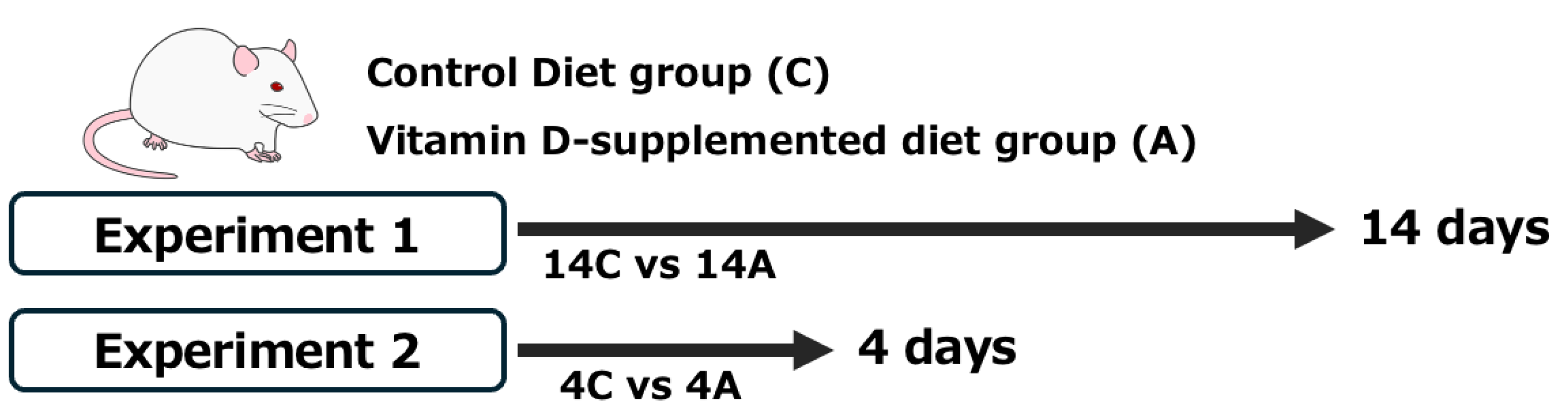
Two experimental periods were established: 14 days (Experiment 1) and 4 days (Experiment 2). Rats were divided into two groups with matched body weights: a control diet group (14C, n = 6) and a vitamin D-supplemented diet group (14A, n = 6) in Experiment 1, and a control diet group (4C, n = 6) and a vitamin D-supplemented diet group (4A, n = 7) in Experiment 2. After pre-rearing, rats were fed the experimental diet ad libitum for 14 days in Experiment 1 or 4 days in Experiment 2. Rats were euthanized after the experimental periods. Blood samples were drawn from the inferior vena cava and placed in tubes containing heparin. Liver samples were also collected. The experimental protocol is outlined in Figure 1.

2.2. Blood Analysis

Hemoglobin concentrations, hematocrit values, and red blood cell counts were measured in blood samples using an automatic hematology analyzer (MEK-6558; Nihon Kohden, Tokyo, Japan). Blood samples were centrifuged at 1500× g for 10 min at 4 °C to obtain serum. Serum iron levels and unsaturated iron-binding capacity were measured using a nitroso-PSAP method analysis kit (Fe-L; Serotec, Sapporo, Japan). Total iron-binding capacity (TIBC) and serum transferrin saturation (TSAT) were calculated as follows:
TIBC = serum iron + unsaturated iron-binding capacity,
TSAT = serum iron/TIBC × 100.
Serum 25-hydroxyvitamin D levels were measured using a 25-OH Vitamin D Total ELISA kit (KA6138; Abnova, Taipei, Taiwan).

2.3. Iron Concentration in the Liver

Liver samples were washed with saline and treated using the wet ash method in a microwave extraction system (Ethos; Milestone, Sorisole, Italy). After evaporation, the ash was resuspended in dilute hydrochloric acid and dried. Iron concentrations were measured using a nitroso-PSAP analysis kit (Fe-L; Serotec, Sapporo, Japan) and are expressed on a wet-weight basis.

2.4. Gene Expression Analysis

Liver samples were crushed on dry ice, mixed with an RNA extraction reagent (Sepasol-RNA 1 Super G; Nacalai Tesque, Kyoto, Japan) and chloroform (FUJIFILM Wako Pure Chemical, Osaka, Japan), and centrifuged at 12,000× g for 15 min at 4 °C to obtain the supernatant. Total RNA was precipitated by adding 75% ethanol (FUJIFILM Wako Pure Chemical) to the supernatant and centrifuging at 12,000× g for 10 min at 4 °C. cDNA was synthesized from total RNA using a ReverTra Ace qPCR RT Master Mix (Toyobo, Osaka, Japan).
After reverse transcription, quantitative polymerase chain reaction (PCR) was performed on a Light Cycler 96 real-time PCR system (Roche Life Science, Penzberg, Germany) using TaqMan PCR Master Mix and TaqMan primers. Relative gene expression was analyzed using the comparative Ct method with β-actin as the reference gene. TaqMan primer pairs and probes were obtained using TaqMan Gene Expression Assays (Applied Biosystems, Thermo Fisher Scientific, Waltham, MA, USA). The assay IDs were as follows: Rn00584987_m1 (Hamp); Rn00432095_m1 (BMP6); Rn01474701_m1 (TFR1); Rn01481654_m1 (TFR2); Rn00583982_m1 (Hfe); Rn01265685_g1 (Hfe2 [HJV]); Rn01504798_m1 (Tmprss6); and Rn00667869_m1 (β-actin).
Reactions were performed using 5 μL THUNDERBIRD Probe qPCR Mix (Takara Bio, Ohtsu, Japan), 0.5 μL primer pair/probe sets, and 3 μL cDNA in a final volume of 10 μL. After heating the test sample to 95 °C for 60 s, 45 PCR cycles were performed at 95 °C for 15 s and 60 °C for 60 s.

2.5. Statistical Analyses

For both Experiment 1 and Experiment 2, data from the control diet and vitamin D-supplemented diet groups were confirmed to follow a normal distribution. When this assumption was met, an unpaired t-test was applied; otherwise, the Mann–Whitney U test was used. Data on body weight, food intake, blood characteristics, and iron metabolism–related factors are presented as box plots. As the mRNA expression levels of all six hepcidin-associated genes were normally distributed in both groups, these data are presented as the mean + standard deviation. The correlations between hepcidin mRNA expression, serum iron, and liver iron content were examined using non-parametric Spearman’s rank correlation analysis. Statistical analyses were performed using JASP v.0.19.1 (JASP Team, https://jasp-stats.org/, accessed on 1 November 2024), with statistical significance set as p < 0.05.

3. Results

3.1. Body Weight, Food Intake, and Blood Properties

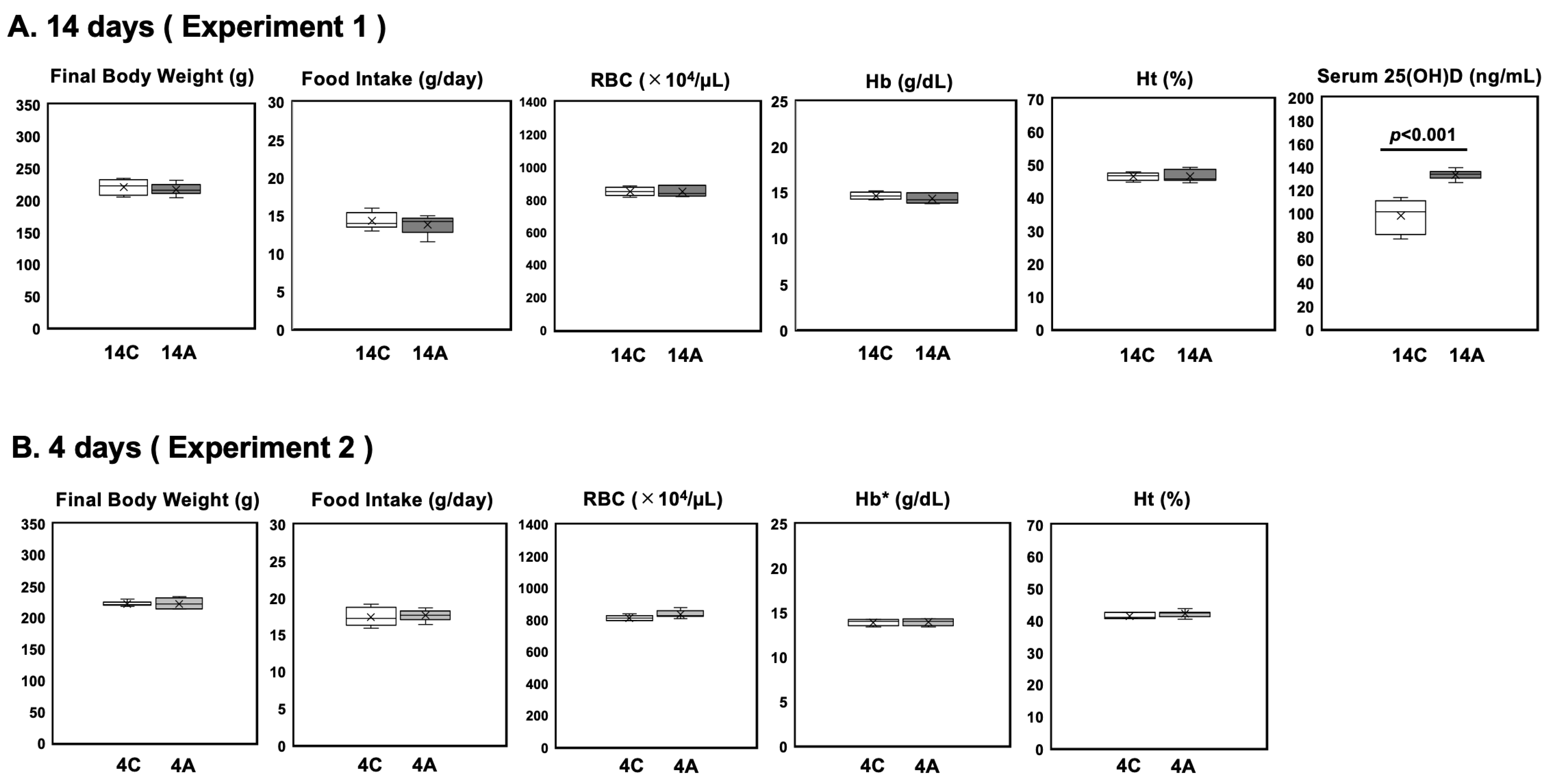
Body weight, food intake, and blood properties are shown in Figure 2. No significant differences in body weight or food intake were observed between the 4A and 14A groups and their respective control groups, and overall growth did not differ among groups. The 4A and 14A groups also did not significantly differ from their respective controls in red blood cell counts, hemoglobin levels, or hematocrit values. The serum 25-hydroxyvitamin D level in Experiment 1 was significantly higher (p < 0.001) in the 14A group than in the control group.

3.2. Factors Related to Iron Metabolism

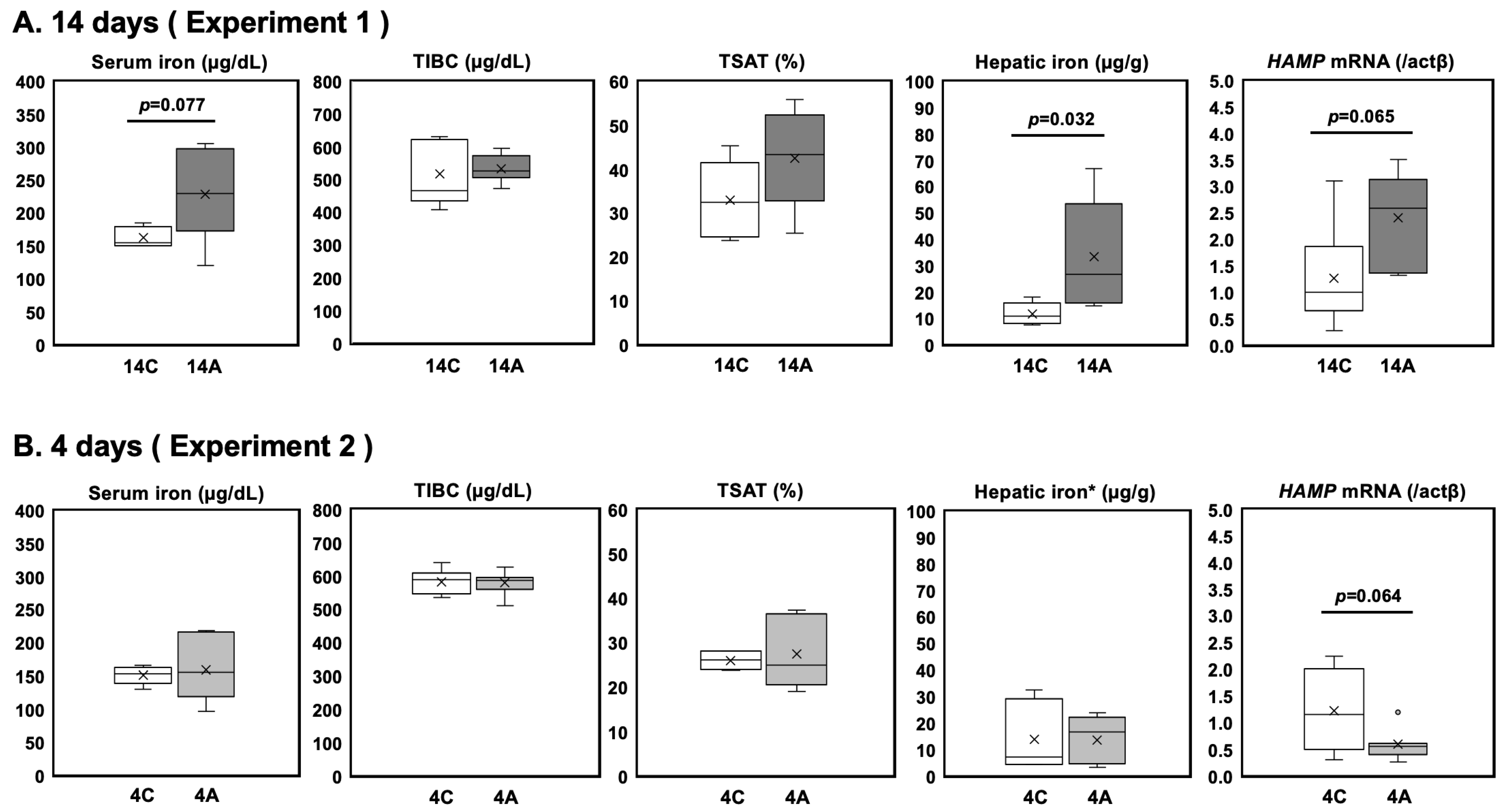
Factors related to iron metabolism, including serum iron, TIBC, TSAT, liver iron levels, and hepcidin (HAMP) mRNA expression, are shown in Figure 3. Although the difference was not statistically significant (p = 0.077), serum iron levels were higher in the 14A group than in the 14C group in Experiment 1. No significant differences in TIBC or TSAT were observed between the two groups. The 14A group exhibited higher liver iron levels and HAMP mRNA expression than the 14C group (p = 0.032 and 0.065, respectively). In Experiment 2, no significant differences were observed in serum iron, liver iron, TIBC, or TSAT between the 4A and 4C groups. Although not statistically significant, HAMP mRNA expression levels in the 4A group were lower than those in the 4C group (p = 0.064).

3.3. Correlation Between Hepcidin mRNA Expression and Body Iron Status

Correlation analyses between HAMP mRNA expression levels and liver and serum iron are presented in Table 2. In Experiment 1, no significant correlations were observed between HAMP mRNA expression and either liver or serum iron in either the 14C or 14A group. However, in Experiment 2, a significant positive correlation between HAMP mRNA expression levels and liver iron was observed exclusively in the 4A group (ρ = 0.857, p = 0.024).

3.4. mRNA Expression of Hepcidin Regulatory Genes

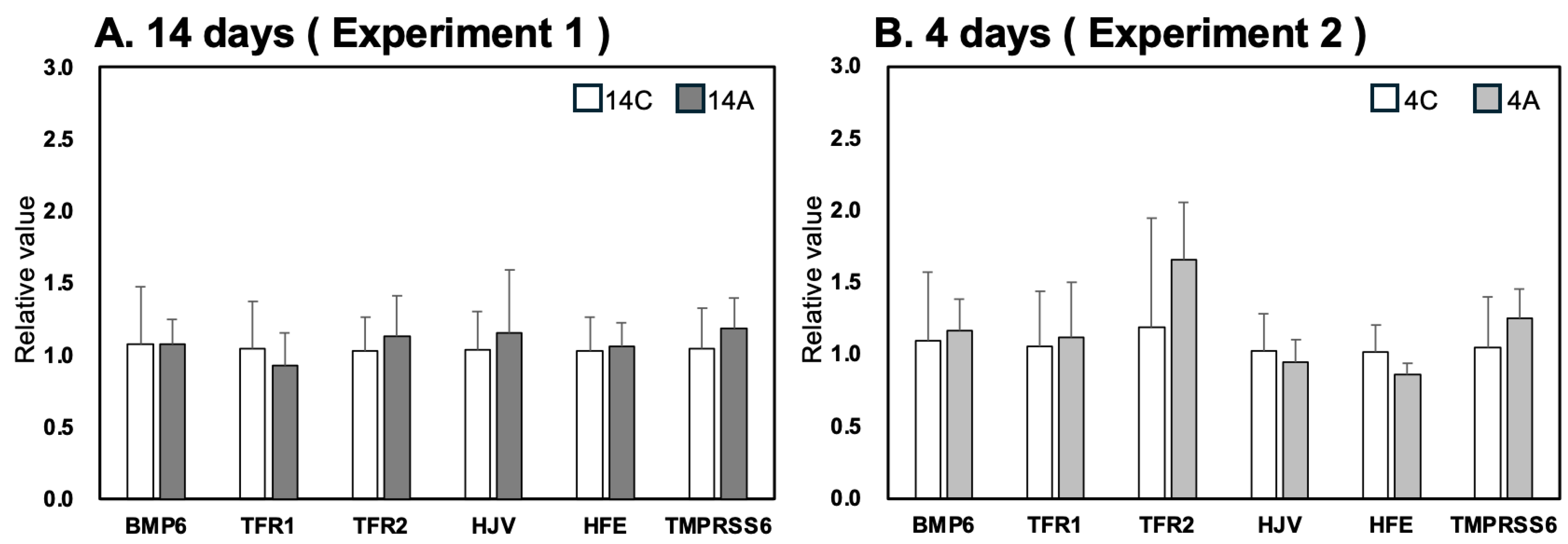
The mRNA expression levels of six genes (BMP6, TFR1, TFR2, HJV, HFE, and TMPRSS6) that regulate hepcidin expression are shown in Figure 4. In Experiment 1, no significant differences in the mRNA expression of these genes were observed between the 14A and 14C groups. In Experiment 2, TFR2 mRNA expression in the 4A group was 1.3-fold higher than that in the control group; however, no significant difference in mRNA expression was observed between the two groups (p = 0.182).

4. Discussion

This study assessed whether increased dietary vitamin D alters iron dynamics and blood cell status in vivo. The findings indicate that high-dose dietary vitamin D altered iron metabolism in rats, with transient suppression of hepatic HAMP mRNA at 4 days and increased liver iron after 14 days, confirming our hypothesis. We focused on hepcidin, the key regulator of iron metabolism, and observed that hepatic HAMP mRNA expression was suppressed in rats fed a high-dose vitamin D diet for 4 days. This result contrasts with the increased HAMP mRNA expression observed after 14 days of high-dose dietary vitamin D supplementation; however, it is consistent with a previous study [11], which showed that a single high-dose oral dose of vitamin D3 reduced plasma hepcidin levels by 73% at 72 h in healthy adult participants. Furthermore, in rats fed a high-vitamin D diet for 14 days, serum and liver iron levels were elevated compared with those in the control group. In addition, a significant positive correlation was observed between hepatic iron levels and HAMP mRNA expression. Therefore, high-dose vitamin D intake might suppress hepcidin secretion, increase dietary iron uptake in the intestinal tract, promote iron release from macrophages, and increase biological iron levels. Additionally, excessive vitamin D intake for 14 days or more may increase hepatic HAMP mRNA expression in response to elevated biological iron levels. These findings suggest that vitamin D can modulate iron regulatory pathways.
Next, we investigated the mechanisms through which vitamin D regulates iron metabolism. Multiple pathways and molecules have been implicated in the regulation of hepcidin expression. Among these, signaling pathways mediated by bone morphogenetic protein (BMP), hemojuvelin (HJV), and SMAD are considered pivotal. Pathways involving transferrin receptor 2 (TFR2) and HFE have also been demonstrated to play a role. These pathways are thought to detect changes in iron status and regulate hepcidin expression accordingly [18,19,20]. We measured the mRNA expression levels of six genes associated with these pathways (BMP6, TFR1, TFR2, HJV, HFE, and TMPRSS6) and compared them between control and experimental groups. No significant differences were observed between the two groups in either Experiment 1 or Experiment 2. A previous study using HepG2 cells [11] indicated that hepcidin expression was reduced by approximately 30% after 6 h of treatment with 5 nM active vitamin D, suggesting that these pathways may not mediate the effects observed in the present study. The 1,25-dihydroxyvitamin D receptor complex binds to the vitamin D response element on the hepcidin gene (HAMP) and represses its transcription in vitro [21]. Although the supplemented vitamin D in this study entered the bloodstream, vitamin D may directly contribute to the suppression of hepcidin expression. By contrast, liver HAMP mRNA expression was elevated in the 14A group in response to increased biological iron levels; however, no changes were observed in the mRNA expression of genes associated with these pathways, which are thought to sense biological iron. These genes may have already been translated into functional proteins, or the observed effects may not have been mediated by these pathways. Protein levels were not measured in this study and should be assessed in future investigations. Additionally, to fully elucidate the underlying mechanisms, future studies should examine the expression and function of key iron transporters not included in the present investigation, specifically divalent metal transporter 1 (DMT1) for iron uptake and ferroportin (FPN) for iron efflux.
In this study, we examined biological iron levels after 4 and 14 days of feeding a vitamin D-supplemented diet. The experimental design was based on reports indicating that the half-life of serum 25(OH)D is approximately 15 days [22], which justified the 14-day feeding period in Experiment 1. As a result, increases in biological iron and hepcidin expression were observed. To explore factors contributing to elevated iron levels, Experiment 2 involved a shorter, 4-day feeding period. When administered orally, vitamin D is absorbed in the intestine, incorporated into chylomicrons, and transported into the systemic circulation via lymphatic vessels. It is then rapidly metabolized to 25(OH)D3 in the liver or stored in adipose and muscle tissues [23]. Human studies have also shown that plasma hepcidin concentrations decrease within 72 h after a single high-dose oral administration of vitamin D3. These findings provided the rationale for the 4-day intake period in Experiment 2. Given the exploratory nature of this study, further investigations are warranted to determine the optimal timeframe for achieving maximal reduction in hepcidin expression following vitamin D intake.
Continuous overdose of vitamin D causes hypercalcemia, anorexia, weight loss, and calcium deposition in severe cases [24]. The dietary vitamin D3 dose used in this study was based on a previous 90-day subacute toxicity study in male rats [17]. In that study, the maximum nontoxic dose was determined to be 264 µg/100 g diet; therefore, a diet containing 250 µg/100 g was used in the present experiment. No toxic symptoms, such as reduced food intake or weight loss, were observed in either experiment. The level of vitamin D intake used in this study was substantially high, approximately 1.5 times the established Tolerable Upper Intake Level (UL) of vitamin D for adult males (60 kg body weight; 100 µg/day; Dietary Reference Intakes for the Japanese population [25]). The results suggest that increased vitamin D intake suppresses hepcidin expression. Additional studies using physiologically appropriate lower doses are needed to determine the specific amount of vitamin D required to suppress hepcidin expression. These studies should also include toxicity monitoring, such as assessments of serum calcium levels.
Iron metabolism is influenced by sex hormones, with estrogen, progesterone, and testosterone playing critical roles in regulating erythropoiesis, hepcidin synthesis, increased iron absorption, and higher Hb concentrations [26]. In this study, male rats were used to eliminate the influence of sex hormones. As results in female rats may differ, future studies should also be conducted in females. This study further suggests that dietary vitamin D supplementation increases biological iron levels in healthy models. From a clinical perspective, studies in iron-deficient rats are necessary to evaluate the therapeutic potential of vitamin D supplementation for anemia. Future work will compare responses between iron-sufficient and iron-deficient models.
This study has several limitations. While focusing on iron-related metabolic changes, we did not evaluate iron excretion, demand, recycling, or vitamin D metabolism. We were also unable to monitor changes in blood parameters throughout the animal experiments. Future studies should determine when fluctuations in iron metabolism begin after vitamin D administration. In addition, only mRNA levels of hepcidin were measured; circulating hepcidin concentrations were not assessed, and functional suppression could not be demonstrated. To address these limitations, future studies should measure serum iron and related parameters, including serum hepcidin, at more frequent time points to capture dynamic changes. Intestinal iron absorption and macrophage iron release were not directly evaluated using flux or transport assays. The well-established interplay between oxidative stress, inflammation, and iron metabolism [27,28], together with the anti-inflammatory effects of vitamin D [29,30], suggests several additional directions for future research, including assessment of inflammatory parameters and hematological indices such as white blood cell and platelet counts. Further studies should also evaluate renal effects (the site of vitamin D activation) and related parameters, such as erythropoietin concentrations. In addition, prolonged feeding beyond 14 days was not examined. These limitations reflect the exploratory nature of this study. Larger-scale investigations are warranted, and future studies should more comprehensively assess iron excretion, demand, recycling, and vitamin D metabolism.

5. Conclusions

High-dose dietary vitamin D altered iron metabolism in rats, with transient suppression of hepatic HAMP mRNA at 4 days and increased liver iron after 14 days. These findings suggest that dietary vitamin D can modulate iron regulatory pathways. Iron injections and supplements used for hematopoiesis carry a risk of iron overload. However, if future studies demonstrate that dietary vitamin D contributes to improvements in iron deficiency, vitamin D supplementation could represent a potential therapeutic strategy for managing iron deficiency.

Author Contributions

Conceptualization, Y.K., T.H., A.T., W.A. and M.K.; methodology, Y.K.; software, Y.K., T.H. and A.T.; validation, Y.K., T.H. and A.T.; formal analysis, Y.K., T.H. and A.T.; investigation, Y.K., T.H. and A.T.; resources, Y.K., T.H. and A.T.; data curation, Y.K., T.H. and A.T.; writing—original draft preparation, Y.K., T.H. and A.T.; writing—review and editing, Y.K., W.A. and M.K.; visualization, Y.K., T.H. and A.T.; supervision, W.A. and M.K.; project administration, Y.K.; funding acquisition, Y.K. All authors have read and agreed to the published version of the manuscript.

Funding

This work was supported by JSPS KAKENHI Grant-in-Aid for Scientific Research (C) [grant number 19K11695], and Urakami Foundation for Food and Food Culture Promotion, Japan.

Institutional Review Board Statement

The animal study protocol was approved by the Committee for Animal Research of Kyoto Prefectural University (approval number: KPU04914-R, 24 November 2023).

Informed Consent Statement

Not Applicable.

Data Availability Statement

The data sets generated and analyzed, and the resources generated during the current study are available from the corresponding author upon reasonable request.

Conflicts of Interest

The authors declare no conflicts of interest.

Abbreviations

The following abbreviations are used in this manuscript:
25(OH)D25-hydroxyvitamin D
RBCred blood cells
Hthematocrit
Hbhemoglobin
TIBCtotal iron-binding capacity
TSATserum transferrin saturation
BMP6bone morphogenetic protein 6
TFRtransferrin receptor
HJVhemojuvelin
HFEhemochromatosis protein
TMPRSS6transmembrane serine protease 6

References

  1. Lynch, S.; Pfeiffer, C.M.; Georgieff, M.K.; Brittenham, G.; Fairweather-Tait, S.; Hurrell, R.F.; McArdle, H.J.; Raiten, D.J. Biomarkers of Nutrition for Development (BOND)-Iron Review. J. Nutr. 2018, 148, 1001S–1067S. [Google Scholar] [CrossRef]
  2. Andrews, N.C. Forging a Field: The Golden Age of Iron Biology. Blood 2008, 112, 219–230. [Google Scholar] [CrossRef] [PubMed]
  3. Hentze, M.W.; Muckenthaler, M.U.; Galy, B.; Camaschella, C. Two to Tango: Regulation of Mammalian Iron Metabolism. Cell 2010, 142, 24–38. [Google Scholar] [CrossRef] [PubMed]
  4. Wang, C.Y.; Babitt, J.L. Liver Iron Sensing and Body Iron Homeostasis. Blood 2019, 133, 18–29. [Google Scholar] [CrossRef] [PubMed]
  5. Ganz, T.; Nemeth, E. Hepcidin and Iron Homeostasis. Biochim. Biophys. Acta 2012, 1823, 1434–1443. [Google Scholar] [CrossRef]
  6. Nemeth, E.; Tuttle, M.S.; Powelson, J.; Vaughn, M.B.; Donovan, A.; Ward, D.M.; Ganz, T.; Kaplan, J. Hepcidin Regulates Cellular Iron Efflux by Binding to Ferroportin and Inducing Its Internalization. Science 2004, 306, 2090–2093. [Google Scholar] [CrossRef]
  7. Smith, E.M.; Tangpricha, V. Vitamin D and Anemia: Insights into an Emerging Association. Curr. Opin. Endocrinol. Diabetes Obes. 2015, 22, 432–438. [Google Scholar] [CrossRef]
  8. Tripkovic, L.; Lambert, H.; Hart, K.; Smith, C.P.; Bucca, G.; Penson, S.; Chope, G.; Hyppönen, E.; Berry, J.; Vieth, R.; et al. Comparison of Vitamin D2 and Vitamin D3 Supplementation in Raising Serum 25-Hydroxyvitamin D Status: A Systematic Review and Meta-analysis. Am. J. Clin. Nutr. 2012, 95, 1357–1364. [Google Scholar] [CrossRef]
  9. Grant, W.B.; Lahore, H.; McDonnell, S.L.; Baggerly, C.A.; French, C.B.; Aliano, J.L.; Bhattoa, H.P. Evidence That Vitamin D Supplementation Could Reduce Risk of Influenza and COVID-19 Infections and Deaths. Nutrients 2020, 12, 988. [Google Scholar] [CrossRef]
  10. Rosendahl-Riise, H.; Spielau, U.; Ranhoff, A.H.; Gudbrandsen, O.A.; Dierkes, J. Vitamin D Supplementation and Its Influence on Muscle Strength and Mobility in Community-Dwelling Older Persons: A Systematic Review and Meta-analysis. J. Hum. Nutr. Diet. 2017, 30, 3–15. [Google Scholar] [CrossRef]
  11. Bacchetta, J.; Zaritsky, J.J.; Sea, J.L.; Chun, R.F.; Lisse, T.S.; Zavala, K.; Nayak, A.; Wesseling-Perry, K.; Westerman, M.; Hollis, B.W.; et al. Suppression of Iron-Regulatory Hepcidin by Vitamin D. J. Am. Soc. Nephrol. 2014, 25, 564–572. [Google Scholar] [CrossRef]
  12. Mogire, R.M.; Muriuki, J.M.; Morovat, A.; Mentzer, A.J.; Webb, E.L.; Kimita, W.; Ndungu, F.M.; Macharia, A.W.; Cutland, C.L.; Sirima, S.B.; et al. Vitamin D Deficiency and Its Association with Iron Deficiency in African Children. Nutrients 2022, 14, 1372. [Google Scholar] [CrossRef] [PubMed]
  13. Perlstein, T.S.; Pande, R.; Berliner, N.; Vanasse, G.J. Prevalence of 25-Hydroxyvitamin D Deficiency in Subgroups of Elderly Persons with Anemia: Association with Anemia of Inflammation. Blood 2011, 117, 2800–2806. [Google Scholar] [CrossRef] [PubMed]
  14. Sim, J.J.; Lac, P.T.; Liu, I.L.; Meguerditchian, S.O.; Kumar, V.A.; Kujubu, D.A.; Rasgon, S.A. Vitamin D deficiency and anemia: A cross-sectional study. Ann. Hematol. 2010, 89, 447–452. [Google Scholar] [CrossRef] [PubMed]
  15. Malczewska-Lenczowska, J.; Sitkowski, D.; Surała, O.; Orysiak, J.; Szczepańska, B.; Witek, K. The Association Between Iron and Vitamin D Status in Female Elite Athletes. Nutrients 2018, 10, 167. [Google Scholar] [CrossRef]
  16. Kobayashi, Y.; Taniguchi, R.; Shirasaki, E.; Yoshimoto, Y.S.; Aoi, W.; Kuwahata, M. Continuous Training in Young Athletes Decreases Hepcidin Secretion and Is Positively Correlated with Serum 25(OH)D and Ferritin. PeerJ 2024, 12, e17566. [Google Scholar] [CrossRef]
  17. Japan Cabinet Office, Food Safety Commission of Japan. Additive Evaluation Report 25-Hydroxycholecalciferol; Japan Cabinet Office, Food Safety Commission of Japan: Tokyo, Japan, 2022; Available online: https://www.fsc.go.jp/iken-bosyu/iken-kekka/kekka.data/pc1_eiyou_25OHD3_040202.pdf/ (accessed on 25 December 2024). (In Japanese)
  18. Babitt, J.L.; Huang, F.W.; Wrighting, D.M.; Xia, Y.; Sidis, Y.; Samad, T.A.; Campagna, J.A.; Chung, R.T.; Schneyer, A.L.; Woolf, C.J.; et al. Bone Morphogenetic Protein Signaling by Hemojuvelin Regulates Hepcidin Expression. Nat. Genet. 2006, 38, 531–539. [Google Scholar] [CrossRef]
  19. Finberg, K.E.; Heeney, M.M.; Campagna, D.R.; Aydinok, Y.; Pearson, H.A.; Hartman, K.R.; Mayo, M.M.; Samuel, S.M.; Strouse, J.J.; Markianos, K.; et al. Mutations in TMPRSS6 Cause Iron-Refractory Iron Deficiency Anemia (IRIDA). Nat. Genet. 2008, 40, 569–571. [Google Scholar] [CrossRef]
  20. Kawabata, H. The Mechanisms of Systemic Iron Homeostasis and Etiology, Diagnosis, and Treatment of Hereditary Hemochromatosis. Int. J. Hematol. 2018, 107, 31–43. [Google Scholar] [CrossRef]
  21. Zughaier, S.M.; Alvarez, J.A.; Sloan, J.H.; Konrad, R.J.; Tangpricha, V. The Role of Vitamin D in Regulating the Iron-Hepcidin-Ferroportin Axis in Monocytes. J. Clin. Transl. Endocrinol. 2014, 1, 19–25. [Google Scholar] [CrossRef]
  22. Jones, G. Pharmacokinetics of Vitamin D Toxicity. Am. J. Clin. Nutr. 2008, 88, 582S–586S. [Google Scholar] [CrossRef]
  23. Quesada-Gomez, J.M.; Bouillon, R. Is Calcifediol Better than Cholecalciferol for Vitamin D Supplementation? Osteoporos. Int. 2018, 29, 1697–1711. [Google Scholar] [CrossRef]
  24. Janoušek, J.; Pilařová, V.; Macáková, K.; Nomura, A.; Veiga-Matos, J.; Silva, D.D.D.; Remião, F.; Saso, L.; Malá-Ládová, K.; Malý, J.; et al. Vitamin D: Sources, Physiological Role, Biokinetics, Deficiency, Therapeutic Use, Toxicity, and Overview of Analytical Methods for Detection of Vitamin D and Its Metabolites. Crit. Rev. Clin. Lab. Sci. 2022, 59, 517–554. [Google Scholar] [CrossRef]
  25. Ministry of Health, Labour and Welfare. Dietary Reference Intakes for Japanese 2020; Ministry of Health, Labour and Welfare: Tokyo, Japan, 2019. (In Japanese) [Google Scholar]
  26. Burns, J.L.; Miller, C.H.; Fontaine-Bisson, B.; Connor, K.L. Iron Deficiency and Iron Deficiency Anaemia in Women of Reproductive Age: Sex- and Gender-Based Risk Factors and Inequities. J. Trace Elem. Med. Biol. 2025, 90, 127684. [Google Scholar] [CrossRef] [PubMed]
  27. Nemeth, E.; Ganz, T. Anemia of Inflammation. Hematol. Oncol. Clin. N. Am. 2014, 28, 671–681. [Google Scholar] [CrossRef]
  28. Kobayashi, Y.; Nakatsuji, A.; Aoi, W.; Wada, S.; Kuwahata, M.; Kido, Y. Intense Exercise Increases Protein Oxidation in Spleen and Liver of Mice. Nutr. Metab. Insights 2014, 7, 1–6. [Google Scholar] [CrossRef] [PubMed]
  29. Cannell, J.J.; Grant, W.B.; Holick, M.F. Vitamin D and inflammation. Derm.-Endocrinol. 2015, 6, e983401. [Google Scholar] [CrossRef] [PubMed]
  30. Krajewska, M.; Witkowska-Sędek, E.; Rumińska, M.; Stelmaszczyk-Emmel, A.; Sobol, M.; Majcher, A.; Pyrżak, B. Vitamin D Effects on Selected Anti-Inflammatory and Pro-Inflammatory Markers of Obesity-Related Chronic Inflammation. Front. Endocrinol. 2022, 13, 920340. [Google Scholar] [CrossRef]
Figure 1. Overview of the experimental design. Rats were fed the experimental diet ad libitum for 14 days in Experiment 1 and 4 days in Experiment 2. Experiment 1 included a control diet group (14C, n = 6) and a vitamin D-supplemented diet group (14A, n = 6), whereas Experiment 2 included a control diet group (4C, n = 6) and a vitamin D-supplemented diet group (4A, n = 7).
Nutraceuticals 06 00004 g001
Figure 2. Final body weight, food intake, and blood properties. Rats were fed the experimental diet ad libitum for (A) 14 days in Experiment 1 and (B) 4 days in Experiment 2. Experiment 1 included a control diet group (14C, n = 6) and a vitamin D-supplemented diet group (14A, n = 6), whereas Experiment 2 included a control diet group (4C, n = 6) and a vitamin D-supplemented diet group (4A, n = 7). Gray boxes indicate the vitamin D-supplemented diet group, whereas white boxes indicate the control diet group. The center line of the box plot indicates the median; crosses indicate the mean; the top of the box indicates the 75th percentile; and the bottom of the box indicates the 25th percentile. An unpaired t-test or Mann–Whitney U test was used for statistical analysis. RBC, red blood cells; Hb, hemoglobin; Ht, hematocrit; 25(OH)D, 25-hydroxyvitamin D. * Mann–Whitney U test.
Nutraceuticals 06 00004 g002
Figure 3. Biochemical data related to iron metabolism. Rats were fed the experimental diet ad libitum for (A) 14 days in Experiment 1 and (B) 4 days in Experiment 2. Experiment 1 included a control diet group (14C, n = 6) and a vitamin D-supplemented diet group (14A, n = 6), whereas Experiment 2 included a control diet group (4C, n = 6) and a vitamin D-supplemented diet group (4A, n = 7). Gray boxes indicate the vitamin D-supplemented diet group, whereas white boxes indicate the control diet group. The center line of the box plot indicates the median; crosses indicate the mean; the top of the box indicates the 75th percentile; and the bottom of the box indicates the 25th percentile. Outliners are plotted as individual circles. An unpaired t-test or Mann–Whitney U test was used for statistical analysis. TIBC, total iron-binding capacity; TSAT, serum transferrin saturation; HAMP, hepcidin. * Mann–Whitney U test.
Nutraceuticals 06 00004 g003
Figure 4. The mRNA expression of six genes (BMP6, TFR1, TFR2, HJV, HFE, and TMPRSS6) that regulate hepcidin expression. Data are presented as the mean + standard deviation. Rats were fed the experimental diet ad libitum for (A) 14 days in Experiment 1 and (B) 4 days in Experiment 2. Experiment 1 included a control diet group (14C, n = 6) and a vitamin D-supplemented diet group (14A, n = 6), whereas Experiment 2 included a control diet group (4C, n = 6) and vitamin D-supplemented diet group (4A, n = 7). Gray columns indicate the vitamin D-supplemented diet group, whereas white columns indicate the control diet group. An unpaired t-test was used for statistical analysis. BMP6, bone morphogenetic protein 6; TFR, transferrin receptor; HJV, hemojuvelin; HFE, hemochromatosis protein; TMPRSS6, transmembrane serine protease 6.
Nutraceuticals 06 00004 g004
Table 1. Ingredient composition of the diets fed to rats (g per 1000 g diet).
ComponentControl DietVitamin D-Supplemented Diet
Casein200200
Cornstarch457457
Sucrose228228
Rapeseed oil3535
Soybean oil1515
Cellulose2020
Vitamin mixture *10-
Vitamin mixture excluding vitamin D +-10
Cholecalciferol-0.0025
Mineral mixture #3535
Supplemented Vitamin D325 µg2500 µg
* AIN-93G vitamin mixture; + AIN-93G vitamin mixture excluding vitamin D; # AIN-93G mineral mixture.
Table 2. Correlation with hepcidin mRNA expression.
Variable14C14A
ρpρp
14 days (Experiment 1)
Serum iron0.0510.9350.0860.919
Hepatic iron−0.6000.242−0.1430.803
4 days (Experiment 2)
Serum iron−0.3710.4970.2140.662
Hepatic iron0.1430.8030.8570.024 *
Spearman’s rank correlation coefficient. * p < 0.05.
Disclaimer/Publisher’s Note: The statements, opinions and data contained in all publications are solely those of the individual author(s) and contributor(s) and not of MDPI and/or the editor(s). MDPI and/or the editor(s) disclaim responsibility for any injury to people or property resulting from any ideas, methods, instructions or products referred to in the content.