1. Introduction
Sedentary behaviour (SB) is widely recognised as a major risk factor for chronic disease, strongly associated with obesity, cardiovascular disease, type 2 diabetes, and premature mortality [
1,
2]. Global trends reveal a steady rise in sedentary occupations, particularly in high-income countries where technology-driven roles have replaced physically demanding labour [
2]. Physical inactivity is estimated to cause more than five million deaths worldwide each year [
3]. In the workplace, prolonged sitting is a health concern [
4]. Employees in higher education settings may spend over 70% of their working day sitting [
5,
6]. This phenomenon poses new challenges to the promotion of health in the workplace, whilst sedentary work is also associated with increasing health costs, including absenteeism and lower productivity [
7].
Comparing workdays with non-workdays in relation to SB, a clear disparity exists as evidence shows that employees spend an average of 138 min more being sedentary on non-working days compared to working days [
8]. Meanwhile, previous research indicated that 70.4% of the day is spent sitting on working days compared to non-workdays at 62.9% [
9,
10], reporting mean sitting times of 597 min during work and 484 min on non-workdays. Most, if not all, studies agree that employees generally spend most of their workday, if not the entire day, sitting [
6,
11]. Indeed, spending prolonged time sitting has an adverse impact on a person’s health, wellbeing, and productivity when compared to engaging in movement while working [
2,
12]. Workplace SB is not merely influenced by individualistic preferences but also by the physical and organisational surroundings within which work occurs. The Social Ecological Model [
13] presents a suitable structure for contemplating how alterations to workplace environments and systems may lead to opportunities to disrupt SB and embed movement into routine working activities.
Higher educational institutions (HEIs) have a dual role as workplaces and educational facilities and, as such, set lifestyle standards for employees and learners alike. Furthermore, health interventions also have dual values such as enhancing employee wellbeing and simultaneously demonstrating positive health practices for learners [
14]. Nonetheless, research on the health of the employees of HEIs and physical activity (PA) of active desk workers is insufficient [
5,
15]. Available data, however, unequivocally demonstrate that university employees engage in excessive desk-based work at the workplace [
6,
16]. Therefore, it is crucial to develop and test the implementation of strategies that have high potential for adoption in the culture of academic workplaces.
Typical workplace health promotion programmes have concentrated on the individual level, for example, lunchtimes for exercise or subsidised gym memberships. However, such programmes often fall short in terms of sustainability unless there are accompanying changes to structures and/or processes [
17]. The Social Ecological Model (SEM) recognises that health behaviours are influenced by individual, social, and organisational and physical environments [
13]. In response, modern workplace programmes focus more on changing the environment by adding structures such as sit–stand desks, stair prompts, and active meetings. For example, sit–stand workstations have been shown to reduce sitting time by as much as two hours per workday [
18], and walking meetings enhance creativity while also decreasing sitting time [
19]. Previous research reported that simple behavioural prompts such as banners placed near lifts encouraged stair use and increased PA levels [
20]. Furthermore, it was demonstrated that a team-based, friendly competitive intervention increased daily step counts by more than 5000 among university employees [
5].
Notwithstanding collective indication for individual workplace strategies, comparatively limited research has studied the feasibility and preliminary results of diverse approaches presenting physical movement and postural change within HEI workplace settings. Investigating separate strategies in the same workplace could provide suitable exploratory evidence, observing their practical use to inform the design of future controlled studies. The most common obstacles are a lack of time and excessive workload [
21,
22]. Academics frequently work beyond 40 h per week, including early mornings, late evenings, and weekends [
23,
24]. Ref. [
17] identified six primary factors making PA difficult: (1) working patterns, (2) other commitments, (3) seasonal changes, (4) lack of motivation, (5) health problems, and (6) limited facilities. When asked what would enable participation, respondents cited: (1) easier access to gyms and fitness equipment, (2) support from colleagues, (3) greater motivation, (4) adapted job roles, (5) improved health, and (6) more free time. Adults typically spend around 60% of waking hours at work, with sedentary time averaging 77% on workdays and 70 per cent on non-workdays [
25]. Similar workload-related constraints apply to HEI employees, reinforcing the need for practical, time-efficient workplace interventions. Thus, university workplaces present a suitable environment in which to explore different approaches aiming at disrupting prolonged sedentary work because staff may encounter prolonged periods of desk-based and screen-based activity. Rather than only relying on a single strategy, diverse features of the working environment may offer opportunities to enable physical movement, including access to exercise equipment, the modification of desk-based working through sit–stand workstations, and alternatives to conventional seated meetings.
The current study reports three complementary workplace feasibility interventions conducted within the same university. The interventions were undertaken with separate participant samples and differed in duration, procedures and outcome measures. The findings of this study should therefore be considered representative of related but independent interventions rather than components of a single intervention programme. In particular, Intervention 1 examined the feasibility and acceptability of providing exercise equipment within office environments; Intervention 2 examined the introduction of sit–stand workstations; and Intervention 3 examined short mood responses associated with seated, standing and walking meeting formats. Collectively, all three independent interventions provide exploratory evidence regarding a range of opportunities to incorporate movement or postural change into sedentary university working. Given the feasibility designs, small samples in some interventions, absence of concurrent control groups and reliance on self-reported or participant-recorded outcomes, this study was not designed to establish intervention efficacy or causal effects. Thus, the overall aim was to evaluate the feasibility, acceptability and preliminary behavioural, health, work-related and affective outcomes associated with these three approaches to introducing movement or postural change within sedentary university working.
Specifically, this study sought to: (1) evaluate engagement with office-based exercise equipment and explore associated health, quality of life and work-related outcomes alongside participants’ experiences of equipment use; (2) examine changes in participant-recorded sitting and standing following the introduction of sit–stand workstations together with preliminary health and work-related outcomes; (3) examine acute changes in mood following seated, standing and walking meetings and compare responses across meeting formats; and (4) identify practical and contextual factors influencing the feasibility and acceptability of incorporating movement or postural change into university working practices. Given the feasibility nature of the interventions, absence of concurrent control groups and reliance on participant-recorded or self-reported outcomes for several measures, this study was designed to generate preliminary evidence and inform future controlled research rather than establish intervention efficacy or causal effects.
2. Materials and Methods
2.1. Study Design and Setting
This study involved three complementary feasibility interventions conducted within a university setting in Birmingham, United Kingdom (UK). The interventions assessed a range of approaches to establishing movement or postural change into mainly sedentary working practices. Intervention 1 concerned the provision of exercise equipment within office settings; Intervention 2 involved the provision of sit–stand workstations; and Intervention 3 consisted of seated, standing and walking meeting formats. While the three interventions shared a central focus on sedentary working and workplace PA, they were implemented as independent interventions encompassing distinct participant samples, intervention procedures, durations and outcome measures. Thus, each intervention was analysed independently, and they are not deemed components of a single combined intervention.
Overall, a mixed-methods approach was adopted throughout the programme of feasibility work. Quantitative data involved participant-recorded behavioural data and validated questionnaire measures. The qualitative component comprised free-text comments recorded by participants. The qualitative data was utilised to determine appropriate perception in terms of participants’ experiences, perceived acceptability and practical factors inducing engagement. These interventions formed part of a larger doctoral research programme assessing workplace PA and SB. Data collection for all interventions was completed prior to the first UK COVID-19 lockdown in March 2020. Data cleaning and analysis continued in April 2020 as part of the wider research programme, which was completed in July 2021. Furthermore, as these were exploratory feasibility interventions implemented as part of a larger doctoral research programme, no formal a priori power calculation was undertaken. Sample sizes were established practically by participant availability, eligibility and engagement within the partaking university workplace. Therefore, inferential analyses are interpreted as exploratory and effect size estimates, mainly for Intervention 2 (n = 10), and should not be considered precise estimates of population effects.
2.2. Ethical Approval and Governance
This study was conducted according to the guidelines of the Declaration of Helsinki (1975, revised in 2013) and approved by the Birmingham City University Research Ethics Committee (Safi/Apr/2017/RLRA/0994). Written informed consent was obtained from all participants. Participants were reminded of their right to withdraw at any point without providing any reason. Participation in the interventions did not require modification to staff contracts, working hours, or break entitlements. Data was anonymised through unique participant identification numbers and stored securely in accordance with the UK General Data Protection Regulation (2018).
2.3. Participants, Recruitment and Procedure
University employees were welcome to partake voluntarily in the current interventions. Interested employees received information regarding the related intervention and provided informed consent prior to participation. Where engagement in intervention involved PA, participants completed the Physical Activity Questionnaire (PAR-Q) before engaging in determining possible contraindications to exercise. Since interventions were conducted independently, participant numbers and available outcome data differed between each intervention. Therefore, analytical sample sizes are individually described.
Intervention 1 consisted of n = 57 participants, comprising n = 17 men and n = 40 women. Intervention 2 included n = 10 employees who participated in the sit–stand workstation intervention. Intervention 3 encompassed n = 61 participants who were evaluated under the seated, standing and walking meeting conditions. Demographic variables were not gathered as part of Interventions 2 and 3.
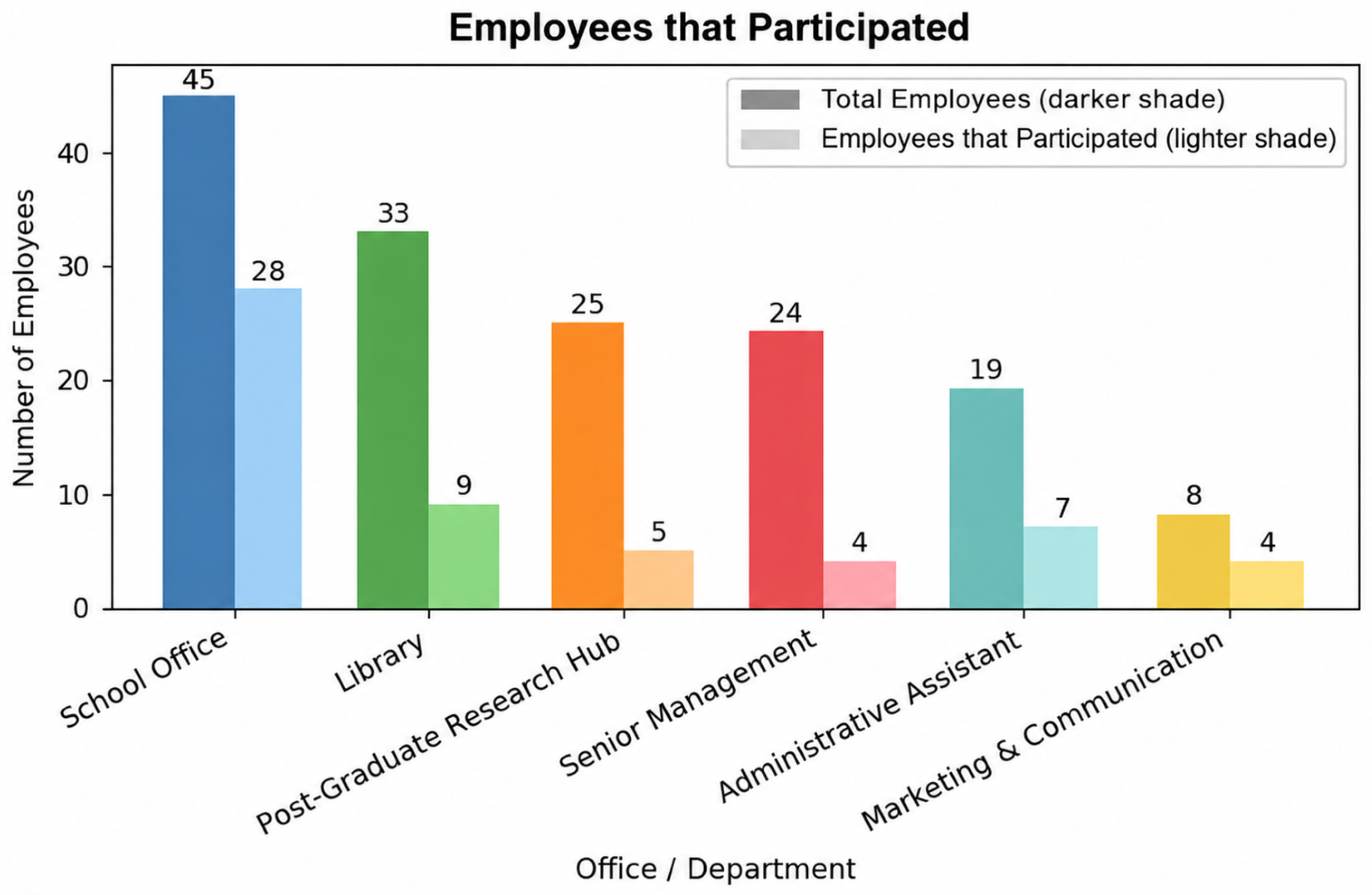
Figure 1 shows employees that participated by offices in intervention 1.
2.3.1. Intervention 1—Office-Based Exercise Equipment
Exercise bikes and rowing machines were made available within six offices within the university for 11 weeks. Five offices were equipped with Monark Ergomedic 874E cycle ergometers, and one office received a Concept 2 Model D rowing machine. Participants were provided with instructions regarding safe equipment use and were able to use the exercise equipment voluntarily during the working day. No prescribed minimum duration or frequency of equipment use was imposed. Paper-based activity logs were placed beside the exercise equipment. Participants recorded their unique participant identifier and the date and duration of equipment use and were able to provide optional free-text comments relating to their experience of using the equipment. Thus, recorded exercise duration represents participant-recorded equipment use time rather than objectively assessed PA. Participants also completed health, quality of life and work functioning measures pre and post the intervention, including the WLQ-LF [
26], WHOQOL-BREF [
27], RAND-36 Health Survey [
28] and EQ-5D-5L [
29].
2.3.2. Intervention 2: Sit–Stand Workstation
Intervention 2 encompassed a one-week baseline monitoring period followed by an eight-week sit–stand workstation intervention. Ten university employees participated. Each participant was supplied with an L-E-VATE™ medium sit–stand workstation (Ergo Desktop Ltd., Cambridge, UK) fitted to their existing desk and received an individual demonstration regarding safe use. During the one-week baseline period, participants recorded their usual sitting and standing time while undertaking their normal working activities. Following baseline monitoring, participants completed an eight-week intervention period during which they could alternate voluntarily between seated and standing working. Participants completed daily activity logs recording periods spent sitting and standing. Sitting and standing outcomes consequently represent participant-recorded rather than objectively measured postural behaviour. Average weekly sitting and standing time during the eight-week intervention was subsequently compared with the baseline week. Participants completed the WLQ-SF, WHOQOL-BREF, RAND-36 Health Survey and EQ-5D-5L prior to and after the intervention.
2.3.3. Intervention 3: Seated, Standing and Walking Meetings
Intervention 3 used a within-participant repeated-measures model. Sixty-one university employees were evaluated under three workplace meeting conditions: seated, standing and walking. All participants completed the meetings in the same fixed sequence, i.e., sitting, standing and walking, with each meeting conducted at least one week apart to minimise potential carry-over between formats. Meeting order was neither randomised nor counterbalanced. Seated meetings represented typical workplace meetings that were performed while participants continued sitting. Standing meetings were undertaken without seated participation, while walking meetings were conducted while participants walked around the university campus or in appropriate outdoor environments, including botanical gardens. Furthermore, the maximum meeting duration was not provided/identified; nonetheless, each meeting was around one hour long. For the walking meeting format, participants were allowed to perform their meeting while walking within or around the university campus or in suitable nearby outdoor environments, including botanical gardens. Moreover, walking pace and intensity were not proposed or uniform, allowing participants to undertake the meeting at a self-selected pace applicable to the meeting context. Walking intensity, the rating of perceived exertion (RPE), heart rate and step count were also not assessed. Thus, walking should be interpreted as a pragmatic workplace meeting format rather than a standardised form of exercise exposure. Mood was evaluated immediately pre and directly post each meeting using the Brunel Mood Scale (BRUMS). Since the same participants completed all three types of meetings, observations across meeting formats were considered to be associated with repeated measurements in the statistical analysis.
2.4. Qualitative Data and Analysis
Qualitative data were acquired during Interventions 1 and 2 via optional free-text comments documented by participants alongside their exercise equipment activity logs. These comments provided brief concurrent descriptions of participants’ experiences of using exercise equipment during the working day. The qualitative dataset involved free-text activity log comments and open-ended questions. The qualitative data recorded by participants in the logbooks were analysed using reflexive thematic analysis (RTA), following the approach by Braun and Clarke [
30]. RTA is a flexible, interpretive method used to identify, develop, and interpret the patterns of meaning in themes within the dataset. The analysis followed the six-phase process proposed by [
30], comprising data familiarisation, initial coding, and reviewing, refining, defining, and naming candidate themes, and finally, themes were synthesised into a coherent narrative and supported by illustrative data extracts to enhance transparency and interpretive depth. Given the brief and concurrent nature of the logbook comments, the qualitative analysis was intended to contextualise intervention feasibility and acceptability rather than provide an in-depth interpretative account of participants’ experiences. Furthermore, qualitative findings were also reflected alongside the quantitative outcome to identify regions of convergence or divergence. For example, participants’ subjective perceptions of concentration or productivity were contemplated alongside quantitative WLQ-LF work limitation and productivity outcomes. This qualitative component was used to complement and explain the quantitative findings, providing deeper insight into participants’ experiences of the intervention, particularly in relation to its facilitators, challenges, and perceived value within the workplace context.
2.5. Statistical Analysis
Statistical analyses were conducted using IBM SPSS Statistics (25). Continuous variables were summarised using means and standard deviations where distributional assumptions were appropriate and medians and interquartile ranges for non-normally distributed variables.
For paired pre–post survey effects, distributional assumptions were evaluated on the paired difference scores, including the use of the Shapiro–Wilk test and visual inspection where applicable. Paired-sample t-tests were used where paired differences were nearly normally distributed. Where the assumptions for parametric analysis were not met, Wilcoxon signed-rank tests were applied. For parametric paired comparisons, Cohen’s dz was calculated as a standardised within-participant effect size estimate. Appropriate rank-based effect size estimates were used for non-parametric comparisons. The effect size estimates were interpreted carefully given the feasibility design and, specifically for Intervention 2, due to the small sample size. To address the inflation of Type I error occurring from multiple outcome testing, Holm adjustment was also applied within questionnaire families. Unadjusted outcomes are reported where informative, but interpretation emphasises results that remained statistically robust following multiplicity adjustment. Statistical significance was set at p < 0.05 using two-tailed tests.
2.5.1. Intervention 1 Analysis
Participant-recorded equipment use minutes were summarised throughout the 11-week intervention. Mean weekly use and total participant-level use were also calculated. Differences in overall recorded equipment use time between men and women were also evaluated using Welch’s independent-samples t-test where the assumption of equal variances was not met. Pre–post WLQ-LF, WHOQOL-BREF, RAND-36 and EQ-5D-5L outcomes were analysed using paired-sample t-tests or Wilcoxon signed-rank tests according to the distribution of paired difference scores.
2.5.2. Intervention 2 Analysis
Baseline participant-recorded weekly sitting and standing time was evaluated with participants’ average weekly sitting and standing time throughout the eight-week intervention using paired-sample analyses. Pre–post WLQ-LF, WHOQOL-BREF, RAND-36 and EQ-5D-5L results were analysed using paired-sample t-tests or Wilcoxon signed-rank tests according to the distribution of paired difference scores. Provided the sample size of 10 participants, the statistical findings and effect size estimates were interpreted as exploratory feasibility evidence rather than estimates of intervention efficacy.
2.5.3. Intervention 3 Analysis
In each meeting condition, before and after the meetings, BRUMS scores were compared using Wilcoxon signed-rank tests. Post-minus-pre change scores were then calculated for each BRUMS dimension. As participants completed all three meeting conditions, the observations were related. Friedman tests were used to compare change scores across seated, standing and walking meetings. Where a significant Friedman omnibus test was found, paired Wilcoxon signed-rank tests were then conducted as post hoc comparisons, with Bonferroni adjustment for the three pairwise comparisons. Kendall’s W was also used to quantify the magnitude of the omnibus repeated-measures effect. Furthermore, Holm adjustment was applied across the six BRUMS outcomes to account for multiple testing.
4. Discussion
The aim of this study was to assess the three complementary workplace feasibility interventions conducted in a university setting, each targeting a diverse opportunity to introduce movement or postural change into predominantly sedentary working practices rather than representing a single multi-component intervention. The interventions were delivered independently and hence provide exploratory evidence about the feasibility and preliminary outcomes of office-based exercise equipment, sit–stand workstations and alternative meeting formats. Overall, the findings suggest that workplace strategies designed to interrupt prolonged sitting or generate prospects for movement can be conducted within a university environment, although the strength and nature of the observed outcomes differed across all interventions. The most consistent findings were related to feasibility, engagement and short-term behavioural or affective changes, compared to wider improvements in health, quality of life or productivity.
4.1. Intervention 1: Office-Based Exercise Equipment
Participants continued to record the use of the workplace exercise equipment throughout the 11-week intervention, averaging around 56 min of equipment use per participant per week. This shows that making exercise equipment easily available within office environments could provide a feasible opportunity for some employees to integrate brief periods of movement into the working day. However, the present findings should not be interpreted as evidence that overall, PA improved. Equipment use duration was participant-recorded and did not capture total daily PA or SB. In addition, no concurrent comparison group was included. Thus, the current findings demonstrate engagement with the available equipment rather than an intervention effect on overall PA.
The quantitative health and work-related outcomes were comparatively modest. The WLQ-LF results indicated no statistically significant changes in work limitations or estimated productivity loss. Correspondingly, no statistically robust changes were found in WHOQOL-BREF, RAND-36 or EQ-5D-5L outcomes. While Emotional Wellbeing reached statistical significance in the unadjusted RAND-36 analysis, this association did not remain statistically significant following multiplicity adjustment. Therefore, this should not be interpreted as a robust intervention-related change. Furthermore, the free-text activity log comments supplied valuable contextual information. For instance, participants commonly illustrated feeling more alert, energised or refreshed following equipment use and valued opportunities to interrupt prolonged screen-based work. Some participants also perceived improvements in concentration, stress and productivity. These subjective experiences did not correspond to statistically significant WLQ-LF productivity-related outcomes, emphasising an important divergence among instant perceived benefits and measurable work functioning outcomes.
Environmental and practical barriers were also evident. Excessive office temperature was frequently recognised as a barrier to equipment use, alongside tiredness and competing work demands. These findings are consistent with an ecological understanding of workplace behaviour, whereby the availability of an opportunity for movement may not be sufficient if the wider physical and organisational environment makes participation difficult [
13]. In summary, Intervention 1 provides stronger evidence of feasibility and perceived acceptability than of measurable health or productivity benefit. Future studies should use objective activity monitoring, controlled designs and longer-term follow-up to determine whether sustained access to office-based exercise equipment results in meaningful changes in PA, SB or health.
4.2. Intervention 2: Sit–Stand Workstations
The sit–stand workstation intervention showed the clearest behavioural changes in the three interventions. For instance, participants recorded substantially less sitting and more standing during the eight-week intervention period than during the one-week baseline. The current results are consistent with previous research indicating that height-adjustable workstations can facilitate changes in workplace posture [
18]. Nevertheless, the scale of the observed changes must be interpreted cautiously. Sitting and standing times were self-recorded instead of objectively measured, the intervention included only 10 participants, and no control group was available. As a result, the observed differences cannot be ascribed merely to the workstation intervention and may also reflect recording behaviour, changes in workload or other sequential factors.
Two RAND-36 domains, Physical Functioning and Energy/Fatigue, showed statistically significant pre–post differences that remained significant following adjustment for multiple comparisons. These findings show possible improvements in selected aspects of perceived physical functioning and energy during the intervention period. However, the large, standardised effect sizes, particularly for Energy/Fatigue, require caution because effect size estimates from a sample of only 10 participants are inherently imprecise and possibly unstable. In contrast, no statistically significant changes were observed in the WLQ-LF, WHOQOL-BREF or EQ-5D-5L outcomes. This indicates that the observed alterations may have been relatively specific to posture-related behaviour and selected perceived health domains rather than indicating wider developments in quality of life, self-rated health or work functioning. This intervention provides helpful preliminary evidence about the feasibility of introducing sit–stand workstations within university settings, but it does not establish intervention effectiveness. Thus, future studies must involve larger samples, objective measurements of sitting and standing, and controlled or randomised designs to establish whether similar effects are reproducible.
4.3. Intervention 3: Seated, Standing and Walking Meetings
The meeting format intervention evaluated short mood responses to seated, standing and walking meetings utilising within-participant repeated-measures design. Following correction for multiple comparisons, seated meetings were associated with reduced Tension, standing meetings with increased Vigour, and walking meetings with increased Vigour and reduced Fatigue. When changes were compared directly across the meeting formats applying the appropriate repeated-measures Friedman analysis, Vigour was the most robust among-condition finding. Both standing and walking meetings were associated with greater increases in Vigour than seated meetings, while no statistically significant difference was identified between standing and walking meetings after post hoc adjustment. Furthermore, unadjusted between-condition variation was also observed for Fatigue, with walking meetings determining a more positive change compared to seated meetings. This supports the evidence connecting mild physical movement with improved mood [
31].
The current results indicate that integrating postural change or movement into workplace meetings could be linked with positive acute variations in perceived energy. This is possibly essential in sedentary workplace environments where meetings contribute to prolonged periods of sitting [
32]. However, the findings from this intervention suggest that the promotion of PA does not have to come from structured exercise programmes as integrating movement into the daily work schedule could sufficiently cut down on sedentary time and boost wellbeing. Nevertheless, the interpretation of this intervention could be limited by the fixed sequence of conditions as participants completed seated meetings first, followed by standing and then walking meetings. Therefore, conditions were not randomised or counterbalanced; thus, subsequently, meeting format was partly thwarted with order, and the observed differences may reflect familiarity, learning, expectation or carry-over influences in addition to the meeting format itself. However, the current findings must not be interpreted as establishing that walking meetings are superior to standing meetings or that either active meeting format affected improvements in mood; rather, they feed preliminary evidence that active or non-seated meeting formats warrant further investigation by applying randomised or counterbalanced repeated-measures designs.
4.4. Cross-Intervention Interpretation
Throughout the interventions, the results show that changing the physical or organisational environment could potentially create opportunities for employees to interrupt prolonged sedentary work. The strongest evidence relates to feasibility and instant behavioural or affective responses rather than comprehensive health improvement. The interventions also demonstrate that workplace movement can be proposed in a range of ways. For instance, exercise equipment provided an optional opportunity for employees to undertake brief bouts of activity, sit–stand workstations enabled postural variation during desk-based work, and alternative meeting formats incorporated movement or standing into an existing work activity. Thus, current approaches are consistent with the Social Ecological Model, which emphasises that health behaviours are modelled by connections among individuals and their social, organisational and physical environments [
13]. In this context, adapting to the workplace environment may reduce some practical barriers to movement by combining activity opportunities into routine work rather than relying solely on employees undertaking exercise outside working hours.
4.5. Practical Implications
The current findings indicate that universities and other desk-based workplaces may consider a range of low-disruption strategies for supporting movement during the working day. Accessible exercise equipment, sit–stand workstations and alternatives to normal seated meetings may each offer practical opportunities to interrupt prolonged sedentary work. Nevertheless, implementation must take into account contextual factors. For instance, the Intervention 1 logbook data indicates that office temperature and workload negatively impacted engagement, while the fixed meeting order in Intervention 3 highlights the need for cautious implementation and evaluation of active meeting practices. The findings also demonstrate that employee perceptions of benefit must not automatically be linked with measurable changes in health or productivity. For example, participants in Intervention 1 repeatedly perceived better concentration or productivity, yet WLQ-SF outcomes did not demonstrate statistically significant changes. Thus, workplace health programmes must reflect both subjective employee experience and objective or validated outcome measures when assessing impact.
4.6. Strengths and Limitations
One strength of this study is that it assessed three different approaches to workplace movement within the same organisational context, providing an understanding of different opportunities for addressing sedentary work. The inclusion of both quantitative and qualitative data also allowed participant experiences to be contemplated alongside behavioural and survey outcomes. Nevertheless, the current study has limitations. For instance, all interventions applied uncontrolled feasibility designs, preventing causal inference. Second, participation was voluntary, creating the potential for self-selection bias. For instance, employees who volunteered to partake may have been more motivated to engage in workplace PA than the wider university workforce. Third, numerous key behavioural outcomes count on participant recording. The exercise equipment used in Intervention 1 and sitting and standing time in Intervention 2 were recorded manually rather than measured objectively. Therefore, these measures are susceptible to recording errors, recall bias and social desirability effects. Fourth, the sample size differed in each intervention. For example, Intervention 2 comprised 10 participants, which could cause ambiguity around effect size estimates and limit generalisability. Another limitation was that the meeting duration was not standardised, but each meeting lasted at least one hour, and walking routes and pace were selected pragmatically by participants. Walking intensity, RPE, heart rate and step count were also not determined. Subsequently, changes in meeting duration, walking environment and physical intensity may have influenced the observed mood reactions. Forthcoming research must standardise meeting time where reasonable and objectively measure walking exposure and intensity. Furthermore, the qualitative component involved brief optional free-text logbook comments rather than focus groups or in-depth interviews. Although this provides useful contextual information, it was limited in depth and may disproportionately represent participants who were more motivated to record their experiences.
4.7. Future Research
Future research should build on the current feasibility findings using effectively powered controlled or randomised designs. Objective measures such as accelerometers and posture-sensitive inclinometers must be used to assess PA, sitting and standing where possible. For sit–stand interventions, larger studies must assess whether observed changes in sitting and standing transform into sustained improvements in physical or psychological health. For meeting interventions, condition order could be randomised or counterbalanced and meeting characteristics standardised as far as possible. Future research may also evaluate whether combining different workplace strategies within the same participants produces additive or synergistic effects. This question could not be addressed in the present study because the three interventions were conducted independently. Therefore, longer follow-up is also needed to establish whether original engagement is retained and whether short-term perceived benefits lead to continued changes in health, wellbeing, work functioning or organisational effects.
4.8. Conclusions
The current findings offer preliminary evidence regarding the feasibility and acceptability of three complementary approaches to introducing movement or postural change within a sedentary university workplace. In the office-based exercise equipment intervention, participants recorded voluntary equipment use across the 11-week period, and free-text comments revealed that participants commonly perceived the equipment as energising, motivating and useful for interrupting prolonged computer-based work. However, no statistically robust changes were identified in quality of life, health status, work limitations or productivity after adjustment for multiple comparisons. In the sit–stand workstation intervention, participants recorded noticeably less sitting and additional standing during the eight-week intervention period compared with baseline. Improvements were also observed in RAND-36 Physical Functioning and Energy/Fatigue following adjustment for multiple comparisons. In the meeting format intervention, standing and walking meetings were linked with larger short-term increases in Vigour than seated meetings, while walking meetings were also correlated with reduced Fatigue in the within-condition analysis. However, the fixed seated–standing–walking meeting arrangement restricts the attributes of these differences specifically to meeting format. In summary, the findings suggest that workplace environments and routine work practices can provide practical opportunities to combine movement and postural variation into the working day. The evidence is the strongest for feasibility, engagement and short-term behavioural or affective responses rather than intervention effectiveness or broad improvements in health and productivity. Future research should evaluate these strategies using adequately powered controlled studies, objective measures of PA and SB, longer follow-up periods and more diverse occupational samples. Studies that carefully combine multiple workplace strategies within the same participants could also determine whether integrated approaches provide additive or synergistic benefits beyond those observed from individual interventions.




 ,
,