Article

Decomposing Wealth-Based Inequalities in Neonatal Mortality in India: Evidence from National Family Health Survey (2019–2021)


by
Diksha Gautam
1,2,*,
Anuj Kumar Pandey
2,3,4,
Benson Thomas M
1 and
Sutapa Bandyopadhyay Neogi
2
1
SRM School of Public Health, Faculty of Medicine and Health Sciences, SRM Institute of Science and Technology, Kattankulathur, Chengalpattu 603203, Tamil Nadu, India
2
Department of Health Systems and Implementation Research, International Institute of Health Management Research, New Delhi 110075, Delhi, India
3
Institute of Population and Social Research, Mahidol University, Nakhon Pathom 73170, Thailand
4
Visiting Research Fellow, University of Huddersfield, Huddersfield HD1 3DH, UK
*
Author to whom correspondence should be addressed.
Int. J. Environ. Res. Public Health 2026, 23(6), 795; https://doi.org/10.3390/ijerph23060795 (registering DOI)
Submission received: 7 April 2026 / Revised: 6 June 2026 / Accepted: 9 June 2026 / Published: 12 June 2026
(This article belongs to the Special Issue Addressing Disparities in Health and Healthcare Globally)

Highlights

Public health relevance—How does this work relate to a public health issue?
  • India contributes nearly one-fifth of global neonatal deaths, and it remains challenging to achieve the SDG 2030 target due to substantial wealth-based disparities.
  • This study investigates how neonatal mortality is unequally distributed across socioeconomic groups and geographic contexts in India.
Public health significance—Why is this work of significance to public health?
  • Neonatal mortality is disproportionately concentrated among the poorer, revealing persistent inequities despite the expansion of various national health programs focusing on disadvantaged populations.
  • The observed inequality is substantially explained by modifiable factors, particularly household living conditions and maternal healthcare utilization.
Public health implications—What are the key implications or messages for practi-tioners, policy makers and/or researchers in public health?
  • There is a need to strengthen the equity-oriented implementation of existing national health programs to improve reach among disadvantaged populations.
  • Targeted, place-based strategies, including Aspirational Districts and Blocks Programmes, should be supported by strengthened monitoring of equity and quality of care.

Abstract

India exhibits substantial variation in neonatal mortality across regions and socioeconomic groups. This study used nationally representative survey data (2019–2021) to examine wealth-based inequalities in neonatal mortality. Socioeconomic disparities were assessed using Erreygers’ Normalized Concentration Index (ECI) and concentration curves, with subgroup analyses by residence, state development status (Empowered Action Group (EAG) vs. non-EAG), district typology, and region. Inequality was further decomposed using the Wagstaff method. Analysis of 176,843 most recent live births revealed marked rural–urban disparities, with neonatal mortality in rural areas (18.3 per 1000 live births) 1.6 times higher than in urban areas (11.5). Neonatal mortality was significantly concentrated among poorer households (ECI: −0.0123; p < 0.001), with greater inequality in urban areas, EAG states, and non-aspirational districts. Regional variation was evident, with the highest inequality in the Western and Central regions. Decomposition analysis showed that inequality was primarily driven by adverse household conditions and maternal risk factors concentrated among poorer populations. Key contributors included unclean cooking fuel, higher parity, large family size, normal delivery and inadequate antenatal care. These findings highlight the need for equality-focused strategies addressing both social determinants and gaps in access to quality maternal and newborn care.

1. Background

Neonatal mortality, defined by the World Health Organization (WHO) as death within the first 28 days of life, constitutes a critical component of under-five mortality and is a key indicator of population health and health system performance [1]. Although substantial global reductions have been achieved and many countries are on track to meet the Sustainable Development Goal target of reducing neonatal mortality to 12 deaths per 1000 live births by 2030, neonatal deaths continue to account for nearly half of all under-five deaths globally, with the burden disproportionately concentrated in low- and middle-income countries [2].
India has achieved substantial reductions in neonatal mortality over the past decades, decreasing its contribution to the global burden from nearly one-third of neonatal deaths in 1990 to less than one-fifth in recent years [3]. Nevertheless, progress has slowed, with recent estimates indicating a stagnation of NMR at around 19 deaths per 1000 live births over the past three years [4]. With approximately 67,385 births occurring daily, an estimated 1440 neonatal deaths occur each day, representing a substantial and ongoing public health challenge [3]. However, national averages mask pronounced heterogeneity across geographic regions and socioeconomic groups. Significant disparities persist across states and districts, with northern and central states consistently reporting higher neonatal mortality compared to southern states [5]. While states such as Kerala, Tamil Nadu, Maharashtra, and Himachal Pradesh have already achieved the SDG target, others, including Madhya Pradesh, Uttar Pradesh, and Chhattisgarh, continue to report markedly higher NMR levels [4]. District-level evidence further indicates that only a small proportion of districts are likely to meet the SDG target, with a concentration of high-burden districts in socioeconomically disadvantaged regions, although pockets of high risk also exist within relatively better-performing states. Inter-state disparities in neonatal mortality in India narrowed between 2000 and 2019, primarily driven by reductions in inequality among high-mortality states [6]. A growing body of evidence indicates that neonatal mortality is closely linked to socioeconomic conditions at both individual and contextual levels [7]. Households in lower wealth quintiles, as well as those residing in rural and underserved areas, consistently experience higher risks of neonatal death compared to their wealthier and urban counterparts [5]. These disparities represent not only a major public health concern but also a preventable component of neonatal mortality.
In response, the Government of India (GoI) has introduced several maternal and newborn health initiatives, including the India Newborn Action Plan (INAP) and targeted place-based programs such as the Aspirational Districts and Aspirational Blocks Programmes aimed at improving maternal and child health outcomes in underserved regions [8,9,10,11]. Despite these efforts, substantial socioeconomic inequalities in neonatal mortality persist.
These approaches reflect an increasing emphasis on reducing geographic and socioeconomic inequalities. However, limited evidence exists on understanding the underlying determinants of wealth-based inequalities in neonatal mortality. Thus, the present study aims to examine wealth-based inequalities in neonatal mortality in India using nationally representative NFHS-5 data and to decompose the contribution of individual, household, community, health system, and newborn-level factors driving these disparities.

2. Methods

2.1. Study Design and Data Source

A secondary data analysis was carried out using data from the fifth round of the National Family Health Survey (NFHS-5), a nationally representative, cross-sectional household survey conducted during 2019–2021. NFHS-5 provides comprehensive information on demographic characteristics, maternal and child health, reproductive health, and healthcare utilization for 707 districts of 28 states and 8 union territories [12]. The data for this study were accessed from the Demographic and Health Surveys (DHS) Program data repository upon prior registration and approval [13]. The dataset is publicly available, fully anonymized, and does not contain any personally identifiable information.
Since the unit of analysis in the present study is children, the Birth Recode file (BR) has been used for the estimation of neonatal mortality. In addition to the BR file, relevant explanatory variables were drawn from the Individual Recode (IR) and Kids Recode (KR) files to ensure comprehensive coverage of maternal, household, and health system characteristics. These datasets were merged using unique identifiers provided in the NFHS-5 data structure to create a consolidated analytical dataset.

2.2. Study Population

Though the NFHS-5 data includes a total of 724,115 women aged 15–49 years with 257,995 births that occurred in the last five years, 4 preceding the survey, we have restricted the analysis to the 176,843 most recent live births to minimize recall bias and to ensure consistency in the measurement of maternal and health service-related variables.

2.3. Outcome Variable

The primary outcome of interest was neonatal mortality, defined as the death of a live-born infant within the first 28 completed days of life, in accordance with WHO definitions. A binary outcome variable was created, coded as 1 and 0, where “1” indicates that the child died within the neonatal period and “0” indicates that the child survived beyond 28 days.

2.4. Explanatory Variables

Explanatory variables were selected based on the existing literature and a conceptual framework capturing the multifactorial determinants of neonatal mortality. These variables were grouped into five domains to reflect different levels of influence.
Individual-level (maternal) factors included age of the mother at first birth (18–34 years, <18 and >34 years), parity (unavoidable first birth, up to 2 births, more than 2 births)—unavoidable first births were treated as a separate category because preceding birth interval-related risks are not applicable for primiparous births, maternal education (not educated, primary educated, secondary/higher educated), maternal height (>145 cms, ≤145 cms), high-risk fertility behavior (no, any), maternal substance use (tobacco and alcohol) (no, yes), pregnancy intention (yes, no more or later), experience of pregnancy-related complications (no, any one), and anemia status (non-anemic—Hb ≥ 11 g/dL, anemic—Hb < 11 g/dL). Household-level factors comprised wealth quintile (poorest, poorer, middle, richer, richest), source of drinking water (clean, unclean), type of cooking fuel (clean, unclean), sanitation facilities (clean, unclean), floor material (pakka, kaccha), exposure to mass media (less than/at least once a week, not at all), caste (General/other, OBC, ST, SC), religion (Hindu, Muslim/others), and household size (1–4, 5 and above). Community-level factors included place of residence (urban, rural), community wealth status (not poor, poor), community-level women’s education (high, low), geographic region (South, Central, North, East, Northeast, West), classification of states into Empowered Action Group (EAG) and non-EAG states, and district classification (aspirational, non-aspirational districts). Health system-related factors captured utilization and quality of maternal healthcare services, including timing of first antenatal care (ANC) visit (first trimester, second/third trimester), number of ANC visits (≥4, <4), knowledge of birth preparedness and complication readiness (BPCR) (knows about all components, none/some components), perceived quality of ANC (none/some, all), place of delivery (home, public facility, private facility), mode of delivery (other than cesarean, cesarean), and contact with frontline health workers (ASHA) (no, yes). Newborn care factors included early initiation of breastfeeding (more than one hour, within one hour), skin-to-skin contact (no, yes), and sex of the child (male, female).
Some variables mentioned above were created by calculating composite indexes using various dichotomous/nominal/ordinal variables:
  • High-risk fertility behavior was defined as the presence of any of the following risk factors at the last childbirth: maternal age < 18 or ≥35 years, birth order ≥ 3, or birth interval ≤ 12 months. It is then categorized as no high-risk fertility behavior present, and at least one (any) present.
  • Birth Preparedness and Complication Readiness (BPCR) was constructed using 11 indicators related to awareness of obstetric complications, institutional delivery, newborn care, breastfeeding, family planning, and emergency preparedness. The score ranged from 0–11 and was categorized as none/some and complete BPCR.
  • Perceived quality of antenatal care was derived from five ANC service components: weight measurement, blood pressure examination, urine testing, blood testing, and iron supplementation. Scores ranged from 0–5 and were categorized as none/some and all services received.
  • Experienced complications included convulsions, swelling, breech presentation, prolonged labour, and excessive bleeding, categorized as none, any one, any two, and three or more complications.
  • Community-level variables, including community wealth status and women’s educational status, were generated by aggregating household wealth and women’s education indicators at the PSU level and categorized as high or low relative to the state average.
Missing data were assessed across all study variables, and those with less than 10% missingness were retained for analysis [14]. Multiple imputation by chained equations (MICE) [15] was employed under the assumption of missing at random, using relevant non-missing background characteristics, namely place of residence, wealth status and education [16,17,18]. Variables including maternal height, source of drinking water, type of cooking fuel, floor material, caste, timing and number of antenatal care (ANC) visits, type of toilet facility, maternal anemia status, and skin-to-skin contact were imputed.

2.5. Statistical Analysis

2.5.1. Association of Determinants to Neonatal Mortality

The analysis was conducted using Stata version 17.0, accounting for the complex survey design through the application of sampling weights, clustering, and stratification using the svyset command. Descriptive statistics were used to estimate neonatal mortality rates (per 1000 live births) at the national and state levels, disaggregated by place of residence. Weighted percentages were calculated to describe the distribution of explanatory variables across the study population.
Bivariate associations between explanatory variables and neonatal mortality were assessed using binary logistic regression models. Results were presented as unadjusted odds ratios (ORs) with 95% confidence intervals (CIs).
To identify independent determinants of neonatal mortality, a sequential multivariable logistic regression approach was adopted using a hierarchical modelling framework. In Model I, all individual-level variables were entered simultaneously, and variables found to be statistically significant were retained for subsequent modelling. Model II incorporated the significant individual-level variables from Model I along with household-level variables. Model III included the significant variables retained from Model II together with community-level factors. In Model IV, significant variables from the previous model were combined with health-system-related variables. Finally, Model V included the significant variables retained from Model IV along with newborn care variables to obtain the final adjusted model. Adjusted odds ratios (AORs) with 95% confidence intervals were reported for the final model. Statistical significance was assessed at p < 0.05. A forest plot was generated based on the estimates from the final multivariable model to visually present the adjusted associations between explanatory variables and neonatal mortality.

2.5.2. Measurement of Wealth-Based Inequality

The degree of wealth-based inequality in neonatal mortality was measured by using the concentration curve (CC). Even though CC gives a graphical view of the inequality, it failed to provide the numerical quantity of the magnitude of the inequality. Therefore, taking into consideration that the outcome variable (neonatal mortality) is binary, Erreygers’ normalized concentration index (ECI), which is suggested for such a rare condition, was used in our study to estimate the degree of inequality in neonatal mortality. The ECI corrects for the limitations of the standard concentration index when applied to dichotomous variables. The ECI asks, “How unequally is neonatal mortality distributed across socioeconomic rank, after correcting for its binary nature?”
The ECI can be expressed as:
E C I = 8   × cov y i , r i b a
where E C I denotes the Erreygers’ concentration index, r i is the socioeconomic status ranking of individual i by wealth index, cov is covariance, and ‘b’ and ‘a’ represents the upper and lower bound of the outcome variable, respectively. The range ( b a ) becomes one for a binary variable, as in our study. The ECI ranges between −1 and +1, with negative values indicating a disproportionate concentration of neonatal deaths among poorer households (pro-poor inequality), positive values indicating concentration among wealthier households (pro-rich inequality), and zero indicating no socioeconomic inequality [19].
The ECI was estimated at the national level and further stratified by place of residence, EAG classification, district typology (aspirational versus non-aspirational), and geographic regions to capture variations in inequality.

2.5.3. Decomposition of Inequality

To quantify the contribution of different determinants to wealth-related inequality in neonatal mortality, a decomposition analysis of the ECI was performed using a regression-based approach. This method decomposes the overall inequality into the contributions of individual determinants based on their association with the outcome and their distribution across wealth groups.
The decomposition of ECI can be expressed as [20]:
E C I = 4 k β x ¯ k C k + G C ε
where β represents the coefficient of determinant k , x ̄ is mean of determinant k , C k is the concentration index of the determinant, and G C ε is the generalized concentration index for the error term ε . The first term represents the explained component of inequality, while the second term ( G C ε ) captures the residual or unexplained inequality.
The contribution of each determinant to overall inequality was determined by two key components: (i) its elasticity (i.e., the sensitivity of neonatal mortality to that determinant), and (ii) the degree of socioeconomic inequality in that determinant. The percentage contribution of each factor was calculated by dividing its absolute contribution by the total concentration index and multiplying by 100. A negative contribution indicates that the determinant reduces inequality, whereas a positive contribution indicates that it increases inequality.

2.6. Ethical Consideration

The study is based on secondary analysis of publicly available, anonymized NFHS-5 data. Ethical approval for the survey was obtained by the original implementing agencies, and informed consent was secured from all participants prior to data collection. No additional ethical approval was required for this analysis.

3. Results

A total of 176,843 live births were included in the analysis. The overall NMR was 16.2 per 1000 live births, with rural NMR being 1.6 times (18.3 per 1000 live births) higher than in urban areas (11.5 per 1000 live births). Uttar Pradesh reported the highest NMR (25.9 per 1000 live births), followed by Bihar (23.2), Uttarakhand (21.6), and Jharkhand (21.1). The lowest NMRs were observed in Puducherry (1.1 per 1000 live births), Chandigarh (1.9), Kerala (2.9), Jammu and Kashmir (5.4), and Sikkim (5.6). In most states/UTs, neonatal mortality was higher in rural areas than in urban areas, with exceptions such as Odisha, Tripura, Mizoram, Nagaland, and Goa (Appendix A).
Table 1 presents the characteristics of individual, household, community, health system, and newborn care factors of the study population. The study population was predominantly composed of mothers aged 16–34 years, those with formal education, and women with parity of two births or fewer. High-risk fertility behavior and pregnancy-related complications were common among the study population. At the household level, most births belonged to households with improved drinking water, sanitation, and pucca housing conditions, while a considerable proportion were from poorer wealth quintiles and rural areas. Most births occurred in communities with relatively higher socioeconomic status and female educational attainment. Additionally, a large proportion of births were reported from EAG states and non-aspirational districts. Regarding health-system factors, most mothers initiated antenatal care during the first trimester, received four or more ANC visits, and delivered in public health facilities. In terms of newborn care, a large proportion of newborns received skin-to-skin contact and breastfeeding within one hour of birth.

3.1. Association of Determinants with Neonatal Mortality

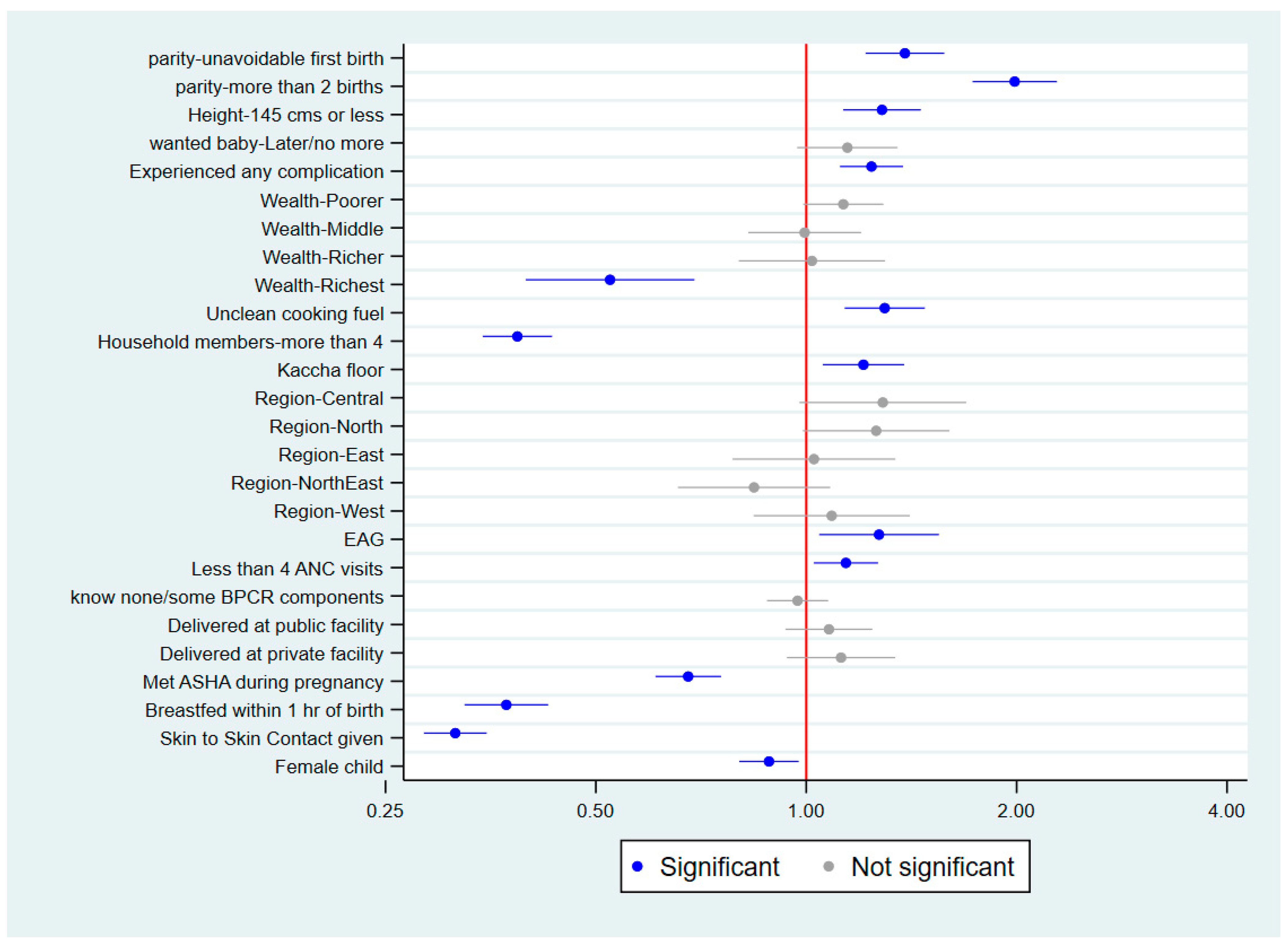
The multivariable hierarchical logistic regression analysis identified several factors that remained independently associated with neonatal mortality after mutual adjustment for individual, household, community, health-system, and newborn-level factors (Appendix A). In the final adjusted model (Model V), neonates born to mothers with more than two births (AOR = 1.44; p < 0.001), short maternal stature (≤145 cm) (AOR = 1.28; p < 0.001), and pregnancy-related complications (AOR = 1.24; p < 0.001) exhibited significantly higher odds of neonatal mortality. Several household factors were independently associated with neonatal mortality, with significantly higher odds among households using unclean cooking fuel (AOR = 1.30; p < 0.001) and those living in kaccha houses (AOR = 1.21; p < 0.01). Compared with the poorest households, neonates from the richest households (AOR = 0.52; p < 0.001) and those with larger household size (AOR = 0.39; p < 0.001) had substantially lower odds of mortality. Regional disparities were also evident after adjustment, with neonates residing in EAG states experiencing significantly higher odds of neonatal mortality (AOR = 1.27; p < 0.05) (Figure 1).
Neonates born to mothers with fewer than four ANC visits had higher odds of mortality (AOR = 1.14; p < 0.05). Conversely, several health-system and newborn-care factors were associated with reduced odds of neonatal mortality, such as meeting ASHA workers during pregnancy (AOR = 0.68; p < 0.001), early initiation of breastfeeding within one hour of birth (AOR = 0.37; p < 0.001), and skin-to-skin contact (AOR = 0.31; p < 0.001). Female neonates also had lower odds of mortality compared with male neonates (AOR = 0.88; p < 0.05).

Magnitude of Wealth-Related Disparities in Neonatal Mortality

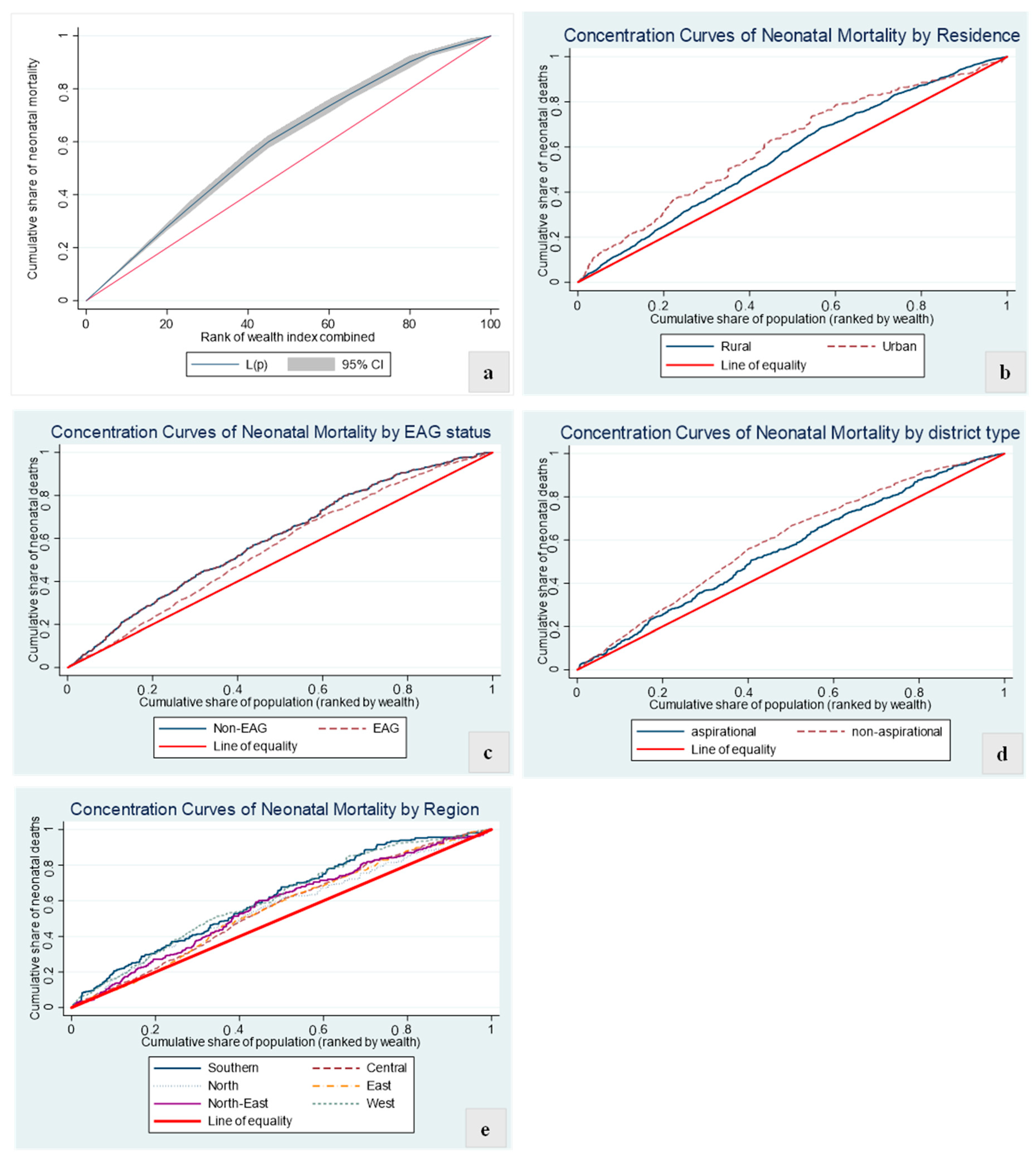
Table 2 presents the wealth-related inequalities in neonatal mortality. At the national level, wealth-related inequality in neonatal mortality was pro-poor, with an ECI of −0.0123 (p < 0.001), indicating a disproportionate concentration of neonatal deaths among poorer households.
Wealth inequality in neonatal mortality was more evident in urban (ECI: −0.0102; p < 0.001) as compared to rural areas (ECI: −0.0096; p < 0.001). By development classification, inequality was more pronounced in EAG states (ECI: −0.0100; p < 0.001) compared to non-EAG states (ECI: −0.0083; p < 0.001). Across district typologies, non-aspirational districts exhibited greater inequality (ECI: −0.0125; SE: 0.00074; p < 0.001) relative to aspirational districts (ECI: −0.0090; SE: 0.00167; p < 0.001).
Substantial regional heterogeneity was also observed. Pro-poor inequality was more pronounced in the Western (ECI: −0.0108; p < 0.001) and Central regions (ECI: −0.0103; p < 0.001). This was followed by the North-Eastern (ECI: −0.0097; p < 0.001), Eastern (ECI: −0.0088; p < 0.001) and Southern regions (ECI: −0.0084; p < 0.001). The Northern region showed the lowest magnitude of inequality (ECI: −0.0064; p—0.0001). The concentration curves of neonatal mortality are presented in Figure 2a–e.
Considerable interstate heterogeneity in wealth-related inequality was observed. The highest pro-poor inequality was recorded in Uttarakhand (ECI: −0.0257; p < 0.001), followed by Chhattisgarh (−0.0173; p < 0.001), Himachal Pradesh (−0.0148; p = 0.008), Meghalaya (−0.0146; p < 0.001), Jharkhand (−0.0132; p < 0.001), and Odisha (−0.0128; p < 0.001). Significant pro-poor inequality was also observed in Maharashtra (−0.0126; p < 0.001), Uttar Pradesh (−0.0113; p < 0.001), Karnataka (−0.0112; p < 0.001), Gujarat (−0.0105; p < 0.001), and Assam (−0.0095; p = 0.001) (Appendix A).

3.2. Decomposition of Socioeconomic Inequality in Neonatal Mortality

Table 3 shows that most determinants exhibited negative ECIs at the individual, household and community levels, indicating that these factors were disproportionately concentrated among poorer households. In contrast, some health system and newborn-level factors, such as home delivery, normal vaginal delivery, no contact with ASHA during pregnancy, and no skin-to-skin contact, had positive ECIs, suggesting that these factors were concentrated among wealthy people. Few factors at the individual level, such as the presence of any high-risk fertility behavior and experience of complications during pregnancy, and at the household/community level, such as large family size and Muslim population, also present positive ECIs.
According to the decomposition analysis, wealth-related inequality in neonatal mortality was primarily explained by household environmental disadvantages and differential utilization of maternal and newborn healthcare services. Use of unclean cooking fuel (82.8%) emerged as the largest contributor to the observed pro-poor inequality in neonatal mortality, indicating its strong concentration among poorer households and its adverse association with neonatal survival. Other important contributors included high parity (>2 births) (26.8%), delayed initiation of breastfeeding (12.4%), larger household size (11.8%), normal vaginal delivery (11.2%), and inadequate antenatal care utilization (<4 ANC visits) (10.9%). Poor maternal education and delivery at a private facility further contributed to the concentration of neonatal mortality among poorer households. In contrast, factors such as lack of ASHA contact during pregnancy (−14.4%), home delivery (−10.9%), first birth (−8.3%), pregnancy complications (−3.5%), and no skin-to-skin contact (−3.1%) contributed in the opposite direction, thereby offsetting a portion of the observed inequality. Overall, the combined contribution of the included covariates exceeded the observed ECI by 28.97%, suggesting the presence of unexplained factors that operate in the opposite direction and partially offset the observed socioeconomic inequality.

4. Discussion

The present study provides comprehensive evidence on the magnitude and drivers of wealth-based inequalities in neonatal mortality in India using NFHS-5. Neonatal deaths remain disproportionately concentrated among poorer households across diverse geographic and developmental settings. The rural–urban disparities in neonatal mortality rate revealed by the study are consistent with estimates from the Sample Registration System (SRS) and previous empirical studies in India [4,21,22]. Evidence from successive rounds of the NFHS has consistently documented persistent socioeconomic inequalities in neonatal mortality in India. Although overall neonatal mortality has declined over time, improvements have not been equitably distributed across socioeconomic groups [23,24,25]. For instance, while the wealth gap in late neonatal mortality narrowed substantially from 12.0 to 2.9 deaths per 1000 live births between 1993 and 2021, the corresponding gap in early neonatal mortality remained virtually unchanged (18.3 to 18.4 deaths per 1000 live births) [25]. Similar patterns have been reported for infant mortality, where socioeconomic disparities continue to persist despite overall improvements in survival [26].
Wealth-related inequality was more pronounced in urban areas, EAG states and non-aspirational districts. Similar patterns of pro-poor inequality in neonatal mortality have been reported in other low- and middle-income countries, reinforcing the role of socioeconomic disadvantage as a key determinant of neonatal survival [7]. The greater inequality in urban areas aligns with emerging evidence on the “urban disadvantage paradox,” where urban averages often mask stark intra-urban inequalities, particularly among slum populations and informal settlements [27,28,29,30]. Studies have shown that urban poor populations often face barriers to accessing quality healthcare despite geographic proximity, including financial constraints, overcrowding, and fragmented service delivery systems [31,32,33]. The pronounced inequality in EAG states and non-aspirational districts further corroborates the existing literature [6,34]. These regions are characterized by weaker health systems, lower female literacy, higher fertility rates, and limited access to quality healthcare services, all of which contribute to higher neonatal mortality and greater inequality [35]. Studies have emphasized the need for context-specific health policy interventions tailored to the differential contributions of socioeconomic determinants to child health inequalities [30].
Interestingly, the study highlighted that wealth-related inequality was lower in aspirational districts compared with non-aspirational districts. This finding appears counterintuitive given the generally poorer health indicators of aspirational districts. One possible explanation is that aspirational districts are comparatively more homogeneously deprived, with elevated neonatal mortality distributed more uniformly across socioeconomic groups, thereby producing lower relative inequality despite a higher overall mortality burden. Alternatively, the lower relative inequality may partly reflect the targeted policy attention, intensified monitoring, and focused implementation strategies under the Aspirational Districts Programme [8]. However, further investigation is required to understand whether these patterns reflect actual improvements in equity or differences in the socioeconomic distribution of mortality within districts.
Substantial interstate variation in wealth-related inequality in neonatal mortality was also observed. States such as Uttarakhand, Chhattisgarh, Meghalaya, Jharkhand, and Odisha demonstrated particularly high wealth-related disparities in neonatal mortality. However, the estimates for certain smaller states and UTs should be interpreted cautiously because relatively smaller sample sizes may affect the precision and stability of ECI estimates. Although statistically significant inequalities were observed in several states, wider confidence intervals in smaller populations may limit comparability across regions. Additionally, the lower relative inequality observed in North India despite a high neonatal mortality burden may partly reflect the persistence of elevated mortality across multiple socioeconomic groups in these states. Previous evidence from India suggests that although wealth-based inequalities in child mortality have narrowed over time in several states, high-burden states continue to experience substantial overall mortality levels [24,30]. This indicates that reductions in relative inequality do not necessarily correspond to lower mortality burden.
Findings from the decomposition analysis demonstrated that wealth-related inequality in neonatal mortality was largely explained by the unequal distribution of adverse household conditions, maternal risk factors, and maternal healthcare utilization among poorer populations. Household-level factors, particularly the use of unclean cooking fuel, emerged as major contributors to the observed inequality, consistent with evidence linking indoor air pollution and inadequate living environments with adverse neonatal outcomes [36,37,38,39]. Maternal biological risk factors, such as higher parity and short stature, also contributed to inequality. These findings align with prior studies demonstrating that maternal nutritional status and reproductive patterns are strongly socially patterned and disproportionately concentrated among poorer populations [7].
An important contribution of this study is the identification of a dual pathway of inequality wherein poorer populations are simultaneously more exposed to adverse risk factors and less likely to access protective healthcare interventions. Risk-enhancing factors such as inadequate antenatal care utilization were concentrated among poorer households, whereas protective practices, including timely breastfeeding and improved maternal healthcare utilization, were more common among wealthier groups. Certain determinants, including home delivery, pregnancy complications, and lack of ASHA contact during pregnancy, demonstrated offsetting contributions. The offsetting contribution of a lack of ASHA contact may reflect the targeted engagement of ASHA workers with socioeconomically disadvantaged and high-risk women. Similarly, home delivery and pregnancy complications may reflect differences in healthcare-seeking behavior, referral patterns, and access to institutional care not fully captured in the survey data. The findings further suggest that improvements in service coverage alone may be insufficient to reduce inequality in neonatal mortality unless the quality and responsiveness of maternal healthcare services are simultaneously strengthened. Persistent socioeconomic disparities in education, autonomy, awareness, and financial capacity continue to influence the utilization of timely and quality maternal healthcare services among poorer women [23,26].
India has established a comprehensive policy and programmatic framework to improve maternal and newborn health across the continuum of care, including the National Health Mission, Janani Suraksha Yojana, Janani Shishu Suraksha Karyakram, Pradhan Mantri Surakshit Matritva Abhiyan, LaQshya, DAKSHATA, MusQan, SUMAN, etc., which collectively aim to strengthen care across the antenatal, intrapartum, and postnatal continuum. These programs have played an important role in expanding access to antenatal, delivery, and postnatal services and improving overall service coverage. However, the persistence of wealth-related disparities observed in the present study suggests that the benefits of these initiatives have not been equitably distributed. Socioeconomically disadvantaged populations continue to face barriers in accessing timely and quality care, suggesting that improvements in service provision have not been matched by effective reach and uptake among those most in need. These findings point to persistent challenges in ensuring that existing programs effectively reach and benefit the most disadvantaged populations.

Strengths and Limitations

This study benefits from the use of nationally representative data, a large sample size, and robust analytical methods, including the use of the ECI and concentration curves. The ECI decomposition was adopted as it quantifies the contribution of determinants to socioeconomic inequality using the full wealth ranking of the population and accommodates the binary nature of neonatal mortality, unlike Kitagawa and Oaxaca–Blinder approaches that focus on differences between predefined groups [40,41]. Additionally, a key strength lies in the application of decomposition analysis using a comprehensive set of determinants spanning individual, household, community, health system, and newborn-level factors, which collectively accounted for more than 100% of the observed inequality. However, certain limitations must be acknowledged. The cross-sectional design precludes causal inference, and the reliance on self-reported data may introduce recall bias. Although restricting the analysis to the most recent birth reduces recall bias, it may introduce selection bias and may not fully capture the experience of all births occurring during the reference period. Additionally, unmeasured factors, such as quality of care at the facility level and neonatal clinical severity, may contribute to the unexplained component of inequality. The strong protective association observed for skin-to-skin contact should therefore be interpreted cautiously, as the NFHS dataset does not capture information on neonatal illness severity, raising the possibility of residual confounding and reverse causality. Further, a residual component remained, suggesting the influence of contextual, behavioral, and health-system factors not captured in the present analysis.

5. Conclusions and Implications

Neonatal mortality in India remains deeply shaped by broader socioeconomic and structural inequalities, extending beyond gaps in healthcare delivery. Reducing these disparities will require integrated strategies that address both the social determinants of health, including housing and energy access, and persistent health-system barriers related to the quality, continuity, and accessibility of care. Targeted interventions in high-burden regions, particularly EAG states and disadvantaged districts, should be complemented by within-area approaches that ensure the effective reach of the most socioeconomically vulnerable households. Programs such as the Aspirational Districts and Aspirational Blocks initiatives provide a valuable platform for addressing geographic disparities in neonatal survival. However, their effectiveness in reducing wealth-related inequalities should be systematically assessed and strengthened through targeted resource allocation and monitoring. Strengthening frontline health worker engagement, improving the quality of antenatal and delivery care, and promoting early newborn care practices are critical for reducing both mortality and inequality. While the present analysis identifies the populations and contexts in which disparities are concentrated, future qualitative and mixed-methods research is needed to elucidate the cultural, behavioral, and health-system factors that continue to constrain equitable utilization of maternal and newborn healthcare services among disadvantaged populations.

Author Contributions

D.G. and A.K.P. contributed to conceptualization and methodology. D.G. conducted the formal analysis, software work, and data curation, and prepared the original draft of the manuscript. D.G. contributed to writing and visualization. A.K.P. contributed to the validation of the findings. B.T.M. and S.B.N. provided supervision, review and editing. D.G. and A.K.P. final editing and submission. All authors have read and agreed to the published version of the manuscript.

Funding

This research received no external funding.

Institutional Review Board Statement

Ethical review and approval were waived for this study as it involved secondary analysis of publicly available, anonymized data from the National Family Health Survey (NFHS-5). The original survey was conducted in accordance with ethical standards and received approval from relevant institutional ethics committees, and informed consent was obtained from all participants prior to data collection.

Informed Consent Statement

Patient consent was waived due to the use of secondary data.

Data Availability Statement

The data used in this study are publicly available from the Demographic and Health Surveys (DHS) Program repository “https://dhsprogram.com/data/available-datasets.cfm (accessed on 20 March 2026)” upon registration and approval. This study utilized data from the National Family Health Survey (NFHS-5), India (2019–2021). No new data were generated for this study.

Conflicts of Interest

The authors declare no conflicts of interest.

Abbreviations

The following abbreviations are used in this manuscript:
CCConcentration Curve
DHSDemographic and Health Surveys
ECIErreygers’ Normalized Concentration Index
INAPIndia Newborn Action Plan
MICEMultiple Imputation by Chained Equations
NFHSNational Family Health Survey
NMRNeonatal Mortality Rate
SDGSustainable Development Goals
WHOWorld Health Organization

Appendix A

Table A1. Neonatal Mortality Rate (per 1000 live births) for the nation and states: urban versus rural (NFHS-5).
StateTotal Live BirthsNMRLive Births-RuralNMR-RuralLive Births-UrbanNMR-Urban
Uttar Pradesh33,009.725.928,266.527.25455.921.4
Bihar20,338.023.219,257.524.52079.314.5
Uttarakhand1445.821.61060.223.5362.817.6
Jharkhand5238.021.14683.321.8727.917.7
Dadra & Nagar Haveli68.819.436.719.126.819.6
Madhya Pradesh10,172.217.88396.518.41899.916.0
Chhattisgarh3948.317.83401.119.9638.610.3
Assam5130.417.14963.517.8451.012.3
Odisha6145.416.75694.016.6715.217.4
Gujarat7621.814.65052.319.02286.07.9
Meghalaya614.513.9573.015.269.06.5
Andhra Pradesh5467.813.94240.414.81211.211.5
Himachal Pradesh799.913.8768.215.374.33.2
Rajasthan11,183.513.39617.613.91819.911.2
Telangana3851.313.22580.814.71135.710.8
Tripura550.512.5458.211.9100.214.7
Haryana3338.812.22523.813.5785.29.3
Punjab3326.211.82314.413.9921.48.1
NCT Of Delhi2393.111.682.438.21764.710.7
West Bengal13,897.010.811,113.511.22844.59.7
Ladakh24.210.821.113.53.80.0
Manipur371.110.4267.413.996.43.7
Maharashtra14,985.910.39076.511.75091.68.5
Karnataka7859.89.55287.710.12303.48.4
Andaman & Nicobar Islands35.59.020.72.112.716.9
Mizoram141.78.175.35.755.510.5
Nagaland159.47.7124.97.034.49.4
Tamil Nadu8743.37.15203.38.13034.85.9
Goa177.66.576.90.081.710.8
Arunachal Pradesh144.45.7135.25.315.97.8
Sikkim56.05.639.58.615.10.0
Jammu & Kashmir1393.95.41155.56.1256.93.4
Kerala3957.42.92258.83.71440.72.0
Chandigarh121.81.91.3200.091.80.0
Puducherry120.61.137.10.066.01.5
Lakshadweep9.20.02.70.05.20.0
National176,84316.2138,86818.337,97511.5
Table A2. Unadjusted and adjusted odds ratios from multivariable logistic regression analysis of determinants of neonatal mortality in India, NFHS-5 (2019–21).
VariablesCategoriesUnadjusted ORModel I: Individual Level FactorsModel II: Individual + Household Level FactorsModel III: Individual + Household + Community Level FactorsModel IV: Individual + Household + Community + Health System Level FactorsModel V: Individual + Household + Community + Health System + Newborn Care Factors
Individual level factorsAge of the mother at first birth (in years)18–34 RefRef
<18 & >341.10 [0.98–1.23]0.89 [0.76–1.05]
Parity (no. of children)Unavoidable first birth1.39 *** [1.26–1.53]1.42 *** [1.25–1.62]1.45 *** [1.28–1.65]1.46 *** [1.29–1.66]1.46 *** [1.28–1.65]1.38 *** [1.22–1.58]
upto 2 birthsRefRefRefRefRefRef
more than 2 births1.76 *** [1.60–1.93]1.56 *** [1.37–1.77]2.06 *** [1.79–2.37]1.97 *** [1.71–2.26]2.02 *** [1.71–2.27]1.99 *** [1.73–2.28]
High risk fertility behaviorNoRefRef
Any0.78 ** [0.64- 0.95]0.88 [0.65–1.18]
Education of motherNot educatedRefRefRefRef
Primary0.86 ** [0.76–0.97]0.85 * [0.72–0.99] 0.88 [0.75–1.04]0.92 [0.78–1.08]
Secondary or higher0.59 *** [0.54–0.64]0.63 *** [0.56–0.72]0.79 *** [0.70–0.90]0.87 * [0.76–0.99]
Height of the mother (in cms)>145RefRefRefRefRefRef
≤1451.60 *** [1.45–1.76]1.46 *** [1.29–1.66]1.33 *** [1.18–1.52]1.33 *** [1.17–1.51]1.31 *** [1.15–1.49]1.28 *** [1.13–1.46]
Tobacco and alcohol consumption among mothers NoRefRefRef
Yes1.17 ** [1.02–1.34]1.25 * [1.03–1.51]1.17 [0.97–1.43]
Wanted pregnancy when became pregnantThenRefRefRefRefRefRef
Later or no more1.38 *** [1.22–1.57]1.27 ** [1.08–1.50]1.30 ** [1.10–1.53]1.30 ** [1.10–1.53]1.23 ** [1.05–1.46]1.14 [0.97–1.35]
Experience of complications NoRefRefRefRefRefRef
Any1.15 ** [1.06–1.24]1.21 *** [1.09–1.33]1.21 *** [1.09–1.34]1.22 *** [1.10–1.35]1.25 *** [1.13–1.38]1.23 *** [1.12–1.37]
Anemia levelNon anemicRefRef
Anemic1.14 ** [1.05–1.23]1.04 [0.94–1.15]
Household level factorsWealthPoorestRef RefRefRefRef
Poorer0.9 ** [0.82–0.99] 1.31 *** [1.15–1.51]1.24 ** [1.08–1.42]1.18 ** [1.04–1.35]1.13 [0.99–1.29]
Middle0.65 *** [0.58–0.72] 1.26 ** [1.04–1.54]1.14 [0.93–1.29]1.03 [0.85–1.24]0.99 [0.82–1.19]
Richer0.57 *** [0.50–0.64] 1.44 ** [1.12–1.84]1.26 [0.98–1.63]1.04716405 [0.82–1.33]1.2 [0.80–1.30]
Richest0.4 *** [0.34–0.46] 0.87 [0.66–1.16]0.74 [0.54–1.00] 0.55 *** [0. 42–0.72]0.52 *** [0.39–0.69]
Source of drinking waterClean sourceRef Ref
Unclean source1.06 [0.97–1.16] 0.96 [0.85–1.08]
Type of cooking fuelClean fuelRef RefRefRefRef
Unclean fuel1.65 *** [1.53–1.78] 1.41 *** [1.24–1.61]1.27 *** [1.11–1.44]1.31 *** [1.15–1.49]1.29 *** [1.13–1.48]
Exposure to mediaLess than/at least onceRef Ref
Not at all1.57 *** [1.45–1.69] 0.96 [0.86–1.08]
Type of toiletCleanRef RefRef
Unclean1.66 *** [1.54–1.78] 1.12 * [1.00–1.25]1.07 [0.96–1.20]
FloorPakkaRef RefRefRefRef
kaccha1.45 *** [1.34–1.57] 1.42 *** [1.24–1.62]1.18 * [1.04–1.34]1.19 ** [1.04–1.36]1.20 * [1.06–1.38]
Family size1 to 4Ref RefRefRefRef
5-max0.49 *** [0.45–0.53] 0.39 *** [0.35–0.44]0.38 *** [0.34–0.42]0.38 *** [0.34–0.43]0.38 *** [0.34–0.43]
CasteGeneral/OtherRef Ref
OBC1.24 *** [1.11–1.38] 1.05 [0.91–1.23]
ST1.12 [0.99–1.27] 0.95 [0.79–1.14]
SC1.38 *** [1.23–1.56] 1.05 [0.89–1.24]
ReligionHinduRef Ref
Muslim/others0.76 *** [0.70–0.83] 0.96 [0.84–1.09]
Community level factorsPlace of residenceUrbanRef Ref
Rural1.50 *** [1.36–1.66] 1.05 [0.89–1.23]
Community women educational statusHighRef Ref
Low1.24 *** [1.15–1.35] 1.06 [0.94–1.20]
Community wealth statusNot poorRef Ref
Poor1.49 *** [1.37–1.62] 1.02 [0.91–1.15]
RegionSouthernRef RefRefRef
Central2.40 *** [2.07–2.79] 1.45 ** [1.10–1.90]1.60 *** [1.22–2.11]1.1.29 [0.98–1.69]
North1.12 [0.93–1.36] 1.39 ** [1.10–1.77]1.49 *** [1.17–1.90]1.25 [0.99–1.60]
Eastern2.13 *** [1.83–2.49] 1.10 [0.85–1.44]1.11 [0.85–1.45]1.02 [0.78–1.34]
NorthEastern1.24 ** [1.04–1.47] 1.18 [0.99–1.64]1.29 * [1.00–1.66]0.84 [0.65–1.08]
Western1.42 *** [1.20–1.68] 1.19 [0.92–1.55]1.24 [0.96–1.61]1.08 [0.84–1.40]
EAG statesNon-EAGRef RefRefRef
EAG1.91 *** [1.76–2.06] 1.50 *** [1.24–1.81]1.44 *** [1.18–1.74]1.27 * [1.04–1.55]
Aspirational districtsAspirationalRef Ref
Non-Aspirational Districts0.82 *** [0.75–0.90] 1.09 [0.97–1.23]
Health system level factorsTiming of first ANCFirst trimesterRef Ref
2nd/3rd Trimester1.27 *** [1.17–1.37] 0.93 [0.83–1.05]
Number of ANC visitsFour or moreRef RefRef
Less than 41.59 *** [1.48–1.71] 1.21 *** [1.09–1.35]1.14 [1.02–1.26]
Know Birth Preparedness and Complication Readiness (BPCR)All componentsRef RefRef
None/Some1.22 *** [1.14–1.32] 1.15 ** [1.04–1.28]0.97 [0.88–1.07]
Perceived quality of antenatal checkupsAllRef Ref
None/Some1.59 *** [1.45–1.74] 1.11 [0.96–1.27]
Place of deliveryHomeRef RefRef
Public0.68 *** [0.61–0.75] 0.91 [0.79–1.05]1.08 [0.93–1.24]
Private0.79 *** [0.70–0.88] 1.22 * [0.58–0.73]1.12 [0.94–1.34]
Mode of delivery (C-section)NoRef Ref
yes0.89 ** [0.81–0.98] 1.14 [0.97–1.33]
Met ASHA during pregnancyNoRef RefRef
yes0.72 *** [0.67–0.78] 0.65 *** [0.58–0.73]0.68 *** [0.61–0.75]
Newborn and PNC factorsTime of first breast feedingMore than 1 hRef Ref
within 1 h0.28 *** [0.25–0.31] 0.37 *** [0.32–0.43]
Skin-to-skin contactnoRef Ref
Yes0.31 *** [0.29–0.34] 0.31 ** [0.28–0.35]
Sex of the childMaleRef Ref
female0.82 *** [0.76–0.89] 0.88 ** [0.80–0.97]
Note: p value < 0.001—***; p < 0.01—**; p < 0.05—*.; Grey area depicts factors not included in the multivariate analysis.
Table A3. State-wise Erreygers’ Normalized Concentration Index (ECI) of neonatal mortality in India (2019–2021).
StatesSample Size (N)Index ValueStd. Error
Jammu & Kashmir48980.000873810.002367
Himachal Pradesh2145−0.01480651 **0.00560156
Punjab4520−0.005117270.00327864
Chandigarh144−0.006638420.0062258
Uttarakhand2966−0.02572491 ***0.00594171
Haryana5162−0.00893712 **0.00329249
Nct Of Delhi2379−0.00999317 *0.00443417
Rajasthan10,831−0.00777192 **0.00248994
Uttar Pradesh25,556−0.01128528 ***0.00224121
Bihar13,874−0.00619495 *0.00275042
Sikkim569−0.011024680.00685581
Arunachal Pradesh4570−0.00578821 *0.00247349
Nagaland2205−0.003897550.0041274
Manipur25110.001578510.00454108
Mizoram1896−0.001431670.00463498
Tripura1860−0.005394720.00570604
Meghalaya4602−0.01463162 ***0.00374737
Assam9247−0.00952827 **0.00293516
West Bengal4894−0.003603630.00327597
Jharkhand7465−0.01324217 ***0.00356714
Odisha7141−0.01275591 ***0.00338148
Chhattisgarh6526−0.01730091 ***0.00367135
Madhya Pradesh11,700−0.00483740.00274633
Gujarat7575−0.01052558 ***0.00310929
Dadra & Nagar Haveli & Daman & Diu635−0.020592930.01230344
Maharashtra7415−0.01256732 ***0.00262703
Andhra Pradesh2092−0.006539470.00570927
Karnataka6389−0.01117162 ***0.00271617
Goa3220.010963720.00919116
Kerala23600.001303220.0023825
Tamil Nadu5228−0.00520028 *0.0025745
Puducherry616−0.001174490.00284034
Andaman & Nicobar Islands401−0.002836090.01052417
Telangana5429−0.00870164 *0.00346092
Ladakh469−0.009172740.01066802
Note: p value < 0.001—***; p <0.01—**; p <0.05—*.

References

  1. WHO. Newborn Mortality. 2024. Available online: https://www.who.int/news-room/fact-sheets/detail/newborn-mortality (accessed on 30 March 2026).
  2. Sharrow, D.; Hug, L.; You, D.; Alkema, L.; Black, R.; Cousens, S.; Croft, T.; Gaigbe-Togbe, V.; Gerland, P.; Guillot, M.; et al. UN Inter-agency Group for Child Mortality Estimation and its Technical Advisory Group. Global, regional, and national trends in under-5 mortality between 1990 and 2019 with scenario-based projections until 2030: A systematic analysis by the UN Inter-agency Group for Child Mortality Estimation. Lancet Glob. Health 2022, 10, e195–e206. [Google Scholar] [CrossRef] [PubMed] [PubMed Central]
  3. Health | UNICEF India. Available online: https://www.unicef.org/india/what-we-do/health (accessed on 31 March 2026).
  4. Government of India | Office of the Registrar General & Census Commissioner, India. Available online: https://censusindia.gov.in/census.website/data/SRSSTAT (accessed on 30 March 2026).
  5. Patel, K.K.; Kumar, M. Differential and Determinants of Neonatal Mortality: A Comparative Study in Northern and Southern Regions of India. Indian J. Community Med. Off. Publ. Indian Assoc. Prev. Soc. Med. 2021, 46, 405–410. [Google Scholar] [CrossRef] [PubMed] [PubMed Central]
  6. Exemplars in Maternal and Newborn Health India Study. National Report. NHSRC. 2023. Available online: https://nhsrcindia.org/sites/default/files/2023-08/Exemplars%20National%20Report_Web.pdf (accessed on 31 March 2026).
  7. Blumenshine, P.; Egerter, S.; Barclay, C.J.; Cubbin, C.; Braveman, P.A. Socioeconomic disparities in adverse birth outcomes: A systematic review. Am. J. Prev. Med. 2010, 39, 263–272. [Google Scholar] [CrossRef] [PubMed]
  8. NITI AAYOG, India | Aspirational Districts Programme/Aspirational Blocks Programme. 2018. Available online: https://niti.gov.in/aspirational-districts-programme (accessed on 31 March 2026).
  9. Steps Taken Under NRHM to Reduce Neonatal Mortality Rates in the Country. 2015. Available online: https://www.pib.gov.in/newsite/PrintRelease.aspx?relid=116955&reg=3&lang=2 (accessed on 31 March 2026).
  10. MoHFW, GoI. India Newborn Action Plan (INAP). 2014. Available online: https://nhm.gov.in/images/pdf/programmes/inap-final.pdf (accessed on 31 March 2026).
  11. NITI Aayog. Aspirational Block Programme. 2023. Available online: https://abp.championsofchange.gov.in/about (accessed on 31 March 2026).
  12. NFHS. Available online: https://www.nfhsiips.in/nfhsuser/nfhs5.php (accessed on 1 April 2026).
  13. The DHS Program—Data. Available online: https://dhsprogram.com/data/ (accessed on 1 April 2026).
  14. Bennett, D.A. How can I deal with missing data in my study? Aust. N. Z. J. Public Health 2001, 25, 464–469. [Google Scholar] [CrossRef] [PubMed]
  15. Chhabra, G.; Vashisht, V.; Ranjan, J. A Comparison of Multiple Imputation Methods for Data with Missing Values. Indian J. Sci. Technol. 2017, 10, 1–7. [Google Scholar] [CrossRef]
  16. Huang, F.; Keller, B. Working with missing data in large-scale assessments. Large-Scale Assess. Educ. 2025, 13, 13. [Google Scholar] [CrossRef]
  17. Jakobsen, J.C.; Gluud, C.; Wetterslev, J.; Winkel, P. When and how should multiple imputation be used for handling missing data in randomised clinical trials—A practical guide with flowcharts. BMC Med. Res. Methodol. 2017, 17, 162. [Google Scholar] [CrossRef] [PubMed]
  18. Lee, J.H.; Huber, J.C. Evaluation of Multiple Imputation with Large Proportions of Missing Data: How Much Is Too Much? Iran. J. Public Health 2021, 50, 1372–1380. [Google Scholar] [CrossRef] [PubMed] [PubMed Central]
  19. Wondimu, A.; Schans, J.; Hulst, M.; Postma, M. Inequalities in Rotavirus Vaccine Uptake in Ethiopia: A Decomposition Analysis. Int. J. Environ. Res. Public Health 2020, 17, 2696. [Google Scholar] [CrossRef]
  20. Wagstaff, A.; van Doorslaer, E.; Watanabe, N. On decomposing the causes of health sector inequalities with an application to malnutrition inequalities in Vietnam. J. Econ. 2003, 2112, 207–223. [Google Scholar] [CrossRef]
  21. Coffey, D.; Srivastav, N.; Priya, A.; Verma, A.; Franz, N.; Kumar, A.; Spears, D. Excess neonatal mortality among private facility births in rural parts of high-mortality states of India: Demographic analysis of a national survey. Soc. Sci. Med. 2025, 379, 118158. [Google Scholar] [CrossRef] [PubMed]
  22. Jain, V.; Singh, K.J.; Das, D.; Gupta, S.; Singh, G. Geospatial analysis of neonatal mortality in north-eastern India: A multilevel Bayesian approach. Epidemiol. Health 2025, 47, e2025021. [Google Scholar] [CrossRef] [PubMed]
  23. Chalasani, S. Understanding wealth-based inequalities in child health in India: A decomposition approach. Soc. Sci. Med. 2012, 75, 2160–2169. [Google Scholar] [CrossRef]
  24. Bhatia, M.; Ranjan, M.; Dixit, P.; Dwivedi, L.K. Mind the gap: Temporal trends in inequalities in infant and child mortality in India (1992–2016). SSM Popul. Health 2018, 5, 201–209. [Google Scholar] [CrossRef] [PubMed] [PubMed Central]
  25. Jain, A.; Kumar, A.; Pullum, T.W.; Kim, R.; Swaminathan, S.; Subramanian, S.V. Trends in socioeconomic inequality in mortality during childhood between 1993 and 2021 in India. BMJ Glob. Health 2025, 10, e016386. [Google Scholar] [CrossRef] [PubMed] [PubMed Central]
  26. Tripathy, S.S.; Behera, P.; Pradhan, S.K.; Mishra, S.K. Inequalities in infant mortality rate in India from 1999–2020. Int. J. Community Med. Public Health 2025, 12, 4050–4055. [Google Scholar] [CrossRef]
  27. Tebeje, T.M.; Aregu, M.B.; Asgedom, Y.S.; Gebrekidan, A.Y.; Abebe, M. From poverty to health: Intraurban inequalities in child health indicators in low-income and middle-income countries during the SDG era. BMJ Glob. Health 2025, 10, e019134. [Google Scholar] [CrossRef] [PubMed]
  28. Anjorin, S.; Okolie, E.A.; Onuegbu, C.; Ijaiya, M.; Ayorinde, A.; Oyebode, O.; Uthman, O. Neighbourhood effect and inequality in access to essential health services among mother–child paired samples: A decomposition analysis of data from 58 low- and middle-income countries. Int. J. Equity Health 2024, 23, 130. [Google Scholar] [CrossRef] [PubMed] [PubMed Central]
  29. Sanneving, L.; Trygg, N.; Saxena, D.; Mavalankar, D.; Thomsen, S. Inequity in India: The case of maternal and reproductive health. Glob. Health Action 2013, 6, 19145. [Google Scholar] [CrossRef] [PubMed] [PubMed Central]
  30. Arokiasamy, P.; Jain, K.; Goli, S.; Pradahan, J. Health Inequalities among Urban Children in India: A Comparative Assessment of Empowered Action Group (EAG) and South Indian States. 2012. Available online: https://www.instituteofhealthequity.org/resources-reports/health-inequalities-among-urban-children-in-india-a-comparative-assessment-of-empowered-action-group-eag-and-south-indian-states (accessed on 3 April 2026).
  31. Gupta, I.; Singh, A.K. Addressing Urban Health Challenges in India: Shifting Focus to the Urban Poor. Available online: https://csep.org/wp-content/uploads/2025/03/Addressing-Urban-Health-Challenges-in-India-Shifting-Focus-to-the-Urban-Poor.pdf?utm_source=chatgpt.com (accessed on 3 April 2026).
  32. Shrivastava, R.; Singhal, M.; Joshi, A.; Mishra, N.; Agrawal, A.; Kumar, B. Barriers and opportunities in utilizing maternal healthcare services during antenatal period in urban slum settings in India: A systematic review. Clin. Epidemiol. Glob. Health 2023, 20, 101233. [Google Scholar] [CrossRef]
  33. United Nations Children’s Fund. Advantage or Paradox? The Challenge for Children and Young People of Growing Up Urban; United Nations Children’s Fund: New York, NY, USA, 2019; 1p. [Google Scholar]
  34. Kumar, S.; Sahu, D.; Mehto, A.; Sharma, R.K. Health Inequalities in Under-Five Mortality: An Assessment of Empowered Action Group (EAG) States of India. J. Health Econ. Outcomes Res. 2020, 7, 189–196. [Google Scholar] [CrossRef]
  35. Subramanian, S.V.; Davey Smith, G.; Subramanyam, M. Indigenous health and socioeconomic status in India. PLoS Med. 2006, 3, e421. [Google Scholar] [CrossRef] [PubMed] [PubMed Central]
  36. Aguilera, J.; Konvinse, K.; Lee, A.; Maecker, H.; Prunicki, M.; Mahalingaiah, S.; Sampath, V.; Utz, P.; Yang, E.; Nadeau, K.C. Air Pollution And Pregnancy. Semin. Perinatol. 2023, 47, 151838. [Google Scholar] [CrossRef] [PubMed]
  37. Daba, C.; Asmare, L.; Demeke Bayou, F.; Arefaynie, M.; Mohammed, A.; Tareke, A.A.; Keleb, A.; Kebede, N.; Tsega, Y.; Endawkie, A.; et al. Exposure to indoor air pollution and adverse pregnancy outcomes in low and middle-income countries: A systematic review and meta-analysis. Front. Public Health 2024, 12, 1356830. [Google Scholar] [CrossRef] [PubMed]
  38. Pandey, A.K.; Thomas, B.M.; Gautam, D.; Balachandran, A.; Widyastari, D.A.; Sriram, S.; Neogi, S.B. Unraveling the complexity of selected adverse neonatal outcomes in India: A multilevel analysis using data from a nationally representative sample survey. BMC Pregnancy Childbirth 2025, 25, 377. [Google Scholar] [CrossRef] [PubMed] [PubMed Central]
  39. Veras, M.M.; Saldiva, P.H.N. Impact of air pollution and climate change on maternal, fetal and postnatal health. J. Pediatr. 2024, 101, S48–S55. [Google Scholar] [CrossRef] [PubMed] [PubMed Central]
  40. Kitagawa, E.M. Components of a difference between two rates. J. Am. Stat. Assoc. 1955, 50, 1168–1194. [Google Scholar] [CrossRef]
  41. Fairlie, R.W. An extension of the Blinder-Oaxaca decomposition technique to logit and probit models. J. Econ. Soc. Meas. 2005, 30, 305–316. [Google Scholar] [CrossRef]
Figure 1. Adjusted odds ratios (AORs) and 95% confidence intervals for factors associated with neonatal mortality in India, NFHS-5 (2019–2021). Estimates are derived from the final hierarchical multivariable logistic regression model (Model V), with odds ratios adjusted for all variables retained in the final model. The vertical red line represents the null value (AOR = 1.0) indicating no association between the studies factors and neonatal mortality; estimates to the right of the line indicate increased odds, while those to the left indicate decreased odds.
Ijerph 23 00795 g001
Figure 2. Concentration curve of wealth-related inequality in neonatal mortality in India (2019–2021): (a) national level; (b) by place of residence (rural and urban); (c) by EAG and non-EAG states; (d) by aspirational and non-aspirational; and (e) by region. The red bold line depicts line of inequality.
Ijerph 23 00795 g002
Table 1. Characteristics of the individual, sociodemographic, healthcare, and newborn and PNC factors amongst recently delivered women having live birth in India (2019–2021).
VariablesCategoriesWeighted Sample Live Births [N = 176,843]Weighted Sample Live Births After Imputation [N = 176,843]Neonatal Deaths% of Neonatal Deaths
Individual-Level Factors
Age of the mother at first birth (in years)18–34 157,077157,07725171.6
<18 & >3419,76619,7663531.8
Parity (no. of children)Unavoidable first birth59,62059,6209861.6
Upto 2 births62,37062,3707441.2
More than 2 births54,85354,85311392.1
High risk fertility behaviorNo513251321052.1
Any171,711171,71127641.6
Education of motherEducated140,867140,86720481.4
Not formally educated35,97635,9768212.3
Height of the mother (in cms)>145152,411154,61423371.5
≤14519,92522,2295322.4
Missing4507
Tobacco and alcohol consumption among mothers No163,847163,84726261.6
Yes12,99612,9962431.9
Wanted pregnancy when became pregnantThen163,583163,58325811.6
Later or no more13,26013,2602882.2
Experience of complications No62,07862,0789191.5
Any114,765114,76519501.7
Anemia levelNon anemic70,55373,68711081.5
Anemic (<11 g/dL)99,720103,15617611.7
Missing6570
Household-level factors
WealthPoorest44,86744,8679732.2
Poorer40,48140,4817932.0
Middle34,56934,5694911.4
Richer31,05431,0543861.2
Richest25,87225,8722260.9
Source of drinking waterClean137,072140,54922511.6
Unclean30,78536,2946181.7
Missing8986
Type of cooking fuelClean79,15082,4599981.2
Unclean89,18294,38418712.0
Missing8511
Type of toiletClean122,055125,35517511.4
Unclean45,87651,48811182.2
Missing8912
FloorPakka101,912106,03613681.3
Kaccha66,32870,80715012.1
Missing8603
Exposure to mediaLess than/at least once127,846127,84618471.4
Not at all48,99748,99710222.1
Family size1–449,94549,94512702.5
5 and above126,898126,89815991.3
CasteGeneral/Other30,37331,7964301.3
OBC67,02468,31011401.7
ST35,37937,4315681.5
SC35,27139,3067311.9
Missing8796
ReligionHindu129,944129,94422491.7
Muslim/others46,89946,8996201.3
Community-level factors
Place of residenceUrban37,97537,9754441.2
Rural138,868138,86824251.7
Community wealth status Not poor127,324127,32419351.5
Poor49,51949,5199341.9
Community women’s educational statusHigh143,649143,64921381.5
Low33,19433,1947312.2
RegionSouthern22,76622,7662191.0
Central46,74846,74810682.3
North19,71719,7172131.1
Eastern33,37433,3746782.0
Northeastern27,46027,4603271.2
Western26,77826,7783641.4
EAG statesNon-EAG90,78490,78410291.1
EAG86,05986,05918402.1
Aspirational districtsAspirational32,57032,5706161.9
Non-Aspirational144,273144,27322531.6
Health-system factors
Timing of first ANCFirst trimester123,817125,59418931.5
2nd/3rd trimester41,07851,2499761.9
Missing11,948
Number of ANC visits≥4101,435102,36013351.3
<473,04874,48315342.1
Missing2360
Told about BPCRAll component104,996104,99615621.5
None/some components71,84771,84713071.8
Perceived quality of antenatal checkupsAll149,964149,96422371.5
None/Some26,87926,8796322.3
Place of deliveryHome21,21921,2194612.2
Public114,952114,95217101.5
Private40,67240,6726981.7
Mode of deliveryOther than caesarean section139,084139,08423081.7
Caesarean section37,75937,7595611.5
Met ASHA during pregnancyNo101,164101,16418611.8
Yes75,67975,67910081.3
Newborn care factors
Time of first breast feedingMore than 1 h101,198101,19823682.3
Within 1 h75,64575,6455010.7
Skin-to-skin contactNo45,70246,12915043.3
Yes128,880130,71413651.0
Missing2261
Sex of the childMale94,90394,90316741.8
Female81,94081,94011951.5
EAG: Empowered Action Group States; OBC: Other Backward Caste; SC: Schedule Caste; ST: Schedule Tribe; ANC: Antenatal Care; ASHA: Accredited Social Health Activist (trained female community health workers act as a bridge between marginalized rural/urban communities and the public healthcare system); BPCR: Birth Preparedness and Complication Readiness.
Table 2. Erreygers’ Normalized Concentration Index (ECI) of neonatal mortality in India at the national level, by place of residence, EAG/non-EAG states, type of districts, and region, using NFHS-5 (2019–2021).
VariableCategoryLive BirthsECIStd. Error
National176,843−0.0123 ***0.0007
Place of residenceUrban37,975−0.0102 ***0.0012
Rural138,868−0.0096 ***0.0008
EAG/non-EAGEAG86,059−0.0100 ***0.0011
Non-EAG90,784−0.0083 ***0.0008
District typeAspirational32,570−0.0090 ***0.0017
Non-aspirational144,273−0.0125 ***0.0007
RegionSouthern22,766−0.0084 ***0.0014
Central46,748−0.0103 ***0.0016
North19,717−0.0064 ***0.0016
Eastern33,374−0.0088 ***0.0016
Northeastern27,460−0.0097 ***0.0016
Western26,778−0.0108 ***0.0015
Note: p value < 0.001—***; NFHS: National Family Health Survey; EAG: Empowered Action Group states.
Table 3. Decomposition of ECI for neonatal mortality in India,2019–2021.
DeterminantsCategoriesElasticityECIAbsolute% Contribution
Individual level factorsAge at first birth <18 & >34 years−0.0010−0.11770.0001−0.9371
Parity Unavoidable first birth0.00670.15290.0010−8.2997
More than 2 births0.0131−0.2525−0.003326.7955
High risk fertility behaviorAny−0.00820.0258−0.00021.7125
Education of Mother No education0.0023−0.3271−0.00086.1646
Primary0.0009−0.1204−0.00010.9084
Height of mother≤145 cms0.0025−0.1219−0.00032.4684
Consumption of alcohol & tobacco by motherYes0.0003−0.05990.00000.1221
Wanted pregnancy when became pregnantLater or no0.0007−0.03480.00000.2085
Experienced complications during pregnancyYes0.00950.04550.0004−3.4988
Household/community level factorsType of cooking fuelUnclean0.0139−0.7334−0.010282.8439
Exposure to mediaNot at all−0.0013−0.47850.0006−5.0468
No. of members in the household5 and more−0.04360.0332−0.001511.7623
CasteOBC0.00310.09870.0003−2.5188
ST0.0008−0.1703−0.00011.0534
SC0.0027−0.1453−0.00043.2035
ReligionMuslim/others−0.00040.03580.00000.1170
Health system and newborn care factorsTiming of 1st ANC2nd/3rd trimester−0.0011−0.19850.0002−1.7249
No of ANC visits during pregnancyless than 40.0053−0.2555−0.001410.9319
Knowledge of bpcr componentsnone/some−0.0014−0.10050.0001−1.1010
Quality of ANC none/some0.0004−0.1805−0.00010.6359
Place of delivery private0.0045−0.2193−0.00108.1023
home0.00360.37610.0014−10.9858
Mode of deliveryNormal −0.00540.2537−0.001411.2179
Whether visited by/met ASHA during pregnancyNo0.01220.14490.0018−14.3753
When child put to breastMore than one hour0.0400−0.0382−0.001512.4205
Skin-to-skin contactNo0.01730.02240.0004−3.1505
Sex of the childFemale−0.0037−0.00250.0000−0.0727
Residual inequality−0.0036
% Residual inequality28.97%
ECI: Erreygers’ Normalized Concentration Index; OBC: Other Backward Caste; SC: Schedule Caste; ST: Schedule Tribe; ANC: Antenatal Care; ASHA: Accredited Social Health Activist (trained female community health workers act as a bridge between marginalized rural/urban communities and the public healthcare system).
Disclaimer/Publisher’s Note: The statements, opinions and data contained in all publications are solely those of the individual author(s) and contributor(s) and not of MDPI and/or the editor(s). MDPI and/or the editor(s) disclaim responsibility for any injury to people or property resulting from any ideas, methods, instructions or products referred to in the content.